




Ben Zachariah
2027 BYD Shark 6 Premium review
After the release of the Performance variant, we revisit the original Shark 6 Premium to see if it still holds up – and whether it will continue to.
3 Days Ago

Senior Editor – Reviews
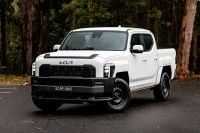
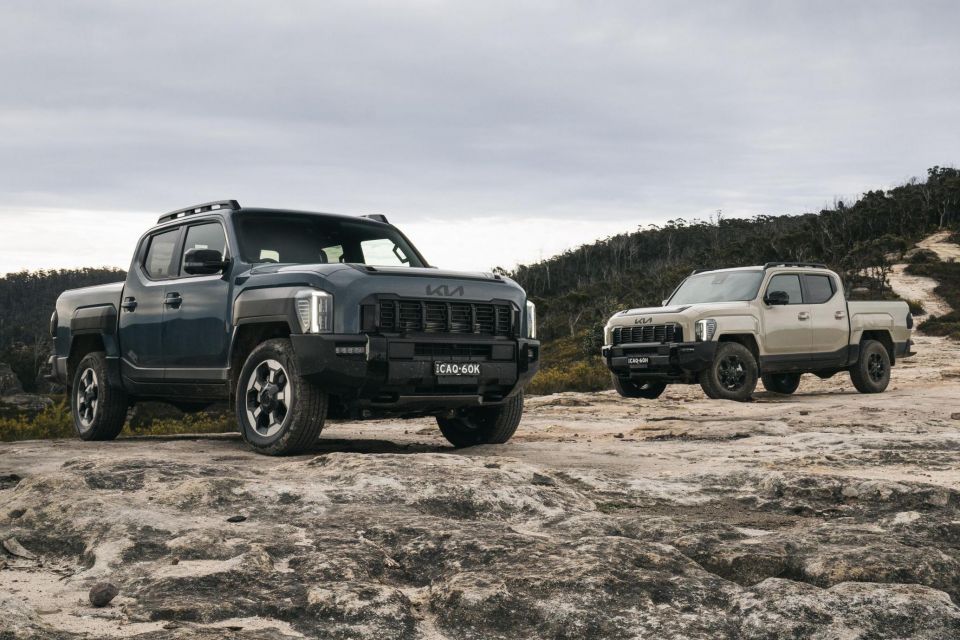
Kia Australia says it has some work to do with its new Tasman ute, conceding that its more fleet-focused variants aren’t selling as strongly as initially forecast.
Speaking with media at the launch of the new K4 Hatch and updated Stonic light SUV, Kia Australia chief operating officer Dennis Piccoli noted that an evolving market and low fleet sales might mean the Korean brand’s previous annual sales forecast of 20,000 units “may take more than 12 months” to achieve.
“We can see where we’re missing out. [We] see how our X-series [X-Line, X-Pro] cars are going, and the price points they sit at, they’re going relatively well. We see a gap in the [entry-level] S range, we’re not getting our fair share there, where the other brands seem to be playing pretty well and getting a lot of volume,” Mr Piccoli said during a Q&A.
CarExpert can save you thousands on a new car. Click here to get a great deal.
“That partially is due to the fleet content with Tasman is not where it needs to be, but that is coming together. I think you’ll see with Tasman is there will be a hockey stick [in sales performance] through 2026, without a shadow of a doubt.
“On Tasman, our goals were always quite ambitious. The reality is, that [dual-cab ute] segment has become far more fragmented,” Mr Piccoli continued.
“Whether it’s powertrains – whether it’s hybrid or diesel – the number of brands that are in [there], the brands that are in there that are so heavily reliant on their [ute] product, and just the general level of aggressiveness in market… it’s extremely competitive.
“We are working through where we want to be in 2026 in totality. We are not a one-car company, we are not a Tasman car company, nor do we want to be a Carnival car company. We want a good split of cars… so we need to find that right mix that makes good business sense for us.”
Asked directly about the company’s commitment to hitting its long-touted 20,000-unit annual target, Mr Piccoli said “we’ll see”.
“We are working towards [that], but our growth plan at this stage to achieve 20,000 units may take more than 12 months. Could we do 20,000? Without a shadow of a doubt, yes we can. Do we want to enter the fray, and do what needs to be done in order to do it? That’s a big question mark,” he said, suggesting Kia is loathe to enter into a discounting war or introduce cheaper variants.
Since the Tasman’s staggered launch rollout commenced in July, it has barely shifted 3700 units across both 4×2 and 4×4 models. As of November 30, it accounts for just 1.0 and 1.8 per cent of the 4×2 and 4×4 ute markets, respectively.
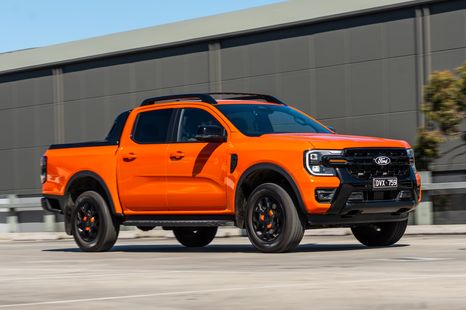
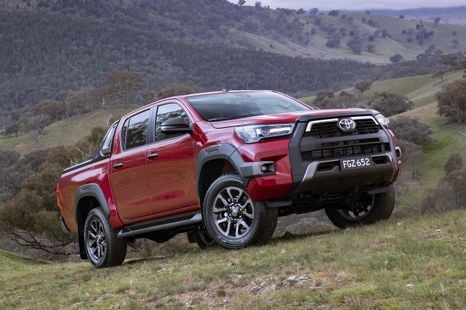
By comparison, the leading Ford Ranger and Toyota HiLux attract more than that overall volume on a monthly basis, highlighting the wide sales gap between new Kia and the market leaders.
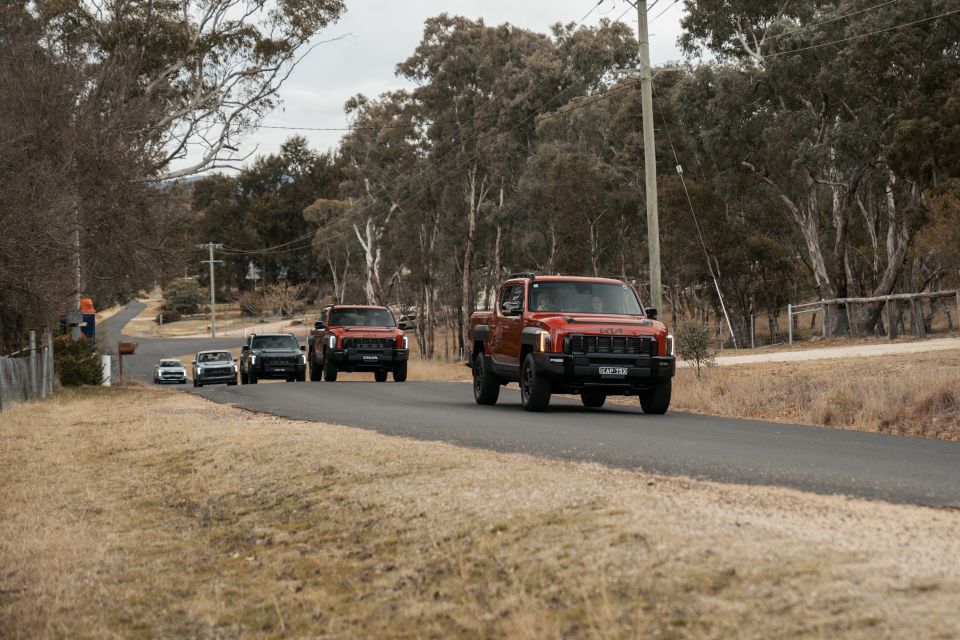
In a follow-up interview with CarExpert, Kia Australia’s general manager for product, Roland Rivero, suggested that depending on the next 12 to 18 months the company would be more inclined to rationalise the local Tasman range rather than further expanding it, when asked about adjustments to the lineup to increase sales.
“For a Kia product, [the Tasman] is by far away the most complex Kia product that we’ve got in market in terms of number of variants, number of trims, and 0.9 versus 1.0-tonne payload etcetera; there are a lot of variants there that need to be managed by respective stock controllers in our dealer network,” Mr Rivero said.
“So we’ve just got to be mindful of that and not just bring in more and more [variants]. We’ve got to keep that balance going and monitor the market accordingly in terms of which ones have got high demand – and it could mean even some rationalising for the ones that aren’t high in the [overall sales] mix.”
That said, the first single-cab/chassis versions of the Tasman will arrive in local dealerships in January-February 2026, forming a key plank in the Korean brand’s assault on the fleet ute market.

“We don’t even have the entire lineup at this point,” said Mr Piccoli. “The fleets aren’t necessarily about in January, they kick through in February-March.”
Mr Rivero added that a more holistic view of the Tasman’s running rate and consumer sentiment will be clearer once the full range is in market.
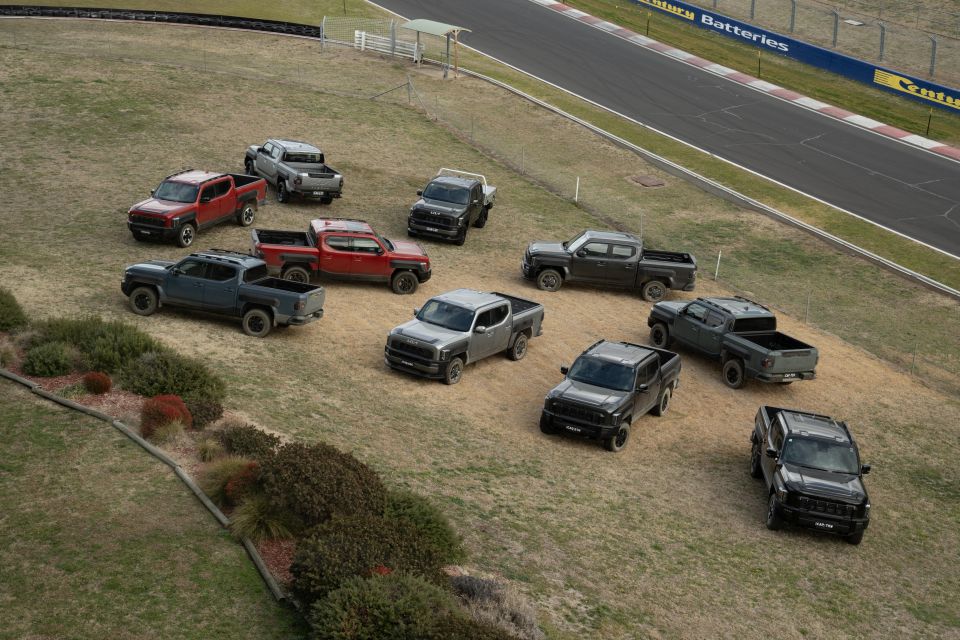
Since launch, the 2025-2026 Kia Tasman range has remained exclusively dual-cab, with 4×2 and 4×4 drivetrains available across five different trim levels – S, SX, SX+, X-Line and X-Pro.
The only 4×2 is the entry-level S dual-cab pickup, and the only cab/chassis variants are the base S and SX, with the other five grades being dual-cab 4×4 pickups.
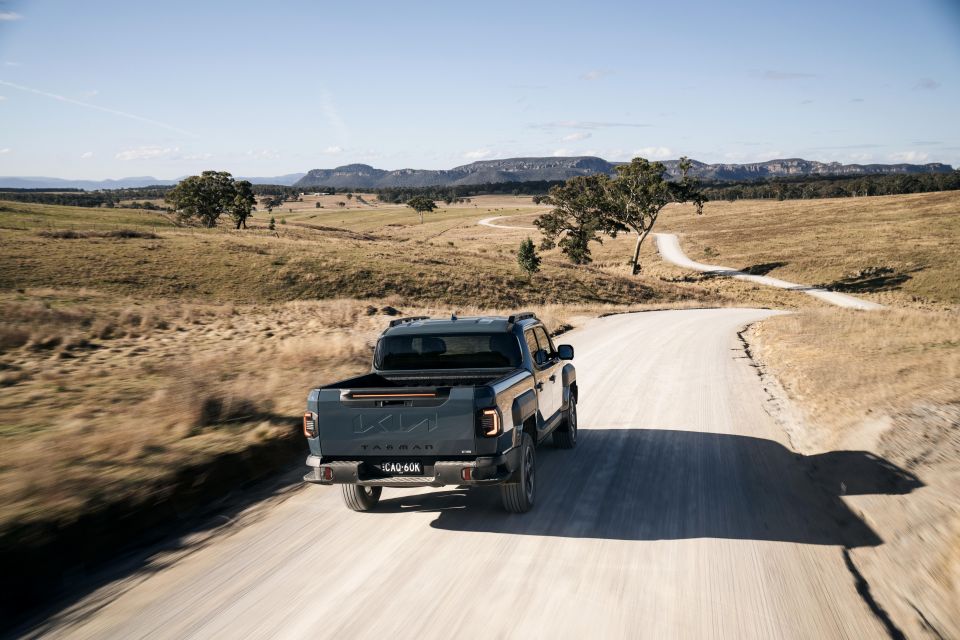
All Tasmans are powered by a 154kW/440Nm 2.2-litre four-cylinder turbo-diesel. An eight-speed automatic is also standard across the range, as is a 3500kg braked towing capacity.
Pricing currently starts at $42,990 plus on-road costs for the Tasman S 4×2 dual-cab pickup. For context, the most affordable 4×2 dual-cab pickup version of the top-selling Ranger costs $43,530 plus on-roads.
In an effort to boost sales of launch variants, Kia is currently advertising finance deposit contributions of up to $4000 and free accessory packs across most new and demo Tasman vehicles. Many dealers are advertising hefty discounts on the classifieds, too.
Let us know your thoughts in the comments below.
Research cars in our Showroom, compare your options or let our New Car Specialists do the running around to find you a great deal.
James Wong is an automotive journalist and former PR consultant, recognised among Australia’s most prolific motoring writers.
Ben Zachariah
3 Days Ago

Max Davies
6 Days Ago

Damion Smy
8 Days Ago

Josh Nevett
9 Days Ago
Josh Nevett
9 Days Ago

William Stopford
9 Days Ago
Add CarExpert as a Preferred Source on Google so your search results prioritise writing by actual experts, not AI.