




James Wong
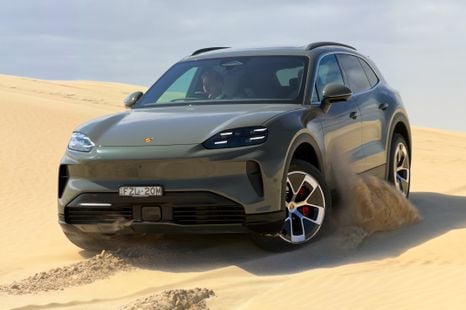
Porsche Cayenne Electric offers more personalisation than ever before
Automatic doors, wireless charging and over 100 different exterior paint options make the 'E4' Cayenne Electric the most configurable Cayenne ever.
9 Hours Ago

Senior Editor – News
Genesis has revealed its first hybrid, after reversing course on its plan to skip the powertrain type entirely ahead of becoming an electric-only brand.
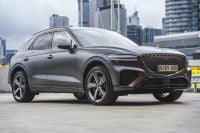
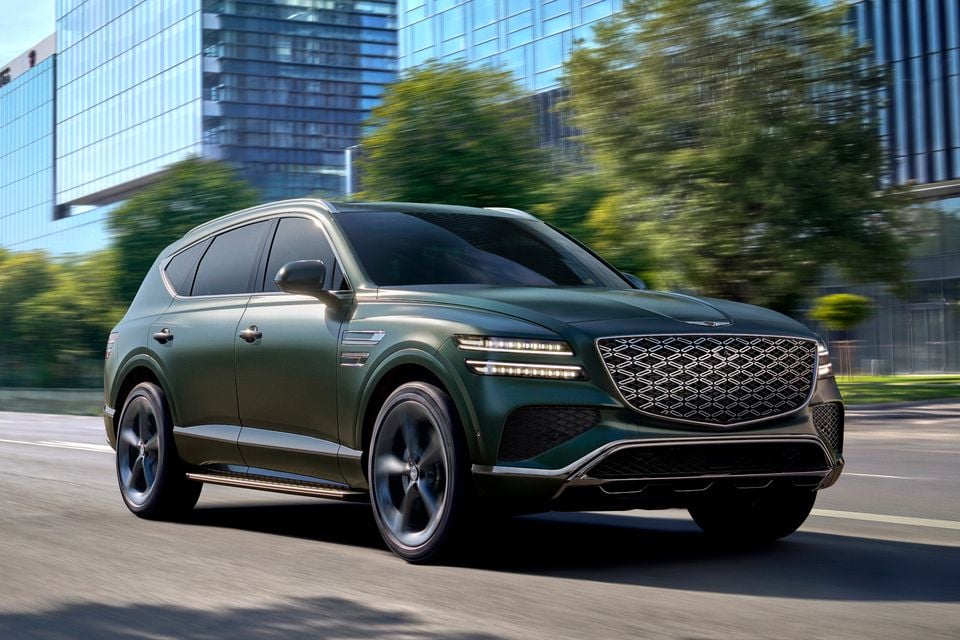
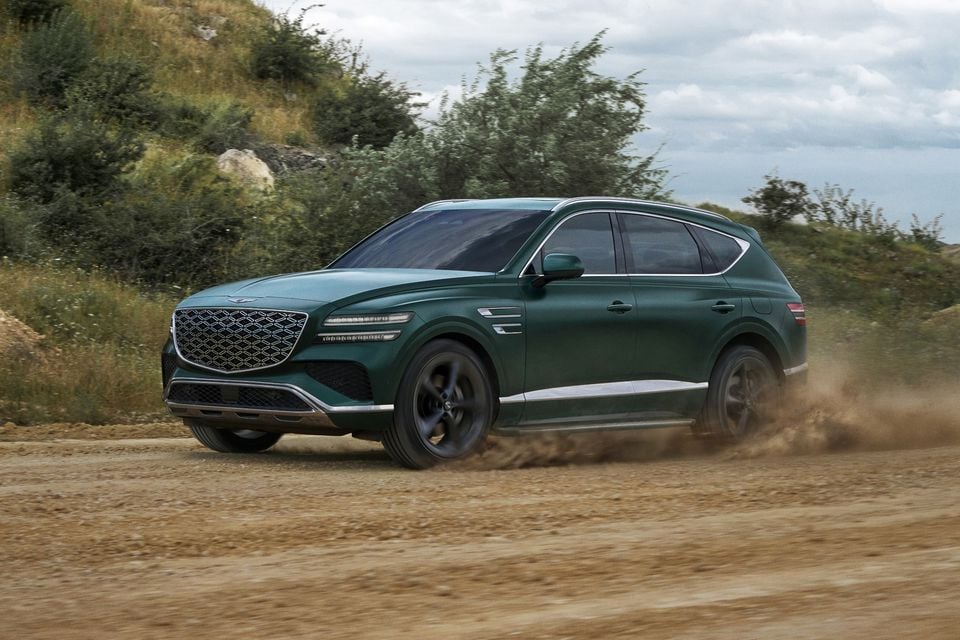
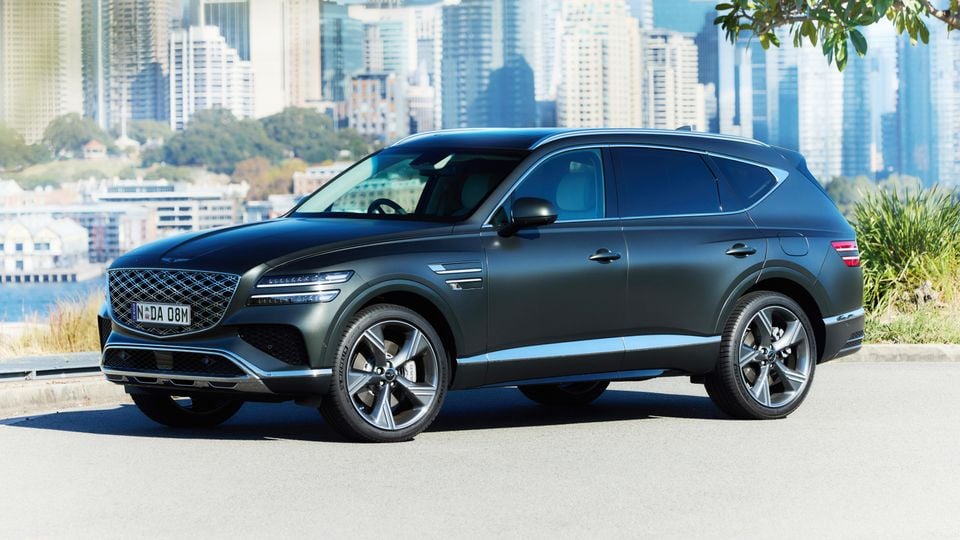
The luxury brand has deployed its new hybrid system first in the GV80 large SUV, its rival for the BMW X5 and Mercedes-Benz GLE.
While Genesis Australia has confirmed it’ll launch hybrid models – and Genesis itself has also confirmed it will offer extended-range electric vehicles (EREVs) – it hasn’t specified whether the GV80 Hybrid will come here.
“Genesis will introduce its first hybrid model next month in Korea, with Australia to follow in 2027. At this time, we can’t confirm which Australian models will receive hybrid powertrains or when,” said a Genesis Australia spokesperson in a statement to CarExpert.
“In parallel (to our HEVs), we are also developing EREV technology as part of our ongoing efforts to broaden our electrification portfolio – however, we cannot confirm a timeline for introduction at this stage.
“These new electrified powertrains are being developed not only to deliver greater efficiency, but also to provide the refinement, performance, and driving experience that customers expect from a Genesis.”
A hybrid combines a combustion engine, one or more electric motors, and a battery, allowing for limited electric-only driving. An EREV also has a combustion engine and one or more electric motors, but the engine is used only as a generator to charge the (much larger) battery which in most cases can also be charged externally. In short, this means the EREV can drive at all speeds and for vastly greater distances on pure electric power.
In addition to the GV80, the smaller GV70 mid-size SUV and the G80 large sedan are also expected to receive either hybrid or EREV powertrain technology.
The GV80 Hybrid features a turbocharged 2.5-litre four-cylinder petrol engine like the base GV80, but mated with a starter-generator (P1) motor which handles engine starting, and a drive (P2) motor which provides propulsion and regenerative braking.
There’s also a “new seven-speed rear-wheel drive transmission”, with no dedicated reverse gear as reversing is handled by the P2 motor.
The parallel hybrid powertrain produces total system outputs of 259kW of power and 530Nm of torque, up from 224kW and 422Nm in the standard 2.5-litre turbo four. Genesis claims a 0-100km/h time of 7.1 seconds.
The company also claims fuel economy is improved by 25 per cent or more compared to a rear-wheel drive, five-seat GV80 2.5T. Such a configuration doesn’t exist in Australia, though Genesis offers an all-wheel drive, seven-seat 2.5T which uses 10.4L/100km on the combined cycle.
While the Hyundai brand recently launched a turbocharged 2.5-litre four-cylinder hybrid powertrain in its Palisade large SUV, there are some key differences.
Genesis says this is the first hybrid system from the Hyundai Motor Group to feature a liquid-cooled hybrid battery system, which enables more efficient temperature management.
The company has thus far only confirmed a rear-wheel drive GV80 Hybrid, while the Palisade Hybrid can be had with either front- or all-wheel drive depending on the market. In all-wheel drive guise, it produces 245kW of power and 460Nm of torque.
The GV80 Hybrid will maximise its use of EV mode in stop-and-go traffic, while the hybrid system is also said to enable more responsive acceleration in overtaking scenarios.
Genesis touts the “EV-like” driving experience of the GV80 Hybrid, and notes it’s quieter than the GV80 2.5T – something it has achieved by not only installing electric motors, but also by lowering the final drive gear ratio and installing new engine crankshaft damper pulley technology and a centrifugal pendulum absorber damper to further reduce noise and vibration.
As seen in the Palisade Hybrid, Hierarchical Predictive Control (HPC) is claimed to predict the driving route and manage the battery’s state of charge accordingly, while the Smart Regenerative Braking system uses navigation data to automatically determine and apply the appropriate level of regenerative braking.
The GV80 Hybrid is distinguished visually from other GV80s via a unique grille and wheels.
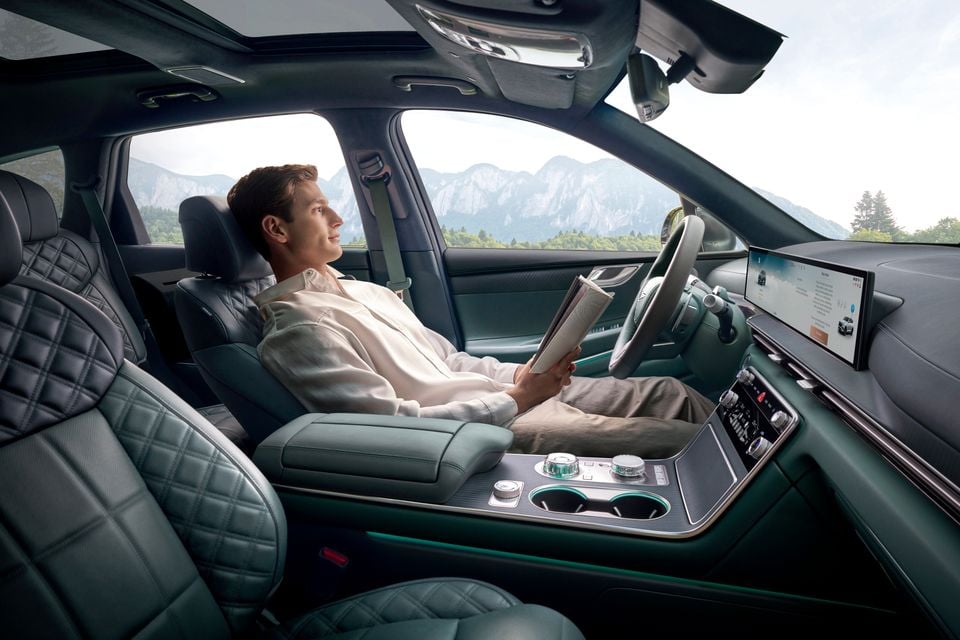
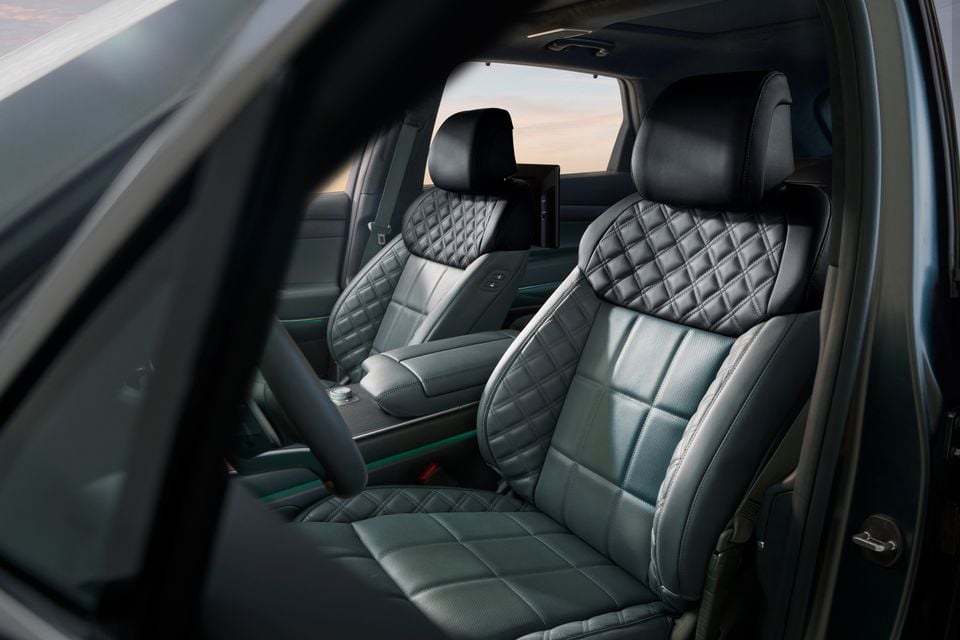
Genesis has also introduced four new two-tone interior colourways, including Obsidian Black/Taiga Green and Ultramarine Blue/Travertine Beige, plus two new wood inlays and new quilting patterns.
The GV80 entered production in 2020, with a facelifted version launched in Korea in 2023 and arriving here the following year.
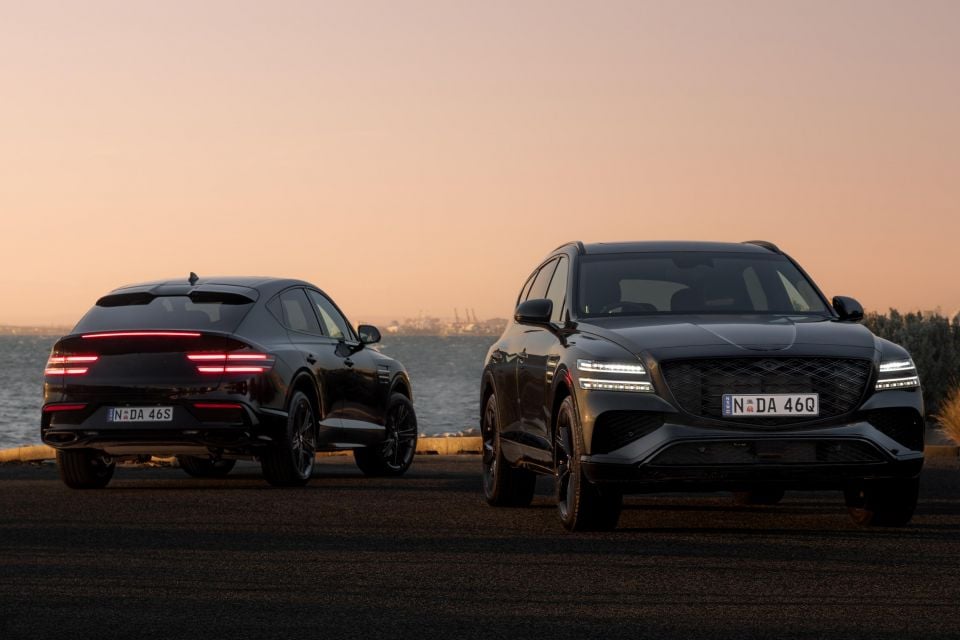
Genesis confirmed in January 2025 it would scrap its previous goal, announced in 2021, of going EV-only by 2030, with then-global boss Mike Song telling Australian media: “2030, 2035… if we think there are customers for ICE, hybrid, then we’ll do it. This is my answer – even 2050.”
Simultaneously, Genesis Australia confirmed it expected hybrids to be available locally in 2027.
Mr Song, who was succeeded as Genesis' global boss in December 2025 by Sean Lee, confirmed next-generation Genesis products will be developed not only with electric and hybrid powertrains, but also traditional combustion power.
“That’s the plan, because still there are markets or there are customers who want only the ICE, then we’ll do it,” he said.
“The home market in Korea, also our main market in America, the need for [hybrids] is growing.
“We still believe one day in the future, we don’t know when, it will be 100 per cent EVs. I don’t think I have that much foresight talent to tell you whether it’s five years or 10 years.”
Research cars in our Showroom, compare your options or let our New Car Specialists do the running around to find you a great deal.
William Stopford is an automotive journalist with a passion for mainstream cars, automotive history and overseas auto markets.
James Wong
9 Hours Ago

Damion Smy
12 Hours Ago

Max Davies
18 Hours Ago
James Wong
2 Days Ago
William Stopford
3 Days Ago
James Wong
3 Days Ago
Add CarExpert as a Preferred Source on Google so your search results prioritise writing by actual experts, not AI.