




Dave Kavermann
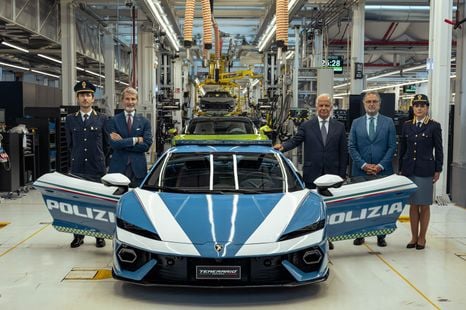
Lamborghini Temerario joins Italian police fleet for life-saving missions
The Lamborghini supercar plays an important role for Italian police, but not the one you might expect.
2 Hours Ago
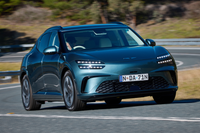
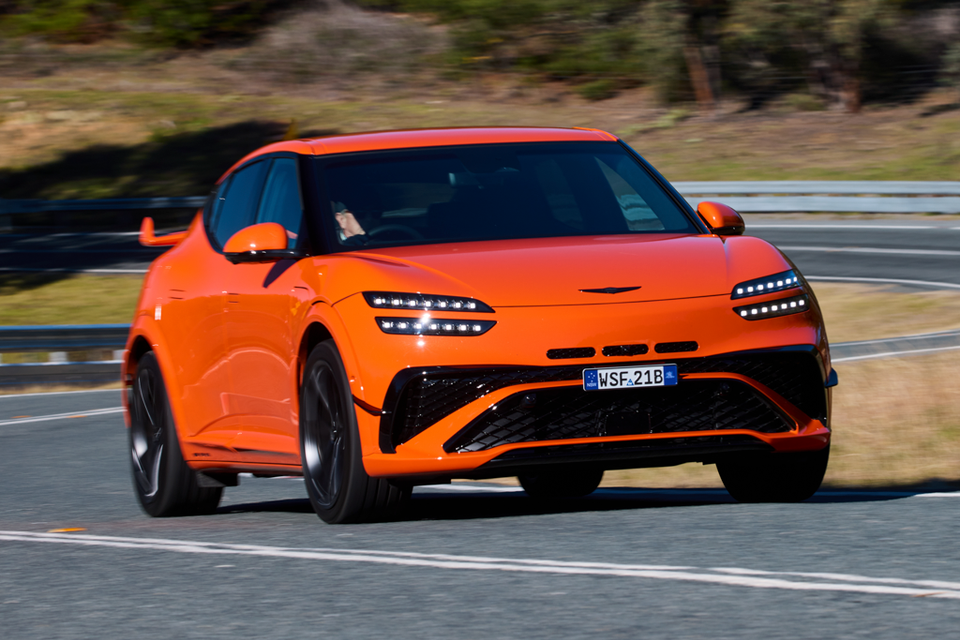
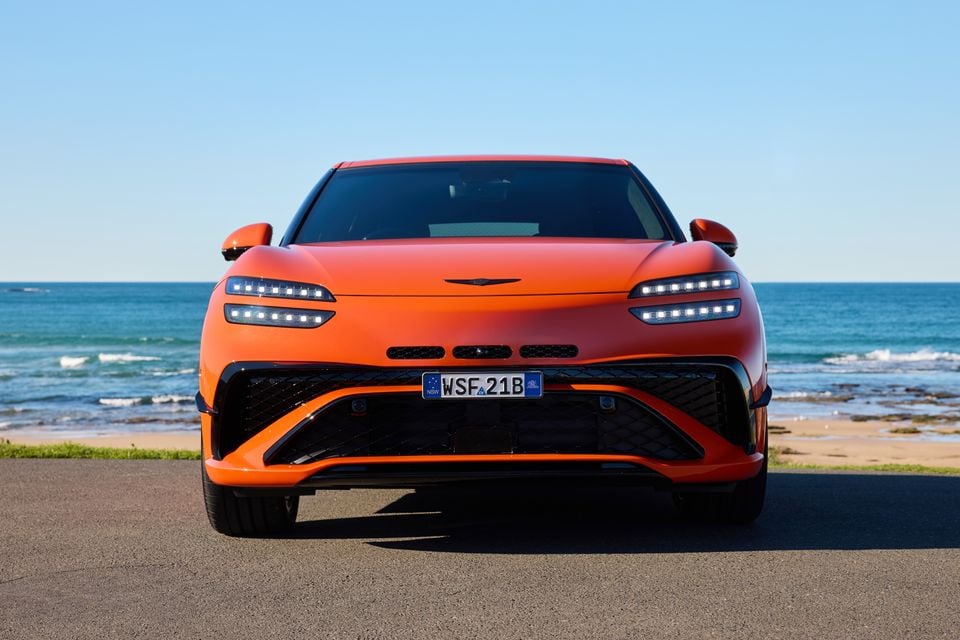
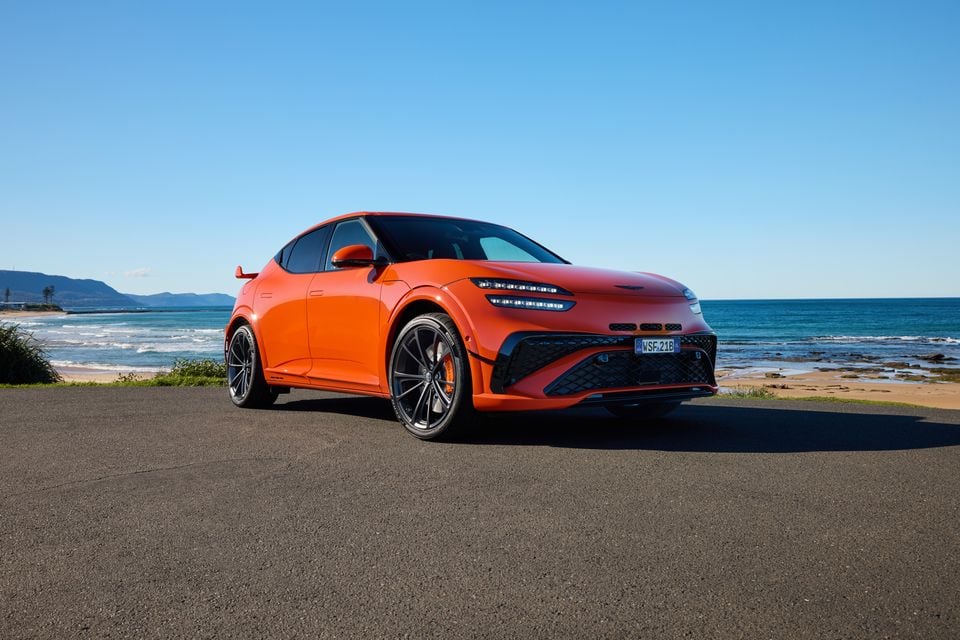
Hot doesn’t go far enough to describe the new Genesis GV60 Magma. This rapid little electric SUV is an absolute scorcher!

Senior Contributor
Senior Contributor
Senior Contributor
Senior Contributor
If this is the car for you, we’ll compare offers from trusted dealers, handle the back and forth and manage your purchase from enquiry to delivery.
You don’t accidentally buy a Genesis. And nobody on planet Earth is going to mistakenly buy the Genesis GV60 Magma.
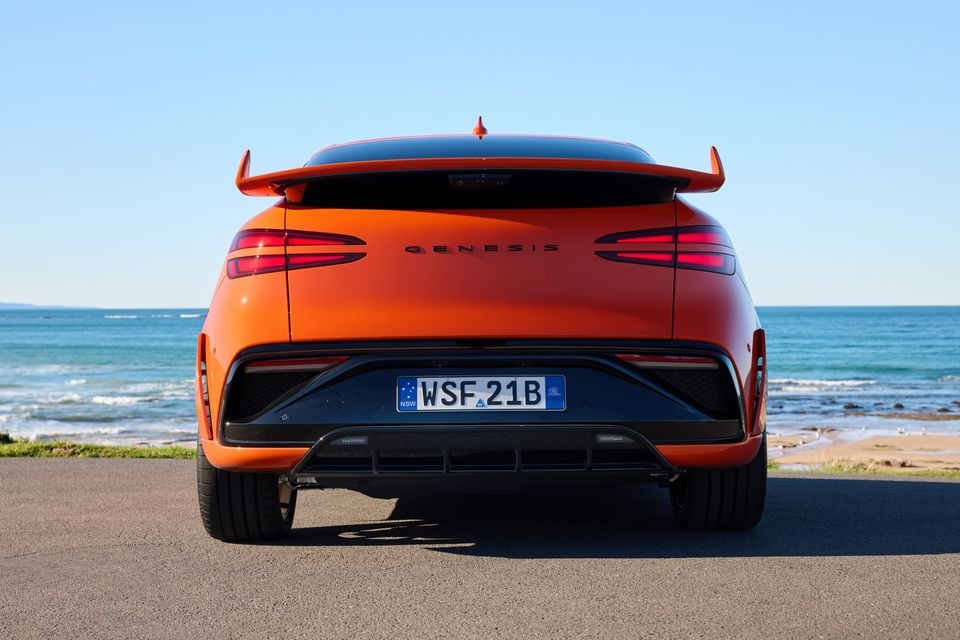
This new model isn’t just a dual-motor version of the regular GV60, which comes in for a facelift at the same time. Genesis has gone to town to N-ify (if that’s a term) its compact electric crossover SUV.
Significant changes to the chassis, the most power and torque offered by any production Genesis to date, and sleek new body and interior design elements combine to make this a cohesive and charismatic EV.
But sheesh, is it a lot of money for a small electric car. Let me explain.
There’s a more affordable Genesis GV60 with rear-wheel drive, which I don’t think is affordable enough. And this one? It’s not even in the same postcode as affordable. It’s freaking expensive.
| Model | Price before on-road costs |
|---|---|
| 2026 Genesis GV60 Magma | $130,000 |
Look, the reality is that this car isn’t trying to be affordable.
Sometimes, indulgent purchases are just expensive. And this one is, but it would be ignorant not to consider the options that exist out there for significantly less money.
The related Hyundai Ioniq 5 N and Ioniq 6 N sports sedan cost $15,000 less. The Kia EV6 GT large is $30k cheaper. And those are just the South Korean options.
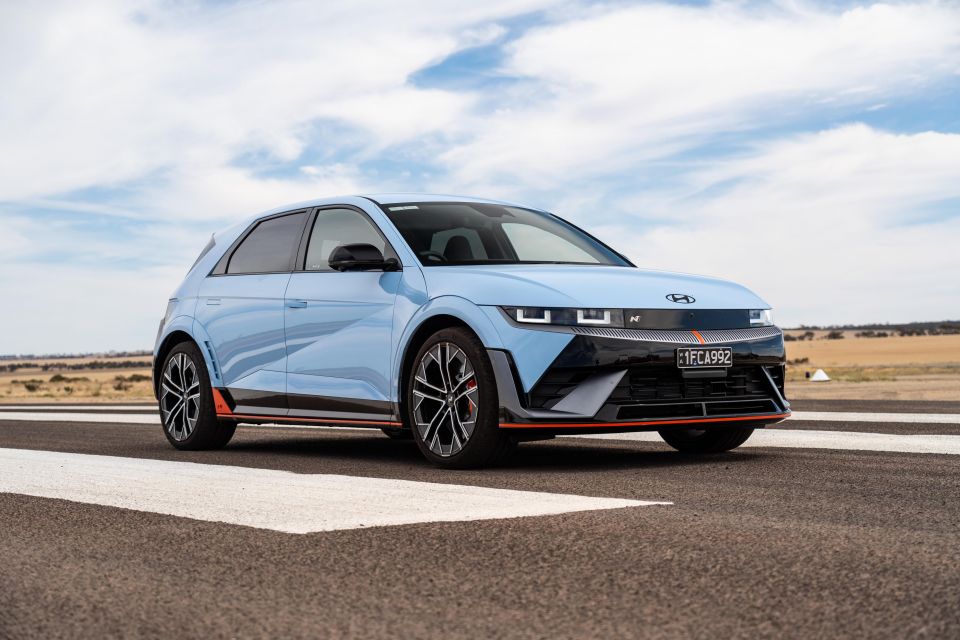
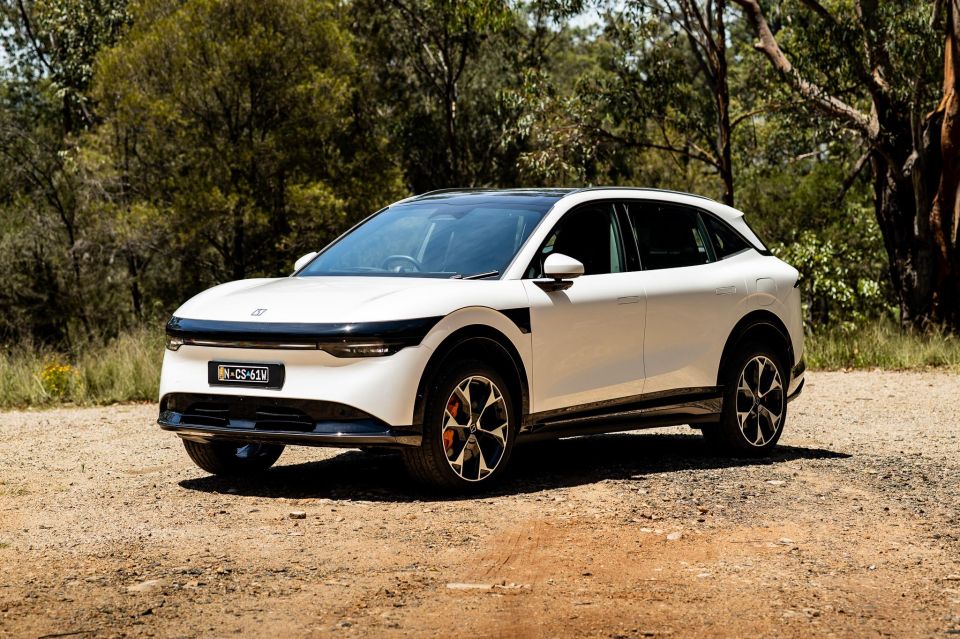
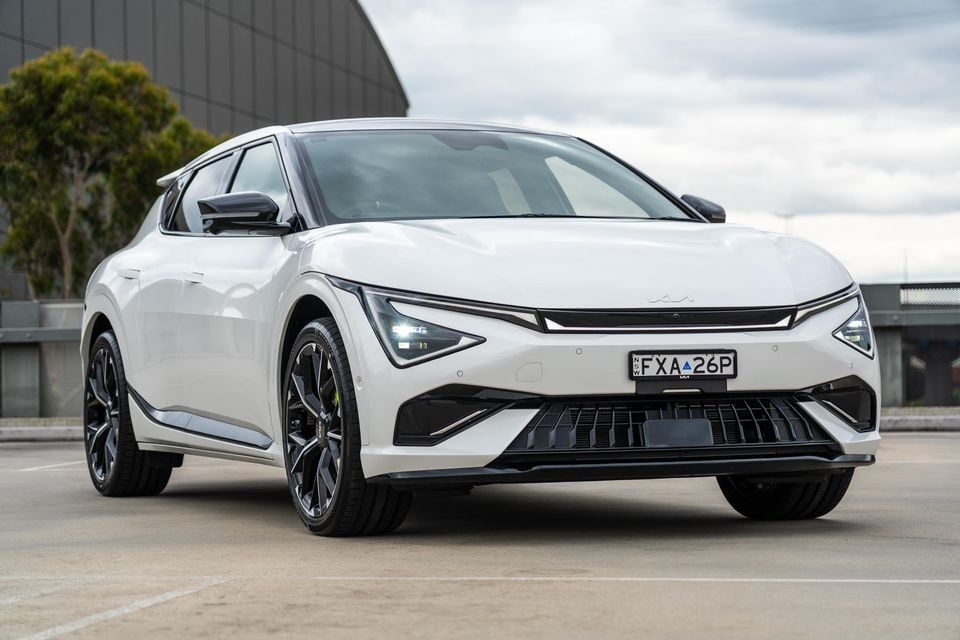
Chinese brands are offering cars that are as fast and come with dual-motor AWD, for damn near half the price of this. The Zeekr 7X Performance is a sub-4.0-second 0-100km/h mid-size electric SUV that handles itself nicely for $73k. The Volvo EX30 dual-motor is a compact electric SUV with a crazy 0-100km/h time for about $55k, and it’s a Volvo.
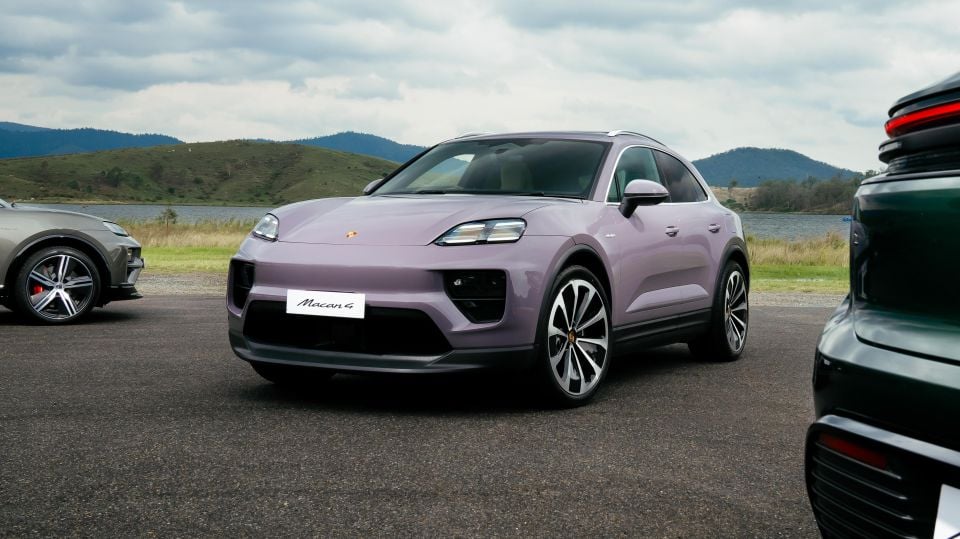
And the Porsche Macan needs to be in the conversation here, because even though it’s larger, more expensive and not as fast in its base guises as this, it’s a Porsche, and that counts for something, right?
However, those cars aren’t this, and you’ll find out if you keep reading why this might actually live up to its audacious asking price.
To see how the Genesis GV60 lines up against the competition, check out our comparison tool
I think some customers might be a bit underwhelmed by the standard interior finish, quite honestly.
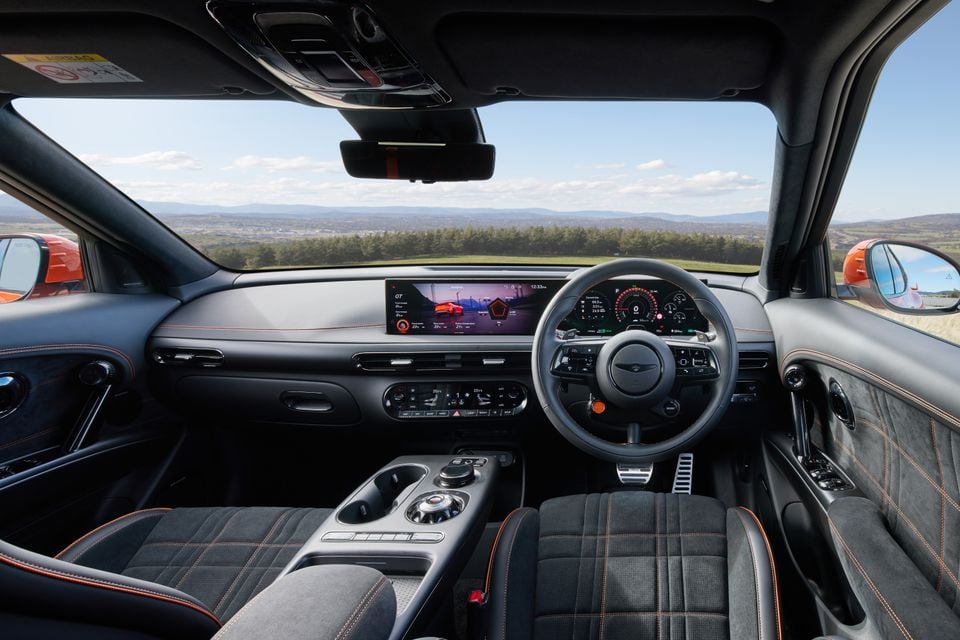
That mainly comes down to the tartan cloth trim on the seats, which is admittedly bordered by leather, but as a luxury indulgent buy, it mightn’t be ‘special’ enough inside for some.
Now, I personally think the trim looks awesome and feels great too, and it’s grippier than full leather would be. And you've got a leather dashboard to scratch the cowhide itch.
There is an optional interior with a bit more colour – that signature Magma orange – available as a no-cost option.
And the fact there’s no glass roof might be a turn off, too – some sub-$100,000 cars have huge panoramic glass turrets these days. You can’t even option a sunroof in the Magma!
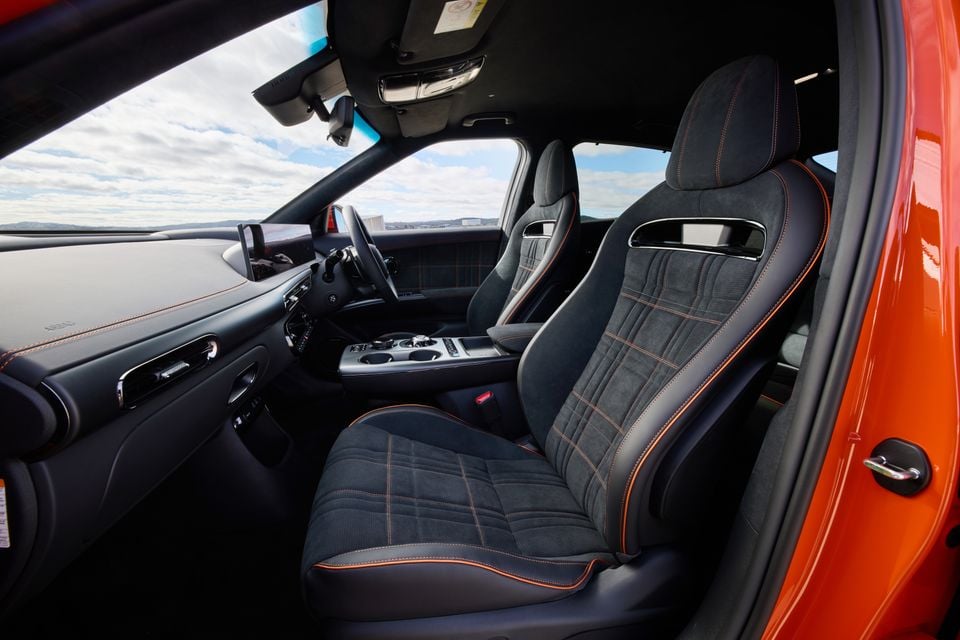
I’m okay without the sunroof, but the headlining is very dark, and it can feel a bit too cave-like as a result.
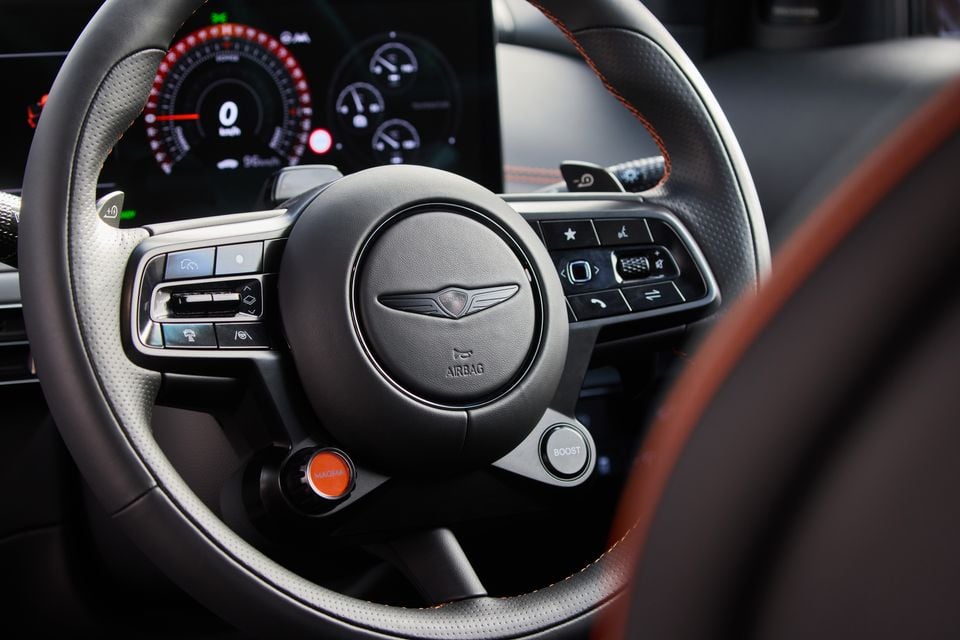
This steering wheel looks special, with a blacked-out badge finish and the bright Magma button, which can be pressed to go through the hardcore drive modes, or twisted to change between the standard settings. There’s also a Boost button on the steering wheel for a 20-second shot of adrenaline, and paddle shifters for either regen braking adjustment or, well, 'shifting' when you’re using the Virtual Gearshift system.
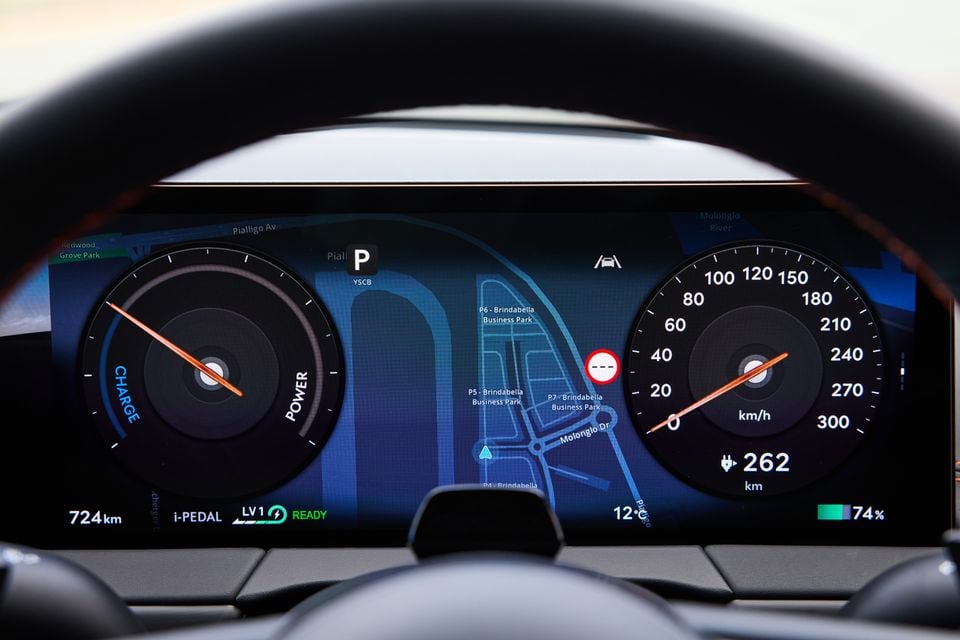
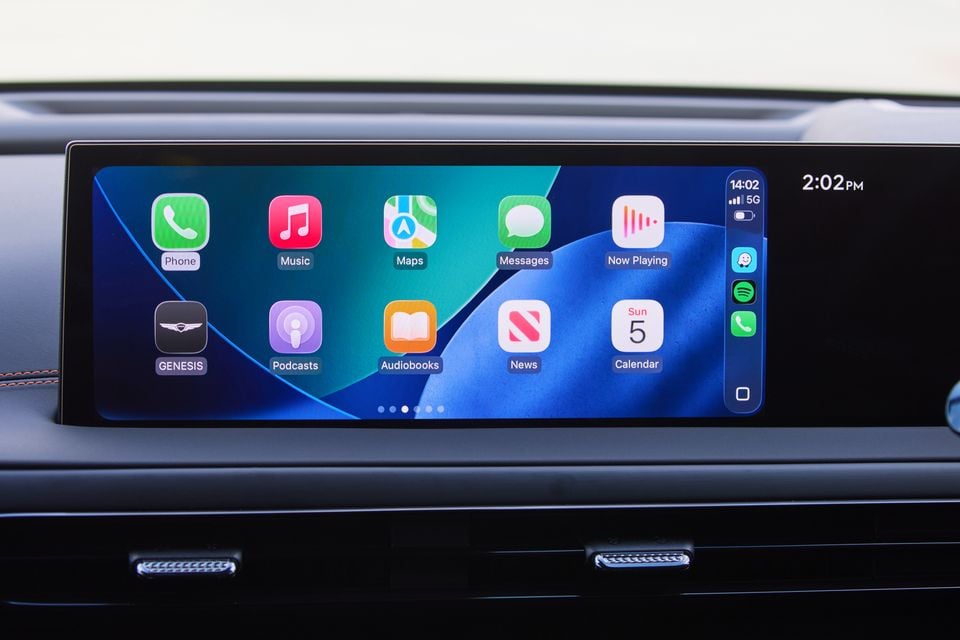
The massive widescreen digital array is eye-catching, but I think it can also be a bit mind-boggling to interact with.
There are heaps of different info points available to you on the driver’s info screen, including displays for the different modes and configurable settings for your preferences. It’s pretty cool, and certainly offers some different graphics to what we’ve seen in the past – including a dial for battery and e-motor temperatures.
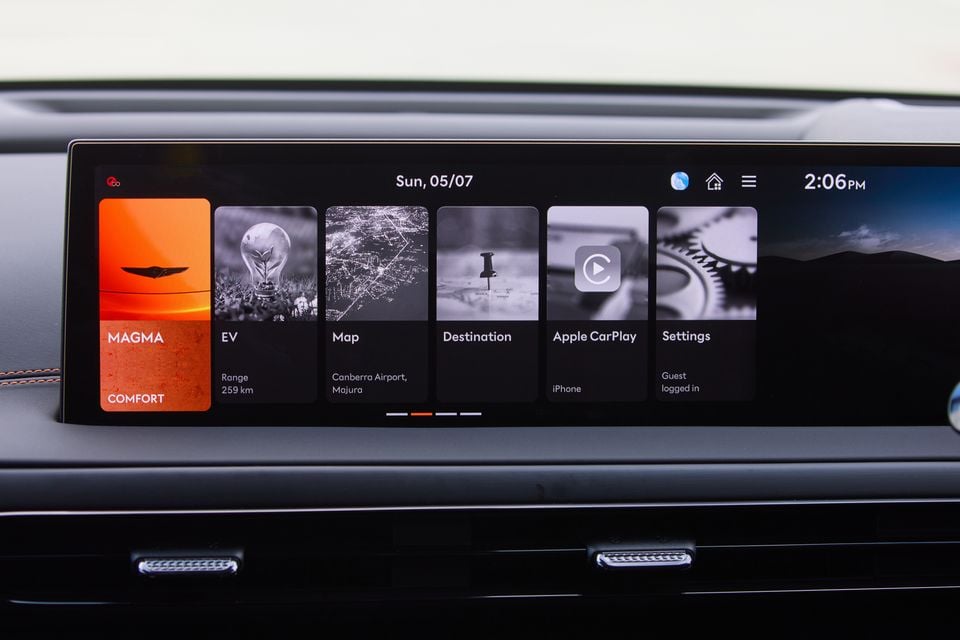
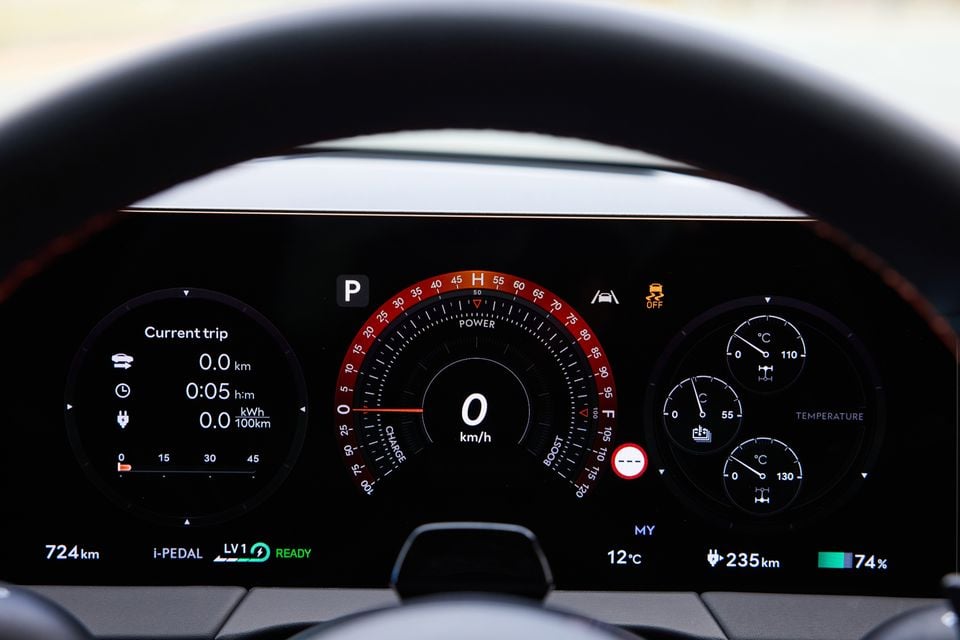
In the main screen there are other adjustments you can make for your EV system, including choosing for your battery to be in Performance mode for more spirited drives. There are drive modes to choose from too, including Drift Mode, a Performance Timer and much more… It’s clear that Genesis has done a lot of work to make the Magma more than just a fast car, but also more performance-oriented in terms of the battery tech. In the screen is where you’ll find the Virtual Gearshift on/off switch too.
For daily use, I have never really gelled with Genesis menu layouts because of the elongated screen – it’s just not as good as an upright screen with more landscape to play with. Instead, there are menus upon menus. But there is a rotary dial between the seats with some buttons to manage proceedings, which might make it a bit easier.
Once you’ve got your phone connected, though, you could just default to Apple CarPlay or Android Auto and never really use the main menus.
Down below the media screen there’s a panel with dual-zone climate adjustment via toggle switches, but there isn’t a button for fan speed adjustment – instead, it’s controlled by the touchscreen. Don't love that, nor the piano-black finishing there, either.
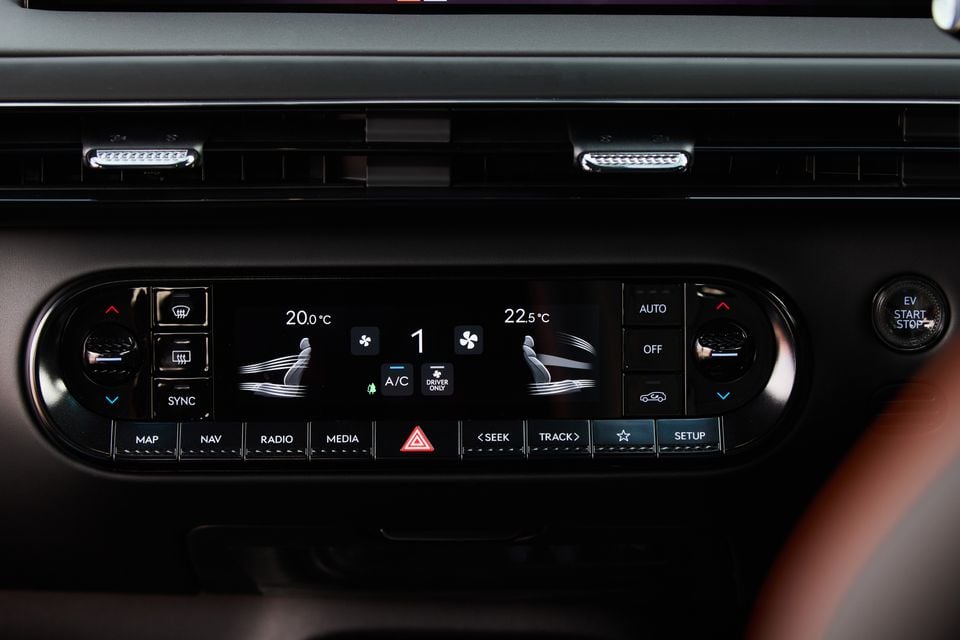
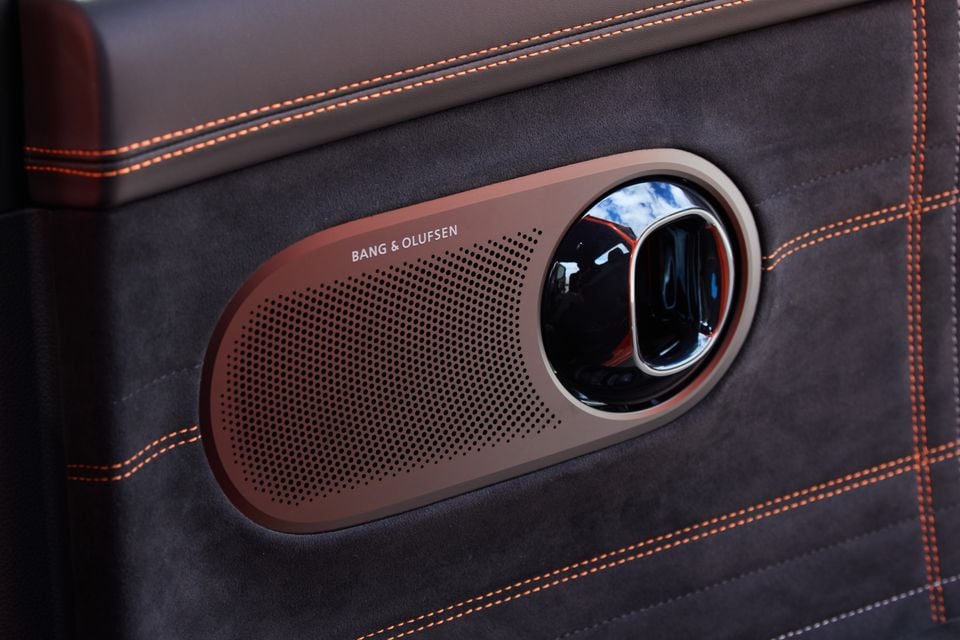
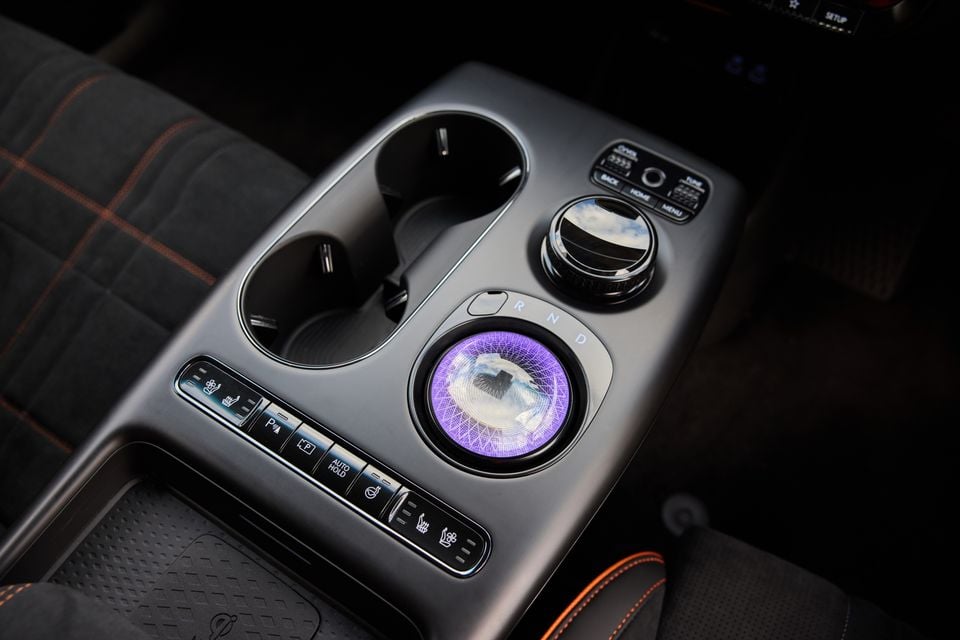
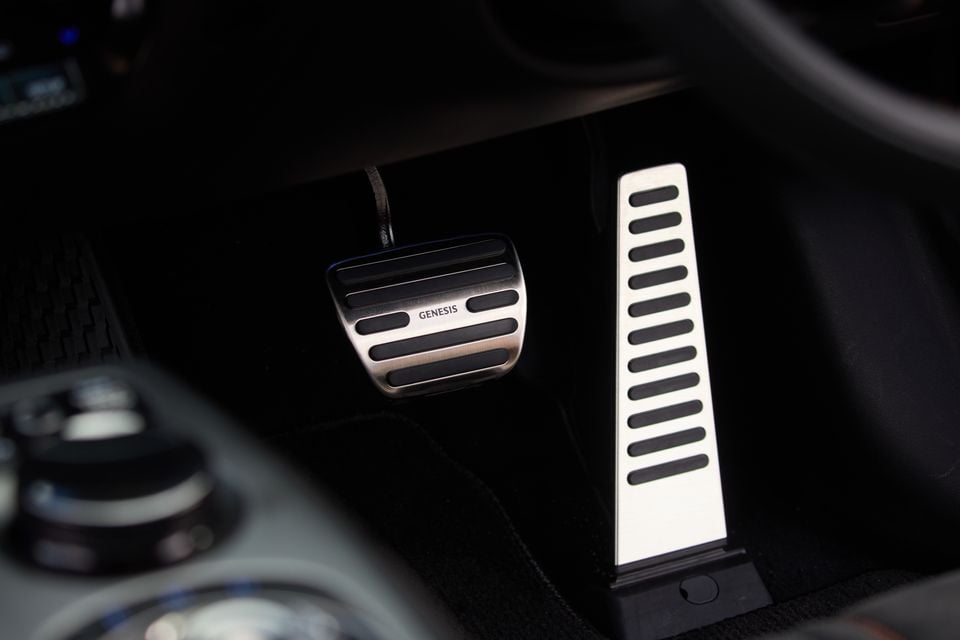
Thankfully, there are also audio volume and tuning scrollers, plus good cupholders between the front seats, the dinky Crystal Ball gear selector, and controls for your parking camera, auto hold, steering wheel heating, and seat ventilation and heating. And you’ll find a central wireless phone charger, too.
Practicality-wise, it has bottle holders in the doors, a good size glovebox, and a stash tray below the centre console. There are illuminated vanity mirrors, extendable sun visors, grab handles (which you might need – hopefully not as a driver, though!), and an auto-dimming rear-view mirror that can change into a digital camera mirror.
In the back, it’s a bit tight.
Because there is no glass roof, it feels quite dark, and at 6'0” (182cm) I had limited toe room and was forced into a knees-up position, despite having plenty of actual knee-room. Headroom is okay, though.
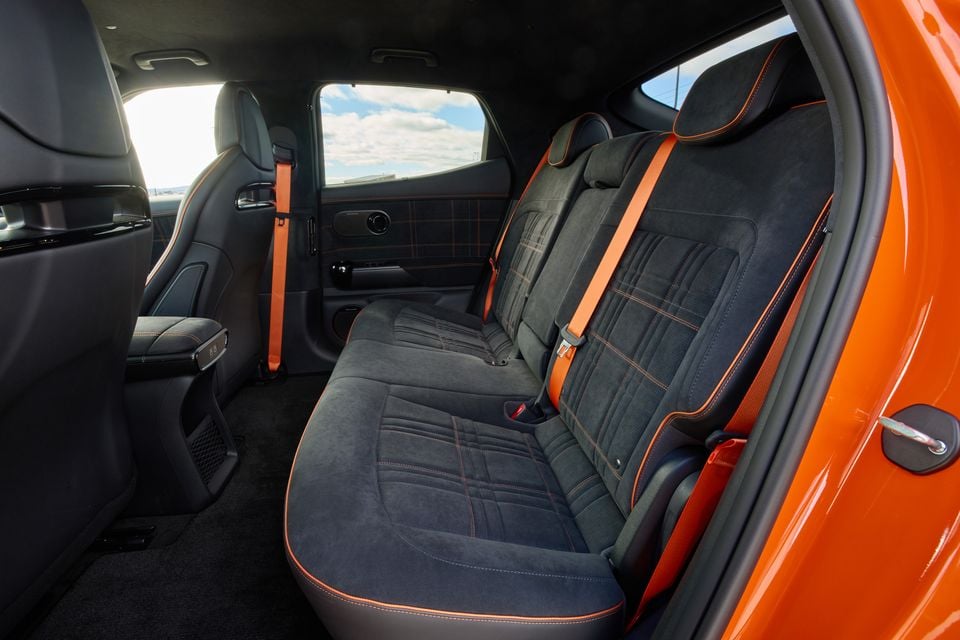
There is excellent multi-mode lighting in the back, grab handles with little hooks, sunblinds in the windows, and rear outboard seat heating.
Rear-seat occupants also get directional air-vents in the pillars, which are great for face-cooling or warming, but none down near the knees. There are rear USB-C ports and a storage tray that extends to the front, too, but no map pockets on the seatbacks.
Oh and one other thing about this car: it has an extensive sound-deadening system, with heaps of little microphones dotted around the cabin that can help kill off outside sound intrusion – like a set of noise-cancelling headphones… or a whole car load of them.
There are cupholders in a flip-down rear armrest and adjustable head restraints for all three positions, plus three top-tether points and outboard ISOFIX anchors for child seats.
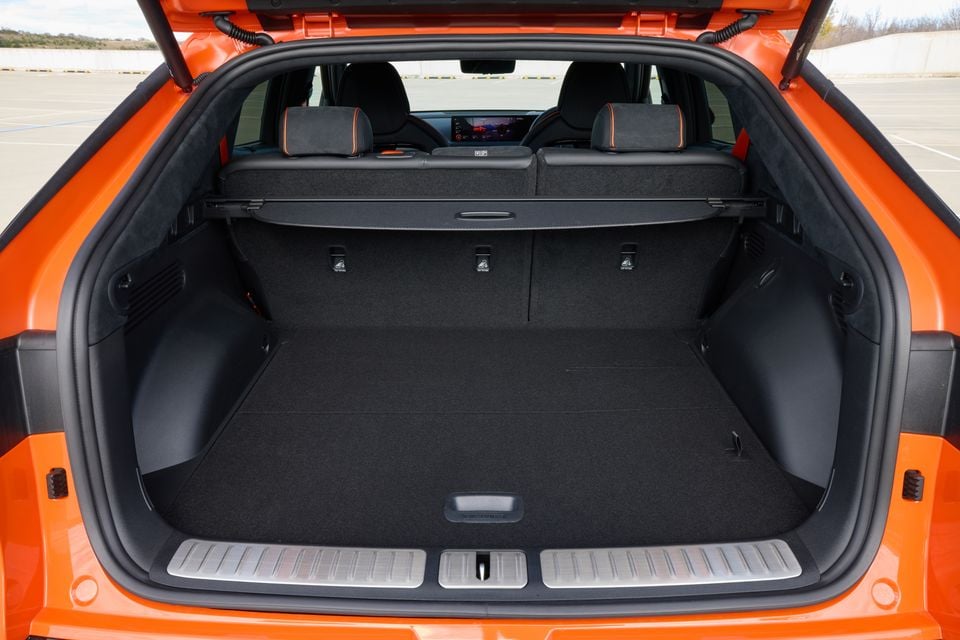
The boot space is accessed by an electric opener, and has 400 litres of capacity, which is enough for some luggage and backpacks. There's a cargo cover, lighting, and a 12-volt outlet, but no shopping bag hooks.
Nor is there a spare wheel; just a hidden space below the boot floor for charging cables and your tyre repair kit.
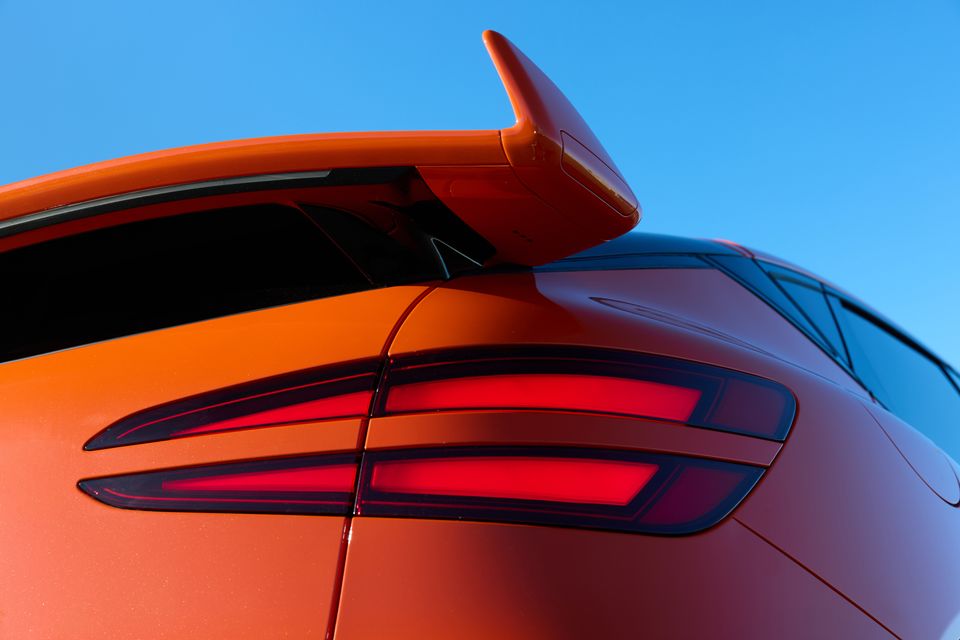
And while it's not really relevant here, it is intriguing to note the Magma is lower, wider and longer than the regular GV60, because of its awesome body-kit and chassis setup.
| Dimensions | Genesis GV60 Magma |
|---|---|
| Length | 4635mm |
| Width | 1940mm |
| Height | 1560mm |
| Wheelbase | 2900mm |
| Cargo capacity | 400L |
To see how the Genesis GV60 lines up against the competition, check out our comparison tool
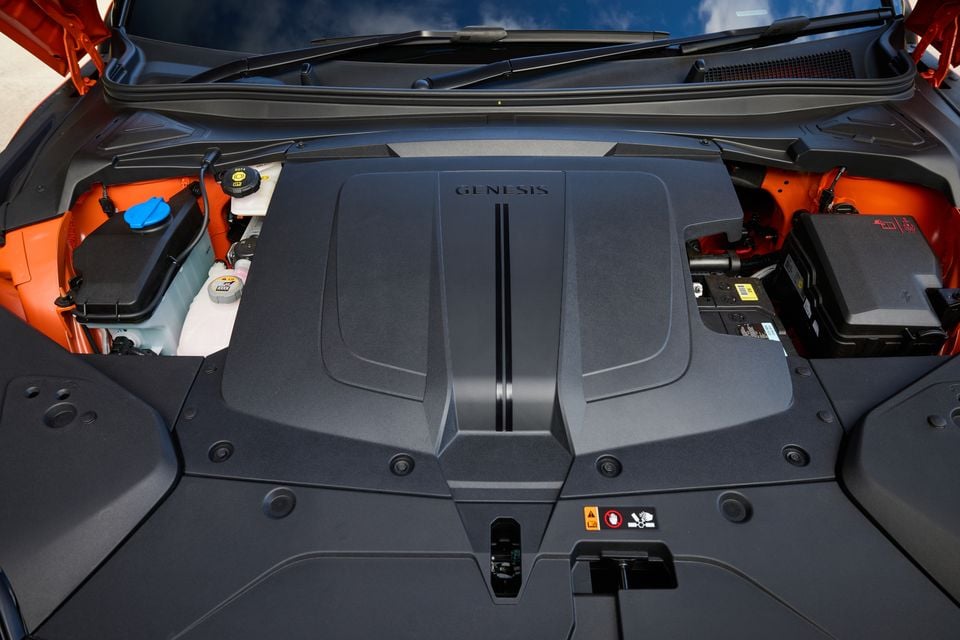
The Magma takes the standard GV60 and applies some of the nuts nous that has been applied to N models from Hyundai. But it doesn’t just CTRL+C, CTRL+V the same stuff – the Magma has been built by Genesis to be a different kind of crazy, and it shows in the drive experience.
| Specifications | Genesis GV60 Magma |
|---|---|
| Drivetrain | Dual-motor electric |
| Battery | 84kWh NMC |
| Power | 478kW – Boost Mode |
| Torque | 790Nm – Boost Mode |
| Drive type | All-wheel drive |
| Weight | 2270kg |
| 0-100km/h (claimed) | 3.4 seconds – Boost Mode |
| Energy consumption (claimed) | 21.5kWh/100km |
| Energy consumption (as tested) | 25.6kWh/100km |
| Claimed range | 425km (WLTP) |
| Max AC charge rate | 11kW (Type 2) |
| Max DC charge rate | 260kW (CCS2) |
The focus for the launch drive in and around Canberra was on the, er, quicker side, and it showed in the efficiency figures.
The claimed figure listed above is okay. But the reality, after a few hours of driving (and with different drivers at the helm), was a high 25.6kWh/100km in the car I drove.
That’s thirsty by EV standards, and means that if you’re really up it you will get through a battery in around only 330km.
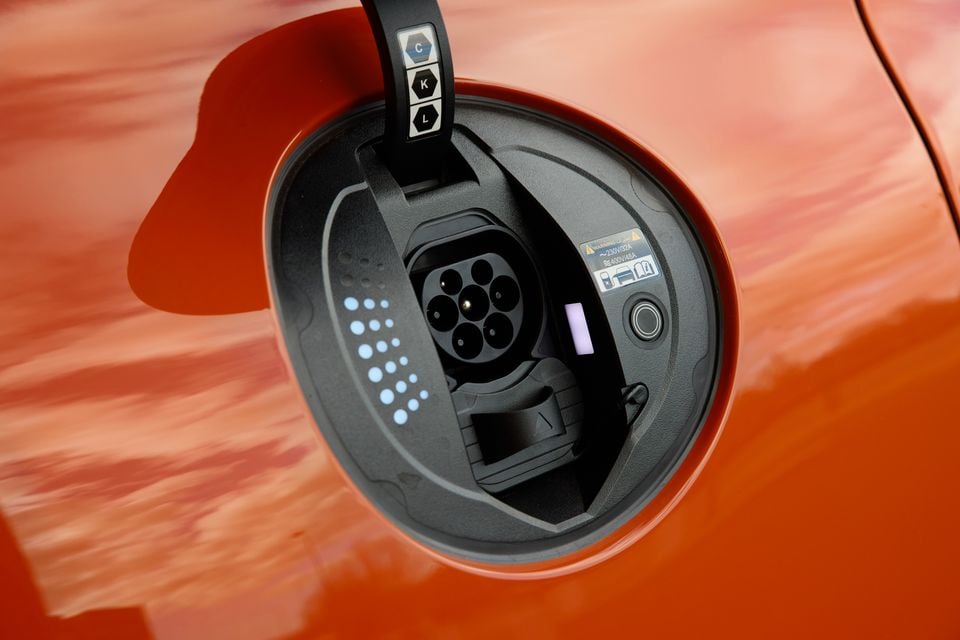
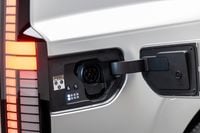
But who cares? Just drive in fun places where there are fast-chargers, right? The fact it can replenish almost three-quarters of the battery's capacity in less time than it takes to order a coffee and drink it is quite promising. But you’ll have to: A) find a charger that can output 350kW; B) make sure that it’s working, and; C) hope no-one else is waiting for it.
If those worlds align, you’ll have yourself a very good time.
To see how the Genesis GV60 lines up against the competition, check out our comparison tool
Fun stuff first.
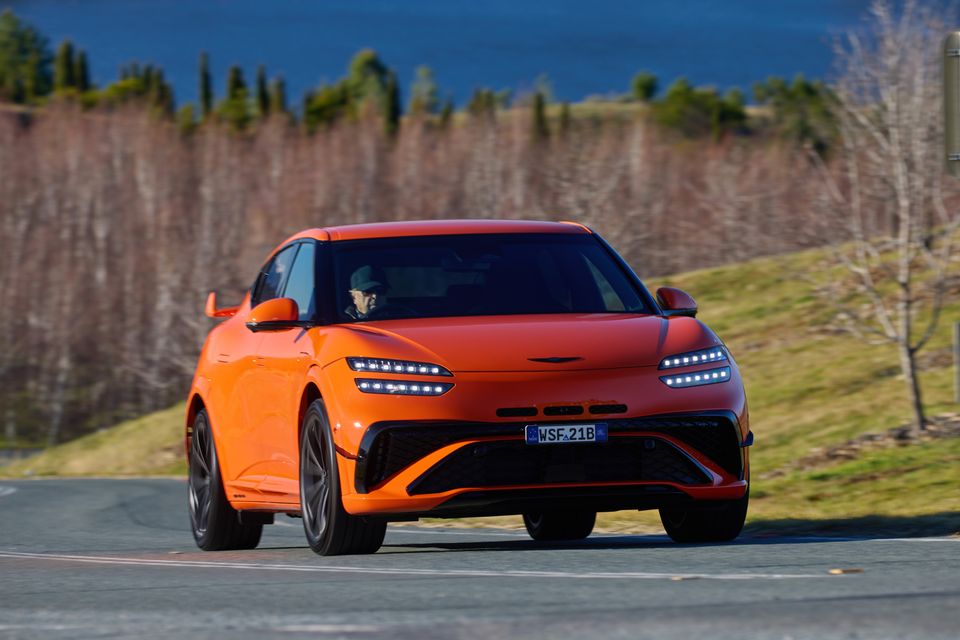
With the Virtual Gearshift activated, the GV60 Magma takes on a completely different character.
The steering wheel paddles simulate gear changes rather than controlling the regen braking, and the system even gives you a convincing synthetic soundtrack to go with it. It’s more V8 than turbo-four, and I’m here for it.
It's different to the Hyundai Ioniq 5 N's approach, and I actually think the Genesis version is a little more convincing – and less droney. Whether you want to listen to it forever is another question, but it's certainly entertaining in bursts.
Press the Magma button and select GT mode, and things get more serious. The suspension, steering, throttle response and sounds all change, giving the GV60 a much more focused character.
If this is the car for you, we’ll compare offers from trusted dealers, handle the back and forth and manage your purchase from enquiry to delivery.
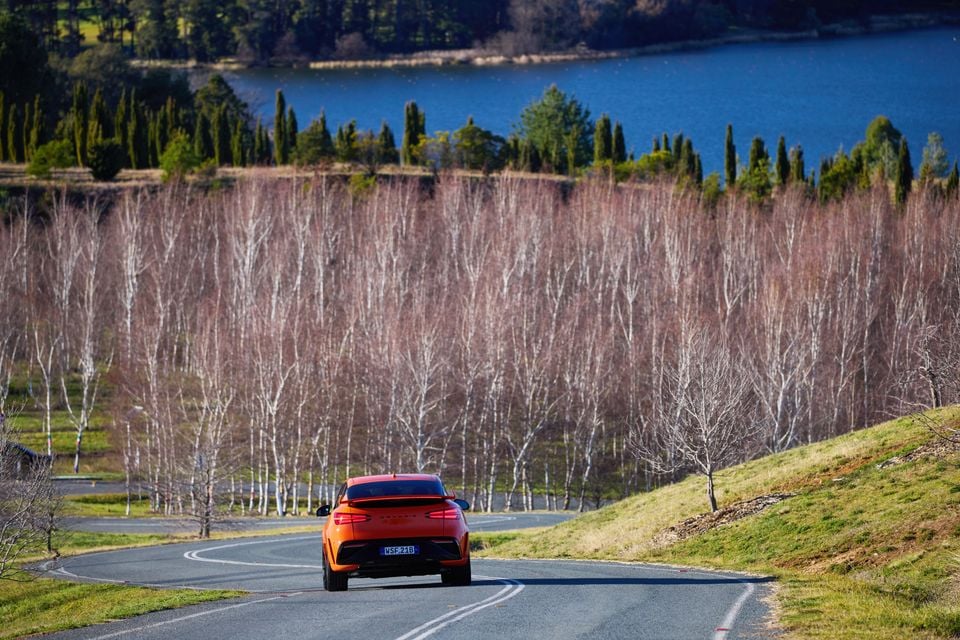
And, far out, is it fast.
The dual-motor all-wheel-drive system delivers enormous oomph and – thankfully – the brakes are up to the task.
There's a reassuring amount of stopping power here, even though the regenerative braking system can occasionally interrupt the brake pedal feel and make it feel a little less natural than you'd expect from a conventional performance car.
But this is a proper performance car. There's no question about that.
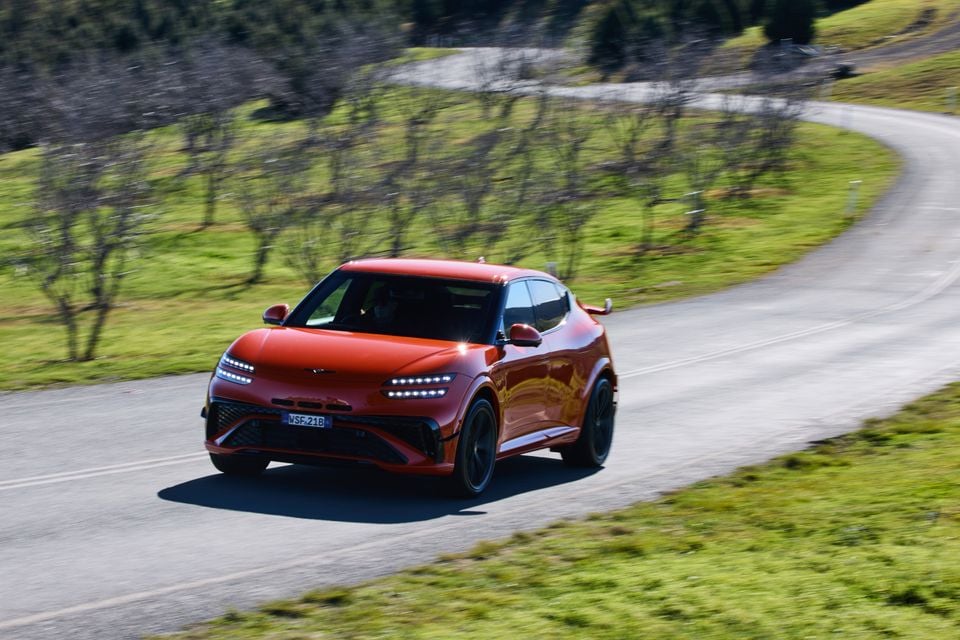
The all-wheel drive system gives the GV60 Magma immense traction and makes it feel very secure when you're all-in.
Boost Mode will give you everything the battery and electric motors can deliver for a sum total of 20 seconds, and the burst of adrenaline is face-reconfiguringly addictive.
It's perhaps a little less playful than an Ioniq 5 N, but there's still plenty of fun to be had, even if it’s somewhat more mature and measured in its madness.
Once you've had your fun, switching off the Virtual Gearshift system completely changes the experience. It feels like you've jumped into a different car.
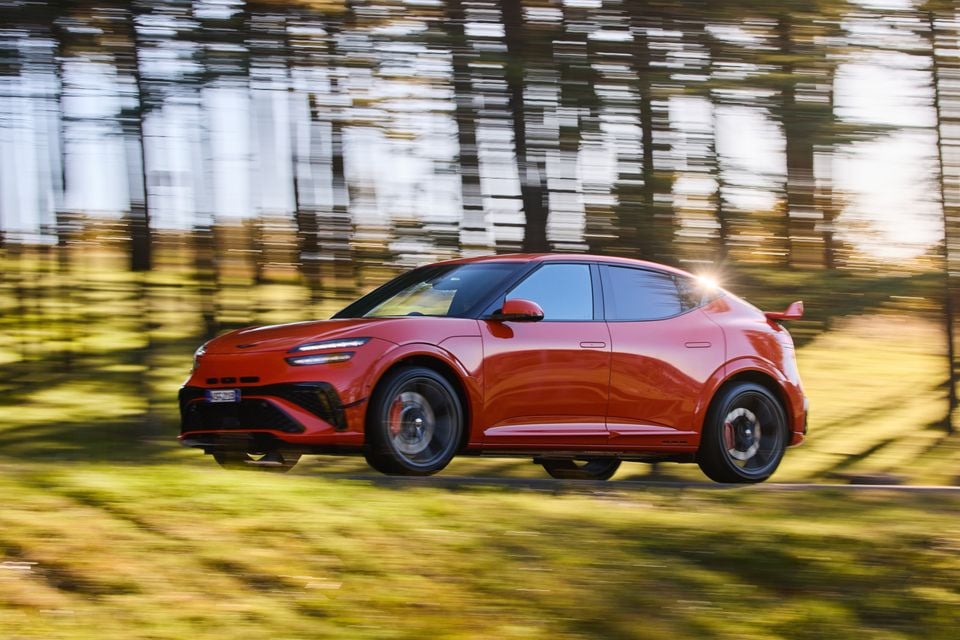
The throttle response becomes less aggressive, the steering is lighter and easier, and despite it having been reformed into a manic thing, it still does an exceptional job of doubling as a conventional luxury EV.
When you’re in the normal drive modes, the paddles revert to regen adjustment, and you can dial it up to Level 3, which is assertive but doesn't offer the same full i-Pedal throttle-only experience as the less powerful GV60 RWD.
In a conventional mode the suspension is forgiving, soaking up rough surfaces and lumps and bumps on country roads with composure.
The steering is relatively light and nimble in normal modes, while it weights up convincingly if you want it to. There's also a customisable My Mode, so you can tailor the steering, throttle and other elements to your liking. That's probably the best way to get the balance you're after.
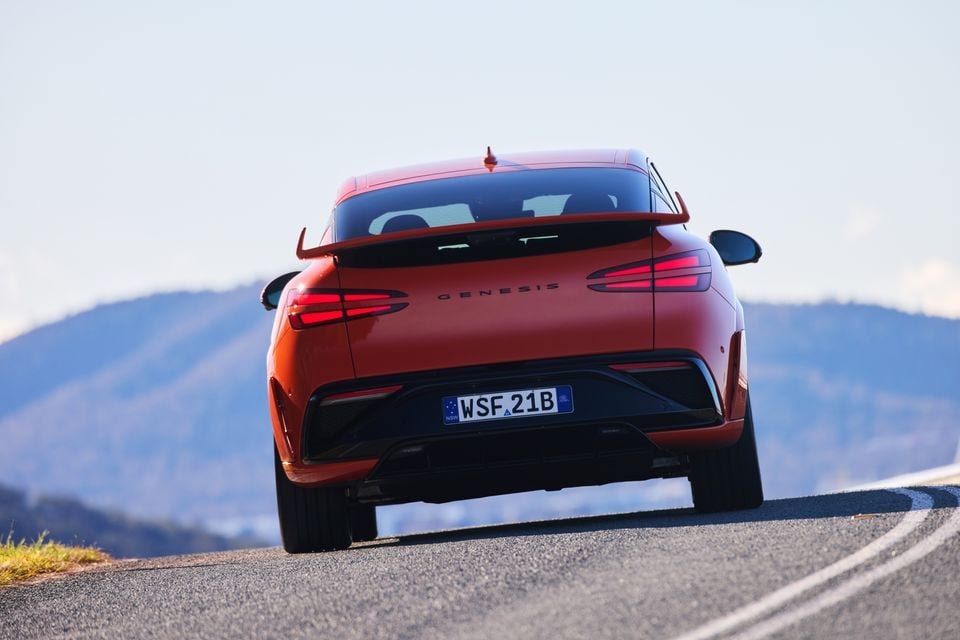
And while other EVs have done this Jekyll & Hyde thing before, the Magma is wholly convincing as both a sports car and a luxury SUV.
But is it worth this much money…? I guess if you have the sort of bank balance that allows you to buy a Porsche instead of this (or as well as this), then it might. But the argument would be a whole lot more convincing if the Magma was priced closer to $100k than $150k.
To see how the Genesis GV60 lines up against the competition, check out our comparison tool
The Magma brings a sportier set of features than the standard GV60 Advanced.
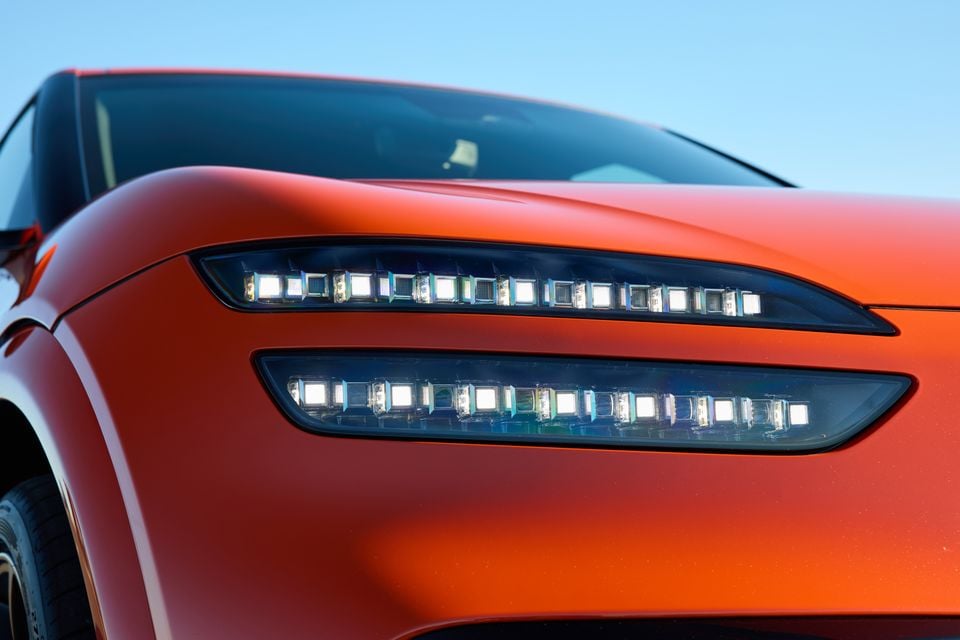
2026 Genesis GV60 Magma equipment highlights:
To see how the Genesis GV60 lines up against the competition, check out our comparison tool
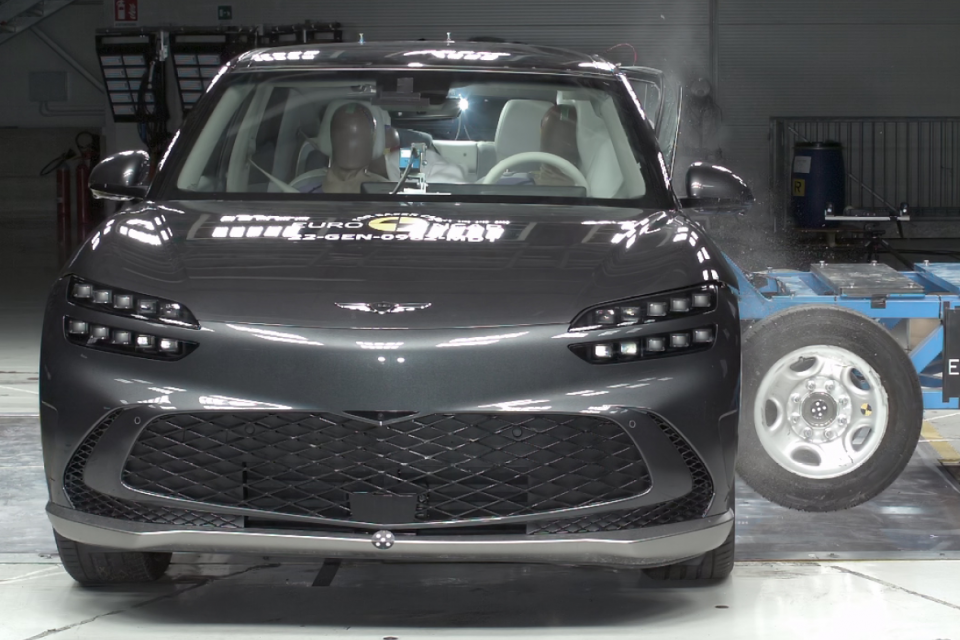
The Genesis GV60 has a maximum five-star ANCAP safety rating dating back to 2022 – which, according to ANCAP, covers “all variants”. So, this one, too! It is loaded with standard safety technology and equipment.
| Category | Genesis GV60 |
|---|---|
| Adult occupant protection | 89 per cent |
| Child occupant protection | 89 per cent |
| Vulnerable road user protection | 63 per cent |
| Safety assist | 88 per cent |
Standard safety equipment includes:
It may be compact, but the GV60 has 10 airbags fitted - dual front, dual front-side, driver’s knee, front centre, dual rear-side, and full-length side curtain coverage. And, fun fact – it’s the first time the Korean automaker has managed to get a centre airbag to fit into a bucket seat.
To see how the Genesis GV60 lines up against the competition, check out our comparison tool
Don’t go thinking you’re going to have to pay more for your ownership experience if you’re buying a high-grade Genesis GV60. Scheduled service prices for the Magma are, in fact, identical to those of the circa-$40k-cheaper GV60 Advance, which is actually nothing for the first five years.
| Servicing and Warranty | Genesis GV60 |
|---|---|
| Warranty | 5 years, unlimited kilometres |
| Roadside assistance | Up to 10 years |
| Service intervals | 12 months or 15,000km |
| Capped-price servicing | 5 years or 75,000km |
| Total capped-price service cost | $0 |
Yes, a nice bonus is that Genesis doesn’t charge you a single cent for the first 75,000km of maintenance. That’s a few grand back in your bank account.
However, service intervals are 12 months or 15,000km, which is somewhat needy for an EV.
For private buyers, there’s a five-year, unlimited-kilometre warranty for the vehicle itself, and the battery warranty is eight years or 160,000km, whichever occurs first.
You also get free 24/7 roadside assistance for five years or 75,000km (and up to 10 years if you service within the Genesis network), and five years of free online data for the connected services system, including over-the-air software updates. Nice.
Genesis also offers a concierge service via which it can collect and return your car for maintenance – provided you live within a preset distance from one of its workshops.
And you can take your Magma to the track and it’ll be covered. Just make sure you don’t do timed events… and make sure you read the fine print first.
To see how the Genesis GV60 lines up against the competition, check out our comparison tool
As a high-performance luxury electric SUV, the GV60 Magma is hard to fault. But the big problem is the price.
If you’re thinking of this as an alternative to an electric Porsche Macan, then fine. It’s not bad value compared to it, and there’s no doubt Genesis offers a different kind of luxury car experience than many of its rivals.
But really. It costs $130,000 plus ORCs. And you can buy a new car that’s also very fast, electric and luxurious for almost half that price from some other brands.
So is it worth the ask? Have your say in the comments. We’d love to know.
CarExpert can save you thousands on a new Genesis GV60. Click here to get a great deal
Click the images for the full gallery
If this is the car for you, we’ll compare offers from trusted dealers, handle the back and forth and manage your purchase from enquiry to delivery.
Genesis GV60
Genesis GV60 Sales rolling 12-months#
*Based on VFACTS and EVC data
Looking for complete Genesis GV60 price history?
Our Genesis GV60 Pricing Page shows exactly how prices have changed over time.
2027
$94,833
2024
$110,556
2024
$117,906
2027
$138,618
Matt has more than a decade of experience in automotive journalism, and loves exploring the pros and cons of new cars, delving into deep-dive industry stories, and going for a drive just for the fun of it.
Add CarExpert as a Preferred Source on Google so your search results prioritise writing by actual experts, not AI.
Dave Kavermann
2 Hours Ago

William Stopford
2 Hours Ago

James Wong
4 Hours Ago
William Stopford
4 Hours Ago

Derek Fung
6 Hours Ago


Damion Smy
8 Hours Ago
Add CarExpert as a Preferred Source on Google so your search results prioritise writing by actual experts, not AI.
# Based on VFACTS and EVC data
† Displayed prices are based on the drive-away price of the vehicle, which includes delivery charges, registration fees, number plates, and applicable road taxes, based on a Sydney location. However, prices may vary between states and territories, and additional costs such as compulsory third party (CTP) insurance, dealer delivery fees, and optional extras are not included. These prices are subject to change without notice and may not reflect current market pricing or dealer offers.
 Automotive Vehicle Spec Data & 4K images Powered by JATO Dynamics Ltd