If you insist on buying a luxurious EV from a luxury brand, you could consider a number of options like Audi, BMW, Mercedes and Lexus.
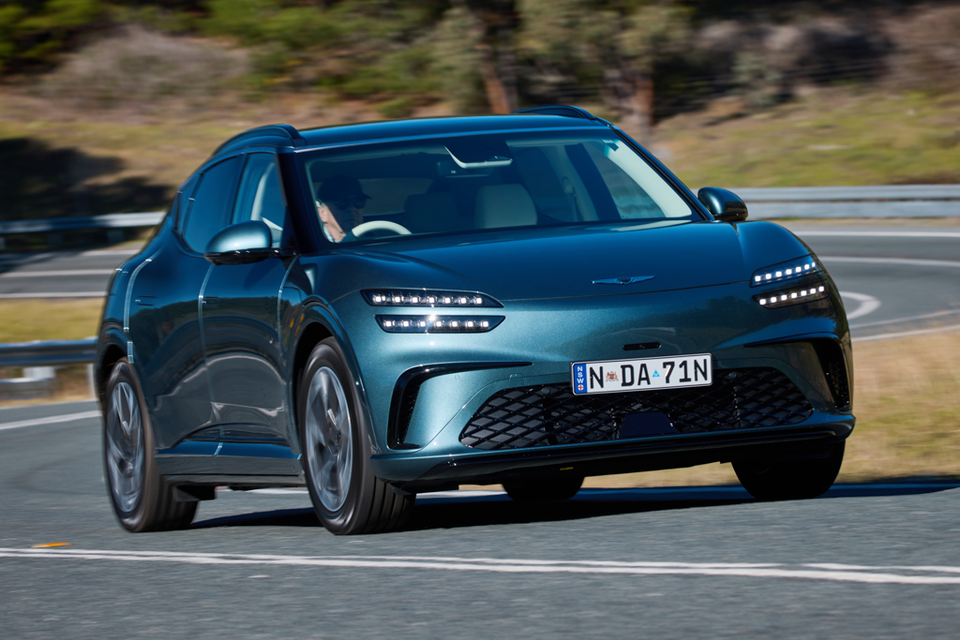
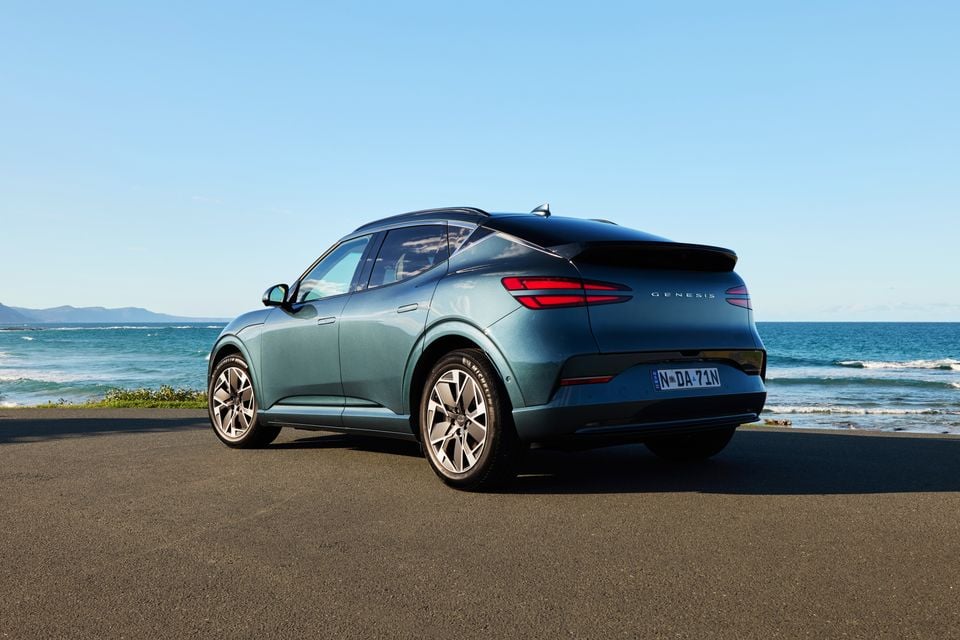
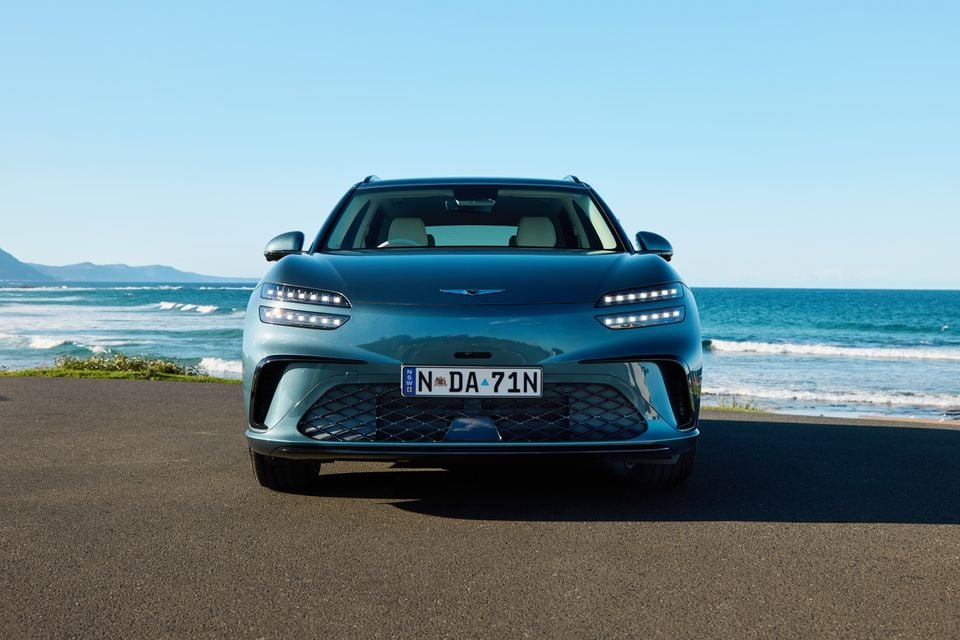
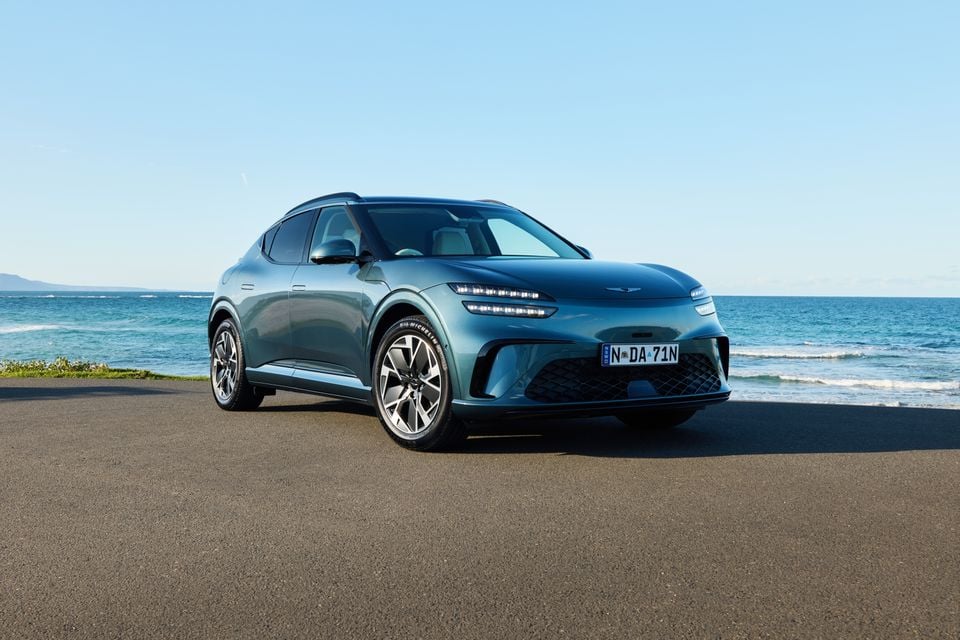
And then there’s Genesis, which has revamped its all-electric GV60 compact crossover range after a 12-month hiatus.
The new model is heaps cheaper than before, though there have been some specification deletions and it now has substantially less power than before.
But it has more EV range and some improvements to the tech on board, so is it a competitive play from the South Korean luxury arm?
Or, has the brand's relaunch on the GV60 missed the mark? Read on…
How much does the Genesis GV60 cost?
The new entry-level 2026 Genesis GV60 is the brand’s most affordable EV by far – and this updated base model is about $15K less than the pre-updated entry point.
| Model | Price before on-road costs |
|---|
| 2026 Genesis GV60 Advanced | $88,300 |
| 2026 Genesis GV60 Magma | $130,000 |
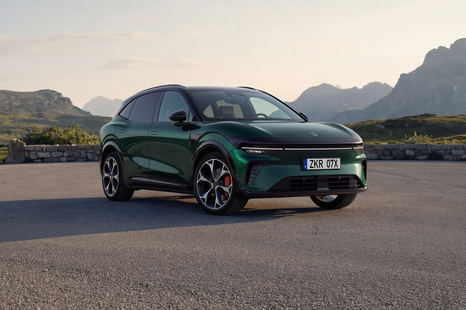
That price is still high for a car like this in the current market though, with plenty of options from China that could entice you for less money. For instance, you’d be able to get a dual-motor Zeekr X for about $58K drive-away and still have change for a European holiday.
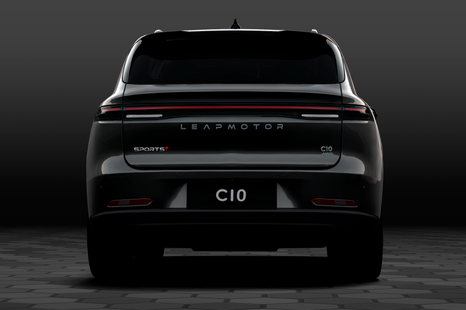
You could even get the larger 7X Performance, from $72,900 plus on-roads, with a chunk of change – and you bet there’s a BYD, Xpeng or Tesla that is bigger in size but smaller in price.
You could also consider a European alternative like the Renault Scenic or the Skoda Elroq. There's also the BMW iX1, iX2, Audi Q4 e-tron, Mercedes EQA, EQB or new CLA electric.
So, yeah, there’s no shortage of options that might make a strong case against this one, especially at this price. The brand has also removed a few items from the previous base grade, which was never ‘basic’ in terms of its kit list – all the details are further down.
To see how the Genesis GV60 lines up against the competition, check out our comparison tool
What is the Genesis GV60 like on the inside?
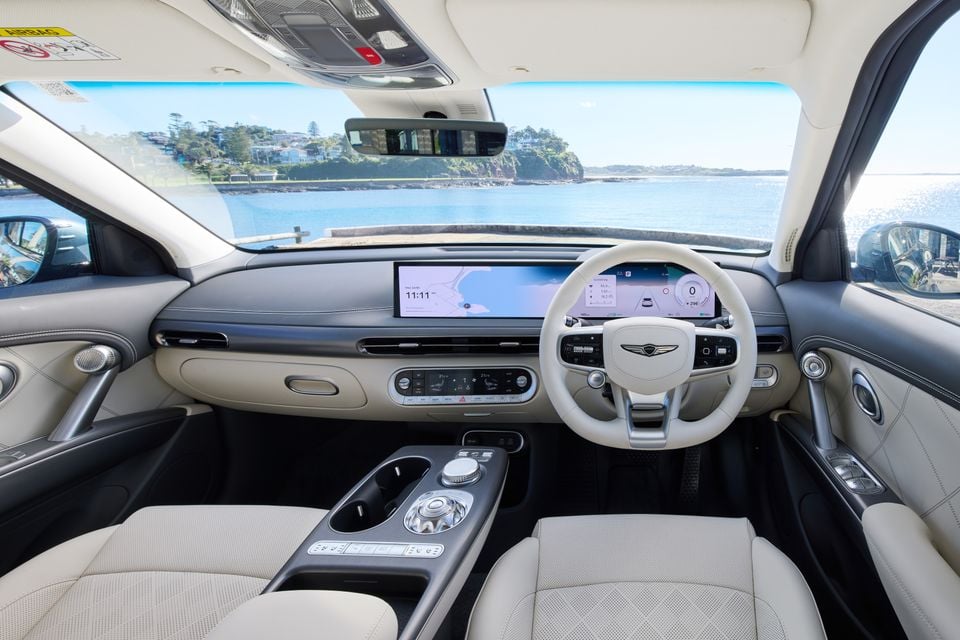
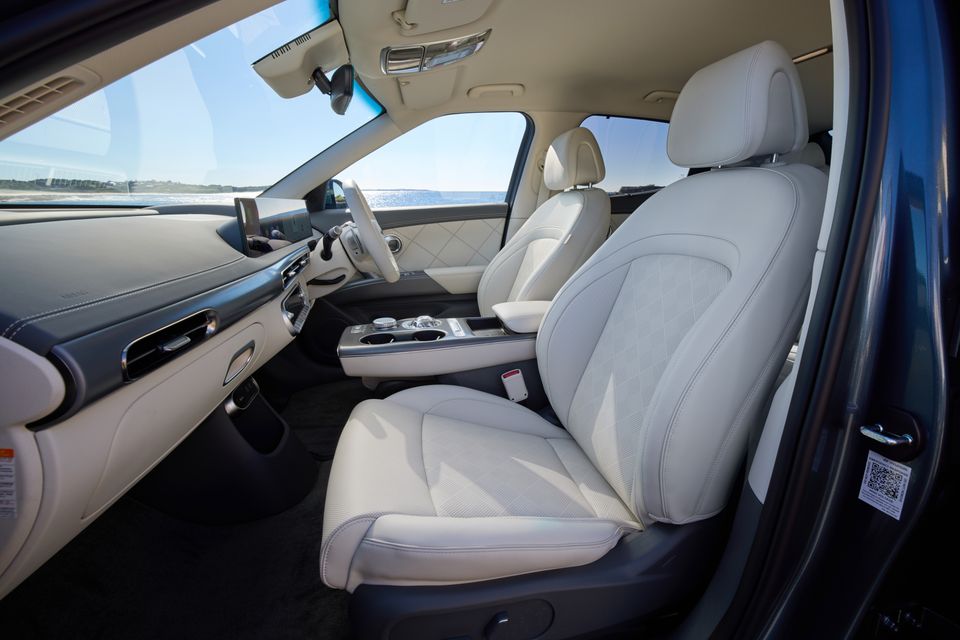
If premium cabin quality is high on your priority list, the Genesis GV60 will not disappoint.
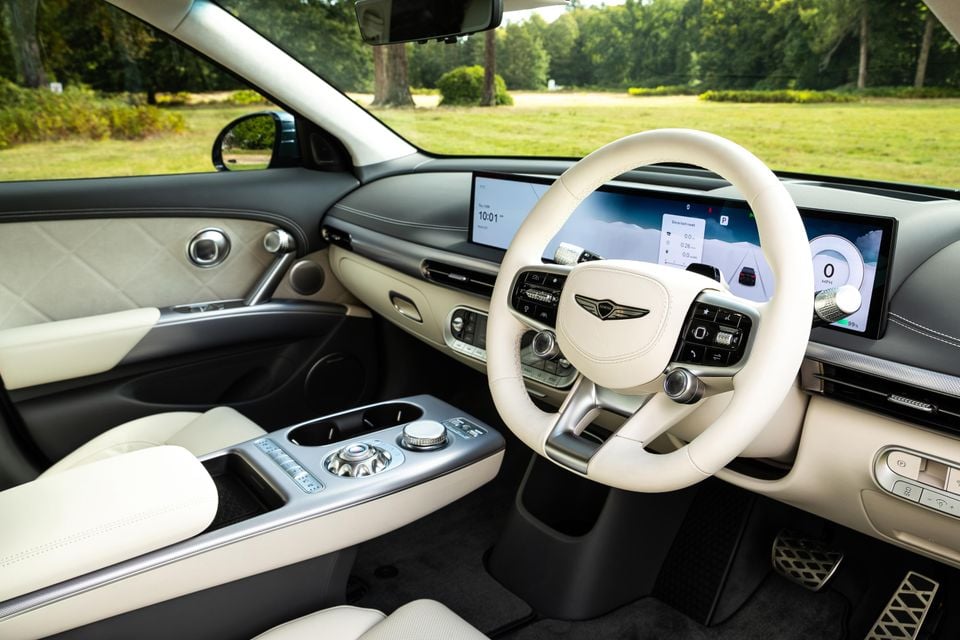
Fit and finish is excellent, with soft-touch materials almost everywhere you look. Leather runs across the dashboard, and the door trims feature a fun diamond-pattern finish.
Find your perfect new car with CarExpert
Overall, the cabin ambience is nothing short of plush.
The front seats offer 12-way power adjustment along with heating and ventilation, so whether it's winter or summer, you'll be catered for. And, those seats are supple and road-trip-friendly in terms of comfort.
There are handy practicality features like a pull-out drawer that's easier to access than a traditional glovebox, and the bridge centre console creates extra storage beneath it.
There’s a pair of large cupholders, a wireless phone charger, additional storage nooks, a decent-sized centre console bin, and big bottle holders in the doors.
Something that I find annoying is the pair of rotary controllers on the centre console.
One is the infotainment controller, while the other is the gear selector.
There’s a silly party trick for the selector, which rotates into a glowing crystal sphere when the car is switched off. It's unnecessary, though it's a neat party trick – at least it’s not a column-mounted stalk.
The steering wheel controls are logically laid out, with audio, media and voice controls on the left, while the right-hand side houses the adaptive cruise controls, drive mode selector and shortcut buttons for the driver display.
There are drive modes including Eco, Comfort, Sport and Snow, and the digital instrument cluster itself is clear and easy to read.
Elsewhere, you'll find conventional indicator and wiper stalks, electronic parking brake and tailgate controls positioned to the driver's right, plus physical mirror and window switches that are simple compared to some other cars in the class that require you to learn the touchscreen commands to use the simplest functions.
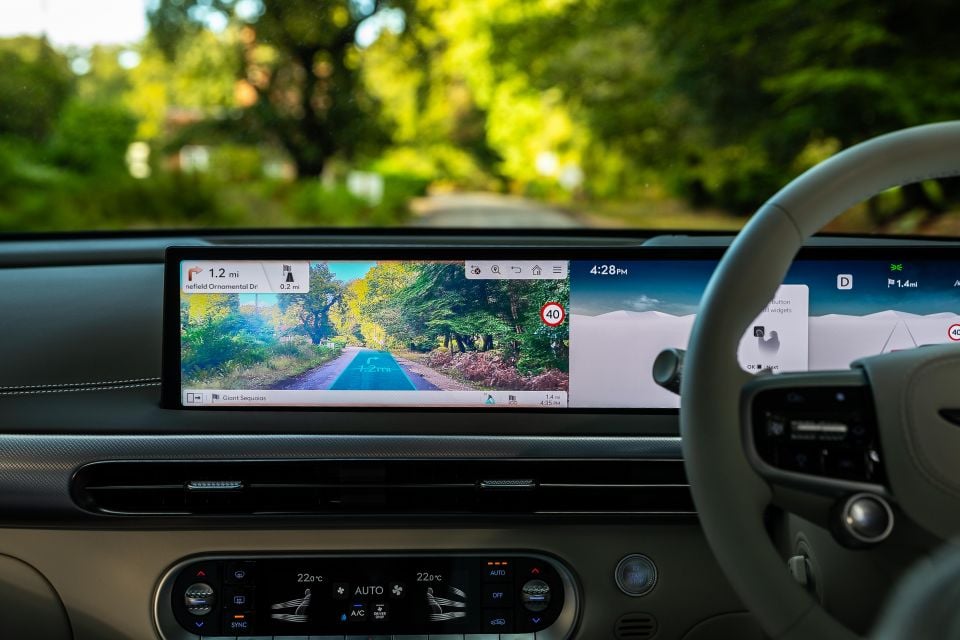
However, you will really need to learn the idiosyncrasies of that screen, because it simply isn’t as easy to learn as others in the class.
The widescreen display means the brand has had to make a series of menu blocks, and some commonly used settings are buried deeper in the menus than they could be.
Simple tasks like adjusting navigation voice guidance or changing certain system preferences require multiple taps through the settings menu, where rival systems often provide quicker shortcuts with drop-down boxes or just generally a better UI.
Thankfully, there's a dedicated climate control panel beneath the screen, complete with physical temperature controls and shortcut buttons, which makes everyday use much easier than an entirely touchscreen-based setup. But you have a screen there for fan-speed adjustment, for some reason. Why not buttons?
There's also plenty of charging options like USB ports and a 12V outlet, plus you get an auto-dimming rear-view mirror, illuminated vanity mirrors with extendable sun visors, and grab handles for every occupant.
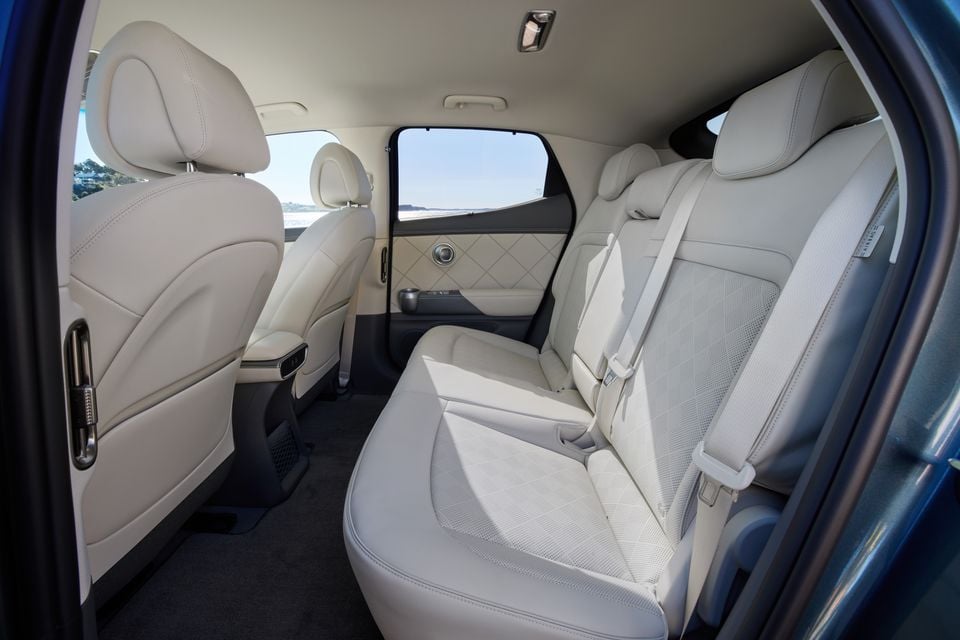
In the back, its compact exterior size is evident.
At 183cm (6'0") and with the driver's seat set to my driving position, I had a few fingers of knee room in the second row. Toe room under the front seats is tight, but headroom is decent. Taller rear riders might find it cramped.
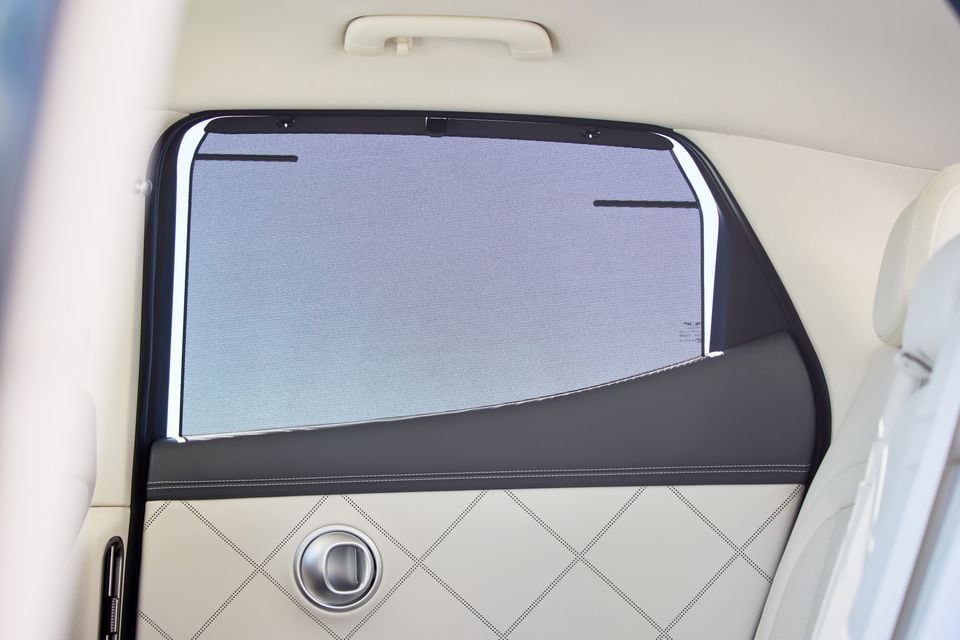
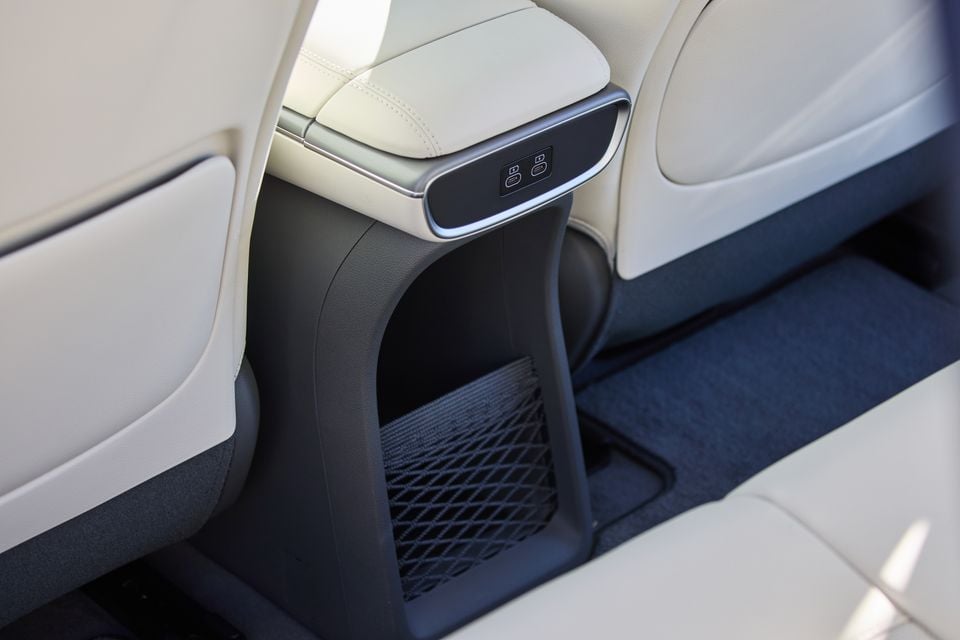
There are directional air vents mounted high on the B-pillars, rear reading lights on both sides, grab handles with coat hooks, manual rear window sunshades, map pockets, USB charging ports and door pockets with bottle holders.
Passengers also get a fold-down centre armrest with cupholders, while clever storage beneath the front centre console extends through to the rear, giving back-seat occupants another place to store smaller items.
Families are well catered for too, with ISOFIX anchor points on the outboard seats and three top-tether anchors behind the bench.
Unlike in the Magma top-spec model, there is no vehicle-to-load outlet in the second-row seat base of the Advanced, either, meaning you’re limited to USBs or an external adapter for the main recharge port.
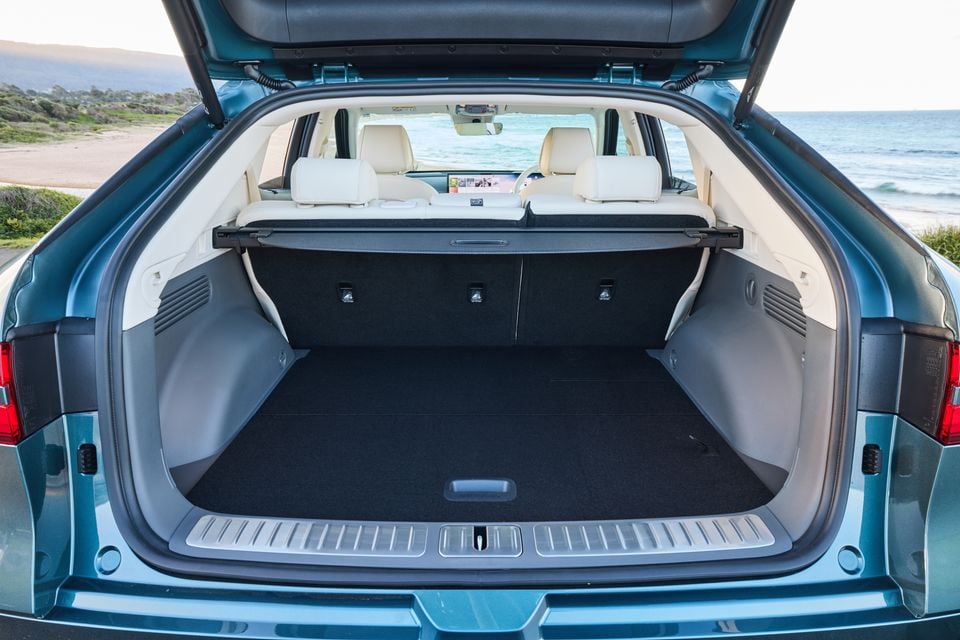
The boot is decent for this class, with a claimed 432 litres of cargo capacity, and there are good amenities such as a 12V port, light, cargo cover and some hidden underfloor stowage for cables.
There's no spare wheel though, only a tyre repair kit.
| Dimensions | Genesis GV60 Advanced |
|---|
| Length | 4515mm |
| Width | 1890mm |
| Height | 1580mm |
| Wheelbase | 2900mm |
| Cargo capacity | 432L |
To see how the Genesis GV60 lines up against the competition, check out our comparison tool
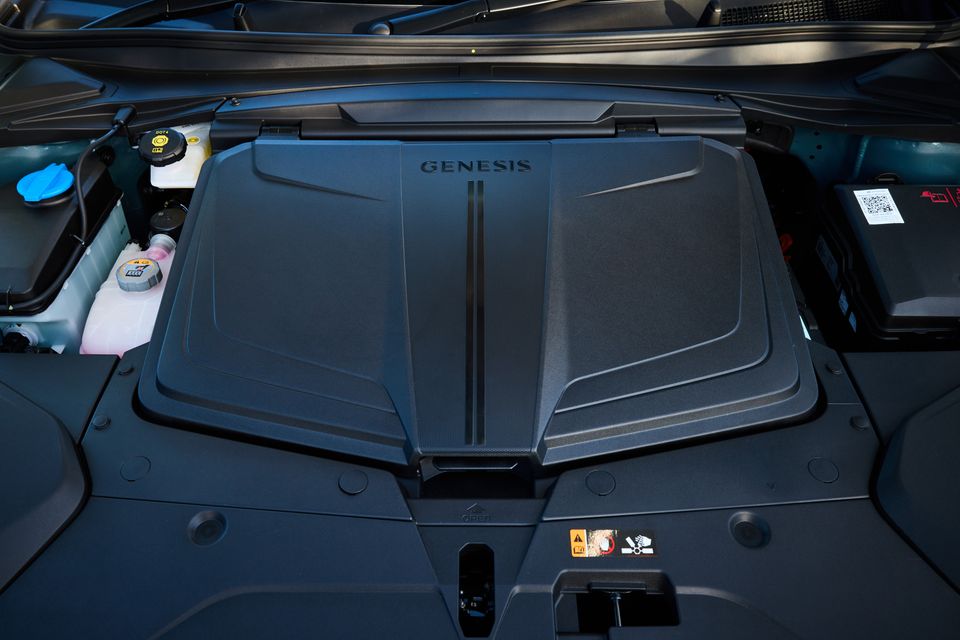
What's under the bonnet?
The GV60 Advanced adopts a new approach for this model range, because the previous models were all-wheel-drive only. This one is rear-drive, leaving the hotter Magma as the sole dual-motor variant in the facelifted lineup.
| Specifications | Genesis GV60 Advanced |
|---|
| Drivetrain | Single-motor electric |
| Battery | 84kWh NMC |
| Power | 168kW |
| Torque | 350Nm |
| Drive type | RWD |
| Weight | 2045kg |
| 0-100km/h (claimed) | 7.8 seconds |
| Energy consumption (claimed) | 16.8kWh/100km |
| Energy consumption (as tested) | 18.2kWh/100km |
| Claimed range | 561km |
| Max AC charge rate | 11kW |
| Max DC charge rate | 260kW |
On test, the GV60 I drove was also driven by a number of other journalists, and there wasn't much focus on efficient driving.
The loop in and outside of Canberra saw a mix of driving, and the displayed average consumption was a little higher than expected at 18.2kWh/100km.
That’s probably realistic for open road cruising and cold weather, but in urban, warmer conditions you’re most likely going to see a figure closer to the claim.
To see how the Genesis GV60 lines up against the competition, check out our comparison tool
How does the Genesis GV60 drive?
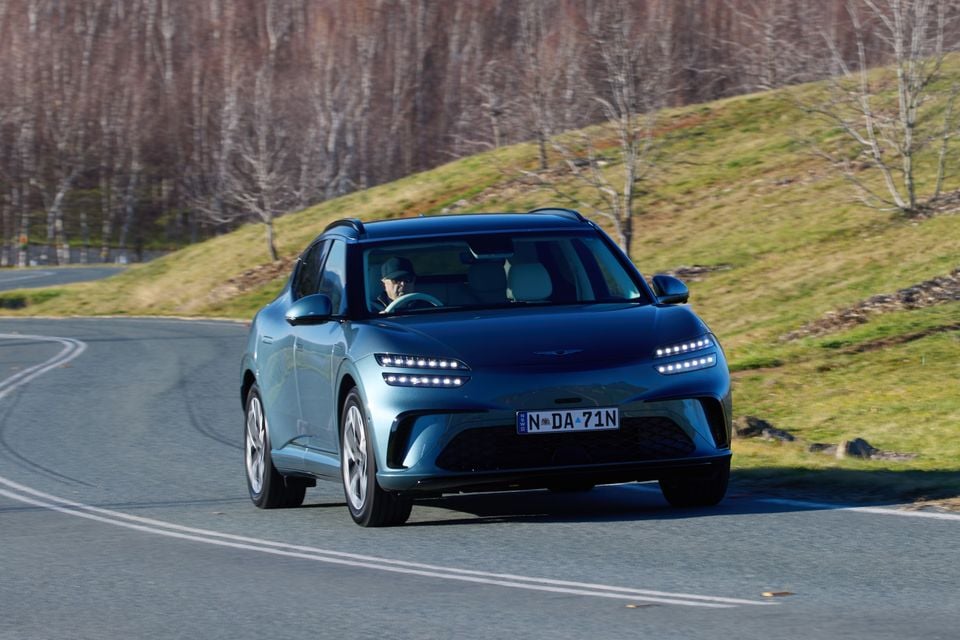
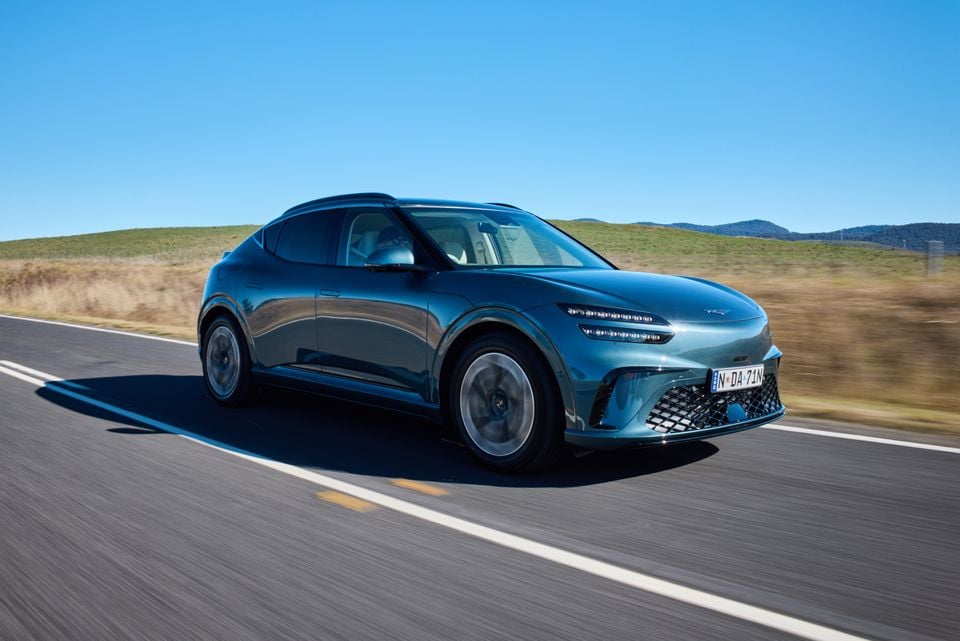
The updated Genesis GV60 delivers exactly what you'd expect from a premium electric SUV drive experience – it's smooth, refined and impressively quiet.
Improving cabin refinement was one of the brand's key priorities with this facelift, and it shows. Even by EV standards, the GV60 is exceptionally hushed, with very little road or wind noise making its way into the cabin. It's a genuinely relaxing place to spend time.
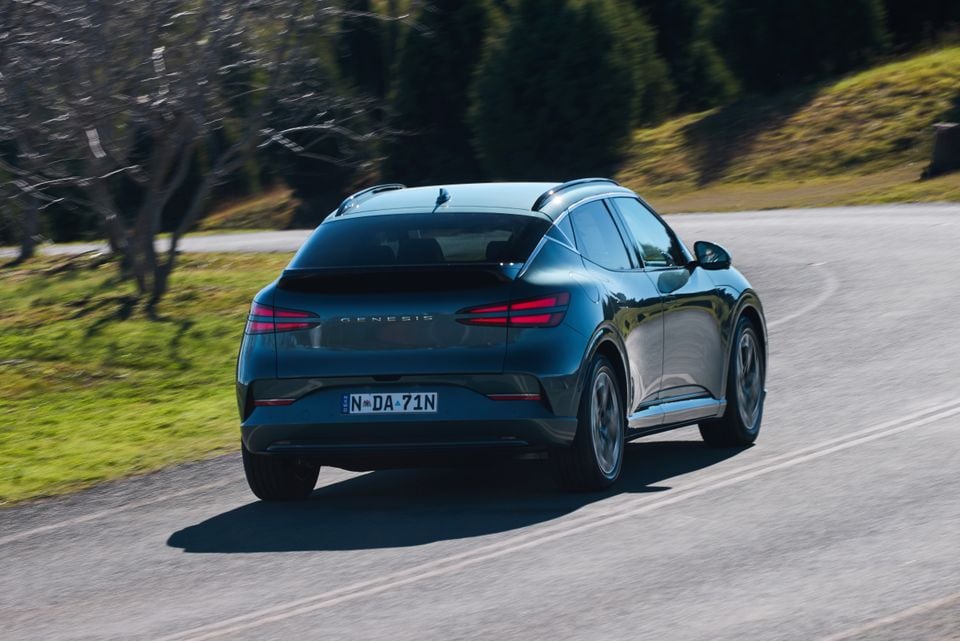
The biggest mechanical change for this entry-level Advanced grade is the move from dual-motor all-wheel drive to a single rear-mounted electric motor. If you've driven the old AWD model, this one definitely has a different character.
Genesis has also retuned the steering and suspension with comfort in mind, and for the most part it's succeeded.
Around town, where most GV60s are likely to spend the majority of their lives, the ride is supple and compliant. It deals with potholes, expansion joints and low-speed imperfections well, making it an easy car to live with day-to-day.
Out on rougher country roads, though, it's not quite as polished. The suspension can feel a little soft over bigger compressions, with a touch more body movement than some may appreciate. It occasionally struggles to settle itself over uneven surfaces. It's never uncomfortable, but it’s certainly not the benchmark for body control.
Even so, it's a pleasant and easy car to drive, prioritising comfort over outright driver engagement, which feels like the right approach for this sort of car.
Performance is still more than adequate. It doesn't have the neck-snapping acceleration of the dual-motor version, but I don't think that's a bad thing. The throttle calibration is smooth and progressive, making the car easier to drive in everyday conditions.
Braking is equally well judged. As with most EVs, you can adjust the regenerative braking – in this instance by using the steering wheel paddles – with the sensation ranging from light and free-flowing, through to the full i-Pedal mode, which is one-pedal driving. Once you get used to it, it's easy to drive almost entirely without touching the brake pedal, particularly in stop-start city traffic.
Genesis has also done a nice job with the brake pedal itself. Unlike some EVs, where the transition between regenerative and friction braking can feel artificial, the pedal here delivers a reassuringly natural and consistent response.
Ready to buy? We’ll help you get a great deal.
If this is the car for you, we’ll compare offers from trusted dealers, handle the back and forth and manage your purchase from enquiry to delivery.
One thing that isn't quite as polished is the suite of active safety systems.
It seems determined to let you know about absolutely everything. Speed limit changes, overspeed warnings, upcoming intersections and other alerts all generate their own collection of chimes and notifications, and it can become a bit much. Thankfully, most of those systems can be disabled, and importantly, some of those settings are retained between drives.
The camera system is a cracker, though, with Blind Spot View Monitor making it easy to see what you might otherwise have missed, and the surround-view parking camera system offering a terrific view when parking or pulling out.
It is certainly a luxurious experience in terms of the drive, even though it doesn’t move the game forward in any particular way.
To see how the Genesis GV60 lines up against the competition, check out our comparison tool
What do you get?
Here’s a list of the standard equipment in this version of the GV60.
2026 Genesis GV60 Advanced equipment highlights:
- 19-inch alloy wheels
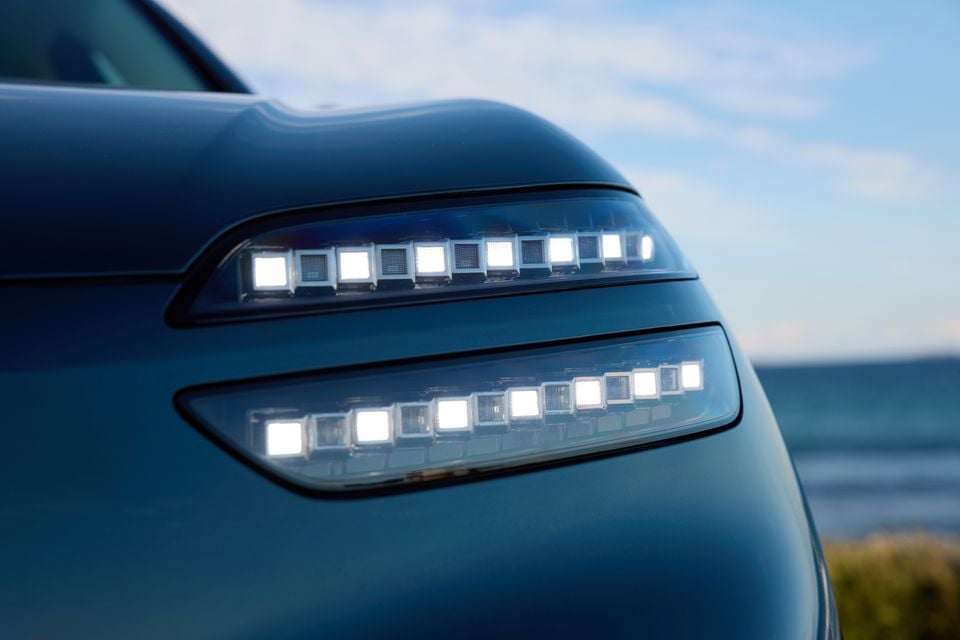
- Micro-Lens Array LED lights
- Proximity keyless entry
- Bluetooth key
- Push-button start
- Electric tailgate
- Roof rails
- Surround-view camera with 3D view and
- Blind-Spot View Monitor
- Remote Smart Park Assist
- Leather seat trim (previously Nappa leather)
- Leather dashboard and door trim
- Cloth headlining (previously suede)
- 12-way driver’s seat adjustment (previously 18-way)
- 12-way electric passenger seat adjustment
- Manual steering column adjustment (previously electric)
- Heated front seats
- Ventilated front seats
- Dual-zone climate control
- Acoustic laminated windscreen and window glass
- Rear privacy glass
- Air purification mode
- 27-inch OLED display screen
- Wireless Apple CarPlay and Android Auto
- Sat nav
- Connected services
- Wireless phone charger
- Rear sunshades
To see how the Genesis GV60 lines up against the competition, check out our comparison tool
Is the Genesis GV60 safe?
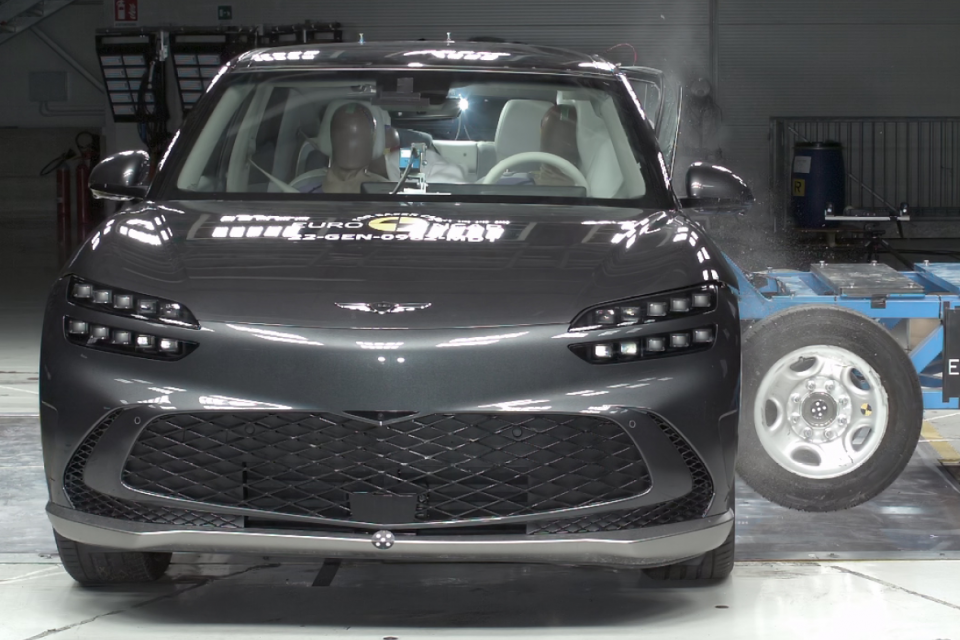
The Genesis GV60 achieved the maximum five-star ANCAP safety rating in 2022, and it is equipped with a comprehensive suite of standard safety features.
| Category | Genesis GV60 |
|---|
| Adult occupant protection | 89 per cent |
| Child occupant protection | 89 per cent |
| Vulnerable road user protection | 63 per cent |
| Safety assist | 88 per cent |
Standard safety equipment includes:
- 10 airbags
- Advanced Rear Occupant Alert
- Blind-spot monitoring
- Blind Spot View Monitor – Cameras
- Driver attention monitor
- Forward Collision-Avoidance Assist 2 – AEB
- Intelligent speed limiter
- Lane-keep assist
- Multi-collision braking
- Parking sensors – front, rear
- Rear Collision-Avoidance Assist – AEB
- Rear occupant alert
- Safe Exit Assist
- Surround-view cameras
Genesis's 'Forward Collision-Avoidance Assist 2' system refers to its latest autonomous emergency braking tech that detects cars, pedestrians and cyclists, as well as offering junction crossing, junction turning and front oncoming vehicle functionality.
Further, it's able to brake or counter-input for oncoming vehicles or when you try to change lanes with a vehicle either coming towards you from the front or behind.
The suite of 10 airbags includes front-centre and driver's knee inflators, in addition to side airbags in the first and second rows.
To see how the Genesis GV60 lines up against the competition, check out our comparison tool
How much does the Genesis GV60 cost to run?
Buy a Genesis and there are some nice perks. The brand offers a five-year, unlimited-kilometre warranty for the vehicle itself, and the battery warranty is eight years or 160,000km, whichever occurs first.
| Servicing and Warranty | Genesis GV60 |
|---|
| Warranty | 5 years, unlimited kilometres |
| Roadside assistance | Up to 10 years |
| Service intervals | 12 months or 15,000km |
| Capped-price servicing | 5 years |
| Total capped-price service cost | $0 |
Servicing is due every 12 months or 15,000km, which is arguably a bit needy for an EV. But the big bonus is that Genesis doesn’t charge you a single cent for the first five years of maintenance.
That’s a huge selling point, and saves you thousands over the initial years of ownership. There's also a free roadside assistance program for 10 years, and you get five years of free online data for the connected services system, including over-the-air software updates.
Furthermore, Genesis offers a concierge service where they can collect and return your car for scheduled services if you live within a certain distance of the workshop – subject to the terms and conditions detailed on the brand's website.
To see how the Genesis GV60 lines up against the competition, check out our comparison tool
CarExpert's Take on the Genesis GV60
There is no denying that the new Genesis GV60 offers a luxurious step into EV ownership, and could serve you as a delightful daily commuter.
But the reality is that you could also spend much less money on a range of alternatives that can do the job almost as well.
The GV60 is a great EV, don’t get me wrong, but I don’t suspect you’ll see this as a common choice for many EV customers.
CarExpert can save you thousands on a new Genesis GV60. Click here to get a great deal
Click the images for the full gallery
MORE: Explore the Genesis GV60 showroom











 Automotive Vehicle Spec Data & 4K images Powered by JATO Dynamics Ltd