 Car News
 CarExpert Podcast
 Car Reviews
 Owner Car Reviews
 Car Comparisons
 Showroom
 Car Chooser
 Car Specifications


Alborz Fallah
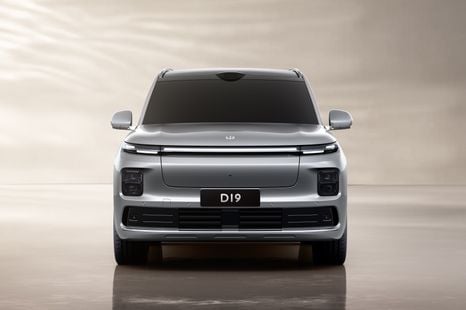
Leapmotor D19 flagship SUV could be headed to Australia
The Chinese brand’s new top-shelf SUV is likely for local release, with Leapmotor's export-market localisation program set to finish within 12 months.
1 Hour Ago

Deputy News Editor
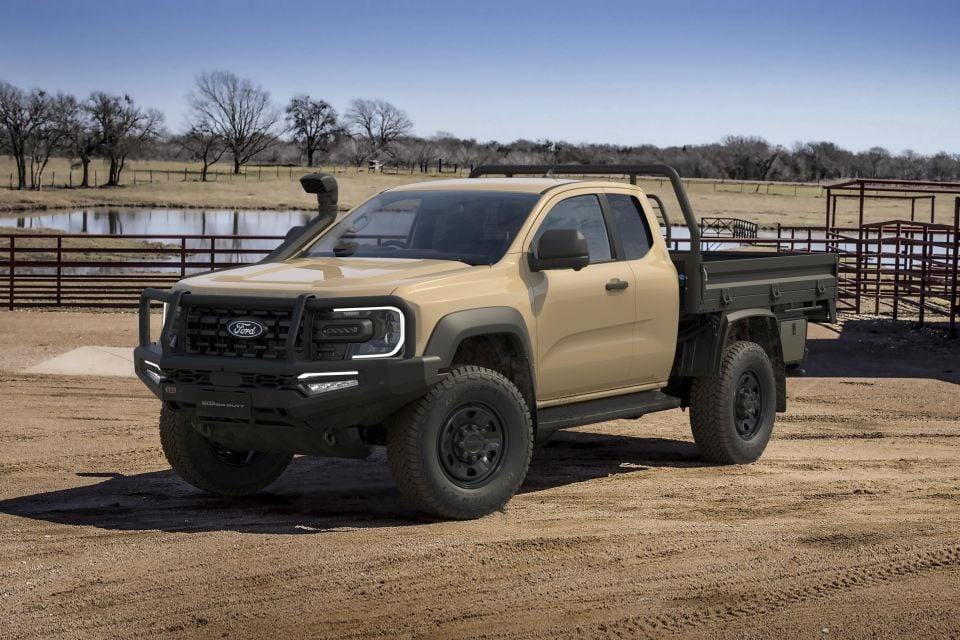
Ford Motor Company says it will earn more money this year than previously expected after receiving a larger tariff refund than cross-town rival General Motors (GM), with both brands now forecasting improved financial results.
Ford reported it will receive a one-off tariff refund of $US1.3 billion ($A1.83bn), nearly three times the $US500 million ($A702.3m) that GM expects to be refunded.
The automaker also said it has effectively halved its expected tariff costs for 2026 to $US1 billion ($A1.4bn), due to both the refunds and its lower reliance on imports into the US, where it builds 83 per cent of its North American model lineup.
The boon for Ford and GM – and likely for Chrysler and Jeep owner Stellantis, which is scheduled to report its latest financial results on April 30 – has seen both companies increase their full-year 2026 forecasts.
CarExpert can save you thousands on a new car. Click here to get a great deal.
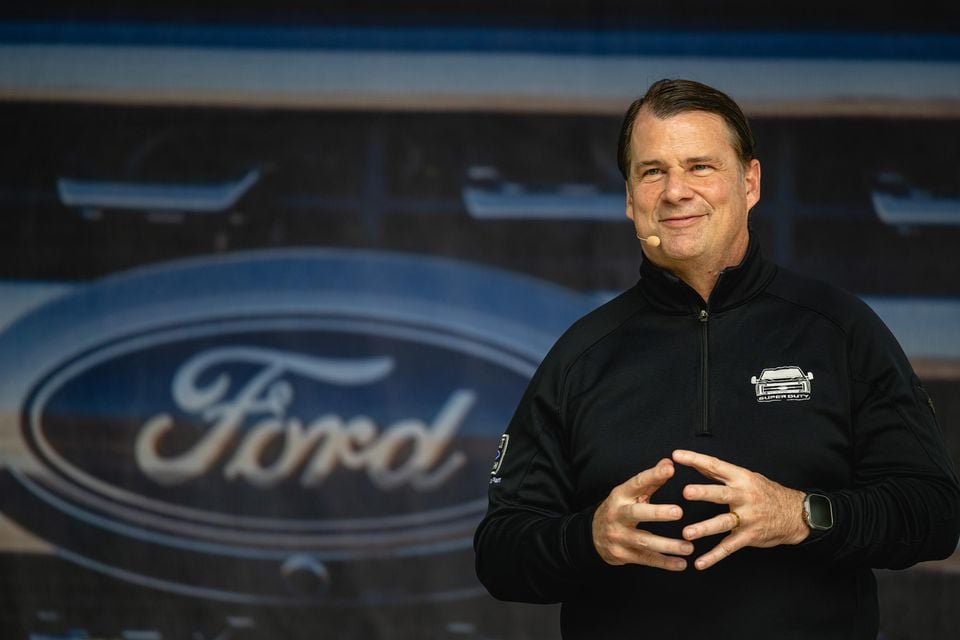
Ford’s first-quarter (January–March) earnings report saw it lift its full-year forecast to $US8.5-$10.5 billion ($A11.9-$14.7bn), up from its previous $US8-$10 billion ($A11.2-$14.0bn).
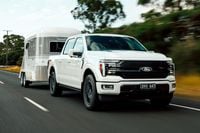
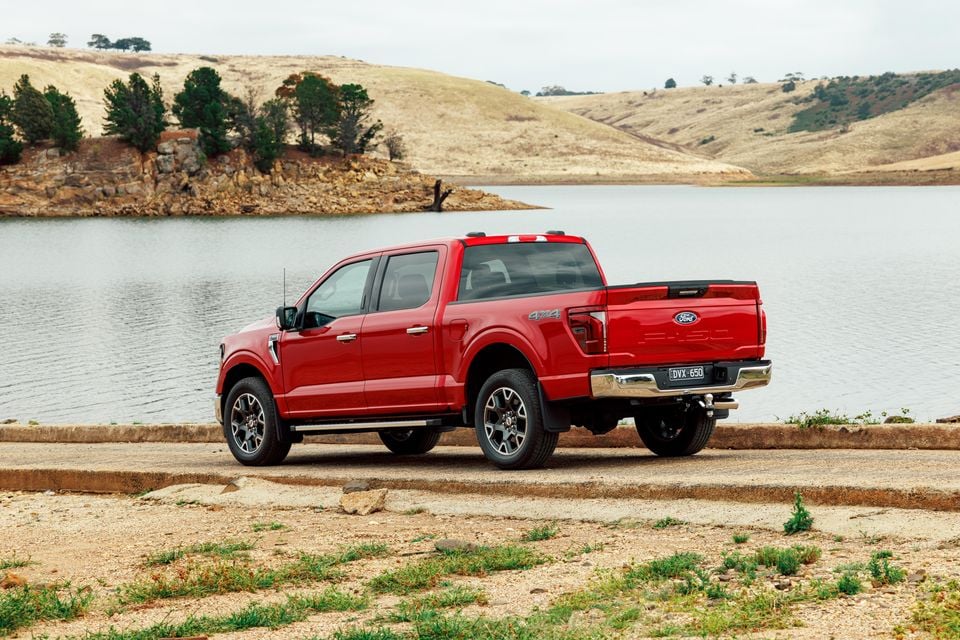
This comes despite a shortage of its most popular and highly profitable vehicle, the F-150, after fires at a factory supplying aluminium used in its production – an issue Ford Australia says will not delay local deliveries of the full-size pickup.
The F-150 remained Ford’s best-seller – and the number-one vehicle sold in the US – in the first three months of 2026. The Transit led the commercial van segment, while the Escape-based Maverick dual-cab ute (not sold in Australia) was the country’s most popular hybrid.
Despite total sales falling 8.8 per cent, Ford more than tripled its earnings before interest and tax (EBIT) to $US3.5 billion ($A4.9bn), while net income increased more than five-fold year-on-year to around $US2.5 billion ($A3.5bn).
The tariff refunds follow the introduction of a 10 per cent tariff in February 2026, on top of earlier tariffs on automotive imports introduced in April 2025 and additional components tariffs the following month.
These were in addition to what US President Donald Trump described as ‘reciprocal tariffs’ applied across multiple industries later in 2025.
Opposition to the tariffs led to legal challenges, including from Chinese automaker BYD, which does not yet operate in the US but plans to begin selling vehicles in Canada from later this year.
The challenges saw the US Supreme Court rule the 10 per cent tariff had not been lawfully implemented in February, ordering the US government to refund an estimated $US166 billion ($A233.1bn).
Tariffs contributed around $US2 billion in costs, helping Ford to report a $US8.2 billion ($A11.5bn) loss in 2025 – its largest since the 2008 Global Financial Crisis (GFC). The Dearborn-based brand was the only one of the US ‘Big Three’ automakers not to declare bankruptcy during that period.
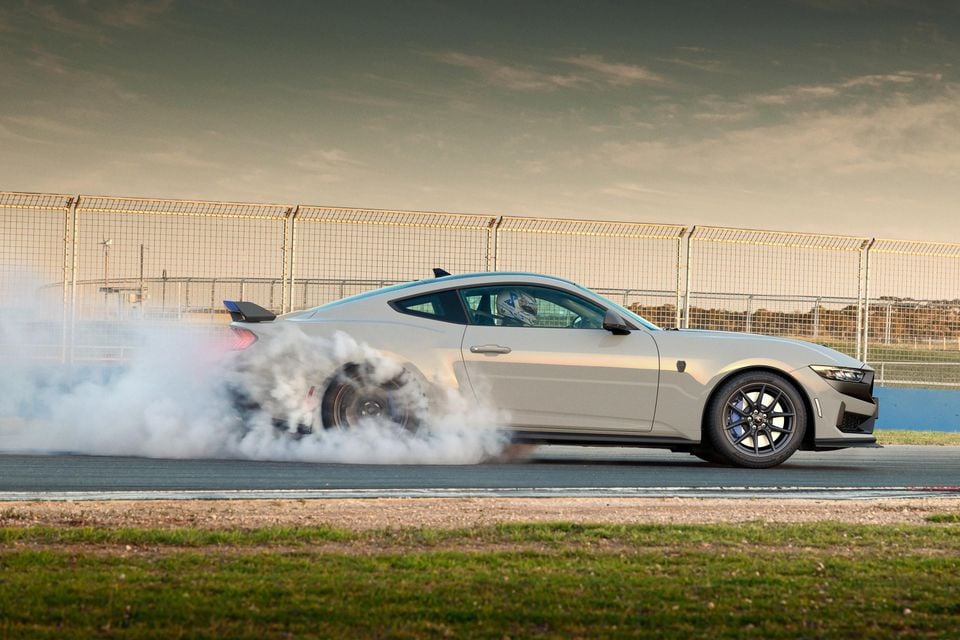
Ford Australia’s sales for the first three months of 2026 fell 5.7 per cent year-on-year, though the F-150, Mustang and Ranger led their respective segments, with the ute remaining Australia’s best-selling vehicle. MORE: Explore the Ford showroom
Go deeper on the cars in our Showroom, compare your options, or see what a great deal looks like with help from our New Car Specialists.
Damion Smy is an award-winning motoring journalist with global editorial experience at Car, Auto Express, and Wheels.
Alborz Fallah
1 Hour Ago

James Wong
1 Hour Ago
Alborz Fallah
2 Hours Ago
Damion Smy
3 Hours Ago

William Stopford
4 Hours Ago

Josh Nevett
12 Hours Ago
Add CarExpert as a Preferred Source on Google so your search results prioritise writing by actual experts, not AI.