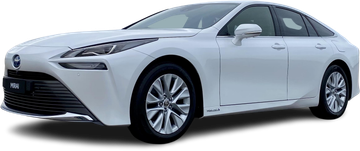
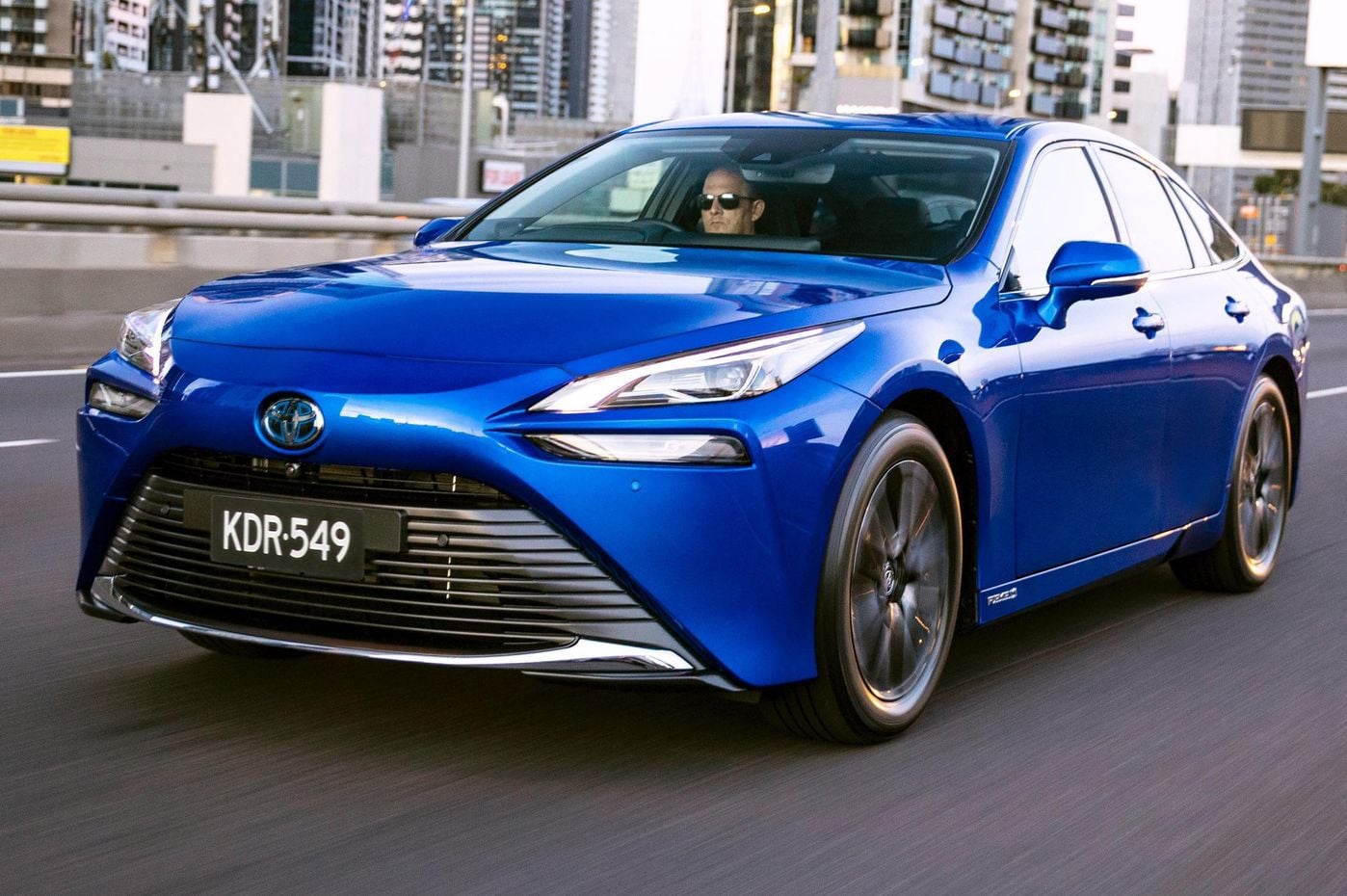
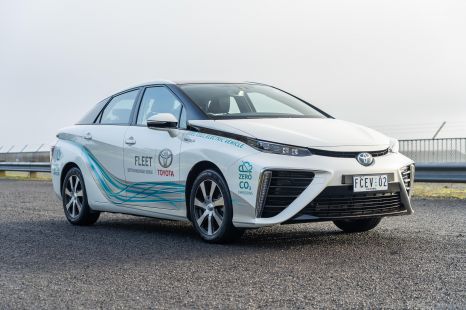
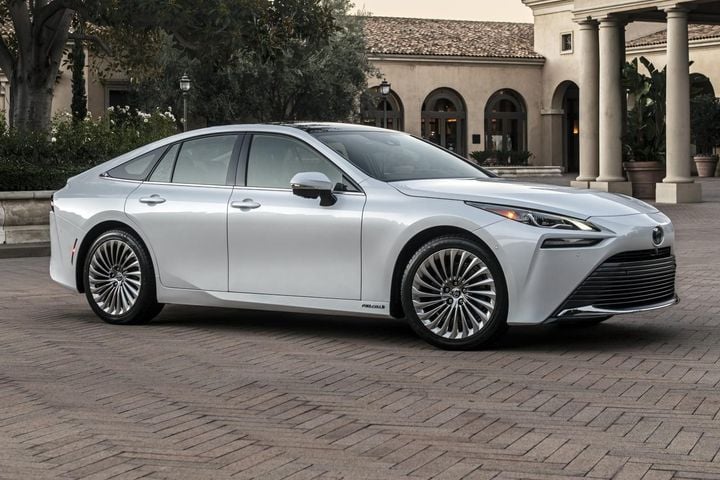
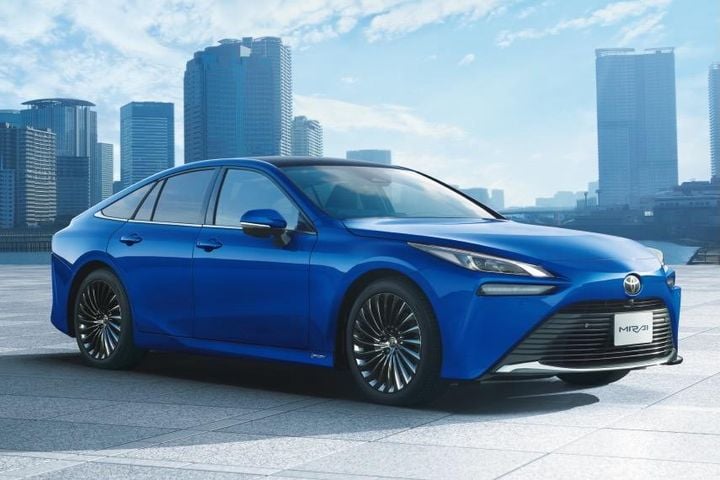
The first-generation Toyota Mirai looks unconventional, but the surprise is how normal it feels to drive. For this 2020 review, we borrowed a car from Toyota’s Australian trial programme. It was not on sale locally, and the review was not sponsored, despite the prominent stickers on the bodywork.
Underneath that unusual shape is a fuel-cell system that uses hydrogen and oxygen to generate electricity for an electric motor. A small battery can store energy recovered under braking and provide assistance when needed. Water is a byproduct of the fuel-cell process, rather than the exhaust gases associated with burning petrol or diesel.
That technology brings compromises. Producing hydrogen through electrolysis requires electricity, and the fuel then needs to be transported and stored before it can be used. Our assessment is that the way hydrogen is produced, and the availability of refuelling infrastructure, are central to its prospects. This is not simply a case of swapping a petrol pump for a hydrogen nozzle.
On the road, the Mirai delivers 113kW of power and 335Nm of torque. It feels responsive enough in normal driving, with a subdued but unusual mechanical sound under acceleration. More impressive is the ride: rough country-road surfaces and potholes are absorbed comfortably, and the cabin is exceptionally quiet when cruising on the highway.
The stated 500km driving range needs context. Our experience suggested around 350–400km in normal use, rather than treating the headline figure as a guaranteed outcome.
Inside, the seats are comfortable and the build feels solid, but the dated infotainment is slow and fiddly. There is no Apple CarPlay or Android Auto. Storage is limited, and the wireless charging compartment would not accommodate our phone with its case fitted.
Despite the car’s substantial exterior dimensions, rear knee room, toe room, and head room are tight. There are only two rear seats, and the battery prevents access through to the 360-litre boot. A tyre repair kit replaces a spare.
As a comfortable, easy-to-drive car, the Mirai makes a convincing impression. Whether hydrogen can become a practical wider alternative depends on addressing the production and refuelling challenges, not just making the car itself work well.