
Tace Clifford
New family SUVs still coming to Australia in 2026
This year is fast evaporating, but there are still plenty of new models to come in 2026, including several key new family SUVs.
13 Hours Ago
Now with a rear window! The Polestar 4 SUV hails from Korea with more boot, more windows, and the same chassis upgrades as the mid-size 'coupe' it's based on. Is it the new pick of the range?

Senior Editor – Reviews
Senior Editor – Reviews
Senior Editor – Reviews
Senior Editor – Reviews
If this is the car for you, we’ll compare offers from trusted dealers, handle the back and forth and manage your purchase from enquiry to delivery.
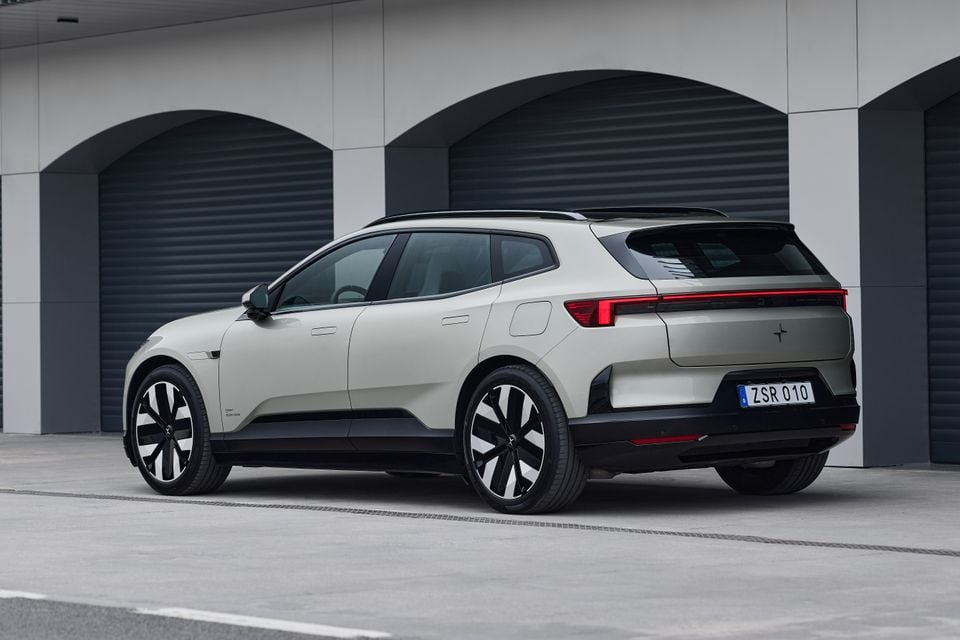
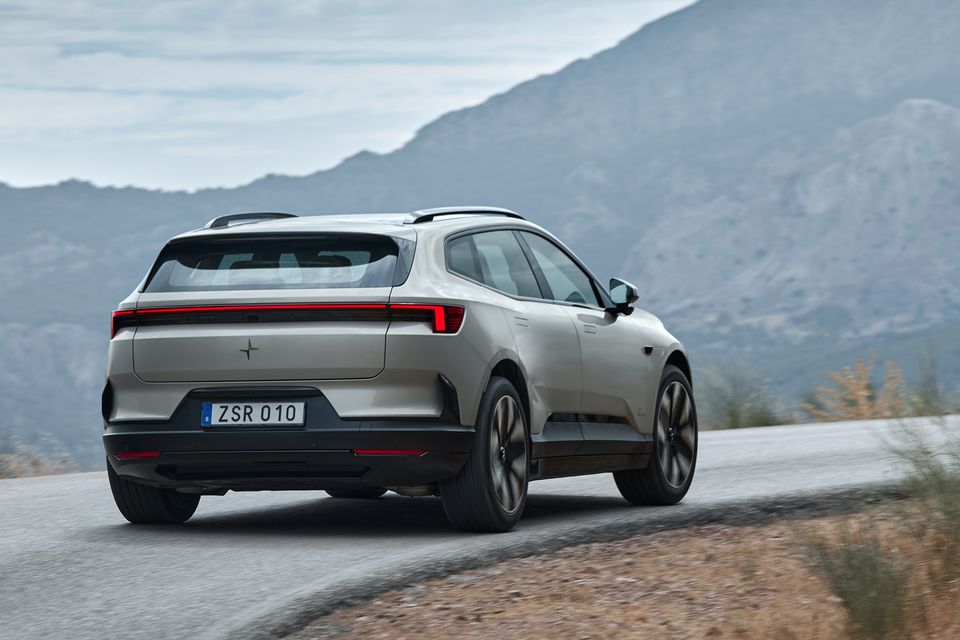
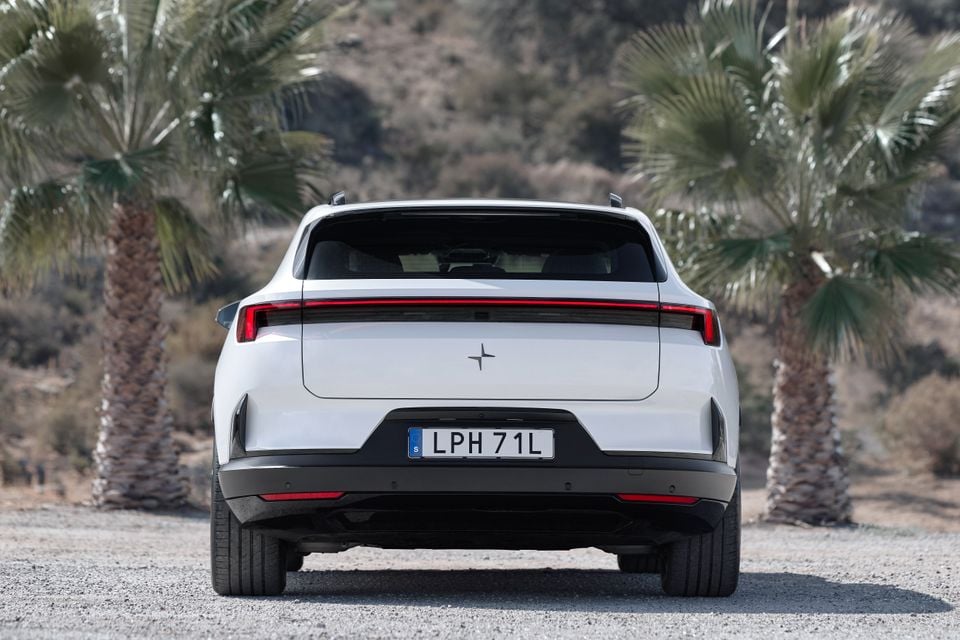
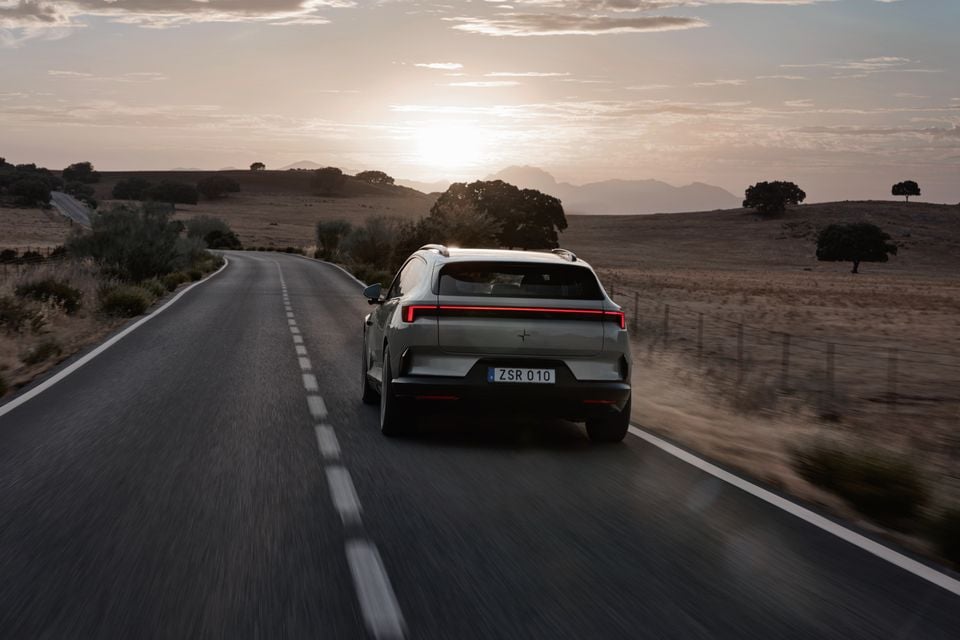
Polestar's controversial windowless rear-end now has... a window.
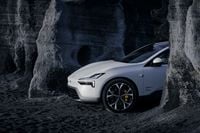
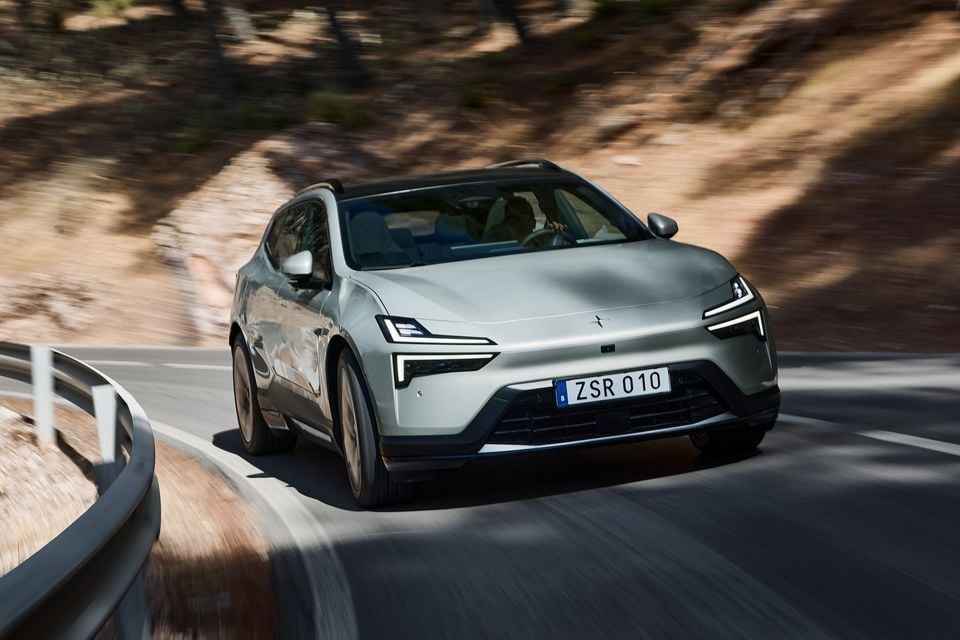
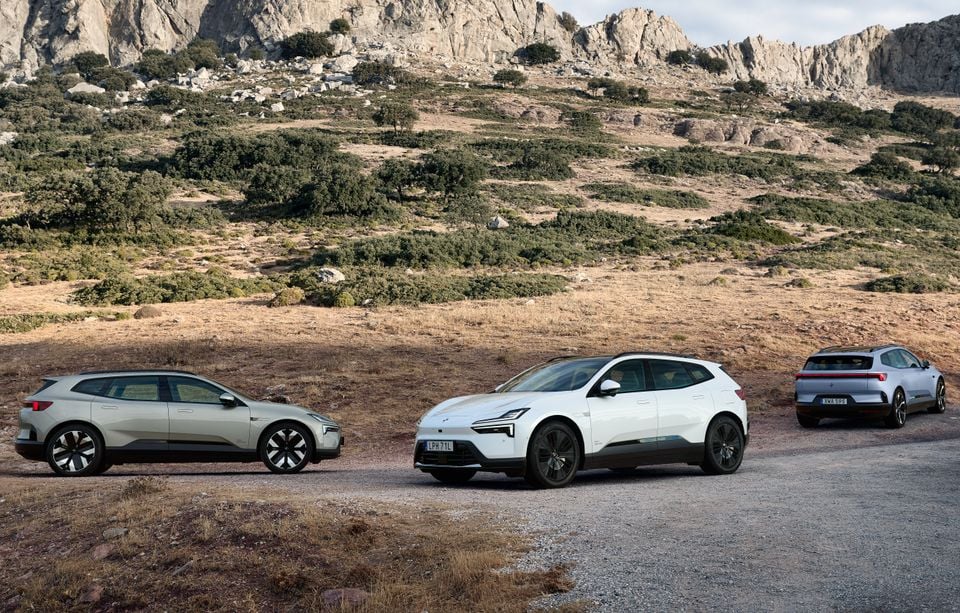
The 2027 Polestar 4 SUV joins the existing – and polarising – Polestar 4 'coupe' as a more practical and more family-friendly version of the Geely-owned Swedish brand's premium mid-size electric crossover.
Polestar CEO Michael Lohscheller says the new design blends the "the space of an estate and the versatility of an SUV", while retaining the dynamic, driver-focused feel behind the wheel that the brand strives for.
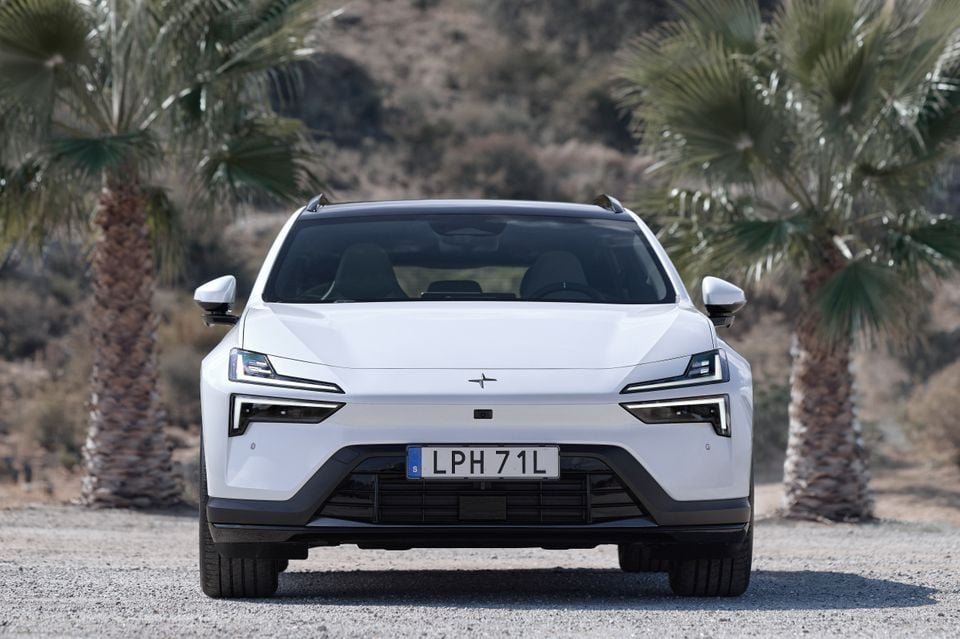
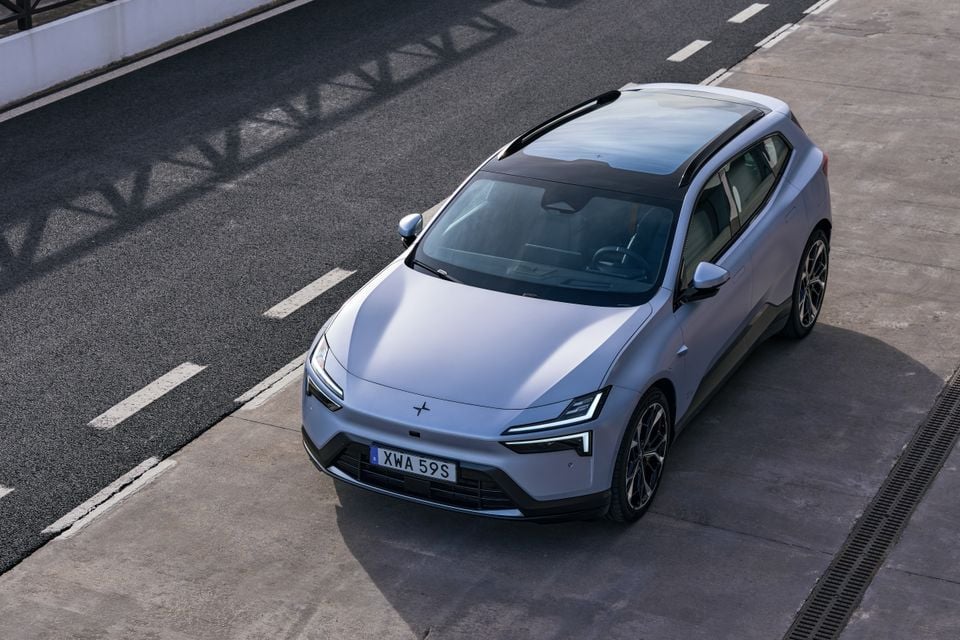
It's certainly still more Volvo 'Cross Country' wagon than 'XC' SUV in profile, but better befitting its status as an SUV is the fact it's the first Polestar model to wear roof rails, and it also features dark contrasting body lower cladding to produce a more rugged and purposeful look.
With that taller, longer rear roofline comes more headroom for rear passengers and an increase in cargo capacity, but otherwise it's the same as the MY27 Polestar 4 coupe.
That means a rejigged chassis and sharper pricing than before, with the price of entry dropping by $4500 for this model year. The Polestar 4 SUV debuts new features like a Camping mode as well as vehicle-to-load (V2L) functionality – both of which are coming to other models in the lineup via an over-the-air software update.
So is it any good? And does it deserve your consideration amongst a sea of luxury mid-size electric SUVs fighting it out in the Australian market? We flew to sunny Málaga in Spain to attend the global media drive for a first steer.
The MY27 Polestar 4 range brings revised pricing which not only brings down the cost of entry, but also aligns the two body styles now available in Australia – usually, premium brands make you pay more for the 'coupe' version of an SUV.
| Model | Price before on-road costs |
|---|---|
| 2027 Polestar 4 coupe Rear motor | $73,900 |
| 2027 Polestar 4 SUV Rear motor | $73,900 |
| 2027 Polestar 4 coupe Dual motor | $81,750 |
| 2027 Polestar 4 SUV Dual motor | $81,750 |
| 2027 Polestar 4 coupe Dual motor Performance pack | $95,450 |
| 2027 Polestar 4 SUV Dual motor Performance pack | $95,450 |
With the introduction of the South Korea-sourced 4 SUV, Polestar has dropped its prices across the China-supplied 4 coupe lineup by $4600, with the range now kicking off from $73,900 before on-road costs.
For reference, Geely Group corporate cousin Zeekr offers the single-motor 7X Long Range (with a similar 100kWh battery) from $63,900 plus on-roads, while the new Volvo EX60 has a higher starting price of $86,990 plus ORCs.
Meanwhile, the popular Tesla Model Y Premium Long Range AWD starts from $68,900 plus ORCs, while Kia's EV6 kicks off from $72,865 plus ORCs. Other competition from premium European brands include the Audi Q6 e-tron (from $89,900), BMW iX3 (from $89,900).
To see how the Polestar 4 lines up against the competition, check out our comparison tool
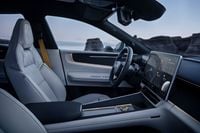
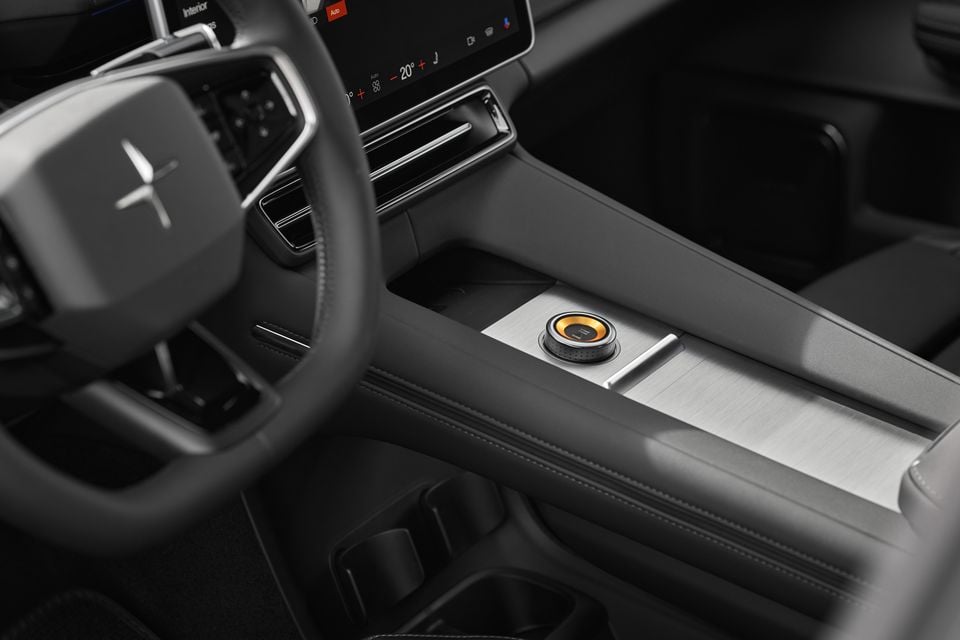
Not much has changed inside the cabin, save for some added headroom in the rear and a longer panoramic glass roof – oh, and now there's a conventional rear-view mirror looking through a real window.
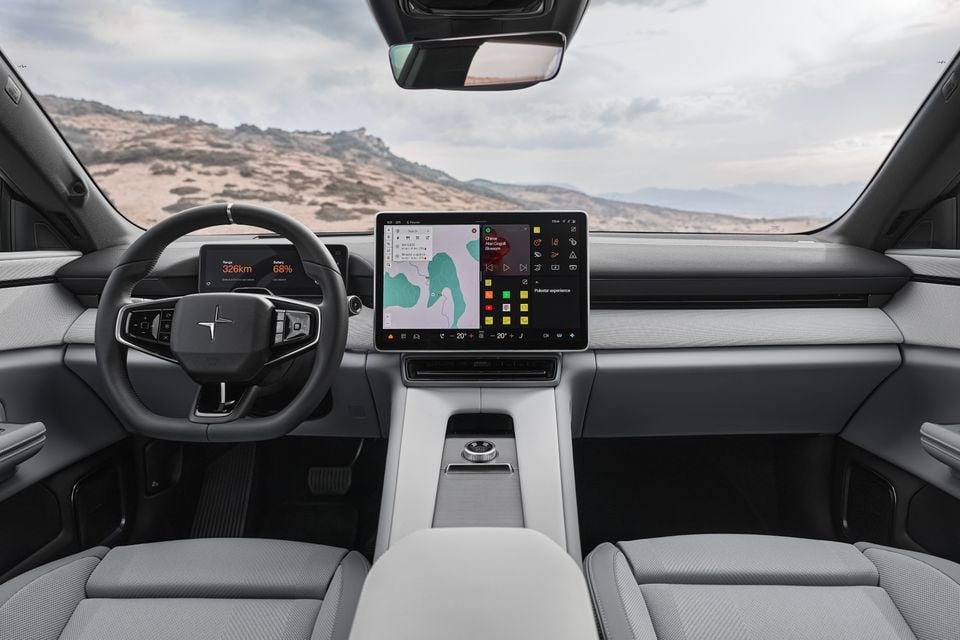
The front of the cabin has barely changed, presenting the same minimalist approach to physical switchgear as before, and the same goes for the mix of available upholsteries, trims and textures.
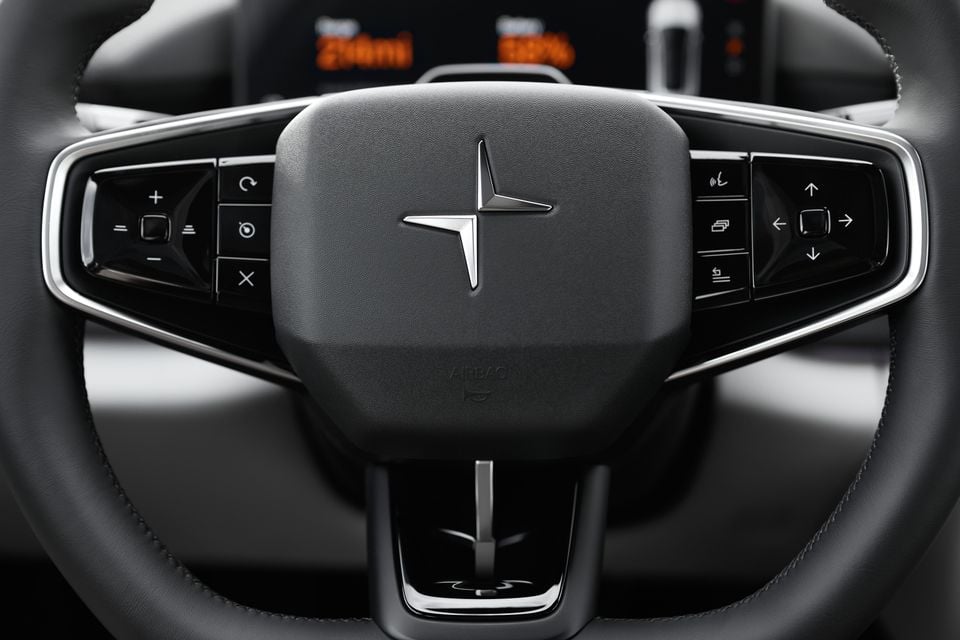
Ahead of the driver, though, the steering wheel has more intuitive and tactile multifunction controls with actual buttons rather than banks of capacitive ones, and sits ahead of the carryover 10.2-inch digital instrument cluster.
Central to the dashboard fascia is a 15.4-inch tablet-style infotainment touchscreen running Polestar's Android Automotive-based software interface, and boasting Google Built-in services as well as integration of the Google Gemini virtual assistant. It also offers wireless Apple CarPlay and Android Auto.
Compared to the original Google Assistant that was initially launched in the Polestar 4 coupe, the AI-powered virtual assistant offers "more natural, helpful voice interactions" through an advanced AI model – allowing it to understand context, multi-turn dialogue, and everyday speech.
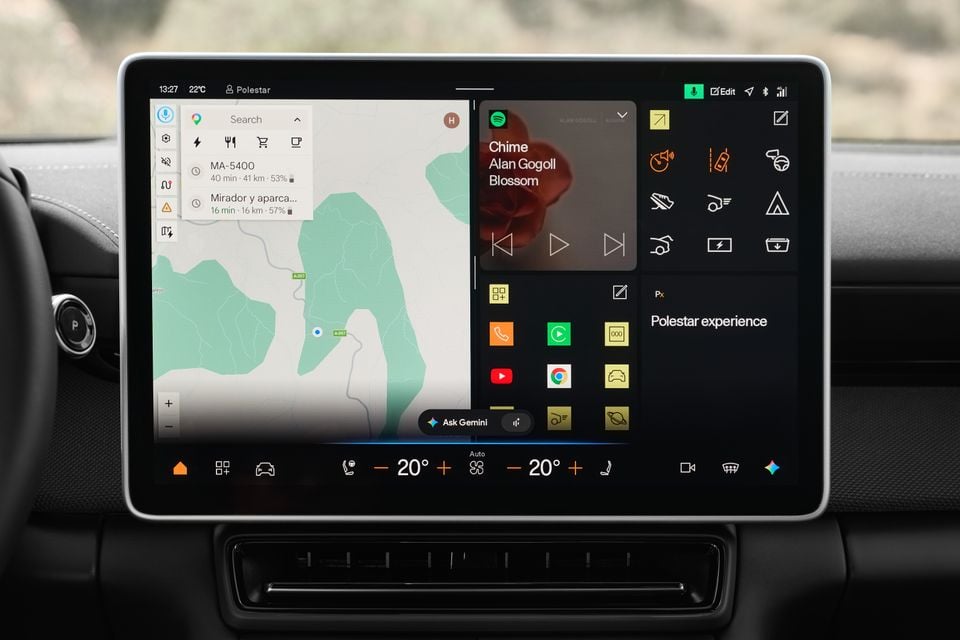
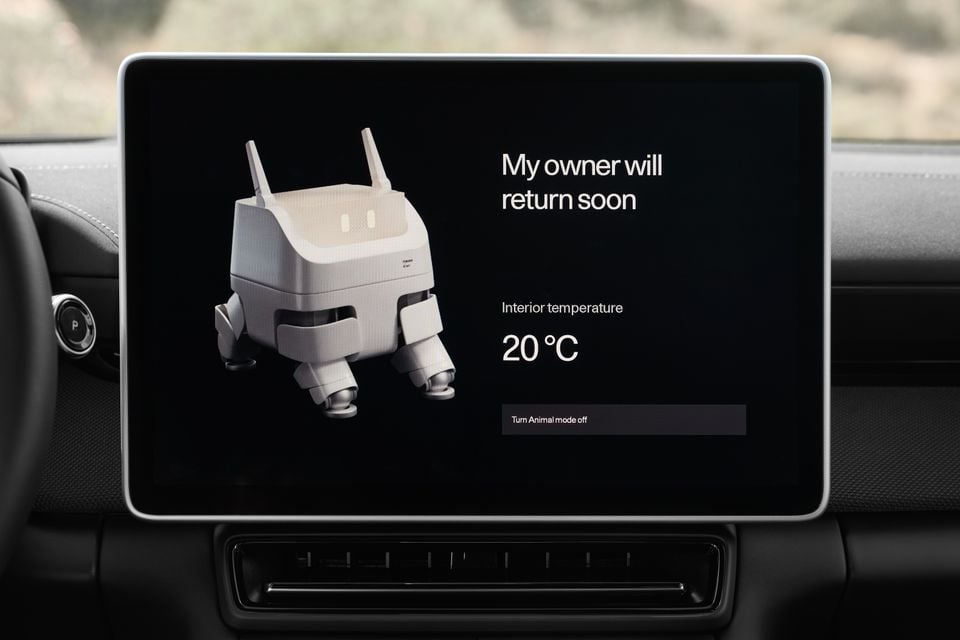
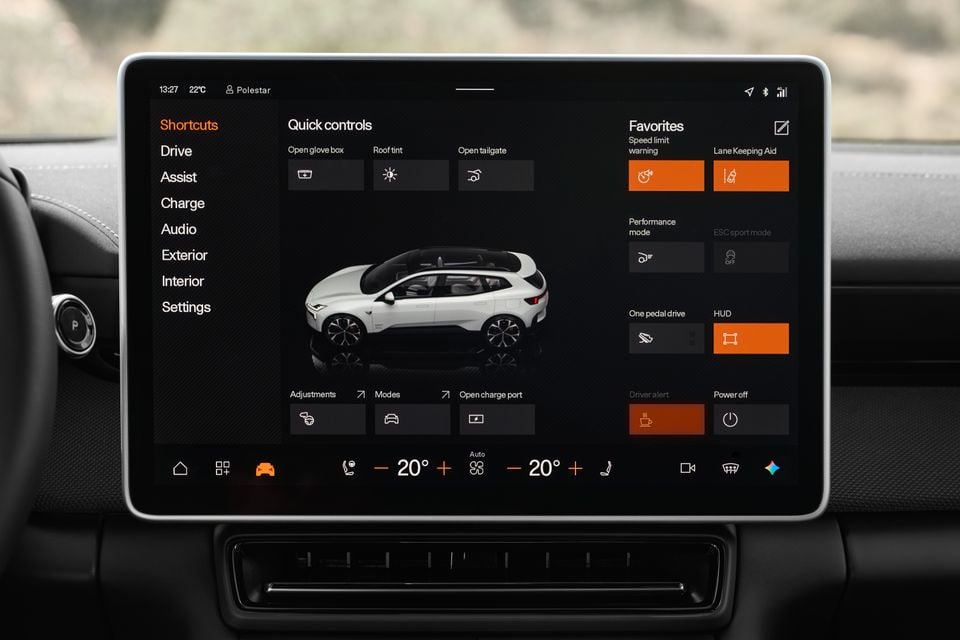
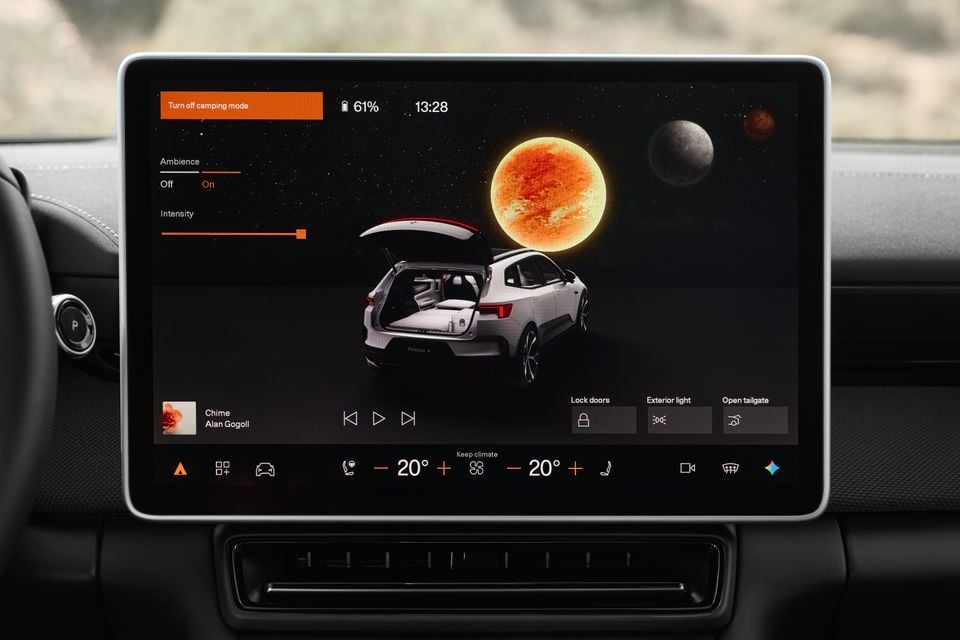
More widgets and shortcuts on the home page – up from six to nine – are claimed to improve user-friendliness, while the new Camping mode turns the central touchscreen into a control hub.
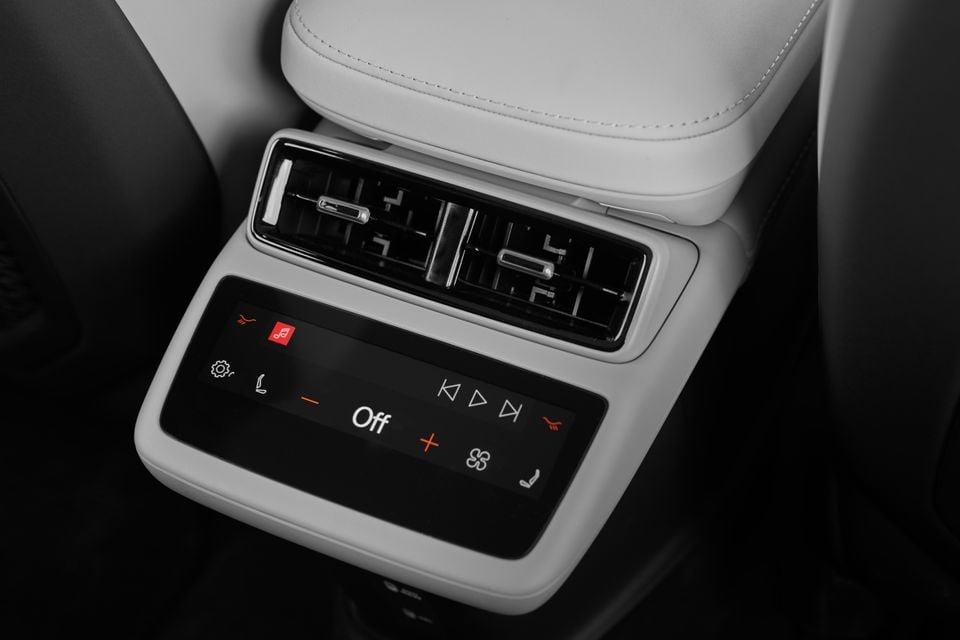
When activated, climate control, ambient lighting and entertainment functions can all be accessed via the infotainment system and rear touchscreen display, with vehicle-to-load (V2L), USB -C and 12V power also available.
Most of our time was spent focusing on the road, but the Polestar menu structure is a little flatter and less convoluted than multimedia systems from other Geely brands – namely Geely and Zeekr. However, you still have to adjust the mirrors and steering wheel (if the powered column is specified) via the touchscreen, which I find nothing but infuriating.
The darkened software theme with orange highlighting is pretty legible and distinctly Polestar, and the minimalist, flat grid design has aged well. I also like the simple and attractive typeface, which is again a Polestar hallmark.
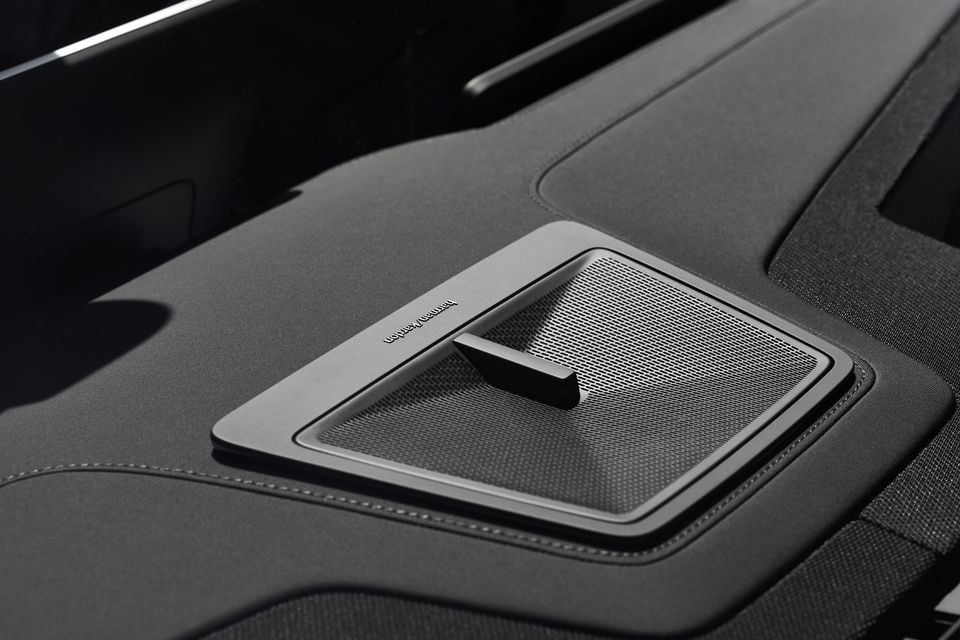
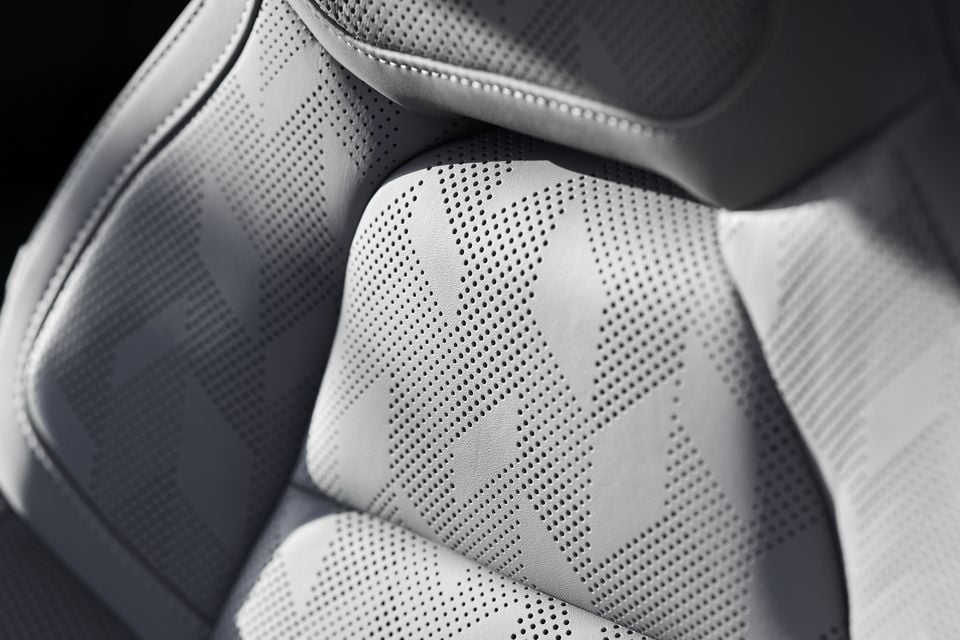
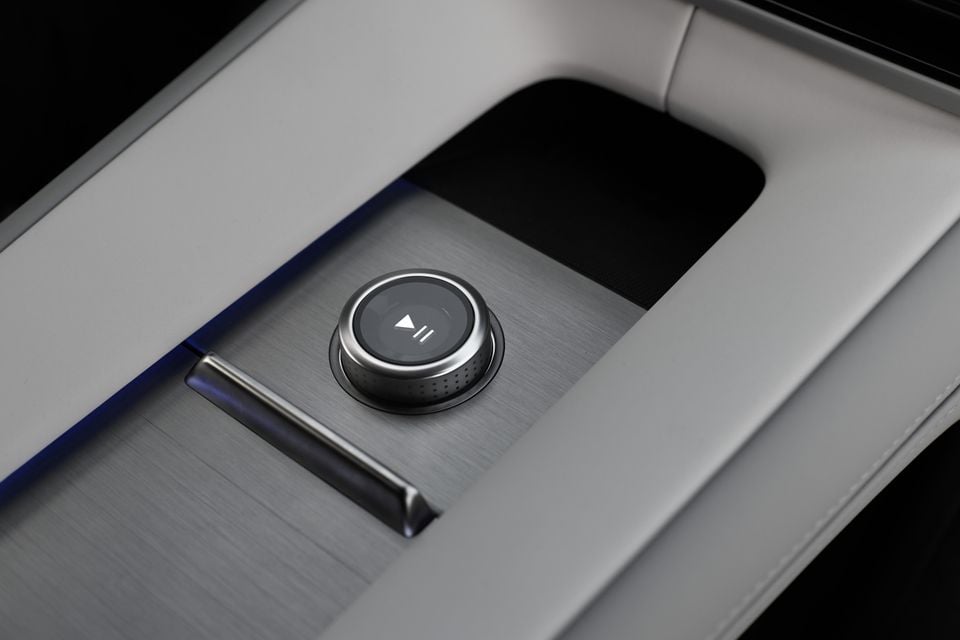
A range of interior materials and trims are available, from bio-attributed 'MicroTech' leather-free upholstery to 3D Tailored Knit material and Bridge of Weir Nappa leather. All are manufactured with sustainability in mind and each different interior theme can really change the personality of the vehicle.
The standard MicroTech's backing is made from 100 per cent recycled PET plastics, while the PVC surface contains 53 per cent bio-attributed content. The optional Tailored Knit (which might be my favourite due to its intricate construction and patterns) features 89 per cent recycled PET content while the 3D knit process minimises production waste.
Finally, the Nappa leather option is a chrome-free by-product of the food industry, and Polestar says the hide is fully traceable down to farm level, and meets strict animal welfare standards. While all this might sound like a lot of fluff, those more environmentally minded EV buyers get unrivalled transparency in how Polestar's vehicles are constructed, and where materials are sourced from.
Furthermore, the general fit and finish of the Polestar 4's cabin feels suitably high-end, with a distinctively Scandinavian look and feel that not only feels a little more special compared to competitors from some other brands, but you can see and feel the attention to detail in things like the seat perforations, the chunky rotary volume dial, and the suppleness of key soft-touch points.
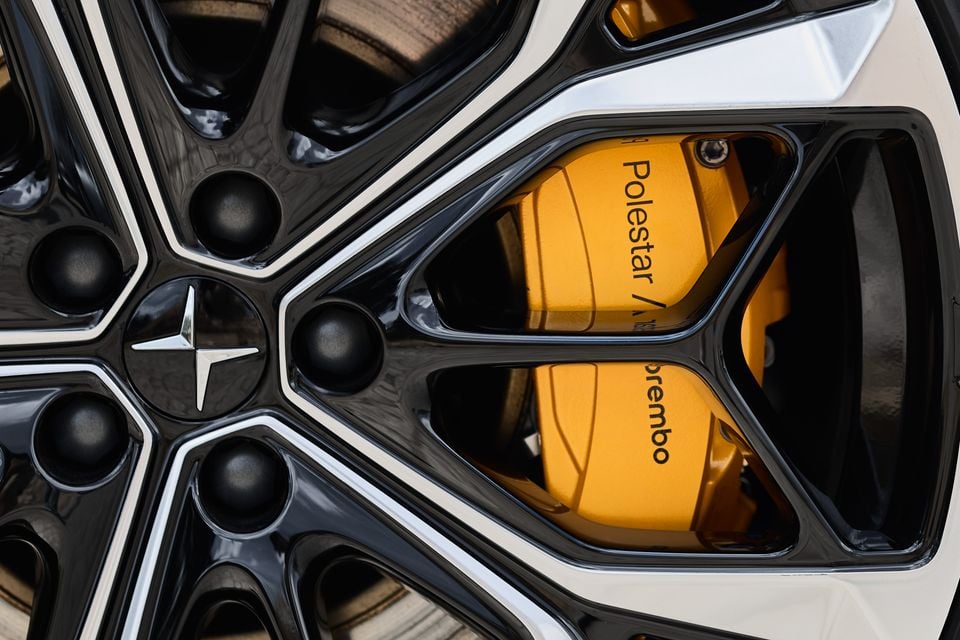
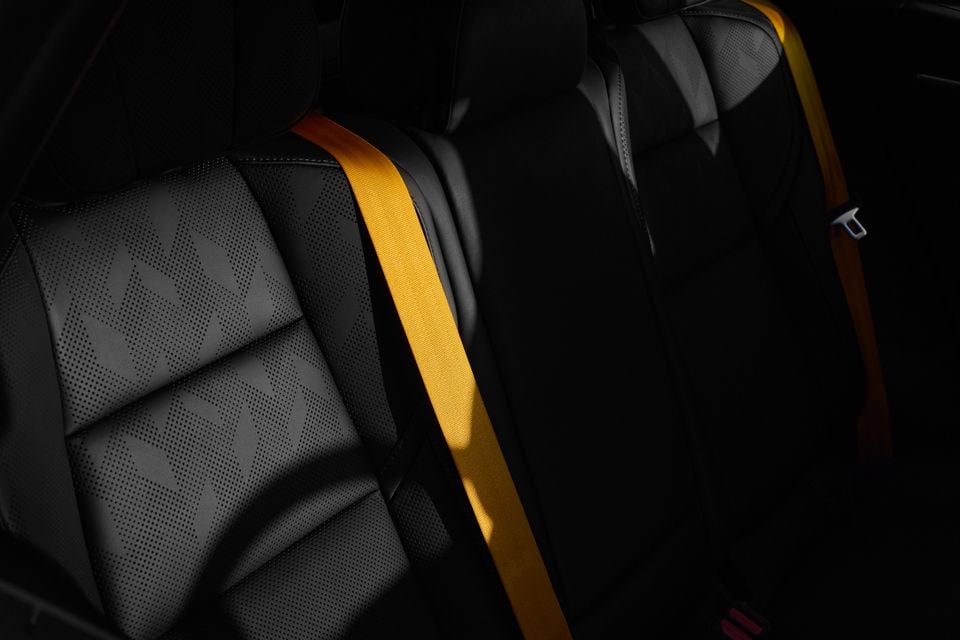
I'm also a fan of the flourishes of Swedish Gold on the seatbelts and rotary controller when the Performance pack is selected – though I'm not sure I'd pay $7200 on top of the $6500 Plus pack for the privilege.
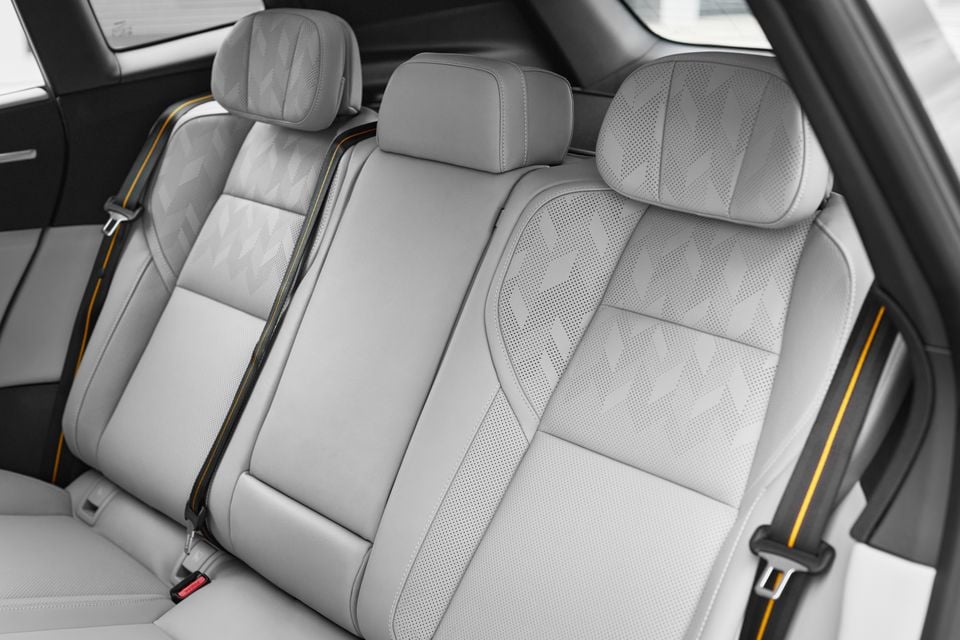
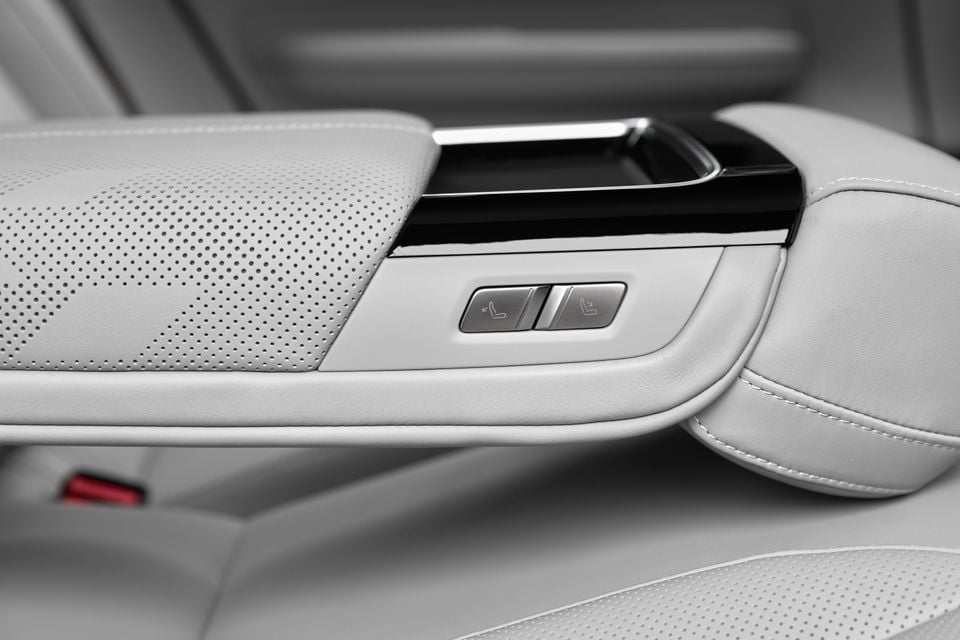
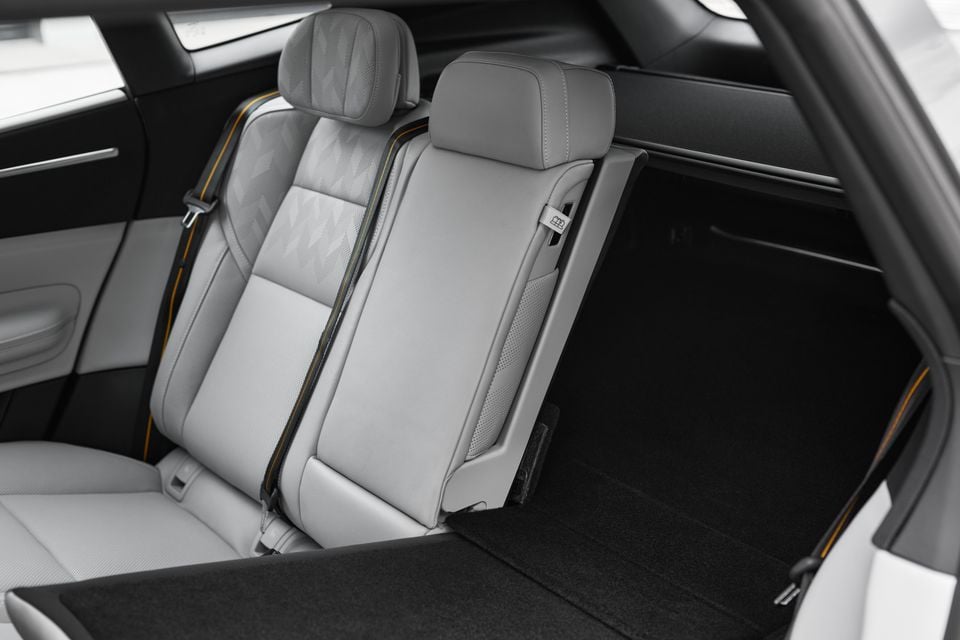
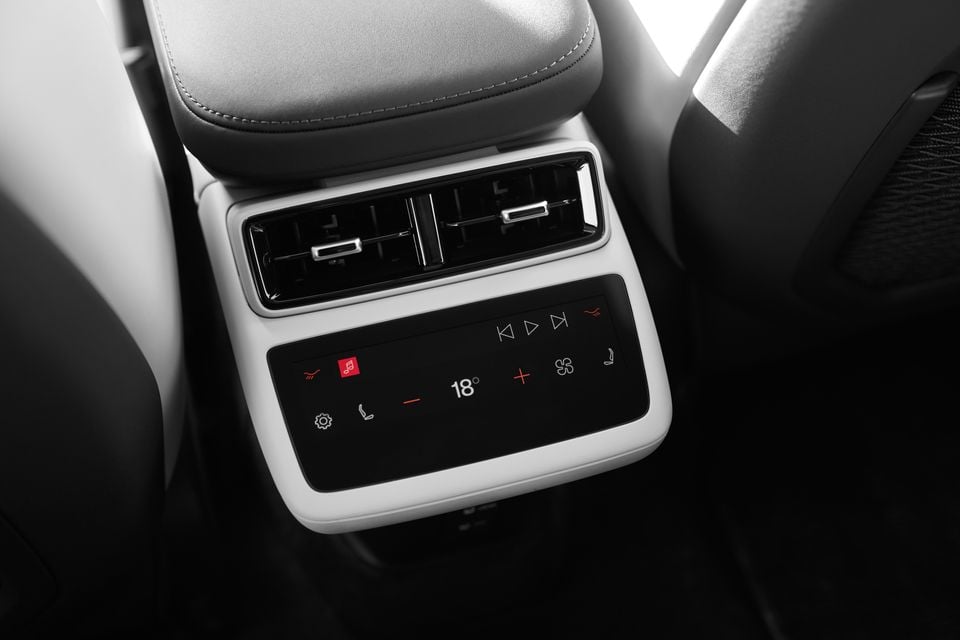
The second row has seen improvements with the SUV body style, with a claimed 25mm of additional headroom versus the Polestar 4 coupe. The standard panoramic glass roof is also longer, stretching all the way to the tailgate to improve the airy feel in the rear cabin.
At 6'1", I had plenty of leg and knee room behind my preferred driving position, meaning kids and taller adults will be comfortable back there. That said, the sporty, sculpted outer rear seats mean the middle seat is more of a jump-seat affair for occasional use, even if the flat floor means your kids shouldn't have to play footsies.
For a further $2200, Australian buyers can add an electrochromic glass roof, which helps to further reduce glare by using an electrically dimmable laminated glass layer, controlled via the central display. Even without the trick optional tech, Polestar says the base (and shadeless) glass roof provides 99.5 per cent UV protection.
The Polestar 4's rear seats fold 60:40, and with the optional $6500 Plus pack they also offer an electric recline function – similar to its Zeekr 7X corporate cousin. Said pack offers a third zone of climate control to augment the standard rear air vents, as well as heated rear outboard seats and PM2.5 air filtration.
Arguably, some of these features should be standard-fit to make the Polestar 4 more competitive in the Australian market, especially some of the convenience features locked away in expensive option packages.
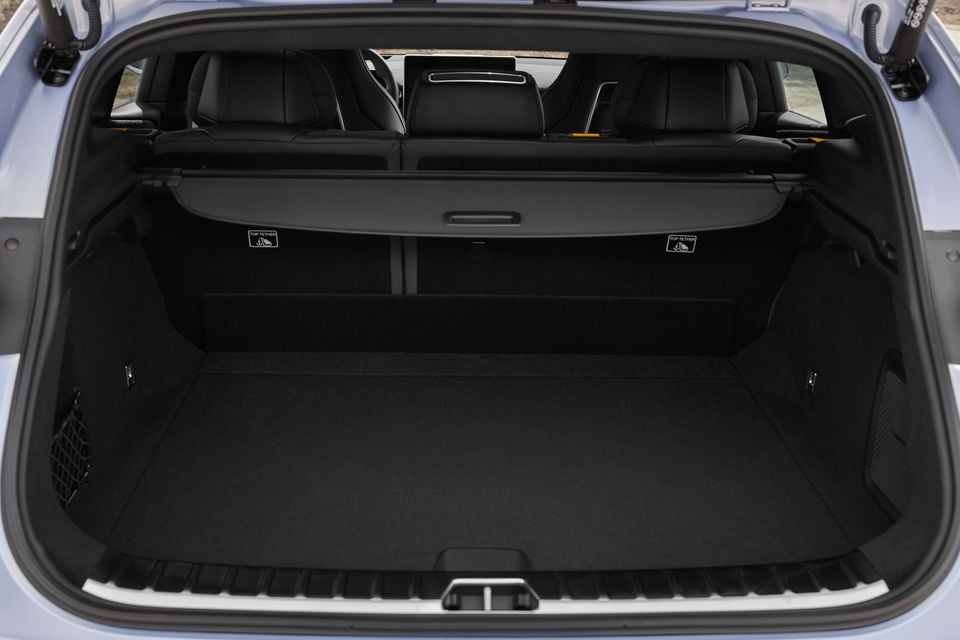
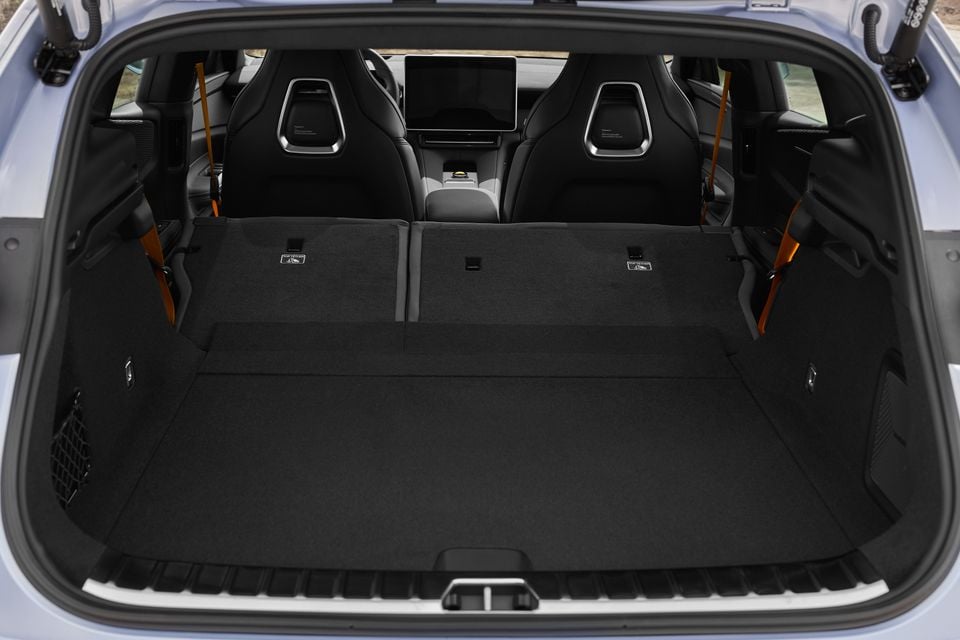
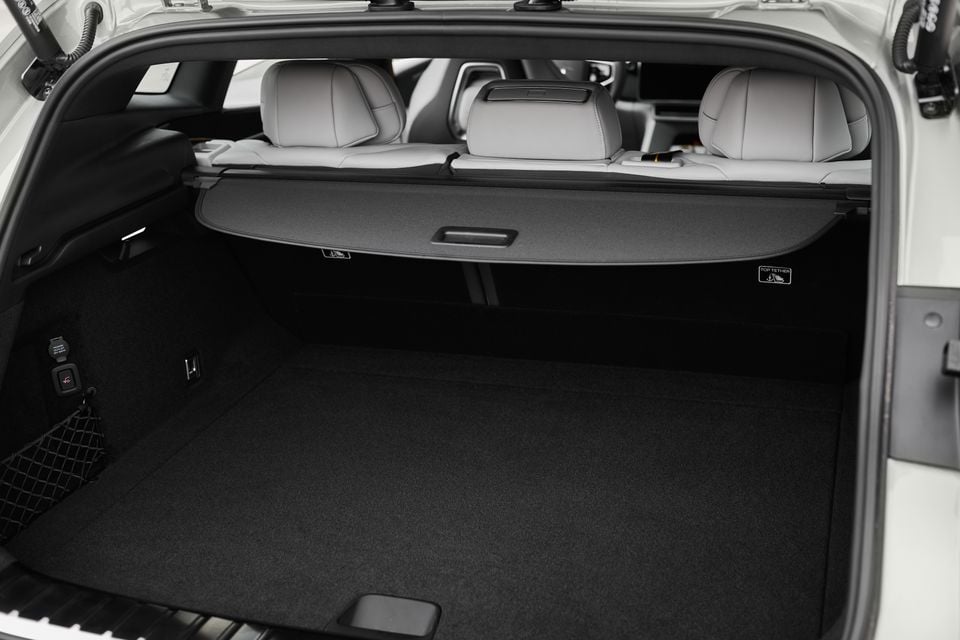
Further back again is a more accommodating cargo area than in the Polestar 4 coupe, with 530 litres of capacity measured to the cargo cover, and 655L to the roof liner. The latter is a 130L improvement over the coupe. Drop the rear seats and you have up to 1655L.
There's an adjustable boot floor that allows you to deepen the seats-up luggage space, or raise the floor height to meet the rear seatbacks when they're folded, creating a long and flat load space.
You won't find a spare wheel under there, though, as is the case with most EVs on the market.
| Dimensions | Polestar 4 SUV |
|---|---|
| Length | 4840mm |
| Width | 2008mm |
| Height | 1556mm |
| Wheelbase | 2999mm |
| Cargo capacity | 530L – to rear seatbacks 655L – to roofline 1655L – rear seats folded |
To see how the Polestar 4 lines up against the competition, check out our comparison tool
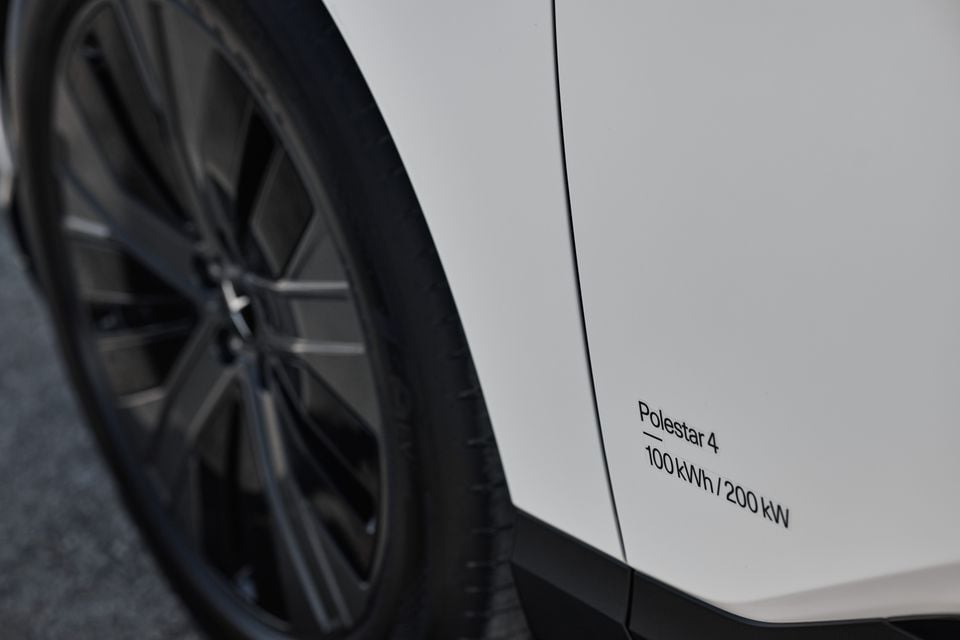
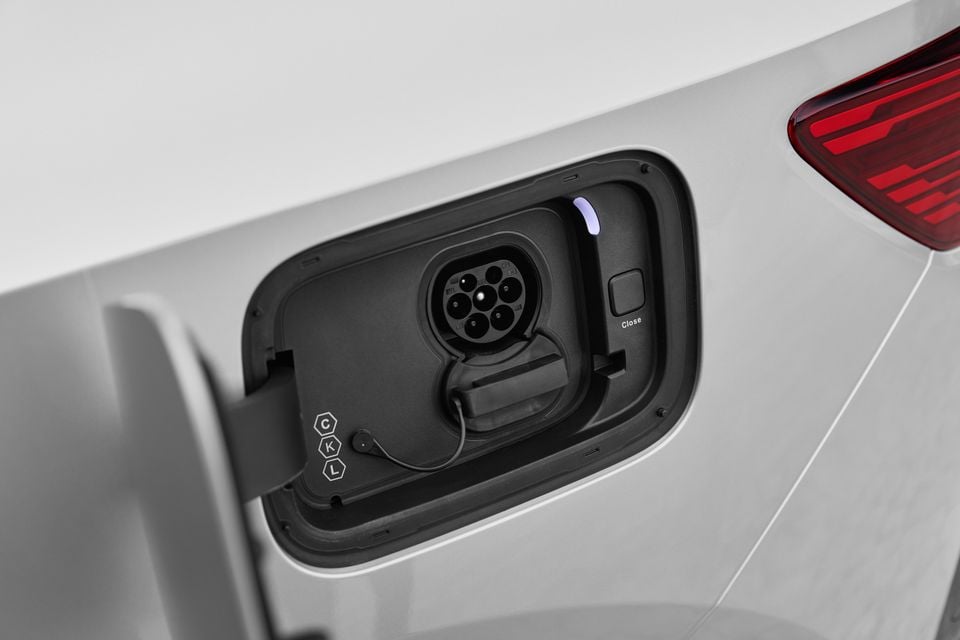
The Polestar 4 SUV offers the same powertrains as the coupe, meaning it's available in 'Rear motor' and 'Dual motor' variants, both teamed with a big 100kWh lithium-ion battery with NMC chemistry.
| Specifications | Polestar 4 Rear motor | Polestar 4 Dual motor |
|---|---|---|
| Drivetrain | Single-motor electric | Dual-motor electric |
| Battery | 100kWh NMC | 100kWh NMC |
| Power | 200kW | 400kW |
| Torque | 343Nm | 686Nm |
| Drive type | RWD | AWD |
| Weight | 2265kg | 2375kg |
| 0-100km/h (claimed) | 7.3 seconds | 3.9 seconds |
| Top speed | 200km/h | 200km/h |
| Energy consumption (claimed) | 17.8kWh/100km | 19.0-21.6kWh/100km |
| Energy consumption (as tested) | 18.3kWh/100km* | 12.5kWh/100km* |
| Claimed range | 630km – WLTP | 520-600km – WLTP |
| Max AC charge rate | Up to 22kW | Up to 22kW |
| Max DC charge rate | 200kW | 200kW |
| Towing capacity | 1500kg – Braked | 2000kg – Braked |
For the 'as-tested' energy consumption, it's worth noting the single-motor's figure was achieved on the route to Ascari, which included a decent chunk of winding, uphill roads, while the dual-motor's impressive figures were recorded in basically the reverse.
Another noteworthy mention is the 'scale' of energy consumption figures for the Dual motor. The Performance pack with its grippier Pirelli P Zero tyres sees energy use increase to the higher 21.6kWh/100km end of the scale, which in turn drops the claimed range to a more modest 520km based on WLTP testing.
To see how the Polestar 4 lines up against the competition, check out our comparison tool
Our test bed for the new Polestar 4 SUV was the twisty road from Málaga to the Ascari circuit via the mountains of the Serranía de Ronda in southern Spain, plus a stint in the Performance pack around the iconic racetrack.
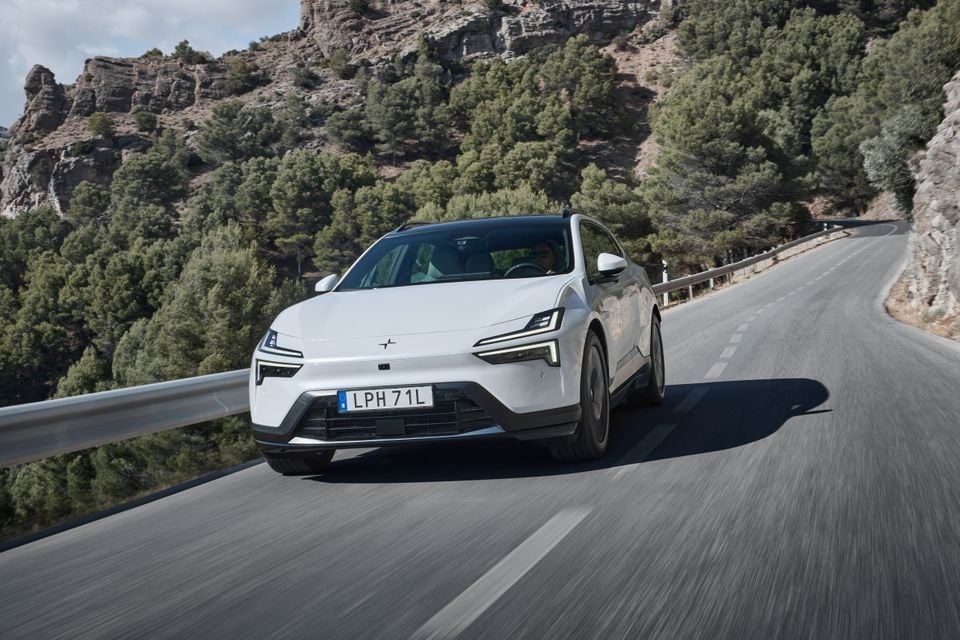
We started in the base Rear motor, which gets a familiar 200kW/343Nm single-motor rear-wheel drive powertrain, but the big news is what's changed under the skin.
Like the MY27 Polestar 4 coupe, the SUV picks up a "recalibrated chassis with high-capacity passive dampers, new spring and anti-roll bar settings, and polyurethane rebound stops replacing internal rebound coil springs", as well as a revised steering tune bringing "improved precision".
Head of driving dynamics at Polestar, Joakim Rydholm – the creator of the Polestar Engineered versions of the Volvo S60 and V60, a former development engineer at Saab and Volvo, and an avid rally racer – says the team stiffened the rear spring rates and softened the front-end to allow for the 4 SUV's added load capacity, while also contributing to its more touring-focused on-road character.
Having complained about the stiffness of the MY25 Polestar 4 coupe at the Australian media launch, I noticed the more balanced setup almost immediately once we left the Málaga Airport car park and started navigating some of the surrounding highways and freeways with mixed road surface quality.
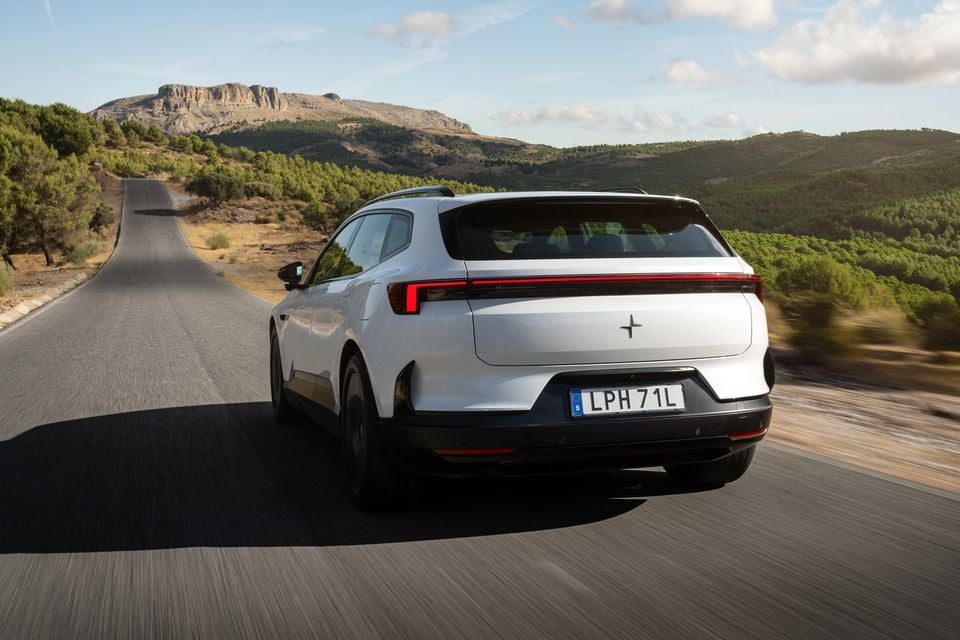
On everything from bridge joins to undulations that blanket roads around the hilly landscape, the Polestar 4 SUV feels notably more compliant and settled, both at low and high speeds. The new chassis calibration delivers accurate yet progressive driver controls that are still communicative and engaging, but a bit more polished than before.
Even the single-motor version has plenty of punch for getting up to Spain's 120km/h signed freeway speed limits, with the quoted 343Nm of maximum torque available from the moment you hit the throttle.
Polestar's claimed 0-100km/h time of 7.3 seconds seems modest by the seat of the pants, such is the strong initial torque response. For most people, it'll likely offer as much performance as you'll ever need.
Was I left wanting for more punch? Not really. Even uphill at the signed freeway speed limit and occasionally performing a quick overtake, the Rear motor offered more than enough pace for the conditions, and my demands.
The rear-drive balance with this chassis calibration is sweet, too. On the winding mountain passes that weave through Serranía de Ronda, the base Polestar 4 SUV flowed beautifully along the spaghetti-like route, presenting sure-footed grip levels, a hunkered-down stance, and an accuracy and surety through the steering wheel that made it very easy and enjoyable to point and place, despite its 2265kg heft.
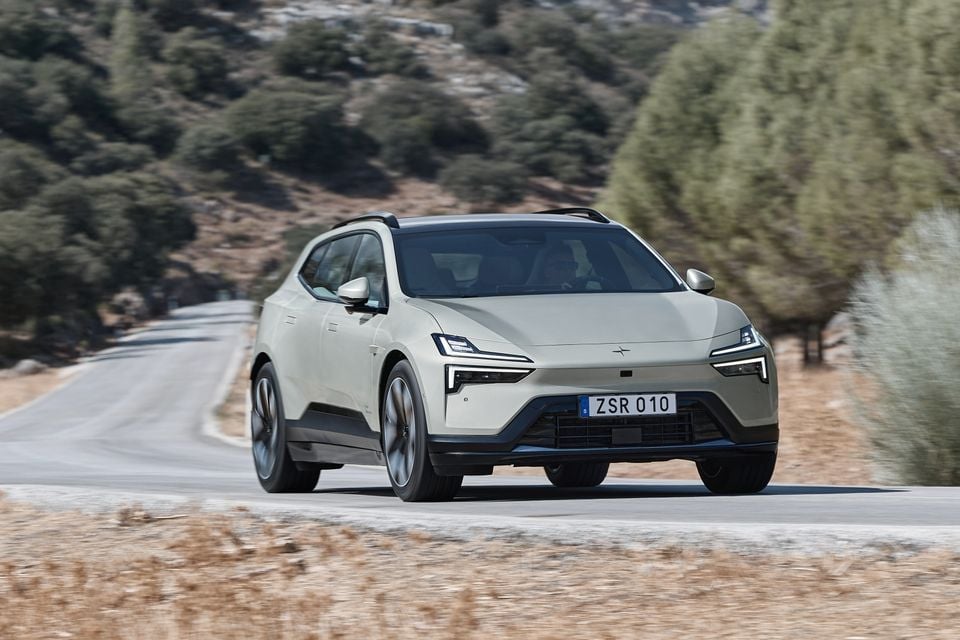
The following day on the return leg to the airport we piloted the Dual motor with optional 21-inch Plus rims. Really, it was much of the same, just with more grunt.
With a claimed 0-100km/h time of 3.9 seconds, the Polestar 4 Dual motor remains the quickest-accelerating SUV in the brand's lineup (bettered only by the Polestar 5 e-GT), and while its more progressive throttle response may not make it feel quite as rockety as the figure suggests, once its rolling it's brutish.
It's only 110kg heavier than the Single motor, but offers double the power and torque. If you're wanting more shove, this car certainly has a haste about it that the Single motor simply cannot match. Those brisk hill climbs and overtakes I mentioned earlier? Barely a blip in time in the twin-motor Polestar 4 SUV.
Beyond that, the feel and response of everything happening underneath you is more or less the same. I didn't notice too much of a difference in the ride with the larger optional wheels, even with 5mm less sidewall. Another thing I noticed was just how quiet the cabin was in both the Rear and Dual motor versions, even over some rougher patches of bitumen in Spain.
If this is the car for you, we’ll compare offers from trusted dealers, handle the back and forth and manage your purchase from enquiry to delivery.
And even without the optional (and expensive) Performance pack, the Polestar 4 SUV Dual motor feels better dialled-in than most all-electric SUV rivals. The more wagon-like profile and stance gives this Scando crossover a more car-like and dynamic character, even if it's not the fastest in its segment.
I'm a big fan of the comfortable and supportive seats too, which remained wonderfully cushy for several hours behind the wheel and as a passenger.
We didn't use the driver-assistance systems all that much given the nature of the twisty B-roads that formed much of the launch route, though we did use Pilot Assist on a couple of occasions on the freeway and it worked perfectly fine.
Outward visibility is pretty good thanks to the expanded glasshouse of the SUV version, though the small side mirrors and slim rear window make the standard surround camera system and blind-spot monitoring helpful in tight parking spaces. And the latter also helped with quick lane changes to make a gap in traffic.
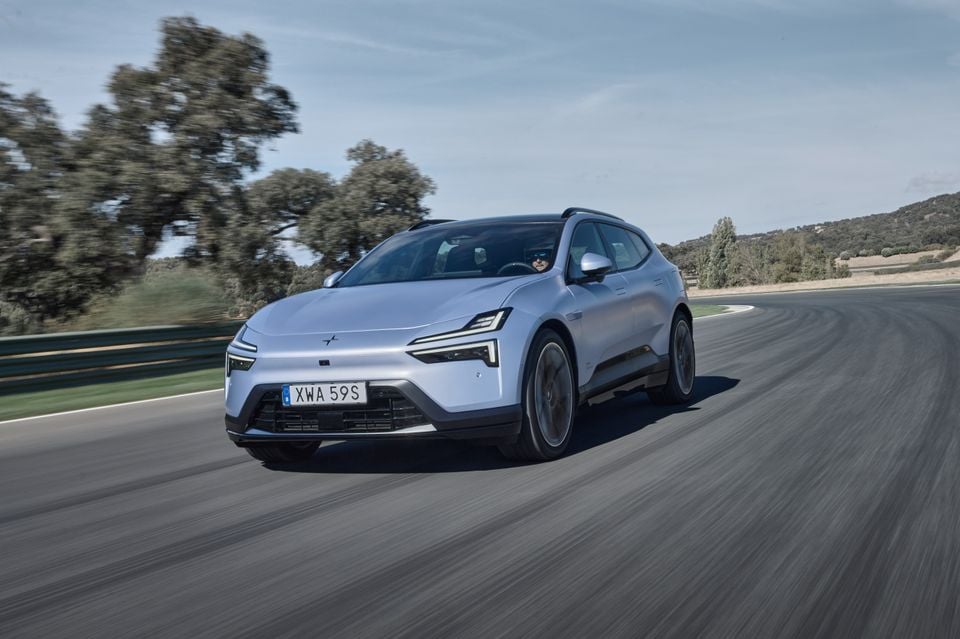
Between the road drives on days one and two, we got to sample the Dual motor with Performance pack at the Ascari circuit.
Over the standard Dual motor, you get larger 22-inch forged wheels with wider 265-profile Pirelli P Zero performance tyres that were custom-developed for the Polestar 4, four-piston Brembo front brakes, adaptive dampers sourced from ZF – which have also been recalibrated with this MY27 update – plus a Polestar Engineered performance chassis calibration (also revised), and smatterings of Swedish gold highlights inside and out.
Combined with the Performance pack upgrades, the Ozone Matte paint of our test vehicles, which has a bluish tone to its almost silver-like finish, gives the 4 SUV a more focused and upmarket look, for sure.
Given we only drove the Performance on track, I can't tell you how it feels relative to the regular Dual motor on public roads. What I can say, though, is that sampling the different modes and settings for the steering and damping back-to-back on track definitely showcased the variability that comes with the more potent optional running gear.
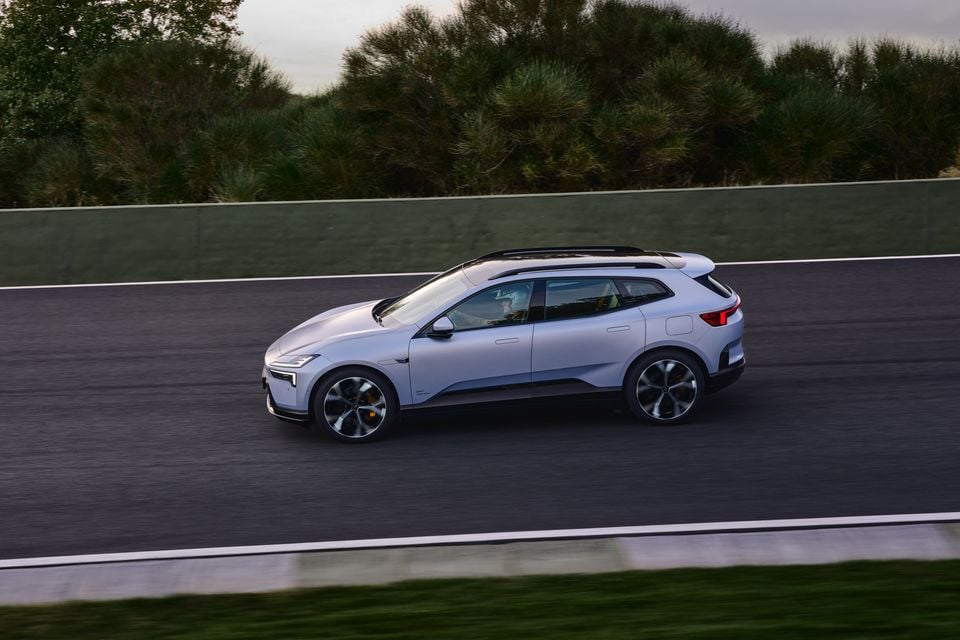
Ascari is almost like a 'Greatest Hits' album, with many of its 26 bends (13 left, 13 right) based on or inspired by iconic bends from iconic racetracks. One long, sweeping left-hooker is known as Bathurst, while others reference Daytona, Eau Rouge, Sebring, Spa, and the Nürburgring.
With a good mix of corner types, track surfaces and elevation changes, we got to really test the Polestar 4's ability to keep its composure during dynamic driving, and really stretch its legs beyond the confines of public roads and traffic.
Before our track drive, Mr Rydholm explained that his team recalibrated the Performance pack modes to make the car feel like it's being pulled by two 'hooks'. Nimble mode is intended to feel like a hook from the sky is pulling the car from above to keep it light-footed on the road, while Firm is meant to feel like a hook from road level is pulling the vehicle down. In between, Standard mode aims to feel like both hooks are pulling the car, delivering a more balanced feel.
It was an interesting way to explain it, but the three stages of adjustment for the suspension were tangibly different even on the relatively smooth tarmac, as were the stages of adjustment for the steering and throttle response.
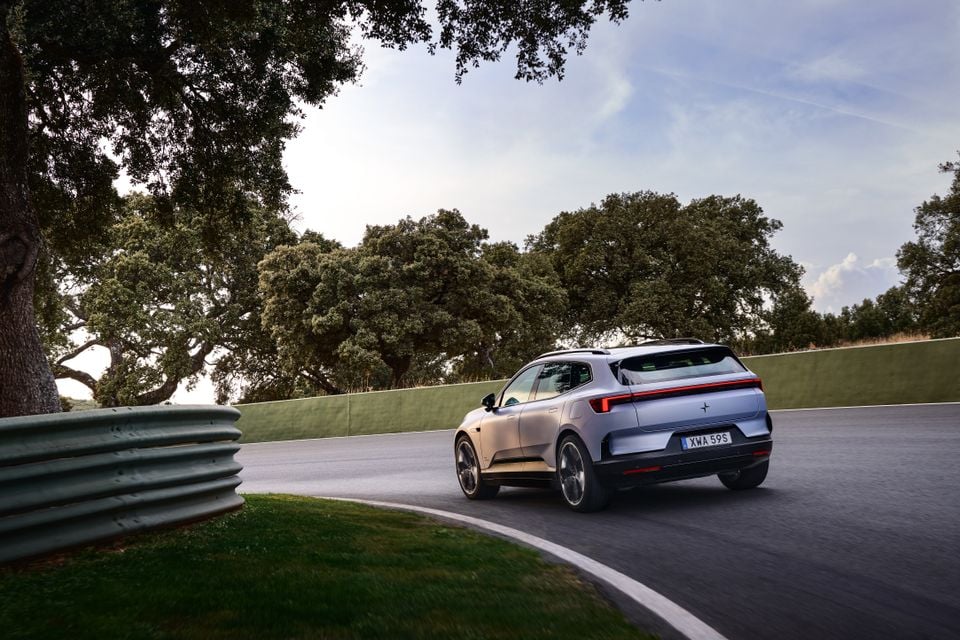
All told, I was pretty impressed with how much fun I had behind the wheel of this 2.4-tonne electric crossover on the circuit. Its retuned steering offers enough accuracy, weighting and feedback to make for an engaging experience in more dynamic settings, and while the POlestar 4 SUV is certainly no slinky sports car, its strong grip levels and well-controlled body roll (particularly in Firm) are up there with some of the segment's best.
You can feel some lateral weight shift at the limit, but we didn't really find the 4's dynamic limits on the track at speeds up to 140-160km/h. The keen front-end changes direction even in tight corners and chicanes without much complaint, and there's a playful nature to how it grips up and enjoys being thrown around a bit.
It feels like a European sportswagon that just happens to be electric, rather than an EV masquerading as a performance car with big acceleration claims and naff name drops on a spec sheet. Too many of these fast electric SUVs fall apart once you point them at a corner.
If anything, while the revised chassis tune has made the Polestar 4 a more capable tourer, the recalibrated steering makes you want to find some bends to send it through. Nicely done, Joakim.
To see how the Polestar 4 lines up against the competition, check out our comparison tool
The Polestar 4 SUV offers the same model variants and option packages as the coupe, with two main trim levels tied to powertrain variants.
2027 Polestar 4 SUV Rear motor equipment highlights:
Polestar 4 Dual motor adds:
To see how the Polestar 4 lines up against the competition, check out our comparison tool
The Polestar 4 lineup is available with a range of extra-cost packages and single-item options.
Plus pack: $6500
Comfort pack: $1200
Performance pack: $7200 – Dual motor
Nappa upgrade: $5700-$6100 – available with Plus pack
Single-item options include:
To see how the Polestar 4 lines up against the competition, check out our comparison tool
The Polestar 4 SUV is expected to carry over the coupe's five-star ANCAP safety rating, based on Euro NCAP testing in 2025.

| Category | Polestar 4 coupe* |
|---|---|
| Adult occupant protection | 92 per cent |
| Child occupant protection | 87 per cent |
| Vulnerable road user protection | 81 per cent |
| Safety assist | 79 per cent |
*Polestar 4 SUV currently unrated
Standard safety features include:
To see how the Polestar 4 lines up against the competition, check out our comparison tool
Polestar covers its model range in Australia with a five-year, unlimited-kilometre warranty. The high-voltage EV battery is covered for eight years or 160,000km, and there's five years of complimentary servicing thrown in.
| Servicing and Warranty | Polestar 4 SUV |
|---|---|
| Warranty | 5 years, unlimited kilometres – Vehicle8 years or 160,000km – EV battery |
| Roadside assistance | 5 years |
| Service intervals | 24 months or 30,000km |
| Capped-price servicing | 5 years or 100,000km |
| Total capped-price service cost | 5 years complimentary |
To see how the Polestar 4 lines up against the competition, check out our comparison tool
Something makes me feel that this is how the Polestar 4 should have been launched a few years back.
The more practical SUV body style addresses many of the design and visibility complaints the coupe received at launch, while also adding to the practicality aspect. And the recalibrated chassis and steering amends the overly firm and unsettled feel we noted at times in the past when driving in the city or over pimply tarmac.
It's also a hoot to drive with a bit of spice, showing poise and finesse both through the winding roads in and out of Málaga, as well as on track at Ascari.
Overall, it feels far more complete. Even better, the sharper price point helps the value equation somewhat – though the pricey option packs can see the bottom line balloon out to six figures if you're liberal with box-ticking. Personally, I think the SUV is a much better looker than the coupe, too.
But there are still some annoyances. That aforementioned options list can quickly price the Polestar 4 out of contention with its core competitor set, and some of the optional features really ought to be standard in a 'premium' vehicle costing this much.
Another negative is the lack of powertrain or battery updates to improve performance, charging speed or range, given the nameplate is now a couple of years old in a rapidly-advancing EV segment – though the brand's head of sustainability told us that LFP batteries are in the company's near future.
Now, I know Polestar isn't trying to be everything to everyone, but these gripes may knock the 4 off the shopping list for many in the target demographic. The competition in this segment is hot right now, and Polestar has declared this car needs to be its volume-driver.
At least the SUV doesn't have the 'Made in China' tag that may make some prospective buyers ponder its value alongside the Zeekr 7X Performance, for example, and Polestar's open transparency with its manufacturing, material sourcing and 'Cradle-to-Gate' lifetime emissions footprint is a point of difference for those concerned about their vehicle's total environmental impact – plus, it's a great conversation starter.
My spec of choice? Unless you're willing to go all-out on a Performance pack with all the fruit, a Rear motor with the Plus pack and either the Tailored Knit or Bridge of Weir leather in Zinc make for a really upmarket and unique-feeling premium EV that's actually fun to drive for under $100,000 drive-away.
Stay tuned for our first drive on Australian roads when the Polestar 4 SUV touches down very late this year or early in 2027.
CarExpert can save you thousands on a new Polestar 4. Click here to get a great deal.
Click the images for the full gallery
MORE: Explore the Polestar 4 showroom
Editorial Disclosure
CarExpert attended this event as a guest of Polestar.
If this is the car for you, we’ll compare offers from trusted dealers, handle the back and forth and manage your purchase from enquiry to delivery.
Quickly see how this car stacks up against its competition. Select any benchmark to see more details.
Polestar 4
Polestar 4 Sales rolling 12-months#
*Based on VFACTS and EVC data
Looking for complete Polestar 4 price history?
Our Polestar 4 Pricing Page shows exactly how prices have changed over time.
2026
$84,428
James Wong is an automotive journalist and former PR consultant, recognised among Australia’s most prolific motoring writers.
Add CarExpert as a Preferred Source on Google so your search results prioritise writing by actual experts, not AI.
Tace Clifford
13 Hours Ago

Derek Fung
13 Hours Ago
James Wong
6 Days Ago
Tace Clifford
8 Days Ago

William Stopford
12 Days Ago

Damion Smy
13 Days Ago
Add CarExpert as a Preferred Source on Google so your search results prioritise writing by actual experts, not AI.
# Based on VFACTS and EVC data
† Displayed prices are based on the drive-away price of the vehicle, which includes delivery charges, registration fees, number plates, and applicable road taxes, based on a Sydney location. However, prices may vary between states and territories, and additional costs such as compulsory third party (CTP) insurance, dealer delivery fees, and optional extras are not included. These prices are subject to change without notice and may not reflect current market pricing or dealer offers.
 Automotive Vehicle Spec Data & 4K images Powered by JATO Dynamics Ltd