




Derek Fung
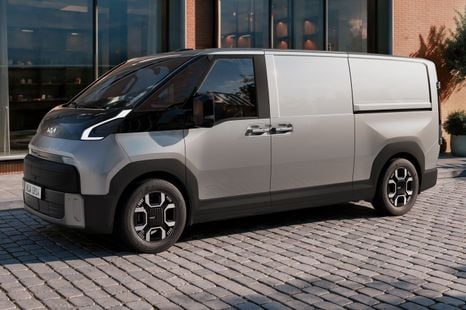
Kia PV7 electric van unveiled, confirmed for Australia
The PV7 is Kia's second electric van, and it's a considerably larger beast than the existing PV5.
5 Hours Ago
The Grandeur hasn’t been sold in Australia in 15 years, but the latest version is holding the key to all future Hyundai models.

Road Test Editor
Road Test Editor
Road Test Editor
Road Test Editor
If this is the car for you, we’ll compare offers from trusted dealers, handle the back and forth and manage your purchase from enquiry to delivery.
Australia first saw the Hyundai Grandeur in late 1999, and it was a pretty ambitious move from the South Korean automaker.
The Grandeur was positioned as the flagship of the Hyundai range, from a brand that was known for undercutting the Japanese with value-laden cars – often with some quirky designs.
And while a five-speed auto, ABS, alloy wheels, four-wheel disc brakes, power steering, air-conditioning, a six-speaker sound system, remote boot and fuel cap releases, cloth seat trim and central locking don’t sound impressive by today’s standards, the 3.0-litre petrol V6-powered Grandeur impressed plenty of buyers with its standard features and sub-$40,000 price tag.
The second Grandeur sold here had an attractive and mature – though ultimately forgettable – design and despite the upgrade to a 3.8-litre V6 and more gear, Hyundai Australia quietly dropped the sedan from the lineup in 2011. Aside from the creeping popularity of SUVs, if Aussies weren’t buying Holden Commodores and Ford Falcons, they were choosing a Nissan Maxima, Toyota Camry or Mitsubishi Magna.
But the Grandeur lived on overseas, and now competes with the Tesla Model Y and Kia Sorento for the top sales spot in its native South Korea.
In fact, you can hardly turn your head in Seoul today without seeing one – complete with blue foam door pads. Designed to be removed by dealerships at delivery, the little squares of foam have become something of a fad, symbolising to the world that you’ve bought a new car. (Even if some people are clearly buying them online and fitting them to 15-year-old cars.)
Though there appear to be no plans to reintroduce the Grandeur to the Australian market, the model is one of the first to receive Hyundai’s new Pleos Connect infotainment system, and CarExpert was invited to test both the car and the new system in Seoul ahead of the local release of Pleos.
Why is this a big deal? Well, the company’s CEO recently announced that Hyundai was now pivoting to artificial intelligence (AI), robotics, and ‘software-defined vehicles’ – with Pleos integrating a conversational AI agent into its system. This is the first major step in the company’s new direction.
For Australian buyers, the Grandeur also previews Hyundai’s future model lineup, with regard to both technology and interior design.
Of course, there’s more to Pleos Connect than just AI, but this does feel like a glimpse at the next stage of the automotive industry – having your own personal concierge available as you drive. We’ll get into that more below.
We had two limited drives in the Hyundai Grandeur, with the Calligraphy being one of the higher variants – though this one had the entry 2.5-litre powertrain.
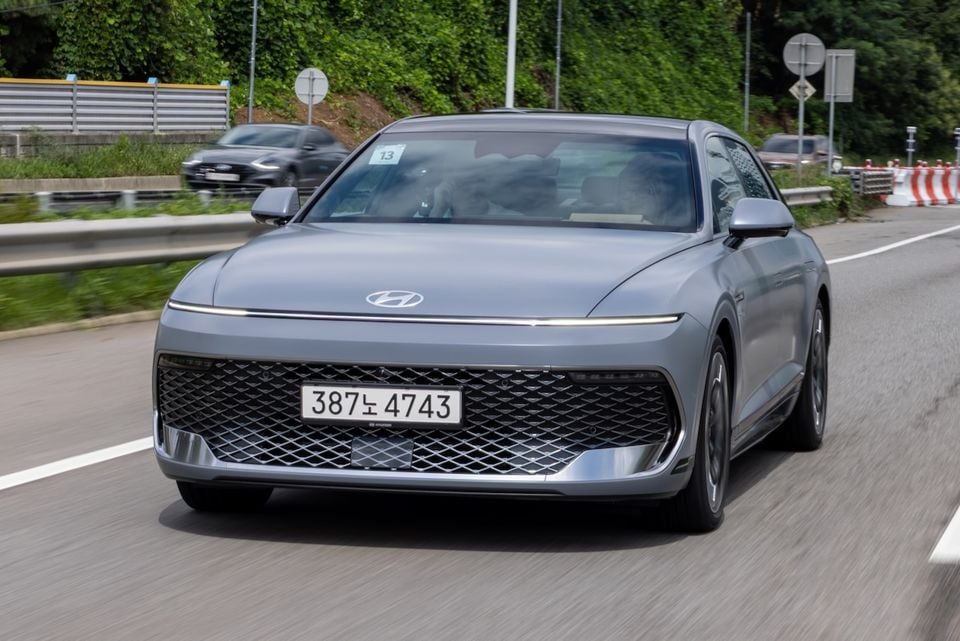
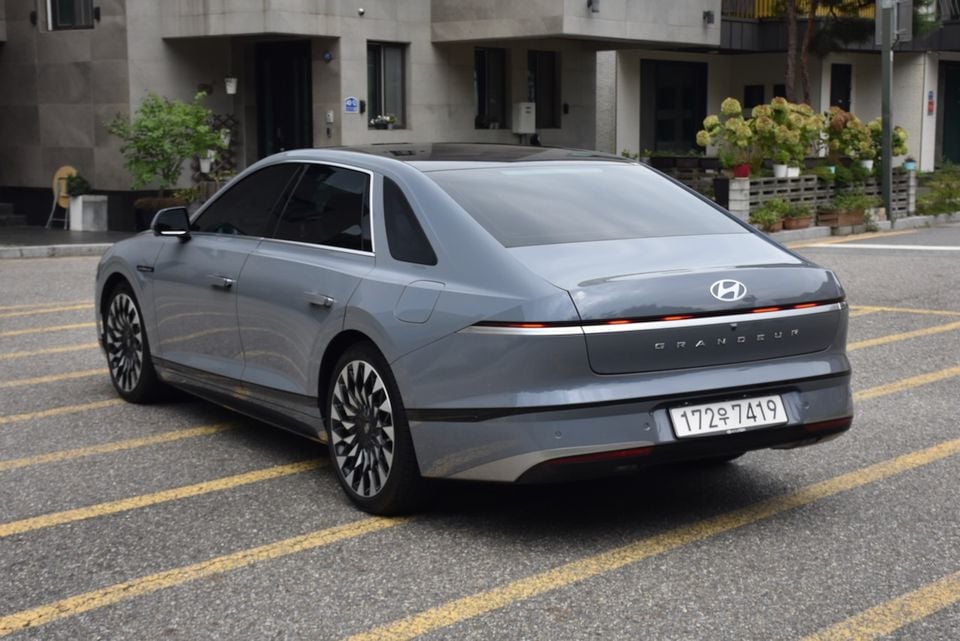
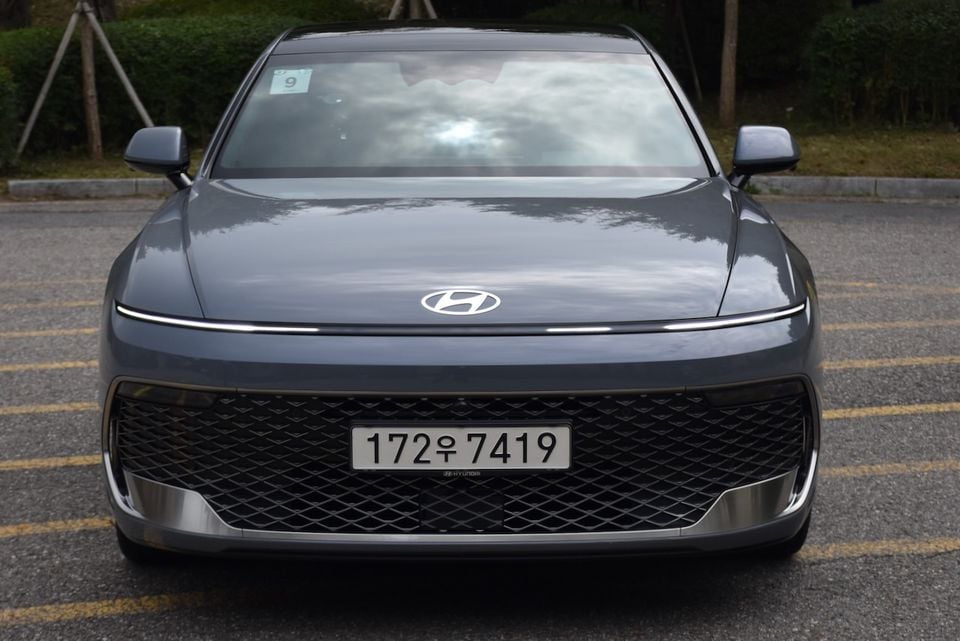
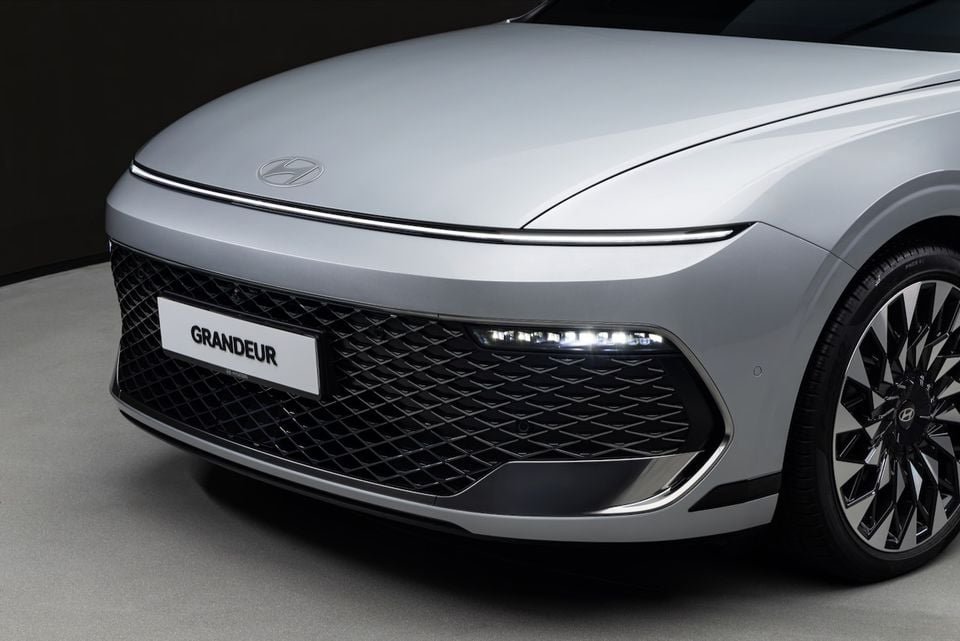
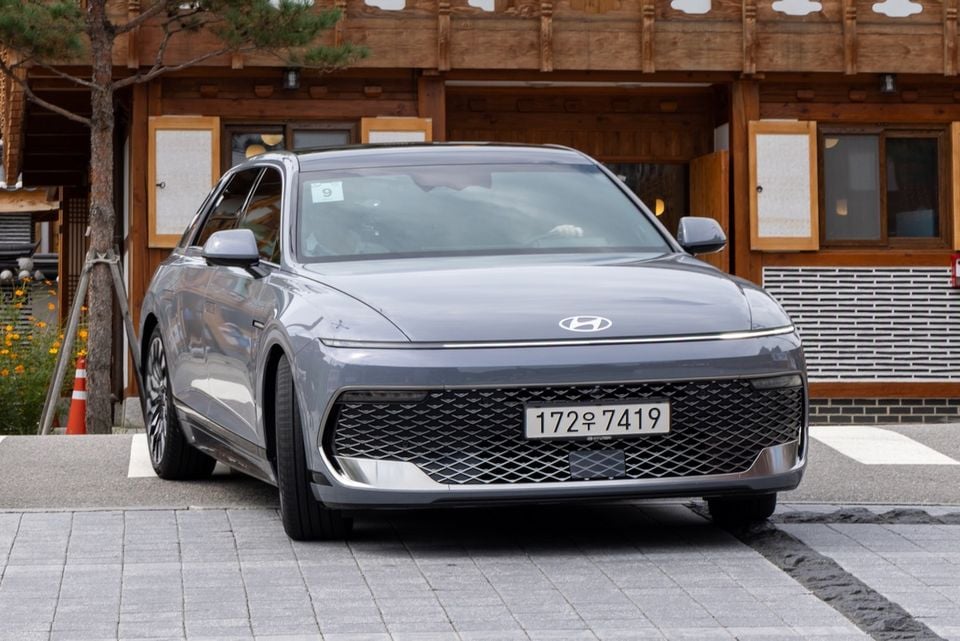
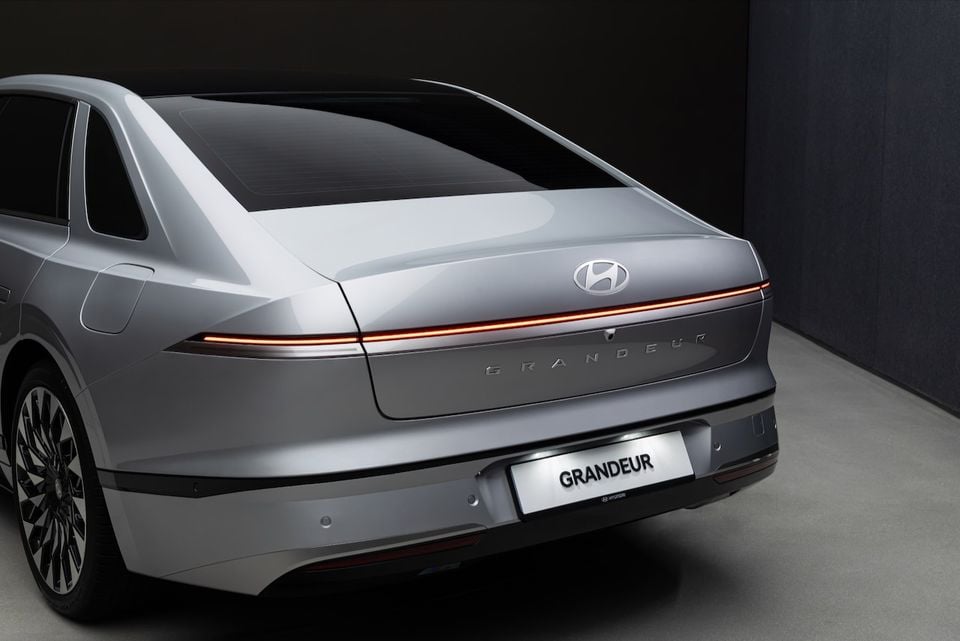
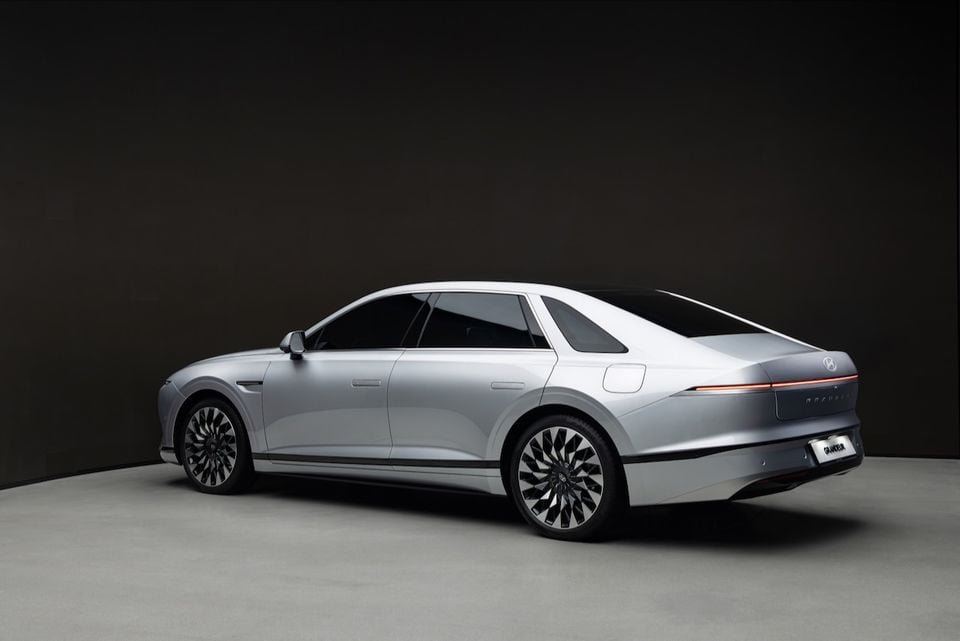
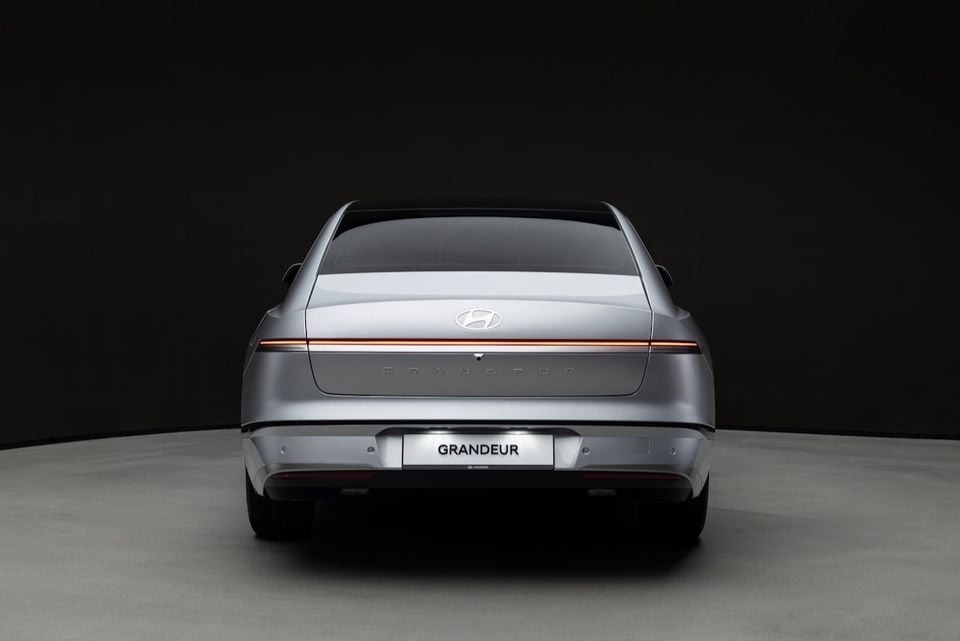
Considering the first Grandeur was a basic three-box shape with a busy front-end – with extra chrome to elevate its stature – the latest Grandeur is a properly elegant thing. Sleek, purposeful, distinct, and modern, it’s a fantastic-looking sedan in the real world, and I didn’t tire of seeing it everywhere.
It was interesting to see how the vehicle had evolved since we last saw it, some 15 years ago, but it also provided a valuable insight into what we can expect from the next generation of Hyundai cars in Australia.
The Grandeur isn't on sale in Australia, and at this point, there don't appear to be any plans to reintroduce the new model to the local lineup.
In South Korea, Hyundai offers four trim levels: Premium, Exclusive, Calligraphy, and Black Ink, with five different powertrain configurations.
Prices for the Grandeur Premium start at 42.45 million Korean won, which translates to A$43,895, and top out at 59.89 million won for the Black Ink – or about A$61,930 at the time of writing.
CarExpert can save you thousands on a new Hyundai. Click here to get a great deal.
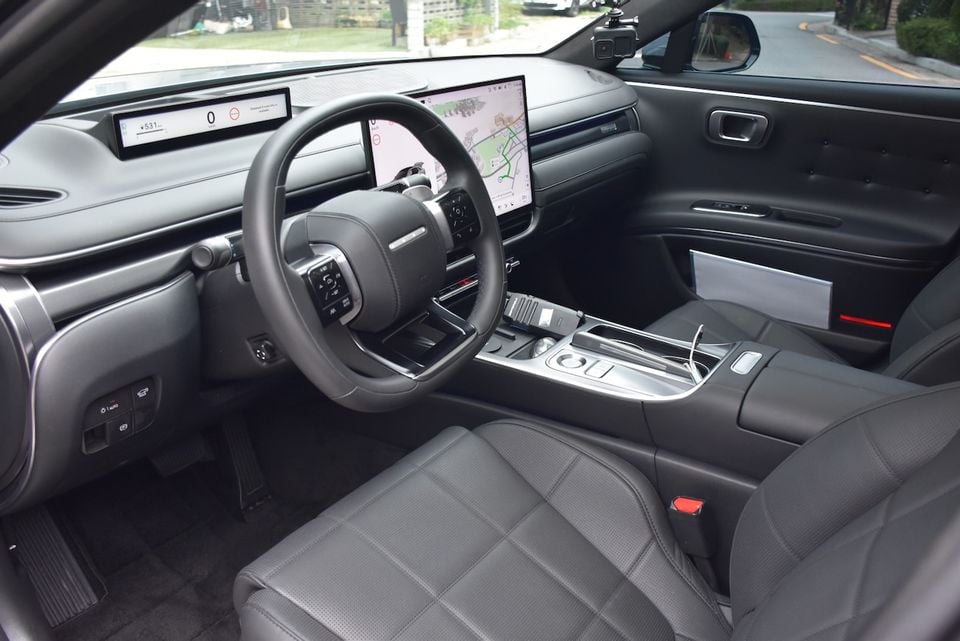
Take a good look, because Hyundai’s interiors will be based on this layout – built around the Pleos infotainment system.
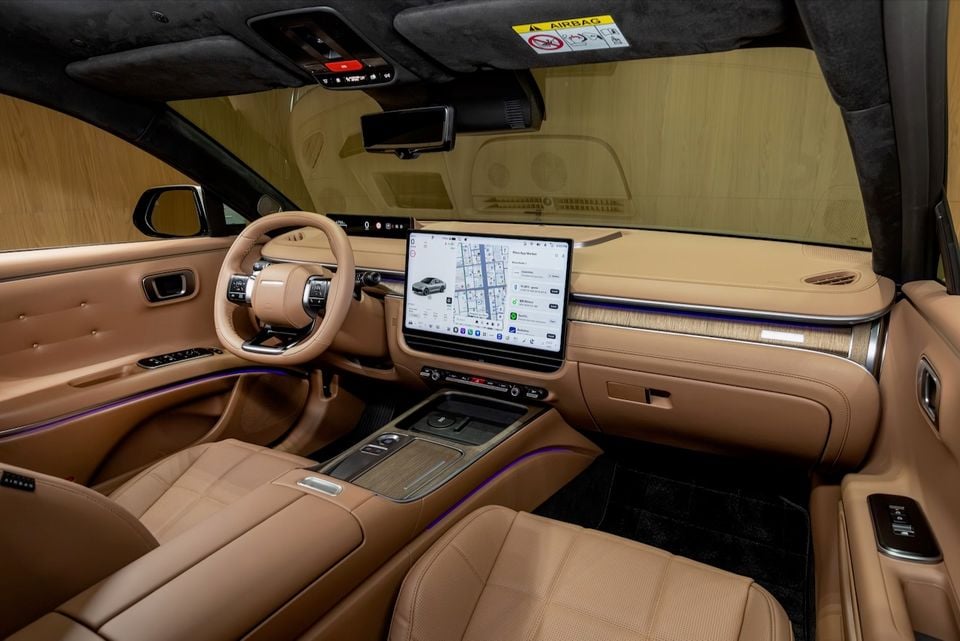
The double-wide screens – somewhat of a trademark of Hyundai and Kia – are gone, replaced by a 17-inch central touchscreen.
The screen is more or less divided into thirds, with the section closest to the driver displaying critical information like speed and warning lights, while the rest of the space is dedicated to satellite navigation, entertainment, climate controls, and settings. Along the bottom is a shortcut bar for apps, with both pinned apps and those used most recently. Nothing too revolutionary so far.
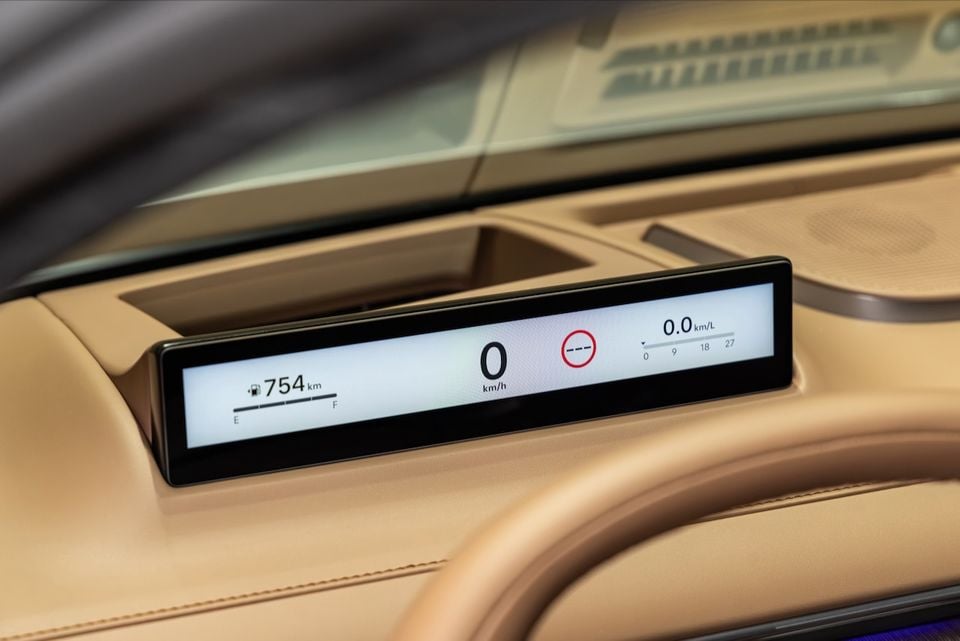
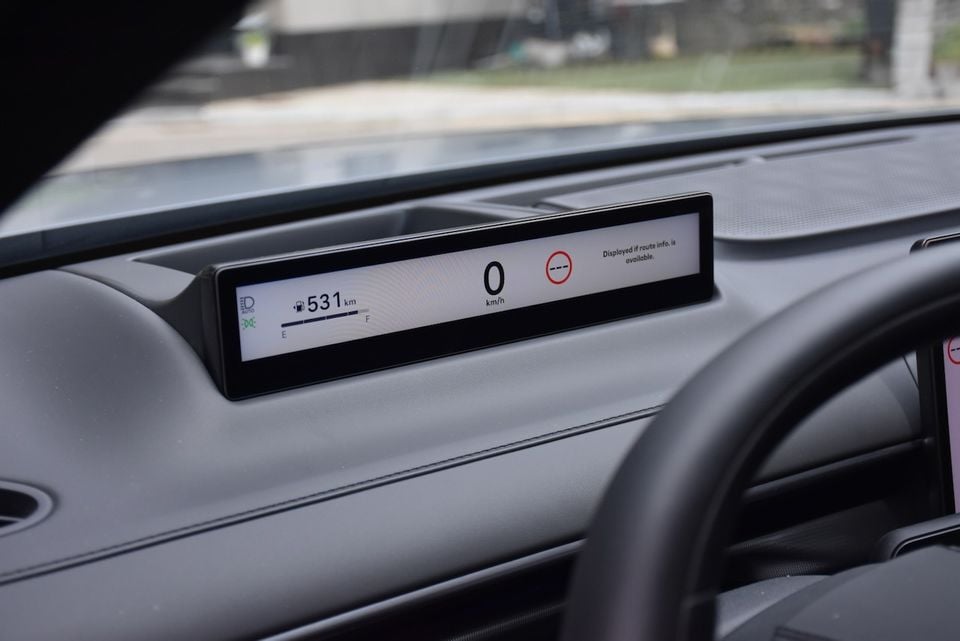
There’s also a slim black digital instrument cluster measuring 9.9 inches ahead of the driver, as well as a head-up display. Though this may not apply to Australian-market vehicles – we don’t know yet – Hyundai’s people have said the instrument cluster and HUD will be deleted from budget models.
We were also told the digital instrument cluster was placed up high so as not to be obscured by the steering wheel. However, my personal preference for a low seat and high steering wheel did mean the top of the rim covered half of the display. Not really an issue, given I also had the main screen and the HUD giving me the same information.
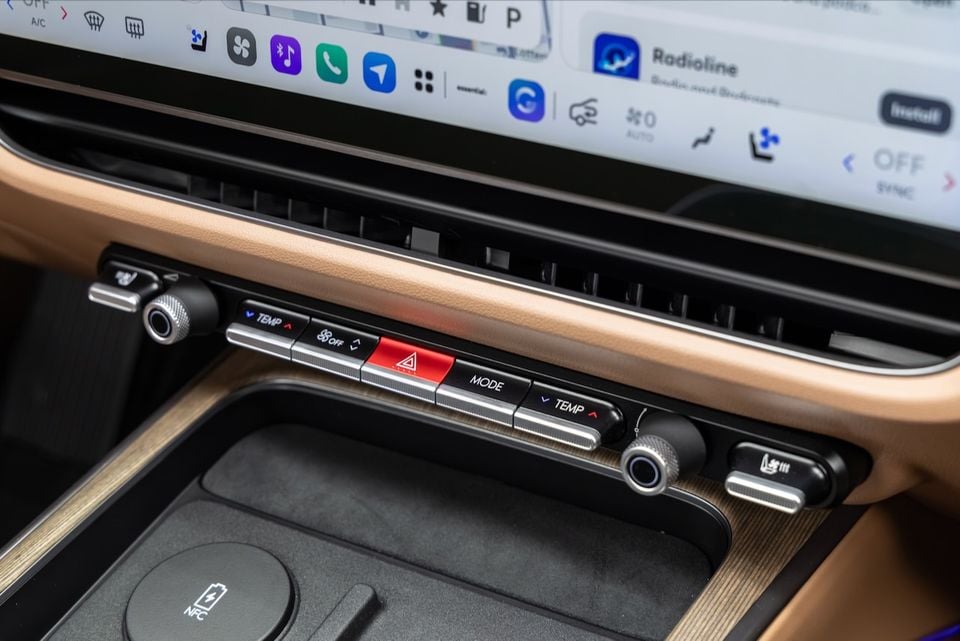
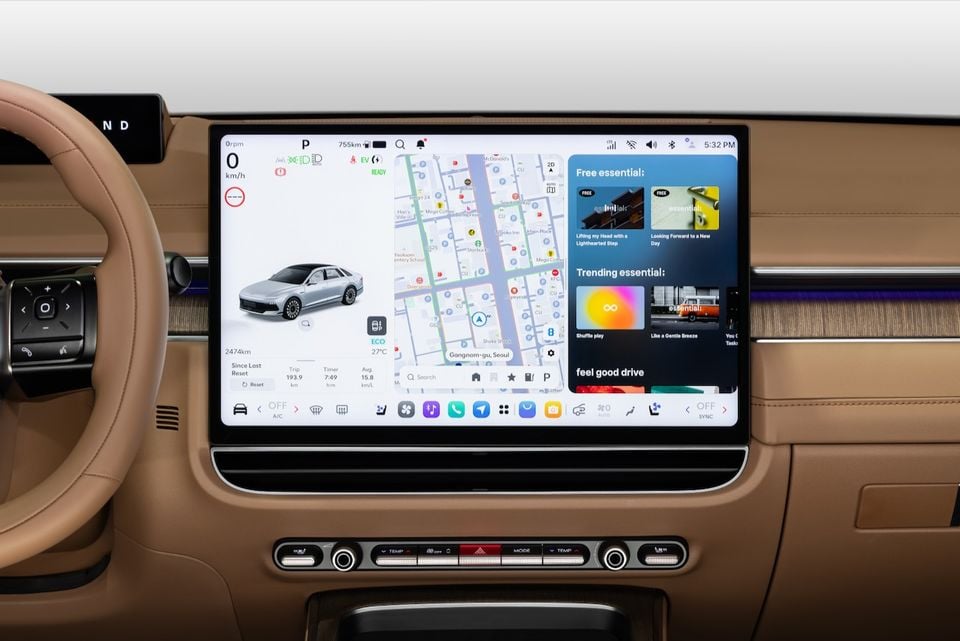
One thing the company has committed to is a strip of buttons and knobs below the screen. While more involved tasks require using the screen, drivers can still adjust the temperature, fan, volume, and other key functions without taking their eyes off the road. It’s the very minimum of what should be in cars, and though I don’t like handing out praise for the bare minimum, it is a welcome addition and something all automakers should be doing.
But there’s more to it: the buttons and knobs are high quality and pleasing to use, with a satisfying action and purposeful clicks.
The leather-upholstered steering wheel also features real buttons and aluminium paddle shifters, which are nice to the touch, even if the paddles are perhaps a little redundant in a premium four-cylinder sedan.
Unfortunately, Hyundai has succumbed to the industry trend of replacing the right-hand stalk with a drive selector that feels just like an indicator stalk to the touch. The previous stubby drive selector at the four o’clock position was never my favourite, but this is a definite backward step.
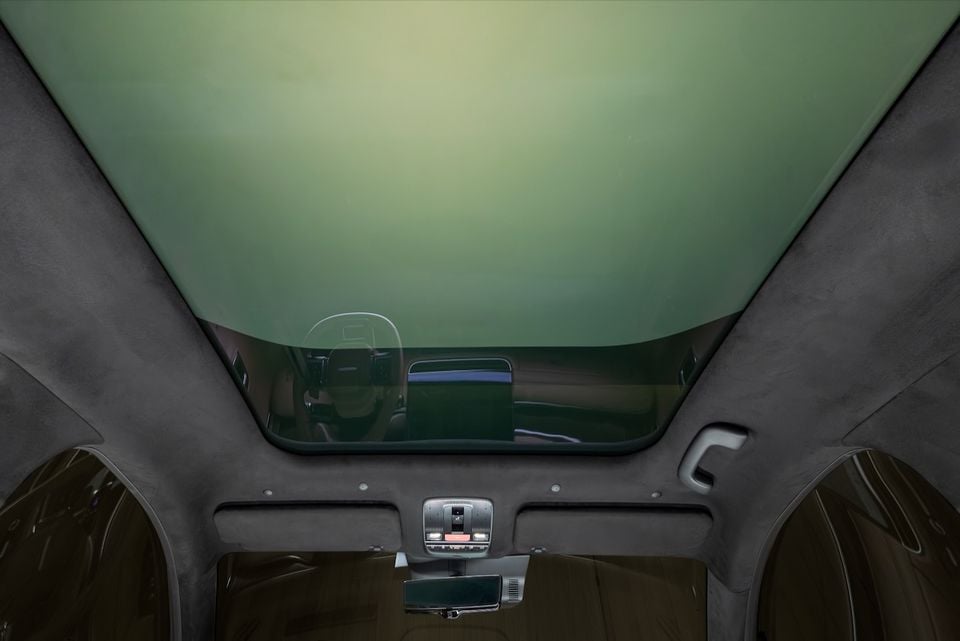
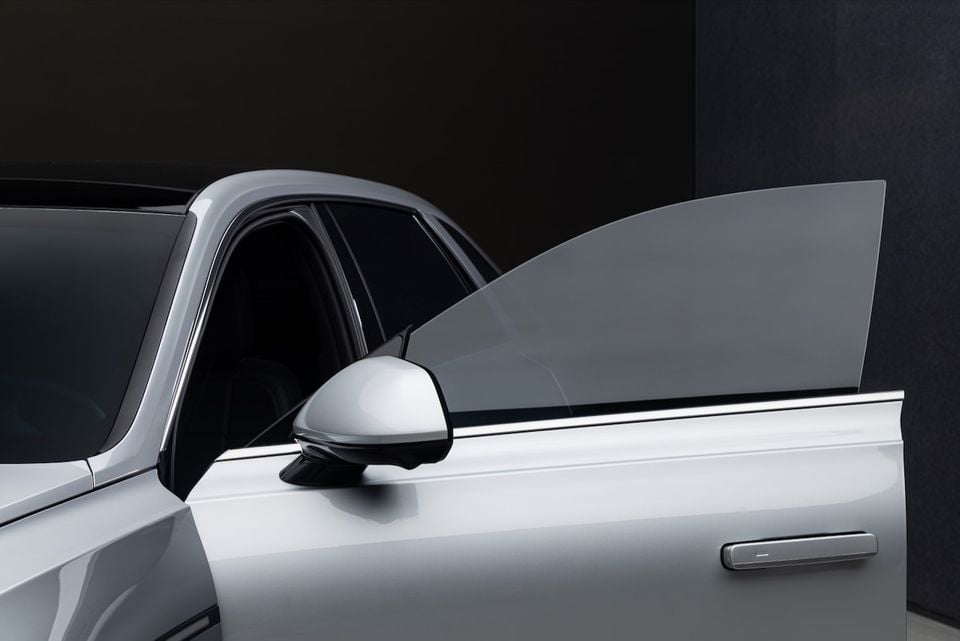
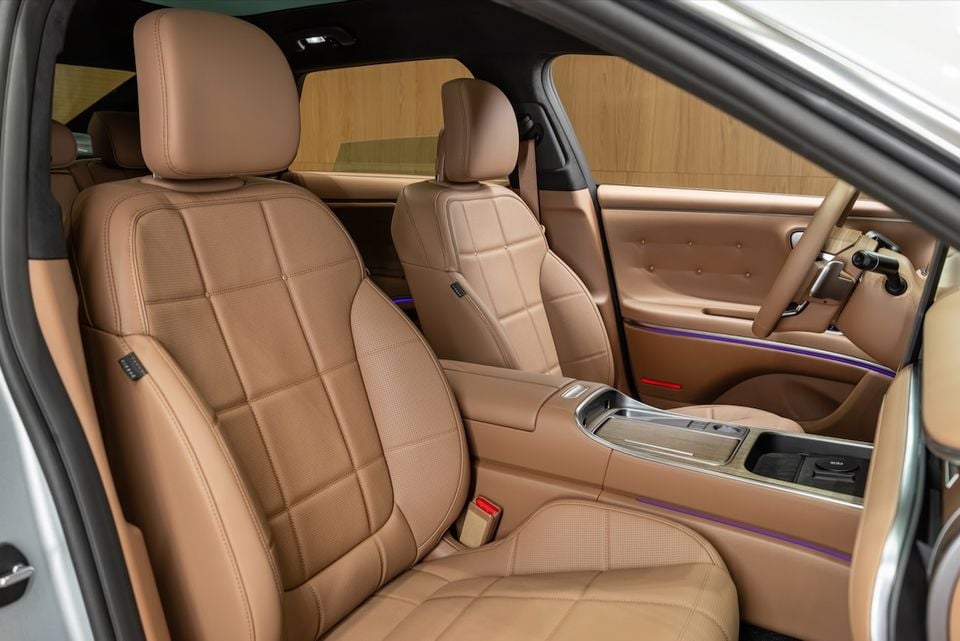
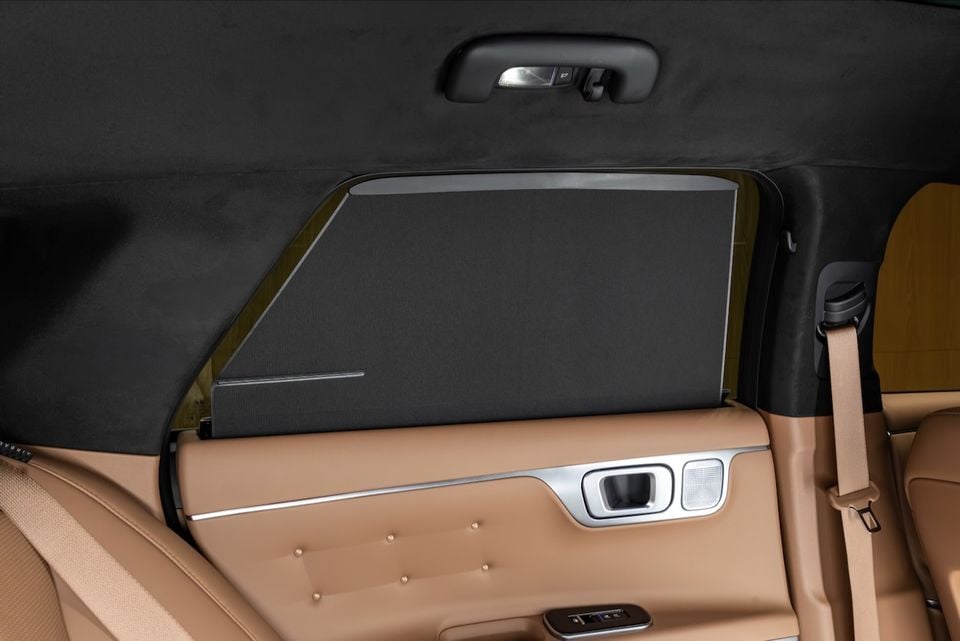
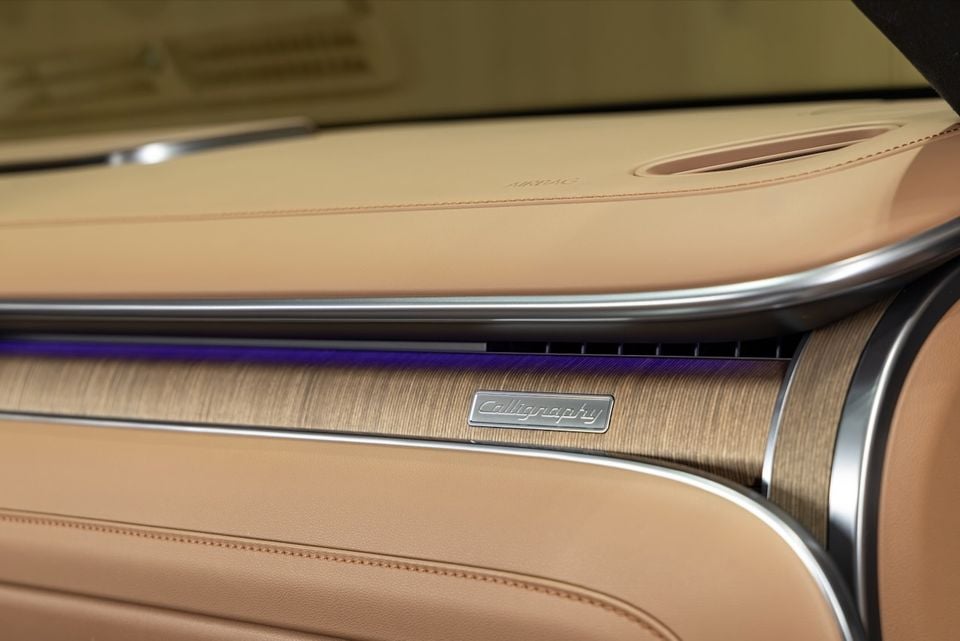
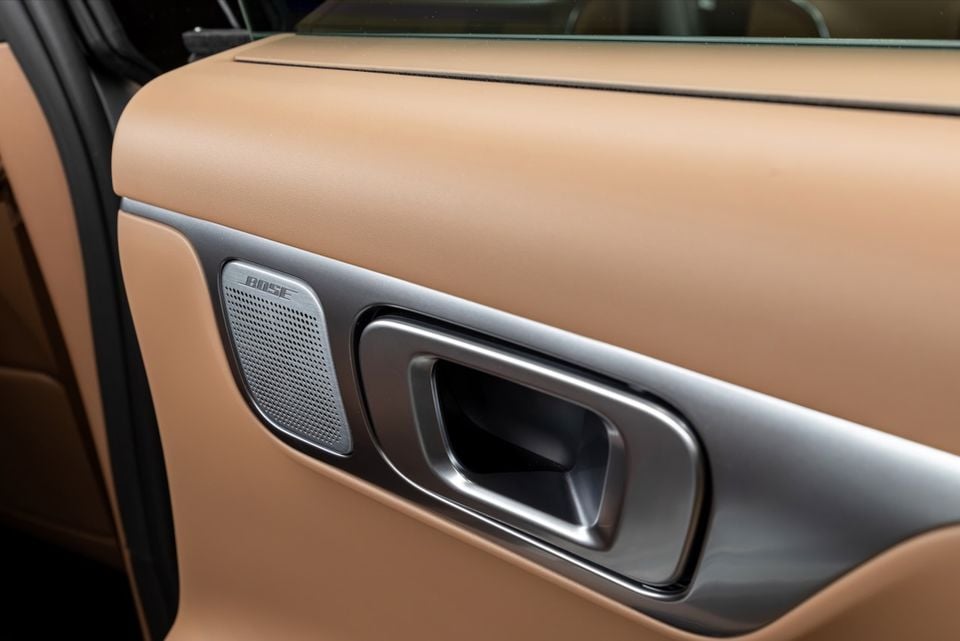
Our particular vehicle had a black interior, with the cabin being all class. We’re talking soft surfaces, (real) brushed aluminium highlights throughout – including the door handles – and other versions getting real woodgrain. Then there are the frameless doors, which are always a crowd favourite.
There’s lots of stitched leather, black suede headlining, and a Bose stereo, along with hidden air vents that are electronically controlled, and a full-length glass roof with electrochromic shading. All of this contributes to a cool and premium cabin, without being overtly luxurious and stepping on the toes of Genesis.
The seats were very comfortable, too, with a good range of adjustment, and both heating and ventilation – the latter being especially appreciated in Seoul’s humidity.
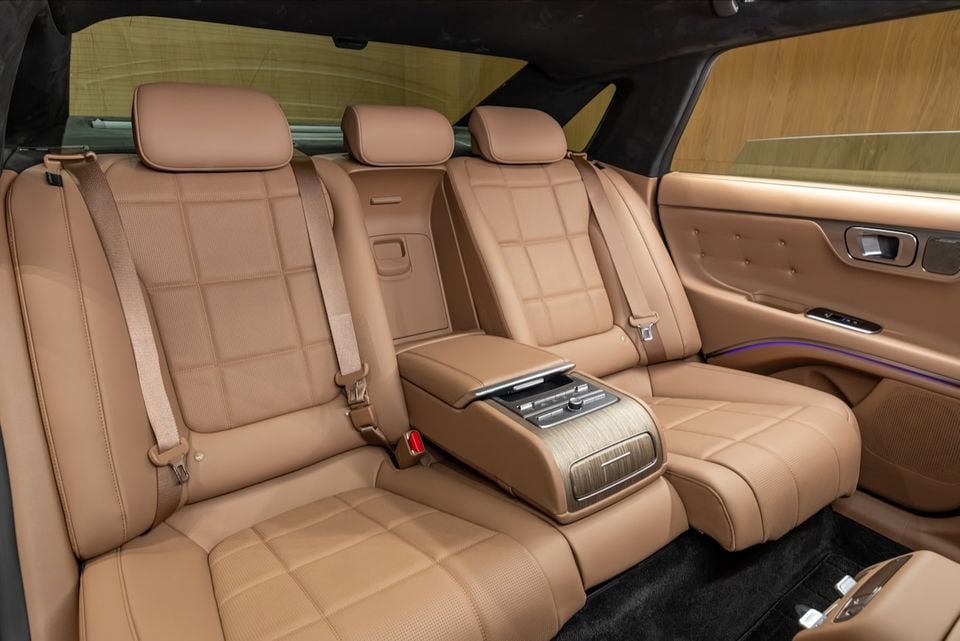
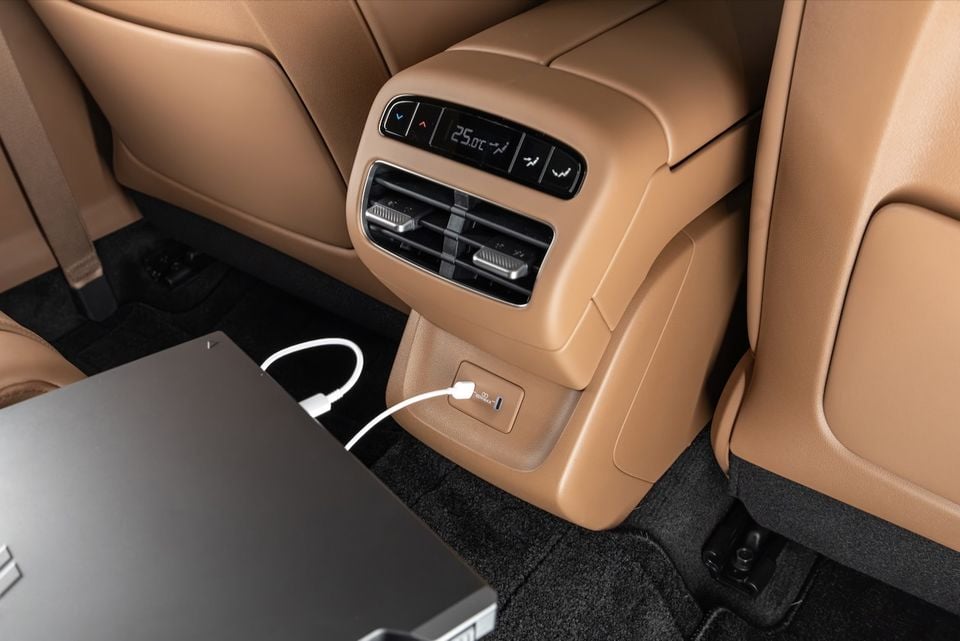
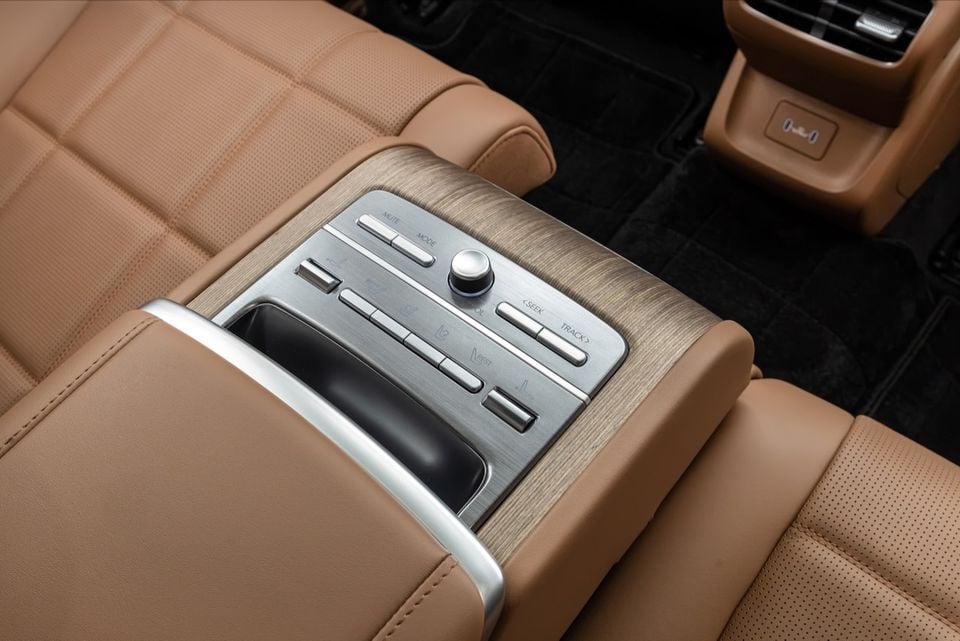
At 480 litres, the boot was surprisingly spacious, and rear-seat passengers are also well accommodated, with heated and ventilated outboard seats in the higher grades – though the angle of the C-pillar means a little more care is required when getting in. For those being chauffeured, there are rear air vents, a USB-C port;, and a centre armrest with controls for the seats, dual climate zones, and stereo.
Back in the driver’s seat, the Pleos infotainment system has clearly had a lot of time and effort put into it, and feels familiar, like it could be a native Apple operating system. But for the same reason, visually, it doesn’t come across as particularly unique or revolutionary.
For now, the conversational AI is linked with vehicle controls and convenience functions – like changing the climate control settings or winding up windows, and based on which occupant in the car has made the request. And while English hadn’t yet been added to the system when we used it, we were given a demonstration of the types of things it will soon be able to do.
In the near future, drivers will be able to say 'Hey Gleo' (the name of the AI agent within Pleos Connect), 'we’re on our way to XYZ winery for lunch. It’s a few hours away, so can you find a charging station close to our route that’s within walking distance of an antiques shop?'.
The system will also have a memory, so you can ask it something like 'Where was that coffee shop we found on the way to the soccer game in January? I’d like to go there again'. But despite several pointed questions about privacy, Hyundai executives weren't detailed in their answers around data security – only telling us that it will be stored anonymously and will comply with local laws.
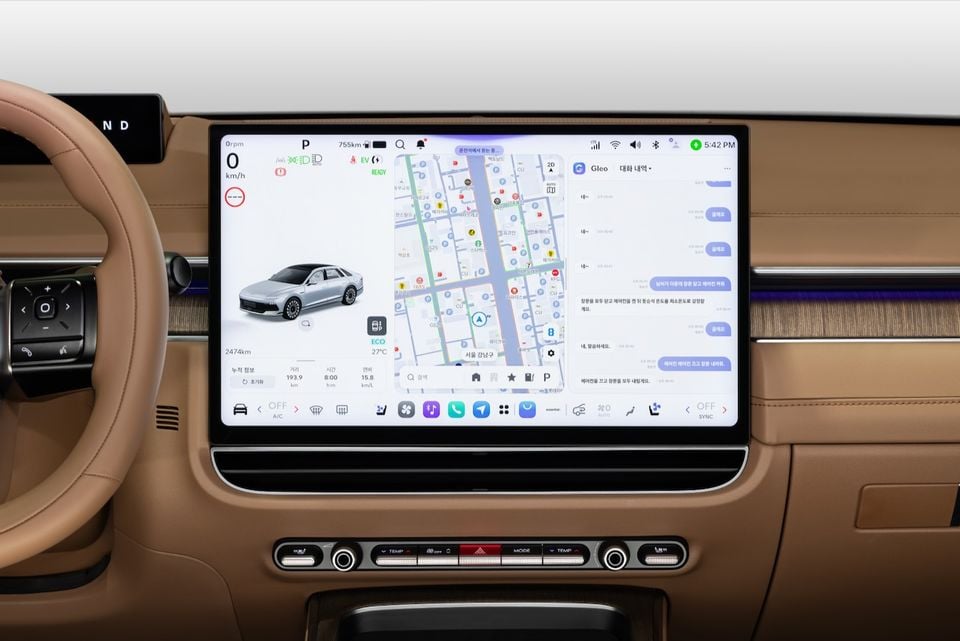
Gleo can also search the web, giving it the ability to provide updates on news, weather, or sport, as well as offering answers to those big life questions being asked by toddlers.
It sounds simple, but this is exactly the type of thing AI has been designed to do: saving research time, finding answers and solutions online, and making life that much easier.
Pleos goes beyond that, though. Driving through the streets of Seoul, the sat-nav was able to recognise connected traffic lights, providing a countdown live on the screen, while also providing live traffic conditions – thanks to around 90 per cent of the vehicles in the city wearing a Hyundai or Kia badge. In markets like Australia, that data will be provided by a third party.
The car giant is also launching a third-party app store, allowing developers to create Android-based apps – strictly policed and approved – that owners can download to their vehicles and use on the fly. This will likely mean games, lap timers, and other weird and wonderful programs that we can’t even imagine yet.
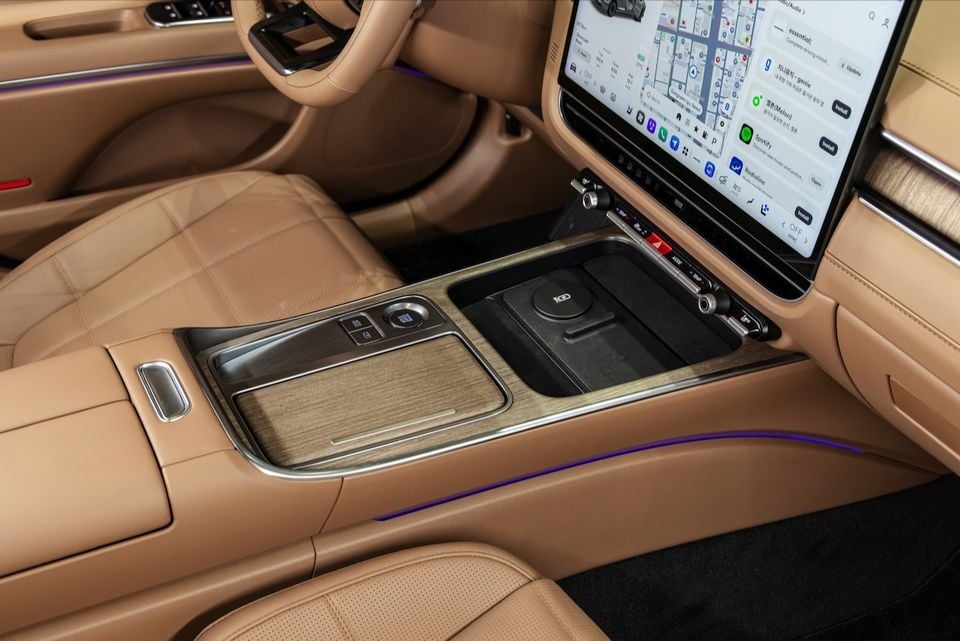
While a good number of drivers will likely just connect their iPhone or Android device, the infotainment system does have native apps like YouTube and Spotify, which can be used without a smartphone connection.
However, most of the things mentioned above already exist. Some car brands already have conversational AI, traffic integration, and third-party app stores, depending on the market.
The difference here is that the Pleos system will be rolled out widely across the Hyundai range by 2030, along with models from Kia and Genesis, popularising the technology. This could well give these Korean brands the edge over the likes of Toyota.
The other thing is its scalability. The developers behind Pleos have specifically designed the system to be able to be expanded and built on, future-proofing the technology well into the next decade. Which means we’re only just seeing a fraction of the chessboard at this stage.
| Dimensions | Hyundai Grandeur |
|---|---|
| Length | 5050mm |
| Width | 1880mm |
| Height | 1460mm |
| Wheelbase | 2895mm |
| Cargo capacity | 480L – petrol/hybrid320L – LPG |
CarExpert can save you thousands on a new Hyundai. Click here to get a great deal.
There are five powertrain configurations available across the Hyundai Grandeur range in South Korea.
| Specifications | Hyundai Grandeur 2.5 |
|---|---|
| Engine | 2.5L non-turbo 4cyl |
| Power | 146kW |
| Torque | 248Nm |
| Transmission | 8sp automatic |
| Drive type | FWD |
| Weight | 1650kg |
| Fuel economy (claimed) | 8.6-9.1L/100km |
| Fuel tank capacity | 60L |
| Fuel requirement | Unleaded petrol |
| CO2 emissions | 143-151g/km |
We sampled the base 2.5-litre non-turbo four-cylinder petrol engine making 146kW of power and 248Nm of torque, and driving the front wheels through an eight-speed automatic.
There's also a 3.5-litre non-turbo petrol V6 putting out 221kW and 359Nm, also matched with an eight-speed auto, and offered with either front- or all-wheel drive.
While LPG is no longer a popular fuel in Australia, it's still alive and well in other parts of the world, including South Korea. The V6 is available with LPG running capability, though only in front-wheel drive form, and performance drops to 177kW/314Nm.
There is an electrified powertrain too, in the form of a 1.6-litre turbocharged four-cylinder petrol engine with a hybrid system, making a combined 176kW/380Nm, and driving the front wheels via a six-speed auto.
CarExpert can save you thousands on a new Hyundai. Click here to get a great deal.
Driving a new car on the wrong side of the road in a new capital city can be a touch daunting. But it’s hard to imagine being more comfortable and relaxed than we were in this Hyundai.
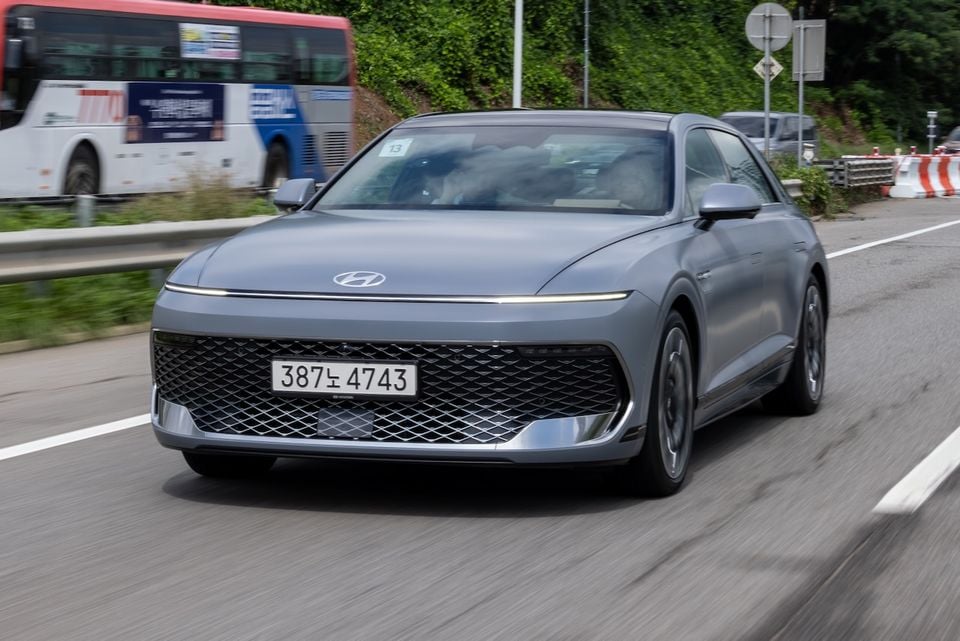
In South Korea, the Grandeur Calligraphy 2.5 is very slightly cheaper than the Toyota Camry Hybrid XLE Premium – a properly excellent vehicle in its own right – but the Grandeur feels like it’s a step above in some ways. Not quite at the level of a Genesis, or a Lexus for that matter, but certainly bringing some extra suave to the table.
That extends to the driving experience. It’s quiet, relaxed, and frankly effortless to navigate through busy streets.
Despite the ample space inside and its on-road presence, it doesn’t feel too big or difficult to place in your lane. It requires only light inputs, but its reactions are intuitive and appropriate for the car’s character.
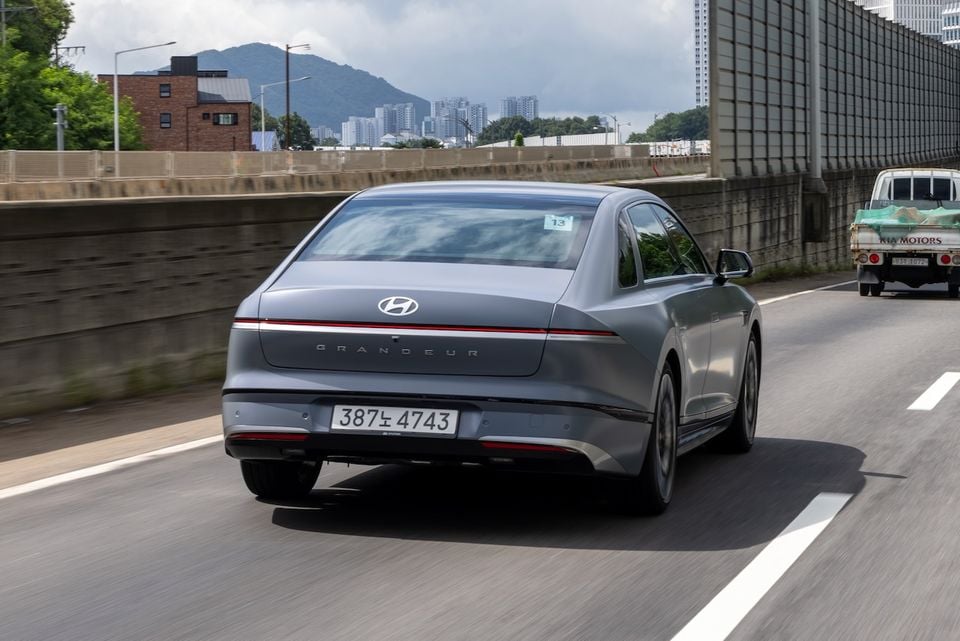
I was surprised to learn the biggish sedan only weighs around 1650kg – a lightweight by today's standards – given it feels a little heavier. Even so, it's thankfully not boaty, with a smooth and planted ride.
This is thanks to Hyundai’s Electronically Controlled Suspension, which uses its front-facing camera to read the road ahead in conjunction with GPS and the navigation system to adjust the shock absorbers. In other words, the vehicle detects road imperfections and hazards like speed humps ahead, and prepares the vehicle to best insulate its occupants.
The result is that the vehicle absorbs bumps and potholes, but doesn’t continue to bounce down the road after the event – with superb secondary ride characteristics.
The company’s engineers say the independent suspension is also aided by particularly stiff and robust ‘square’ subframes, mounted on hydraulic bushings, which also improve noise, vibration, and harshness within the cabin.
If this is the car for you, we’ll compare offers from trusted dealers, handle the back and forth and manage your purchase from enquiry to delivery.
It’s worth mentioning that, for the most part, the streets in and around Seoul are typically of a higher calibre than you’d expect to find in Australia, so the ride wasn’t ever really tested to any great degree.
For its size and intent, the Grandeur also gets around corners reasonably well. We weren’t able to test this fully, as the only real winding road we drove on was limited to 30km/h and littered with enough speed cameras to make the Victorian Government blush, but there were a handful of opportunities to explore the chassis, and the big Hyundai didn’t embarrass itself.
The 2.5-litre offers good torque off the line, making it ideal for wafting through city streets and getting up to highway speeds – helped by a creamy-smooth transmission. Bury the foot, though, and the engine starts making noise in the distance somewhere, but little else comes of it, with that torque quickly disappearing.
Regardless, the Grandeur quickly became a vehicle I looked forward to getting into and driving, and it’s no wonder the sedan is so popular in its home country.
CarExpert can save you thousands on a new Hyundai. Click here to get a great deal.
Though it's not sold in Australia, the Grandeur is very well equipped in South Korea, where it's sold with a choice of four grades.
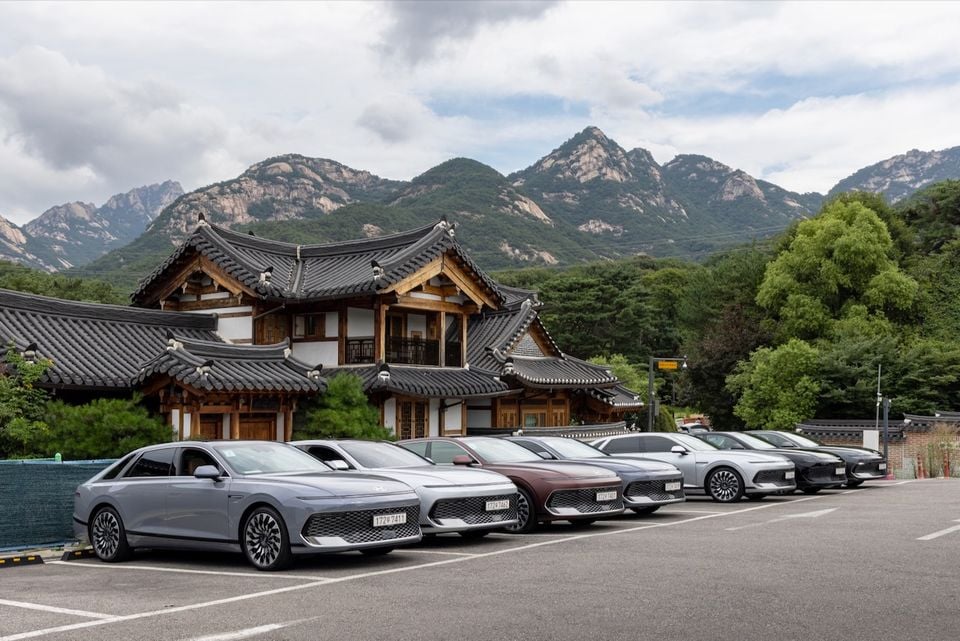
2027 Hyundai Grandeur equipment highlights:
Hyundai Grandeur Exclusive adds:
Hyundai Grandeur Calligraphy adds:
Hyundai Grandeur Black Ink adds:
CarExpert can save you thousands on a new Hyundai. Click here to get a great deal.
The Grandeur does not currently have a rating from ANCAP or Euro NCAP.
2027 Hyundai Grandeur standard safety equipment highlights:
Hyundai Grandeur Exclusive adds:
Hyundai Grandeur Calligraphy adds:
CarExpert can save you thousands on a new Hyundai. Click here to get a great deal.
As Hyundai’s answer to the Camry in its home market, the Grandeur is very impressive and adds a little more polish to the mix compared with the more humble Toyota.
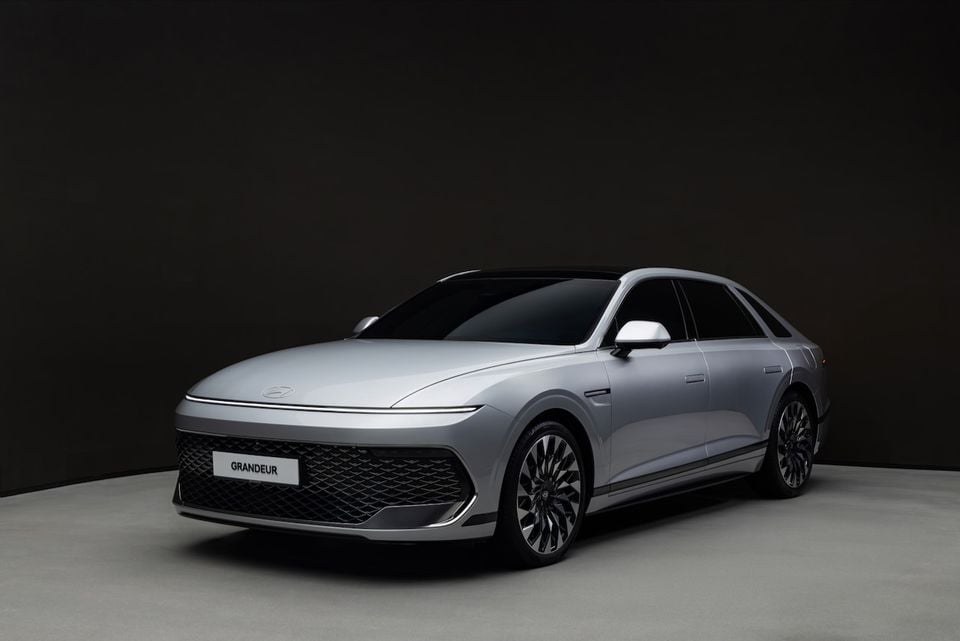
Nowhere is that more evident than in its exterior design, with bold and elegant shapes delivering an interesting yet mature on-road presence.
But that kind of balance continues inside, with a good and measured mix of technology and luxury, ensuring the cabin is somewhere you want to spend time. Think domestic Business Class on a reputable airline, rather than international First Class.
The modest luxury of the exterior and interior design also translates to the driving experience. It’s smooth, effortless, and – while not a powerhouse with the base 2.5-litre engine – designed to deliver you to your destination without changing your resting heart rate.
There’s something particularly magnetic about the Hyundai Grandeur for an Australian, and I think the tall poppy syndrome thing comes into it. The Grandeur gives you just what you need, plus a little bit more, without ever being shouty or uppity.
It’s subtle luxury with a Hyundai badge on the front.
But the real story here is Pleos Connect. This will form the core of every new Hyundai model over the next decade or so, and the auto giant is clearly proud of what it’s achieved. We’ve only been shown the tip of the iceberg here.
Despite there clearly being some features that are already available from other automakers, we’ve seen glimmers that suggest Hyundai may well be doing some things better.
The new Gleo AI seems very promising, though we’ll have to reserve judgement until the English voice model debuts in Australian vehicles and we can really test that artificial intelligence.
If you were to take Pleos at face value, you might not be immediately impressed, but it seems as if this will form the foundation for some advanced software and technology in the coming years.
While it's early days, this appears very much like the beginning of a new era for the automotive industry.
CarExpert can save you thousands on a new Hyundai. Click here to get a great deal.
Click the images for the full gallery
If this is the car for you, we’ll compare offers from trusted dealers, handle the back and forth and manage your purchase from enquiry to delivery.
Ben Zachariah has 20-plus years in automotive media, writing for The Age, Drive, and Wheels, and is an expert in classic car investment.
Add CarExpert as a Preferred Source on Google so your search results prioritise writing by actual experts, not AI.
Derek Fung
5 Hours Ago

Dave Humphreys
6 Hours Ago
Ben Zachariah
6 Hours Ago

Damion Smy
14 Hours Ago

Alborz Fallah
15 Hours Ago
Damion Smy
16 Hours Ago
Add CarExpert as a Preferred Source on Google so your search results prioritise writing by actual experts, not AI.
# Based on VFACTS and EVC data
† Displayed prices exclude on-road costs such as delivery charges, registration fees, number plates, insurance and applicable road taxes. These prices are subject to change without notice and may not reflect current market pricing or dealer offers.
 Automotive Vehicle Spec Data & 4K images Powered by JATO Dynamics Ltd