





Tace Clifford
Top five most affordable large PHEV family SUVs
If you’re looking for a new plug-in-hybrid family SUV that’s large in size but not price, there are some great options available.
13 Hours Ago
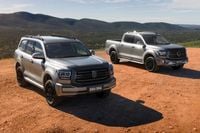
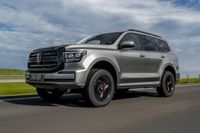
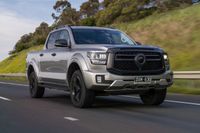
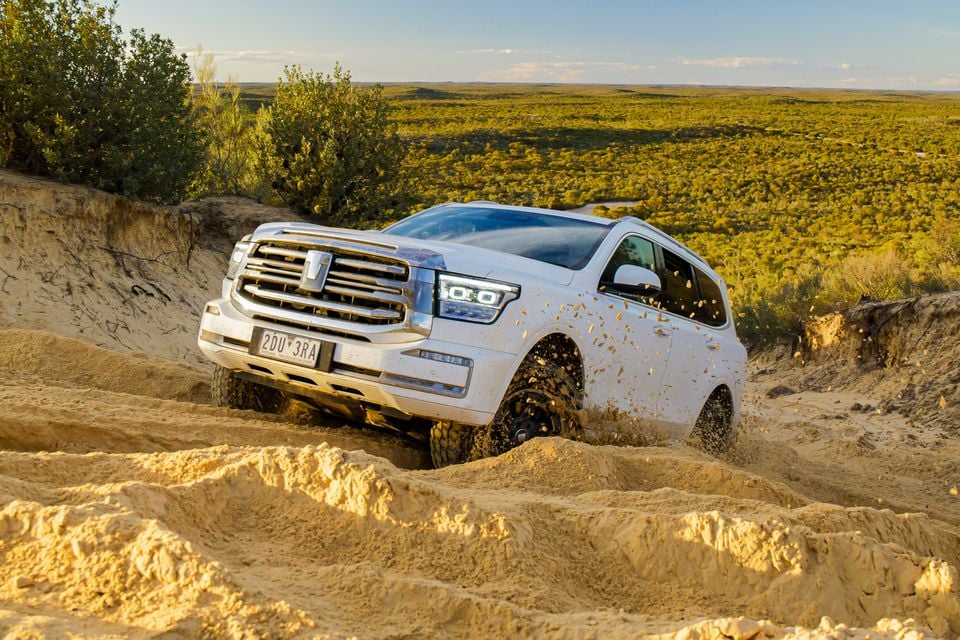
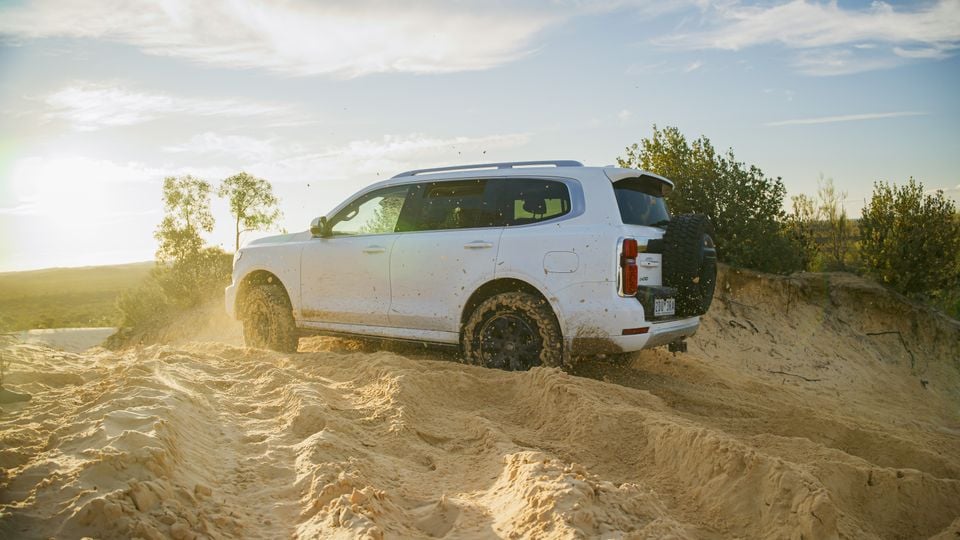
The Tank 500 has been hybrid-only until now. A brand-new turbo-diesel changes what the large SUV is competing against – and we've had a brief steer.
If this is the car for you, we’ll compare offers from trusted dealers, handle the back and forth and manage your purchase from enquiry to delivery.
Until now, if you wanted a Tank 500, you bought a hybrid. Petrol-electric hybrid and plug-in hybrid powertrains were the only powertrains available in the large off-road SUV.
They're decent things, but it meant GWM was turning up to a knife fight in a market segment dominated by the diesel-powered Ford Everest, Toyota Prado and Isuzu MU-X, and where a good chunk of buyers are towing.
That changes later this year. GWM has spent three years developing an all-new 3.0-litre four-cylinder turbo-diesel, and Australia is the first market in the world to get it. It's not a bored-and-stroked version of GWM's existing 2.4-litre – it's a clean-sheet engine, and it lands in the Tank 500 delivering no less than 170kW of power and 620Nm of torque, a 3500kg braked towing capacity, and claimed fuel consumption of 7.1L/100km on the combined cycle.
That torque figure is the interesting one. The 3.0-litre Everest V6 produces 600Nm and the 2.8-litre Prado makes 500Nm, so on paper the Tank 500 leads its two most obvious rivals. GWM has also worked on where that torque arrives, bringing peak torque in earlier and holding it flat from 1400rpm to 2400rpm.
There's another quiet advantage: no AdBlue. Both the Everest and the Prado need it, but the Tank 500 doesn't. GWM can get away with that because its lineup is already stacked with hybrids and plug-in hybrids, so it isn't bearing the same New Vehicle Efficiency Standard pressure that's forcing other brands to bolt on emissions control equipment.
That's a genuine ownership benefit today, though I'd note it may not last forever – when emissions rules tighten and that gear eventually has to be fitted, holding onto 620Nm becomes a much harder engineering problem.
The other number worth knowing is fuel capacity. The Tank 500 Lux gets a 78-litre tank, but the top-spec Vanta comes standard with a 78L main plus a 53L auxiliary tank, for 131L in total.
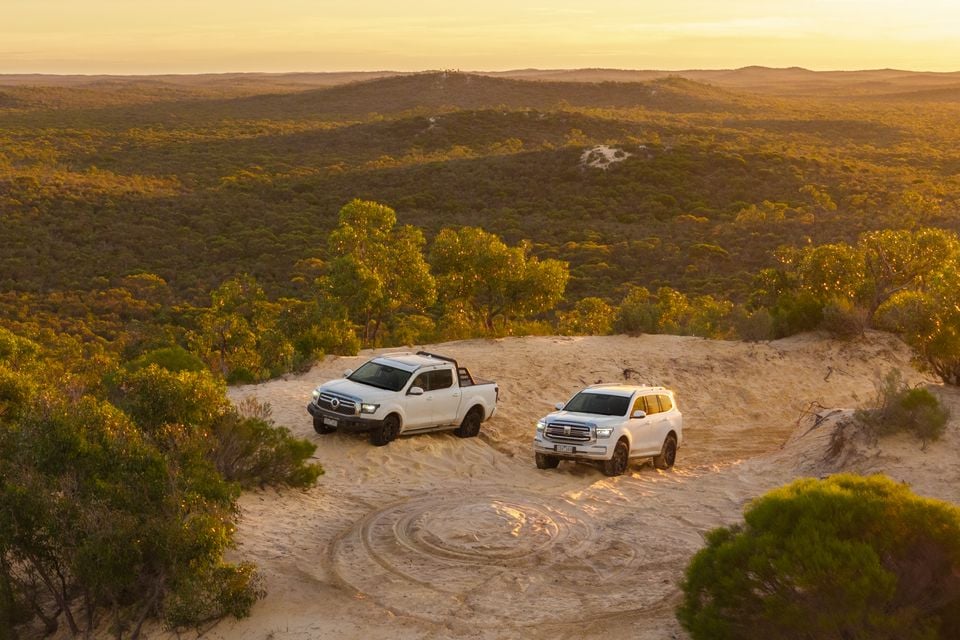
At the claimed 7.1L/100km, that gives it a theoretical touring range of close to 1850km.
Real-world consumption will be higher and towing will hurt it badly, but that's still an enormous amount of freedom for anyone doing remote kilometres.
The Everest runs an 80L tank and the Prado holds 110L. The only things that get close are the Ford Super Duty ute, which isn't available as a wagon, and the larger Nissan Patrol SUV, which is about to swap its V8 for a twin-turbo V6.
Time was limited and this was a pre-production car on a closed facility, so treat this as an early taste-test rather than a verdict.
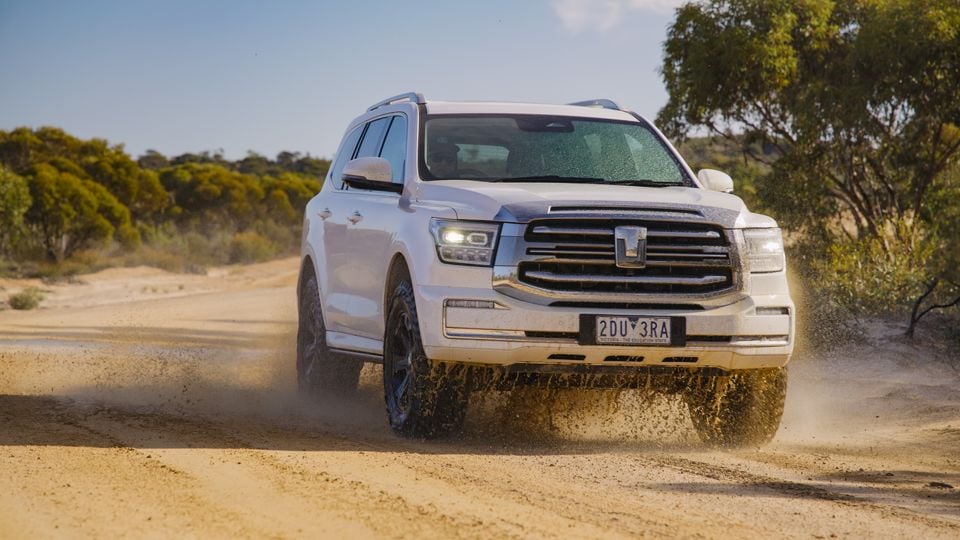
Refinement is the first thing you notice. It's quiet – considerably quieter than a HiLux, and about on par with the V6 diesel in the Ranger and Everest, which is already a refined thing. The transmission is well-matched to the engine, and there's none of the clatter you might expect from a four-cylinder diesel.
Off idle, throttle response in the default mode is a touch lazy. Give it a bootful and there's a beat before it gets moving. Switch to Sport and that largely disappears – the transmission sharpens up noticeably and becomes far more willing to hold and swap gears.
Which brings us to the gearbox, and it's a point in GWM's favour. Because the torque band is broad and flat, the transmission isn't constantly hunting the way a 10-speed does when it's chasing a narrower peak. You get big, usable slabs of torque instead of a lot of shifting, and for towing that's more productive than a headline output figure.
We ran it to 120km/h to get a rough read on straight-line pace, on a road that wasn't flat. It's slower than a V6 Everest, which is surprising given the torque advantage here, and mass is the likely explanation – the Tank 500 3.0TD has a kerb weight of 2635kg in Lux form and 2705kg for the Vanta. We'll do that test properly on flat ground once we get the car back for a longer test.
The suspension and steering tune was developed here in Australia at the Lang Lang Proving Ground, with former Holden ride and handling chief Rob Trubiani involved, and this particular development car had covered around 25,000km of local testing over a couple of months.
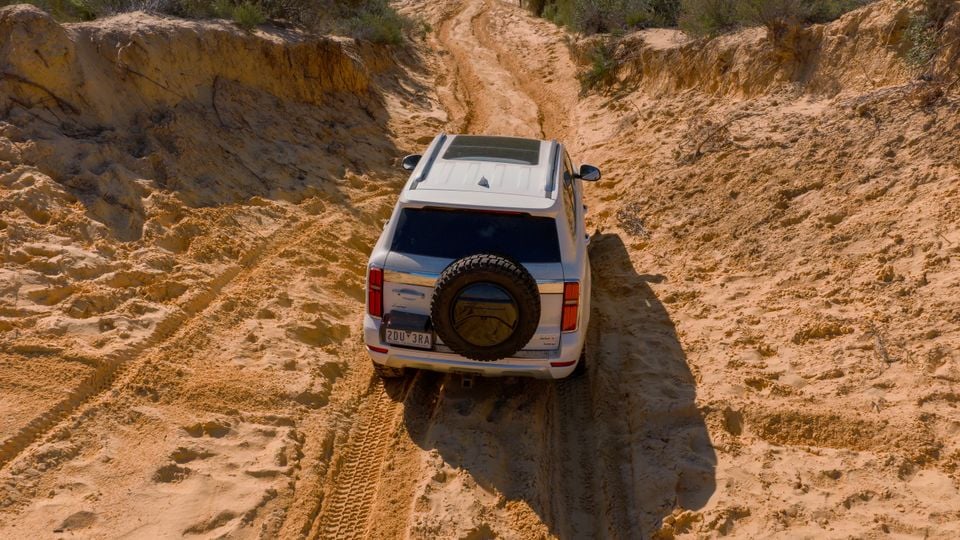
It shows. This is the single biggest improvement over the Tank 500 you can buy today, and it isn't close. The untuned model never had much sophistication to it. This one feels resolved.
On the highway it's smooth without being floaty, which is the trap a lot of Chinese-developed cars fall into, and it isn't over-firm to compensate either. Through a twisty country-road section there was some body roll, but this is a body-on-frame seven-seat SUV, not a sports car, and the body stays true over mid-corner bumps.
Gravel is where the tune earns its keep. On a rough section full of corrugations, potholes and deep clay, it stayed composed at speed. That matters more than it sounds. In a softly tuned car, hitting a bump on one side creates an acceleration moment on the opposite axle and the vehicle starts swaying, and on fine corrugations a steering input can float the car sideways.
That's how you end up on the wrong side of a country road with brakes that won't help and steering that isn't connected to anything. The Tank 500 simply held its line. It's also genuinely comfortable in there while it's doing it.
The Tank 500's cabin has always looked and felt good. It was never the materials or the design that let it down – it was the infotainment system sitting in the middle of the dashboard.
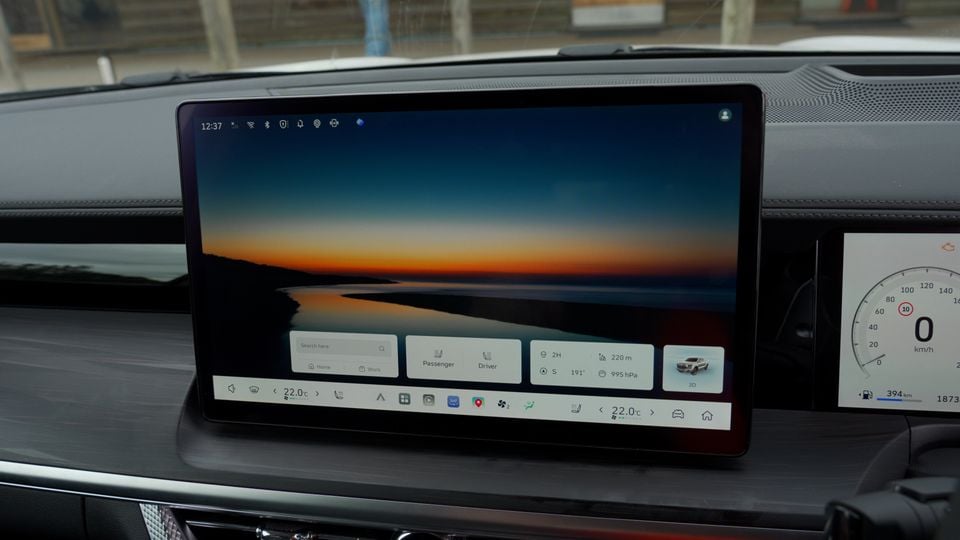
That's now been fixed too. Coffee OS is the latest version of GWM's operating system, and it's a night-and-day change over what's in the current car. We first had a proper play with it at the Shanghai motor show, and the thing that stands out most is simply how quick and sharp it is.
Flicking between menus, there's no lag and no stutter, and that matters more than any individual feature because it's what determines whether the system still feels good in three years. The old screen was also hard to read in daylight, which is a fairly fundamental problem for a screen. This one is much easier to see.
Functionality has come a long way too. There's built-in satellite navigation, integrated apps including Spotify and TuneIn radio, and a dedicated 4x4 off-road display. Our car was pre-production, so the navigation was populated with placeholder junk rather than anything useful, but the architecture is clearly there.
Ahead of the driver, the digital instrument cluster changes with the drive mode you've selected, and it's linked to the head-up display, which overlays different information depending on what mode you're in. One note from our drive: scrolling through the modes gives you Eco, 2H, Sport and 4H, but there are no dedicated off-road modes until you lock the car into its off-road setting.
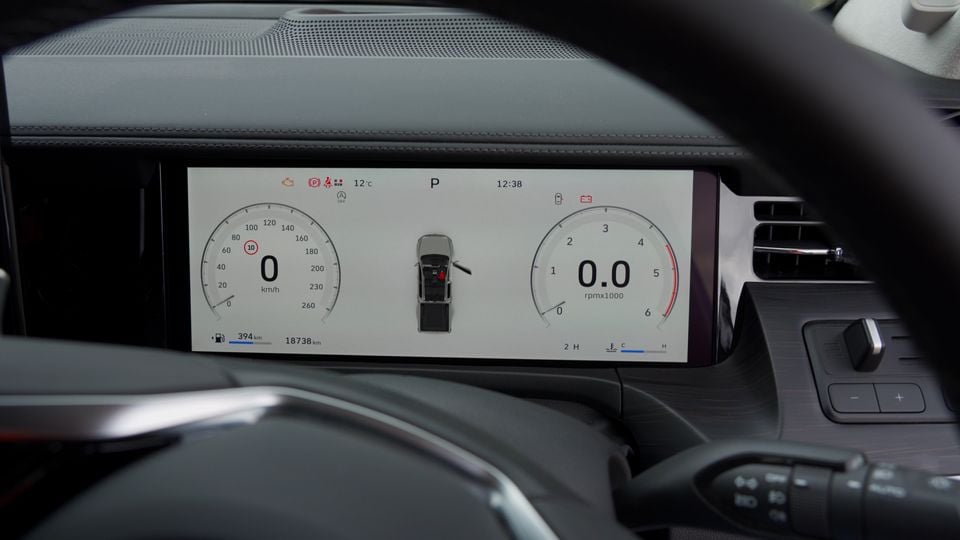
It's also worth being clear about what we don't get. The Chinese version of Coffee OS ships with autonomous driving functionality that isn't coming to Australia. What will come across is the overhaul of the advanced driver-assistance system (ADAS) itself, and that was the part that needed the work.
The other interior highlight is the integrated brake controller, mounted high on the dashboard where you can actually see and reach it. You get individual gain control plus presets for braking force, and you can manually brake the trailer and adjust gain on the move. It doesn't look tacked on, either – compare it to the Volkswagen Amarok, where the controller is buried down low and out of easy sight.
There's no 4A mode – no full-time four-wheel drive setting for sealed road surfaces.
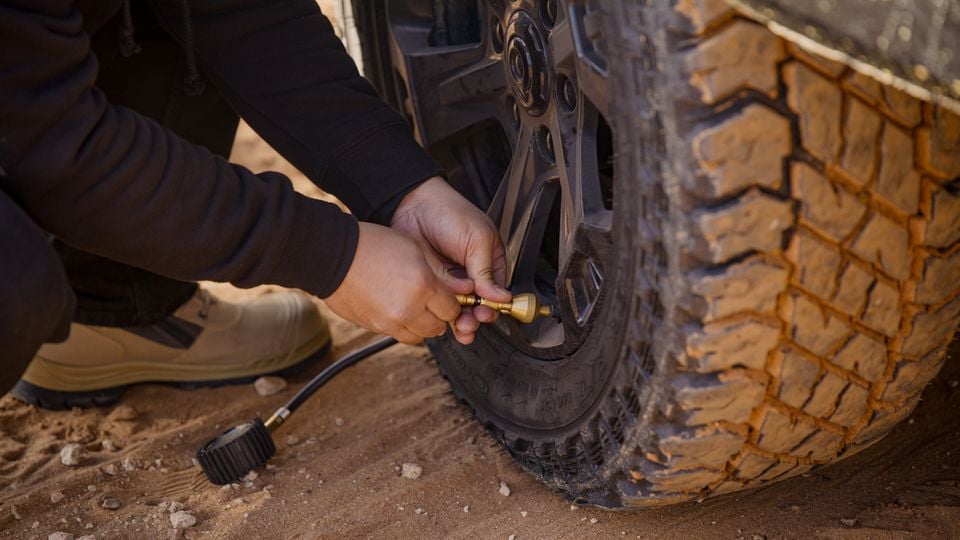
Ford offers it, and it's the sort of thing that gives you extra confidence when you're towing in the wet. GWM's reasoning is emissions-related, and it's a real omission rather than a nitpick.
Very promising. The engine is refined and well-matched to its transmission, the infotainment is finally competitive, and the ride is the best thing about it.
GWM has indicated the 3.0TD Tank 500 will be priced from the mid-$60,000s drive-away. If it lands there, you're looking at a seven-seat diesel with 3500kg of towing capacity for something like $20,000 to $30,000 less than the Prado and Everest equivalents. That's the argument here, and it's a strong one.
The questions we couldn't answer in a short drive are the ones that could settle it: what it's like loaded, and what it's like with 3500kg on the back. We'll get the car in for a full week-long test closer to launch, so stand by.
CarExpert can save you thousands on a new GWM Tank 500. Click here to get a great deal.
Click the images for the full gallery
If this is the car for you, we’ll compare offers from trusted dealers, handle the back and forth and manage your purchase from enquiry to delivery.
Quickly see how this car stacks up against its competition. Select any benchmark to see more details.
GWM Tank 500
GWM Tank 500 Sales rolling 12-months#
*Based on VFACTS and EVC data
Looking for complete GWM Tank 500 price history?
Our GWM Tank 500 Pricing Page shows exactly how prices have changed over time.
2025
$70,084
2025
$73,990
2025
$75,990
2026
$79,990
Paul Maric is a CarExpert co-founder and YouTube host, combining engineering expertise with two decades in automotive journalism.
Add CarExpert as a Preferred Source on Google so your search results prioritise writing by actual experts, not AI.
Tace Clifford
13 Hours Ago

Ben Zachariah
3 Days Ago

James Wong
4 Days Ago
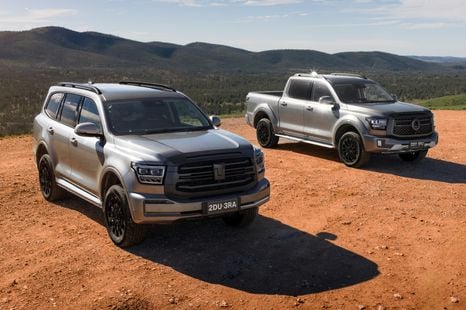

Damion Smy
4 Days Ago
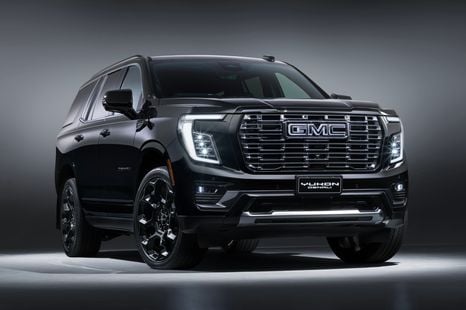

Max Davies
4 Days Ago
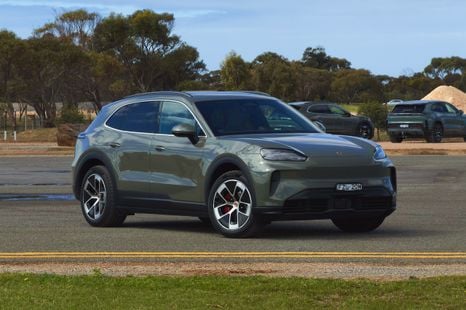
James Wong
5 Days Ago
Add CarExpert as a Preferred Source on Google so your search results prioritise writing by actual experts, not AI.
# Based on VFACTS and EVC data
† Displayed prices are based on the drive-away price of the vehicle, which includes delivery charges, registration fees, number plates, and applicable road taxes, based on a Sydney location. However, prices may vary between states and territories, and additional costs such as compulsory third party (CTP) insurance, dealer delivery fees, and optional extras are not included. These prices are subject to change without notice and may not reflect current market pricing or dealer offers.
 Automotive Vehicle Spec Data & 4K images Powered by JATO Dynamics Ltd