GWM has a brand-new engine, and it isn't a warmed-over version of something already sitting in the parts bin. This is an all-new 3.0-litre four-cylinder turbo-diesel, engineered from the ground up, and Australia and New Zealand will lead the global rollout when the new engine becomes available in the Cannon Alpha dual-cab ute and Tank 500 large off-road SUV in September.
That's a bigger deal than it first sounds. GWM could have just kept selling the 2.4-litre turbo-diesel and hybrid versions, but the numbers say it needs more.
Five of Australia's 10 best-selling models last year were diesel-powered, and this segment in particular still runs on it. If you want to be taken seriously against a Ford Ranger or a Toyota HiLux, you need a high-output diesel powertrain.
What GWM is chasing here is torque. The new engine – codenamed GW4F30 – makes 170kW of power and 620Nm of torque, the latter held flat over 1400-2400rpm. Claimed fuel consumption is 7.3L/100km on the combined cycle, braked towing capacity is 3500kg, and payload is 945kg.
For context, the Ranger V6 makes 184kW and 600Nm and uses a claimed 8.4L/100km, and it only gets a rear differential lock (with the exception of the new Super Duty). The Cannon Alpha comes with front, centre and rear diff locks alongside its low-range transfer case.
There's a broader piece of context worth understanding too. Under the federal government's New Vehicle Efficiency Standard (NVES), brands with almost nothing electrified in their lineup risk hefty penalties if they don't meet tightening emissions caps.
While some rival brands are rushing to introduce 'new energy' powertrains or cutting higher-emitting variants, GWM's answer is to cover every base – diesel, hybrid, plug-in hybrid and eventually full electric in the 4WD space– so buyers aren't forced into a drivetrain that doesn't suit them. It's the right game to be playing.
Inside is where the real change is
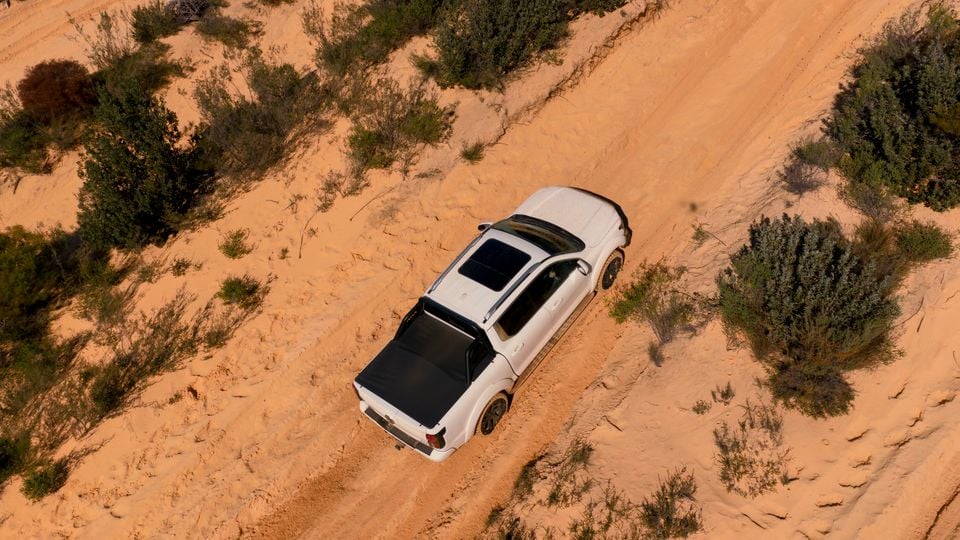
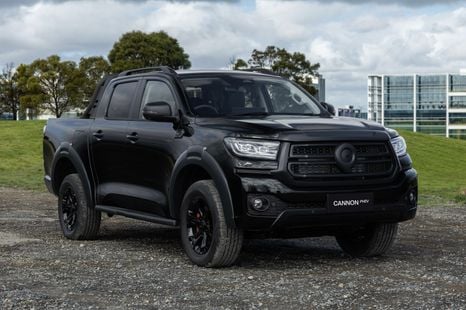
You won't pick this as a 'new' model in the carpark. Externally, it's the Cannon Alpha you already know, but almost everything has happened inside.
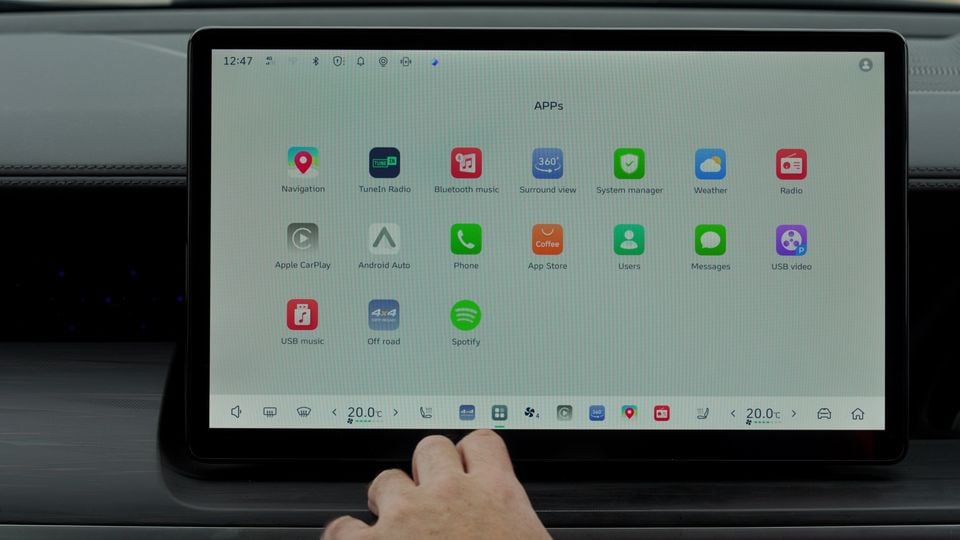
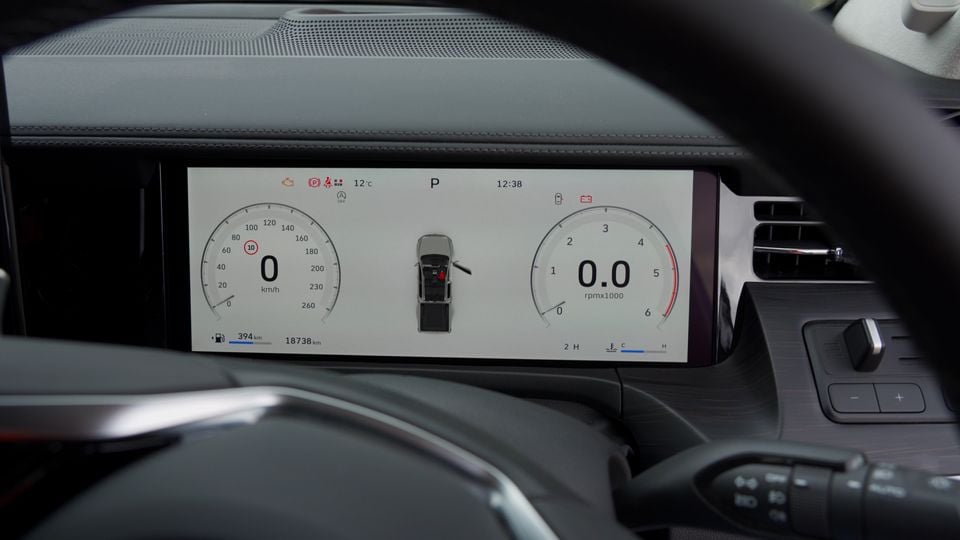
The headline change is the infotainment system. The Cannon Alpha's old operating system was fine without ever being impressive. This one, called Coffee OS, is a genuine step up.
We first sampled it in China at the Shanghai and Beijing motor shows, and it's sharp and fast, which matters more than any single feature – it means the hardware has headroom for future updates rather than getting slower every time GWM adds something to it.
Satellite navigation is built in, there's an app suite, and the glare problem the old screen suffered from appears to have been dealt with.
The impressive part is how much of the Chinese-market functionality has survived the trip. These cars are loaded with clever features at home, and Australia usually gets a stripped-back version of it. Here, it looks like a real effort has been made.
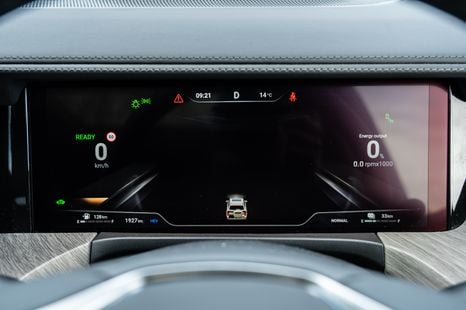
The digital instrument cluster now changes with the drive mode you've selected, and it talks to the head-up display as well.
Find your perfect new car with CarExpert
There's new woodgrain trim through the dashboard, and the integrated brake controller has been mounted up on the dash where you can actually see and reach it.
It's neatly done, and it's the sort of detail that suggests somebody thought about how the thing gets used rather than just ticking a spec box.
The rest of the cabin carries over, which is no bad thing. It still feels more premium than it has any right to for the money.
How it drives
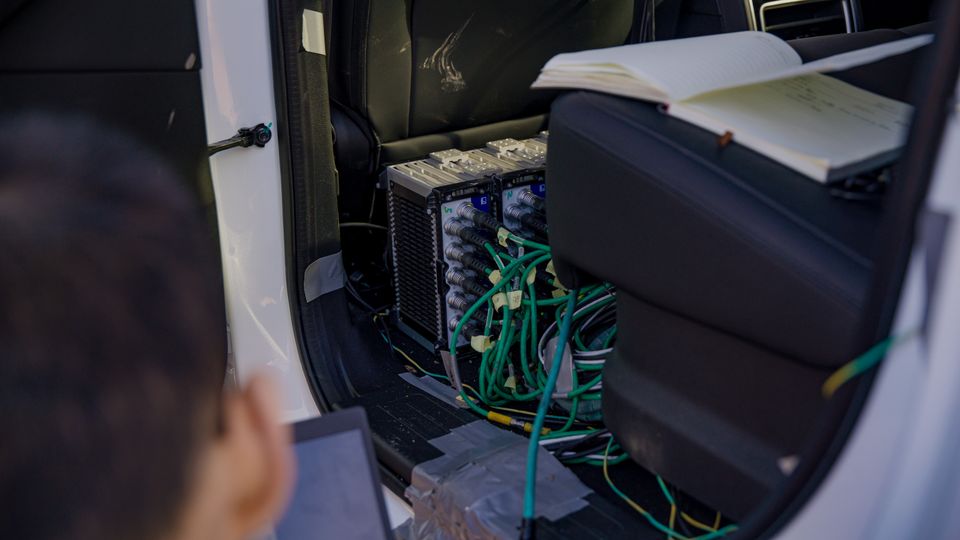
Our time was limited and the car was a pre-production development mule with wires running through the back of it and tape on the bodywork, so treat this as an early taste test rather than a verdict.
The first thing is smoothness. This engine is quiet and refined relative to segment standards, and it doesn't clatter the way the HiLux's 2.8-litre oiler does. There's a decent slug of wind noise in the cabin, but you can put most of that down to the tape and cabling hanging off our development car. Crucially, the engine isn't the thing making the noise.
Off the line it gets up and moves without ever feeling like a shove in the back. It's a generous, linear kind of punch, and it feels stronger than the four-cylinder diesels it's up against. It's worth remembering the Cannon Alpha is a physically large dual-cab, considerably bigger than the regular Cannon, so that 620Nm has plenty of mass to shift.
We ran it up to 120km/h to get a read on straight-line pace, and it's slower than a V6 Ranger, though not by a huge margin. That'll be due to mass more than anything. Interestingly, in Sport mode it doesn't automatically default to four-wheel drive, though the mode is there if you want it.
The ride is the surprise
The suspension and steering tune was developed locally, and it's the single biggest improvement over the current model.
GWM did that work at Lang Lang before the proving ground changed hands and the brand lost access to it. What came out of that program is now being deployed in other markets, which tells you something about how well the Australian chassis tune has been received. Chinese roads are generally smooth, so cars developed for them tend to be soft, and soft doesn't work across Australia's extensive, varied and relatively poor-quality road network.
On the highway circuit it was noticeably more settled and more confidence-inspiring than the Cannon Alpha you can buy today. On a simulated country road with mid-corner bumps, body roll was well contained, and while you feel a touch of firmness on the outer edge of a bigger hit, it's exactly that firmness stopping the body from wallowing.
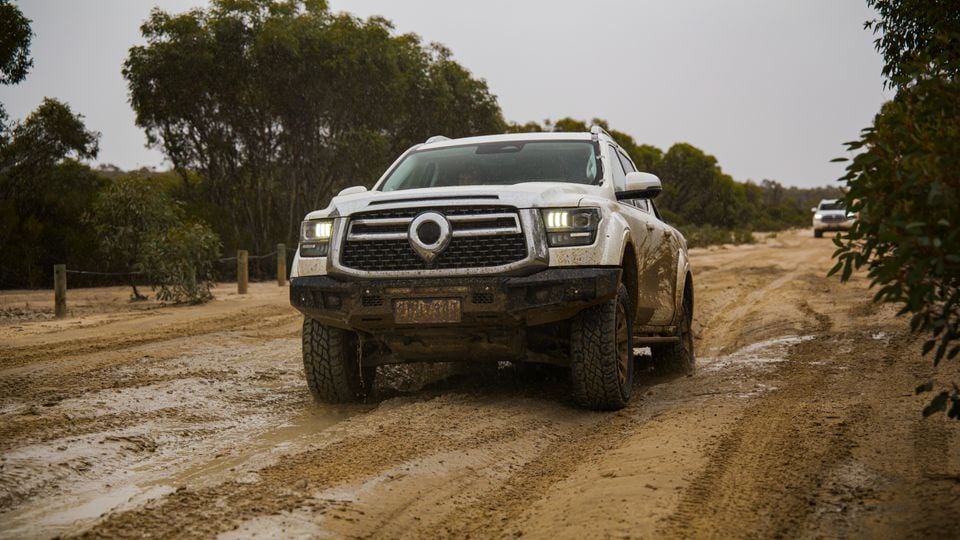
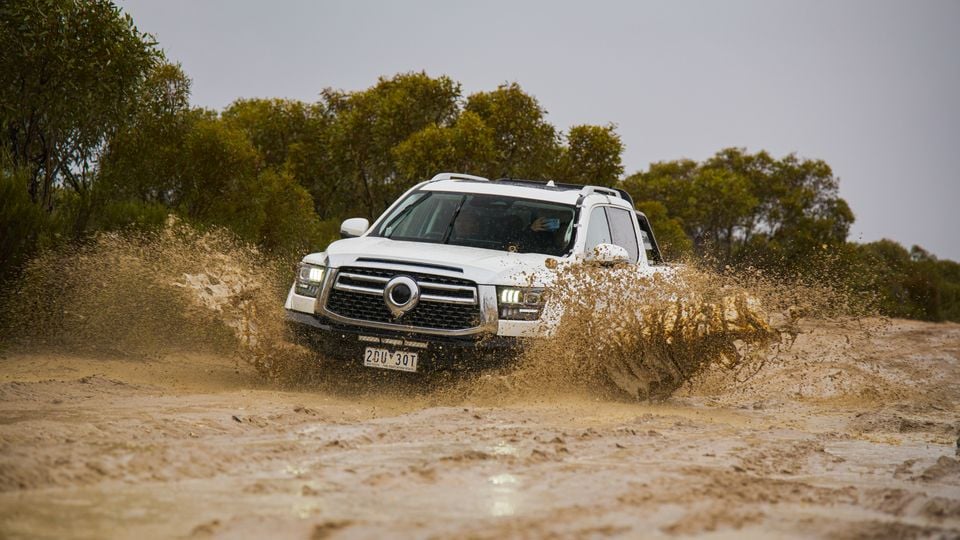
The corrugated gravel section is where it earned its money. Corrugations mid-corner are what catch a lot of ladder-frame vehicles out – your tyres skate across the ridges, you lose most of your steering authority, and a hyperactive stability control system turns a bumpy corner into a genuine problem.
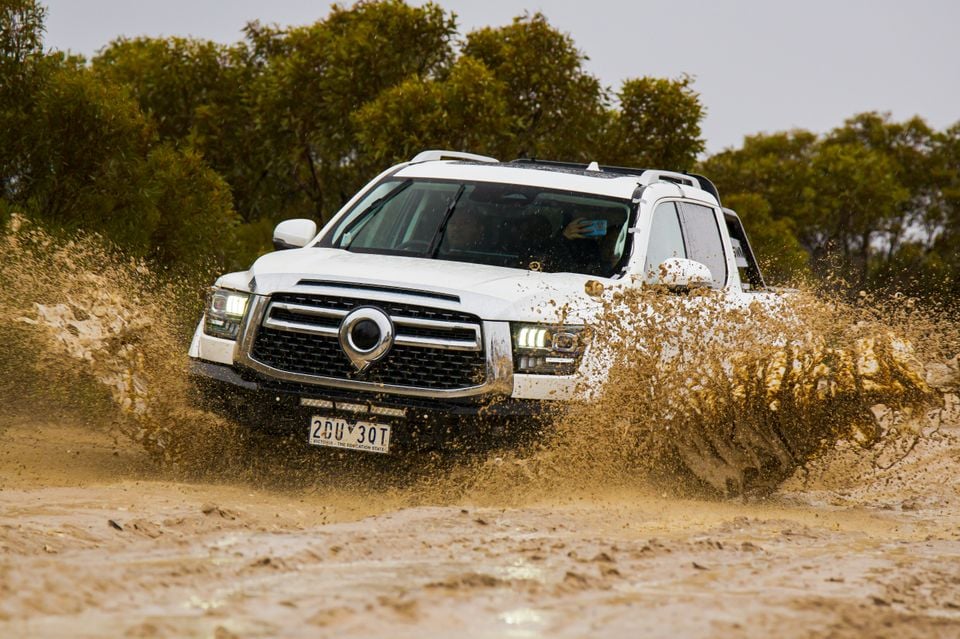
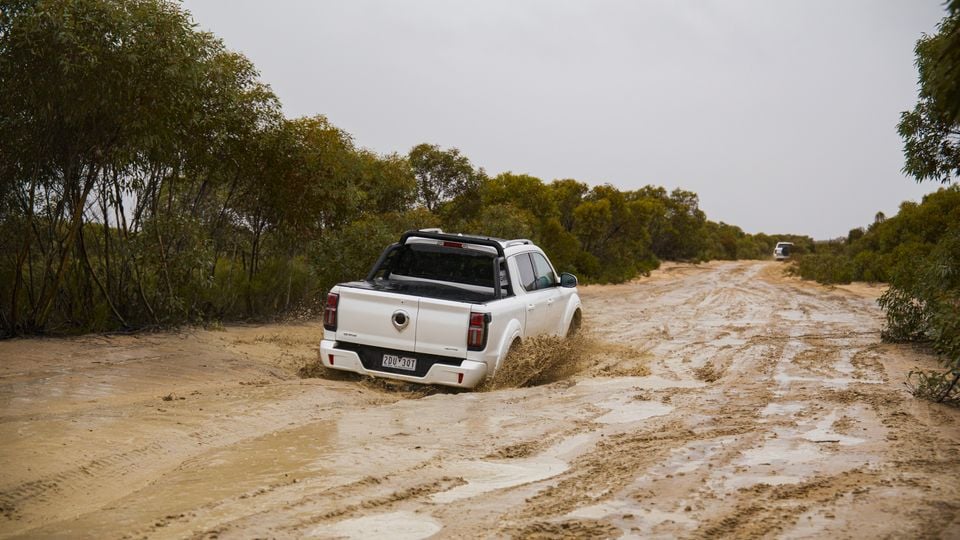
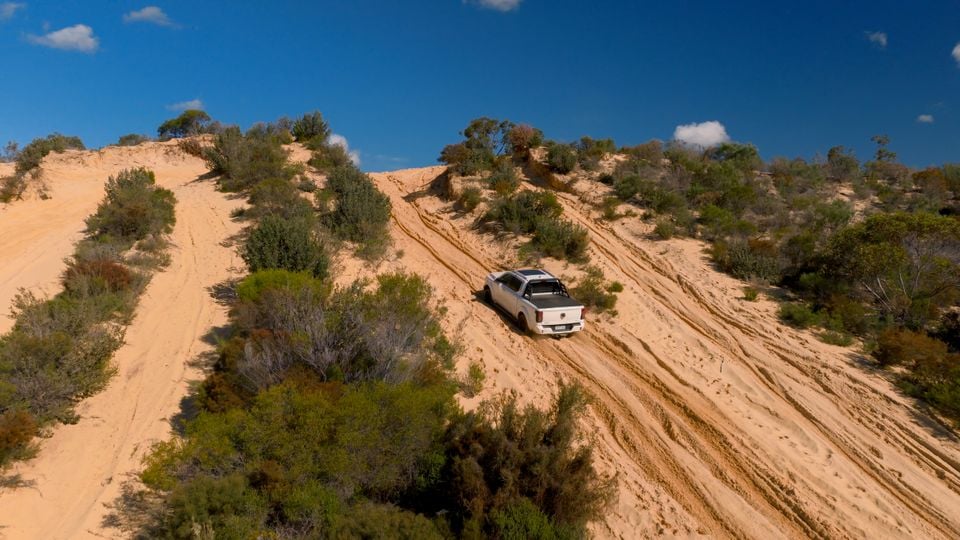
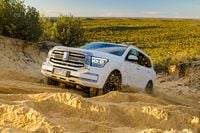
Switched into Mud mode, which splits torque evenly front to rear and can't be used on sealed surfaces, the Cannon Alpha stayed remarkably composed. The stability control shifts into a looser calibration and gives you more latitude to place the vehicle, instead of intervening every time a wheel goes light. On the road, this same surface would have the system tying itself in knots.
So, is it any good?
On a short drive, on a closed facility, in a pre-production vehicle, it's very promising. The engine is smooth and strong enough, the infotainment is finally competitive, and the ride quality is genuinely good.
The questions that matter now are the ones we couldn't answer in an hour. What's it like loaded up? What's it like with 3500kg on the back?
A V6 engine has two extra cylinders to lean on when the work gets hard, and no amount of torque on a spec sheet settles that argument.
GWM has signalled the Cannon Alpha 3.0TD will start under $60,000 drive-away. If it lands there, the Ranger and HiLux have a real problem.
We'll get the upgraded diesel dual-cab back for a full test closer to launch, so stand by for our full verdict.
CarExpert can save you thousands on a new GWM Cannon Alpha. Click here to get a great deal.
Click the images for the full gallery
MORE: Explore the GWM Cannon Alpha showroom










 Automotive Vehicle Spec Data & 4K images Powered by JATO Dynamics Ltd