





Damion Smy
2027 GWM Ora 5 vs Hyundai Kona Electric: Spec battle
The GWM Ora 5 small electric SUV has arrived full of character and charm, but how does it stack up against the popular Hyundai Kona Electric?
7 Hours Ago
Renault has a new small SUV and some time behind the wheel reveals that bringing it to Australia was a good move.
If this is the car for you, we’ll compare offers from trusted dealers, handle the back and forth and manage your purchase from enquiry to delivery.
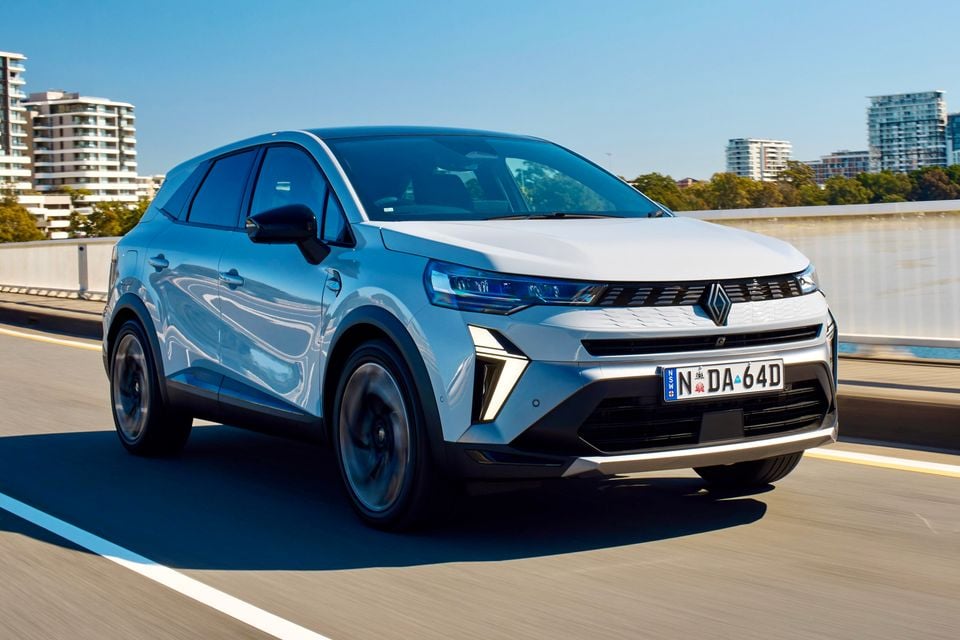
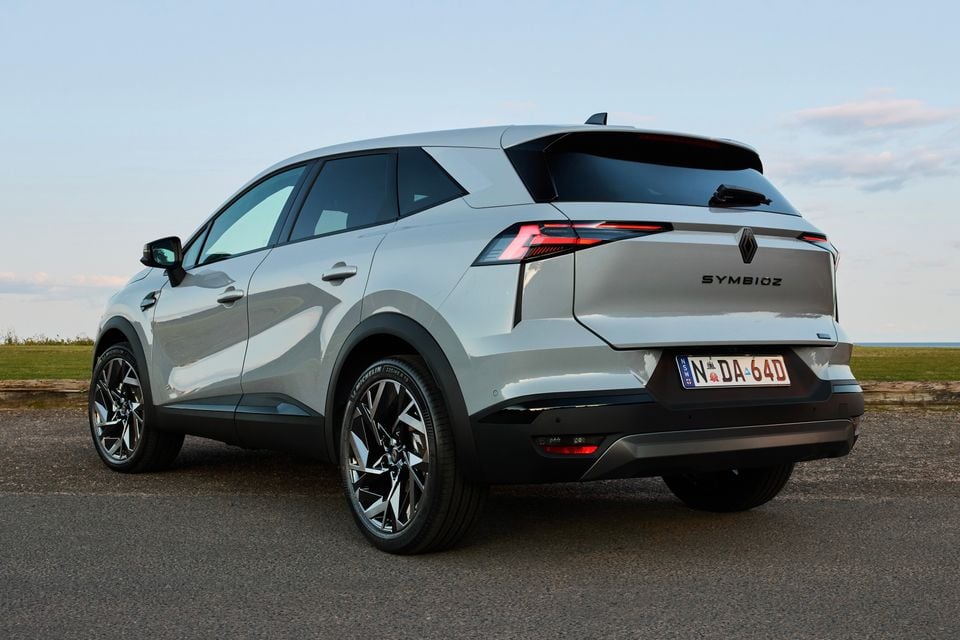
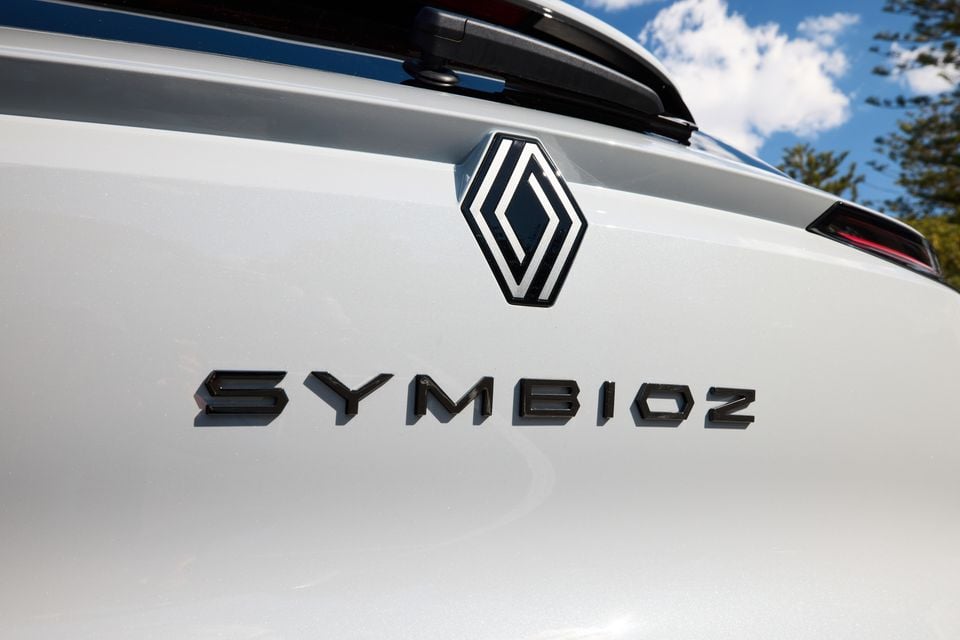
Say hello to the new Renault Capt... er, sorry, the new Renault Symbioz.
That's right, the Captur is no more in Australia, despite being one of Renault's most recognisable nameplates. It was due for an update recently, but the French brand quietly shelved those plans locally in favour of a new model entirely.
Enter the Symbioz, a new small SUV with plenty in common with the Captur but arguably a much more important model for the brand. For one, it's larger than the Captur, providing a more spacious option in Australia's crowded small SUV segment.
Second, it's competitively priced. This European SUV isn't really affected by that pesky Euro car tax, and so its mid-$30,000 starting point is sharp alongside some of its more established rivals.
Finally, and most importantly, it brings a full-hybrid Renault powertrain to Australia for the first time. That makes it a far more relevant rival to models from Toyota and Honda than the Captur ever was, and also means Renault Australia's powertrain lineup is now more diverse than ever.
Of course, the Captur technically does still exist in Australia; it just isn't badged as a Renault. It's the Mitsubishi ASX, which was launched in Australia in 2025 but without the hybrid powertrains available overseas.
In any case, Renault says the Symbioz is a better fit for Australia than the Captur at the moment, and it's so confident in the new model that it believes it could become the brand's best-selling passenger car locally (excluding commercial vans like the Trafic and Master). That distinction currently belongs to the long-running Koleos mid-size with 525 deliveries so far this year.
CarExpert was among the media invited to sample the Symbioz at Renault's launch event in regional New South Wales, where the entire new small SUV range was available to drive.
Does it have what it takes to become Renault's new best-seller?
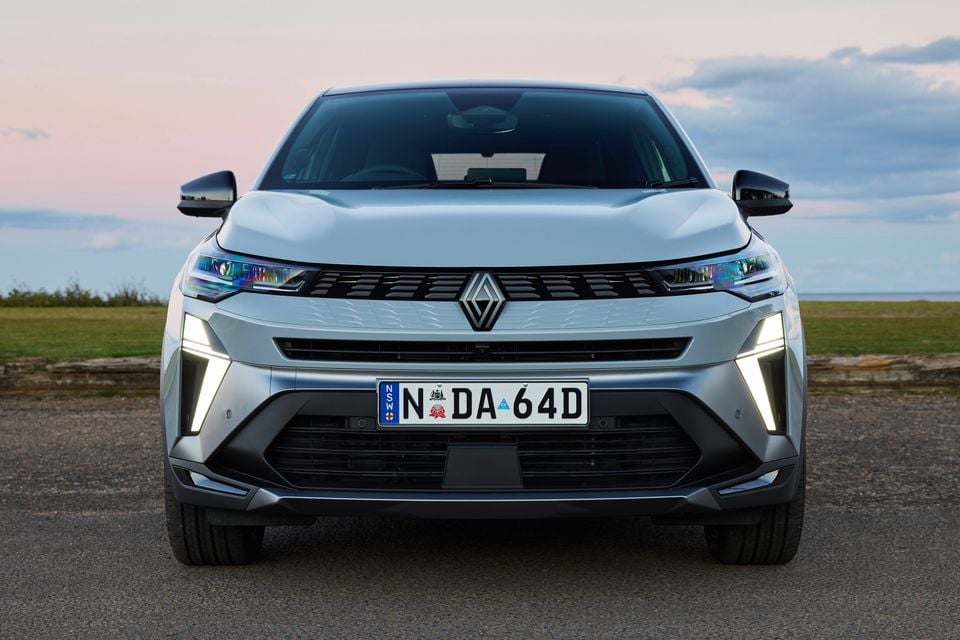
The Renault Symbioz range starts at $36,990 before on-road costs when fitted with the 'Mild Hybrid' powertrain, while the cheapest 'Full Hybrid' variant is priced at $42,990 plus on-roads.
| Model | Price before on-road costs |
|---|---|
| 2026 Renault Symbioz Techno Mild Hybrid | $36,990 |
| 2026 Renault Symbioz Techno Full Hybrid | $42,990 |
| 2026 Renault Symbioz Esprit Alpine Full Hybrid | $45,990 |
Fascinatingly, despite being larger and sold only with electrified powertrains, the base Symbioz is cheaper than the entry-level version of the Captur-based Mitsubishi ASX.
The range-opening ASX LS is priced at $37,740 plus ORCs, while the flagship Exceed is listed at $46,490 plus ORCs. And it's likely the Captur would be priced below the Symbioz if it was still sold by Renault Australia.
But an important caveat is that the ASX is currently being discounted until the end of August 2026, to between $34,990 and $46,490 drive-away.
As for its other rivals, the Symbioz competes in the crowded small SUV segment, where hybridised alternatives include the Honda HR-V from $39,900 drive-away, the Toyota Corolla Cross from $37,440 plus ORCs, and the top-selling Hyundai Kona from $36,950 plus ORCs.
It's also worth mentioning that all Symbioz paint options, except Flame Red, will cost you an extra $900, and that adding a fancy dimmable glass roof costs an additional $2000. You can also add a power tailgate to the Techno for $600.
To see how the Renault Symbioz stacks up against the competition, check out our comparison tool
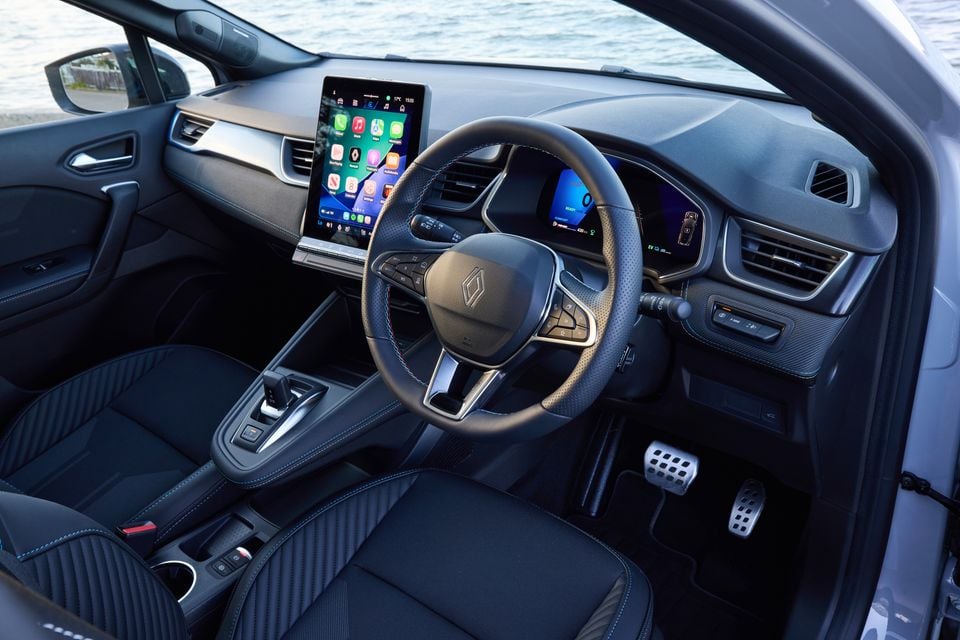
Let's face it – Renault isn't a volume-selling brand in Australia, and so many potential buyers will be new to the brand. The cabin of the Symbioz, like every other modern Renault SUV, will therefore initially appear quite alien.
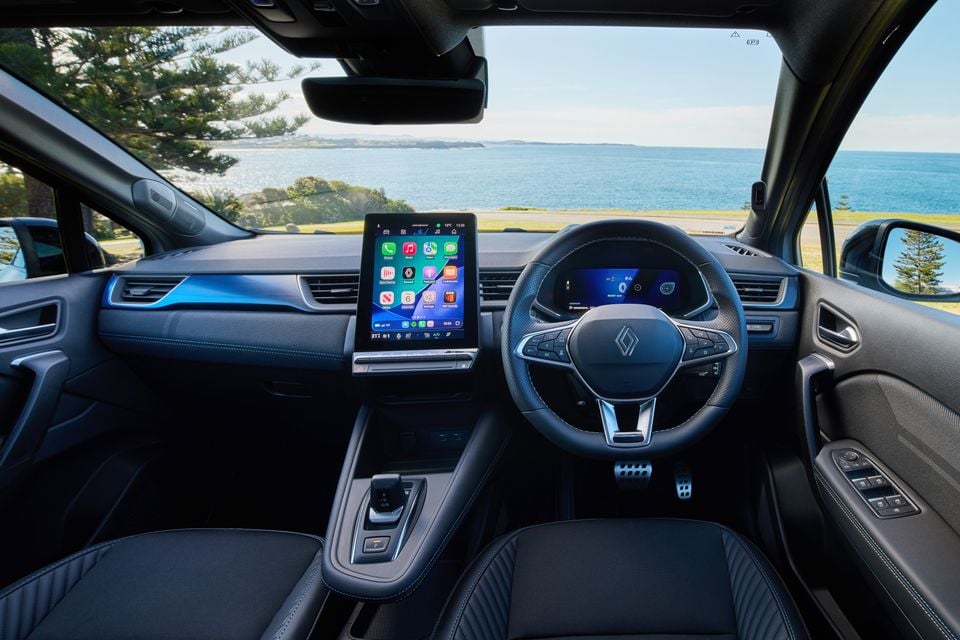
But once you spend some time with the car and start getting to know it, you'll find most of it is fairly intuitive. It helps that this 'budget-spec' interior treatment still feels vaguely traditional compared to the far flashier cabin of the Scenic E-Tech, for example.
As such, there are still plenty of physical controls to support its well-engineered tech. You'll notice the steering wheel's buttons are real and plentiful, while Renault's typical ribbon of switches on the central stack has been maintained for various climate functions.
Audio controls, meanwhile, continue to reside on a third stalk on the right side of the steering wheel. We're not here to complain about it – trust us, we know it's been Renault's 'thing' since forever – because it's quite good. Its scroll-wheel/button layout is super-intuitive and takes very little thought to use, even without being able to see it.
There are still a couple of audio buttons on top of the infotainment touchscreen housing if needed. And as a final note, the cabin controls are the only way to tell the Mild Hybrid and Full Hybrid apart from the driver's seat – only the former has paddle shifters, while the latter gets a small 'E-Save' button on the dash. More on that later.

Some may notice the Symbioz looks a lot like the ASX inside, which is true and not at all surprising. At least this interior fits the character of the badge on the outside.
A key difference between the two is how spacious the Symbioz feels. It's not a big car, yet it feels noticeably more open than the Captur/ASX inside, which will be particularly important given how close the cars are on price.
It's comfortable, too, with good seats, logical control placement, and solid ergonomics. One thing I found is that the steering wheel doesn't go as low as I'd have perhaps liked, but that's hardly a dealbreaker, and it's still easy to get situated comfortably by fiddling with the seat.
Unfortunately, there's no seat-base adjustment, which would do a lot for the Techno's seat comfort. The stronger bolstering in the Esprit Alpine improves support, and it's more convenient with its power adjustment. But the seats in both trims are fairly well cushioned.
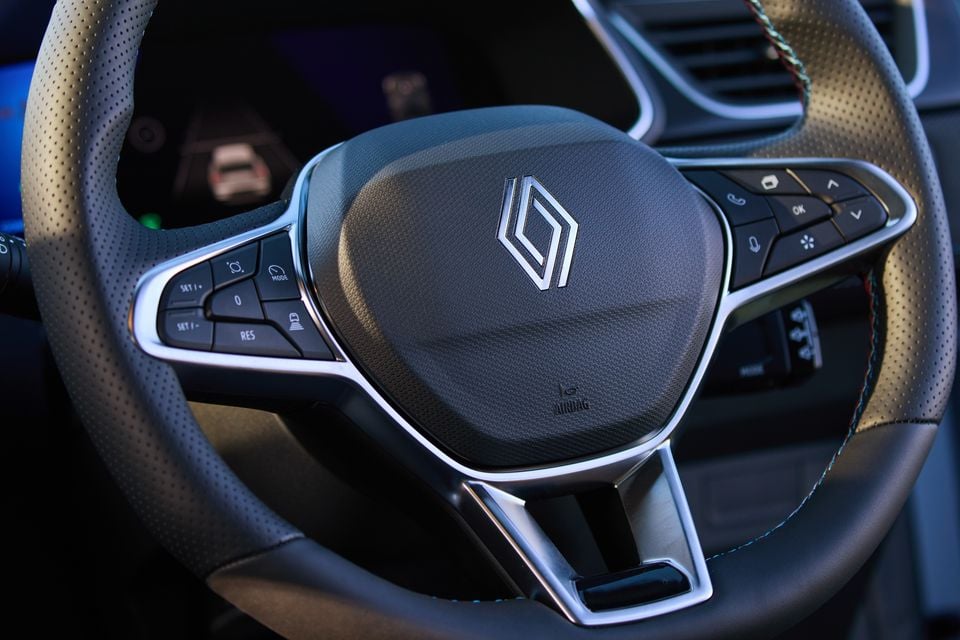
Further, the key touchpoints are all of reasonable quality. The large synthetic leather-wrapped steering wheel is a clear highlight, as are the softer finishes on the sides of the centre console and the armrests. There's still some scratchy plastic elsewhere, though.
In terms of tech, it's as slick as we've come to expect from Renault. The 10.4-inch portrait-style touchscreen is the main control hub of the Symbioz, as it's where you adjust vehicle settings and drive modes, access detailed efficiency data, and – of course – interact with audio and navigation.
Android phone users will likely feel most at home, because the system runs on Android and has Google Built-in, with a handy voice assistant to make your life a tad easier. It seems to work reasonably well and Apple users can still make use of wireless CarPlay instead.
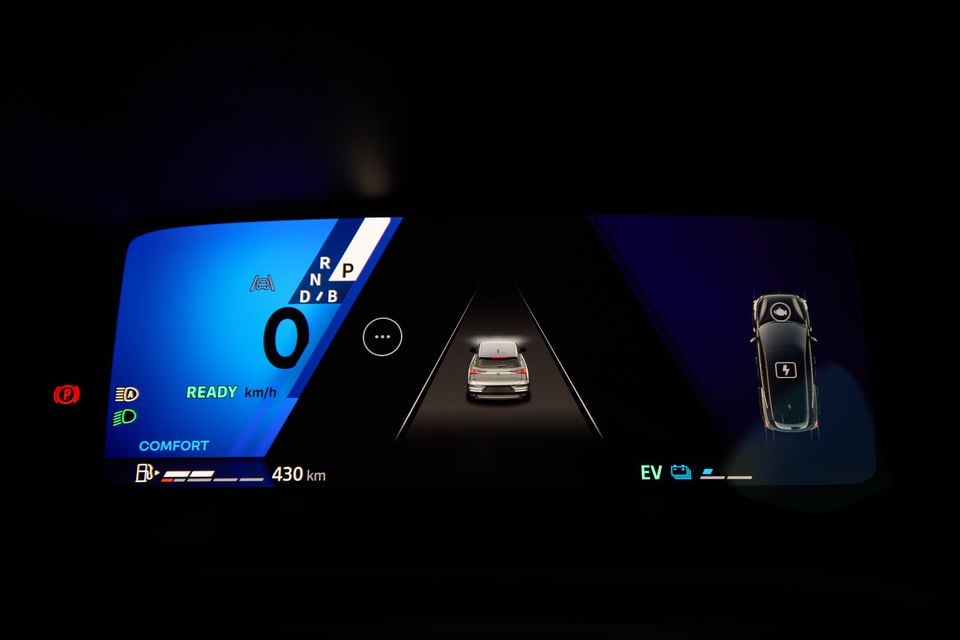
The 10.25-inch digital cluster, meanwhile, looks sharp and offers a colourful graphic identity that is very typically Renault. It offers a multitude of different layouts that are all useful, especially the map display, but it's annoying that it has a very slow refresh rate. Speedometer updates tick through like a Microsoft PowerPoint presentation.
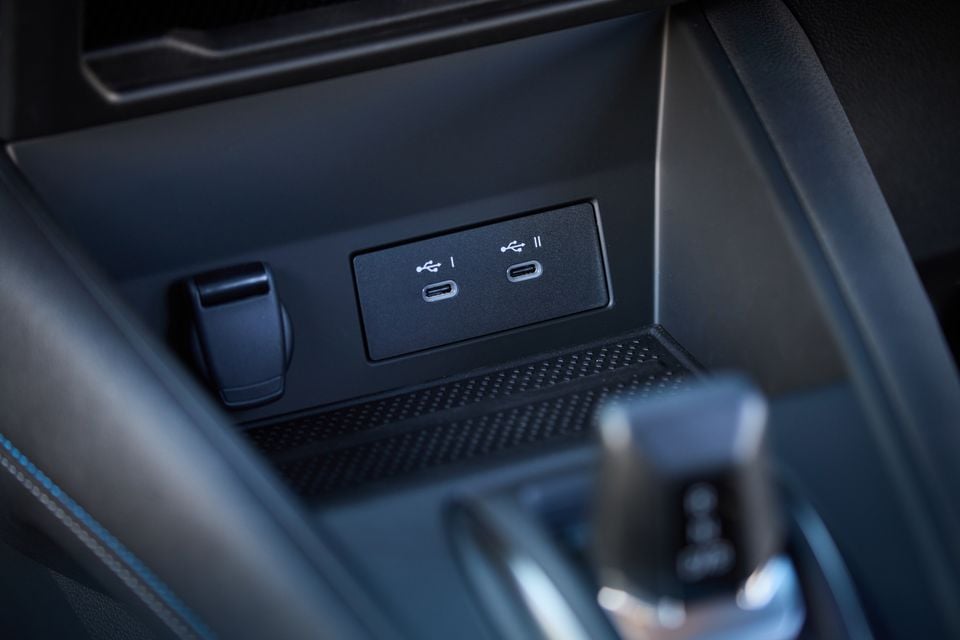
Storage up front is alright, but it's an aspect where the Symbioz's small-car leanings start to show through. The two-tier centre console has a wireless phone charger below some USB-C ports, and below it is a large tray, a pair of cupholders, and a space for the large card-like key.
There's also a passenger-side glovebox and bottle holders in the doors, and a small storage box underneath the adjustable centre armrest.
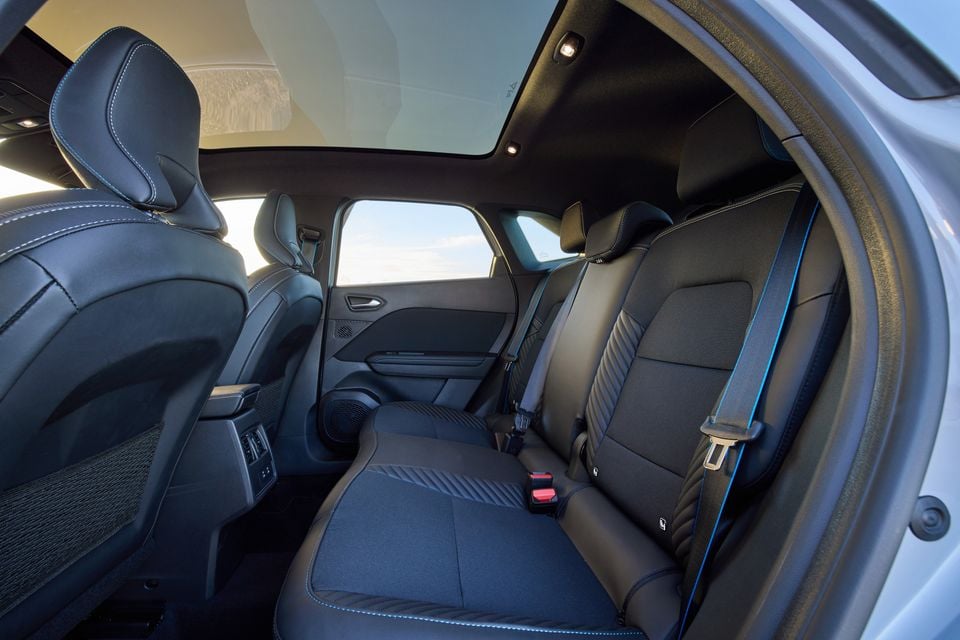
The second row, however, is cramped. Legroom will be the first issue for adults of above-average height, while headroom is workable thanks to the car's relatively high roof. The latter remains true even with the optional glass roof fitted.
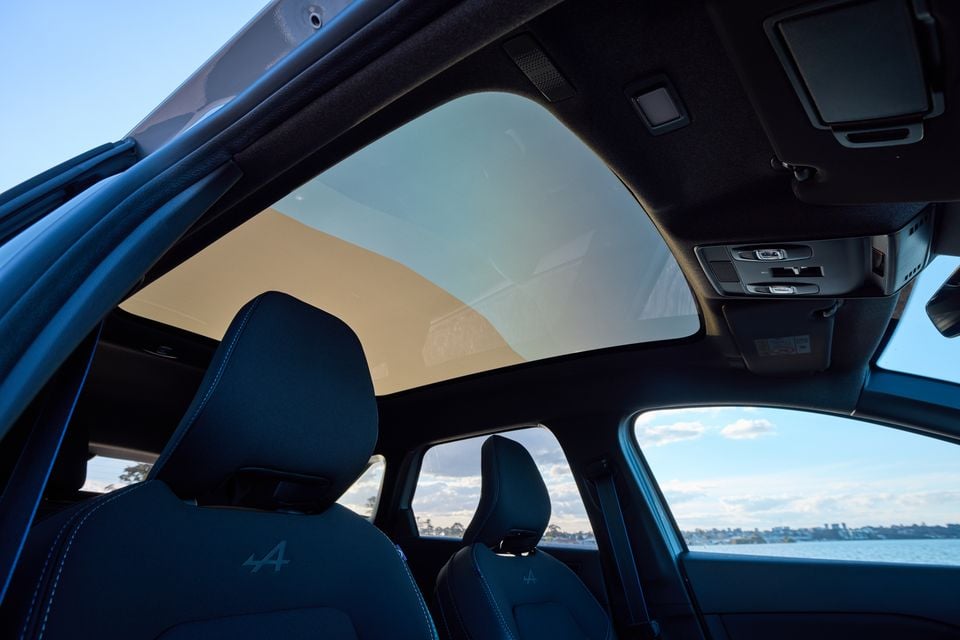
On that note, the oversized sunroof is quite an impressive feature. It has progressive dimming functionality that we've only really seen on high-end cars in the past, such as those from Porsche, yet only adds $2000 to the price of this sub-$40,000 small SUV.
It's still operated by a traditional switch on the roof, but it has the ability to shade only one half at a time in case the front and rear occupants have different sunlight needs. Plus, it's great to have a glass roof that can be 'closed' to fend off the Australian sun – this isn't always the case.
Otherwise, rear-seat occupants get two USB-C ports and air vents on the back of the centre console, and while the bench seat is comfortable, there's no fold-down armrest. Another neat feature is that the bench can slide up to 160mm back and forth, maximising either passenger or cargo space.
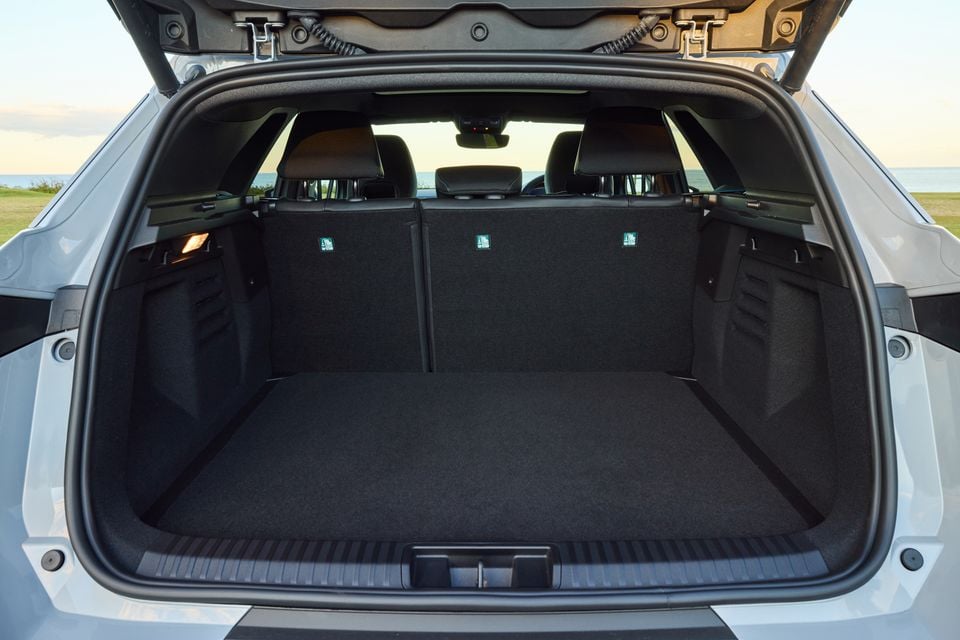
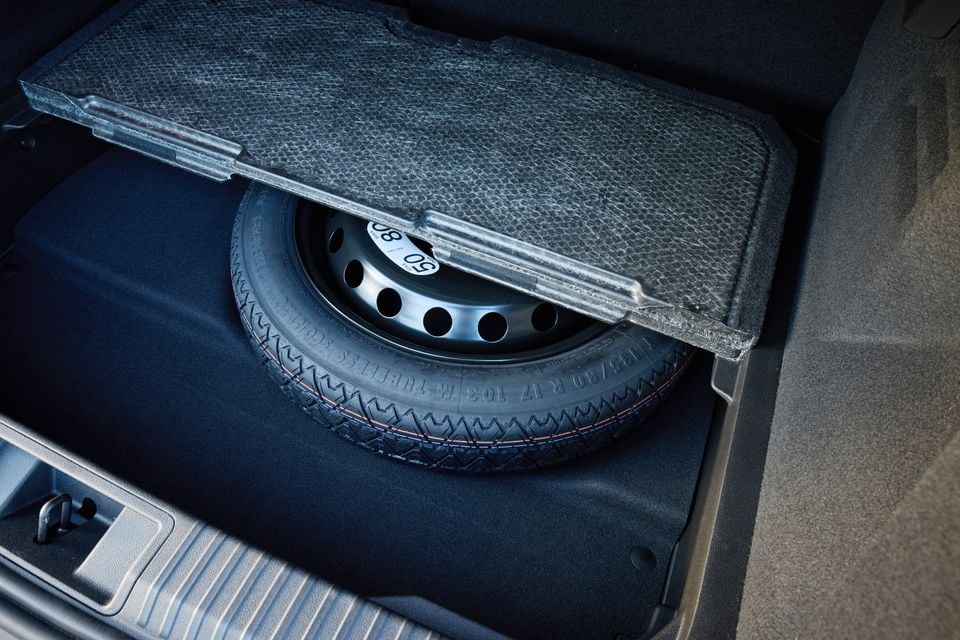
As for that cargo capacity, it's generous. The Symbioz's load area is square and flat to make for easier packing, though minimum boot capacity will differ depending on the powertrain. The Full Hybrid has the smallest boot, yet it's still impressively spacious in the metal.
The Mild Hybrid is roughly 100 litres larger, thanks mostly to a different spare tyre setup. Both get a space-saver spare, but the Mild Hybrid mounts it lower in the boot than the Full Hybrid (pictured above) because there's no hybrid battery to account for.
| Dimensions | Renault Symbioz |
|---|---|
| Length | 4412mm |
| Width | 1797mm |
| Height | 1567mm |
| Wheelbase | 2639mm |
| Cargo capacity | 460L (Full Hybrid, rear seats up) 1546L (Full Hybrid, rear seats folded) 563L (Mild Hybrid, rear seats up) 1668L (Mild Hybrid, rear seats folded) |
To see how the Renault Symbioz stacks up against the competition, check out our comparison tool
Two powertrains are available for the Symbioz, and both are front-wheel drive. The Mild Hybrid utilises a 1.3-litre turbocharged four-cylinder petrol engine producing 104kW of power and 245Nm of torque, paired with a 12-volt mild-hybrid system.
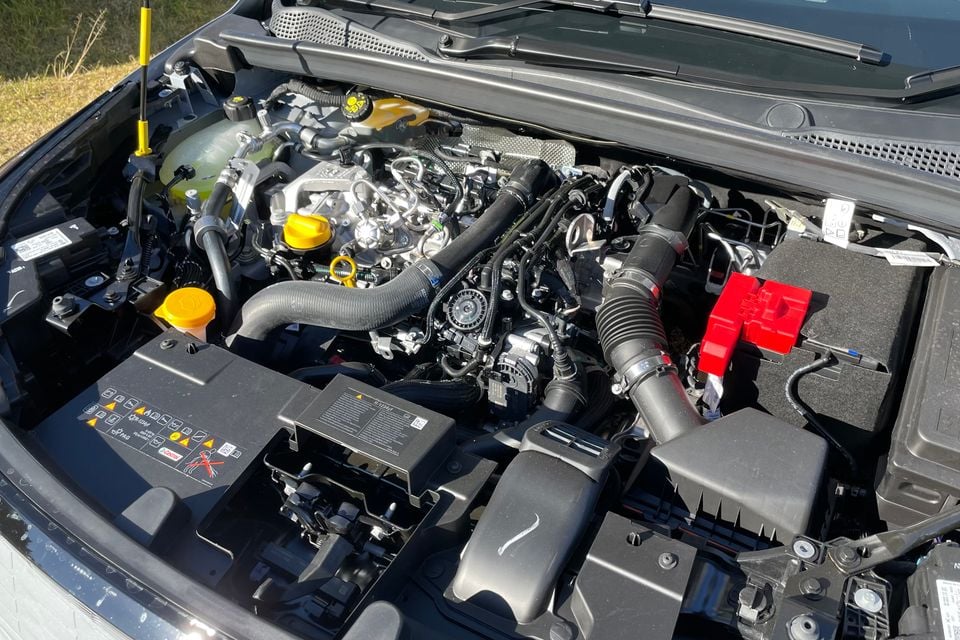
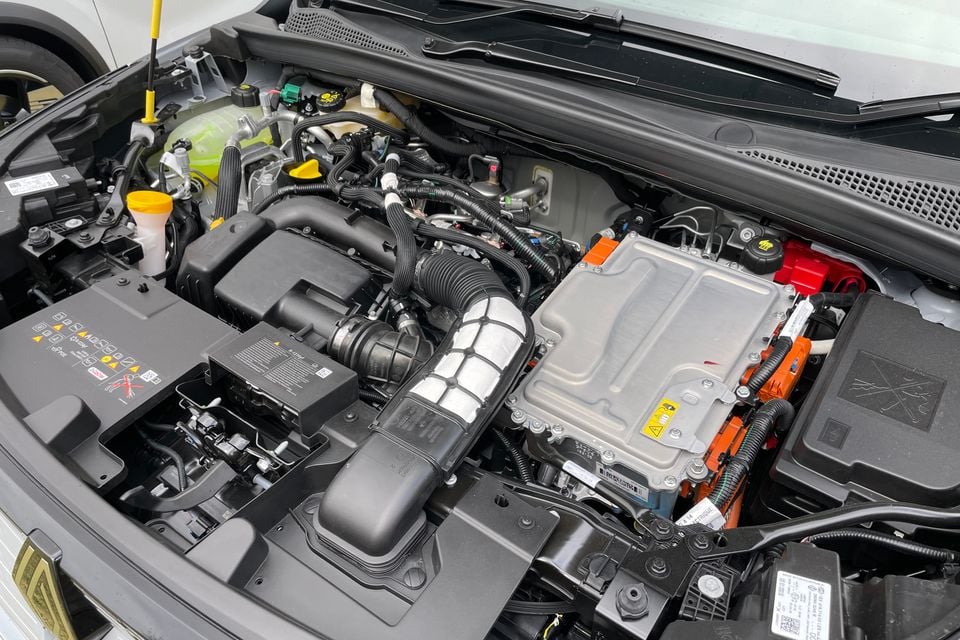
| Specifications | Symbioz Mild Hybrid | Symbioz Full Hybrid |
|---|---|---|
| Engine | 1.3L turbo-petrol 4cyl | 1.8L naturally aspirated petrol 4cyl |
| Engine outputs | 104kW / 245Nm | 80kW / 170Nm |
| Electric motor outputs | – | 36kW / 205Nm |
| System outputs | – | 116kW / 265Nm |
| Battery | Li-ion (12V MHEV) | 1.4kWh li-ion |
| Transmission | 7-speed dual-clutch auto | 'Hybrid Transmission' |
| Drive type | Front-wheel drive | Front-wheel drive |
| Kerb weight | 1312kg | 1397kg |
| 0-100km/h (claimed) | 9.4 seconds | 9.1 seconds |
| Fuel economy (claimed) | 6.4L/100km | 4.7L/100km |
| Fuel tank capacity | 48L | 48L |
| Fuel requirement | 95-octane premium unleaded | 95-octane premium unleaded |
| CO2 emissions | 144g/km | 107g/km |
| Emissions standard | Euro 6 | Euro 6 |
| Braked tow capacity | 1500kg | 1000kg |
The Full Hybrid gets slightly more complicated. Its peak system outputs of 116kW and 265Nm are produced via the combination of a 1.8-litre naturally aspirated four-cylinder petrol engine and a front-mounted electric motor, with electrical energy sourced from a 1.4kWh lithium-ion battery pack.
While the seven-speed dual-clutch automatic transmission in the mild-hybrid is fairly conventional, the full-hybrid's 'Hybrid Transmission' is unique to Renault. The brand says it draws on its Formula 1 expertise, so brace yourselves.
In simplest terms, its electric motor has two ratios, while there's a dog-clutch mechanical transmission with four gears. Dog clutches are typically used in motorsport transmissions to reduce shift times.
Renault says the two electric ratios and four mechanical gears combine to create up to 15 possible operating combinations, with the shift between each electric ratio supposed to be seamless. That's a very over-simplified description of what is a very advanced, unconventional transmission arrangement.
Further, the full-hybrid powertrain can drive on both petrol and electric power individually, or a combination of the two for maximum power. The mild-hybrid system, in contrast, cannot propel the car on its own.
Both powertrains are claimed to be very efficient, but we didn't get enough time in any one car on Renault's launch program to record a representative real-world economy figure. Highway-heavy driving returned figures of roughly 4.7L/100km in the Mild Hybrid and 4.1L/100km in the Full Hybrid.
To see how the Renault Symbioz stacks up against the competition, check out our comparison tool
While the interior remains mostly consistent regardless of the powertrain, the driving experience really does expose that there are indeed two sides to the same coin here.
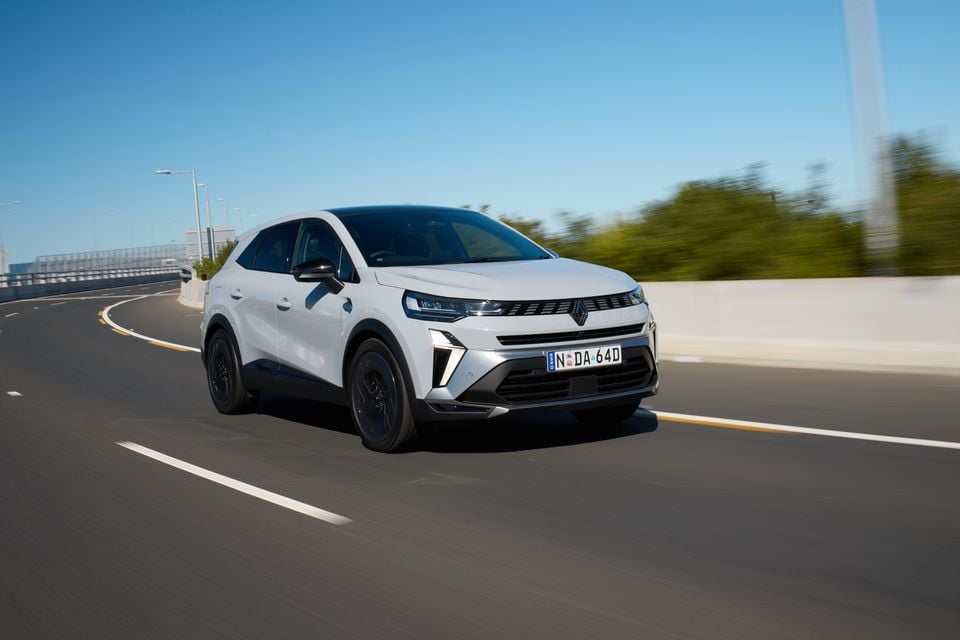
We began the launch drive in the base Techno Mild Hybrid, the value leader of the Symbioz range, so we'll talk about it first. Fundamentally, and as reductive as this statement is, it drives much like most small European SUVs.
Its power outputs are adequate for the application (albeit nothing more), the firm-ish suspension tune gives it a vaguely sporty edge, and it feels just as confident and stable on the freeway as it does in the city.
The engine itself is hardly the most characterful powerplant in the world. It can actually be a bit of a buzz-box at higher RPM, and it's fair to want more performance when you lay into the throttle – it's achingly slow.
That's fine for an urban-focused commuter, but it isn't helped much by the inclusion of a dual-clutch auto – again common for Euro cars. Like most dual-clutches, it can be rough at low speed, and it doesn't like to crawl in traffic.
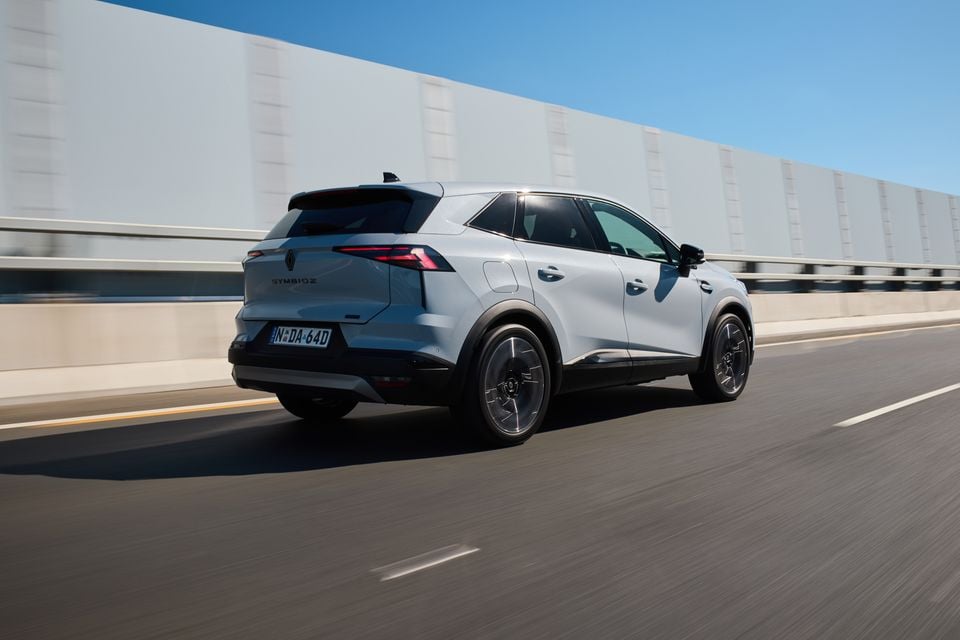
It shifts relatively smoothly once you're up and running, particularly when you're trying to push the engine harder, for instance to accelerate onto a freeway. You also have the option of shifting manually using the paddle shifters if that takes your fancy.
Truthfully, this dual-clutch behaves as expected; it doesn't feel broken or underdone. It just feels a bit like it's trying to evoke a sporty character from a powertrain that isn't equipped to provide it.
Similar can be said for the Symbioz's ride and handling. Its firmer setup is immediately obvious in normal driving, where most bumps and imperfections are transmitted to the cabin more noticeably than in, say, a typical Toyota hybrid.
The trade-off there is that it's fairly composed in the bends. The stiff suspension does a decent job of mitigating body roll and helps it feel more planted on the highway, as we mentioned above.
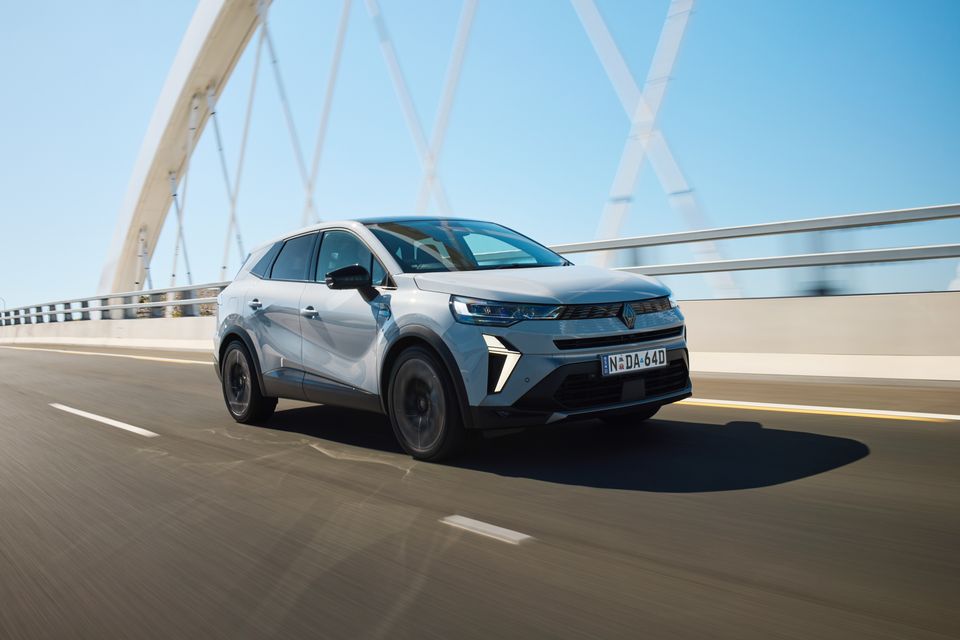
That said, the Techno is slightly more compliant than the Esprit Alpine, thanks entirely to its smaller alloy wheels and thicker tyre sidewalls. That gives just a tad more cushioning from smaller hits, which also means there's a tad more insulation from road noise. It's still fairly loud, though.
Switching over to the Esprit Alpine, however, exacerbates much of the above. While the difference in suspension setup between the two appears negligible, its sportier wheel and tyre arrangement makes it feel firmer and increases road noise considerably.
This is all to be expected – it does wear the name of Renault's dedicated performance brand, after all. But even if Renault is proud of its stylish European heritage, we're not sure a car like the Symbioz really needs a sportier treatment such as this. Horses for courses.
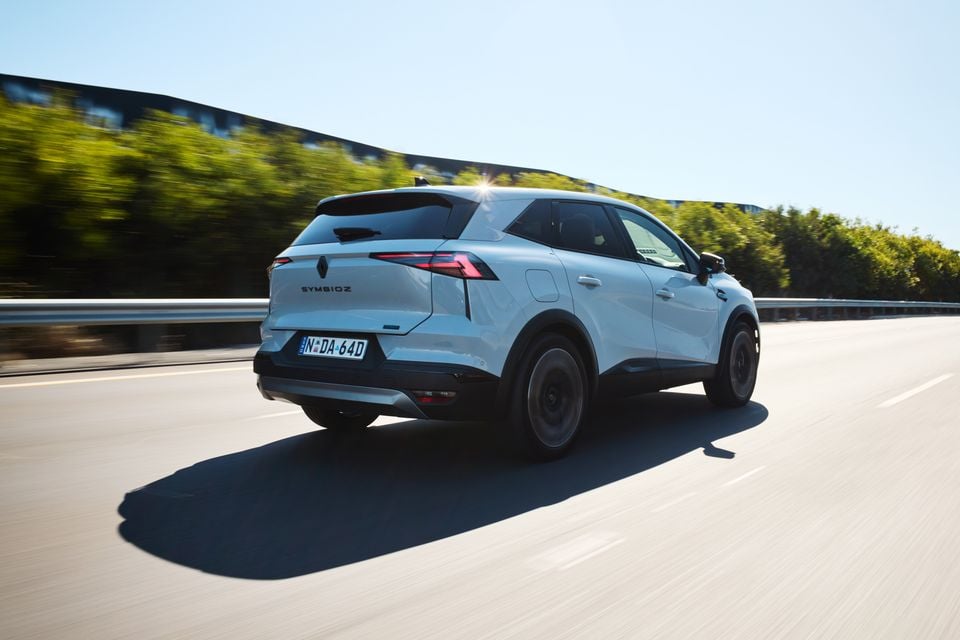
The most important aspect of the Symbioz, however, is the Full Hybrid powertrain. Available in both Techno and Esprit Alpine trims, it vastly changes this small SUV's driving experience.
If this is the car for you, we’ll compare offers from trusted dealers, handle the back and forth and manage your purchase from enquiry to delivery.
First and foremost, it can be impressively smooth. You won't notice any shifting or clunking if you're cruising through the city with light throttle inputs, as the car is as happy to drive on electric power as it is on internal combustion.
The instant torque of the electric portion also makes it feel more spritely than the Mild Hybrid off the mark, even if it can't maintain the same pep as it continues to accelerate. When it does switch on the petrol engine, the transition is practically seamless.
The mechanical gears also flick through without fuss, making it nicer to cruise around in than the Mild Hybrid. That is assuming you are in fact cruising, because the Full Hybrid doesn't respond well to more aggressive throttle inputs.
Full-throttle acceleration, for instance, will have the engine revving out CVT-style, but only after a short delay between you pressing the accelerator and everything 'waking up'. You still get some acceleration from the hybrid system while the engine fires up, but it takes a second for full power to hit.
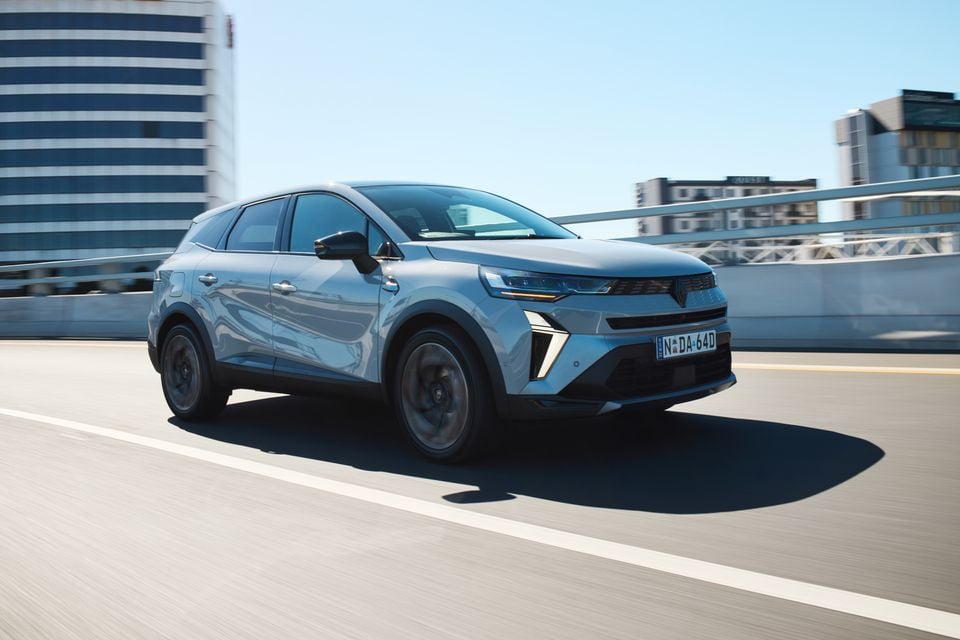
Then there's a weird dead spot at high RPM. The cause was impossible to pin down due to the time constraints of the launch event, but it's something we noticed at roughly 100km/h after accelerating hard. It doesn't completely shut down, but for just a moment it certainly stops pulling as hard as before.
Keep in mind this didn't feel like a major issue; the car still gains speed, and it otherwise behaves as expected. We're also impressed that the Full Hybrid can drive on electric power alone at freeway speeds, provided the battery is sufficiently charged.
As for drive modes, there's a fair selection. The Full Hybrid gets an exclusive 'E-Save' mode that builds and maintains battery charge, useful if you know you're headed to an urban area and want to drive on electric power once you're there.
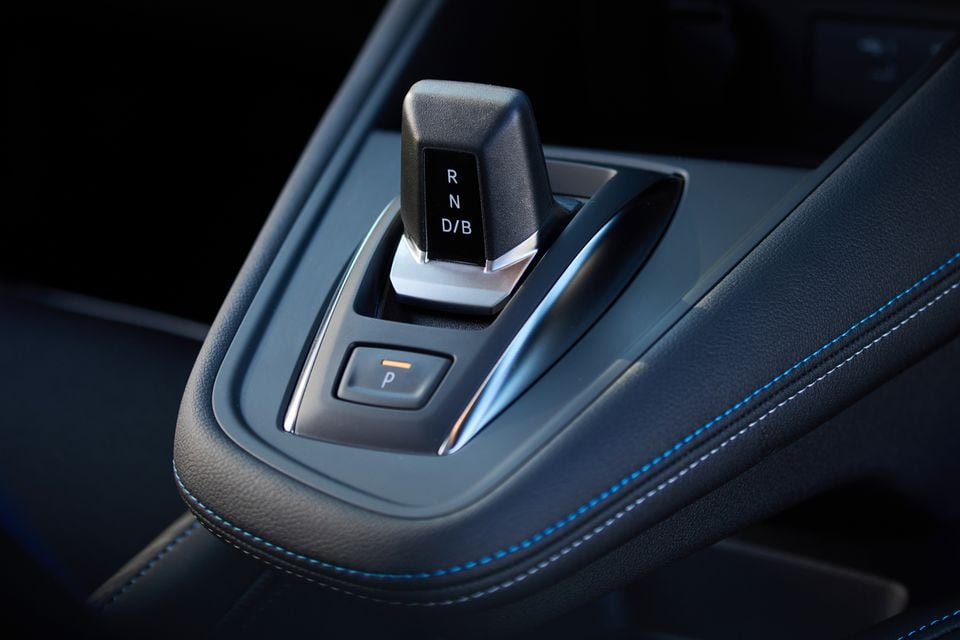
It also has a 'B' mode on the gear selector, which increases regenerative braking strength for greater energy recovery. Otherwise, both cars get a plethora of more conventional drive modes that largely do what they say on the tin.
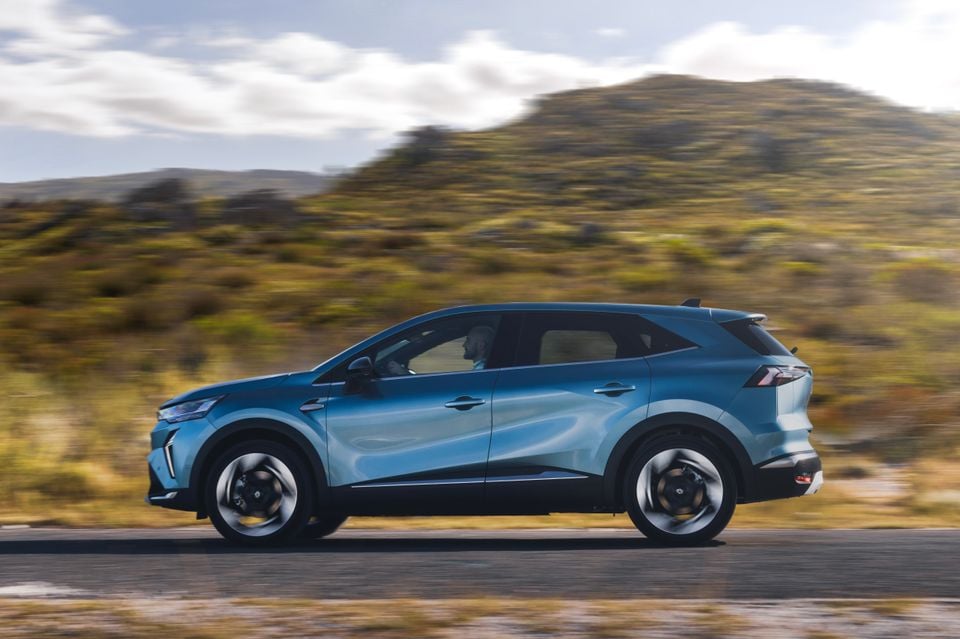
There are the usual Sport, Eco, and Comfort modes, but there's also a handy Smart mode that actively picks the correct one to suit the driving conditions. Eco will automatically be selected during gentle driving for improved efficiency, while Sport will be selected if you stab the throttle to deliver sharper response and heavier steering. It's all very clever.
That leads onto the Symbioz's tech, which in typical Renault fashion is very good. We have no real grievances with any safety system and, as ever, it's great to have the Perso mode – assignable to a dedicated button – to save your safety-setting preferences.
Further, the car offers good outward visibility, supported by a solid surround-view camera monitor – but only in the Esprit Alpine, which also has autonomous parking assist. That surround-view camera is arguably the most significant tech upgrade from the Techno to the Esprit Alpine.
Overall, the Symbioz is a pleasant vehicle to drive. It is, however, clear that it is a budget-oriented vehicle. Aside from the tech, it isn't quite as polished as some higher-end Renaults we've experienced recently.
To see how the Renault Symbioz stacks up against the competition, check out our comparison tool
The 2026 Renault Symbioz is available in two trim levels.
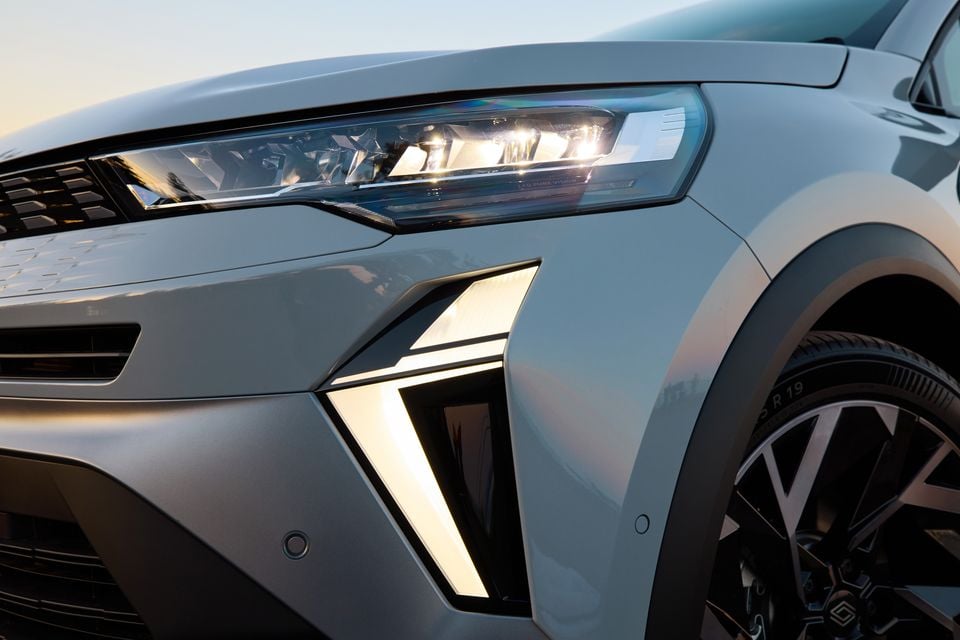
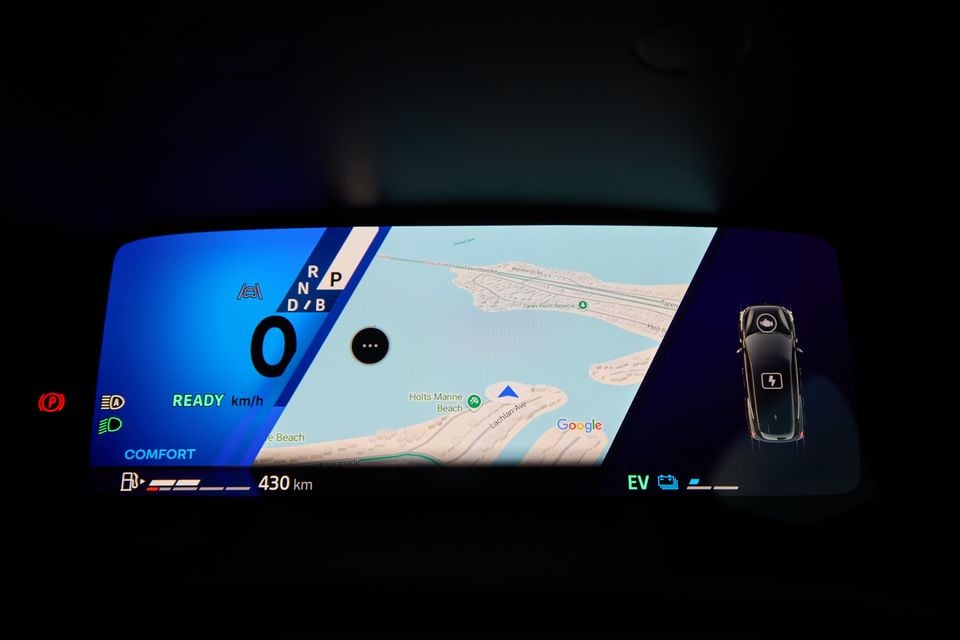
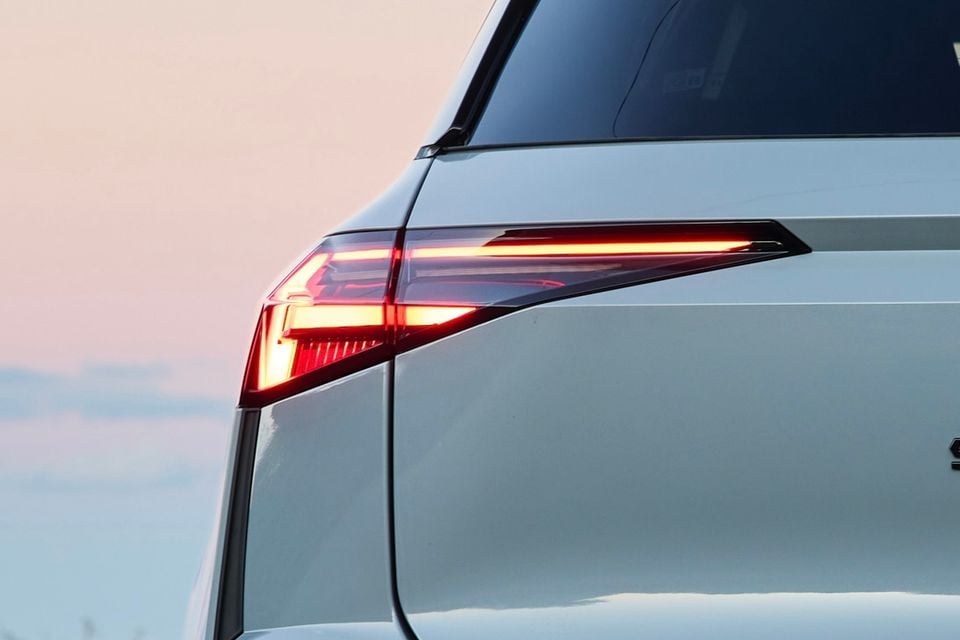
2026 Renault Symbioz Techno equipment highlights:
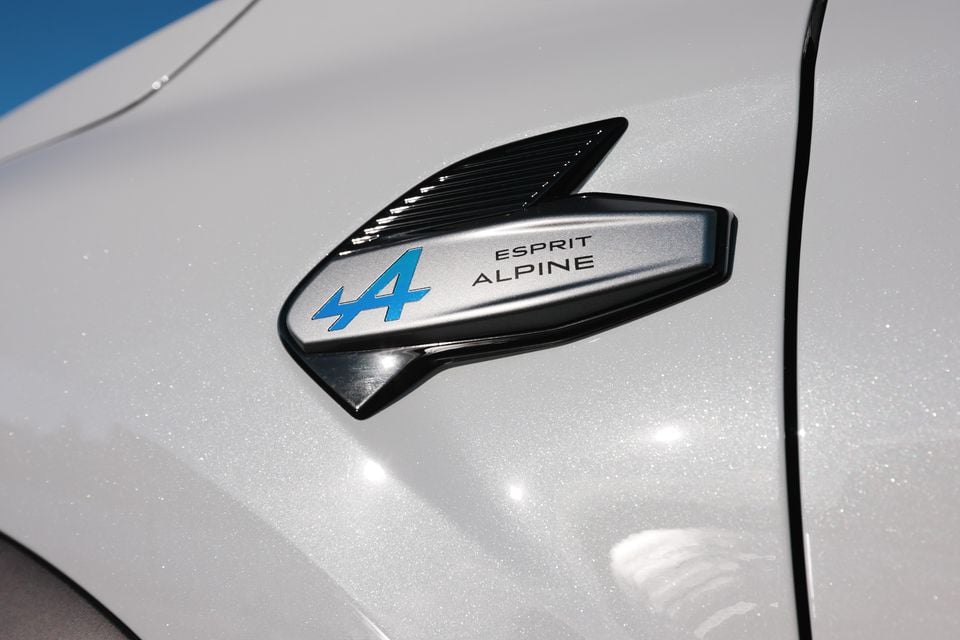
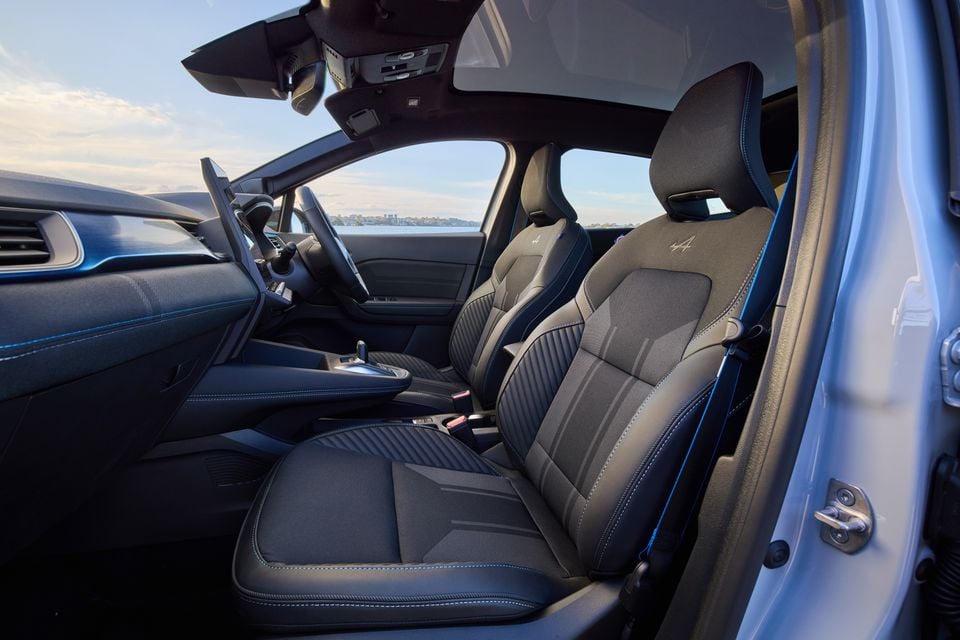
Symbioz Esprit Alpine adds:
There are just a couple of options available for the Renault Symbioz.
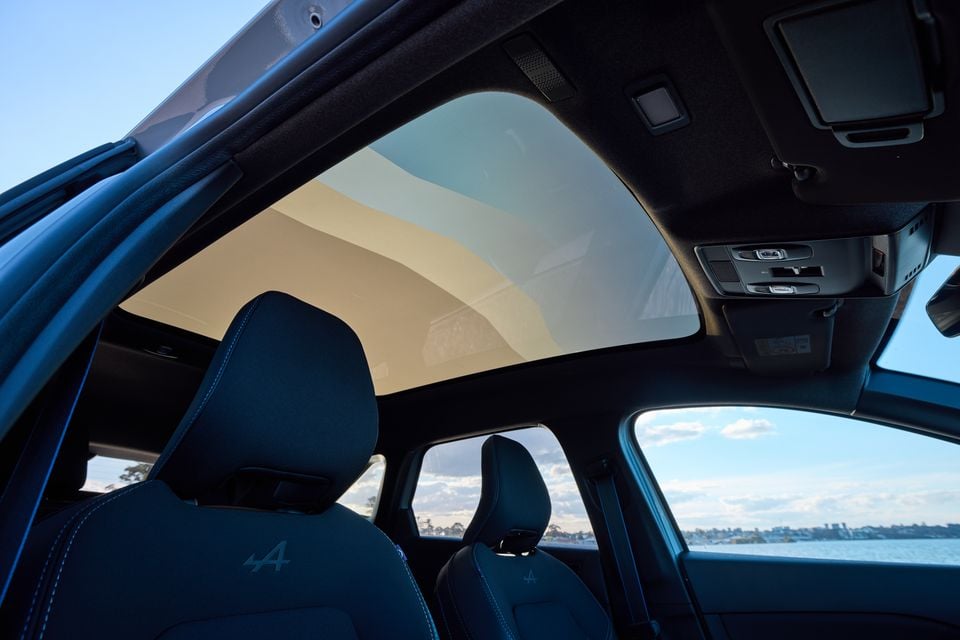
2026 Renault Symbioz options:
To see how the Renault Symbioz stacks up against the competition, check out our comparison tool
The 2026 Renault Symbioz is yet to be assessed by local independent auto safety organisation ANCAP and is therefore unrated in Australia. It does, however, have a four-star safety rating from its overseas affiliate Euro NCAP.
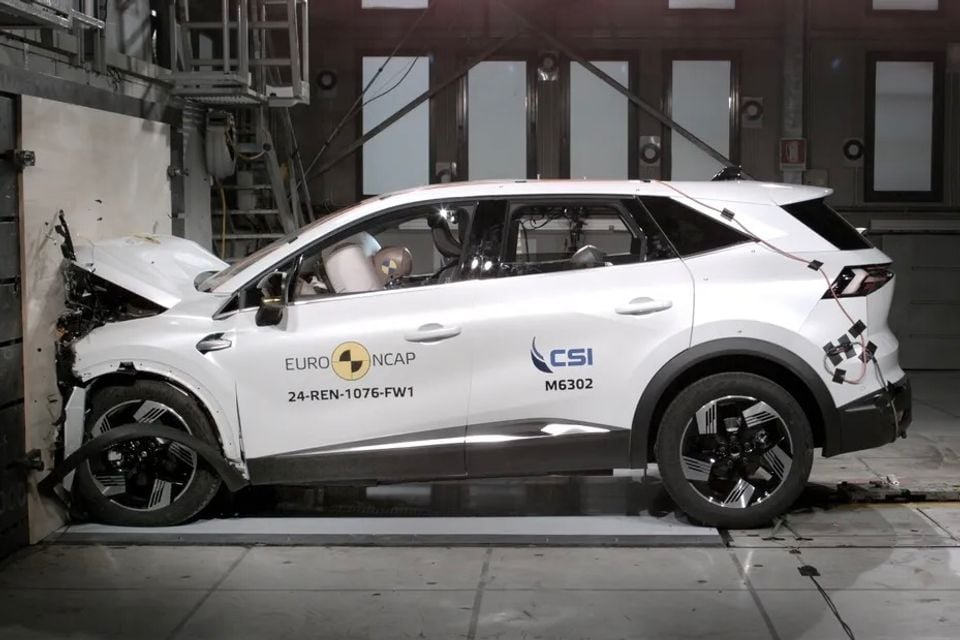
| Category | Renault Symbioz (Euro NCAP) |
|---|---|
| Adult occupant protection | 73 per cent |
| Child occupant protection | 80 per cent |
| Vulnerable road user protection | 76 per cent |
| Safety assist | 69 per cent |
Standard safety equipment highlights:
Symbioz Esprit Alpine adds:
To see how the Renault Symbioz stacks up against the competition, check out our comparison tool
Renault Australia backs its range with a five-year, unlimited-kilometre warranty. Servicing for the Symbioz – regardless of the powertrain – is required every 12 months or 30,000km, whichever comes first.
| Servicing and Warranty | Symbioz Mild Hybrid | Symbioz Full Hybrid |
|---|---|---|
| Vehicle warranty | 5 years, unlimited kilometres | 5 years, unlimited kilometres |
| High-voltage battery warranty | – | 8 years, 160,000km |
| Roadside assistance | 5 years | 5 years |
| Service intervals | 12 months or 30,000km | 12 months or 30,000km |
| Capped-price servicing | 5 years | 5 years |
| Average annual service cost | $539 | $543 |
| Total capped-price service cost | $2695 | $2715 |
Renault's individual service costs are detailed below:
| Service | Price |
|---|---|
| 12 months, 30,000km | $319 (Mild Hybrid) $359 (Full Hybrid) |
| 24 months, 60,000km | $669 (Mild Hybrid) $779 (Full Hybrid) |
| 36 months, 90,000km | $399 (Mild Hybrid) $439 (Full Hybrid) |
| 48 months, 120,000km | $989 (Mild Hybrid) $779 (Full Hybrid) |
| 60 months, 150,000km | $319 (Mild Hybrid) $359 (Full Hybrid) |
For context, it's worth comparing the related ASX. According to Mitsubishi, five years of scheduled servicing for that model will cost a total of $2645.
Toyota and Honda comfortably beat Renault on servicing costs for hybrid models, as both offer low-priced servicing in the first few years of ownership. Toyota's first five services for the Corolla Cross all cost $275, totalling $1375 over five years, while Honda's cost $199 each for a total of $995.
Meanwhile, Hyundai charges a total of $3007 for five years of Kona Hybrid servicing.
To see how the Renault Symbioz stacks up against the competition, check out our comparison tool
Renault's newest small SUV is a good thing and a logical step forward in the segment for the French brand. To us, though, it doesn't feel quite as convincing as some of Renault's other newest models.
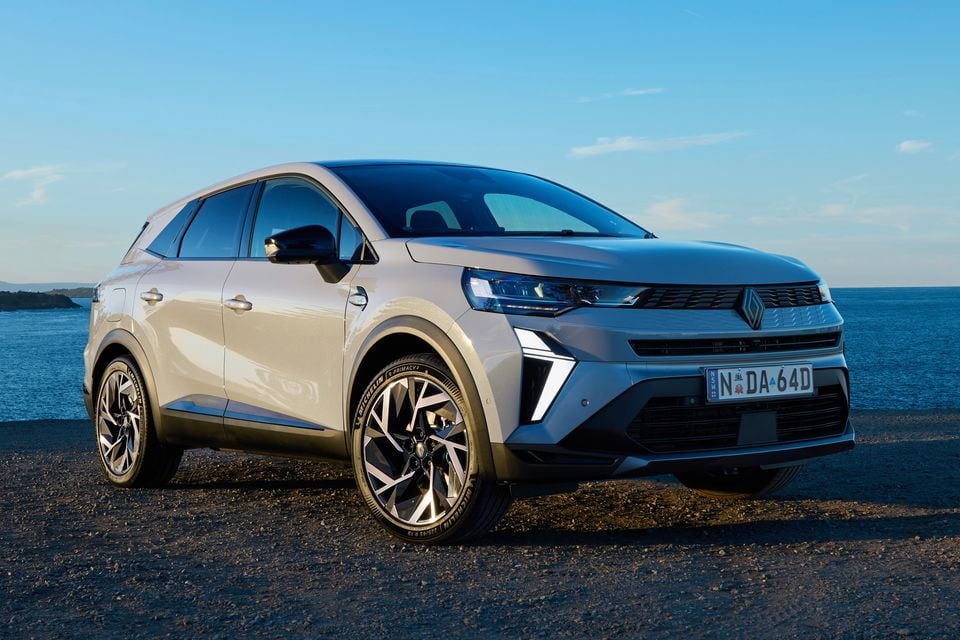
Much of that has to do with the relatively firm ride, while the Full Hybrid's transmission setup will feel odd to some buyers. While we can appreciate the effort taken to make something meaningfully different, some hybrid buyers may want something more traditional like a Toyota or Honda.
Still, the Symbioz has plenty of merit. There's no denying its tech and features are all fairly impressive in both presentation and function, and its distinctive design inside and out will help it stand out in a crowded market.
Importantly, you get all of that at a surprisingly good price. It isn't that far off a Toyota Corolla Cross despite feeling much more upmarket, and the fact it's cheaper than the related – yet smaller – Mitsubishi ASX usually costs is absolutely bewildering.
But as far as the overall driving experience goes, we'd still prefer the larger Scenic E-Tech despite it being considerably pricier. Its electric powertrain eliminates all the engine/transmission quirks of the Symbioz, and it's even more premium-feeling inside.
However, if you are weighing up a Symbioz, the Techno is the trim to go for. The fact the Techno Mild Hybrid is the cheapest in the range speaks for itself, and its slightly more traditional powertrain will make for an easier adjustment period if you're new to Renault.
If you're doing a lot of urban driving, the Techno Full Hybrid is the true sweet spot. Yes, there's an unavoidable price jump, but you get the smoothness of the more advanced powertrain – provided you're gentle on the throttle – without the harsher wheel-and-tyre setup of the Esprit Alpine.
The Techno is also still very well-equipped, aside from the lack of a surround-view camera. It could do with softer suspension, but we reckon it may well become a relatively popular addition for Renault locally.
At the end of the day, the Symbioz is another stylish SUV from a European brand that seems to be putting plenty of effort into its Australian lineup. If nothing else, it makes a lot more sense than an ASX.
CarExpert can save you thousands on a new Renault Symbioz. Click here to get a great deal.
Click the images for the full gallery
If this is the car for you, we’ll compare offers from trusted dealers, handle the back and forth and manage your purchase from enquiry to delivery.
Quickly see how this car stacks up against its competition. Select any benchmark to see more details.
2026
$0
2026
$0
Max Davies is a CarExpert journalist with a background in regional media, with a passion for Japanese brands and motorsport.
Add CarExpert as a Preferred Source on Google so your search results prioritise writing by actual experts, not AI.
Damion Smy
7 Hours Ago

William Stopford
8 Hours Ago
William Stopford
9 Hours Ago
William Stopford
11 Hours Ago
Damion Smy
12 Hours Ago
William Stopford
13 Hours Ago
Add CarExpert as a Preferred Source on Google so your search results prioritise writing by actual experts, not AI.
# Based on VFACTS and EVC data
† Displayed prices exclude on-road costs such as delivery charges, registration fees, number plates, insurance and applicable road taxes. These prices are subject to change without notice and may not reflect current market pricing or dealer offers.
 Automotive Vehicle Spec Data & 4K images Powered by JATO Dynamics Ltd