





Damion Smy
2027 Ram 2500 Warlock review
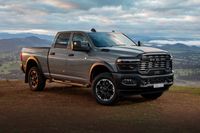
The Hemi V8 makes a comeback to Australia after almost two years in the Ram 2500 Warlock, but is it a return to form or a backward step?
9 Hours Ago
A bit of spit-and-polish for the French hatchback, but is that enough to keep the third-gen 308 relevant in an age dominated by SUVs?
If this is the car for you, we’ll compare offers from trusted dealers, handle the back and forth and manage your purchase from enquiry to delivery.
Peugeot still has faith in the traditional C-segment (small) family car, even in the face of the SUV onslaught that has taken chunks out of this old-school sector in recent years.
To that end, the third-generation Peugeot 308 continues with the mildest of refreshes, and the French auto brand is confident it’ll still attract customers as a result.
That’s not a given Down Under, of course, because the car wasn’t selling brilliantly prior to this facelift – and Peugeot Australia has drastically pruned back its model lineup already.
Nevertheless, we headed over to Lisbon to see how the visual and minor technical upgrades affect the 308, and to check out if we’re missing anything with the plug-in hybrid (PHEV) and all-electric (EV) powertrain options we’re unlikely to see on these shores.
Prices for the revised Peugeot 308 will be announced closer to the car landing here in the first half of 2026, but just prior to the facelift it was on sale from $48,990 before on-roads for the sole GT specification.
That was for the 308 Hybrid Hatch, as tested here, and as it hasn’t changed too much as part of the latest revisions then we’d expect there to only be a marginal increase in the cost of the new 308 Hybrid, if any at all.
The problem is, you don’t have much choice if you fancy the Pug. In fact, you have but one. All of the Plug-In Hybrid variants, the E-308 EV and the GT Premium flagship trim were dropped in 2024, as indeed was the handsome SW wagon.
So the Hybrid hatchback looks like it will be the sole survivor after the cull, going forward into the updated 308 ‘range’, as it were.
To see how the Peugeot 308 lines up against the competition, check out our comparison tool
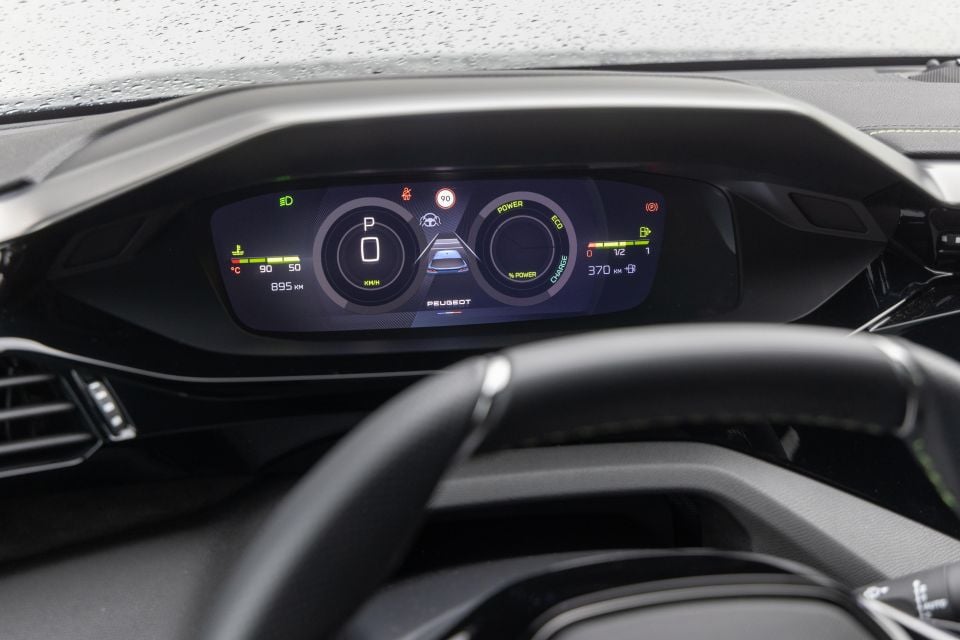
Very, very little has changed as part of this update of the Peugeot 308, although the 10-inch digital instrument cluster receives sharpened 3D graphics. As we only get the GT, that means we ought to benefit from this solitary change.
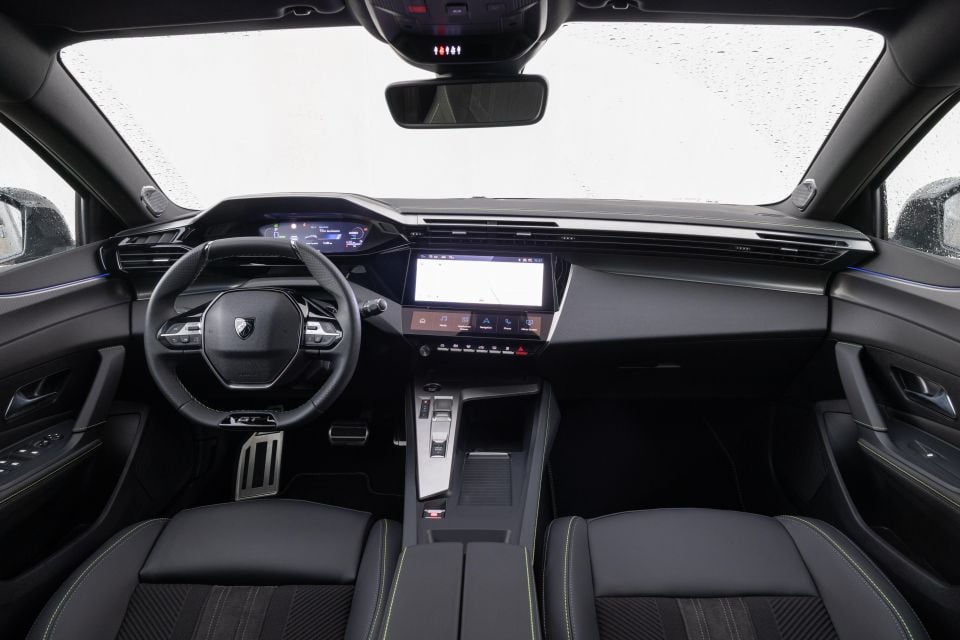
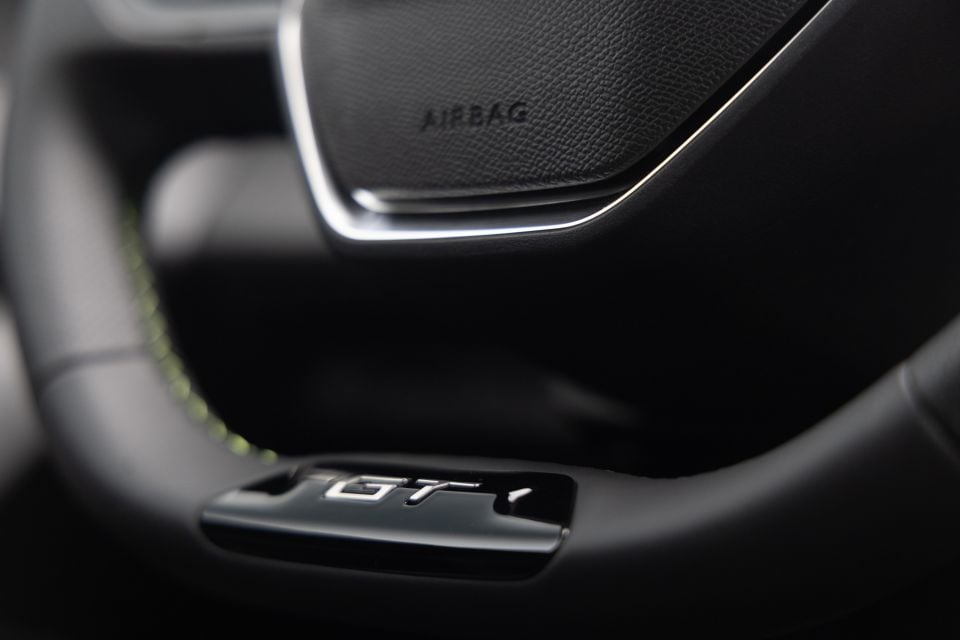
Therefore the success, or otherwise, of the 308’s cabin hinges on whether you get on with that idiosyncratic iCockpit layout, which places a small steering wheel at a low-mounted level and the instrument cluster up high above it.
It tends to be either very tall or very short people who struggle with this arrangement the most, but there is the potential for the steering wheel’s rim to block various information on the instrument cluster.
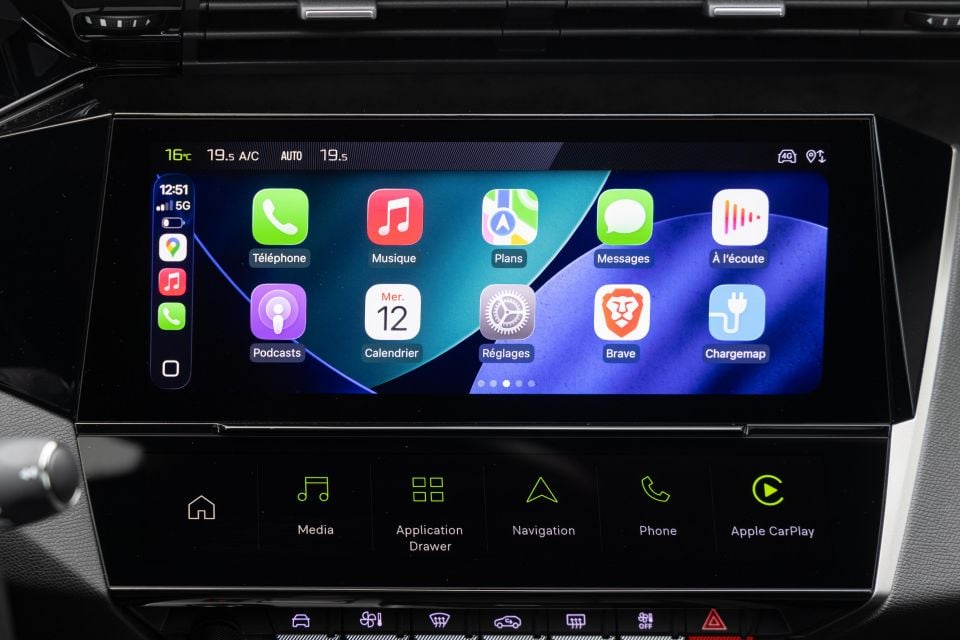
We also have a few other minor niggles regarding the 308’s cabin. Despite the presence of five configurable ‘iToggle’ digital shortcut buttons beneath the central 10-inch infotainment touchscreen, there are still too many items which are controlled through the display.
Such as turning the seat and steering wheel heating on and off, which is a multi-tap process. It would be much easier if there was just a simple, physical button for each function on the dashboard.
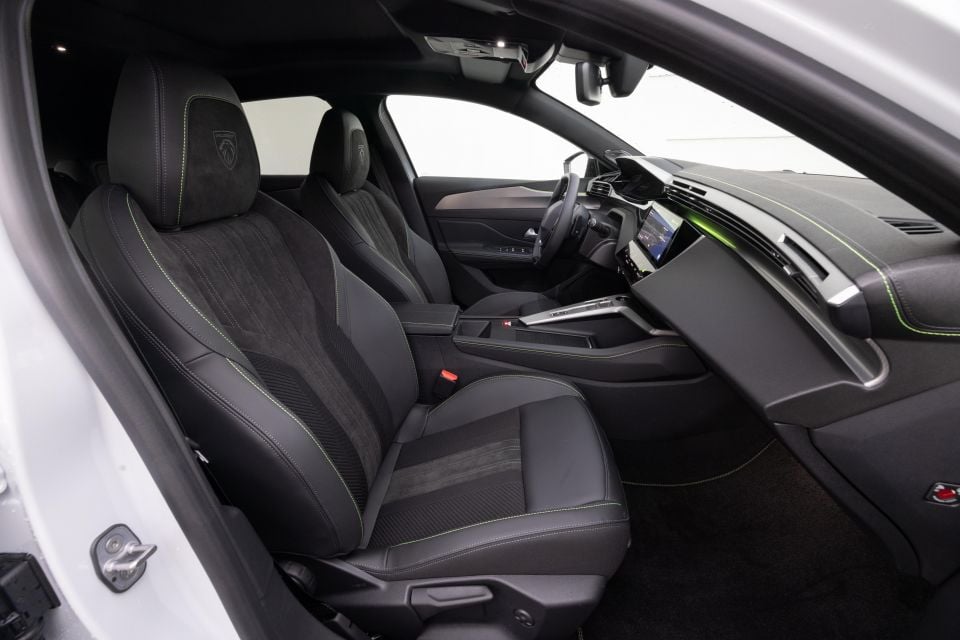
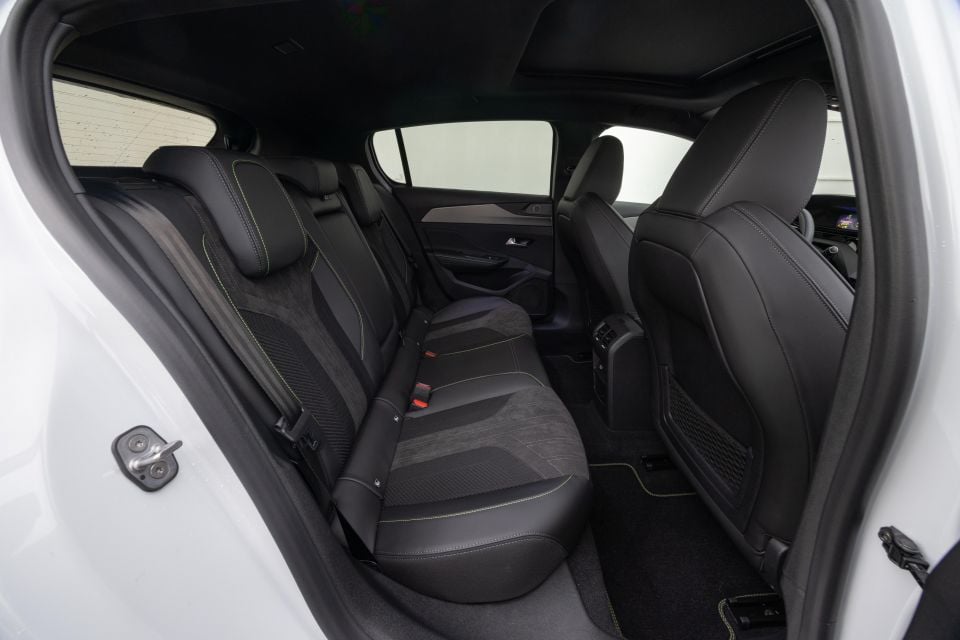
Further, the 308 has never been the roomiest car in the second row and that continues to be the case here. It’s not bad, but it’s also not notably generous, in the way that – say – a Skoda Octavia provides acres of space.
However, interior material quality is generally excellent, and the design of the Peugeot’s cabin is interesting, which makes the 308 cabin a pleasant place to spend some time in.
The Hybrid is also the 308 hatch with the biggest boot in the wider global family of these cars, with 412 litres of capacity available when all seats are in use, rising to a respectable 1323L with the rear seat backs folded down.
| Dimensions | Peugeot 308 Hybrid |
|---|---|
| Length | 4367mm |
| Width | 1852mm |
| Height | 1454mm |
| Wheelbase | 2675mm |
| Cargo capacity | 412L (behind rear seats) 1323L (behind front seats) |
To see how the Peugeot 308 lines up against the competition, check out our comparison tool
Peugeot has added bigger battery packs to the Plug-In Hybrid and E-308 variants in the lineup to allow them to go further on their electric propulsion power, which is the major news here. The flipside of that is that we get neither in Australia, where the Hybrid could continue on alone.
| Specifications | Peugeot 308 Hybrid |
|---|---|
| Engine | 1.2-litre 3cyl turbo-petrol 48V MHEV |
| Power | 108kW |
| Torque | 230Nm |
| Transmission | 6-speed dual-clutch automatic |
| Drive type | Front-wheel drive |
| Weight | 1382kg |
| 0-100km/h (claimed) | 8.8 seconds |
| Fuel economy (claimed) | 4.5-5.8L/100km |
| Fuel economy (as tested) | 6.7L/100km |
| Fuel tank capacity | 52L |
| CO2 emissions | 102-131g/km |
| Emissions standard | Euro 6e-bis |
It pairs a 1.2-litre, three-cylinder turbocharged petrol engine with a 21kW electric motor and small 0.9kWh lithium-ion battery under the front passenger seat.
Electric-only driving is not possible, so despite Peugeot calling this non-plug-in 308 a Hybrid with a capital ‘H’, strictly speaking it’s a 48-volt mild-hybrid instead.
Despite that, the helpful torque the e-motor dollops into the mix makes the 108kW 308 Hybrid feel perfectly peppy – and livelier than if it was just a petrol vehicle on its own.
Better still, the 308 Hybrid is, by some distance, the lightest model you can get. At 1382kg, it’s a scarcely believable 253kg trimmer than the equivalent PHEV hatch, and fully 287kg easier on the scales than the five-door E-308 EV.
To see how the Peugeot 308 lines up against the competition, check out our comparison tool
If we’re not to get the Plug-In Hybrid and E-308 here, that’s no bad thing – because, having driven all versions of the revised Peugeot at its launch event in Europe, it’s the Hybrid we like the most.
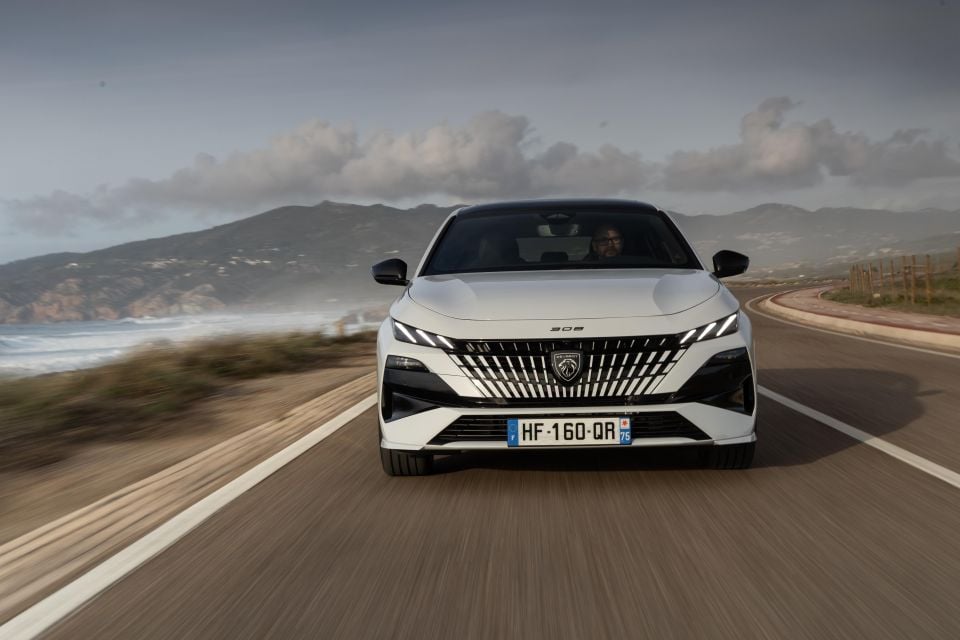
This is a car which places the emphasis firmly on being as dignified, as comfortable and as relaxing as it can possibly be. Yet it just about manages to maintain a frisson of that fabled Peugeot driver involvement most readily in this Hybrid which is easily the most agile variant in the model line.
The powertrain in this car is not flawless, though. It uses the e-DSC6 dual-clutch transmission and, while the massive Stellantis Group – which uses this gearbox widely in all its non-PHEV hybrids – has refined its operation over the years, it’s still some way from being the paragon of quick-shifting perfection.
It mostly seems to struggle when you input about half-throttle openings, whereupon it takes it a while to decide how many ratios to shift down before getting on with the job.
And it’ll also hold a lower gear and rev for longer than is strictly necessary, if you accelerate smartly and then back off the gas. It hangs onto its selected cog for an age before finally opting to shift up.
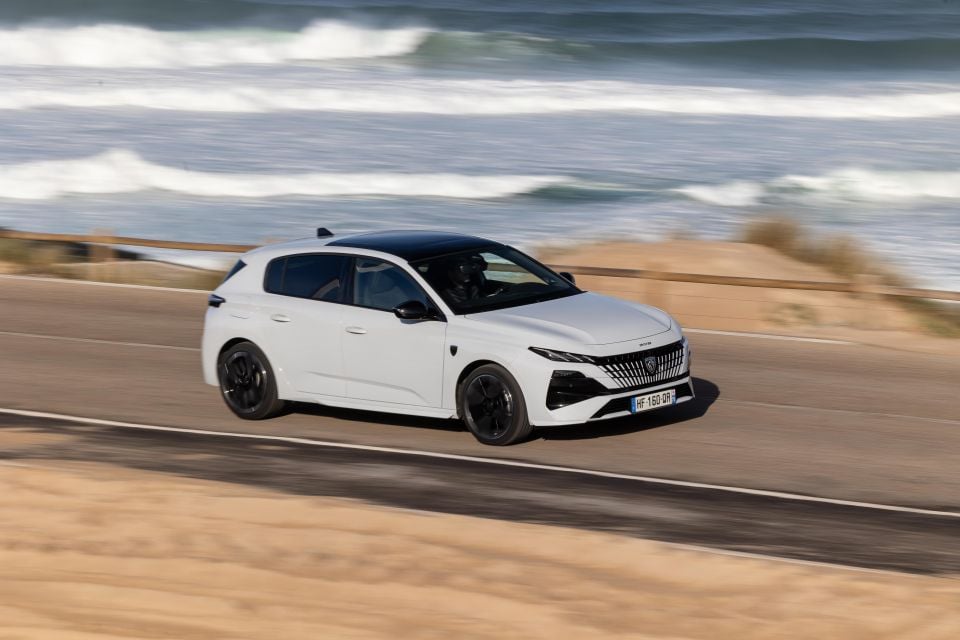
All of this means that when you’re driving the 308 in a spirited fashion, you often have to press the throttle about half-a-second earlier than you ordinarily would to get the powertrain to respond at exactly the point of corner exit you require.
It doesn’t improve massively using the gearshift paddles either, occasionally baulking at a requested (and reasonable) up or down change as the control software sees fit.
But that’s where our criticism ends. Otherwise, the Hybrid is a lovely thing to drive.
The tiny steering wheel almost subliminally makes you think you’re in an oversized go-kart, which is a sensation ably backed up by fluid roadholding and impressive body control.
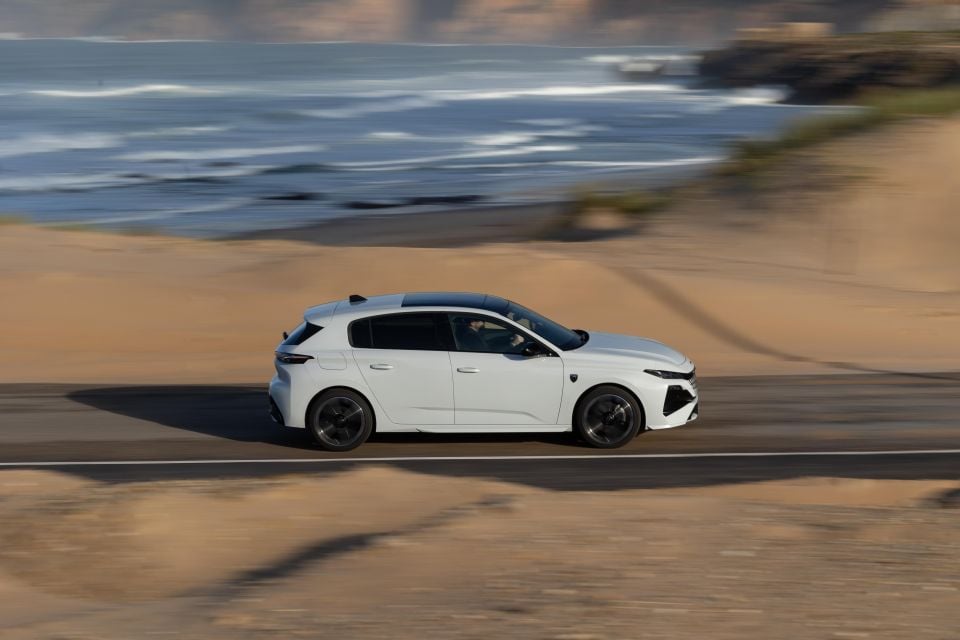
The 308 Hybrid may not be the most out-and-out thrilling car the Lion brand has ever made, yet it’s certainly one of the sharper vehicles to steer in this particular class.
It doesn’t force you to pay for this dynamic acuity with an uncomfortable ride and poor rolling refinement, though.
At low speeds or high, the 308’s suspension does a wonderful job of soaking up the worst imperfections in the road surface and then filtering them out with its damping, long before they disturb the occupants of the car.
And the Peugeot also masks the main external noise contributors – tyre roar, wind flowing round the glasshouse and door mirrors, the suspension moving in the wheel-arches, and the engine at lower revs – quite beautifully, so it’s suitably hushed even at high speeds.
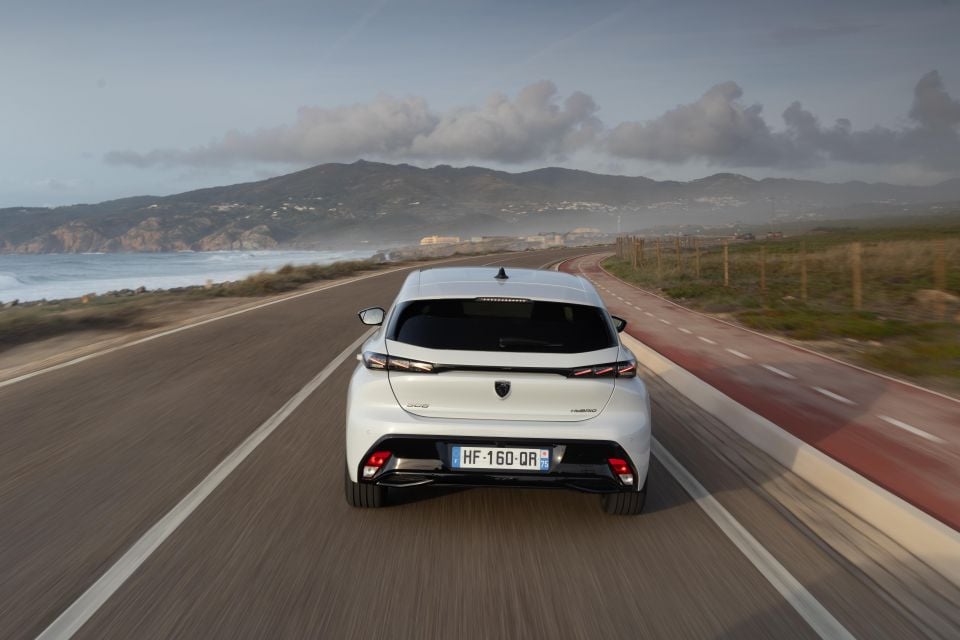
On a freeway at a constant 120km/h, the 308 Hybrid is nothing short of exceptional. It has genuine big-car feel, travelling a steady path without being easily deflected, oozing its way over big transverse ridges and expansion joints with little drama, and generally conveying the air that it’s a lot more expensive and grandiose than it actually is.
And it’s not only the lighter kerb weight which makes the Hybrid preferable to the two powertrains we’re unlikely to receive here, because firstly its 1.2-litre three-cylinder petrol engine sounds much nicer and more natural than the forced engine note in the 1.6 PHEV, while the steering always feels more organic and consistent to use than the artificially heavy and sticky setup you get in Sport mode in the E-308.
To see how the Peugeot 308 lines up against the competition, check out our comparison tool
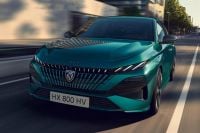
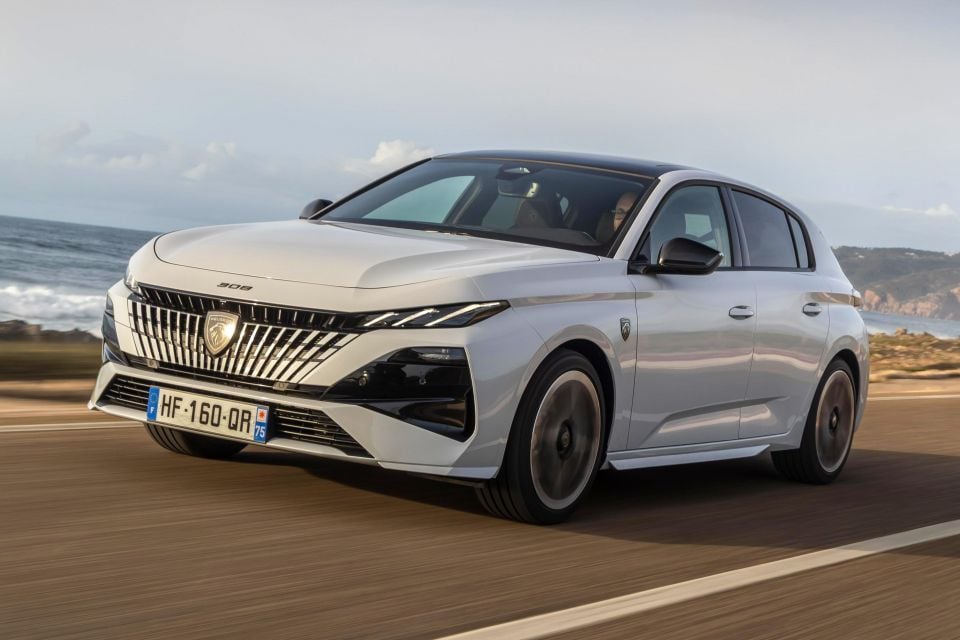
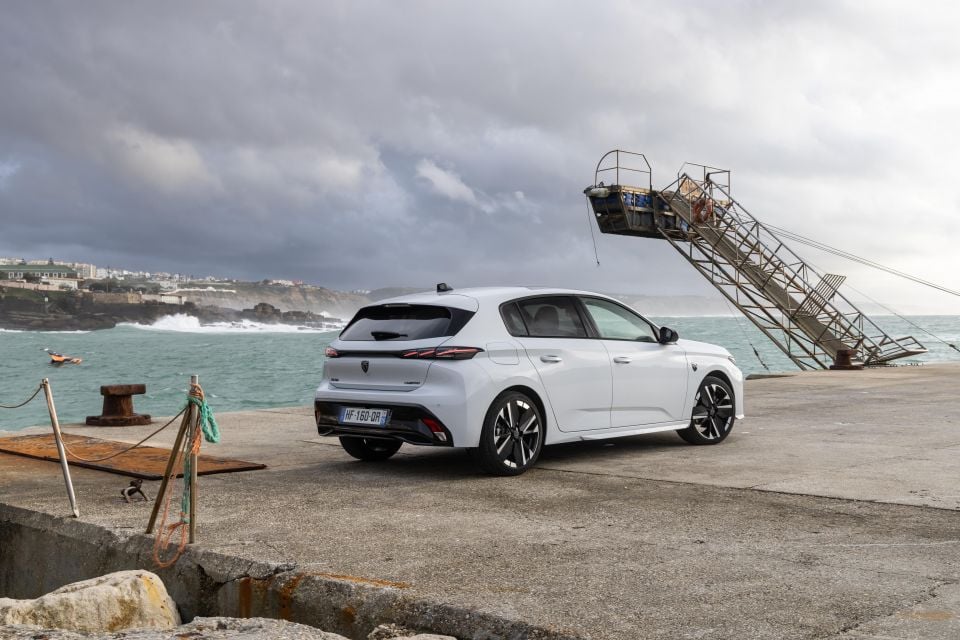
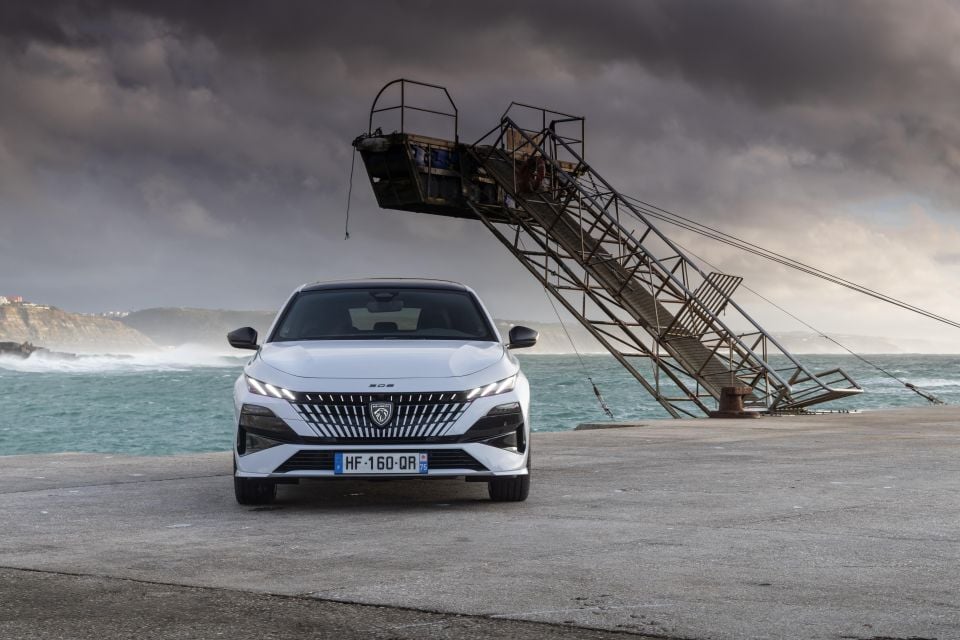
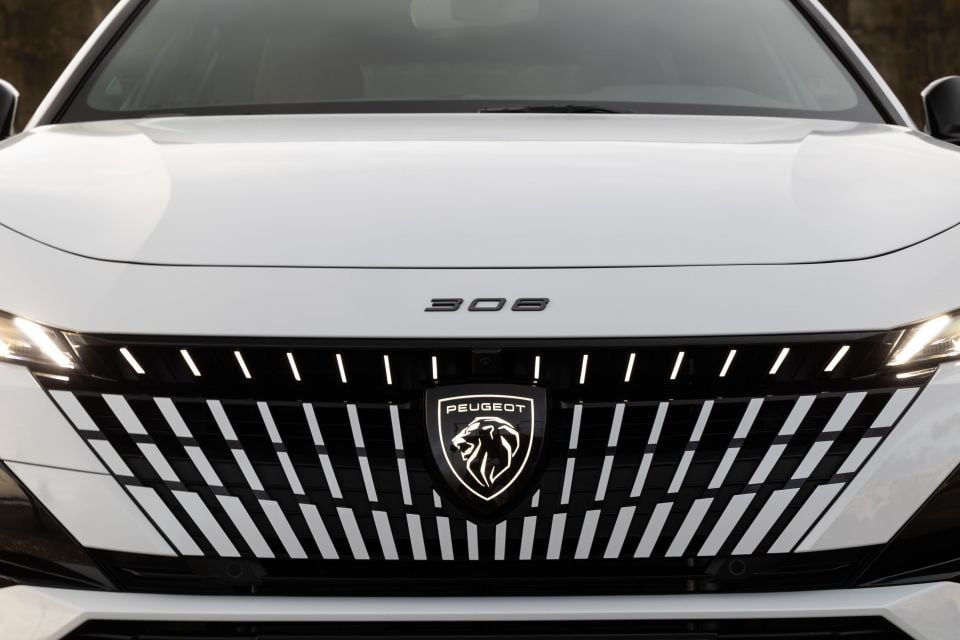
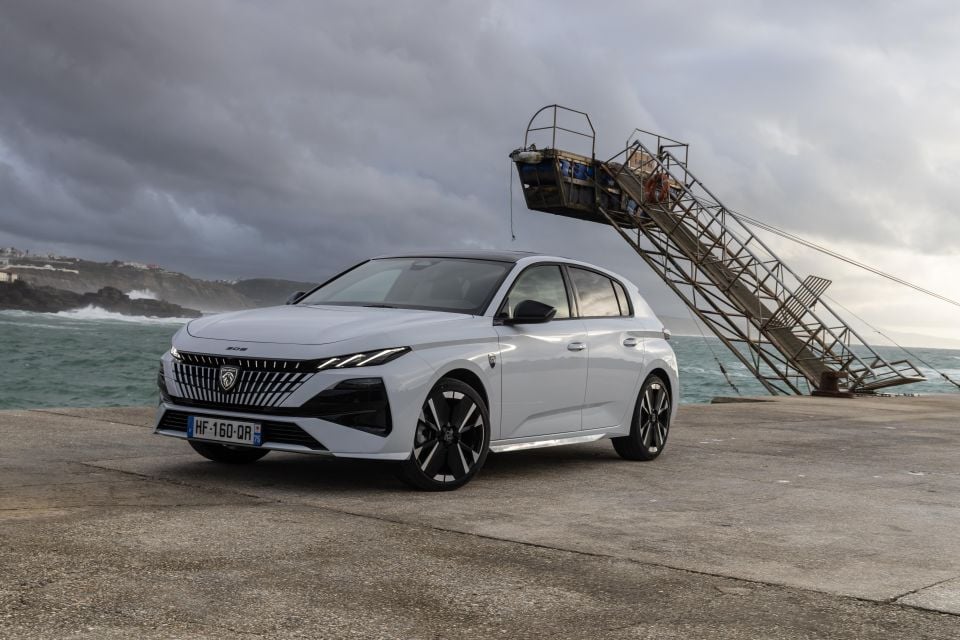
Along with a handful of new body colours and some fresh alloy wheel designs, the easiest way to distinguish the facelifted Peugeot 308 is, well, to look at its face.
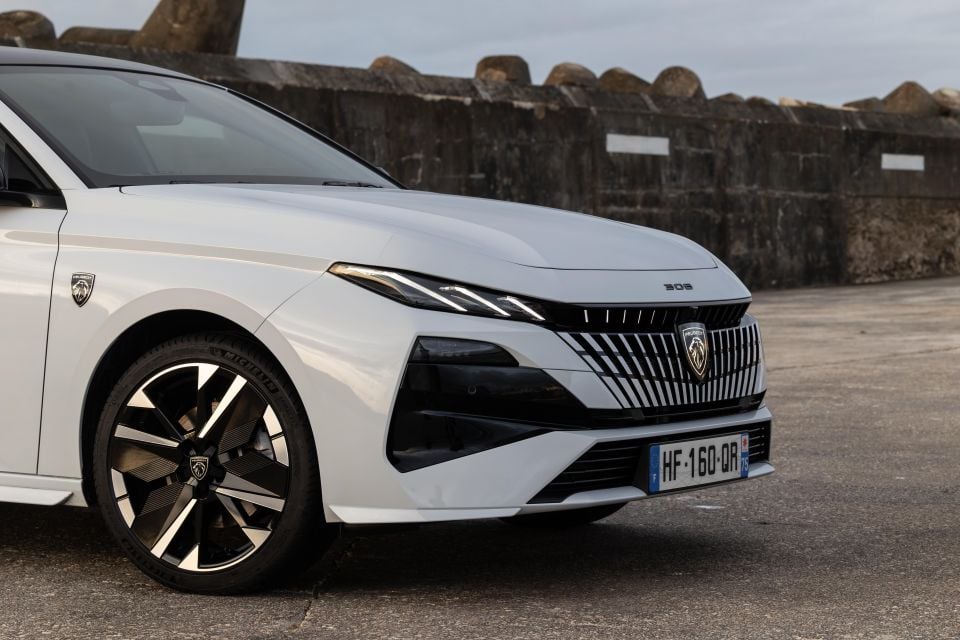
Here, the more dramatic radiator grille and cleaner design is centred around a full-width light strip and an illuminated Peugeot emblem on the nose, the first such item in the company’s entire portfolio.
This distinctive look is standard on the GT and so all updated 308s which come to our market should therefore be fairly easy to pick out from the crowd.
2026 Peugeot 308 Hybrid equipment highlights:
For audiophiles wanting an upgrade on that last item, there’s a powerful Focal Premium Hi-Fi set-up that will hopefully be an option.
To see how the Peugeot 308 lines up against the competition, check out our comparison tool
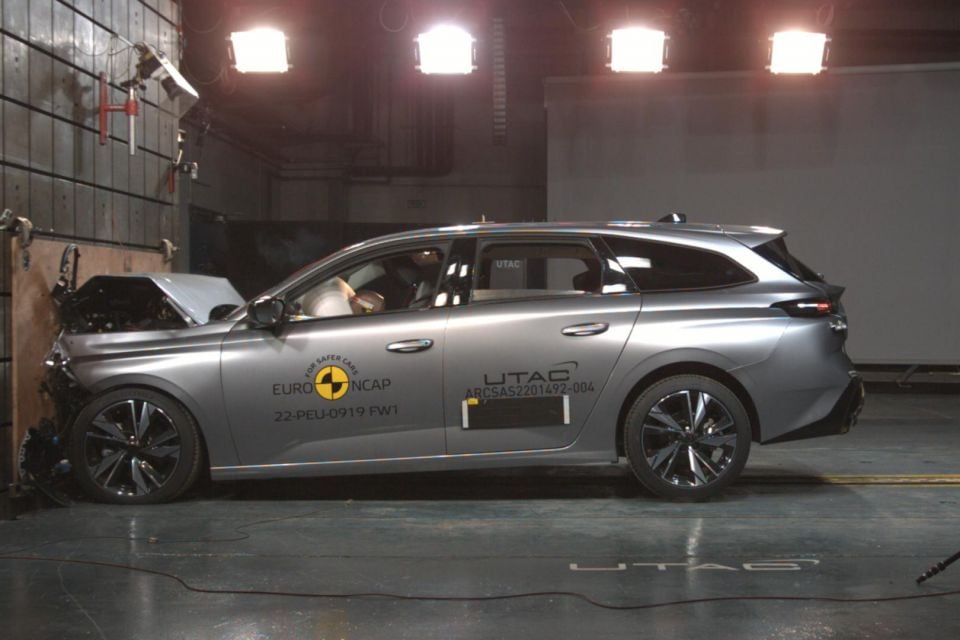
The pre-facelift Peugeot 308 was tested by ANCAP in 2022 and picked up an okay, but not brilliant, four-star safety rating.
| Category | Peugeot 308 |
|---|---|
| Adult occupant protection | 79 per cent |
| Child occupant protection | 86 per cent |
| Vulnerable road user protection | 68 per cent |
| Safety assist | 82 per cent |
It didn’t do very well for vulnerable road user safety (68 per cent), although it scored more than 80 per cent in the child occupant and safety assist categories.
To that end, the updated car in GT trim has automatic post-collision braking, a speed-limiter, lane keeping assist, speed limit recognition and recommendation, active safety brake (autonomous emergency braking with night-time functionality, plus pedestrian and cyclist recognition), and a driver attention warning, all fitted as standard among a longer list of active and passive safety features.
To see how the Peugeot 308 lines up against the competition, check out our comparison tool
Peugeot claims the 308 Hybrid can return fuel economy as low as 4.5L/100km, although during our test we saw more like 6.7L/100km after some faster back-roads driving and a long motorway cruise. Either way, this mild-hybrid hatchback is going to be easy on the wallet to run on a day-to-day basis.
| Servicing and Warranty | Peugeot 308 Hybrid |
|---|---|
| Warranty | 5 years, unlimited kilometres |
| Roadside assistance | 5 years |
| Service intervals | 12 months or 15,000km |
| Capped-price servicing | Up to 5 years |
| Average annual service cost | $390 (5 years) |
| Total capped-price service cost | $1950 (5 years) |
On a longer-term basis, Peugeot Australia offers a five-year, unlimited-distance warranty on all new cars, backed up by complimentary roadside assistance under the same parameters.
There are also three-, four- or five-year service plans for the 308 Hybrid, which cost between $1100 and $1950.
To see how the Peugeot 308 lines up against the competition, check out our comparison tool
There are quite a few obstacles in the way of the Peugeot 308 Hybrid’s route to success, including consumer preference for large and heavy SUVs, an extremely limited model lineup, some talented competitors, and a starting price that doesn’t make the French car a notable bargain.
If this is the car for you, we’ll compare offers from trusted dealers, handle the back and forth and manage your purchase from enquiry to delivery.
But this petrol-electric hatch looks smart on the outside, has a top-quality interior, and in Hybrid form it’s sweet to drive and sophisticated to travel in.
Here’s hoping more buyers cotton onto its charms, this time around.
CarExpert can save you thousands on a new Peugeot 308. Click here to get a great deal.
Click the images for the full gallery
If this is the car for you, we’ll compare offers from trusted dealers, handle the back and forth and manage your purchase from enquiry to delivery.
Quickly see how this car stacks up against its competition. Select any benchmark to see more details.
2025
$0
2023
$47,917
2023
$53,147
2023
$70,180
Add CarExpert as a Preferred Source on Google so your search results prioritise writing by actual experts, not AI.
Damion Smy
9 Hours Ago

William Stopford
11 Hours Ago
William Stopford
12 Hours Ago

James Wong
13 Hours Ago

Ben Zachariah
14 Hours Ago
William Stopford
15 Hours Ago
Add CarExpert as a Preferred Source on Google so your search results prioritise writing by actual experts, not AI.
# Based on VFACTS and EVC data
† Displayed prices are based on the drive-away price of the vehicle, which includes delivery charges, registration fees, number plates, and applicable road taxes, based on a Sydney location. However, prices may vary between states and territories, and additional costs such as compulsory third party (CTP) insurance, dealer delivery fees, and optional extras are not included. These prices are subject to change without notice and may not reflect current market pricing or dealer offers.
 Automotive Vehicle Spec Data & 4K images Powered by JATO Dynamics Ltd