




Damion Smy
Ford Australia says recalls haven’t damaged its brand image
Ford Australia has issued more recalls than any other automaker so far in 2026, after also topping the list last year, but says they haven't damaged its brand image.
8 Days Ago
This new Chinese electric van is both budget and business friendly. But there are some things that might frustrate drivers.

Senior Contributor
Senior Contributor
Senior Contributor
Senior Contributor
If this is the car for you, we’ll compare offers from trusted dealers, handle the back and forth and manage your purchase from enquiry to delivery.
The commercial van space is being disrupted by newcomers like this one – and frankly, I think it’s long overdue.
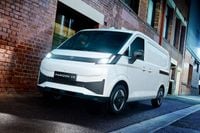
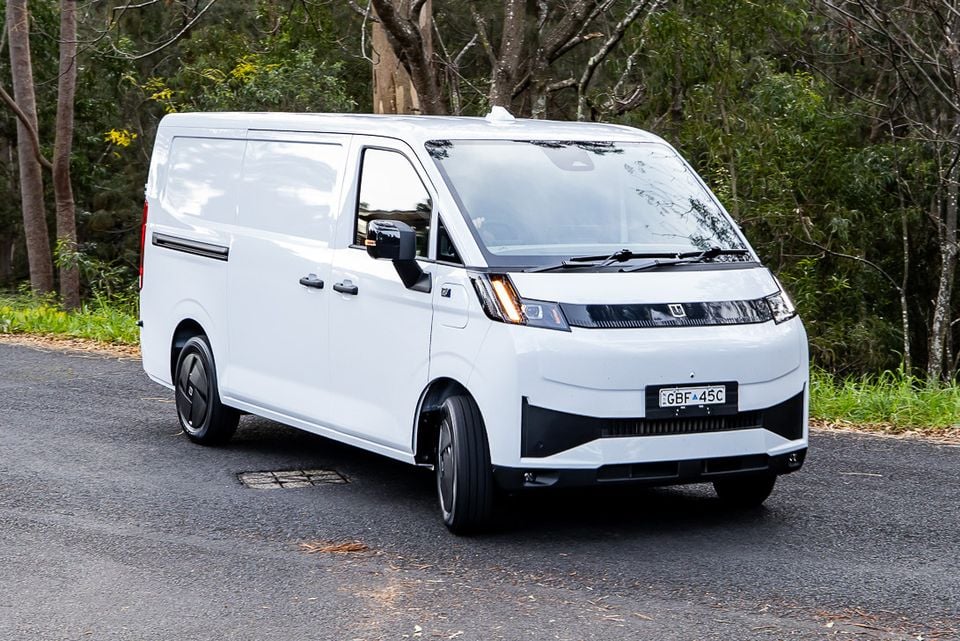
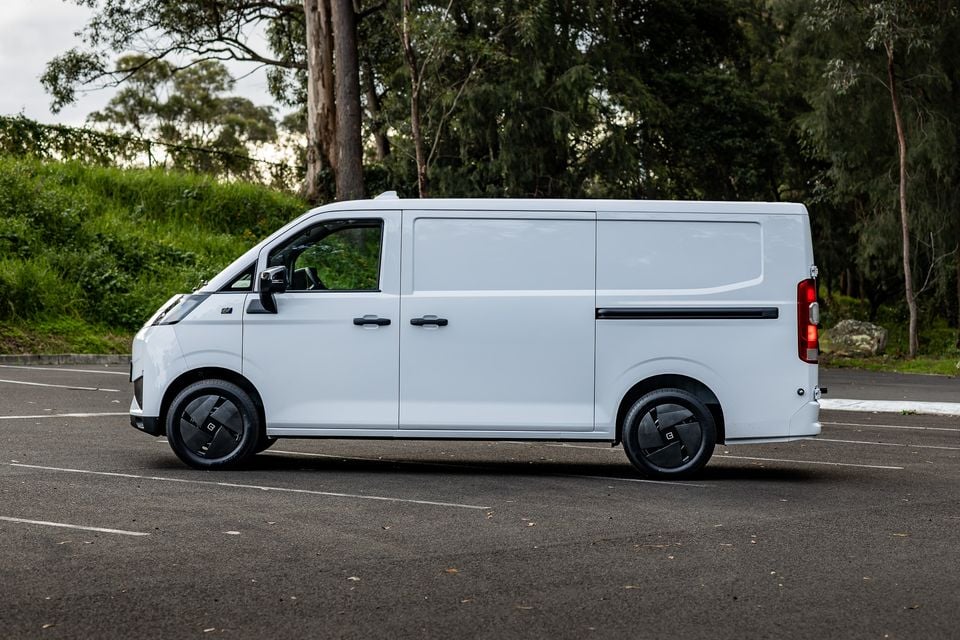
The new Farizon V7E electric cargo van is a cracking example of how this part of the market is changing.
Not only is this a battery-powered box mover, it’s loaded with equipment that some rivals don’t offer, and it comes with standard stuff that others charge you thousands for.
It would be easy to be blown away by what the new Farizon V7E offers customers based on the standard spec list, payload and cargo considerations.
But it’s not perfect. Read on to find out why.
What’s crazy about this new China-made electric delivery van is that it is just so, so, so budget-friendly. With a starting price below $50k, it could be a top choice for those thinking about a new business vehicle. And there are two versions on offer.
| Model | Drive-away price |
|---|---|
| 2026 Farizon V7E Standard Range (50kWh) | $49,990 |
| 2026 Farizon V7E Extended Range (66kWh) | $53,990 |
Down below you’ll see what the difference between those two battery pack options is, but I’d wholeheartedly recommend you choose the long-range version, as not only will it go further on a charge, it’ll hold its value better when it becomes resale time. Trust us.
What about competitors?
Well, you might be shocked to learn this isn’t China’s cheapest electric van, with the LDV eDeliver 5 coming in a grand cheaper (from $48,990 drive-away). However, based on its specs it’s not quite a match for this one.
Meanwhile, if you’re more likely to deal with parcels rather than pallets, the Kia PV5 Cargo (from $55,990 plus on-road costs) is a terrific, finished-feeling product with compact van usability on its side.
And then there’s the diesel pack. But that’s the whole point here, right? The diesel van's days could be numbered when you can get something that’s more efficient and more affordable to run, with equivalent or better payload, and features like this one has. All the details are below.
To see how the Farizon V7E lines up against the competition, check out our comparison tool
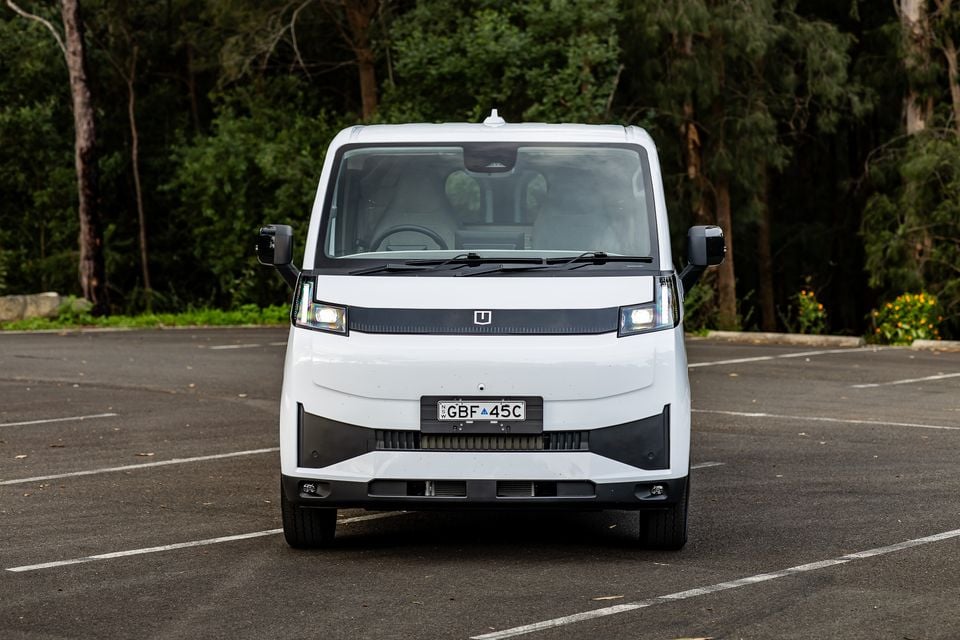
The interior borrows heavily from the 'modern Chinese EV' playbook. It's not luxurious, but it's contemporary and reasonably well equipped.
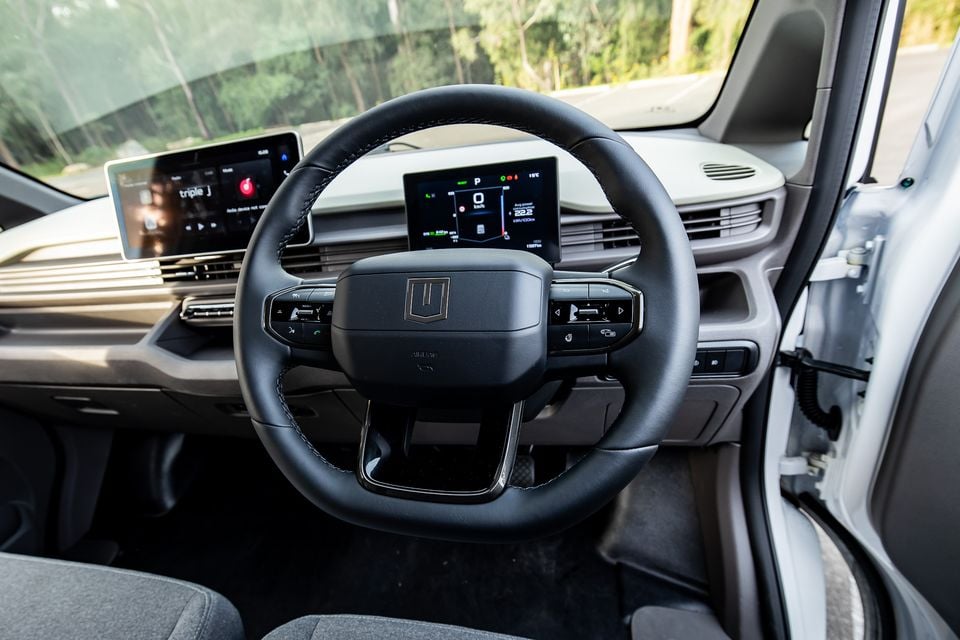
The front passenger 'bench' seat is a bit of an oddity. The V7E looks like it has a three-seat layout, but there's only a single passenger seatbelt fitted, meaning the centre section is really just an armrest and storage console, rather than a usable seat.
The driver's seat offers manual adjustment and is heated and ventilated, which is awesome because it means you can cool your body and not waste energy cooling the cabin area.
Taller drivers may wish the seat slid a little further back against the bulkhead, but overall the driving position is comfortable enough. However, the passenger seat misses out on both adjustment and climate functions.
Storage provisions – as you’d expect in a van like this – are strong.
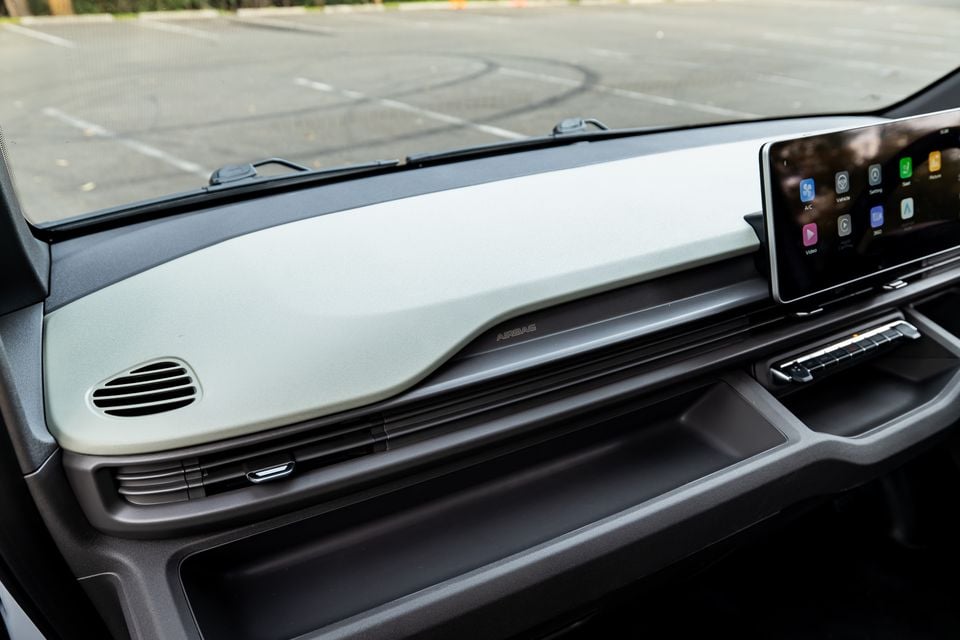
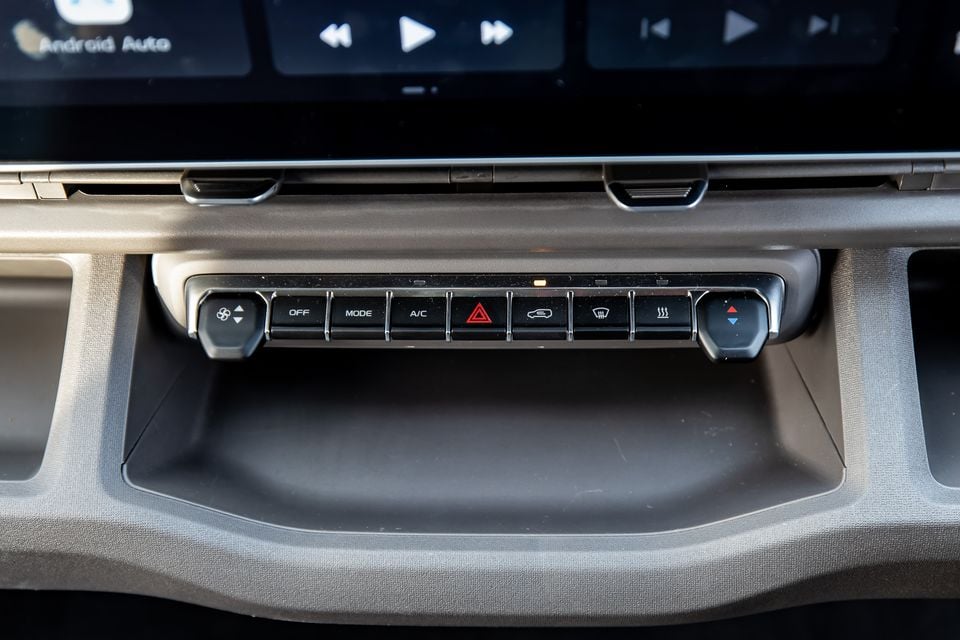
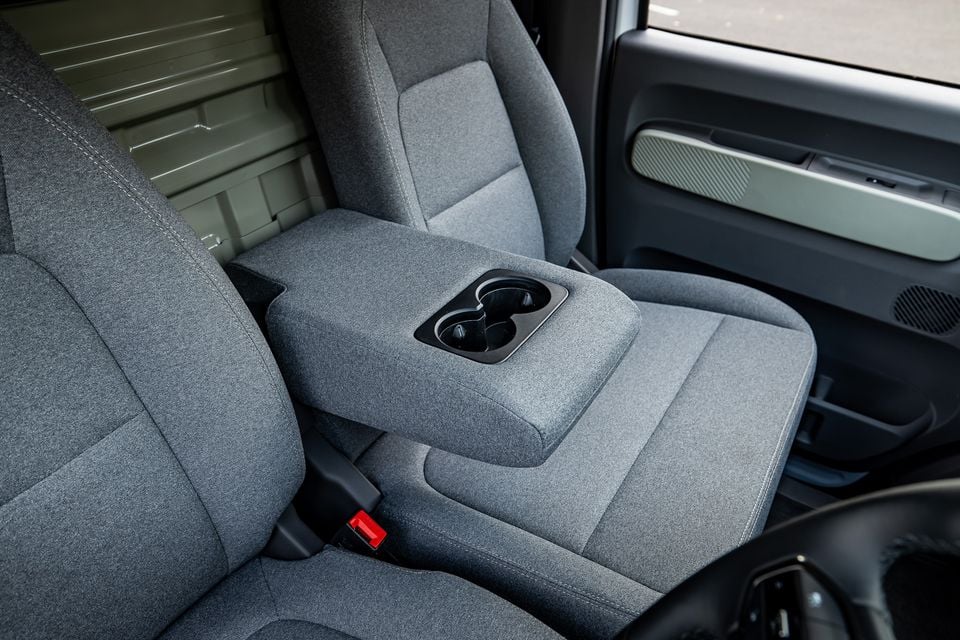
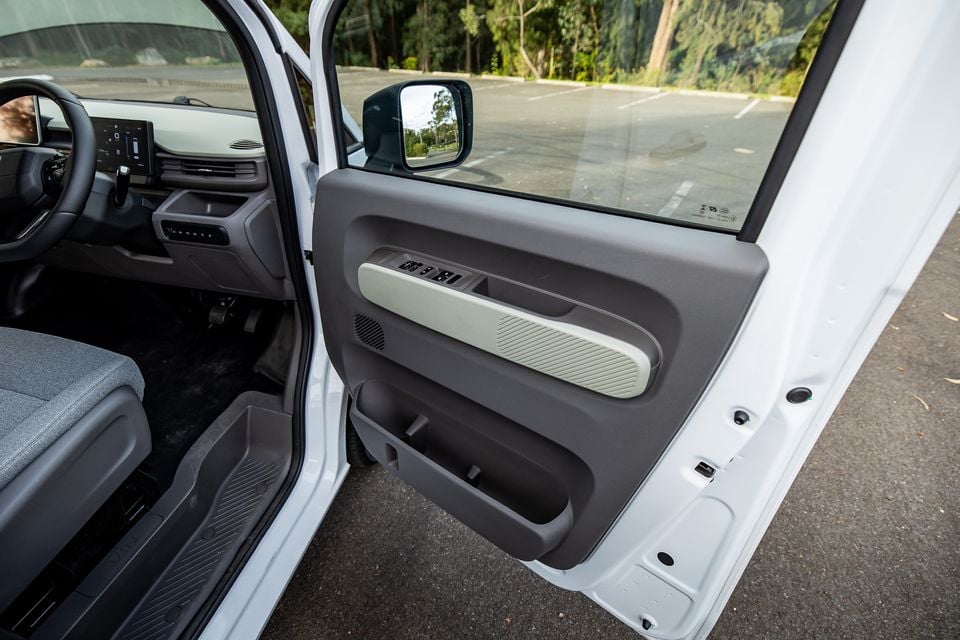
There are large door bins with bottle holders, open trays across the dashboard (which are begging for some rubber lining!), a generous glovebox, USB ports, a 12V outlet and plenty of places to stash paperwork or smaller items. Most of those storage areas are hard plastic, though, so loose items tend to rattle around in them.
Below the touchscreen you'll find physical climate controls, which are always welcome in a work vehicle. The air-conditioning is crazy in this van, though – it’s too good, in fact. I had it set at 27C and it was still cold!
The 12.3-inch touchscreen supports wireless Apple CarPlay and Android Auto, but it isn't without its frustrations.
During our testing, the wireless CarPlay occasionally failed to reconnect, and the operating system itself can be a little sluggish. It lacks the slick responsiveness of the best systems on the market, with menus that sometimes feel a generation behind current expectations. Honestly, it feels similar to using a six-year-old iPhone – it’s just not that smooth or smart.
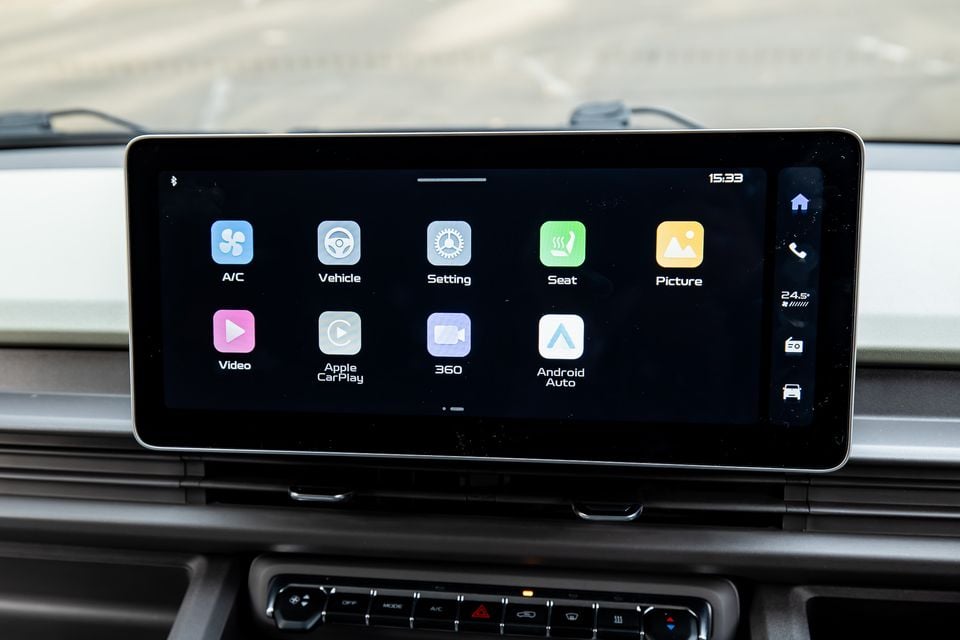
That said, there are plenty of useful features once you dig through the menus. Heated and ventilated driver's seat controls, a heated steering wheel, scheduled charging functions, and configurable vehicle settings are all included.
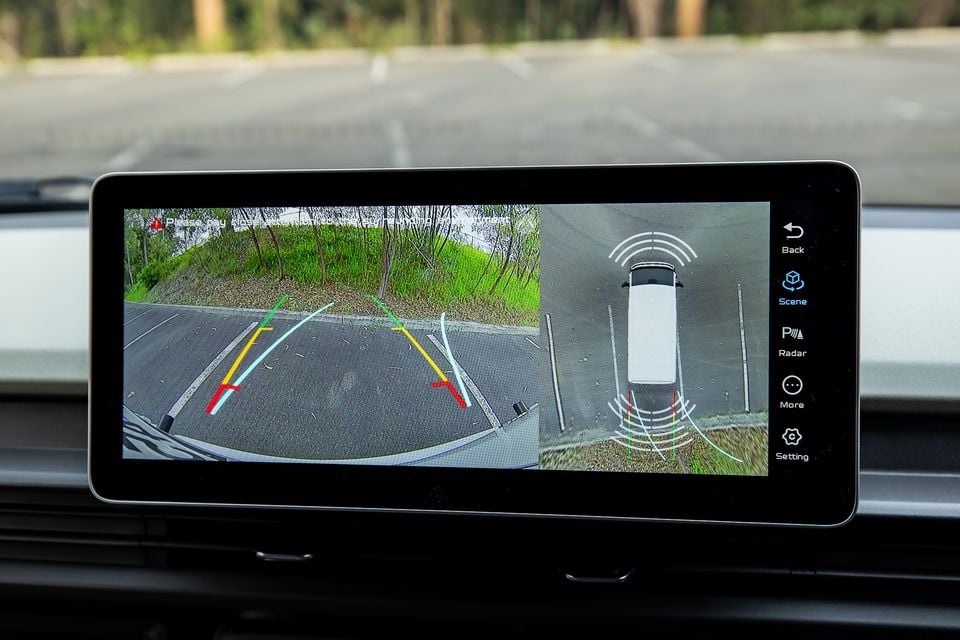
One standout feature is the excellent 360-degree surround-view camera system. It offers multiple viewing angles, selectable 2D or 3D perspectives, and genuinely useful visibility around the vehicle when manoeuvring in tight spaces. For anyone regularly parking in loading docks or narrow laneways, it's a win.
The safety technology is comprehensive, but definitely not always convenient.
There's a quick-access dropdown menu for disabling systems like Intelligent Speed Assist and lane-keeping assistance but, frustratingly, the driver monitoring system can't be switched off from there. Instead, you'll need to dive several layers into the settings every single time you drive if you want to disable the driver distraction and fatigue monitoring systems. That could quickly become annoying for owners who don't appreciate constant electronic supervision – it did for me.
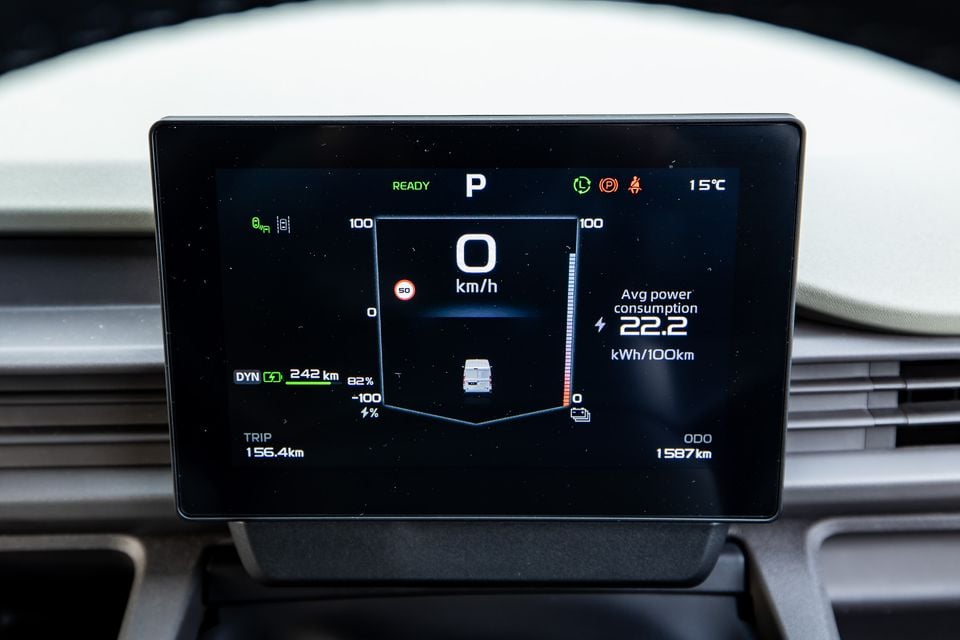
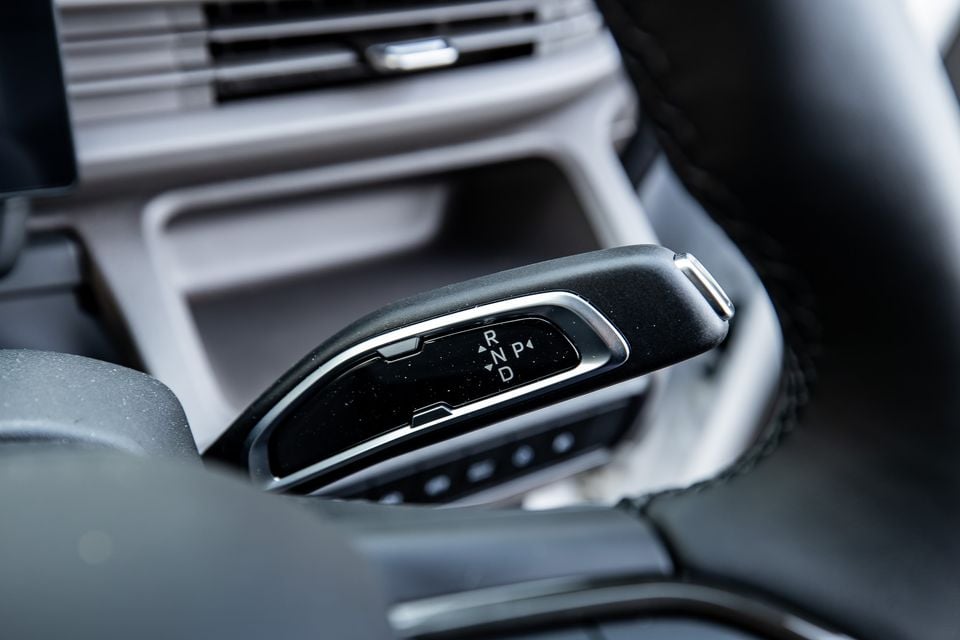
The digital instrument cluster is simple enough to navigate, displaying tyre pressures, energy consumption, range estimates, and regenerative braking settings, although some functions are buried deeper in the menus than they probably need to be. It doesn’t have the clever scales in-built to this one like you get in the Farizon SV, though.
Elsewhere, the controls are fairly intuitive. There's a column-mounted gear selector, adaptive cruise control via physical steering wheel buttons, an electric parking brake, drive mode selector, and conventional lighting and wiper controls.
Look-back visibility is also surprisingly good thanks to the large bulkhead window and generous rear glass area.
But there are a few omissions. The sun visors don't extend, there are no vanity mirrors, and the infotainment system could certainly use a software (or hardware) update to improve its speed and usability.
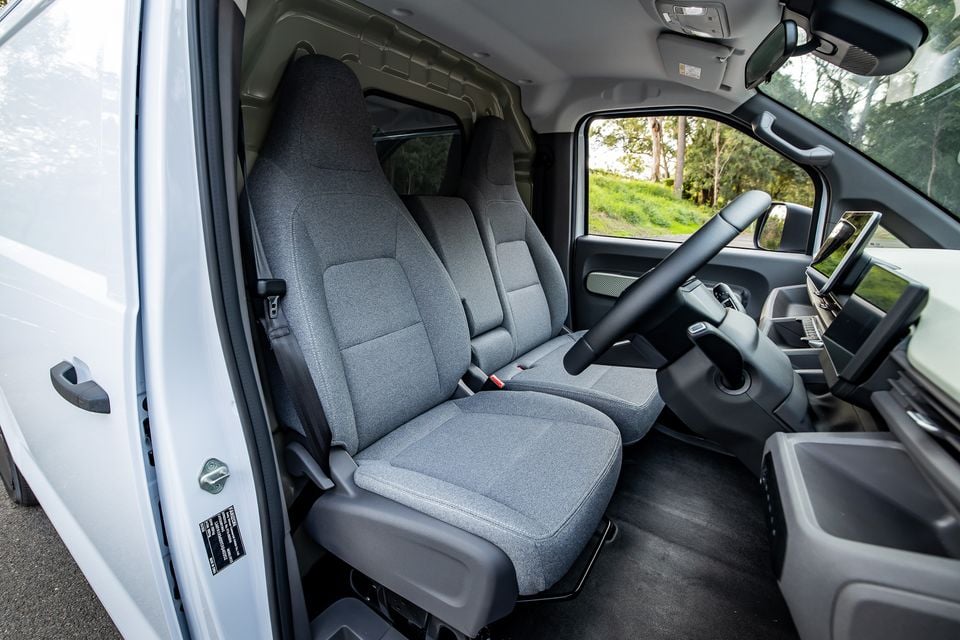
The fundamentals are there, however. The seats are comfortable, and as mentioned storage space is generous, visibility is excellent, and the technology list is comprehensive. It isn't perfect, but as a workspace you'll spend hours in every day, it does a convincing job. It's just a shame it doesn’t have a clever desk or tablet holder like some rivals do.
Moving to the business end, you’ll see Farizon isn’t mucking around in offering a relatively compact van with big-van standard inclusions.
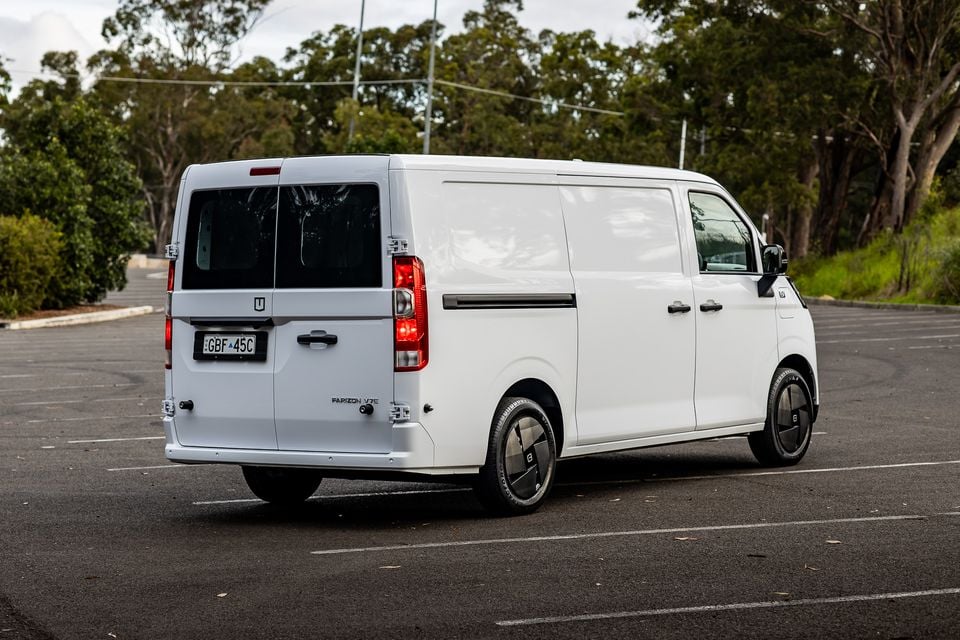
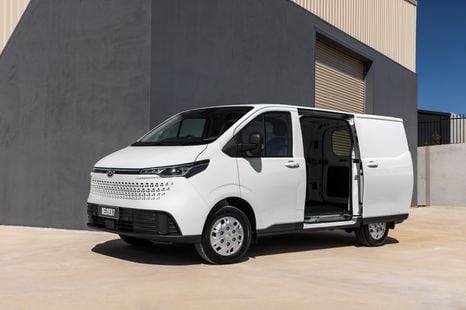
The V7E gets dual sliding side doors that open wide enough to make loading from either side genuinely easy. While the opening isn't quite wide enough to swallow a standard Australian pallet sideways, it still offers excellent access for boxes, tools or equipment, and a Euro pallet can be accommodated from the side.
The standard glazed bulkhead has a large window – something plenty of commercial vans don't.
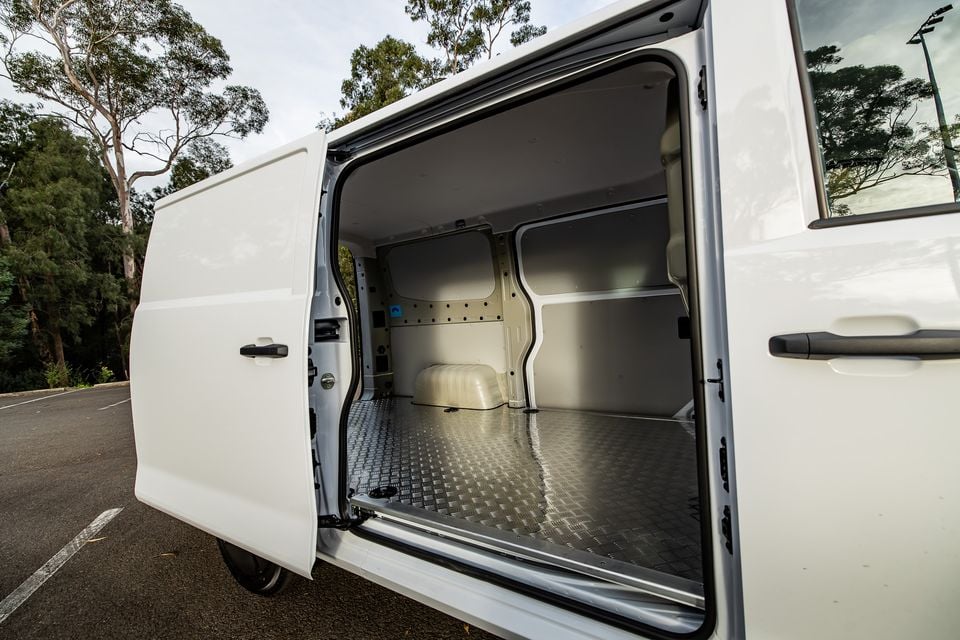
There's a standard chequer-plate floor to protect the load bay, numerous tie-down points spread throughout the cargo area, LED lighting on both sides, and full-height interior lining on the walls and rear doors. The lining isn't the toughest material I've come across, but it's good enough at this price.
Around the back, the twin barn doors open a full 270 degrees, and there's a clever piece of engineering that deserves a mention. Open the sliding side doors first, then swing the rear doors right around and they lock neatly against the body without fouling the side doors. It sounds like a small detail, but it's something plenty of rivals still don't get right.
There's more practicality built in too.
The rear doors feature storage nets, while the cargo bay includes a vehicle-to-load (V2L) power outlet, allowing you to run small appliances or tools directly from the van's battery.
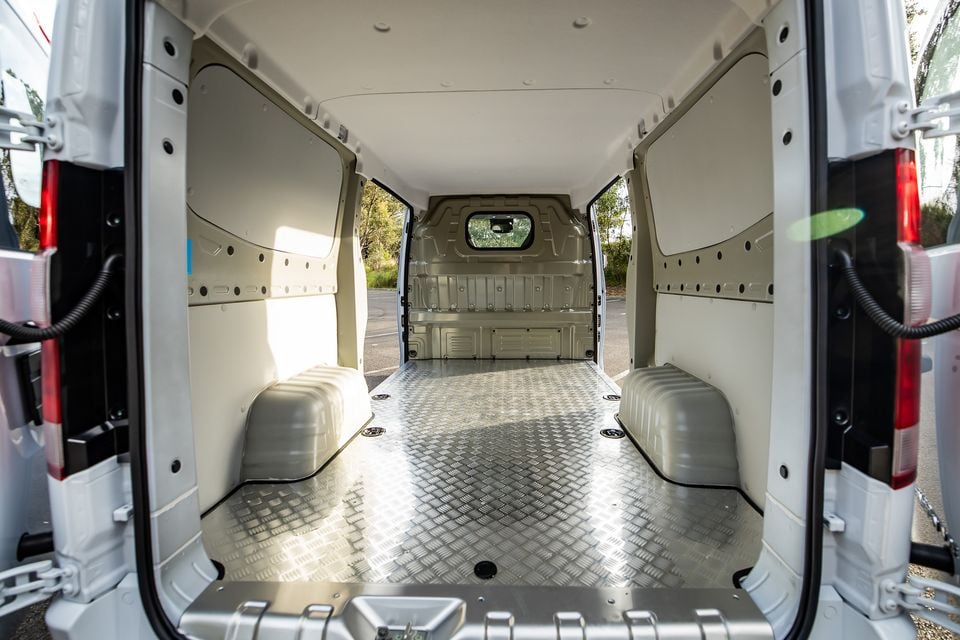
Combined with the durable metal scuff protection around the load opening and the low 510mm rear walk-in height, it's a very well-thought-out workspace.
Even better, there's still a full-size spare wheel mounted underneath – something that's increasingly rare in electric commercial vehicles, and EVs in general.
Keep this in mind, too – other brands will charge you a thousand bucks (or more!) for things like barn doors, rear glazing, a second sliding side door, a bulkhead, flooring, lining… the list goes on. But Farizon has decided to throw all the good stuff in for free, and yet it’s still heaps cheaper than big-name players in the van space.
Honestly, the load-friendliness here deserves a standing ovation.
| Dimensions | Farizon V7E |
|---|---|
| Length | 4995mm |
| Width | 1820mm |
| Height | 1985mm |
| Wheelbase | 3200mm |
| Ground clearance | 135mm |
| Load space length | 2685mm |
| Load space width | 1435mm |
| Between wheel arches | 1251mm |
| Load space height | 1690mm |
| Load space volume | 6.95m3 |
| Side door opening | 1100mm wide |
| Rear entry height | 510mm |
To see how the Farizon V7E lines up against the competition, check out our comparison tool
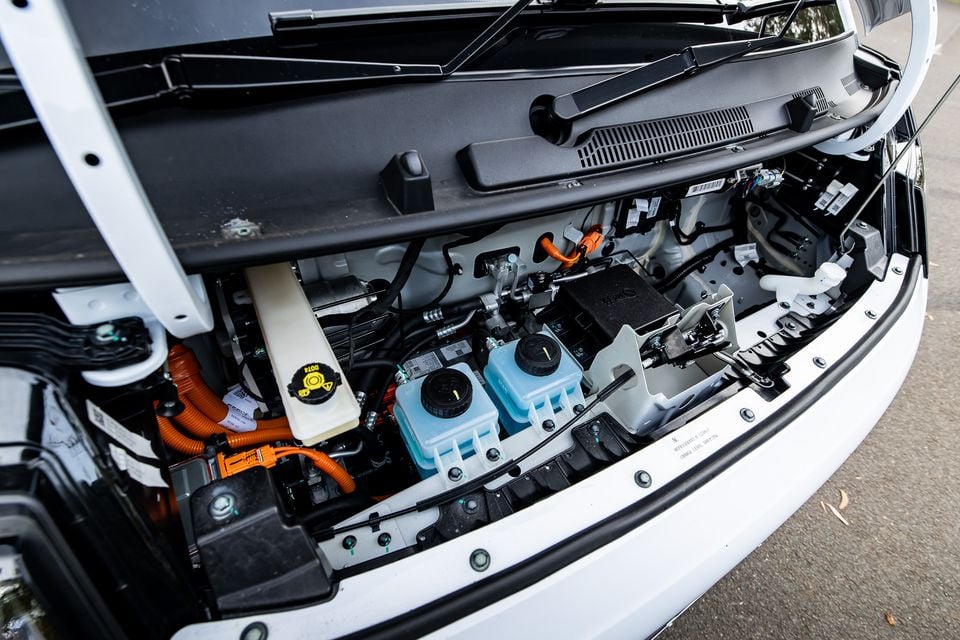
The powertrain is the same, but you can choose the battery size that suits your requirements. It might be tempting to go for the smaller battery for quicker charges, but it will arguably not hold its value as well as the Extended Range version.
| Specifications | V7E Standard Range | V7E Extended Range |
|---|---|---|
| Drivetrain | Single-motor electric | Single-motor electric |
| Battery | 50kWh LFP | 66kWh LFP |
| Power | 110kW | 110kW |
| Torque | 230Nm | 230Nm |
| Drive type | Rear-wheel drive | Rear-wheel drive |
| Weight | 1812kg | 1942kg |
| Energy consumption (claimed) | 21.5kWh/100km | 22.4kWh/100km |
| Energy consumption (as tested) | N/A | 23.4kWh/100km |
| Claimed range | 240km | 329km |
| Max AC charge rate | 11kW | 11kW |
| AC Charging time (15-100%) at max rate | Approx. 4 hours | Approx. 5 hours |
| Max DC charge rate | 100kW | 97kW |
| DC Charging time (20-80%) at max rate | Approx. 26 minutes | Approx. 33 minutes |
The energy efficiency figures I saw were pretty much what I was expecting.
On test – including a load-up with 750kg of ballast – I saw a return of 23.4kWh per 100km, which is probably representative of what most users will see.
That should, in theory, limit your real-world range to about 300km if you’re mainly doing higher speeds or highway driving, as I did. The consumption figures dropped in real-time when I was using the regen braking and in start-stop situations, so for those who spend time in traffic, it might end up being somewhat more efficient.
To see how the Farizon V7E lines up against the competition, check out our comparison tool
As with most EVs, there's an external pedestrian warning sound at low speeds to let people know you're coming in the V7E. It switches off above around 25km/h before reactivating as you slow back down, while reversing also triggers an audible warning. It's all part of the safety package, and unfortunately that's where some of my biggest frustrations begin.
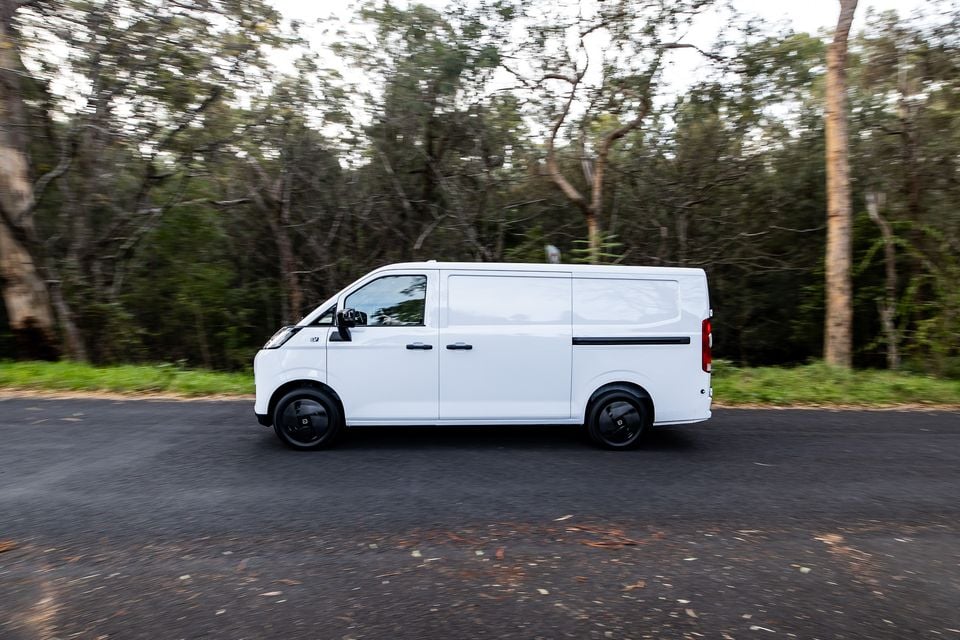
This van is loaded with active safety technology, but it's also loaded with chimes, beeps and warnings.
Speed limit alerts, driver attention monitoring, lane-keeping assistance – it's all there, and if you're the sort of driver who appreciates constant electronic supervision, you'll probably have no complaints.
If that’s you, we’re very different people, you and I.
The issue isn't necessarily that these systems exist, it's that turning some of them off requires diving through multiple menus every single time you drive. It becomes part of your daily routine, but it becomes an unnecessary hassle that plenty of rivals handle more elegantly. And they’re horrendously loud, too.
It’s honestly very frustrating, and I seriously considered wearing a set of earmuffs because of the chimes, rather than go through the rigmarole of adjusting the safety systems each time I got in.
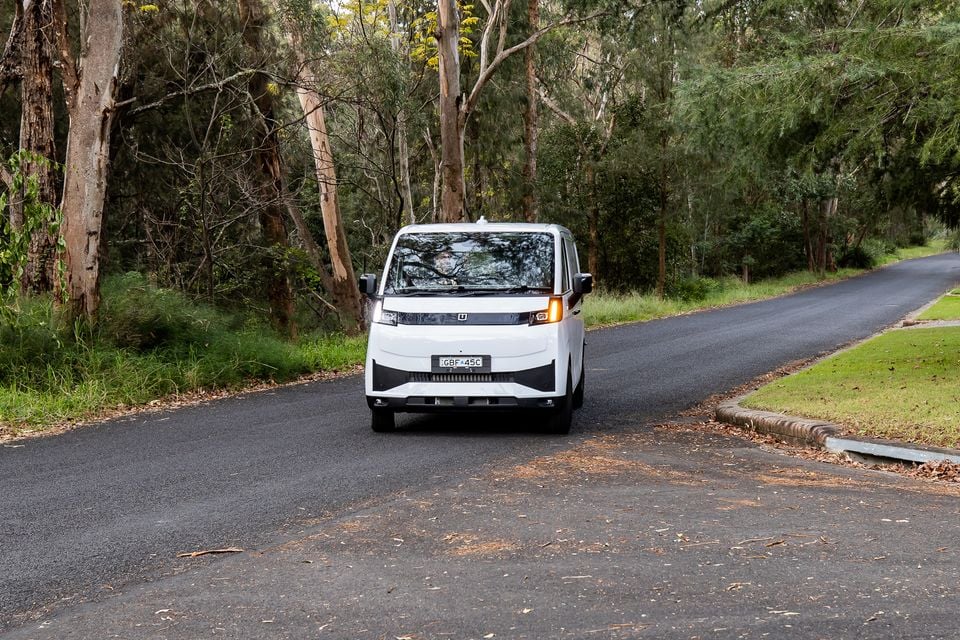
If this is the car for you, we’ll compare offers from trusted dealers, handle the back and forth and manage your purchase from enquiry to delivery.
Once you're actually driving, though, there's plenty to like.
Performance is genuinely impressive. Like most electric vehicles, torque arrives instantly, so it feels eager away from the lights and more than quick enough for urban driving.
There's also that faint electric motor whine that almost sounds like an oversized remote-control car, which adds a bit of character.
Even unloaded, the Farizon never feels short on grunt, and I suspect most buyers won't be left wanting more performance.
The brake-by-wire system is another pleasant surprise. It offers reassuring pedal feel and progressive stopping power. Regenerative braking with multiple levels of assertiveness allows you to choose between stronger energy recovery or more ‘normal’ coasting that's closer to driving a conventional diesel van.
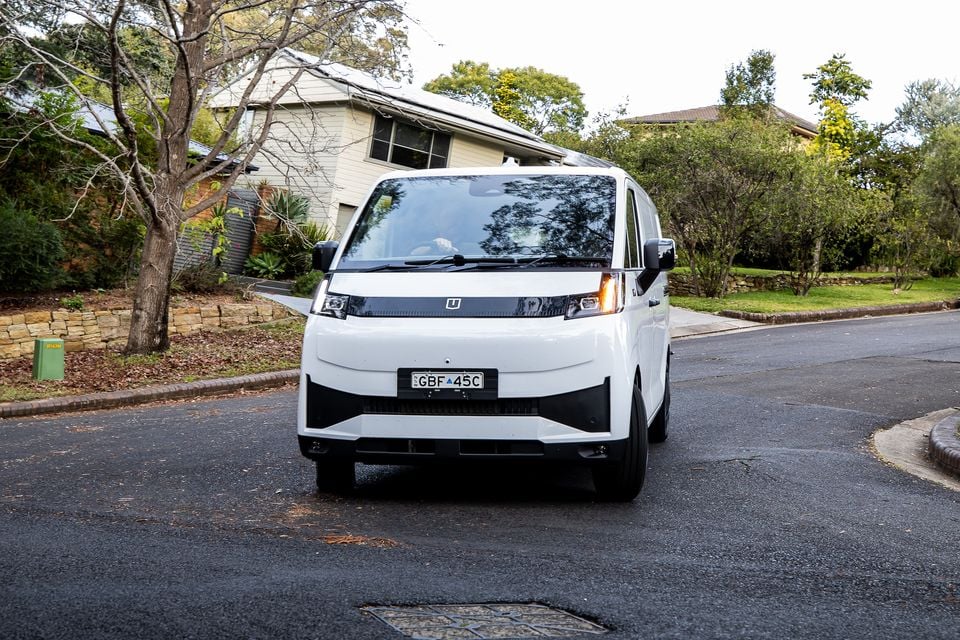
The throttle calibration is equally well judged, making it easier than some other EVs to drive smoothly. There can be some torque steer – where the tiller can tug to the side under hard throttle – but in most situations it’s nicely measured and predictable, and there are Comfort and Sport settings available for the weighting, too.
Ride quality is another highlight.
Even without any payload on board, the long wheelbase and relatively tall sidewalls help smooth out rough suburban roads well. Considering it is capable of carrying more than 1200kg, it's impressively composed when empty, making it comfortable enough for unladen transport.
Load it up, though, and things arguably get even better.
With around 750kg of ballast sitting over the rear axle, the suspension settled down noticeably. Sure, some bounding movement is to be expected over larger undulations, but the slow-speed ride becomes more composed over bumps and broken surfaces.
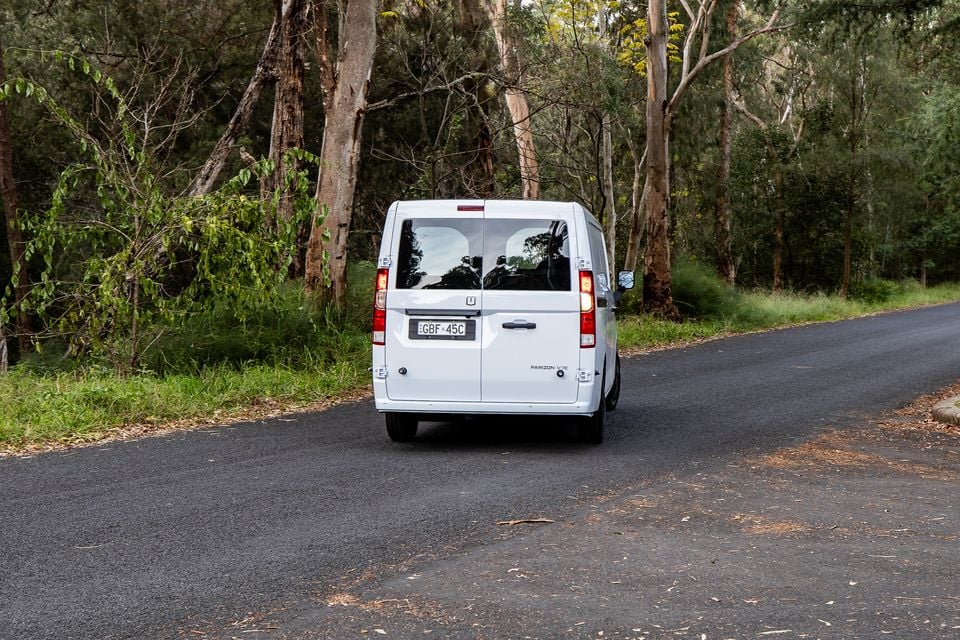
The powertrain didn’t feel troubled even carrying well over half of the stated maximum payload, with plenty of urgency on offer when merging, overtaking and climbing hills.
It was smooth – and, unlike a diesel van which becomes noisier and works harder as you add weight to the cargo area, the V7E simply delivers the same progressive response and single-speed shove regardless of what's in the back.
Honestly, this impressed me with its refinement and comfort, with and without a load. If only there was a better ‘off switch’ for the safety stuff!
To see how the Farizon V7E lines up against the competition, check out our comparison tool
It might be cheap but the equipment list is still pretty cheerful. In fact, there are some standard inclusions that, until a few years ago, were reserved for luxury cars, not load-luggers like this.
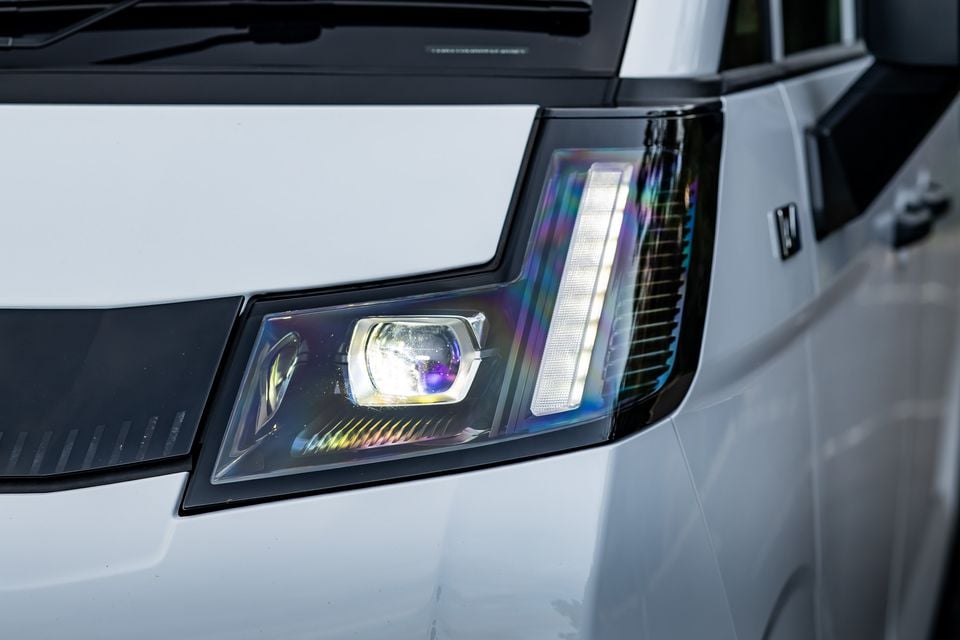
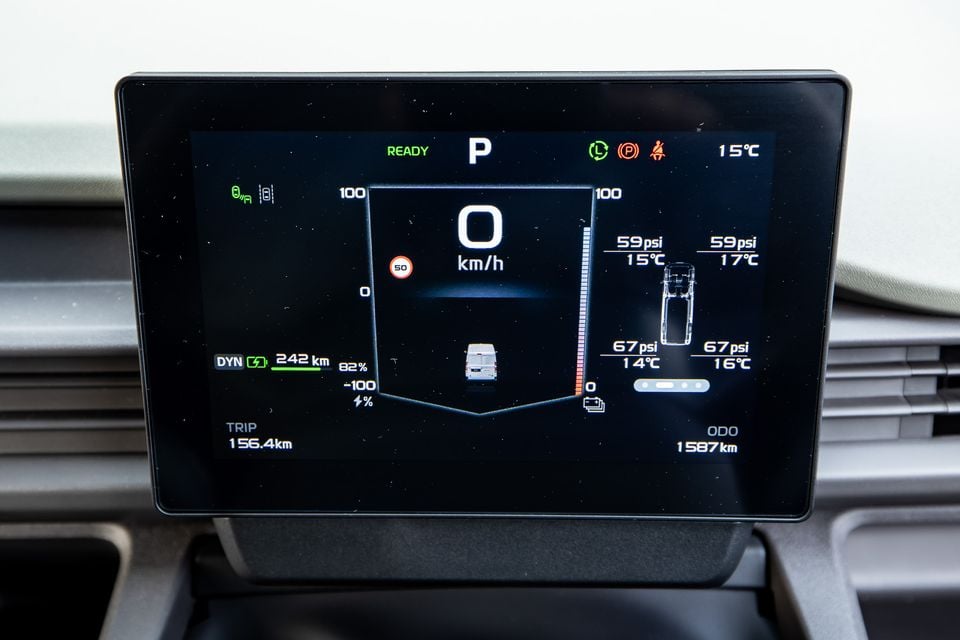

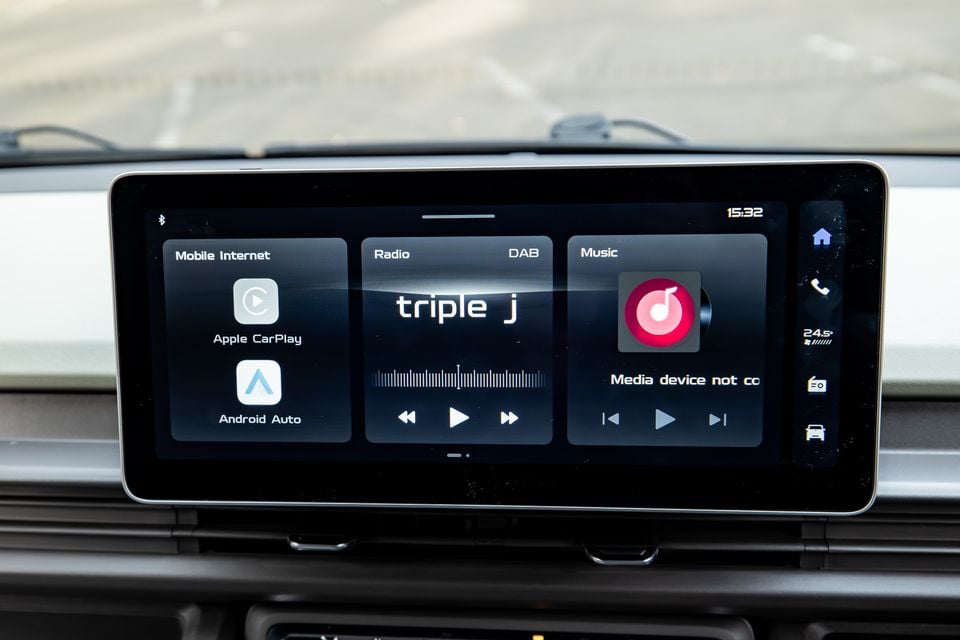
2026 Farizon V7E equipment highlights:
To see how the Farizon V7E lines up against the competition, check out our comparison tool
The V7E has not yet been tested by ANCAP, and nor has it been through the Euro NCAP commercial van testing regime.
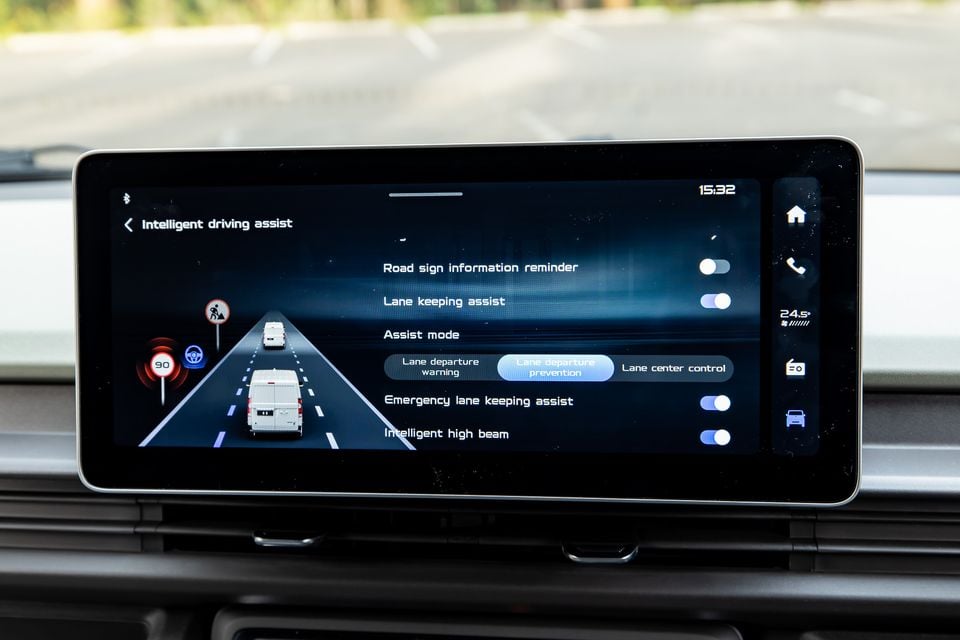
But it is worth noting that, like a number of other new vans designed with safety technology in mind, it is comprehensively loaded with all of the requisite crash prevention gear.
Standard safety equipment includes:
The biggest concern, though, is the integration of some of the safety tech. Hopefully there can be some revisions to the severity of the chimes and the aggression of the monitoring systems, as they are the most frustrating part of the drive experience.
The V7E has a surround-view camera system, front and rear parking sensors, and one of the best driver-assistance systems for a van like this, which is good because outward visibility is quite limited.
But when it comes to the airbags? Just two. Dual front. No front side or curtain coverage.
A cynic might draw the conclusion that, as with other vans, the understanding that the NCAP gods won’t put this commercial vehicle through ‘destructive’ crash tests – instead focusing only on the crash-avoidance systems – has resulted in cost-savings by not fitting these potentially life-saving airbags. But it is becoming common practice in these sorts of vehicles, so you can’t blame Farizon for it.
To see how the Farizon V7E lines up against the competition, check out our comparison tool
For the customer who is going to do a lot of distance per annum, the servicing and ownership considerations seem very promising. But if you don’t plan to do much distance, the below-average service cost mightn’t seem that affordable.
| Servicing and Warranty | Farizon V7E |
|---|---|
| Warranty | 5 years or 200,000km – vehicle8 years or 200,000km – high-voltage battery |
| Roadside assistance | 5 years included |
| Service intervals | 12 months, 30,000km |
| Capped-price servicing | Five years or 150,000km |
| Average annual service cost | $477 |
| Total capped-price service cost | $2385 |
However, the real cost savings of running this van as opposed to a diesel van are clear. Where you might spend $100-$120 for 500km of diesel driving, in this van you could do that kind of distance for 10 per cent of the cost, if you’re clever about charging.
To see how the Farizon V7E lines up against the competition, check out our comparison tool
This is a fleet or business option that needs to be considered.
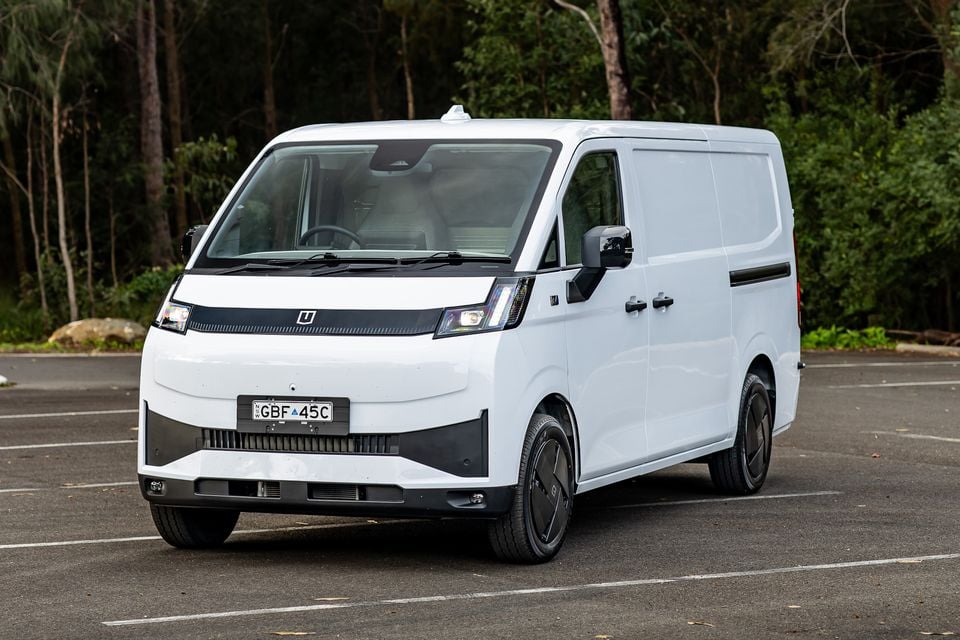
If you run one, two, or 100 vans, the reality is that the V7E does the job for less money than many others can, and it’s a seriously impressively specced vehicle in terms of payload and cargo considerations, too.
Safety tech frustrations aside, it’s a commendable delivery van at an unbeatable price.
CarExpert can save you thousands on a new Farizon V7E. Click here to get a great deal.
Click the images for the full gallery
MORE: Explore the Farizon V7E showroom
If this is the car for you, we’ll compare offers from trusted dealers, handle the back and forth and manage your purchase from enquiry to delivery.
Quickly see how this car stacks up against its competition. Select any benchmark to see more details.
2026
$49,990
Matt has more than a decade of experience in automotive journalism, and loves exploring the pros and cons of new cars, delving into deep-dive industry stories, and going for a drive just for the fun of it.
Add CarExpert as a Preferred Source on Google so your search results prioritise writing by actual experts, not AI.
Damion Smy
8 Days Ago
Matt Campbell
1 Month Ago
Damion Smy
1 Month Ago

Ben Zachariah
1 Month Ago
Ben Zachariah
1 Month Ago

Derek Fung
2 Months Ago
Add CarExpert as a Preferred Source on Google so your search results prioritise writing by actual experts, not AI.
# Based on VFACTS and EVC data
† Displayed prices are based on the drive-away price of the vehicle, which includes delivery charges, registration fees, number plates, and applicable road taxes, based on a Sydney location. However, prices may vary between states and territories, and additional costs such as compulsory third party (CTP) insurance, dealer delivery fees, and optional extras are not included. These prices are subject to change without notice and may not reflect current market pricing or dealer offers.
 Automotive Vehicle Spec Data & 4K images Powered by JATO Dynamics Ltd