1. Home
    2. Car Reviews
    3. Cupra
    4. Reviews

    2026 Cupra Raval VZ review: Quick drive

    Cupra tries to combine EV affordability with old-school hot-hatch fun. Does the new Raval manage the mix?

    Neil Briscoe

    Neil Briscoe

    Contributor

    Neil Briscoe

    Neil Briscoe

    Contributor

    Neil Briscoe

    Neil Briscoe

    Contributor

    Neil Briscoe

    Neil Briscoe

    Contributor

    Pros

    • Properly enjoyable handling
    • Great brakes
    • Decent efficiency

    Cons

    • Needs to be sharply priced
    • Potentially divisive styling
    • Cheaper versions only have short range

    Pros

    • Properly enjoyable handling
    • Great brakes
    • Decent efficiency

    Cons

    • Needs to be sharply priced
    • Potentially divisive styling
    • Cheaper versions only have short range

    From expert reviews to the right deal

    CarExpert brings together reviews, research tools and trusted buying support, guiding you from research to delivery with confidence.

    It’s significant that Cupra is being given the lead role when it comes to introducing the world to the Volkswagen Group’s critical new electric car setup.

    The front-wheel drive MEB+ platform that’s under the Cupra Raval is also to be found in the Skoda Epiq and the new Volkswagen ID. Polo, and it will of course spread to other models. This is Volkswagen’s riposte to the Chinese car sales surge, potentially offering affordable electric motoring at a price that matches or beats the best the automakers from Beijing and Shanghai can offer. 

    To do that, Volkswagen Group has turned to Cupra (and to SEAT too, of course) and it’s in the conjoined brands’ factory just outside Barcelona where the Raval, Epiq and ID. Polo (and in due course, the ID. Cross SUV) will be built. 

    So the Raval can’t miss. If it’s good, it lays the tracks for the VW and Skoda models to succeed, but if it misses the mark, then the other brands will be playing catch-up, with ever-increasing Chinese competition nipping at their heels. No pressure, eh? We’ve been to Barcelona to try out the Raval in its full production form for the first time, and to find out if batteries, driving fun and affordability really can mix.

    How much does the Cupra Raval cost?

    We don’t know exactly yet, but to give you an idea, the entry-level Raval undercuts the petrol-and-hybrid Cupra Leon hatchback by as much as €10,000 It’s significant that Cupra is being given the lead role when it comes to introducing the world to the Volkswagen Group’s critical new electric car setup.

    The front-wheel drive MEB+ platform that’s under the Cupra Raval is also to be found in the Skoda Epiq and the new Volkswagen ID. Polo, and it will of course spread to other models. This is Volkswagen’s riposte to the Chinese car sales surge, potentially offering affordable electric motoring at a price that matches or beats the best the automakers from Beijing and Shanghai can offer. 

    To do that, Volkswagen Group has turned to Cupra (and to SEAT too, of course) and it’s in the conjoined brands’ factory just outside Barcelona where the Raval, Epiq and ID. Polo (and in due course, the ID. Cross SUV) will be built. 

    So the Raval can’t miss. If it’s good, it lays the tracks for the VW and Skoda models to succeed, but if it misses the mark, then the other brands will be playing catch-up, with ever-increasing Chinese competition nipping at their heels. No pressure, eh? We’ve been to Barcelona to try out the Raval in its full production form for the first time, and to find out if batteries, driving fun and affordability really can mix.

    How much does the Cupra Raval cost?

    We don’t know exactly yet, but to give you an idea, the entry-level Raval undercuts the petrol-and-hybrid Cupra Leon hatchback by as much as €10,000 – or A$16,200 – in some European countries.

    European prices, of course, don’t always fully translate Down Under, but Cupra is being aggressive with the Raval’s pricing, to show that it can make a cost-competitive EV without resorting to making it in Asia.

    Find your perfect new car with CarExpert

    Indeed, in Europe at least, the Raval offers better value than quite a few Chinese offerings, not to mention European, Korean and Japanese rivals. Here’s hoping that we get the same value-led pricing strategy once the Raval crosses the Pacific.

    What is the Cupra Raval like on the inside?

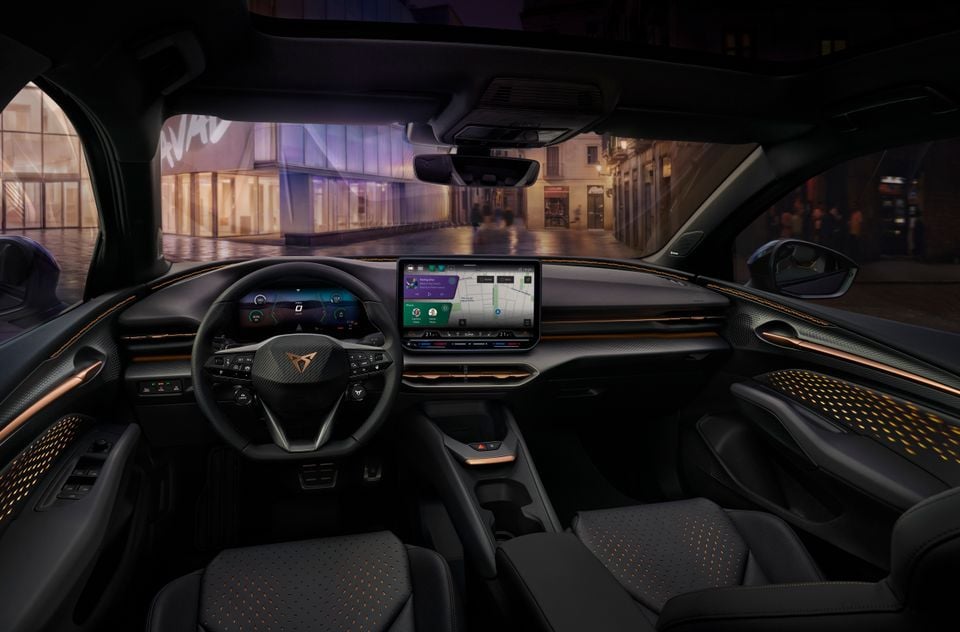
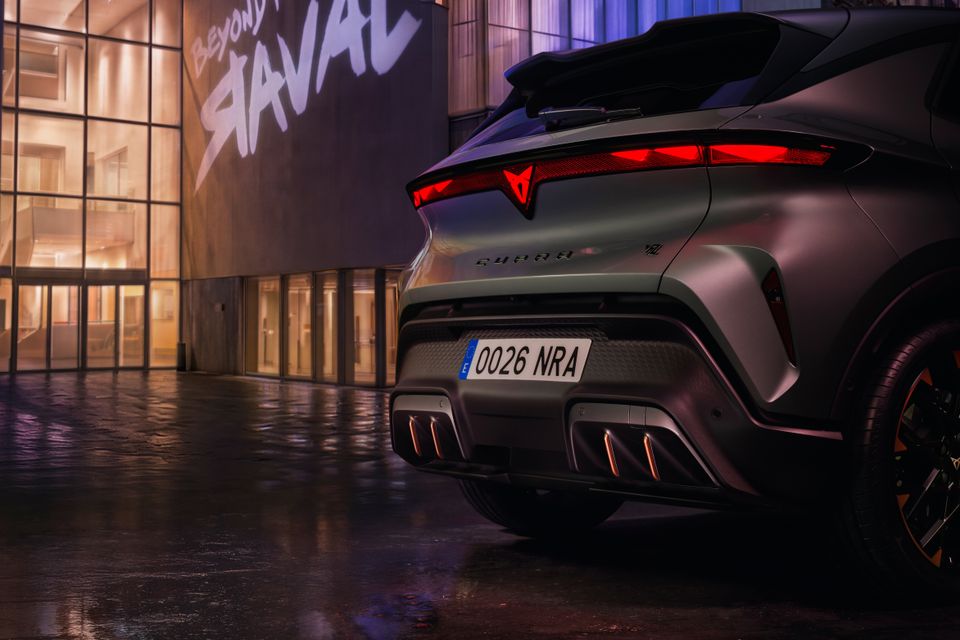
    The Raval’s cabin is a bit on the messy side, which is something we’ve seen from Cupra before.

    The Tavascan and the Born also suffer a touch from designers who apparently couldn’t quite decide when to stop adding textures and materials. These are broadly nice textures and materials – nothing in the Raval feels unpleasantly cheap – but there’s a lot to take in.

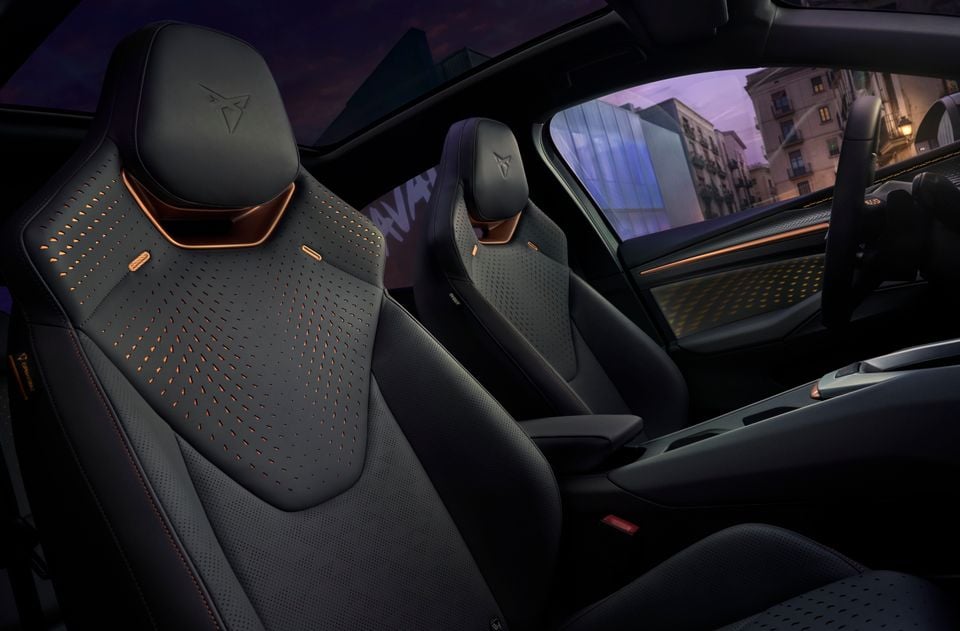
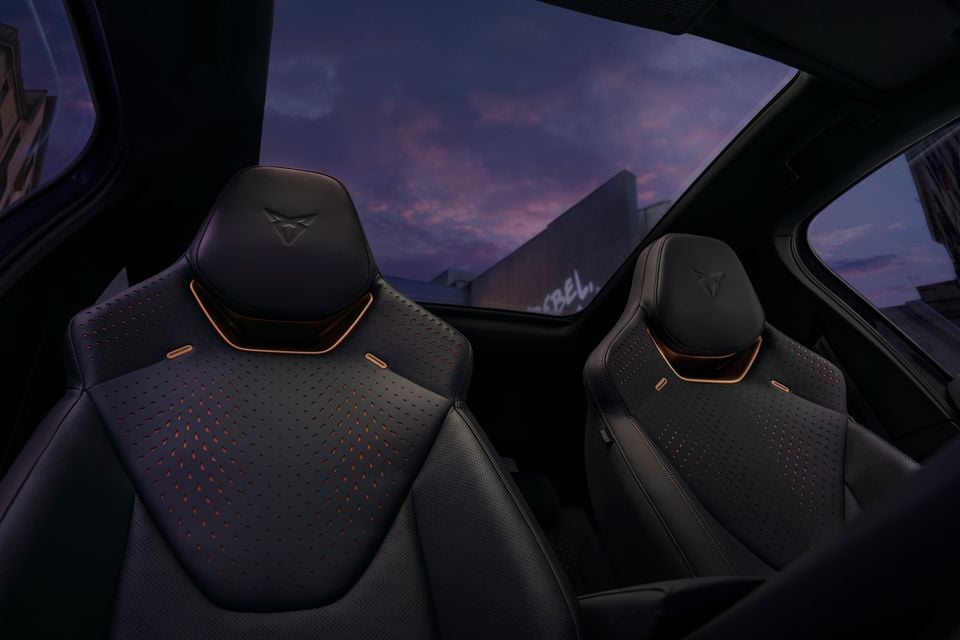
    The VZ – the sportiest and most expensive variant – gets exceptionally comfortable high-backed bucket seats up front, upholstered in a ‘technical’ fabric woven from recycled plastics which is meant to mimmick expensive running shoes. Does that just make you feel guilty for taking the car instead of jogging to work? Maybe…

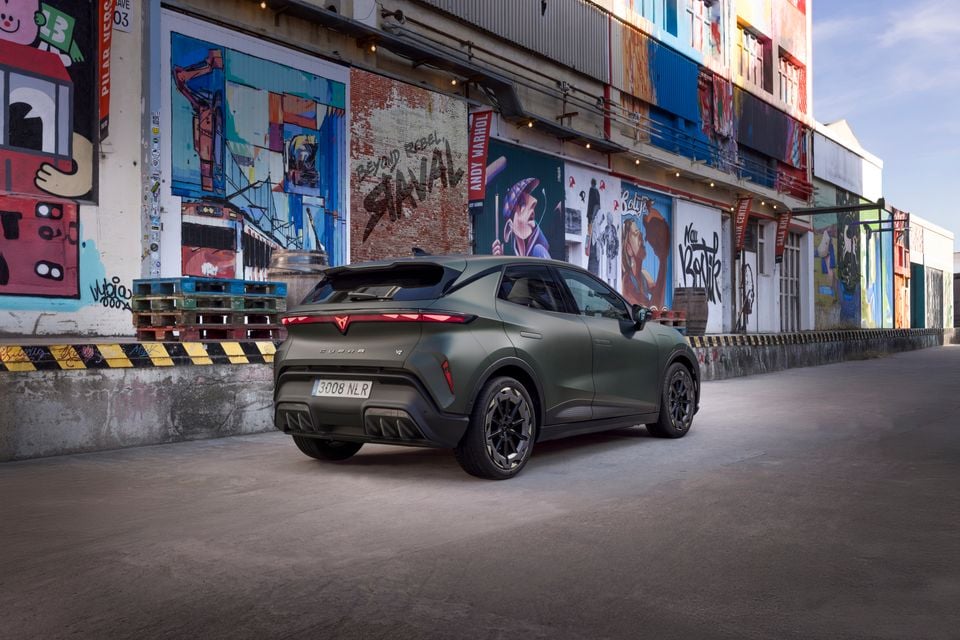
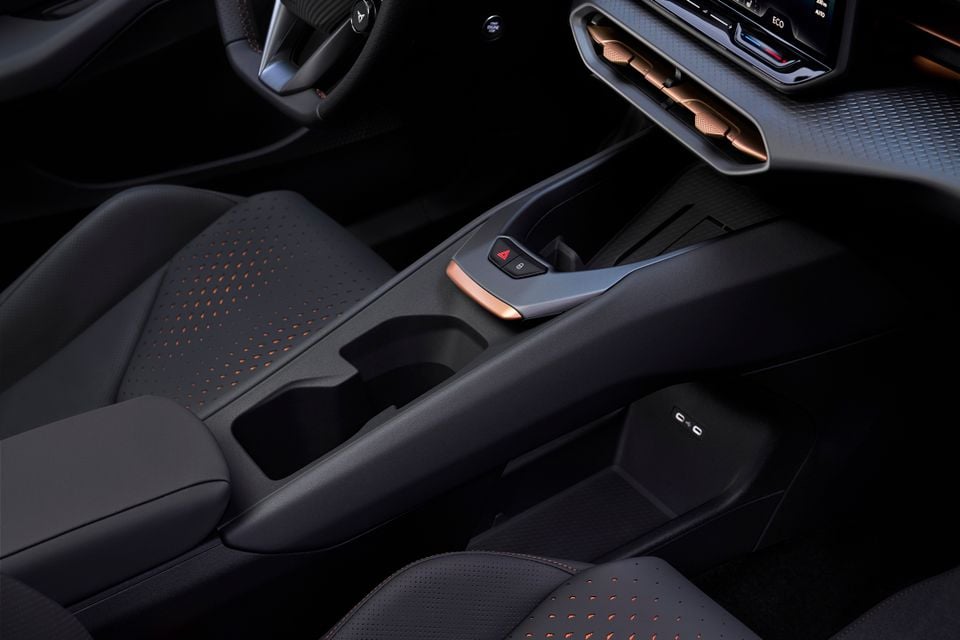
    The Raval is a compact vehicle, slightly below the 4.1-metre barrier, so it’s not massive inside, but there’s sufficient space up front, decent storage areas dotted around the cabin, and just enough space in the back seat for two tall adults to get comfortable. 

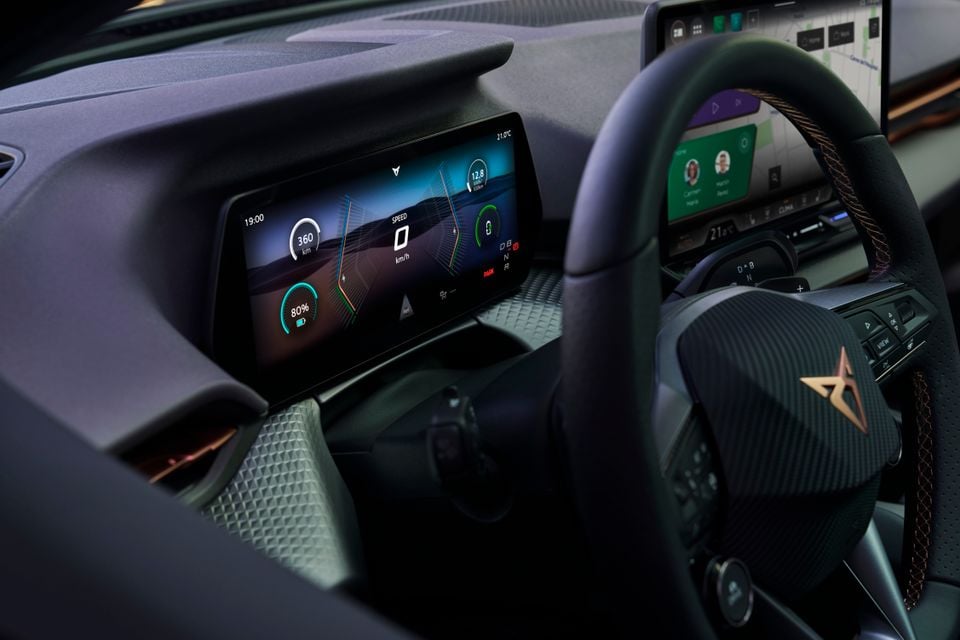
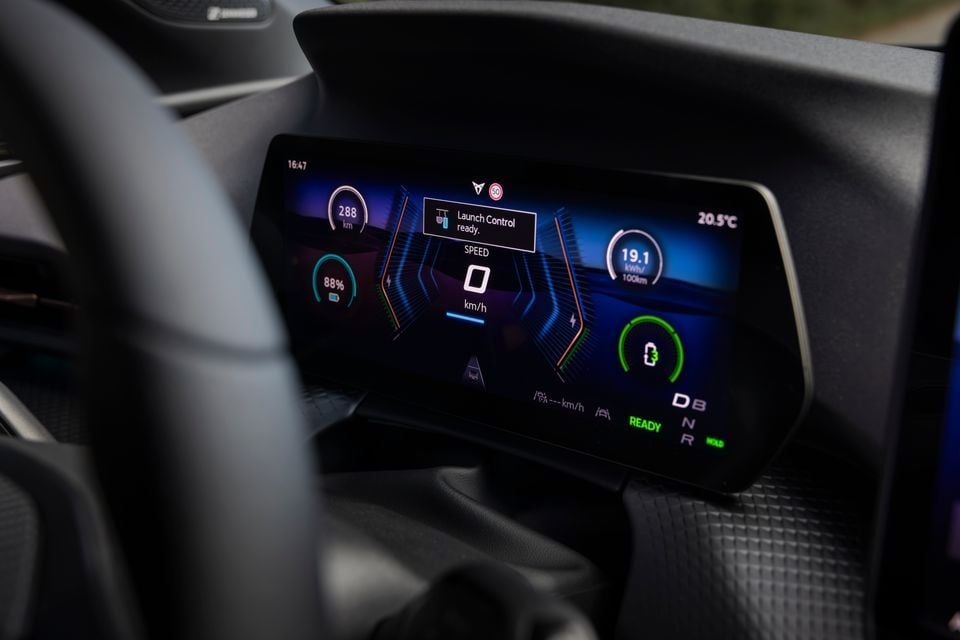
    The driver's 10-inch digital instrument display and the 12.9-inch infotainment touchscreen will be familiar if you’ve seen our review of the updated Cupra Born electric hatchback. Thankfully, the Volkswagen Group has seen sense and turned to Google’s Android division for help with the software, and there’s a noticeable improvement in menu coherence and the responsiveness of the screen. It also helps that you can modify the layout to your liking, including placing shortcut icons for frequently used functions at the top.

    Cupra has also given the Raval’s chunky three-spoke steering wheel some proper multi-function buttons, but alas the ‘slider’ touch-sensitive controls remain under the screen for adjusting stereo volume and cabin temperature. 

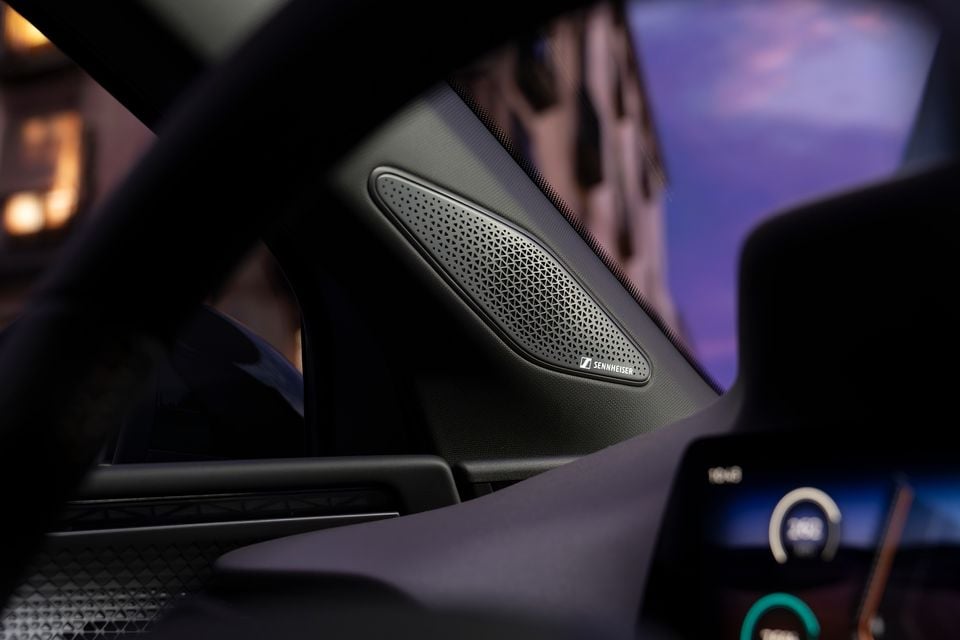
    On the upside, the optional Sennheiser stereo setup is a banger if you love your tunes and the ambient lighting, which like in a Lexus uses reflected light shone onto the door panels rather than a strip of LEDs, is rather nice. 

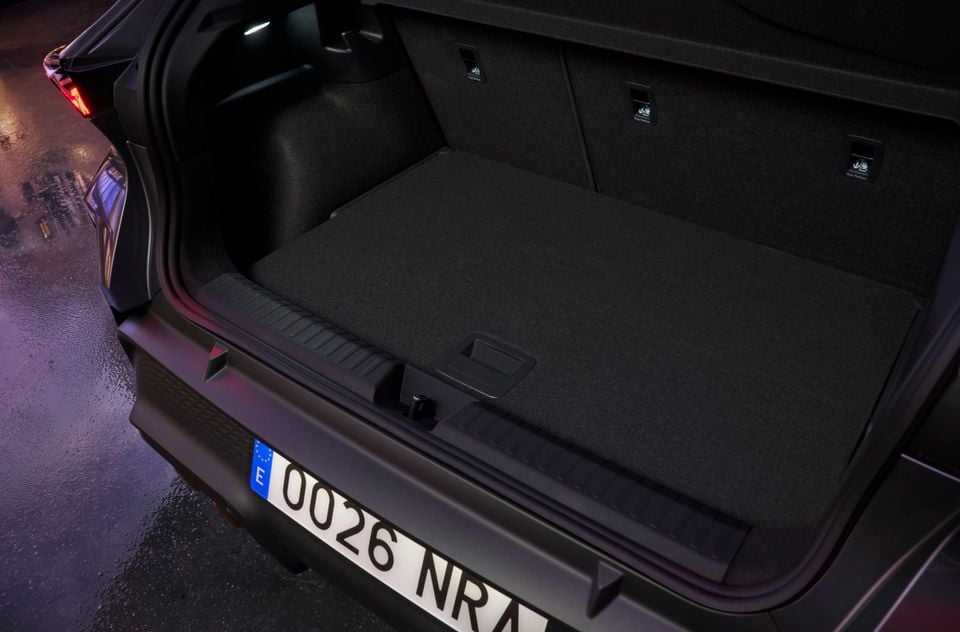
    The Raval is pretty practical too, thanks to a 441-litre boot with an adjustable floor and lots of under-floor storage.

    There are also some neat accessory options for storing charging cables if you want to make the most of the space on offer, and for those needing even more stowage, there’s a 1200kg towing capacity.

    DimensionsCupra Raval
    Length

    4046mm

    Width

    1784mm

    Height

    1514mm

    Wheelbase

    2599mm

    Cargo capacity

    441L

    What’s under the bonnet?

    The Raval can be had with a choice of two batteries (37kWh lithium-iron phosphate or 52kWh nickel-manganese cobalt) with ranges between 310km and 448km depending on the model. Power outputs vary from 85kW in its most basic form through to 99kW and 155kW options, and finally the 166kW of the range-topping GTI-equivalent VZ – see below.

    Specifications

    Cupra Raval VZ

    Drivetrain

    Single-motor electric

    Battery

    52kWh lithium-ion

    Power

    166kW

    Torque

    290Nm

    Drive type

    Front-wheel drive

    Weight

    1615kg

    0-100km/h (claimed)

    6.8 seconds

    Energy consumption (claimed)

    13.6-16.2kWh/100km

    Claimed range

    394kW

    Max AC charge rate

    11kW

    Max DC charge rate

    105kW

    How does the Cupra Raval drive?

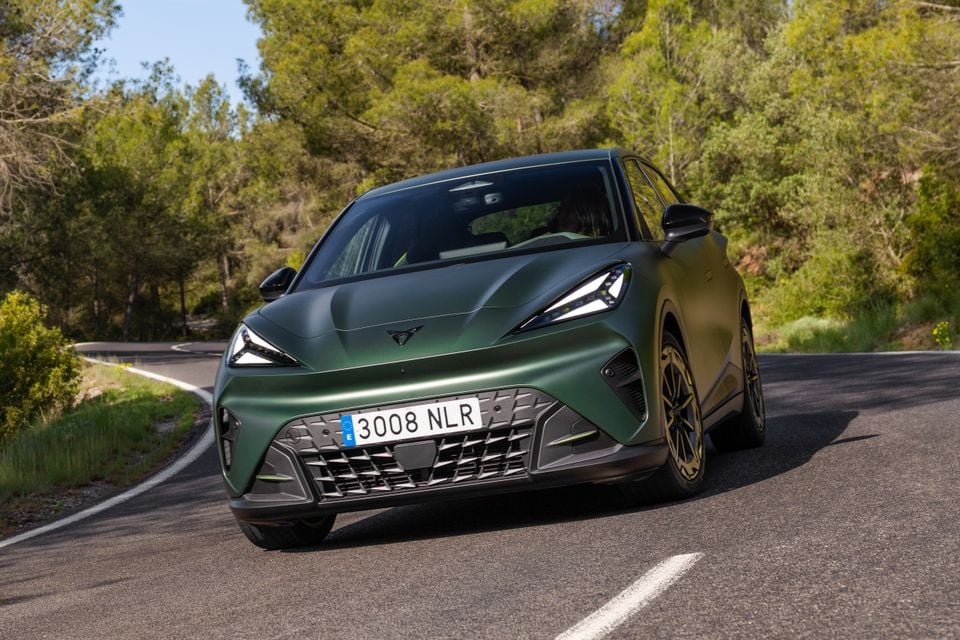
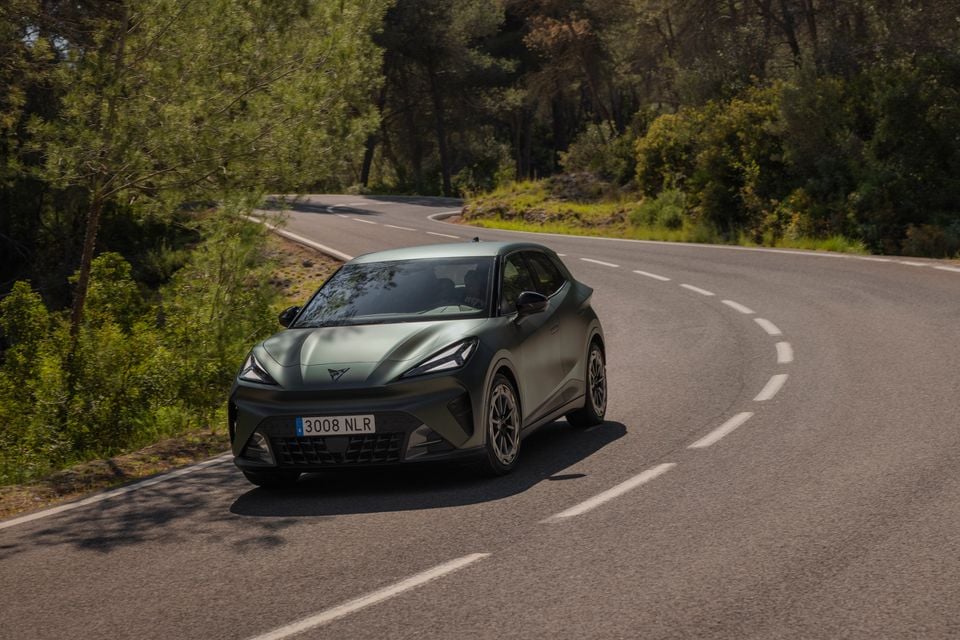
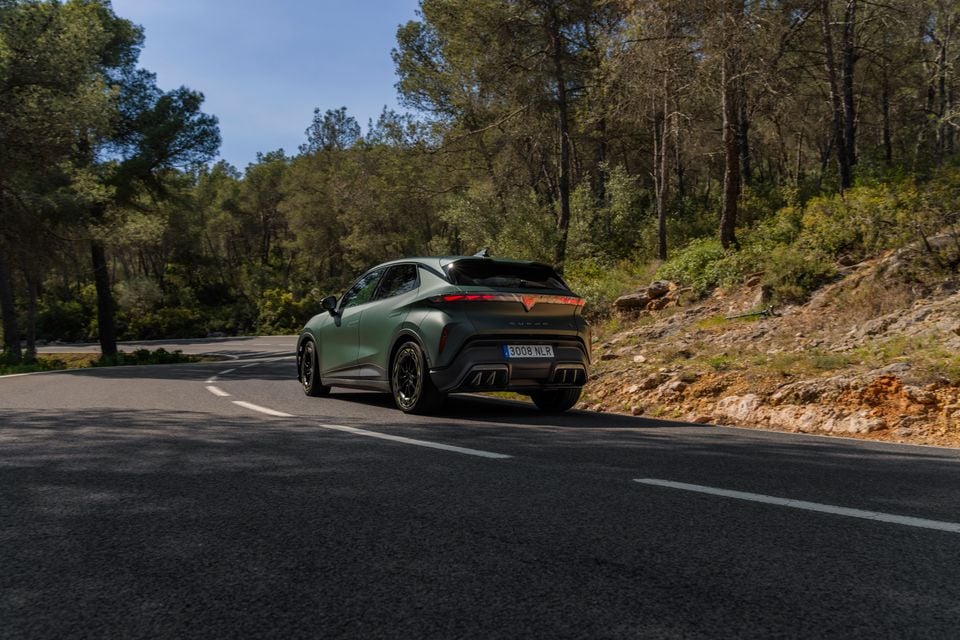
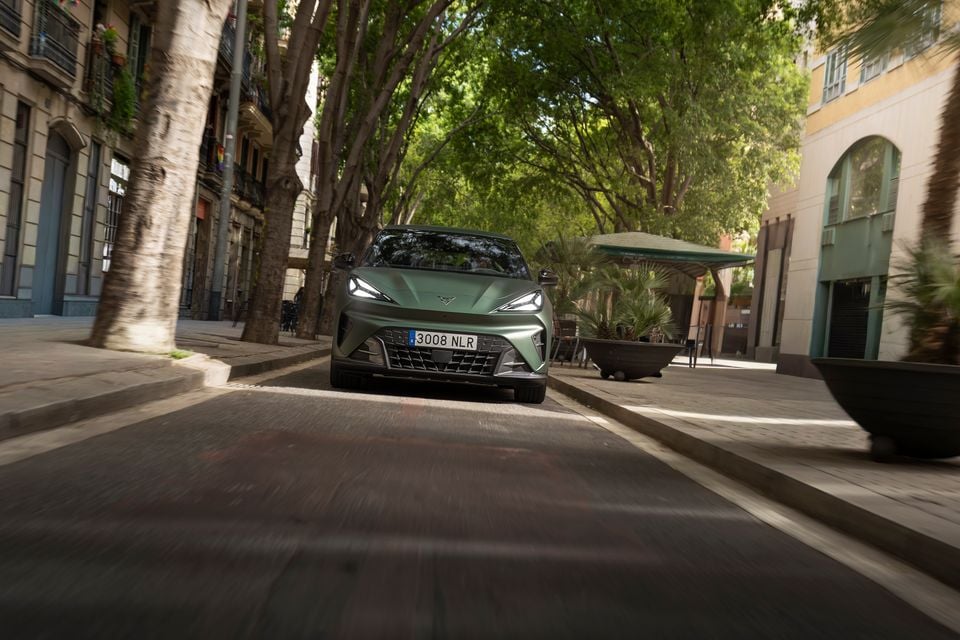
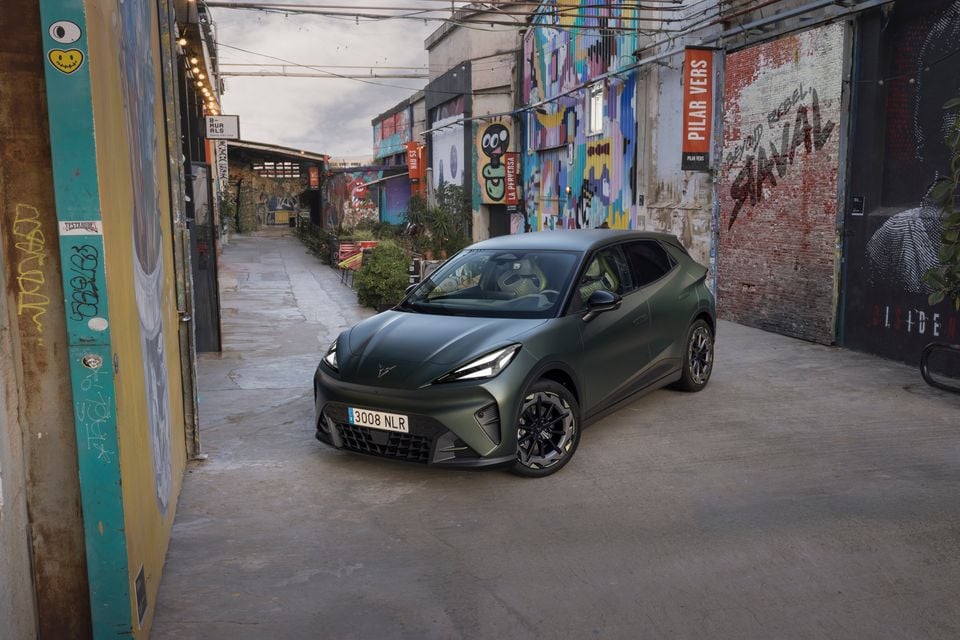
    To cut to the chase, the Raval VZ drives like a proper hot hatch.

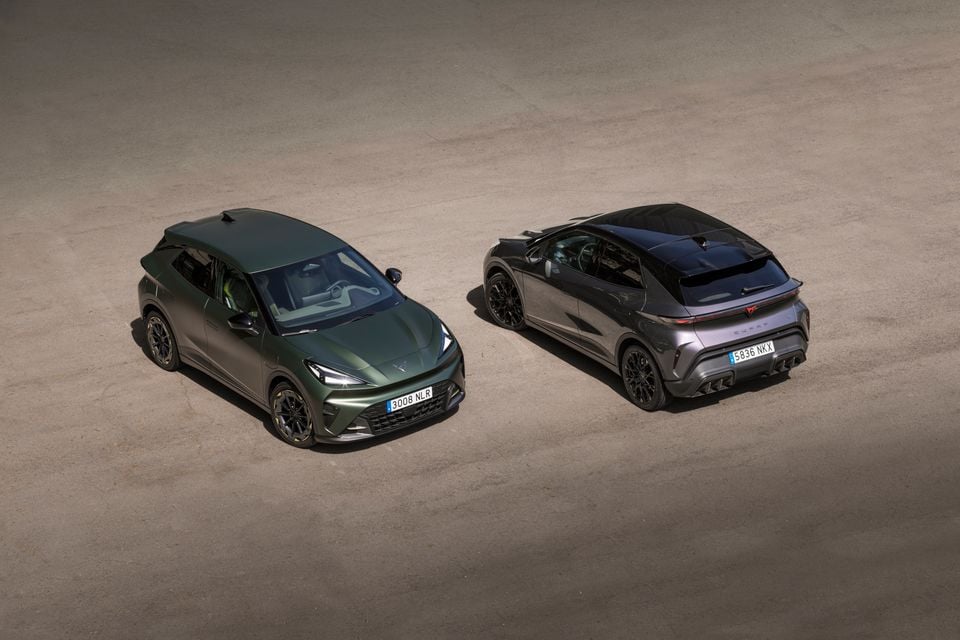
    Actually, it’s much closer in style and size to being a hatch rather than a crossover (even if Cupra’s marketeers would probably prefer we didn’t point that out). Even so, it’s hardly light – 1615kg at the kerb – but that doesn’t seem to affect the fun. The Raval’s brilliance derives from two things: its steering and its brakes. 

    The steering, accessed through a chunky, flat-bottom wheel that’s great to hold, feels terrific. Weighting is pretty much spot-on, and there’s enough feedback to allow you to accurately judge what the front wheels are doing and how much grip there is to play with. On balance, we’d say the conceptually similar Alpine A290’s steering is a touch more enthusiastic, but there’s not a lot in it.

    Whatever; the Raval’s steering gives you total confidence and authority in corners, allowing you to place the car accurately and with few, if any, worries about understeer. In fact, the electronic differential that controls the front wheels allows barely any understeer, with the Raval calmly putting down its power, even out of tight hairpins, without any fuss. Delightfully, in the Cupra driving mode, you can just feel the hints of the tyres starting to lose their traction through the steering wheel.

    If anything, the brakes are even better. We’ve been depressingly used to EVs, even high-performance models, having soggy brake pedals that don’t do a great job of blending the changeover from regenerative braking to physical discs and pads, but the Raval confounds this. The brake pedal feels firm and there is effectively no noticeable changeover from one form of braking to another – just reassuring feel and stopping power all the way down to a tightening apex. If the Raval’s steering is good, its brakes are exceptional.

    Our VZ test car comes as standard with the DCC adaptive suspension dampers familiar from many other Volkswagen Group models. They really are very good, and that suspension layout – 10mm wider across the tracks than even the incoming VW ID. Polo GTI, and 15mm lower than a standard Raval – means there’s taut poise to the Raval’s chassis.

    In Comfort mode, it lopes happily along, with good refinement and only an occasional firm stumble over sharper urban lumps. On the open road, even in the firmest Cupra driving mode setting, the Raval never gets uncomfortable.

    Hopefully, this kind of talent will trickle down to the more regular versions, which don’t get the adaptive dampers.

    What do you get?

    Australian prices and specs aren’t set yet, but we expect the Born VZ to come as standard with the following equipment.

    2026 Cupra Raval VZ equipment highlights:

    • Heated front seats
    • 19-inch alloy wheels
    • Adaptive suspension
    • 10.25-inch digital instrument cluster
    • 12.9-inch infotainment touchscreen
    • Forward collision alert and automatic braking
    • Adaptive cruise control
    • Selectable driving modes
    • ‘CupBucket’ seats

    Is the Cupra Raval safe?

    The Raval hasn’t yet been independently safety-tested by either Euro NCAP nor ANCAP, but given it sits on an all-new structure, and that Cupra has loaded it up with lots of safety tech, it should get a good rating when it’s tested.

    The Raval includes the latest version of the Volkswagen Group’s Travel Assist highway driving system, which not only combines the lane-keeping and adaptive cruise control functions, but can now also detect red traffic lights and stop signs and act accordingly.

    Standard safety equipment includes:

    • Forward collision warning and automatic emergency braking
    • Lane keeping steering
    • Adaptive cruise control with speed-limiter
    • Speed limit alert
    • Blind-spot detection
    • Rear cross-traffic alert
    • Junction cross-traffic alert
    • Smart high-beam

    How much does the Cupra Raval cost to run?

    The Raval gets the usual Cupra warranty lasting five years and with unlimited kilometres.

    Servicing and Warranty

    Cupra Raval

    Warranty

    5 years, unlimited kilometres

    Roadside assistance

    5 years

    Service intervals

    24 months or 20,000km

    Capped-price servicing

    TBC

    Cupra officially quotes energy consumption of between 13.6 and 16.2kWh/100km, which seems very reasonable, and certainly if you can charge up at home on cheap night-rate electricity, this is going to be one of the most affordable hot hatches to run, ever.

    However, bear in mind that real-world figures will differ hugely. Up in the mountains, pressing on, we averaged more like 25kWh/100km, and the meter only dipped down to a more respectable 18kWh/100km once we’d been snarled up in downtown Barcelona traffic for a while.

    Figure on a real-world range of between 320km and 350km for the Raval VZ. 

    CarExpert’s Take on the Cupra Raval

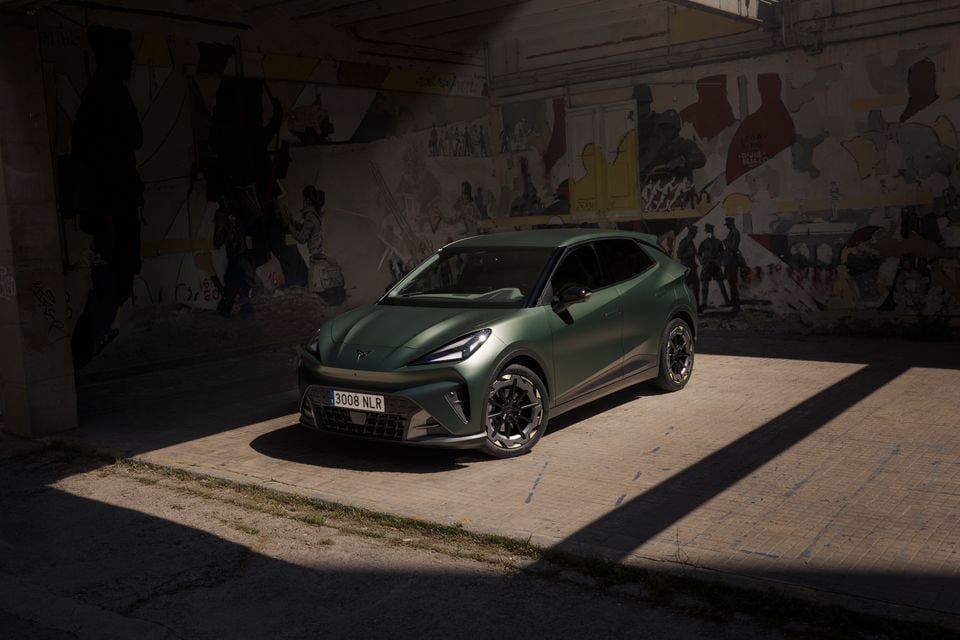
    The Raval might just be Cupra’s best car yet.

    From expert reviews to the right deal

    CarExpert brings together reviews, research tools and trusted buying support, guiding you from research to delivery with confidence.

    It’s exceptionally fun to drive, at least in this range-topping VZ form, and yet practical, comfortable and affordable enough (most likely) to be a perfectly useful everyday car.

    In that respect, the Raval is singing, with an electric voice, from the classic hot-hatch hymn sheet. Amen to that.

    Click the images for the full gallery

    MORE: Explore the Cupra showroom or A$16,200 – in some European countries.

    European prices, of course, don’t always fully translate Down Under, but Cupra is being aggressive with the Raval’s pricing, to show that it can make a cost-competitive EV without resorting to making it in Asia.

    Indeed, in Europe at least, the Raval offers better value than quite a few Chinese offerings, not to mention European, Korean and Japanese rivals. Here’s hoping that we get the same value-led pricing strategy once the Raval crosses the Pacific.

    What is the Cupra Raval like on the inside?

    The Raval’s cabin is a bit on the messy side, which is something we’ve seen from Cupra before.

    The Tavascan and the Born also suffer a touch from designers who apparently couldn’t quite decide when to stop adding textures and materials. These are broadly nice textures and materials – nothing in the Raval feels unpleasantly cheap – but there’s a lot to take in.

    The VZ – the sportiest and most expensive variant – gets exceptionally comfortable high-backed bucket seats up front, upholstered in a ‘technical’ fabric woven from recycled plastics which is meant to mimmick expensive running shoes. Does that just make you feel guilty for taking the car instead of jogging to work? Maybe…

    The Raval is a compact vehicle, slightly below the 4.1-metre barrier, so it’s not massive inside, but there’s sufficient space up front, decent storage areas dotted around the cabin, and just enough space in the back seat for two tall adults to get comfortable. 

    The driver's 10-inch digital instrument display and the 12.9-inch infotainment touchscreen will be familiar if you’ve seen our review of the updated Cupra Born electric hatchback. Thankfully, the Volkswagen Group has seen sense and turned to Google’s Android division for help with the software, and there’s a noticeable improvement in menu coherence and the responsiveness of the screen. It also helps that you can modify the layout to your liking, including placing shortcut icons for frequently used functions at the top.

    Cupra has also given the Raval’s chunky three-spoke steering wheel some proper multi-function buttons, but alas the ‘slider’ touch-sensitive controls remain under the screen for adjusting stereo volume and cabin temperature. 

    On the upside, the optional Sennheiser stereo setup is a banger if you love your tunes and the ambient lighting, which like in a Lexus uses reflected light shone onto the door panels rather than a strip of LEDs, is rather nice. 

    The Raval is pretty practical too, thanks to a 441-litre boot with an adjustable floor and lots of under-floor storage.

    There are also some neat accessory options for storing charging cables if you want to make the most of the space on offer, and for those needing even more stowage, there’s a 1200kg towing capacity.

    DimensionsCupra Raval
    Length

    4046mm

    Width

    1784mm

    Height

    1514mm

    Wheelbase

    2599mm

    Cargo capacity

    441L

    What’s under the bonnet?

    The Raval can be had with a choice of two batteries (37kWh lithium-iron phosphate or 52kWh nickel-manganese cobalt) with ranges between 310km and 448km depending on the model. Power outputs vary from 85kW in its most basic form through to 99kW and 155kW options, and finally the 166kW of the range-topping GTI-equivalent VZ – see below.

    Specifications

    Cupra Raval VZ

    Drivetrain

    Single-motor electric

    Battery

    52kWh lithium-ion

    Power

    166kW

    Torque

    290Nm

    Drive type

    Front-wheel drive

    Weight

    1615kg

    0-100km/h (claimed)

    6.8 seconds

    Energy consumption (claimed)

    13.6-16.2kWh/100km

    Claimed range

    394kW

    Max AC charge rate

    11kW

    Max DC charge rate

    105kW

    How does the Cupra Raval drive?

    To cut to the chase, the Raval VZ drives like a proper hot hatch.

    Actually, it’s much closer in style and size to being a hatch rather than a crossover (even if Cupra’s marketeers would probably prefer we didn’t point that out). Even so, it’s hardly light – 1615kg at the kerb – but that doesn’t seem to affect the fun. The Raval’s brilliance – and its brilliance – derives from two things: its steering and its brakes. 

    The steering, accessed through a chunky, flat-bottom wheel that’s great to hold, feels terrific. Weighting is pretty much spot-on, and there’s enough feedback to allow you to accurately judge what the front wheels are doing and how much grip there is to play with. On balance, we’d say the conceptually similar Alpine A290’s steering is a touch more enthusiastic, but there’s not a lot in it.

    Whatever; the Raval’s steering gives you total confidence and authority in corners, allowing you to place the car accurately and with few, if any, worries about understeer. In fact, the electronic differential that controls the front wheels allows barely any understeer, with the Raval calmly putting down its power, even out of tight hairpins, without any fuss. Delightfully, in the Cupra driving mode, you can just feel the hints of the tyres starting to lose their traction through the steering wheel.

    If anything, the brakes are even better. We’ve been depressingly used to EVs, even high-performance models, having soggy brake pedals that don’t do a great job of blending the changeover from regenerative braking to physical discs and pads, but the Raval confounds this. The brake pedal feels firm and there is effectively no noticeable changeover from one form of braking to another – just reassuring feel and stopping power all the way down to a tightening apex. If the Raval’s steering is good, its brakes are exceptional.

    Our VZ test car comes as standard with the DCC adaptive suspension dampers familiar from many other Volkswagen Group models. They really are very good, and that suspension layout – 10mm wider across the tracks than even the incoming VW ID. Polo GTI, and 15mm lower than a standard Raval – means there’s taut poise to the Raval’s chassis.

    In Comfort mode, it lopes happily along, with good refinement and only an occasional firm stumble over sharper urban lumps. On the open road, even in the firmest Cupra driving mode setting, the Raval never gets uncomfortable.

    Hopefully, this kind of talent will trickle down to the more regular versions, which don’t get the adaptive dampers.

    What do you get?

    Australian prices and specs aren’t set yet, but we expect the Born VZ to come as standard with the following equipment.

    2026 Cupra Raval VZ equipment highlights:

    • Heated front seats
    • 19-inch alloy wheels
    • Adaptive suspension
    • 10.25-inch digital instrument cluster
    • 12.9-inch infotainment touchscreen
    • Forward collision alert and automatic braking
    • Adaptive cruise control
    • Selectable driving modes
    • ‘CupBucket’ seats

    Is the Cupra Raval safe?

    The Raval hasn’t yet been independently safety-tested by either Euro NCAP nor ANCAP, but given it sits on an all-new structure, and that Cupra has loaded it up with lots of safety tech, it should get a good rating when it’s tested.

    The Raval includes the latest version of the Volkswagen Group’s Travel Assist highway driving system, which not only combines the lane-keeping and adaptive cruise control functions, but can now also detect red traffic lights and stop signs and act accordingly.

    Standard safety equipment includes:

    • Forward collision warning and automatic emergency braking
    • Lane keeping steering
    • Adaptive cruise control with speed-limiter
    • Speed limit alert
    • Blind-spot detection
    • Rear cross-traffic alert
    • Junction cross-traffic alert
    • Smart high-beam

    How much does the Cupra Raval cost to run?

    The Raval gets the usual Cupra warranty lasting five years and with unlimited kilometres.

    Servicing and Warranty

    Cupra Raval

    Warranty

    5 years, unlimited kilometres

    Roadside assistance

    5 years

    Service intervals

    24 months or 20,000km

    Capped-price servicing

    TBC

    Cupra officially quotes energy consumption of between 13.6 and 16.2kWh/100km, which seems very reasonable, and certainly if you can charge up at home on cheap night-rate electricity, this is going to be one of the most affordable hot hatches to run, ever.

    However, bear in mind that real-world figures will differ hugely. Up in the mountains, pressing on, we averaged more like 25kWh/100km, and the meter only dipped down to a more respectable 18kWh/100km once we’d been snarled up in downtown Barcelona traffic for a while.

    Figure on a real-world range of between 320km and 350km for the Raval VZ. 

    CarExpert’s Take on the Cupra Raval

    The Raval might just be Cupra’s best car yet.

    It’s exceptionally fun to drive, at least in this range-topping VZ form, and yet practical, comfortable and affordable enough (most likely) to be a perfectly useful everyday car.

    In that respect, the Raval is singing – with an electric voice – from the classic hot-hatch hymn sheet. Amen to that.

    Click the images for the full gallery

    MORE: Explore the Cupra showroom

    From expert reviews to the right deal

    CarExpert brings together reviews, research tools and trusted buying support, guiding you from research to delivery with confidence.

    Neil Briscoe

    Neil Briscoe

    Contributor

    Neil Briscoe

    Contributor

    Don't let Google decide who you trust

    Add CarExpert as a Preferred Source on Google so your search results prioritise writing by actual experts, not AI.

    Add Preferred Source

    You might also like

    # Based on VFACTS and EVC data

    † Displayed prices exclude on-road costs such as delivery charges, registration fees, number plates, insurance and applicable road taxes. These prices are subject to change without notice and may not reflect current market pricing or dealer offers.

    JATO logoAutomotive Vehicle Spec Data & 4K images Powered by JATO Dynamics Ltd