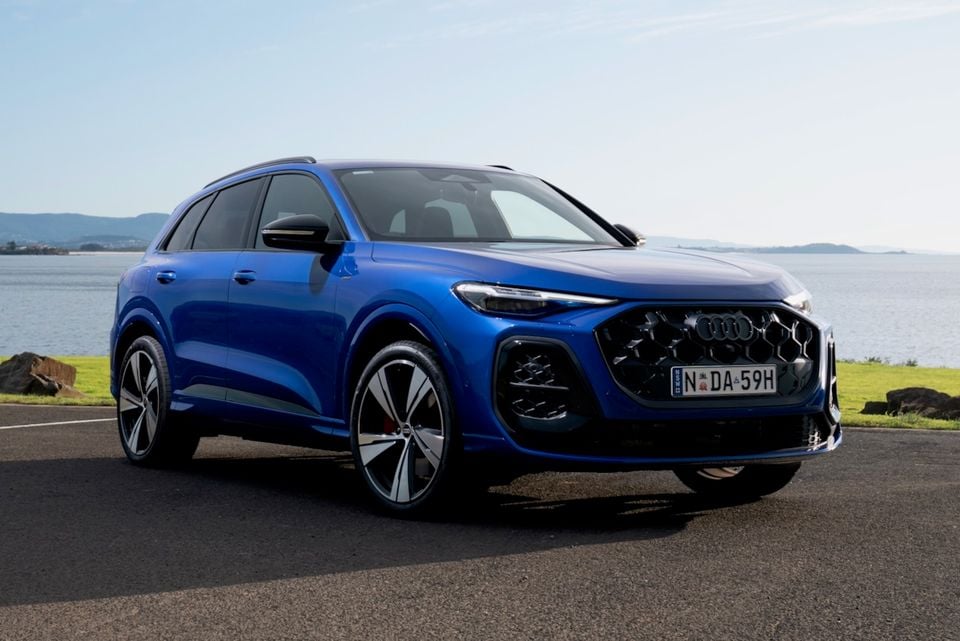
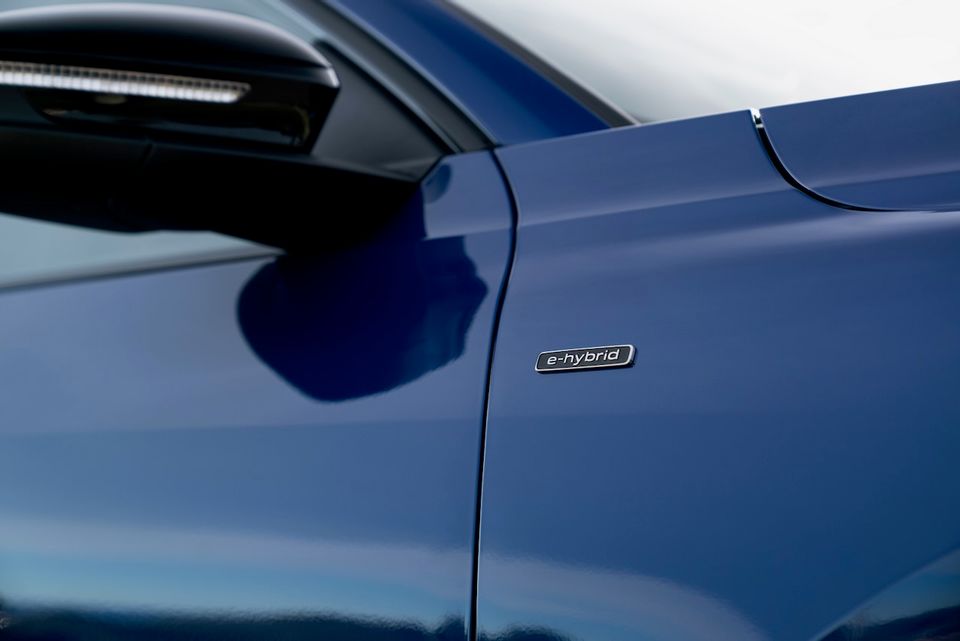
The 2026 Audi Q5 e-hybrid quattro marks the reintroduction of a plug-in hybrid powertrain for the German brand's mid-size SUV in Australia – and though some things remain as they were, there's been a key development for the new model.
The e-hybrid joins the wider Q5 lineup, comprising the Q5 TFSI and Q5 TDI – both available in several grades – as well as the performance SQ5 flagship.
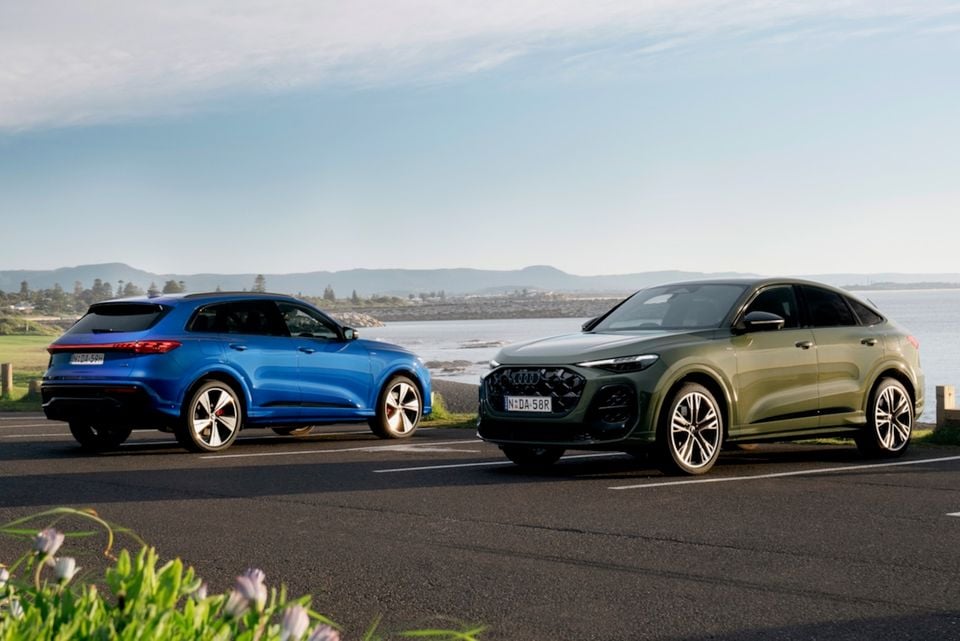
As with the rest of the range, the Q5 is available either as a traditional square-back SUV wagon, or with a sleeker 'coupe' body known as the Sportback.
While the pre-facelift Q5 was available with up to 55km of electric driving range thanks to its 17.9kWh battery pack, the latest model offers up to 82km of electric range due to a larger 25.9kWh battery.
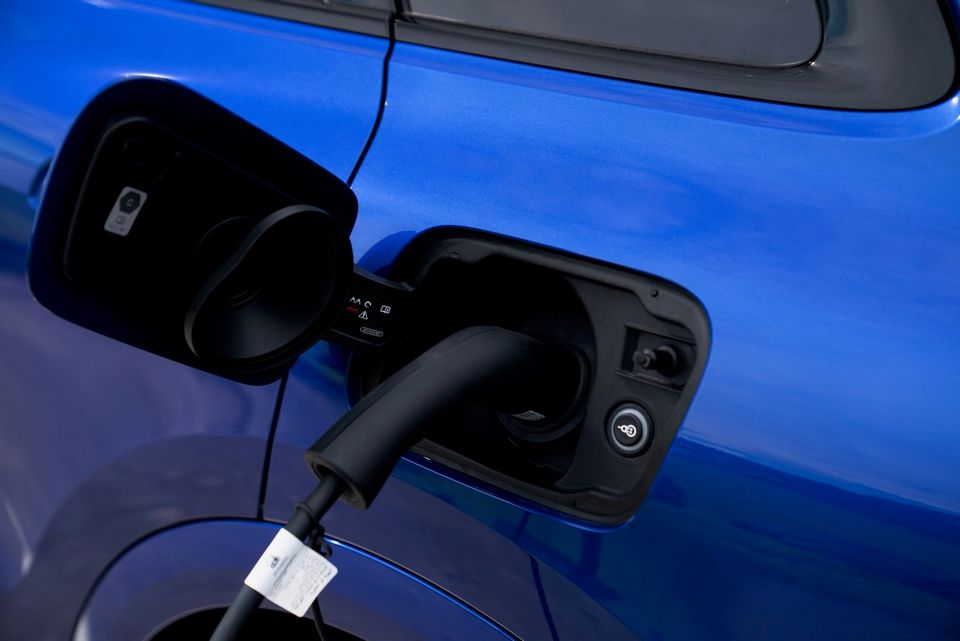
AC charging speed has also improved, jumping from 7.2kW to 11kW via a three-phase plug – allowing owners to get back on the road quicker.
For the 2026 model year, the Q5 has received haptic rollers on the steering wheel, updated screens, revised digital dashboard modes, upgraded high-capacity USB ports, Bluetooth for headphones and game controllers, more app options, and different specialised cabin modes to suit your mood.
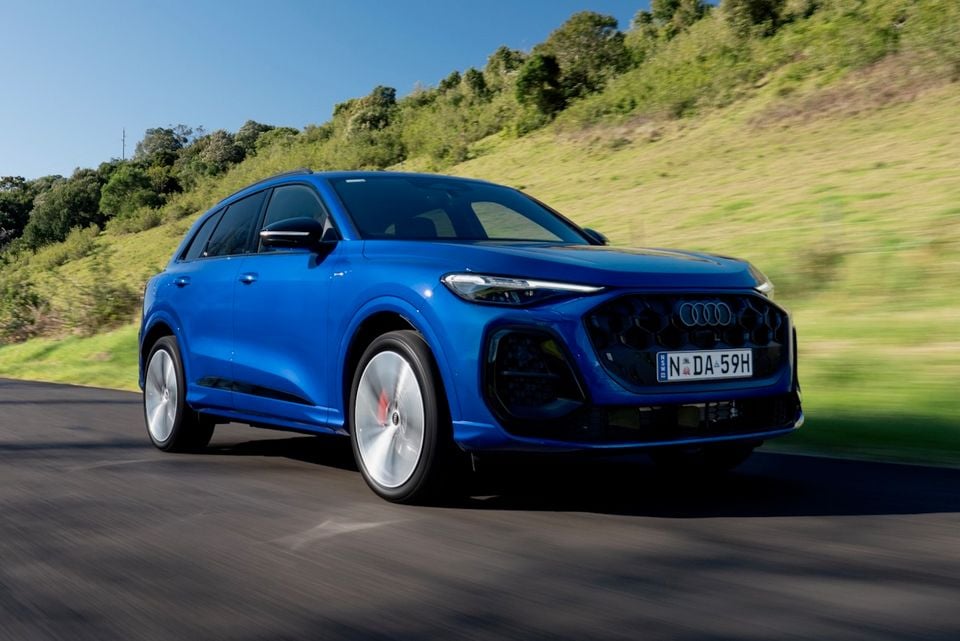
The vehicle also gets a black exterior styling pack, privacy tint, red brake calipers, auxiliary air-conditioning, and sports suspension – with the option of air suspension.
We spent a couple of days with the Audi Q5 e-hybrid, travelling from Sydney down to the Wollongong area via a combination of city driving, winding mountain roads, and highways, allowing us to get familiar with the new plug-in hybrid SUV.
How much does the Audi Q5 cost?
The Audi Q5 range kicks off at $81,000 before on-road costs for the front-wheel drive TFSI variant, topping out at almost $126,000 plus on-roads for the performance SQ5 in the Sportback body.
Model
Price before on-road costs
Q5 SUV
2026 Audi Q5 TFSI
$81,000
2026 Audi Q5 TDI quattro
$87,600
2026 Audi Q5 TDI quattro sport
$94,100
2026 Audi Q5 e-hybrid quattro
$96,818
2026 Audi Q5 TFSI quattro sport
$96,900
2026 Audi SQ5 edition one
$106,400
2026 Audi SQ5 quattro
$122,400
Q5 Sportback
2026 Audi Q5 Sportback TFSI
$84,500
2026 Audi Q5 Sportback TDI quattro
$91,100
2026 Audi Q5 Sportback TDI quattro sport
$97,600
2026 Audi Q5 Sportback TFSI quattro sport
$100,327
2026 Audi Q5 Sportback e-hybrid quattro
$100,318
2026 Audi SQ5 Sportback edition one
$109,900
2026 Audi SQ5 Sportback
$125,900
The MY26 Audi Q5 e-hybrid variants on test here are available for $96,818 before ORCs in the SUV body, or $100,318 plus ORCs for the Sportback – almost the same prices as their petrol-powered, all-wheel drive equivalents.
Their competitors include the BMW X3 30e xDrive, Mercedes-Benz GLC350e 4Matic, and Volvo XC60 T8 plug-in hybrid. And while they all have slightly longer EV ranges – with the GLC offering the best of this group, at 112km – the Audi is the least expensive.
Only the Lexus NX450h+ undercuts the Q5, starting at $84,630 plus ORCs, and it has an electric driving range of 87km (based on the NEDC test).
To see how the Audi Q5 lines up against the competition, check out our comparison tool
What is the Audi Q5 like on the inside?
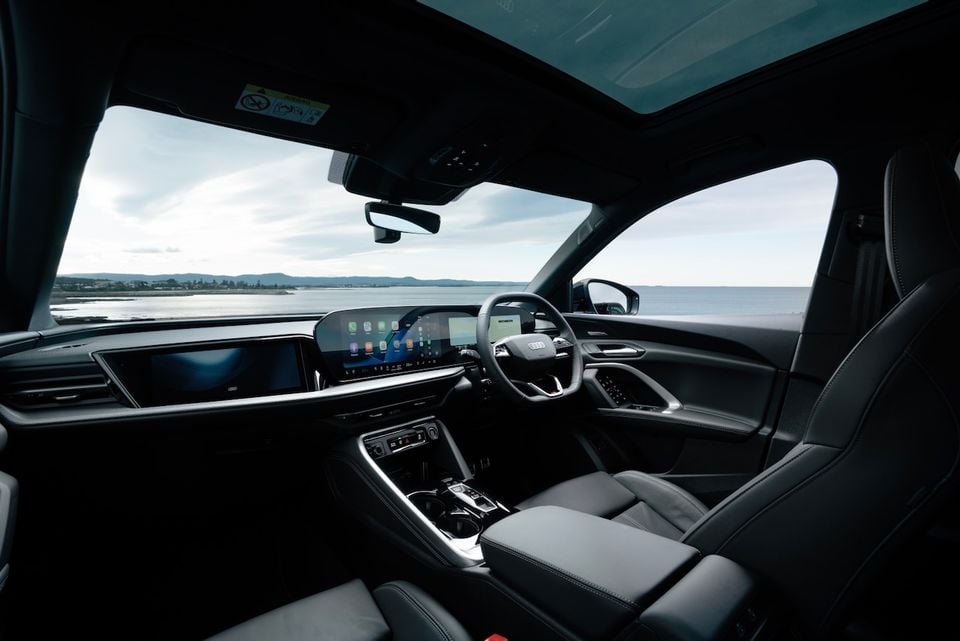
The interior of the Q5 is quintessential Audi – sophisticated, somewhat premium, and relatively inoffensive.
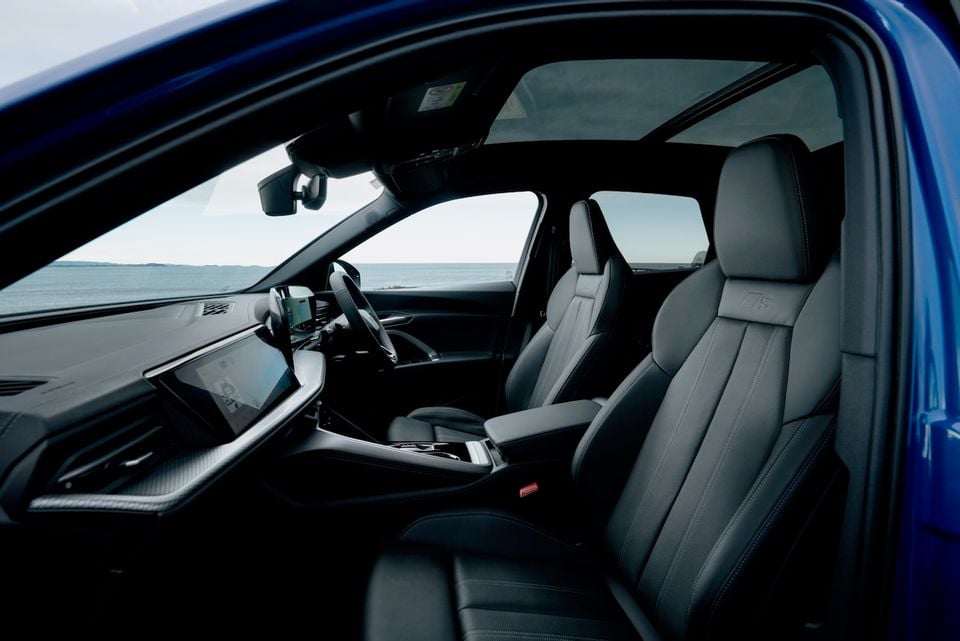
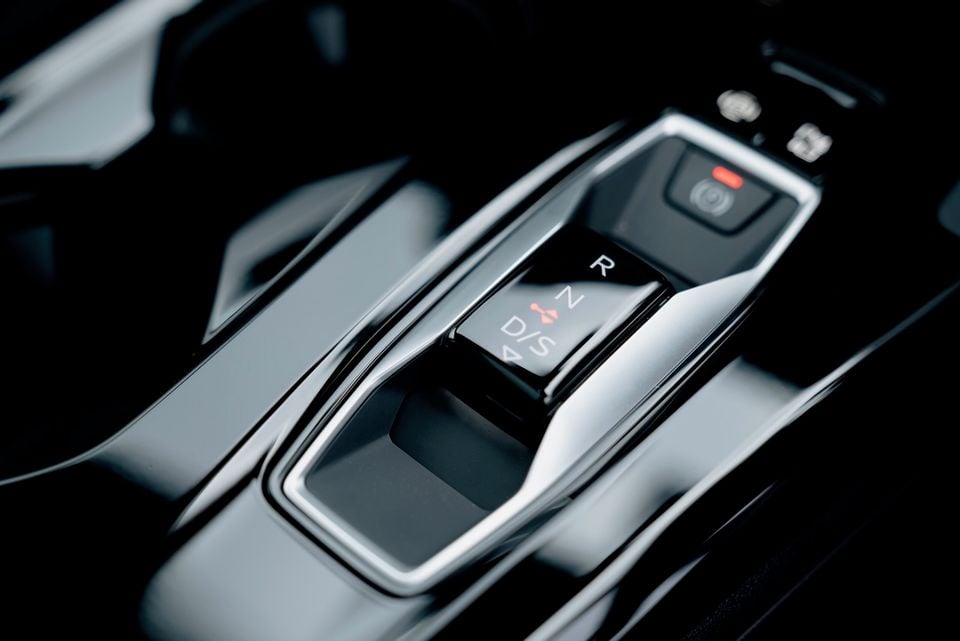
There’s a lot of black and dark grey, which is broken up by textured aluminium trim across the dashboard, and brushed aluminium pieces fitted sparingly throughout.
While it looks fine, it’s hard to imagine the Q5’s cabin will be in the running for any design awards – but the flipside is that it isn’t try-hard. Audi knows its customers, and as such there’s nothing over-the-top happening inside.
Though I do think the previous-generation model was overall more coherent and classy, the latest model is still a nice place to find yourself, with the new OLED screens being a big improvement, literally.
Build quality is good, without being standout. The indicator stalks are nicely styled and satisfying to use, the upholstery is applied well throughout, and the plastics didn’t creak during our time with it – despite there being perhaps a little too much of it.
However, the Audi doesn’t come across like a big step up from something like a Volkswagen product – which perhaps says more about VW these days than it does about Audi.
The heated seats are comfortable and they're trimmed in soft matte leather, and it was easy to find a comfortable driving position thanks to a good range of motion from the seats and steering wheel.
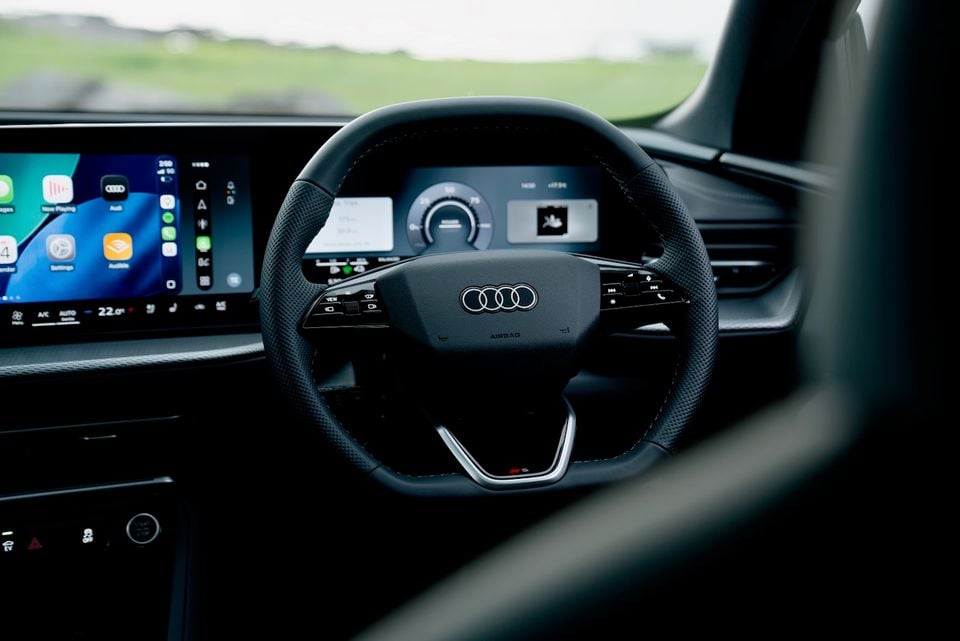
The wheel itself is comfortable and feels appropriate for the vehicle, with perforated leather trim and haptic buttons – along with the reintroduction of thumb wheels due to customer feedback. The buttons themselves aren’t the best we’ve used, but also aren’t the worst.
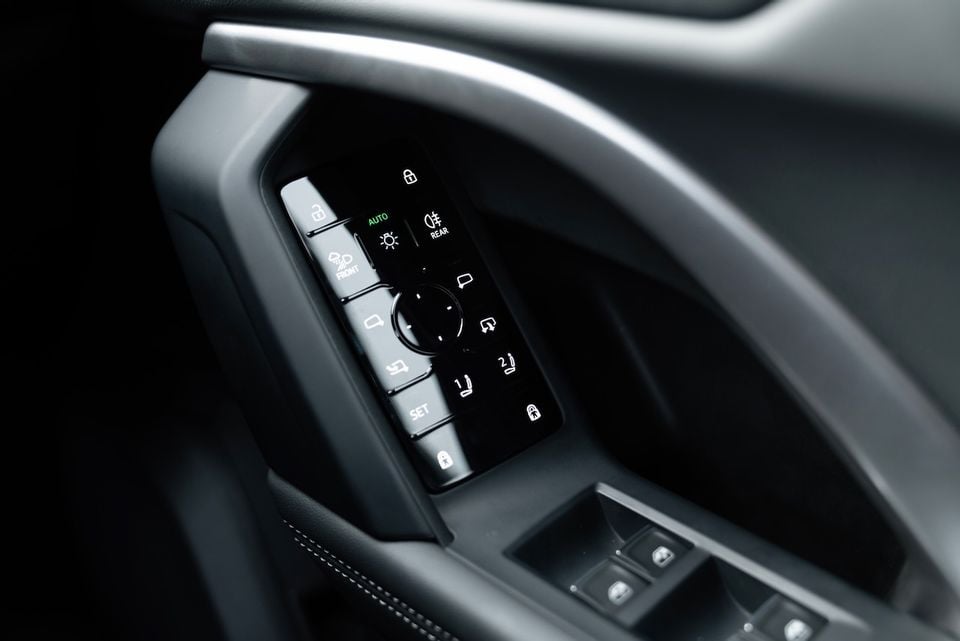
There’s also a cluster of buttons on the driver’s door ahead of the window switches, as well as USB ports under the centre stack, and a wireless phone charging pad.
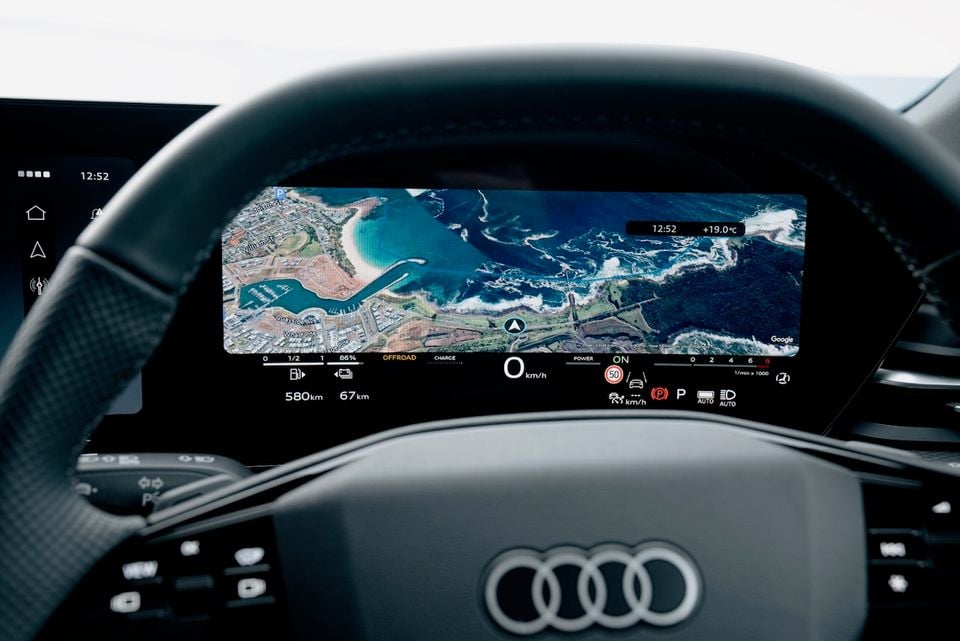
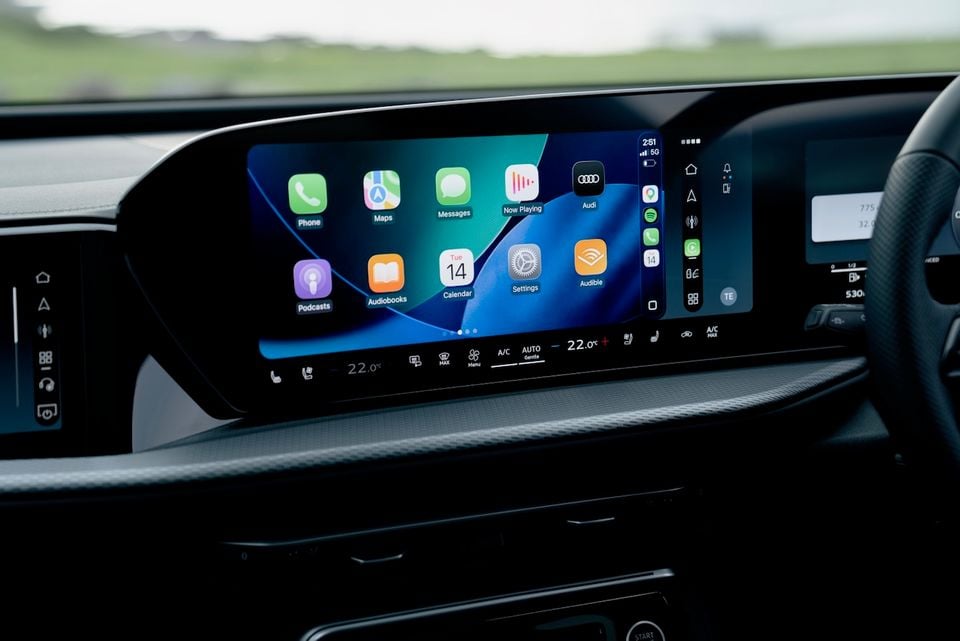
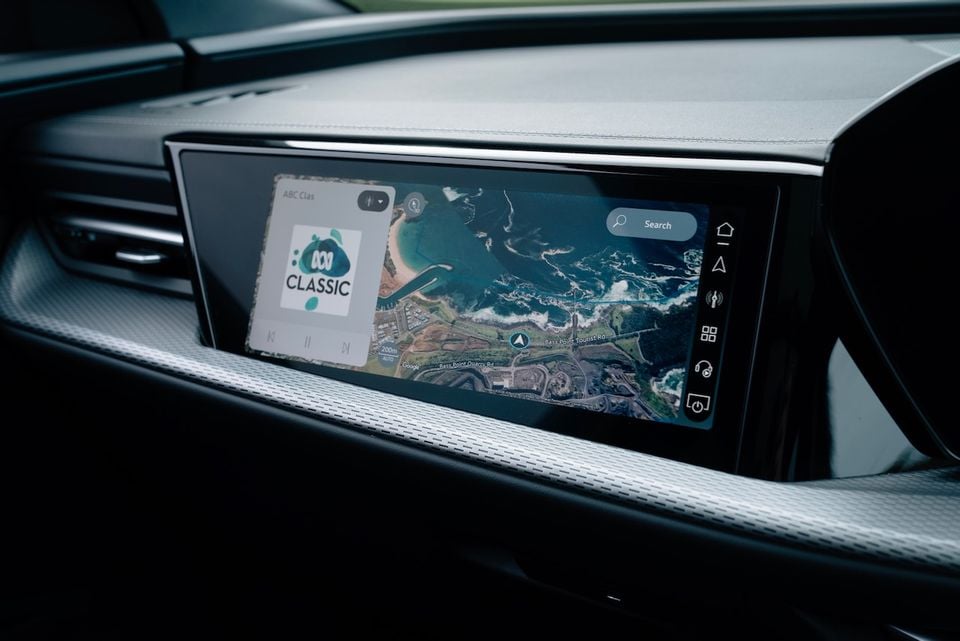
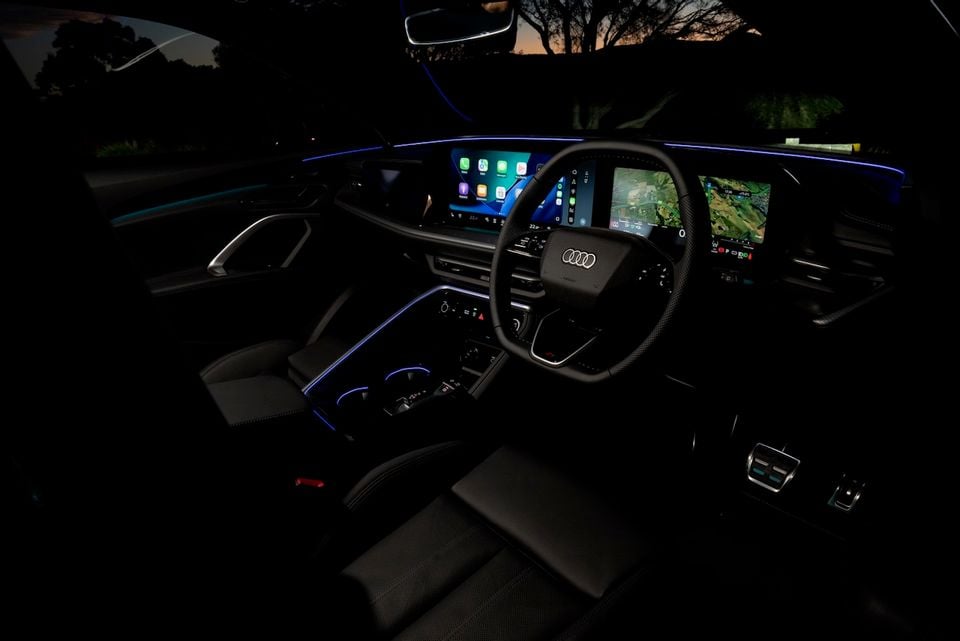
Behind the steering wheel is an 11.9-inch instrument cluster, which is joined to a 14.5-inch central infotainment touchscreen angled towards the driver, with a permanent shortcut to key climate controls along the bottom. There’s also a platform to steady your hand, though the glossy black housing for the screens is a bit of an odd shape, considering the screens are rectangular.
The layouts are reasonably legible, with drivers able to bring up Google Maps navigation in the centre of the instrument panel, leaving the infotainment screen for other things – allowing your passenger to select the next album or podcast, without you missing a crucial turn.
Audi offers a Premium package as an option for $5900, which adds an additional 10.9-inch infotainment screen ahead of the front passenger – with privacy film, so the driver doesn't get distracted – along with a Bang & Olufsen premium sound system, head-up display, colour ambient lighting with dynamic interaction, and acoustic glass for the front doors.
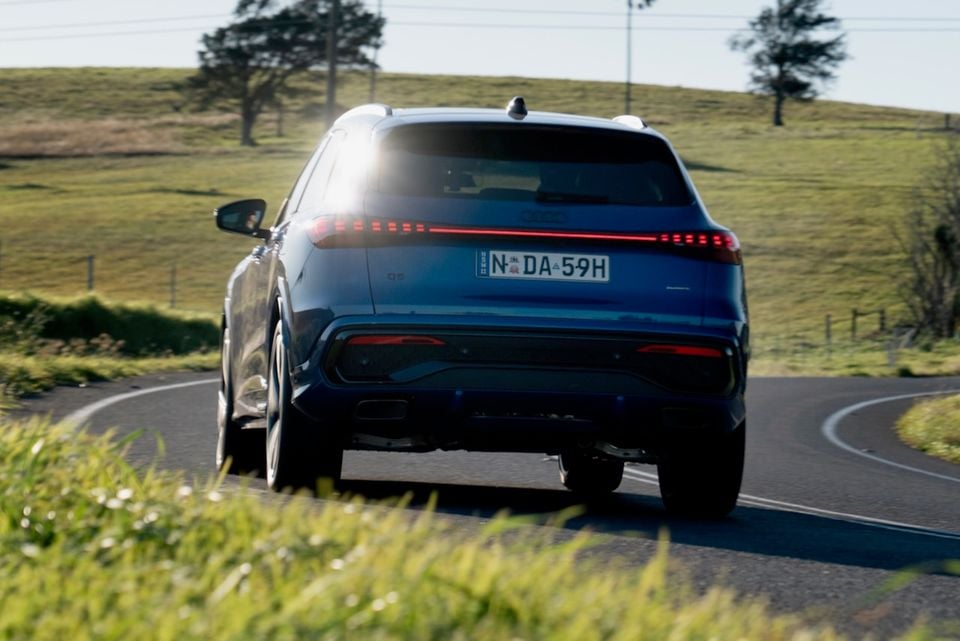
Opt for the $5400 Tech Pro package and you'll receive Park Assist Pro with 360-degree cameras, kerb warning, and trained parking with reversing assistant, as well as electric steering adjustment, and OLED tail-lights. There's also a Winter package for $1350, which adds a heated steering wheel and heated outer rear seats.
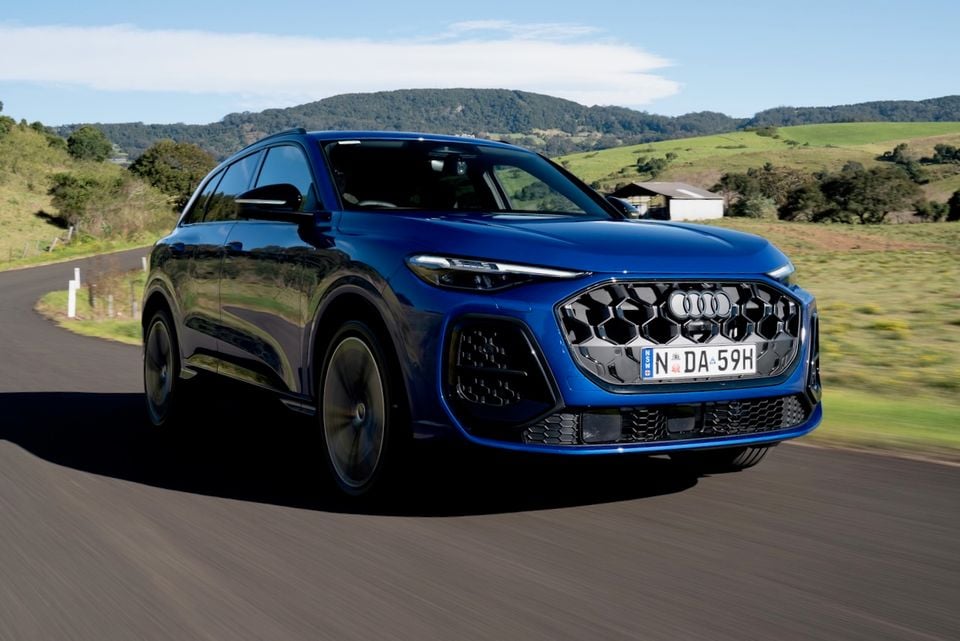
Q5 e-hybrid
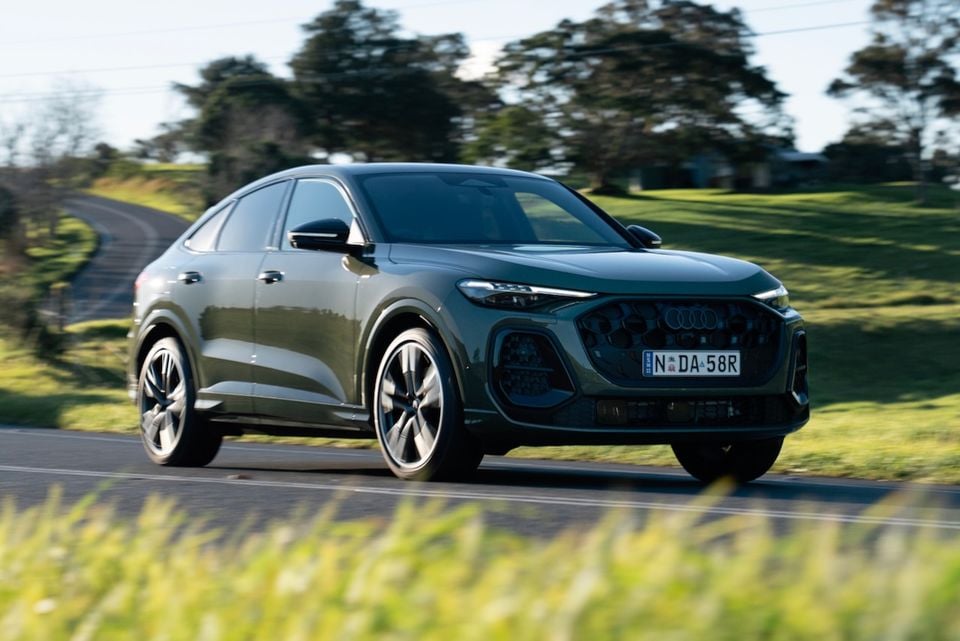
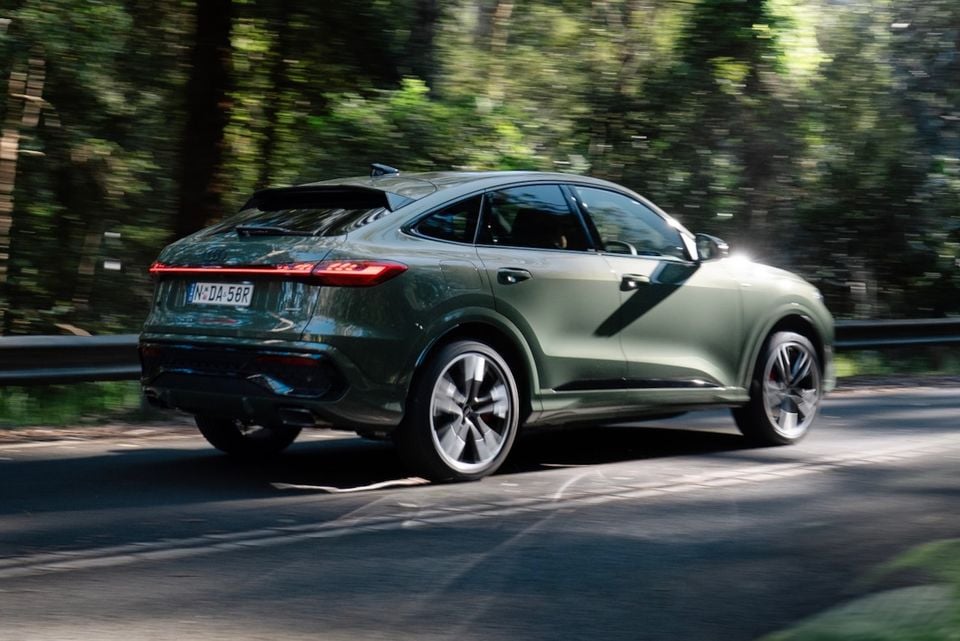
Q5 Sportback e-hybrid
Ingress and egress for the driver and front passenger are very good, which goes a long way to making the Q5 feel easy and approachable for everyday life.
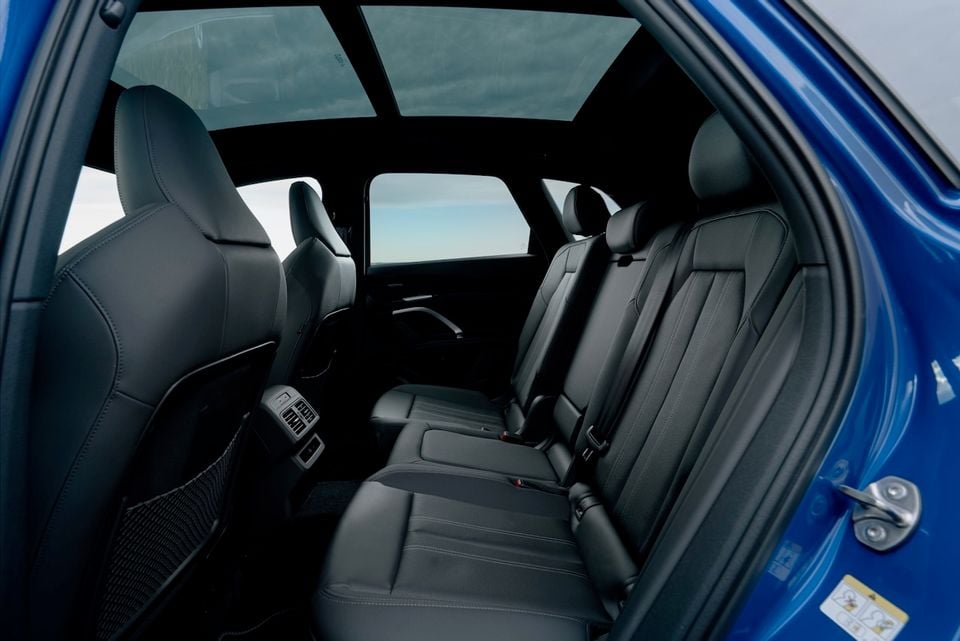
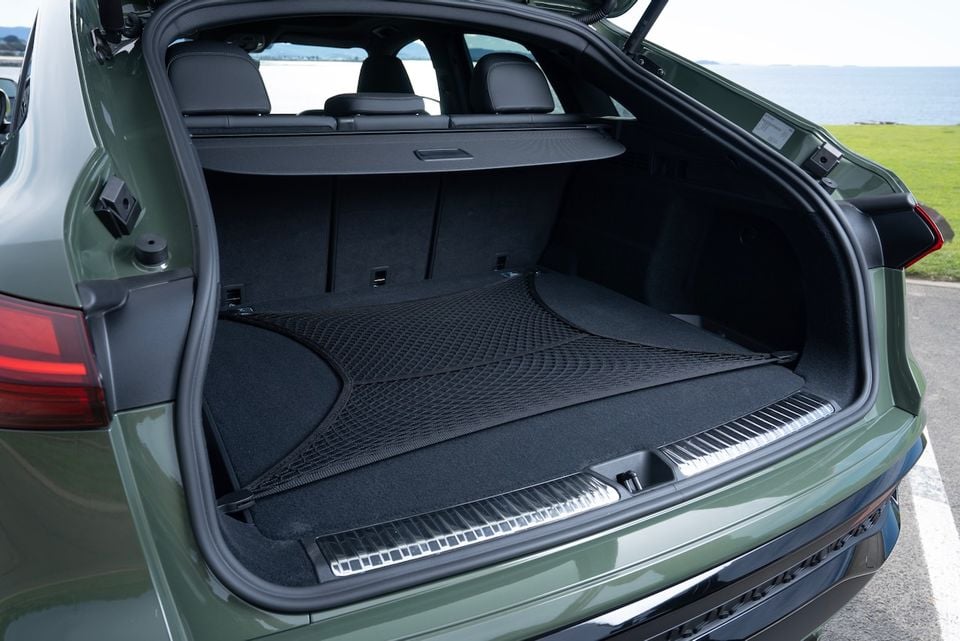
Sliding into the second row, there’s an okay amount of space for two adults. Though it isn’t palatial, you certainly wouldn't be upset if you had to spend some time back there. We swapped between the SUV and the Sportback versions, and the latter's more heavily sloping rear hatch really only impacts the height of its cargo area.
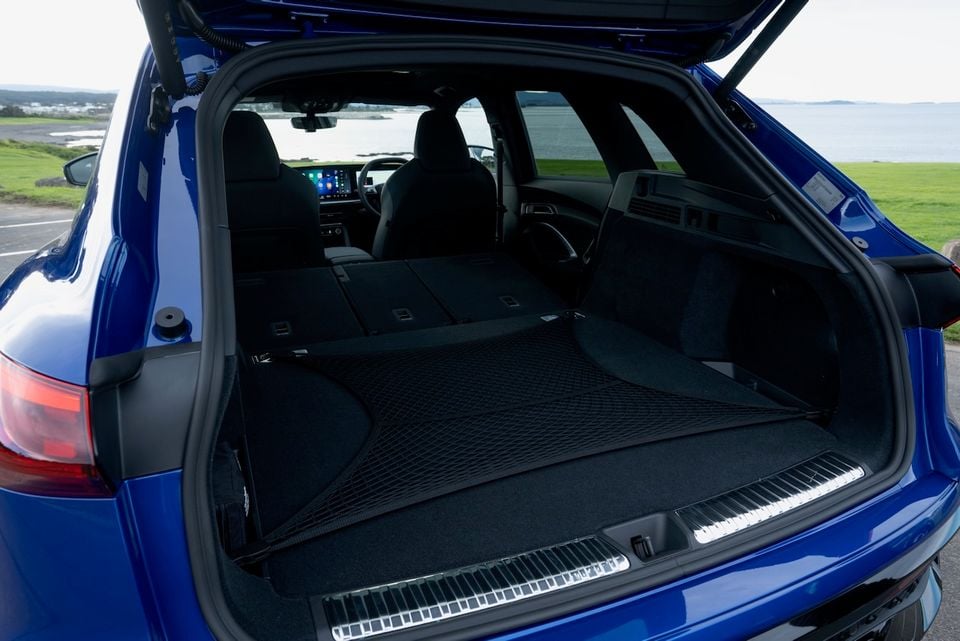
Luggage space is good for the size of the vehicle, but if you’re transporting prams or bulky items, the SUV body might be the better option.
Dimensions
Audi Q5 e-hybrid
Audi Q5 Sportback e-hybrid
Length
4717mm
4717mm
Width
1900mm
1900mm
Height
1647mm
1641mm
Wheelbase
2828mm
2823mm
Cargo capacity
520L (rear seats up) 1473L (rear seats folded)
515L (rear seats up) 1415L (rear seats folded)
To see how the Audi Q5 lines up against the competition, check out our comparison tool
What's under the bonnet?
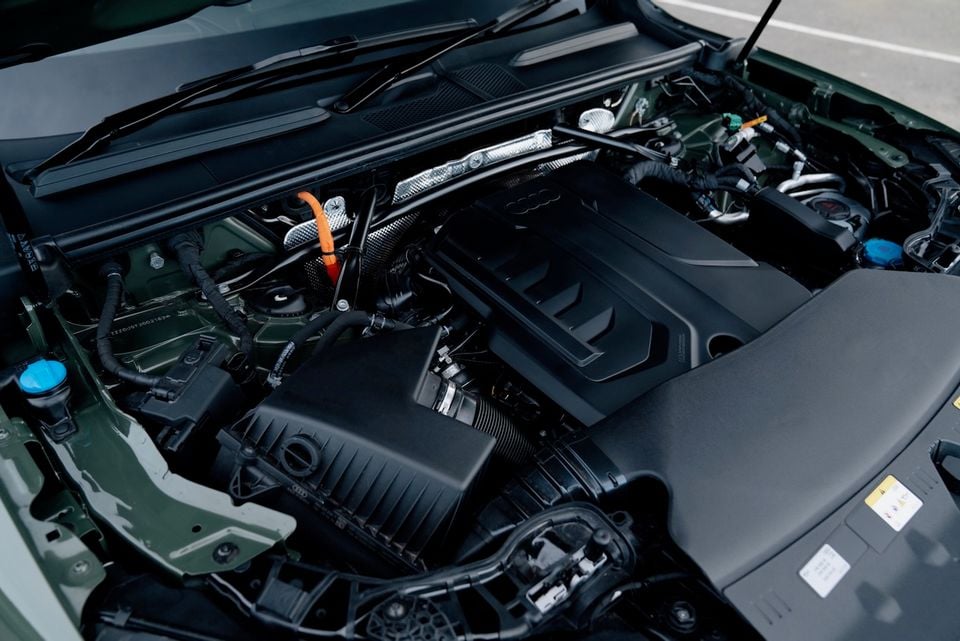
The Q5 e-hybrid combines a 2.0-litre turbocharged four-cylinder petrol engine, making 185kW of power and 380Nm of torque, with plug-in hybrid technology – composed of a 105kW electric motor fed by a 25.9kWh battery.
Specifications
Audi Q5 e-hybrid
Engine
2.0L turbo-petrol 4cyl
Engine outputs
185kW/380Nm
Electric motor outputs
105kW/350Nm
System outputs
270kW/500Nm
Battery
25.9kWh
Transmission
7-speed dual-clutch automatic
Drive type
All-wheel drive
Weight
2290kg
0-100km/h (claimed)
5.1 seconds
Fuel economy (claimed)
3.3L/100km
Electric driving range (PHEV)
82km
CO2 emissions
75g/km
Emissions standard
Euro 6
Braked tow capacity
2000kg
All of which is good for a combined 270kW and 500Nm, with a claimed 0-100km/h time of 5.1 seconds.
Thanks to the larger battery, Audi says the Q5 e-hybrid can be driven up to 82km (WLTP) on electric power alone.
Like the e-hybrid, the TFSI and TDI variants are powered by 2.0-litre turbocharged four-cylinder engines, the former being petrol and the latter being diesel, though both get 48-volt mild-hybrid technology.
While the petrol TFSI has combined fuel consumption of 7.9L/100km, the e-hybrid officially consumes just 3.3L/100km (WLTP) – though that figure is likely to increase significantly if the battery is depleted.
To see how the Audi Q5 lines up against the competition, check out our comparison tool
How does the Audi Q5 drive?
Like the interior, Audi has made the Q5 equally as innocuous on the road.
The plug-in hybrid powertrain is very smooth, and transitions between petrol and electric power beautifully. It makes for a very relaxed drive, with Audi’s engineers doing a good job of mapping the throttle so it’s responsive, but not overly so.
Audi claims the combination of the 185kW petrol engine and the 105kW electric motor adds up to combined outputs of 270kW and 500Nm – roughly on par with the power of the SQ5 – and a 0-100km/h sprint time of 5.1 seconds. Those are impressive numbers.
And while the figures may be true, the Q5 frankly never really feels like it has that level of power. That’s not to say it’s slow, because it can and does respond to all requests from the driver with the appropriate thrust, yet it never delivers it to you in a way that’s especially exciting or rewarding.
Of course, there is ample performance on tap when needed, but it’s not aggressive in its delivery during day-to-day driving.
In other words, the numbers on the page might give the impression that the Q5 e-hybrid has a performance powertrain, but that isn’t really the case, making it entirely approachable for families and new drivers.
Electric mode was smooth and ideal for city driving but, curiously, Dynamic mode doesn’t keep the petrol engine on – merely sharpening up throttle, steering, and the air suspension (if optioned).
The ability to drive more than 80km on battery power alone makes it ideal for city commuting during the week – plugging it in overnight – without giving up the freedom that comes with an internal-combustion engine.
And although 80km is more than enough for the average Australian, it's worth noting the Skoda Kodiaq PHEV has up to 110km of electric range from almost the same sized battery. Plug-in hybrids from BYD and MG offer more than 130km, and the GWM Haval H6 PHEV claims up to 180km of electric range. Even the humble Toyota RAV4 has more than 120km of claimed electric range in PHEV form.
Most of the time, we drove the Q5 in hybrid mode, letting it decide when to utilise hydrocarbons and/or electrons, and that seemed to make the most sense.
There's a nice neutral handling from the Q5 that was a pleasant surprise. While we weren’t able to explore the limits of its chassis on public roads, we only got a whiff of understeer as we edged closer to the upper levels of its capability. On winding roads, the Audi is predictable and relatively responsive to inputs, with a high level of grip available – despite weighing in at almost 2300kg.
Those German engineers have done well to hide its weight, being almost 400kg more than the base Q5. Sure, it’s not exactly nimble, but there’s no obvious feeling of it being bloated or wallowy – and a lot of that comes down to its suspension.
The Q5 e-hybrid comes standard with steel-spring sports suspension, with the option of air suspension for an additional $4650.
We spent more time in the optioned vehicle, with the air suspension taking hits well without being overly cushioned or crashy. It’s really well tuned, striking an enjoyable balance between ride and handling.
However, while the standard sports suspension doesn’t match that last 15 per cent of refinement that comes from the air suspension, it is still very good. The base setup has most of the comfort and handling dynamics that impressed us in the air-suspended Q5, making the option a harder thing to justify.
Audi seems to have added a touch more weight to the steering – addressing a common complaint of its models – with that weight firming slightly when Dynamic mode is selected.
Though the change is a move in the right direction, the Q5’s steering still feels overly artificial and video-gamey, with minimal feedback from the front wheels. The benefit is it makes the SUV easy to manoeuvre in the city and in tight carparks.
Ready to buy? We’ll help you get a great deal.
If this is the car for you, we’ll compare offers from trusted dealers, handle the back and forth and manage your purchase from enquiry to delivery.
The Q5 works particularly well on the motorway, with an insulated cabin and well-sorted adaptive cruise control. Combined with the good amount of torque available for hills, and the excellent suspension, the Audi eats up long drives.
The active safety systems aren’t overbearing either, but still provide a safety net if you get distracted by a bumblebee.
While not overflowing with character, the Q5 is a pleasant thing to drive and feels like it can take on most tasks thrown at it to a commendable degree – particularly scenarios that it will encounter with Australian families, like commuting through urban and suburban areas, travelling highway distances, and encountering the occasional mountain pass.
To see how the Audi Q5 lines up against the competition, check out our comparison tool
What do you get?
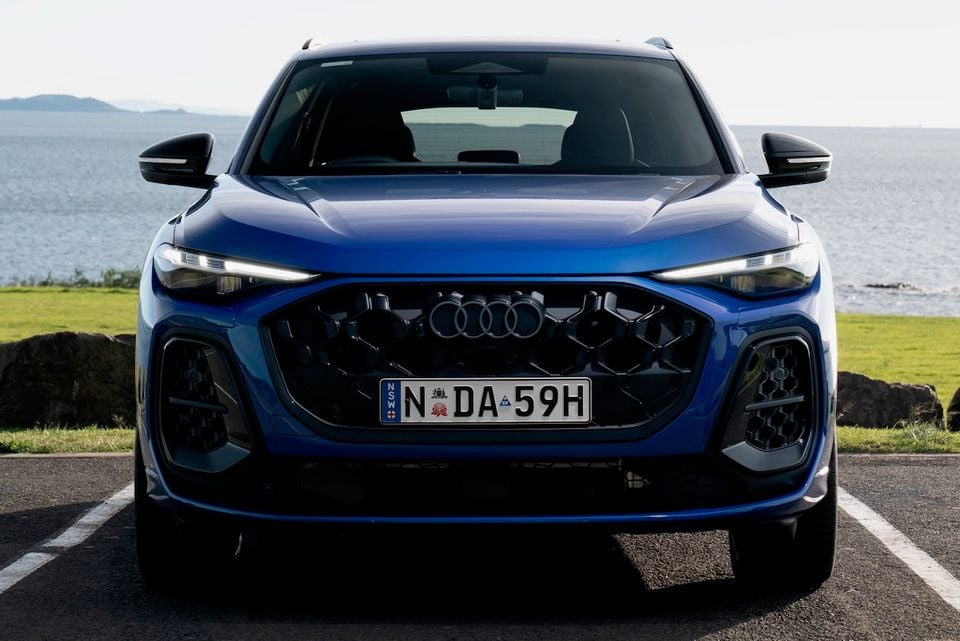
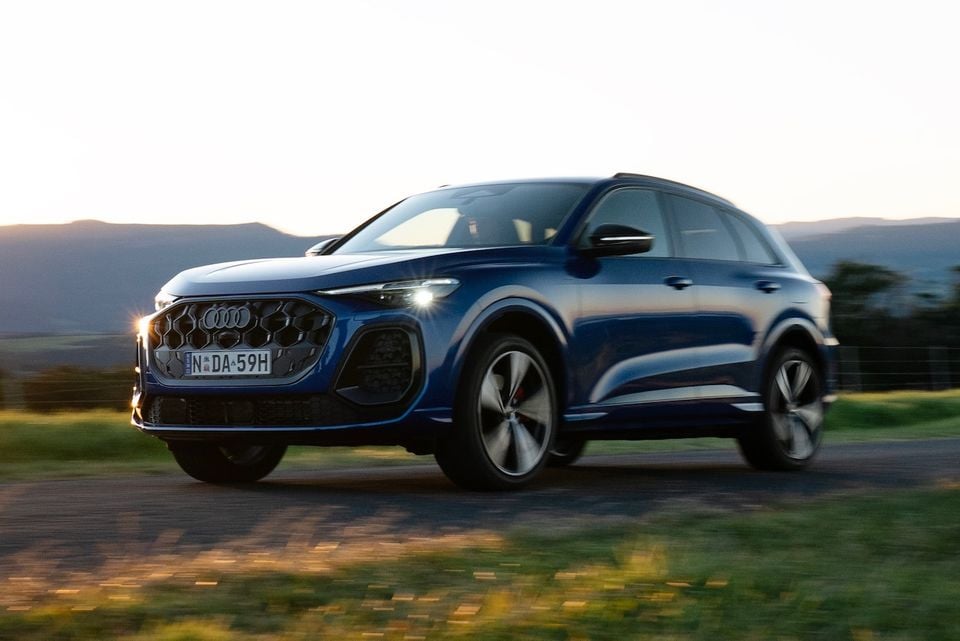
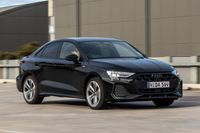
The Audi Q5 e-hybrid comes with most things you need, as well as having the Black exterior pack as standard – making it look a little cleaner and more attractive.
2026 Audi Q5 e-hybrid quattro equipment highlights:
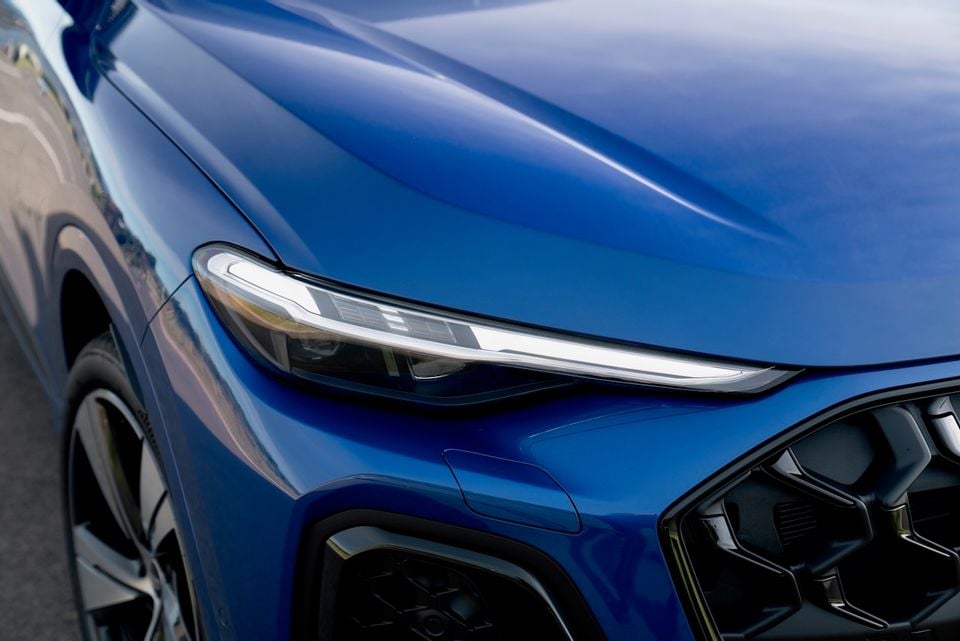
Matrix LED headlights
incl. selectable light signatures
LED tail-lights with rear projection light
S line interior with S badging
Leather appointed front sport seats with heating
11.9-inch ‘virtual cockpit’ OLED digital instrument cluster
14.5-inch OLED touchscreen infotainment system
Wireless Apple CarPlay and Android Auto
Satellite navigation
Audi sound system with subwoofer
8 speakers
180W output
Colour interior ambient lighting
Wireless phone charger incl. cooling
Auto-dimming mirrors with memory
Inlays in matte brushed aluminium
Rear seat bench – sliding, reclining
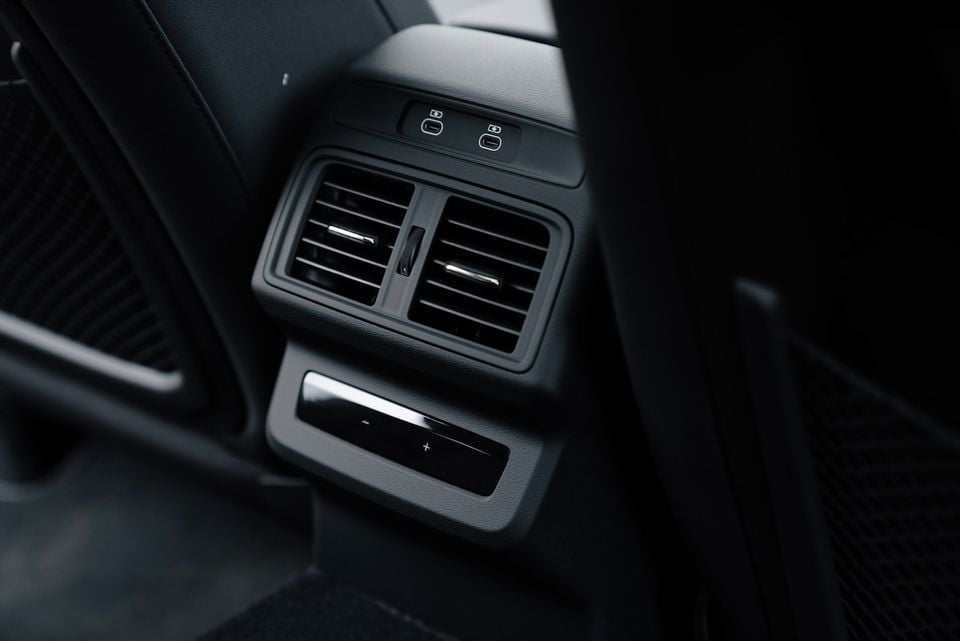
Auxiliary air-conditioning
Panoramic sunroof
Rear privacy tint
Electric tailgate with handsfree
Black exterior package
Black bumper trims
Black window trims
Black side mirror caps
Darkened exhaust tips
Audi rings in anthracite grey
Black roof rails (SUV)
Red brake calipers
20-inch alloy wheels
To see how the Audi Q5 lines up against the competition, check out our comparison tool
Is the Audi Q5 safe?
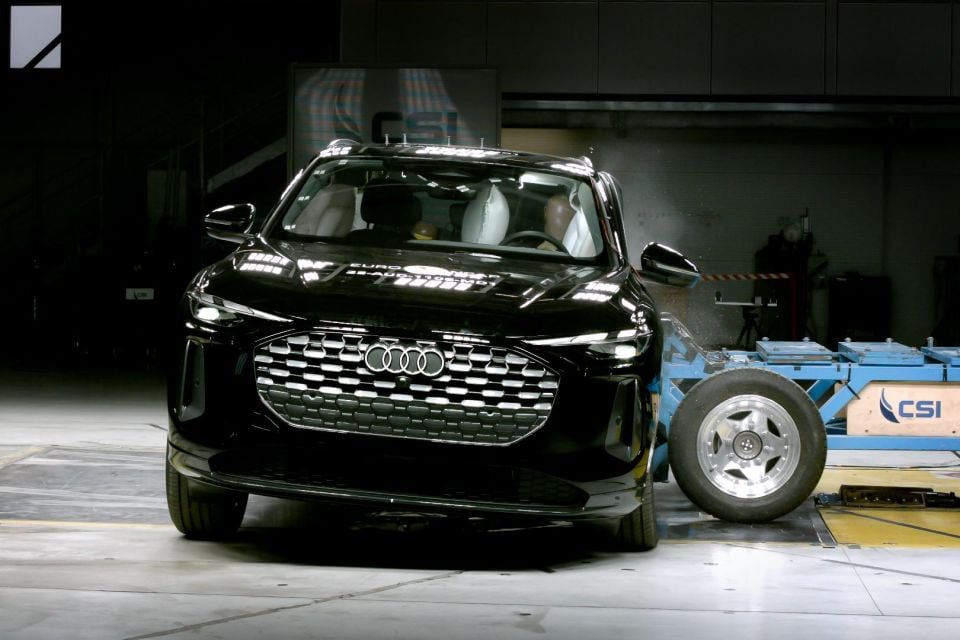
Petrol and diesel versions of the Audi Q5 have received a full five-star safety rating from ANCAP, though the rating hasn't yet been extended to the plug-in hybrid variants.
Standard safety features include:
9 airbags incl. front-centre
Active front assist – AEB
Autonomous emergency braking – forward
Front cross-traffic assist
Front turn assist
Swerve assist
Adaptive cruise control with stop/go
Driver attention and fatigue monitor
Emergency lane-keep assist
Lane departure warning
Side assist
Blind-spot monitoring
Safe exit warning
Rear cross-traffic assist
Rear turn assist
360-degree cameras incl. kerb view
Park assist plus
Parking sensors – front, rear
Semi-autonomous parking
Speed sign recognition
Tyre pressure loss indicator
Audi has updated the safety tech for the MY26 Q5, which the company says has been tested and optimised for Australian conditions. This includes:
Long-range radar
Adaptive cruise assist
Traffic jam assist
Assisted lane change
To see how the Audi Q5 lines up against the competition, check out our comparison tool
How much does the Audi Q5 cost to run?
The 2026 Audi Q5 e-hybrid is covered by the company's five-year, unlimited-kilometre warranty, which also comes with five years of roadside assistance. Audi also guarantees the battery for up to eight years and 160,000km.
Servicing and Warranty
Audi Q5 e-hybrid
Warranty
5 years, unlimited kilometres
Roadside assistance
5 years
Service intervals
12 months or 15,000 kilometres
Capped-price servicing
5-Year Service Plan
Total capped-price service cost
N/A
While Audi does offer five-year service plans, the company has yet to release service pricing for Q5 e-hybrid variants.
To see how the Audi Q5 lines up against the competition, check out our comparison tool
CarExpert's Take on the Audi Q5 e-hybrid
The plug-in hybrid Audi Q5 does a lot of things well, and sits in the middle of a Venn diagram that takes into account daily commuting, family duties, electric driving range, comfort, handling, and badge cachet.
But while there’s a lot to like, the Audi Q5 e-hybrid doesn’t really move the needle much in any direction.
There’s a bit more driving range and a bit more refinement, yet it feels like Audi is playing it safe, perhaps given the uncertainty around European Union regulations. Which is understandable – and it’s not the only company doing so.
While we preferred the interior of the previous-generation Q5, the new one is a perfectly nice cabin to spend time in, with decent build quality, good comfort and ergonomics, and a relatively friendly user interface.
The suspension is also quite good, and the handling was better than we were expecting for a heavier plug-in hybrid SUV. Overall, its on-road manners have been tuned to a high degree, and the Q5 proved itself across environments that most owners will encounter during their daily errands.
Our complaints are few, but there's also not a lot that stands out. It’s entirely innocuous, which isn’t necessarily a bad thing. Audi has kept the Q5 fresh enough to remain relevant, while following its proven recipe of understated luxury.
For many buyers out there, the Audi Q5 e-hybrid will suit them to a T. It’s a broadly capable premium family SUV that colours within the lines, yet maintains an air of sophistication that is synonymous with the four-ring badge.
CarExpert can save you thousands on a new Audi Q5. Click here to get a great deal.
† Displayed prices are based on the drive-away price of the vehicle, which includes delivery charges, registration fees, number plates, and applicable road taxes, based on a Sydney location. However, prices may vary between states and territories, and additional costs such as compulsory third party (CTP) insurance, dealer delivery fees, and optional extras are not included. These prices are subject to change without notice and may not reflect current market pricing or dealer offers.
Automotive Vehicle Spec Data & 4K images Powered by JATO Dynamics Ltd












 Automotive Vehicle Spec Data & 4K images Powered by JATO Dynamics Ltd