
Alborz Fallah
Chery's global push includes London headquarters for one of its brands
Chery’s international boss wants some brand headquarters outside China, floating London for Jaecoo as the company expands its global operations.
24 Hours Ago

Senior Road Tester
SPONSORED
There are fast cars, there are beautiful cars, and then there are cars that somehow manage to stir the soul before you've even turned a wheel.
Maserati has been building the latter for more than a century.
It's a name that conjures up images of spectacular racing machines, magnificent Italian grand tourers, extraordinary engines, and some of the most evocative automotive designs ever created.
And in 2026, Maserati celebrates a particularly significant milestone: 100 years since the Trident first appeared on a racing car.

That's an extraordinary achievement for a marque whose identity has always been shaped by competition, engineering ambition, and a distinctly Italian understanding of what makes a great driver's car.
Because while plenty of manufacturers have discovered the marketing appeal of sporting heritage, Maserati's performance credentials were forged on racetracks long before luxury performance SUVs became a global phenomenon.
And that heritage is alive today in the Maserati Grecale Trofeo, an SUV powered by a remarkable twin-turbocharged V6 derived from the engine architecture of the MC20 supercar.
But to properly understand why that matters and what you’re buying into, you need to appreciate where this remarkable Italian story began.
Maserati's origins date back to Bologna in 1914, when Alfieri Maserati and his brothers established the business that would eventually become one of the world's most celebrated performance car manufacturers.
But it was 1926 that truly established the legend.
That year, the Maserati Tipo 26 made its competition debut at the Targa Florio in Sicily, with Alfieri Maserati behind the wheel.
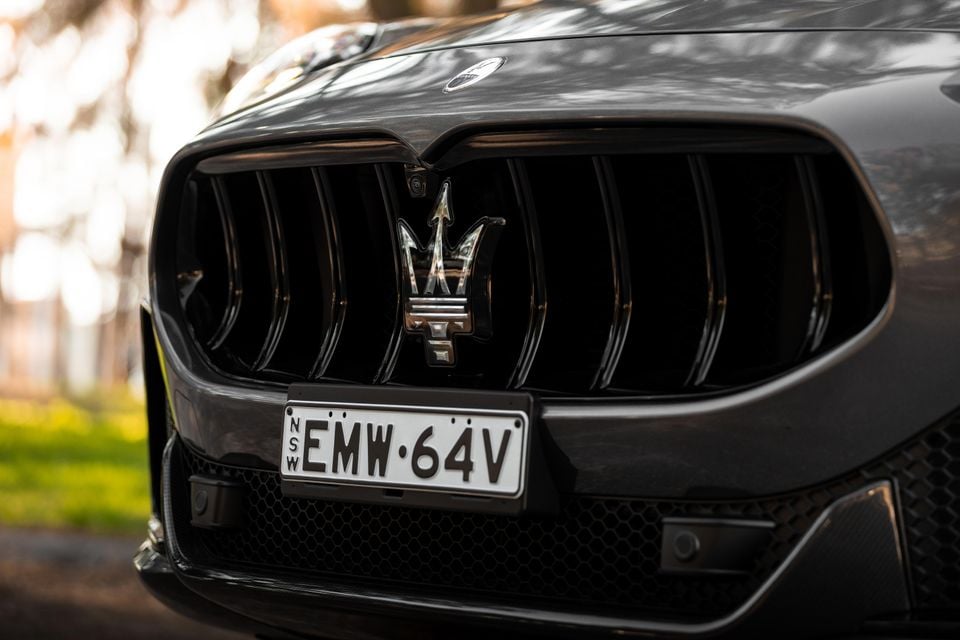
The car carried the now-famous Trident emblem, inspired by Neptune's statue in Bologna's Piazza Maggiore.
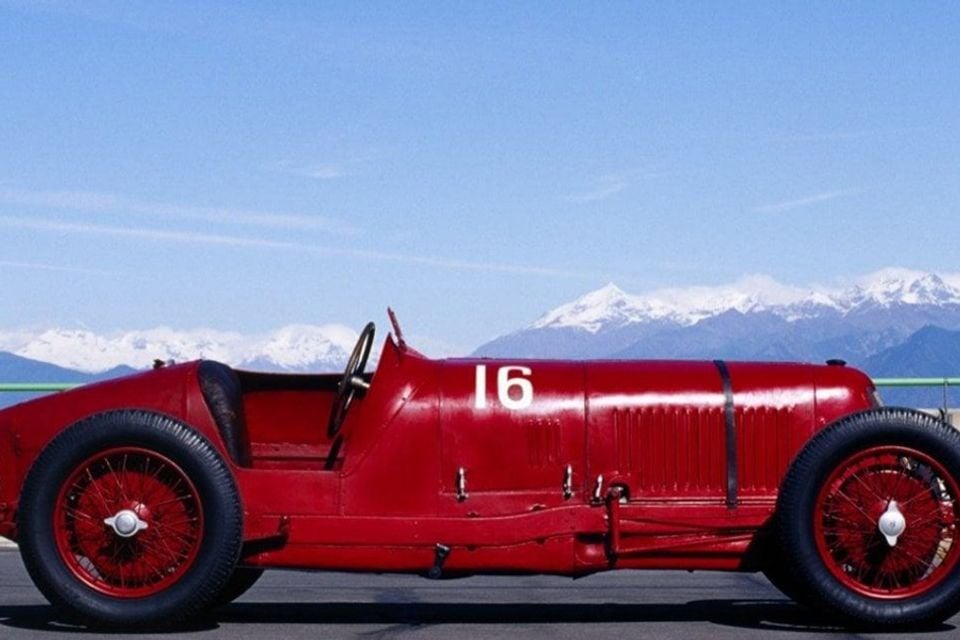
It was an inspired choice. Neptune's Trident symbolised strength and power, qualities that would become inseparable from the Maserati name.
The Tipo 26 finished first in its class at the Targa Florio, providing a fitting beginning to a century of motorsport achievement.
And the brothers weren't simply interested in building fast cars. They were obsessed with mechanical innovation, engineering precision, and the relentless pursuit of performance.
That philosophy would define the marque for decades.
By the 1930s, Maserati had established itself as a formidable force in international motor racing.
The extraordinary Maserati 8CTF, with its supercharged straight-eight engine, achieved one of the most remarkable accomplishments in the company's history when American racer Wilbur Shaw drove it to victory in the 1939 Indianapolis 500.
He repeated the feat in 1940. Think about that for a moment. An Italian racing machine winning America's most famous motor race in consecutive years.
It remains one of the great chapters in Maserati's history and a demonstration of the marque's international engineering credibility.
Then came the 1950s, an era when Maserati produced some of the most beautiful and successful racing cars ever built.
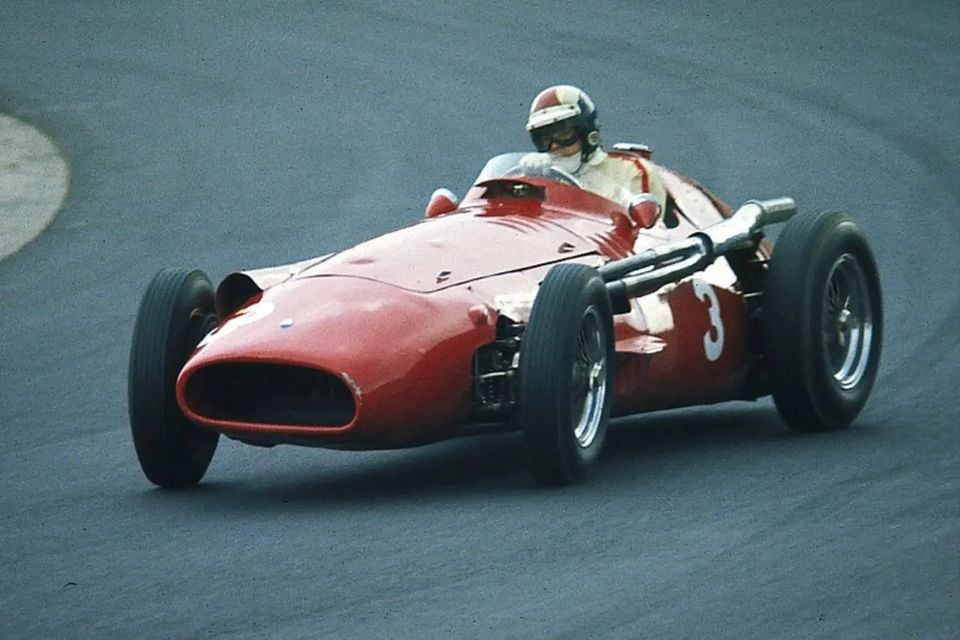
The legendary Maserati 250F remains one of the definitive Formula 1 machines. Even today it’s still utterly evocative from any angle, including the cockpit.
With its elegant long bonnet, exposed wheels and magnificent straight-six engine, the 250F was a masterpiece of both engineering and design.
It was also the car in which Juan Manuel Fangio secured the 1957 Formula 1 drivers' championship. His victory in the German GP that year, at the fearsome Nürburgring Nordschleife, is widely regarded as one of the greatest drives in motorsport history.
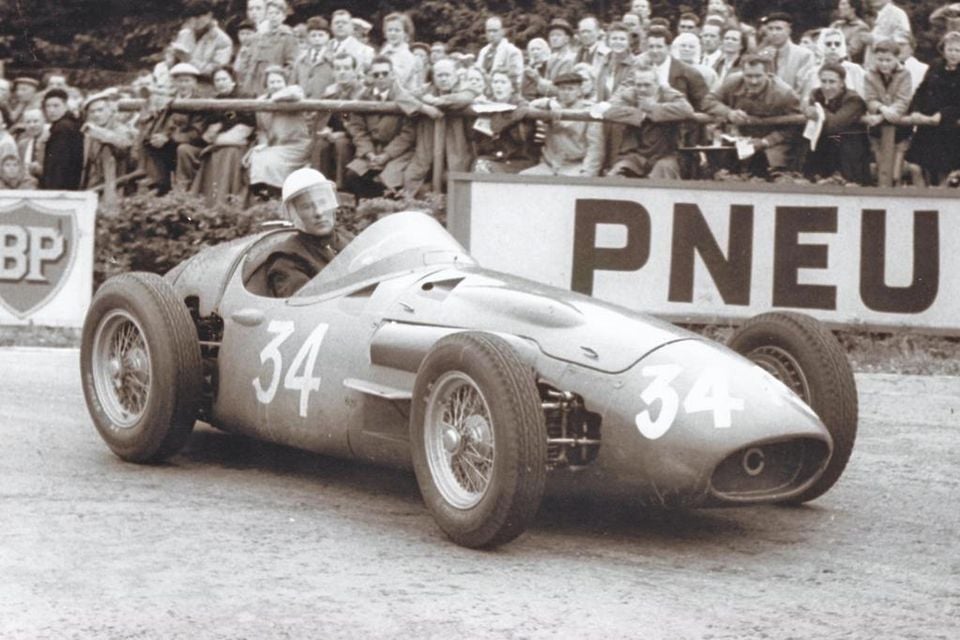
Fangio overcame a substantial deficit with a breathtaking sequence of record-breaking laps to claim victory. It was a performance that embodied everything Maserati stood for: courage, precision, mechanical excellence, and extraordinary driving ability.
And although the company subsequently withdrew from factory Formula 1 competition, its influence on high-performance motoring was already firmly established.
What makes Maserati's story particularly compelling is that its racing achievements were never isolated from its road cars.
The same passion for engineering excellence that produced the 250F helped shape a succession of magnificent Italian grand tourers.
Cars like the A6GCS, 3500 GT, Ghibli, Bora and Khamsin weren't simply transportation. They were rolling expressions of Italian design and mechanical sophistication that still turn heads today.
The 3500 GT, introduced in 1957, played a pivotal role in transforming Maserati into a serious manufacturer of luxury performance road cars.
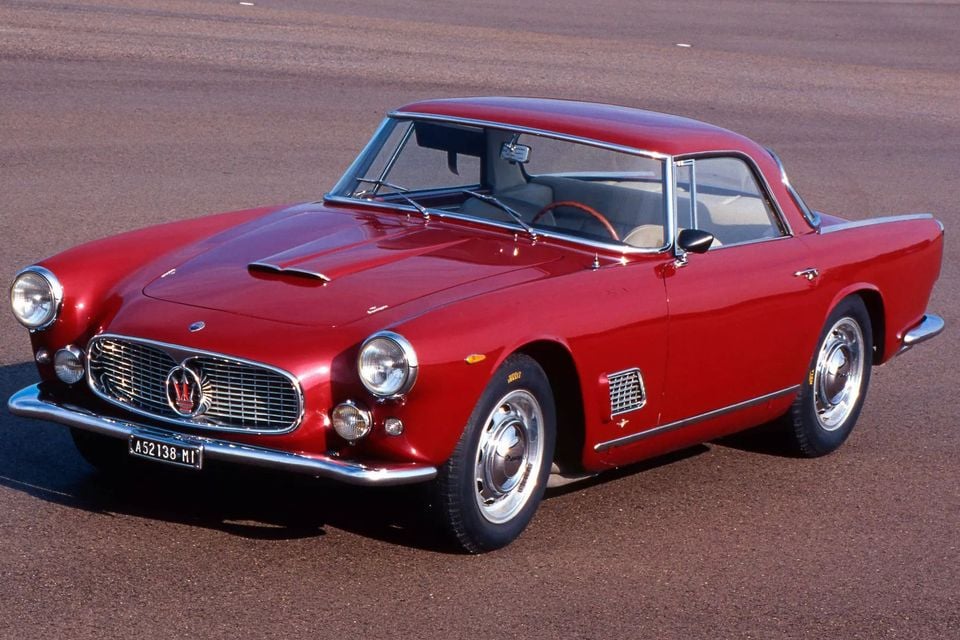
It combined elegant Italian coachwork with the sort of mechanical pedigree few rivals could match.
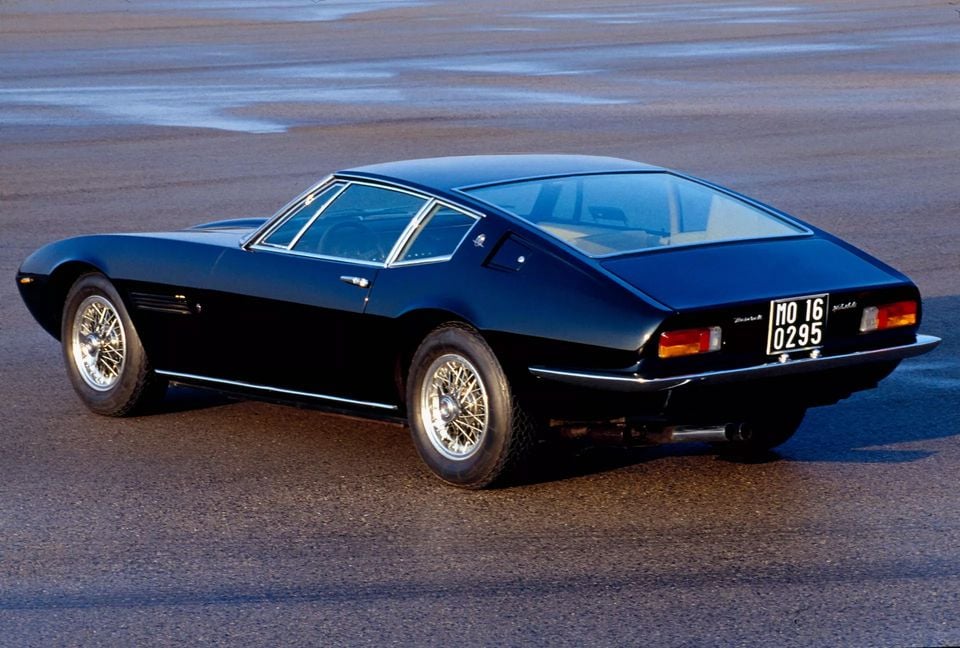
Then came the original Ghibli in 1966, with its dramatic Giorgetto Giugiaro-designed bodywork and thunderous V8 engine.
My own father tells the story of his Italian business trip years ago to look at Fiat forklift trucks in the 1970s, with a view to becoming the Aussie distributor. I don’t think he knew a single word of Italian, despite Fiat and Alfa dealer Frank Crott living opposite our family home.
So when he was passed at 170mph (his read on the speed) by something exotic, wearing US Air Force plates, he gave spirited chase in his Fiat 124 at over 100mph in the hope of catching him so he could converse in English.
I should point out he was a pretty serious open-wheel race driver (and motorcycle racer) himself, having raced at Bathurst with the likes Stan Jones, Col James and Alec Mildren in 1956.
The fighter pilot (as he would soon learn) was in fact doing 170mph, and had pulled over for a beer, which is when the old man got to see the Ghibli S that had flown past him. What a truly sensational looking car that really did outgun Ferraris of the day in so many ways.
Low, wide and impossibly glamorous, it was one of the great automotive designs of its era.
The Bora, introduced in 1971, took Maserati in another direction altogether, embracing a mid-engine layout and futuristic styling.
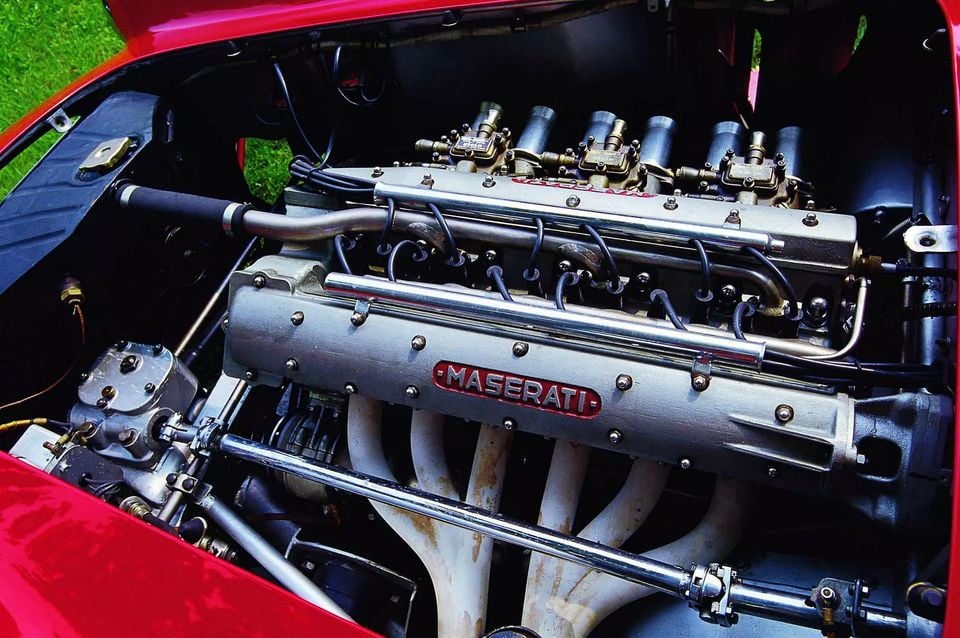
Each model was different, yet all shared an unmistakable character. These were cars designed to be driven, admired and experienced.
And, crucially, they never sacrificed their Italian identity in pursuit of conventional luxury.
Fast-forward to the modern era and Maserati's engineering ambition is perhaps best demonstrated by the MC20 supercar.
Introduced in 2020, the MC20 represented a dramatic statement of intent. Its striking mid-engine design, carbon-fibre monocoque tub and extraordinarily powerful Nettuno V6 powerplant signalled a new chapter in Maserati performance engineering.
The 3.0-litre twin-turbo engine was particularly significant. Developed by Maserati, it introduced innovative pre-chamber combustion technology derived from principles used in high-performance motorsport engines.
In the MC20, the Nettuno produces an astonishing 463kW and 730Nm – enough to propel it from standstill to 100km/h in 2.9 seconds and zero to 200km/h in an astonishing 8.8 seconds. And I for one can vouch for that, first-hand.
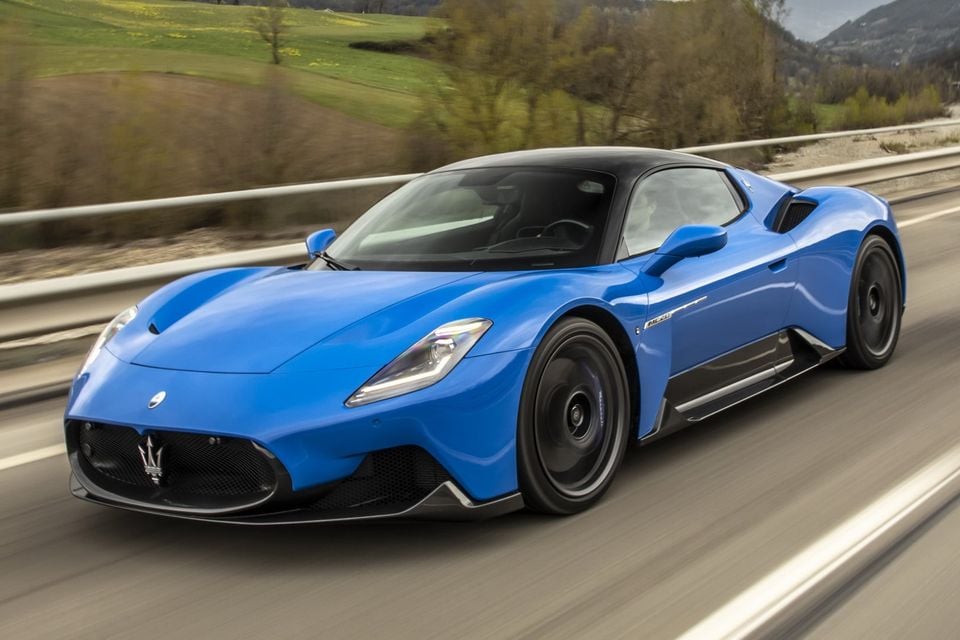
I drove the car in Italy for four hours on some beautifully flowing B-roads outside of Rome and simply wasn’t expecting the kind of ferocity this V6 delivered. It had huge pace and there was no chance of keeping the throttle pinned for more than few seconds – given the speed this car was capable of.
It's a magnificent engine, combining ferocious performance with the sort of technical sophistication you'd expect from an Italian marque with a century of competition experience.
And here's where the story becomes particularly interesting, because Maserati didn't reserve that extraordinary engineering philosophy exclusively for its supercar. Instead, it brought a version of the Nettuno V6 into the Grecale Trofeo.
And the result is one of the most distinctive luxury performance SUVs on the market.
The Maserati Grecale Trofeo isn't simply a luxury SUV with a powerful engine. It's a vehicle that brings genuine supercar-derived engineering into a beautifully crafted, highly practical package.
Under that sculpted bonnet sits the 3.0-litre twin-turbo Nettuno V6, tuned to develop an impressive 390kW and 620Nm. Serious numbers by any measure.
With intelligent all-wheel drive and an eight-speed automatic transmission, the Grecale Trofeo can accelerate from 0-100km/h in a claimed 3.8 seconds.
That's the sort of acceleration once reserved for exotic supercars. But focusing exclusively on the numbers would be missing the point, because the real appeal of the Grecale Trofeo is how it delivers that performance.

There's an immediacy to the throttle response, a distinctive character to the V6, and an underlying sense of mechanical purpose that makes the experience feel special.
It's not simply about getting from one corner to the next as quickly as possible. It's about enjoying everything that happens between them.
The steering, the engine response, the way the chassis communicates with the driver, and the sound accompanying every enthusiastic burst of acceleration all contribute to the experience.
Adaptive air suspension, sophisticated chassis electronics and an electronically controlled limited-slip rear differential help deliver a balance between everyday refinement and genuine dynamic capability.
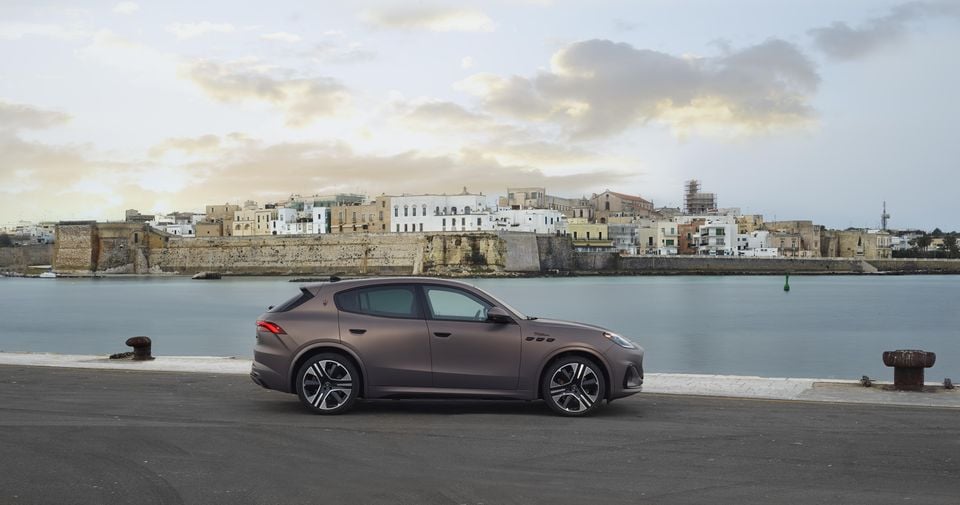
And that's precisely what makes the Trofeo so compelling.
It combines the performance philosophy of a serious sports car with the versatility and comfort of a premium SUV.
Of course, a Maserati has always been about more than engineering. Design and craftsmanship are equally important ingredients.
The Grecale Trofeo was created by Centro Stile Maserati and is manufactured in Italy, continuing the company's tradition of combining technical sophistication with visual elegance.
Its long bonnet, athletic proportions, distinctive grille and sculpted bodywork create a presence that's unmistakably Maserati.

Inside, the emphasis is on premium materials, contemporary technology and beautifully considered details.
There's a genuine sense of occasion to the cabin, whether you're settling into the driver's seat for an early morning escape or arriving somewhere special for dinner.
And that's an important distinction. Maserati understands that luxury isn't simply about the quantity of equipment fitted to a vehicle. It's about how that vehicle makes you feel.
One hundred years after the Tipo 26 first carried the Trident into competition, Maserati remains a brand defined by performance, design and individuality.
Its history includes Indianapolis victories, Formula 1 championships, extraordinary grand tourers, and some of the most memorable engines ever produced. But the most compelling thing about that history is how it continues to influence the cars Maserati builds today.
The Grecale Trofeo is a perfect example. It's a luxury performance SUV with the heart of a supercar, the sophistication of an Italian grand tourer, and the unmistakable character of a Maserati.

And in a segment where so many vehicles follow a familiar formula, that individuality feels more valuable than ever.
With only a limited number of MY26 Grecale Trofeo vehicles currently available, there's an opportunity to experience a particularly special expression of Maserati's performance philosophy.
Because after 100 years, the Trident still stands for something extraordinary. Not simply speed, but the art of making speed feel unforgettable.
Research cars in our Showroom, compare your options or let our New Car Specialists do the running around to find you a great deal.
Anthony Crawford is a CarExpert co-founder and senior presenter with 20+years in automotive journalism and content creation.
Alborz Fallah
24 Hours Ago

William Stopford
3 Days Ago

Max Davies
3 Days Ago


Derek Fung
4 Days Ago

Tace Clifford
5 Days Ago

Alborz Fallah
5 Days Ago
Add CarExpert as a Preferred Source on Google so your search results prioritise writing by actual experts, not AI.