


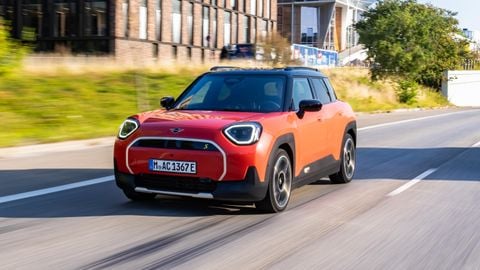
2025 Mini Aceman review: Quick drive
Mini slots a new crossover into its range beneath the Countryman, makes it electric-only and gives it the name Aceman. How does it stack up?

CarExpert's verdict on the Aceman

What we love
- Stylish exterior
- Choice of powertrains
- Strong performance from SE
Worth a thought
- Neither battery offers massive range
- Limited space in rear
- Lumpy low-speed ride
Introduction
Over the years, the Mini Countryman has grown in size to the extent that it contradicts the brand’s very name – there’s nothing ‘Mini’ about the small SUV any longer. That’s good for practicality, of course, but what if you want a more compact crossover with the Mini badge on it?
Well, there’s good news: the BMW-owned, British compact-car company is about to satisfy your requirements with the Aceman, a light SUV that’s sized and priced closer to the electric Cooper three-door than it is to the bigger, stockier Countryman, and it will be available only with electric power.
There are two battery sizes and two power outputs for the dedicated electric SUV, and the Aceman – a name that links back to the short-lived and confusing Mini Paceman crossover sold here for a few years from 2013 – promises all of the typical Mini glitz and glamour, only in a compact, zero-emission package.
To find out if it can compete at the cutting edge of the small electric crossover market when it arrives here in Australia later this year, we drove the more powerful Aceman SE at its international media launch in Denmark, one of the world’s most EV-friendly countries.
We tested the new Mini on Copenhagen’s congested city streets, while also taking it out for a long spin in the countryside surrounding the capital.
How much does the Mini Aceman cost?
The two front-wheel drive model variants available are the 135kW Aceman E, which retails at $55,990 before on-roads, and the 160kW Aceman SE, starting from $60,990 plus on-roads. The E only comes in Classic trim, while the SE offers a more generous Favoured equipment specification.
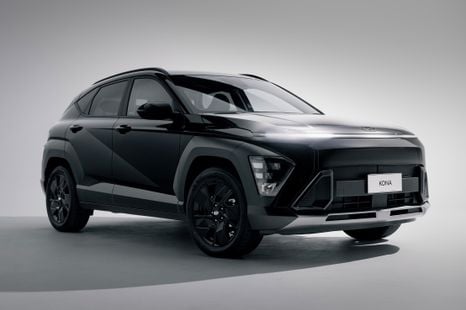
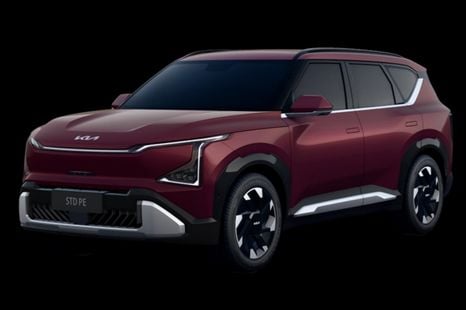
Those prices put the new Mini crossover right in the mix with the likes of the Cupra Born ($59,990), the cheapest Hyundai Kona Electric ($54,000), the Kia Niro EV ($66,590), and perhaps its most obvious, direct rival, the stylish Volvo EX30 ($59,990).
However, the Aceman is a lot more expensive than Chinese-built alternatives like the BYD Atto 3 ($44,499) or MG ZS EV ($39,990), and the most basic Aceman is also slightly pricier than the much bigger and longer-range Tesla Model Y Rear-Wheel Drive ($55,900).
To see how the Mini Aceman stacks up against its rivals, check out our comparison tool
What is the Mini Aceman like on the inside?
Mini prides itself on providing a premium interior experience in all of its models, and with the swish design and interesting materials of the Aceman, the compact electric crossover doesn’t let the side down.
If you sit in it and a Countryman in a Mini showroom, you’ll notice the Aceman’s interior is more carefully built down to a cost – its air vents, for instance, are considerably less fancy, while some of the plastics lower down feel less expensive.
Also, we’re baffled as to why that leather strap on the fascia behind the steering wheel couldn’t have been made slightly elasticated, so it could have had a practical purpose (such as holding parking tickets, payment cards or similar) rather than being purely decorative.
Up front, everything above the beltline of the cabin, plus the John Cooper Works seats in the SE Favoured, is excellent. The centrepiece of any modern Mini is the 9.4-inch, circular touchscreen infotainment display.
Because almost all the main information and functions of the Aceman run through this, there is no dedicated instrument cluster behind the steering wheel – instead, all versions come with a fold-out head-up display.
Beyond this, lots of gold detailing and interesting bits like the ‘floating’ pull handles on the doors couple with the fabric and patterned dashboard to give the Mini a suitably upmarket ambience.
Much use of recycled and eco-conscious materials abounds inside the Aceman, but you wouldn’t know this because it feels of high quality throughout. This includes the ‘Vescin’ seat upholstery, which looks and feels like plush leather but is, in fact, not leather; vegans will be pleased.
There are idiosyncrasies of this set-up, because the Aceman relies heavily on the touchscreen for most of its operations. Switchgear is minimal and reduced to nothing more than column stalks, steering wheel buttons and a panel of main controls below the touchscreen.
Among them is the engine start/stop ‘twister’ and even the transmission switch, which doesn’t look that much different to the one which cycles through the ‘Experience Modes’.
There are also five further key shortcuts beneath the toggles, but while two of those are climate-related (heated rear screen and front demist), the rest of the in-car comfort functions require plenty of tapping at the circular display. Which isn’t always the most intuitive thing to do while you’re on the move.
At least the driving position is good, with lots of adjustability in the seat and wheel, while the visibility in all directions is also fine. So ergonomically, the Aceman’s interior gets a pass – just about – but it’ll need some acclimatisation before a driver fully gets to grips with it.
If the front of the cabin is a success, the rear of the Aceman is less pleasing. Not that the material quality drops off here significantly, but rather that a familiar modern Mini foible comes to the fore: poor packaging.
As a five-door wagon, the Aceman is supposed to be roomier and more accessible in the second row than the three-door Cooper electric hatch, but legroom in the back is limited for even people of average height.
Further, it’s claimed to be a full five-seater, but the rear bench isn’t wide enough for three people unless they’re all children, while the squab of the central position is high and narrow.
Also, even though there’s no combustion version planned, weirdly there’s a hump in the centre footwell and the rear of the front console extrudes into the area where a passenger’s shins would be, so we’d be much more inclined to think of the Aceman as a four-seater.
At least there are two charging sockets in the back, and at the rear of the car is a modest but useful-enough 300-litre boot. Drop the 60:40-split folding rear seats and that figure rises to 1005 litres.
To see how the Mini Aceman stacks up against its rivals, check out our comparison tool
What’s under the bonnet?
Mini is adamant that there aren’t any petrol versions of the Aceman in the pipeline, so it’s a choice of electric only.
Both variants are single-motor, front-drive vehicles, with the E having a smaller battery (38.5kWh), a less-powerful motor (135kW) and even a lower maximum DC charging rate (75kW). That’s why we’d advocate looking at the uprated SE variant, which should prove to be more usable in a wider range of driving scenarios.
| Specifications | Mini Aceman SE |
|---|---|
| Drivetrain | Single-motor electric |
| Battery | 49.2kWh lithium-ion |
| Power | 160kW |
| Torque | 330Nm |
| Driven wheels | Front |
| 0-100km/h – claimed | 7.1 seconds |
| Energy consumption – as tested | 14-14.8kWh/100km |
| Claimed range – WLTP | 405km |
| Max AC charge rate | 11kW |
| Max DC charge rate | 95kW |
Charging times for the SE take as little as 31 minutes at its 95kW maximum DC rate, for a 10-80 per cent battery charge, while at the other end of the spectrum a 7.4kW AC wallbox would need nine hours to take the battery from 0-100 per cent.
To see how the Mini Aceman stacks up against its rivals, check out our comparison tool
How does the Mini Aceman drive?
Mini always likes to play on its ‘go-kart’ handling – indeed, the most focused Experience Mode available for the Aceman is Go-Kart, and when it’s selected a voice shouts ‘Wahoo!’ like Toad from Mario Kart getting a turbo boost – but it’s worth remembering this electric crossover, with the larger 49.2kWh battery pack, weighs almost 1.8 tonnes.
Granted, that’s not an obscene amount of weight for an EV, but the Aceman is a relatively small car. That’s why we reckon the 160kW SE is definitely the way to go, because it has enough performance to go from 0-100km/h in 7.1 seconds.
That one metric alone doesn’t speak about how lively the Mini feels under roll-on acceleration, because a meaty 330Nm makes it suitably swift to respond to accelerator inputs when it’s already rolling along at any speed this side of 100km/h.
However, for all its speed and Mini’s allusions to sporty handling, the Aceman is rarely thrilling to drive.
It’s not bad, of course, with acceptable body control, lots of grip and traction, and a reluctance to feel like it wants to understeer at every corner taken at reasonable pace, but the steering is merely good rather than superb, so you don’t build much of a rapport with what the chassis is up to.
The Aceman is certainly capable of stringing some corners together in a competent fashion, but it’s not particularly memorable or engaging.
While it is a comfortable, quiet and refined car, there’s a slight problem related to the 19-inch alloys (they’re of different designs, but both the E Classic and SE Favoured have the same size wheels).
Given the supposedly sporty ethos of the car, the Aceman has quite firm suspension and so, on the 19s, lumps and bumps on urban tarmac are exacerbated, leading to a somewhat crunchy low-speed ride. It’s never terrible, but it is noticeable.
There are also circumstances when the Mini can feel like it is bouncing over washboard surfaces, rather than trying to smooth them out. But in general, once speeds rise and road conditions improve, the Aceman comes across as grown-up and cultured.
It limits wind, tyre and suspension noises well, while the damping comes into its own at 70-80km/h.
If Mini had focused on emphasising its cultured nature, the Aceman could be considered more of a success than it is, given the company is playing up the dynamic aspects of its character, which feel strangely subdued – but there’s a 190kW John Cooper Works flagship in the pipeline and it will probably address those handling issues head-on.
To see how the Mini Aceman stacks up against its rivals, check out our comparison tool
What do you get?
There’s a generous standard equipment list for both the E Classic and SE Favoured versions of the Aceman, but the latter certainly gets some juicy extras that make its elevated purchase price more palatable.
Mini Aceman E Classic highlights:
- 19-inch Eternal Spoke two-tone alloy wheels
- LED headlights
- Customisable daytime running lights
- Classic exterior design details with piano-black highlights
- Panoramic glass roof
- Parking Assistant Plus (includes semi-autonomous parking assist)
- Black/Blue cloth and Vescin leatherette upholstery
- Heated front seats
- Heated steering wheel
- Ambient lighting
- 6-speaker 100W sound system
- 240mm round OLED infotainment touchscreen
- Wireless Apple CarPlay and Android Auto
- Augmented reality satellite navigation
- Interior camera
- Head-up display
- Keyless entry and start
- 60:40 split/fold rear seats
- 8 selectable Mini Experience modes
Aceman SE Favoured adds:
- 19-inch hexagram spoke two-tone alloy wheels
- Favoured exterior design details with Vibrant Silver highlights
- Dark Petrol Vescin upholstery
- Power driver’s seat with memory
- Active driver’s seat
- John Cooper Works front seats
- 10-speaker 315W Harman Kardon sound system
- Wireless phone charger
- Anthracite headliner
To see how the Mini Aceman stacks up against its rivals, check out our comparison tool
Is the Mini Aceman safe?
The Aceman hasn’t been assessed by either ANCAP or Euro NCAP yet, but the standard safety equipment is generous enough, and the SE also benefits from blind spot and lane change monitoring to give it a decent level of advanced driver assist tech.
Standard safety equipment includes:
- Adaptive cruise control
- Parking Assistant with Surround View camera
- Steering and lane centring assistant
- Automatic speed limit assist
- Head-up display
- Augmented reality satellite navigation
How much does the Mini Aceman cost to run?
The Mini Aceman is covered by a five-year, unlimited-kilometre vehicle warranty and an eight-year battery warranty.
| Running costs | Mini Aceman |
|---|---|
| Warranty | 5 years, unlimited kilometres |
| Battery warranty | 8 years, 100,000 kilometres |
| Roadside assistance | 8 years, unlimited kilometres |
| Capped-price servicing | 5 years, 80,000 kilometres |
Mini says the 38.5kWh battery in the Aceman E is good for up to 309km on a single charge, while the 49.2kWh unit in the SE increases that capability to 405km.
Interestingly, during our test drive across 175km, we managed to achieve an impressive 12.9kWh/100km without driving it with a specific focus on economy, which would work out to a real-world range of 381km with little effort.
CarExpert’s Take on the Mini Aceman
The Aceman has all the tools to soar as another sales success for Mini.
It looks nice and chunky on the outside, the interior is classy and well-appointed, and the way it drives is likeable, smooth and easy-going.
With smaller battery packs, the Aceman is aimed squarely at ‘modern urbanites’, so it’s not going to suit all needs – especially if you do lots of long-distance driving, regularly.
But if you want one of the better, more desirable compact electric crossovers on the market, the Mini Aceman should be quite high up on your list of potential vehicles.
Interested in buying an Mini Aceman? Get in touch with one of CarExpert’s trusted dealers here
Click the images for the full gallery
MORE: Everything Mini Aceman







 Automotive Vehicle Spec Data & 4K images Powered by JATO Dynamics Ltd