As a brand, Mini tends to fly under the radar in Australia. The Countryman isn’t exactly a hot topic in the small SUV world, either.
It’s still posting reasonable sales figures so far this year, and it’s far from the lowest-selling model in Australia’s premium small SUV segment. It may be consistently outperformed by the arguably more niche Cooper hatch, though that is Mini’s oldest and best-known nameplate.
Regardless, the third-generation Countryman was launched in Australia in early 2024, and the petrol range was backed up by the arrival of fully electric models for the first time later that year. That gives us the model you see on test here, the 2026 Mini Countryman SE Favoured.
There are two electric versions currently available. There’s the base E, a front-wheel drive model, and the SE, a more premium, all-wheel drive version that naturally costs a bit more. There have been some changes across the Countryman lineup as of late, even if there were no visual tweaks.
Most significant is the introduction of Euro 6e-compliant powertrains including 48V mild-hybrid technology for the Countryman C and S. The EVs get new silicon carbide (SiC) inverter technology, which has improved the efficiency of the Countryman E and SE to offer more range.
The performance-oriented Countryman JCW has been updated to meet the more stringent emissions regulations too, though its powertrain specs are unchanged. These changes have also resulted in changes to pricing and the model lineup.
The base Core trim has been axed for both the petrol C and electric E powertrains, increasing the Countryman's starting price. There's now only one JCW variant, with the Classic axed in favour of a single, higher level of specification.
The Countryman remains roughly $10,000 cheaper than the equivalent BMW X1 in Australia, the donor vehicle for this particular Mini. These changes largely echo the changes applied to the X1 and the electric iX1 earlier in 2026, though Mini is yet to offer BMW's plug-in hybrid powertrains.
How does the Countryman stack up, and is it worth considering instead of its BMW sister model?
How much does the Mini Countryman cost?
The SE Favoured is the second-most expensive electric Countryman currently on sale, priced at $76,990 before on-road costs. That's up by $1000 on the pre-update model.
Model
Price before on-road costs
Countryman C
2026 Mini Countryman C Classic
$54,490
2026 Mini Countryman C Favoured
$57,490
Countryman S
2026 Mini Countryman S Classic ALL4
$60,490
2026 Mini Countryman S Favoured ALL4
$63,490
2026 Mini Countryman S JCW Sport ALL4
$66,490
Countryman E
2026 Mini Countryman E Classic
$68,990
2026 Mini Countryman E Favoured
$71,990
Countryman SE
2026 Mini Countryman SE Classic ALL4
$73,990
2026 Mini Countryman SE Favoured ALL4
$76,990
2026 Mini Countryman SE JCW Sport ALL4
$79,990
Countryman JCW
2026 Mini Countryman JCW ALL4
$75,490
Most notably, the base Countryman C Core has been axed, increasing the lineup's opening price by $4500. The Countryman C Classic is the new base variant at $54,490 before on-roads – itself up $1500 on last year’s model.
As for rivals, premium-leaning small electric SUVs include the Zeekr X (up to $57,900 drive-away), the Volvo EX30 (from $49,990 before on-roads), and the Renault Megane E-Tech, which is currently available for $49,990 drive-away.
Of course, there’s also the BMW iX1, on which the electric Countryman is based, starting at $77,900 before on-roads.
To see how the Mini Countryman stacks up against the competition, use our comparison tool
What is the Mini Countryman like on the inside?
The Countryman is practically identical to every other modern Mini inside, and while that makes it unique in Australia’s crowded compact SUV market, it’ll still be a learning curve for newcomers.
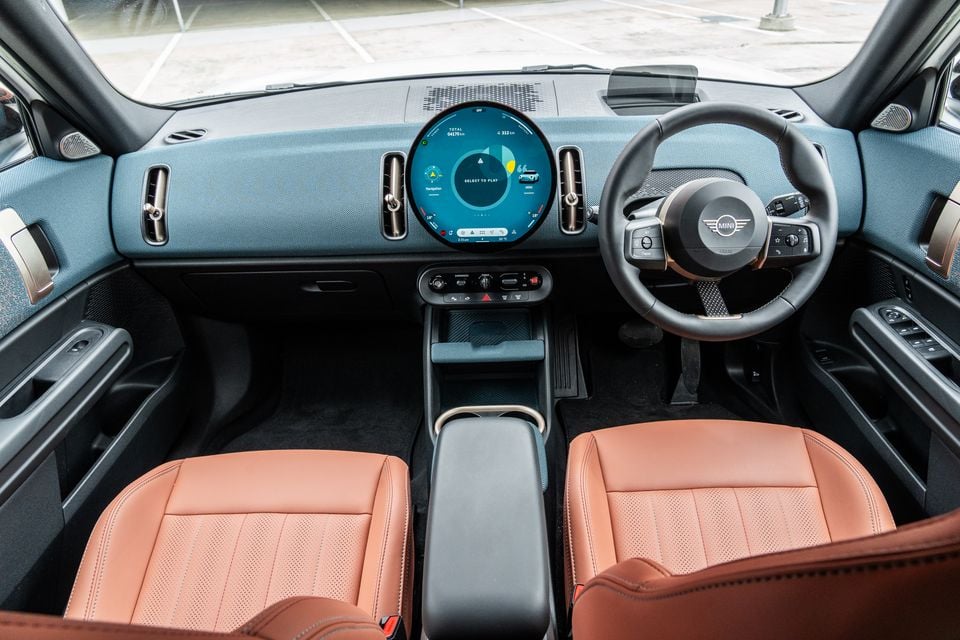
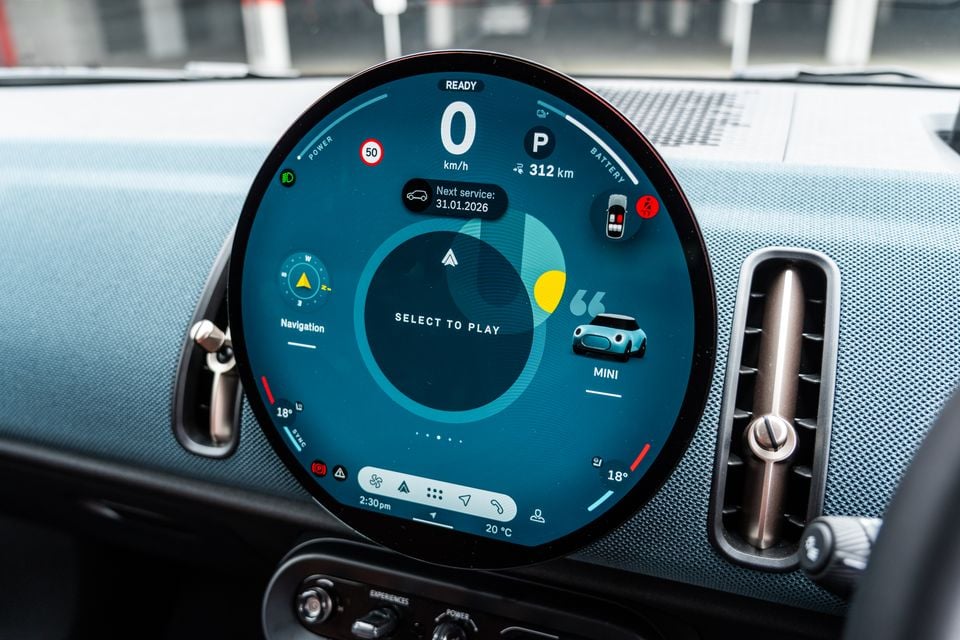
A surviving trend in all Minis since the brand’s BMW-flavoured revival in the early 2000s is the circular panel in the centre of the dashboard. What was once simply a rev counter and trip computer has evolved into an all-encompassing control centre, now home to a touchscreen infotainment system housing nearly all vehicle settings.
There’s certainly a real ‘wow’ factor to this setup, but that doesn’t translate to intuitive functionality. It’s hindered by mountains of menus, each one opening into an expanse of various settings (typical for BMW), and it’s as if something new pops up in every direction you swipe.
We also dislike that the climate system is entirely digital, with fiddly little sliders on either side and a dedicated menu accessible by pressing the fan icon at the bottom. It’s obnoxious given there’s plenty of space around for a physical climate interface, though it does seem screen-heavy setups are becoming the norm for BMW.
At least the Mini’s graphics are tidy and characterful, and we can’t go without mentioning the car’s virtual assistant, ‘Spike’ the dog. This all helps to give the Countryman life, even if you may not realise the breadth of gizmos on offer here until you’ve owned the car for a while.
Wireless Apple CarPlay and Android Auto are standard, but their integration is clunky because their rectangular interfaces can’t fill the circular screen. It’s the same story for native Mini systems, like the reversing camera.
That said, the Countryman’s system follows other Minis in offering a vast array of personalisation options. Included as standard are eight of the brand’s ‘Experiences’, which change the screen’s look with distinct colours, styles, fonts, and widgets.
These range from a minimalist style and an older, weathered look to a racy ‘Go-Kart’ mode, and even to a Countryman-specific ‘Trail’ mode with an earthy look and various adventurous gadgets like a compass and off-road angle readouts. Some modes also bring light mechanical tweaks, which we’ll touch on later.
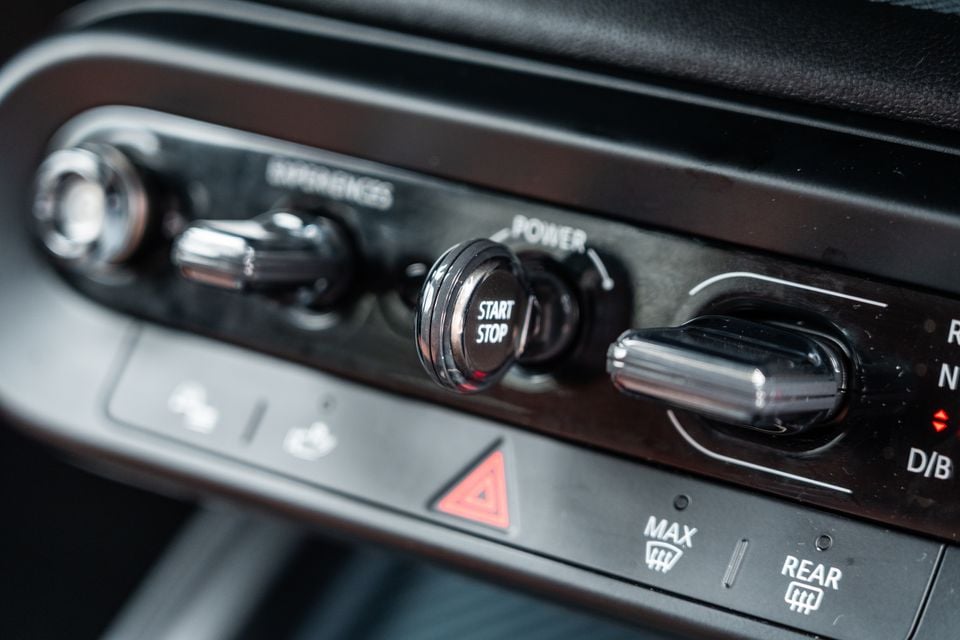
Regardless of the tangible benefits of this function, there’s no denying that it gives the Countryman character. The same applies to Mini’s unique switchgear located below the central circle.
These are visually simple, featuring a volume dial and three large switches, including one for those Experiences. In the middle is a fun key-like switch you twist to start or stop the car – more interesting than a typical push-button – and to the right is the gear selector.
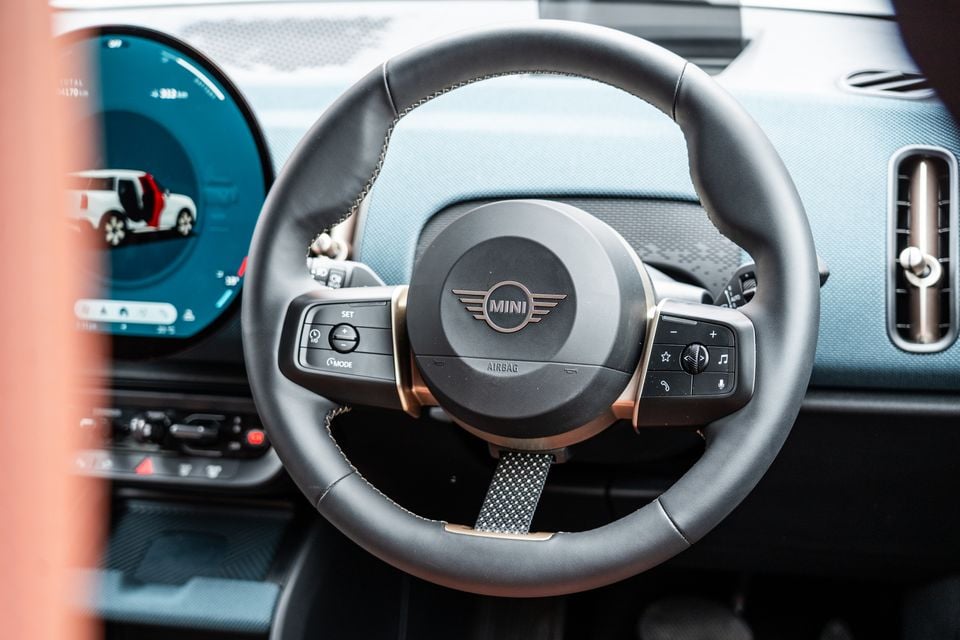
Again, these will take newcomers a second to understand, but it’s nice having something you can physically grab here. All other interior buttons are found on the steering wheel, which is borrowed from the BMW parts bin and therefore features a simplified array of real buttons.
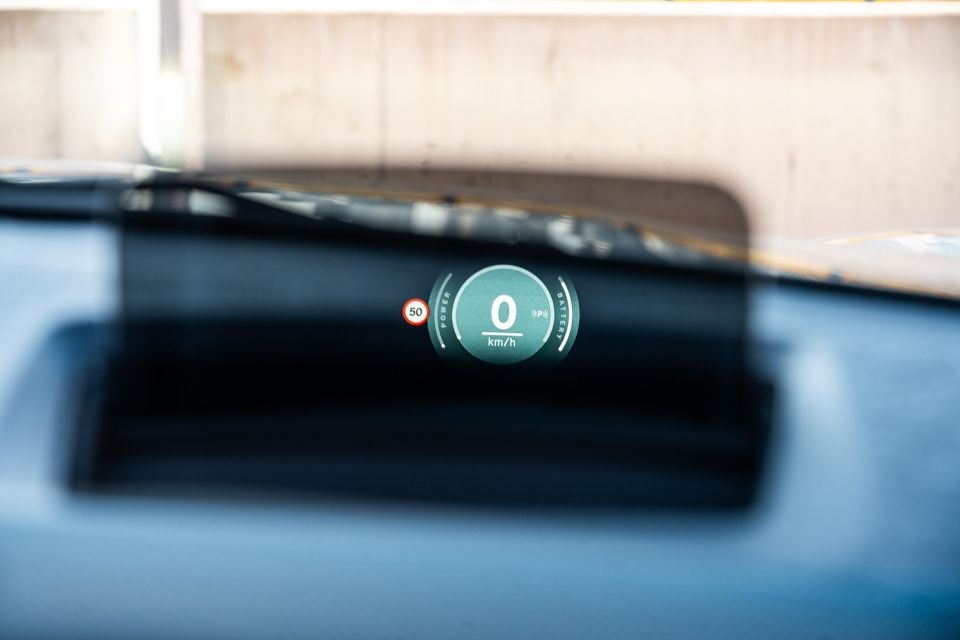
Even so, user-friendly is not a fitting description of the Countryman’s interior. You’ll notice there’s no instrument cluster; instead, it’s replaced by a basic head-up display mounted on a thin piece of plastic, and everything is best figured out via trial and error.
Further, the cabin’s proportions – with its upright windscreen, relatively large dash, and thin A-pillars – make it feel like you’re sitting inside a fishbowl.
Once you’re past all that, you’ll find the cabin’s physical fittings are all of high quality. The steering wheel is finished in smooth leather and boasts BMW’s characteristic thick design, which feels odd in the hands on first impressions but slowly becomes more natural.
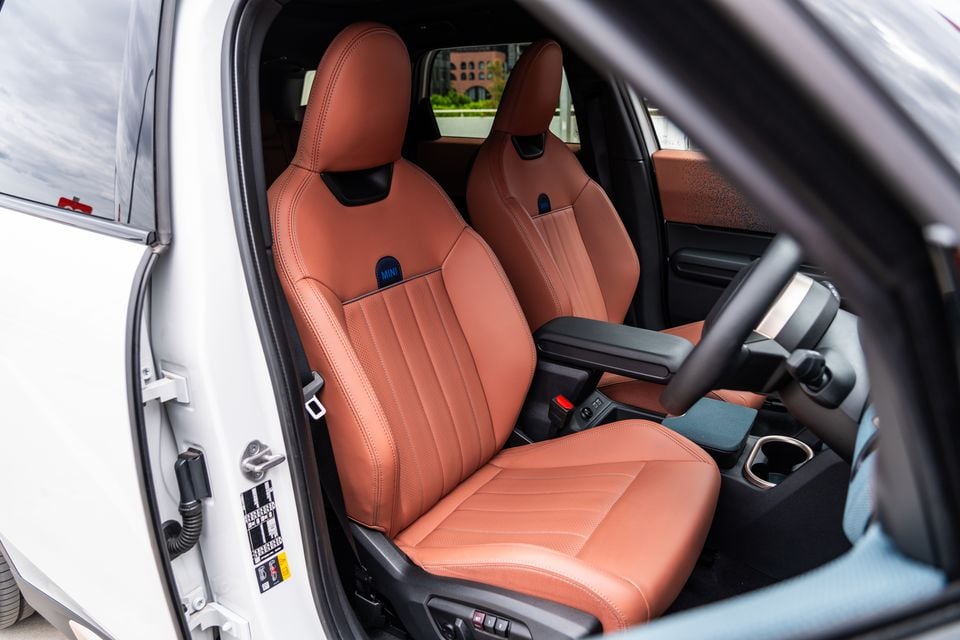
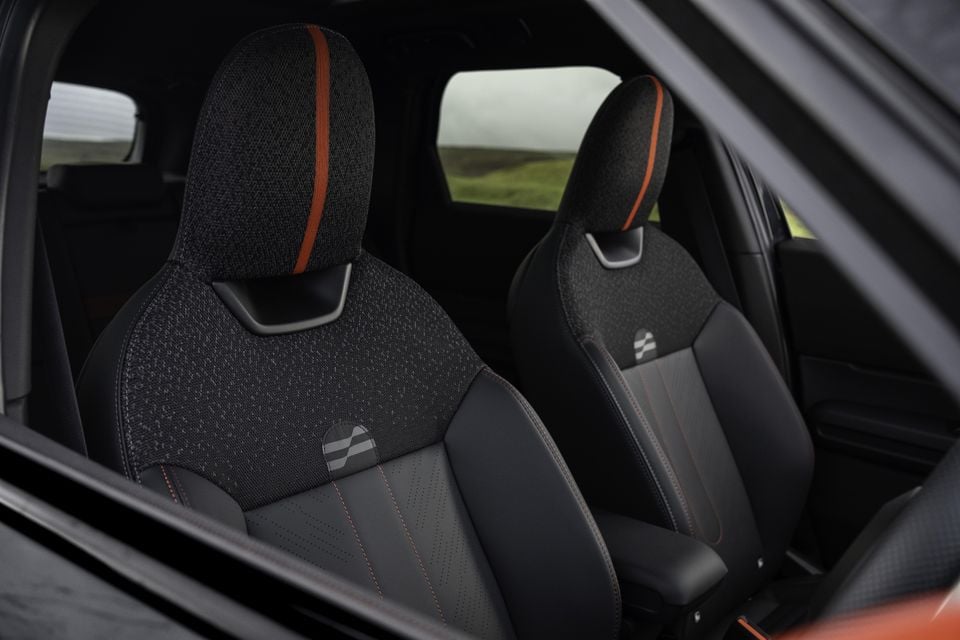
The seats, meanwhile, have a sporty edge to their construction but remain comfortable. They’re on the firmer side but offer sensible bolstering and a wide range of powered adjustments, making it easy enough to get into a good driving position.
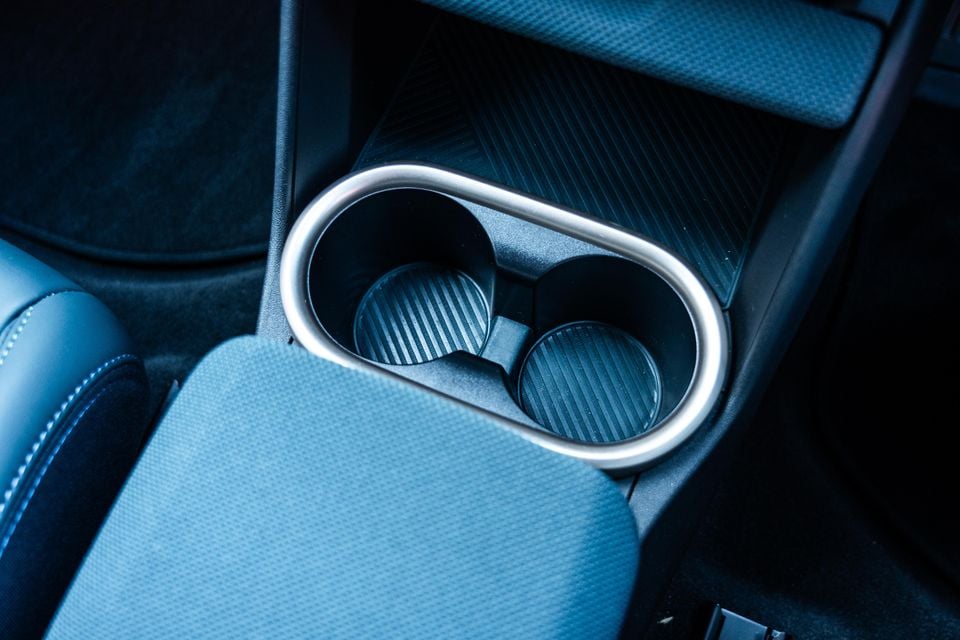
Storage is tight by segment standards, though there are various trays and cubbies for loose items. Highlights include a ‘shelf’ with a wireless phone charging pad below the centre stack, two cupholders, reasonably sized door bins, and Mini’s unique lidded central storage box, behind which are USB-C ports and a 12V outlet.
The overarching theme up front, however, is style. The woven dashboard covering, bronze accents, and minimalist overall layout make for a visually interesting place to spend time.
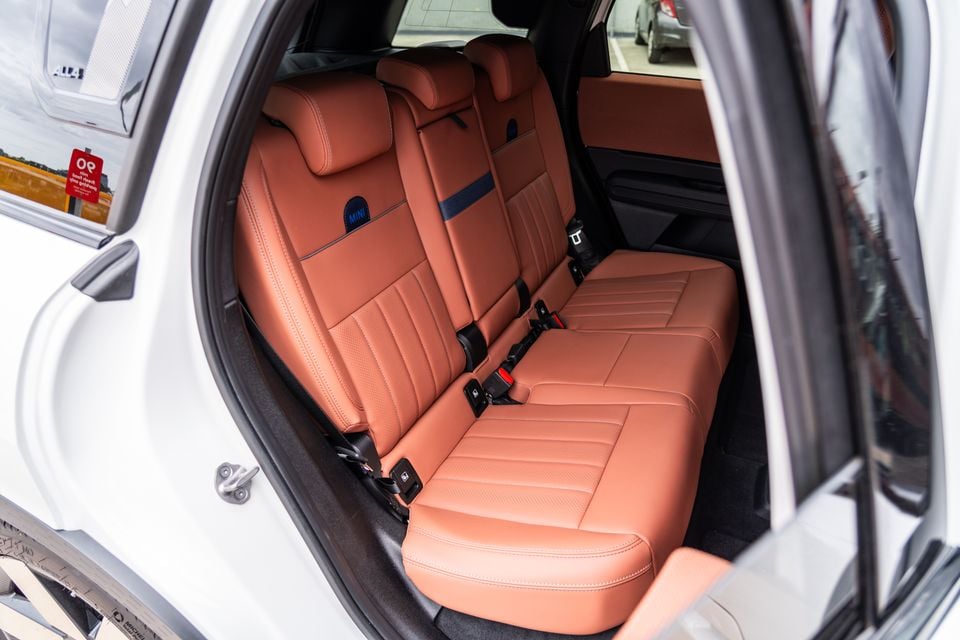
The same isn’t necessarily true of the rear seats, but they earn their keep by being the most spacious second row you’ll find in any Mini showroom. There’s loads of space in every direction, and I had no fitment issues at 173cm, while my taller colleagues were similarly satisfied.
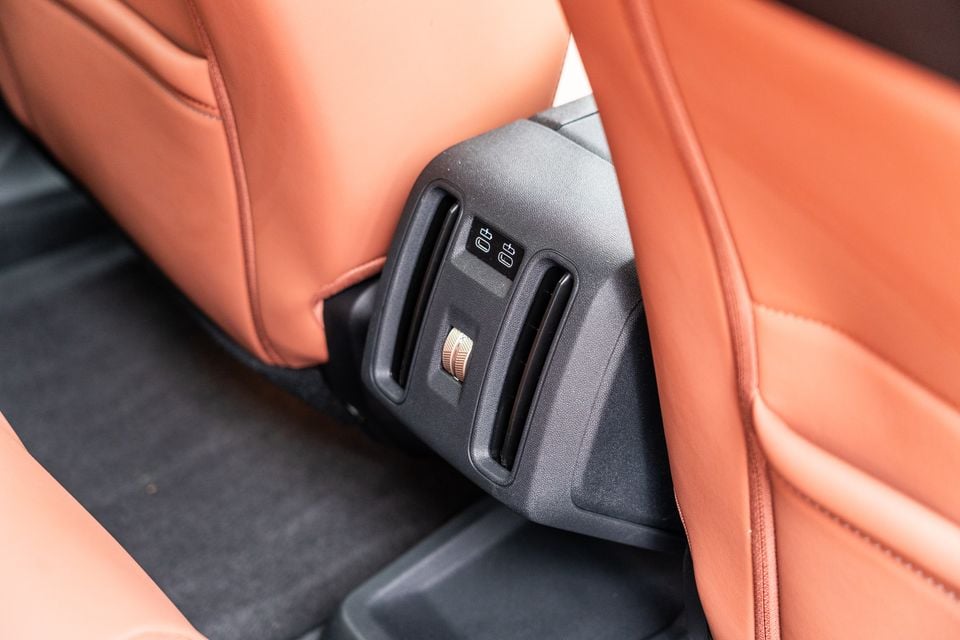
Headroom will become tight for those of above-average stature. Amenities are still on par with what you’d expect from any small SUV: a fold-down centre armrest, dual air vents, two USB-C outlets, map pockets, and door bins. The Countryman’s internal combustion roots mean there’s a driveline hump in the middle, though.
Naturally, there are also the requisite ISOFIX anchors and top-tether points for child seats.
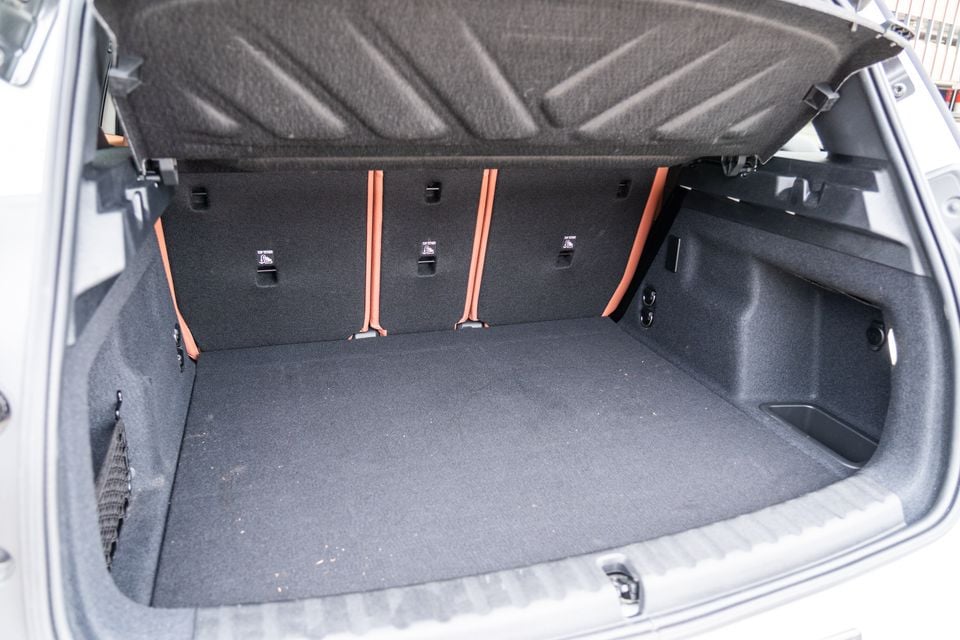
The boot of the Countryman Electric is generous, offering a claimed 460 litres of capacity, which is very competitive among its rivals. A power tailgate with kick sensor is standard across the range, making access to the boot via the large, square opening even easier.
The load floor extends far into the cabin and stays perfectly flat, with a sturdy cargo cover up top to shield the boot’s contents from prying eyes. On either side of the load space are nooks for loose items: on the left is a net, and on the right is a cubby in the floor.
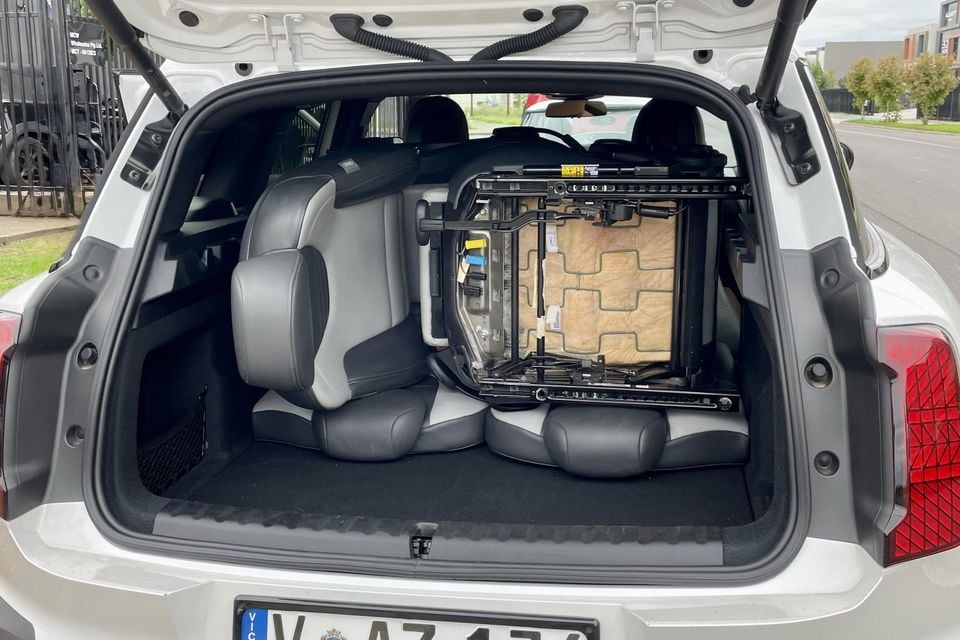
You can also fold the rear seatbacks flat to liberate the maximum 1450 litres of storage space, which enabled us to pack in a full set of seats for a first-generation BMW-era Cooper S JCW with room to spare. Nothing like a new Mini to support an old Mini project.
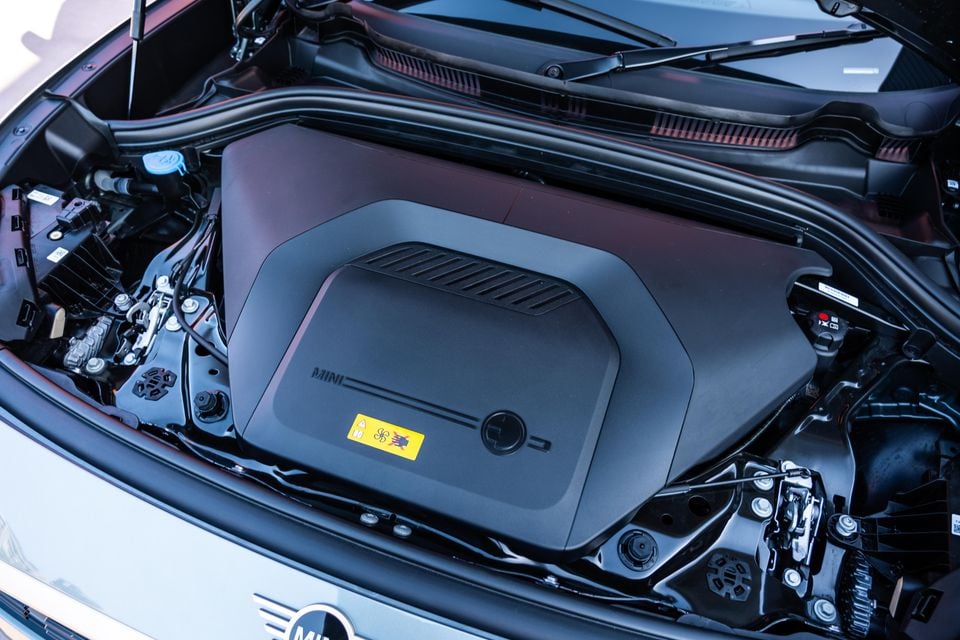
Lifting the rearmost portion of the load floor reveals some extra space, ideal for discreetly stowing charging cables. Unlike many other EVs, though, there’s no under-bonnet storage.
Dimensions
Mini Countryman SE
Length
4445mm
Width
1843mm
Height
1635mm
Wheelbase
2692mm
Cargo capacity
460L (rear seats up) 1450L (rear seats folded)
To see how the Mini Countryman stacks up against the competition, use our comparison tool
What’s under the bonnet?
Powering the Countryman SE is a dual-motor, all-wheel drive electric powertrain, producing 230kW of power and 494Nm of torque. Energy is sourced from a 66.5kWh lithium-ion battery.
Specifications
Mini Countryman SE ALL4
Drivetrain
Dual-motor electric
Battery
65.2kWh li-ion – usable
Peak power
230kW
Peak torque
494Nm
Drive type
All-wheel drive
Kerb weight
2000kg
0-100km/h (claimed)
5.6 seconds
Energy consumption (claimed)
17.4kWh/100km
Energy consumption (as tested)
16.9kWh/100km
Claimed range (WLTP)
467km
Max AC charge rate
22kW
Max DC charge rate
130kW (29min 10-80%)
While the gross battery capacity is unchanged at 66.5kWh, usable capacity has been increased slightly. The addition of the new silicon carbide (SiC) inverter has also improved the electric Countryman's claimed efficiency. In the case of our SE ALL4 tester, the claimed WLTP driving range is up from 432km to 467km.
Mini also claims the SiC inverter tech improves energy recuperation under braking and optimises powertrain performance and efficiency in real-world driving, "particularly in urban and stop-start driving conditions".
Our week with the Countryman Electric involved a mix of highway commuting and suburban errand-running. While the latter environment is where this vehicle really shines, its lower-than-claimed energy consumption highlights its versatility.
To see how the Mini Countryman stacks up against the competition, use our comparison tool
How does the Mini Countryman drive?
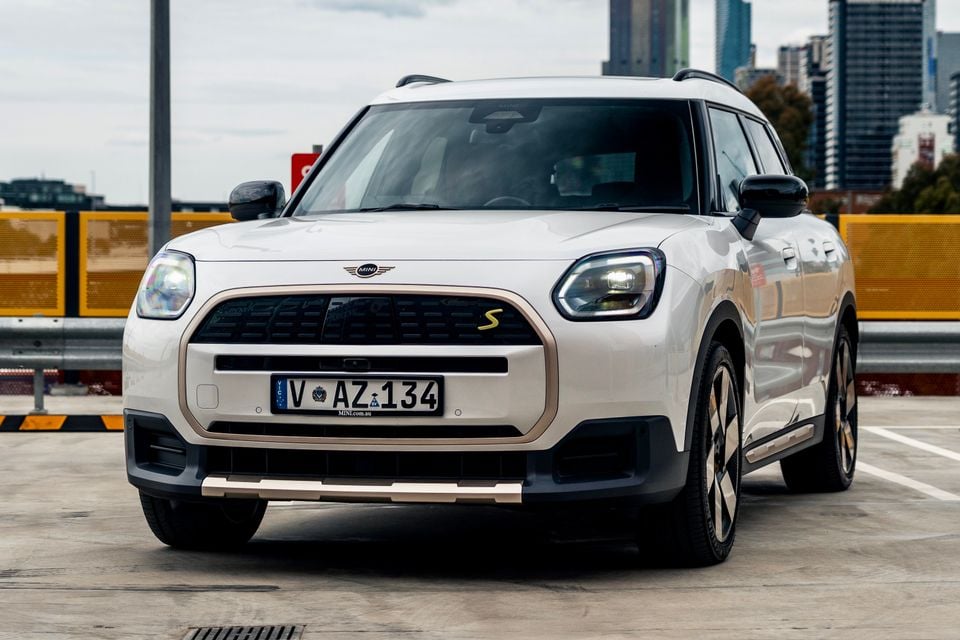
Expanding a small-car brand philosophy to accommodate an SUV that's the largest Mini model ever produced might seem like a stretch, but the Countryman pulls this off quite well.
Countryman SE Classic pictured
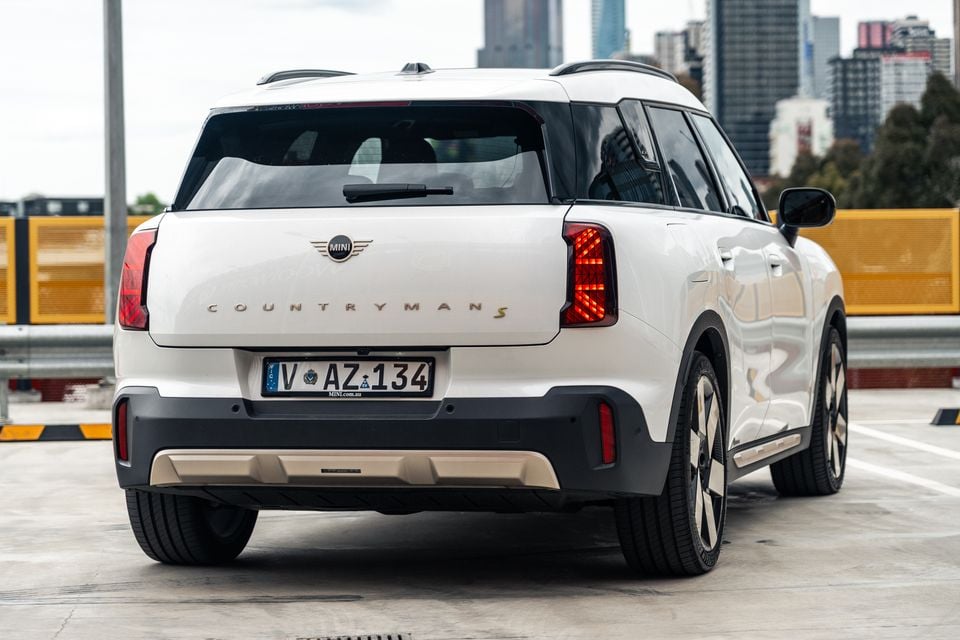
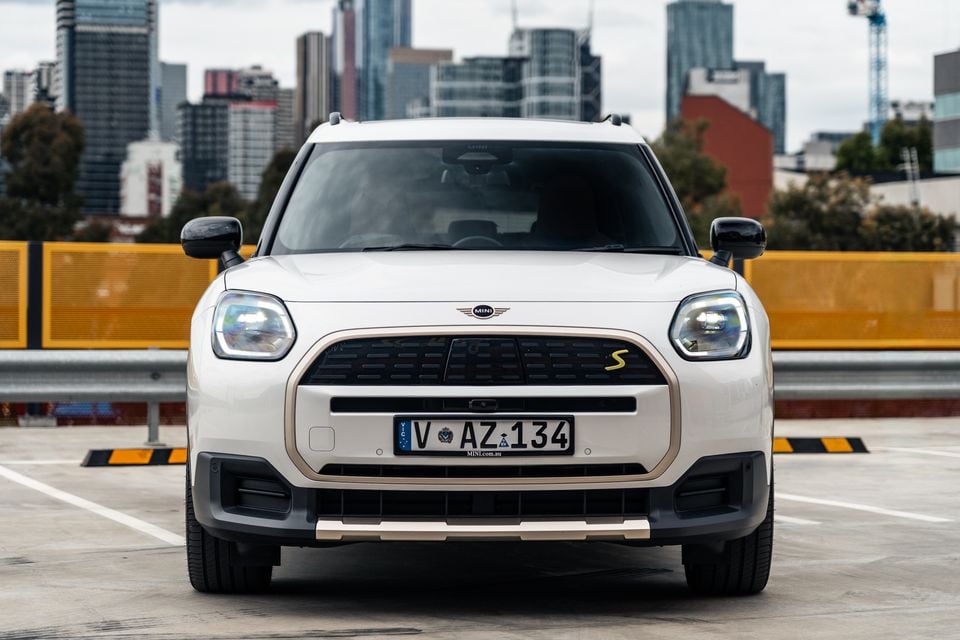
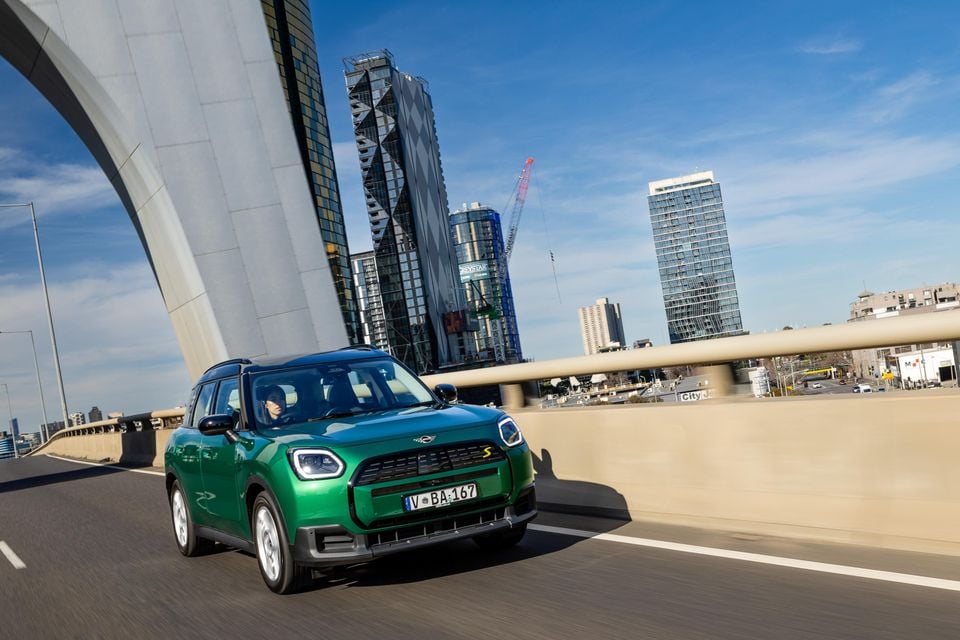
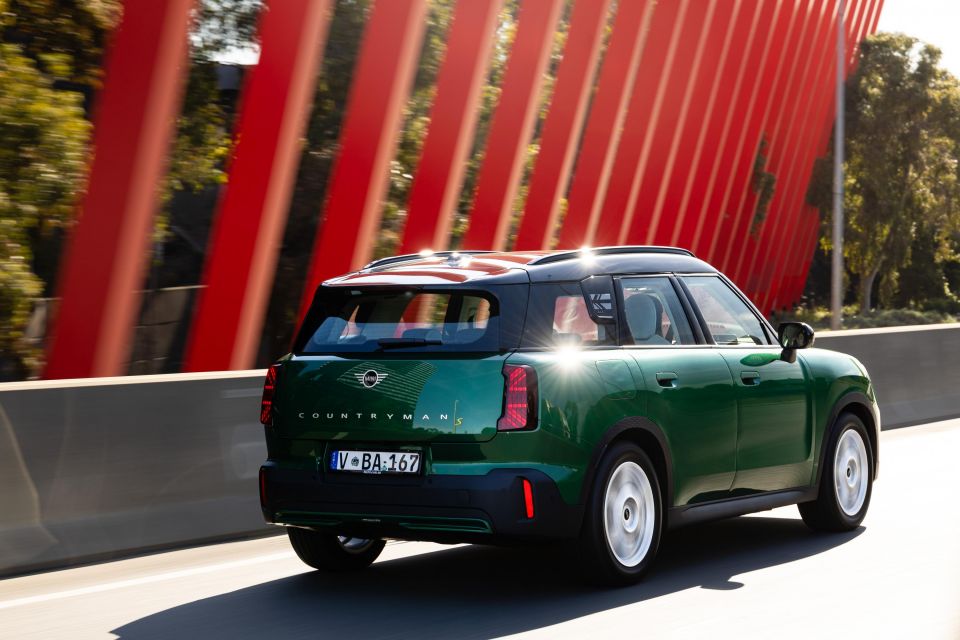
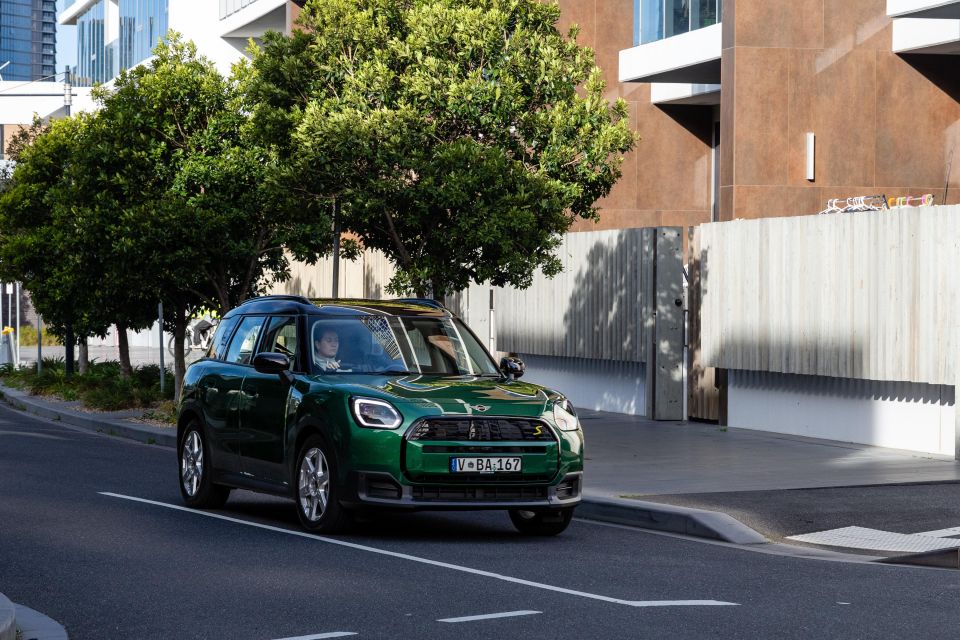
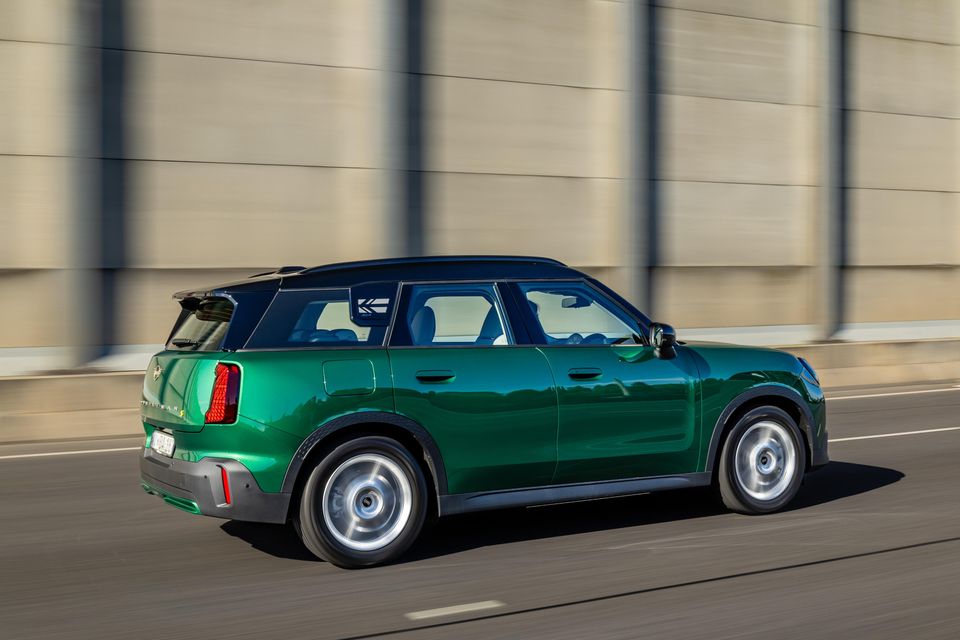
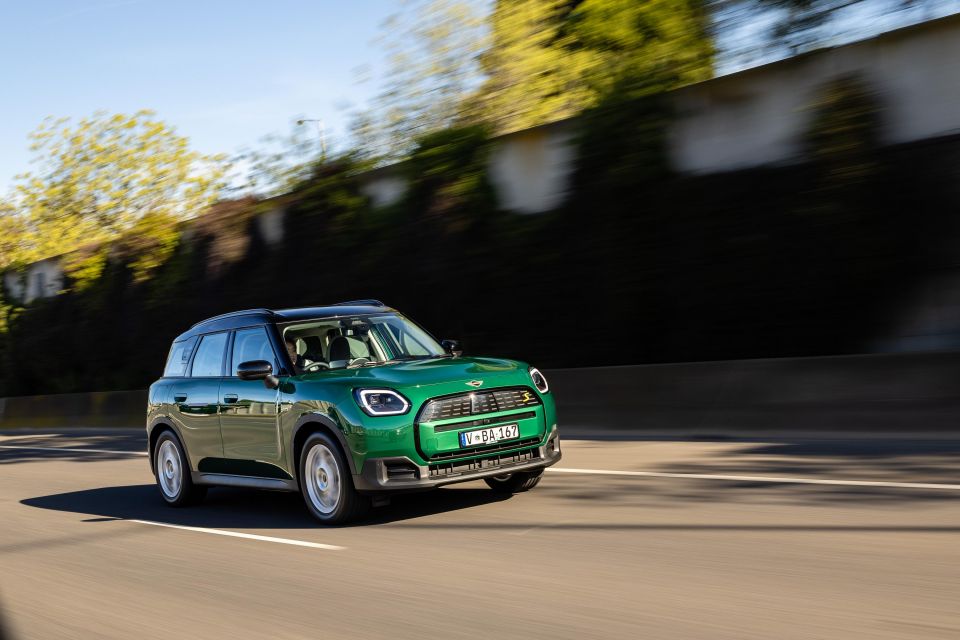
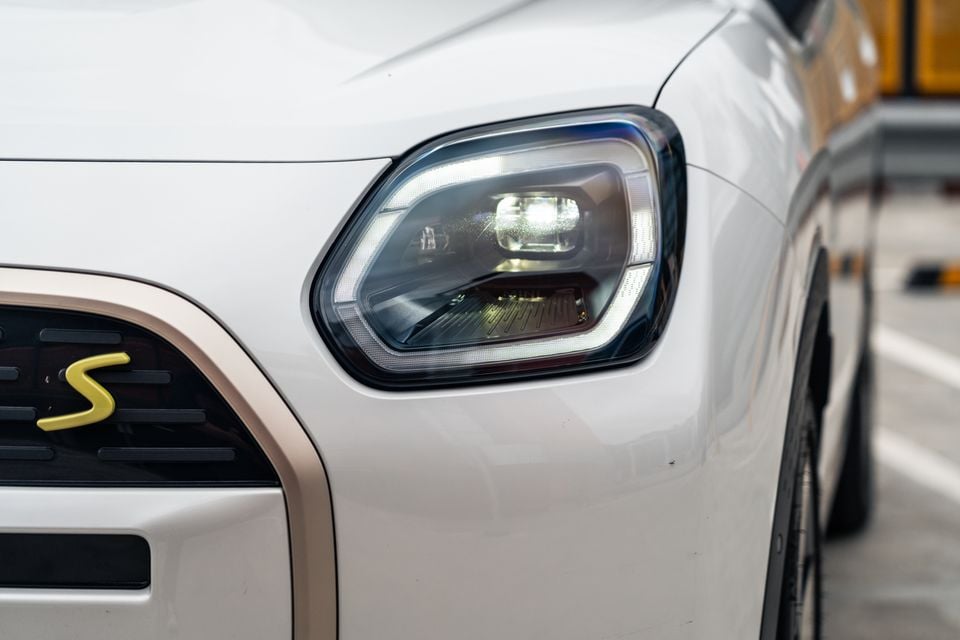
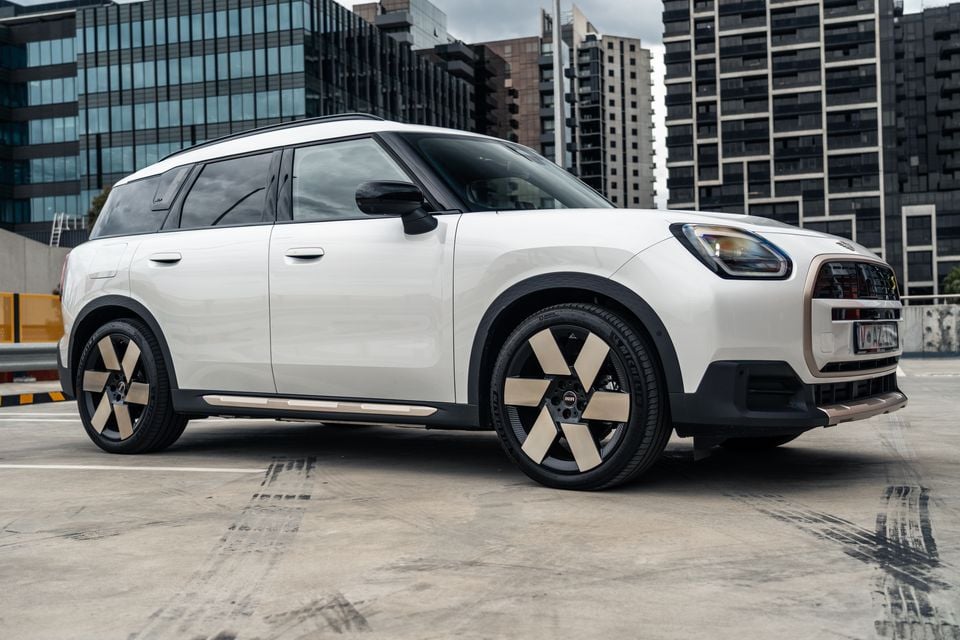
Glancing at it from any angle confirms it’s unmistakably a Mini, and applying the British brand’s current design language to what is effectively the iX1 doesn’t make it look too bloated or ungainly. That carries through to its driving experience.
The electric Countryman 'fires up' at the twist of the central ‘key’, then emits its fair share of characteristic Mini sounds that suggest it’s best driven with a somewhat lighthearted approach. Once you start moving, you’ll find the Countryman is an SUV that’s meant to be enjoyed, but not in the drive-as-fast-as-you-can sort of way.
Instead, it makes commuting more pleasant than many of its rivals do. It thrives in the city, where it happily soaks up speed bumps, tram tracks, and just about anything you can throw at it.
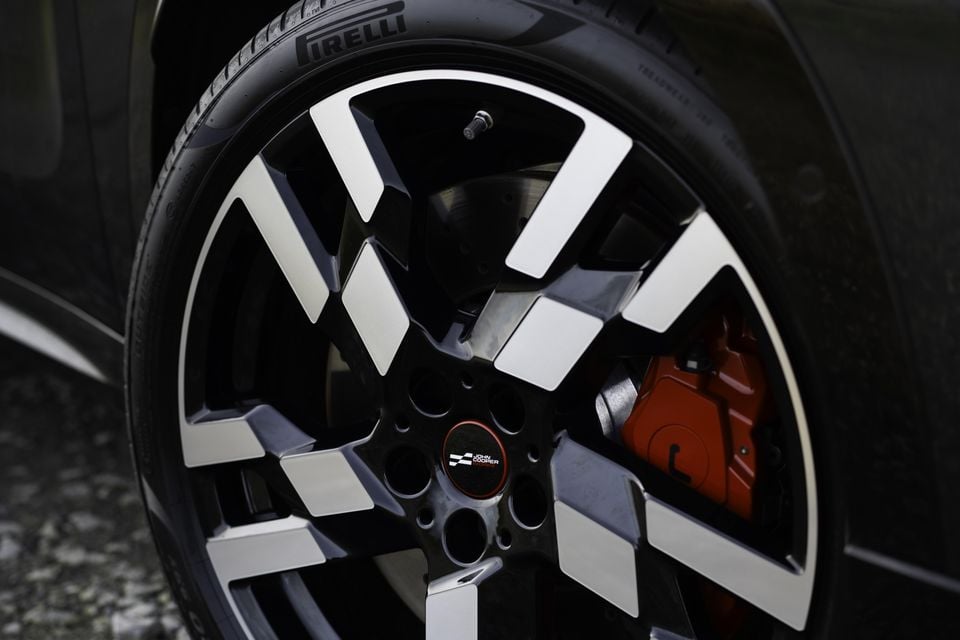
Its suspension setup is compliant without being too soft, and it’s far more livable than its Cooper and Aceman stablemates, even with the optional 20-inch ‘Windmill Spoke’ wheels fitted to our tester.
Body roll is well managed, and the car never seems unsettled over bumps at speed, even on the freeway. Its steering is predictable and nicely weighted, even if it's on the lighter side. You can adjust the weight by selecting a different Experience mode or by tweaking it individually on the screen if it’s not to your taste.
On that note, it’s worth mentioning what the Experience modes change when you’re on the move.
Not every mode brings mechanical tweaks, but highlights include Trail mode, which adjusts the traction control to allow more wheel slip when off-road, and Go-Kart mode, which stiffens the steering, sharpens the throttle, and plays synthesised sounds through the speakers.
The Star Wars-like sounds are a feature across Mini's EV range, and I find them far more preferable to fake sounds that attempt to emulate old-school engines. It's another display of character that doesn’t go unnoticed.
When it comes to performance, the Countryman SE isn't lacking. Despite what the internet engineers will tell you, a 5.6-second 0-100km/h sprint time is more than enough for any SUV, and this Countryman certainly hustles when you lay into the throttle.
Being all-wheel drive, it has no trouble getting its power to the ground either. Outputs of 230kW and nearly 500Nm are nothing to sneeze at, and they give the Countryman more zing than would reasonably be expected of a small SUV.
That makes the Countryman EV a breeze to get up to highway speeds, and making quick overtakes or shooting gaps in traffic takes no effort either. Throttle response is also sensible in the normal drive modes, and naturally becomes far more sensitive in Go-Kart mode.
Mind you, it’s not like this amount of power is required in the Countryman. You’d get by perfectly fine with the cheaper, more Mini-esque front-drive variants, as the instant electric torque is enough to make any car feel fairly zippy. This is just a bit more fun.
Ready to buy? We’ll help you get a great deal.
If this is the car for you, we’ll compare offers from trusted dealers, handle the back and forth and manage your purchase from enquiry to delivery.
Supporting the solid performance is a decent regenerative braking system, which is configurable but always seems to take a second to engage when you come off the throttle. However, those not so keen on regen braking – including me – can still make use of the well-calibrated brake pedal.
Generally, though, the Countryman is an easy car to live with. It feels just as comfortable on the freeway as it does around suburbia, though you’ll probably want to stay in built-up areas given its comparatively short driving range and the fact that you get some road noise above 100km/h.
The latter is to be expected of any small SUV, and it was exacerbated by the large alloys on our press car.
It's worth mentioning that this year's updates don't really translate to tangible changes on the road. We certainly noticed improved efficiency compared to electric Countryman models of the past, but don't expect a revolutionary upgrade from what are undeniably small changes under the skin.
This Mini benefits from its BMW origins in terms of safety, as it gets the German brand's latest and greatest driver-assistance tech. That means it actually assists you and, unlike a trend emerging in newer cars, won’t annoy you.
We had no issues with the traffic sign recognition or lane-keep assist systems, and the Countryman's adaptive cruise control and lane-centring functions both worked reliably during our week with the car. In fact, we continue to be impressed by BMW’s lane-centring functionality in particular, as it's incredibly confident in following tighter bends while maintaining speed.
The cameras and sensors are also good when you're parking, but if you prefer to do it the old-fashioned way, outward visibility is generous in this not-so-mini… Mini.
To see how the Mini Countryman stacks up against the competition, use our comparison tool
What do you get?
The Mini Countryman comes in three trim levels – Classic, Favoured, and JCW Sport – while the full-fat JCW is now offered in a single standalone spec. The C, S, E, and SE designations represent different powertrains and/or states of tune.
2026 Mini Countryman Classic equipment highlights:
Alloy wheels:
18-inch ‘Asteroid Spoke’ silver alloy wheels
19-inch ‘Runway Spoke’ black alloy wheels
Tyre repair kit
Gloss-black exterior highlights
Rain-sensing wipers
Auto LED headlights
Auto-dimming, power-folding side mirrors
Auto-dimming rear-view mirror
Roof rails
Velour floor mats
Recycled polyester knit dashboard and door cards
Leather-wrapped sports steering wheel
Heated steering wheel
Sports seats
Synthetic leather and cloth upholstery (2 colours):
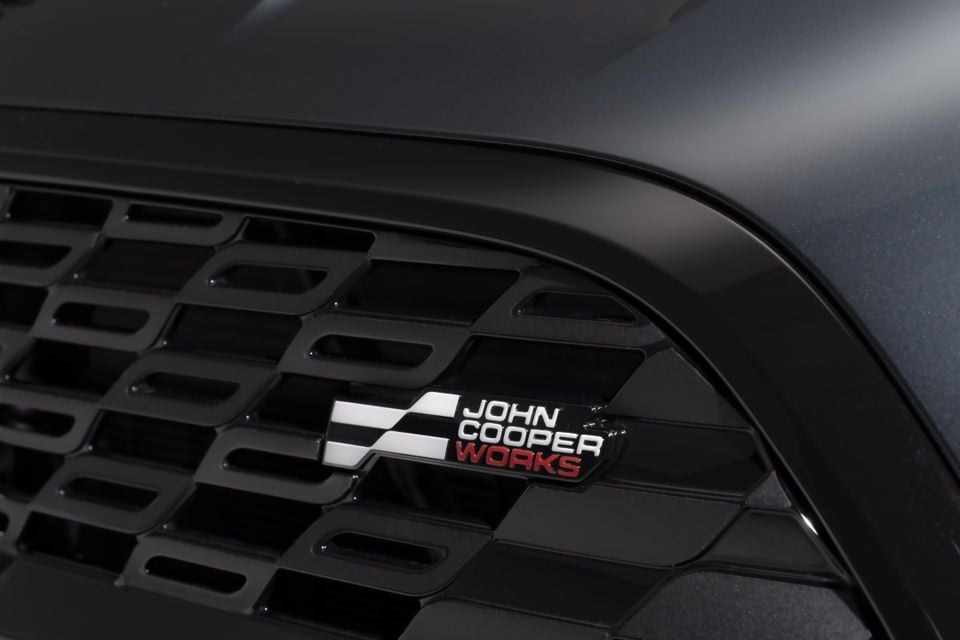
John Cooper Works exterior styling with gloss-black highlights
John Cooper Works steering wheel
Black John Cooper Works Vescin/cord upholstery
Paddle shifters
To see how the Mini Countryman stacks up against the competition, use our comparison tool
Is the Mini Countryman safe?
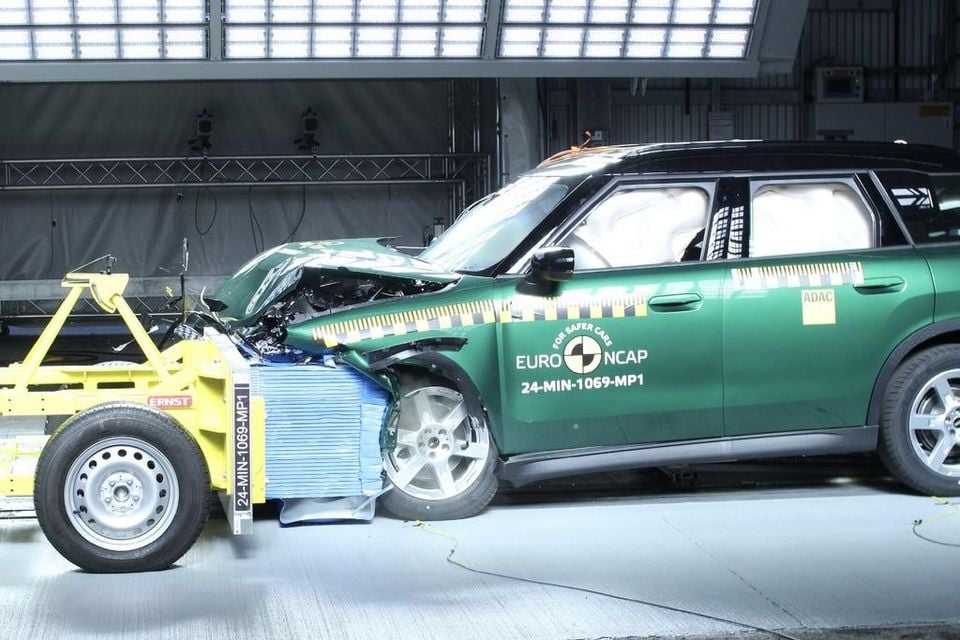
The Mini Countryman has a five-star ANCAP safety rating, based on testing conducted by Euro NCAP in 2024.
Category
Mini Countryman
Adult occupant protection
83 per cent
Child occupant protection
86 per cent
Vulnerable road user protection
81 per cent
Safety assist
83 per cent
Standard safety equipment highlights:
9 airbags, incl:
Front
Side
Head
Front-centre
Adaptive cruise control
Automatic speed limit assistant
Autonomous emergency braking
Blind-spot monitoring
Cruise control
Driver attention monitor
Front and rear parking sensors
Intelligent emergency call
Lane-centring
Lane-keep assist
Parking Assistant Plus
Rear cross-traffic alert
Safe exit assist
Speed limiter
Surround-view monitor
Tyre pressure monitoring
To see how the Mini Countryman stacks up against the competition, use our comparison tool
How much does the Mini Countryman cost to run?
Mini Australia backs its range with a five-year, unlimited-kilometre warranty. The brand doesn’t outline service intervals; instead, it follows its parent company, BMW, in adopting a ‘Condition Based Service’ maintenance schedule.
Servicing and Warranty
Mini Countryman Electric
Warranty
5 years, unlimited kilometres
High-voltage battery warranty
8 years, 100,000km
Roadside assistance
8 years
Service intervals
Condition-based
Capped-price servicing
Prepaid plans
Total capped-price service cost
$1575 (4 years) $2360 (6 years)
Mini says its vehicles continually monitor their own health using information collected from on-board sensors, and then alert their owners (and their local Mini workshop) when it’s time for a service. It says service intervals will depend on the owner’s driving style and the vehicle’s condition.
In any case, Mini Australia offers a four-year prepaid service plan for the Countryman Electric for $1575, or a six-year plan for $2360. The latter is identical to what BMW charges for six years of iX1 maintenance.
As for rivals, servicing for the pre-update Zeekr X costs $4220 over eight years, while five years of servicing for the Renault Megane E-Tech costs $1625. The Volvo EX30, meanwhile, is available with complimentary servicing for the first five years of ownership.
To see how the Mini Countryman stacks up against the competition, use our comparison tool
CarExpert’s Take on the Mini Countryman SE Favoured
The Countryman is a small SUV with big charm, and the addition of an electric powertrain only improves on the formula.
Indeed, the electric powertrain suits the character of the Countryman well, even if it’s a BMW system. Power delivery is smooth and predictable, it’s quick enough to keep you entertained, and it nails the basic driving fundamentals to avoid feeling lifeless from behind the wheel.
While the recent powertrain upgrades have been minor and don't necessarily change the driving experience, more electric range is never a bad thing. In fact, it shows BMW continues to develop and improve this model despite its niche status.
The interior is an acquired taste, but it’s a nice place to be regardless of whether Mini is your flavour. On that note, it should also satisfy rusted-on (modern) Mini diehards, and it's properly stylish when fitted with the optional gear seen on our tester.
The only kickers are the lack of buttons inside and the fact it is objectively expensive. Yes, even this high-spec Countryman Electric undercuts the base BMW iX1, but it’s not the most sensible value proposition – the normal E will do you just fine.
However, if you want a practical, spacious small SUV with a little pizzazz, the Countryman SE is well worth a look.
CarExpert can save you thousands on a new Mini Countryman. Click here to get a great deal.
† Displayed prices are based on the drive-away price of the vehicle, which includes delivery charges, registration fees, number plates, and applicable road taxes, based on a Sydney location. However, prices may vary between states and territories, and additional costs such as compulsory third party (CTP) insurance, dealer delivery fees, and optional extras are not included. These prices are subject to change without notice and may not reflect current market pricing or dealer offers.
Automotive Vehicle Spec Data & 4K images Powered by JATO Dynamics Ltd
















 Automotive Vehicle Spec Data & 4K images Powered by JATO Dynamics Ltd