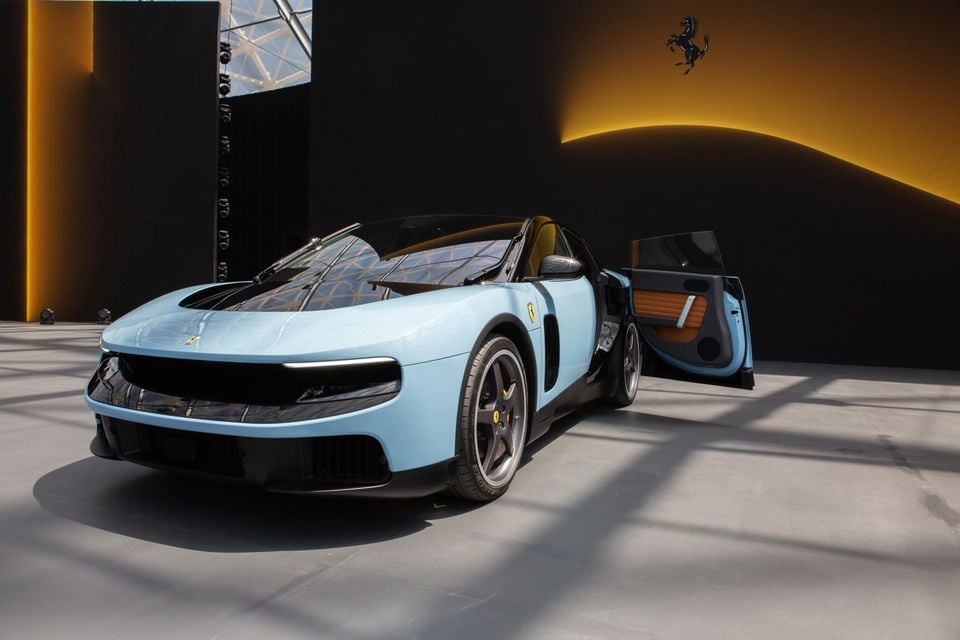
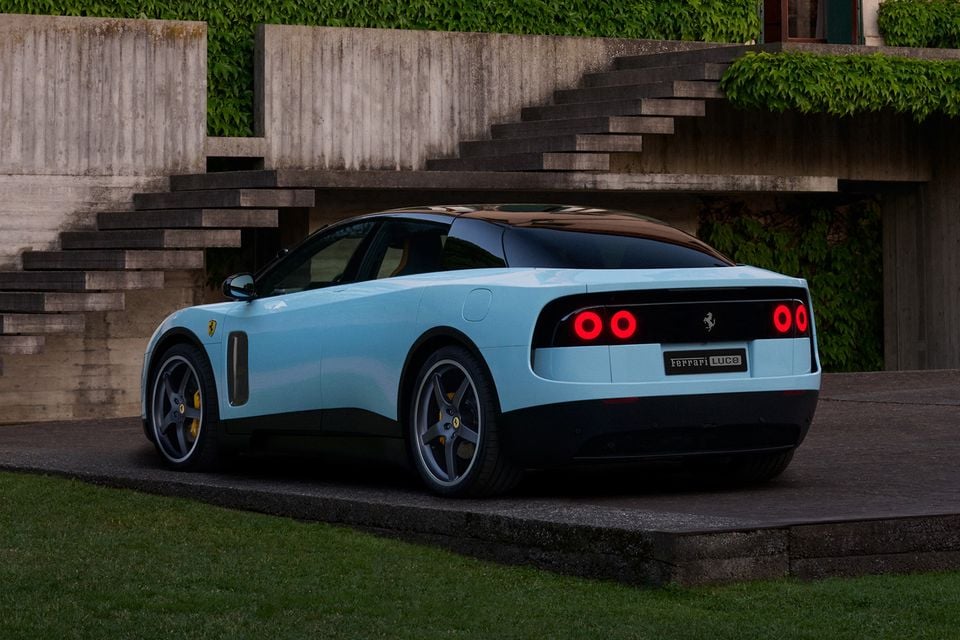
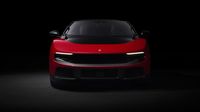
One of the biggest questions hanging over any electric performance car is what it sounds like, and Ferrari reckons it has cracked it with the Luce.
Plenty of electric vehicles (EVs) pump a synthesised soundtrack through the speakers to give you something to listen to. Ferrari has gone the other way: the Luce’s sound is real, and it’s taken from the car itself.
Ferrari says the noise is captured by a precision accelerometer mounted in the rear axle, which picks up the actual vibration of the electric motors and gears as they spin. That signal is then filtered, equalised and amplified into the cabin, in much the same way an electric guitar pickup turns a real vibration into something you can hear.
Crucially, none of it is invented. Ferrari says the system amplifies the frequencies that sound good and strips out the ones that don’t, like the high-speed whine and excess white noise you’d otherwise pick up, but it never adds anything that isn’t already there.
“We amplify what is good and pleasant, and attenuate what is unpleasant,” said Antonio Palermo, NVH (noise, vibration and harshness) and sound quality manager with Ferrari. “The vibrations are shaped by what the car is doing, so you have a canvas that is constantly changing beneath you.”
It even behaves like a combustion car when you work the paddles. Pull for more power and the torque is delivered in a particular shape, which the accelerometer picks up and feeds through as a rising note. Ferrari says it deliberately avoids faking a gear change or a jump in revs. Instead, the sound climbs through what the team describes as musical intervals, building as you unlock more torque.
The bigger surprise is how much of it you’ll hear from outside the car. Ferrari says the main amplification happens at the front and rear of the car, so it projects outwards, with the interior system only adding fine detail.
“We didn’t go looking for a sound outside the car, but it’s a Ferrari, so it should be heard from outside,” said Mr Palermo. “The big part of the sound comes from outside. You will turn and hear it before you see it, maybe as it passes by.”
This wasn’t a quick job either. Ferrari says the sound took around six years and 40,000km of testing to develop. The team studied why we like the sound of a combustion engine in the first place, then worked out how to give the electric motors their own authentic voice rather than imitating a V8 or V12. Interestingly, Ferrari says there’s almost nothing carried over from its Formula 1 or Le Mans programs, because race cars chase lightness and don’t filter their sound.
Perhaps the most telling part is how Ferrari is framing it.
“This is a meta-sound, it is not a sound. It is a mindset,” Mr Palermo said. “When we decide to make a new car, we don’t have the sound for that car yet. We have the mindset for it, and the sound will come.”
It suggests the same thinking will carry across to future electric Ferraris, each with its own voice built the same way.
We’ll reserve final judgement until we drive it, but on paper it’s one of the most genuinely interesting approaches to EV sound we’ve seen.