




Marton Pettendy
2027 Mitsubishi Pajero prices: Born-again large off-road SUV won’t come cheap
The first new Mitsubishi Pajero in five years will be priced closer to the Toyota Prado than the Ford Everest.
10 Hours Ago
Almost all details of the fifth-generation Mitsubishi Pajero have been announced ahead of the all-new off-road SUV's Australian arrival in December.
Managing Editor
Managing Editor
Full Australian pricing and specifications – except for details like fuel consumption, accessories and service pricing – have been announced for the 2027 Mitsubishi Pajero following its world debut in Japan yesterday, and ahead of first local deliveries from December.
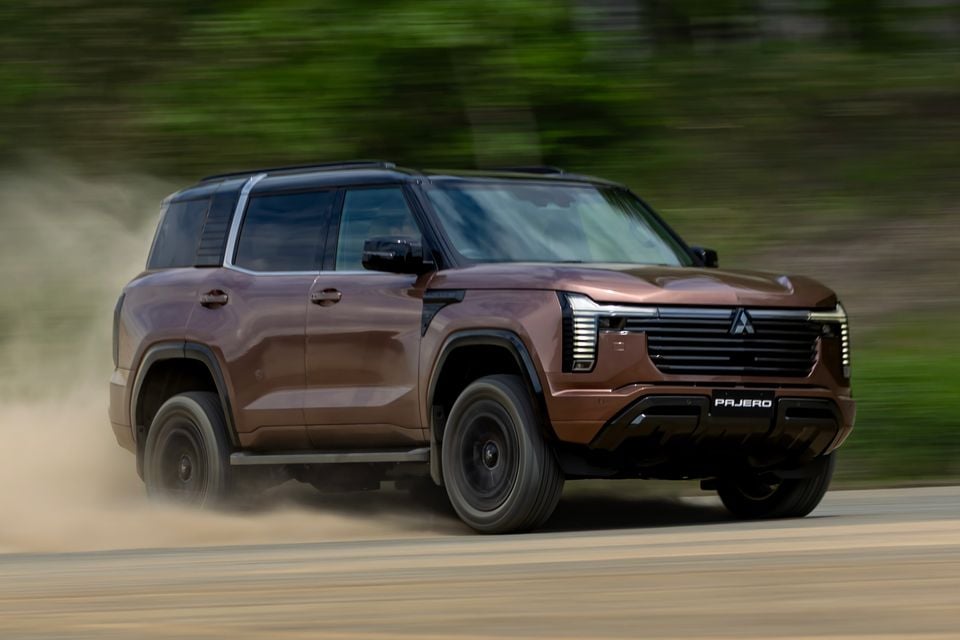
Built in Thailand alongside the Triton on which it’s based, the first Pajero to be available for five years will share its body-on-frame construction with the sixth-generation Triton ute launched in early 2024.
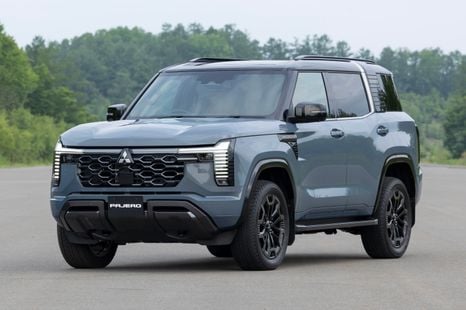
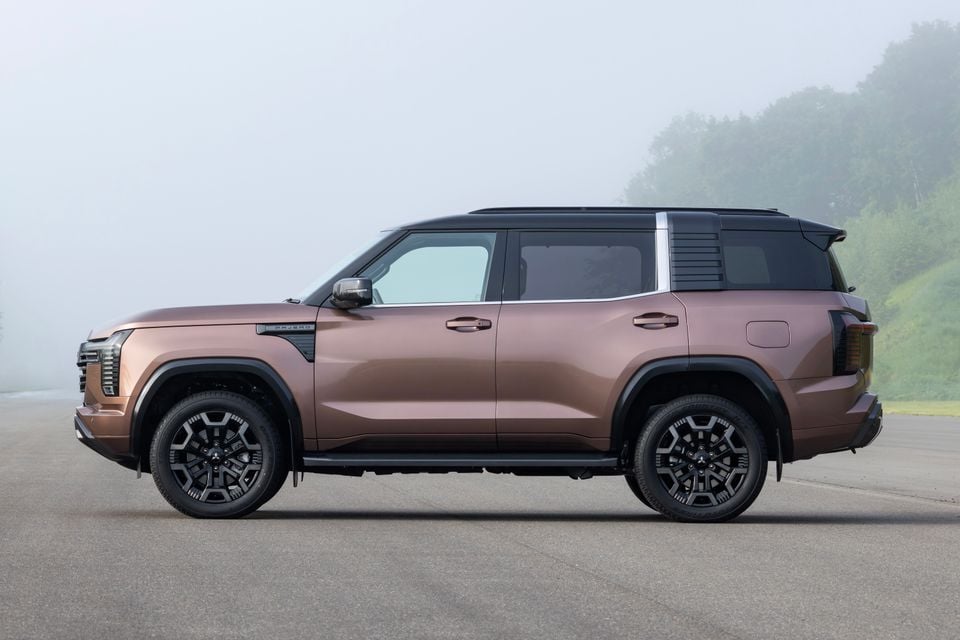
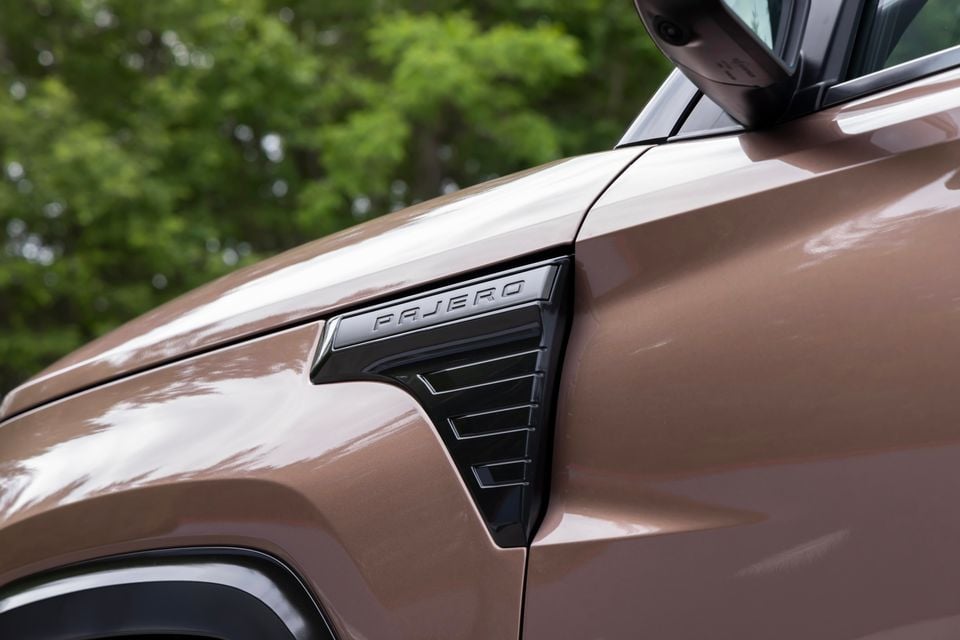
Mitsubishi says its new flagship SUV – which is not only a belated successor for the fourth-generation Pajero discontinued in 2021, but also replaces the Pajero Sport axed in 2025 – was designed in Japan under the ‘Grand Charisma’ design theme, and “styled from the outset to showcase premium craftsmanship and superior quality befitting its status as Mitsubishi’s global flagship”.
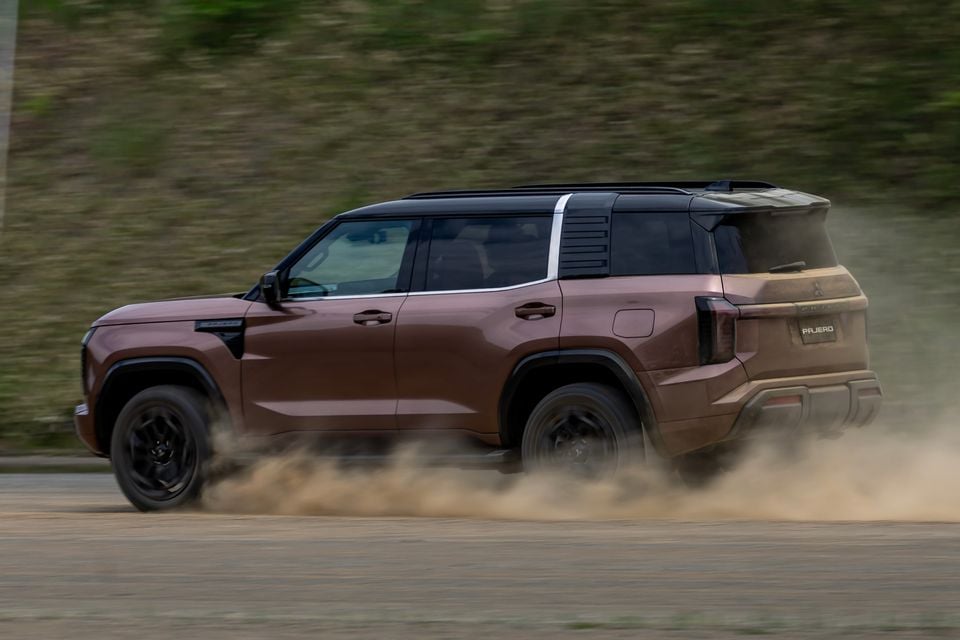
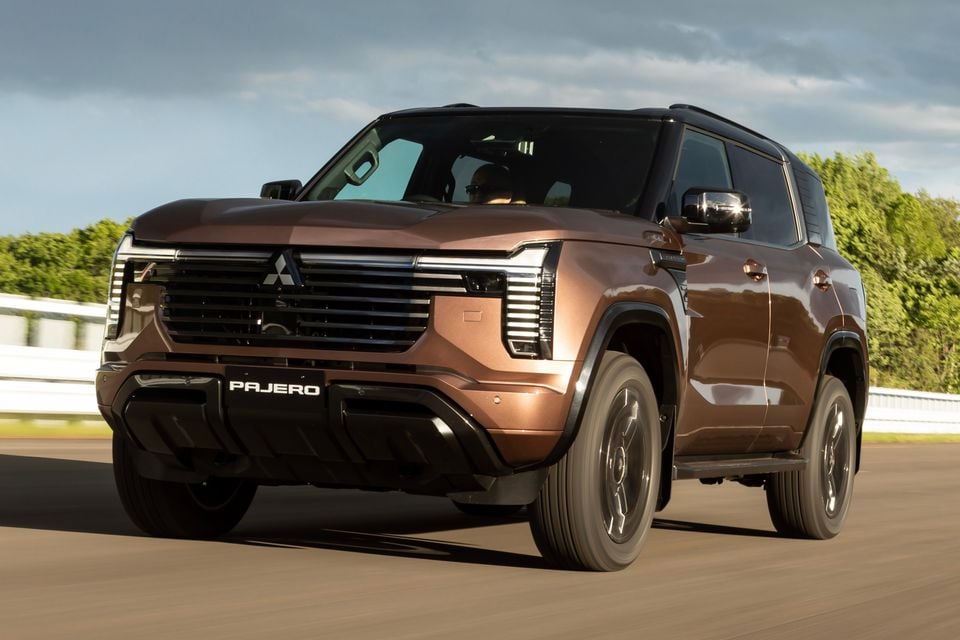
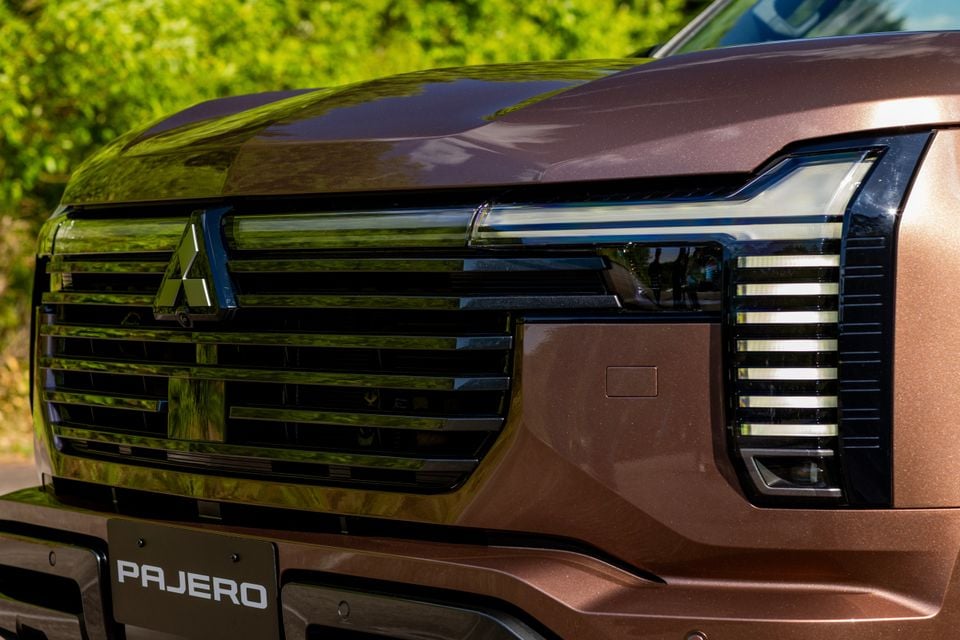
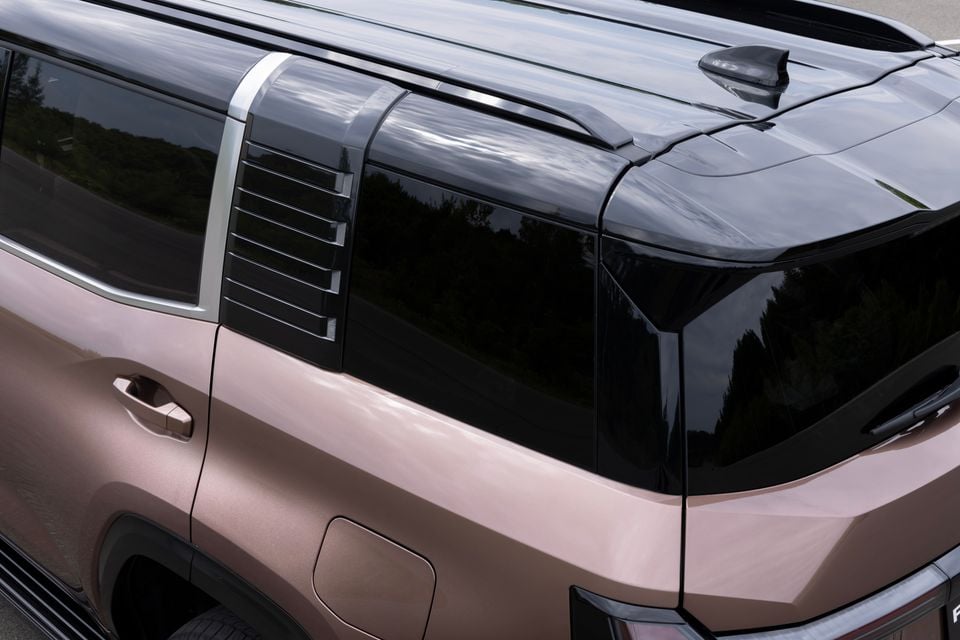
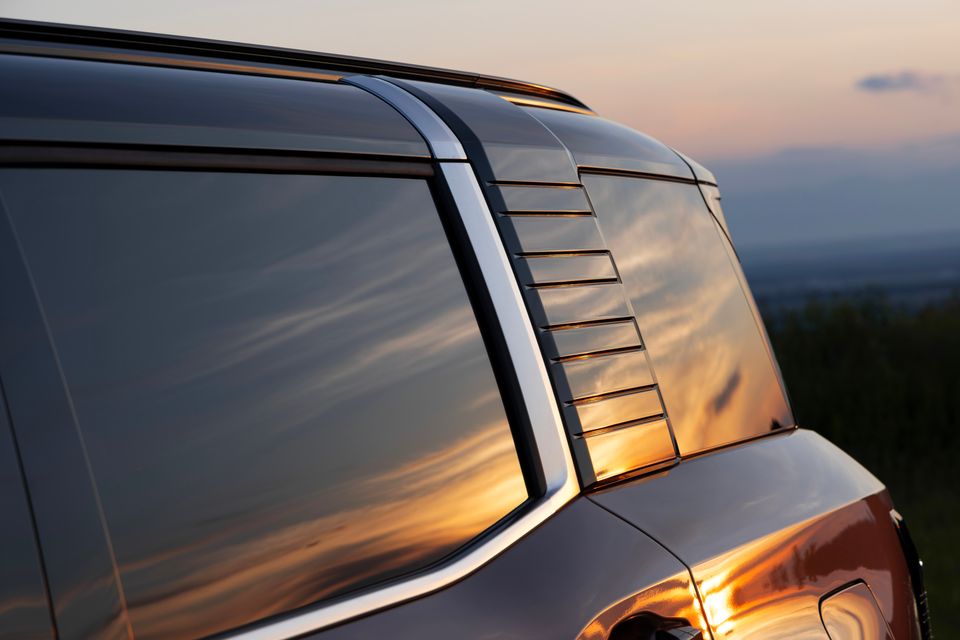
Key features of the exterior design, which was “inspired by the original Pajero’s solidity” but “thoroughly modern while retaining a commanding presence of its own”, include a T-shaped lighting signature up front, a C-pillar aping the original Pajero’s ‘roll-bar’, a pronounced centre bonnet edge, and a Dynamic Flow Light for the GSR, which illuminates on entry/exit.
All exterior lighting is LED.
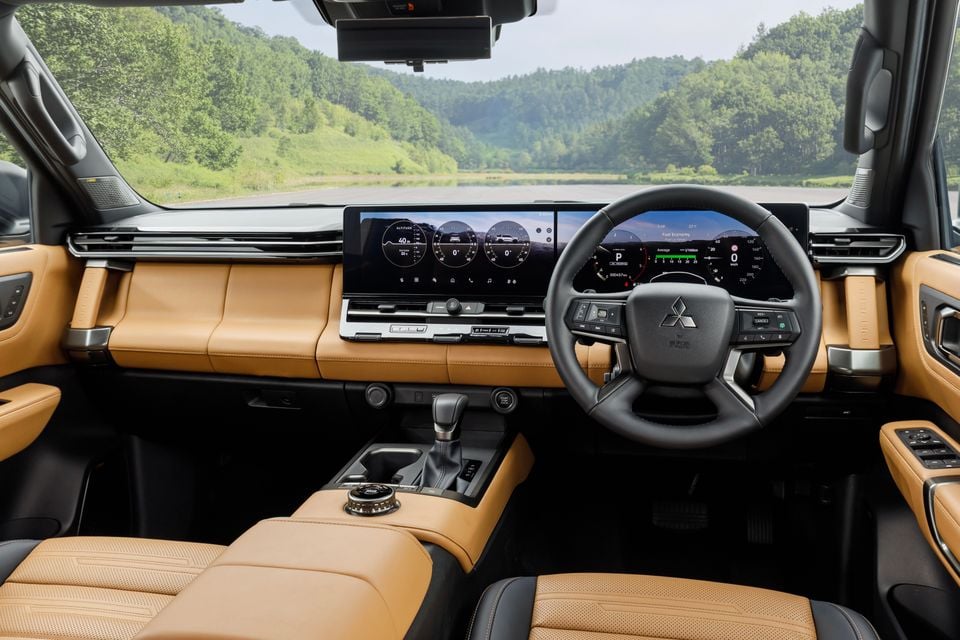
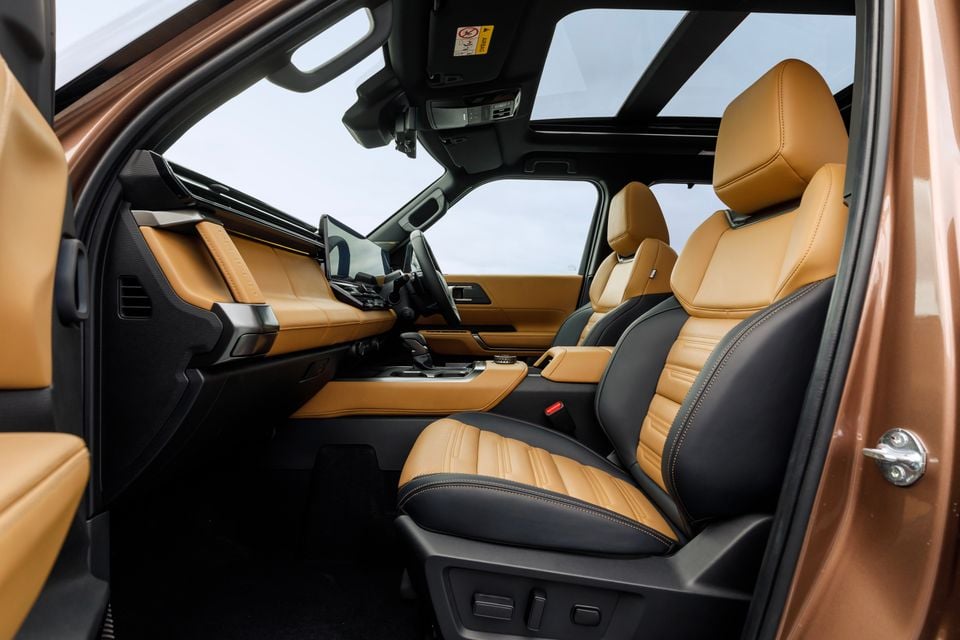
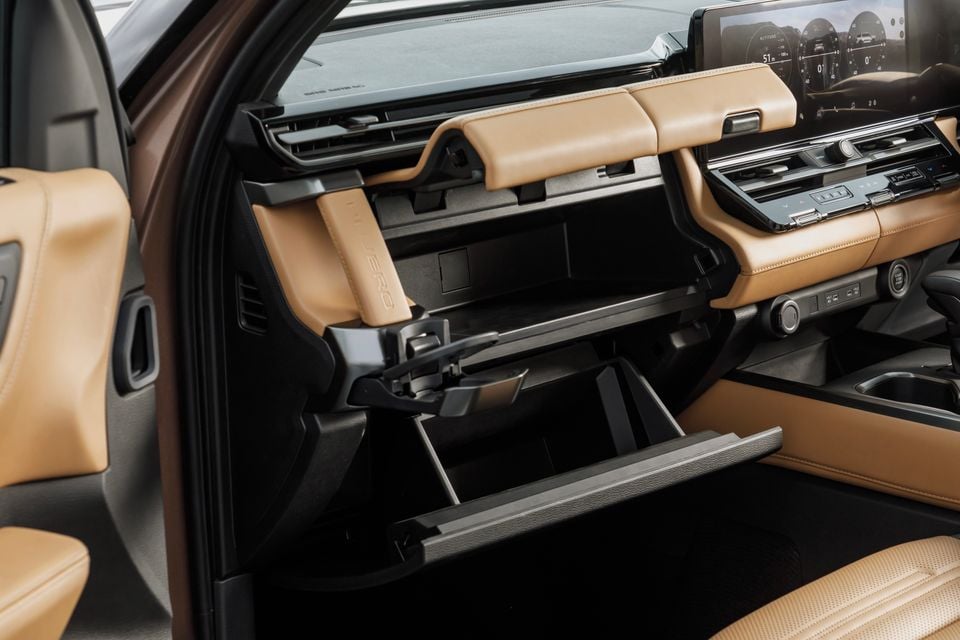
Inside, the horizontal dashboard design aims to create a sense of width and a focus on Japanese craftsmanship and fine detail delivers “an opulent occupant experience”, while its “spacious, flexible and luxurious cabin offers [a] commanding driving position with modern, clear interfaces for intuitive operation".
Available in three grades, the new Pajero is priced from $68,490 before on-road costs, making the all-new large off-road SUV more expensive than all but one of its most direct competitors.
| Model variant | Price before on-road costs |
|---|---|
| 2027 Mitsubishi Pajero GLS 5-seat | $68,490 |
| 2027 Mitsubishi Pajero GLS 7-seat | $69,990 |
| 2027 Mitsubishi Pajero Exceed | $79,990 |
| 2027 Mitsubishi Pajero GSR | $84,990 |
The Japanese-built Toyota Prado is still dearer with a starting price of $73,200 before on-road costs, but the new Pajero is significantly more expensive than the ute-based, Thai-made Isuzu MU-X (from $49,900 plus ORCs) and Ford Everest, Australia’s most popular large SUV priced from $58,990 plus ORCs.
While the new 3.0-litre diesel-powered GWM Tank 500 is also cheaper with a $65,990 drive-away starting price, the reborn Pajero is almost $17,000 pricier at base level than the old Pajero Sport (from $51,540), stock of which remains available in Australia, and $13,500 more expensive than the previous-generation Pajero GLX Final Edition last sold in 2021 at $54,990 plus ORCs.
The entry-level five-seat Pajero GLS is priced at $68,490 plus ORCs, with a third row of seats costing an extra $1500 at $69,990 plus ORCs, while both the mid-range Exceed ($79,990 plus ORCs) and sportier GSR flagship ($84,990 plus ORCs) come standard with seven seats.
While a hybrid powertrain has been confirmed for release by 2030, the new Pajero will arrive with a “new-generation” version of the Triton’s twin-turbocharged 2.4-litre 4N16 four-cylinder diesel engine, developing the same 150kW of power and an extra 10Nm of torque at 480Nm but using one fewer turbocharger.
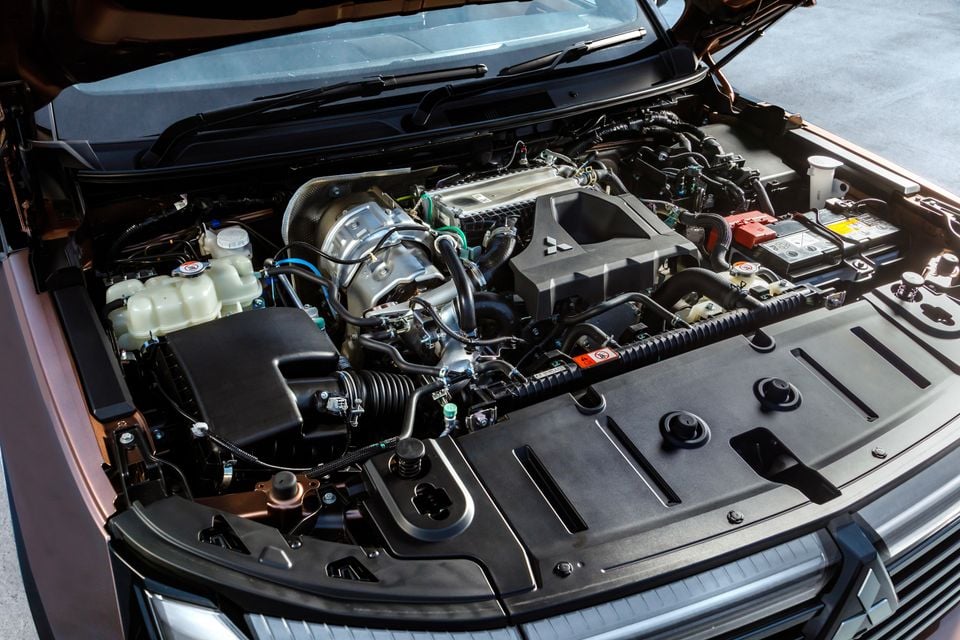
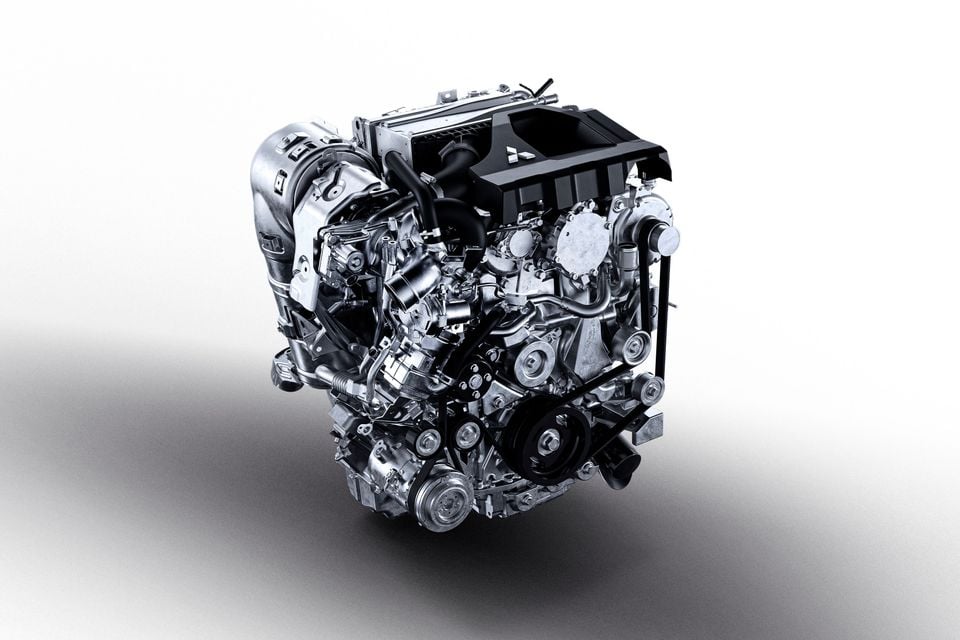
That eclipses the outputs of both the single-turbo diesel Pajero Sport (133kW and 430Nm), and the Mk4 Pajero’s 3.2-litre DI-D diesel four (141kW/441Nm).
And in terms of its large off-road SUV competitors, the Everest is available with 125kW/405Nm 2.0-litre four-cylinder and 184kW/600Nm 3.0-litre V6 turbo-diesel engines, the Prado comes with a 150kW/500Nm 2.8-litre four-cylinder turbo-diesel, and the MU-X can be had with 120kW/400Nm 2.2-litre and 140kW/450Nm 3.0-litre four-cylinder engines.
Claimed to deliver more refinement, drivability, response and efficiency, it now meets Euro 6d emissions standards – a first for a Mitsubishi engine – thanks to a water-cooled intercooler, dual-loop EGR system and the adoption of AdBlue, and an electric fan cooling system.
Fuel consumption figures are yet to be announced, but a fuel-saving automatic idle-stop system is claimed to improve efficiency in stop-start driving, while a “latest-generation variable-geometry turbocharger” is said to increase mid-range torque and response “right where the bulk of driving is conducted”.
While the Triton has a six-speed automatic transmission, the new Pajero adopts an “enhanced, lighter-weight” version of the old Pajero Sport’s eight-speed unit with a wider ratio spread “to support impressive response and reduced fuel use”. Fuel capacity is 80L and AdBlue capacity is 17L.
All model variants will come standard with a low-range transfer case, rear differential lock, Mitsubishi’s tried-and-proven Super Select II switchable 4WD system with 2H (rear-wheel drive, high ratio), 4H (four-wheel drive, high ratio), 4HLc (4WD, high ratio, locked centre diff) and 4LLc (4WD, low range, locked centre diff) drivetrain settings, plus Super-All Wheel Control with Active Yaw Control and seven drive modes – Normal, Eco, Gravel, Snow, Mud, Sand and Rock.
| Specifications | Mitsubishi Pajero |
|---|---|
| Engine | 2.4L 4cyl turbo-diesel |
| Power | 150kW |
| Torque | 480Nm |
| Transmission | 8-speed auto |
| Drive type | ‘Super Select II’ four-wheel drive |
| Fuel economy (claimed) | TBC |
| CO2 emissions (claimed) | TBC |
| Fuel tank | 80 litres |
| Weight | TBC |
| Payload | TBC |
| Braked towing capacity | 3500kg |
| Gross vehicle mass (GVM) | TBC |
| Gross combination mass (GCM) | TBC |
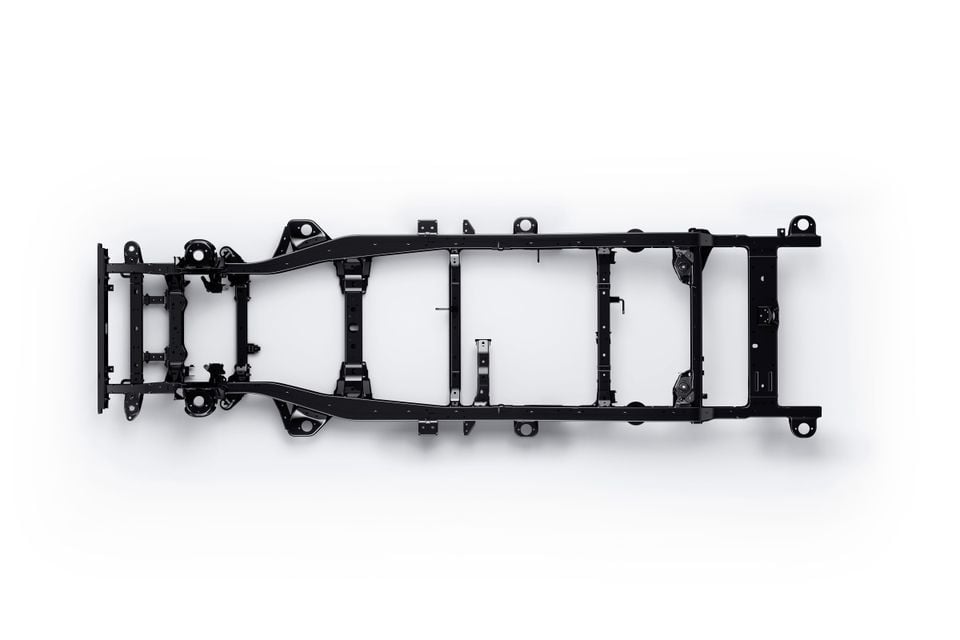
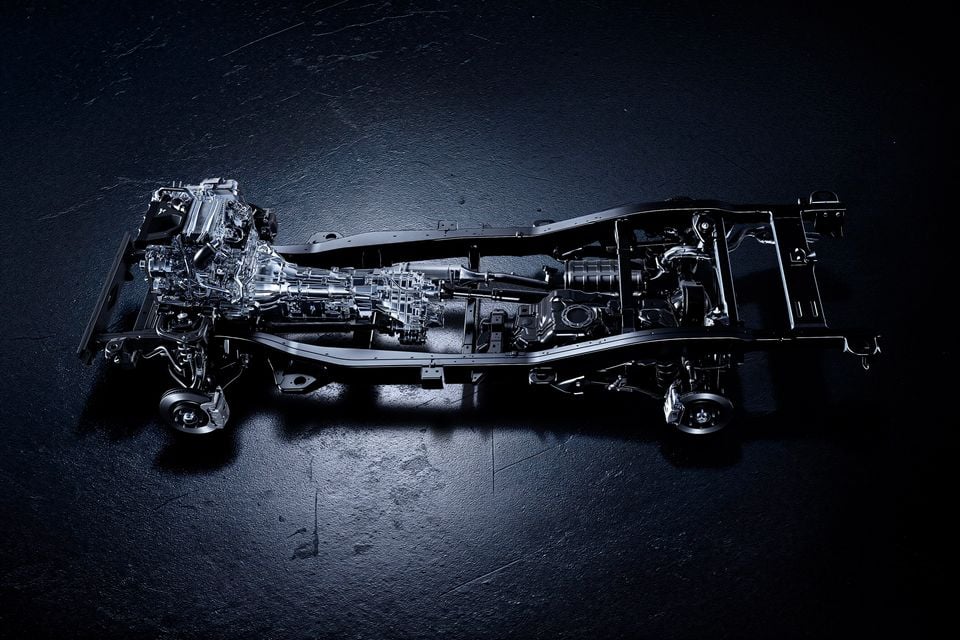
The new Pajero will be the first in two generations to be based on a ladder-frame chassis, after the third-generation model switched to a unibody (monocoque) design with an integrated ladder frame for increased torsional rigidity.
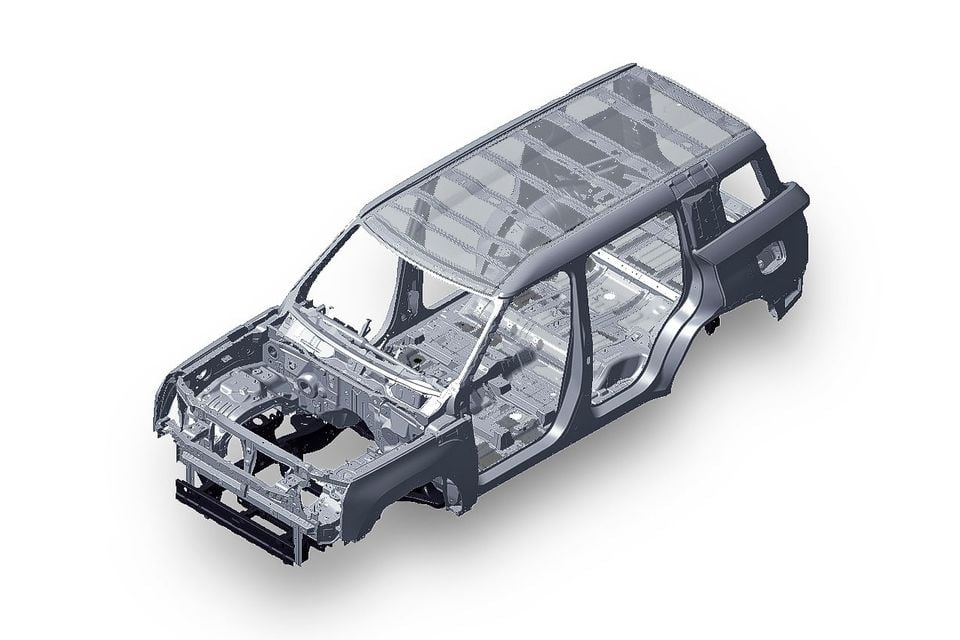
That makes it more appropriately described as a replacement for the Pajero Sport – which was based on and built alongside the previous Triton in Thailand, much as the Ford Everest and the related Ranger are – rather than the fifth generation of a model that has always been produced in Japan, at least for Australia.
Mitsubishi says the Triton's ladder frame has been “significantly enhanced” to offer “the robust capability of traditional frame-based off-road vehicles with modern refinement levels, ensuring a quiet, comfortable occupant experience”.
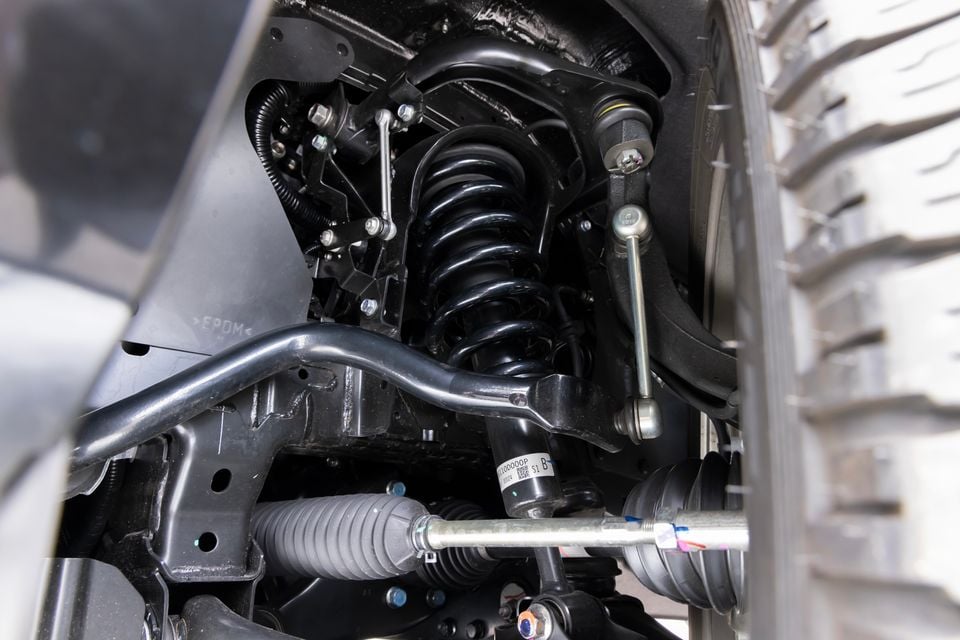
It claims the new frame is “significantly stiffer” than the outgoing Pajero Sport’s and supported by long-travel suspension with wider tracks, high-response shock absorbers and stabiliser bars, and electric power steering.
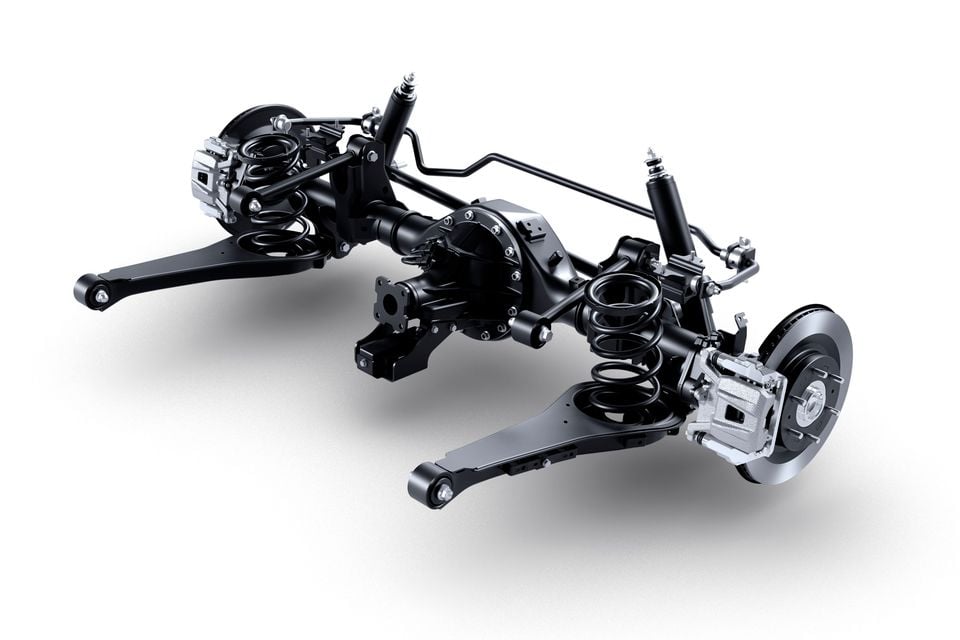
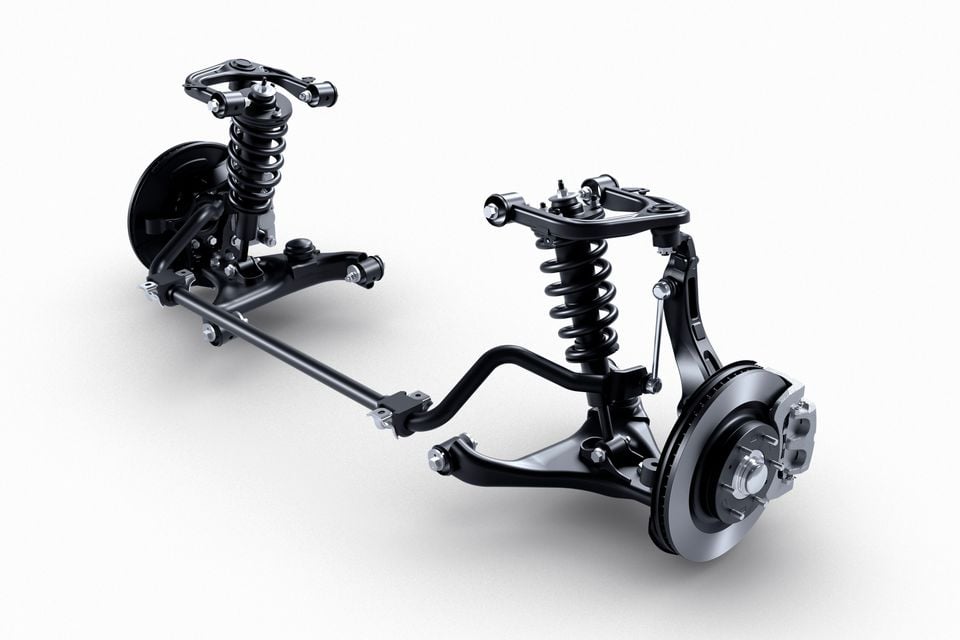
Front suspension is via double wishbones and coils and, like the Pajero Sport, the Pajero swaps out the Triton’s leaf-sprung rear suspension for a five-link ‘torque arm’ live rear axle with coil springs.
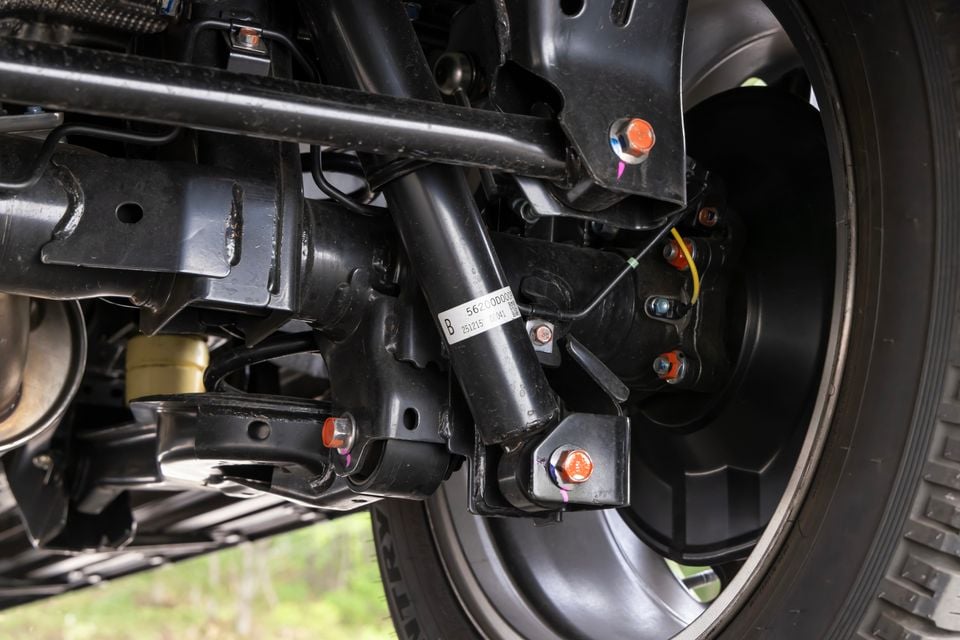
The Japanese brand says the front and rear of the chassis have been developed exclusively for the Pajero, adopting a double-wishbone front suspension setup for greater lateral rigidity, and a five-link rigid rear-end with coil springs instead of the Triton's leaf springs to balance off-road capability and ride comfort.
Other changes over the Triton include rear disc brakes instead of drums, a slightly tighter turning circle, and a higher 'eye-point', to aid outward visibility, plus a redesigned front door structure and more upright A-pillars.
The new Pajero is roughly 100mm longer, wider, and taller than the old Pajero Sport, and at 4.92 metres long is 70mm shorter than the Prado.
Its heavily modified Triton-based ladder frame has thicker side members, additional cross-bracing, and a wheelbase measuring 2870mm – 260mm shorter than that of Mitsubishi's ute.
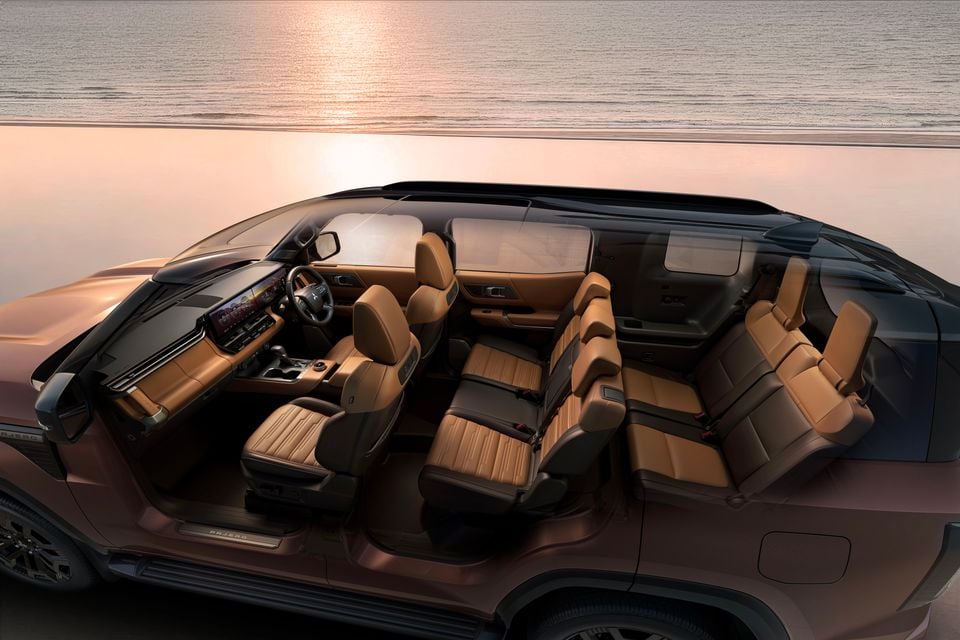
Inside, Mitsubishi claims class-leading headroom in a rally-inspired interior featuring seats with a wide range of adjustment (including powered lumbar as standard) and “exceptional” side bolstering to reduce fatigue.
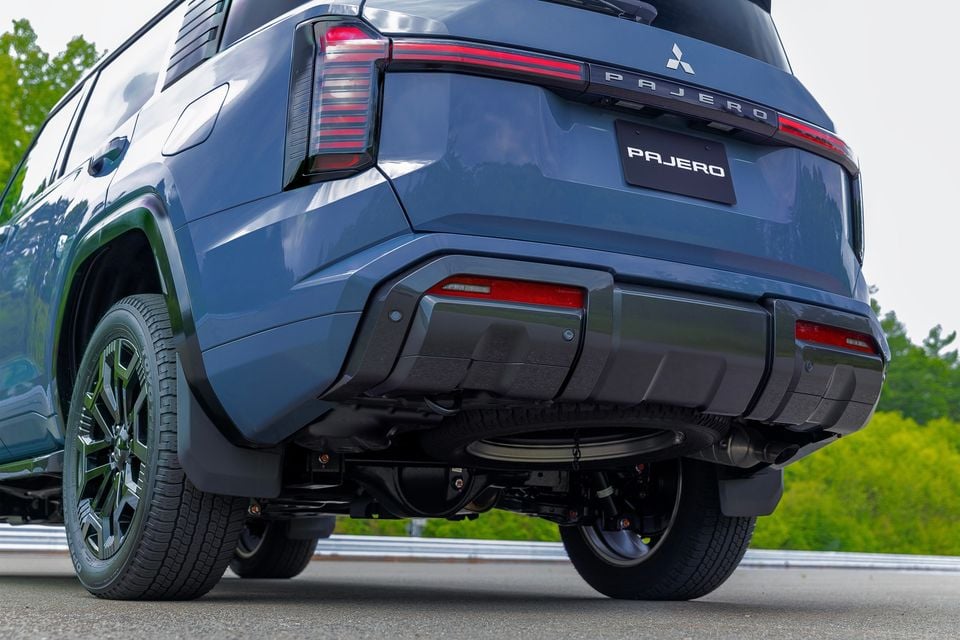
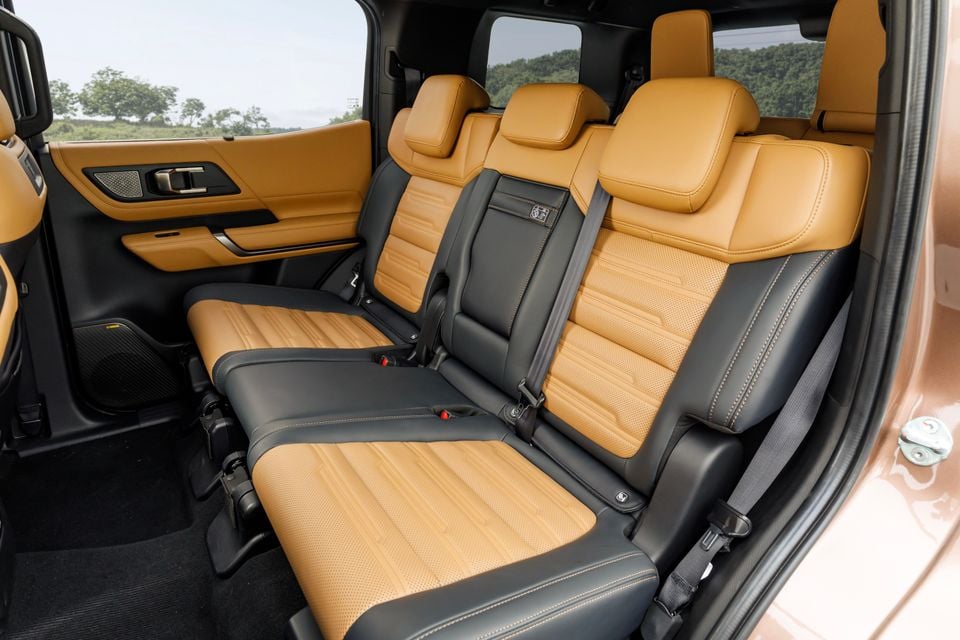
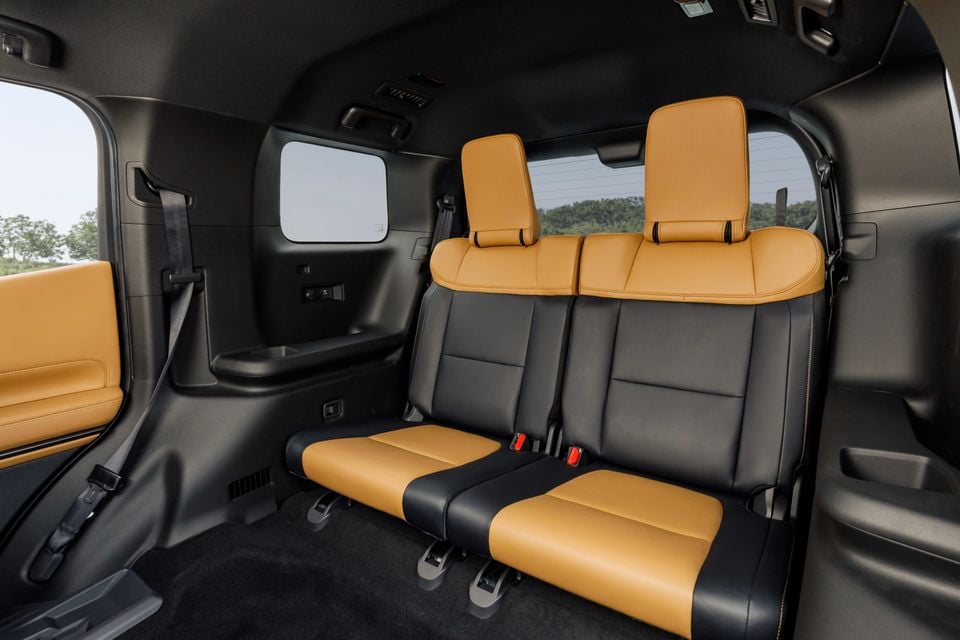
The second row slides over a 150mm range to provide adjustable legroom and improved access to the third row, which offers “maximised head and shoulder room” while cargo capacity behind the latter is listed at 519L (VDA), plus another 10L in a cargo box under the boot floor.
Braked towing capacity is 3500kg, bettering the Pajero Sport by 400kg and the old Pajero by 500kg (and matching the Triton and its direct rivals), while Trailer Load Assist (TLA) is said to detect sway and actively adjust power and braking to each individual wheel to maximise stability while towing.
Mitsubishi lists a static roof-load capacity of 300kg (dynamic: 100kg), allowing fitment of popular accessories such as roof racks.
| Dimensions | Mitsubishi Pajero |
|---|---|
| Length | 4920mm |
| Width | 1925mm |
| Height | 1900-1910mm – variant-dependent |
| Wheelbase | 2870mm |
Service pricing is yet to be announced but, as with all Mitsubishi models in Australia, the Pajero will be backed by a conditional 10-year/200,000km warranty, 10-year capped-price servicing and 10-year roadside assistance plan.
If you’re a commercial buyer or you don’t service with Mitsubishi, you receive the Japanese brand’s standard five-year/100,000km warranty.
The new Pajero takes a significant step up in terms of safety equipment and advanced driver aids, ticking almost every box as standard across the range.
Key range-wide safety features will include:
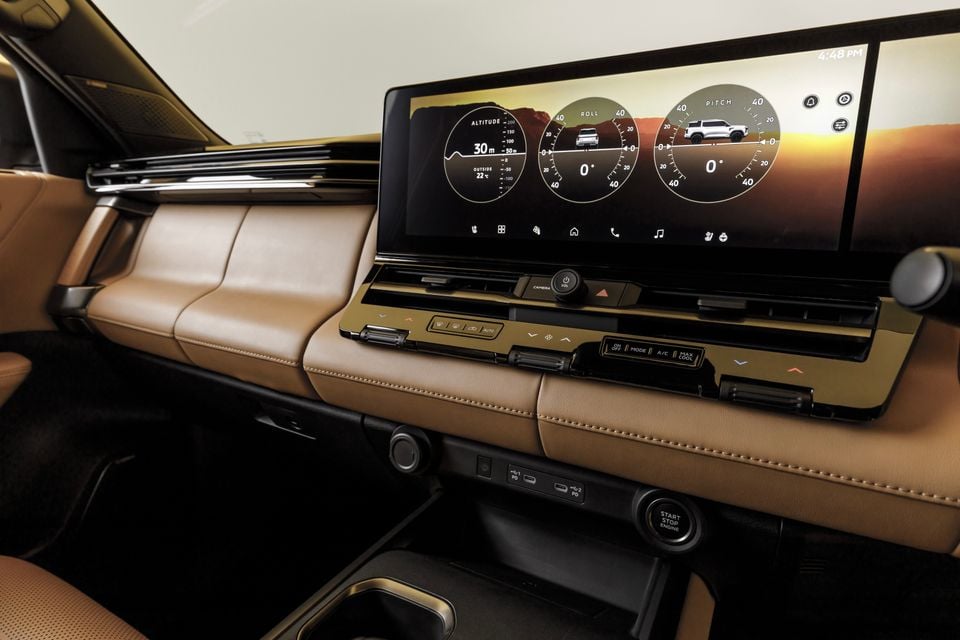
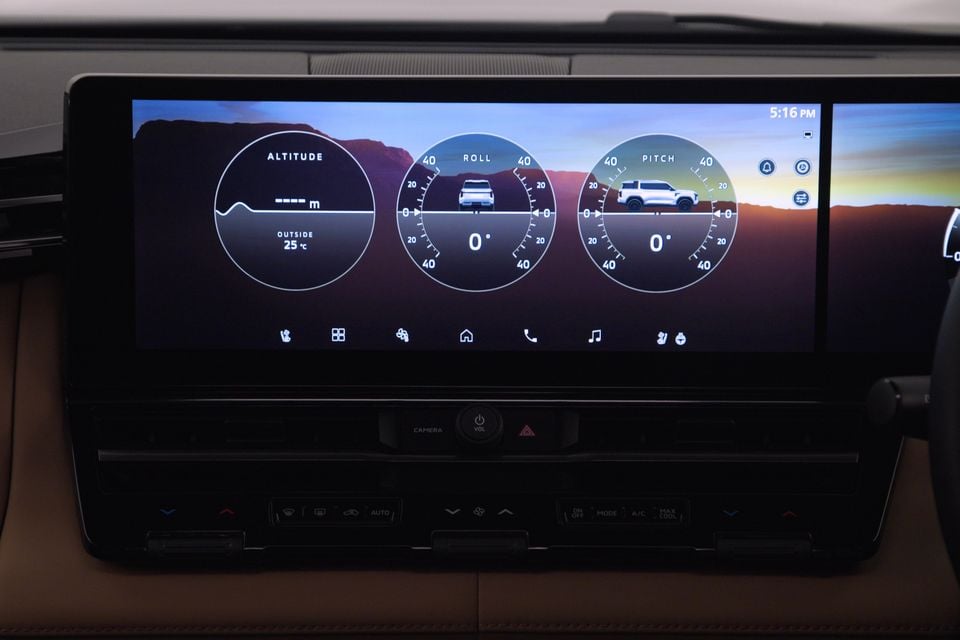
Three trim levels will be available from launch, each borrowing their names from the Pajero Sport (with the exception of GLX, leaving the door open to a cheaper variant later on), and each bringing an uptick in technology, safety and equipment compared to both the old Pajero and Pajero Sport, led by a digital recreation of the iconic triple analogue ‘Multi Meter’ instruments seen in previous generations of the Pajero.
Entry-level GLS grades come standard with a 12.3-inch infotainment touchscreen adjoining a 12.3-inch digital instrument display, while Exceed and GSR variants upgrade to larger 14.3-inch units. Wireless Apple CarPlay and Android Auto are standard across the range, along with Mitsubishi Connect providing a range of services including Automatic Collision Notification and Remote Climate Control.
The cabin features USB-C ports with up to 27W of charging capacity, a 15W wireless phone charger up front, and a meter display that harks back to the original Pajero with a specific off-road mode preset to display an altimeter, and inclinometers showing pitch and roll, with other functions including a compass, AYC status and world clock also available.
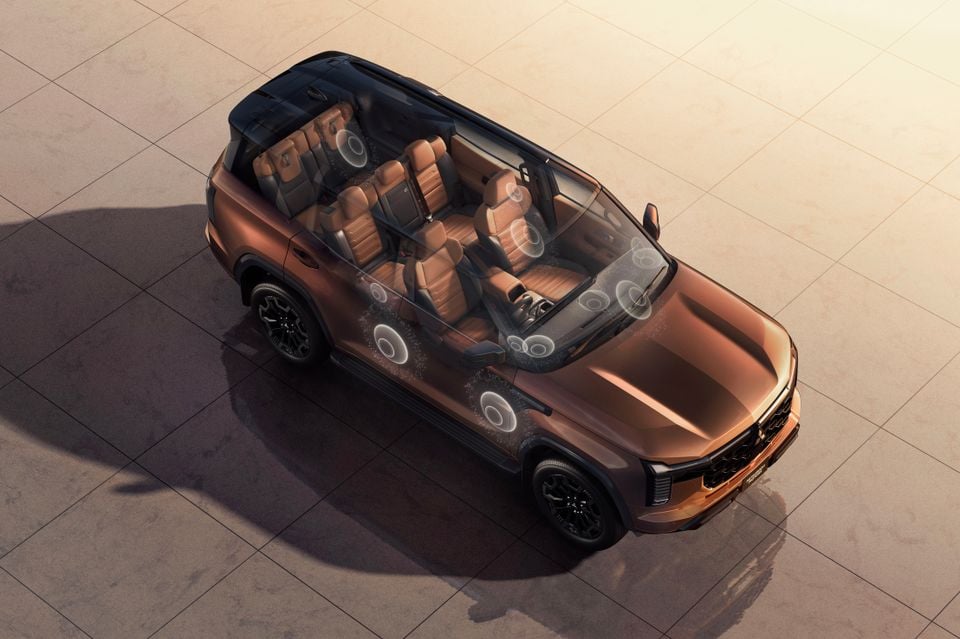
Other standard multimedia highlights include a standard Multi Around View Monitor, an advanced ‘Bonnet see-through’ camera that digitally aids vehicle placement and, for the Exceed and GSR, a 12-speaker Dynamic Sound Yamaha Ultimate audio system with 11-channel Dual Amplifier and Digital Signal Processor, which compensates for vehicle speed, rain and even air-conditioning to deliver “a crystal-clear audio experience”.
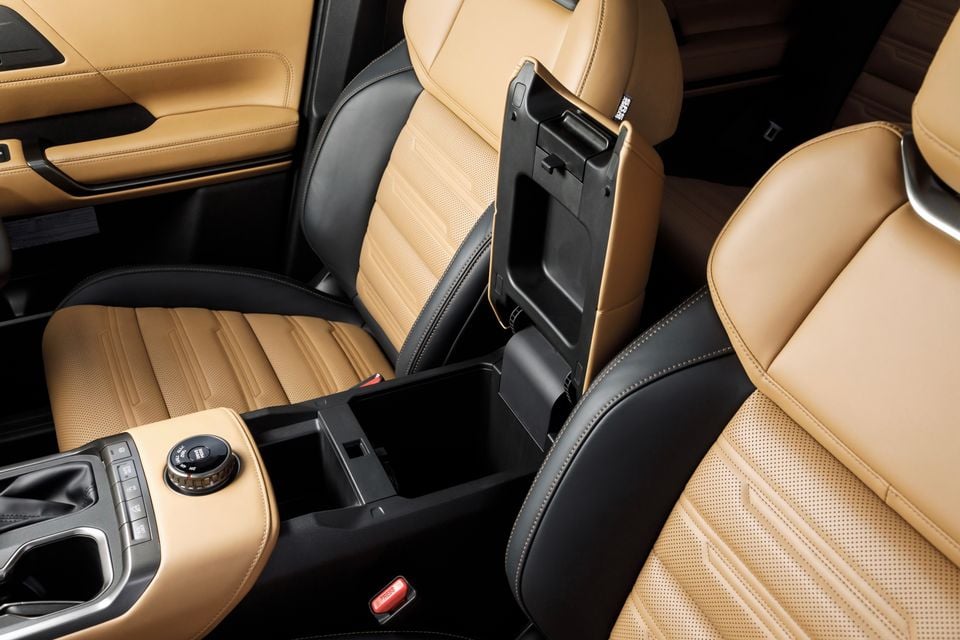
While the base GLS gets waterproof black fabric seat trim, there’s leather upholstery featuring “intricate stitchwork with hand-stitching applied to the instrument panel and door trims” in the other two variants, with the GSR adding a large panoramic sunroof.
All variants score a heated steering wheel with paddle shifters, an electric park brake with brake auto-hold, and tyre pressure monitoring.
Standard equipment for the Pajero GLS includes:
Over the GLS, the Exceed adds:
Over the Exceed, the GSR adds:
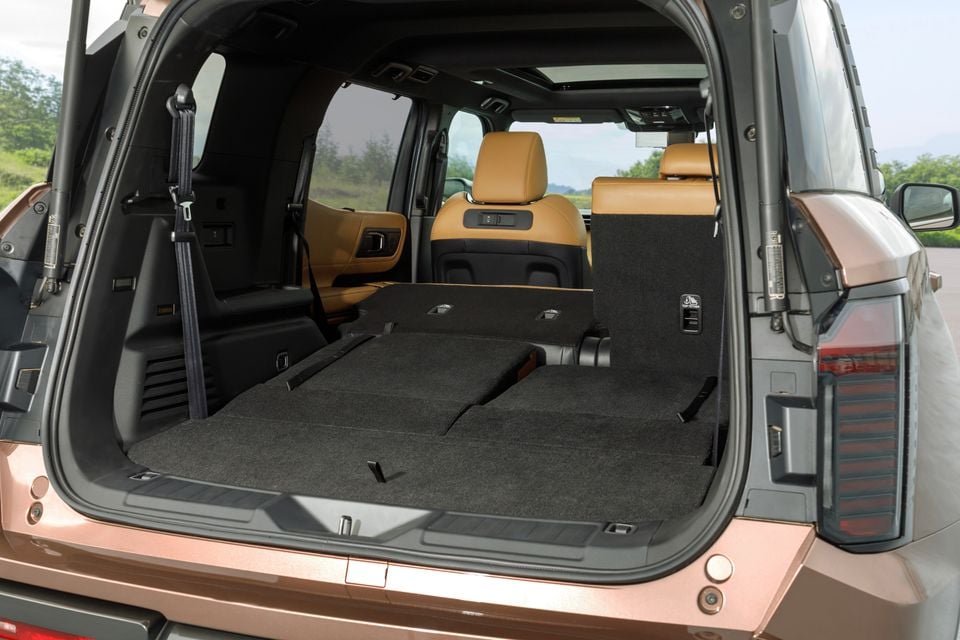
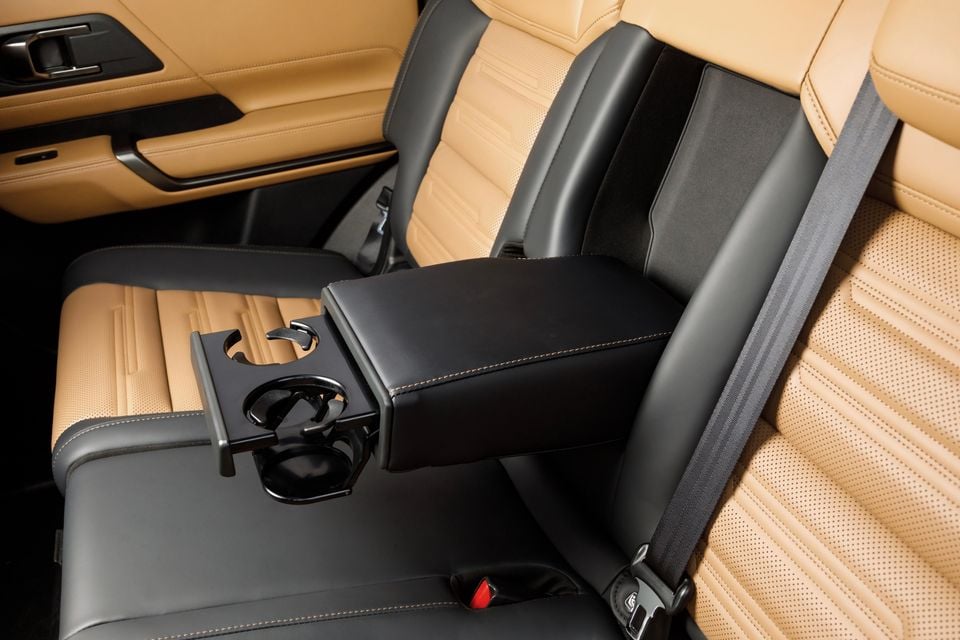
Mitsubishi says that because Australia is “one of the key global Pajero markets”, its local accessories engineering team has been “deeply involved” in accessories design and development, and that a comprehensive outline of genuine accessories will be provided before launch.
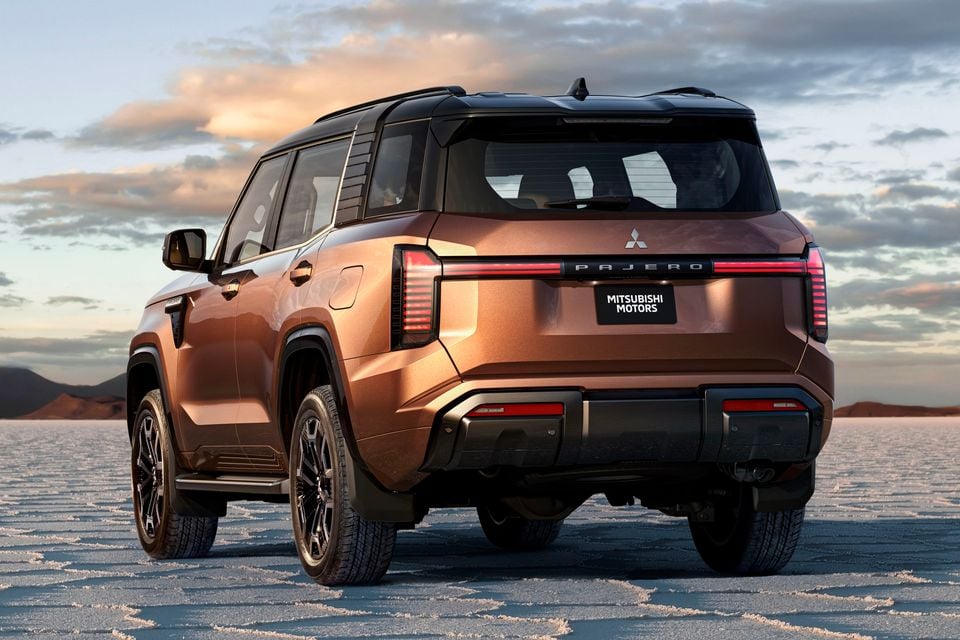
A range of solid, metallic and pearlescent exterior paints are available, in addition to two prestige colours debuting on the Pajero (Armour Copper and Phantom Blue), alongside Black Diamond. Armour Copper and Black Diamond are exclusive to the Exceed and GSR, while Phantom Blue can be had with all grades.
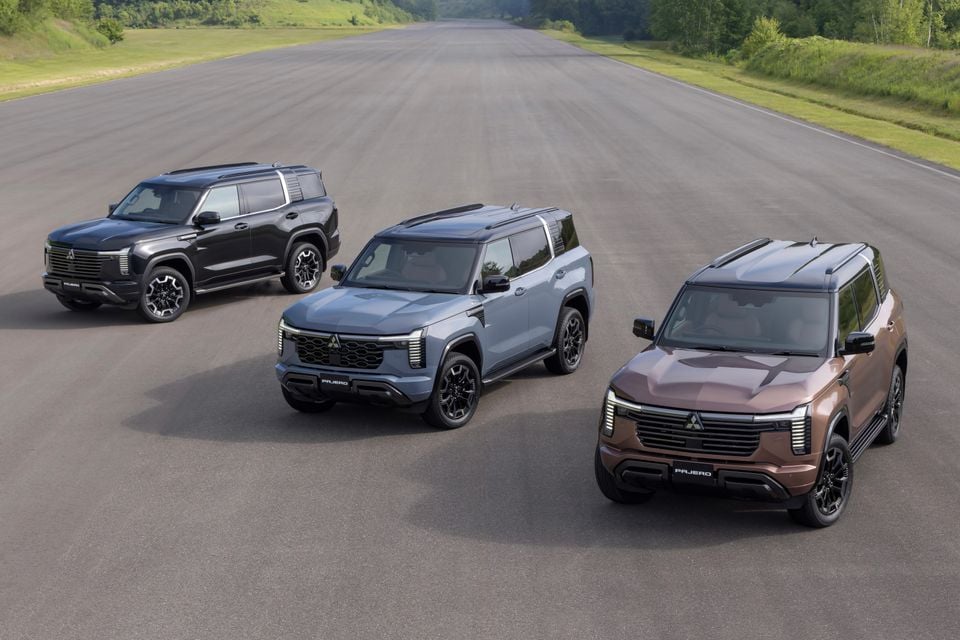
White is the only standard solid colour and optional paint prices are yet to be announced. Uniquely, the GSR features a black roof to create a two-tone look when paired with a non-black primary colour.
| Colour | GLS | Exceed | GSR |
|---|---|---|---|
| White (Solid) | · | · | |
| White Diamond (Prestige) | · | · | · |
| Black Mica (Pearlescent) | · | ||
| Black Diamond (Prestige) | · | · | |
| Blade Silver (Metallic) | · | · | |
| Graphite Grey (Metallic) | · | · | · |
| Armour Copper (Prestige) | · | · | |
| Phantom Blue (Prestige) | · | · | · |
While the base GLS comes with black fabric seat trim with grey stitching, the Exceed gets black leather with beige stitching, and the GSR offers two-tone black and Camel leather with Camel stitching.
MORE: 2027 Mitsubishi Pajero revealed: Off-road icon reborn as ute-based SUV
MORE: 2027 Mitsubishi Pajero – Everything we know about the new flagship off-road SUV
MORE: Mitsubishi Triton, Pajero hybrid confirmed as part of major Thai investment – report
MORE: Mitsubishi Pajero lineup to expand with RAV4-sized SUV, Suzuki Jimny rival – report
MORE: Explore the Mitsubishi Pajero showroom
Marton Pettendy is a veteran motoring journalist and editor with decades of experience across Australia’s leading automotive titles.
Marton Pettendy
10 Hours Ago

William Stopford
12 Hours Ago

Damion Smy
12 Hours Ago


Matthew Hansen
12 Hours Ago
William Stopford
14 Hours Ago

Gautam Sharma
1 Day Ago
Add CarExpert as a Preferred Source on Google so your search results prioritise writing by actual experts, not AI.