 Car News
 CarExpert Podcast
 Car Reviews
 Owner Car Reviews
 Car Comparisons
 Showroom
 Car Chooser
 Car Specifications


Andrew Maclean
2026 Chery Tiggo 7 Super Hybrid vs Honda CR-V e:HEV RS comparison
How does the Chery Tiggo 7 Super Hybrid stack up against Honda's CR-V hybrid?
58 Seconds Ago
How does the Chery Tiggo 7 Super Hybrid stack up against Honda's CR-V hybrid?
Contributor
Contributor
If you’re looking for a family truckster these days, you have a lot of decisions to make.
The mid-size SUV segment is undeniably one of the most saturated segments of the Australian automotive landscape. Showrooms are literally flooded with them, with almost every brand – from the bargain end of the business to the top-end of town – offering their own take on the same theme.
In fact, there are currently more than 70 different models classified as mid-size SUVs on sale in Australia, and hundreds of variations when you break down the model ranges. It’s hard to know where to start…
Do you choose to invest in a trusted brand like Honda and its CR-V, one of the early pioneers of the segment, or take a punt and save some pennies on a newcomer like Chery with its Tiggo 7?
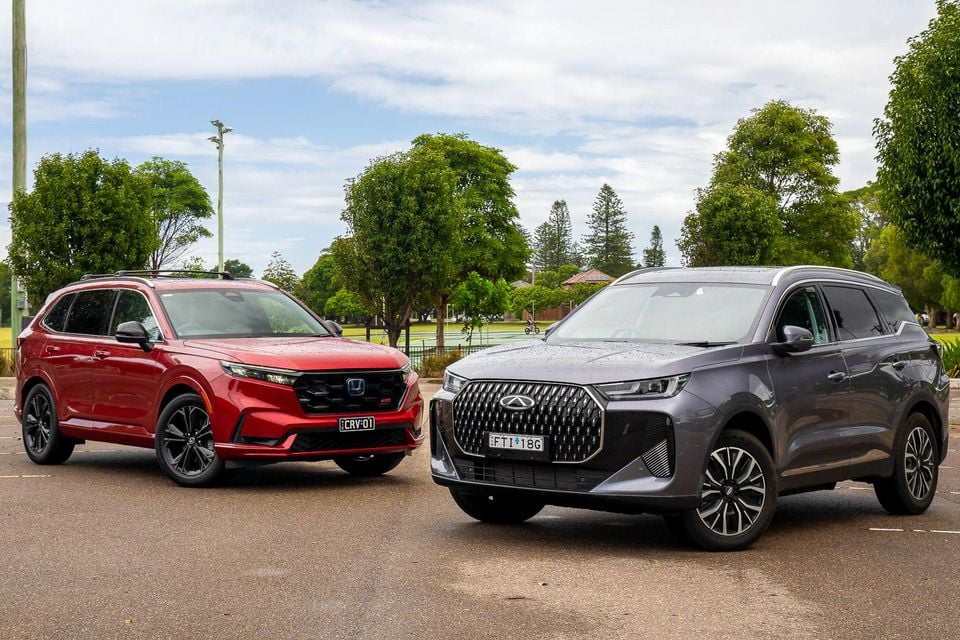
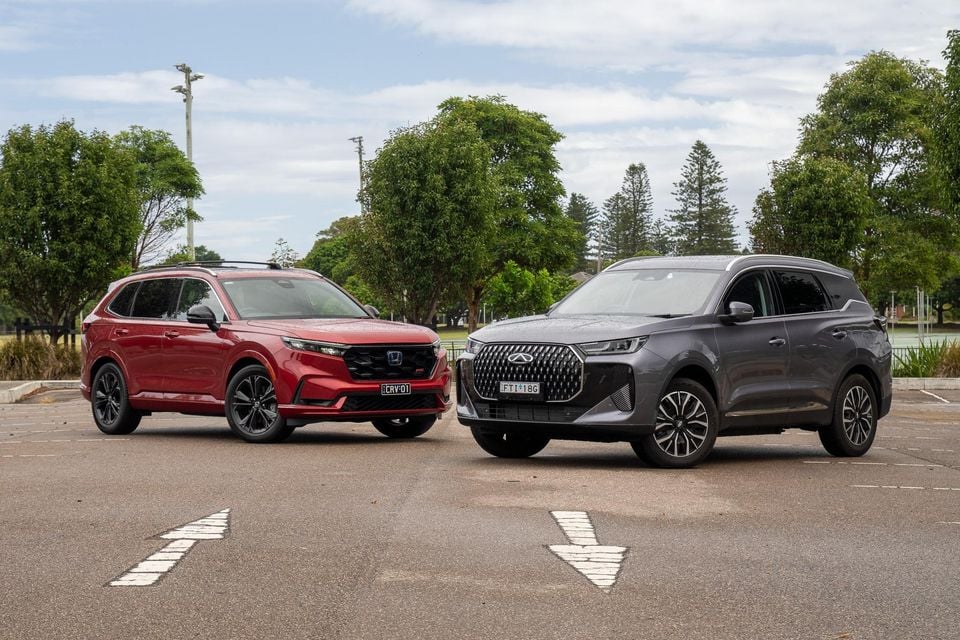
For this test, we’ve ascended to the top of each model range with the flagship CR-V e:HEV RS and the Tiggo 7 Super Hybrid Ultimate, as it is the only way to access the most advanced hybrid powertrain technology from each of these respective brands. So, let’s get cracking!
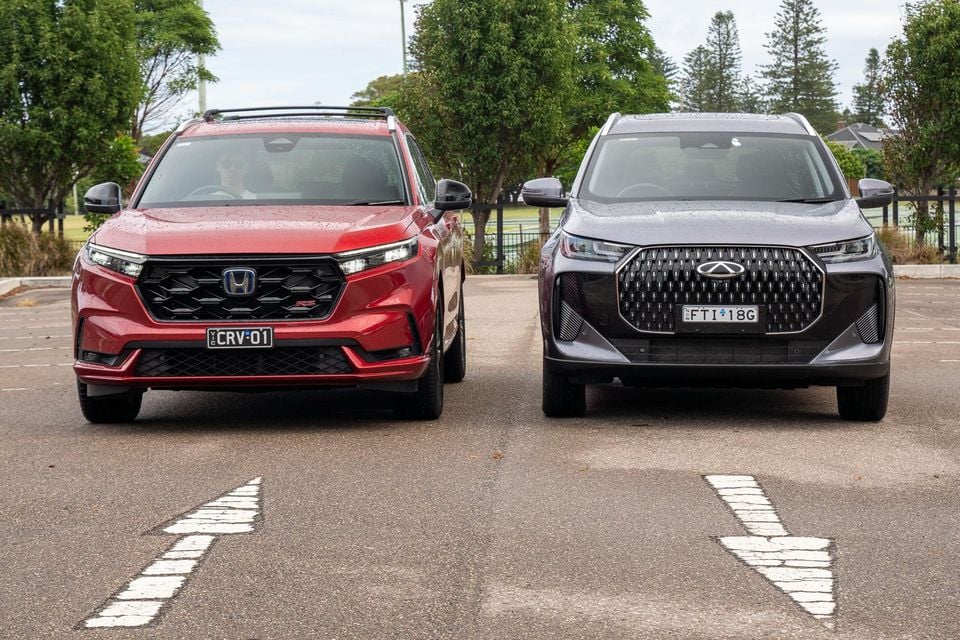
Both the Honda CR-V and Chery Tiggo 7 are five-seat mid-size SUVs featuring the most fuel-efficient powertrains and all the kit their respective makers can throw at them.
| Model | Drive-away pricing |
|---|---|
| 2026 Chery Tiggo 7 Urban | $29,990 |
| 2026 Chery Tiggo 7 Ultimate | $33,990 |
| 2026 Chery Tiggo 7 Super Hybrid Urban | $39,990 |
| 2026 Chery Tiggo 7 Super Hybrid Ultimate | $43,990 |
The Tiggo 7 is offered in two model grades – Urban and Ultimate – with the choice of either purely petrol power or Chery's new Super Hybrid setup.
In both cases, it’s a simple $4000 premium for the Ultimate over the Urban, which starts at $29,990 in petrol form and $39,990 for the Super Hybrid, including all statutory on-road costs.
Honda offers a much broader model range with seven unique variants of the CR-V, including the option of a seven-seat configuration in standard front-wheel drive variants and two grades with all-wheel drive, but just one – for now – with a hybrid powertrain.
| Model | Drive-away pricing |
|---|---|
| 2026 Honda CR-V VTi X+ 2WD | $41,900 |
| 2026 Honda CR-V VTi-X7 2WD | $47,300 |
| 2026 Honda CR-V VTi-L 2WD | $49,300 |
| 2026 Honda CR-V VTi-L7 2WD | $53,500 |
| 2026 Honda CR-V VTi-L AWD | $51,800 |
| 2026 Honda CR-V VTi-LX AWD | $57,500 |
| 2026 Honda CR-V e:HEV RS | $59,900 |
Across the board, the CR-V is significantly more expensive to purchase with prices starting at $41,900 drive-away for the entry-level VTi-X+.
Today we’re comparing the range-topping Tiggo 7 Super Hybrid Ultimate, which costs $43,990 drive-away, against the CR-V e:HEV RS which costs $59,900 drive-away.
Now, the $16k variance is a big chunk of change in anyone’s book. So, let’s see if the Chery offers more than just an affordable price tag, and whether the CR-V can justify its premium.
Both of these vehicles come equipped with a generous level of standard equipment.
Both share the following features:
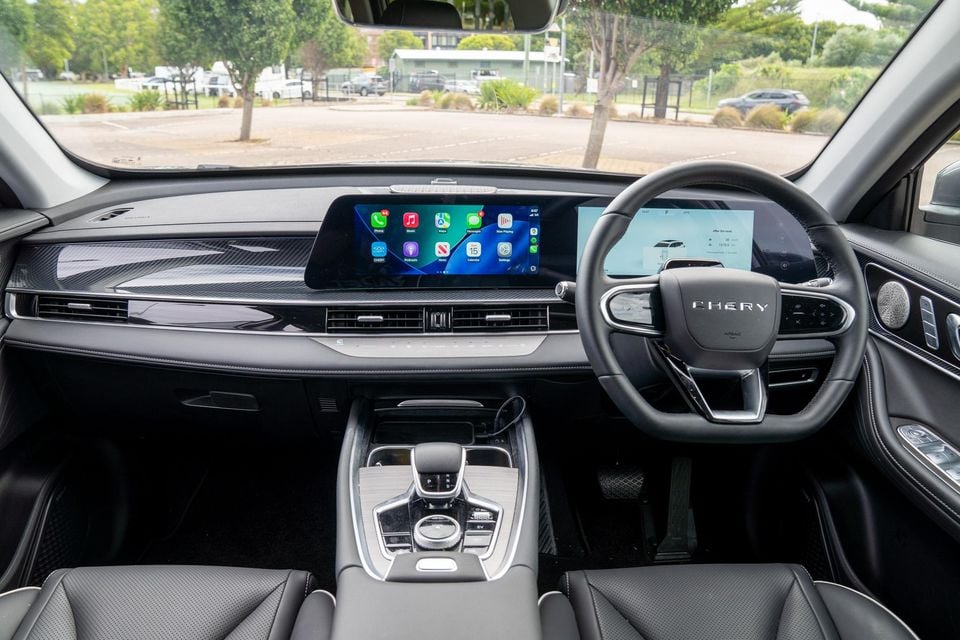
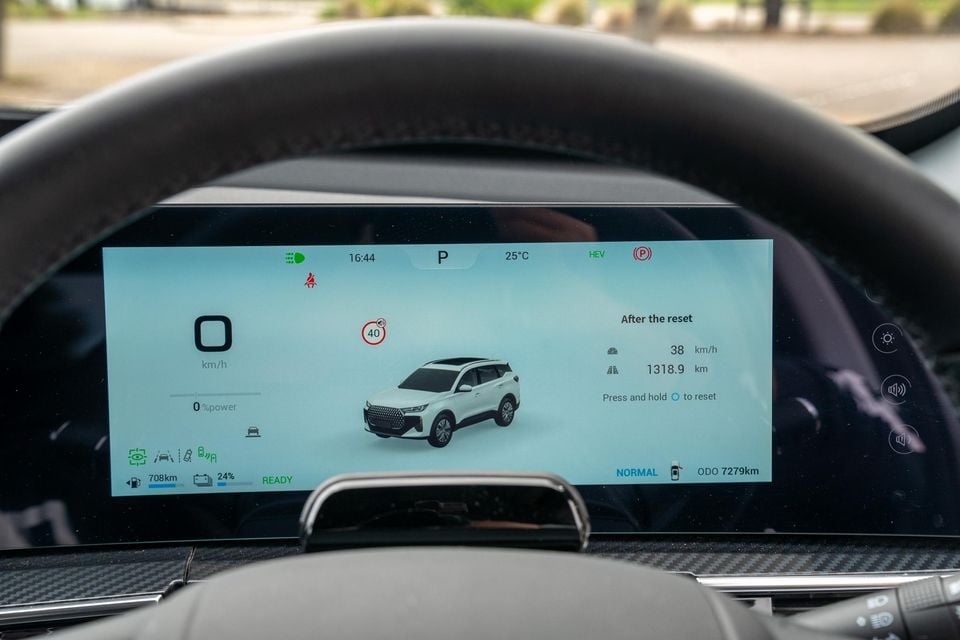
But each of them also has a few unique elements in their favour. The Chery’s front seats offer ventilation as well as heating, which is nice on a summer’s day, and its twin 12.3-inch digital screens are larger than those in the CR-V, which has a 10.2-inch unit for the instrument cluster and a 9.0-inch central infotainment touchscreen.
But it’s not all about size, as the Honda’s instrument cluster is clearer, easier to read and less prone to glare under its canopy than the Chery’s more exposed display, which doesn’t exploit its extra real estate very well.
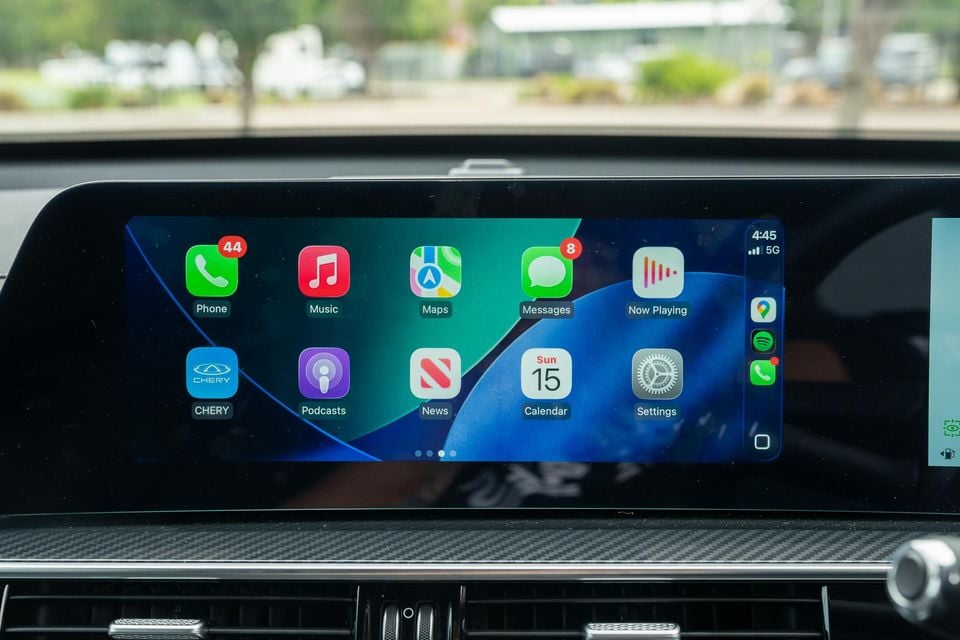
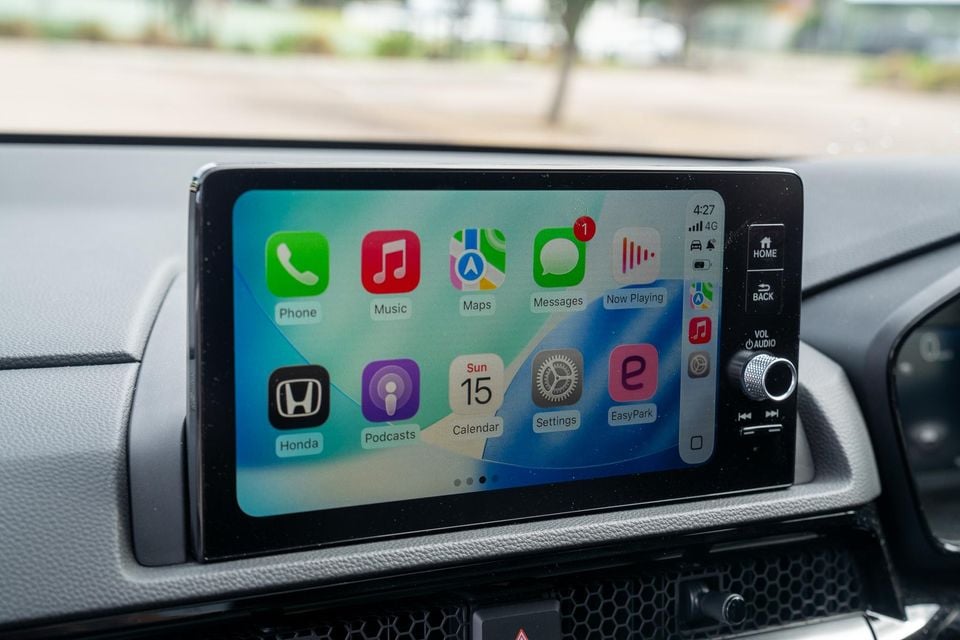
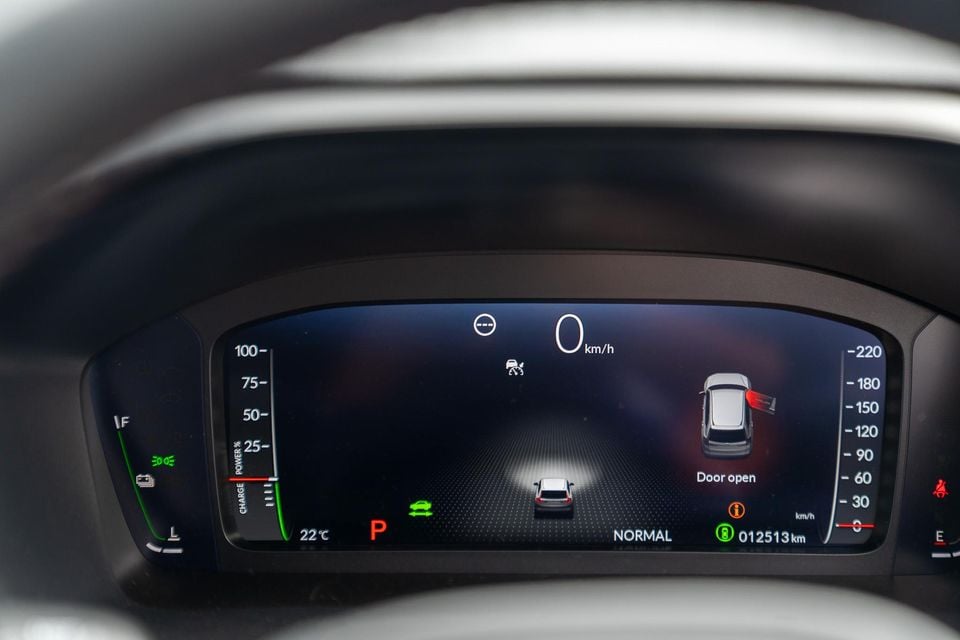
It’s the same with the infotainment screen too, as the Honda has a far more logical menu structure with phone-style widgets for each of its functions, as well as a separate display for ventilation settings, physical shortcut buttons, and a proper physical knob to control the volume of the audio system.
Similarly, the CR-V has rotating controls for the dual-zone climate control – for the temperature on each side of the cabin and the fan speed – which are easy to use, while the Chery has a haptic panel on the dashboard that can be hard to see in bright light.
Both have wireless smartphone mirroring for Apple devices but the Chery requires a wired connection for Android Auto.
In our experience, the Honda’s connection is more stable and consistent and launches quickly as soon as you start the car (although you have to accept a safety disclaimer every time), whereas I could connect my iPhone to Bluetooth in the Chery but CarPlay was hit-and-miss, so I reverted to a USB connection.
Both also have eight-speaker Bose audio systems that offer decent sound quality and staging, but the Honda also uses active noise cancelling technology that helps make music or podcasts seem a little clearer and crisper.
Modern safety systems are moving fast, and the fact the Tiggo 7 is newer than the CR-V is highlighted by their respective features and, consequently, their ANCAP safety ratings.
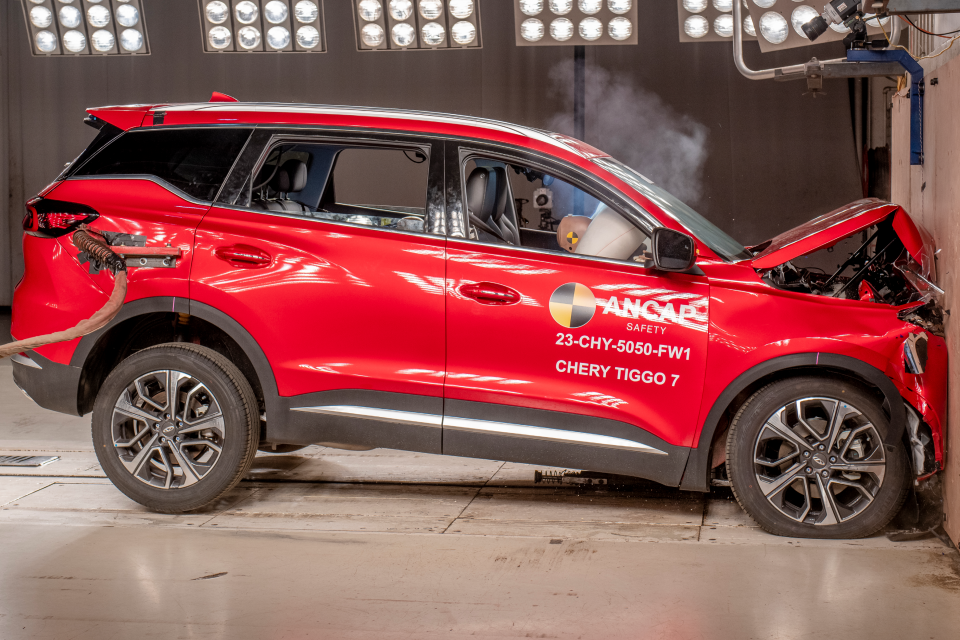
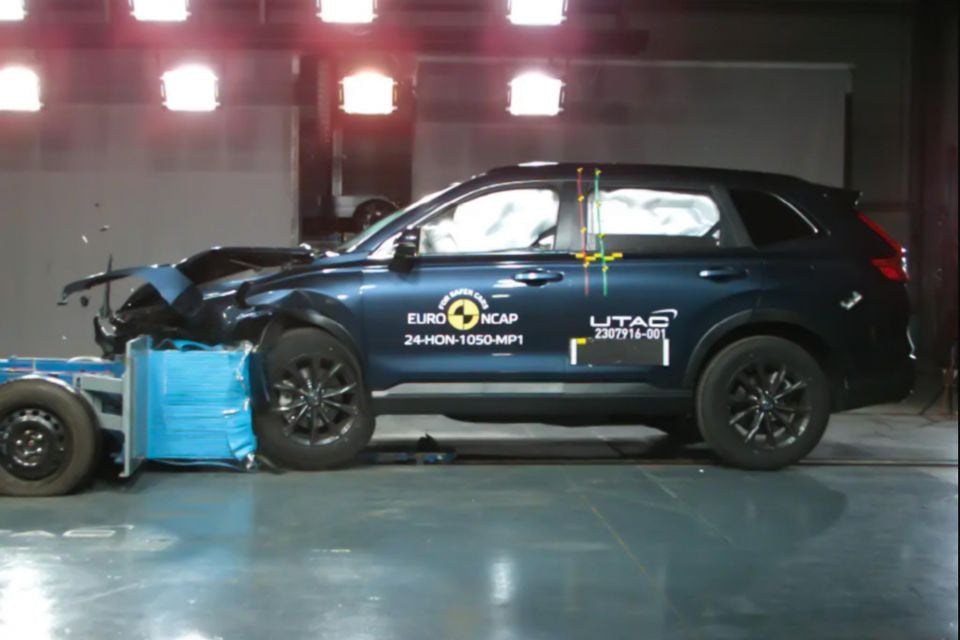
The Chery scores a maximum five stars versus the Honda’s four-star rating, but that is primarily because it ticks a few more boxes against ANCAP’s criteria for safety assistance, such as door-opening warning, rear occupant detection and a more advanced driver attention monitoring system.
| Category | Chery Tiggo 7 CSH | Honda CR-V e:HEV RS |
|---|---|---|
| Adult occupant protection | 82 per cent | 88 per cent |
| Child occupant protection | 86 per cent | 88 per cent |
| Vulnerable road user protection | 80 per cent | 76 per cent |
| Safety assist | 82 per cent | 68 per cent |
Otherwise, both feature a comprehensive suite of advanced driver aids, including:
In the real world, the Honda’s suite of systems – dubbed Smart Sensing – is calibrated better and is far less intrusive than in the Chery, which while significantly improved over previous generations, still tends to tug at the wheel while trying to maintain its position in the centre of a lane, and slows down unnecessarily through gentle bends when the cruise control is activated. The driver attention monitor also acts far too quickly when glancing at or adjusting anything on the central touchscreen.
Both vehicles are also equipped with eight airbags, including a centre airbag between the front seat occupants, and a driver’s knee airbag, plus top-tether points and ISOFIX anchors on the outboard rear seats for child seats.
Dig a little deeper into the physical crash test results and the CR-V scores higher for its structural integrity in both adult and child protection assessment.
As far as family cars go, both the Tiggo 7 and CR-V get the fundamental basics right, with plenty of space for five, decent cargo carrying capacity, and plenty of conveniences.
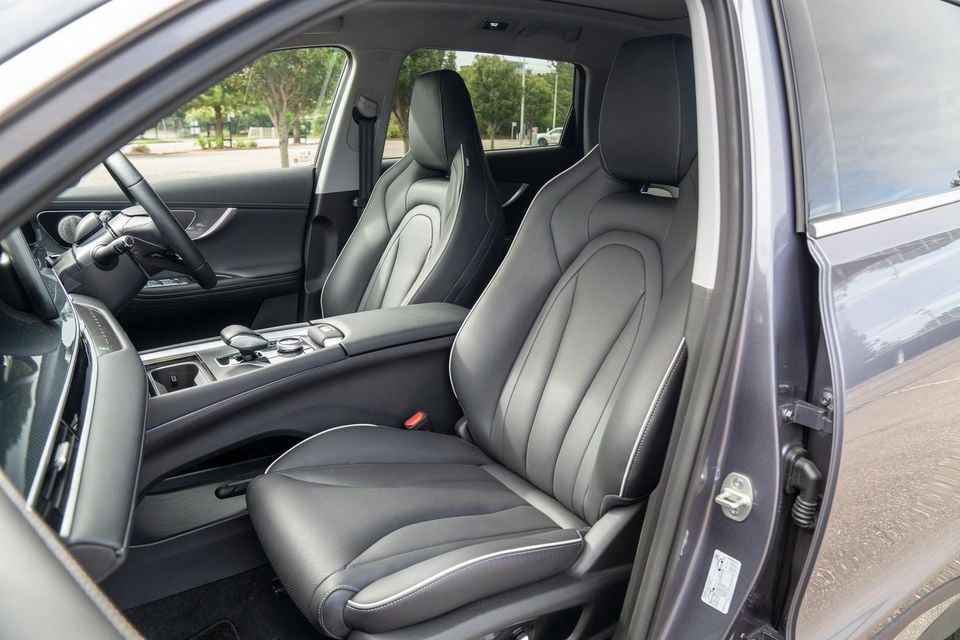
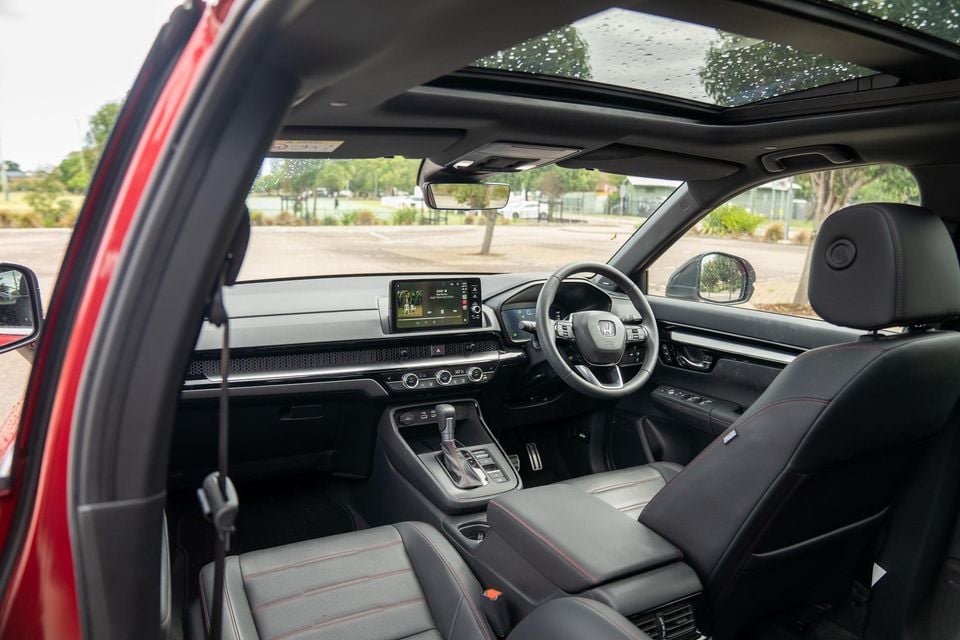
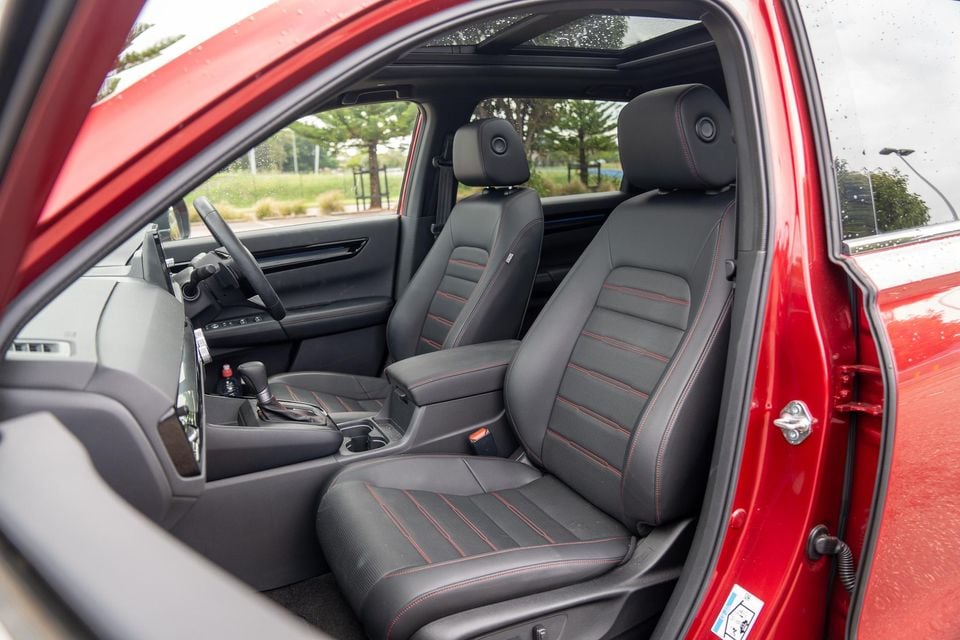
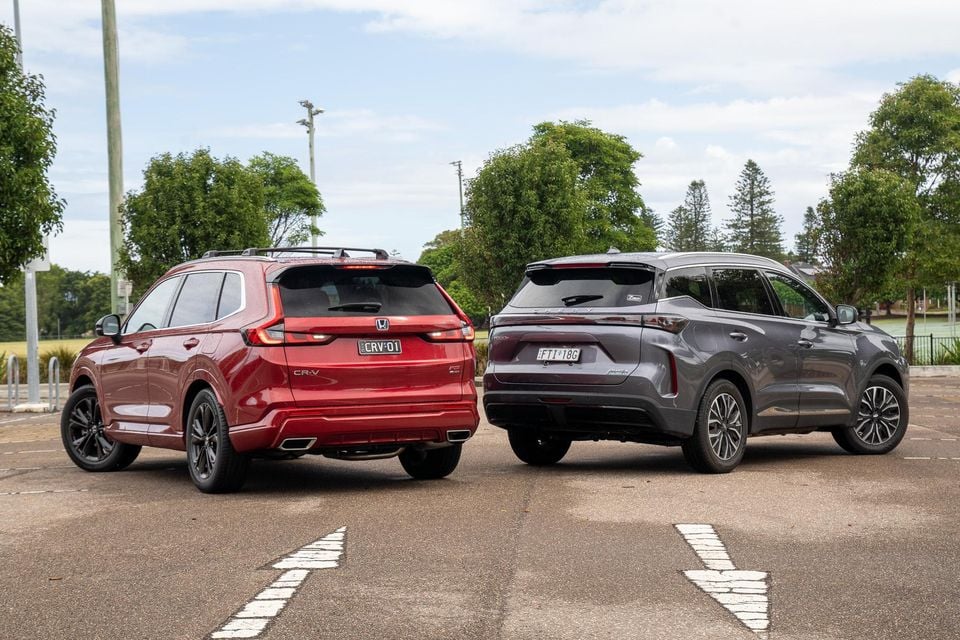
The CR-V is fractionally larger in its overall dimensions and rides on a longer wheelbase compared to the Tiggo 7, which gives it a slight advantage in terms of rear seat space and significantly more room in the boot, but its wheel-arches are more intrusive, while the Chery has a flatter load area.
Both provide acres of space in the back, with good leg and toe room, plus rear air vents, USB power outlets and a fold-down centre armrest with additional cupholders. But the Tiggo is more practical when carrying three across the bench thanks to a flatter floor, whereas the CR-V’s transmission tunnel is a little higher and more intrusive.
For those in the front, both cars have supportive and comfortable seats that offer plenty of adjustment to suit a myriad of drivers, and excellent vision both front and rear.
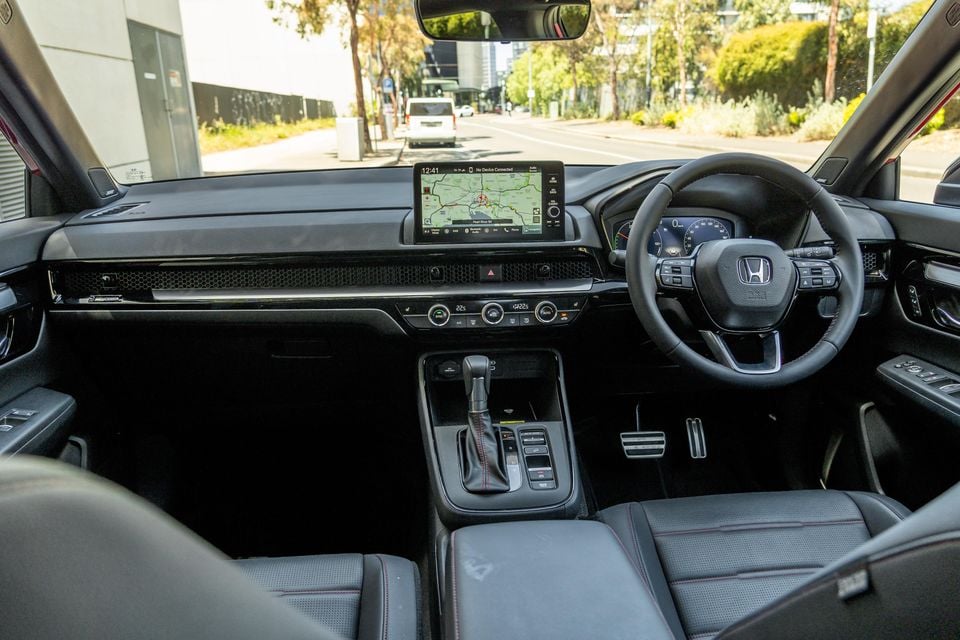
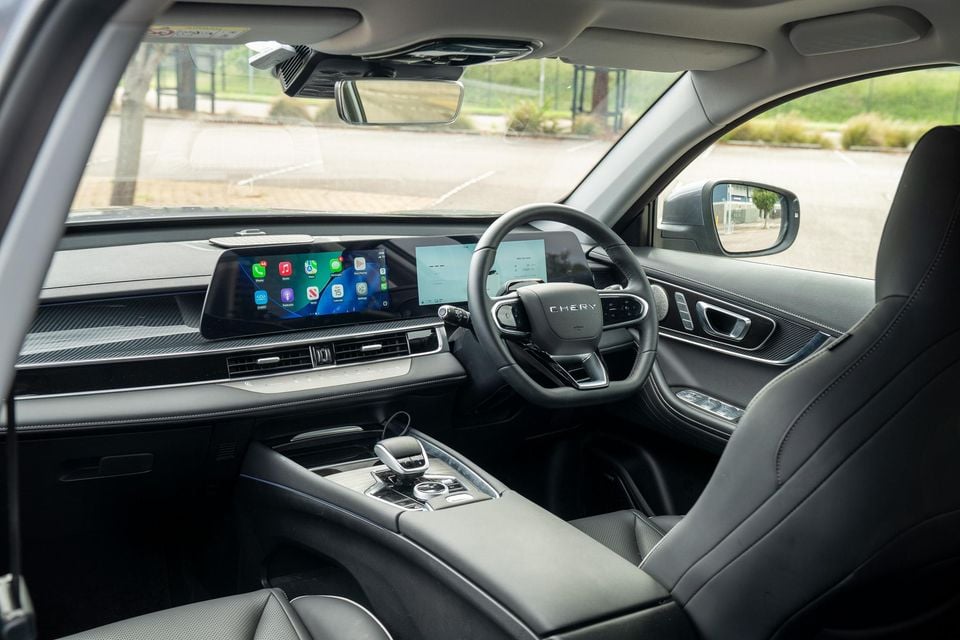
The CR-V’s dashboard layout is more conservative in its overall design, with a traditional cowl for the instrument cluster and a tablet-style infotainment screen protruding from the top, whereas the Tiggo has a modern floating twin-screen configuration. As mentioned previously, the Honda’s screens are easier to read and use, as well as less prone to glare in bright sunlight.
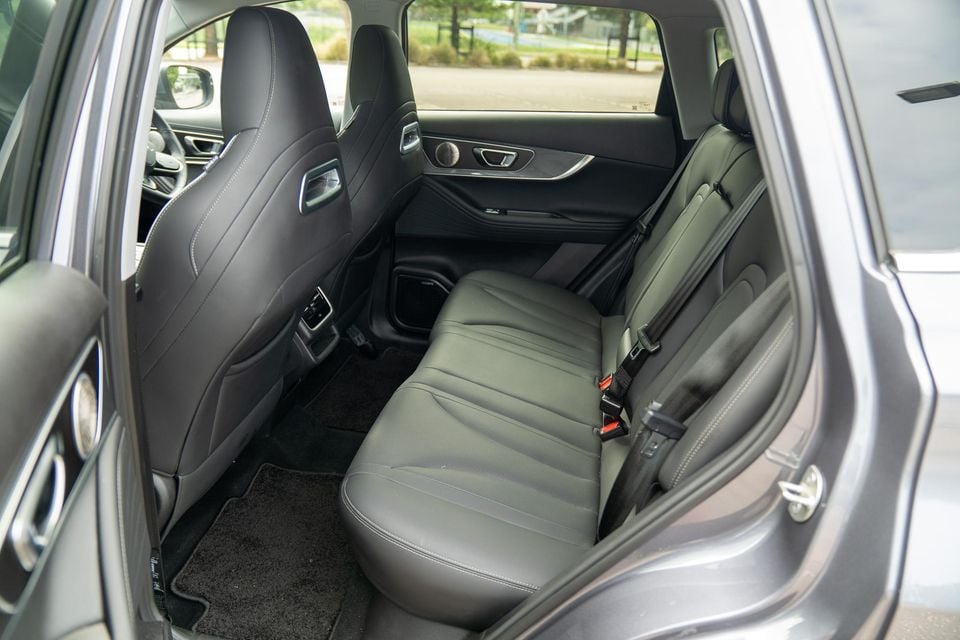
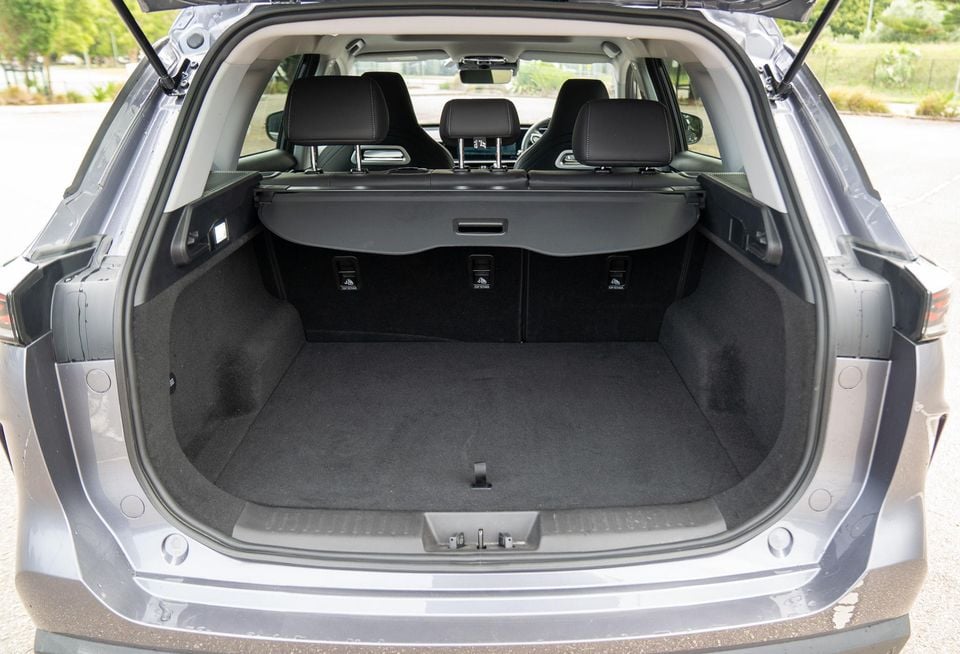
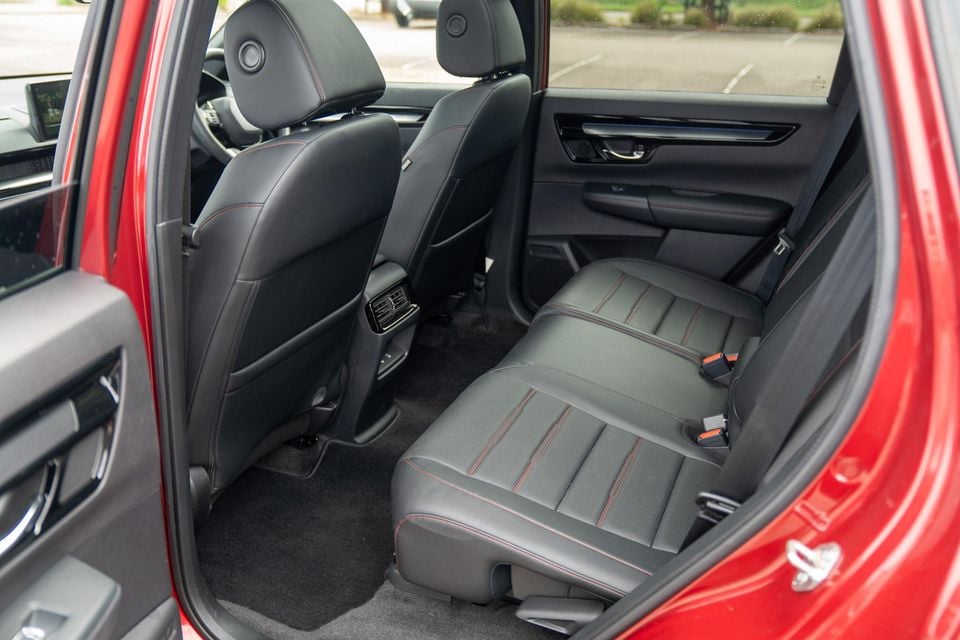
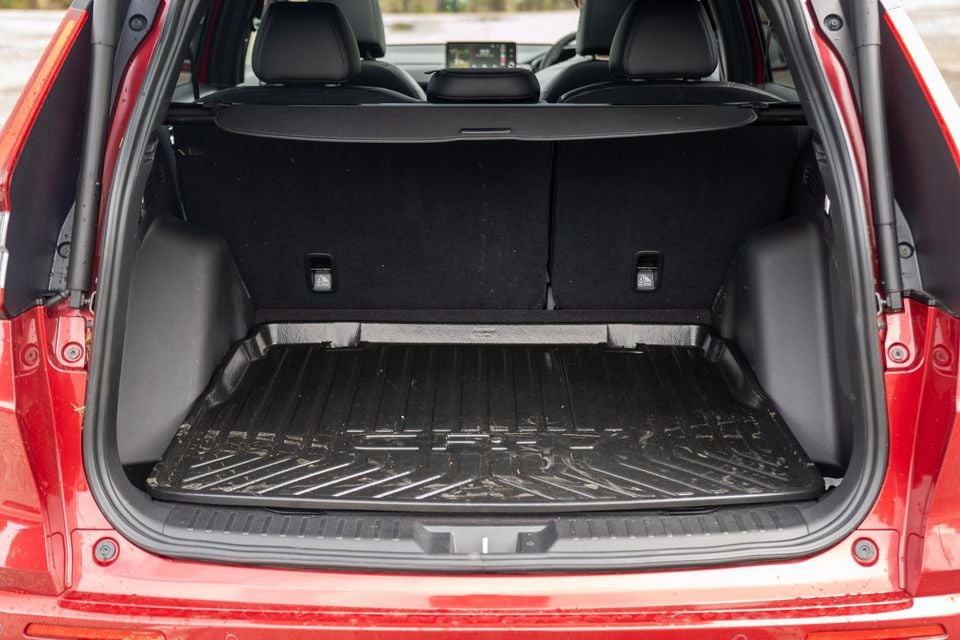
The overall quality of materials is also slightly better in the Honda, and the centre console is easier to access, with cupholders behind the gear lever and a larger tray housing a wireless phone charger at the front.
But the Tiggo 7 has an additional space underneath, which is big enough for a small handbag and features a glass hammer/belt-cutting tool, which is unique and potentially life-saving in the event of an accident.
| Dimensions | Chery Tiggo 7 CSH | Honda CR-V e:HEV RS |
|---|---|---|
| Length | 4535mm | 4704mm |
| Width | 1864mm | 1866mm |
| Height | 1702mm | 1681mm |
| Wheelbase | 2653mm | 2701mm |
| Cargo capacity | 356L | 581L |
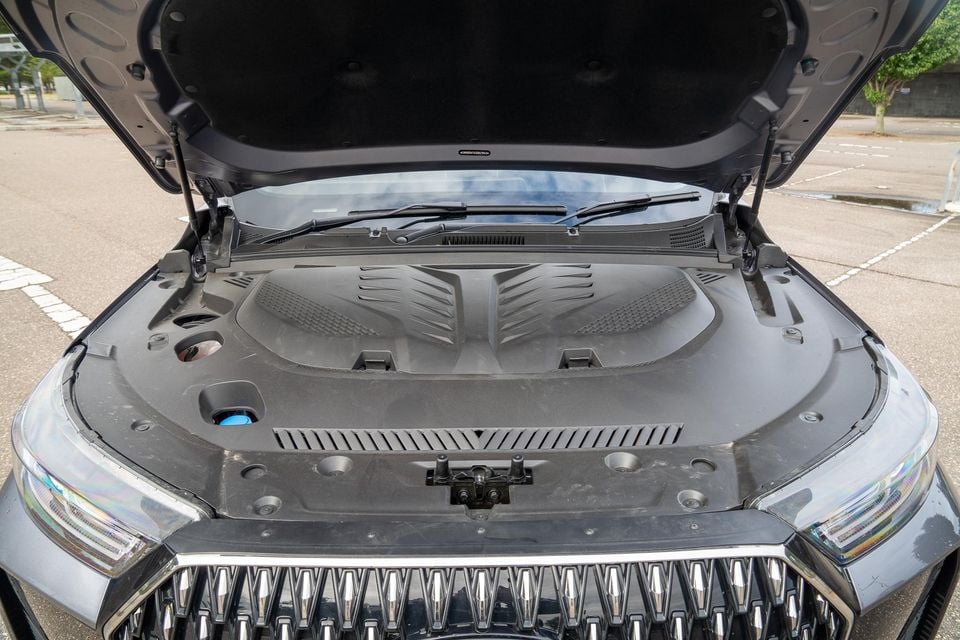
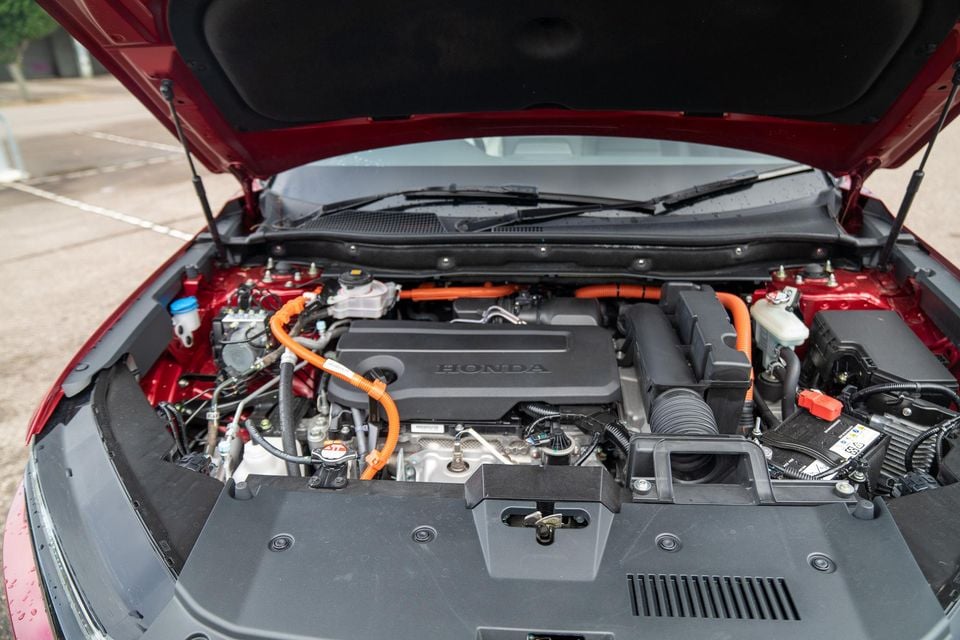
Here’s where things diverge a little more between these two, as the Tiggo 7 is a plug-in hybrid that promises to be more efficient and can drive longer distances using only its electric motor, while the CR-V is powered by a more conventional series-hybrid drivetrain.
| Specifications | Chery Tiggo 7 CSH | Honda CR-V e:HEV RS |
|---|---|---|
| Engine | 1.5L 4cyl turbo-petrol | 2.0L 4cyl petrol |
| Engine outputs | 105kW 215Nm | N/A |
| Electric motor outputs | 150kW 310Nm | N/A |
| System outputs | N/A | 135kW 335Nm |
| Battery | 18.4kWh LFP | 1.5kWh li-ion |
| Transmission | Single-speed ‘Dedicated Hybrid Transmission’ | e-CVT |
| Drive type | Front-wheel drive | Front-wheel drive |
| Weight | 1788kg | 1771kg |
| Fuel economy (claimed) | 1.4L/100km | 5.5L/100km |
| Fuel economy (as tested) | 5.2L/100km | 5.6L/100km |
| Electric driving range (PHEV) | 93km (NEDC) | N/A |
| Fuel tank capacity | 60L | 57L |
| Fuel requirement | 95-octane premium unleaded | 91-octane regular unleaded |
| CO2 emissions | 33g/km | 125g/km |
| Emissions standard | N/A | Euro 6b |
| Braked tow capacity | 750kg | 750kg |
The Tiggo 7 Super Hybrid pairs a 1.5-litre turbocharged four-cylinder petrol engine with a single electric motor housed within its single-speed transmission that drives the front wheels and is powered by a decent-sized 18.4kWh lithium-iron phosphate battery.
Chery provides outputs for the different elements of the powertrain, claiming the petrol engine produces 105kW of power and 215Nm of torque on its own, while the electric motor generates 150kW and 310Nm, but it does not provide a maximum combined output.
It's the opposite with Honda. It does not provide separate outputs for the CR-V's 2.0-litre naturally aspirated four-cylinder petrol engine or the two electric motors that are sandwiched within its continuously variable automatic transmission (CVT), nor does it officially state the capacity of its lithium-ion battery pack. Instead, it says the system delivers combined maximum outputs of 135kW and 335Nm.
As far as fuel-efficiency is concerned, Chery claims the Tiggo 7 has a combined consumption figure of just 1.4L/100km, but that figure is unrealistic and more a reflection of how plug-in hybrids are lab-tested with a full battery pack. It also says the SUV can travel up to 93km on electric power alone, at least in theory.
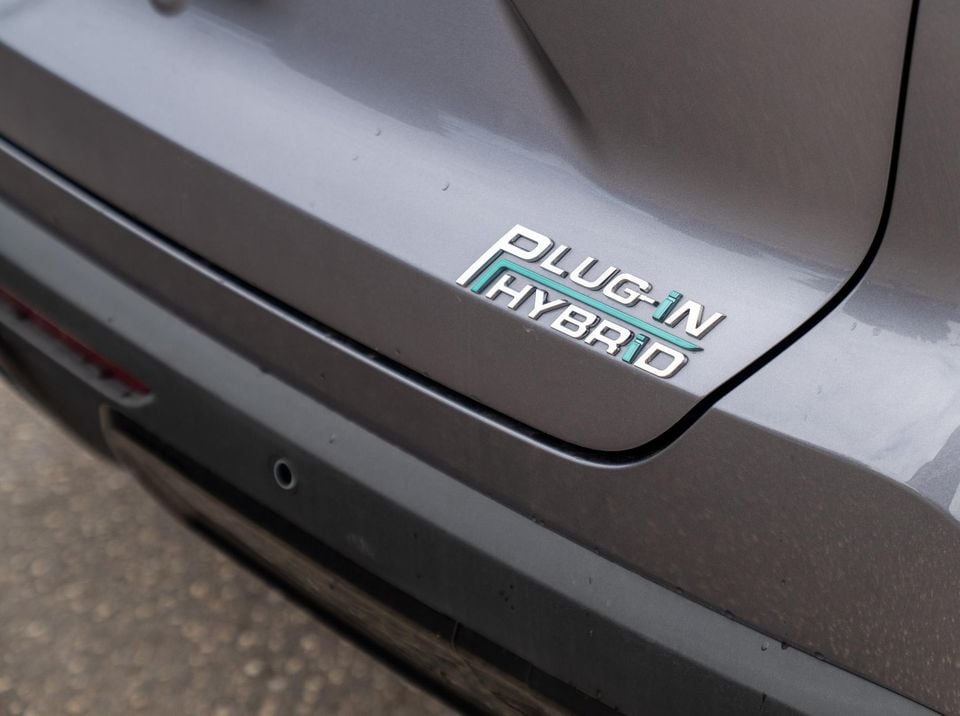
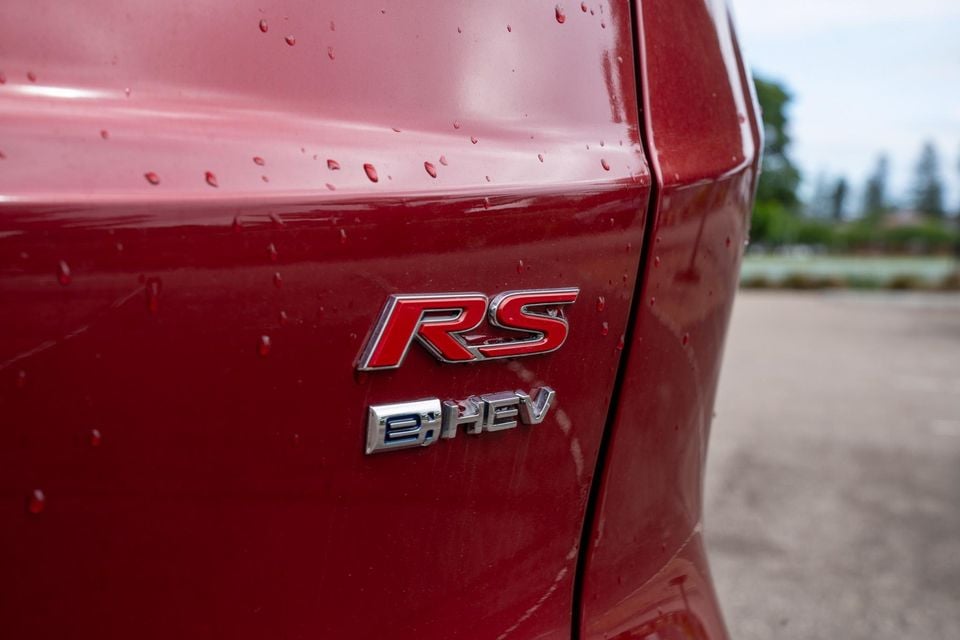
The reality, in both cases, is a fair bit different. In our experience, it’s not hard to achieve around 50km of everyday driving around town using just electric power, which is slightly more than the average daily commute for most Australians.
One of the key reasons why it won’t drive much further than that is because the battery management system maintains at least 25 per cent of capacity so it can use the electric motor all the time, especially at low speeds and moving away from a standstill.
If you install a charger at home and top-up every day, the Tiggo 7 could potentially keep you away from the service station for weeks or even months at a time.
But if you don’t replenish the battery often or have a longer commute that includes highway driving, then the petrol engine has to do a lot of the heavy-lifting. And, at the end of our week-long test period, when we left the system to fend for itself and didn’t replenish the battery, the result was much closer with the Chery recording an average figure of 5.2L/100km and the Honda almost bang-on its claim at 5.6L/100km.
Chinese automakers like Chery are making massive inroads in the local market and the Tiggo 7 Super Hybrid is a great example of how rapidly they are improving. It’s a good car, but with a few caveats.
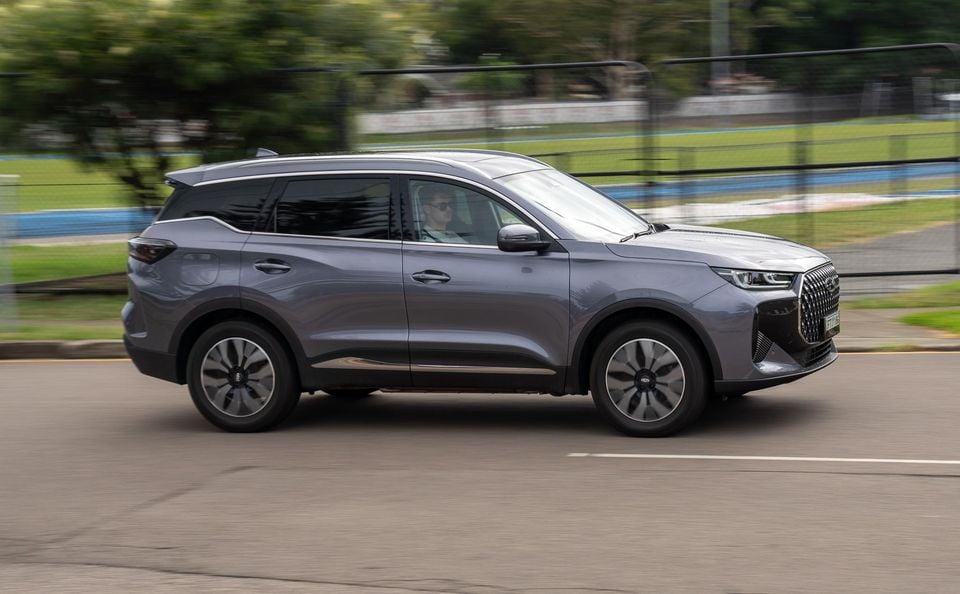
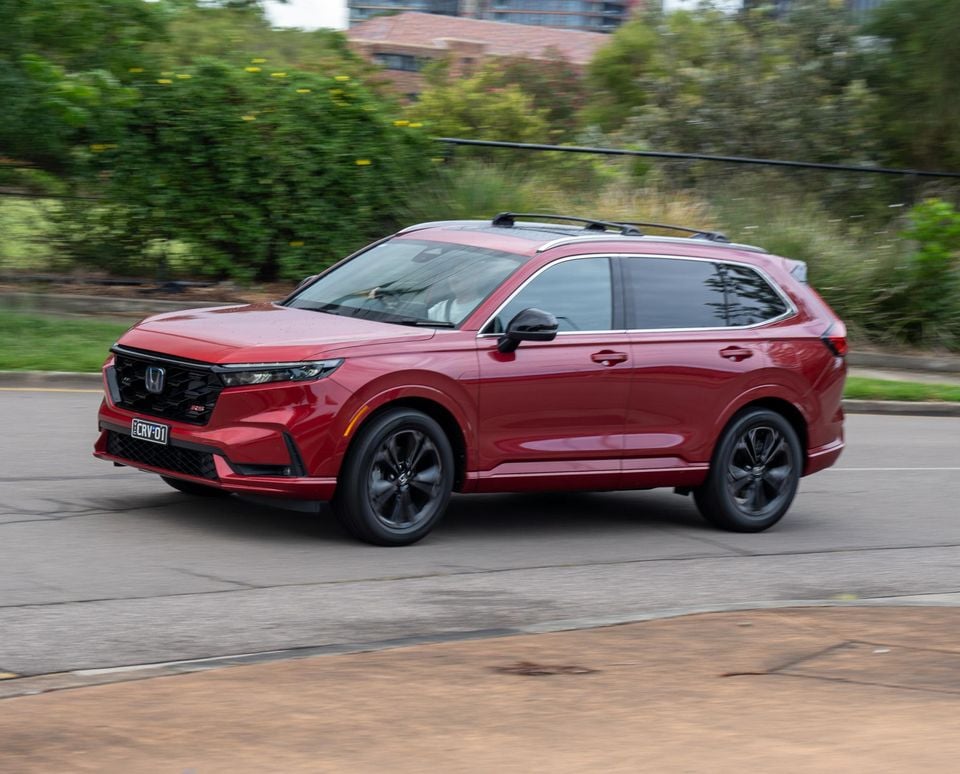
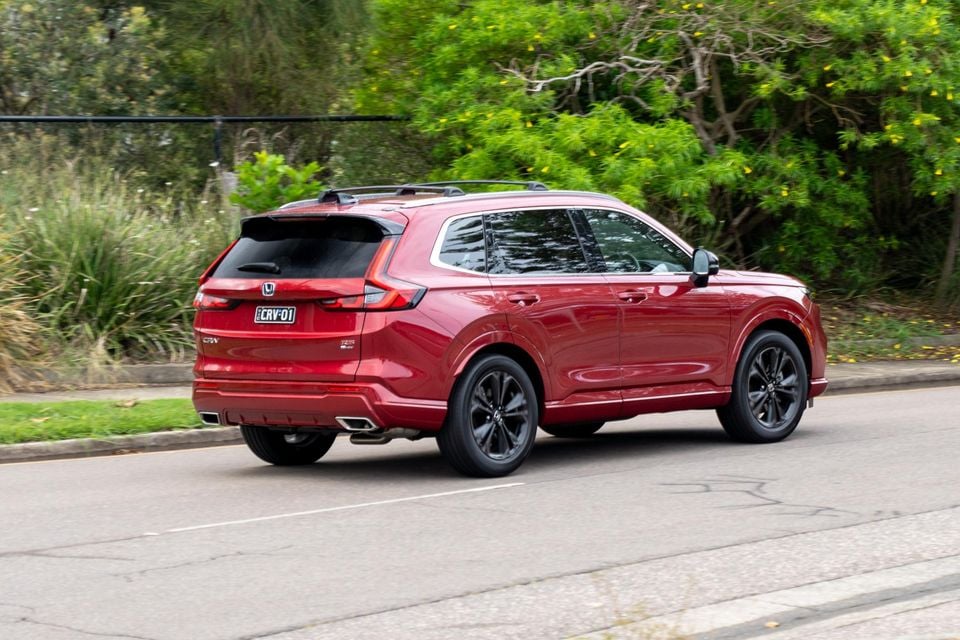
The CR-V is a reminder of what a great car can be in terms of fundamental engineering elements like ride and handling, steering feel, and overall comfort.
It feels more solid and secure on the road, the steering is more natural, and it soaks up bumps and road irregularities with much more finesse.
It is also quieter, thanks in part to using active noise cancelling technology that reduces wind and road noise by introducing counter frequencies through the audio system, and it feels more refined.
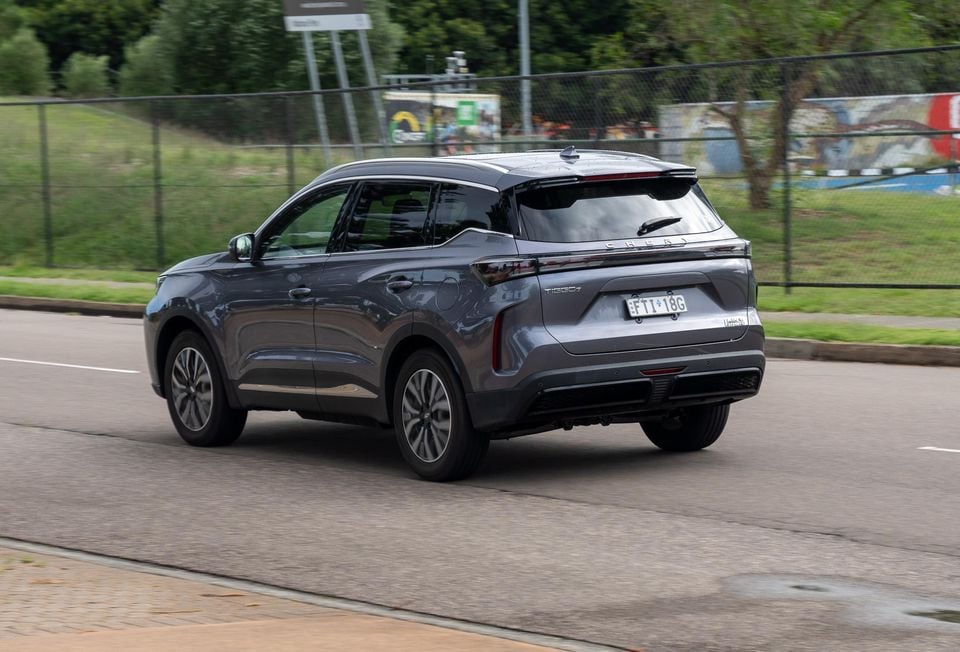
The Tiggo 7 isn’t far off in most areas, but the steering is way too light and digital in feel, the suspension pitches more over bumps and allows more body roll through corners, and the braking feel is fairly wooden when using the electric motor to regenerate power under light loads.
CarExpert brings together reviews, research tools and trusted buying support, guiding you from research to delivery with confidence.
A little fine-tuning would make a massive difference.
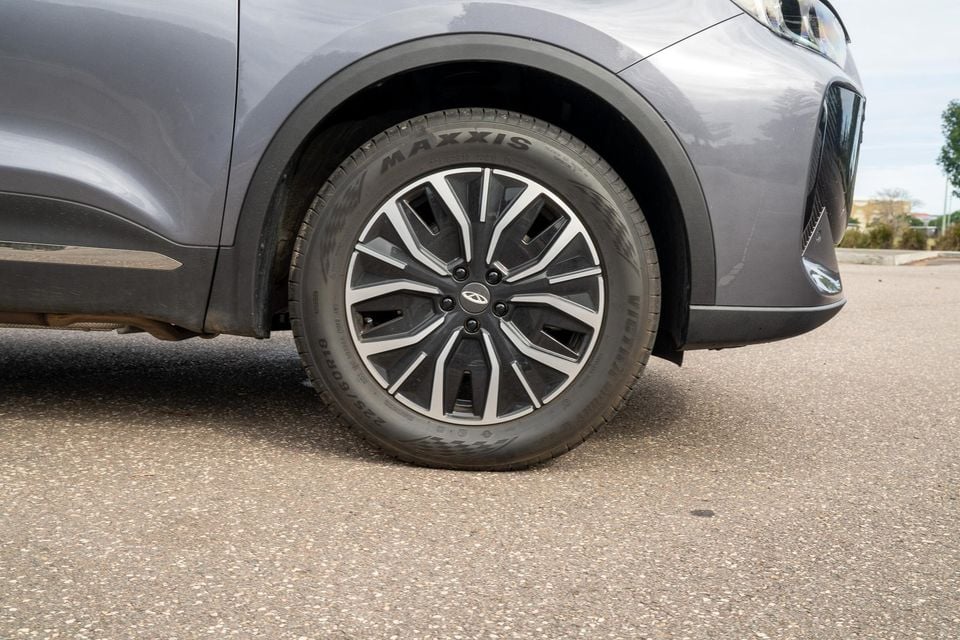
However, it is noticeably quicker if you ask for everything the petrol engine and electric motors have under hard acceleration, but then the Maxxis tyres scrabble for grip and the steering wheel tugs with torque steer.
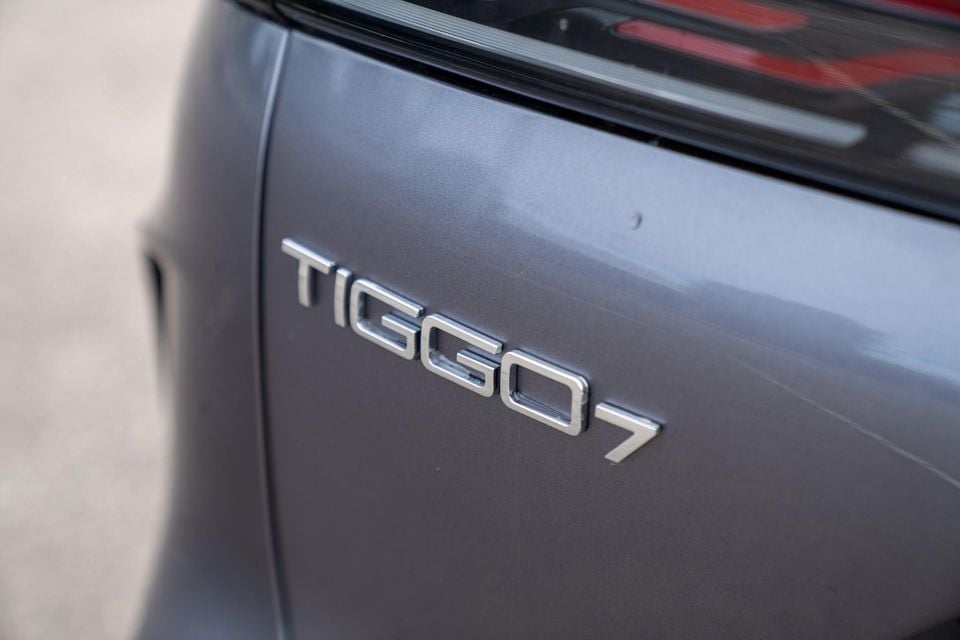
At face value, the Chery Tiggo 7 looks enticing with a seven-year, unlimited-kilometre warranty, roadside assistance, capped-price servicing, and longer 15,000km service intervals, compared to Honda’s standard five-year warranty coverage.
| Servicing and Warranty | Chery Tiggo 7 CSH | Honda CR-V e:HEV RS |
|---|---|---|
| Warranty | 7 years, unlimited kilometres | 5 years, unlimited kilometres |
| Roadside assistance | 12 months, then service-activated | 5 years |
| Service intervals | 12 months or 15,000km | 12 months or 10,000km |
| Capped-price servicing | 7 years | 7 years |
| Average annual service cost | $453.45 | $199 |
| Total capped-price service cost | $3174.15 | $995 |
However, Chery only offers roadside assistance for the first 12 months, which is re-activated each year if you maintain the vehicle within its dealer network, and the more complex nature of the plug-in hybrid powertrain means it costs more than two-and-a-half times as much to service each year than the CR-V.
Honda owners, meanwhile, can get an extra three years of warranty coverage – extending the total period to eight years – if the vehicle is maintained on schedule within the Honda network and the vehicle meets certain criteria at the end of the regular warranty period.
Another factor to consider – and one that might vanquish the Honda’s premium price tag – is depreciation. According to RedBook resale ratings, the CR-V will retain 58.5 per cent of its original value after the first three years of ownership, while the Tiggo 7 will hold just 38 per cent.
So the Honda should in theory be worth $35,000 in three years, while the Chery is expected to be worth around just $17,000.
This is a tougher contest than we expected, even without taking into account the significant purchase price difference between the Tiggo 7 CSH and the CR-V e:HEV.
The CR-V is undeniably the better car in terms of engineering quality and overall refinement, and ticks every box required for modern family life with a spacious and flexible cabin, thoughtful conveniences and up-to-the-minute tech. It’s the better long-term option.
But is it the cost of a European family holiday better than the Tiggo 7 today? That’s a tough one to answer, because the Chinese newcomer is more than a match in terms of space and features, has a better safety rating even if its systems aren’t as well calibrated, and it has the potential to be cheaper to run if you use its plug-in powertrain properly.
That’s the $16,000 question…
Click the images for the full gallery
MORE: Explore Chery Tiggo 7 showroom MORE: Explore the Honda CR-V showroom
Share your thoughts with us in the comments below!
Share your thoughts and write a review of a car you own and get featured on CarExpert.
Andrew Maclean
58 Seconds Ago

Damion Smy
16 Hours Ago


William Stopford
17 Hours Ago

CarExpert
17 Hours Ago

Max Davies
1 Day Ago

James Wong
1 Day Ago