The Ferrari Luce shreds 80 years of Maranello myth-making.
It is not merely Ferrari’s first electric vehicle (EV). It’s the largest and heaviest Ferrari ever made, and the first Ferrari not to have been styled by an Italian company.
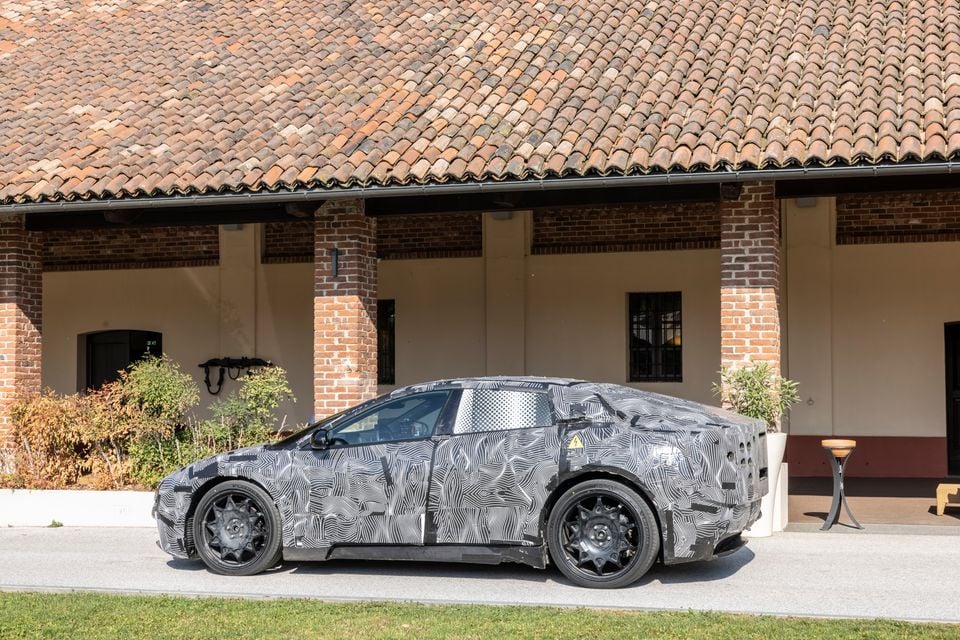
Describing it – accurately – as a cab-forward four-door hatchback with room aboard for five passengers makes the Luce sound about as exotic as a Tesla Model 3 or a Hyundai Ioniq 5. The Prancing Horse is in unfamiliar territory here.
The Luce exists, says Ferrari product development chief Gianmaria Fulgenzi, because the company’s research determined an electric-powered sports car or grand turismo would have no performance advantage, particularly in terms of driving dynamics, over a comparable internal combustion engine or hybrid powertrain vehicle. “But compared with the Purosangue, there is a big improvement,” says Mr Fulgenzi.
And the numbers back him up. Ferrari claims the Luce will sprint to 100km/h in under 2.5 seconds and to 200km/h in 6.8 seconds on the way to its 310km/h top speed. It’s eight-tenths of a second quicker to 100km/h and a staggering 3.8 seconds quicker to 200km/h than Ferrari’s pseudo-SUV and has the same top speed. In terms of outright performance, the Luce is closer to an 849 Testarossa than a Purosangue.
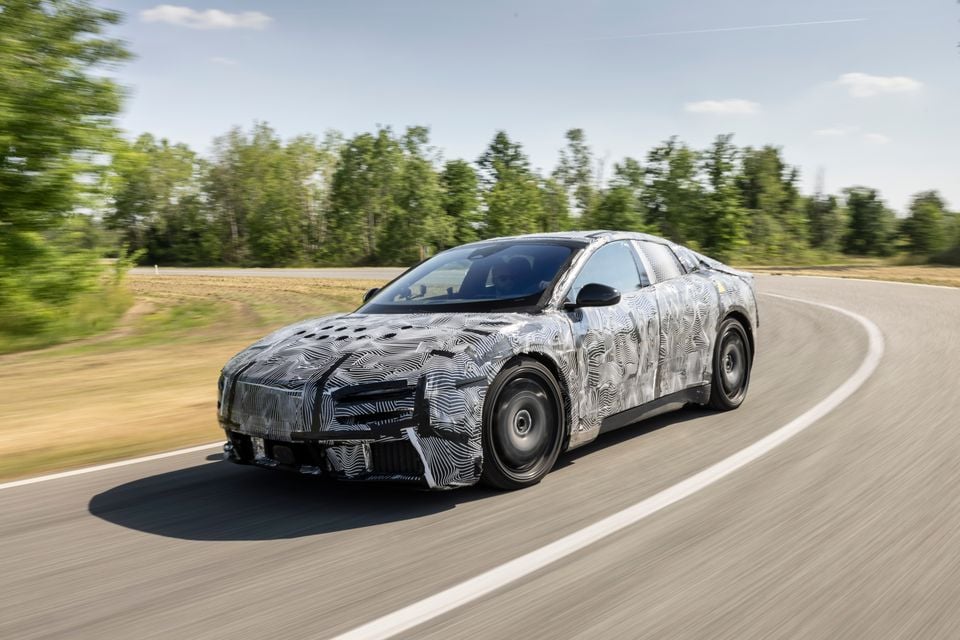
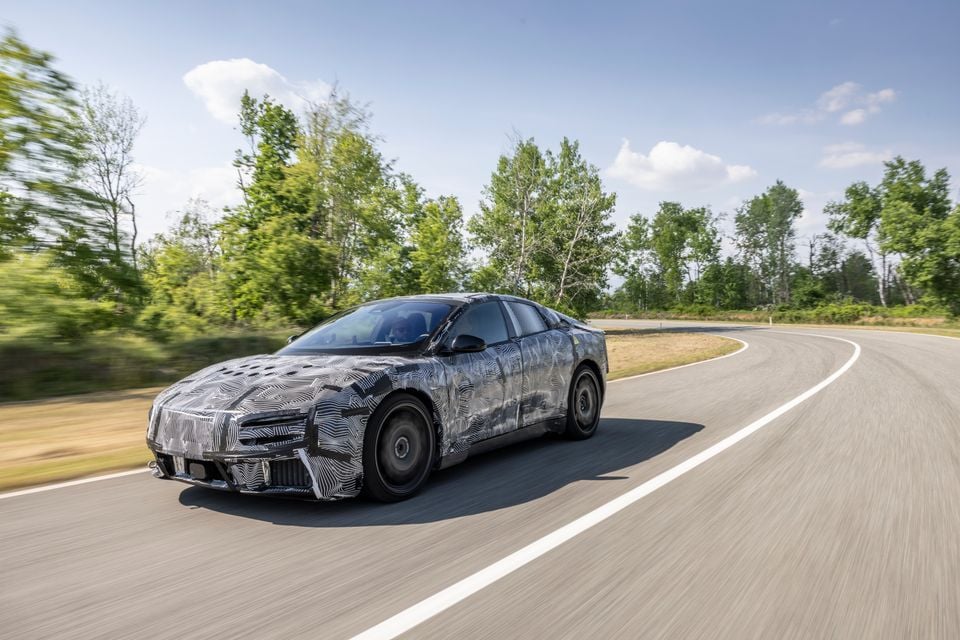
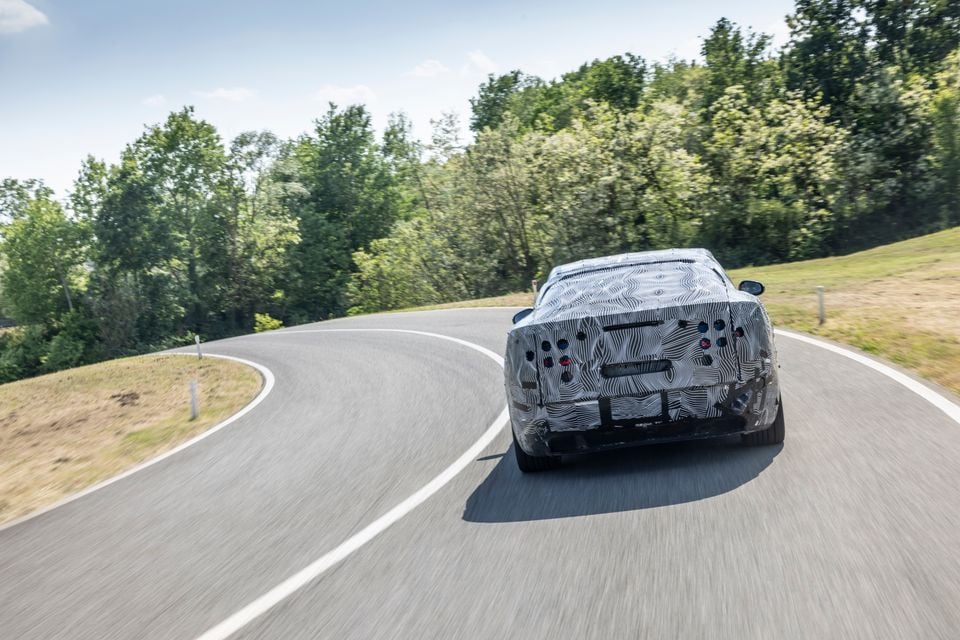
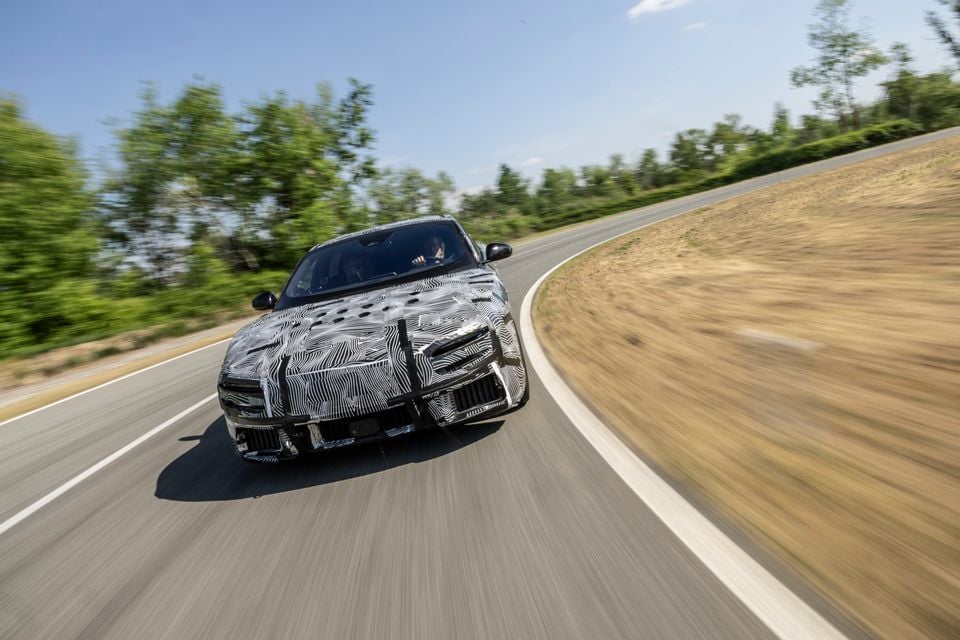
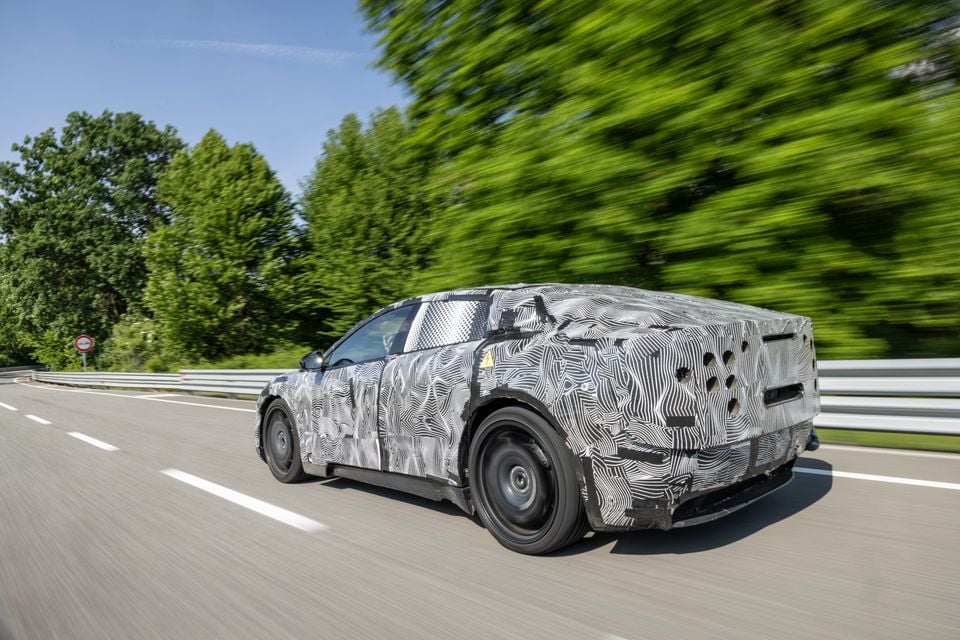
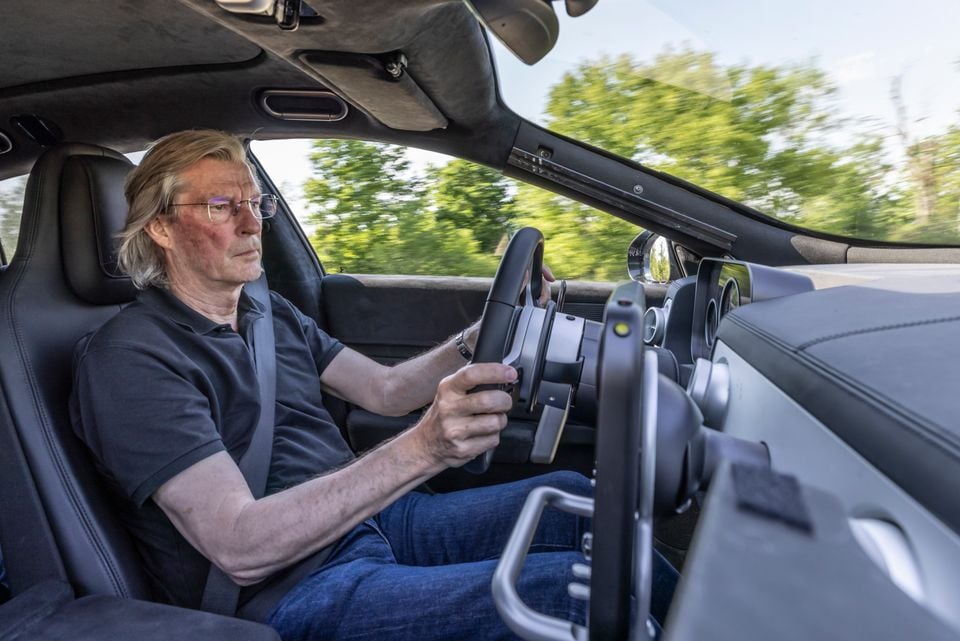
But is the Luce a real Ferrari? We’re about to find out as we slide behind the wheel of a heavily disguised prototype at the Stellantis Proving Ground in northern Italy.
The Luce is powered by four radial-flow permanent synchronous magnet e-motors that draw their electrical energy from 122kWh battery through an 800V electrical architecture overseen by high-performance silicon carbide inverters.
The e-motors have their magnets arranged in what is called a Halbach array, a setup used in Ferrari’s F1 powertrains that directs the magnetic flux towards the stator to maximise torque density.
Each front motor develops 105kW of power and 140Nm of torque, each rear motor 310kW and 355Nm. Total system output is 772kW and 990Nm.
The aluminium-intensive skateboard chassis features an upgraded version of the semi-active suspension used in the F80 and Purosangue at each corner.
Find your perfect new car with CarExpert
The standard rear-wheel steering system can independently turn each rear wheel a maximum of 2.15 degrees.
Carbon ceramic brakes, with 390mm rotors up front and 372mm units at the rear, are also standard, even though the Luce’s powertrain can deliver up to 0.68g of lift-off regenerative braking, sending up to 500kW back into the battery.
With four e-motors, four-wheel steering, and four-wheel semi-active suspension, the latest iteration of Ferrari’s innovative Side Slip Control vehicle dynamics system, dubbed SSC X, delivers the most comprehensive dynamic toolkit yet deployed on any road-going Ferrari.
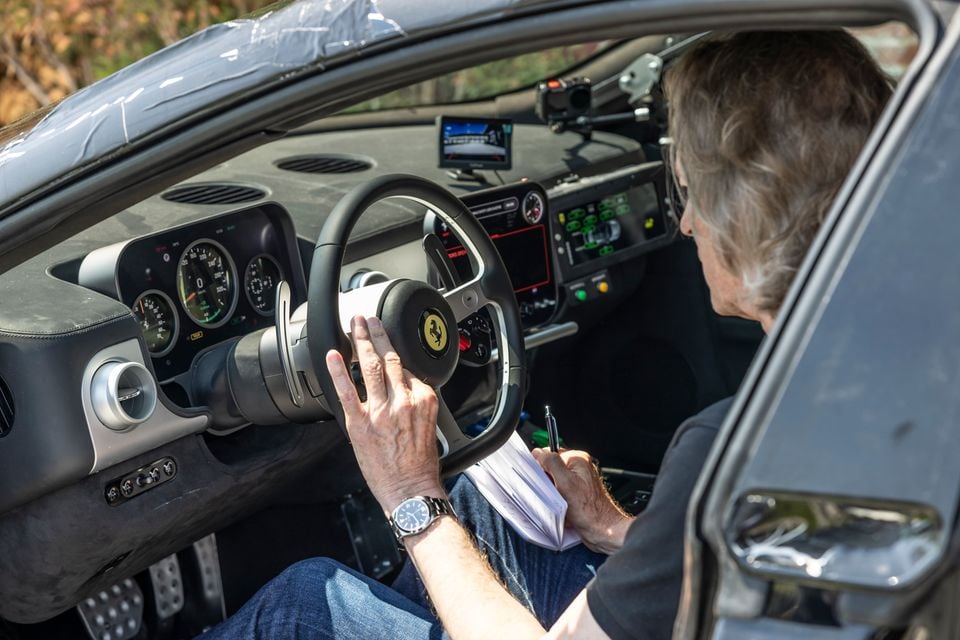
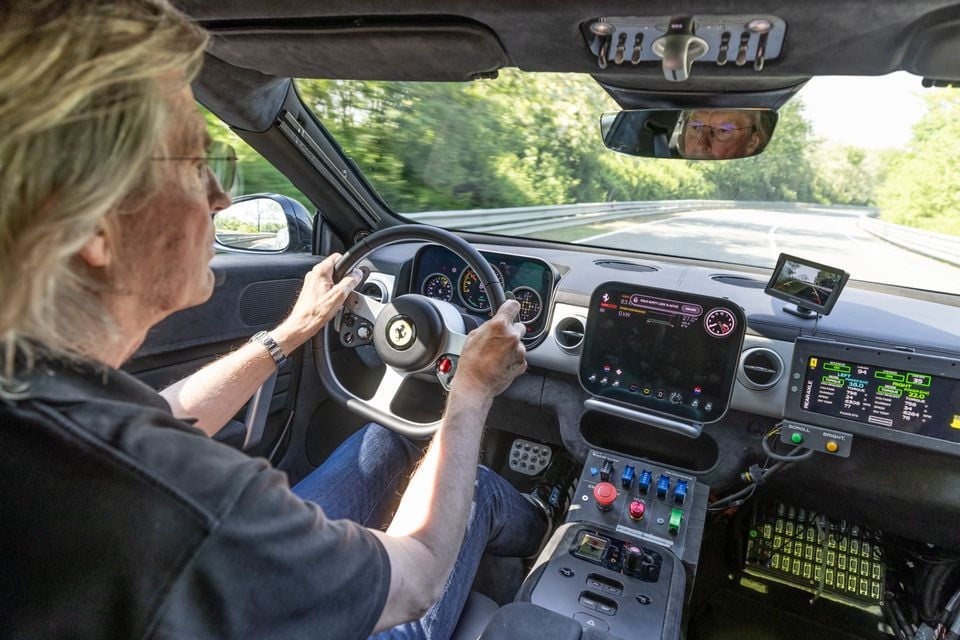
Under the right-hand spoke of the Luce’s steering wheel is Ferrari’s familiar vehicle dynamics Manettino. It offers five different dynamic modes – Ice, Wet, Dry, Sport, and ESC-Off. A button adjacent allows drivers to cycle from standard to soft or firm spring and damper rates independent of which dynamic mode is selected.
A new E-Manettino under the left-hand spoke of the steering wheel changes the powertrain outputs to suit different driving scenarios. In Range mode, power is limited to 320kW, top speed to 260km/h, and the front motors are disconnected as often as possible to improve efficiency. In Tour mode, the top speed remains 260km/h, but the available power rises to 460kW, and all‑wheel drive is always active. Performance mode retains all-wheel drive but boosts maximum power to 725kW and the top speed to 310km/h. Selecting Launch Control via the button in an overhead panel unlocks another 40kW.
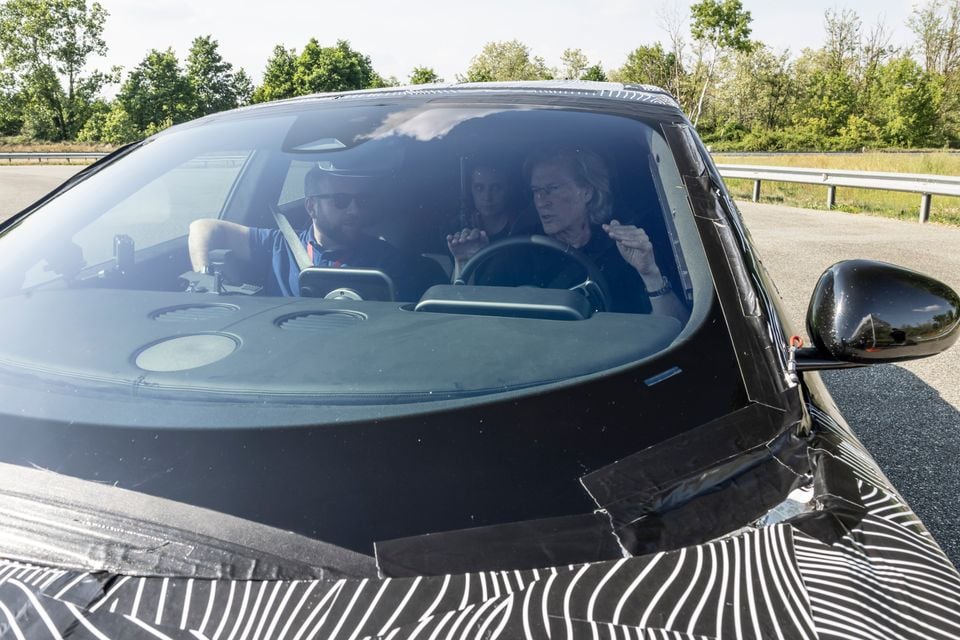
When Ferrari first revealed the powertrain and chassis hardware of the Luce last year, Gianmaria Fulgenzi promised the car would feel 200kg lighter than its 2260kg kerb weight. And it takes just a few minutes on Balocco’s twisting handling roads, with Ferrari development test driver Raffaele de Simone riding shotgun, to confirm Mr Fulgenzi was right.
Most fast and powerful EVs don’t like changing direction in a hurry. The Luce might be the heaviest and biggest Ferrari ever built, at 53mm longer and 129kg heavier than the Purosangue, but it feels light and athletic. It’s fluid and concise on the change of direction, and beautifully balanced through all phases of a corner, from hard braking to full acceleration.
The steering is light and linear and the feedback through the lovely thin-rimmed steering wheel is excellent.
The Luce rides much better than the Purosangue thanks to a 20 per cent increase in the pitch of the screw system in the active dampers that allows the suspension to better absorb low-speed impacts while still retaining excellent body control at high speeds.
Impressively, there’s no patter over sharp stutter bumps from the giant 23-inch and 24-inch wheels, the largest ever fitted to a production Ferrari and shod with 265/35 and 315/30 Michelin Pilot Sport 5 Energy tyres, respectively.
Traction, especially from the rear-end, is superb, and you’re never aware of the four-wheel steering as it is mainly used to control high speed yaw motions rather than to tighten the turning circle in slow corners. The Luce’s dynamic deftness is largely down to the ability of the car’s latest generation Side Slip Control system, dubbed SSC X, to deliver a complex and clever interplay of regen levels and torque outputs of the e-motors at each wheel.
The handover between the regenerative and mechanical breaking is generally seamless, but if you’re driving hard, you become aware of the exponential increase in mechanical stopping power as the brakes get hot. And at low speeds, you can hear the handoff – the regenerative braking is silent, then you hear the characteristic sandpapery grinding noise as the calipers grip the carbon discs to bring the Luce to a complete halt.
With the vehicle dynamics Manettino switched to the default Dry mode and the powertrain in the default Tour mode, the Luce feels comfortable but quick and agile. With both Manettinos set to their most aggressive road settings – Sport and Performance – the Ferrari punches harder out of corners, the linear surge of thrust more urgent on the straight, but it never loses its composure.
Performance mode also lets you hear the Luce at work. The sound, which is eerily like a muffled V12 spinning at high revs, is generated by the rear e-motors, with annoying frequencies tuned out and the final output modulated to simulate tones that are generated by the bodywork and air around an internal combustion engine. It’s not just noise, but a genuine driver’s tool: Because you’re hearing the actual speed of the e-motor change in response to input and load, you can hear the instant the rear tyres begin to break traction.
Like the small-capacity V12s Enzo Ferrari loved, the Luce’s electric motors are light and compact and they rev higher than most other e-motors, the front units spinning to 30,000rpm and the rears to 25,500rpm. Most EVs launch hard and then seem to quickly run out of breath, but the Luce’s rate of acceleration is sustained over a broader speed range. And at low speeds, the low inertia of the e-motors’ rotating masses deliver a faster, more precise response to inputs from your right foot.
The paddles behind the Luce’s steering wheel control regenerative braking levels and torque output rather than executing fake gearshifts. Tug the left-hand paddle and the amount of lift-off regen increases from under 0.1g to 0.4g while reducing the maximum amount of available torque, mimicking a downshift on corner entry in the sense that it throws a little more weight onto the front axle.
It also helps manage traction on corner exit: “It's very useful when the grip is quite low to use the left paddle to control the torque output,” says Mr de Simone. “You have more resolution on torque management.”
Tugging the right-hand paddle sequentially releases the amount of regen but also increases the available amount of torque, sending the Luce surging down the road with ever more urgency without you moving your right foot.
That said, he admits the Luce is quickest if you just leave the paddles alone, because you have the powertrain’s muscular 990Nm available all the time. What the system offers, says Mr de Simonejj, is driver engagement:
“For Ferrari, driving emotions mean a lot,” he says. “With this system you can engage more with the driving of the car if you want.”
Our Luce prototype is close to production spec, says Mr de Simone. The hardware underneath the camo has been signed off for production and his team is now focusing on final powertrain and software calibrations. Among the things being tweaked are the car’s acceleration from launch to 20mph plus a slight softening of the rebound settings of the suspension to help make the car feel a touch less abrupt on landing when bounced off Balocco’s kerbs through fast corners.
The Ferrari Luce, which is expected to arrive in Australian in the fourth quarter of 2027, is clearly a car that prepares Maranello for any eventuality in a rapidly evolving automotive landscape where the battle lines between electro-mobility and the internal combustion engine remain in a state of flux:
“The future is not something we wait for,” Ferrari chairman John Elkann said at the Luce’s glittering launch in Rome. “The future is something we create. A direction we choose… The Ferrari Luce is us choosing to shape what comes next.”
Indeed. The Luce is Ferrari’s first-ever EV, but virtually everything other than its exterior and interior and the chemistry of its battery cells has been designed and engineered entirely in-house at Maranello.
It may be a Ferrari like no other, but in terms of its engineering and the way it drives, it is a true Ferrari. “In this car there is a lot of supercar DNA,” says Mr de Simone. “The people who worked on the Luce are the same people who developed the F80.”
And you can feel it.
Click the images for the full gallery
MORE: Explore the Ferrari showroom













 Automotive Vehicle Spec Data & 4K images Powered by JATO Dynamics Ltd