








Damion Smy
Toyota agrees to $750 million HiLux, Prado DPF class action settlement
The Japanese auto giant has apologised to affected HiLux, Prado and Fortuner owners after agreeing to a settlement, subject to Federal Court approval.
3 Days Ago
Porsche's EV portfolio is expanding again with the Cayenne Coupe Electric – but what's the 'sportier' version of the large electric SUV actually like?

Contributor
Contributor
Contributor
Contributor
If this is the car for you, we’ll compare offers from trusted dealers, handle the back and forth and manage your purchase from enquiry to delivery.
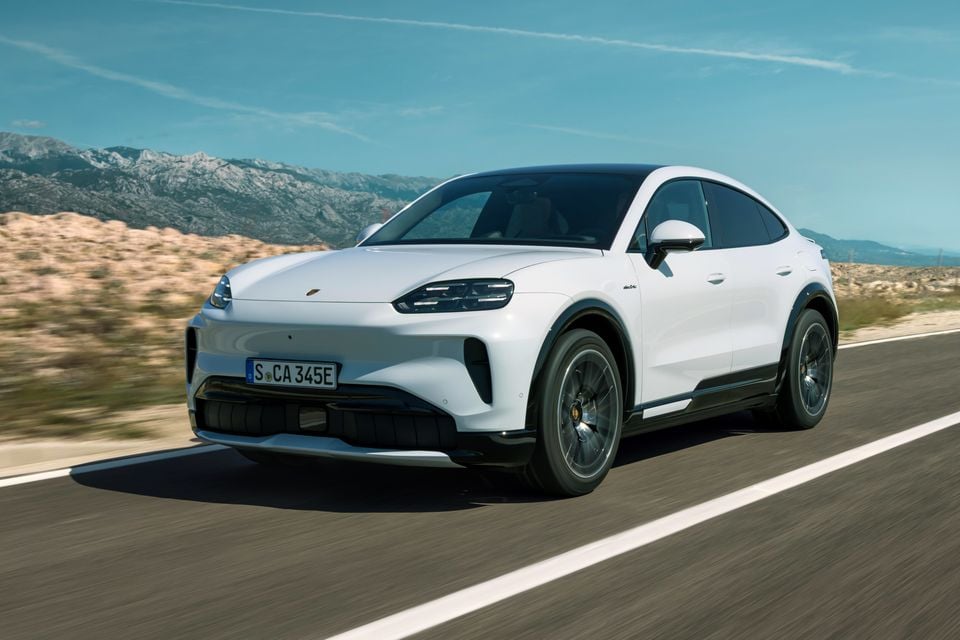
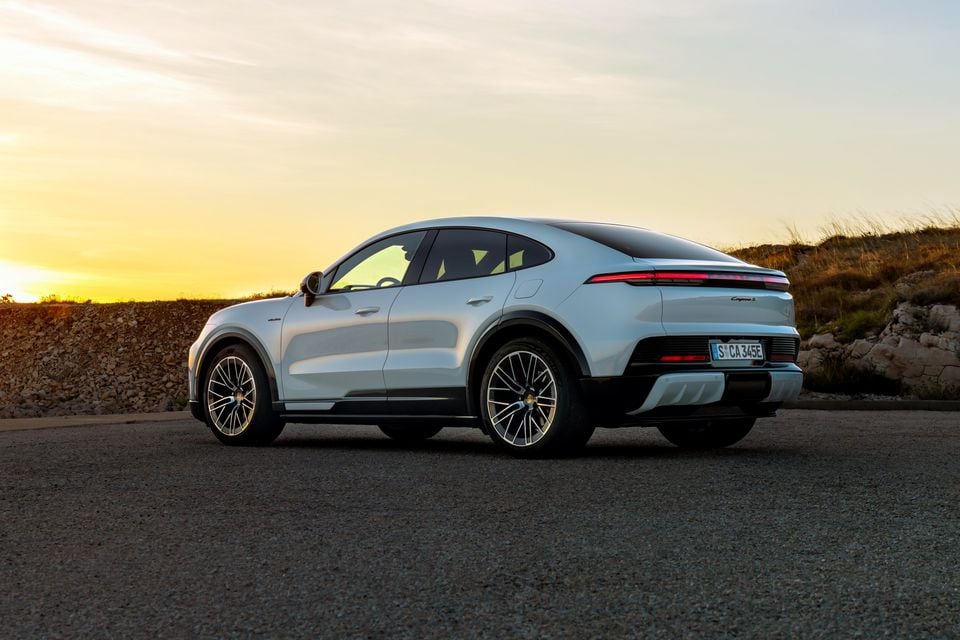
Coupe-style SUVs remain something of an acquired taste, but that hasn’t stopped German performance car giant Porsche giving us another version of the Cayenne with a more-rakish roofline.
We’ve had a Cayenne Coupe before, of course, in the current third-generation (E3) combustion-powered large premium SUV model line, but now Porsche is giving us a fresh flavour of the genre based on the battery-powered fourth-generation Cayenne Electric.
Multiple powertrains – one of them with quite outrageous outputs – are on the table, as are impressive electric driving range figures and the usual prestige Porsche appointments in the cabin.
To see how good the new 2026 Porsche Cayenne Coupe Electric is, we headed over to Germany to see what this large sleek electric SUV is all about.
The Coupe version commands a small premium over the equivalent Porsche Cayenne Electric model, as is typical for coupe-styled SUVs compared to their wagon-bodied equivalents.
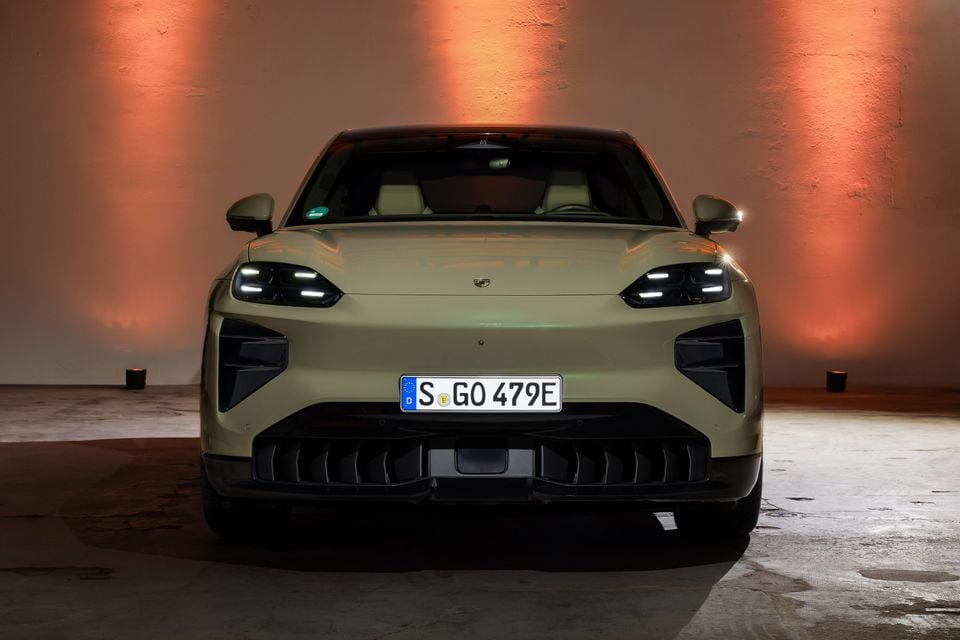
This means the basic Cayenne Coupe Electric will come in at $173,600 plus on-road costs in Australia, while the Cayenne S Coupe Electric has been priced at $194,600.
There’s a big leap from there to the flagship Cayenne Turbo Coupe Electric, which starts from $272,100 – but then there’s a big leap in performance, too.
Bear in mind there’s a $12,200 premium to go from the Cayenne Turbo Electric to the Cayenne Turbo Coupe Electric.
To see how the Porsche Cayenne lines up against the competition, check out our comparison tool
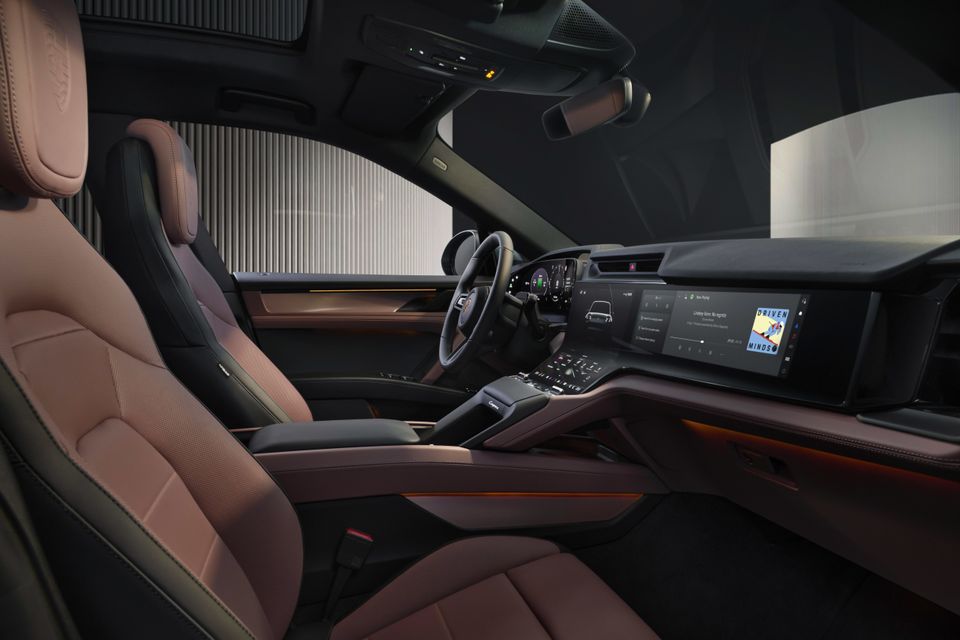
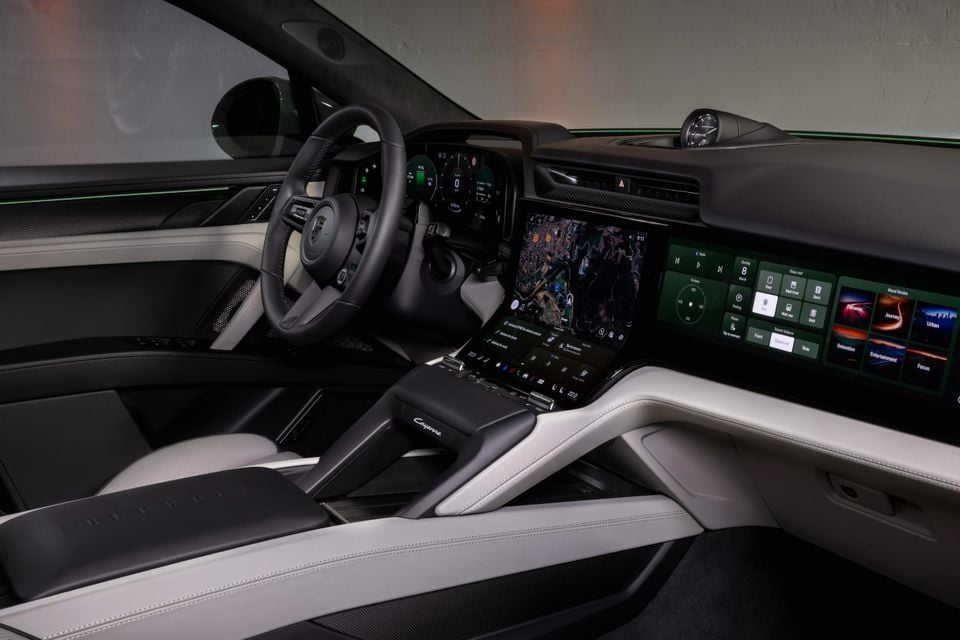
This fourth-generation Cayenne features Porsche’s new user interface, which is predicated on lots of big screens and the signature OLED Flow Display, a curved panel in the middle of the dash.
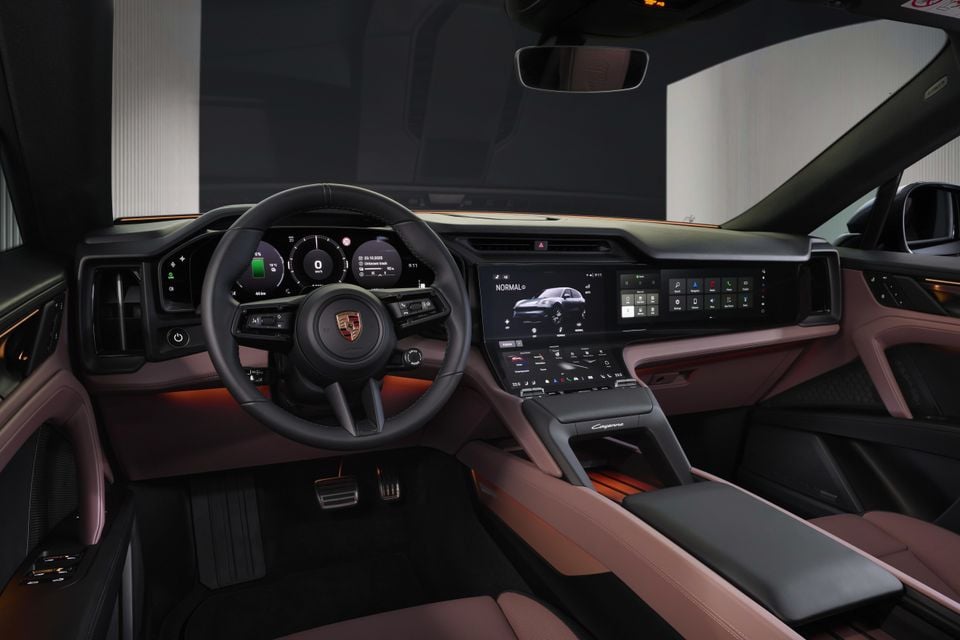
With all screens specified, there’s 50 per cent more digital real estate available in this Cayenne Coupe Electric than there is in the existing combustion-powered version of the SUV.
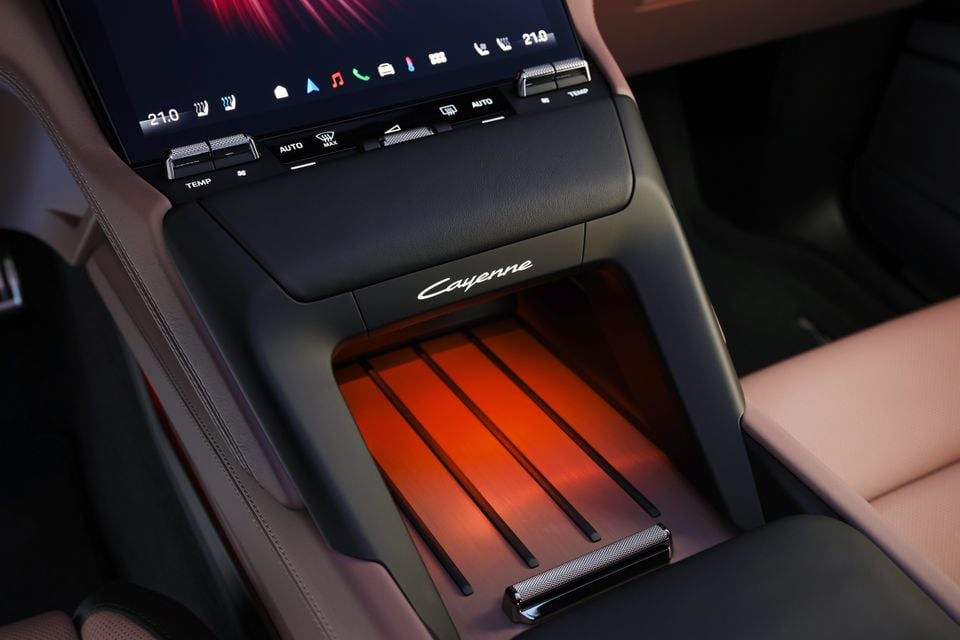
To use the Flow Display panel is a joy. The menu layout of it is understandable and sensibly arranged, the graphics are pin-sharp and super-responsive, and there’s a little bit of theatre as pixels from the lower, kicked-out section of the screen neatly ‘flow’ up onto the vertical upper – giving the touchscreen its name.
Better yet, Porsche provides a handy wrist-rest that means operating the screen on the move is not an exercise in minute control of your fine-motor skills.
Beyond this, there’s the biggest iteration of Porsche's Curved Display digital instrument cluster we’ve yet seen – it now measures 14.25 inches – while the Passenger Display is a 14.9-inch touchscreen. And, brilliantly, the driver can see none of its graphics while it is in use, due to clever blanking out of the pixels from side angles.
There’s even a vast, augmented-reality head-up display with an effective field-of-view of 87 inches.
Yet there’s still plenty of useful switchgear dotted about the place, all complete with Porsche’s traditionally superb haptics, plus a sense of top-notch material quality.
Some of the minor quality niggles we mentioned on the Cayenne Electric SUV when driving that only a month or so ago seem to have been eradicated, so we’re hopeful they were just early-production teething issues and not emblematic of the big Porsche’s general build standards.
If there’s an issue with the Cayenne Coupe Electric’s cabin, it’s that you lose a bit of space when compared to the regular Cayenne Electric wagon – but that only counts if you’re directly comparing the two vehicles, both of which remain five-seaters.
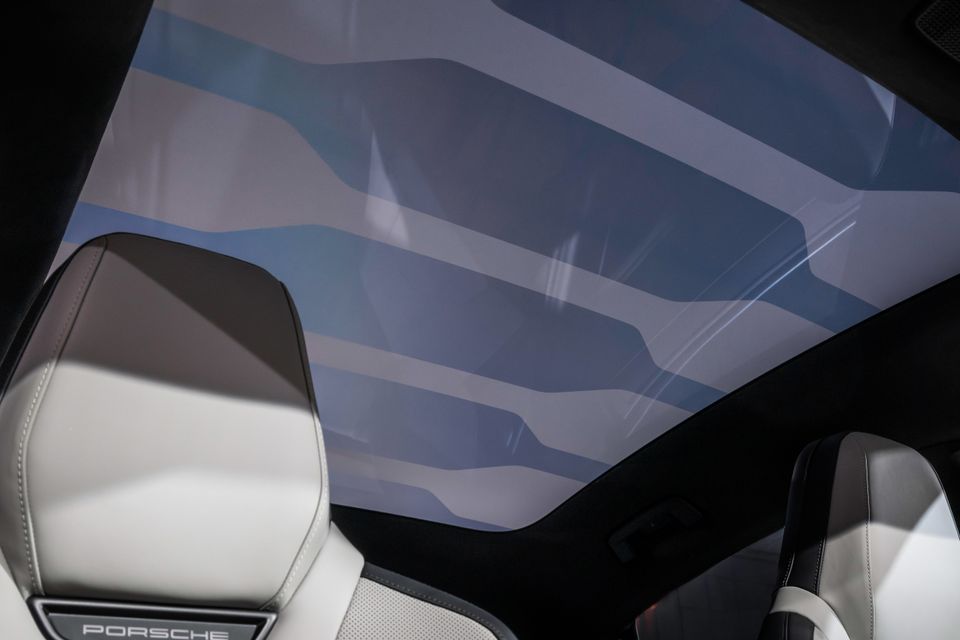
Judged on its own merits, the Coupe does fine. Legroom is still very generous in the second row, even if the model-defining slope of the roofline and the fitment of a panoramic-glass panel up top does erode headroom somewhat.
Also, remember the rear bench in this car is never a full three-seat affair; the standard arrangement is two outer buckets and a centrally mounted tray section, while a ‘2+1-seat’ second row can be optioned up for a fee.
The boot measures 534 litres with all seats in use, rising to 1347L with the 40:20:40-split/folding rear seatbacks stowed. In the Turbo, these figures fall back a little, to 500-1313L.
Sure, that’s less than the bigger-backed Cayenne Electric SUV, but the Coupe still has a large-enough cargo bay to suit most owners’ needs. Plus, it has a 90L frunk, for extra storage requirements.
To see how the Porsche Cayenne lines up against the competition, check out our comparison tool
There are three Cayenne Coupe Electric variants, starting with the car wearing that very name, no epithets.
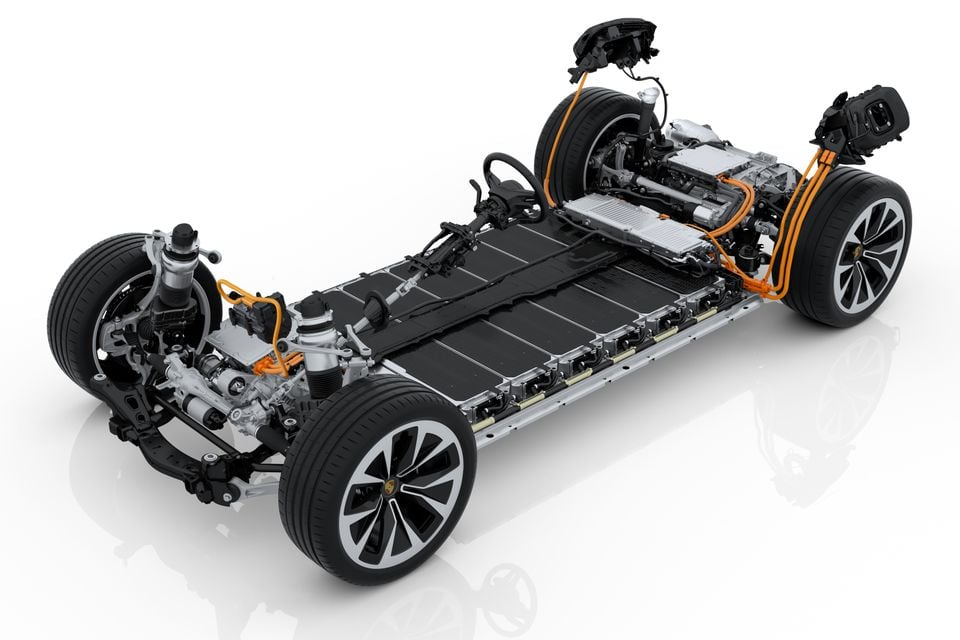
| Specifications | Porsche Cayenne Coupe Turbo Electric |
|---|---|
| Drivetrain | Dual-motor electric |
| Battery | 113kWh – gross108kWh – usableNMC lithium-ion |
| Power | 850kW – Launch Control |
| Torque | 1500Nm – Launch Control |
| Driven wheels | AWD |
| 0-100km/h – claimed | 2.5 seconds |
| Energy consumption – claimed | 20.0-22.0kWh/100km |
| Energy consumption – as tested | 28.6kWh/100km (on test) |
| Claimed range – WLTP | 637km |
| Max AC charge rate | 22kW |
| Max DC charge rate | 400kW |
It runs 300kW nominally, rising to 325kW in Launch Control, with peak torque of 835Nm. Expect to do the 0-100km/h sprint in 4.8 seconds.
Stepping up to the Cayenne S Coupe Electric sees the outputs rise to 400kW in regular use and 490kW during either Launch Control or ‘Push To Pass’ mode – a time-limited, on-the-roll ‘boost’ phase activated by pressing the central button in the mode dial on the steering wheel – with torque rated at 1080Nm. This is enough to trim the claimed 0-100km/h time to 3.8 seconds.
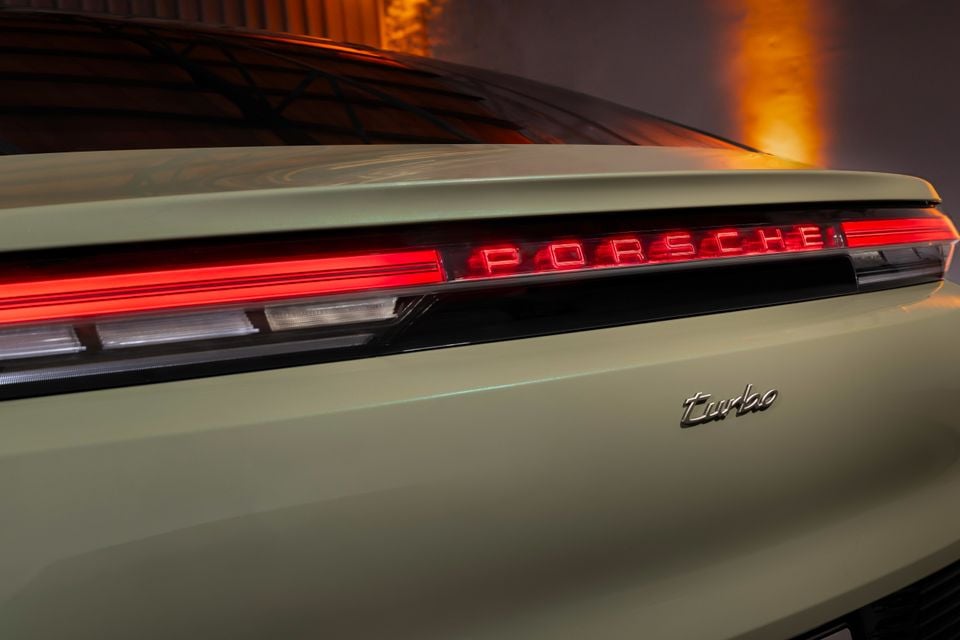
At the top of the lineup is the Cayenne Turbo Coupe Electric, which Porsche says is the most powerful production model it has ever built – pumping out up to 850kW/1500Nm with Launch Control engaged. Even in its standard mode, it delivers 630kW, while Push To Pass liberates 790kW for 10 seconds.
As a result, it has a searing claimed 0-100km/h time of 2.5 seconds, it can run from 0-200km/h in just 7.4 seconds – a second quicker than the 992.2-series Turbo S Coupe manages, and fully 4.9 seconds brisker than the Cayenne S Coupe sitting just down the family tree – and it’ll top out at 260km/h.
All three Cayenne Coupe Electric variants have a motor on each axle, so they’re all four-wheel drive, and these propulsion units are mated to single-speed reduction-gear transmissions in all cases – this EV does not have a two-speed unit, as found in the earlier Taycan from Porsche.
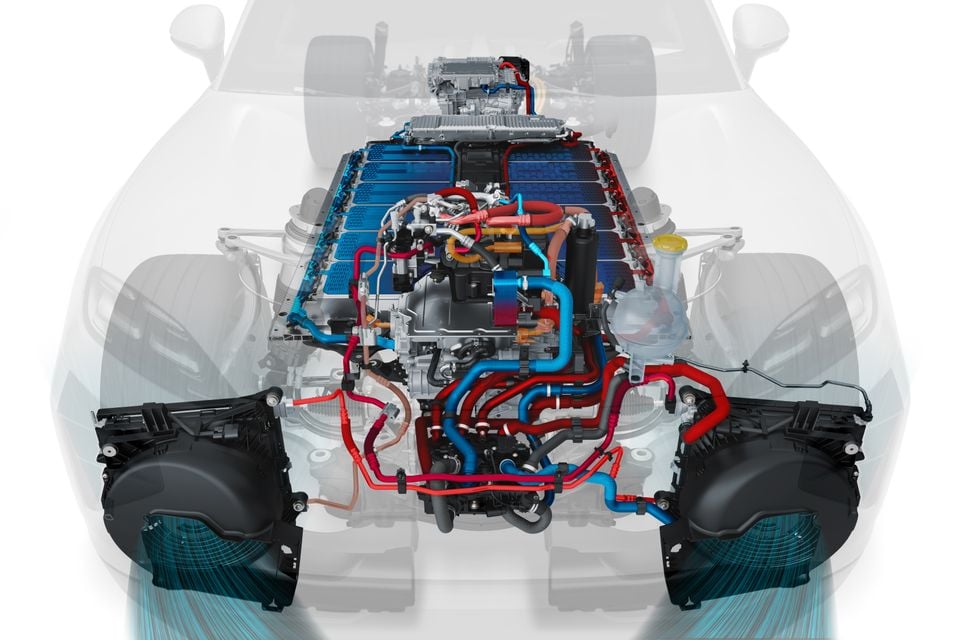
All three versions of the Porsche Cayenne Coupe Electric use an NMC lithium-ion battery pack of 113kWh gross capacity, with 108kWh of that usable. With an 800-volt electrical architecture, peak charging rates are 400kW on DC and up to 22kW on AC, resulting in a 10-80 per cent top-up time of less than 16 minutes at a suitable charger.
Further, Porsche says you will get 318-335km of range added to the Cayenne Coupe Electric with just 10 minutes of connection at 400kW. The Cayenne Coupe, along with its SUV sibling, is also optionally available with wireless charging capability, with the German company selling a one-box unit that goes on your garage floor, and which can replenish the battery at up to 11kW (although Australian availability remains TBC).
Various safety cut-offs are programmed in to prevent the car charging if metal objects are detected in the zone between pad and vehicle – or, more pertinently, if household pets decide to snuggle in there.
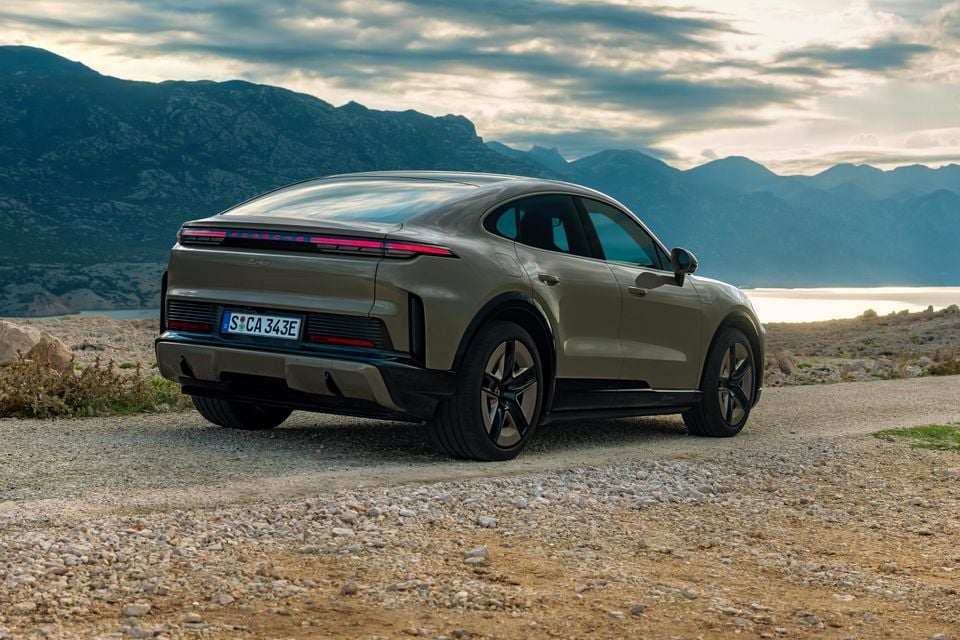
Its slightly lower (-24mm) and more aerodynamic form than the Cayenne Electric means the Coupe will go slightly further to a charge, model-for-model. About 13-18km extra is possible across the range, so the Cayenne Coupe Electric will travel up to 661km between charges, the Cayenne S Coupe Electric improves that to 669km, and the Turbo range-topper peaks at 637km.
To see how the Porsche Cayenne lines up against the competition, check out our comparison tool
Our test drive in Germany saw us exclusively behind the wheel of the monster Porsche Cayenne Turbo Coupe Electric, complete with the full gamut of chassis technology designed to ensure the SUV excels in all kinematic areas.
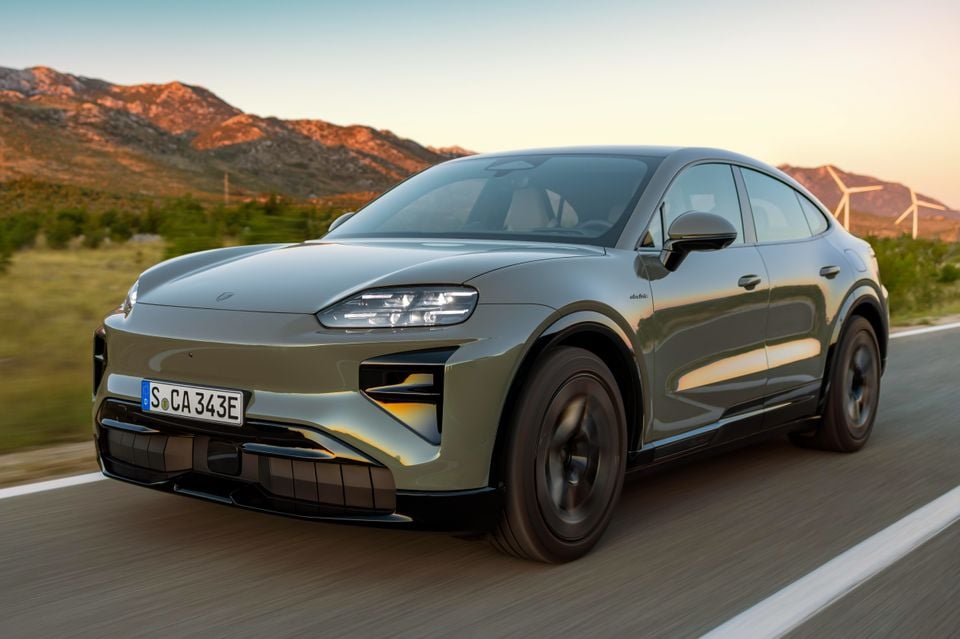
All versions of the Cayenne Coupe Electric use twin-axle air suspension with Porsche Active Suspension Management (PASM) dampers, but from there you can layer on all the usual technologies like Porsche Torque Vectoring Plus (PTV Plus – the electronically controlled rear differential lock, which is standard on the Turbo), Rear-Axle Steering, Porsche Ceramic Composite Brakes (PCCB) and the clever Porsche Active Ride (PAR) system, which is a fully active system which attempts to negate pitch, roll and dive before it even takes place.
There’s then active aerodynamics on all Cayenne Coupes, including front cooling vents for the brakes (which can open and close when needed) and a deployable spoiler on the lip of the angled tailgate, but the Turbo again goes further with Active Aeroblades which pop out of the extremities of the rear bumper to extend the lateral tear-off edges and improve airflow characteristics.
Fitted with everything, as our German test car was, what you end up with is a stunningly talented all-rounder, which isn’t just dominated by its ludicrous power.
Of course, the sheer speed of the thing is difficult to forget or ignore. Even with ‘just’ 630kW on tap, the 2720kg Cayenne Turbo Coupe is preposterously muscular.
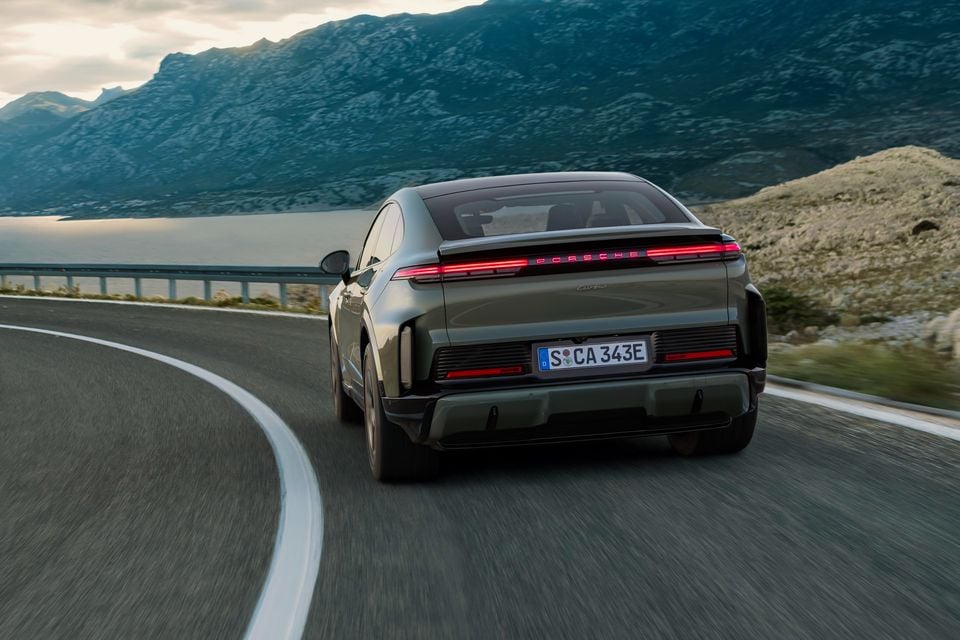
It surges forward with smoothly calibrated yet savagely swift eagerness to anything beyond the opening few centimetres of accelerator pedal travel, while going the other way the regenerative braking – which can harvest up to a quoted 600kW of energy, putting it on a par with Formula E – is so potent that it is said to handle up to 97 per cent of daily-driving deceleration phases.
Put the Cayenne Turbo Coupe into Launch Control, by planting your foot on the brake and then flattening the throttle – and only letting go of the left-hand pedal when you’re ready – and the resulting explosion towards the horizon is one of the fastest-accelerating vehicles of any shape or size you’ll ever encounter.
We also like the Porsche Electric Sport Sound (PESS) tunes, which are vaguely V8-ish in voice, but which are suitably tasteful, so opting to use them in Sport or Sport Plus mode doesn’t ruin the whole experience with naff, obvious fakery.
But mega-power, dual-motor electric cars with the sort of straight-line speed to embarrass high-end supercars are almost a dime a dozen these days. What differentiates the Cayenne Coupe Electric is its glittering dynamic prowess.
When it comes to handling, something this large and hefty and with a high centre of gravity really shouldn’t feel as agile and approachable as this.
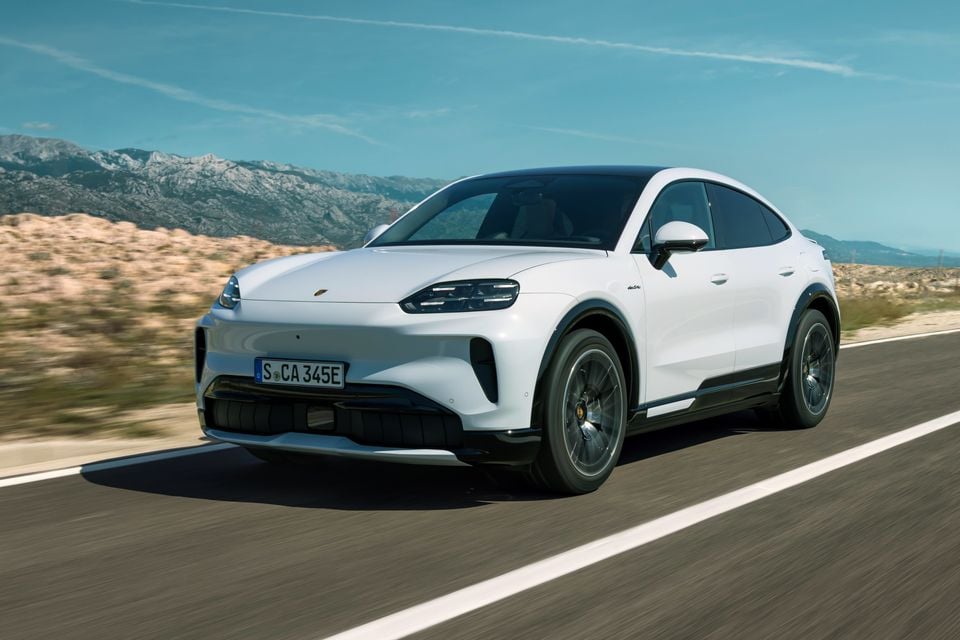
With the PAR system keeping the shell of the SUV almost preternaturally flat at all times – with just a delicious bit of squidge permitted in its movements to bring an organic feel to weight transfer, and the huge contact patches of the tyres delivering grip aplenty – you can truly exploit the underpinnings of the Cayenne Turbo Coupe Electric as if it were a sports car weighing about a third less than it actually does.
The chief weapon here is the steering, which is nothing short of an absolute delight to use. Porsche excels at this sort of weighting, consistency and accuracy at the helm, across all of its products, like no other car manufacturer. Yet when you want the Cayenne Turbo Coupe Electric to be quiet, dignified and sophisticated, it manages that with spectacular grace too.
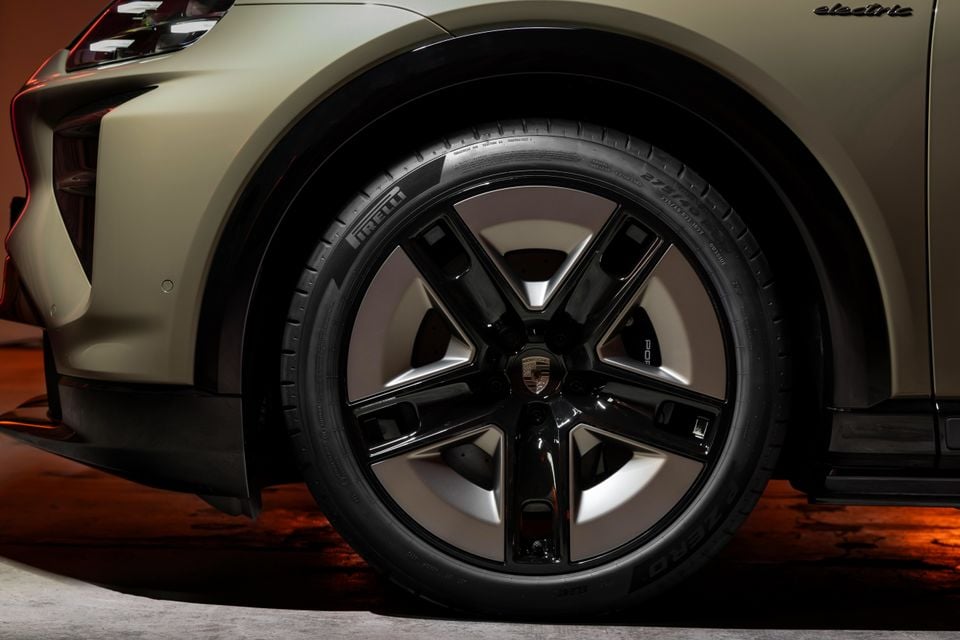
Even on its gigantic 22-inch wheels, the Porsche soaks up lumps and bumps in the road in a glassy, unruffled manner. At higher speeds, there’s not a huge amount of road roar to report, while the exquisite body and wheel control means the ride comfort is uniformly exceptional.
Yes, the Cayenne Coupe Electric is an SUV which puts the emphasis on the ‘S’ of its vehicle type, as you would expect of a manufacturer like Porsche. But it can serve up a level of rolling refinement and general comfiness that wouldn’t shame something like a Bentley or a Rolls-Royce if you so need it to. It’s quite a tremendous thing in all regards.
To see how the Porsche Cayenne lines up against the competition, check out our comparison tool
2026 Porsche Cayenne Coupe Electric highlights:
Cayenne S Coupe adds:
Cayenne Turbo adds:
To see how the Porsche Cayenne lines up against the competition, check out our comparison tool
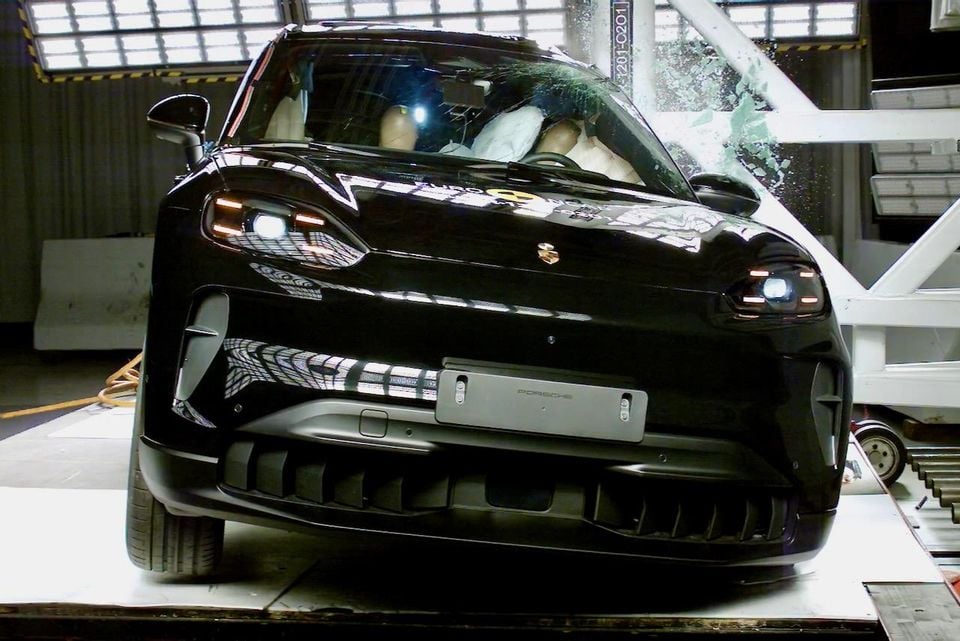
The Porsche Cayenne Electric was tested by Euro NCAP in 2025, and scored a five-star safety rating – though a score from local crash-tester ANCAP is still pending.
| Category | Porsche Cayenne Electric* |
|---|---|
| Adult occupant protection | 91 per cent |
| Child occupant protection | 89 per cent |
| Vulnerable road user protection | 81 per cent |
| Safety assist | 79 per cent |
*Euro NCAP scoring
To see how the Porsche Cayenne lines up against the competition, check out our comparison tool
There’s a mediocre three-year, unlimited-distance warranty on all new Porsche cars sold in Australia, while the high-voltage batteries fitted to its EVs – like the Cayenne Coupe Electric – are backed by eight years and 160,000km of cover.
If this is the car for you, we’ll compare offers from trusted dealers, handle the back and forth and manage your purchase from enquiry to delivery.
You can extend the warranty for 12, 24 or 48 months at a time at each expiry date, provided the vehicle is up to 15 years old and hasn’t covered any more than 200,000km.
The expected service intervals for the Porsche Cayenne Coupe Electric are every two years, as the company says it requires less maintenance than its vehicles fitted with combustion-powered drivetrains.
To see how the Porsche Cayenne lines up against the competition, check out our comparison tool
If you were hoping that the Coupe treatment is transformative to the Porsche Cayenne Electric, then you might be disappointed.
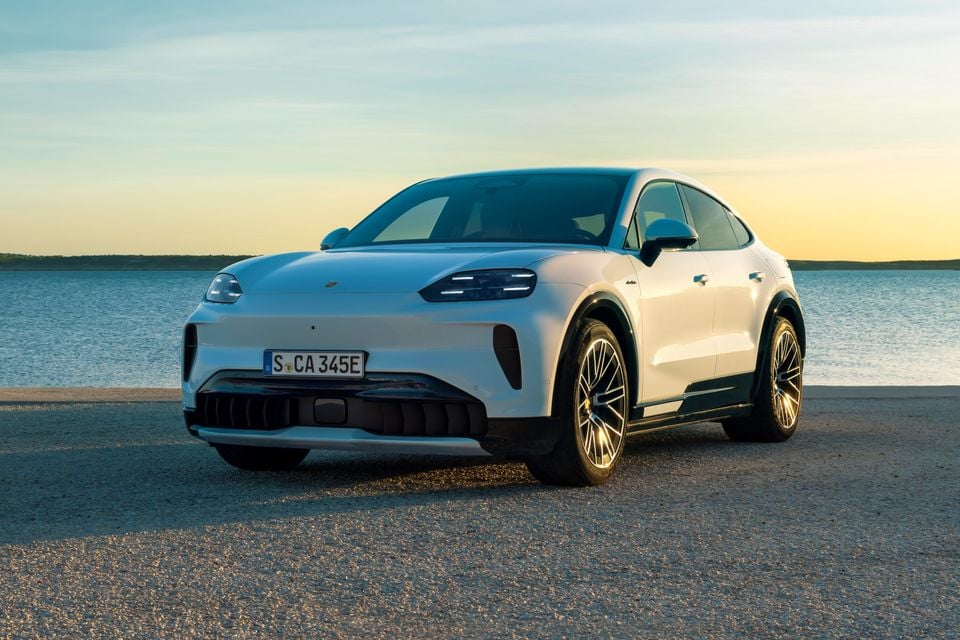
It’s hardly any different from the regular SUV, bringing no more dynamism to the party and only offering a marginal range gain at the expense of rear-passenger space and boot capacity.
But, viewed on its own merits, the Cayenne Coupe Electric is of course a brilliant big machine. It drives superbly, goes like holy heck and yet is as refined, comfortable and beautifully built as you’d expect of a top-end Porsche.
Few coupe-SUV rivals will get close to the all-round blend of supreme talents that are at the disposal of the new Cayenne Coupe, that’s for sure.
CarExpert can save you thousands on a new Porsche Cayenne. Click here to get a great deal.
Click the images for the full gallery
If this is the car for you, we’ll compare offers from trusted dealers, handle the back and forth and manage your purchase from enquiry to delivery.
Quickly see how this car stacks up against its competition. Select any benchmark to see more details.
2027
$154,158
2027
$166,653
2026
$178,455
2027
$189,963
2027
$197,733
2026
$205,020
2027
$231,963
2026
$275,160
2027
$325,560
2027
$402,378
Add CarExpert as a Preferred Source on Google so your search results prioritise writing by actual experts, not AI.
Damion Smy
3 Days Ago

William Stopford
3 Days Ago

Alborz Fallah
7 Days Ago
Damion Smy
7 Days Ago
Damion Smy
8 Days Ago
William Stopford
9 Days Ago
Add CarExpert as a Preferred Source on Google so your search results prioritise writing by actual experts, not AI.
# Based on VFACTS and EVC data
† Displayed prices are based on the drive-away price of the vehicle, which includes delivery charges, registration fees, number plates, and applicable road taxes, based on a Sydney location. However, prices may vary between states and territories, and additional costs such as compulsory third party (CTP) insurance, dealer delivery fees, and optional extras are not included. These prices are subject to change without notice and may not reflect current market pricing or dealer offers.
 Automotive Vehicle Spec Data & 4K images Powered by JATO Dynamics Ltd