




Ben Zachariah
2027 GWM Tank 500 3.0TD review
GWM’s Tank 500 large SUV now has an all-new 3.0-litre turbo-diesel engine. But is it any closer to the likes of the Ford Everest and Toyota Prado?
13 Hours Ago
GWM’s big off-roader has been given a plug-in hybrid powertrain, but what’s it like in the real world? Ben Zachariah finds out.
Road Test Editor
Road Test Editor
Road Test Editor
Road Test Editor
If this is the car for you, we’ll compare offers from trusted dealers, handle the back and forth and manage your purchase from enquiry to delivery.
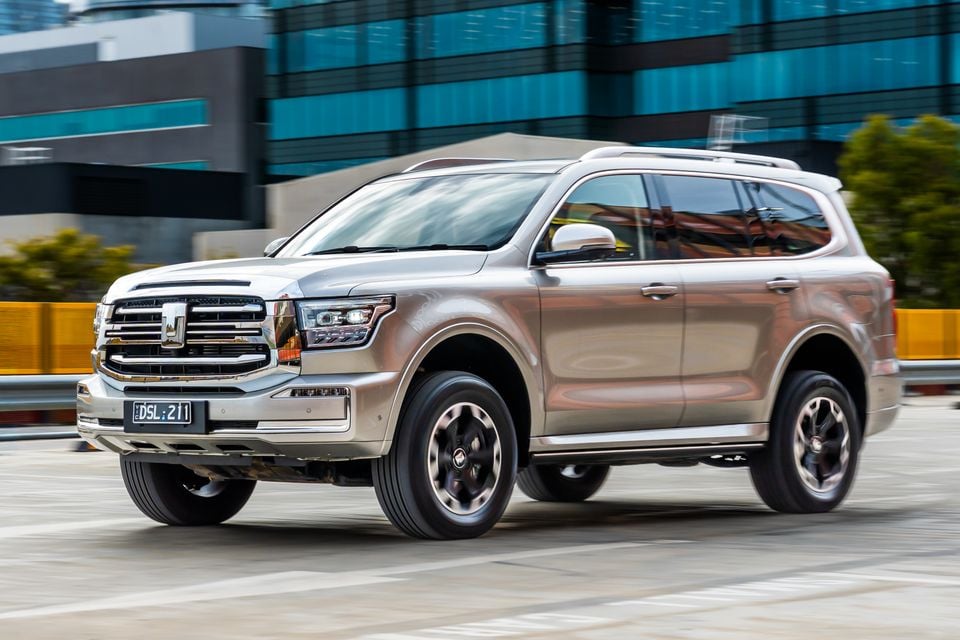
The GWM Tank 500 is an interesting and ambitious large off-road SUV, offering a more affordable alternative to the likes of the Ford Everest, Toyota LandCruiser Prado, and even the Toyota LandCruiser 300 Series.
It blends space, comfort, luxury features, and off-road capability – pitching itself as the ultimate jack-of-all-trades for Aussie families.
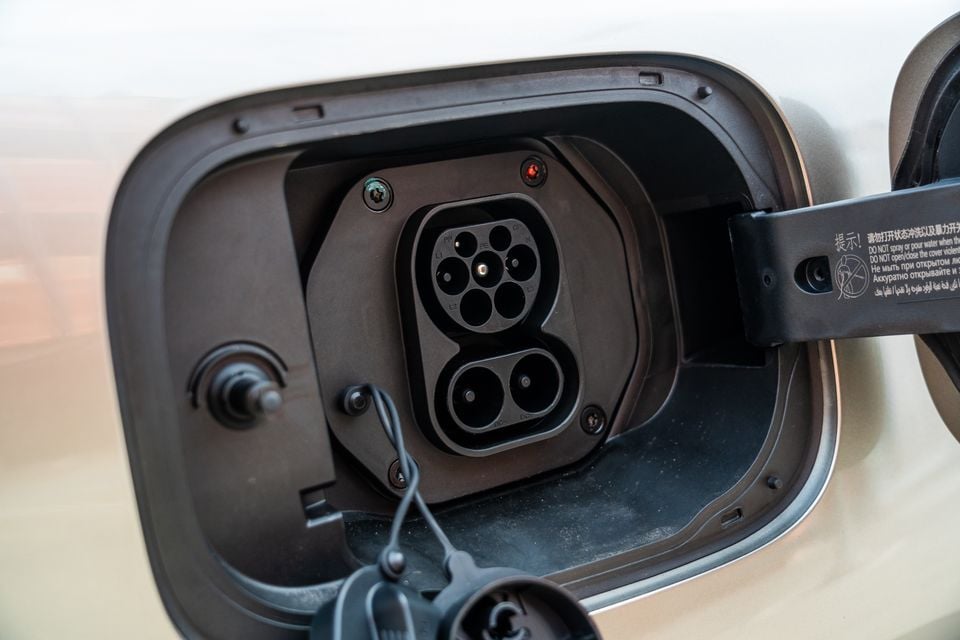
Now, its scope is expanding. The Tank 500 Ultra Hi4-T PHEV offers a plug-in hybrid powertrain, allowing for a claimed 110km of electric-only driving range. The idea being that the average person can commute and run their daily errands using electricity, but still have a petrol engine on board for longer trips or towing.
Most plug-in hybrids now also allow the vehicle to be driven like a traditional hybrid – using the torque of the electric motor to get the car off the line and reducing fuel consumption, as well as reducing battery drain.
It means the driver can creep out of their garage in the early hours and get out of their neighbourhood on electric power without disturbing anyone, switch to hybrid mode while on the highway or travelling through suburbia, then switch back once they reach city limits.

It seemed to take a little while for the market to catch up and fully understand the technology, but once it did, sales began to grow.
While initially popular with passenger cars, we’re seeing plug-in hybrid powertrains being adopted more and more in heavy-duty vehicles with ladder-frame chassis, like utes and off-road SUVs.
All of which means buyers can have their large vehicle – often frowned upon due to their fuel consumption and emissions – with all the benefits that those models entail, but without any of the guilt or cost.
And while the theoretical benefits are clear, there are practical considerations, too.
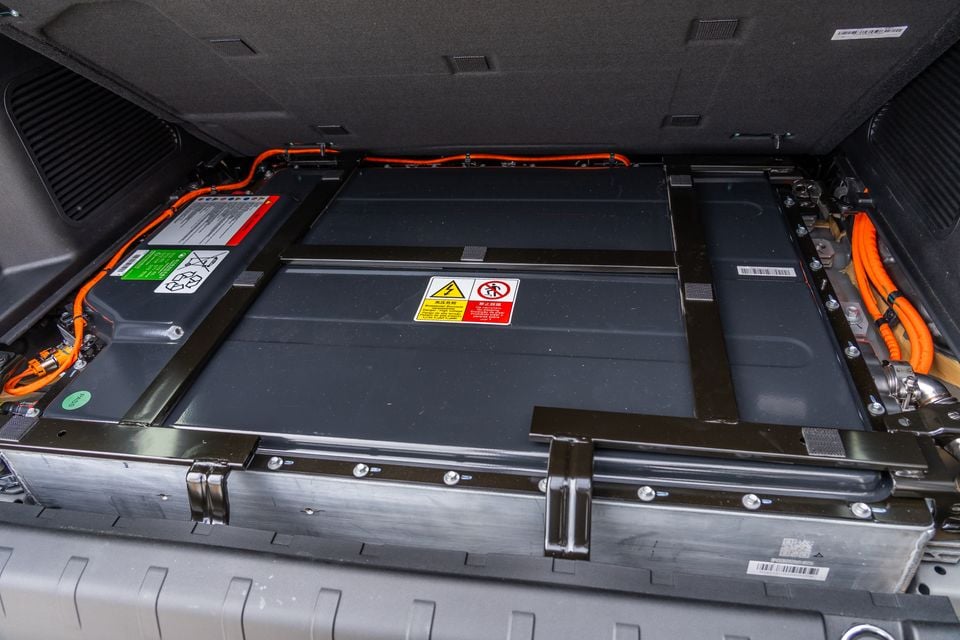
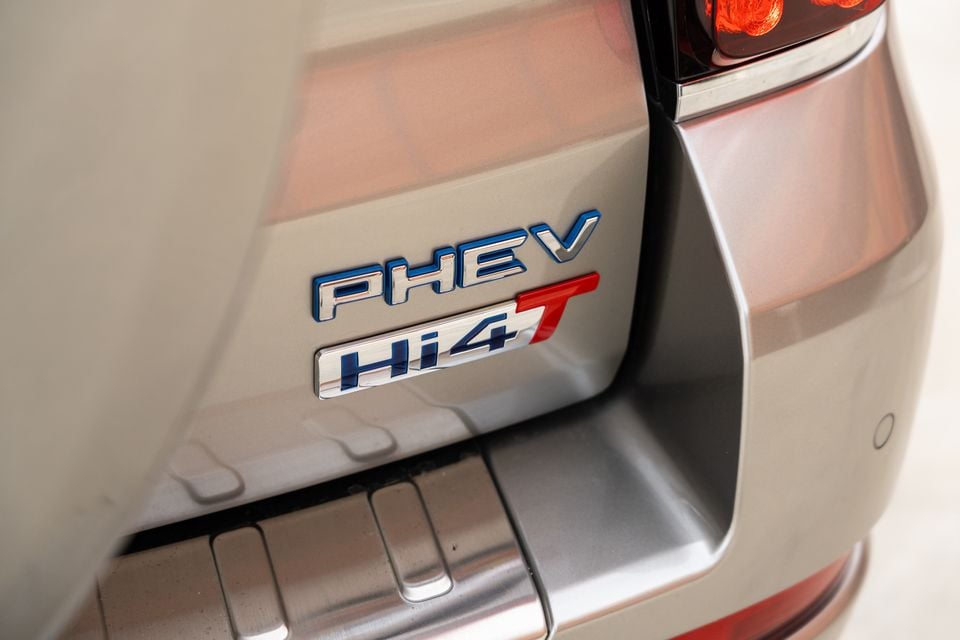
The plug-in hybrid powertrain has a stronger electric motor, with greater torque – helping to get the Tank off the line and up hills with greater ease.
Our man Damion Smy had a quick drive of the GWM Tank 500 Hi4-T PHEV in late 2025, but what is the model actually like to live with?
At the time of writing, GWM has reduced the Tank 500 lineup to just two variants: the hybrid Vanta HEV, and the plug-in hybrid Ultra Hi4-T PHEV.
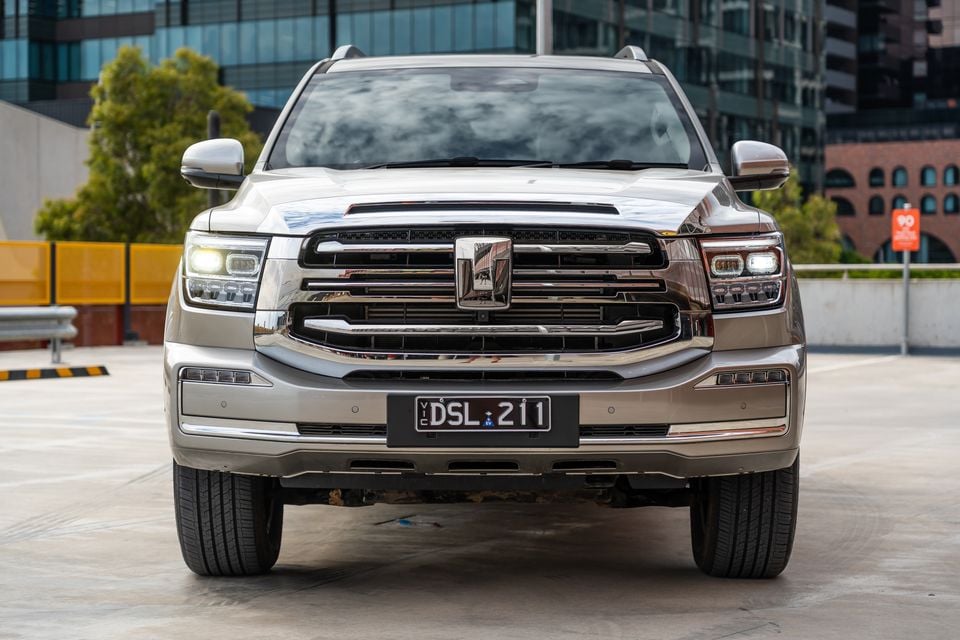
| Model | Drive-away price |
|---|---|
| 2026 GWM Tank 500 Vanta HEV 4WD | $75,990 |
| 2026 GWM Tank 500 Hi4-T PHEV 4WD | $79,990 |
Prices for the Tank 500 begin from $75,990 drive-away for the Vanta, while the PHEV costs $79,990 drive-away.
However, as reported by CarExpert recently, GWM will soon introduce a new engine to the range (more below), which is expected to see additional grades introduced – potentially at lower price points, though nothing has been announced at this stage.
While there is no shortage of plug-in hybrid family SUVs, options are limited for those looking for a PHEV powertrain in an SUV with real off-road capability.
The slightly smaller Denza B5 is one – related to the BYD Shark 6 ute – but uses a 1.5-litre turbo-petrol four-cylinder engine with dual electric motors, for a combined 400kW and 760Nm, with prices starting from $74,990 before on-road costs.
To see how the GWM Tank 500 lines up against the competition, check out our comparison tool
The cabin of the Tank 500 is one of its most impressive attributes.
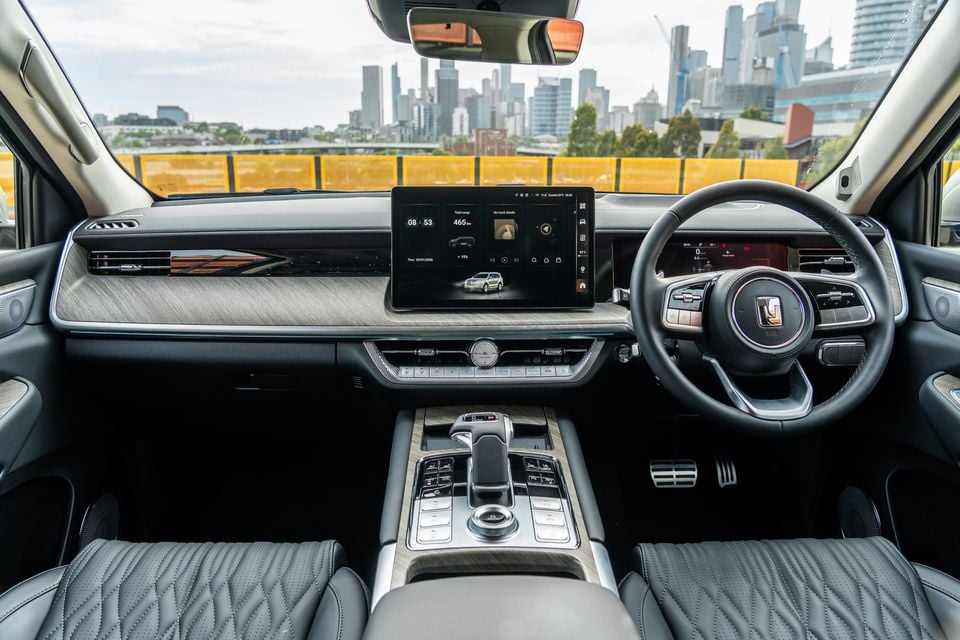
It walks a considered line between quality and cost, comfort and practicality, and luxury – without being over-the-top or cringe-worthy.
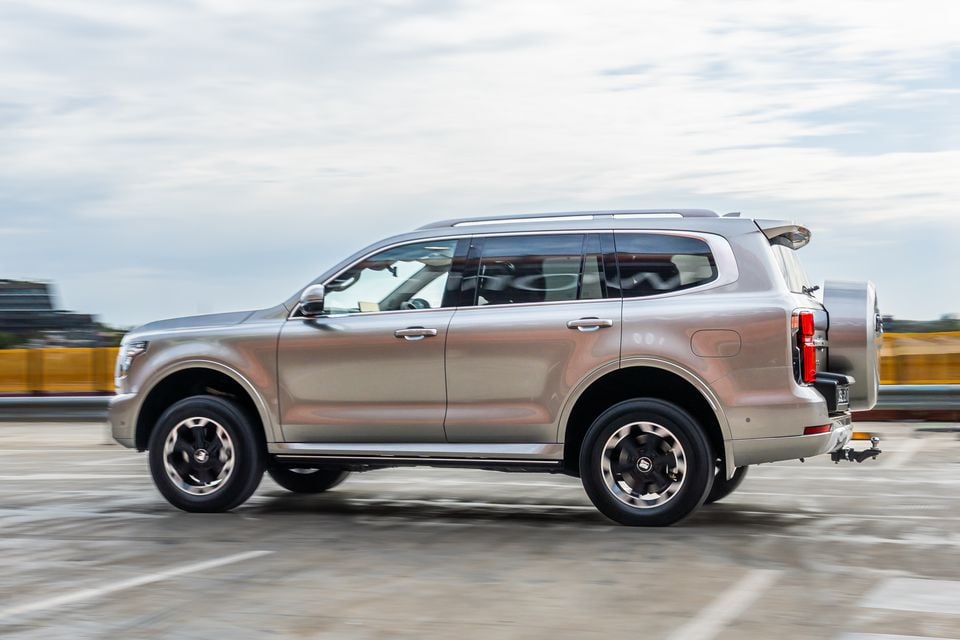
A long-standing feature on high-end US pickups, the Tank gets power-retractable side steps that reveal themselves when a door is opened, making it that little bit easier to get in and out. Definitely a selling point if you have kids, if you’re married to a short king or queen, or are vertically challenged yourself.
The downside of electric side steps comes during more hardcore off-roading. If you find yourself hung up on a rock or shelf, popping the door open can cause problems. Having said that, the Tank 500 doesn’t really feel like the type of vehicle that will be crawling up Blue Rag Range Track all that often, despite being capable.
The running boards probably tell you more about the intention of this vehicle. It’s a spacious, premium-feeling SUV that has plenty of capability, rather than being a dedicated off-roader designed to replace the Toyota LandCruiser or Nissan Patrol.
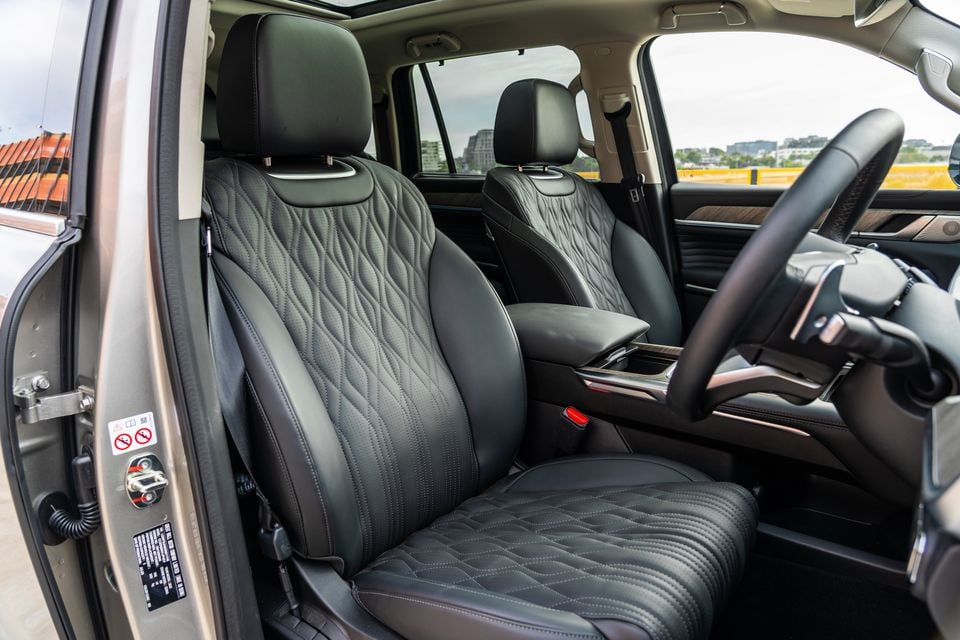
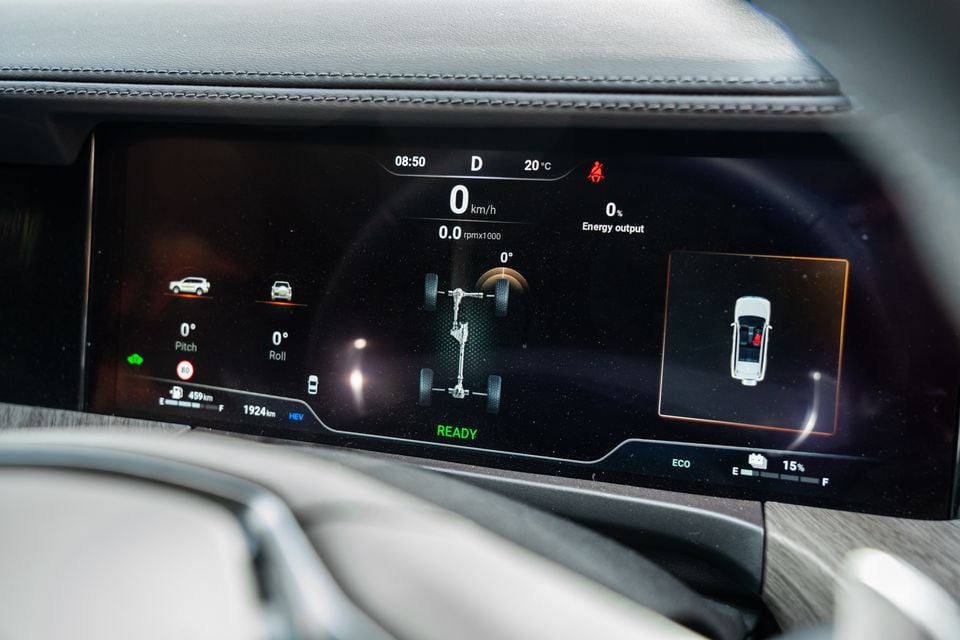
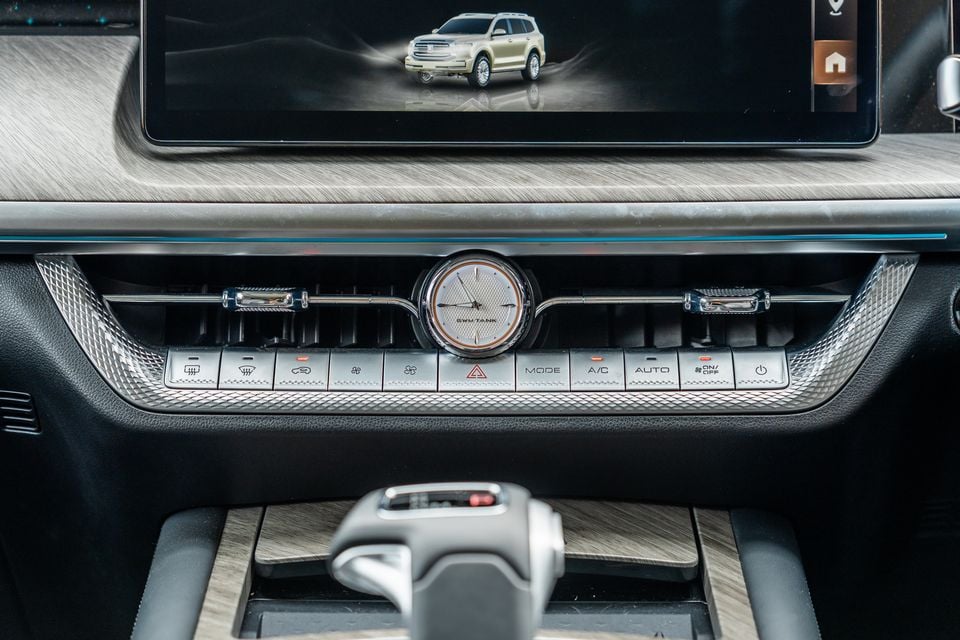
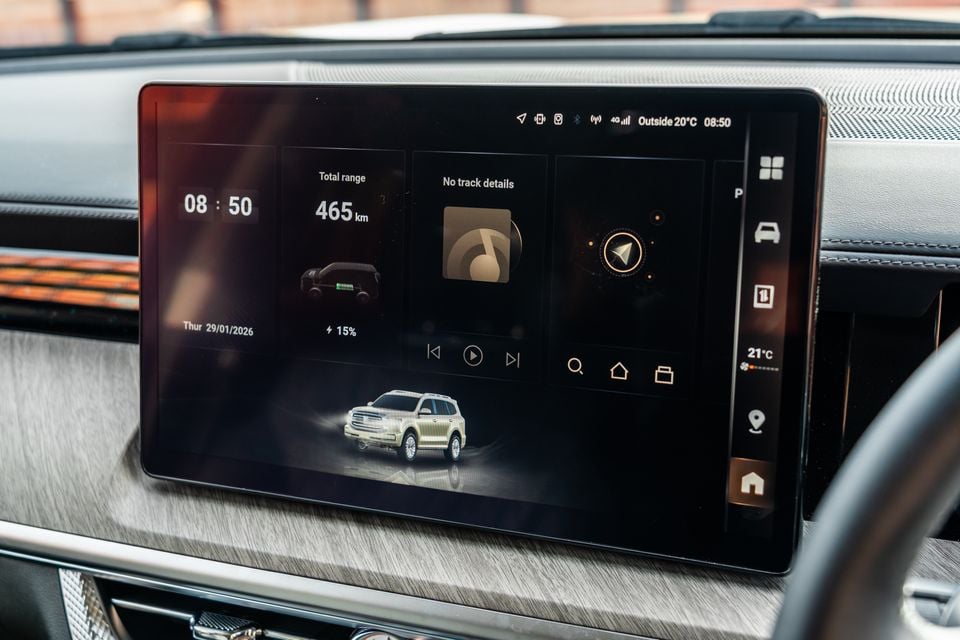
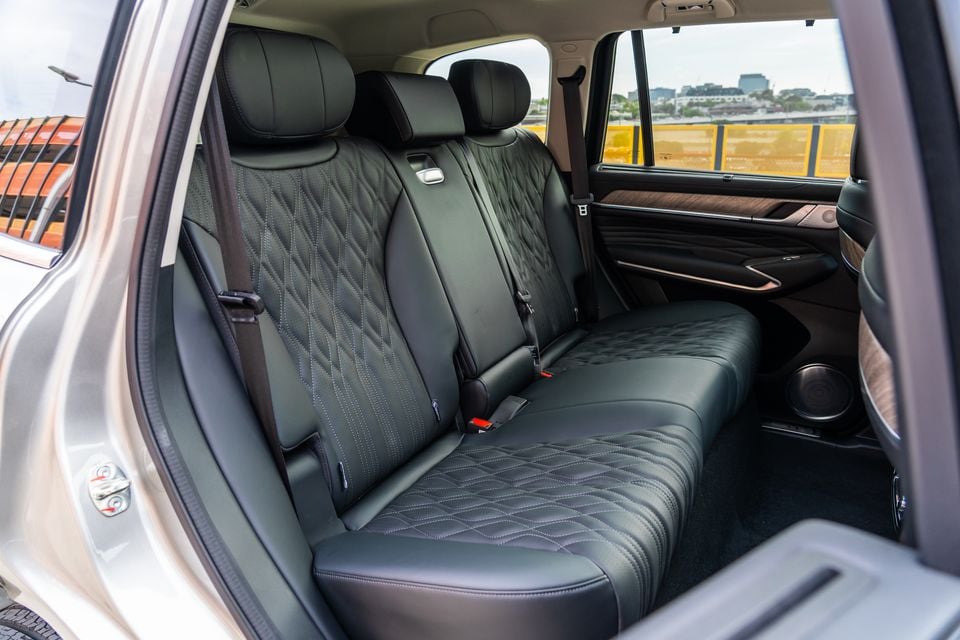
Step inside and you’re greeted with quilted Nappa leather-trimmed seats, brushed aluminium surfaces, plenty of buttons, and bright and clear screens.
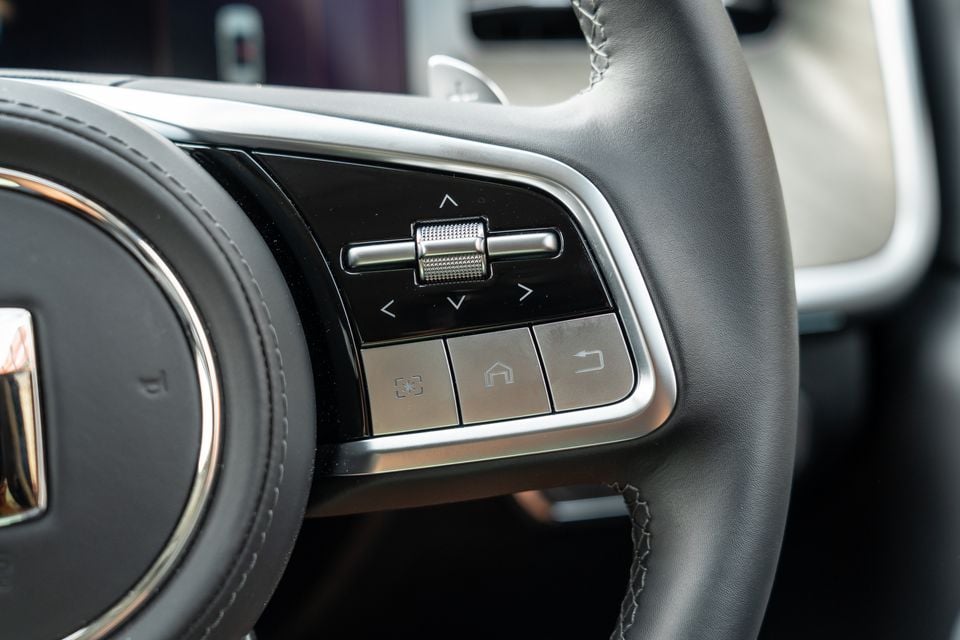
Ahead of the driver is a 12.3-inch digital instrument cluster, while the infotainment screen comes in at 14.6 inches – which is about as big as I’d like. Despite the large interior, the central touchscreen is pretty big and imposing, but does allow for a lot of information to be displayed.
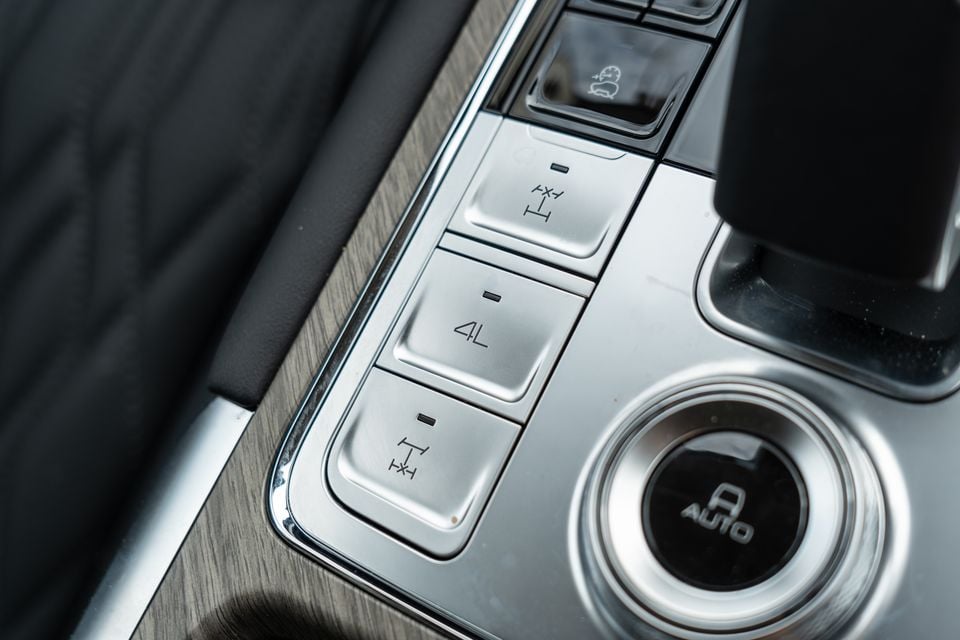
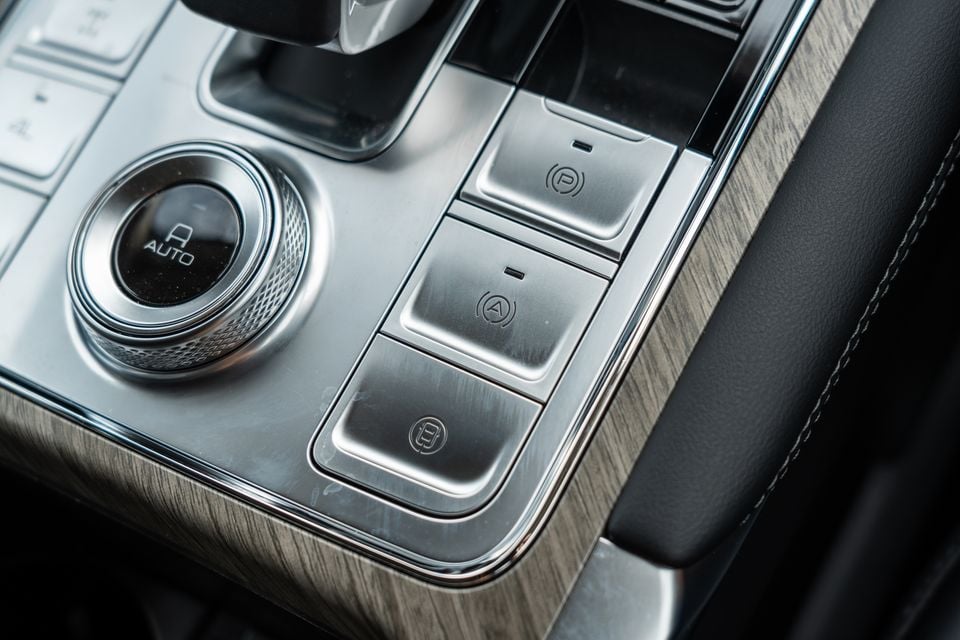
It’s a nice blend of modern and classic design touches, and GWM has done a good job of providing buttons on the dashboard and centre console for easy access – including differential locks, tight-turn feature, and low-range for off-roading, along with a dial for selecting driving modes.
Thanks to the metal speaker covers, knurled-look vent surrounds, and the centrally mounted analogue clock, GWM has done a pretty good job of lifting the interior to make it feel like a pretty classy place to spend some time. It’s not at the level of a high-end British or German SUV, but it also doesn’t feel like a cheap imitation.
On closer inspection, the wood veneers let it down a touch, with sharp and unfinished edges in places that are, in fairness, out of sight. But overall, the cabin is a nice place to find yourself.
The electric seats with heating and ventilation are also quite comfortable – and I particularly enjoyed the massage function – but the driving position wasn’t perfect for me, and I would have preferred a little more reach adjustment for the steering wheel.
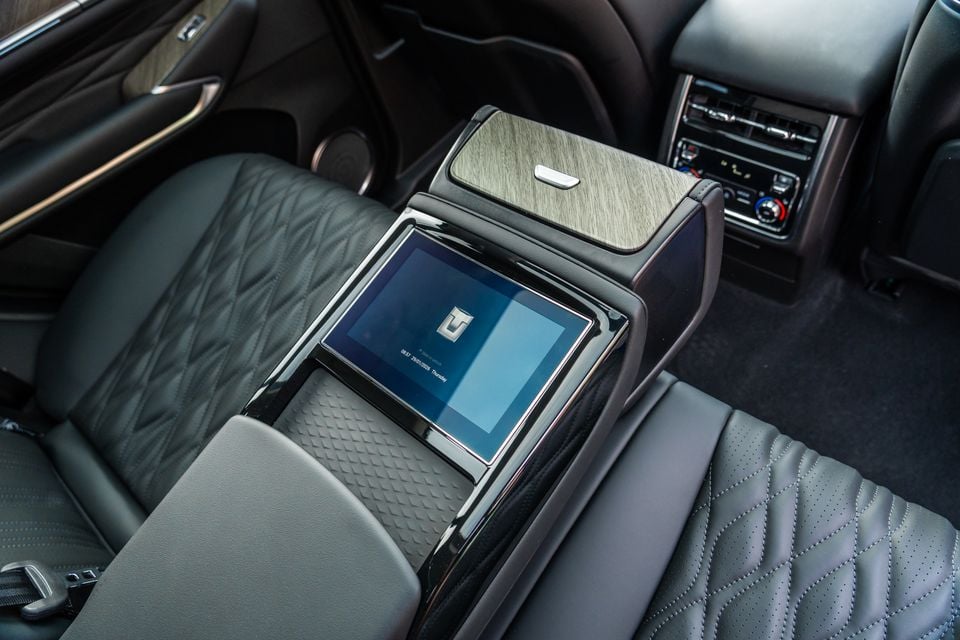
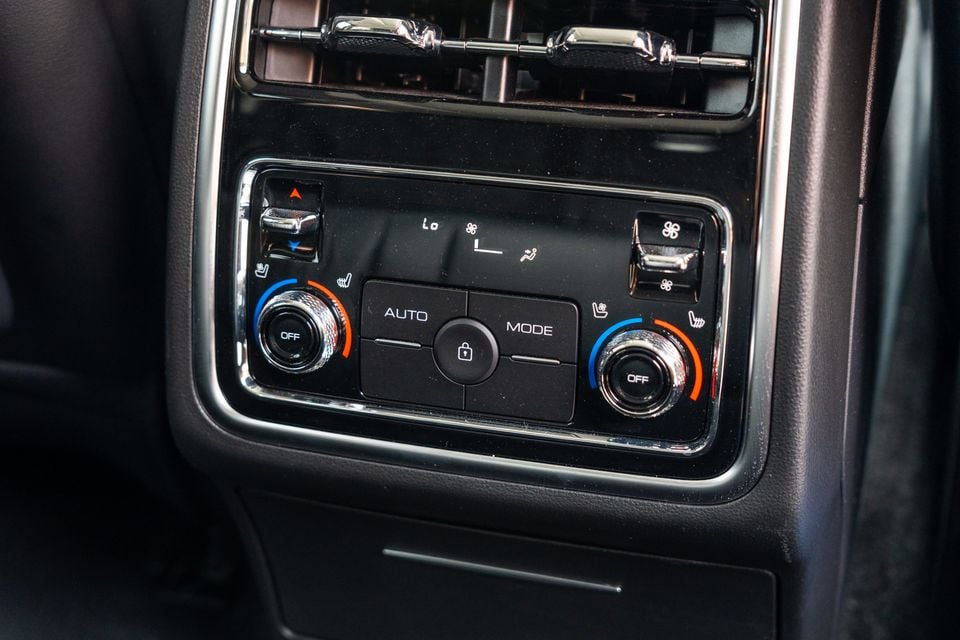
The second row is pretty ridiculous – in a good way – considering the sub-$80k price tag. There’s a heap of space, with occupants given their own dedicated climate control panel, and both heating and ventilation for outboard seats. The ashtray also hides USB-A and USB-C plugs, and a 12V power outlet.
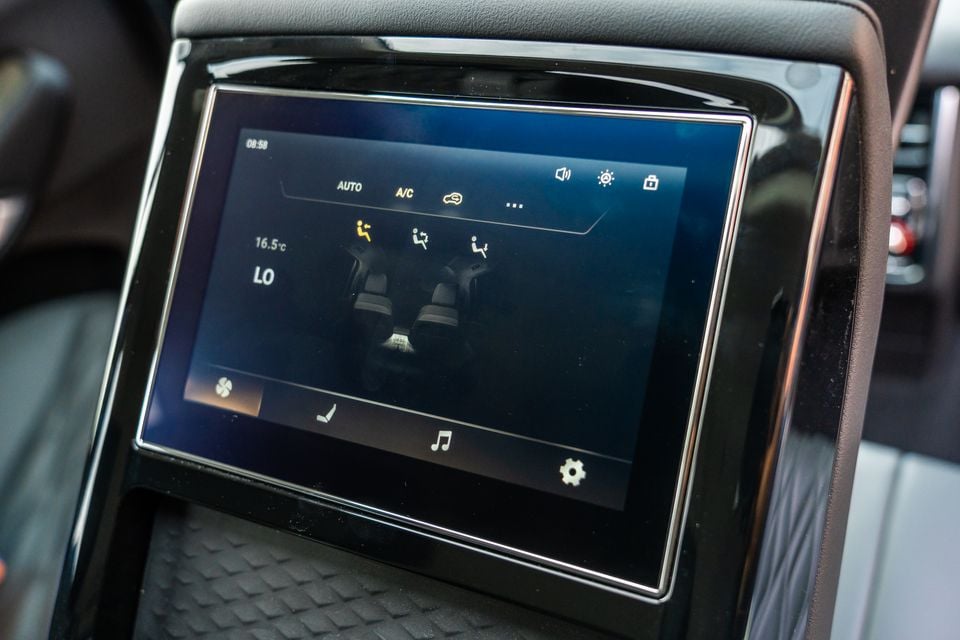
Between the two rear passengers, there’s a 7.0-inch screen in the fold-down armrest, which also controls the climate, seats, and entertainment systems. If that weren’t enough, there’s a massage function for outboard back-seat passengers.
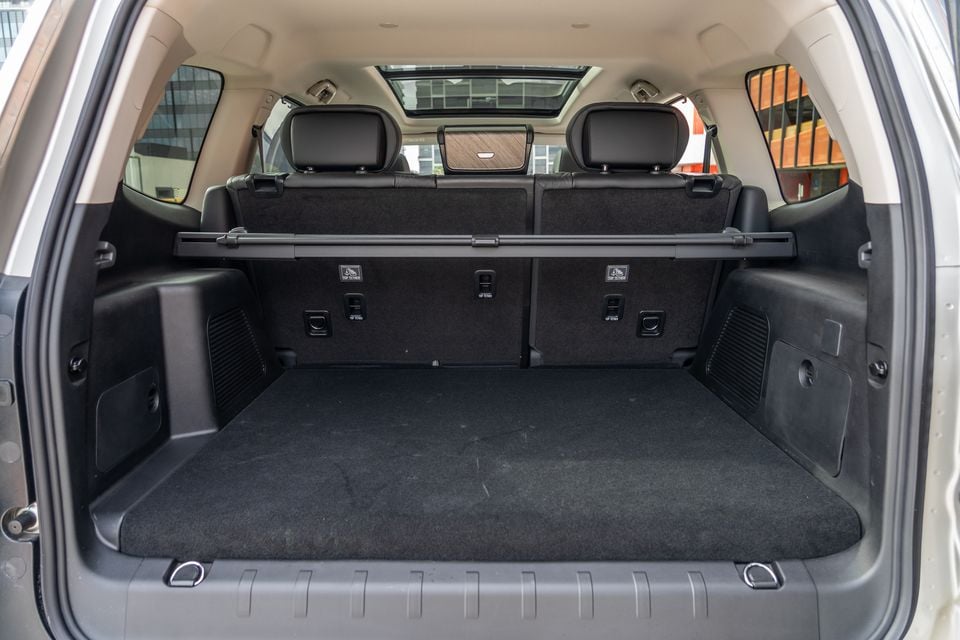
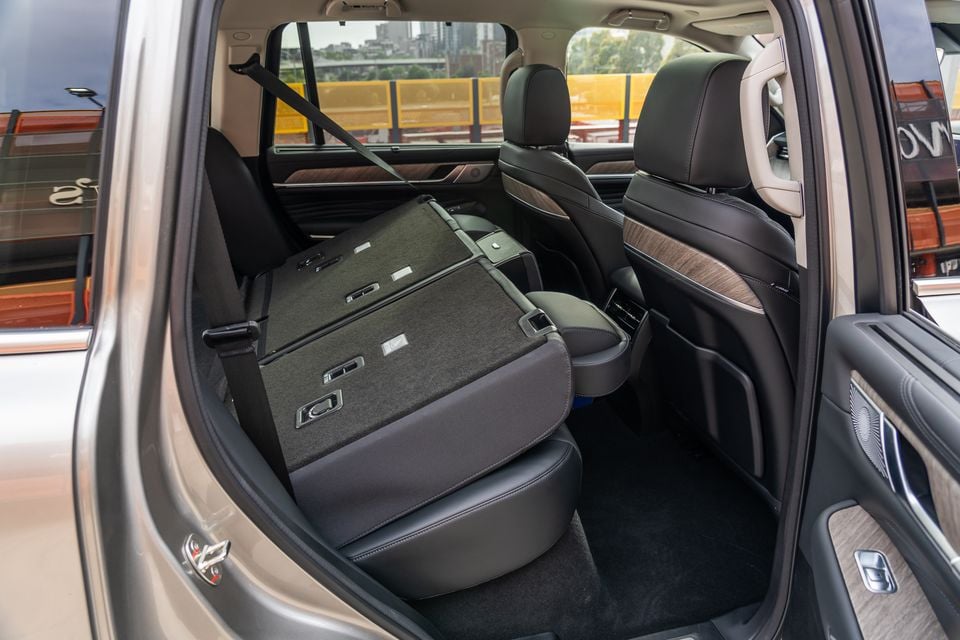
There would be worse places to spend some time on a road trip.
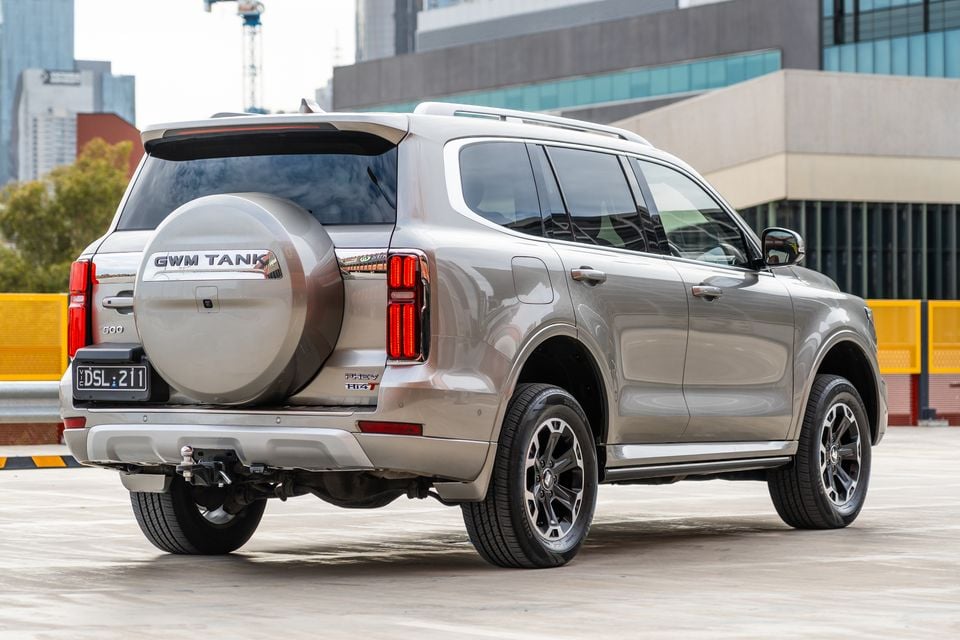
Being as big as it is, you would expect a third row of seats. But the larger battery means this particular Tank 500 comes with just five seats.
As you would expect, there’s also a big boot, despite losing some height to the larger battery of the plug-in hybrid. Even so, the official figures are 640 litres, increasing to 1400L with the second row folded.
| Dimensions | GWM Tank 500 Hi4-T PHEV |
|---|---|
| Length | 5078mm |
| Width | 1934mm |
| Height | 1905mm |
| Wheelbase | 2850mm |
| Cargo capacity | 640L (2nd row up)1400L (2nd row down) |
To see how the GWM Tank 500 lines up against the competition, check out our comparison tool
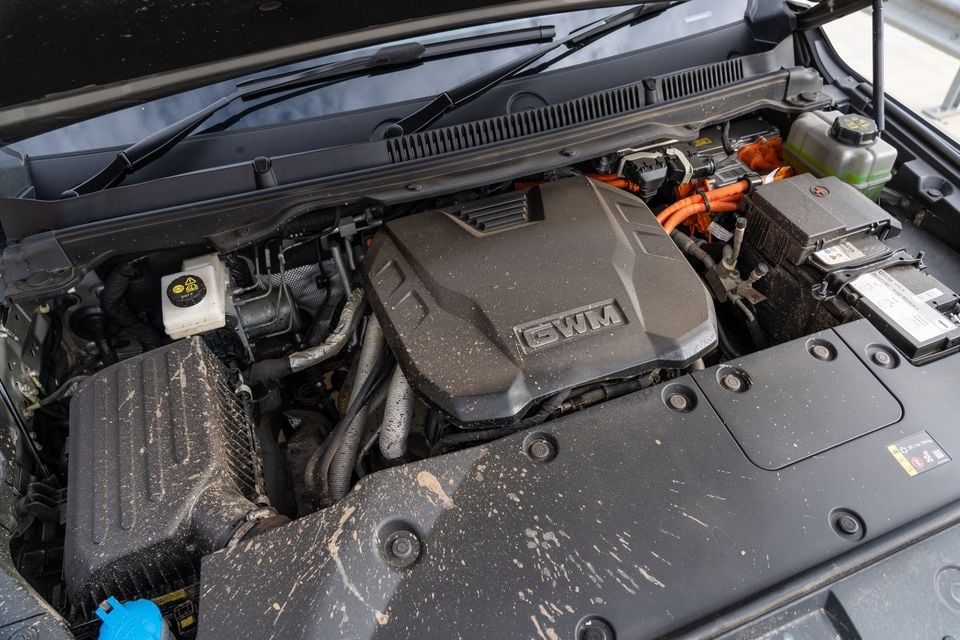
The Tank 500 Hi4-T PHEV is powered by a 2.0-litre turbo-petrol four-cylinder engine putting out 180kW of power and 380Nm of torque, backed by a 120kW/400Nm electric motor and a 37kWh battery – which is good for a claimed 110km of range (WLTC).
| Specifications | GWM Tank 500 Hi4-T |
|---|---|
| Engine | 2.0L 4cyl turbo-petrol |
| Engine outputs | 180kW / 380Nm |
| Electric motor outputs | 120kW / 400Nm |
| System outputs | 300kW / 750Nm |
| 0-100km/h time | 6.9 seconds |
| Battery | 37.1kWh ternary lithium (NCM) |
| Max DC charging rate | 50kW |
| Max AC charging rate | 6.6kW |
| Transmission | 9-speed hybrid transmission |
| Drive type | Four-wheel drive |
| Fuel economy (claimed) | 2.06L/100km (WLTC) |
| Electric driving range | 110km (WLTC) |
| CO2 emissions (claimed) | 60g/km |
| Fuel type | 91-octane unleaded |
| Fuel tank | 70L |
| Kerb weight | 2830kg |
| Payload | 610kg |
| Braked towing capacity | 3000kg |
| Gross vehicle mass (GVM) | 3430kg |
For those not needing a plug-in hybrid, but still wanting improved fuel economy, the Tank 500 also comes with a 2.0-litre turbo-petrol four-cylinder with hybrid technology, with outputs of 180kW and 380Nm.
However, GWM will soon add a new 3.0-litre turbo-diesel four-cylinder to the Tank 500 lineup, making 170kW and 620Nm – exceeding the torque rating of the V6-powered Ford Everest.
While GWM advertises fuel consumption of 2.06L/100km, based on WLTC test protocols, that number will increase significantly if the battery falls below 15 per cent. Running the car in hybrid mode, we saw average fuel consumption fluctuating around 8.0-8.5L/100km, after a combination of highway, city, and suburban driving.
To see how the GWM Tank 500 lines up against the competition, check out our comparison tool
The plug-in hybrid GWM Tank 500 is a hard one to place, and any opinions formed will depend a lot on how the driver approaches the vehicle.
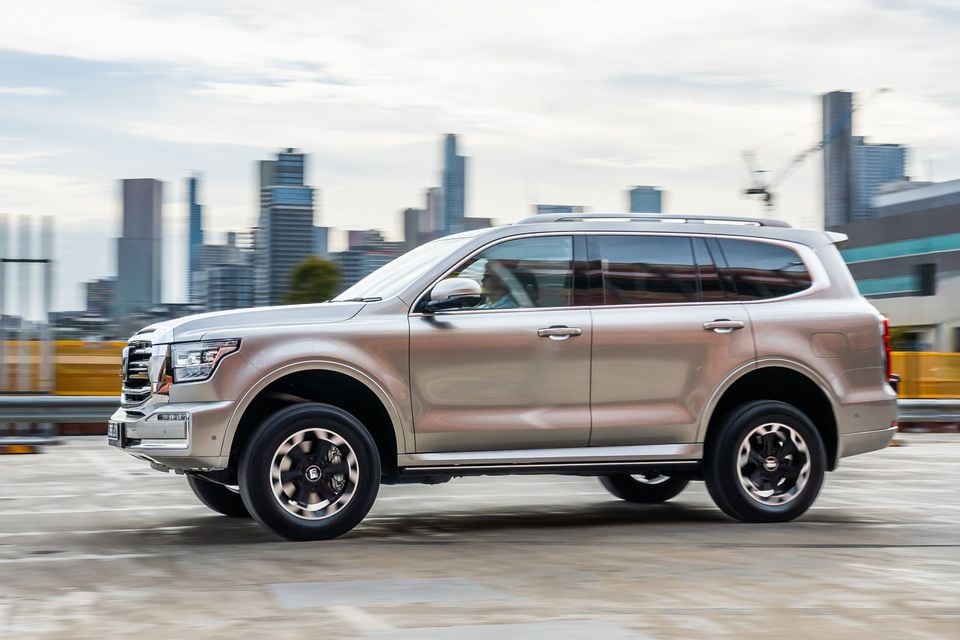
For those stepping out of a Toyota LandCruiser or Ford Everest or similar, the Tank will come across like a soft and artificial cloud, with muted inputs and an insulated driving experience.
Off-road SUVs from established brands aren't exactly known for their driving dynamics, but they offer a more direct connection from the steering and powertrains. The Tank, meanwhile, feels more remote from the driver’s seat.
Which could be disappointing if you’re hoping to swap out of your Patrol and save some bucks at the bowser.
But come at the Tank like a budget Bentley SUV with real off-road capability, and it starts to make more sense.
As such, handling isn’t anything to write home about. It’s a big, heavy vehicle – actually feeling larger than it really is in traffic – and can occasionally be a little busy and upset as it manages all 2820 (!) kilograms of kerb weight. It’s more suited to highways than tight, winding roads, with a wallowing nature through bends.
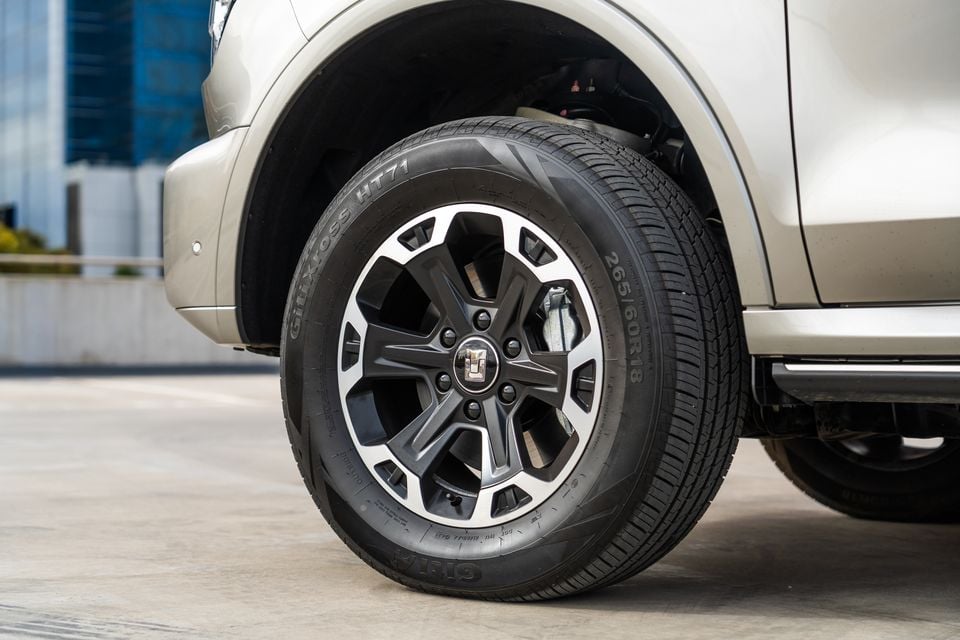
However, the upside is it rides well for a ladder-frame vehicle. The 60-profile tyres on 18-inch wheels do well at cushioning against road imperfections, while the suspension absorbs larger potholes and bumps.
It’s not the most advanced suspension we’ve encountered, with some of the shortfalls of its body-on-frame construction coming through occasionally on rebound. But if comfort is a priority for you, the GWM delivers well on this front.
The plug-in hybrid system has combined outputs of 300kW and 750Nm, which would have been unheard of in a five-seater off-road SUV just a few years ago.
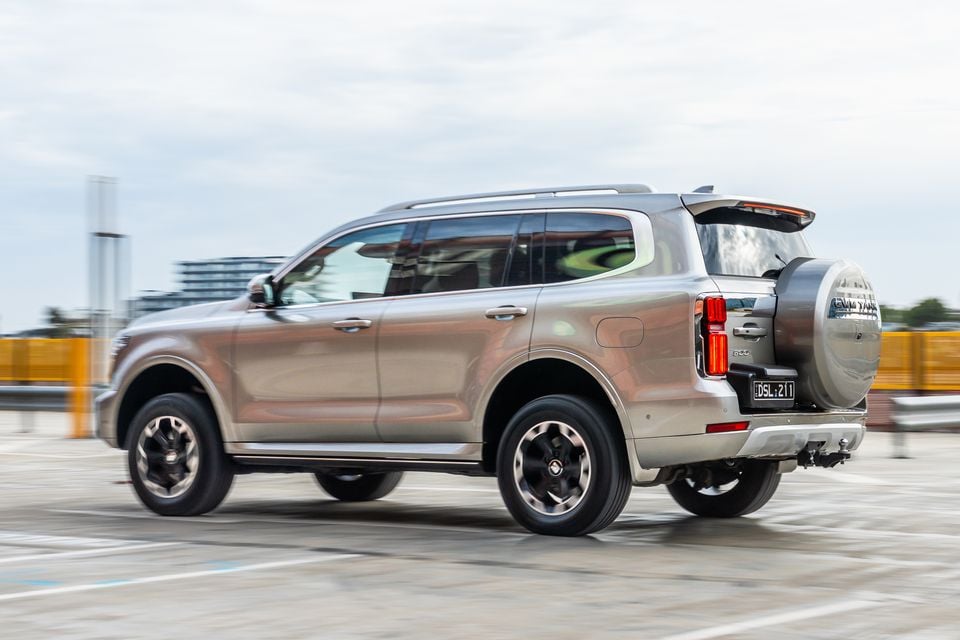
And while there’s plenty enough power available on demand, it’s not exactly an exciting powertrain.
Part of the problem is there’s quite a lot of throttle run-on. Which is to say, after you come off the throttle pedal, the car seems to continue to surge forward, with a noticeable delay in obeying the driver’s commands. It’s enough to not want to exploit the power it does have, for fear of overdoing it.
But when there is space and need to exploit the powertrain, controlled explosions and high-voltage electricity combine to move the big GWM down the road at a surprising pace.
Its claimed 6.9-second 0-100km/h time may not be impressive by today’s standards, but that’s the same sprint time as the first-generation Porsche Panamera V6, and faster than the original V10-powered Volkswagen Touareg.
If this is the car for you, we’ll compare offers from trusted dealers, handle the back and forth and manage your purchase from enquiry to delivery.
The big performance figures don’t really shine through on the road. There’s enough there, to be sure, but it seems like it’s sometimes difficult to tap into all 300kW and 750Nm when you want it the most.
Wiping off that speed takes a little getting used to as well, with virtually no feeling from the brake pedal, due to the brake-by-wire system.
Compared to the open road, driving in the city takes a little more concentration, with the lanes feeling particularly small from the driver’s seat. However, navigating car parks, while a little daunting, is helped due to the decent turning circle.
It is well insulated though, with thick doors helping to cocoon the occupants. You’d be hard-pressed to feel stressed upon arrival at your destination in this thing.
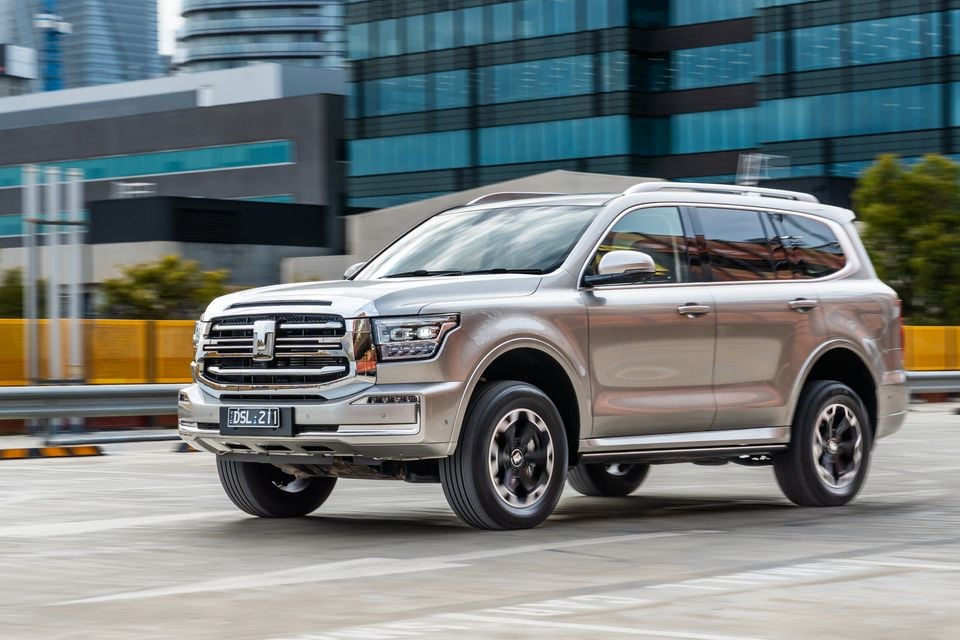
While we didn’t have the opportunity to take it to the bush this time around, Damo’s review of the Tank 500 PHEV back in October 2025 tested the vehicle’s off-road capability at the Lang Lang proving ground. And – spoiler alert – it did well.
The Tank 500 offers between 102 and 110km of electric driving range, depending on which test protocol you trust, but it’s pretty safe to say it’s around 100km in the real world.
Driving the Tank in electric mode definitely lends itself to the more relaxed and insulated nature of the vehicle, but for my time with it, the hybrid mode made more sense – using the torque of the electric motors to get its near-three-tonne mass off the line, reducing fuel consumption significantly, but without the need to plug in the SUV when parked up.
The transition between electric and petrol isn’t as seamless or smooth as in something like a Toyota, but it’s pretty good.
The active safety technology can be a little overbearing at times, with the beeps becoming tiresome, and the steering often fighting against your own inputs. Thankfully, it can be turned off relatively easily, but you’ll have to do it each time the car is started.
| Off-road dimensions | GWM Tank 500 Hi4-T | GWM Tank 500 Hybrid |
|---|---|---|
| Ground clearance | 213mm | 224mm |
| Approach angle | 30 degrees | 30 degrees |
| Departure angle | 24 degrees | 24 degrees |
| Ramp breakover angle | 22.5 degrees | 22.5 degrees |
| Wading depth | 800mm | 800mm |
To see how the GWM Tank 500 lines up against the competition, check out our comparison tool
The GWM Tank 500 Ultra Hi4-T PHEV has an impressively long list of standard equipment, with several premium features normally found in high-end luxury vehicles.
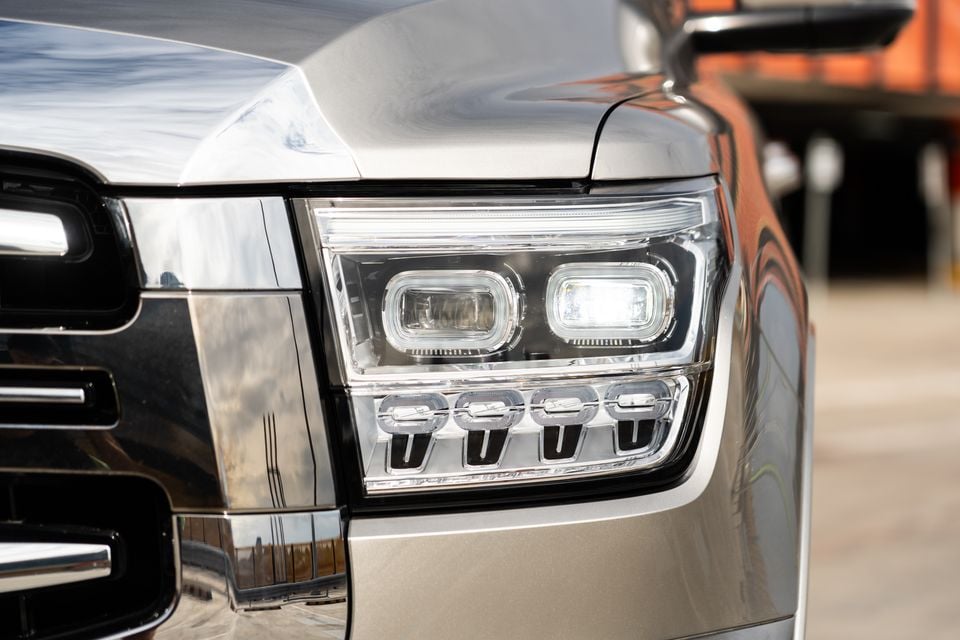

2026 GWM Tank 500 Hi4-T Plug-in Hybrid equipment highlights:
To see how the GWM Tank 500 lines up against the competition, check out our comparison tool
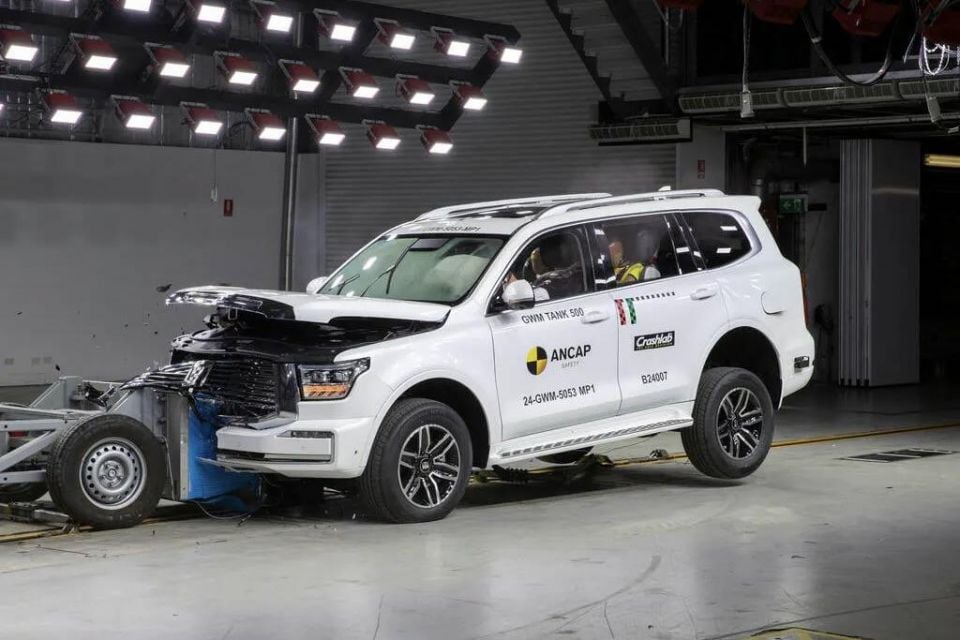
The Tank 500 has been awarded a full five-star safety rating by the independent crash-test authority, ANCAP – extending to both hybrid and plug-in hybrid variants – with the rating expiring in December 2031.
| Category | GWM Tank 500 |
|---|---|
| Adult occupant protection | 85% |
| Child occupant protection | 93% |
| Vulnerable road user protection | 81% |
| Safety assist | 74% |
Of the four main categories, the Tank 500 scored particularly well for Child Occupant Protection, at 93 per cent – with its lowest score of 74 per cent being for the model's Safety Assist technology.
Standard safety equipment includes:
To see how the GWM Tank 500 lines up against the competition, check out our comparison tool
The Tank 500 is covered by GWM's seven-year, unlimited-kilometre warranty, while the battery gets an eight-year warranty. GWM also offers seven years of roadside assistance, provided the vehicle is serviced on time through the company's dealer network.
| Servicing and Warranty | GWM Tank 500 Hi4-T PHEV |
|---|---|
| Warranty | 7 years, unlimited kilometres – vehicle 8 years, unlimited kilometres – EV battery |
| Roadside assistance | 7 years – service activated |
| Service intervals | 12 months or 10,000km (estimated) |
| Capped-price servicing | 7 years |
| Total capped-price service cost | $4250 |
Services are required every 12 months or 10,000km, with capped-price servicing available from dealers for the first seven services.
The Denza B5, meanwhile, requires servicing every 12 months or 20,000km, though only offers capped pricing for the first five services.
To see how the GWM Tank 500 lines up against the competition, check out our comparison tool
Approach the GWM Tank 500 with an open mind, and you may be pleasantly surprised. It delivers a good blend of comfort, capability, and value – and now with the added benefit of plug-in hybrid technology.
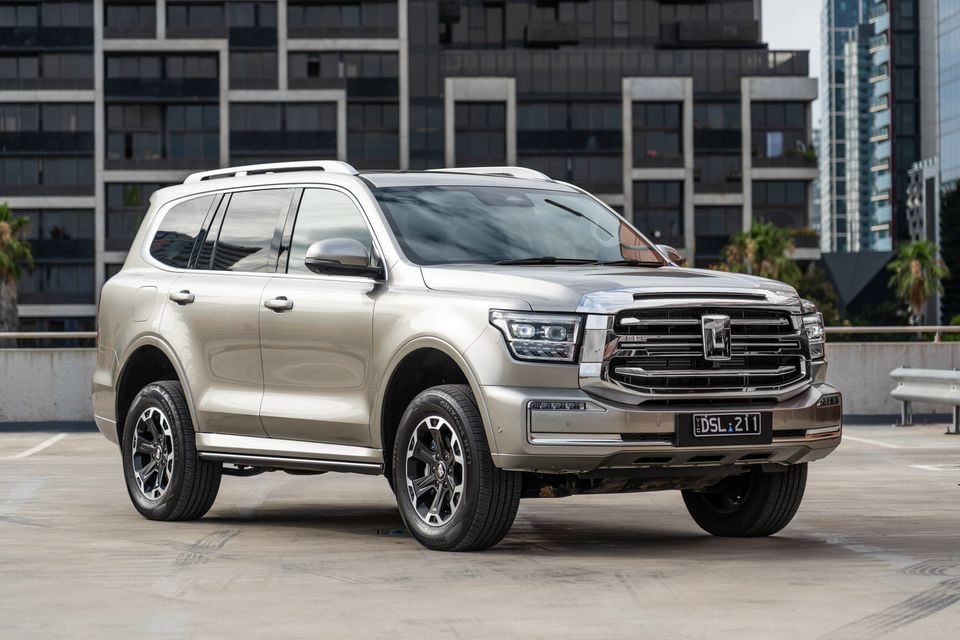
While it is quite soft on the road and feels big, particularly in the city, there is a high level of luxury and technology packed into the Tank 500.
The premium experience it offers occupants is, frankly, well above its price tag.
Then there’s the fact that this large five-seater can be your guilt-free electric family SUV during the week, and turn into an adept camping car at the weekend.
Is it a cut-price Toyota LandCruiser Prado? Not exactly, but the gap between the two isn’t as wide as you might think. And in a lot of ways, the GWM is more luxurious. The trade-off is the steering, pedals, and safety tech aren’t as well dialled in.
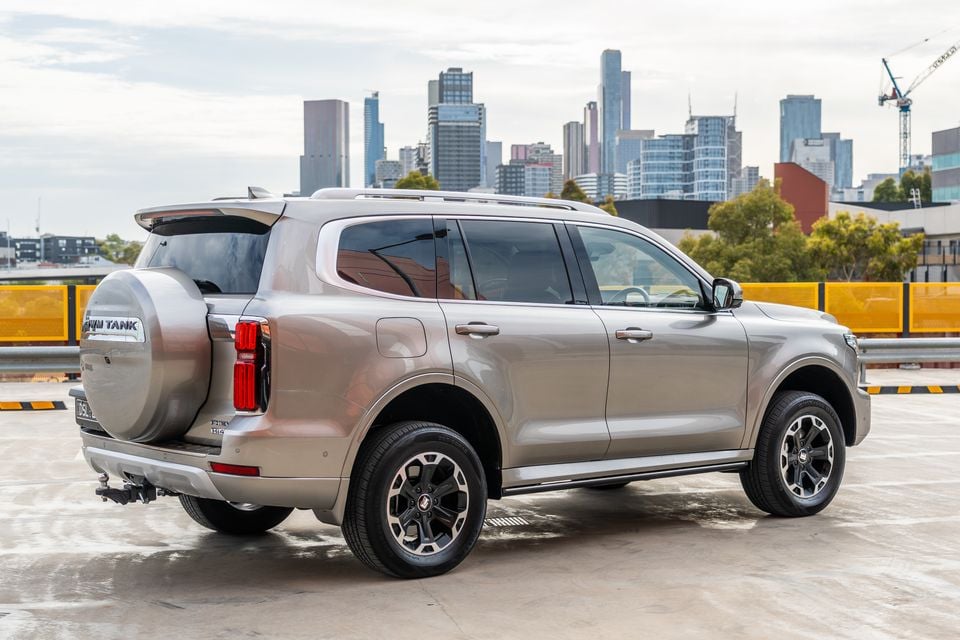
There are compromises, but given the value it provides, many of them are forgivable. We are looking forward to GWM doing something about the throttle run-on, and perhaps improving the directness between driver inputs and the way the vehicle responds dynamically, but none of those things would stop us from recommending the model in its current state.
GWM has clearly put a lot of effort into the Tank 500 and, on the whole, the company has done a good job. It’s spacious, comfortable, and delivers impressive value for Aussie buyers.
CarExpert can save you thousands on a new GWM Tank 500. Click here to get a great deal.
Click the images for the full gallery
If this is the car for you, we’ll compare offers from trusted dealers, handle the back and forth and manage your purchase from enquiry to delivery.
Quickly see how this car stacks up against its competition. Select any benchmark to see more details.
GWM Tank 500
GWM Tank 500 Sales rolling 12-months#
*Based on VFACTS and EVC data
Looking for complete GWM Tank 500 price history?
Our GWM Tank 500 Pricing Page shows exactly how prices have changed over time.
2025
$70,084
2025
$73,990
2025
$75,990
2026
$79,990
Ben Zachariah has 20-plus years in automotive media, writing for The Age, Drive, and Wheels, and is an expert in classic car investment.
Add CarExpert as a Preferred Source on Google so your search results prioritise writing by actual experts, not AI.
Ben Zachariah
13 Hours Ago

James Wong
1 Day Ago

Damion Smy
1 Day Ago

Max Davies
2 Days Ago
James Wong
3 Days Ago

William Stopford
4 Days Ago
Add CarExpert as a Preferred Source on Google so your search results prioritise writing by actual experts, not AI.
# Based on VFACTS and EVC data
† Displayed prices are based on the drive-away price of the vehicle, which includes delivery charges, registration fees, number plates, and applicable road taxes, based on a Sydney location. However, prices may vary between states and territories, and additional costs such as compulsory third party (CTP) insurance, dealer delivery fees, and optional extras are not included. These prices are subject to change without notice and may not reflect current market pricing or dealer offers.
 Automotive Vehicle Spec Data & 4K images Powered by JATO Dynamics Ltd