




Damion Smy
Toyota agrees to $750 million HiLux, Prado DPF class action settlement
The Japanese auto giant has apologised to affected HiLux, Prado and Fortuner owners after agreeing to a settlement, subject to Federal Court approval.
3 Days Ago
The Vistiq is Cadillac's most compelling model yet in Australia, thanks to bold styling, capable dynamics and a sharp price.

Senior Editor – News
Senior Editor – News
Senior Editor – News
Senior Editor – News
If this is the car for you, we’ll compare offers from trusted dealers, handle the back and forth and manage your purchase from enquiry to delivery.
Cadillac is known for its flashy vehicles, but it made a fairly subdued entrance to the Australian market.
There’s just one dealer for now, and since early 2025 the General Motors luxury brand has been delivering just one model, the Lyriq.
But now Cadillac Australia is kicking into gear, tripling its electric SUV lineup and teasing an expansion of its retail network.
In the third quarter of this year, it will start delivering the smaller Optiq, and in the fourth quarter customers will get their hands on the larger Cadillac Vistiq.
Not only is the Vistiq the flashiest member of Cadillac’s local lineup, it’s the most impressive. That might not sound surprising, as it is the most expensive, though it’s actually cheaper than the Lyriq was at launch and more affordable than another three-row electric SUV from Hyundai (yes, really).
Calling the Vistiq the most impressive Cadillac on sale here might also sound like faint praise. After all, the brand isn’t bringing its superb, supercharged V8-powered CT5-V Blackwing rear-wheel drive sports sedan to Australia, where Cadillac will be an electric-only brand, and nor will it import the full-size Escalade SUV – perhaps the most famous Caddy of the 21st century.
But it’s not faint praise at all. The Vistiq isn’t just the best Cadillac on sale in Australia, it’s a compelling full-size electric SUV that deserves serious consideration.
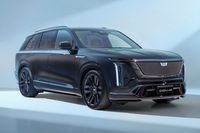
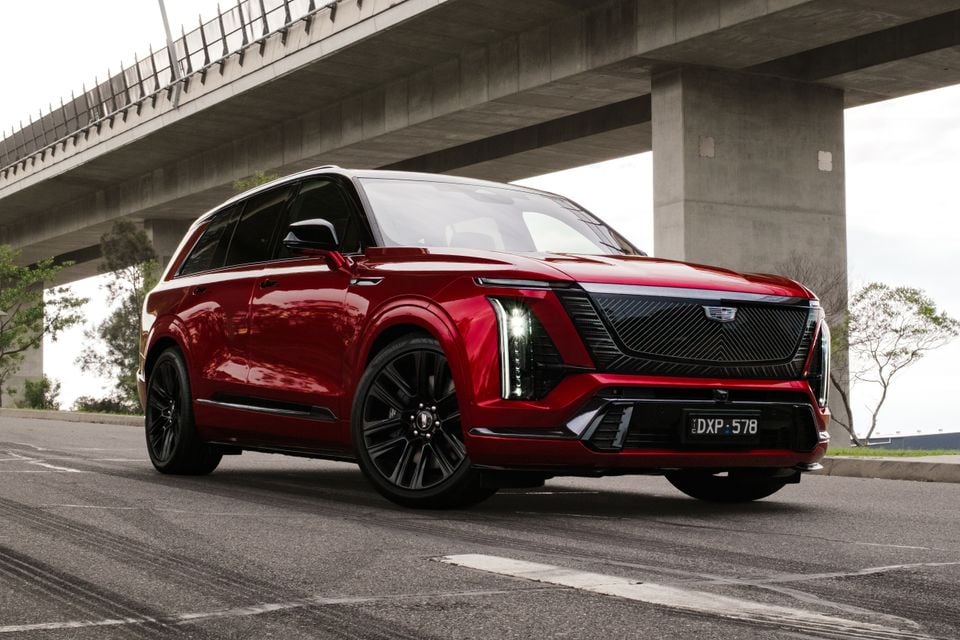
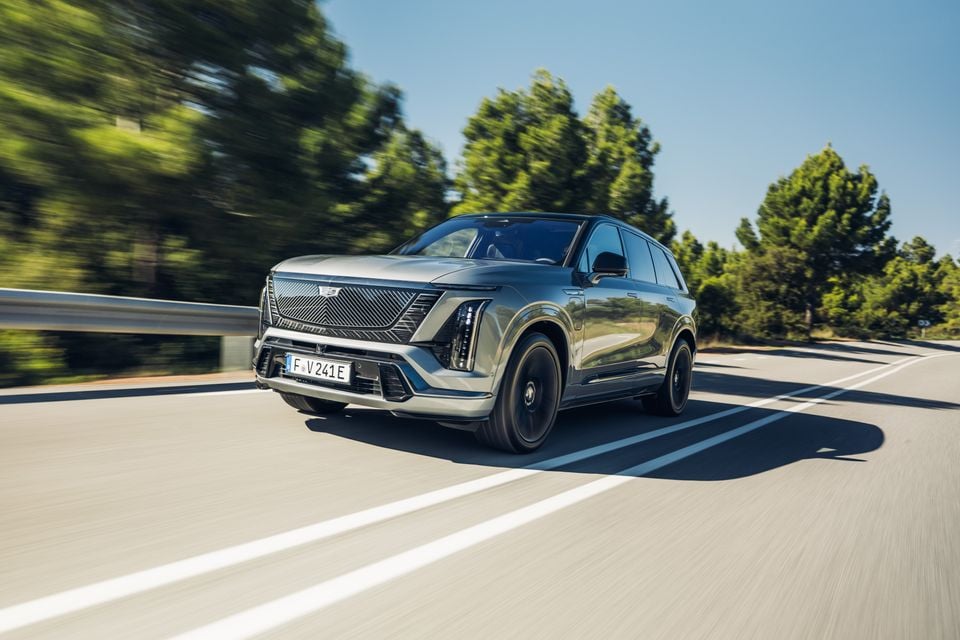
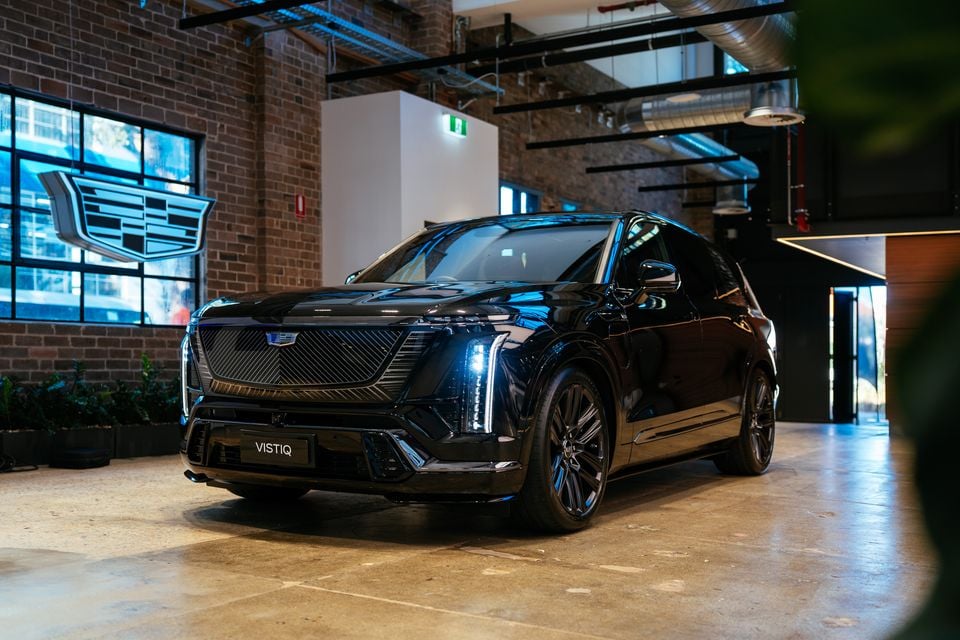
Where it’ll probably get your attention first is with its exterior styling, which shares some similarities with the Escalade that's now in its fifth generation and continues to offer large V8 engines.
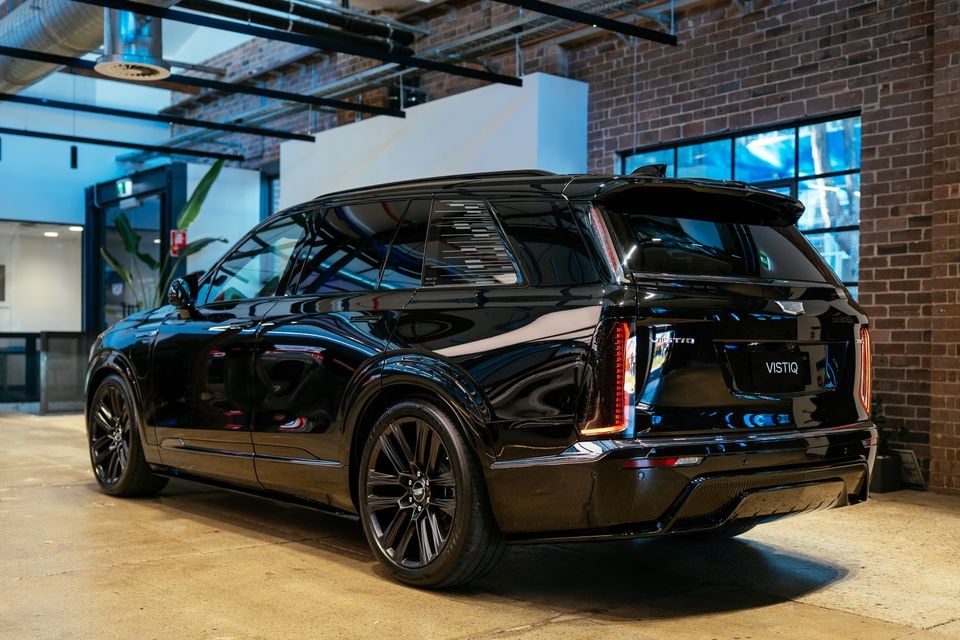
There are Cadillac’s signature vertical lighting elements, which feature distinctive animations upon unlocking the vehicle. An angled D-pillar treatment helps to give the boxy body a slightly more rakish look.
The ‘Mondrian’ pattern graphics on the rearmost windows of pre-production vehicles aren’t to everyone’s tastes, but Cadillac Australia says they won’t be fitted to local production models.
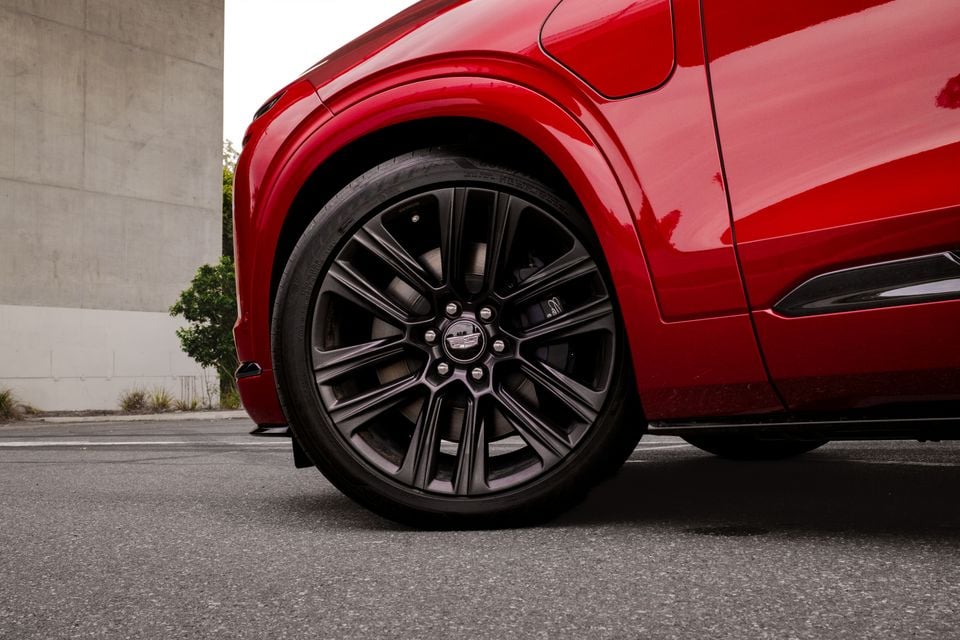
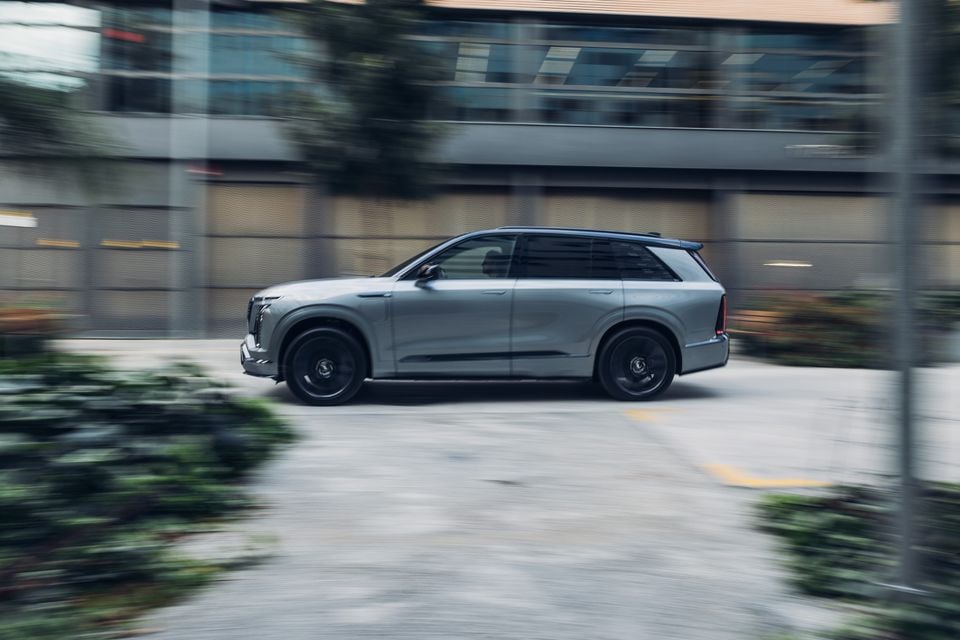
We only get the Vistiq here in Platinum trim, which brings body-colour wheel-arch trim and rocker panels, plus black 22-inch alloy wheels behind which – at the front at least – sit Brembo brakes.
GM has acknowledged Cadillac is a brand that most Australians have probably heard of, but may not know much about. Those who know about anything beyond 1950s Caddys with huge tail-fins would probably best know the brand for the Escalade, and the brand welcomes the comparison between the Vistiq and the Escalade.
Cadillac does have an electric Escalade lineup in the US, but this is an even larger, heavier vehicle that is only produced in left-hand drive. Having driven it in the US, I can confirm it’s an impressive machine, but it’s even more extravagant than the Vistiq we're reviewing here, which already offers ample space and pace.
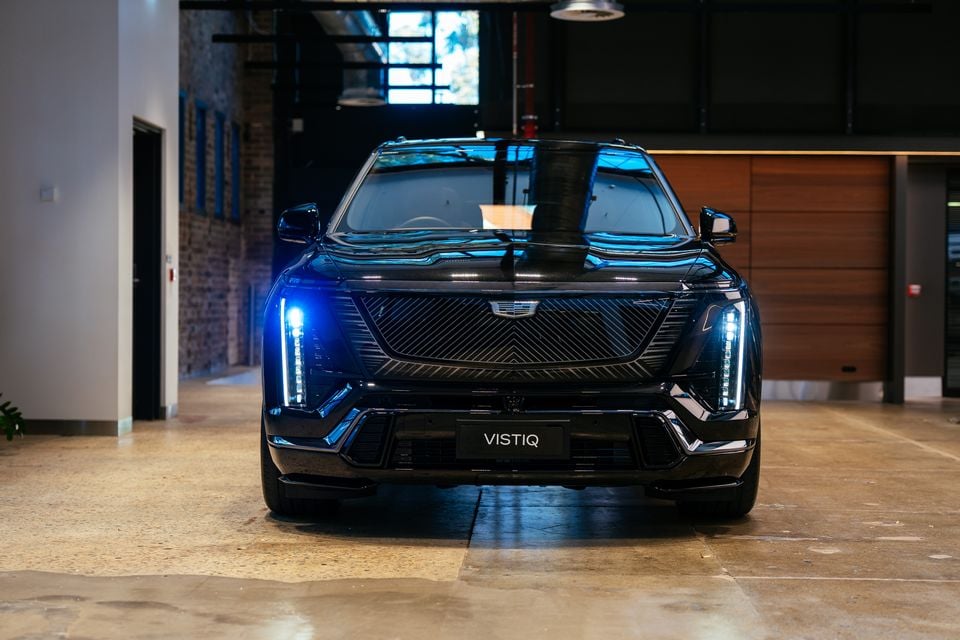
The brand made the right call in engineering the Vistiq for right-hand drive instead, though it’s a pity about that name. While Lyriq and Optiq are regular words with a ‘c’ swapped out for a ‘q’, Vistiq doesn’t seem to mean anything. It’s a shame Cadillac dropped its trademark application for Symboliq…
Name aside, if you want a big American SUV with presence but don’t want to shell out the big bucks GM asks for its V8-powered GMC Yukon, the Vistiq could be a tempting option for you.
If you’re specifically after a three-row electric SUV and don’t want to pony up the extra money for a Hyundai Ioniq 9, and find the Kia EV9 doesn’t quite make the luxury statement you’re after, the Vistiq could also be for you.
Cadillac has just one Vistiq variant available in Australia, the top-spec Platinum priced at $116,000 before on-road costs.
| Model | Price before on-road costs |
|---|---|
| 2026 Cadillac Vistiq Platinum | $116,000 |
The 2026 Vistiq Platinum costs US$98,490 in the US, which works out to around A$140,000, so we’re actually getting a surprisingly good deal.
It’s cheaper than the Ioniq 9 ($119,750 before on-roads) or the most affordable all-wheel drive Volvo EX90 ($134,990 plus ORCs), though the latter can be had in rear-wheel drive guise for less ($106,990 plus ORCs).
The Vistiq also sits right in the middle of the EV9 range on price, between the all-wheel drive Earth and GT-Line variants.
A Cadillac cheaper than an equivalent Hyundai or Kia? You bet. Even more unusual is that, while this is the most expensive Cadillac offered in Australia, it’s still cheaper than anything officially sold under the GM's Chevrolet and GMC brands here – despite this being GM’s flagship marque.
To see how the Cadillac Vistiq lines up against the competition, check out our comparison tool
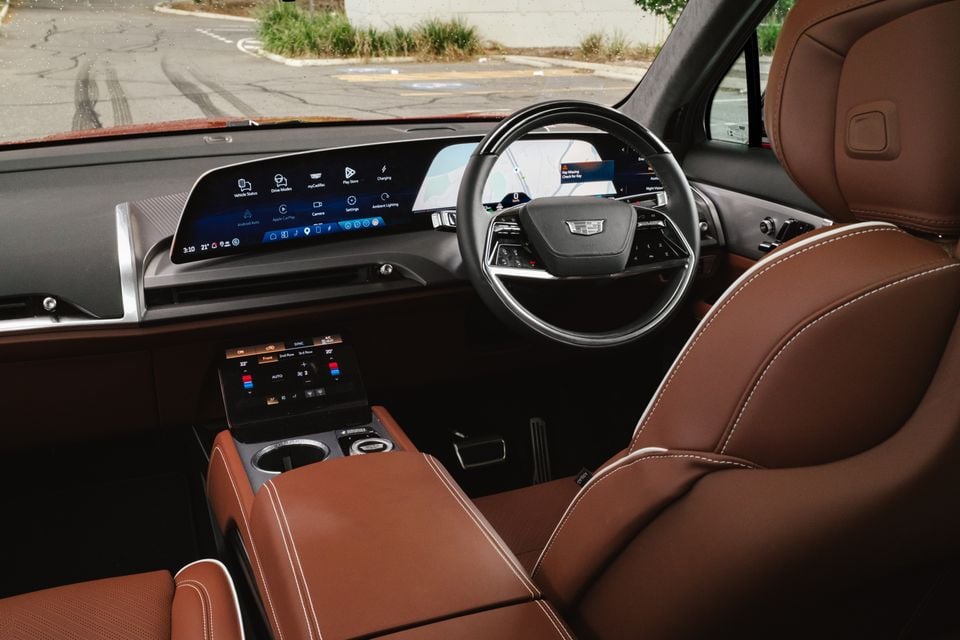
The Vistiq’s interior looks suitably posh – particularly in the Kona Brown colourway of our test vehicle – yet it has a distinctive look that stands out from its rivals.
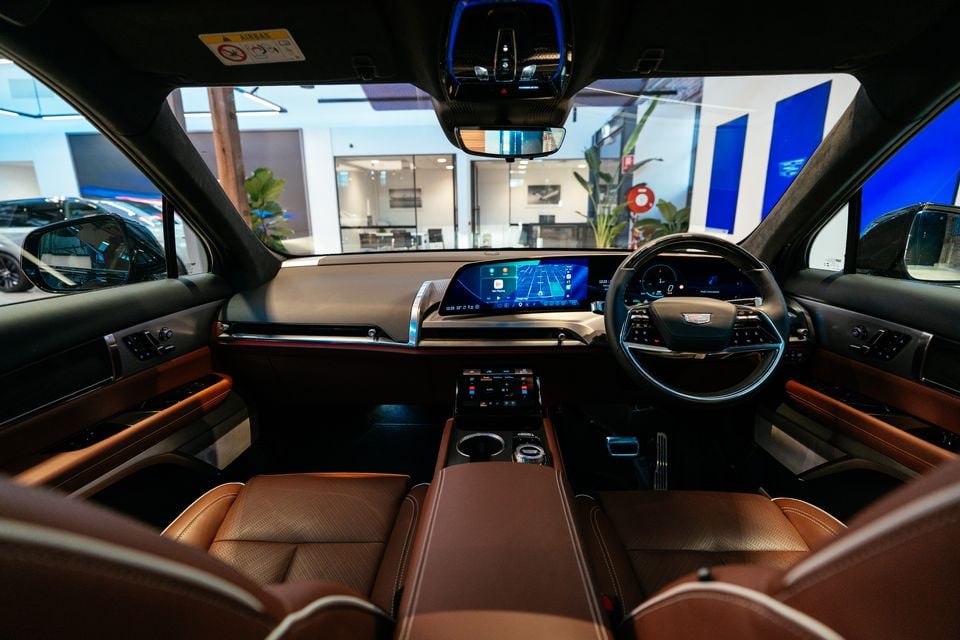
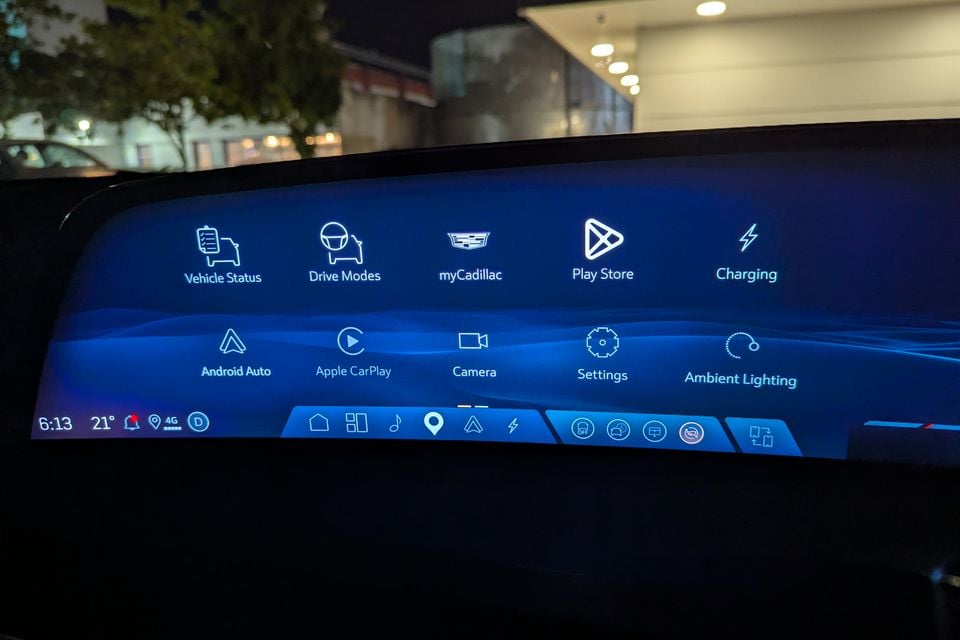
It shares its 33-inch digital display with the smaller Optiq and Lyriq, along with some components like the door-mounted seat controls, the rotary dial for the infotainment system, and the column-mounted gear shifter. But the Vistiq stands apart from its more affordable siblings with an even more upmarket look.
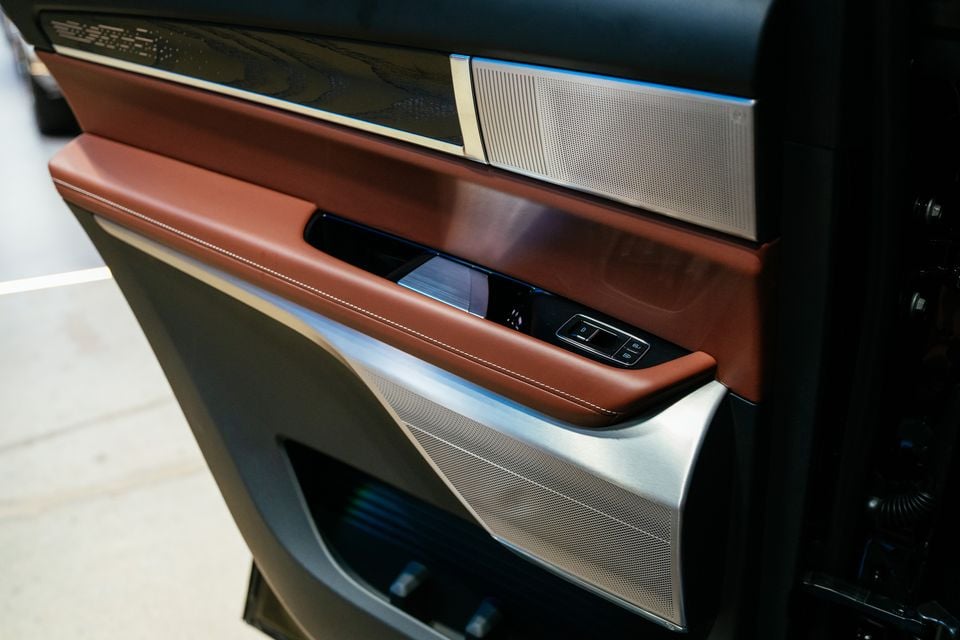
Open-pore wood trim features on the sides of the centre console and on the doors, with the latter featuring subtle back-lighting. The multi-colour ambient lighting is also distinctive.
The metallic trim you’ll find across the dashboard and doors provides some attractive contrast, and there’s little in the way of gloss-black trim – though the substantial-feeling switches on the steering wheel are finished in this material and they do show smudges.
Speaking of the steering wheel, it features lovely leather and metallic rocker switches. We just wish it had a third spoke, as it can be a bit disorienting to use while parking.
The Vistiq uniquely features an 8.0-inch climate control display at the base of the centre stack, à la Land Rover and Audi, though there’s no haptic feedback.
The wireless phone chargers are positioned behind this display, along with a pair of USB-C outlets, while a shelf sits just above floor level – also with a Mondrian-type pattern – though its low lip means items in there can go flying if you take a corner too quickly.
The AKG Studio sound system in the Vistiq has 23 speakers, instead of 19 in the Optiq and Lyriq, and it offers excellent audio performance. There are also speakers within the front head restraints.
Material quality is of a high standard.
The lowest reaches of the doors are finished in hard plastic, something Cadillac isn’t alone among luxury brands in employing, and we wish the spacious bottle holders had a soft lining.
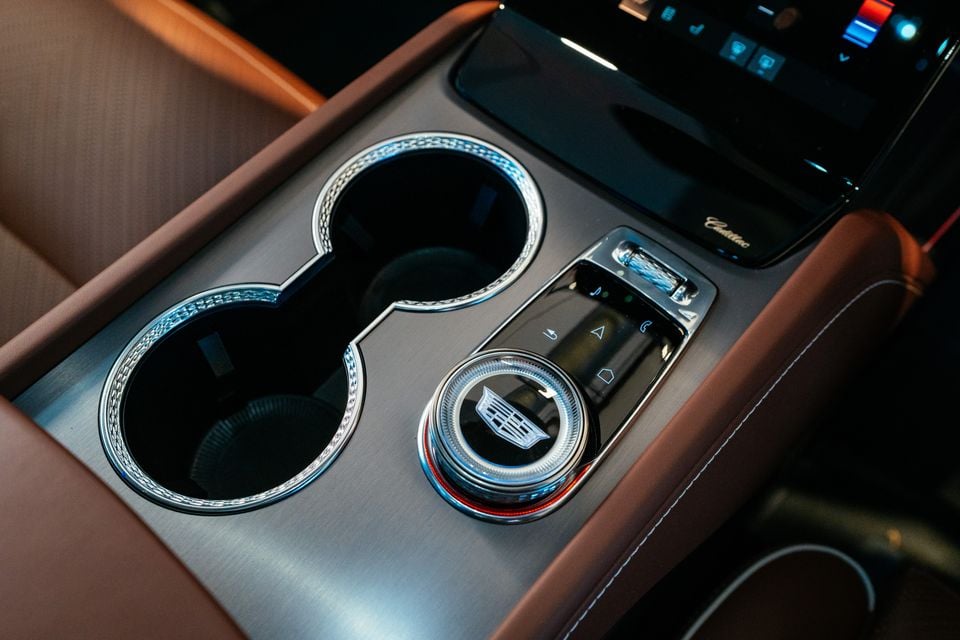
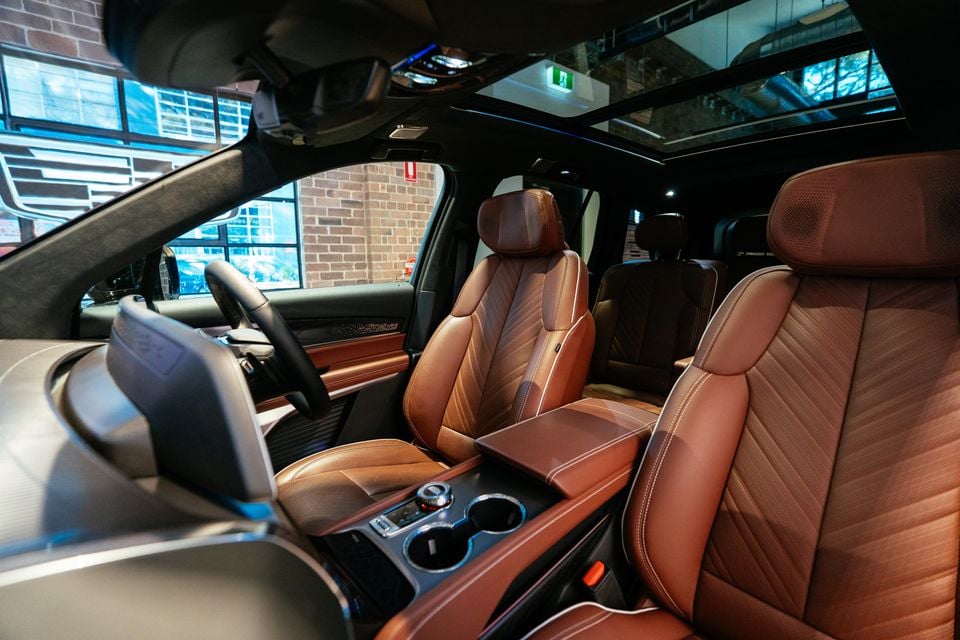
However, everywhere else is finished in either soft-touch plastic – including the two centre console shelves – or leather, or leatherette, and there are plenty of stitching details.
The front seats are comfortable and supportive and feature heating, ventilation and massage functions, though the latter is pretty average. We like GM’s clever feature, which you can turn off if you wish, that detects the outside temperature and automatically turns on either the seat heating or ventilation accordingly when you hop into the Vistiq.
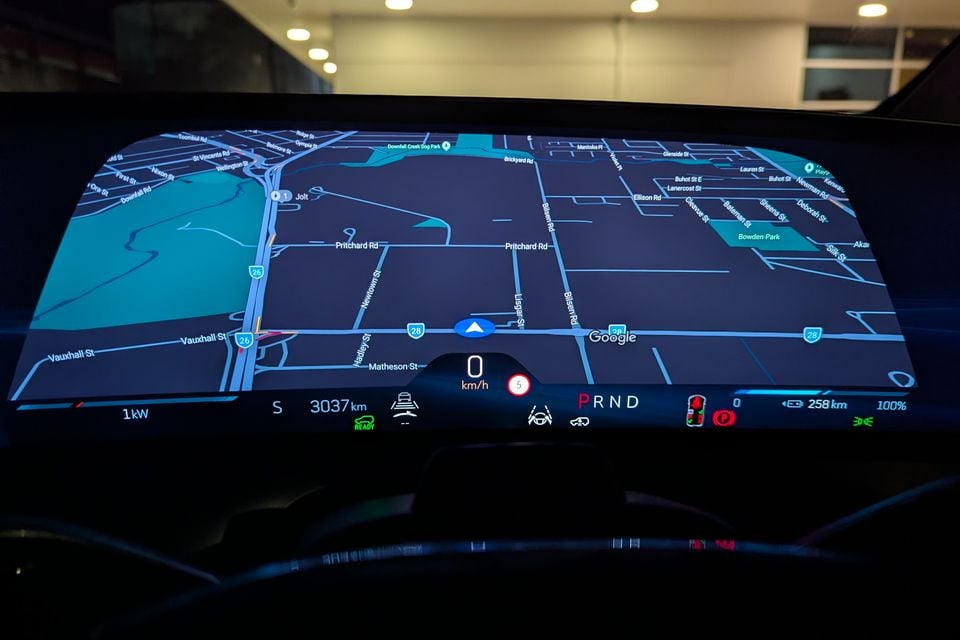
The 33-inch display incorporates not only the infotainment touchscreen and digital instrument cluster, but also an auxiliary touchscreen to the right of the steering wheel which allows you to easily toggle between digital instrument cluster views, change your headlight settings, and view trip information.
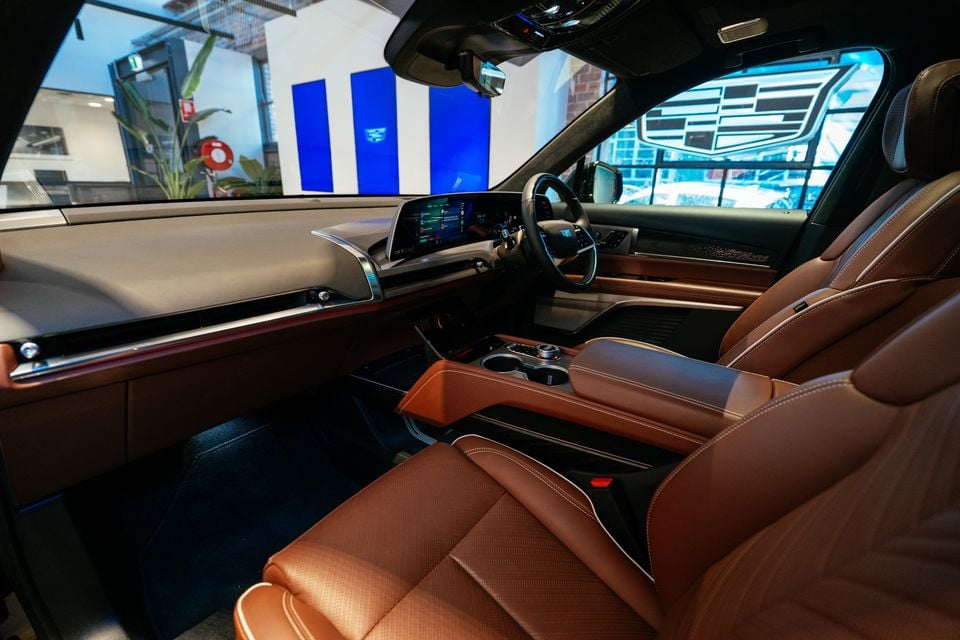
The infotainment system has an attractive interface, though we’d like to see a revised shortcut bar at the bottom with additional links and larger icons. Also, the fact you have to use the touchscreen to open the glovebox is a baffling choice by Cadillac.
There’s no head-up display in right-hand drive Vistiqs, which is frustrating, but the digital instrument cluster is superb. It allows you to display a full-screen view of the embedded maps or your mapping app of choice via smartphone mirroring.
The interior isn’t all roses, but that’s potentially because the examples we've driven were the first Vistiqs brought into the country.
In his video review, Paul Maric identified some misaligned A-pillar trim through which he could see daylight. In both of the vehicles I drove, the A-pillar trim could have been more flush, but no such daylight was visible.
The first Vistiq I drove had some loose trim on the side of the centre console which we were able to click into place; the second example unusually had some jagged carpet at the base of the dashboard.
We hope these are issues that customers won’t face. For what it’s worth, we didn’t notice any other build quality issues such as misaligned trim or rattles, even when we had the sound system blasting out loud music.
One issue GM has flagged that will be fixed in customer-delivered examples concerns the head restraints of the third-row power-folding seats, which weren’t dropping quite quickly enough to avoid striking the second-row seats.
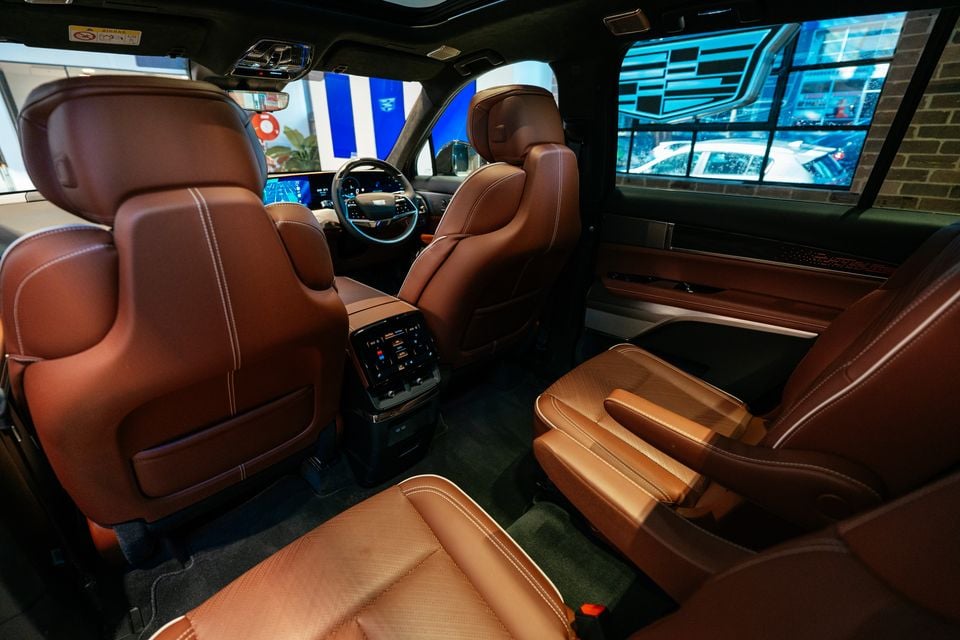
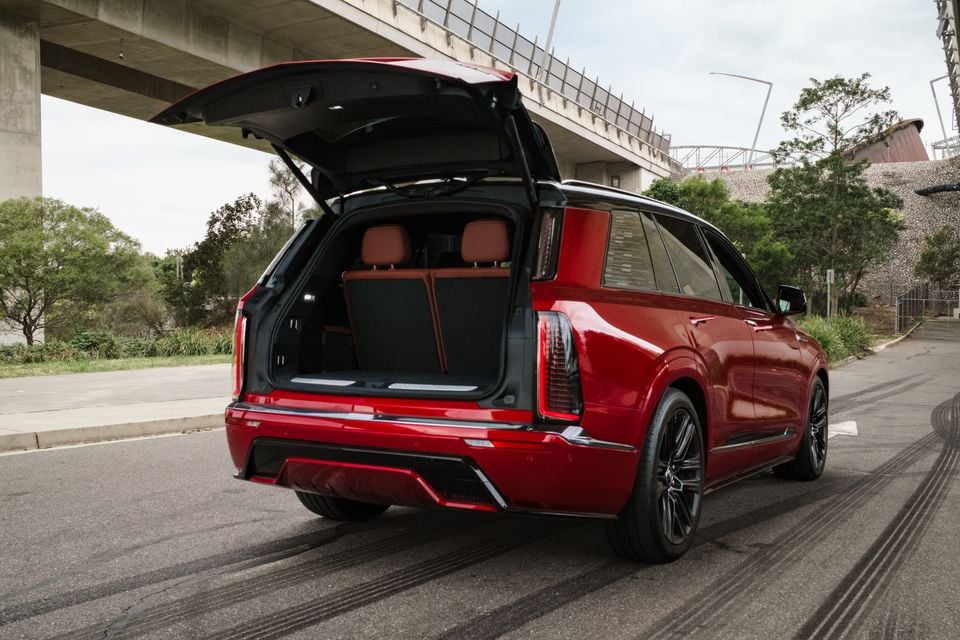
You can drop both the third- and second-row seatbacks from the boot – and also return them to their upright position – and there are also buttons at the second row allowing you to move these out of the way. But with the Vistiq offered here only with second-row captain’s chairs, it’s just as easy to simply climb between them to access the rearmost seats.
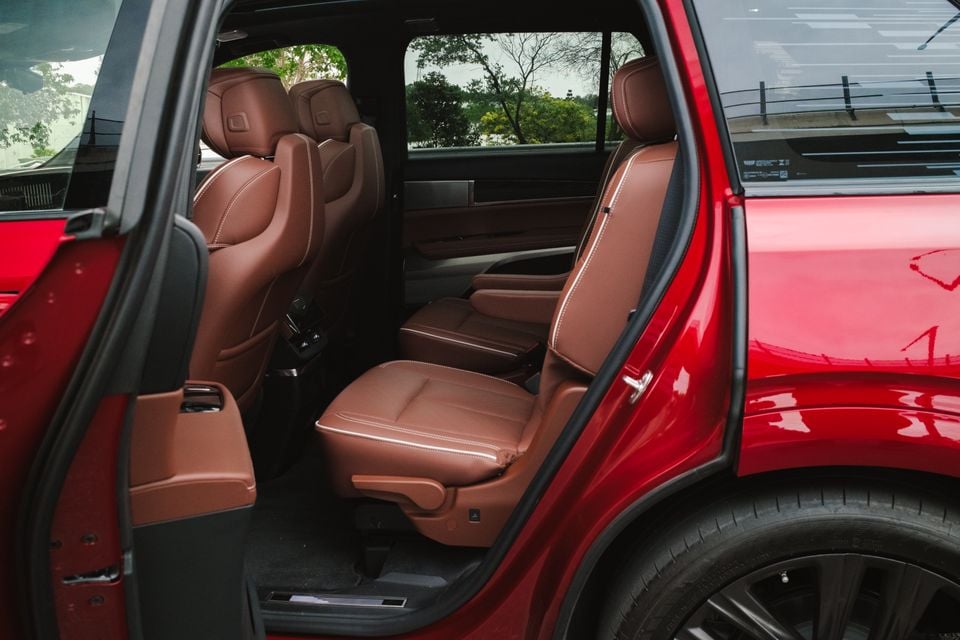
Your passengers will need to climb back there if you have kids who require child seats. There are no top-tether or ISOFIX anchor points in the third row, only in the second row.
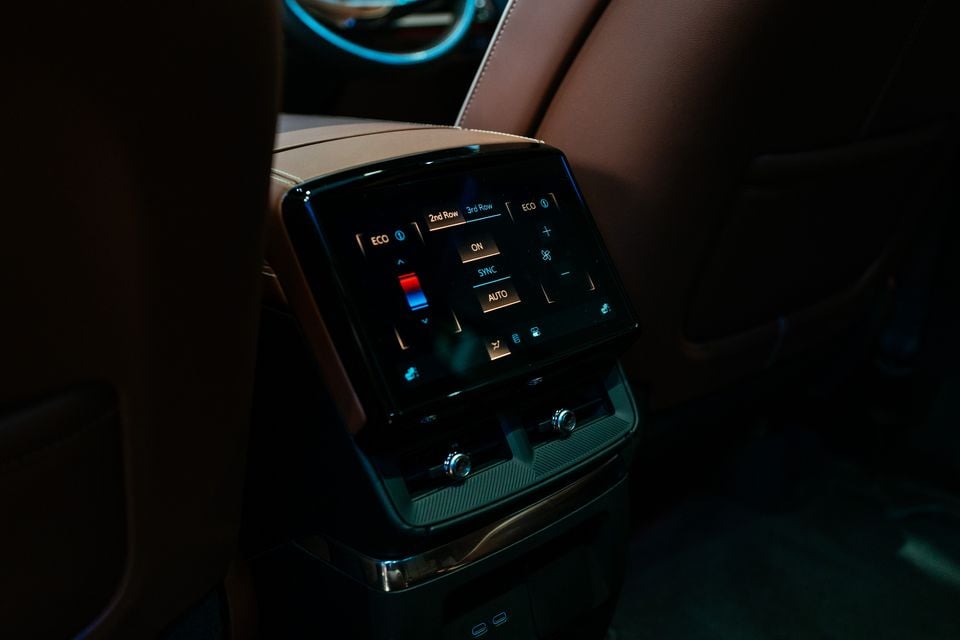
Second-row occupants have an 8.0-inch screen through which to adjust the climate control – there are four zones in the cabin – and the heated captain’s chairs. There’s also a pair of USB-C outlets.
The feeling of spaciousness in the second row is amplified by the completely flat floor. Air vents can be found on the B-pillar and at the rear of the centre console.
The higher floor in the third row means you sit in more of a knees-up position, and yet at 180cm tall I had plenty of headroom. Legroom isn’t bad, though you may want to ask the second-row occupants to slide their seats forward a bit.
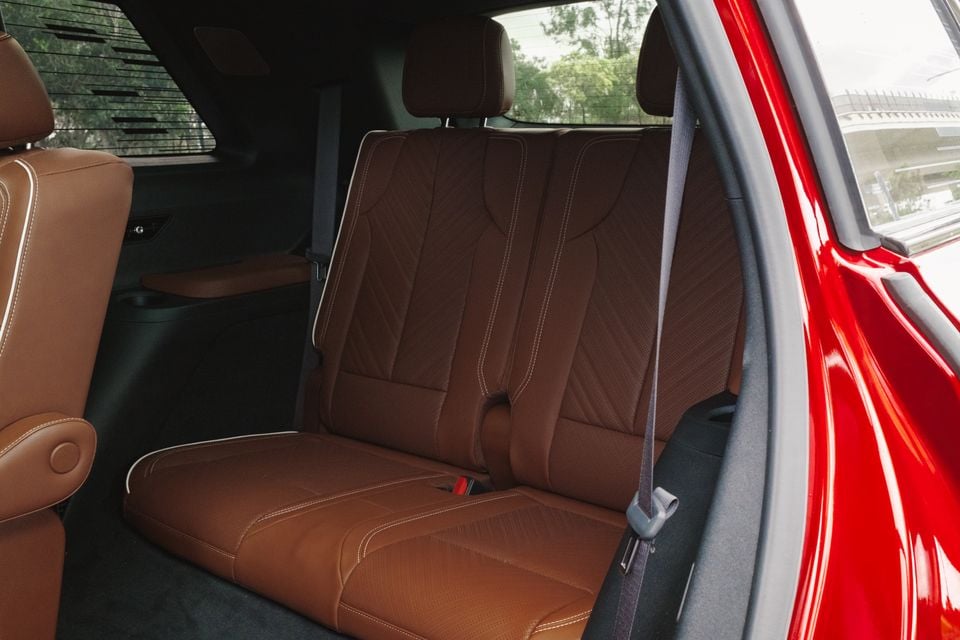
A fixed-glass sunroof sits above the third row to let in more light, and amenities include speakers, air vents, a cupholder, and a USB-C outlet on each side.
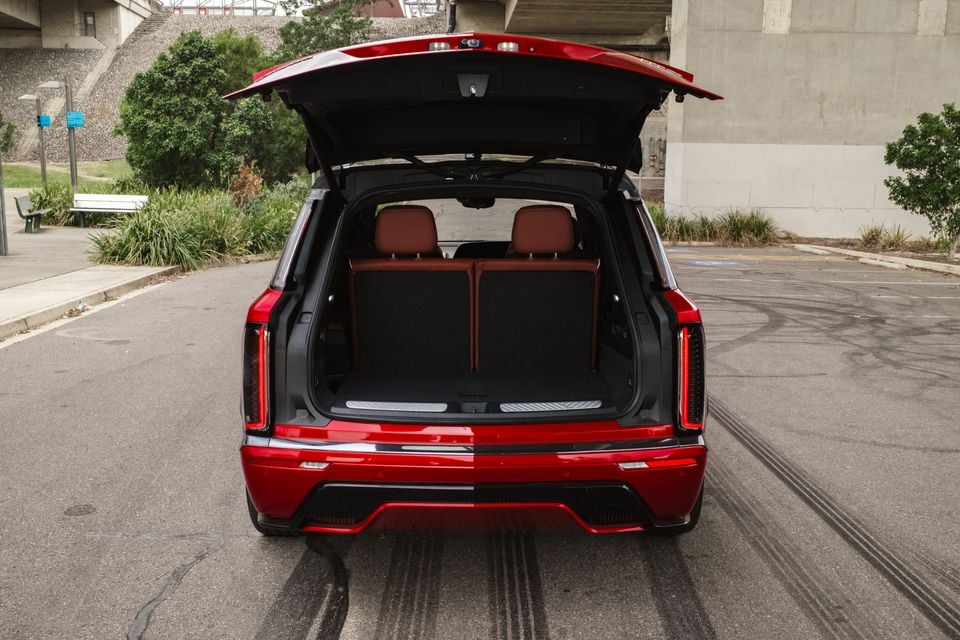
With the third-row seats in use, there’s naturally not a lot of boot space, but you’ll still be able to fit in at least a suitcase. Cadillac quotes 430 litres of load capacity, and there’s also storage below the boot floor.
Drop the third row and cargo capacity grows to 1218L, and there’s a nice flat load space. While dropping the second row doesn’t quite result in as flat a load floor, storage room increases to 2271L, albeit with a gap in the load floor between those two captain’s chairs.
While many EVs have additional cargo capacity under the bonnet, this isn’t the case in the Vistiq as all the high-voltage components fill that space.
The door handles will pop out as you approach the vehicle with your key on you, and you can set the vehicle to automatically lock as you walk away. There are also lock/unlock functions via the myCadillac app, though Paul found this to be buggy during his test.
| Dimensions | Cadillac Vistiq |
|---|---|
| Length | 5233mm |
| Width | 2026mm (2203mm incl. mirrors) |
| Height | 1799mm |
| Wheelbase | 3094mm |
| Cargo capacity | 430L – behind third row 1218L – third row folded 2271L – second and third rows folded |
To see how the Cadillac Vistiq lines up against the competition, check out our comparison tool
With a fully charged battery, a total of 502km of range is displayed in the instrument cluster. However, the official WLTP claim for the Vistiq is 461km.
If this is the car for you, we’ll compare offers from trusted dealers, handle the back and forth and manage your purchase from enquiry to delivery.
| Specifications | Cadillac Vistiq |
|---|---|
| Drivetrain | Dual electric motors |
| Battery | 91kWh nickel manganese cobalt |
| Power | 459kW |
| Torque | 880Nm (with Velocity Max mode activated) |
| Drive type | All-wheel drive |
| Tare weight | 2893kg |
| 0-100km/h (claimed) | 4.2 seconds (in Velocity Max mode) |
| Energy consumption (claimed) | 22kWh/100km |
| Energy consumption (as tested) | 19.2kWh/100km (inner-city, suburban and highway loop)22.2kWh/100km (over the course of a week) |
| Claimed range | 461km (WLTP) |
| Max AC charge rate | 22kW |
| Max DC charge rate | 130kW |
The maximum DC fast-charge rate is the lowest among the Vistiq's direct rivals, however, it beats them all with a standard 22kW AC charging rate.
While you can set a maximum charge percentage and charge times, there’s no way to schedule an off-peak charge period to take advantage of lower energy prices at night, so the vehicle will continue charging until the set time ends or it reaches the set percentage.
To see how the Cadillac Vistiq lines up against the competition, check out our comparison tool
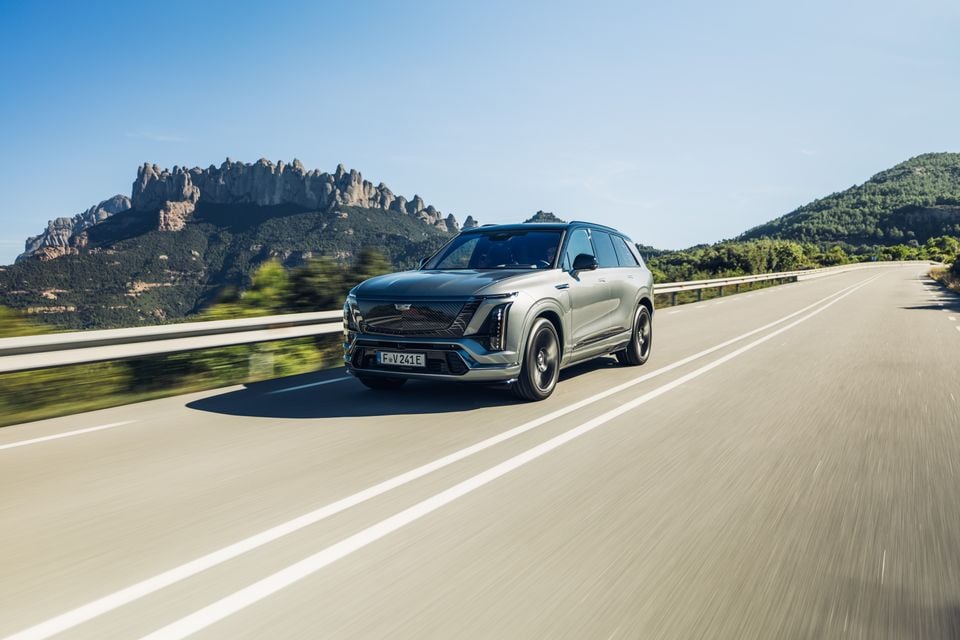
The Vistiq is a quiet, comfortable cruiser that can still be hustled through corners, striking an excellent balance for a vehicle this size.
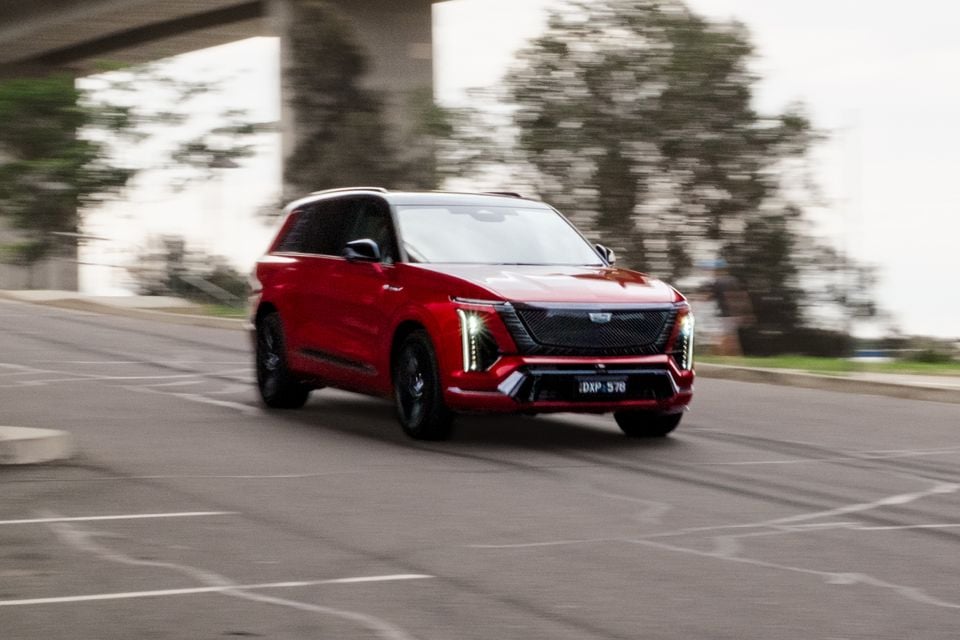
With its standard adaptive air suspension, the Vistiq glides along in the default Tour mode.
There are some road imperfections that will transmit a bit of an impact into the cabin – after all, this is a heavy SUV running on big 22-inch wheels and low-profile tyres, and we wonder how much ride comfort would improve with smaller wheels and thicker rubber.
For the most part, though, this is an extremely comfortable SUV, even when the air suspension is in its lowest Sport setting.
It also manages to offer the loping feel you’d expect of a luxury SUV with air suspension, without feeling too floaty; body control is top-notch, regardless of drive mode.
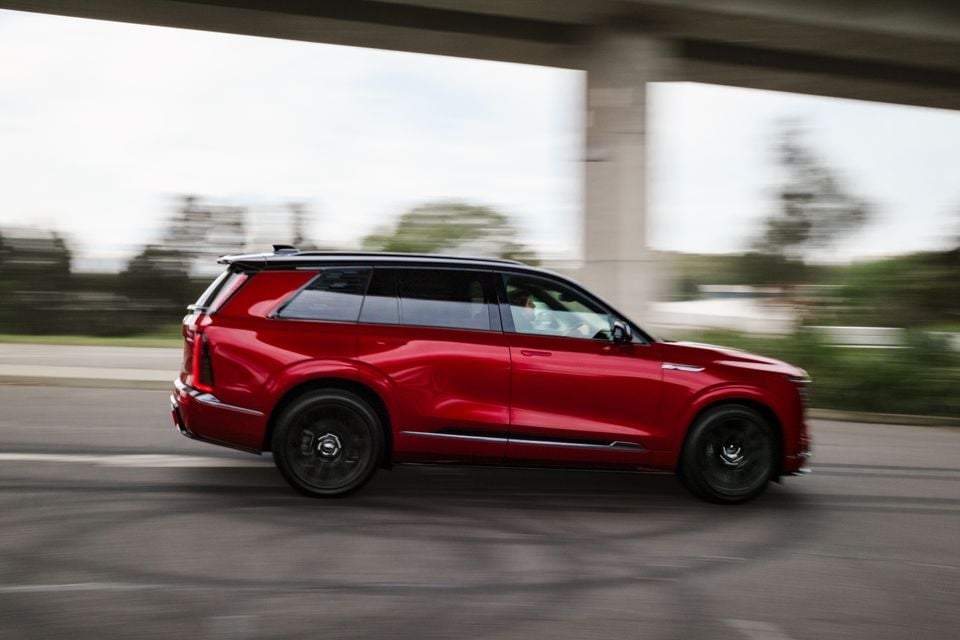
There are dedicated Snow/Ice and Sport modes, plus My Mode. The latter allows you to choose between Tour and Sport settings for steering, suspension and brake feel; Tour, Sport and Stealth electric motor sounds; and Relaxed, Tour and Sport settings for acceleration feel.
The Sport suspension setting also lowers the vehicle, so when taking the Vistiq for a drive through the mountains I configured My Mode to have the sportiest option for everything – except for acceleration feel, so as not to increase energy consumption.
Even in Sport mode the soundtrack is inoffensive and unobtrusive, and doesn’t detract from a truly whisper-quiet cabin. The Vistiq features active noise cancellation, and it works – the cabin is positively serene, with just a bit of tyre roar creeping in on coarse-chip surfaces.
The steering feels more fluid in Tour mode, with Sport mode adding heft but making the tiller feel a bit slower in the process. Nevertheless, we don’t find the steering bad at all, and the fitment of rear-axle steering definitely aids manoeuvrability.
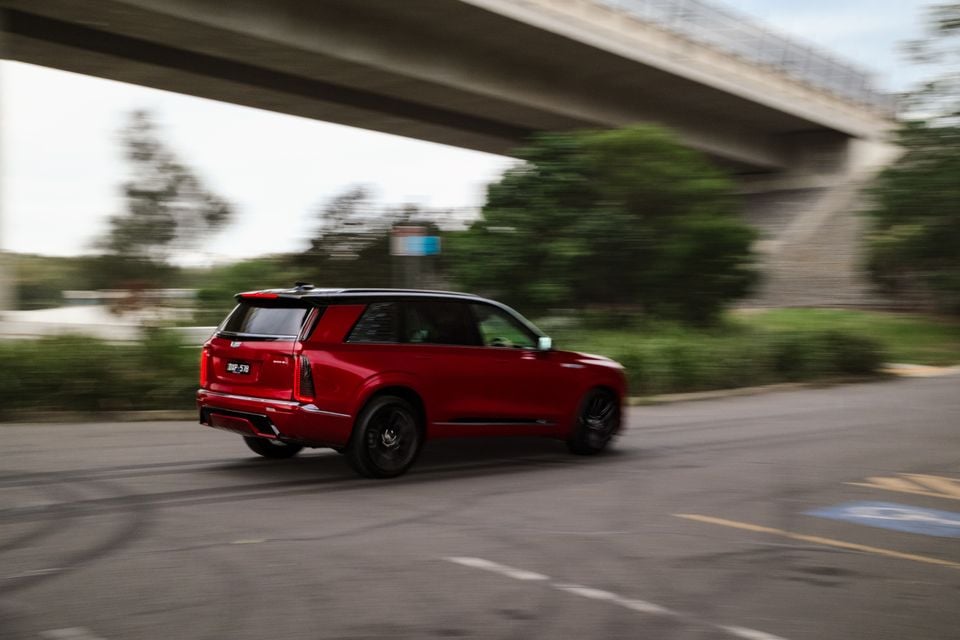
At higher speeds, the rear wheels turn in the same direction as the fronts to increase stability, while at low speeds they pivot up to 3.5 degrees in the opposite direction of the fronts to shrink the turning circle.
The result is a 5.2m-long SUV that’s surprisingly easy to park – its 11.7m turning circle matches the much smaller Mercedes-Benz EQB – and that’s before you even try the Enhanced Automatic Parking Assist.
To use this feature, you’ll have to dive into the touchscreen; likewise, drive mode selection is done through the touchscreen, and there’s no handy physical button in the cabin or an anchored shortcut button on the touchscreen like there is for the one-pedal drive mode.
Likewise, if you want to manually toggle the camera view you have to go to the main screen of the Vistiq.
Another gripe we have with the Vistiq is how much glare the dashboard trim ahead of the driver reflects on the windscreen. Perhaps GM could fix this, and while it’s at it, it could install a head-up display in right-hand drive vehicles.
For a model with a claimed 0-100km/h time of 4.2 seconds, the Vistiq doesn’t feel ultra-rapid. As with the Lyriq, it appears engineers focused on reducing ‘jerk’ to instead give this EV a more relaxed, linear acceleration feel.
You can still be rocked back in your seat, however, by pressing the red ‘V’ button on the steering wheel to activate Velocity Max mode, which is how you can experience that 4.2-second blast.
The one-pedal drive mode works well, and Cadillac has fitted its Regen on Demand system which allows you to squeeze a paddle on the left-hand side of the steering wheel to harness regenerative braking and bring the vehicle to a stop.
You wouldn’t use this in an emergency stopping situation but, while it seems gimmicky at first, you’d be surprised how often you’ll end up using it.
There’s no start button in the Vistiq. Instead you put your foot on the brake and then put it in gear.
The active safety and driver-assist features are a bit of a mixed bag. The lane-keep assist is unobtrusive and the lane-centring generally worked well, except for one night when it repeatedly alerted me I wasn’t paying attention to the road ahead (I was). If we’re nitpicking, the movements of the steering wheel could be a bit more fluid, but we’d stop short of calling it jerky.
The driver attention monitoring on its own is generally accurate, though on a couple of occasions it threw up a false alert for me.
The Vistiq, in GM fashion, will vibrate the driver’s seat if it detects trouble, quietly massaging your buttocks instead of sounding a chime to alarm everyone in the cabin. This seems to really rub some people up the wrong way (pun intended), but I think it’s an effective alert system. You’re warned of danger and you get a massage in the process – win-win!
The digital rear-view mirror is handy when you’ve got a full complement of passengers on board, and the quality of the surround-view camera system is exceptional.
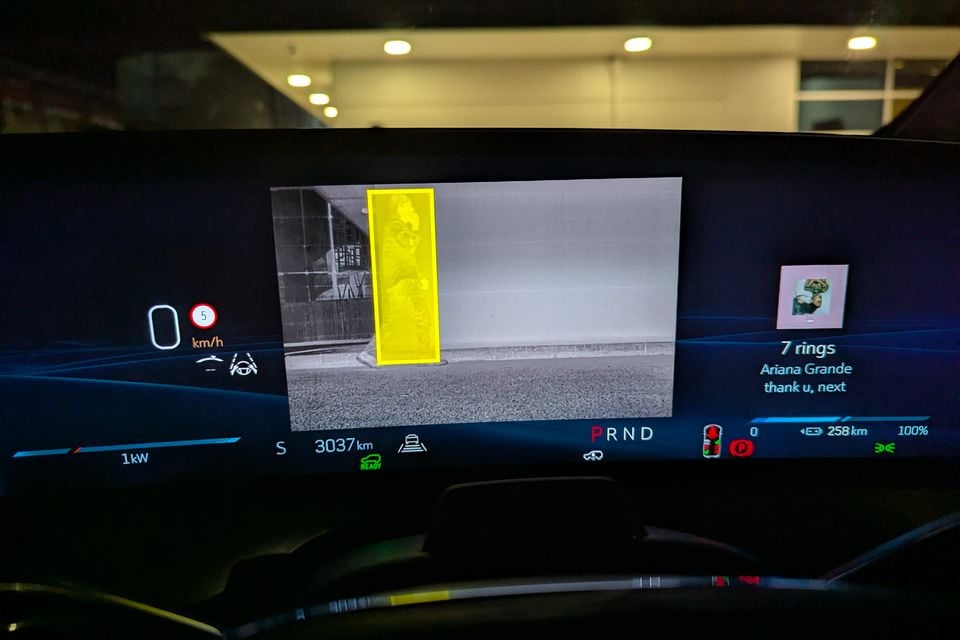
Cadillac has also fitted Night Vision, which is displayed in the instrument cluster. This uses thermal imaging to detect heat signatures, for example pedestrians or animals crossing the street. Cadillac was actually the first auto brand to fit Night Vision to a production vehicle, all the way back in 2000 with the DeVille, and it has offered the tech on and off ever since.
The lights are controlled via the auxiliary touchscreen, and there’s an adaptive high-beam system plus curve lighting.
You can shine or dip your brights using the column stalk to the left, which also integrates the wiper controls in a relatively straightforward way. On the other side of the steering wheel is a column-mounted gear shifter – I don’t like these on BYDs or Mercedes-Benzes and I don’t like it here, and it doesn’t have the smoothest operation. You get used to it, however.
To see how the Cadillac Vistiq lines up against the competition, check out our comparison tool
While there's a wide range of Vistiq trim levels in the model's home market, Cadillac is offering just one here: the flagship Platinum.
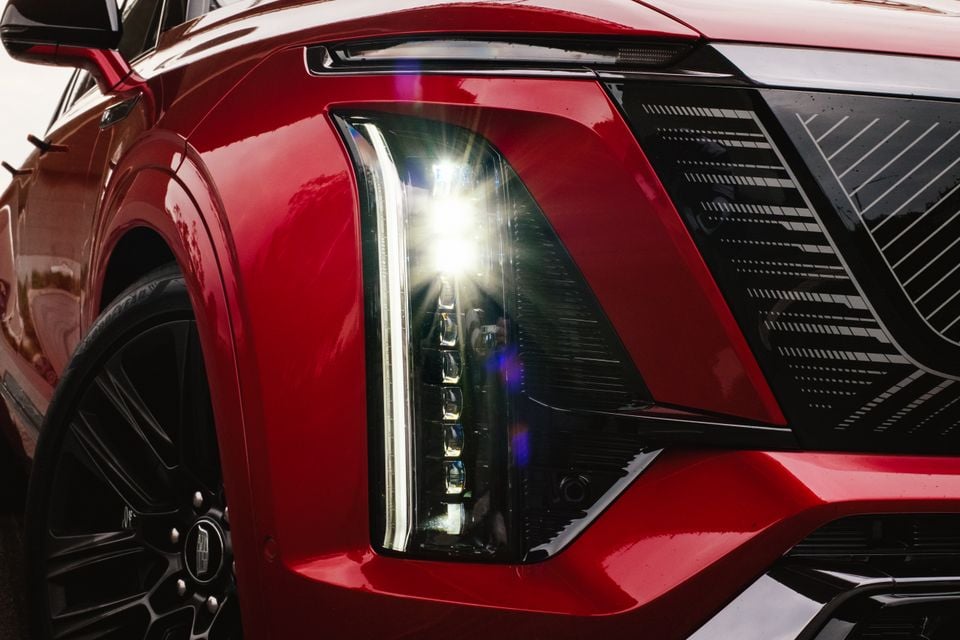
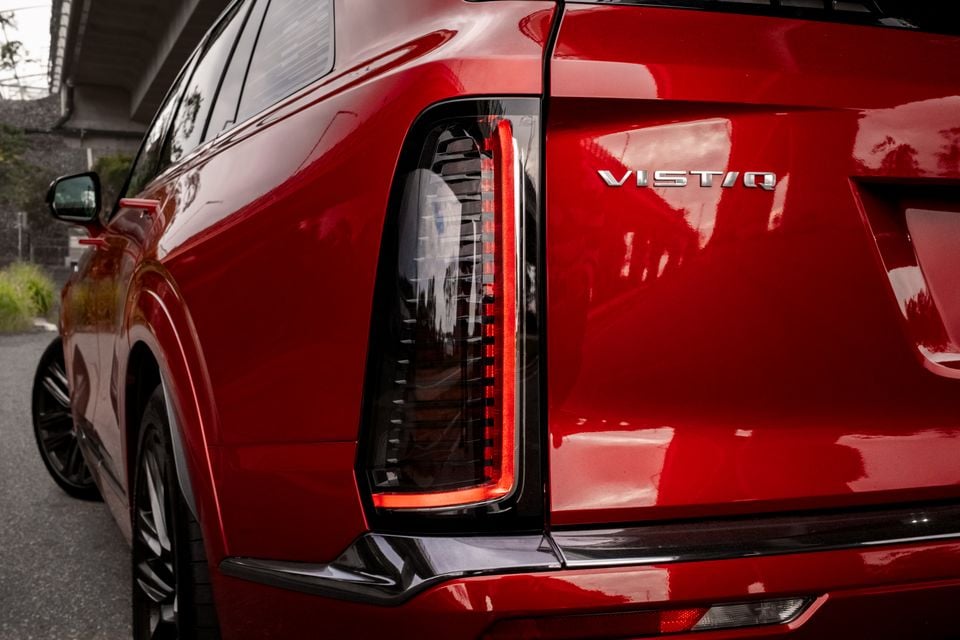
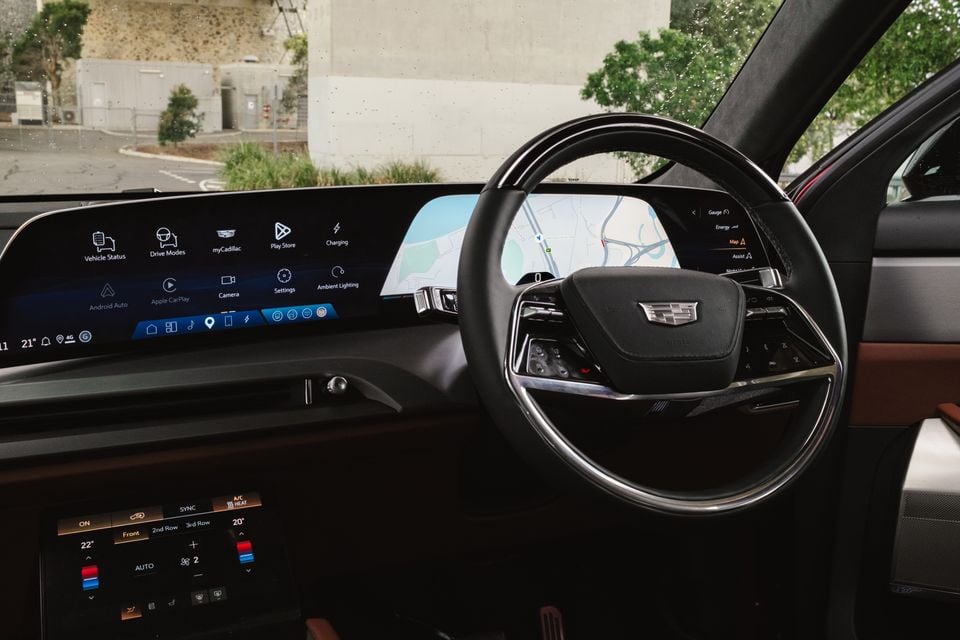
2026 Cadillac Vistiq Platinum equipment highlights:
The Cadillac Vistiq has yet to be assessed by ANCAP or Euro NCAP.
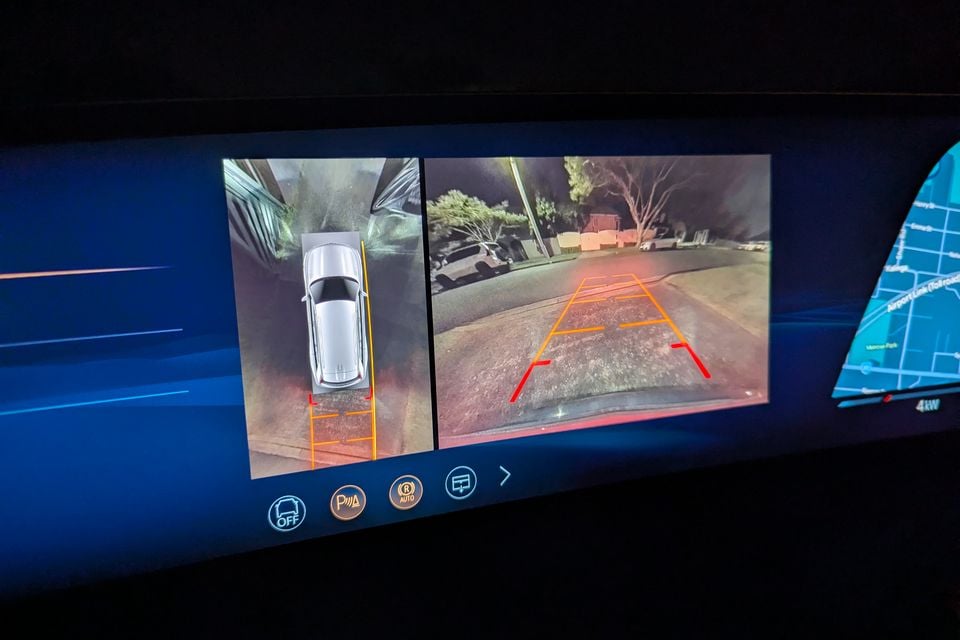
Standard safety equipment includes:
Cadillac Australia has yet to announce service pricing for the Vistiq, though it says it'll release this information "in the coming months" as it expands its dealer network. Nor has it confirmed whether the Vistiq will follow the Lyriq in coming with five years of complimentary scheduled servicing.
Service intervals are on the short side, at 12 months or 12,000km, whichever comes first.
| Servicing and Warranty | Cadillac Vistiq |
|---|---|
| Warranty | Five years, unlimited kilometres |
| Roadside assistance | Five years |
| Service intervals | 12 months/12,000km |
| Capped-price servicing | TBC |
To see how the Cadillac Vistiq lines up against the competition, check out our comparison tool
The Cadillac Vistiq isn’t perfect. The DC charge rate is disappointing, as is the lack of a head-up display. Its claimed range also falls short of its rivals, and we did notice some slight build quality issues in these early Australian-spec examples.
And yet, this big electric SUV has an unmistakable exterior, and a gorgeous interior that’s comfortable and spacious. It rides serenely, its performance is brisk, and it doesn’t feel like a bus to drive.
The best part is how competitively Cadillac has priced the Vistiq. Perhaps that’s an acknowledgement the brand has an uphill battle to fight here, given sales of large electric SUVs remain slow for now and its retail network is still small.
No, it doesn’t fall under the crucial threshold for Fringe Benefits Tax exemptions like the Optiq and Lyriq, but it’s priced more sharply against its set of rivals than those two models are – particularly the Optiq.
We think the design is what will really drive customers to check out the Vistiq. For those who want the presence of a full-size American SUV, the Vistiq should surely appeal – and it costs tens of thousands less than the GMC Yukon.
No, it doesn’t have a big V8 like the Yukon, or like the Escalade that GM won’t bring Down Under. But if you love the style and the luxury the Vistiq offers, you’d do well to consider making the switch to an EV.
For those of us who have been waiting for Cadillac to come to Australia, the Vistiq is the most promising model yet. We’ll just have to see if the wider populace is ready to embrace this full-size electric luxury SUV.
Interested in buying a Cadillac Vistiq? Let CarExpert find you the best deal here
Click the images for the full gallery. Additional photography by Eliot Tsai.
If this is the car for you, we’ll compare offers from trusted dealers, handle the back and forth and manage your purchase from enquiry to delivery.
Quickly see how this car stacks up against its competition. Select any benchmark to see more details.
2026
$124,282
William Stopford is an automotive journalist with a passion for mainstream cars, automotive history and overseas auto markets.
Add CarExpert as a Preferred Source on Google so your search results prioritise writing by actual experts, not AI.
Damion Smy
3 Days Ago
William Stopford
3 Days Ago

Alborz Fallah
7 Days Ago
Damion Smy
7 Days Ago
Damion Smy
8 Days Ago
William Stopford
9 Days Ago
Add CarExpert as a Preferred Source on Google so your search results prioritise writing by actual experts, not AI.
# Based on VFACTS and EVC data
† Displayed prices are based on the drive-away price of the vehicle, which includes delivery charges, registration fees, number plates, and applicable road taxes, based on a Sydney location. However, prices may vary between states and territories, and additional costs such as compulsory third party (CTP) insurance, dealer delivery fees, and optional extras are not included. These prices are subject to change without notice and may not reflect current market pricing or dealer offers.
 Automotive Vehicle Spec Data & 4K images Powered by JATO Dynamics Ltd