





Damion Smy
Toyota Australia targeting record sales finish in 2026
Despite lower sales so far in 2026, Australia's market leader expects fresh stock of its most popular models to help it post a record fourth quarter.
2 Hours Ago
The Shark 6 Performance takes BYD’s popular plug-in hybrid ute and adds more, as well as removing some features. But does it live up to its new name?
If this is the car for you, we’ll compare offers from trusted dealers, handle the back and forth and manage your purchase from enquiry to delivery.
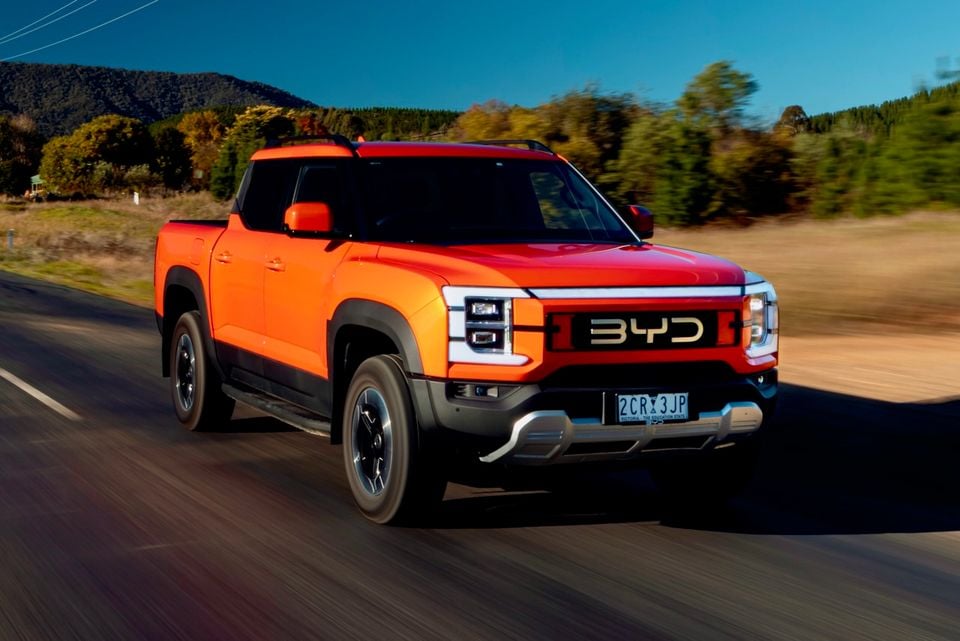
The new 2026 BYD Shark 6 Performance directly answers two of the main criticisms levelled at the original Shark 6 Premium: towing capacity and off-road capability.
The BYD Shark 6 was widely praised when it was launched here in late 2024 as the first plug-in hybrid ute to come to the Australian market – combining an electric driving range of up to 100km with the practicality of a dual-cab body.
And while critics loved the cabin, its on-road manners, and the way it consumed petrol like it was sipping a piping-hot cup of tea, the Shark didn’t match the segment-standard 3500kg braked towing capacity, and proved it wasn’t particularly strong off-road.
The other thing is the 1.5-litre petrol engine in the Shark 6 Premium looks a bit small on paper, compared to other dual-cab utes on the market.
Now, the BYD Shark 6 Performance swaps out the 1.5-litre engine for a bigger 2.0-litre engine, with outputs boosted as a result.
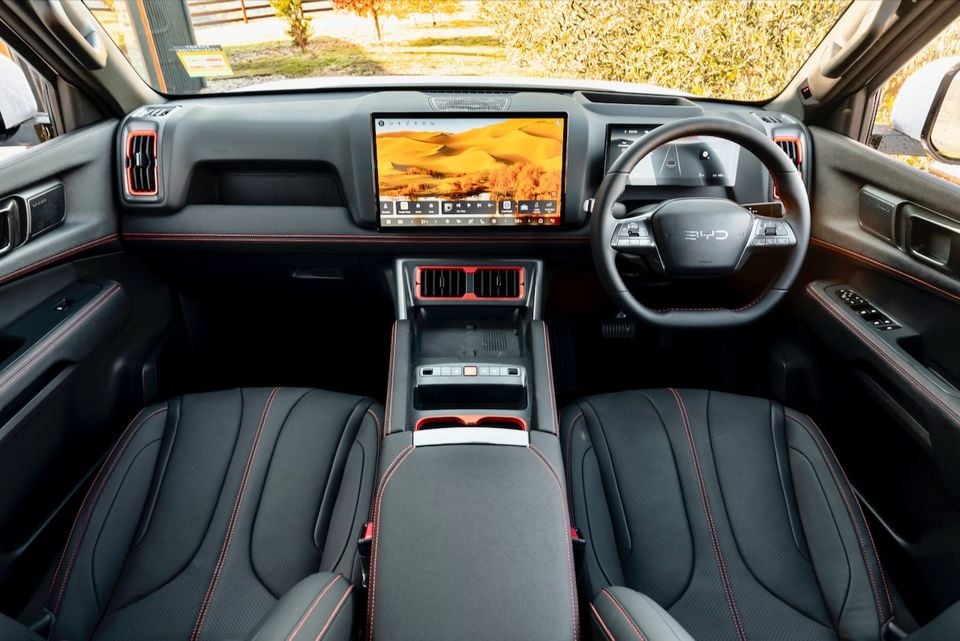
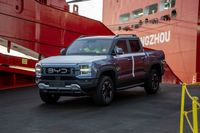
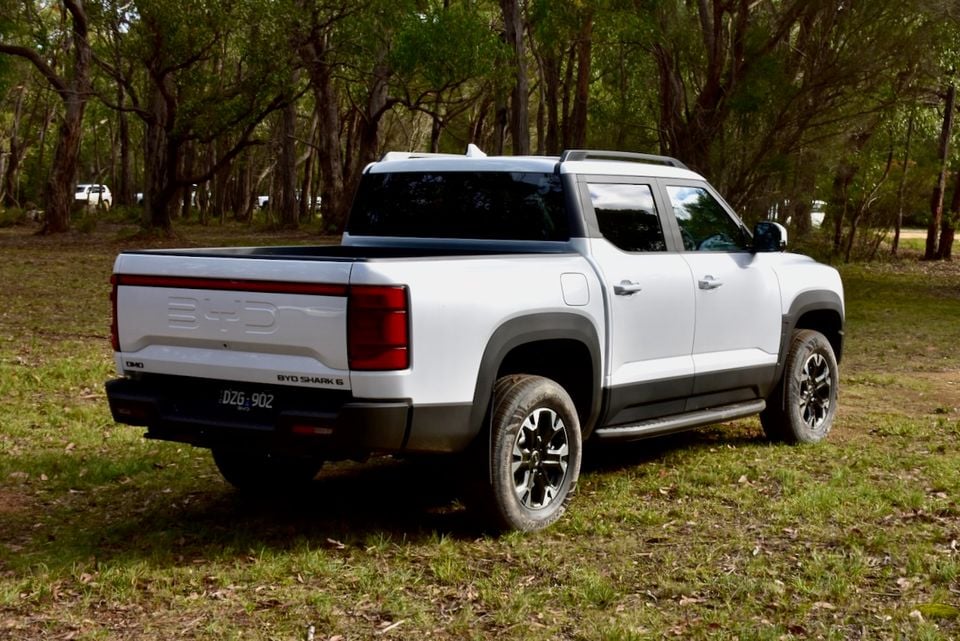
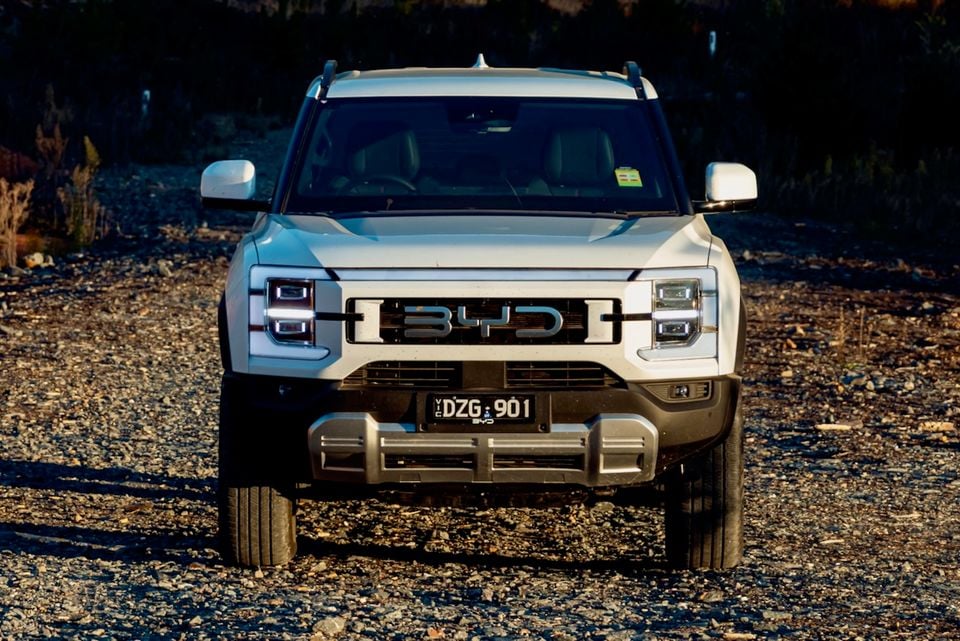
The exterior looks identical to the Premium's, with some changes to the interior. And while we may end up getting a Performance badge, it’s under the skin where the real upgrades have occurred.
Towing capacity is also up from 2500kg to 3500kg, thanks to upgraded brakes and suspension, as well as the stronger powertrain.
In response to criticisms from the four-wheel drive fraternity, BYD has also introduced Crawl Mode, which helps with low-speed off-road traction and throttle control.
So, is the new Performance worth the extra spend? Let’s jump in the deep end and meet the more powerful new Shark.
The Shark 6 Performance costs $5000 more than the established Premium, and $7000 more than the new Dynamic cab-chassis – without the cost of a tray.
| Model | Price before on-road costs |
|---|---|
| 2026 BYD Shark 6 Dynamic Cab Chassis | $55,900 |
| 2026 BYD Shark 6 Premium | $57,900 |
| 2026 BYD Shark 6 Performance | $62,900 |
Given BYD has actually simplified parts of the cabin, it seems the extra money is going towards the new engine and brakes.
While the BYD Shark 6 remains a relative bargain within the dual-cab ute segment, the jump to the Performance is harder to justify, and should be reserved for buyers who will actually benefit from the changes.
For the same kind of money as the Performance, you can get the Ford Ranger Hybrid (PHEV) and the GWM Cannon Alpha Ultra PHEV. Otherwise, if you don't need the capability of a plug-in hybrid, there's always the Mitsubishi Triton GSR, Kia Tasman X-Pro, Mazda BT-50 XTR, and the Toyota HiLux SR5 for similar money.
To see how the BYD Shark 6 stacks up against its rivals, use our comparison tool
The BYD Shark 6 Performance continues with the excellent fit and finish of the Premium, but with a few subtle changes.
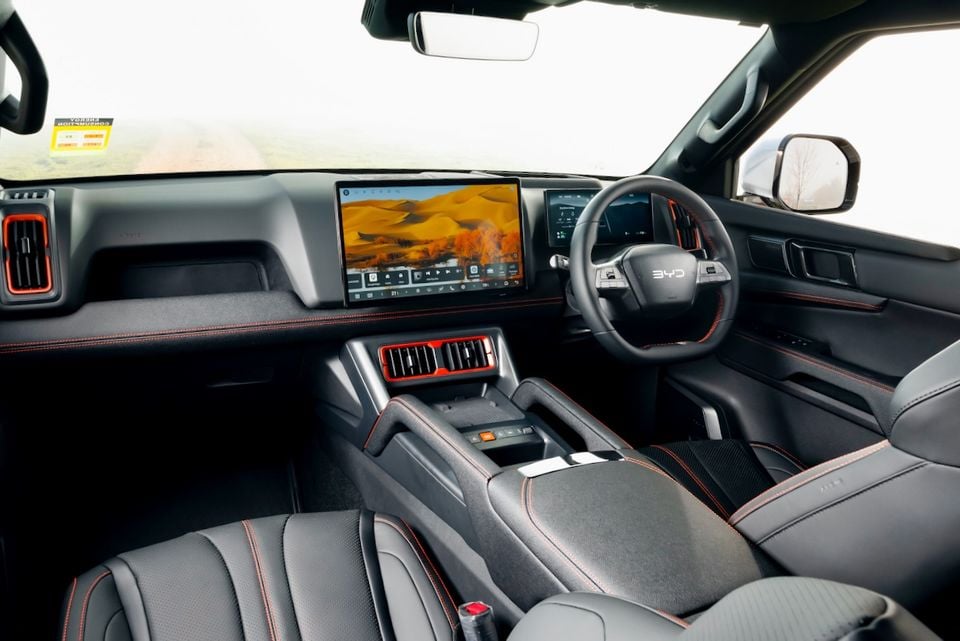
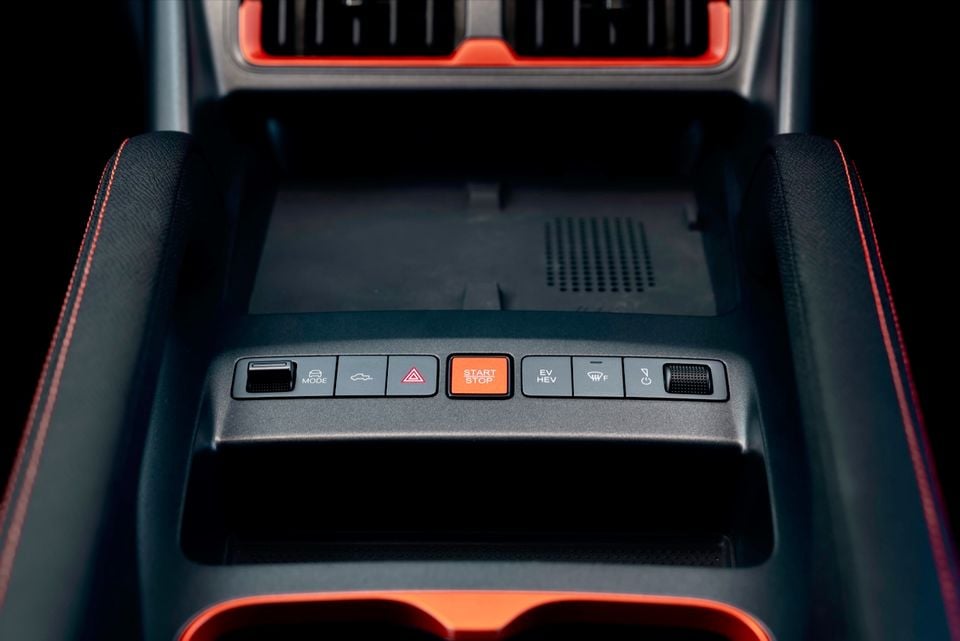
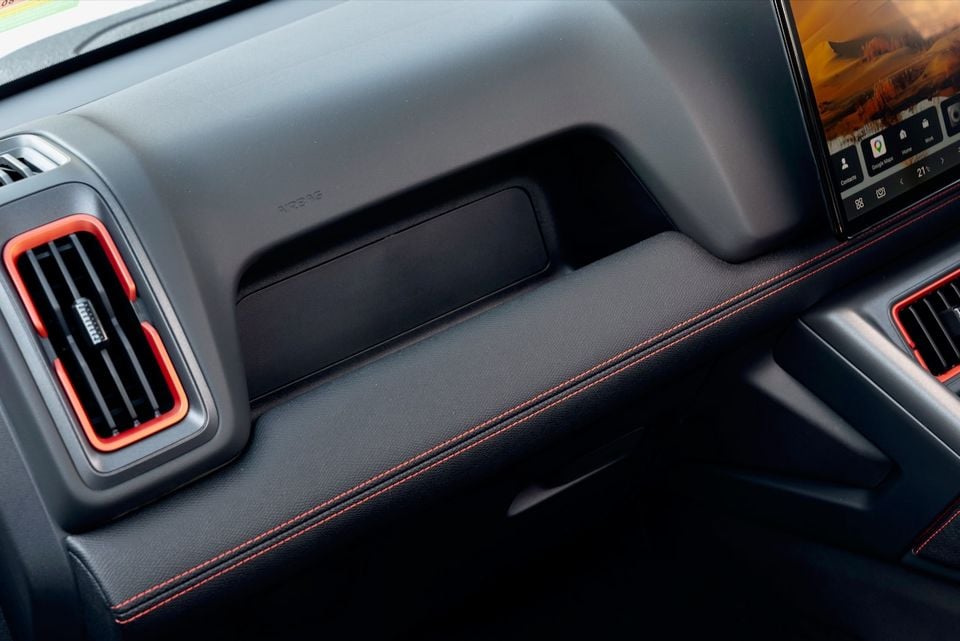
First off, the aircraft-style pusher switches in the centre console have been banished, replaced by more traditional, cleaner buttons.
While the buttons themselves are really high quality, the toggle switches were a really cool feature of the Shark 6. The change definitely makes the cabin a little more generic – and potentially more appealing to a wider, more conservative buying audience – but it’s a bit of a shame to see the old ones go.
Next is the steering wheel. The almost-four-spoke style is now strictly a two-spoke design, with the leather wrap replaced by a lower-quality pleather, which doesn’t feel anywhere near as nice in the hands.
The nubbins that made the tiller look a bit like a four-spoker have disappeared, with the driving mode selector now relocated to a thumb switch down on the centre console, next to the new buttons.
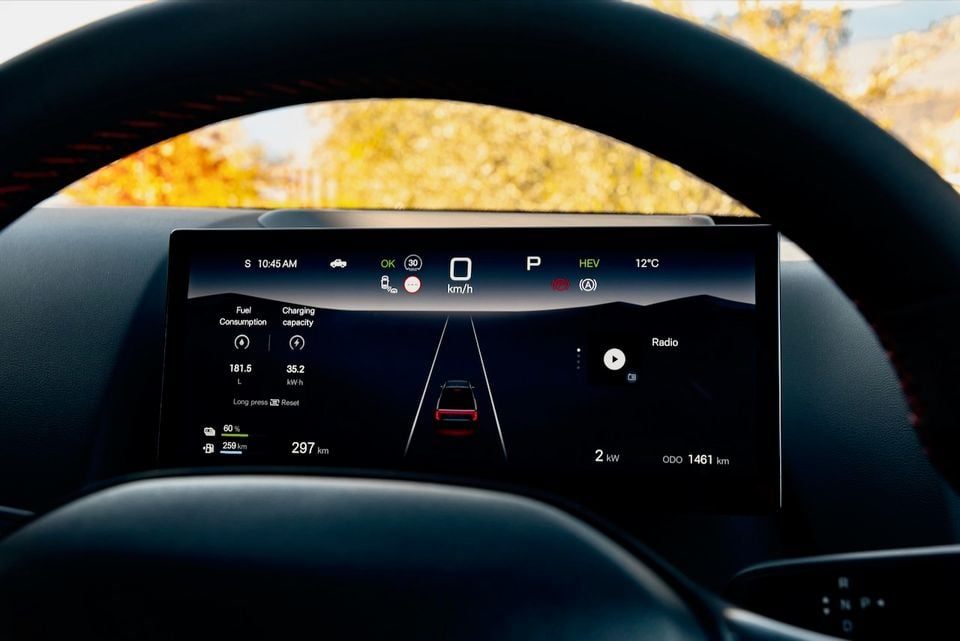
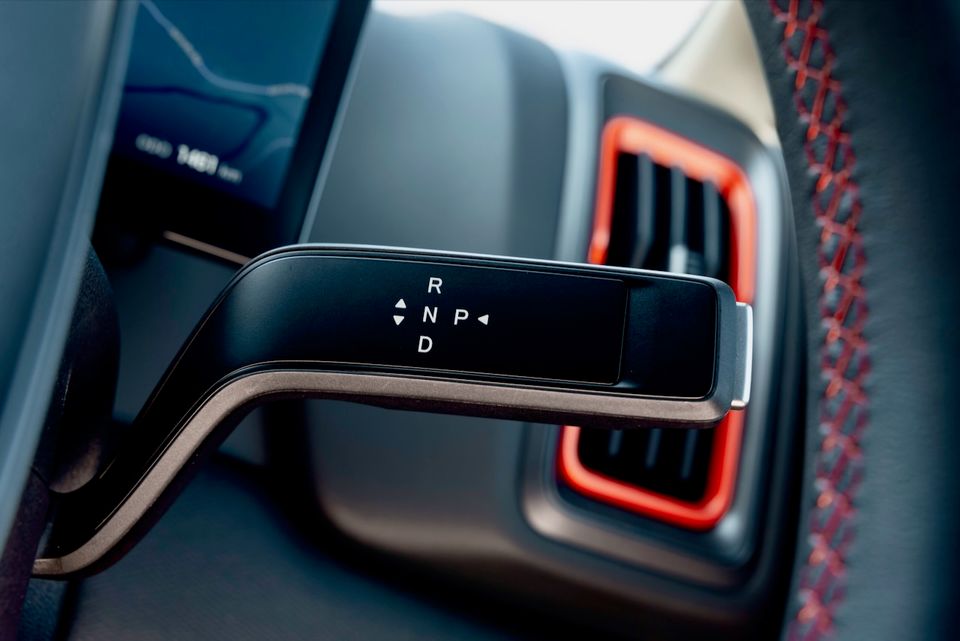
Unfortunately, the most disappointing change has been the removal of the Ranger-style T-bar PRND selector in the centre console. What was the indicator stalk is now the drive selector, with the indicator moved to the left side of the steering column and combining duties with wiper functions.
Being the latest dumb industry trend, I’ve flagged this as an issue with several other makes and models, and in a recent op-ed.
Those in the fortunate position to be able to purchase a vehicle worth more than $60,000 probably have a few years of driving experience under their belts, and are almost guaranteed to instinctively put the car into neutral when trying to indicate they're turning left while stopped.
The problem was exacerbated on this particular launch, given we were swapping between the Performance and the new Shark 6 Dynamic cab-chassis, the latter of which still has the right-hand indicator stalk in place.
Considering the automaker is actively chasing sales to fleet – in which employees may be driving a different pool car each day – it seems like a lack of foresight on BYD’s part. I will continue to call out this silliness until it stops. But if I suddenly disappear in mysterious circumstances, you’ll know why.
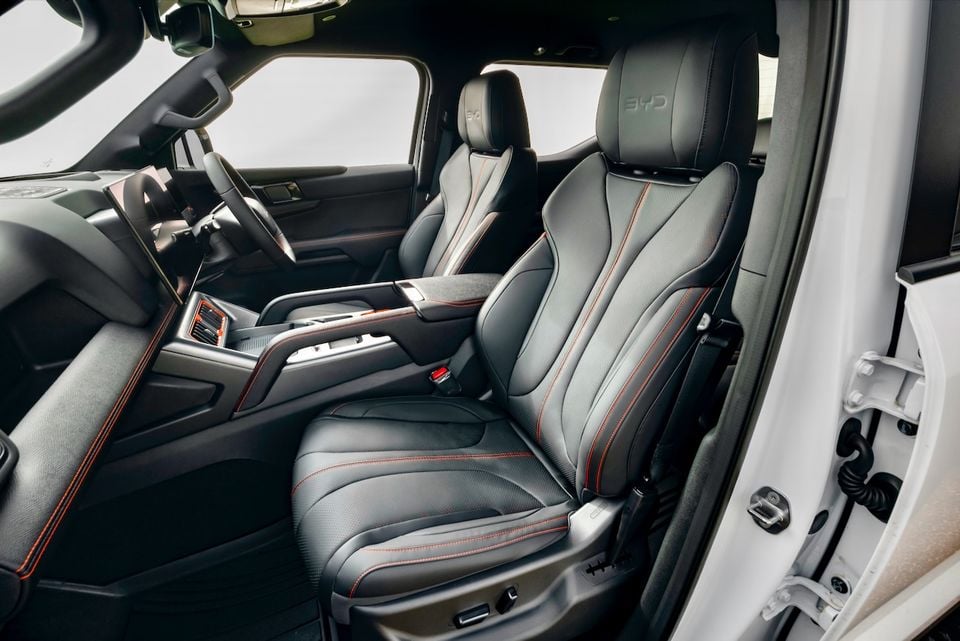
Other than those things, it’s all pretty typical Shark 6 inside. Besides one test vehicle that had a very minor squeak from the centre console – something I couldn’t replicate in other examples – the interior is exceptionally well built, using hardy and attractive materials.
Honestly, the build quality feels like it’s not far off the likes of the Ford Ranger. She’s a solid unit.
There’s a good amount of adjustment in the comfortable (powered) seats, and it’s the same story with the (manual) steering wheel – allowing the driver to find their ideal seating position quickly and easily. We spent a couple of hours on country backroads, and it was comfortable and relaxing.
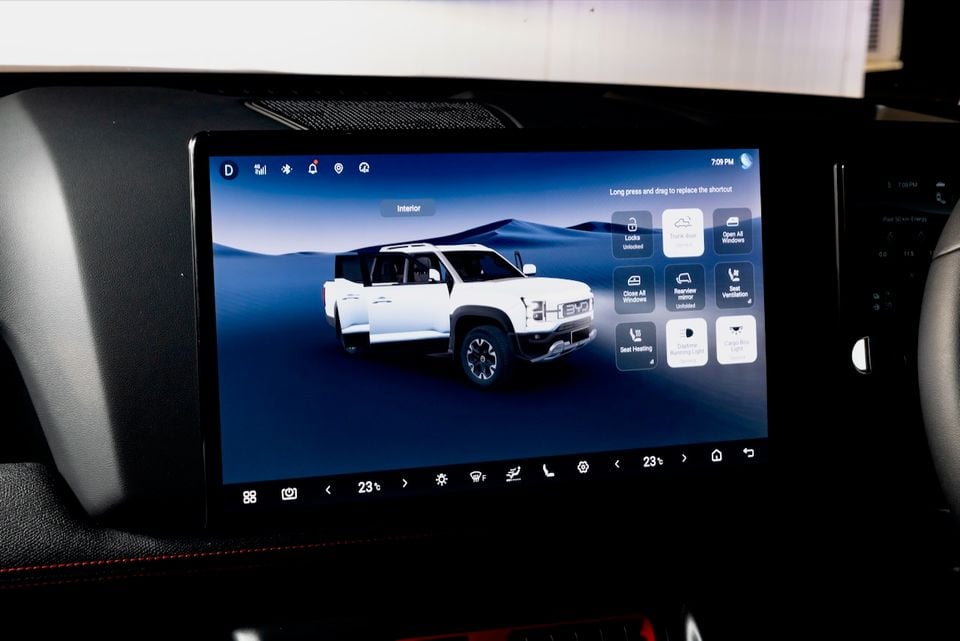
The large 15.6-inch infotainment screen does a lot of heavy lifting in the cabin, controlling most of the settings, which are typically buried in several layers of menus. There’s a decent processor behind the scenes, ensuring quick reactions and fast loading, coupled with a good user interface – though we’d prefer a few more traditional buttons for critical things like headlights.
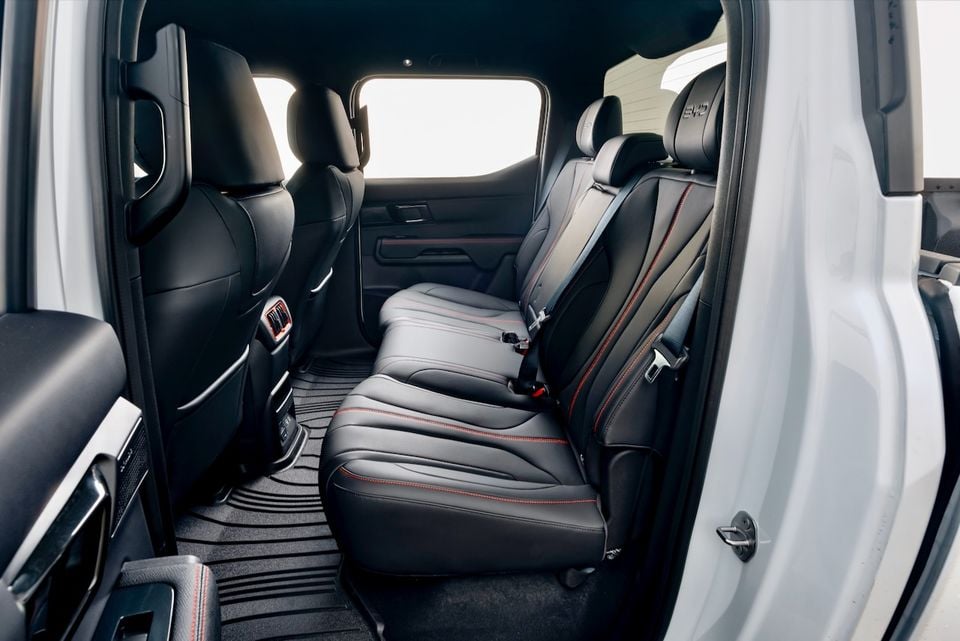
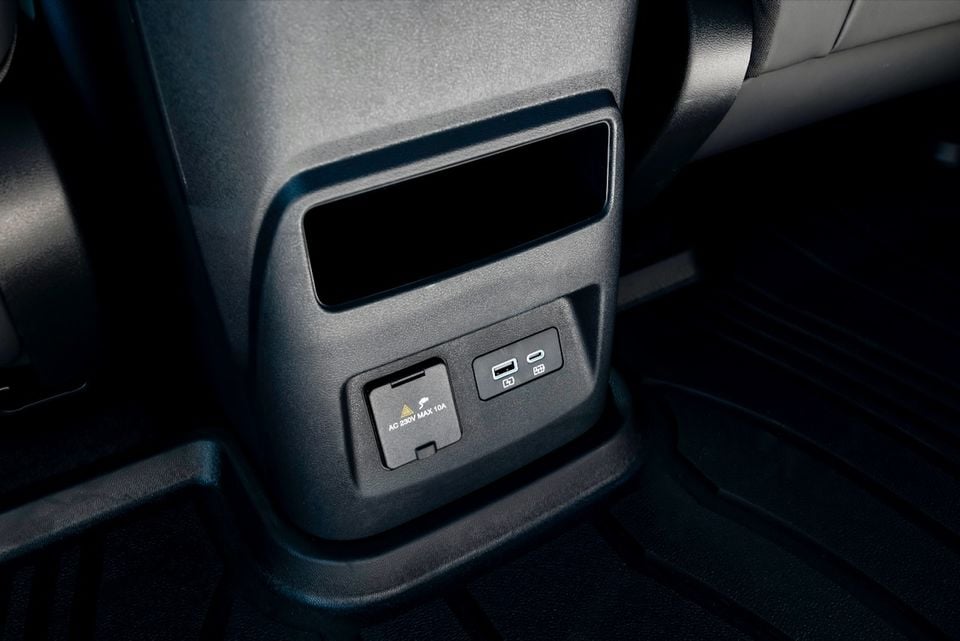
Second-row passengers are well catered for. There’s plenty of legroom for those up to about 183cm tall (or six feet in the old money), with a comfortable rake for the backrest, touch-operated map lights, and a fold-down centre armrest with cupholders.
While it's not a deal-breaker by any means, the lip at the bottom of the B-pillar meant my foot kept getting caught when trying to get out. Still, I'd be happy to spend a few hours back there.
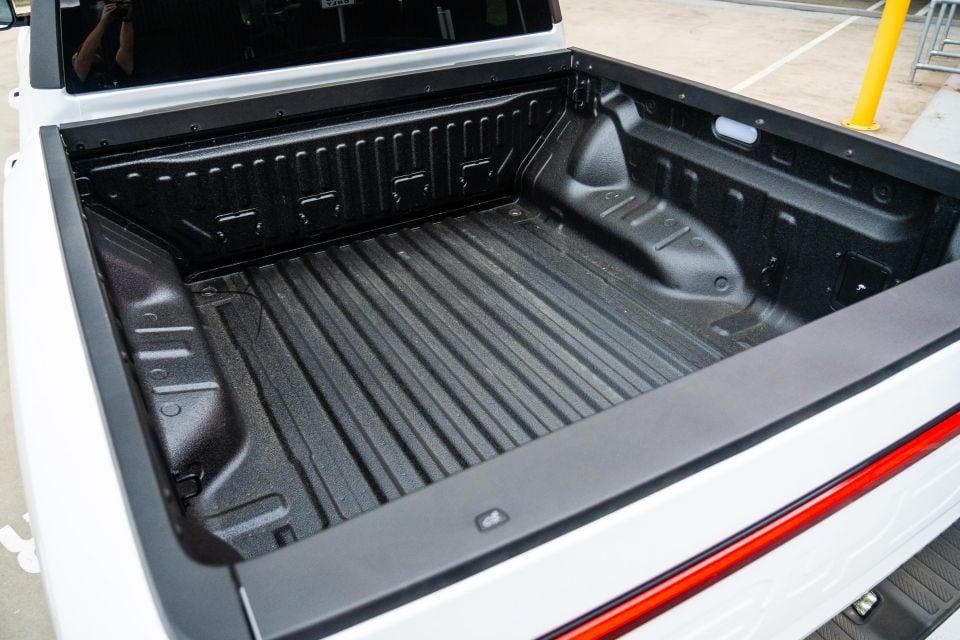
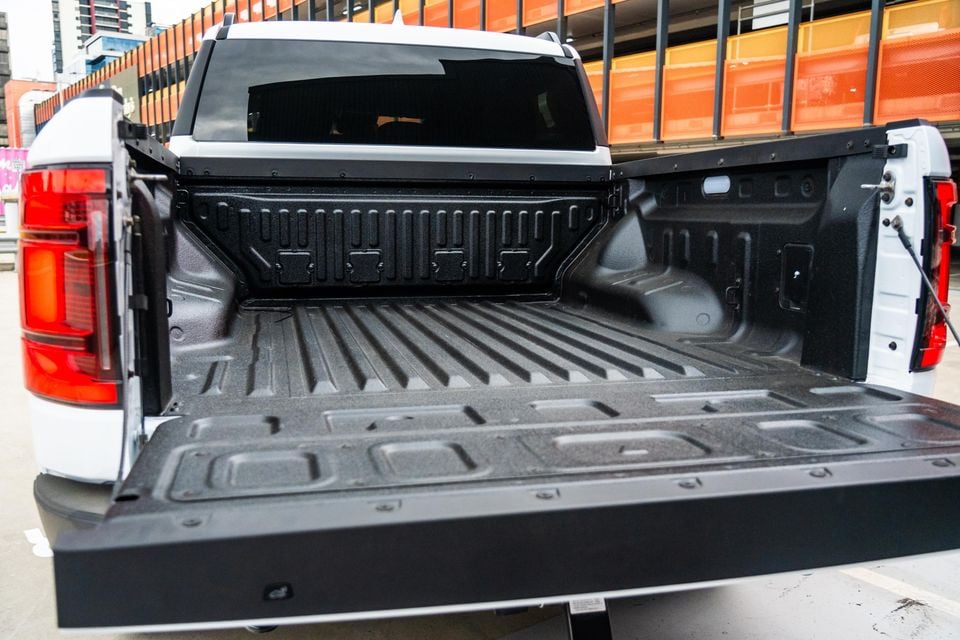
There’s also a good amount of space in the tub, with a capacity of 1200 litres, and the ability to accept Aussie and Euro pallets.
| Dimensions | Shark 6 Dynamic Cab Chassis | Shark 6 Premium | Shark 6 Performance |
|---|---|---|---|
| Length | 5413mm | 5457mm | 5457mm |
| Width | 1971mm | 1971mm | 1971mm |
| Height | 1925mm | 1925mm | 1925mm |
| Wheelbase | 3260mm | 3260mm | 3260mm |
| Tub volume | N/A | 1200L | 1200L |
| Tub length | N/A | 1520mm | 1520mm |
| Tub width | N/A | 1500mm | 1500mm |
| Tub depth | N/A | 517mm | 517mm |
To see how the BYD Shark 6 stacks up against its rivals, use our comparison tool
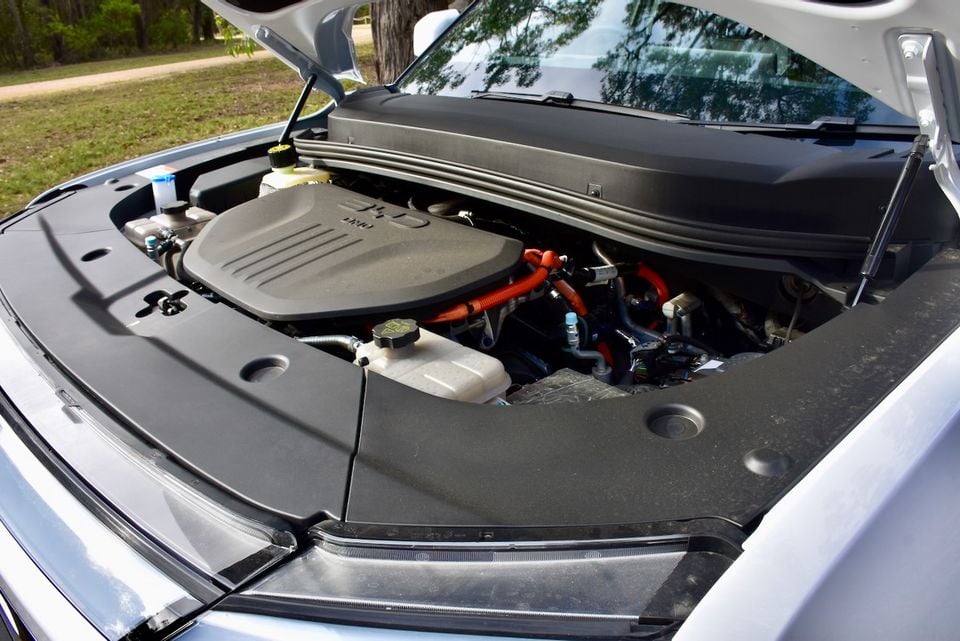
The change from the 1.5-litre engine to the 2.0-litre unit doesn’t really make a lot of sense in the real world.
| Specifications | Shark 6 Dynamic Cab Chassis | Shark 6 Premium | Shark 6 Performance |
|---|---|---|---|
| Engine | 1.5L 4cyl turbo-petrol | 1.5L 4cyl turbo-petrol | 2.0L 4cyl turbo-petrol |
| Engine outputs | 135kW + 260Nm | 135kW + 260Nm | 180kW + 380Nm |
| Electric motor outputs | 170kW + 310Nm (front) 150kW + 340Nm (rear) | 170kW + 310Nm (front) 150kW + 340Nm (rear) | 200kW + 360Nm (front) 150kW + 340Nm (rear) |
| System outputs | 321kW + 650Nm | 321kW + 650Nm | 350kW + 700Nm |
| Battery | 29.6kWh lithium iron phosphate | 29.6kWh lithium iron phosphate | 29.6kWh lithium iron phosphate |
| Transmission | Single-speed, reduction gear | Single-speed, reduction gear | Single-speed, reduction gear |
| Drive type | e-AWD | e-AWD | e-AWD |
| Weight | 2600kg | 2710kg | 2775kg |
| 0-100km/h (claimed) | 5.7 seconds | 5.7 seconds | 5.5 seconds |
| Fuel economy (claimed) | 2.0L/100km – 25-100 per cent charge 7.9L/100km – under 25 per cent charge | 2.0L/100km – 25-100 per cent charge 7.9L/100km – under 25 per cent charge | 1.3L/100km – 25-100 per cent charge 10.5L/100km – under 25 per cent charge |
| Electric driving range (PHEV) | 100km (NEDC) | 100km (NEDC) | 80km (WLTP) |
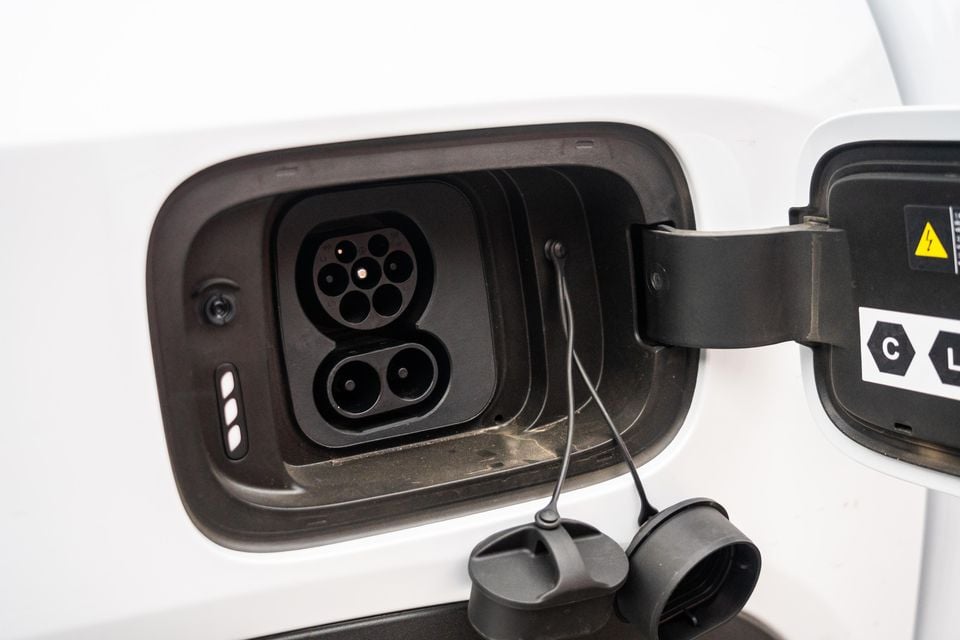
| Max AC charge rate (PHEV) | 7kW | 7kW | 7kW |
| Max DC charge rate (PHEV) | 55kW | 55kW | 55kW |
| Fuel tank capacity | 60L | 60L | 60L |
| CO2 emissions | 46g/km (NEDC) | 46g/km (NEDC) | 23g/km (WLTP) |
| Braked towing capacity | 2500kg | 2500kg | 3500kg |
It's not nothing, but there isn’t exactly a big jump between the Premium’s 321kW and 650Nm outputs and the Performance’s 350kW and 700Nm, and just a 0.2-second reduction in the ute’s claimed 0-100km/h time.
But there are two things here that you can’t judge on pure numbers alone.
Firstly, the psychological effect on buyers. Even though the engine is essentially just a generator to supply power to the battery and electric motors – only driving the front wheels at highway speeds – 1.5 litres just sounds a little too small for a dual-cab ute.
Explaining to your uncle at Christmas lunch why the 1.5-litre engine isn’t a problem was always an uphill battle.
The idea of a 2.0-litre engine just feels right, like it’s more suitable for the car, as well as within social circles. No longer is there a feeling of inadequacy when entering the Bunnings car park.
The second thing is the way it drives, and we’ll get to that shortly.
Despite having the same battery as the Premium, the electric driving range for the Shark 6 Performance is quoted at 80km – 20 per cent less than before – thanks to the company now testing the vehicle using WLTP standards, rather than the more lax NEDC protocols.
Under WLTP, BYD lists a combined driving range of 640km for the Performance, which is quite a bit lower than the Premium’s claimed 800km under NEDC. Tailpipe CO2 emissions are just 23g/km.
BYD quotes fuel consumption of 1.3L/100km, provided you have more than 25 per cent charge in your battery. If that drops below 25 per cent, the figure jumps to 10.5L/100km.
To see how the BYD Shark 6 stacks up against its rivals, use our comparison tool
There is a noticeable difference between the 1.5- and 2.0-litre powertrains – but it’s not actually the performance, per se.
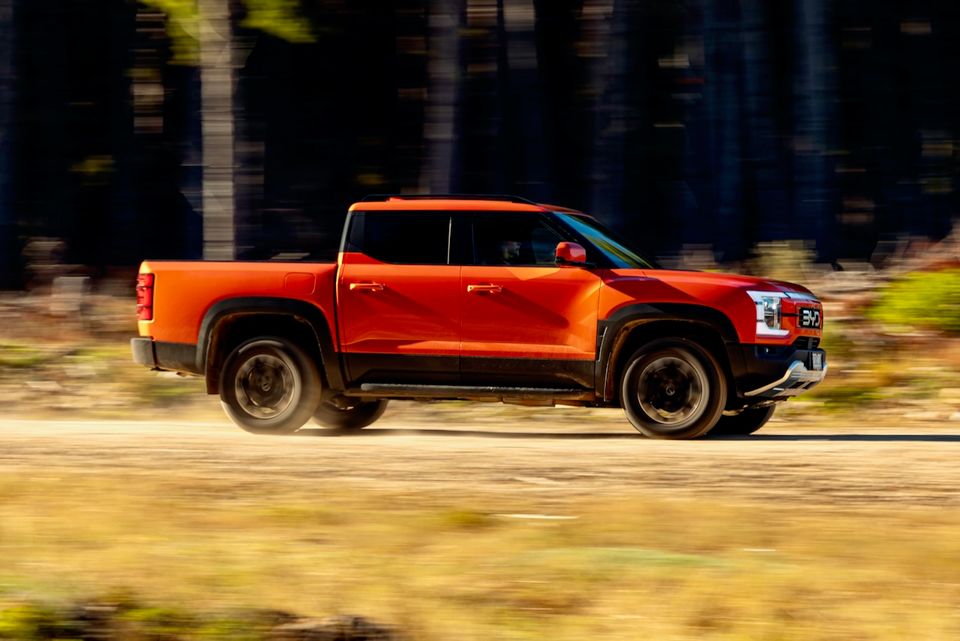
The larger engine is actually better to drive because it isn’t as whiny. The smaller engine sounds like someone has stuffed a Yaris under the bonnet and left a brick on the throttle.
But put your foot down in the Performance and the 2.0-litre hums along quietly, seemingly less stressed than the unit it replaces.
Whereas the previous 1.5 would produce a loud ‘waah’ whenever you leaned on it, the new one just has a more composed, mature energy to it. There's a bit more muscle on the bones, so it’s not trying as hard to do the same job as before. Throttle hang remains, but it's not quite as invasive as before.
The battery and electric motors in the Performance are almost the same as in the Premium, so it’s not like you’re gaining an additional e-motor. There’s just a greater amount of energy being produced by the petrol engine, with the front electric motor increasing from 170kW/310Nm outputs to 200kW/360Nm.
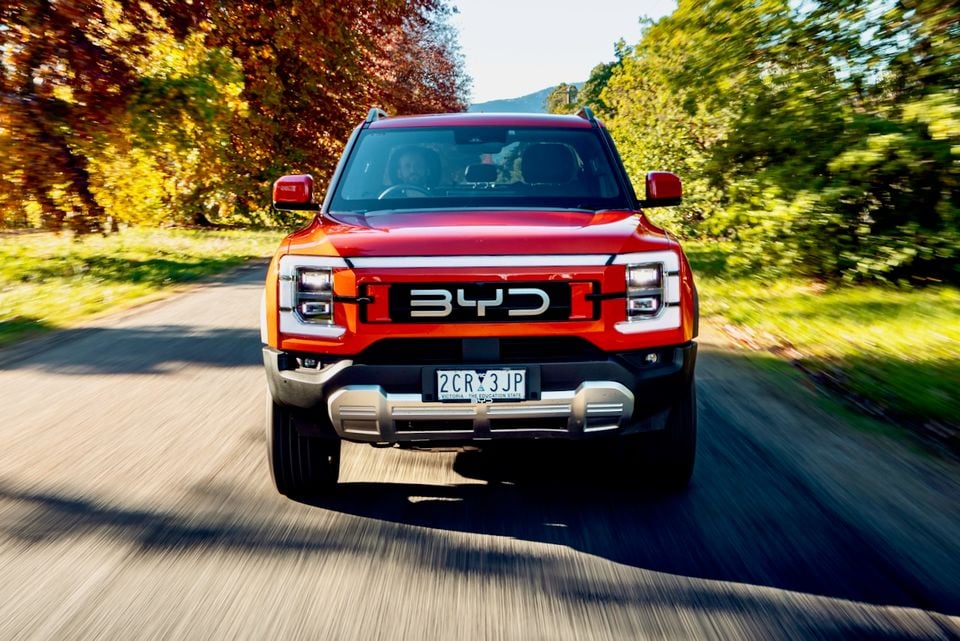
Straight-line speed is rapid. With the Performance, the Shark 6’s claimed 0-100km/h sprint time has dropped to 5.5 seconds, shaving 0.2 from the Premium.
Given its weight, that ain’t nothing, but it’s also roughly the same amount of time it takes to blink quickly, twice.
It doesn’t really feel like a rocketship, though. As with most vehicles propelled using electric motors, it seems like there’s a certain amount of mapping in terms of how much of that advertised power and torque is actually fed to the tyres at any given time. Using 100 per cent of the throttle does not necessarily mean access to 100 per cent of the horsepower. This isn’t a proven fact, though – just what I ascertained from my posterior-dyno.
Having said that, there’s no denying the powertrain is strong, and the Shark 6 Performance is now quicker than a Ford Ranger Raptor to 100km/h.
If this is the car for you, we’ll compare offers from trusted dealers, handle the back and forth and manage your purchase from enquiry to delivery.
The BYD is also a really nice size. It’s got a good level of road presence, yet it avoids being prohibitively large and difficult to park, as can be the case with the full-size American pickups.
The Advanced Driver Assistance Systems weren't overbearing or overly annoying, providing a good balance on country roads and around town.
I also liked the way the suspension was set up on the road. It’s a little on the firm side, but was never uncomfortable or jarring. Enough to know when your Shark hits a bump or pothole, but not enough that your chiropractor will.
The benefit is the BYD corners relatively flat for what is a relatively heavy ute. Of course, it doesn’t feel like a ballet dancer, but I also didn’t realise the thing was around 2.7 tonnes (!) on the road until I looked it up. Stiffening up the vehicle's response to lateral load helps hide that mass, so it’s not wallowing around corners and falling over on itself.
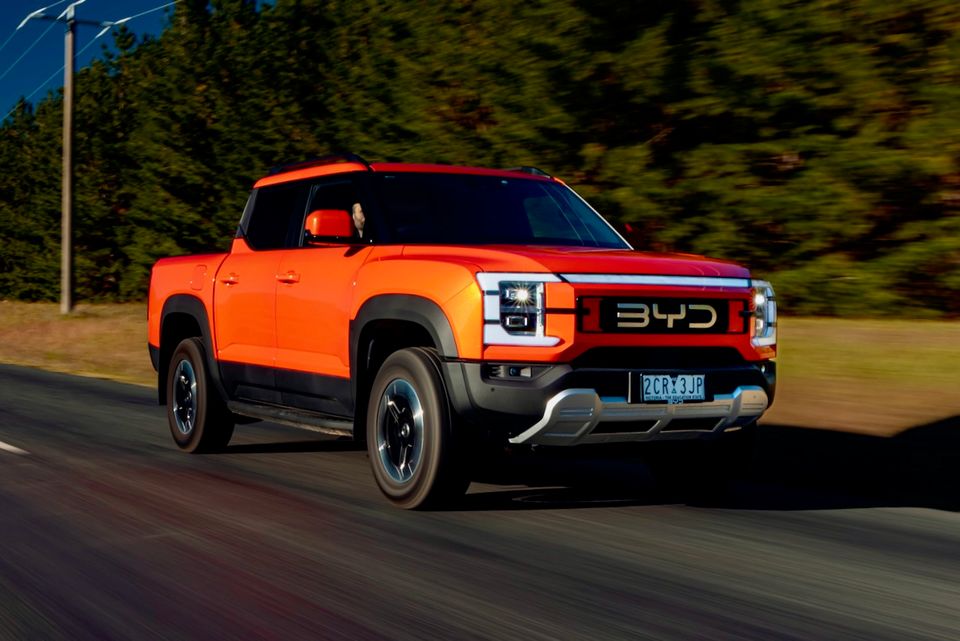
In terms of hiding its heft, I certainly preferred what BYD’s chassis engineers have done compared to most automakers, which tend to just make the steering and pedals super-light.
Like the Premium, BYD has fitted a set of Continentals, rather than the Giti rubber on the Dynamic. Not only is there more grip than the Gitis, but there’s also more consistent traction as the steering is applied, with greater reporting to the driver through corners.
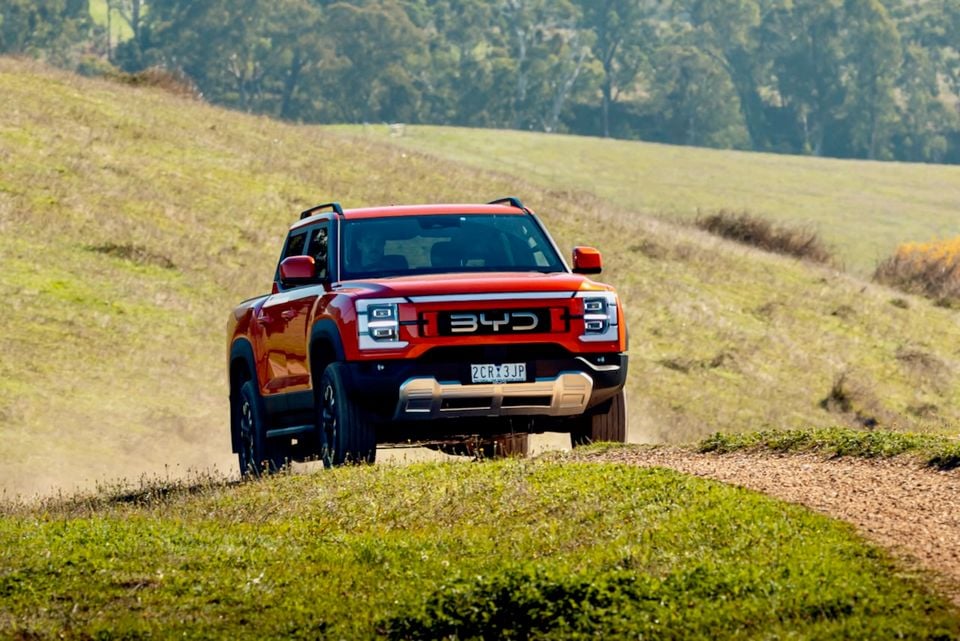
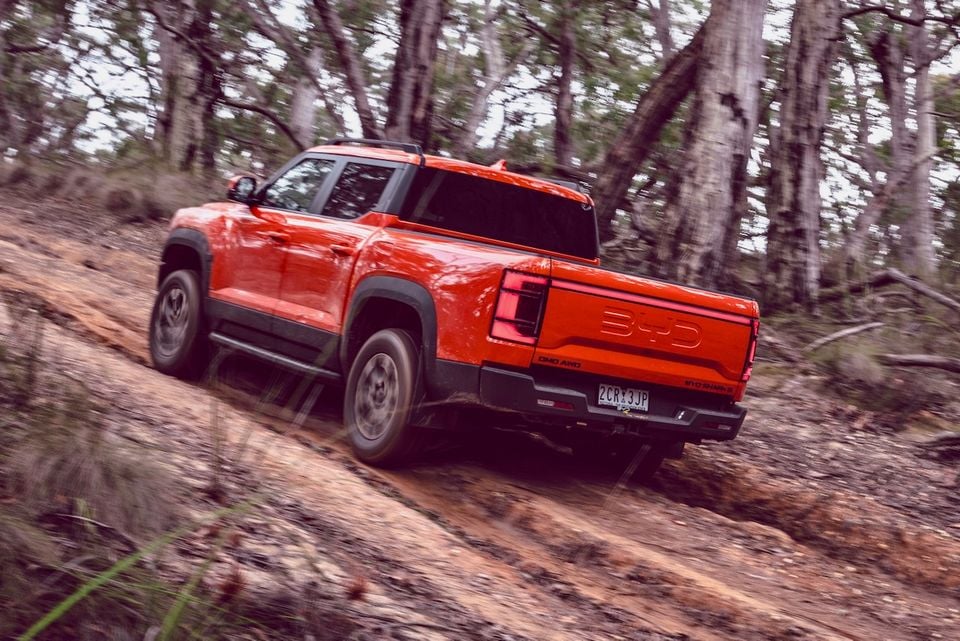
However, off-road – and I say that a little tongue-in-cheek, given our launch drive was pretty much only on gravel tracks which wouldn’t have been a challenge for my Ford Falcon – that suspension firmness comes to the fore. Hitting berms and bumps has the occupants absorbing the energy, rather than the suspension, making the experience a little uncomfortable.
Crawl Mode is an improvement, though. It appears this is an initiative by BYD’s local engineers to answer criticisms of the Shark's off-road capability, with the new feature designed to replicate low-range in some ways.
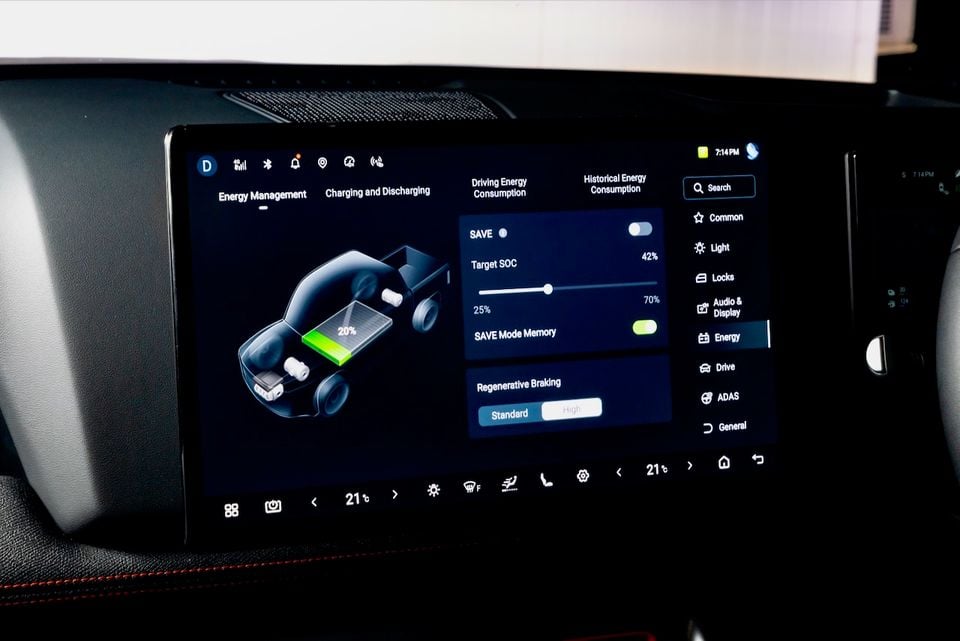
Rather than flick the Drive Mode thumb toggle, you have to dive into a menu on the infotainment screen to select it, at which point you need to accept the terms and conditions just in case you enter into a Merger and Acquisition dispute with a tree.
Essentially, Crawl Mode improves traction control at speeds below 12km/h, while also desensitising the throttle. It reduces the likelihood of the driver accidentally stabbing the accelerator as the car goes over bumps.
We were able to test Crawl Mode on some steep inclines at a proving ground near Anglesea, both on a rutted dry gravel track and on asphalt. We could get the car up those hills without the assistance of Crawl Mode, but I will concede the vehicle seemed to perform better with it engaged. The Continentals performed surprisingly well, considering they were road-oriented tyres at full pressures.
BYD now also includes a tug-of-war button. Apparently, people in other markets like to play the game with their cars, but the engineers told us it's also particularly helpful when trying to recover another vehicle using a snatch strap.
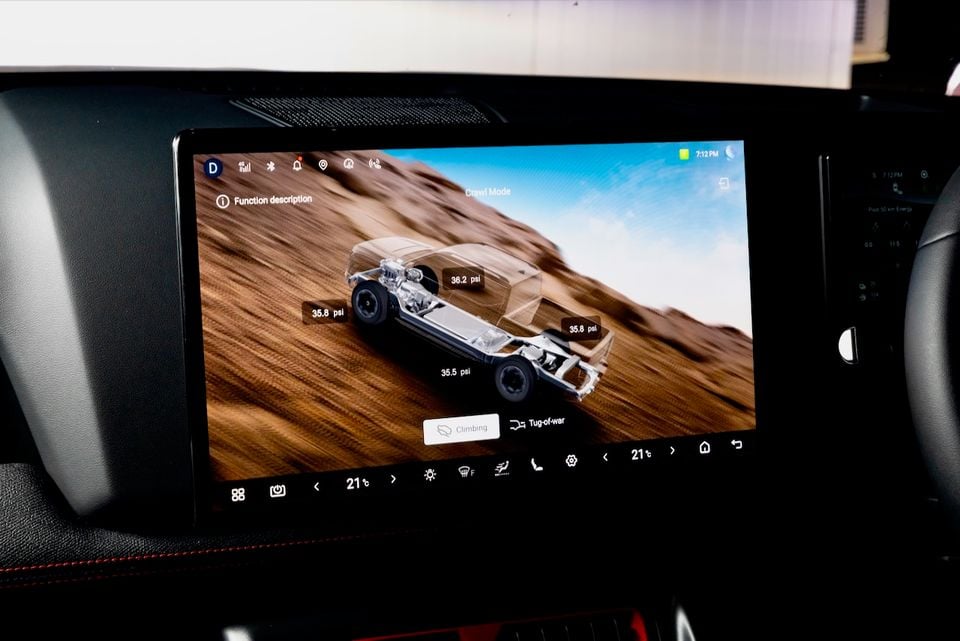
The fact the Crawl Mode is in a separate menu to the drive-mode selector is annoying, but the Hill Descent Control is in another screen entirely, which is more annoying. Like low-speed cruise control, HDC allows you to set a speed when going down a steep, loose track. We were told that the speed display for HDC is coming on the instrument cluster at a later date, but right now it feels like there isn’t enough attention being paid to the user interface.
BYD has told us both the Premium and Dynamic variants will receive Crawl Mode in a future over-the-air software update.
While less suited to off-roading, the Shark’s chassis setup makes it an excellent tow rig. We were given a chance to pull a 2.8-tonne caravan and a 2.6-tonne excavator with the new Performance, and it surpassed my expectations.
BYD has upgraded the brakes and revalved the dampers to accommodate its new towing capacity of 3.5 tonnes, but tells us the ladder-frame chassis was already strong enough and didn’t need any changes.
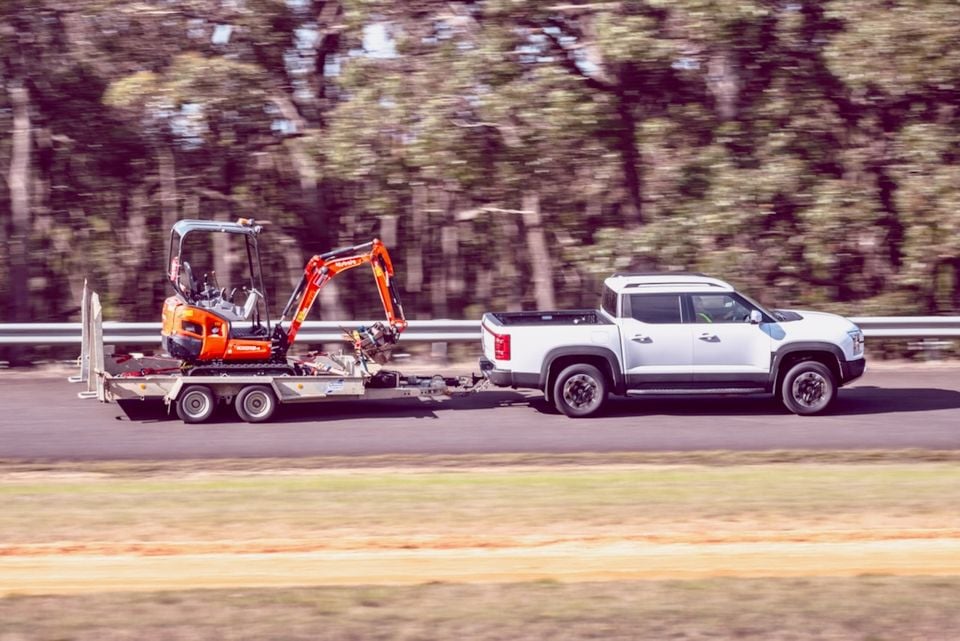
Naturally, the torque from the electric motors meant it was unfazed during hard acceleration, and showed considerable composure through long bends as well as in quick lane-change manoeuvres.
Generally, with a heavy trailer on the back and the front-end lifting, it’s not uncommon for understeer to become a problem through corners, with that additional weight also wanting to push the car to the outside. Nor was there oversteer, which can cause a jack-knife event. The Shark didn’t display any of those brown-pants moments, remaining planted and composed, even with ill-advised, sharp inputs to steering.
Then there was the braking, and this is really where the Continentals shone. A full-stop braking test from 80km/h with almost three tonnes on the back had the Shark 6 pull itself up in no time – and pin-straight.
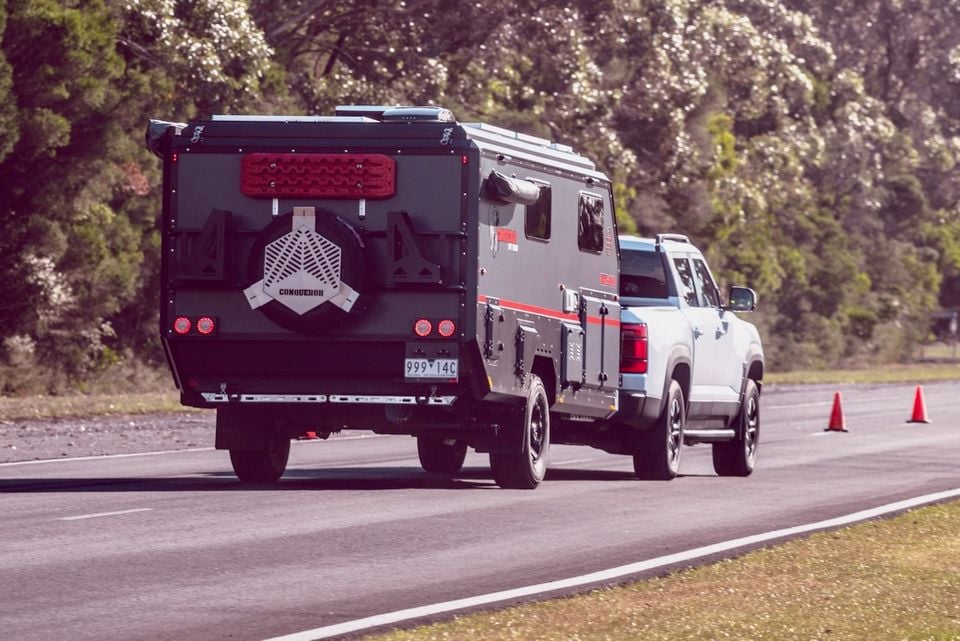
Running this test back-to-back against a Shark 6 Dynamic cab-chassis – running the Giti tyres – was interesting. Of course, the braking distance was longer with the caravan-laden Performance, but the difference was shockingly small.
The Performance also has larger front brake discs and pads, which make a huge difference to its stopping power, and further help cut the perceived weight of the ute.
| Off-road dimensions | BYD Shark 6 Performance |
|---|---|
| Track front and rear | 1660mm/1660mm |
| Ground clearance | 230mm |
| Approach angle | 31.0° |
| Departure angle | 19.3° |
| Ramp breakover angle | 17° |
| Wading depth | 700mm |
To see how the BYD Shark 6 stacks up against its rivals, use our comparison tool
Whereas there was only a single variant of the Shark 6 before, BYD is building the lineup and helping to differentiate each grade with slightly different features. But no matter which one you go for, all three are well-equipped straight out of the box
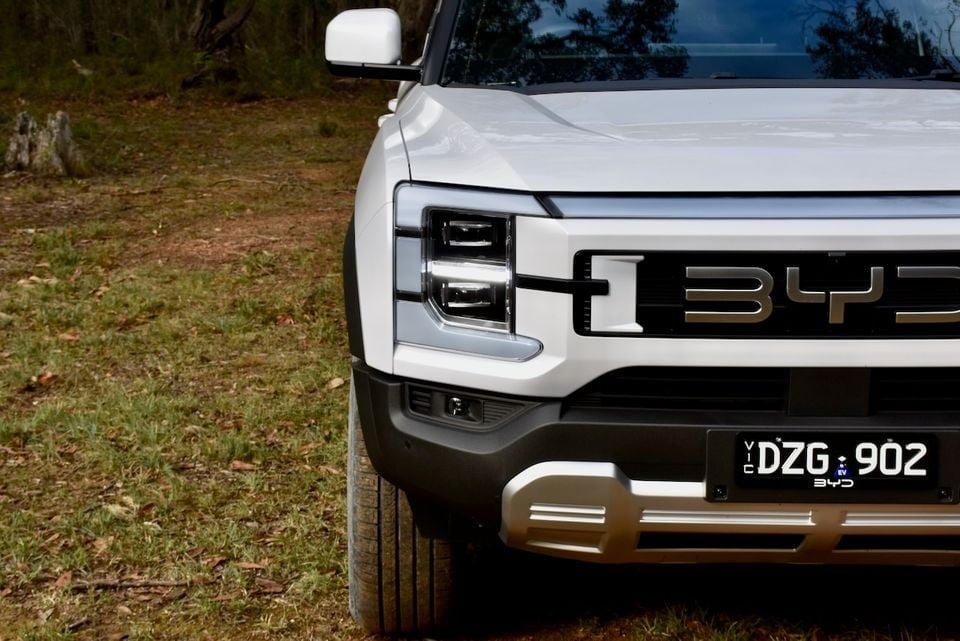
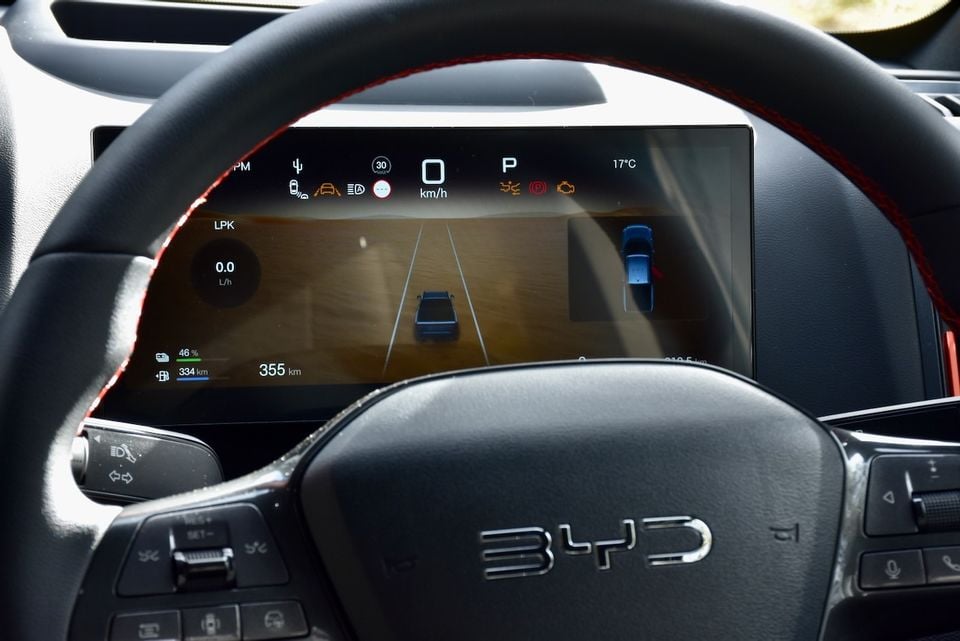
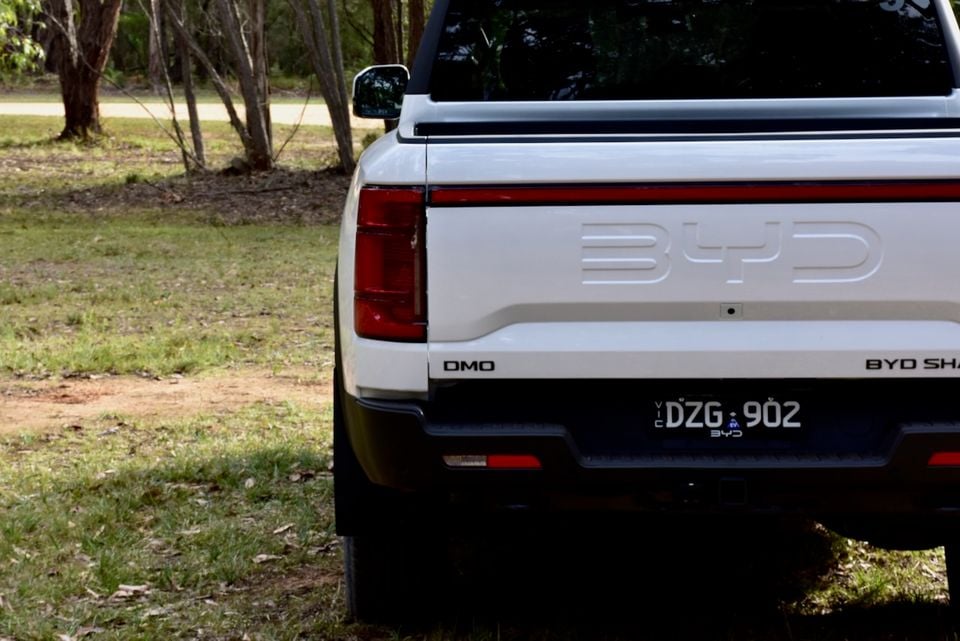
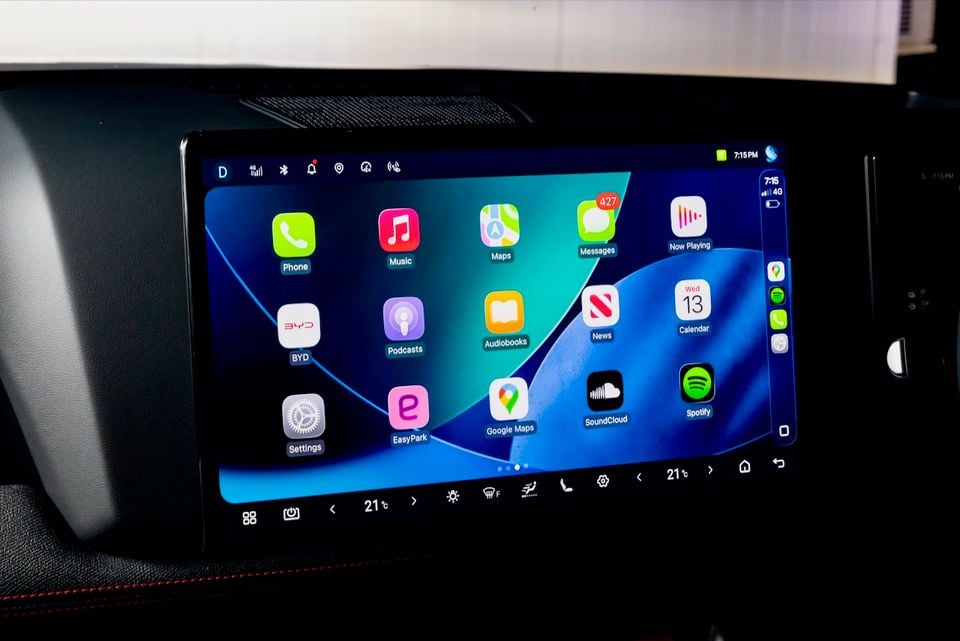
2026 Shark 6 Dynamic Cab Chassis standard equipment highlights:
The Shark 6 Premium adds:
The Shark 6 Performance adds:
A Thaumas Black interior comes standard with orange highlights and contrast stitching.
Great White is the standard exterior paint finish, with the following colours available for an additional $700:
Mist Grey is also available exclusively on the Shark 6 Premium for an additional $700.
To see how the BYD Shark 6 stacks up against its rivals, use our comparison tool
Better known as ANCAP, the Australasian New Car Assessment Program has awarded the BYD Shark 6 a five-star safety rating after the ute scored highly across three of the four categories, and only fell somewhat short for vulnerable road-user protection, meaning pedestrians and cyclists.
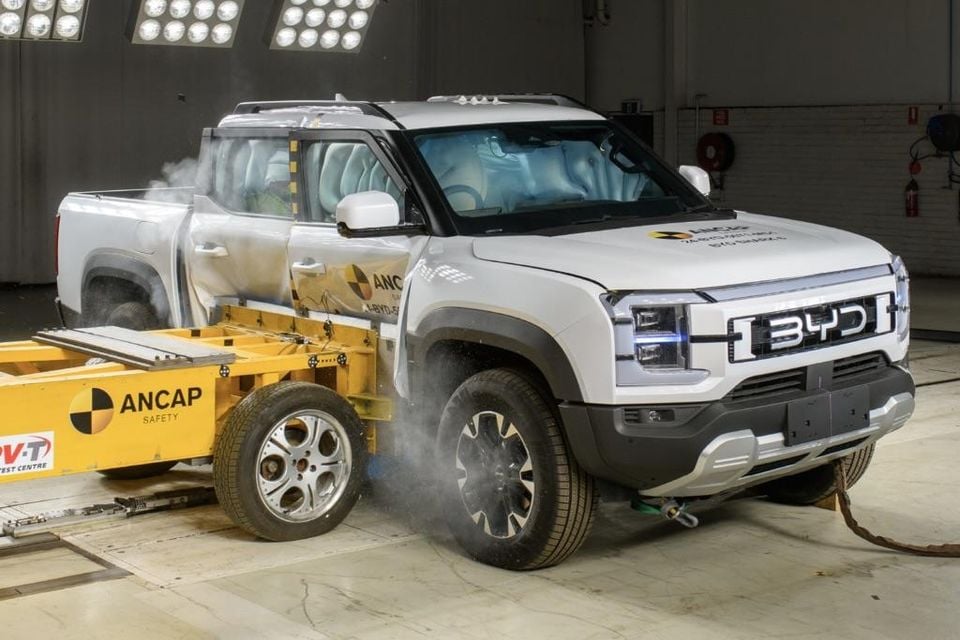
| Category | BYD Shark 6 (all models) |
|---|---|
| Adult occupant protection | 85 per cent |
| Child occupant protection | 87 per cent |
| Vulnerable road user protection | 74 per cent |
| Safety assist | 86 per cent |
Standard safety equipment includes:
To see how the BYD Shark 6 stacks up against its rivals, use our comparison tool
The BYD Shark 6 Performance comes with a six-year, 150,000km factory warranty, with the battery pack covered by an eight-year, 160,000km warranty. Buyers also get 12 months of complimentary roadside assistance.
| Servicing and Warranty | BYD Shark 6 |
|---|---|
| Vehicle warranty | 6 years, 150,000km |
| Battery warranty | 8 years, 160,000km |
| Roadside assistance | 12 months complimentary |
| Service intervals | 12 months or 20,000km |
| Capped-price servicing | 11 years |
| Average annual service price over 11 years | $552.45 |
| Total capped-price service cost | $6077 |
Service intervals are 12 months or 20,000km, with capped-price servicing available for up to 220,000km or 11 years, at an average of $550 per visit.
To see how the BYD Shark 6 stacks up against its rivals, use our comparison tool
The difference between the Shark 6 Performance and its stablemates isn’t night and day – but it is worthwhile.
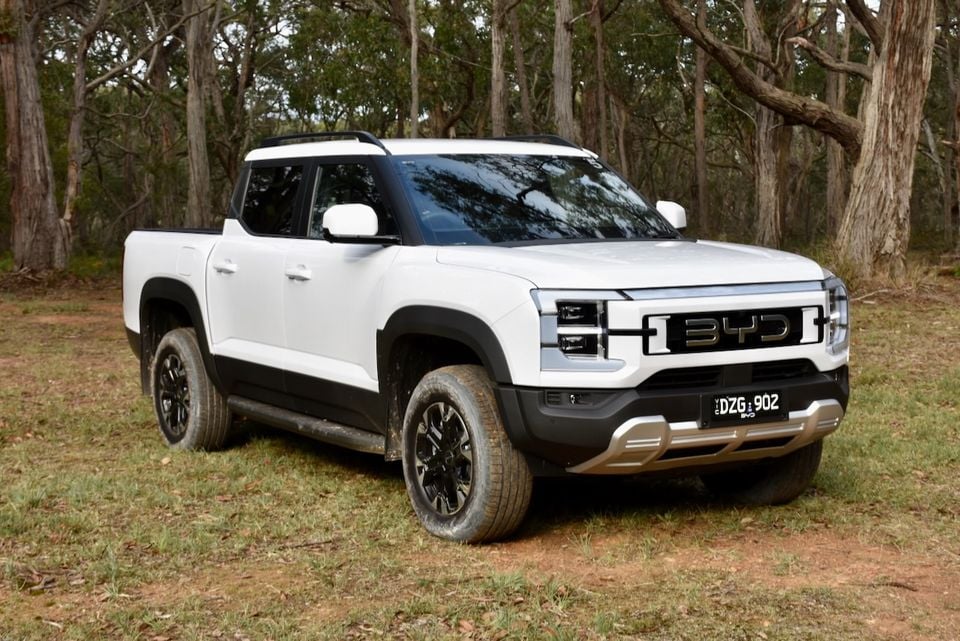
The Performance feels less like a new variant and more like a mid-cycle update (minus the exterior facelift), with several tweaks and improvements that add up to a more competent, enjoyable vehicle.
However, the interior changes feel like they’re a step backwards. The steering wheel doesn’t look as nice, and isn’t as enjoyable to hold, and we miss the aviation-style rocker switches that were a cool talking point and fun to use. The new drive selector stalk is trend-following dumbness, and probably our greatest complaint. The fit and finish of the cabin is still astonishingly good though, particularly for the price tag.
If 1HD-FTE means anything to you, you’ll be pleased to know the Shark 6 Performance isn’t about to dethrone the Toyota LandCruiser as off-road king. To be sure, Crawl Mode is a welcome addition to the BYD’s repertoire – even if its usability is a bit wonky – but this isn’t the ute I’d pick for a trip to Cape York, anyway.
Having said that, for something to access a campsite, it’s perfectly fine. There’s enough capability here to get you in and out of the bush in the majority of circumstances. Just be aware, your partner may complain about being thrown around inside if the track is rough or more than a few kilometres long.
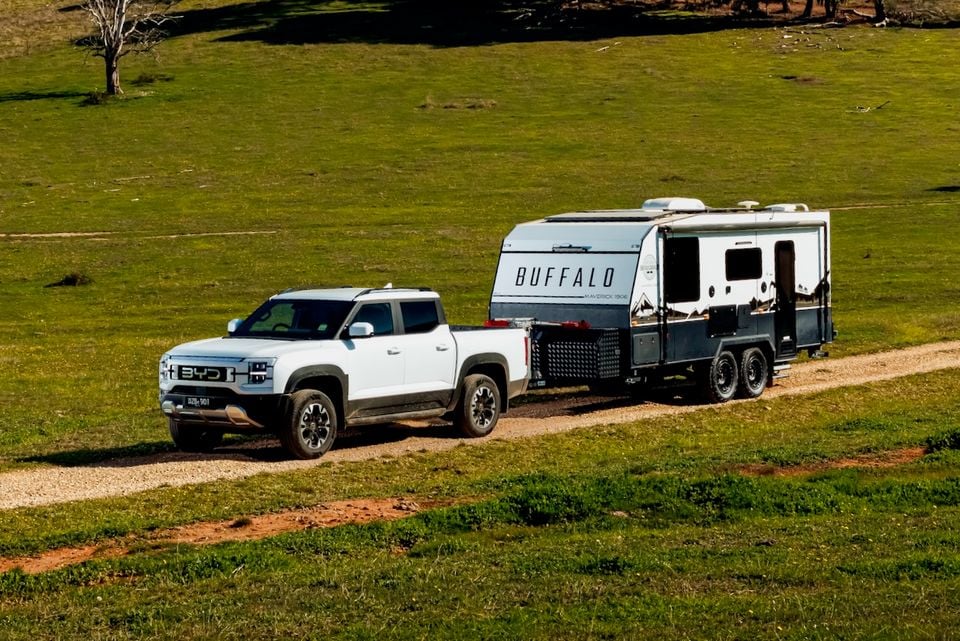
No, despite the big show 'n' tell in the bush, the Shark 6’s natural environment is the road, and the Performance just doubles down on its strengths there.
The improvements to the suspension and brakes – all in the pursuit of the segment-standard 3500kg towing capacity – have made the Shark 6 Performance a more dynamically proficient and enjoyable ute to drive day-to-day.
Towing capability is now also a real highlight, and while it’s an overused cliché, it’s easy to see how a driver could forget there was something hitched up back there.
Both our time on the towing loop and the conditions were constrained, but there’s a lot of promise here and we’re looking forward to getting back into the Shark 6 Performance for some more serious testing in the near future.
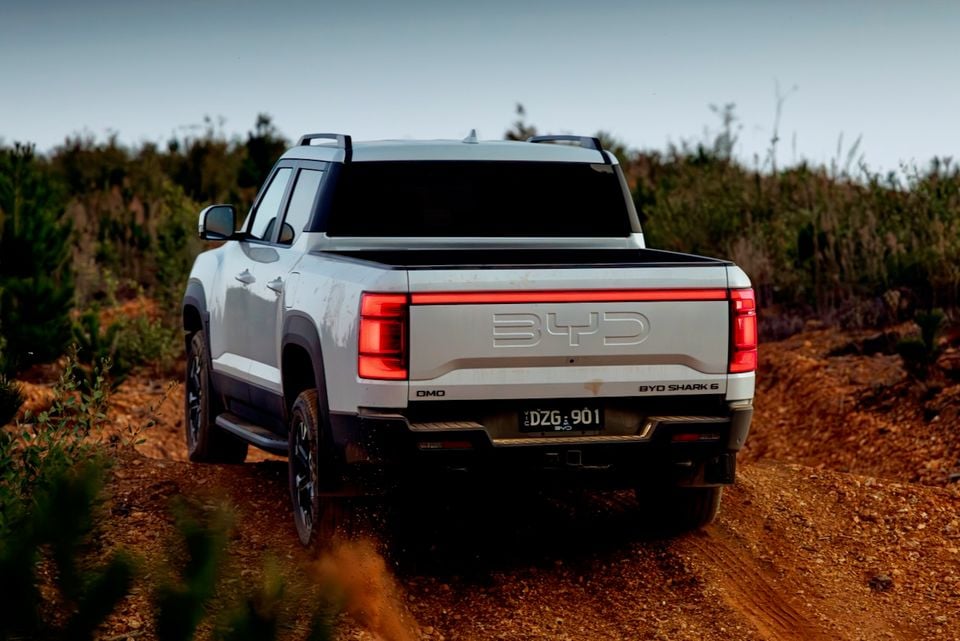
Then there’s the 2.0-litre engine, which is also a big tick. Its more relaxed nature means, when it kicks in, the BYD doesn’t feel anywhere near as strained as before. Power was already good – now it’s just gooderer.
And let’s face it, there’s definitely some street cred in telling your mate your plug-in hybrid ute is faster than their twin-turbo V6 Ford Ranger Raptor.
For any buyer out there who is honest with themselves (and the rest of the world) and understands they won’t be summitting Mount Everest in their dual-cab, there’s a strong argument to shortlist the BYD Shark 6 Performance. It's just a matter of whether the extra money can be justified, given how much of a bargain the Shark 6 Premium is.
Certainly, the Performance is a remarkably competent, comfortable, and robust vehicle that just happens to have the capability of a ute. It makes a lot of sense on paper, but makes even more sense in the real world.
CarExpert can save you thousands on a new BYD Shark 6. Click here to get a great deal.
Click the images for the full gallery
If this is the car for you, we’ll compare offers from trusted dealers, handle the back and forth and manage your purchase from enquiry to delivery.
Quickly see how this car stacks up against its competition. Select any benchmark to see more details.
BYD Shark 6
BYD Shark 6 Sales rolling 12-months#
*Based on VFACTS and EVC data
Looking for complete BYD Shark 6 price history?
Our BYD Shark 6 Pricing Page shows exactly how prices have changed over time.
2026
$62,021
2025
$63,838
2026
$69,231
Ben Zachariah has 20-plus years in automotive media, writing for The Age, Drive, and Wheels, and is an expert in classic car investment.
Add CarExpert as a Preferred Source on Google so your search results prioritise writing by actual experts, not AI.
Damion Smy
2 Hours Ago

William Stopford
5 Days Ago
Damion Smy
6 Days Ago
William Stopford
6 Days Ago
Damion Smy
6 Days Ago

Marton Pettendy
7 Days Ago
Add CarExpert as a Preferred Source on Google so your search results prioritise writing by actual experts, not AI.
# Based on VFACTS and EVC data
† Displayed prices are based on the drive-away price of the vehicle, which includes delivery charges, registration fees, number plates, and applicable road taxes, based on a Sydney location. However, prices may vary between states and territories, and additional costs such as compulsory third party (CTP) insurance, dealer delivery fees, and optional extras are not included. These prices are subject to change without notice and may not reflect current market pricing or dealer offers.
 Automotive Vehicle Spec Data & 4K images Powered by JATO Dynamics Ltd