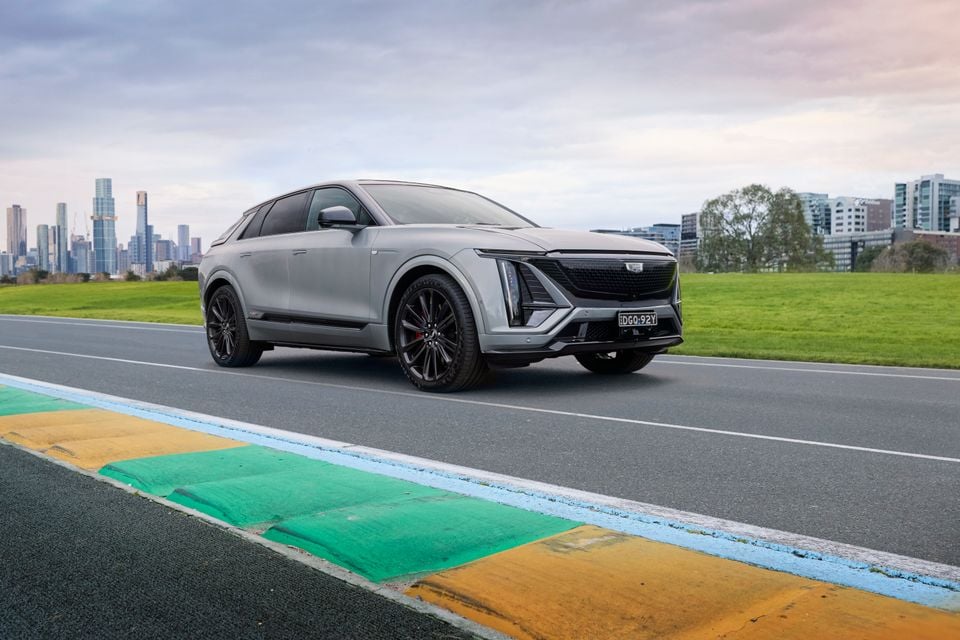
Electric SUVs are heavy. There's no getting around it. So how does Cadillac make something like the Cadillac Optiq-V or Lyriq-V feel like it belongs in the same family as a V8-powered CT5-V Blackwing sedan?
Speaking to CarExpert at a recent General Motors event in New York, Cadillac vehicle performance engineer Tom Schinderle said the approach isn't fundamentally different to any other car.
"It's no different than any other vehicle in my mind. It's just heavier, right?" Mr Schinderle said.
"So we compensate with the springs – put stiffer springs on the car to compensate, stiffer roll bars, stabiliser bars."
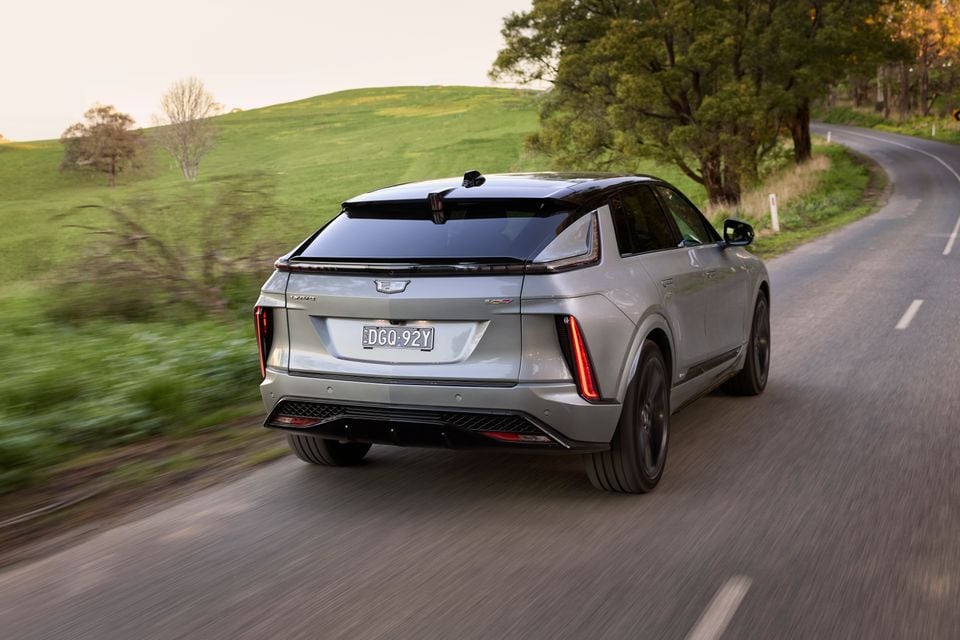
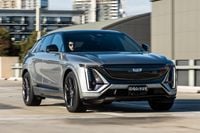
Cadillac Lyriq-V
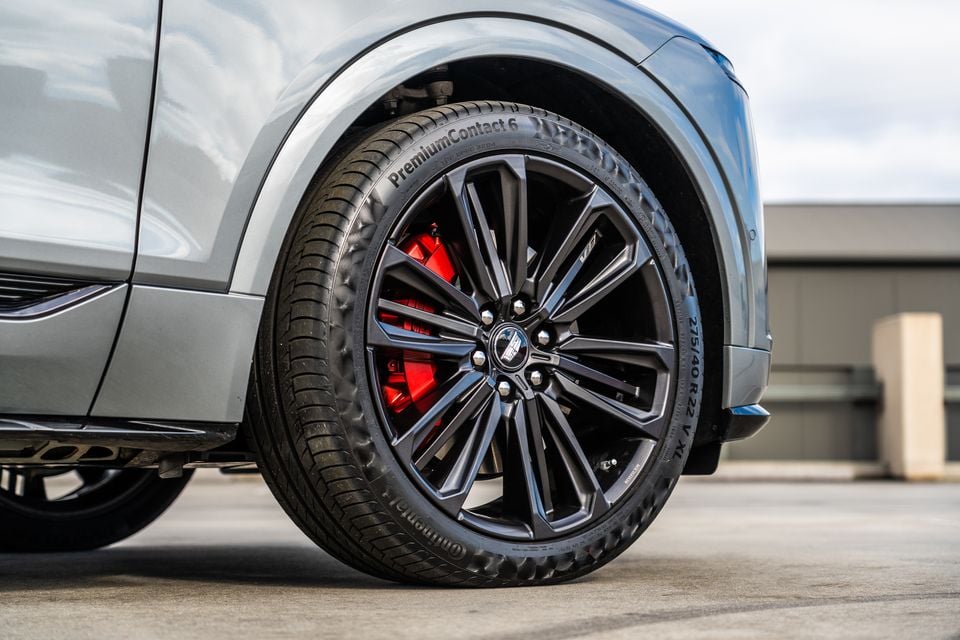
The part most buyers never think about, according to Mr Schinderle, is rubber.
"A big factor is the tyres. A lot of people probably don't understand the amount of effort that OEMs put into tyres, especially our V-Series products," he said.
"That's one of the very first things that I and the team really work on. They are tuned specifically for the vehicle, and so for a heavier vehicle – and based on the wheelbase and some other attributes – we do change the tyre technology to help that car handle even better than if it was a lighter vehicle."
It's worth keeping in mind next time you replace the tyres on a performance car. The factory-fitted rubber has often been developed specifically for that model, and a cheaper replacement can change how the car feels more than you'd expect.
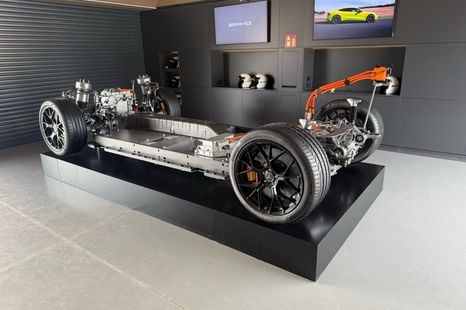
Weight isn't all bad news. Mr Schinderle said the battery pack works in an EV's favour when it comes to agility, because it's tied into the vehicle's structure.
"The EVs actually naturally lean into more of the agile handling side of things because you've got the battery tied into the structure. It integrates the front and the rear together," he said.
"The car right away, you can feel structure is there. It's a solid vehicle."
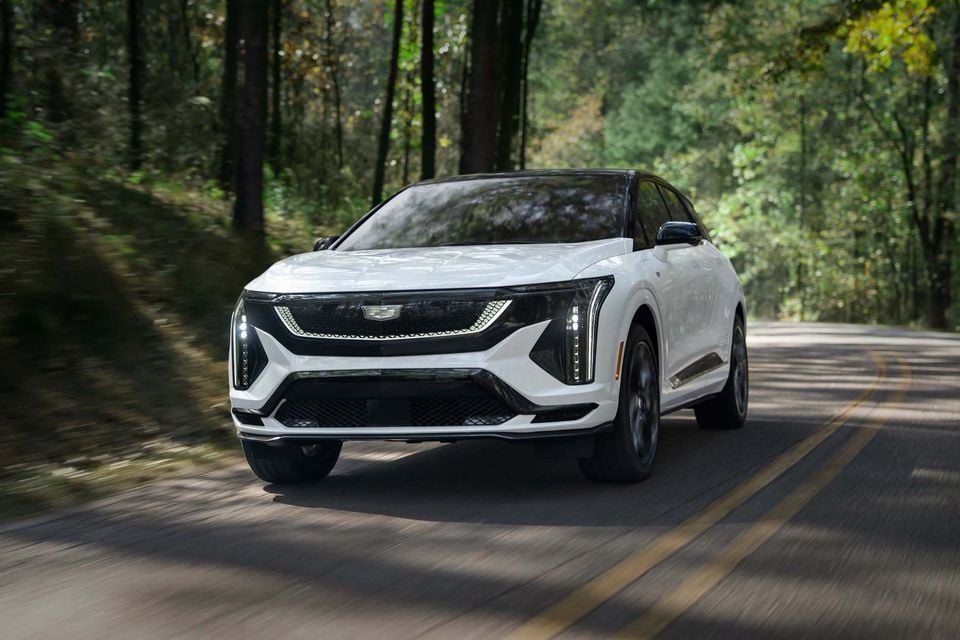
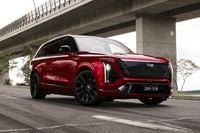
Optiq-V
That makes sense from an engineering standpoint. A stiffer body lets the suspension do its job more precisely, and with the battery slung low in the floor, the centre of gravity sits lower than in a comparable petrol SUV.
Mr Schinderle said Cadillac has developed a set of V-Series standards that get applied across its performance models, regardless of what's powering them.
"There's this V-Series DNA that we've developed, and V-Series standards, and that's what you see. We kind of sprinkle across all those cars, and some of it is a bit of a secret sauce, right? We don't want to share with everybody," he said.
"It certainly applies to the EVs."
CT5-V Backwing
Based on CarExpert's testing of the Lyriq-V, Optiq-V, and CT5-V Blackwing, while the electric SUVs feel different to drive from their supercharged V8-powered sedan stablemate, there's a vibe that carries across.
The Lyriq-V has, however, been confirmed for an Australian launch, and is priced at $99,000 before on-road costs. Customer deliveries will commence late in the first quarter (January to March) of 2027.
Cadillac has been building high-performance V-Series models for over two decades now, with its first being the V8-powered 2004 CTS-V.
In recent years, it has brought its most hardcore models under the V-Series Blackwing banner, while expanding the V-Series range to include vehicles like the Optiq-V and Lyriq-V EVs.