




Derek Fung
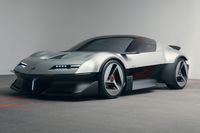
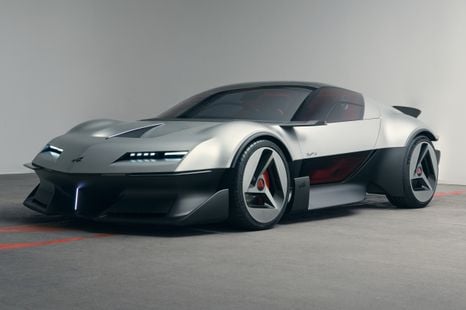
Alpine A310 Vision pays homage to 1970s coupe
Although it's officially a concept only, the A310 Vision teases what an Alpine supercar might look like.
29 Minutes Ago
'If you put less battery, you will be capable, keep towing, and keep payload,' said a VW executive, on balancing range and capability.

Founder
Founder
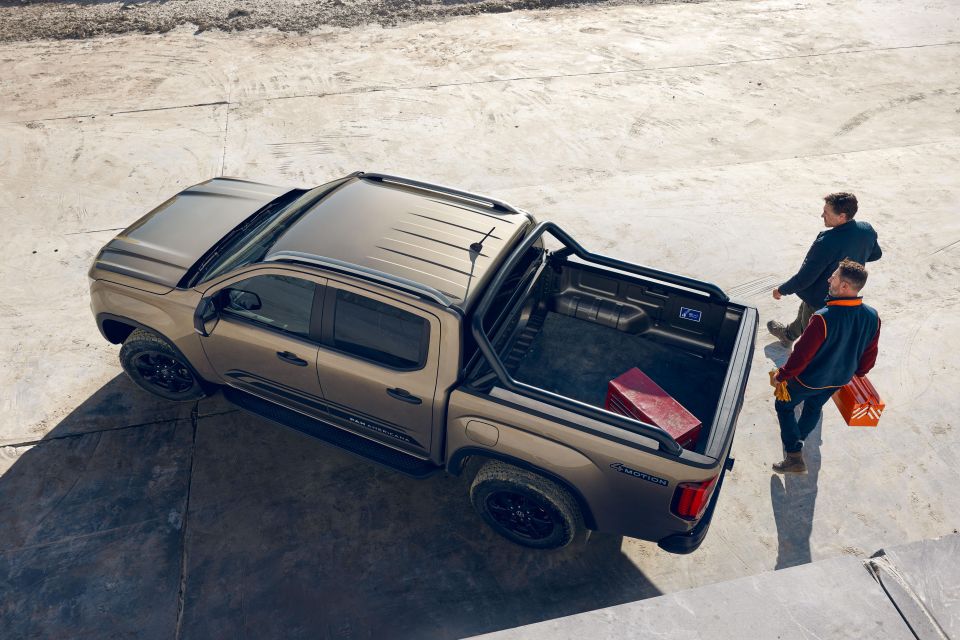
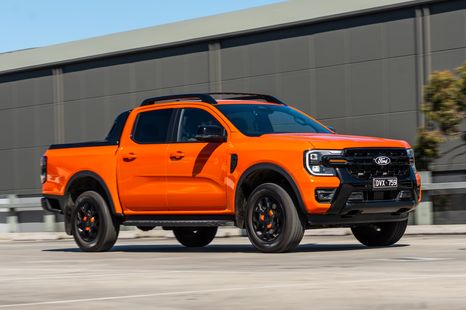
With Europe fast moving toward Euro 7 emission standards, Volkswagen is working on electrification plans for the Amarok utility in conjunction with Ford.
The answer could include a move away from diesel to achieve the stringent emission standards that will soon be rolled out in some markets. Petrol with some form of electrification could thereby become the ‘new diesel’ in some regions.
While a fully electric Amarok has been speculated on as well, there appears to be scope for a petrol plug-in hybrid – although work must be done to retain load carrying and towing abilities, potentially by fitting a smaller battery and sacrificing EV range.
Speaking to CarExpert at the launch of the new Amarok, Volkswagen Commercial Vehicles global product manager Peter Sulc said there needed to be a compromise somewhere and it could be in the diesel offering.
“If you look to the engines we currently have, and then see the draft of Euro 7 [emission standards], you see the requirements for diesel are much higher than requirement for petrol,” he said.

“… So technically, technically, it’s easy to bring PHEV for petrol engines,” he added.
When asked whether Volkswagen would commit to not reducing the capability of an electrified Amarok, Mr Sulc said capability would come first. And, that would mean a reduction in effective full-electric driving range.
“I personally see the solution in the lowering of electrical range. If you put less battery, you will be capable, keep towing, and keep payload.
“But then it’s again about the payoff of the electrical range, because normally in the VW [Group], we do have now 100km electrical [range]. Technically I see the solution as a lowering of the electrical range.”
When asked to elaborate on what would be acceptable, Mr Sulc said it was a balance between efficiency and the benefits of owning a partly electrified vehicle (for some markets).
“This is again the point of view if you have a look if you have a PHEV or a hybrid electric vehicle, you will never accept 50 or 40 kilometres because you will not have this ‘e-play’ that you have with an electric vehicle.
“You cannot park free of charge, you cannot stay somewhere in the city centre because it simply does not meet the electric vehicle criteria.
“But if you have a look from the other side of what the petrol has, or someone who is having to have the towing or distance, then this is exactly for me just the new diesel.
“Also, for those for the green guys, they will be unsatisfied because it’s not so much green… so it is the kind of the compromise but for the green guys, it’s not green enough. But for the petrol guys, it’s enough,” Mr Sulc said.
Part of the issue with electrification of commercial vehicles like dual-cab utes is the immediate increase in weight, which sacrifices load carrying capacity and the wide breadth of tasks a work vehicle like this needs to be able to do.
But equally, with dual-cab utes becoming more a lifestyle than work proposition in some instances, there’s potential scope that both a plug-in hybrid and diesel option is offered in some regions.
Equally there will be some places around the world where the T6 platform is sold where a plug-in hybrid won’t make sense for some time yet.
Research cars in our Showroom, compare your options or let our New Car Specialists do the running around to find you a great deal.
Paul Maric is a CarExpert co-founder and YouTube host, combining engineering expertise with two decades in automotive journalism.
Derek Fung
29 Minutes Ago

Max Davies
7 Hours Ago

William Stopford
14 Hours Ago
William Stopford
18 Hours Ago

Damion Smy
18 Hours Ago
William Stopford
18 Hours Ago
Add CarExpert as a Preferred Source on Google so your search results prioritise writing by actual experts, not AI.