


Paul Maric
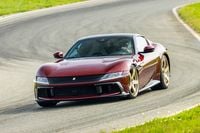
2027 Ferrari 12Cilindri Manuale review: Quick drive
Ferrari has put a clutch pedal back into a V12 grand tourer. It's not a true manual but you can drive it like one – is it all it's cracked up to be?
7 Hours Ago
Many of them may blur the line between hatchbacks and SUVs, but there’s plenty of choice for urban families considering a small electric car.

Contributor
Contributor
Inner-city families are considering small electric vehicles (EVs) more than ever.
This is in no small part due to the relatively short commuting distances covered by many city-dwellers on a daily basis and their proximity to various charging options, not to mention the potential saving on running costs and other benefits of going electric.
The Australian Automobile Association (AAA) Transport Affordability Index assumes a typical city-dwelling Australian family covers less than 70km per day. And that’s across two cars!
Being designed without the need to house an engine, many small EVs are more spacious than you might expect and have enough room for many young families on a daily basis, meaning they can save their larger car for weekend exploring and avoid problems with low multi-storey carpark ceilings or tight on-street parking spaces.

Most metropolitan families don’t need anything larger than a compact EV. Fertility rates have declined in Australia during the past decade and, according to the Australian Bureau of Statistics, the fertility rate in major Australian cities was 1.4 babies per woman in 20925, compared with 1.96 in remote areas and 1.8 in very remote areas.
Along with all the benefits of driving an EV, like less air pollution, a smoother and quieter drive, and predictable, punchy acceleration for getting into gaps in traffic, their smaller batteries can take less time to charge.
One of my favourite things about EVs is that parents can drive their little one to sleep or sit with the air-con running if they get stuck in the car during baby naps, without chewing through fuel.
Depending on your home and vehicle setup, there are multiple options for families to charge an EV in Australian cities.
If you live in a house with a driveway or garage, a household power outlet or preferably a home charger paired with rooftop solar and perhaps a battery could dramatically cut your running costs.
Those in apartments or units can sometimes have shared chargers installed around common property parking spaces. In some cases, a dedicated charger can be installed if the building has the right infrastructure and a cooperative body corporate.
Families without off-street parking might have charging available at their workplace (or be able to request it) and the number of public chargers at shopping centres and petrol stations is increasing quickly, as well as roadside chargers attached to power poles or street lights, and ‘destination chargers’ at popular locations outside the metro area.
As a mother of two and a family car journalist, I’ve put together this list of five small family EVs that are great for city-dwelling families.
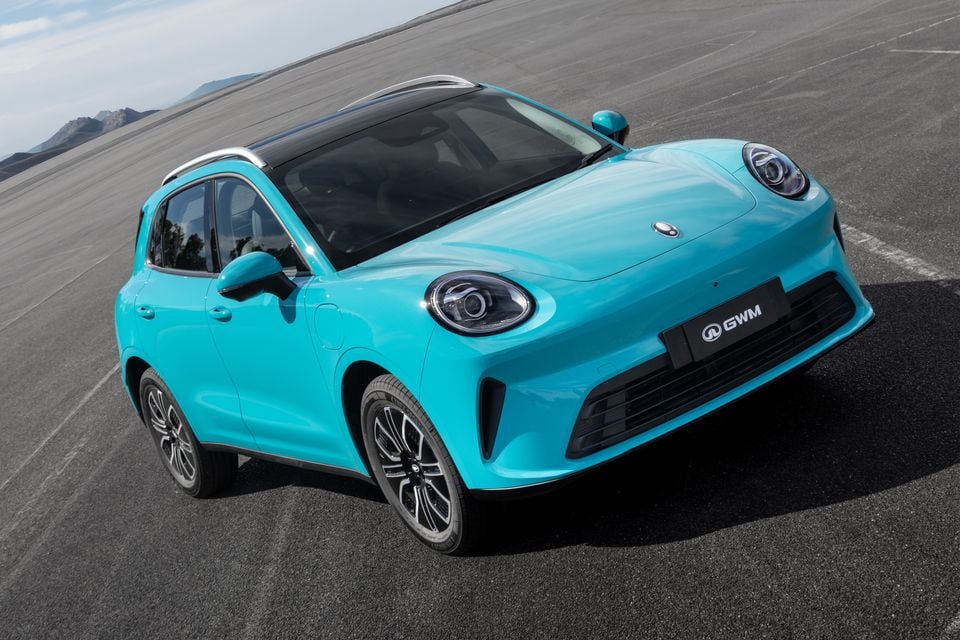
Touted by GWM as Australia’s most affordable electric SUV, the GWM Ora 5 is a small EV packed full of personality and family practicality. It makes a very cheerful family EV for the morning school runs with its cheeky exterior looks and friendly design.
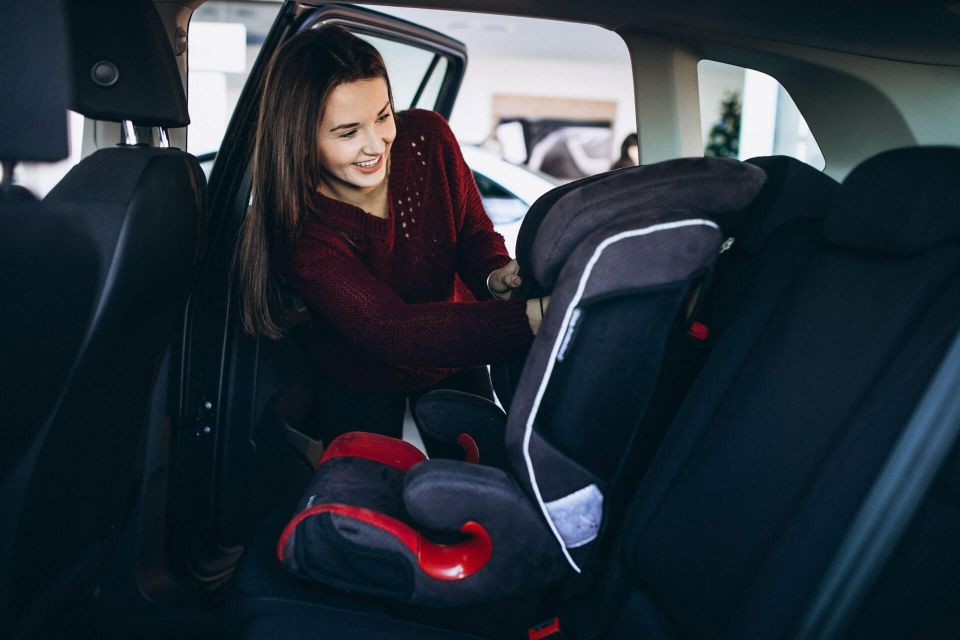
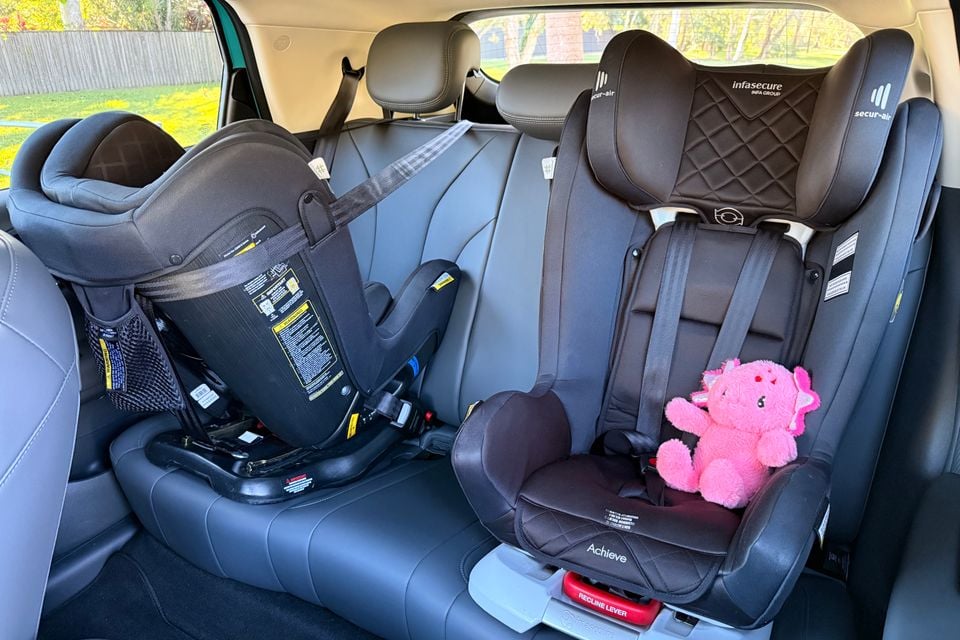
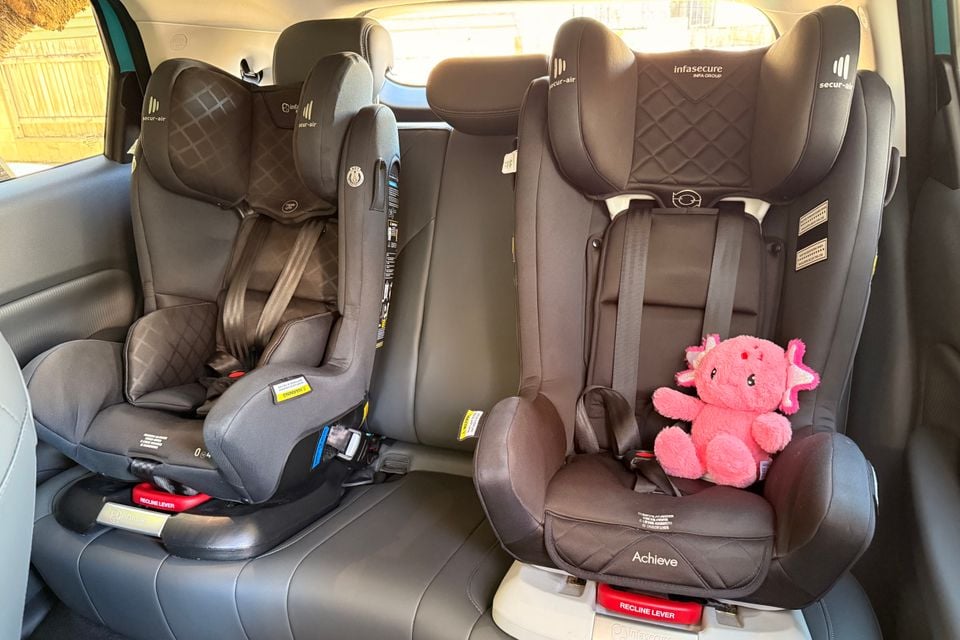
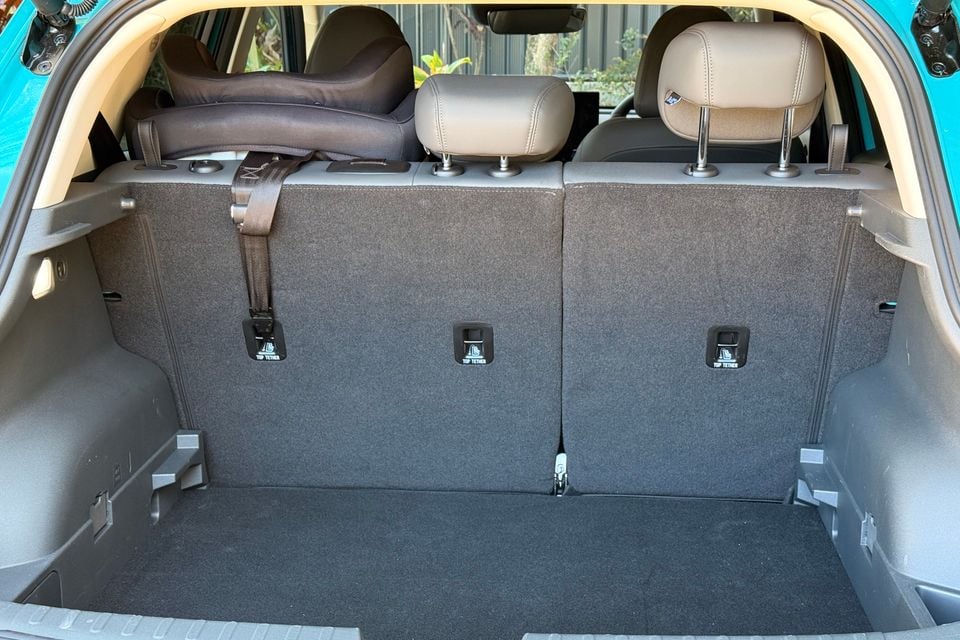
The five-seat Ora 5 is practical for city families with up to two children. There are ISOFIX points for the two outboard rear seats and top-tether anchors for all three. I found two child seats fit nicely in the back with room between them for a passenger, although I couldn’t squeeze a third child seat in there.
Its flat rear footwell gives good access and kick-room for passengers. It also has a surprising amount of legroom for a small SUV, as I found a 186cm-tall driver can fit in front of forward-facing child seats, or a 183cm driver in front of an infant capsule or rear-facing child seat.

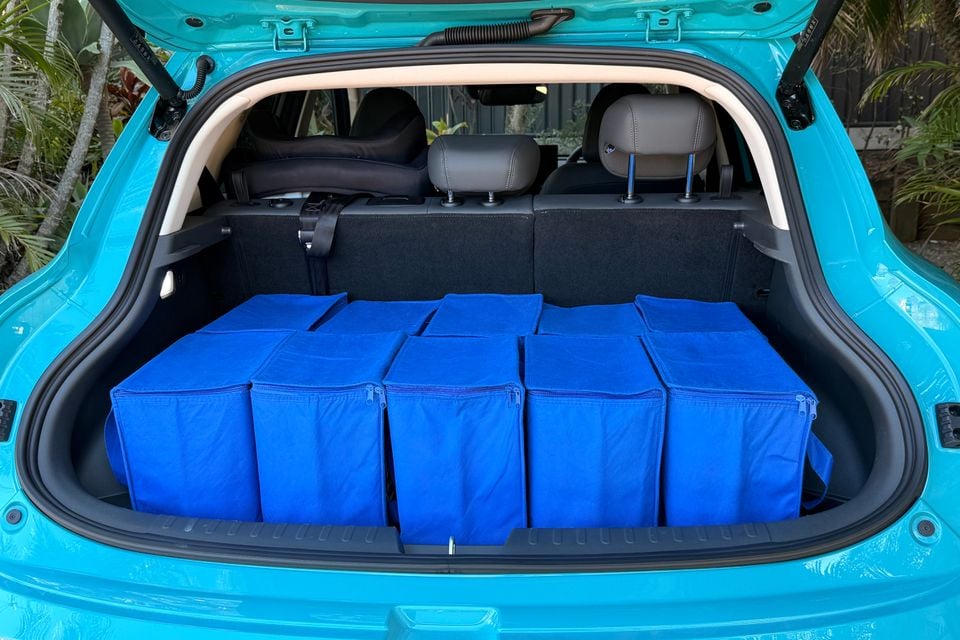
A space-saver spare wheel underneath the boot floor is great peace of mind and the 362-litre boot holds nine shopping bags and has room for a twin pram, or the family dog or kids’ sports gear. The boot floor can be lowered by 10cm to offer extra depth, and it’s flat if you need an emergency nappy change.
The Ora 5 is available in two grades: The Lux is priced at $33,990 drive-away and the Ultra costs $36,990 drive-away (meaning stamp duty, rego, CTP and dealer delivery fees are included).
Both versions have a battery range of up to 435km (WLTC), which gives most metropolitan families well over a week of regular driving without having to think about charging if they rely on public chargers (those with a home charger have the luxury of topping up whenever).
It also gives you the ability to drive long journeys and tie recharging in with a well-timed leg stretch and lunch stop.
The GWM Ora 5 is a great little car for getting about town. I found it nippy, agile, fun and easy to park in tight spaces thanks to good visibility and excellent cameras.
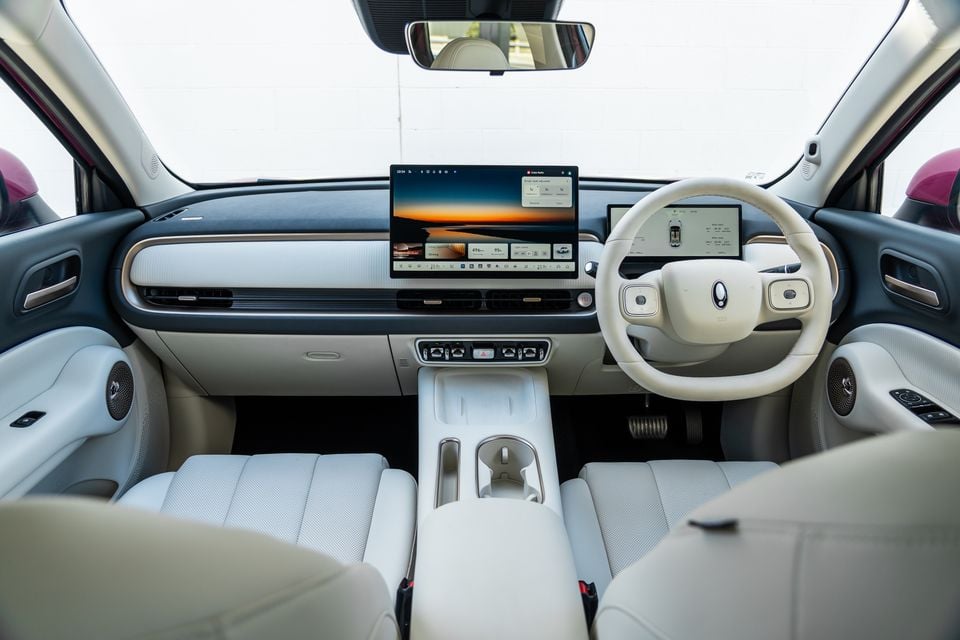
Reminiscent of memory foam, the Ora 5’s seats are extremely comfortable in both the front and back. Rear passengers are kept comfortable with air vents in the back of the centre console, and there’s a USB-C socket for charging devices.
A 14.6-inch infotainment touchscreen includes wireless Apple CarPlay and Android Auto.
The GWM Ora 5 is well set up for families with infants. Handles above the rear doors can be used for hanging a toy and there are well-positioned lights to help you see when fastening harnesses at night.
One of the lovely Ora 5 features for parents is ‘Nap Mode’, which allows you to set a timer so that if your little one falls asleep in the back and you want to use the opportunity to catch up on some shuteye, you can pop that on and the car will keep the climate control running while you have a quick snooze.
The GWM Ora 5 is yet to be given an ANCAP safety rating but comes with a full safety suite and seven airbags, including dual frontal, chest-protecting side, and head-protecting side (curtain) airbags that extend to the second row, plus a front-centre airbag.
One important family feature is child presence detection, which is standard in both versions. This system alerts you if a child is left in the vehicle after it’s locked, which not all competitors offer and is something I think every family car should have.
GWM backs the GWM Ora 5 with a seven-year, unlimited-kilometre warranty, and its battery is covered for eight years with no kilometre limit.
For families on a budget, the BYD Atto 1 is currently the cheapest electric car on sale in Australia, as well as the least-expensive new car available – period.
A promotion running until December 15, 2026 on the base Essential variant see it priced at $19,990 drive-away, down from the standard price of $23,990 plus on-road costs.
The higher-spec Premium model costs $27,990 plus ORCs.
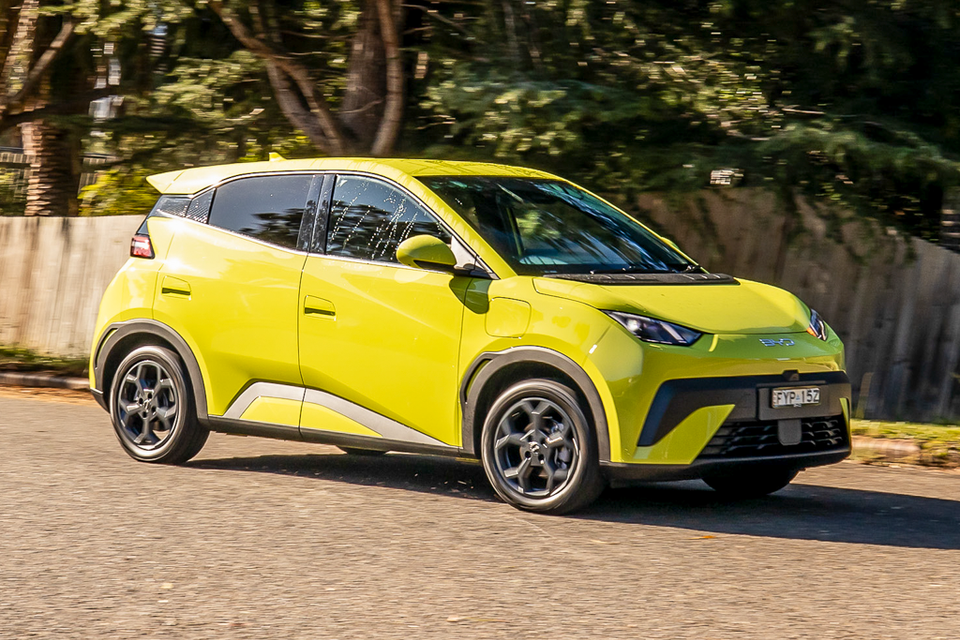
The Essential has a battery range of 220km and the Premium’s bigger battery has a 310km range (both WLTP). Either will get most urban and suburban families through an average Monday to Friday of school runs and commutes, but the Essential may not be as practical for longer family trips.
Currently only available as a four seater, the Atto 1 has ISOFIX points in the two second-row seat bases and top-tether anchors on both rear seatbacks. I am yet to test the Atto 1 for child seat installation and legroom, so be sure to check whether you and your child seats fit before buying.
Handles above rear doors can hang an infant’s toy, but there are no rear air vents in the BYD Atto 1, which may make it hard to cool down quickly in the Australian summer.
The 308L boot is on the small side and I have not yet tested it with prams, so if you do have two infants and need to fit in a twin pram make sure you take it with you to the test drive. There’s a puncture repair kit but no spare tyre.
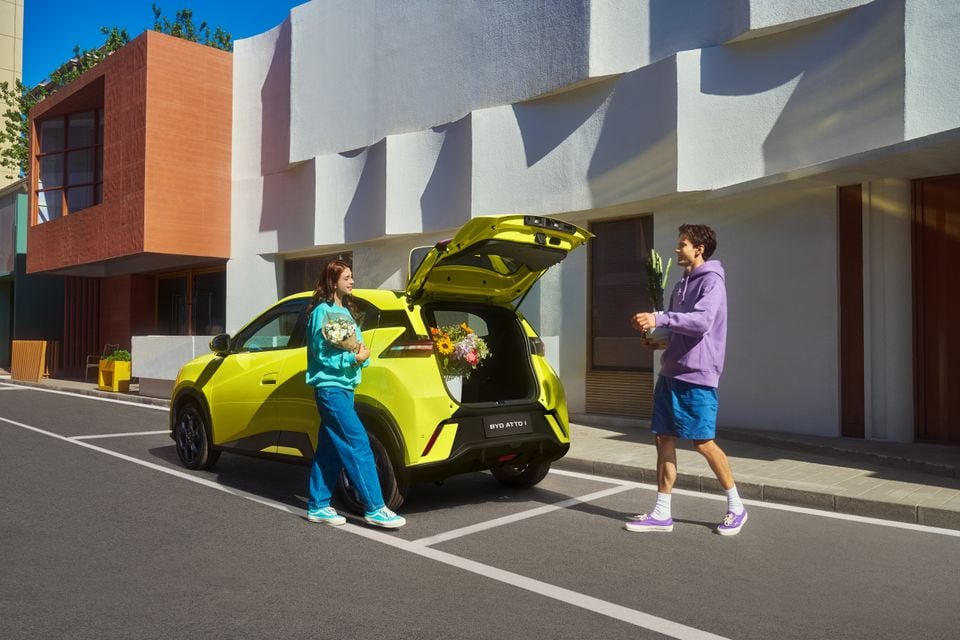
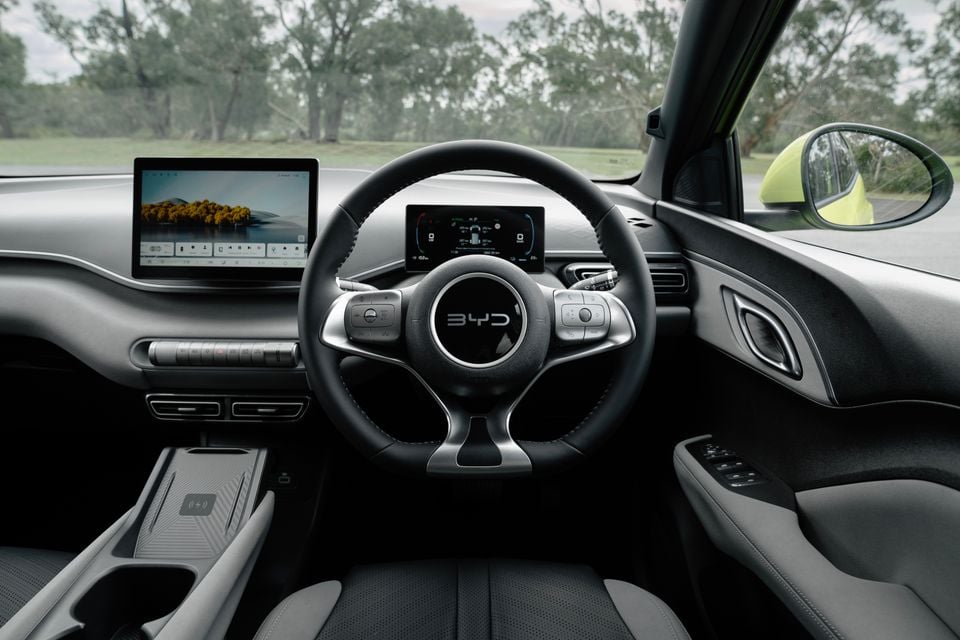
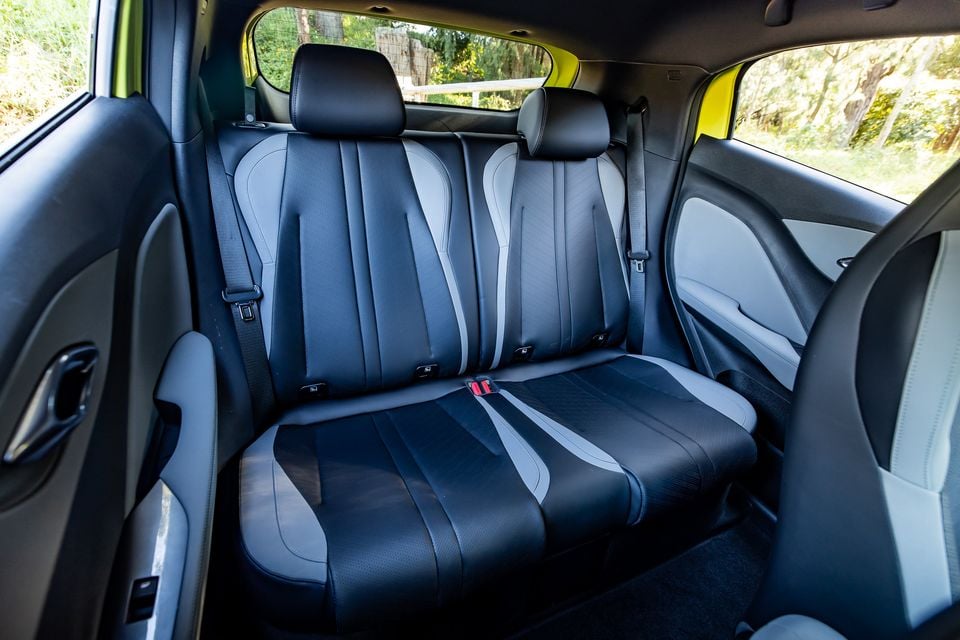
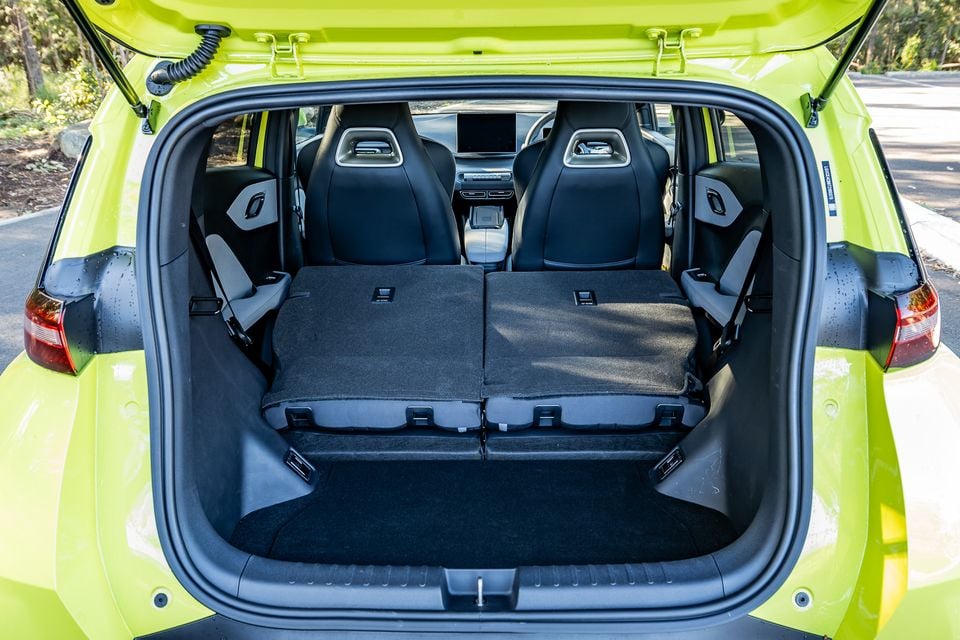
The BYD Atto 1 has a five-star ANCAP rating, scoring 86 per cent for child occupant protection and 82 per cent for adult occupants. It comes with six airbags but is not available with a front-centre airbag or child presence detection system.
BYD's warranty extends for up to six years or 150,000km (whichever occurs first), covering general factory defects and components. The battery has an eight-year or 160,000km warranty (whichever occurs first).
A 10.1-inch infotainment touchscreen sits centrally on the dash in the BYD Atto 1, and both wireless Apple CarPlay and Android Auto are standard.
The four-seat Hyundai Inster range starts from $37,500 plus ORCs for the Standard Range variant with a 327km (WLTP) battery range. The chunkier, more rugged-looking Cross version costs $43,500 plus ORCs and has a 360km range.
Paying extra for the Inster Cross also adds imitation leather seat upholstery, a sunroof, heated and ventilated front seats, a heated steering wheel, interior mood lighting and blind-spot cameras that give you a view down the side of the car when you indicate, as well as a 360-degree parking camera.
It’s a funky little car for getting about the city and when it comes to family practicality the two rear seats are individual and can slide to distribute legroom as required.
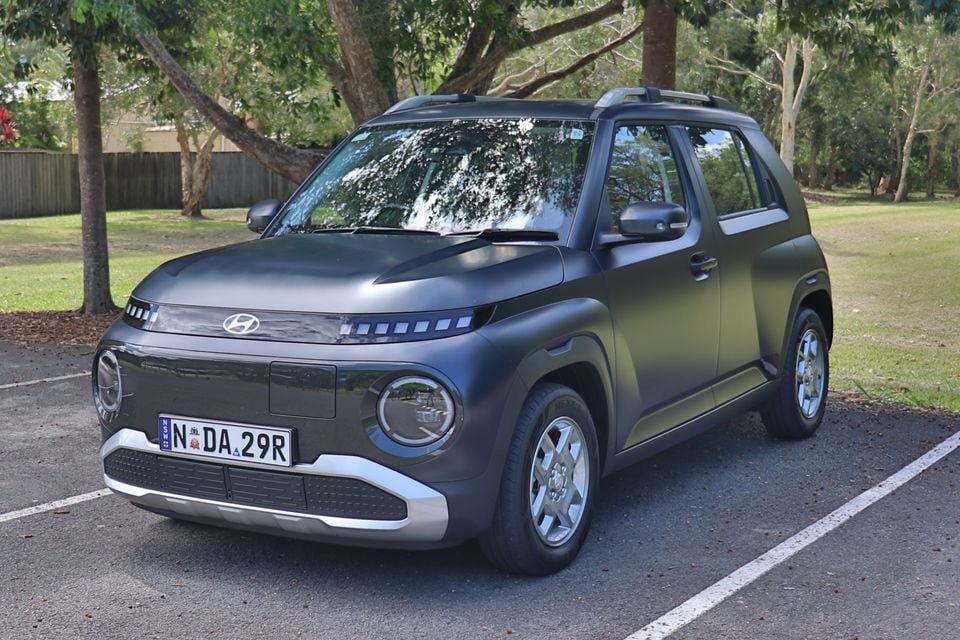
The two seat bases have ISOFIX points and top-tether anchors are on the seatbacks. I found two child seats fitted comfortably in the back of the Inster thanks to surprisingly good legroom.
Drivers up to 186cm tall can fit in front of a forward-facing child seat and, if you slide the rear seats back, a 186cm driver can even fit in front of a rear-facing child seat (which is rare in cars two sizes bigger, let alone a small EV).
Handles above both rear doors can hang an infant’s toy and there’s a USB-C charging socket for second-row passengers, but the Inster has no air vents in back.
Moving the seats as far back as they go does drastically reduces boot space, leaving just 280L compared with 351L when both rear seats are furthest forward. The boot floor can drop down by 10cm, providing extra depth, but the ability to balance legroom and boot space is a great feature for city families.
I found that nine shopping bags will fit in the boot of the Inster and although there wasn’t enough room for my twin side-by-side pram, a tandem multi-configuration pram would fit. But there’s a puncture repair kit instead of a spare tyre.
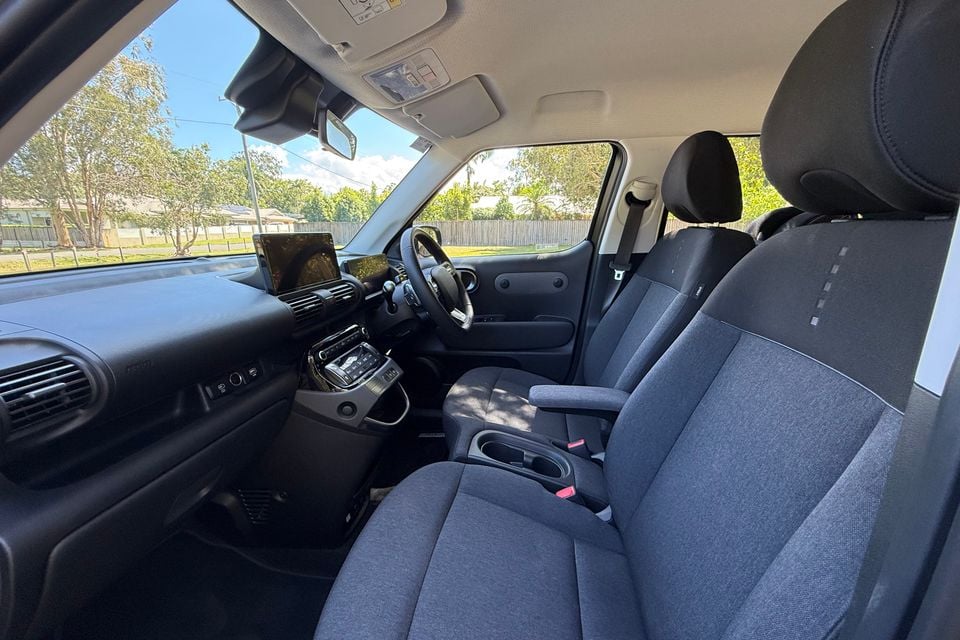
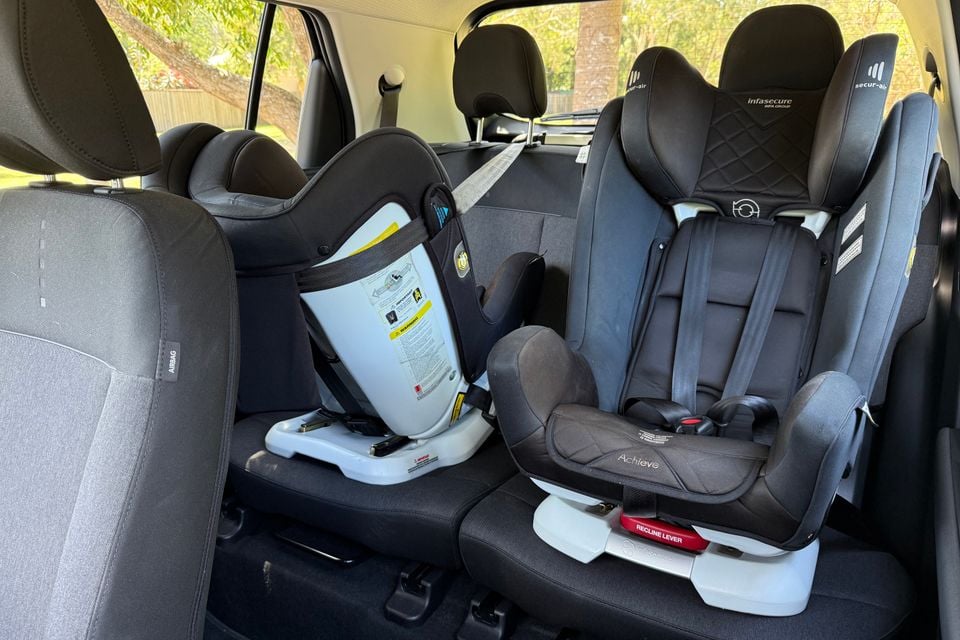
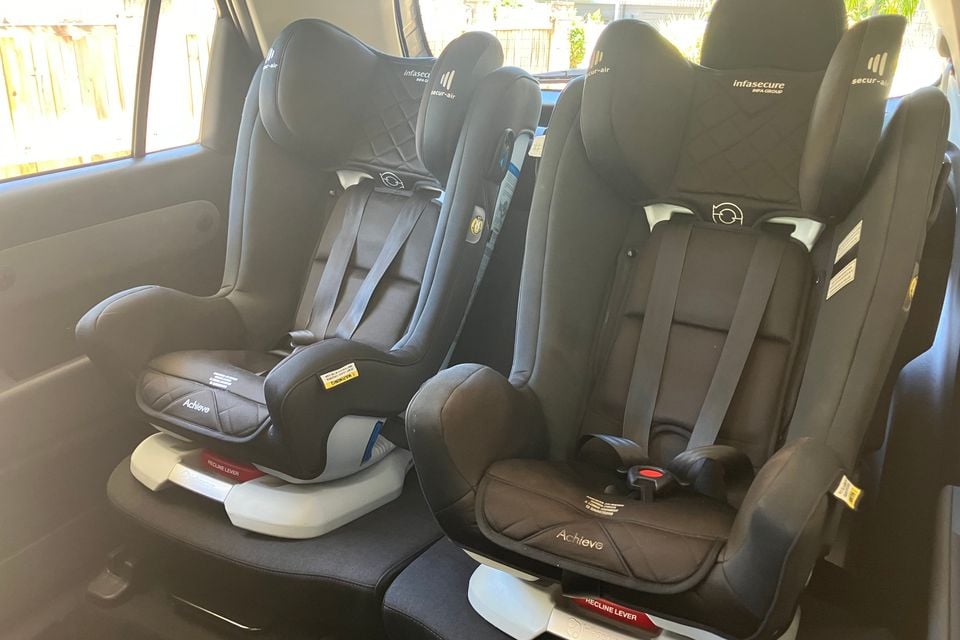
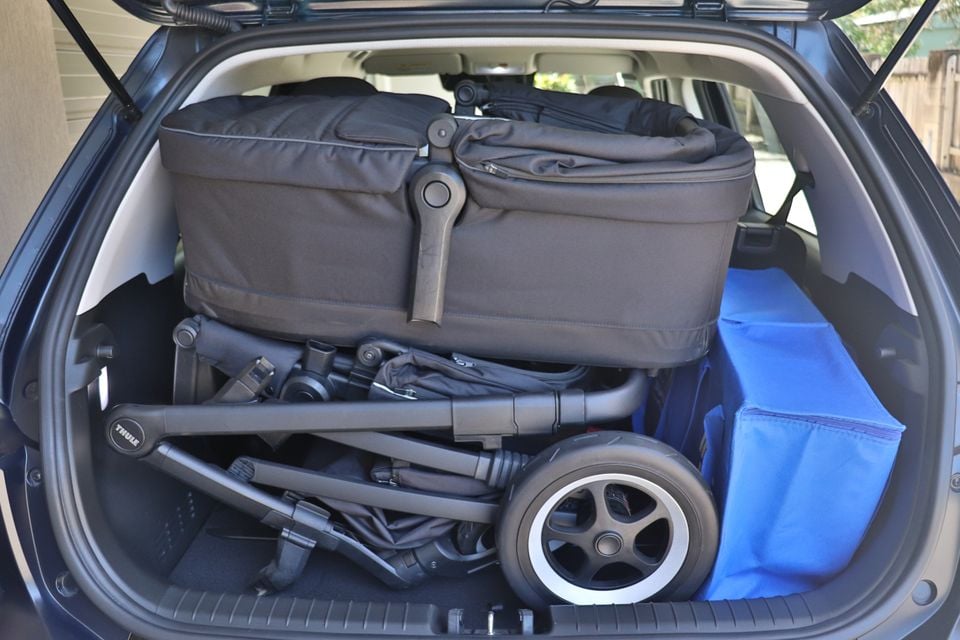
The Hyundai Inster has a four-star ANCAP safety rating, scoring 83 per cent for child occupant protection and 70 per cent for adult occupant protection.
It comes with seven airbags as standard, including side curtain airbags for both rows of seats and a centre airbag that provides added protection for front-seat occupants in a side impact. And although there is a rear occupant reminder system, it lacks child presence detection technology.
On the dashboard is a central 10.25-inch touchscreen with wired Apple CarPlay and Android Auto, and the in-built ‘Sounds of Nature’ white noise app is brilliant for driving little ones to sleep or keeping them calm during journeys.
Hyundai has a five year, unlimited-kilometre warranty and the battery is covered for eight years or 160,000km. If you always get your Inster serviced at a Hyundai dealer, the warranty extends to seven years.
Kia’s EV3 is a great five-seat family package, priced from $47,600 plus ORCs for the base Air variant with a 436km WLTP battery range, or $53,315 plus ORCs for the Air Long Range that can do 604km.
Both the mid-spec Earth Long Range ($58,600 plus ORCs) and the top-spec GT-Line Long Range ($63,950 plus ORCs) have a 563km battery range, while the flagship can also be had with all-wheel drive for $66,490 plus ORCs.
A 12.3-inch touchscreen has an easy-to-use media system and wireless Apple CarPlay and Android Auto connectivity. Like the Inster, it has the handy ‘Sounds of Nature’ feature.
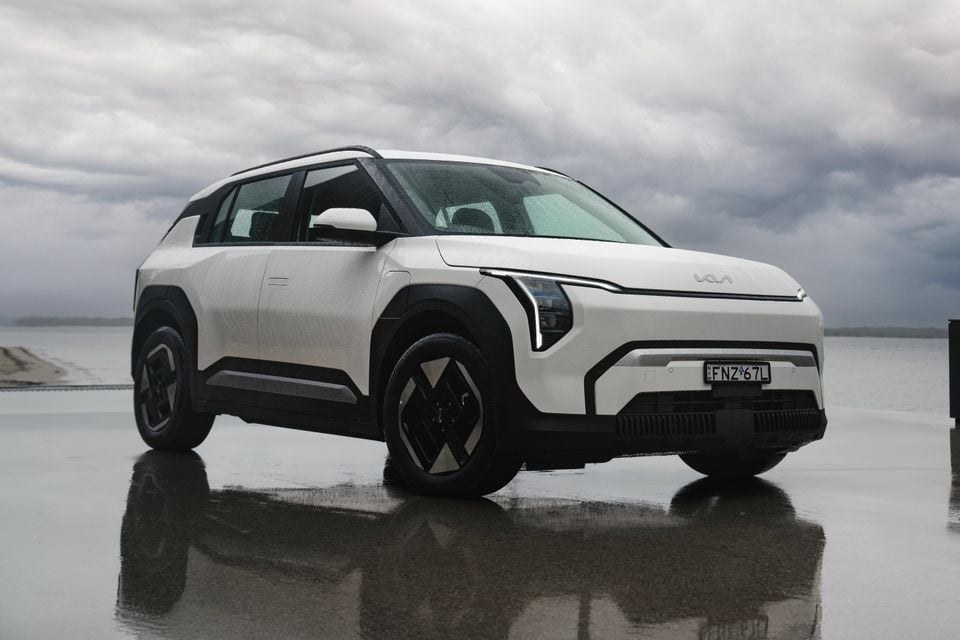
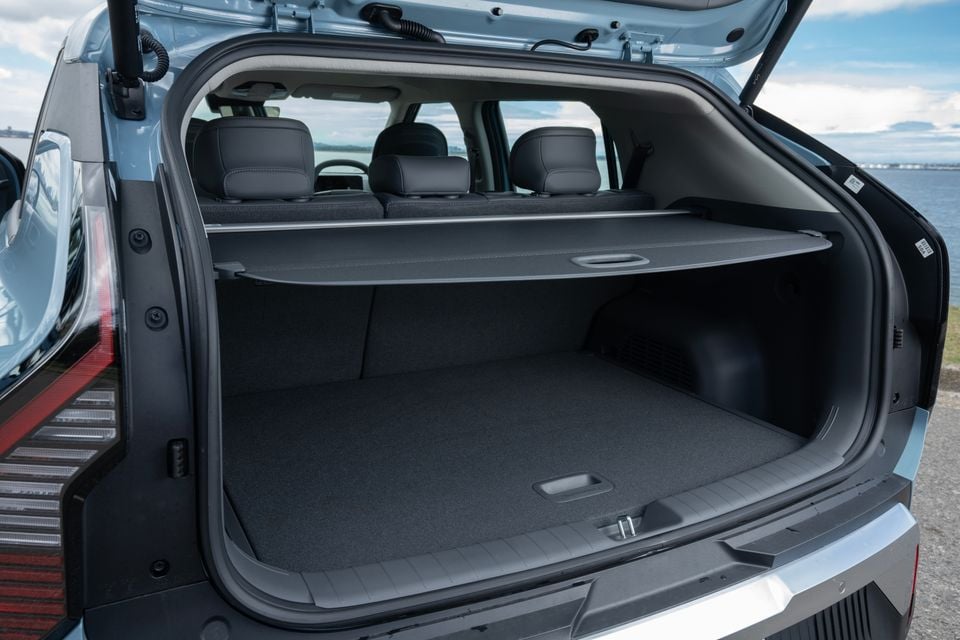
The Kia EV3 has the biggest boot of all the cars on this list at 460L so it will accommodate a twin pram, especially given the floor drops down for 10cm of extra depth.
In its upper position the boot floor is flat for those emergency nappy changes, but the EV3 comes with a puncture repair kit – not a spare tyre.
The EV3 has ISOFIX points in the two outer rear seats and top-tether anchors on all three seatbacks. The EV3 is the only car on this list that fits three full-size child seats across the second row, which is excellent for a vehicle of this size. But bear in mind that legroom is tight, and it definitely feels like space has been stolen from the interior to give it such a big boot.
Drivers up to 180cm tall can sit in front of forward-facing child seats, but that shrinks to 170cm ahead of a rear-facing child seat.
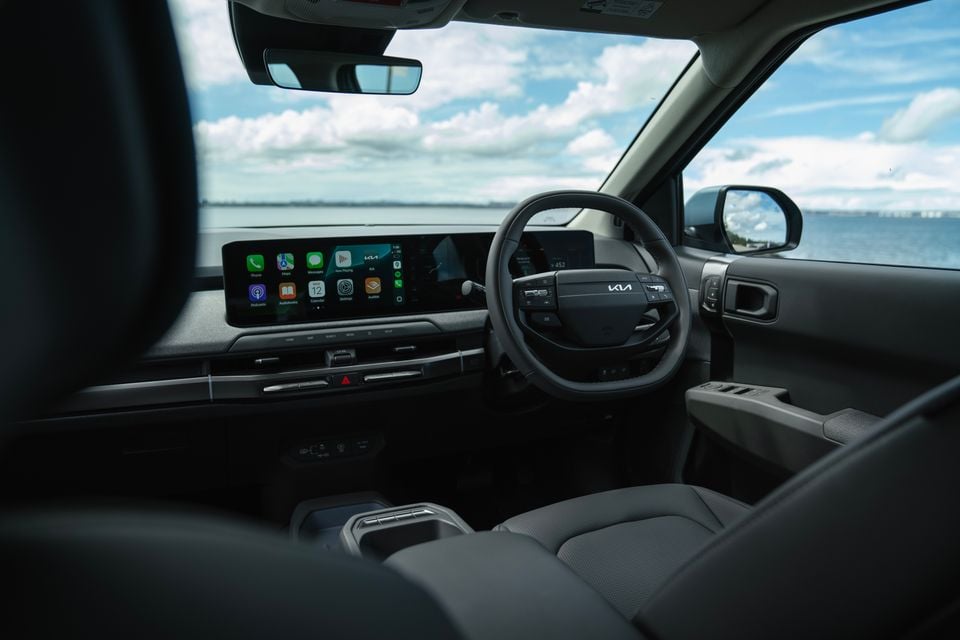
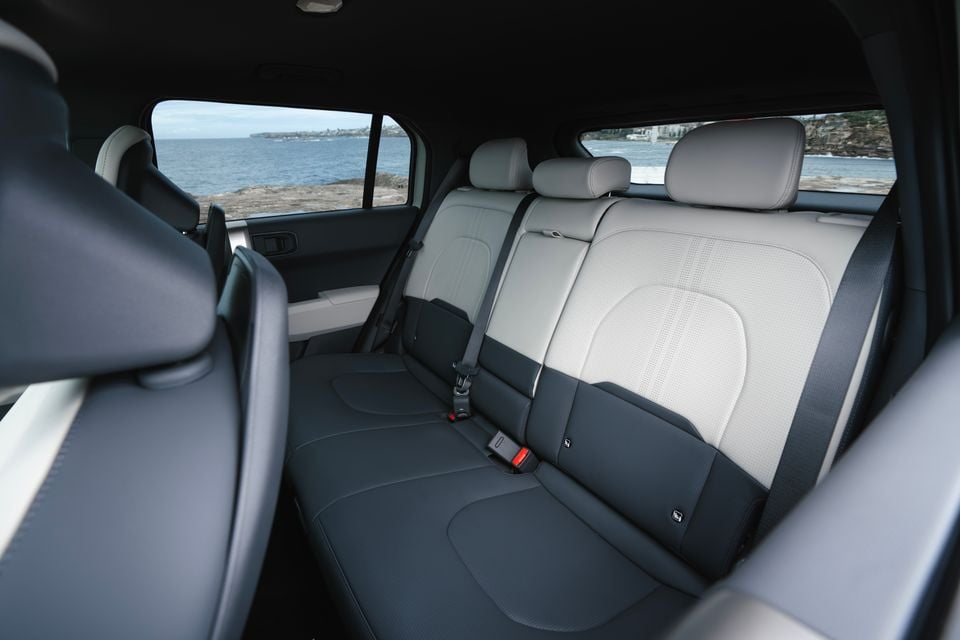

Rear passengers are kept very comfortable with air vents and charging sockets, plus handles above the rear doors to hang an infant’s toy from.
The EV3 is a great car to drive, very comfortable around town, and fun on country roads.
ANCAP gave the EV3 a five-star safety rating, scoring 86 per cent for child occupant protection and 83 per cent for adult occupant protection. It has seven airbags as standard including side head-protecting airbags extending to the second row, plus a front-centre airbag.
Like the Inster, the EV3 has a rear occupant alert but no specific child presence detection.
The Kia EV3 comes with a seven-year, unlimited-kilometre warranty and the battery is covered for seven years or 150,000km.
The five-seat Volvo EX30 embodies sustainability with an interior clad by tactile recycled materials.
It comes in Plus, Ultra and Cross Country grades, priced from $55,990 drive-away as part of a promotion for vehicles ordered and delivered by December 31, 2026.
Both the Plus (normally $49,990 plus ORCs) and Ultra ($54,990 plus ORCs) are rear-wheel drive and offer 462km of battery range, while the more rugged all-wheel drive Cross Country ($62,990 plus ORCs) has 417km (both WLTP).
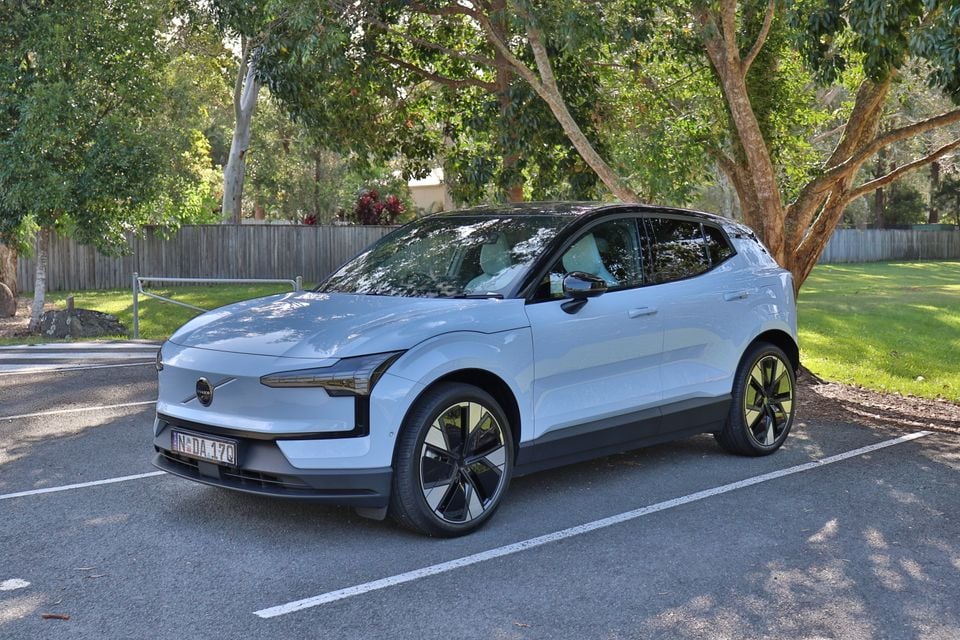
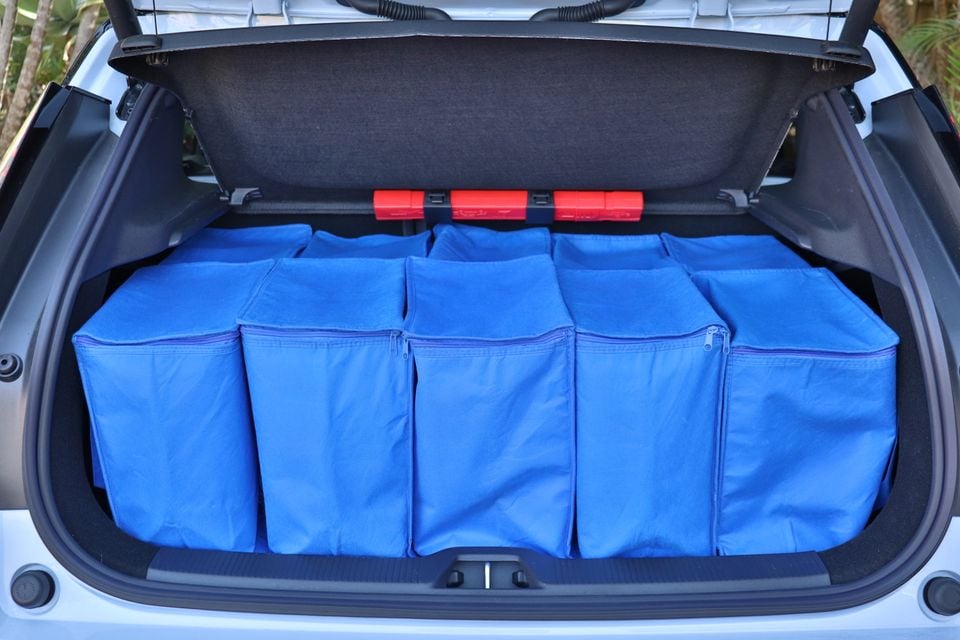
All versions have 31L of boot space, which is enough for 10 bags of groceries, but I found my twin side-by-side pram wouldn’t fit (though the tandem double pram would). No spare tyre is included, just a puncture repair kit.
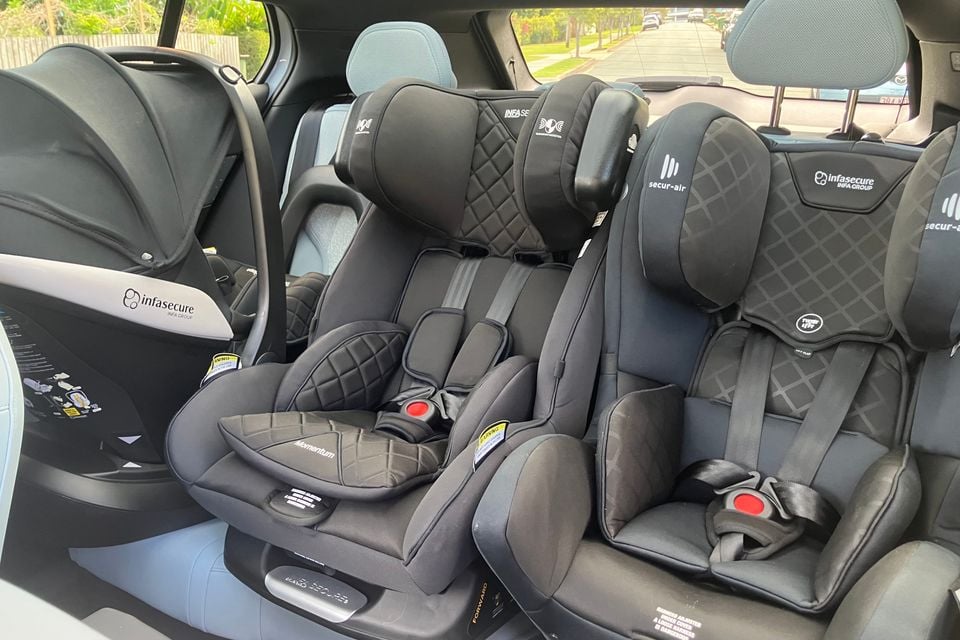
There are ISOFIX points in the two outer rear seats and top-tether anchors on all three seatbacks. I squeezed a combination of two harnessed slim child seats and a booster seat into the second row of the EX30, but I’d suggest you test your own child seats if the ability to fit three across is essential for your family. With two child seats fitted, I couldn’t fit in the back between them.
Legroom is also tight in the back of the EX30, which can just fit a 180cm driver in front of a forward-facing child seat, but only a 163cm driver in front of a rear-facing child seat.
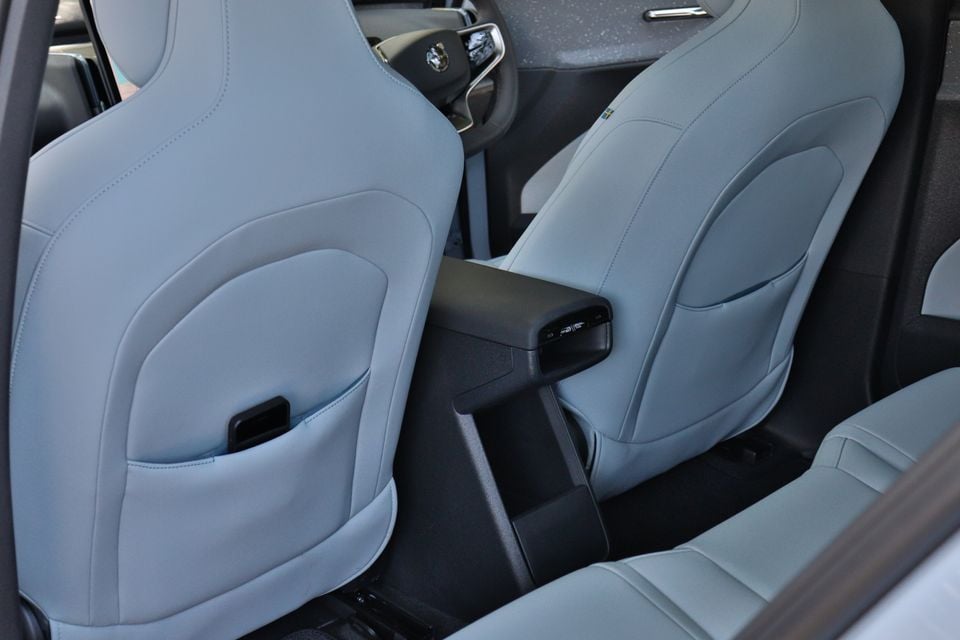
There are no air vents in the back of the EX30 and no handles above the rear doors for hanging toys. There are, however, two USB-C sockets at the back of the centre console.
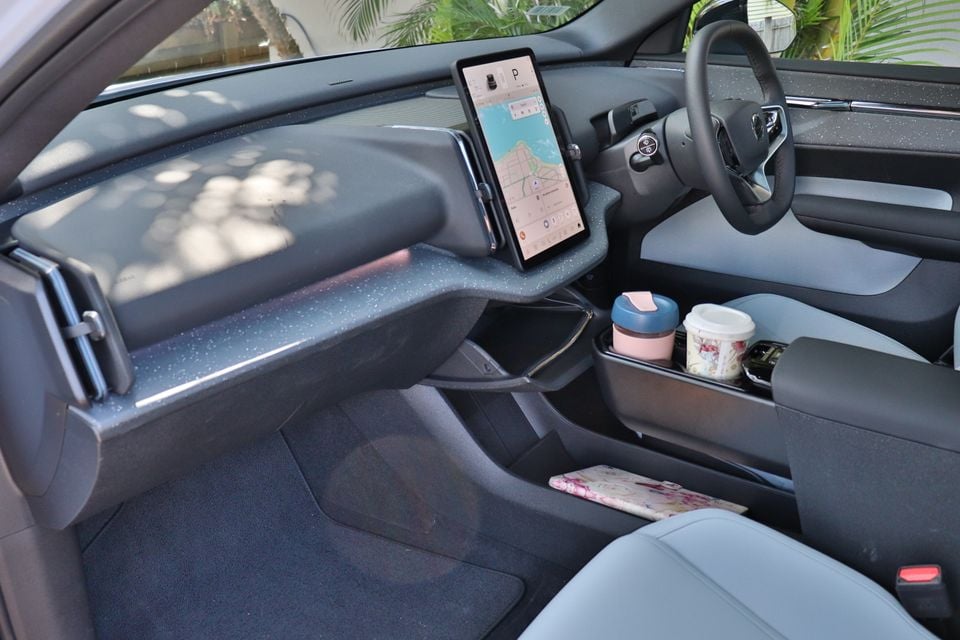
Hardly any buttons or dials are provided in the EX30’s minimalist interior, so the vertical 12.3-inch touchscreen houses nearly all controls but features wireless Apple CarPlay and Android Auto.
A good camera system with multiple angles helps with parking, and the EX30 is a nimble, enjoyable car to drive.
The EX30 has a five-star ANCAP safety rating, scoring 85 per cent for child occupant protection and 88 per cent for adult occupant protection. Seven airbags are standard in the EX30, including side head-protecting airbags for both rows and a front-centre airbag, but there is no child presence detection function.
Volvo provides a five-year, unlimited-kilometre warranty and the battery is covered for eight years or 160,000km.
MORE: Top 10 towing EVs for active families
MORE: Top 10 mainstream mid-size electric family SUVs with the longest range
MORE: Best electric cars for families in 2026
A mother of two and an automotive journalist based on Queensland's Sunshine Coast, Tace Clifford founded BabyDrive.com.au in 2017.
Paul Maric
7 Hours Ago

James Wong
15 Hours Ago
James Wong
15 Hours Ago

Damion Smy
16 Hours Ago
James Wong
17 Hours Ago

Josh Nevett
18 Hours Ago
Add CarExpert as a Preferred Source on Google so your search results prioritise writing by actual experts, not AI.