


William Stopford
2027 Mitsubishi ASX VR-e price and specs
Mitsubishi is finally launching another EV in Australia, with the Taiwanese-made ASX VR-e giving small electric SUV buyers yet another choice.
2 Hours Ago
Both carry 4.5 tonnes of GVM, both have 8000kg GCMs, and both can be driven on a car licence. But one is a truck – and it's a whole lot cheaper.

Founder
Founder
A while back, we pitted a light truck against a dual-cab ute. It turned out to be one of our more popular videos – not because everyone loved hearing the word 'truck', but because plenty of people didn't realise how much truck you can buy for the price of a not-so-capable dual-cab.
So we're doing it again, with two new contenders.
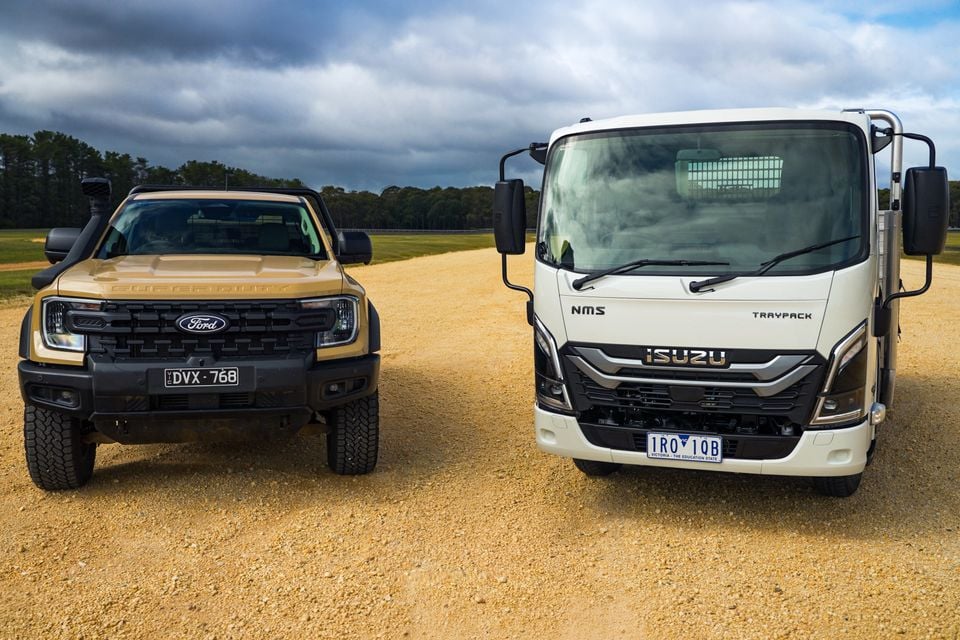
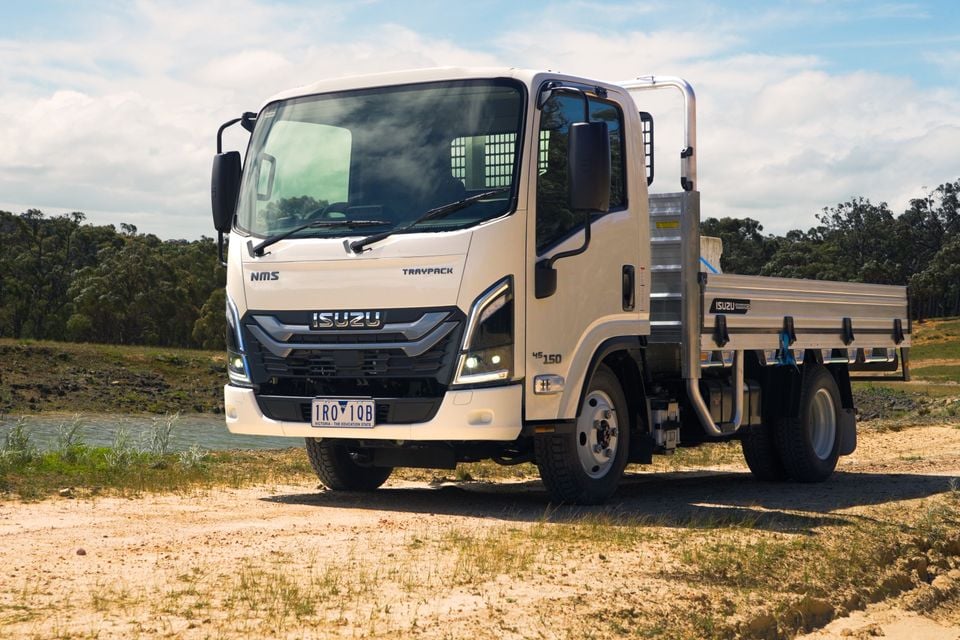
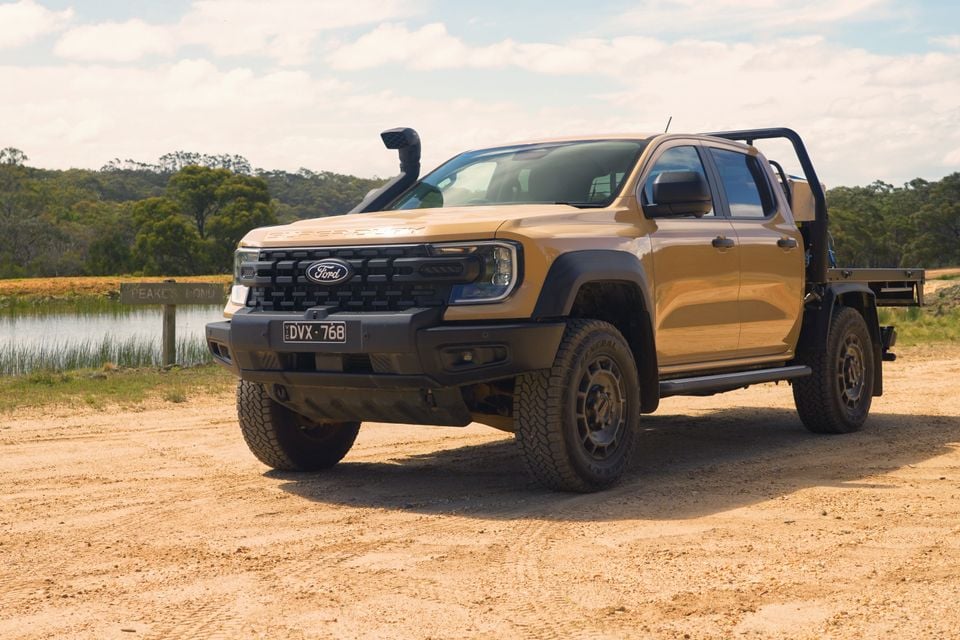
On one side is the Isuzu NMS 45-150 AWD, which has just received a new nine-speed dual-clutch transmission. On the other is the Ford Ranger Super Duty, Ford's heavy-duty take on Australia's best-selling ute.
On paper, they're closer than you'd think. Both have a 4500kg gross vehicle mass (GVM) and an 8000kg gross combined mass (GCM), and both can be driven on a car licence.
We loaded both with just under a tonne and took them around our new proving ground – highway, corrugated gravel, and some light off-road terrain – to find out which makes more sense for a tradie.
This is where the gap opens up.
The Isuzu NMS 45-150 AWD Traypack automatic, which includes a factory tray, is priced from $75,813.63 before on-road costs. The cab/chassis automatic starts at $72,747.92 plus ORCs, and the dual-cab/chassis auto at $82,132.68 plus ORCs.
The Ranger Super Duty starts at $82,990 plus ORCs for the single-cab/chassis, rising to $89,990 plus ORCs for the dual-cab/chassis and $95,990 plus ORCs for the XLT dual-cab/chassis. None of those prices include a tray, which is a dealer-fit accessory. Ford's galvanised tray pack for the double-cab adds around $6800.
Our XLT double-cab test car, fitted with a tray, costs well over $100,000 plus ORCs. We tried to get a single-cab Super Duty for a closer comparison, but none were available.
That's a big difference for what is, on paper, a very similar set of capacities.
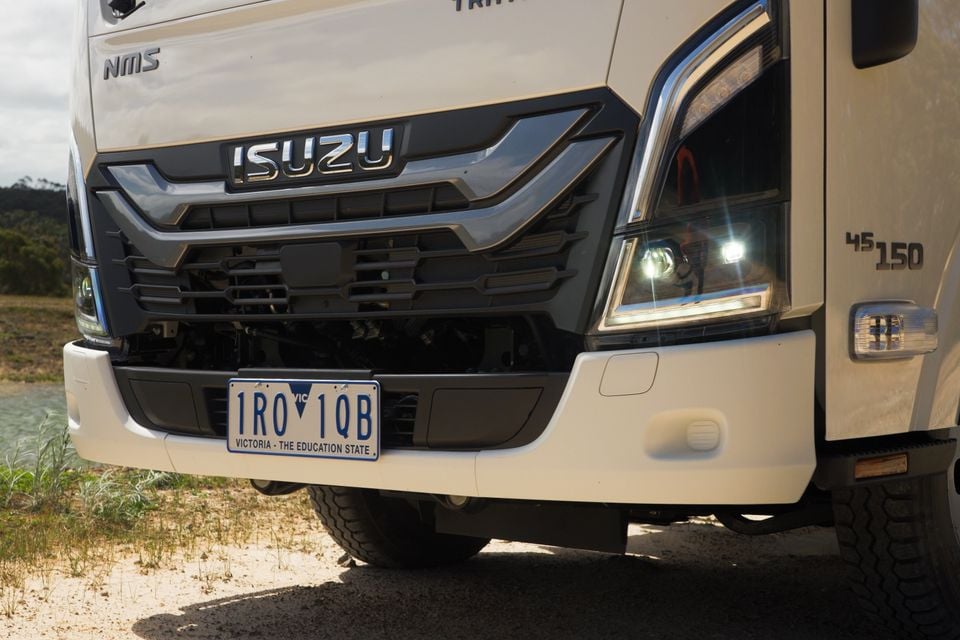
The Isuzu runs a new version of its 3.0-litre four-cylinder turbo-diesel, the 4JZ1-TCS. It produces 110kW (150PS) of power and 430Nm of torque, up from less than 400Nm with the previous engine.
| Specifications | Isuzu NMS 45-150 AWD | Ford Ranger Super Duty |
|---|---|---|
| Engine | 3.0L 4cyl turbo-diesel | 3.0L V6 turbo-diesel |
| Power | 110kW | 154kW |
| Torque | 430Nm | 600Nm |
| Transmission | Nine-speed dual-clutch automatric | 10-speed automatic |
| Drive | On-demand AWD, no low range | Full-time 4WD, low range, front and rear diff locks |
| GVM | 4500kg | 4500kg |
| GCM | 8000kg (auto) 8500kg (manual) | 8000kg |
| Braked towing | 4000kg | 4500kg |
| Warranty | 3 years/150,000km | 5 years/unlimited km |
| Price before on-road costs | From $72,747.92 (single-cab/chassis auto) | From $82,990 (single-cab/chassis) |
The bigger news is the transmission. The new nine-speed dual-clutch auto replaces an automated manual that was, frankly, a bit of a dog. When towing or climbing a hill, the old automated manual would leave big gaps between gears, lose momentum, and occasionally land you too low in the rev range. The dual-clutch fixes all of that. A five-speed manual remains available.
The Isuzu's all-wheel drive system is predominantly rear-wheel drive. Push a button and a viscous coupling can send drive to the front axle when the rear tyres start to slip. There's no low-range transfer case, and you'll need to make sure the manual locking hubs are engaged before you need them.
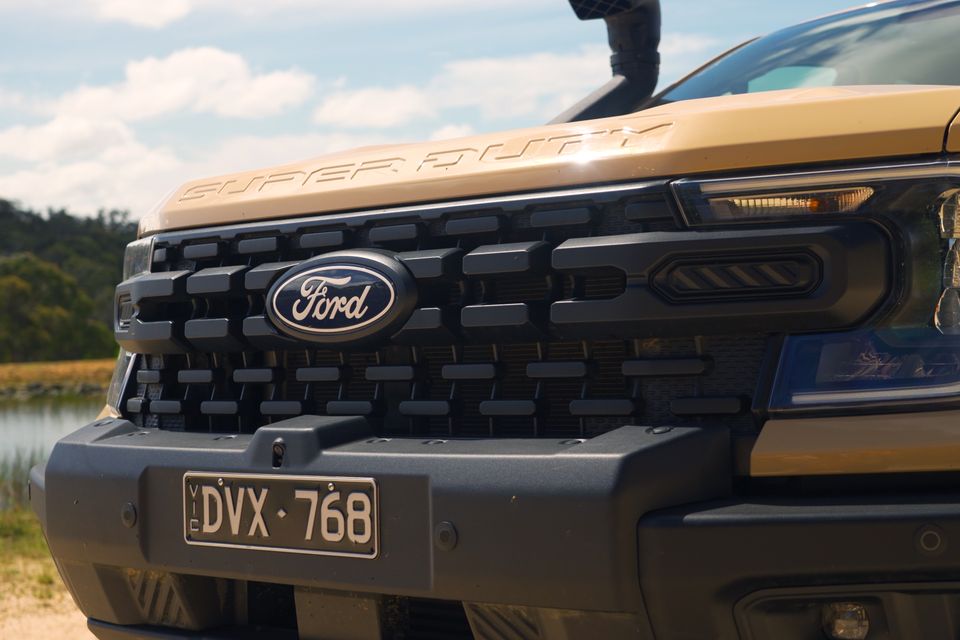
The Ranger Super Duty uses Ford's 3.0-litre turbo-diesel V6, but it's been detuned to 154kW and 600Nm – 30kW less than the standard Ranger V6. It also gains AdBlue exhaust gas after-treatment, which the regular V6 doesn't use. Drive goes through a 10-speed automatic to a full-time four-wheel drive system with a 4A mode, plus low range, and both front and rear locking differentials.
Both models leave the factory as cab/chassis vehicles, so the payload figure on paper isn't what you get once a tray goes on.
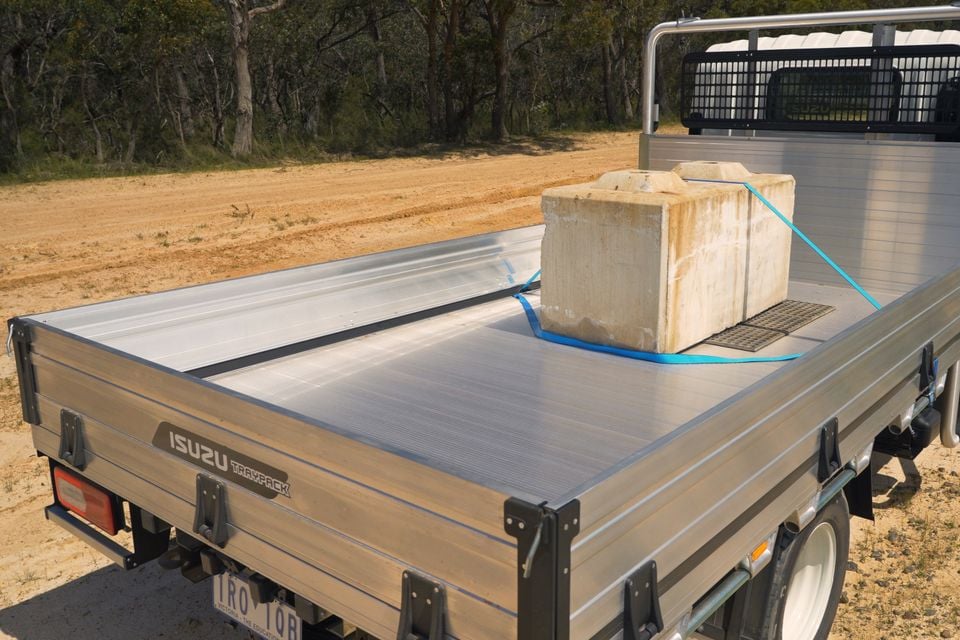
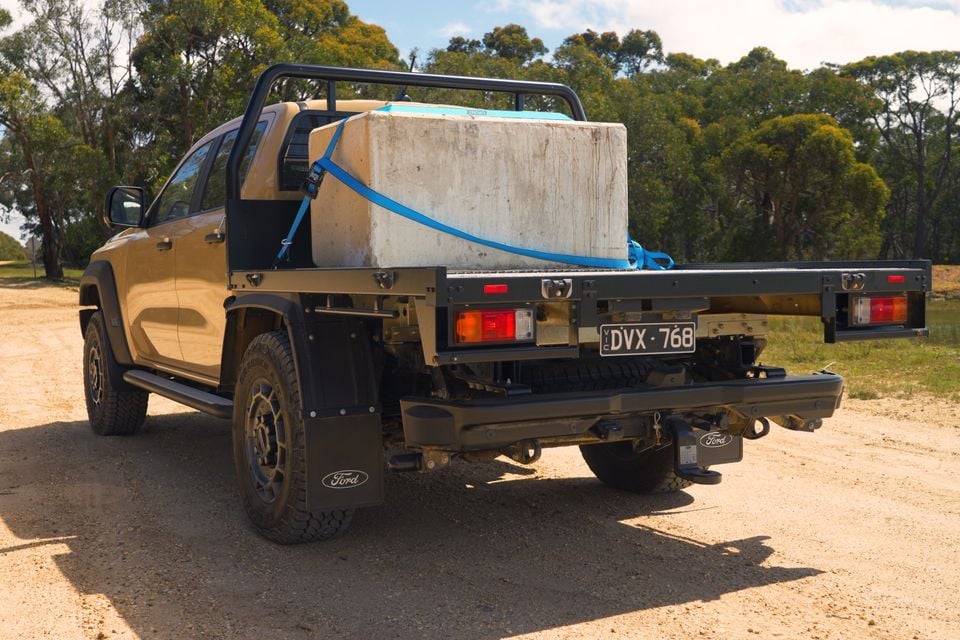
The Ranger Super Duty dual-cab/chassis has a quoted payload of 1825kg before a tray. Throw on a tray, a bull bar, and the other accessories most owners will fit, and that number shrinks quickly. On the weighbridge, the Super Duty is a heavy old thing.
That's why we stuck to just under a tonne in each. It leaves headroom for passengers and accessories, and represents a realistic sweet spot.
Towing is another area where the numbers can catch you out. The Super Duty is rated to tow 4500kg, but with an 8000kg GCM you can't max out both the tow rating and the payload at the same time. The Isuzu has a 4000kg braked towing capacity and the same 8000kg GCM in automatic form. Our test truck didn't have a towbar fitted, though one can be added.
The Isuzu's Traypack has a big advantage here. The aluminium tray is engineered and built in Australia, rated to five tonnes, and covered by the factory warranty. It's also now stronger, with pop-out tie-down points along the side. In other words, you can drive it out of the dealership and go straight to work.
We've driven the Super Duty plenty of times, including a comparison against the Toyota LandCruiser 70 Series. Loaded up, it's comfortable on the highway. In fact, it rides better with weight in the back than it does empty.
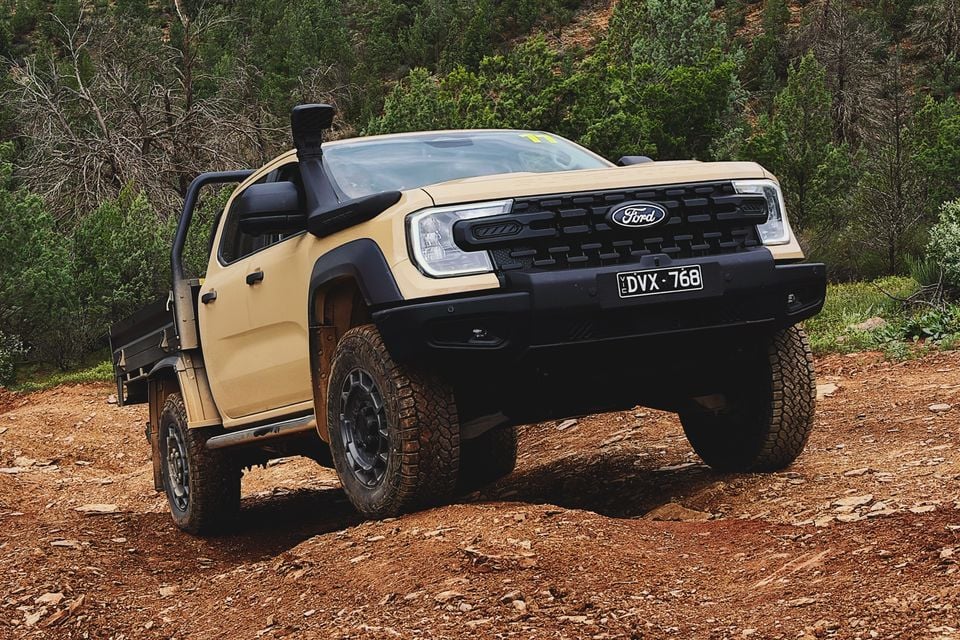
What you do notice is the detuned engine. With almost a tonne in the tray, the Super Duty feels slow from a standing start to 100km/h. If you're towing as well, you'll feel it even more.
On gravel, the Ranger's independent front suspension gives it an inherent advantage over the Isuzu's live axles, and it feels good. 4A works nicely here, giving you traction when you need it without the torque multiplication of low range. We did notice a little scuttle shake through the body over corrugations with the load in the back, but it was comfortable overall.
The catch is fuel consumption. Our Super Duty was using almost 14L/100km, which is very thirsty compared with a standard Ranger.
The turning circle is also big, at 13.6 metres.
I'm not a truck expert, I'm a car expert – but most people buying one of these will be average drivers who want something sensible for their business.
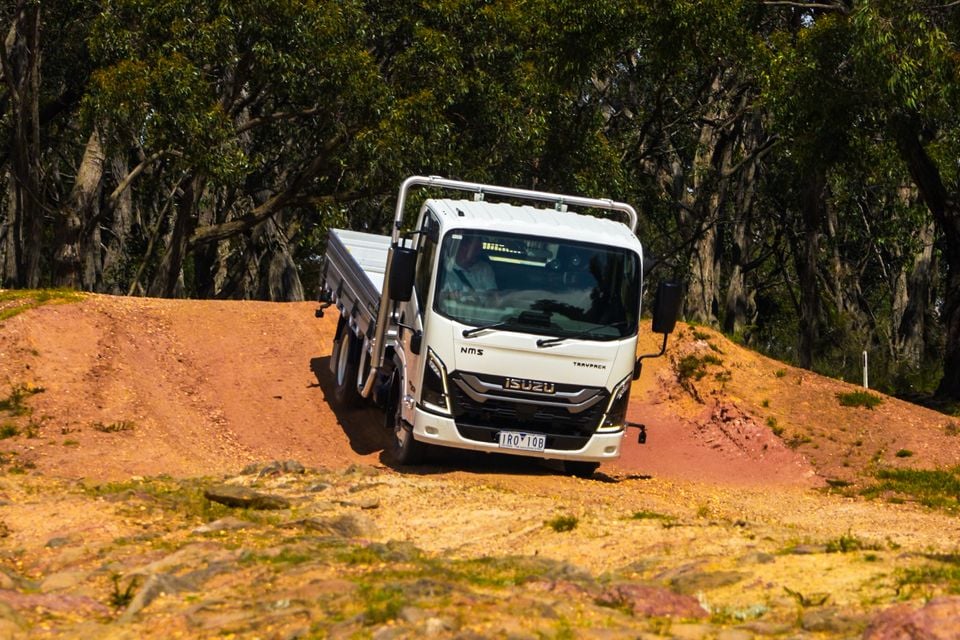
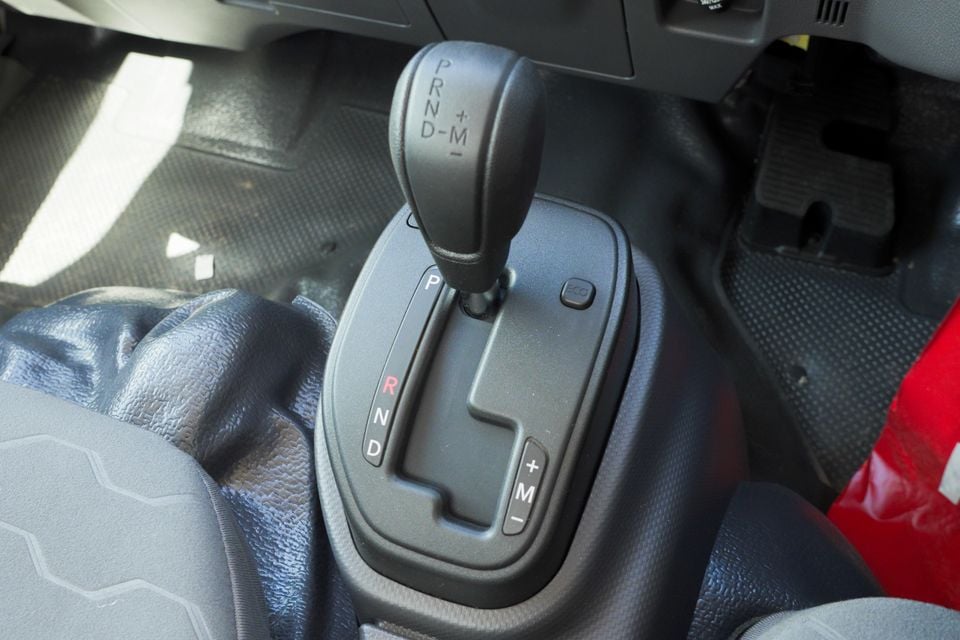
From that perspective, the NMS is a massive improvement over the previous generation. The dual-clutch auto makes it far more responsive, especially from a standstill, and acceleration feels uninterrupted. From 0-100km/h with the same load as the Ranger, it was much more sprightly than I expected. It doesn't feel agricultural at all.
There's an Eco mode button, which dulls the throttle. Turn it off and the truck holds gears longer and responds more quickly, at the expense of a bit more fuel.
Then there's the exhaust brake, which is a genuine highlight. When we tested the previous generation against a Toyota HiLux on a steep descent at our old proving ground, the exhaust brake pulled the truck up with ease, and it was chalk and cheese compared with the ute. The Ranger's 10-speed auto will downshift to offer engine braking, but it's nowhere near as strong.
On the highway, the ride is casual and comfortable. It's not Ranger levels of comfort, but the suspended driver's seat can be adjusted for your weight, and it smooths out the bumps well.
The surprise came on the gravel. On a heavily corrugated section, I wasn't being slammed around in the seat, and 60km/h felt perfectly reasonable. Lean on the throttle and you can feel the front axle engaging to keep things in check as the rear-end loses traction. You'd expect the ride to be much worse than it is.
And the turning circle? It turns on a dime. Where the Super Duty went massively wide, the Isuzu tucked around with room to spare, despite its long wheelbase. In tight city streets and work sites, that's a huge advantage.
My one gripe is the pedal box. Because the NMS is also available as a manual, the pedals sit to the right of the steering column. I left-foot brake, so it may be less of an issue for some, but it'd get tiring over a full day.
We know the Ranger Super Duty is very capable off-road, so we didn't bother repeating that. The real question was how the Isuzu handles the sort of terrain you might find on a muddy work site.
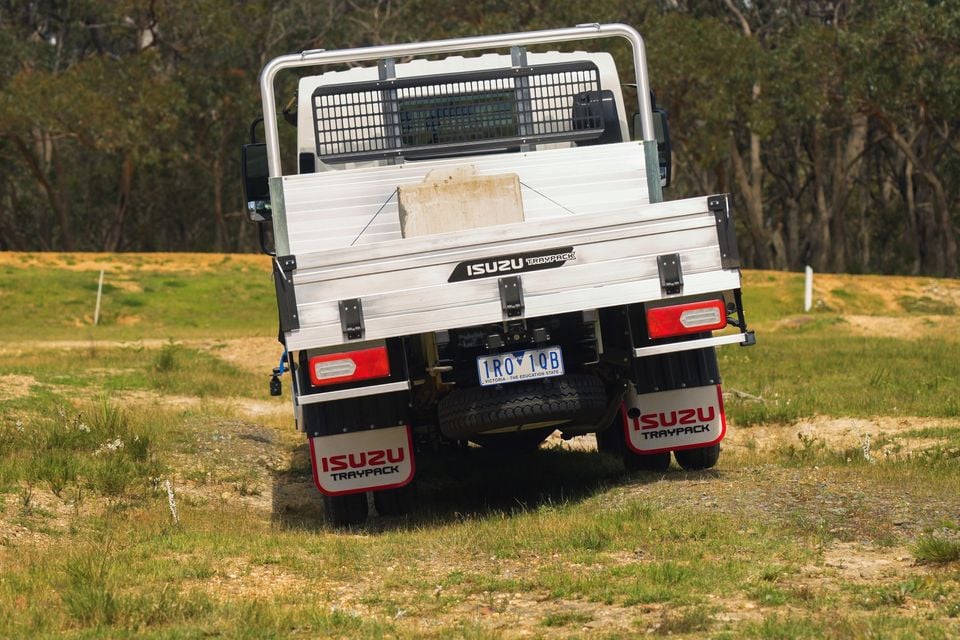
In rear-wheel drive mode, it walked over rutted, corrugated terrain and a couple of small crests without any drama. You can also lock in a gear manually for more control on descents, which is handy without low range.
On a mogul section designed to put the truck into a cross-axle situation, it started spinning a rear wheel in rear-wheel drive. Press the button to engage the front axle, and it walked straight up and over.
To be clear, you won't be going rock-hopping in this truck. There's no low range and no diff locks, and Isuzu offers a proper 4x4 N Series for that kind of work. But for a flooded work site or a rough access track, it does a good job.
The Isuzu's cabin is a big step forward if you're used to trucks from a couple of generations ago.
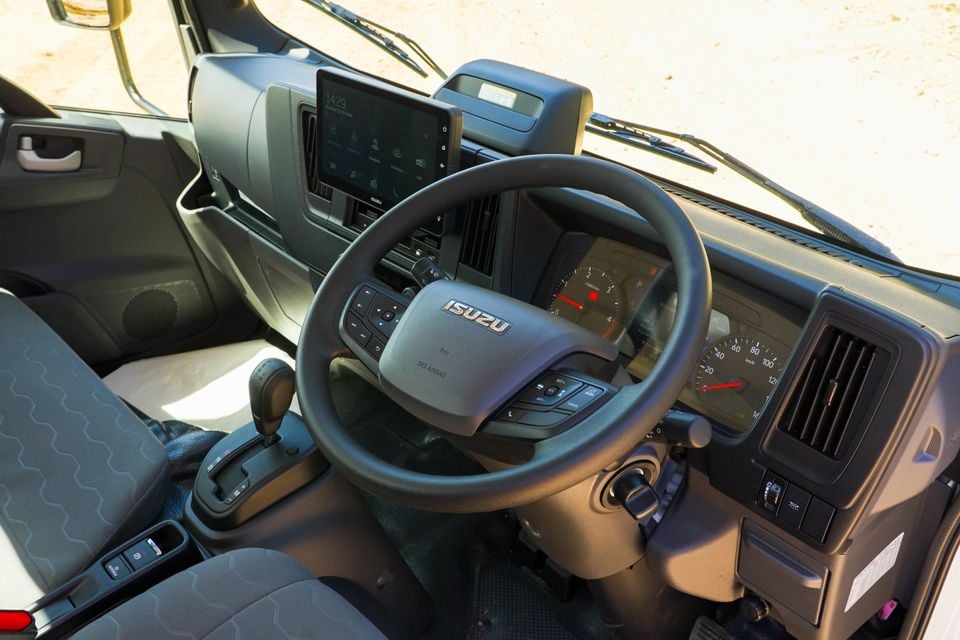
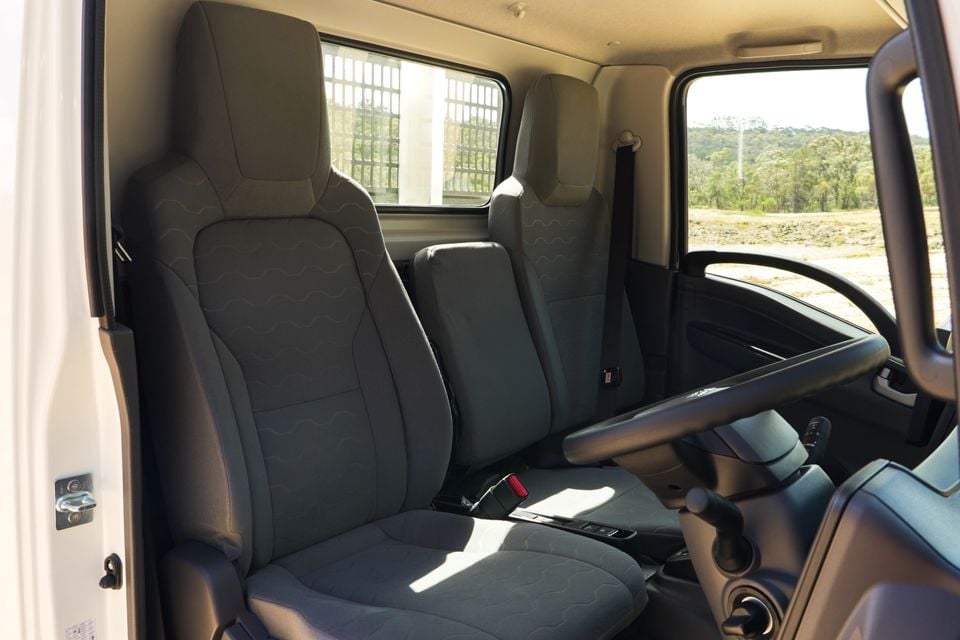

There's room for two adults plus a fold-down middle seat for an apprentice. It only has a lap belt, but it doubles as a tray for your odds and ends. Storage is generous, with spaces up high and trays around the cabin.
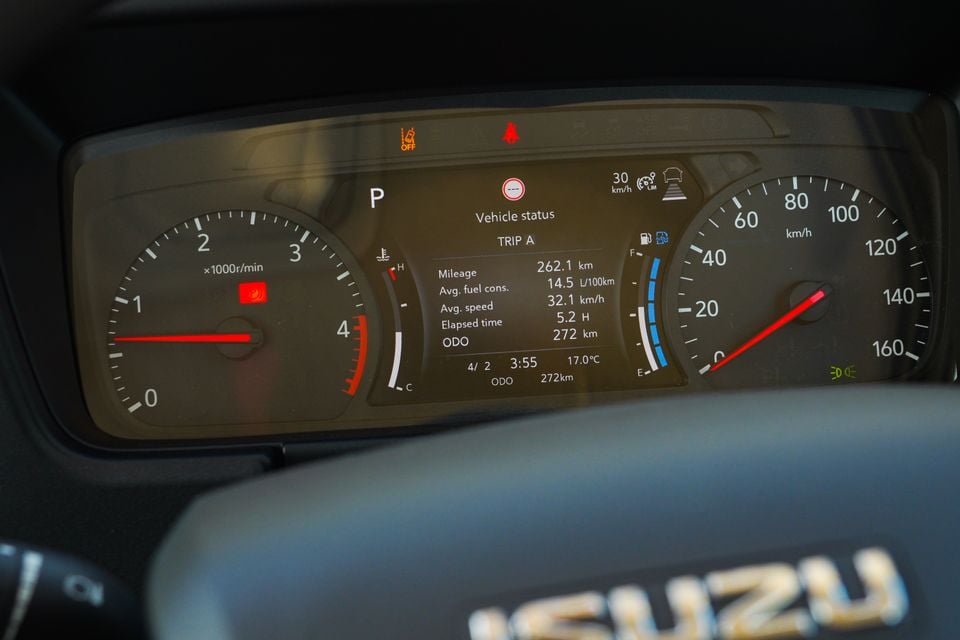
The infotainment system has built-in satellite navigation and smartphone mirroring, and the smaller steering wheel puts the audio and cruise control buttons within easy reach. A screen in the instrument cluster shows adaptive cruise distance and trip information, and a big LED cabin light is handy for paperwork. It's bizarre, though, that all three charging ports are USB-A. I would like to have seen USB-C.
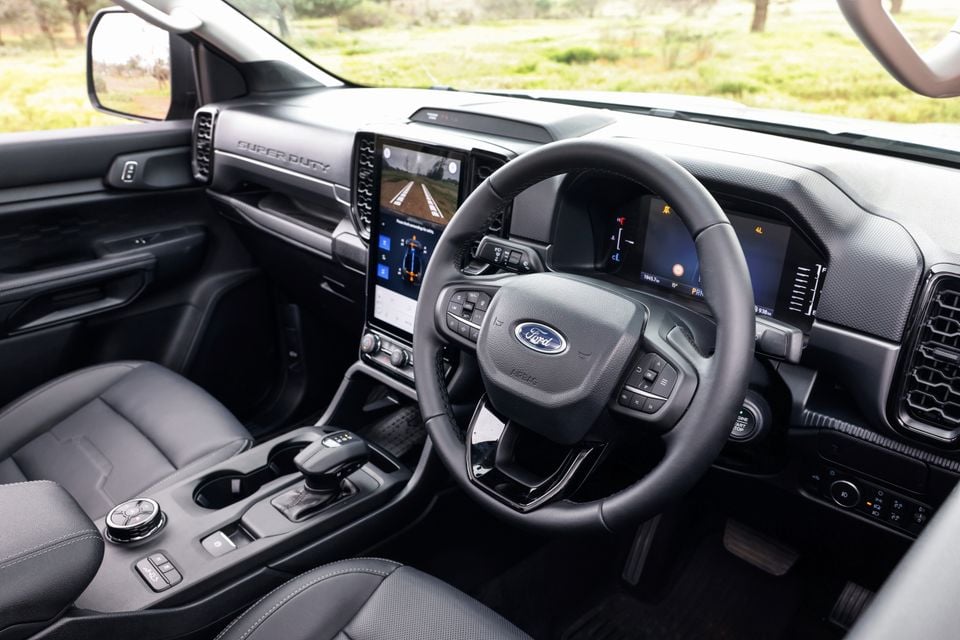
The Ranger has a tried-and-tested passenger car cabin, with a big central infotainment touchscreen and cupholders at each end of the dash. The XLT adds heated and cooled seats, which is something I appreciate given the money you're spending. It feels like a passenger car, whereas the Isuzu feels distinctly truck-oriented – albeit at the nicer end of the truck market.
Neither vehicle has an independent ANCAP safety rating.
The Super Duty comes with the Ranger's full safety suite, including autonomous emergency braking (AEB), adaptive cruise control, blind-spot monitoring with trailer coverage, lane-keep assist, a surround-view camera, and nine airbags.
Trucks have traditionally lagged behind in this area, but the NMS now gets a camera-based safety system with AEB, lane departure warning, and driver attention monitoring. Automatic models add full-speed adaptive cruise control and traffic sign recognition. You can adjust the lane departure warning's sensitivity, or switch it off.
The Ranger Super Duty is covered by Ford's five-year, unlimited-kilometre warranty.
Service intervals are 12 months or 15,000km, with capped-price servicing of $469 per visit for the first five years.
The Isuzu has a three-year, 150,000km warranty, with an extra three years of coverage on Ready-to-Work bodies like the Traypack. Service intervals are 12 months or 20,000km.
The conclusion here is fairly straightforward.
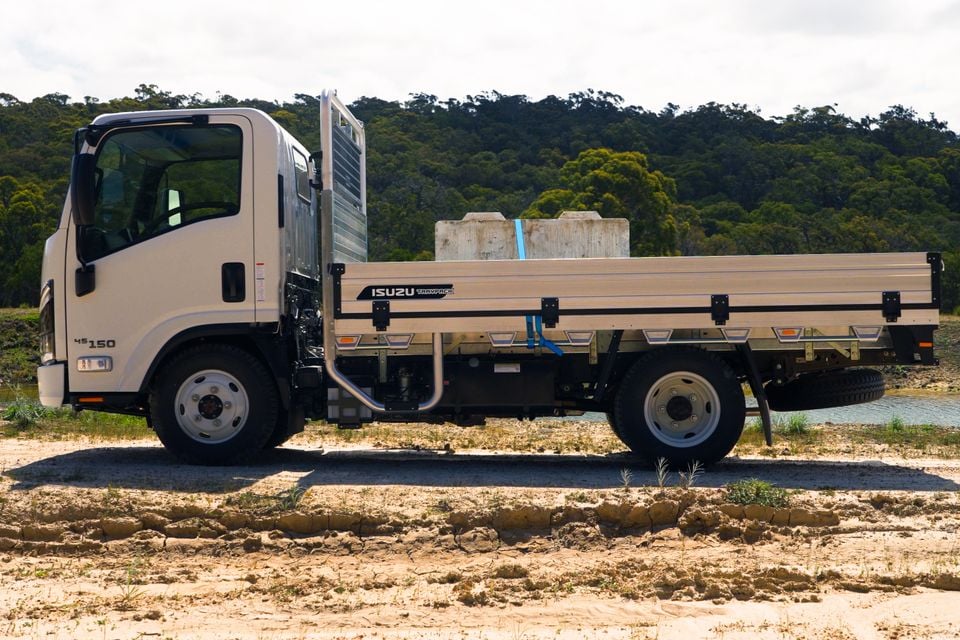
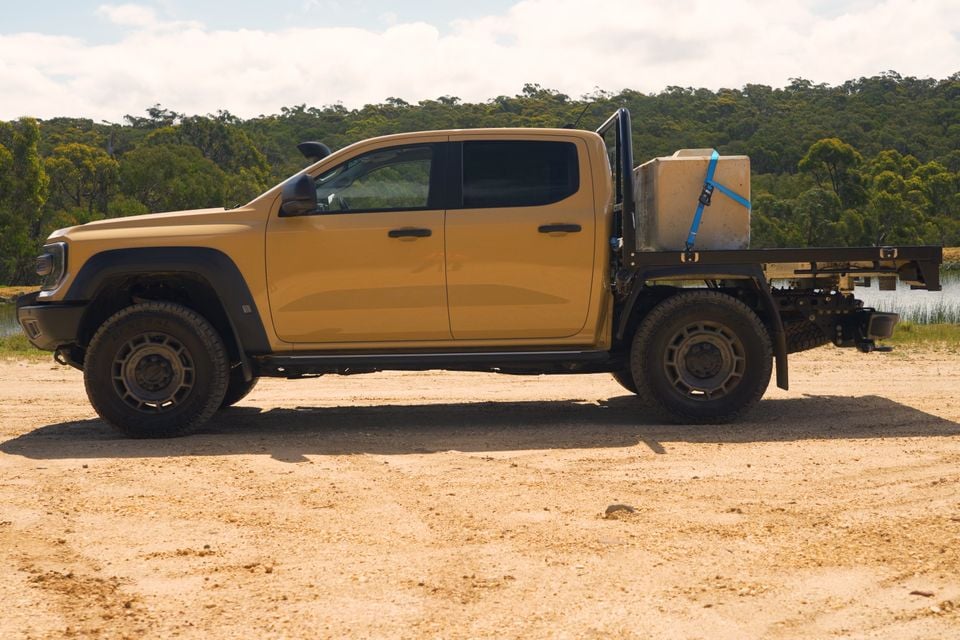
If you're a tradie moving a lot of gear and you need tray space, the Isuzu is the superior vehicle. It's engineered to carry heavy loads every day, the tray is built for the job, and the new transmission makes it far nicer to live with. If you spend all day behind the wheel, you'll appreciate smoother shifts, a turning circle that makes city work easy, and modern safety features.
It doesn't have the Super Duty's off-road hardware. If you genuinely need to get a big load somewhere remote, this isn't the one. But there's only so much you can do off-road with a heavy load anyway.
The Ranger Super Duty makes sense if you need a vehicle that's also your weekend transport, or if your work genuinely takes you off-road. It's more comfortable, better equipped, and more capable when the going gets tough.
But the biggest factor of all is price. People see trucks and assume they cost a fortune, but you're getting a lot of vehicle for your money with the Isuzu. Plenty of dual-cab utes are overpriced by comparison, and it's remarkable how cost-effective a light truck can be.
If you're carrying stuff day in, day out, it's an obvious choice.
Click the images for the full gallery
MORE: Explore the Ford Ranger showroom
MORE: Explore the Isuzu showroom
Share your thoughts with us in the comments below!
Paul Maric is a CarExpert co-founder and YouTube host, combining engineering expertise with two decades in automotive journalism.
Share your thoughts and write a review of a car you own and get featured on CarExpert.
William Stopford
2 Hours Ago

Damion Smy
5 Hours Ago
Damion Smy
6 Hours Ago

Josh Nevett
7 Hours Ago

Derek Fung
8 Hours Ago

James Wong
8 Hours Ago