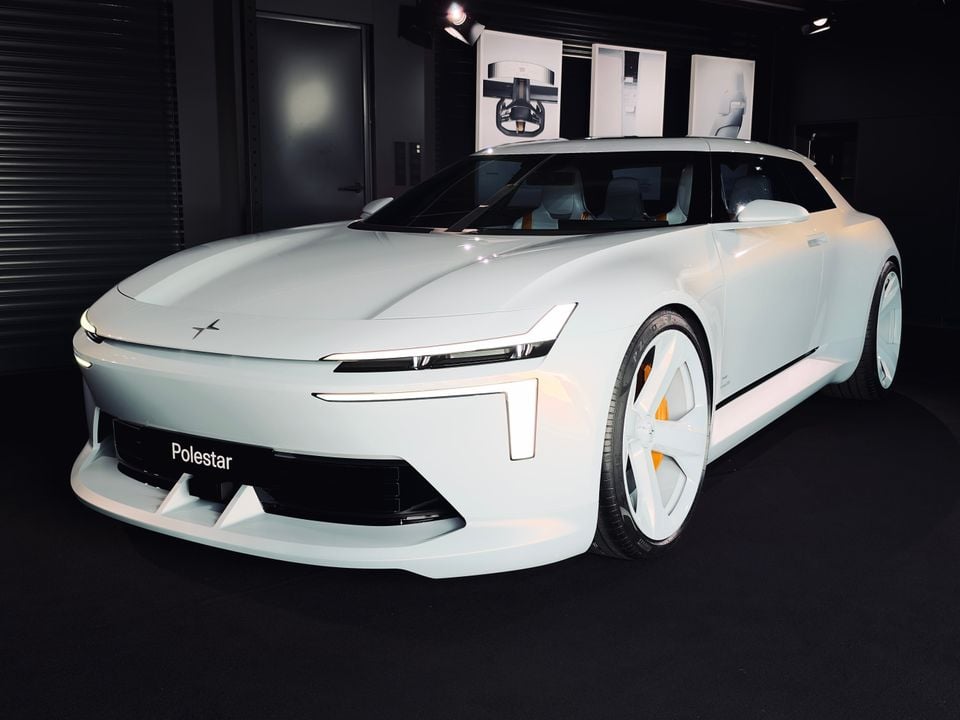
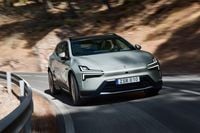
Polestar has finally revealed its Formula 2030 design study, a high-performance four-door electric shooting brake concept that's said to preview the designs of the brand's upcoming models, while also paying homage to its existing and past vehicles.
Said to be the "physical manifestation" of the brand's 'Formula 2030' future design strategy, the concept previews the next generation of the Swedish brand's design language, and is said to feature "various design attributes" from the next Polestar 2 and upcoming Polestar 7.
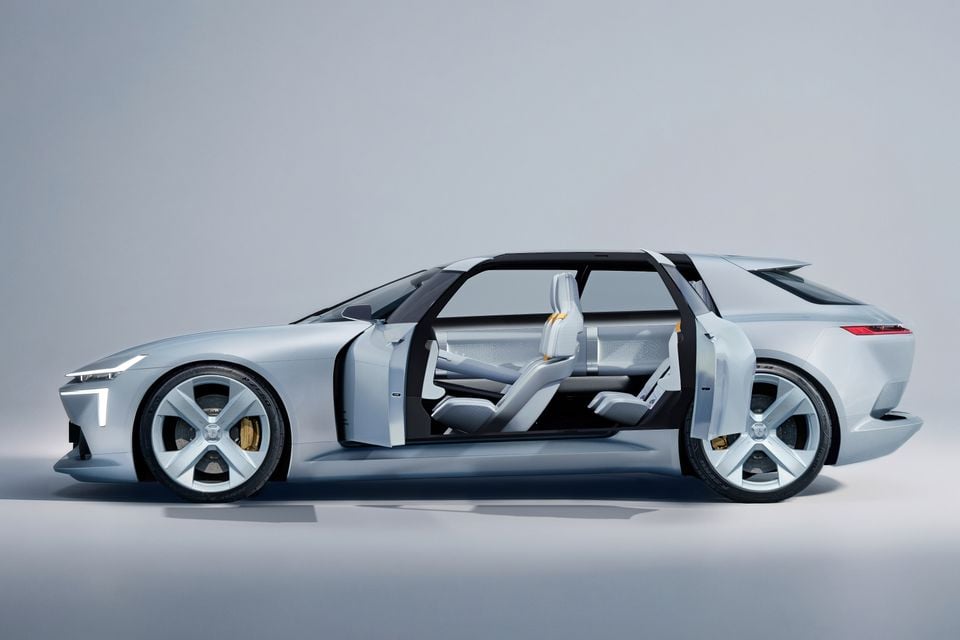
The "four-door sports car" measures just 4680mm long but 2021mm wide on a 2780mm wheelbase, with a 1350mm roofline that's even lower than that of the existing Polestar 5 electric GT.
Up front, the latest interpretation of Polestar's signature Dual Blade headlights preview the face of the next-generation Polestar 2 due in 2027, while the wraparound windscreen and single vertically oriented wiper pays homage to the original (current) Polestar 2.
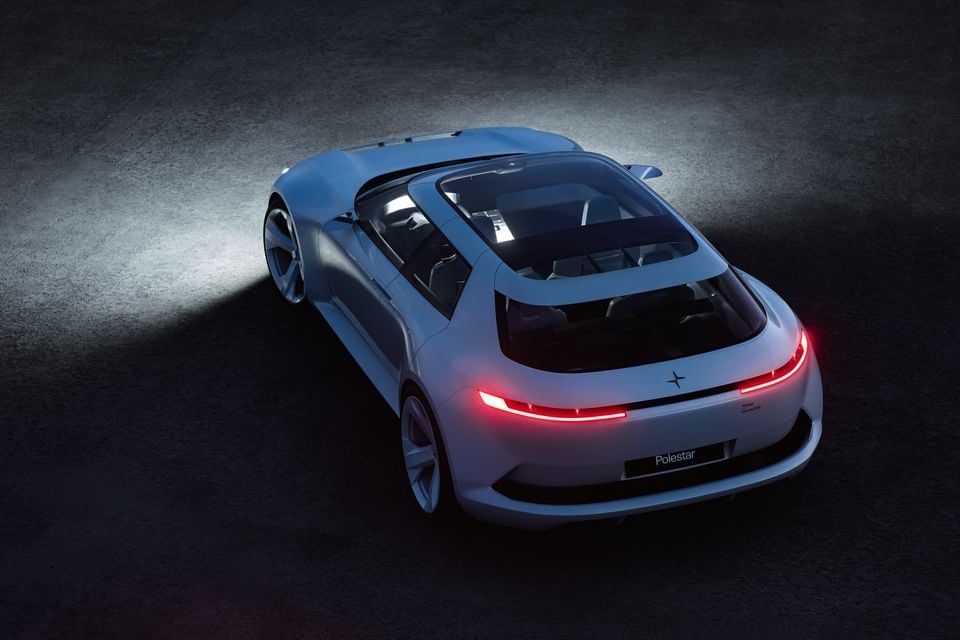
The sculpted rear-end debuts a new Single Blade tail-light signature, moving away from the rear light bar treatment that adorns all members of the brand's existing model range.
According to Polestar's head of design, Phillip Römers, the new tail-light signature will feature on both the next Polestar 2 and upcoming Polestar 7, with the voluptuous rear-end shape hinting at the hind haunches of the Polestar 7 compact crossover, which will be revealed in 2028.
Filling the wheel-arches are 22-inch centre-lock alloy wheels which ape the design of those on the Polestar 2 BST edition 230, and surround large brake rotors gripped by Brembo calipers finished in signature Swedish gold.
The Polestar Formula 2030 is finished in Nitrogen paint, a new exterior finish that's said to be a fresh take on the brand's signature pearlescent white. Specific to the concept, at least for now, Polestar says the paint "react[s] dynamically to natural light" and has undertones of blue and orange.
In addition to the new paint finish – which is draped across the body and the wheels – the lower cladding sections feature the same hue in a satin finish, in a nod to Polestar's usual contrast cladding but with a twist.
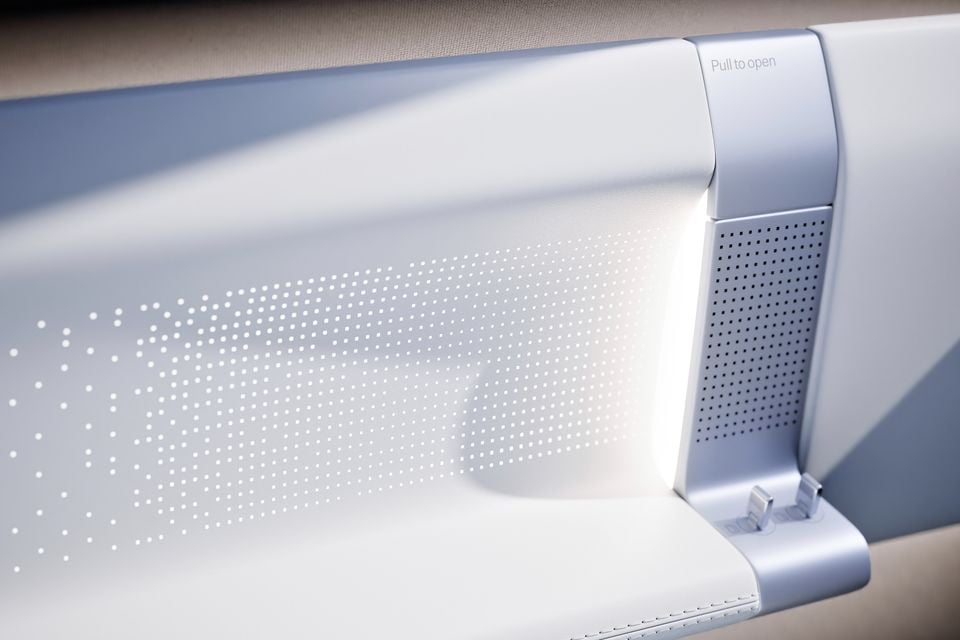
The cabin is accessed via opposing doors, revealing a pillarless design that houses a four-seat "performance-focused" cabin.
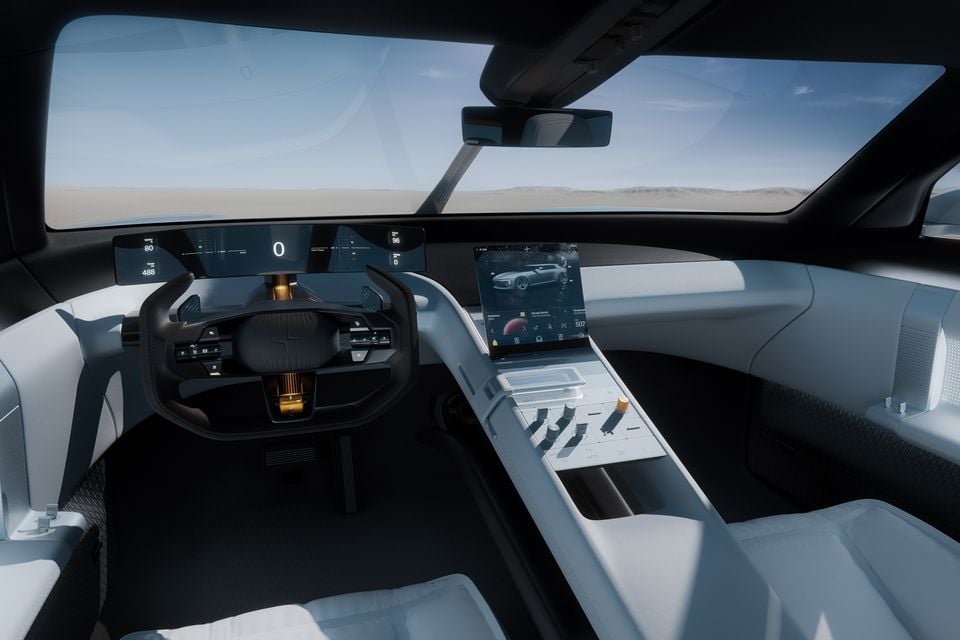
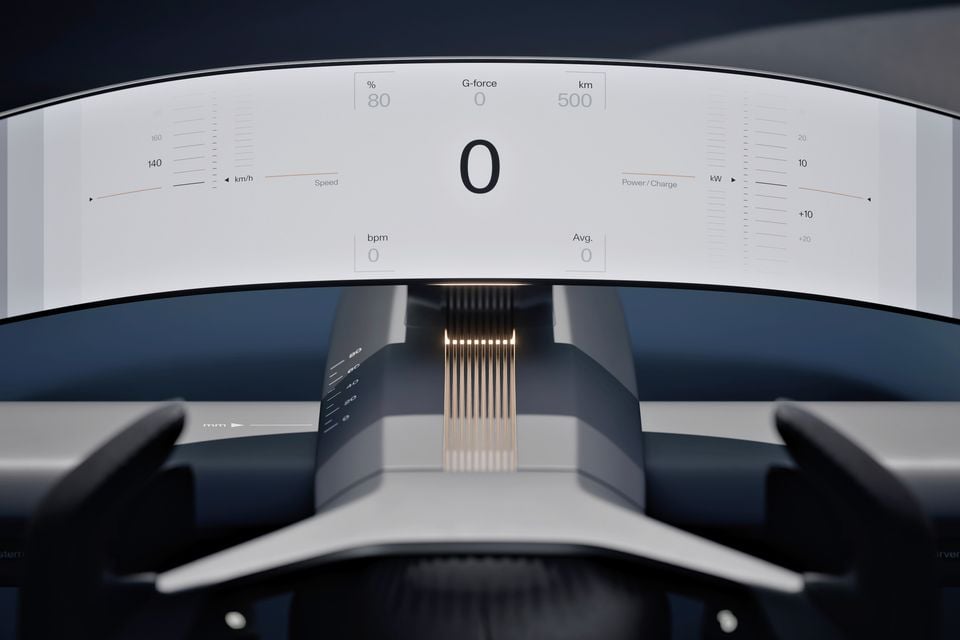
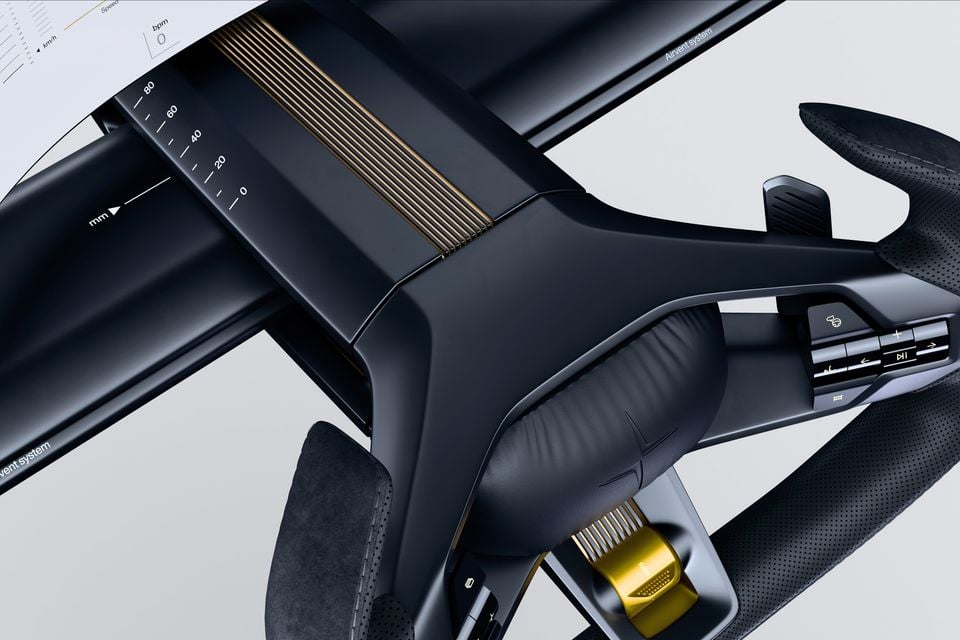
Once inside, immediately obvious is the wholesale change to Polestar's existing approach to vehicle cabins. The driver-oriented design features a 20-inch 'HyperDIM' curved instrument display, mounted to the steering column to ensure "optimum focus for the driver".
At the centre is a 12.2-inch Centre Screen Display integrated into a rising centre console, "designed to emphasise the importance of the driver's primary position in the vehicle".
A sliding drive mode selector on the centre console allows the driver to toggle Performance, Normal and Autonomous modes, which changes the "physical attitude" of the Centre Screen Display and driving position.
In Autonomous mode the CSD moves upright out of the centre console to show key information relevant to the setting, while the seat and steering wheel move away from each other as the vehicle takes control.
Normal and Performance see the CSD return to its flush position in the console, and the steering wheel pulled back towards the driver, with each mode toggling different setups for the HyperDIM driver's display.
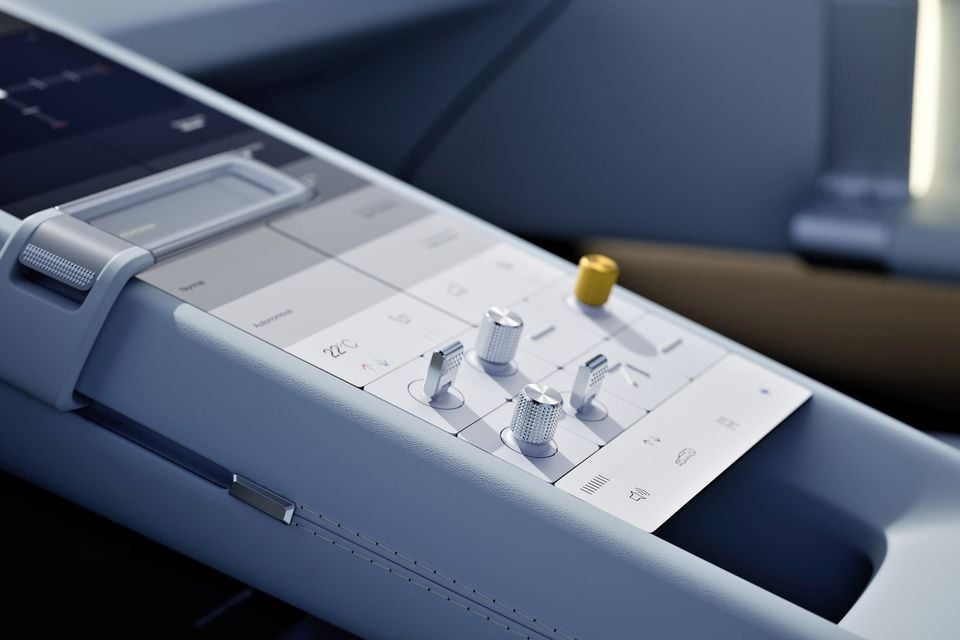
Polestar is 'rebalancing' the mix of physical and digital interior controls with the introduction of mechatronics below the Centre Screen Display.
These funky little buttons, rockers and switches are customisable both physically and digitally, allowing users to choose different switch designs and also have them programmed to provide access to the most-used functions in the vehicle, or user-defined functions.
Google Gemini and Google Built-in are integrated into the user interface, "providing advanced AI for all vehicle occupants". The displays feature brand-specific typefaces and control icons, maintaining the brand's hallmark minimalist and clearly presented in-car experience.
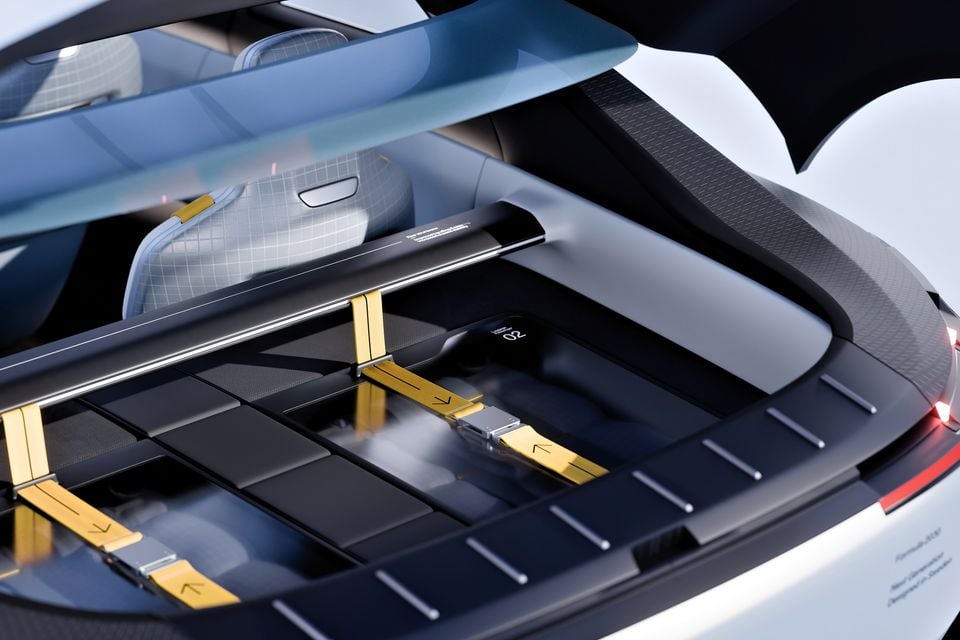
Further back, there's a transparent boot floor under the tailgate, with bespoke Polestar bags secured by Swedish gold luggage straps.
With the rear clamshell bootlid open you can also see the exposed body structure, featuring Bcomp natural fibre composite with Polestar's signature grid weave. Race-inspired Öhlins dampers are also on show.
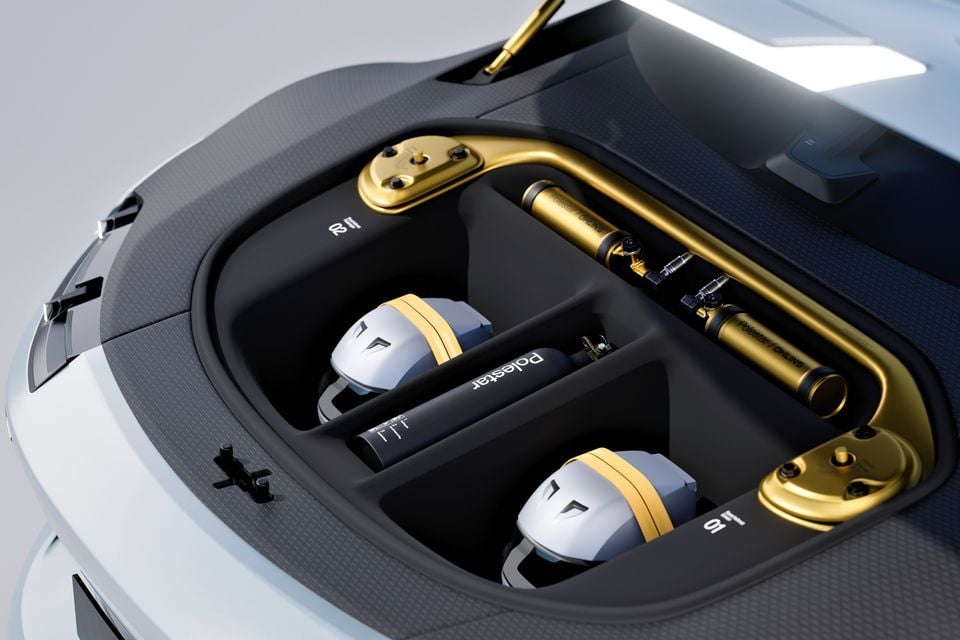
Meanwhile, the front luggage area – or 'frunk' – is said to provide "dedicated space for race helmets and a fire extinguisher", and is framed by a strut brace in Swedish gold.
In addition to previewing the company's future design direction, Formula 2030 also looks ahead to the next stage of Polestar's mono-material strategy and supports the company's sustainability and circularity endeavours to reduce its environmental impact.
Low-galvanised steel is used for exposed structural interior parts such as the seat frames and crossbar beam, made from recycled raw material and renewable energy. Polestar claims this approach is backed by research to be "one of the most impactful ways to achieve climate neutrality in the future".
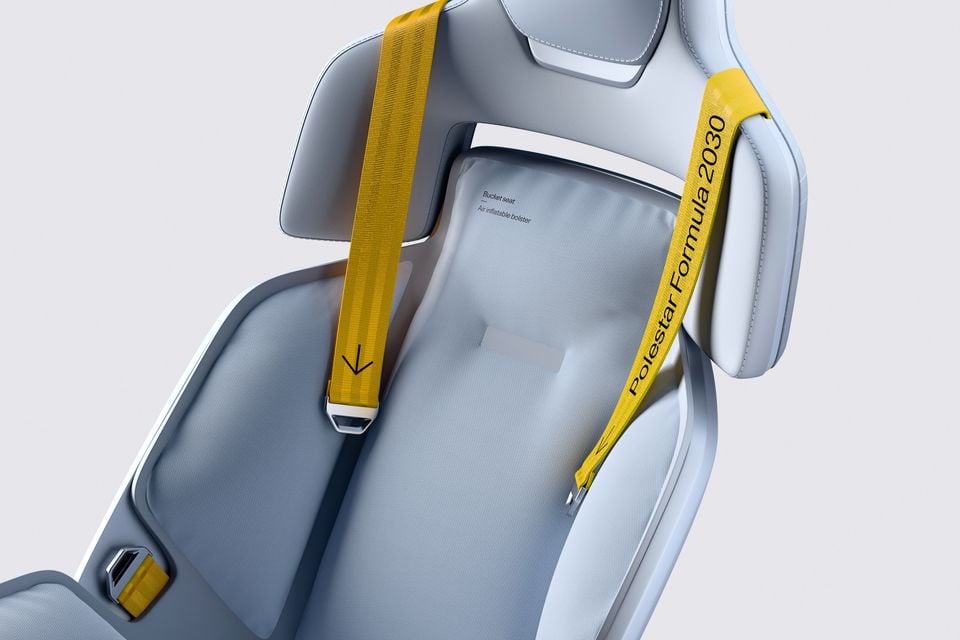
The race-inspired seats feature inflatable bolsters and cushions for optimal lateral and longitudinal support, while the seatbacks are made from a bio-based composite that replaces traditional virgin plastics with European flax and bio-based polypropylene.