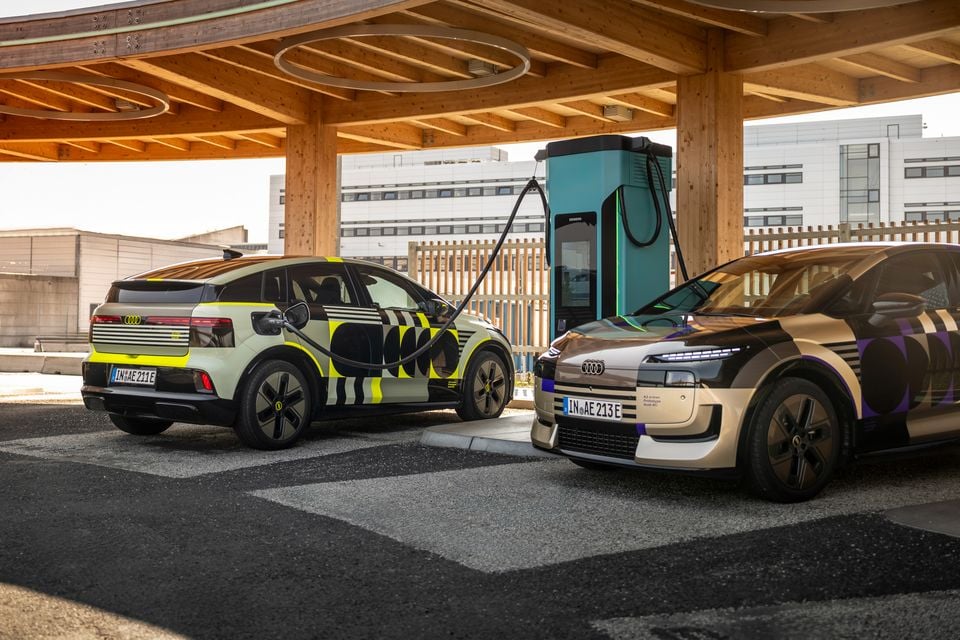
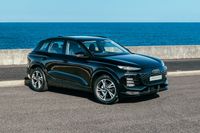
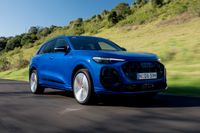
Audi has teased its upcoming A2 e-tron compact electric hatch again this week, promising benchmark efficiency thanks to a number of engineering measures.
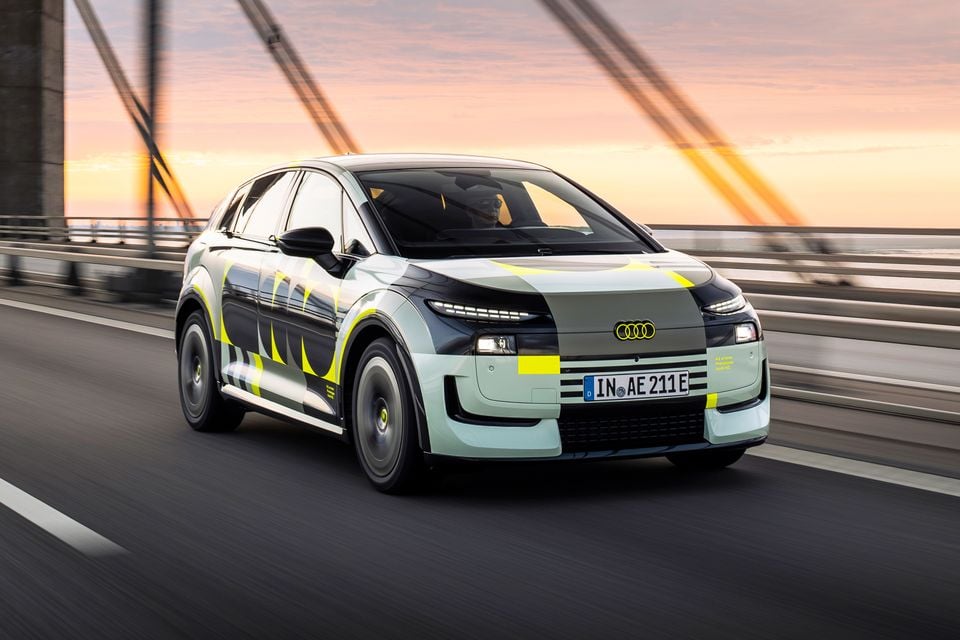
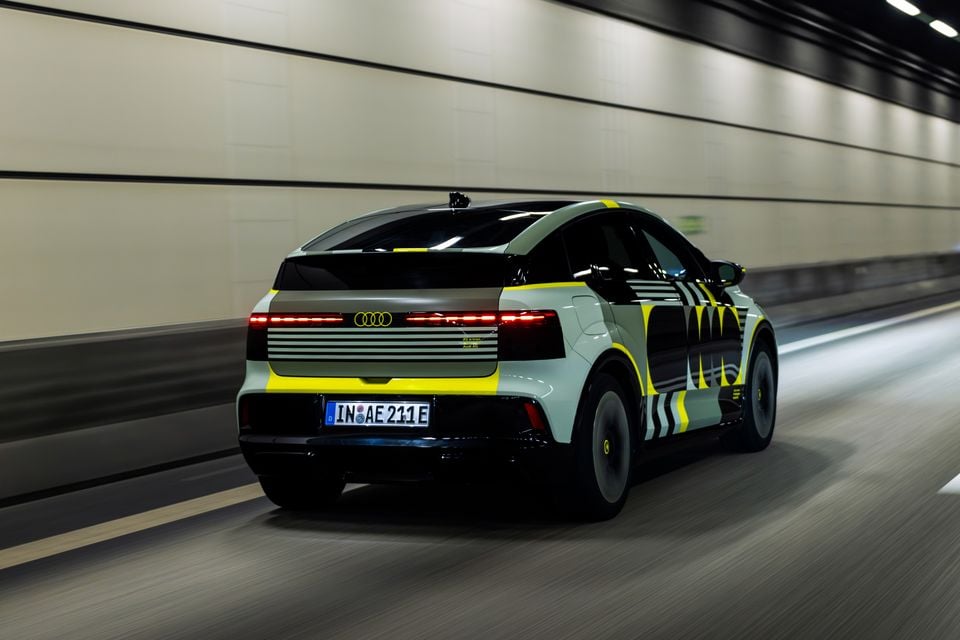
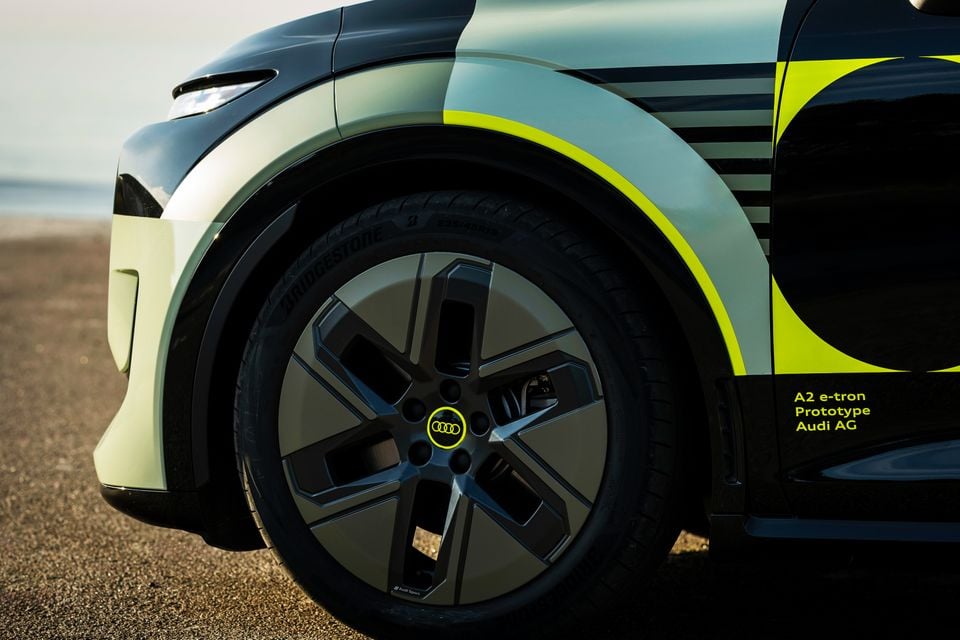
Reviving a cult-classic nameplate that was likewise a hallmark for vehicle efficiency, the reborn A2 is claimed to be "the most efficient Audi of all time" and has also had its design teased with a set of images of camouflaged prototypes.
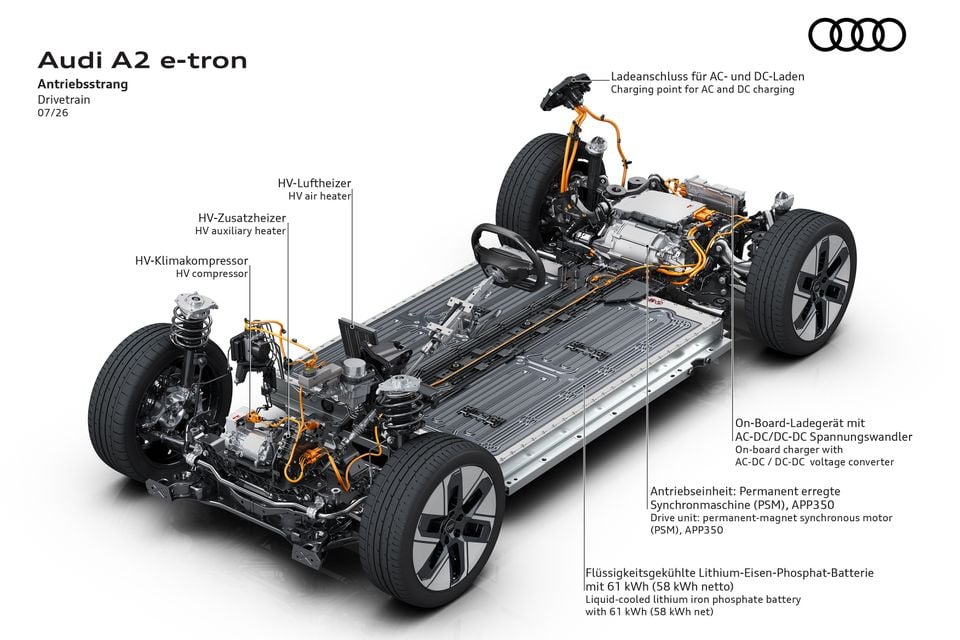
The efficiency halo of the 2027 Audi A2 e-tron range will be the 140kW variant with "efficiency package", which uses a 140kW "permanently excited synchronous motor engineered specifically for efficiency and driving comfort".
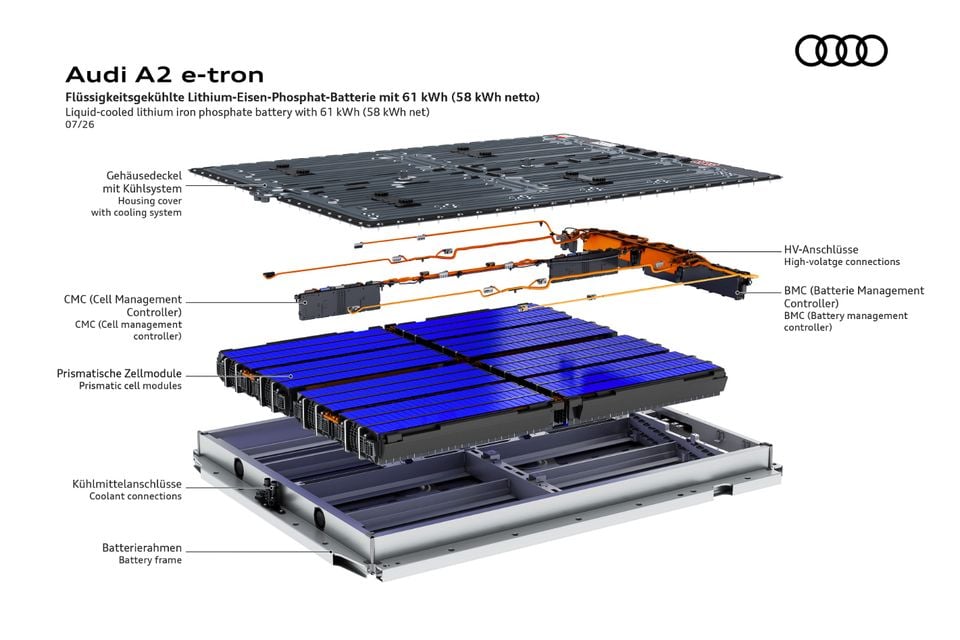
It's teamed with a 61kWh (gross) lithium iron phosphate (LFP) battery pack which is also claimed to achieve 89.6 per cent charging efficiency at the wallbox, via an "adapted cooling strategy".
Audi hasn't gone as far to confirm full WLTP figures just yet, but this specific 140kW 61kWh variant with the optional efficiency package achieved a quoted 12.8kWh/100km in preliminary WLTP tests.
Range wasn't quoted, but those figures point to a potential range of around 470km.
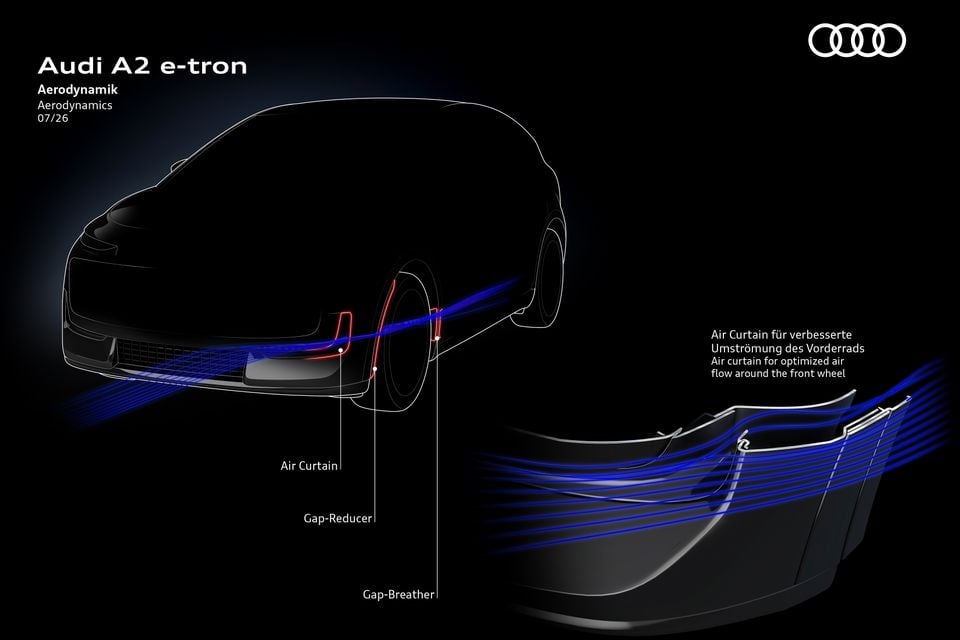
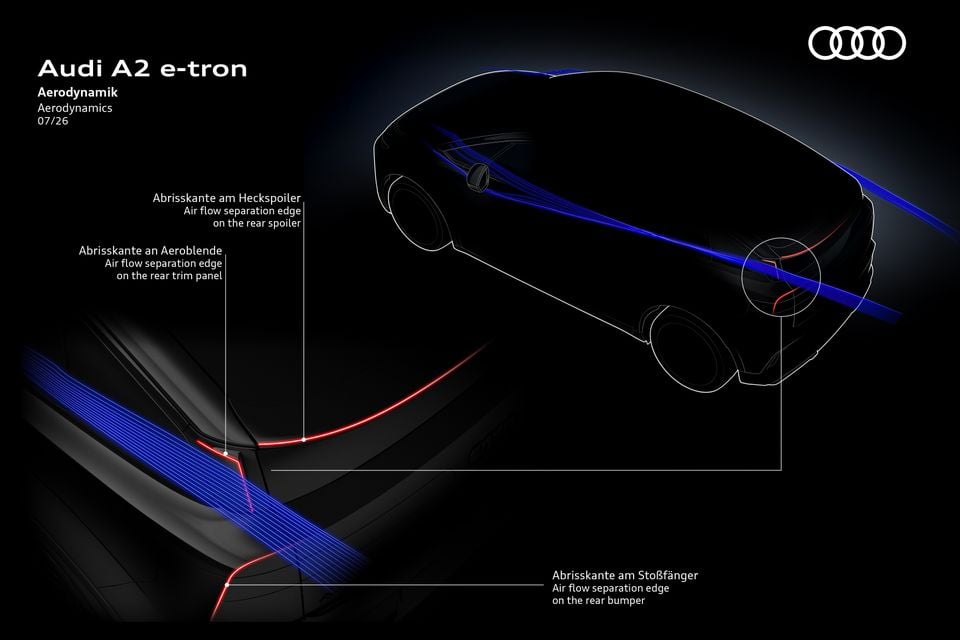
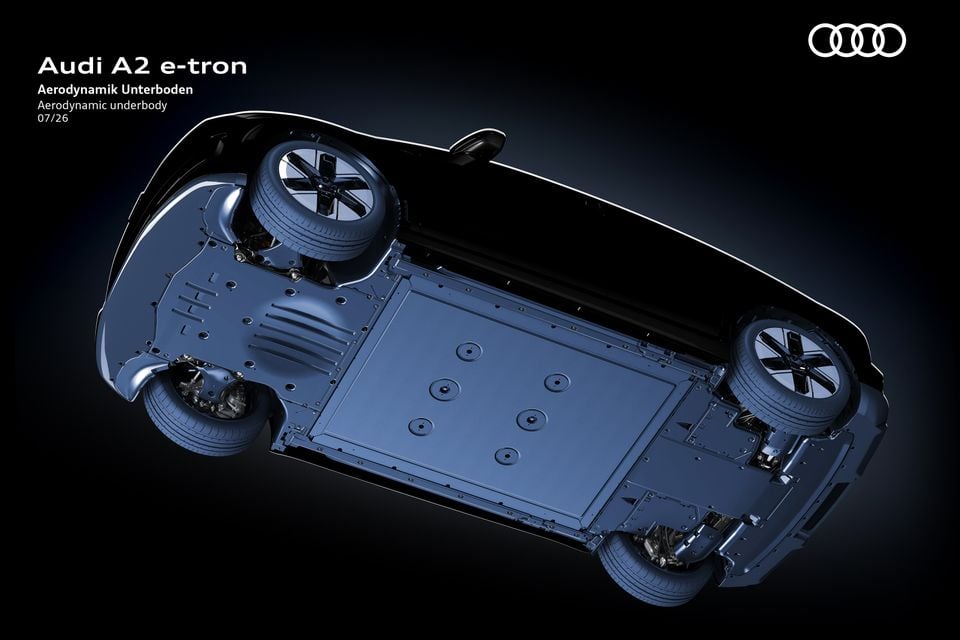
The Audi A2 e-tron 140kW with efficiency package boasts a drag coefficient of 0.24, which is "the best in Audi's compact lineup", and is aided by a range of aerodynamic features and measures that claim to reduce official energy consumption by as much as 0.9kWh/100km.
Some of these measures include front air curtains which suppress turbulence; gap reducers and gap breathers which "calm the air around the wheel arches"; an active air intake; and an overall design that has been carefully optimised to reduce drag.
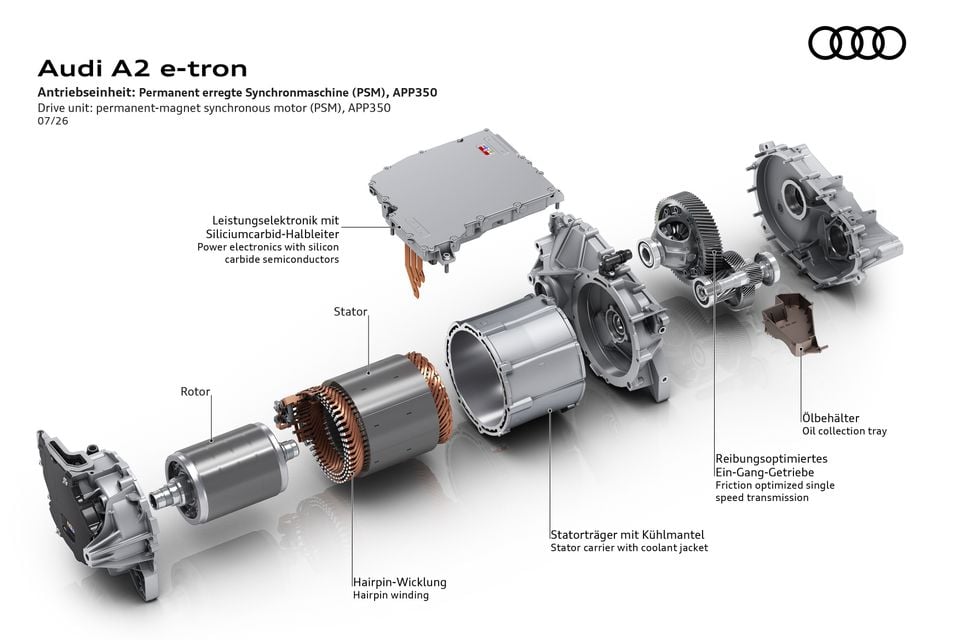
The 140kW electric drive motor is claimed to be "up to 10 per cent more efficient" than equivalent motors already offered by the German marque, and for the A2 e-tron has been especially engineered for "efficiency and driving comfort".
New silicon carbide semiconductors have been employed to "significantly reduce switching losses", with variable switching frequency helping to cut losses by up to 20 Watts. Further, alternative modulation techniques help to reduce switching losses by up to 33 per cent.
The A2 e-tron's 'APP350' e-motor has been designed with thinner, 0.2mm laminations (versus 0.3mm) to reduce what Audi says are known as 'iron losses'.
New low-friction oil in the electric motor's transmissions "noticeably" reduced friction losses, while the taller 10.2:1 gear ratio lowers motor speed, which in turn helps to reduce energy consumption.
Audi has gone into a little more depth when detailing the A2 e-tron 140kW's new battery, which uses LFP cells in a cell-to-pack design.
This method bonds the cells directly to the battery housing, increasing packing density to optimise energy content and density while taking up less physical space.
Being an LFP unit, it also doesn't require rare earth elements, claims to offer better longevity compared to alternative battery chemistries, and "can be routinely charged to 100 per cent in everyday use".
The aforementioned charging efficiency of 89.6 per cent helps to achieve "more consistent charging behaviour day to day". It also offers bidirectional charging capability, allowing vehicle-to-load (V2L) and vehicle-to-home (V2H) functions to charge external devices or act as a home energy storage system.
While not explicitly confirmed, the A2 e-tron is understood to be based on the latest version of the Volkswagen Group's rear-drive MEB electric vehicle architecture, which already underpins a range of models including the Audi Q4 e-tron, the Cupra Born and Tavascan, the Skoda Elroq and Enyaq, as well as the Volkswagen ID.3, ID.4 and ID.5.
Now dubbed the "rear-wheel drive variant" of the MEB+ platform, not to be confused with the front-wheel drive variant used in the Cupra Raval and VW ID. Polo, the "latest evolutionary stage" of the modular EV platform offers a range of new, more efficient e-motors and battery packs.
In the similarly sized Volkswagen ID.3 Neo, there are 125kW/140kW/170kW electric motor variants, teamed with 50kWh/58kWh/78kWh (net) battery packs. The 140kW variant claims combined WLTP efficiency of 13.9-14.9kWh/100km, with range of up to 494km from the 58kWh battery.
It's worth noting the ID.3 Neo's 140kW electric motor bears the same APP350 codename as the Audi's, indicating Audi has managed to slash about 1.0-2.0kWh/100km from the A2 e-tron's energy consumption using the same basic hardware.
The Audi A2 e-tron will be revealed during the northern hemisphere fall of 2026, meaning its debut is mere months away.
Following its public unveiling during the September-November period, it's understood the A2 e-tron is a chance to come to Australia – likely sometime in 2027.
In May, an Audi spokesperson told CarExpert that the premium arm of the VW Group is "evaluating" the A2 e-tron for Australia, as it presents an opportunity in the growing compact EV market.
"It’s been announced globally, [and] where we do see an opportunity in the marketplace is to have a compact EV. There is a lot of growth in that segment," the spokesperson added.