




Josh Nevett
2027 Xpeng X9 review
The new Xpeng X9 is not only an electric Kia Carnival rival – it’s a completely different type of people mover.
2 Hours Ago
The new Xpeng X9 is not only an electric Kia Carnival rival – it’s a completely different type of people mover.
Deputy Marketplace Editor
Deputy Marketplace Editor
Deputy Marketplace Editor
Deputy Marketplace Editor
If this is the car for you, we’ll compare offers from trusted dealers, handle the back and forth and manage your purchase from enquiry to delivery.
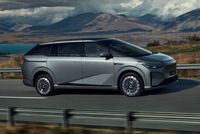
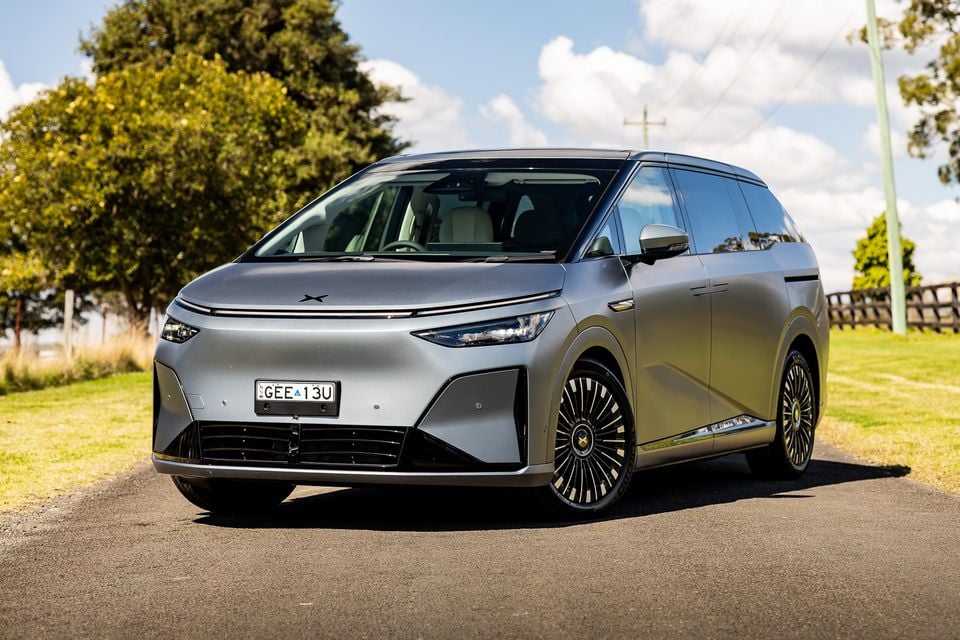
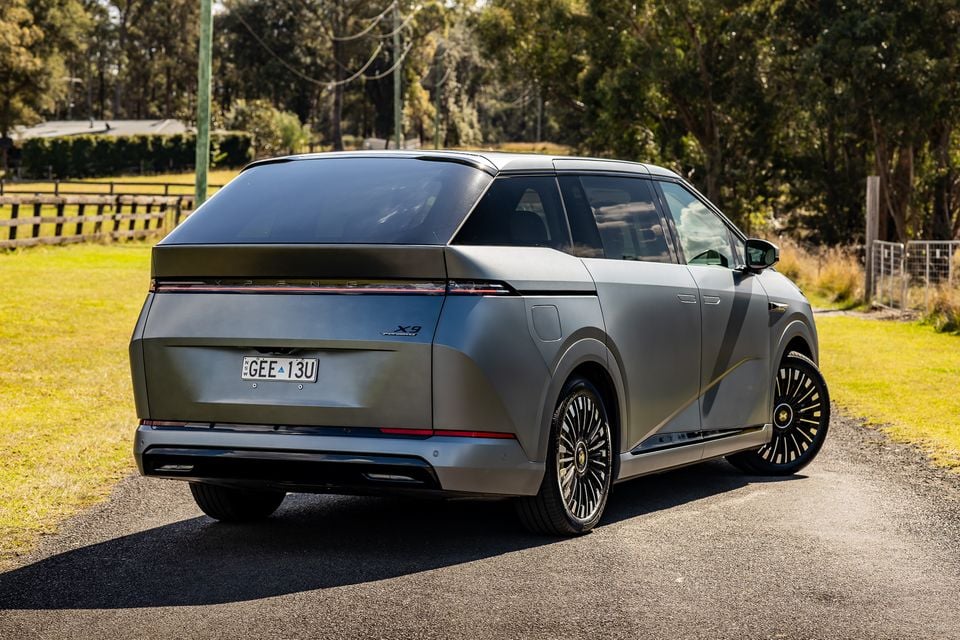
Xpeng has set itself up as a factory-backed operation in Australia, and the Chinese auto brand’s second model to arrive here is this eye-catching luxury people mover – the Xpeng X9.
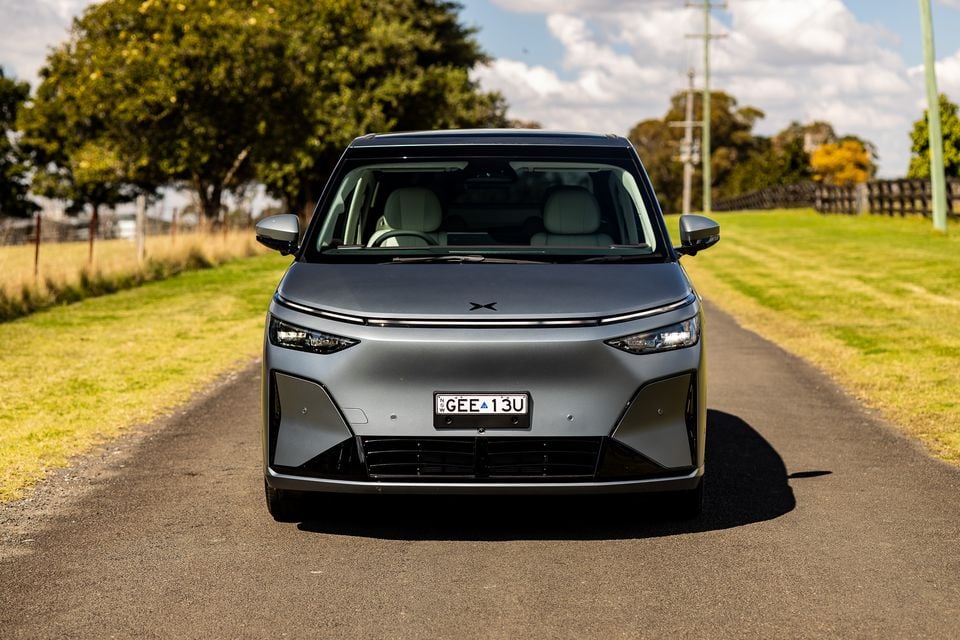
This large three-row model is absolutely enormous, and it also has a gigantic standard equipment list, lashings of space and tech, and some terrific family-focused inclusions.
With pricing starting below $100,000, and a fair bit more for the dual-motor all-wheel drive version tested here, it isn’t for all budgets – or all tastes.
But the X9 really has hit the market with a few strong points of difference. Let’s discuss them.
It might seem like a lot of money to spend on a new model from a relatively new brand. But the story here is that this isn’t a stripped out fleet or rental van. You can think of it as an all-electric alternative to a grey-market Toyota Alphard or Vellfire.
| Model | Price before on-road costs |
|---|---|
| 2027 Xpeng X9 FWD Standard Range | $89,900 |
| 2027 Xpeng X9 AWD Performance | $109,900 |
Or you could think of this machine as a compelling option for someone who wants a full electric vehicle (EV) experience with three rows of space and Kia Carnival-like practicality.
The Kia is a fantastic alternative to this, if you’re not so sure about going all-in on electric, and it has a few hybrid options available.
Otherwise you might do well to consider something similar from Mercedes-Benz (V-Class EV), or the Denza D9.
To see how the Xpeng X9 lines up against the competition, check out our comparison tool
This is a proper luxury family car experience.
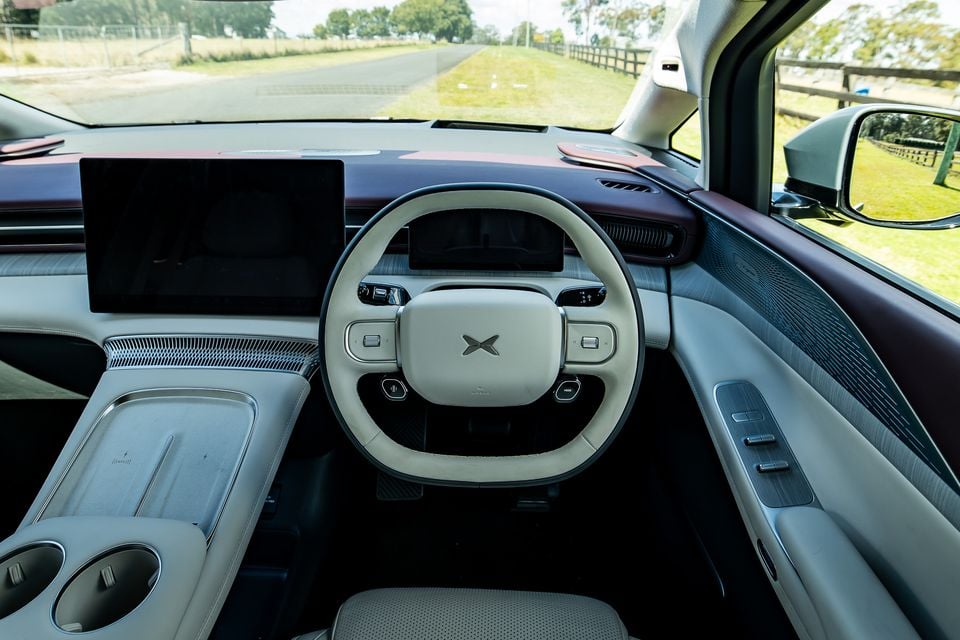
The level of finish, technology and outright wow-factor feels appropriate for a vehicle costing this much.
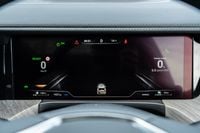
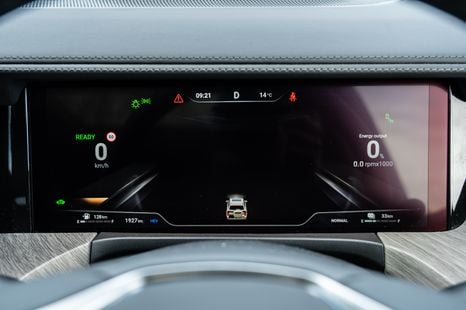
There’s a 17-inch central touchscreen, a digital instrument cluster and a very impressive head-up display. The latter can even display camera views when you drive forwards or backwards at lower speeds, or when you indicate, which is a genuinely useful touch in a vehicle this large.
And you’ll be needing those cameras. The X9 is a big machine, with a long dashboard and a bonnet that’s difficult to see from the driver’s seat. Thankfully, the surround-view camera system is excellent, with multiple viewing modes and measurements, and there's even an autonomous parking system.
The central screen is packed with functionality. There are connected services, Apple CarPlay and Android Auto, plus Spotify, while the system also incorporates the brand’s voice assistant and a range of other functions.
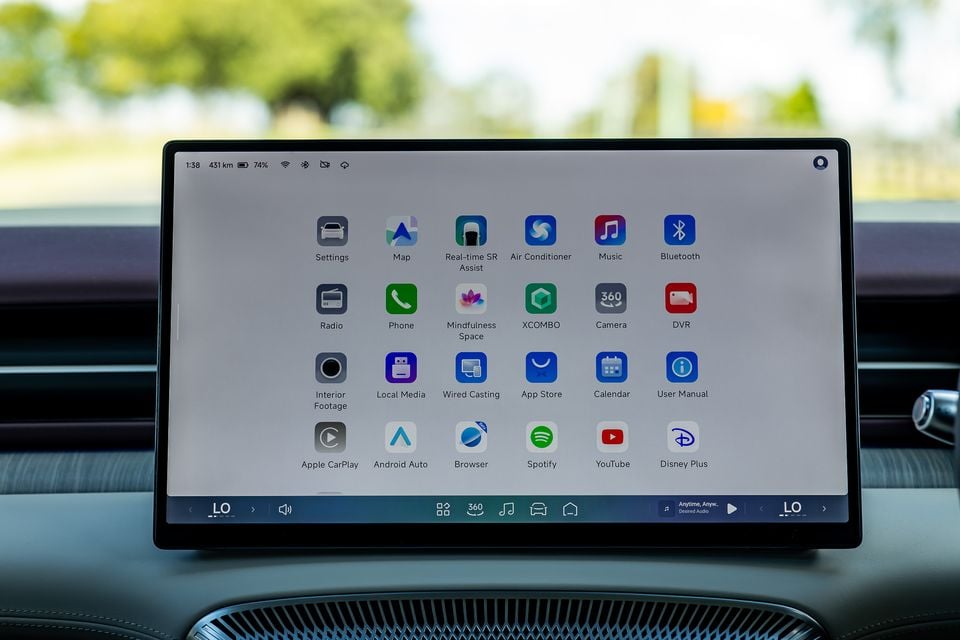
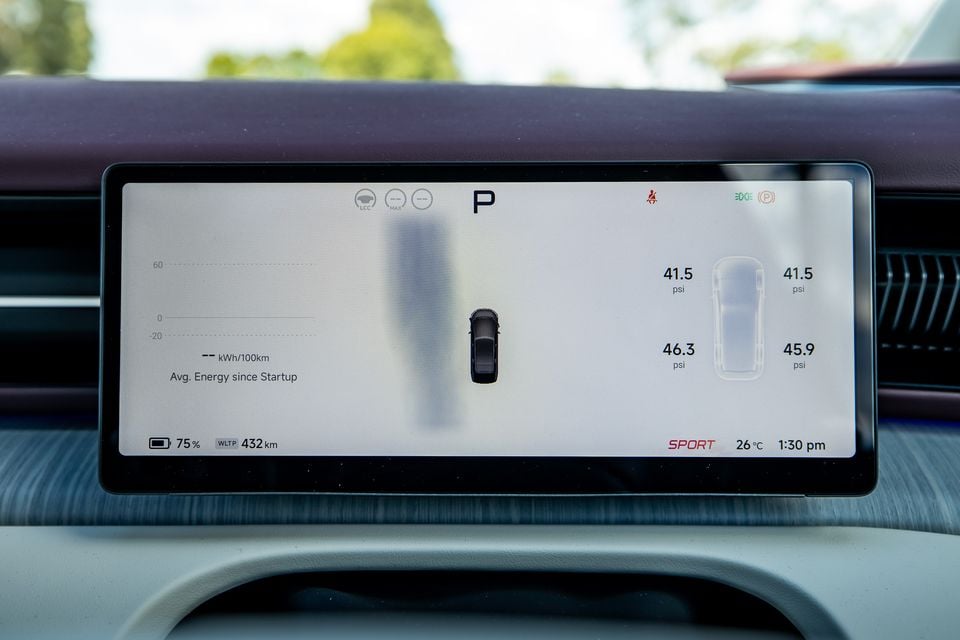
The X-Combo system – essentially a collection of smart presets that you can customise – is pretty neat. You can schedule things such as remote cabin preparation or daily ventilation, and even create your own combinations
There’s also a digital video recorder using the vehicle’s camera system using a USB drive you’ll have to supply, plus an interior camera for family snapshots and child presence monitoring warnings.
As you’d expect from a modern EV, there are plenty of ways to configure the driving experience, too.
You can adjust the suspension, regenerative braking and ride height, and there are Sport, Comfort and Eco modes. There’s also an X-Pedal setting for one-pedal driving.
The technology is impressive, although not everything works quite as well as you might hope. More on that in the driving section below.
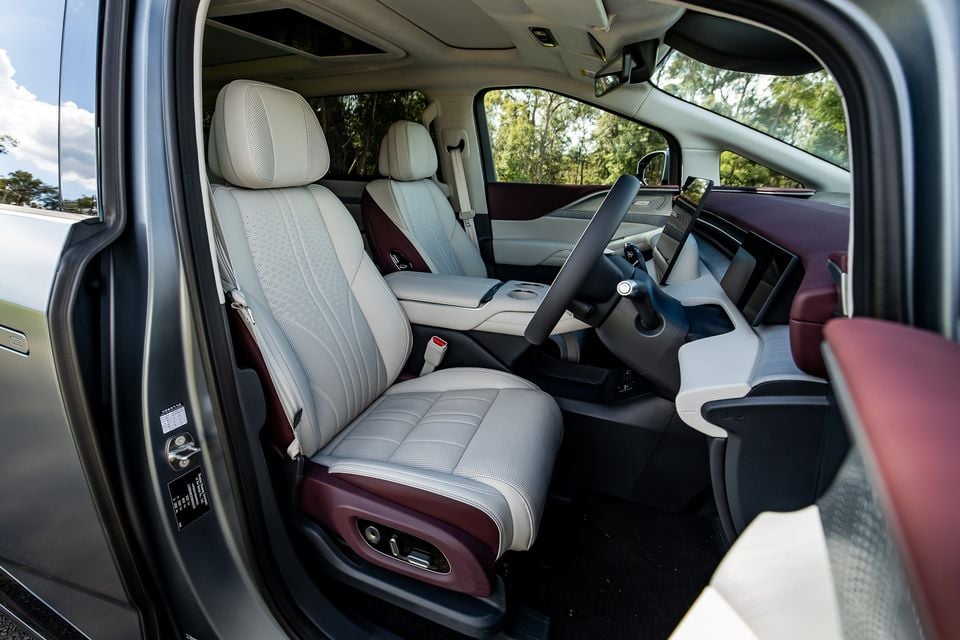
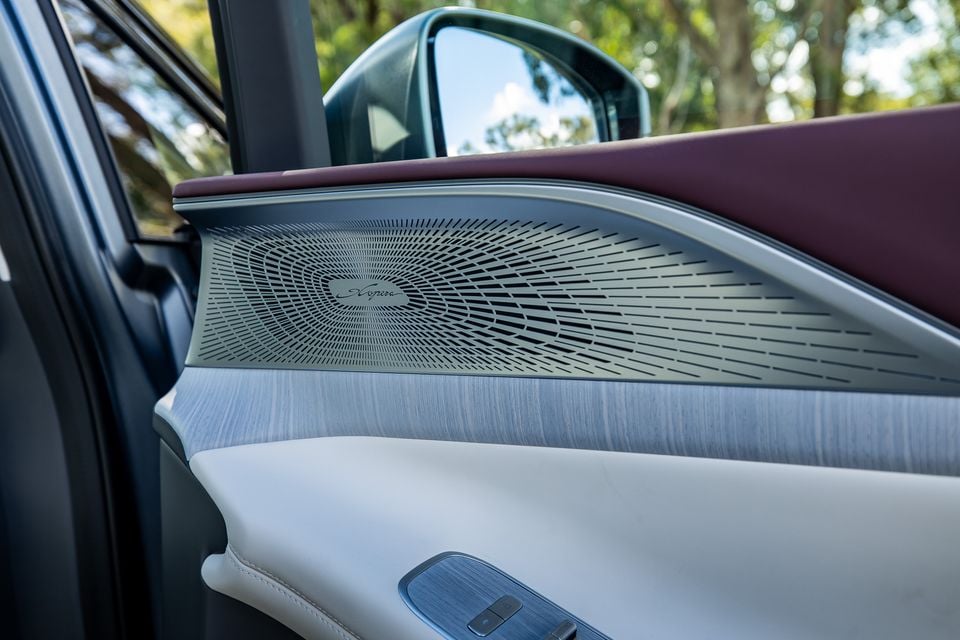
Plushness-wise, there’s Nappa leather seat upholstery, a lovely two-tone interior treatment, and a wood-look finish across the dashboard. And the 27-speaker X Opera sound system is epic, and incorporates speakers built into the driver’s head restraint.
The front seats are incredibly comfortable, with multi-stage heating and ventilation, and there’s also a heated steering wheel. Those front seats have terrific massage functions, too.
Storage and practicality is well catered for, too. There are cupholders, a sizeable centre console, USB ports, a 12-volt outlet, and decent door pockets. Dual wireless phone chargers, including an NFC reader if you’re using the key card, are between the seats, too, even if your phone might fling out when cornering. Mine did, multiple times.
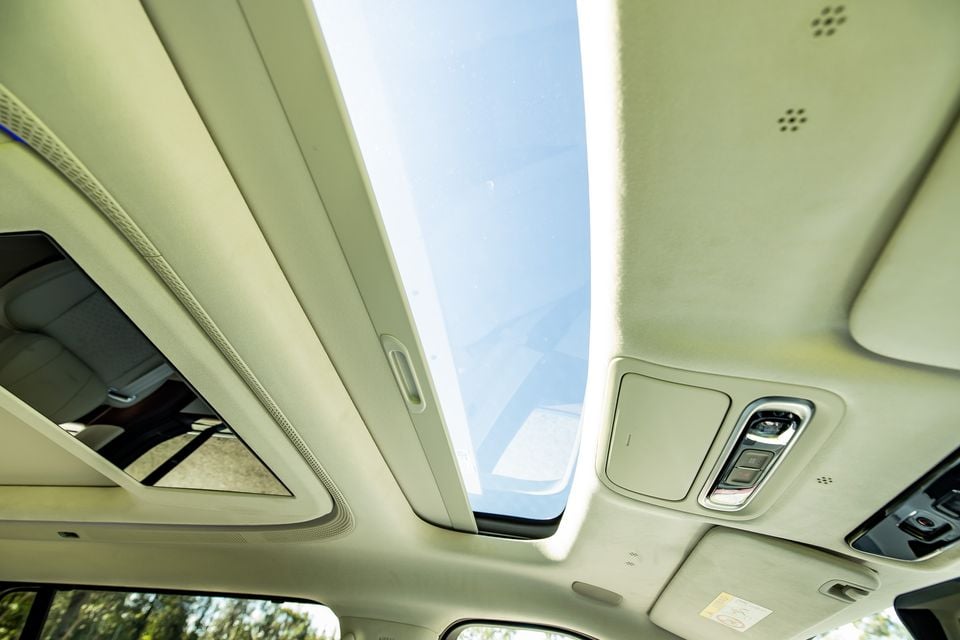
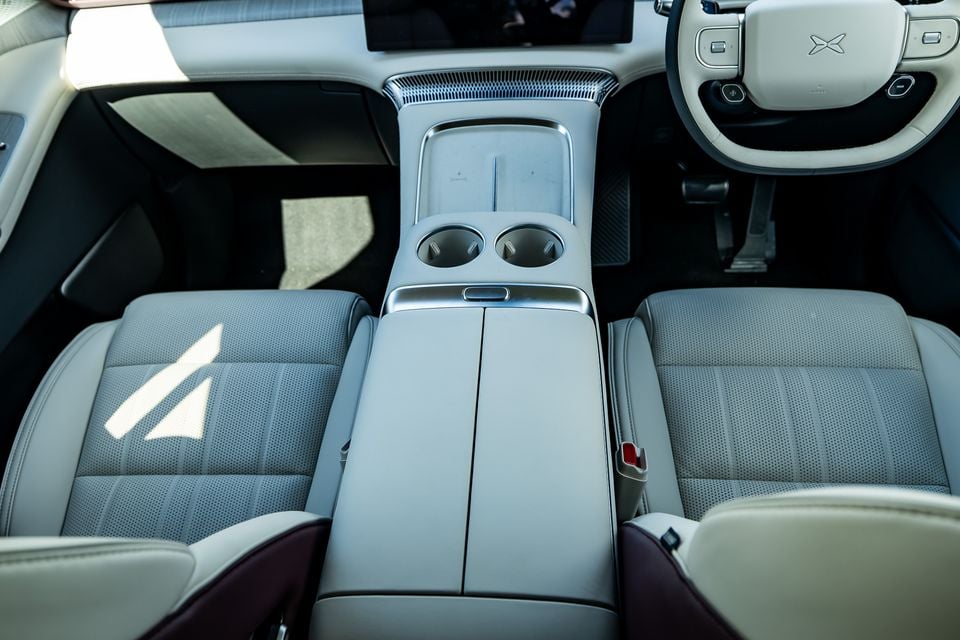
The climate control system is operated through the touchscreen, with plenty of adjustment available for the direction and intensity of the airflow.
You can separately control the first, second and third rows, which is exactly the sort of thing you want in a family-focused people mover. And if you don’t want to touch the screen for that, you can use voice control.
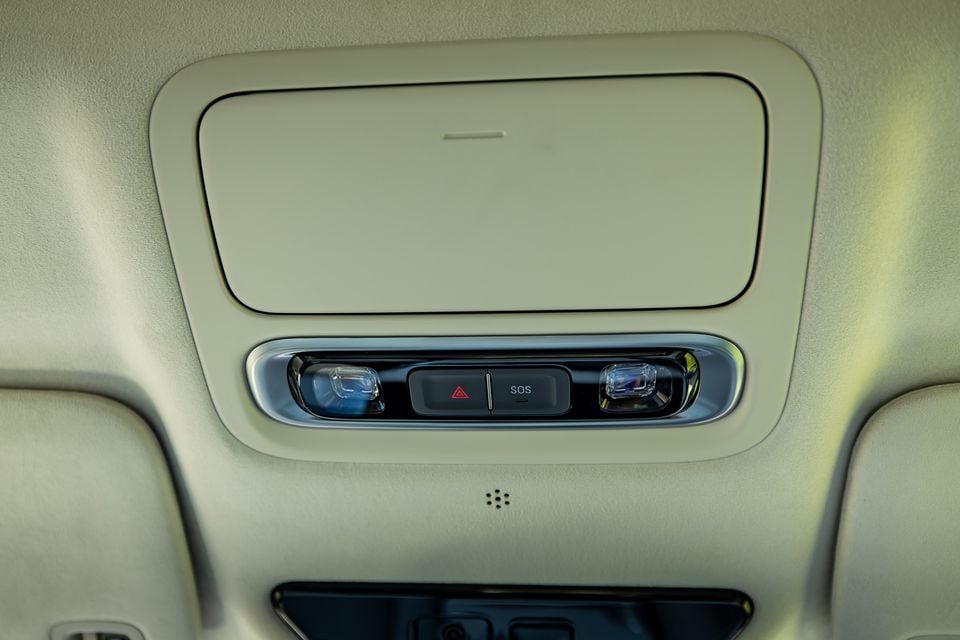
There are also some nice little touches, including enormous illuminated vanity mirrors, a sunglasses holder, and an SOS call button, should you ever need it.
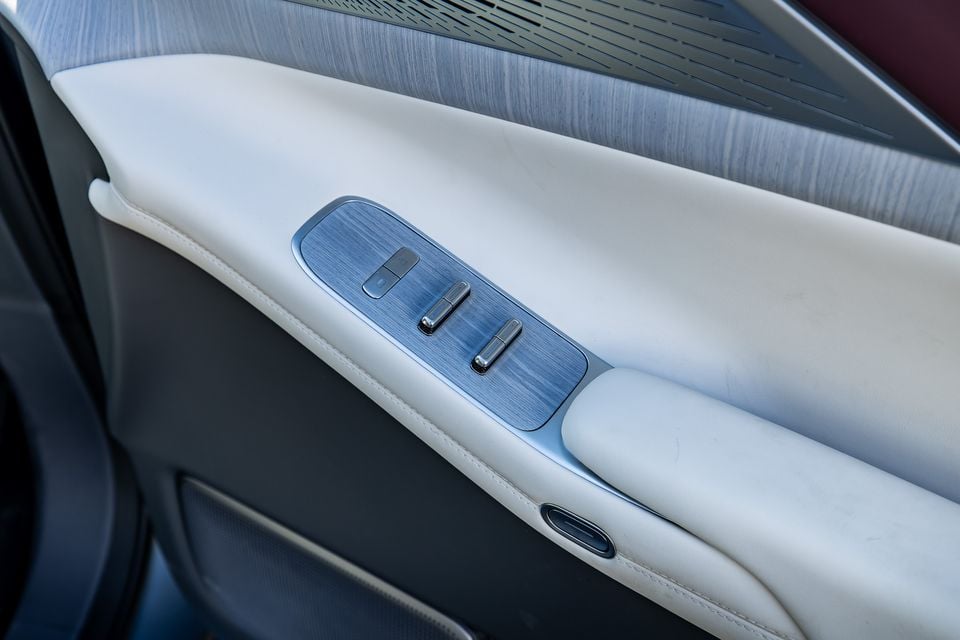
One oddity is the window switchgear. Rather than pulling the switch down to lower the window, you push it upwards. I’m still not entirely sure why some Chinese brands insist on doing it this way… Xpeng isn’t alone here.
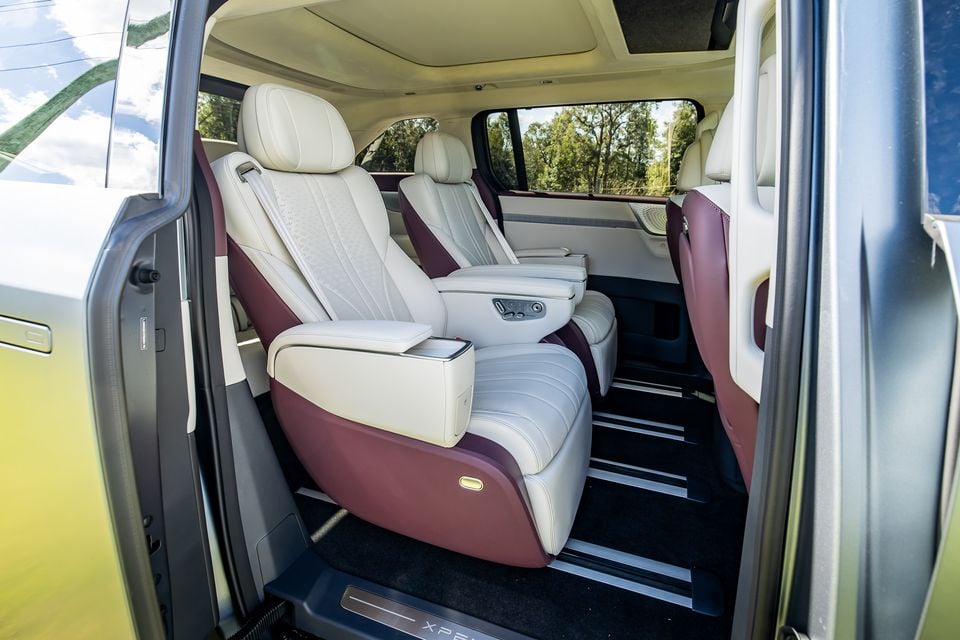
Access to the rear accommodation is by way of two sliding electric doors.
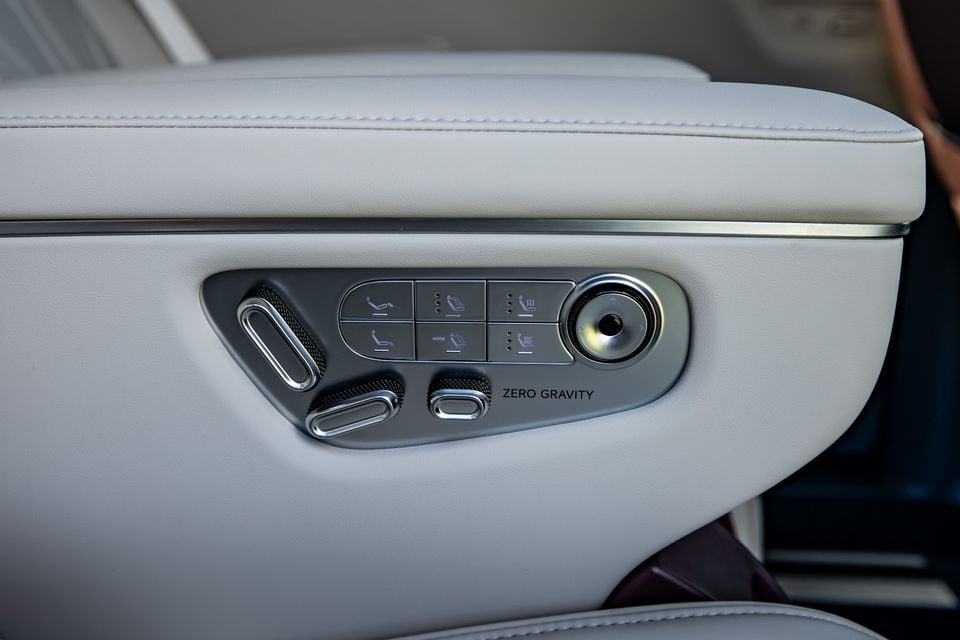
The second-row captain’s chairs are ridiculously comfortable, with heating, ventilation, massage and electrically adjustable legrests. You can even put them into a zero-gravity position.
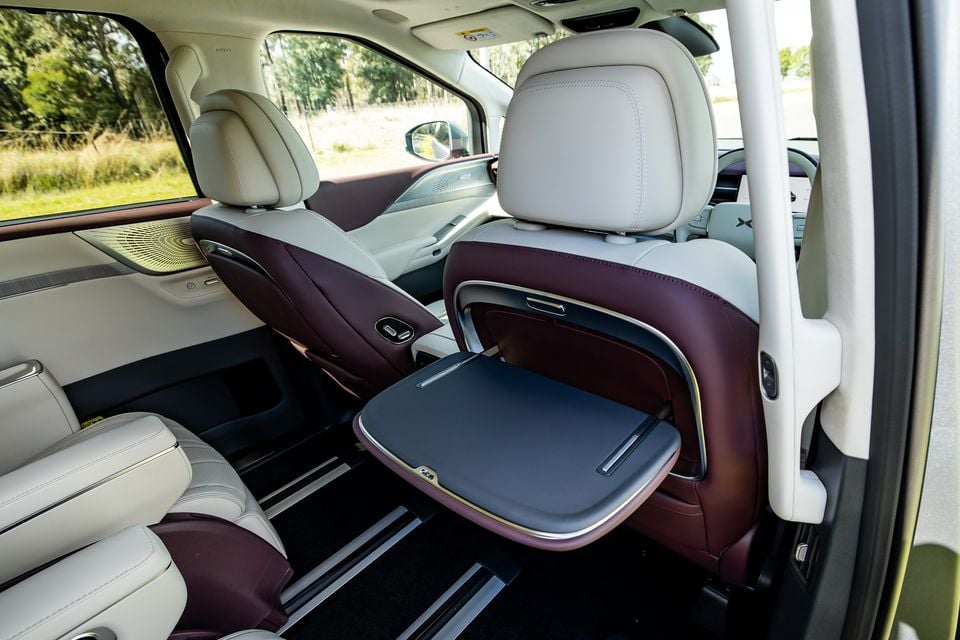
There’s a huge amount of room, and both seats get fold-out tables, meaning you could genuinely use the X9 as a mobile office.
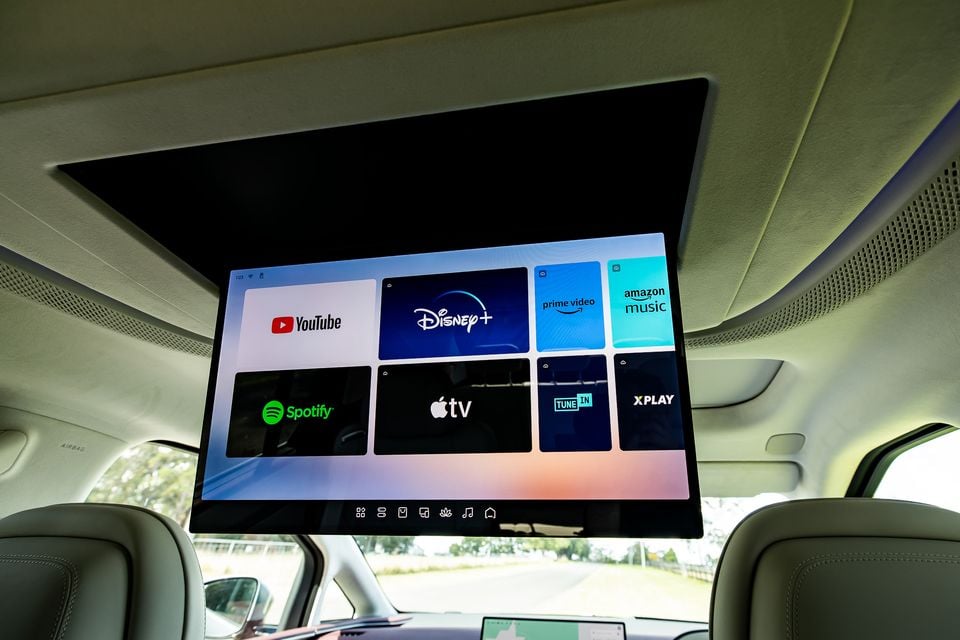
Kids will be stoked with the massive touchscreen mounted between the front seats for rear passengers. It’s touch-operated and can run apps such as YouTube, while there’s also a dedicated remote control.
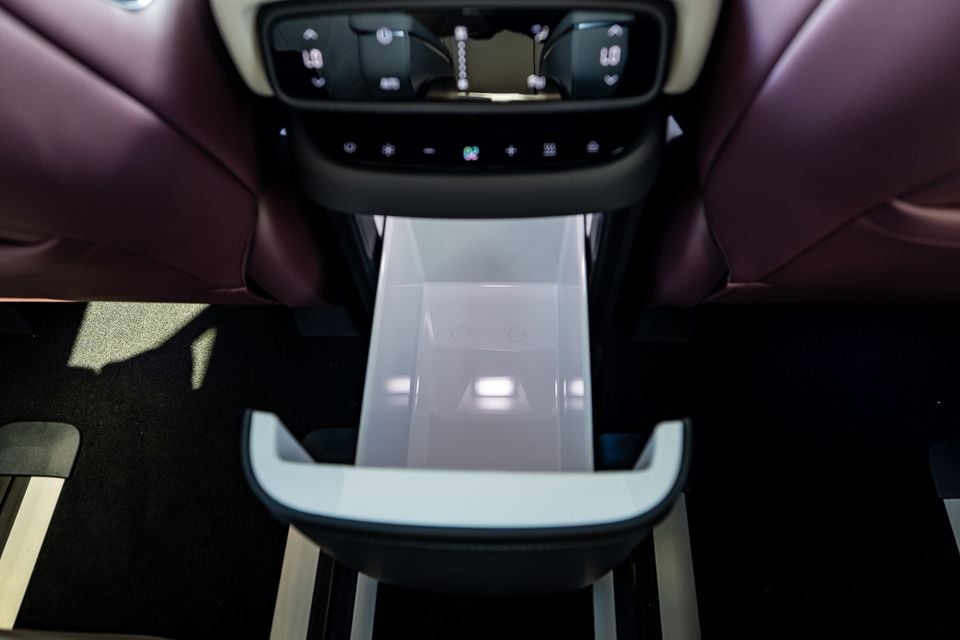
And the centre console area contains a drawer that can be used as a refrigerator or heating box.
You can heat it to as much as 50 degrees, which means you could keep pies or a roast chook warm for a picnic, or switch it to cooling mode and bring the temperature down to between 0-4 degrees. So yes, you can keep drinks or ice cream cold on a long road trip.
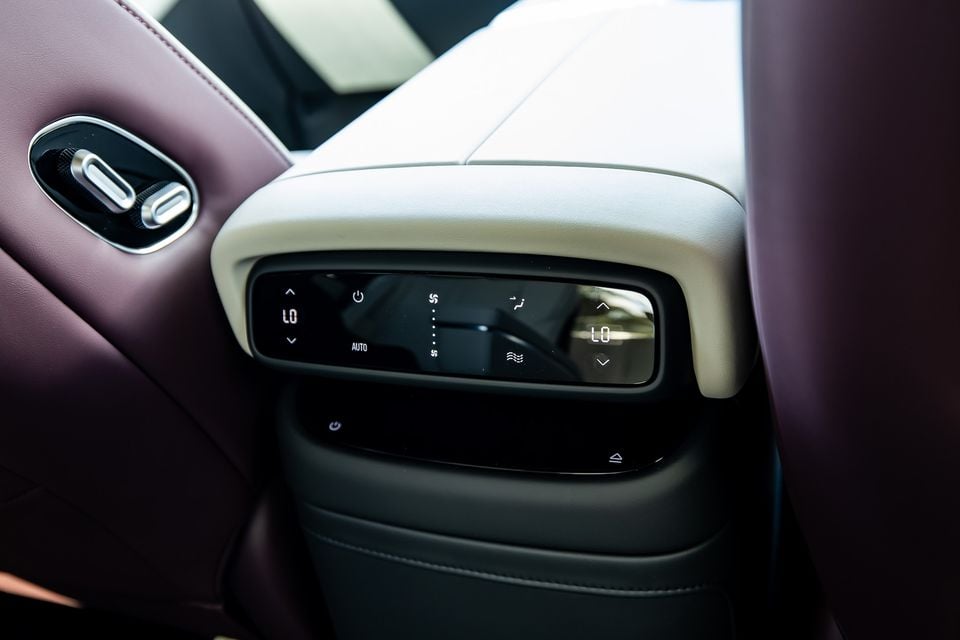
The second-row control panel gives passengers access to seat adjustment, heating, ventilation and massage functions, while there are also large window blinds and opening windows.
The second-row seats also even have their own wireless phone chargers.
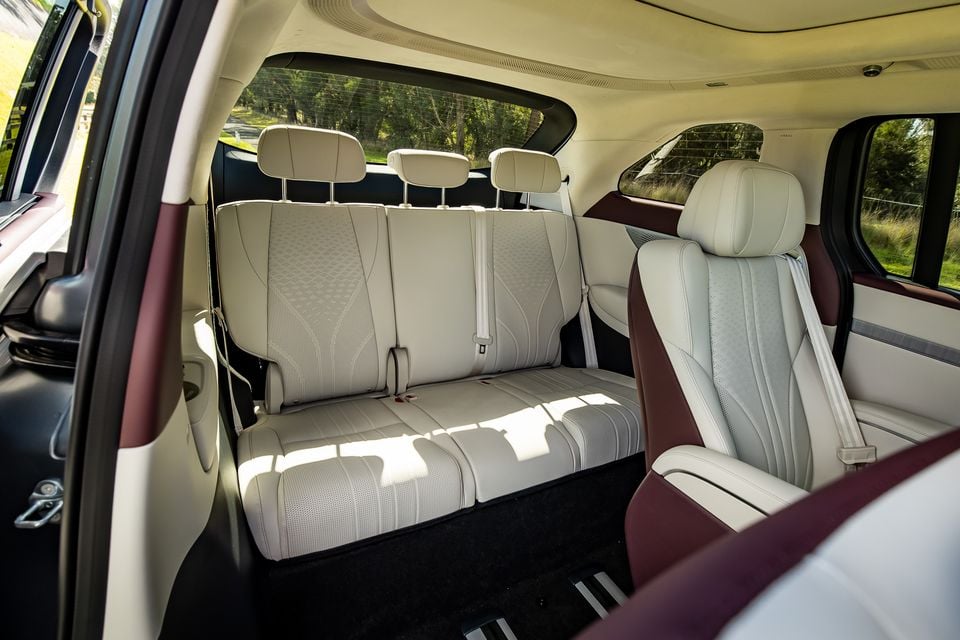
The X9 also features a walk-through function that electrically moves the second-row seat forward, making it easier to access the third row without having to climb over the seat.
Despite the enormous second-row chairs, the third row is surprisingly usable. But the seat operation does take a bit of time, which might be frustrating if you’re eternally in a hurry. There’s plenty of legroom, and the seats can recline electrically. Even the head restraints can be electrically raised and lowered.
There are second- and third-row ISOFIX points and top-tether points, although the positioning of the second-row top-tether anchors may mean some child-seat installations require an extension strap. Annoying!
The third row also gets ventilation, cupholders, USB-C ports, speakers, and seat heating.
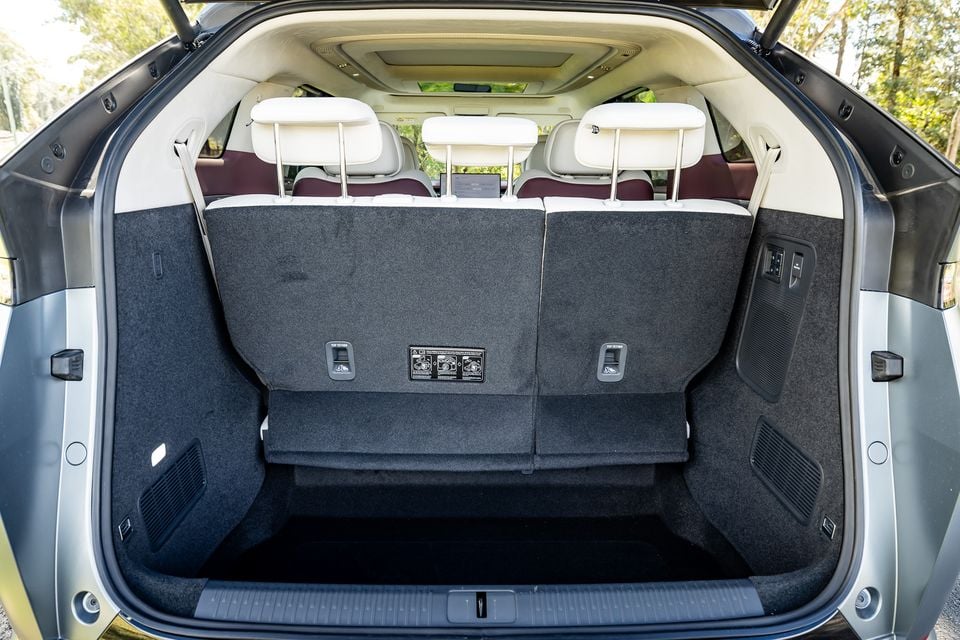
One compromise is that the third row is fixed in place, so you can’t slide it forwards or backwards to trade passenger space for luggage space.
Still, for a vehicle of this size, the amount of usable space throughout the cabin is impressive.
With all three rows in use, the X9 has a deep boot area with a large well underneath where the third-row seats fold into.
There are cargo hooks, tie-down points and a 12V outlet, while the air suspension controls allow you to lower the rear of the vehicle to make loading heavier items easier. There is a fairly substantial step into the lower section of the boot, though, so it isn't completely flat or effortless to load.
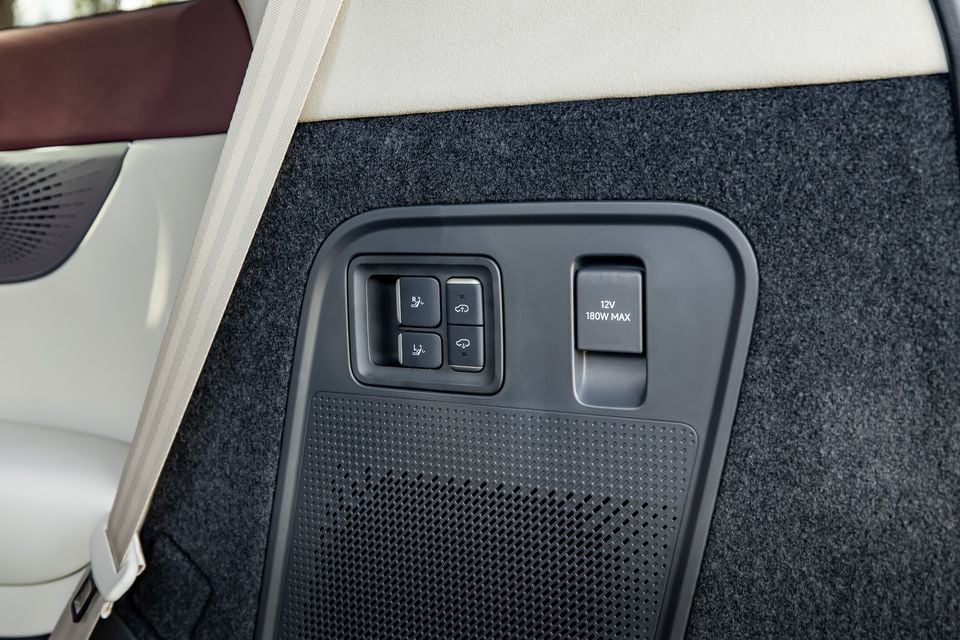
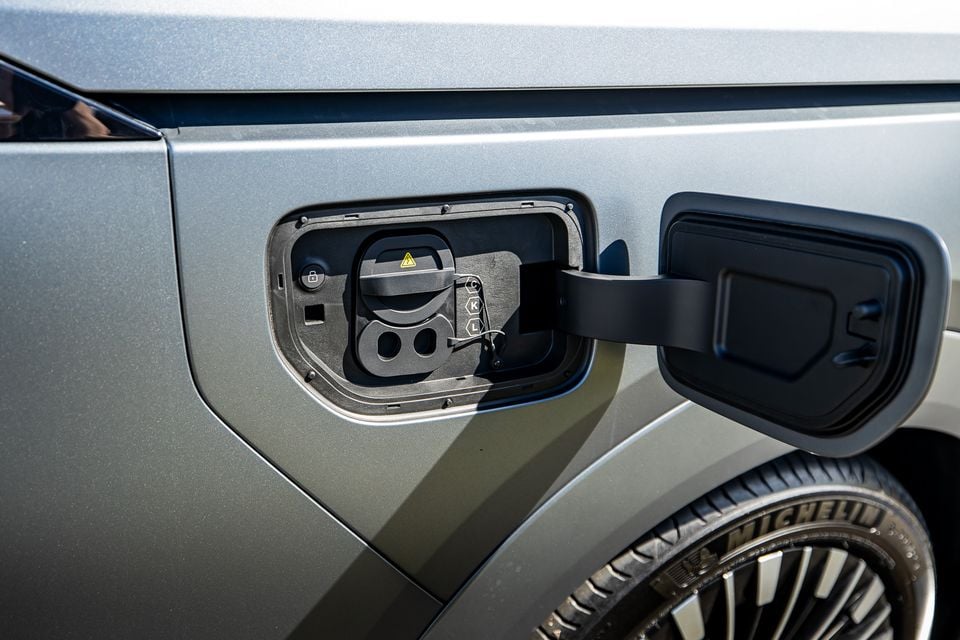
You also need to be aware that there’s no spare wheel. Instead, you get a tyre repair kit, while the charging cables also take up some of the available storage space.
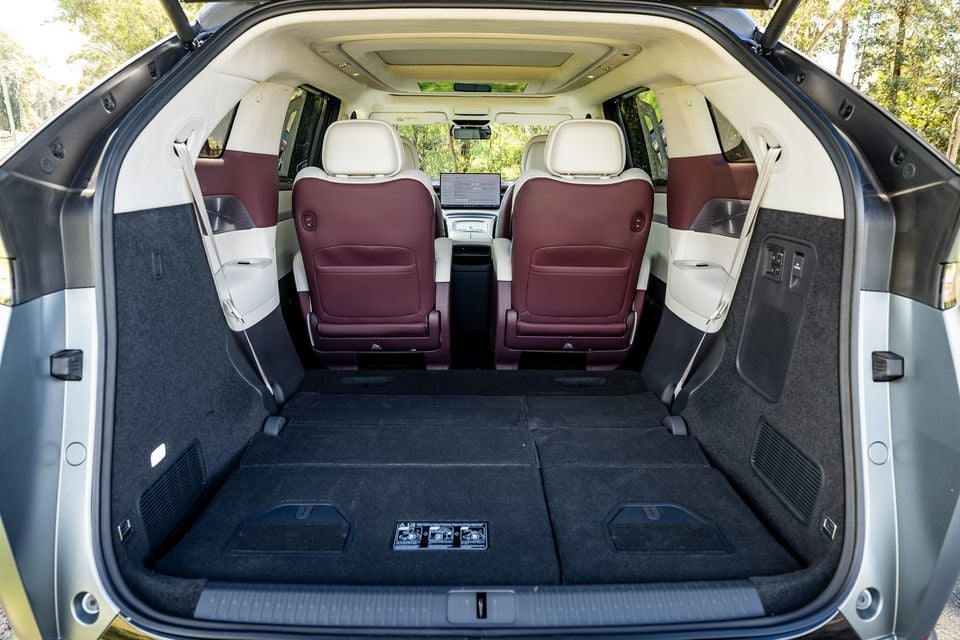
But if you need maximum luggage capacity and want to run this as a family four-seater, you just need to hold down the corresponding button on the side of the boot area, and the powered head restraints fold down before the third-row seats electrically disappear into the floor.
It takes quite some time (around 30 to 40 seconds), but once they're down you’re left with a huge, flat load area.
So, there’s no question the X9 is practical. The only downside is that relying on electrically folding seats for this sort of flexibility can feel a little tedious and time-consuming.
| Dimensions | Xpeng X9 |
|---|---|
| Length | 5316mm |
| Width | 1988mm |
| Height | 1785mm |
| Wheelbase | 3160mm |
| Cargo capacity | 721L (third row up) 2554L (third row folded) |
To see how the Xpeng X9 lines up against the competition, check out our comparison tool
You’re being asked to pay $20,000 more to get into the dual-motor AWD model, but you’re not just getting a different powertrain setup over the front-wheel drive single-motor version. You’re also getting a different type of battery chemistry.
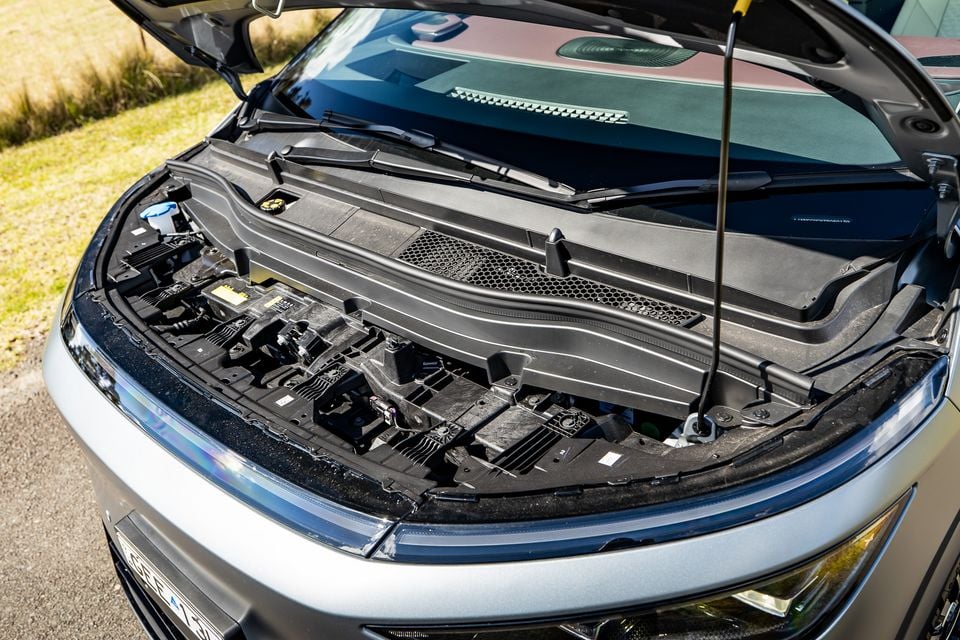
| Specifications | Xpeng X9 Standard Range | Xpeng X9 Performance |
|---|---|---|
| Drivetrain | Single-motor electric | Dual-motor electric |
| Battery | 94.8kWh LFP | 110kWh NMC |
| Power | 235kW | 370kW |
| Torque | 450Nm | 640Nm |
| Drive type | Front-wheel drive | All-wheel drive |
| Weight (tare) | 2750kg | 2745kg |
| 0-100km/h (claimed) | 8.2 seconds | 5.9 seconds |
| Energy consumption (claimed) | 20.2kWh/100km | 20.8kWh/100km |
| Energy consumption (as tested) | - | 19.2kWh/100km |
| Claimed range | 535km | 580km |
| Max AC charge rate | 11kW | 11kW |
| Max DC charge rate | 537kW | 542km |
Some people might not like NMC battery tech as there are questions over sustainability and possibly higher fire risk, not to mention the fact that you’re not supposed to recharge it to 100 per cent all the time, to protect the battery health.
So the base model’s LFP battery might make more sense, because you’ll be able to get the full amount of range out of it. Then again, LFP tech is usually less efficient, so the claimed range might not be achievable.
The DC fast-charging specs of this model are amazing, but we can’t really say whether they're realistic because Australia currently only has 350kW charging stations, and they’re few and far between.
But I was really surprised by the efficiency I saw on test, and for urban dwellers it could be replicable.
If this is the car for you, we’ll compare offers from trusted dealers, handle the back and forth and manage your purchase from enquiry to delivery.
That’s because this is a far more efficient car in stop-start driving, where it doesn’t have to battle aerodynamics like it does on the open road or the freeway.
Admittedly, I had the regen braking set to a high level all week, which likely had a positive net effect on the efficiency I saw. It was below the claim at 19.2kWh per 100km, but on the freeway I saw it showing an instant use of 23kWh per 100km.
So if you do lots of high-speed driving – and if you fully load it up – you can expect higher consumption.
To see how the Xpeng X9 lines up against the competition, check out our comparison tool
There are a few things I want to call out straight away, and the first is that the X9 feels considerably smaller than it actually is.
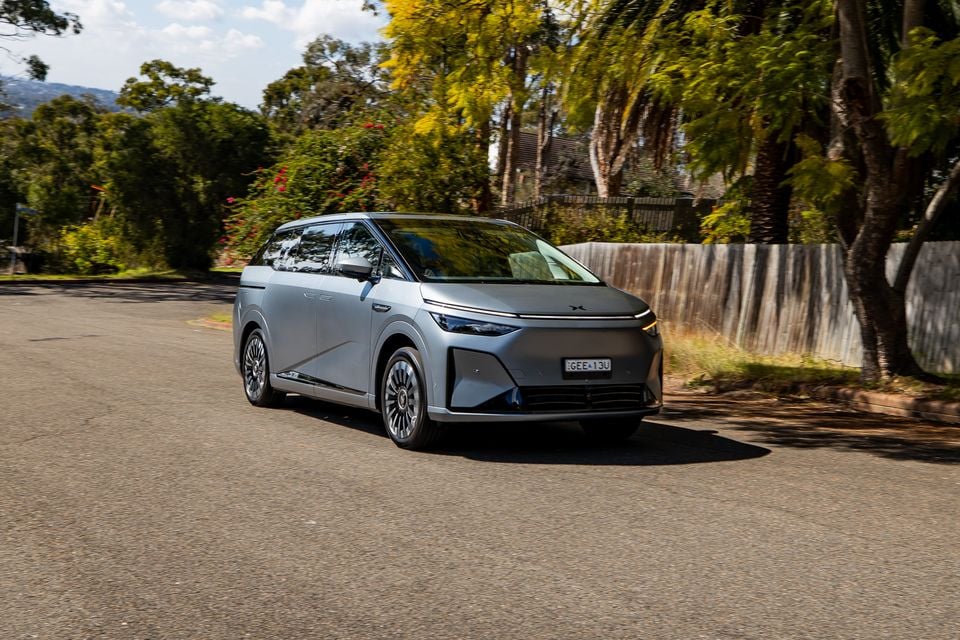
That’s down to the four-wheel steering system. At lower speeds, the rear wheels turn to help with manoeuvrability, while at higher speeds they work to make the vehicle feel more agile and responsive.
It’s genuinely impressive. This is a very big, long vehicle, with a substantial wheelbase, yet it feels remarkably easy to place on the road. The four-wheel steering makes a huge difference when it comes to parking, tight turns, and generally navigating urban environments. And there’s an automated parking system that can do some of the hard work for you, if you’re still (understandably) a little nervous about manoeuvring something this large into a parking space.
The other major factor here is the air suspension. There are different height settings, so you can drop the vehicle down when you want easier access or a lower centre of gravity, or raise it up when you’re dealing with rougher terrain. It’s a useful feature, and one that adds to the sense of versatility.
You also get a range of different drive modes. I’m currently in Individual mode, which I’ve configured to suit my preferences, and I’m really impressed by the overall combination of comfort, control and usability.
But I will say this: if you put it in the super-soft comfort mode, it could make you feel queasy. It is very plush and floaty, and on challenging Aussie roads it can be too wallowy.
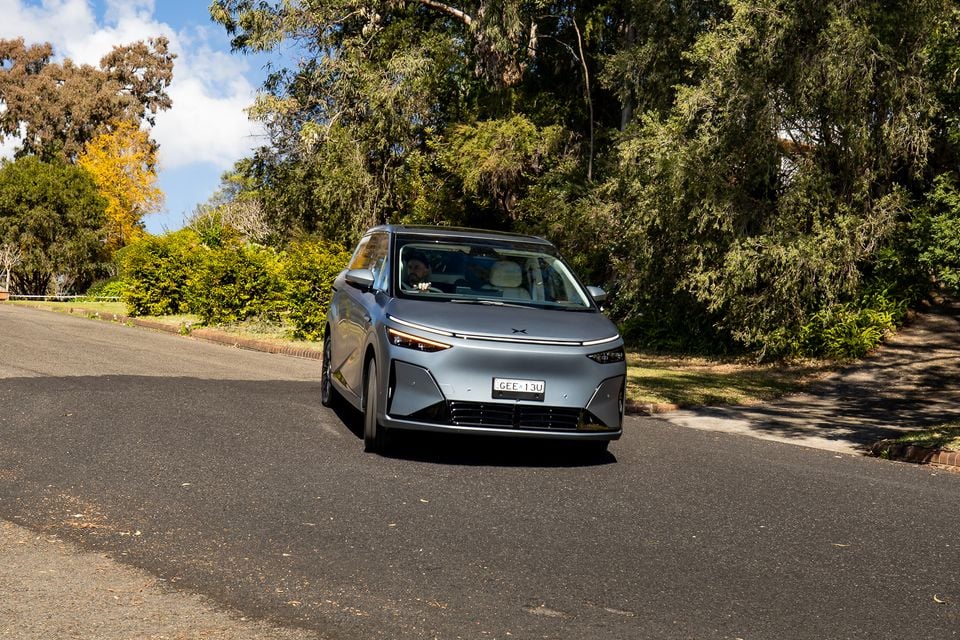
The steering is pretty well judged, too. It’s light enough at low speeds without feeling vague, and it firms up nicely once you’re moving.
Unfortunately, I can’t say the same for the lane-keeping system. It is far too intrusive.
It constantly seems to think it needs to correct your position in the lane, even when you’re perfectly comfortable with where the vehicle is sitting.
Whether you’re slightly closer to one line than the other, avoiding a pothole, passing a parked car, or simply dealing with traffic around you, the system seems convinced it knows best.
It doesn’t.
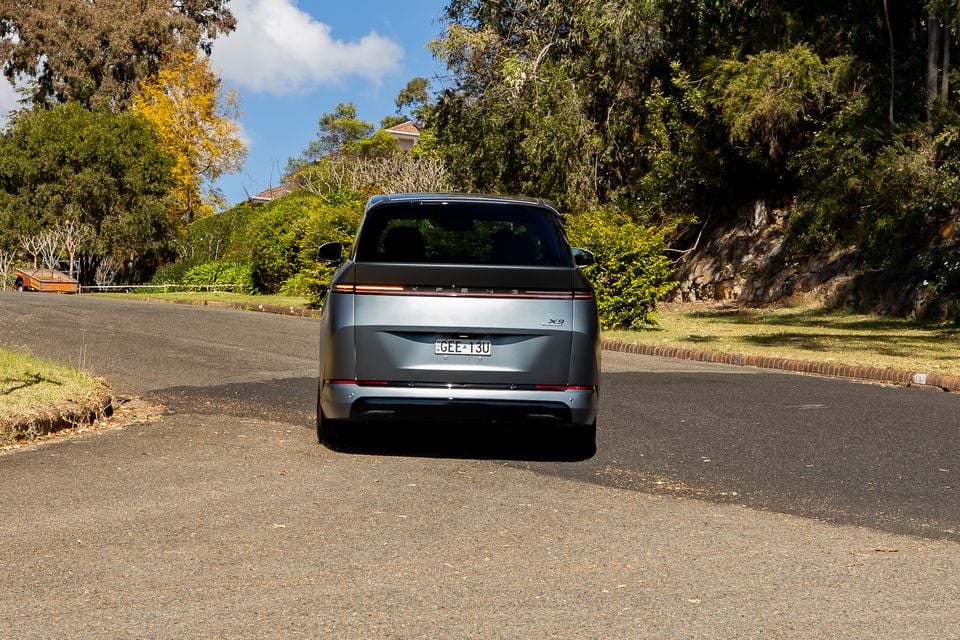
And that’s the problem. It isn’t as situationally aware as its driver, particularly in an urban environment where you’re constantly making small adjustments based on what’s happening around you. And because of that, I found it more than just annoying. At times, it was genuinely problematic, so I ended up switching it off every time I drove the vehicle.
Now, the powertrain. Honestly, I don’t think I’d spend the extra $20k for the AWD variant, unless I REALLY needed it.
Because while it has a serious amount of power and torque on offer from the dual-motor all-wheel drive system, I’m not sure anyone genuinely needs this much performance in a vehicle weighing this much.
Yes, I’m suggesting the slower version is the better one, though I haven’t driven it.
Speaking of slowing, the regenerative braking system is nicely sorted here. You can adjust the level of regeneration, and there’s a full-stop single-pedal driving mode if that’s your preference.
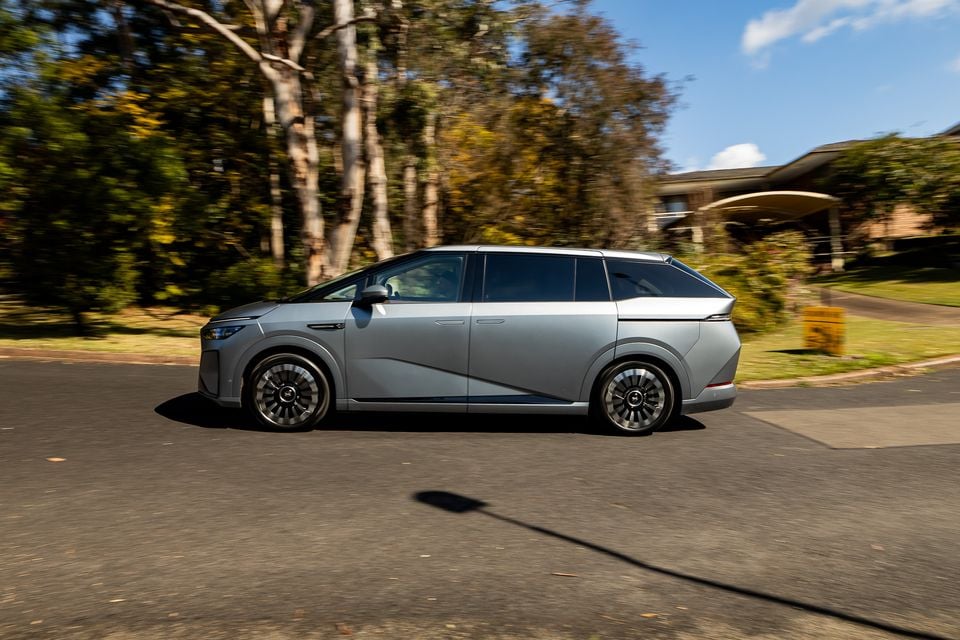
I found the most aggressive setting – without single-pedal mode active – to be the best compromise. It provides strong deceleration when you lift off the accelerator, but it will still coast rather than bringing the vehicle to a complete stop.
When you consider that this is a new brand asking around $110,000 for a very large luxury people mover, I think the driving experience does a pretty good job of justifying that price because the X9 feels luxurious, comfortable, and – when the correct settings are selected – controlled.
The main concern for some potential buyers may be the calibration of the driver-assistance systems, particularly the lane-keeping function.
I also need to call out the fact I had a few tech problems with this car during my week of testing.
While it was parked and running for about 30 minutes (I was filming for my YouTube channel), the car basically shut down and wouldn’t engage a gear. It was still running, the AC would operate, and all the interior tech was functioning. It just wouldn’t drive.
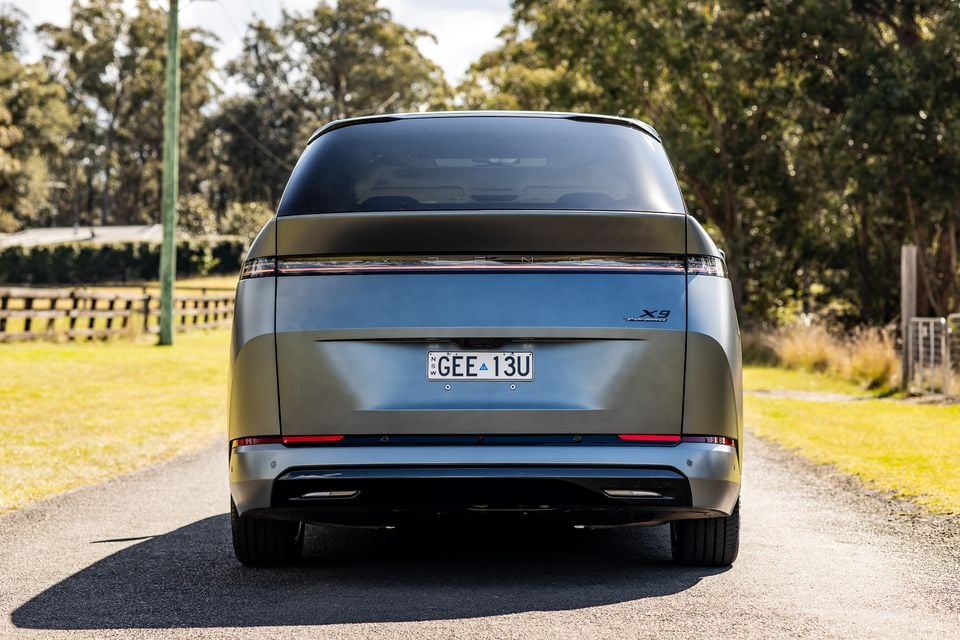
That’s because it INSISTED on my use of the NFC card instead of the physical key to recommence proceedings.
I had the physical key with me, but not the NFC card, and it could have been a lot more of an inconvenience. My advice? Put the NFC card in your wallet and just keep it with you at all times.
Apparently there is another way to circumvent this issue, but I didn’t know it at the time.
Furthermore, I have spoken to other reviewers in the industry who also had key operation issues. Just get the app and login, and hopefully you won’t have any problems.
Another thing was the child presence detection system, which seemingly detected children in the car regularly, because it kept activating the hazard lights and putting the AC on. If you were to accidentally leave a child in there, that’s promising to know. But when the car is empty, it’s not ideal.
To see how the Xpeng X9 lines up against the competition, check out our comparison tool
Here’s a rundown of the two model variants, and what you get with each of them.
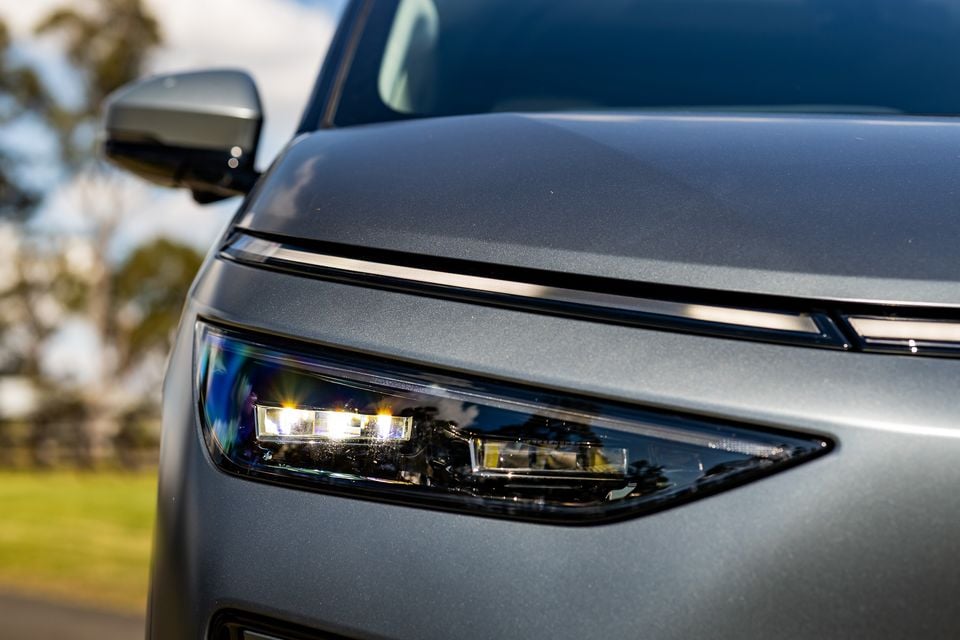
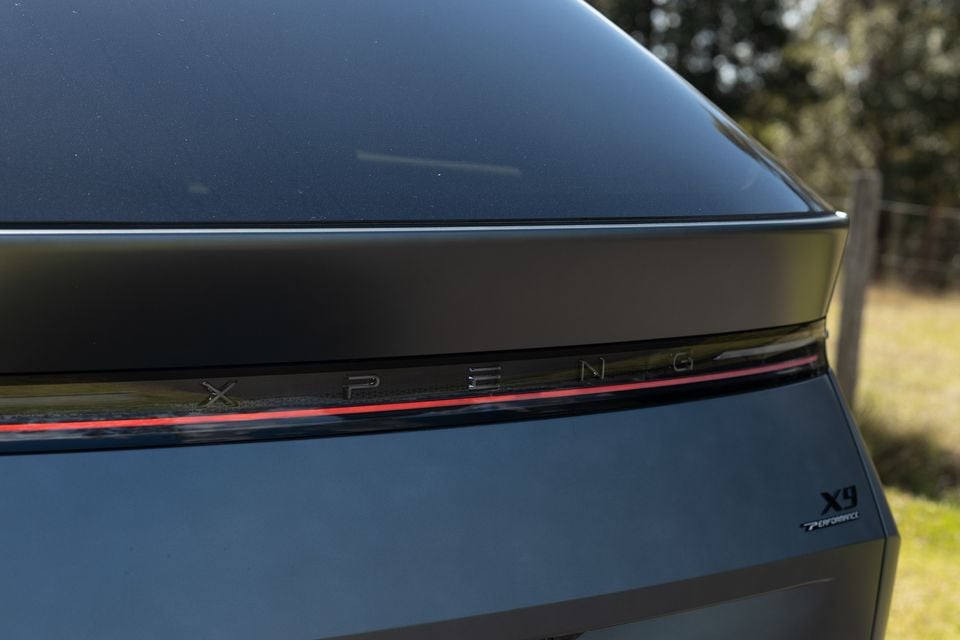
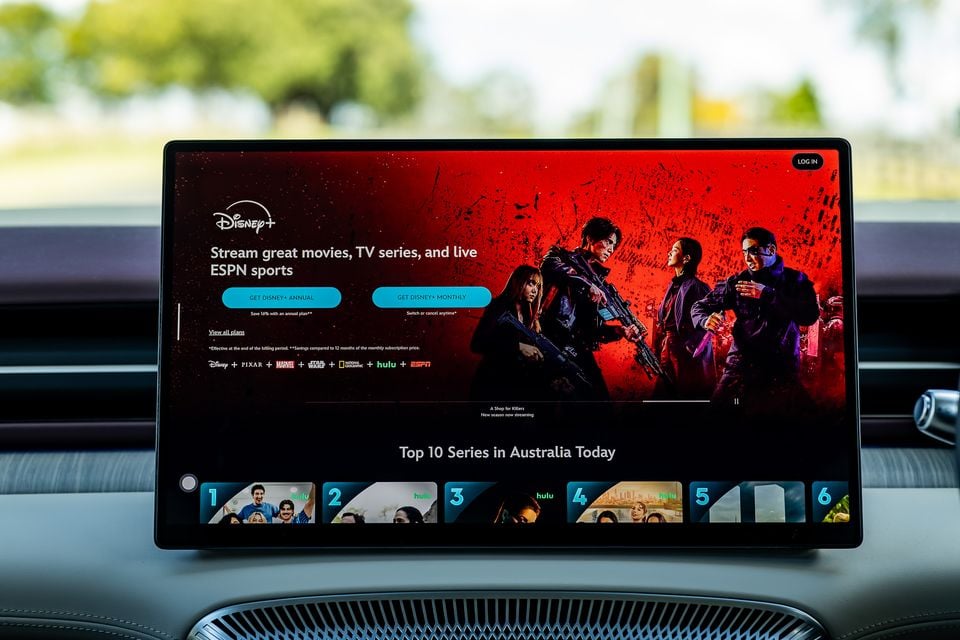
2027 Xpeng X9 FWD Standard Range equipment highlights:
Xpeng X9 AWD Performance adds:
To see how the Xpeng X9 lines up against the competition, check out our comparison tool
There is no safety rating as yet for the Xpeng X9. But it has a whole host of the expected safety technology and features in a family car at this price… including some annoying ones, as mentioned in the driving section.
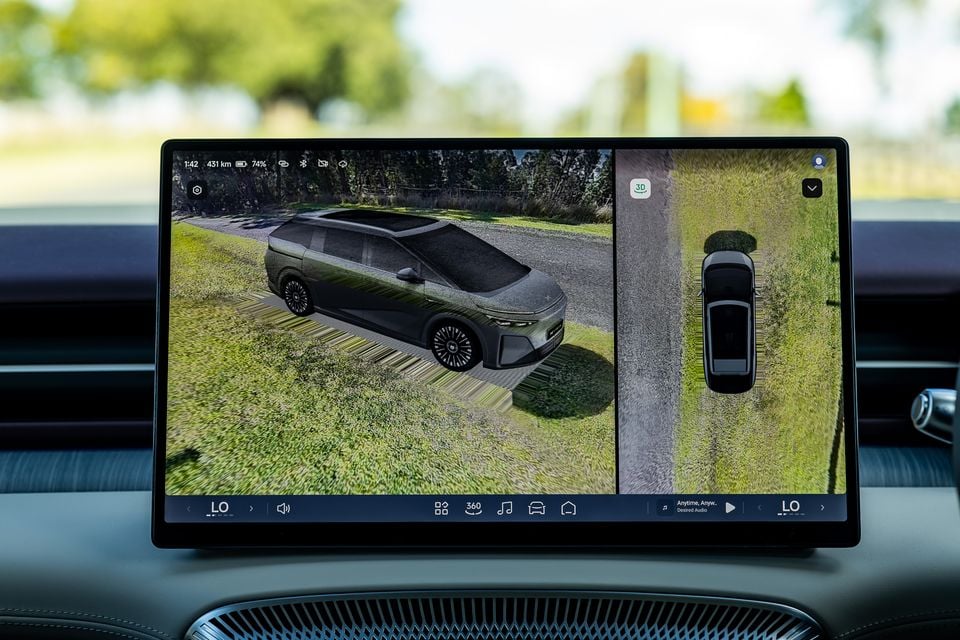
Standard safety features include:
Airbag coverage is extensive, including dual front, front side, front centre, rear side and full-length curtains that include third-row protection.
The X9 also has a tyre blowout feature that promises to ensure directional stability and control in the event of a single or double tyre blowout. You will need to call for help, though, as there’s no spare wheel.
To see how the Xpeng X9 lines up against the competition, check out our comparison tool
Xpeng didn’t get off to the best start through its previous independent distribution channel, with owners apparently left in the lurch and refund and warranty promises seemingly unkept. But the new, factory-backed operation is vowing to rectify that, and offers a big ownership promise on paper.
| Servicing and Warranty | Xpeng X9 |
|---|---|
| Warranty | 7 years, unlimited kilometres – vehicle (standard) 7 years or 160,000km – vehicle (commercial use) 7 years or 160,000km – high-voltage battery |
| Roadside assistance | 7 years |
| Service intervals | 12 months or 20,000km |
| Capped-price servicing | - |
| Average annual service cost | $250-300 (estimated) |
| Connected services | 1 year free, 4GB per month |
There’s a long warranty for private and business buyers, and roadside assistance for the duration – but there is no capped-price servicing plan.
The data inclusion is a little weak for a highly connected car, and you’ll have to pay for a data plan after the first year.
To see how the Xpeng X9 lines up against the competition, check out our comparison tool
This is a real luxury car, with unbelievable practicality in a massive body that takes some getting used to.
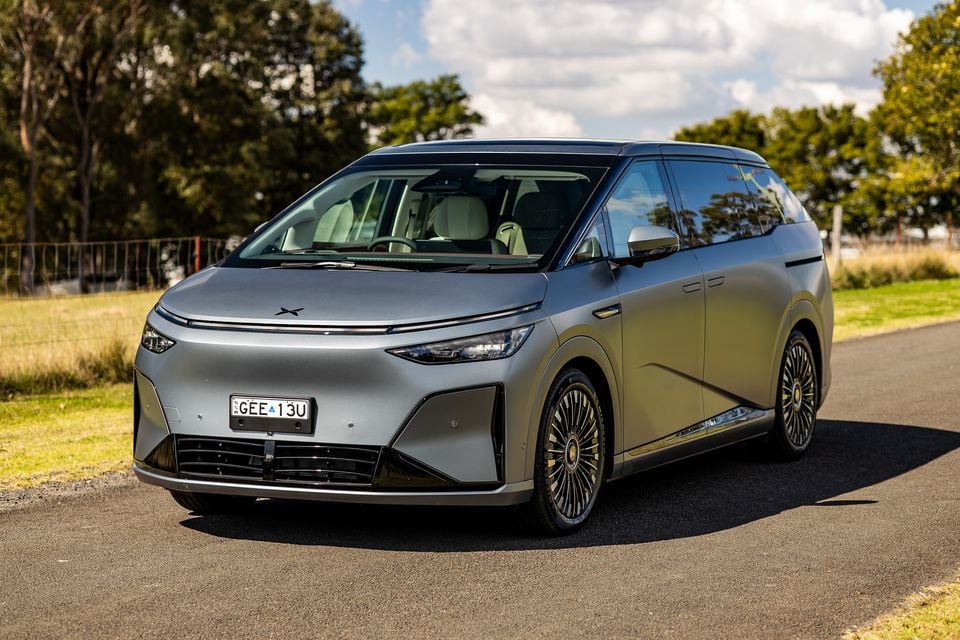
With more tech and features than you get in many cars triple the price, this is a seriously opulent and indulgent people mover that also easily meets the demands of family-car buyers and luxury transfer business operators alike.
I would personally go for the FWD variant and pocket the extra $20k, because it has all the same stuff. That’s my advice – but test it first, if you can.
CarExpert can save you thousands on a new Xpeng X9. Click here to get a great deal.
Click the images for the full gallery
If this is the car for you, we’ll compare offers from trusted dealers, handle the back and forth and manage your purchase from enquiry to delivery.
Quickly see how this car stacks up against its competition. Select any benchmark to see more details.
2026
$0
Josh Nevett is an automotive journalist covering news and reviews, with a background in motorsport journalism.
Add CarExpert as a Preferred Source on Google so your search results prioritise writing by actual experts, not AI.
Josh Nevett
2 Hours Ago

Ben Zachariah
9 Hours Ago

William Stopford
10 Hours Ago
William Stopford
11 Hours Ago
William Stopford
12 Hours Ago

Anthony Crawford
12 Hours Ago
Add CarExpert as a Preferred Source on Google so your search results prioritise writing by actual experts, not AI.
# Based on VFACTS and EVC data
† Displayed prices exclude on-road costs such as delivery charges, registration fees, number plates, insurance and applicable road taxes. These prices are subject to change without notice and may not reflect current market pricing or dealer offers.
 Automotive Vehicle Spec Data & 4K images Powered by JATO Dynamics Ltd