




Derek Fung
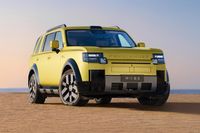
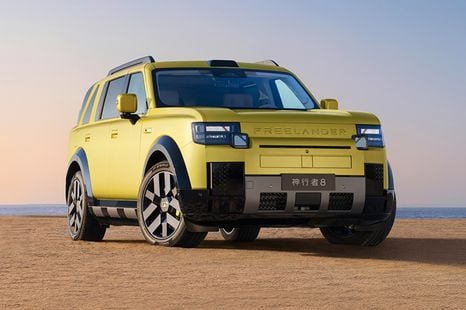
Freelander 8 coming to Australia in 2027 to launch joint venture brand
The Freelander 8 has been confirmed for Australia, and will go on sale in 2027, but pricing and specs have yet to be confirmed.
2 Hours Ago
Honda's adorable kei-class EV has finally landed, but only a small number of Aussies will enjoy its fun-loving driving character and smart tech.
If this is the car for you, we’ll compare offers from trusted dealers, handle the back and forth and manage your purchase from enquiry to delivery.
This is probably Japan's biggest new car launch in years!
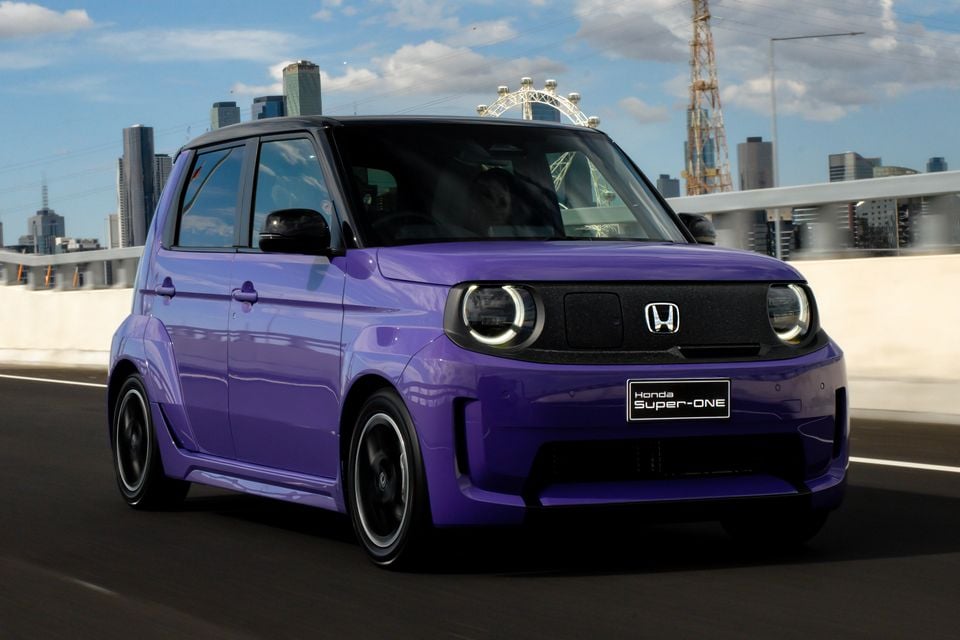
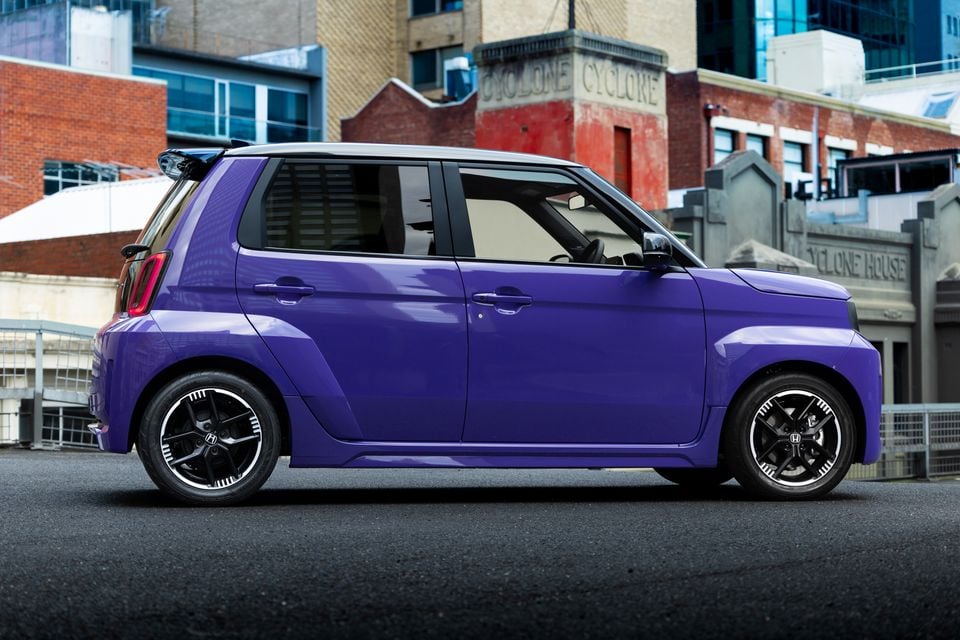
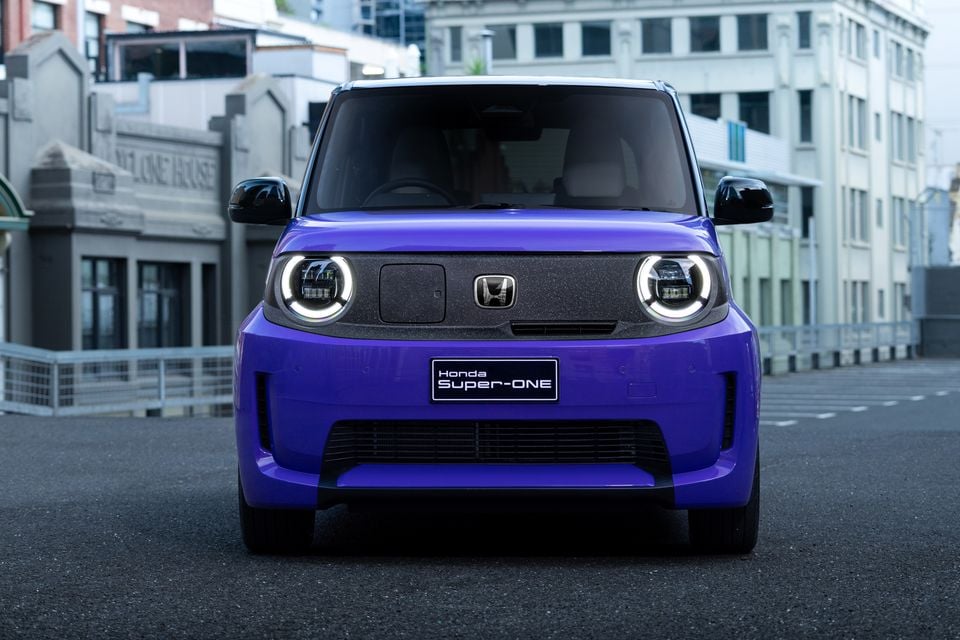
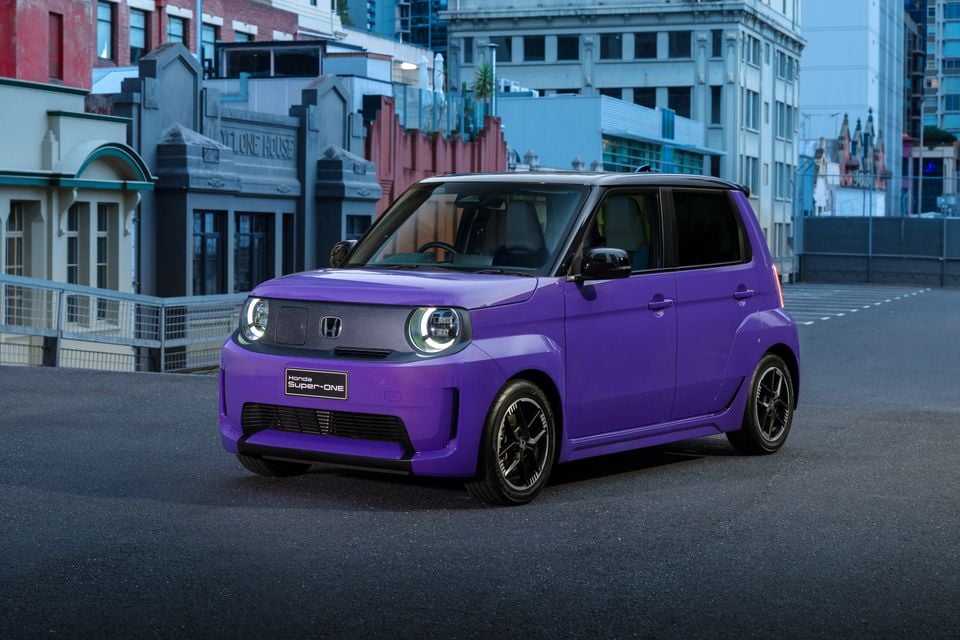
Meet the 2027 Honda Super-One, a little electric car with massive heart.
Based on the Japanese-market 'N-One e:' kei car, the Super-One is a specialised version for export markets, boasting the same cutesy looks but with a wider track, better performance, and bespoke chassis tuning, making this pocket-sized EV fit for urban driving duties in places like Australia and Europe.
The Super-One was launched to plenty of fanfare at last year's Tokyo motor show, where yours truly saw the near-production 'Prototype' for the first time. Spoiler alert: it's pretty much exactly the same as the grey-painted vehicle I saw at Honda's Tokyo show stand.
So, what's new? Well we know the price – from $36,900 drive-away – which is perhaps a little lower than some may have expected, but it's still far from making it the cheapest in the industry, given BYD's larger Atto 1 electric hatch is currently going from $19,990 drive-away, but the Japanese brand says it's littlest model is going hard on fun.
With the first run of around 130 units sold out within hours, and wait times stretching out to nearly 12 months depending on your colour of choice, we got a first steer on local roads to see if this little cutie patootie is worthy of the massive hype.
The verdict? Well, you know the drill – read on!
As noted earlier, the Honda Super-One is priced from $36,900 drive-away, with only one trim level available and just one extra-cost option – a single two-tone paint scheme that adds another $500.
| Model | Drive-away pricing |
|---|---|
| 2027 Honda Super-One Mono | $36,900 |
| 2027 Honda Super-One Two-Tone | $37,400 |
Similarly sized EVs include the BYD Atto 1 (from $19,990 drive-away currently), and the Hyundai Inster (from $35,990 drive-away).
The Super-One's pricing lines up with larger alternatives like the BYD Dolphin (from $29,990), GAC Aion UT (from $31,990), Geely EX2 (from $30,990), and MG 4 EV Urban (currently from $29,990).
Not only are those rivals from China larger in size both externally and internally, but they also all offer larger batteries with more driving range – worth noting if those aspects are key considerations for you.
To see how the Honda Super-One lines up against the competition, check out our comparison tool
Kei cars are well-packaged, but the Super-One feels like a compact car, particularly width-wise.
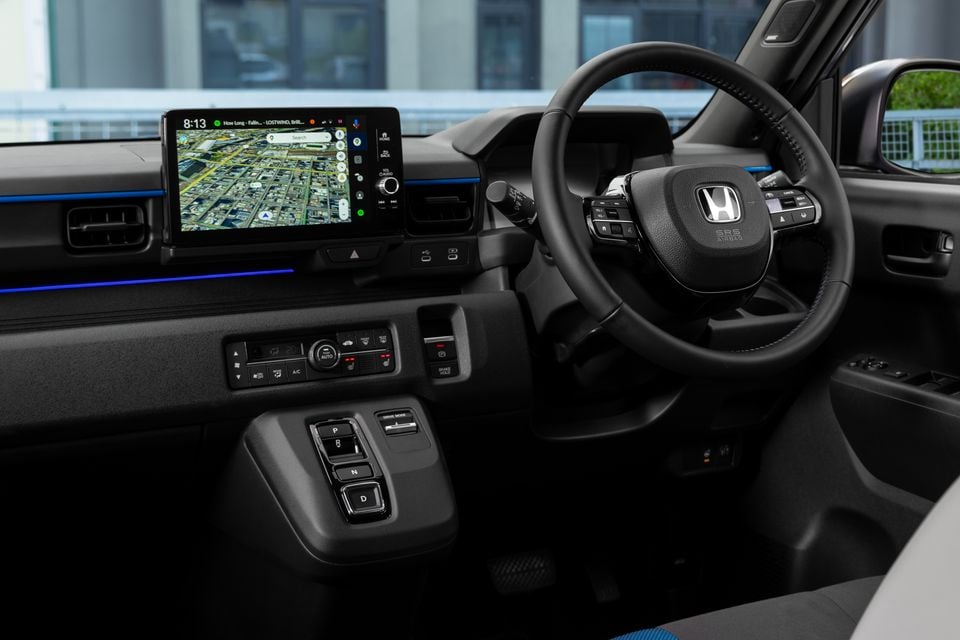
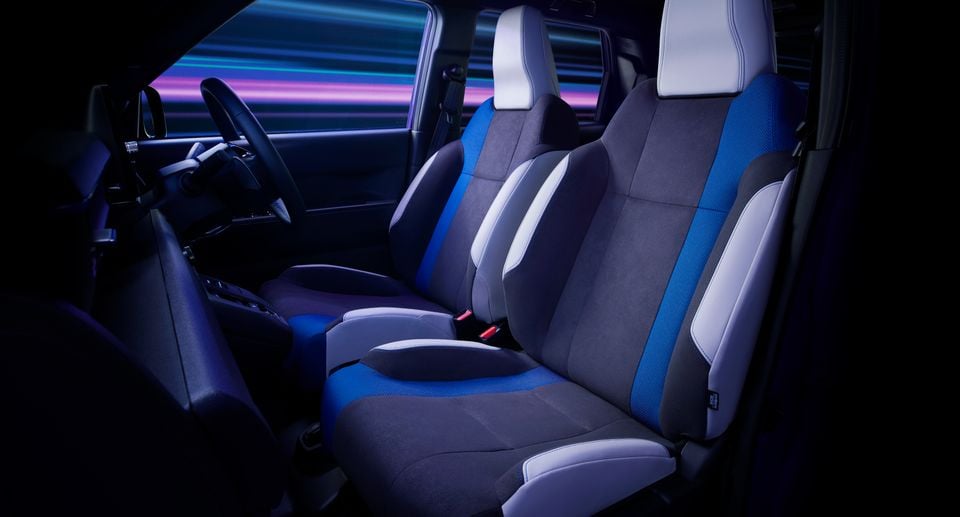
The tall, skinny dimensions mean there's heaps of headroom up front and a surprising level of legroom in the second row, but if you're riding two-up up front you might find it a touch pokey.
I'm a touch over 6'1" and shared the drive program with another journalist of similar height, and there was the odd occasion where we may have brushed shoulders. That said, the eye-catching front sport seats are comfortable and form-hugging, provided you're not 'Super-Wide', and the simple and thoughtful ergonomics mean everything is within arm's reach.
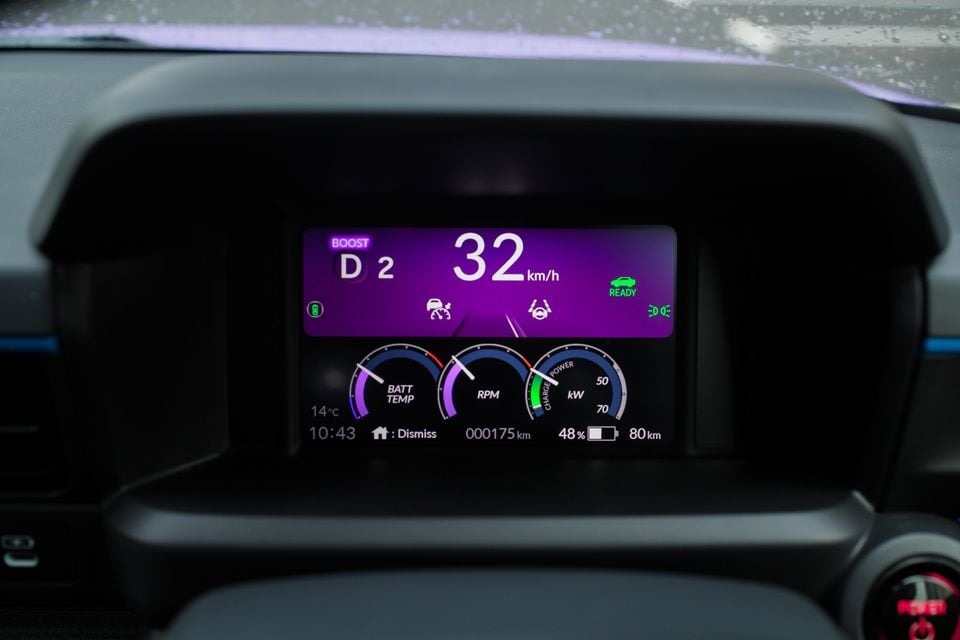
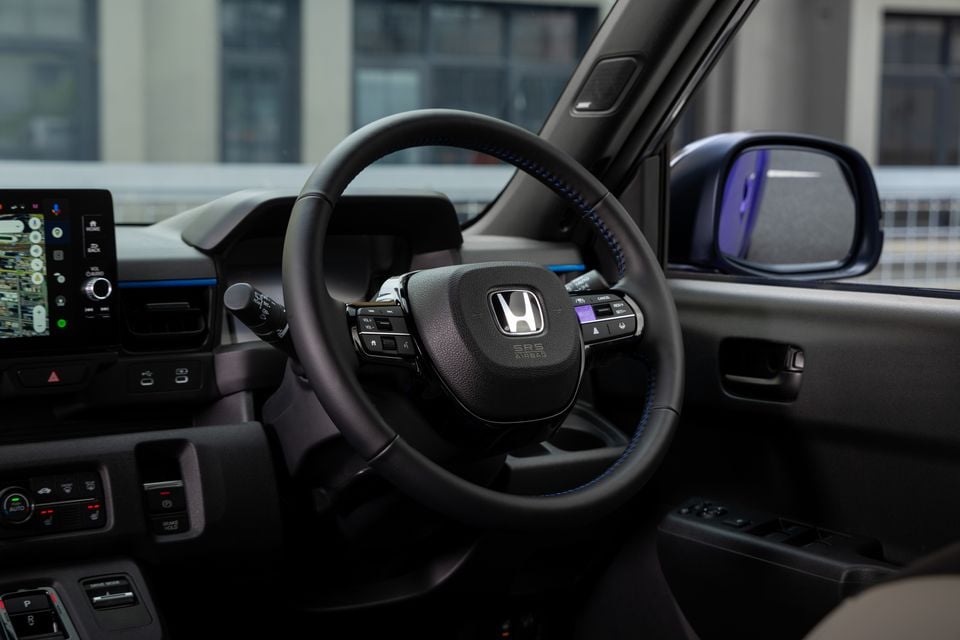
Ahead of the driver is a 7.0-inch colour digital instrument cluster, which has been styled "as a tribute" to the Honda City Turbo II's analogue-digital dash. It offers a number of different layouts, including a triple-dial view, and packs a lot of information in.
Further, while the interior materials are typical entry-level city car in their hardwearing nature, the solid and tactile actions to all of the buttons, dials and toggles throughout the cockpit are all class, and pretty much all nicked from Honda's larger models.
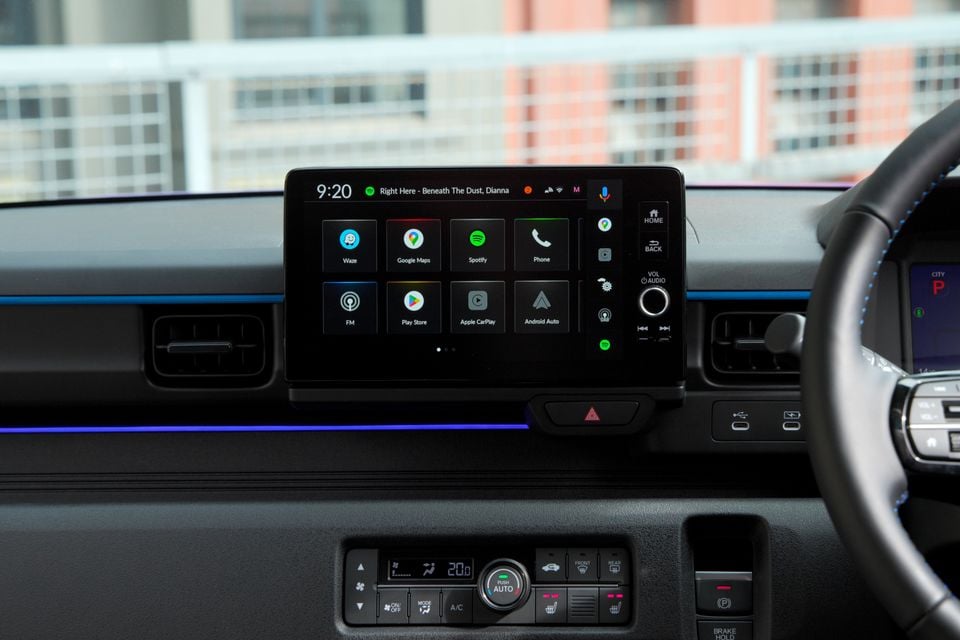
Front and centre is the 9.0-inch Honda Connect infotainment touchscreen, offering the full suite of features and services available higher up in the range, including Google Built-in and Honda Connect Gen2 online connectivity, as well as wireless Apple CarPlay and Android Auto.
As we've experienced in other Honda models, it's simple and slick to use, with the native tiled interface easy to navigate and snappy to respond to touch inputs. Google Built-in services are good to have if you don't want to rely on your smartphone, and there are third-party apps available in the Play Store.
Hooking up your smartphone is quick and easy in our experience, and the tiled interface and flat menu structure is easy to navigate. The hard buttons for Home, Back and Skip functions as well as the rotary volume dial are also welcome and tactile in their operation.
Also noteworthy is the standard eight-speaker Bose premium audio system with subwoofer. 7+1 speakers are dotted about the cabin and have been optimised for the Super-One's size, while the 13.1L subwoofer under the boot floor helps to add some thumpy bass – it's certainly an elevated audio experience for this class of vehicle.
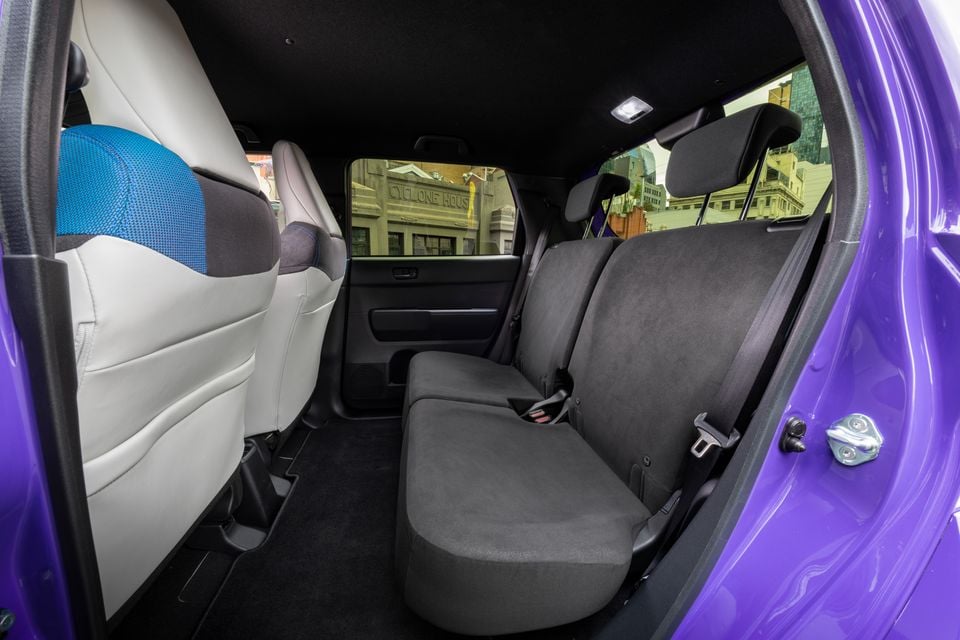
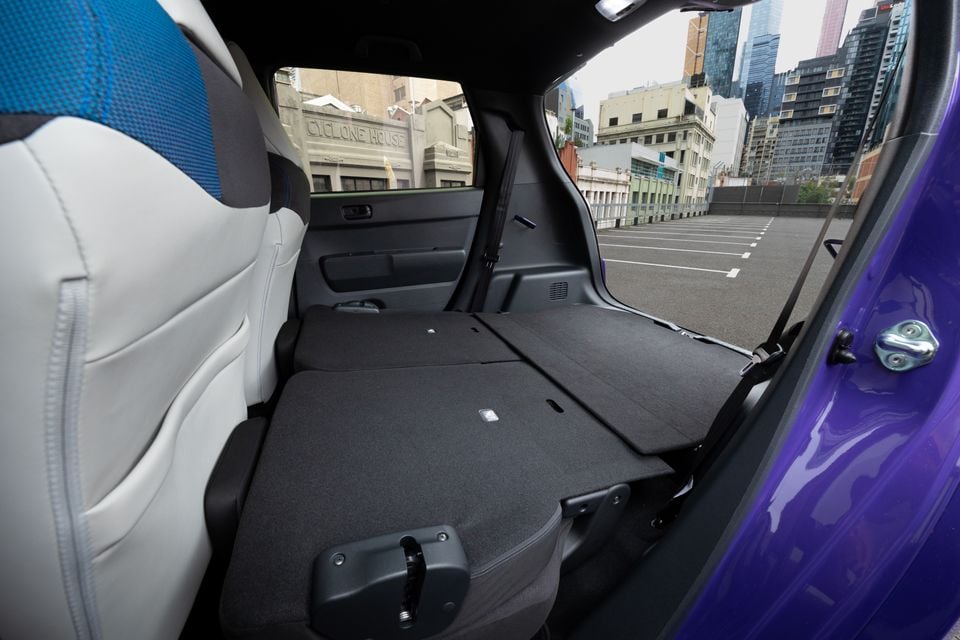
The second row is likewise impressive and segment-busting. While a strictly a four-seater by design, the boxy dimensions and relatively long wheelbase make for good headroom and legroom, even for taller passengers like 6'1" me, in a vehicle that's more compact than a Kia Picanto.
Even better, the Super-One picks up the brand's signature Magic Seats, which offer folding backrests and flip-up bases for up to 18 different seat configurations. It makes the most of the Super-One's 967L cargo capacity behind the front seats, and can be configured to become a mobile cinema if you fold the front seats back and install a streaming app on the infotainment system.
Further amenities are on the lighter side, which is expected given the segment, but there's a map pocket behind the front passenger seat, door bins, and both ISOFIX and top-tether points for child seats.
However, unlike the Hyundai Inster, which like the Super-One is based on a kei-sized vehicle, the rear seats do not slide fore and aft to open up more boot space or legroom.
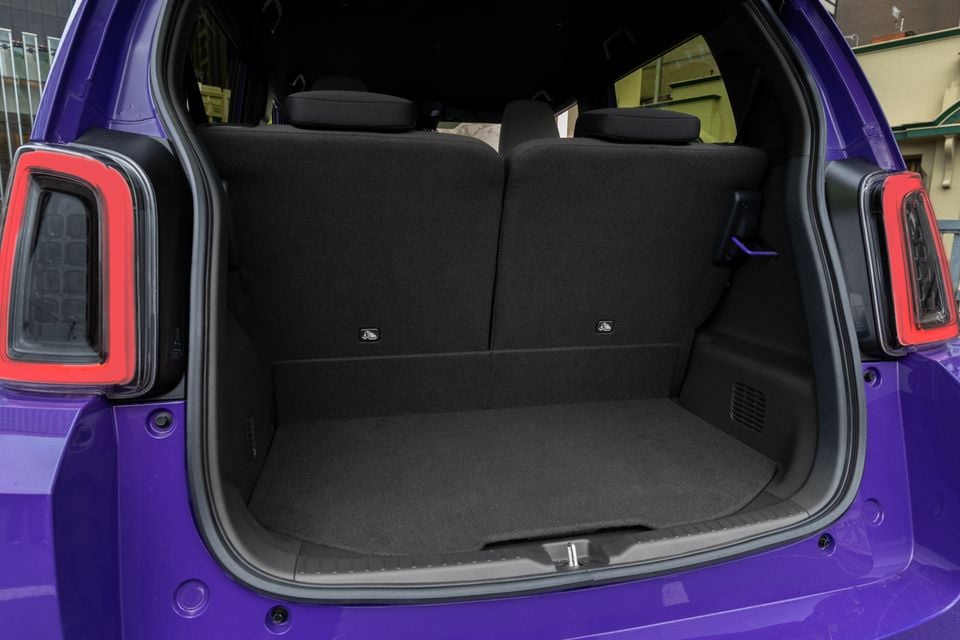
The Super-One offers a modest 162L of cargo capacity with all four seats in use, which expands to 618L measured to the lower window line with the rear seatbacks folded, or 967L to the roof.
You won't find a spare wheel of any kind under the boot floor though, just the aforementioned subwoofer for the Bose sound system.
| Dimensions | Honda Super-One |
|---|---|
| Length | 3582mm |
| Width | 1573mm |
| Height | 1616mm |
| Wheelbase | 2520mm |
| Cargo capacity | 162L – Rear seats up967L – Rear seats down, to roof |
To see how the Honda Super-One lines up against the competition, check out our comparison tool
The Honda Super-One matches its teeny-tiny dimensions with a teeny-tiny electric motor teamed with a teeny-tiny battery.
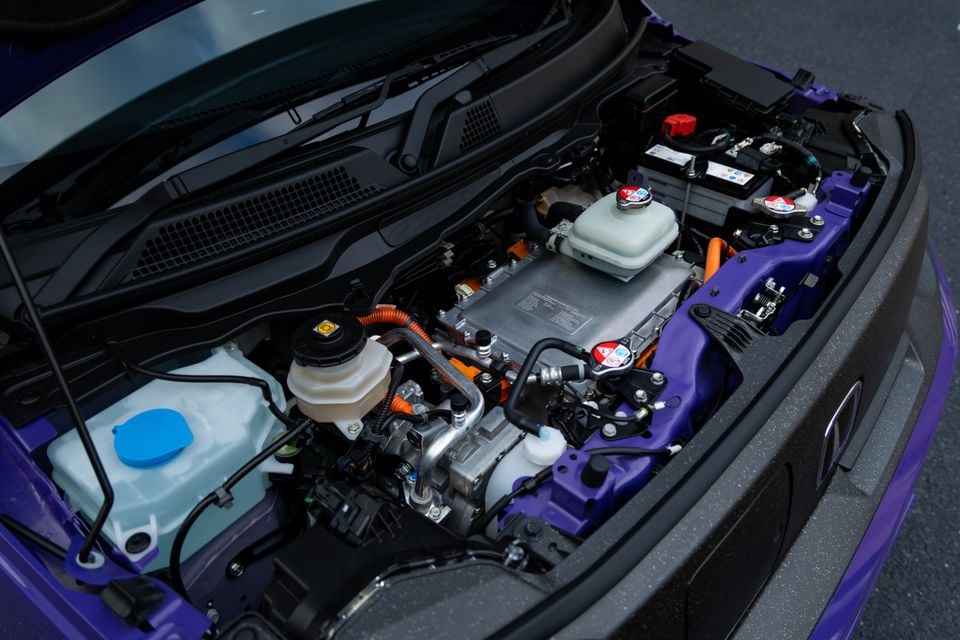
| Specifications | Honda Super-One |
|---|---|
| Drivetrain | Single-motor electric |
| Battery | 29.6kWh lithium-ion |
| Power | 47kW – Standard 70kW – Boost mode |
| Torque | 162Nm |
| Drive type | FWD |
| Weight | 1093kg |
| 0-100km/h (claimed) | - |
| Energy consumption (claimed) | 12.1kWh/100km |
| Claimed range | 202km – WLTP 253km – NEDC |
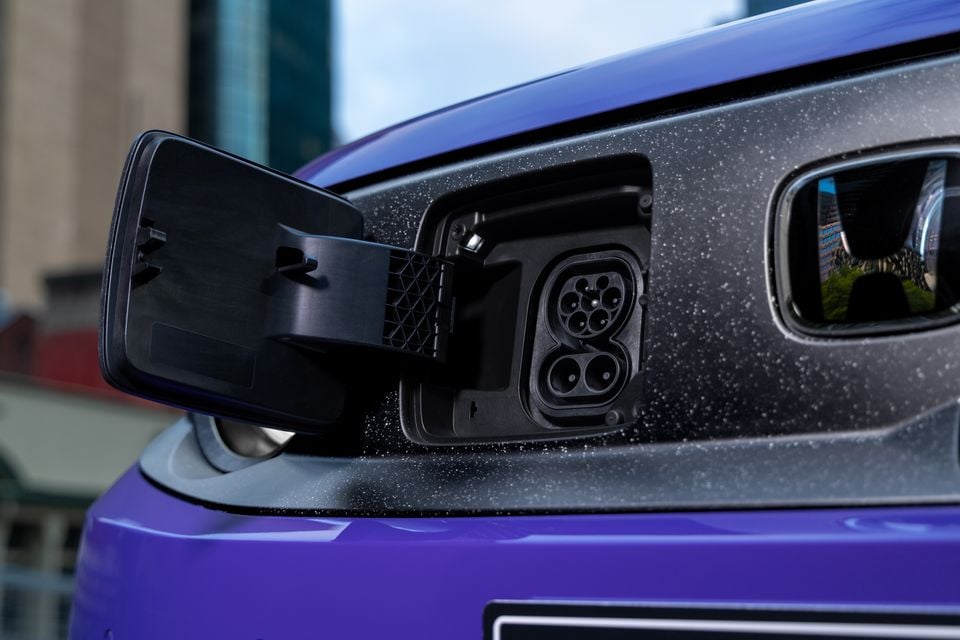
| Max AC charge rate | 6.6kW – Single-phase 10kW – Three-phase |
| Max DC charge rate | 50kW |
The Kei-class 47kW figure is the standard output in the vehicle's standard modes, with the Boost mode function upping that to 70kW.
Honda says the 29.6kWh (nominal) li-ion battery is good for just over 250km on the older NEDC test cycle, or just over 200km according to the newer and more accurate WLTP method.
Using a DC fast-charger, the Super-One will charge from 10 to 80 per cent in "approximately 30 minutes" at its quoted 50kW maximum rate.
Our limited time behind the wheel didn't yield a meaningful as-tested energy consumption readout, though after our relatively short drive program – which was probably only about 15-20km in total – the vehicle was still showing about 180km of indicated range.
To see how the Honda Super-One lines up against the competition, check out our comparison tool
Honda's approach to the Super-One's drive program was as left-field as its design, focused almost entirely in and around Melbourne's CBD to showcase its city-centric on-road behaviour.
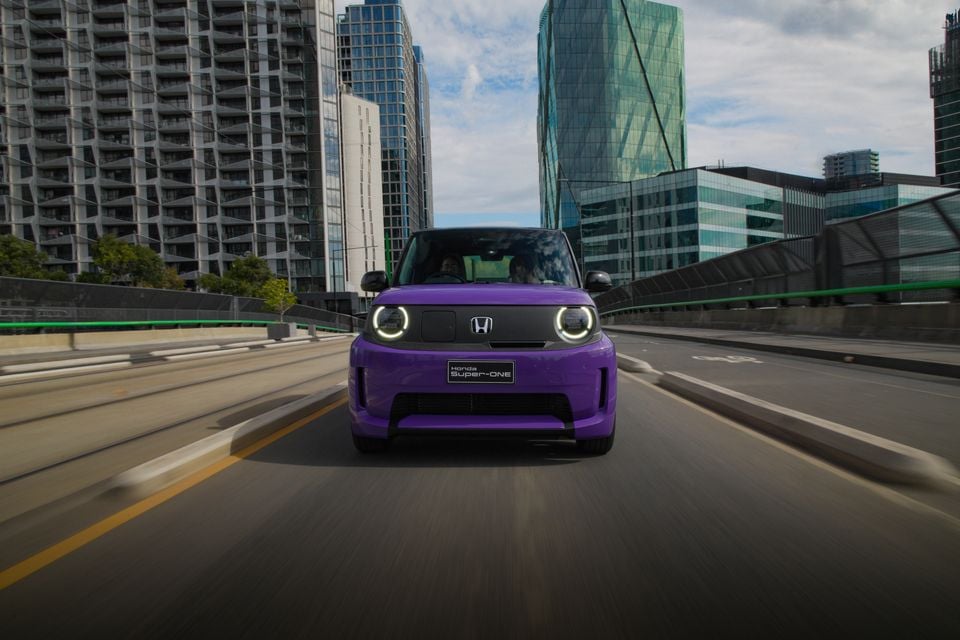
From peak-hour traffic to city laneways and suburban streets, the Super-One was subjected to all the surfaces you could expect of Australian inner-city living.
I'll be the first to call out the Super-One's meek outputs on paper – 47kW/162Nm is very miniscule in today's day and age, at least in Australia – but thankfully, the on-road experience is anything but.
The immediacy of the electric motor's torque delivery makes the little Honda feel peppier than it should, helped no doubt by its relatively light sub-1000kg kerb weight.
Sure, it's not quite fast, but you shouldn't have any issues keeping up with city and urban traffic up to 60-70km/h.
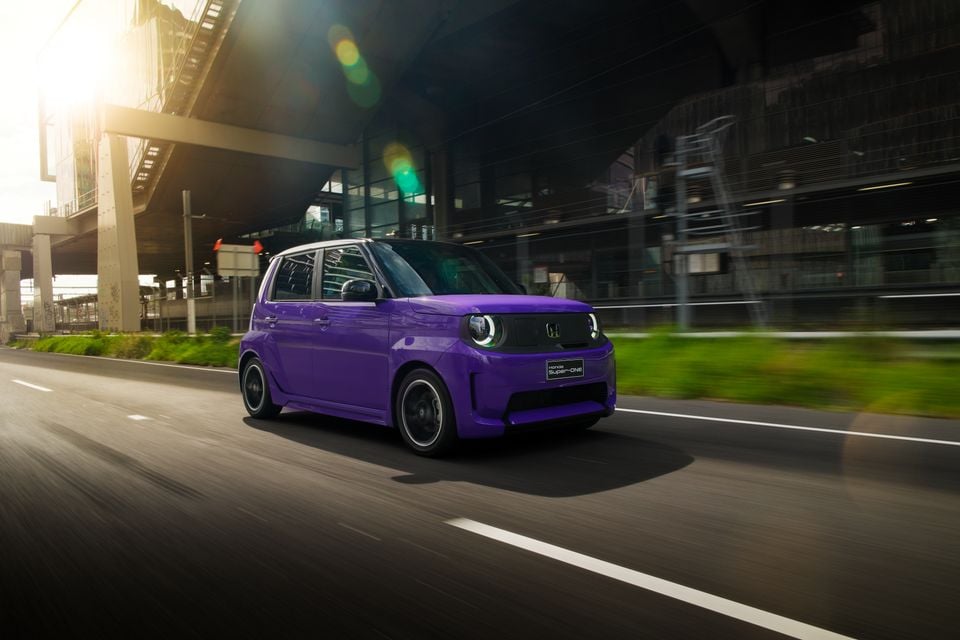
The Super-One offers several driving modes including Econ, City, Normal, Sport, and of course, Boost. The first four are all toggled via the drive mode toggle switch on the centre console, while Boost mode is activated by the brushed metal-look purple button on the multifunction steering wheel.
Econ naturally prioritises maximum driving range, numbing acceleration response and 'restraining' deceleration to "encourage economical driving". Using the paddle shifters behind the steering wheel, drivers can adjust regenerative braking through no less than six different levels.
City mode is basically the Honda's one-pedal profile, optimised for the urban grind and stop-start traffic. It's one of the better single-pedal modes I've sampled of late, with predictable and intuitive regen braking as you lift off the throttle, which like Econ mode can be adjusted via the paddles, but only across four levels in this mode.
Normal is the 'balanced' setting, returning to six-stage adjustable regen and providing a more linear response to throttle and brake inputs. Sport sharpens accelerator response through a "steeper torque curve", with stronger acceleration and deceleration feel – even better, the paddles swap out regen adjustment for a simulated seven-speed transmission, accompanied by a faint, synthesised powertrain sound played through the speakers.
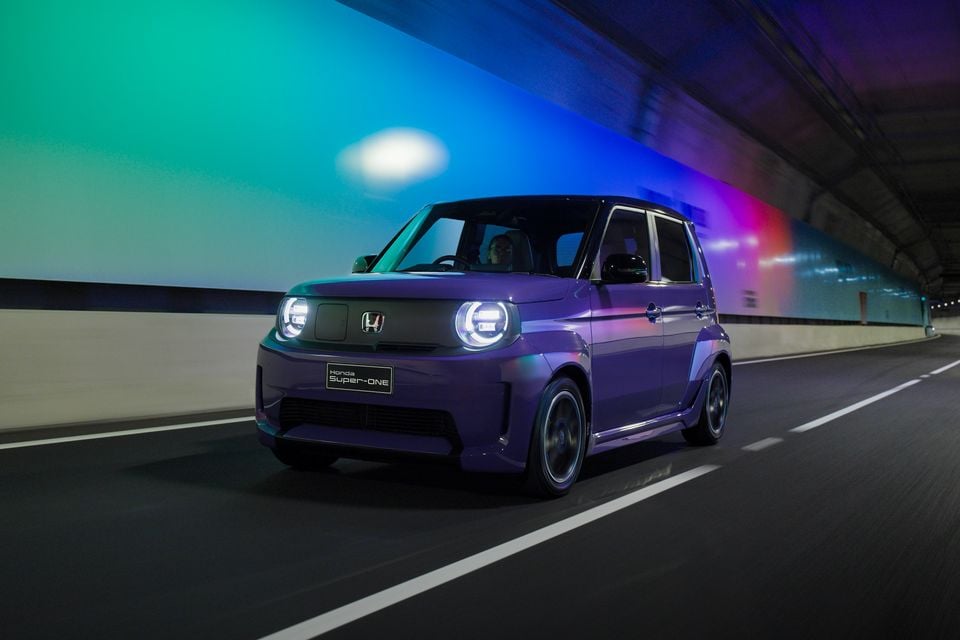
Finally, there's Boost mode. The e-motor up front ups its max power output to 70kW, and the accelerator and simulated transmission feel are sharpened further.
The cabin displays and ambient lighting promptly turn purple as well, with the driver display in particular switching to a set of triple virtual dials for battery temperature, 'RPM' and power.
Further, the 'Active Sound Control' powertrain noise is more prominent and more reminiscent of a combustion engine. Honda says this is all designed to make the Super-One "feel like something you'd choose to drive quickly".
Even better, the seven-speed simulated transmission can be put into a fully manual mode by holding down the left paddle, meaning that on the move you can actually hit a fake 'rev-limiter'.
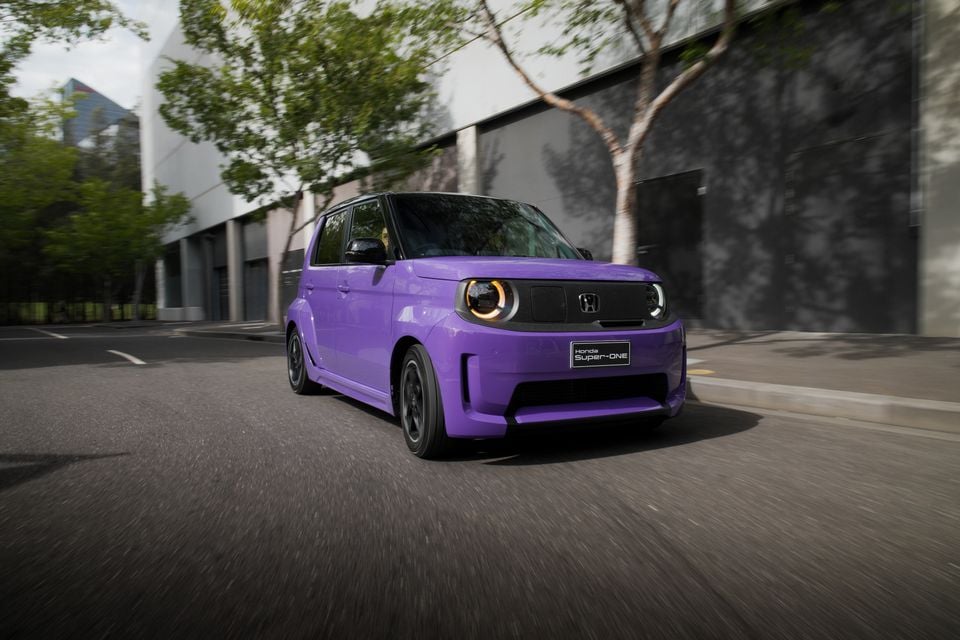
So how does that all come together behind the wheel? Well during our relatively short time behind the wheel in city-centric conditions, the Super-One really did turn out to be quite fun.
City mode is perfect for peak-hour commuting, with intuitive one-pedal driving combined with smooth and linear throttle response. The cabin is also surprisingly serene.
Even in its standard drive mode, the Super-One offers excellent steering feel and an impressive ride-handling balance. It's surprisingly mature in its chassis tuning, with a slightly sporty feel but well-managed bump absorption for a small, entry-level car.
It certainly lives up to Hondas of late, which are all pretty well-renowned for their almost European-like feel behind the wheel. I'd go as far to say the Super-One feels like a shrunken-down Civic in this respect.
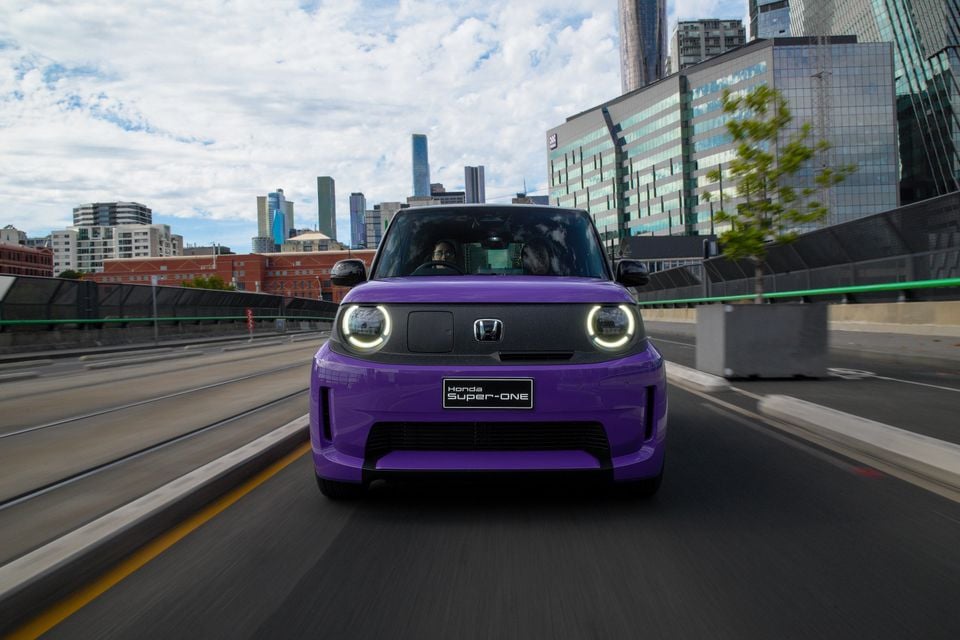
Pressing the purple 'BOOST' button certainly livens things up too, and not just the purple-fied interior ambience but the way it tangibly changes up the Super-One's already fun character.
I really enjoyed the manual mode more than I ought too, because apart from the Hyundai Ioniq 5 N I've truly never experienced such a realistic virtual transmission before in an electric vehicle.
The powertrain sound – which in this mode is meant to be reminiscent of the Integra Type R of the 1990s – will also make you smile. On paper it all might sound a bit naff, but in practice it truly adds to the fun-loving experience.
That extra advertised power and urgency is felt from the get-go too, though accelerating with foot to the floor on a Citylink on-ramp revealed that the Super-One really tapers off as you approach 80km/h.
The Super-One's teeny dimensions make it a cinch to drive in the city though, with a form factor that is dwarfed by even city-road lanes, allowing it to fit into any parking space.
If this is the car for you, we’ll compare offers from trusted dealers, handle the back and forth and manage your purchase from enquiry to delivery.
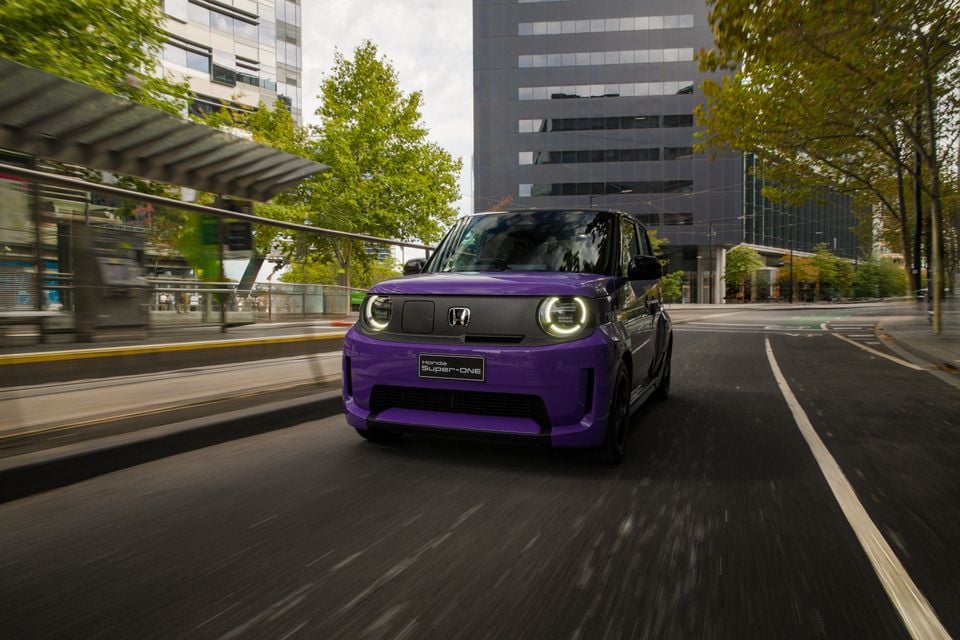
I love the steering response, which makes it feel keen and chuckable, while the widened track (+50mm) and good grip from the premium Yokohama Advan 185/55 R15 rubber ensure its tall and skinny profile doesn't feel top-heavy.
Showcasing this nicely was a fun little carpark motorkhana challenge in which journalists engaged in some friendly competition to set the quickest time. Not only was the stickered-up Super-One like driving something out of Mario Kart due to its dartiness and fun factor, it's impressively adept at changing direction and keeping understeer and wheelspin to a minimum.
Even better, yours truly was the winner of the challenge.
Further, the Super-One gets a bespoke chassis compared to its N-One e: donor car, with model-specific suspension and steering systems, wider front and rear tracks, upgraded front disc and rear drum brakes, in addition to bespoke spring and damper settings.
There are also aluminium lower front arms, strengthened hubs and uniform-rigidity driveshafts to keep torque steer in check and maintain an "honest" steering feel, while the rear torsion beam suspension system has been reinforced to increase stability under load.
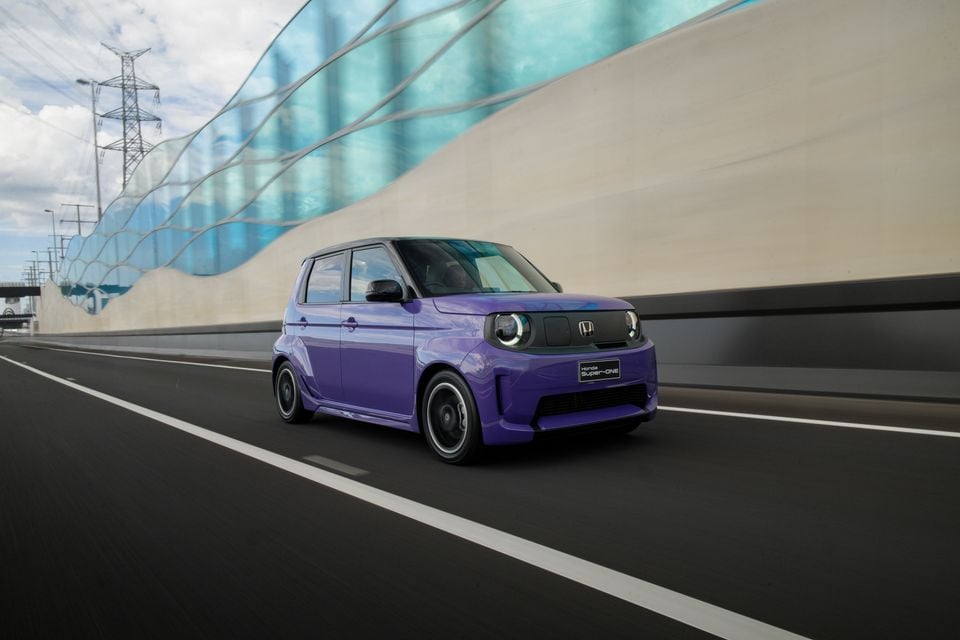
Honda says all this, and a low centre of gravity helped by the battery pack in the floor, give the Super-One its fun and dynamic feel behind the wheel, and we believe it.
As for the Honda Sensing assistance suite, it's all pretty much the same as in the Japanese brand's larger models.
Adaptive cruise control with Traffic Jam Assist and lane-centring works great for stints on the freeway, with or without bumper-to-bumper traffic.
The blind-spot monitoring and rear cross-traffic alert are helpful, too, but the Super-One already offers great outward visibility via its tall and square glasshouse. The reversing camera also does what it says on the tin.
To see how the Honda Super-One lines up against the competition, check out our comparison tool
The Super-One is available in just one decked-out trim level in Australia.
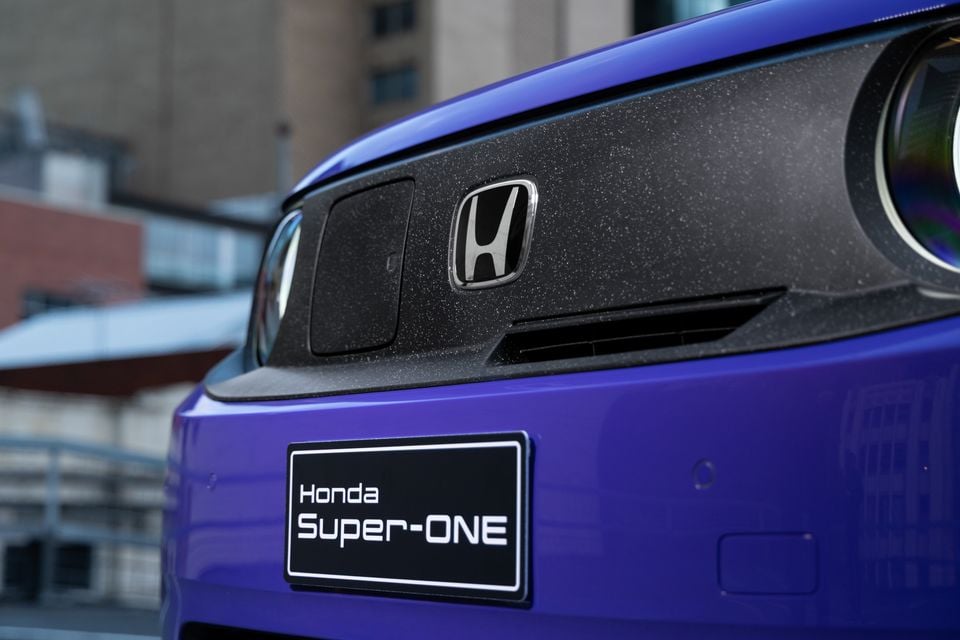
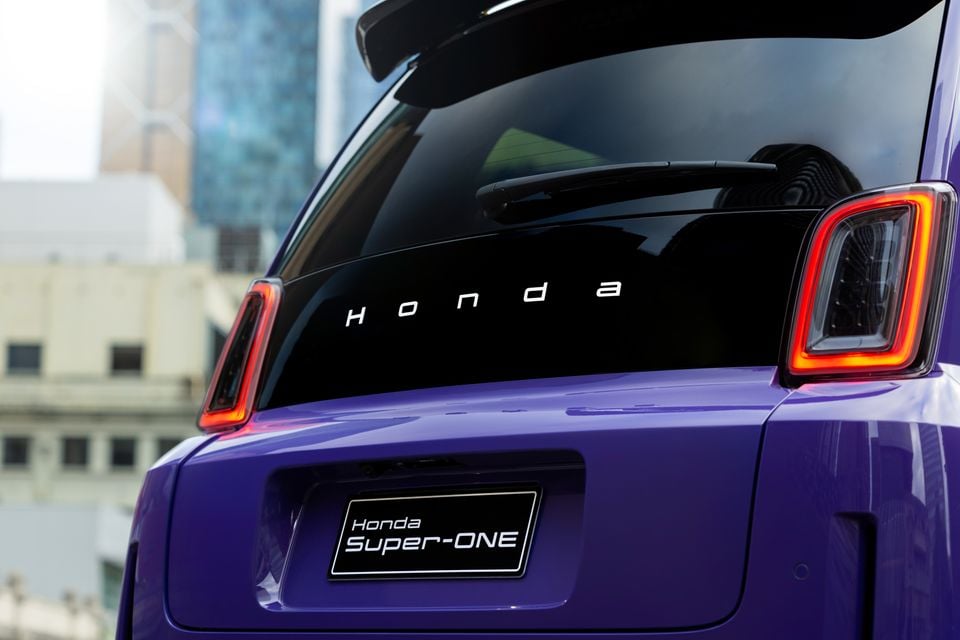
2027 Honda Super-One equipment highlights:
To see how the Honda Super-One lines up against the competition, check out our comparison tool
The Honda Super-One hasn't received an ANCAP or Euro NCAP safety rating as yet. The brand's local team also said it has "no plans" to submit the vehicle to independent crash-test authorities for certification.
Standard safety features include:
While it hasn't been subjected to independent safety assessment, Honda says the Super-One has been developed to passenger car standards despite its kei-class origins.
The Super-One gets a reinforced body structure compared to the N-One on which it's based, including internal side impact crash-testing at speeds of 32km/h rather than the 26km/h for kei cars.
It's also the first compact Honda to feature post-collision braking, which automatically applies the brakes after the airbags have been activated in a collision.
Honda has also fitted a protective frame around the floor-mounted battery pack to help protect it from being damaged in a side impact collision.
To see how the Honda Super-One lines up against the competition, check out our comparison tool
The Super-One is covered by Honda's standard five-year, unlimited-kilometre new-vehicle warranty, which can be extended to eight years via the Honda Extend program if the vehicle is serviced at a Honda Service Centre for the initial warranty period.
| Servicing and Warranty | Honda Super-One |
|---|---|
| Warranty | 5 years, unlimited kilometres – Standard Up to 8 years – Service-activated 8 years or 160,000km – EV battery |
| Roadside assistance | 5 years |
| Service intervals | 12 months or 10,000km |
| Capped-price servicing | 5 years or 50,000km |
| Average annual service cost | $199 |
| Total capped-price service cost | $995 – 5 years |
Further, the Super-One's high-voltage battery is covered for up to eight years or 160,000km, in line with the Japanese brand's e:HEV hybrid models.
While the Super-One's service intervals are 12 months or an oddly short 10,000km, Honda's One Price Promise caps its yearly maintenance at $199 per annum, totalling $995 over five years.
To see how the Honda Super-One lines up against the competition, check out our comparison tool
This car is so silly, but so much fun at the same time.
It really shouldn't make sense, and on paper or at the accountant's office it probably doesn't. But once you drive and experience the Super-One, it will make a lot of sense.
This car hasn't been designed to be the most practical, most spacious, or most attainable electric vehicle on the market – Honda is pretty honest about that. It's meant to be fun and interesting for the discerning car enthusiast.
It may not be as cheap as the Atto 1 or as practical as the Hyundai Inster, nor does it offer as much driving range as either of those Chinese or Korean rivals (let alone larger EVs for the same money), but it sure makes up for most of that with a vibrant personality, cool Japanese design flair, and plenty of driver engagement.
Honda has done an excellent job at preserving the feel of its larger products – namely the Civic – in this shrunken-down micro-car package.
The irks with the quirks? It's a premium proposition which in terms of money-for-metal puts this EV a step or two behind all of its most direct rivals, let alone those in the segment above.
It also doesn't have all that much range, even if it has been designed as a city-slicker, and the interior finishings aren't all that plush for a micro-car costing the better part of $40,000 in your driveway.
But the Super-One's cutesy, boy-racer looks, fun-to-drive feel, and high-end spec inclusions go a long way to offset all that, especially for those looking for a small electric car that's actually interesting to drive.
My heart says 'Excellent', but my head says 'Very Good' – go drive one for yourself and you'll see what I mean.
CarExpert can save you thousands on a new Honda Super-One. Click here to get a great deal.
Click the images for the full gallery
If this is the car for you, we’ll compare offers from trusted dealers, handle the back and forth and manage your purchase from enquiry to delivery.
Quickly see how this car stacks up against its competition. Select any benchmark to see more details.
2026
$36,900
James Wong is an automotive journalist and former PR consultant, recognised among Australia’s most prolific motoring writers.
Add CarExpert as a Preferred Source on Google so your search results prioritise writing by actual experts, not AI.
Derek Fung
2 Hours Ago

James Wong
4 Hours Ago

Ben Zachariah
11 Hours Ago
James Wong
12 Hours Ago

Damion Smy
13 Hours Ago
James Wong
16 Hours Ago
Add CarExpert as a Preferred Source on Google so your search results prioritise writing by actual experts, not AI.
# Based on VFACTS and EVC data
† Displayed prices are based on the drive-away price of the vehicle, which includes delivery charges, registration fees, number plates, and applicable road taxes, based on a Sydney location. However, prices may vary between states and territories, and additional costs such as compulsory third party (CTP) insurance, dealer delivery fees, and optional extras are not included. These prices are subject to change without notice and may not reflect current market pricing or dealer offers.
 Automotive Vehicle Spec Data & 4K images Powered by JATO Dynamics Ltd