





William Stopford
Chinese brand says it isn’t dumping unwanted cars on Australia
Leapmotor insists its HQ isn't inundating it with stock, allowing it to be selective about how many cars to order – and which models it wants to sell.
16 Minutes Ago
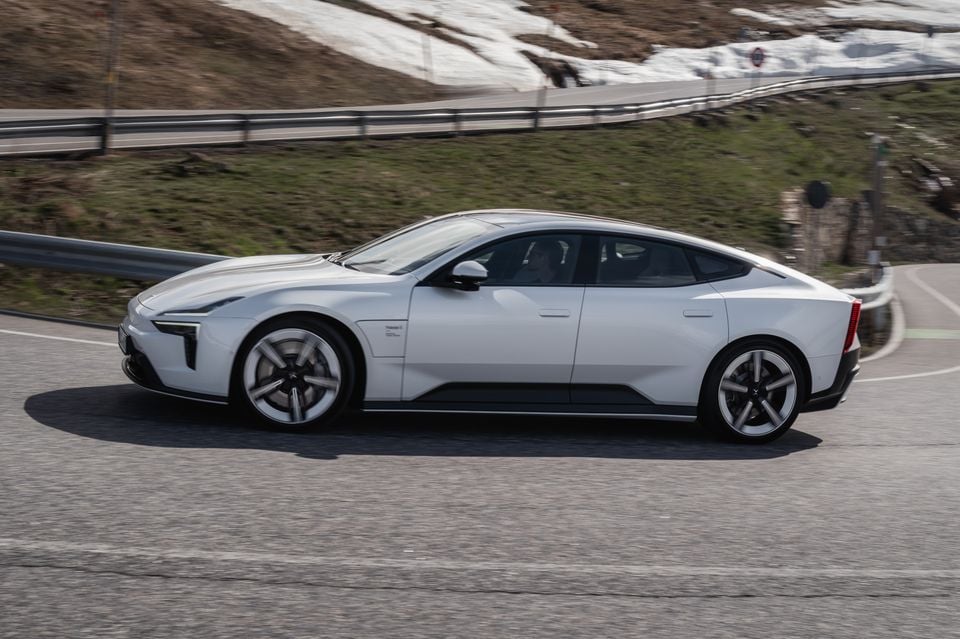
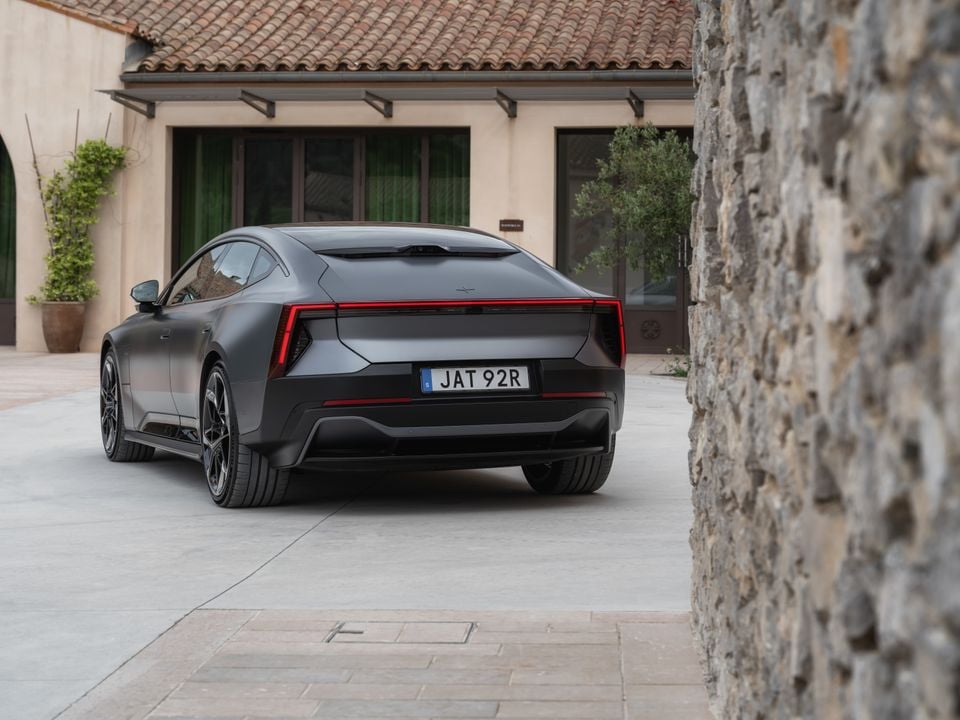
With at least 550kW and a range of up to 678km, the Polestar 5 carves out its own bit of the electric GT landscape, undercutting rivals in the process.
If this is the car for you, we’ll compare offers from trusted dealers, handle the back and forth and manage your purchase from enquiry to delivery.
Don’t waste your money on a Porsche Taycan or Audi e-tron GT when you can have the exceptional new Polestar 5 with more power for a lot less of your cash. And they're not the only two things going for this all-new electric grand tourer.
Way back in 2020, Polestar effectively set out its design and performance manifesto with the Precept concept car, a gorgeous five-door GT that preceded the electric vehicle brand’s move further away from its parent company, Volvo.
Since then, the Polestar lineup has filled out considerably, but it hasn’t forgotten that show car, taking the time to develop a production version based on a bonded-aluminium platform, creating something suitably special to top the range. The result is the Polestar 5.
It’s been a long time coming, so does Polestar's new flagship sports car offer well-heeled buyers a seemingly great-value alternative to other high-performance EVs?
Just two versions of the Polestar 5 have been announced so far, starting with the Dual Motor Launch Edition priced at $186,249 drive-away in Victoria. This is a little less than the entry-level Taycan costs, and it’s far more powerful, comparing favourably with the considerably more expensive GTS variant of the Porsche.
| Model | Price before on-road costs |
|---|---|
| 2027 Polestar 5 Dual Motor Launch Edition | $171,100 |
| 2027 Polestar 5 Performance Launch Edition | $193,100 |
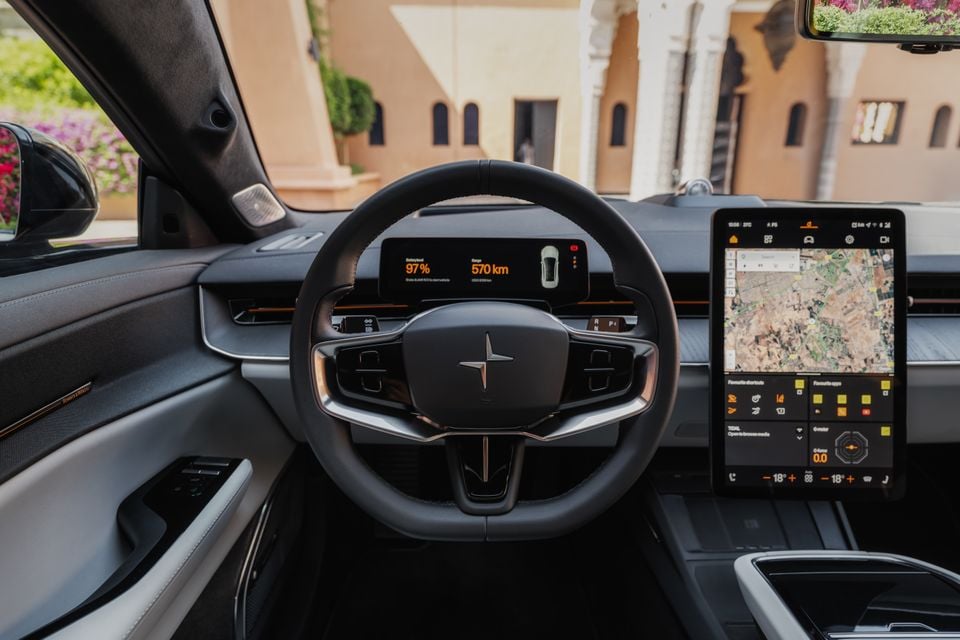
You sit low in the Polestar 5, which is a good start for a car said to be all about performance, and while the interior shares a lot with other models from the brand, it still manages to feel special.
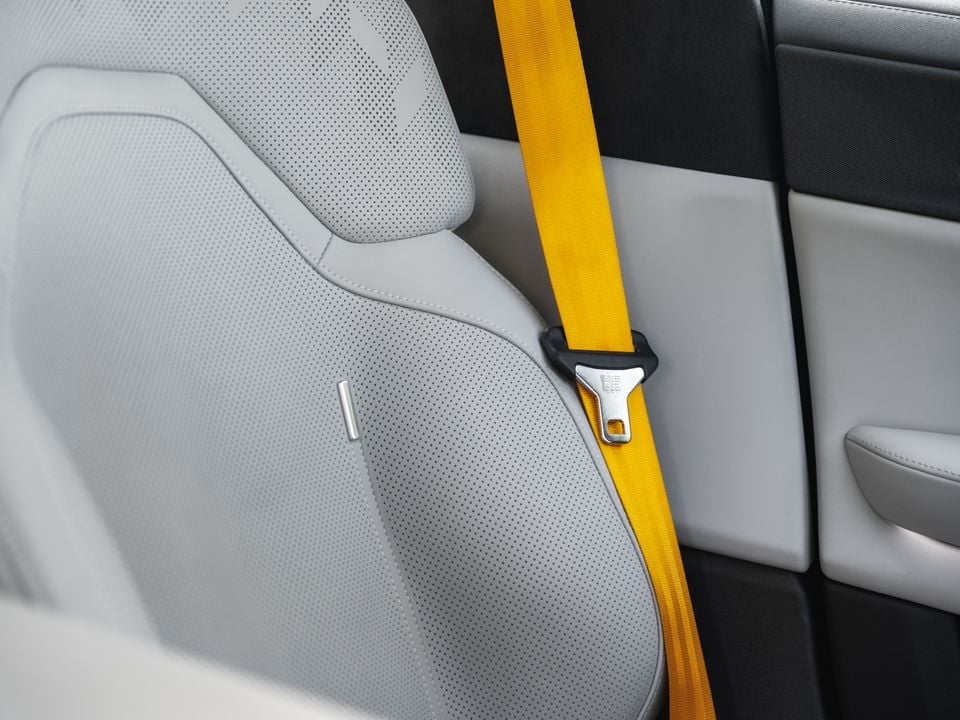
Low-set sports seats help in this regard, and they’re electrically adjustable every which way, as you’d expect at this price level. Even after two long days at the wheel, our backs were twinge-free, so they’re comfortable as well as supportive through the corners.
In line with Polestar’s green image, the standard upholstery is a synthetic material, while genuine leather is an expensive upgrade. The brand’s 'Swedish gold' hue is found on the seatbelts and on the large rotary volume control, welcome little pops of colour that can be enhanced by the multi-colour ambient lighting.
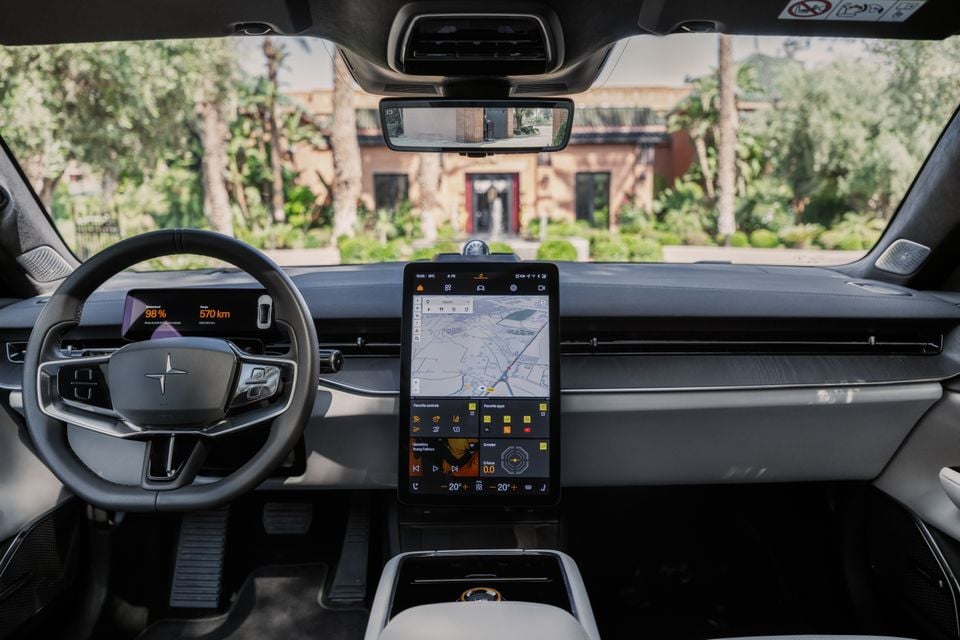
The design is quite minimalist overall due to a lack of buttons throughout the cabin, which looks great, but does mean an over-reliance on the large portrait-oriented touchscreen in the middle of the dashboard.
This is a 14.5-inch display running Android Automotive OS with Google Built-in, and it is very slick and attractive-looking, too. It has Apple CarPlay as well, of course, and is packed with connectivity and features, though it's not quite as gimmicky as Tesla’s equivalent.
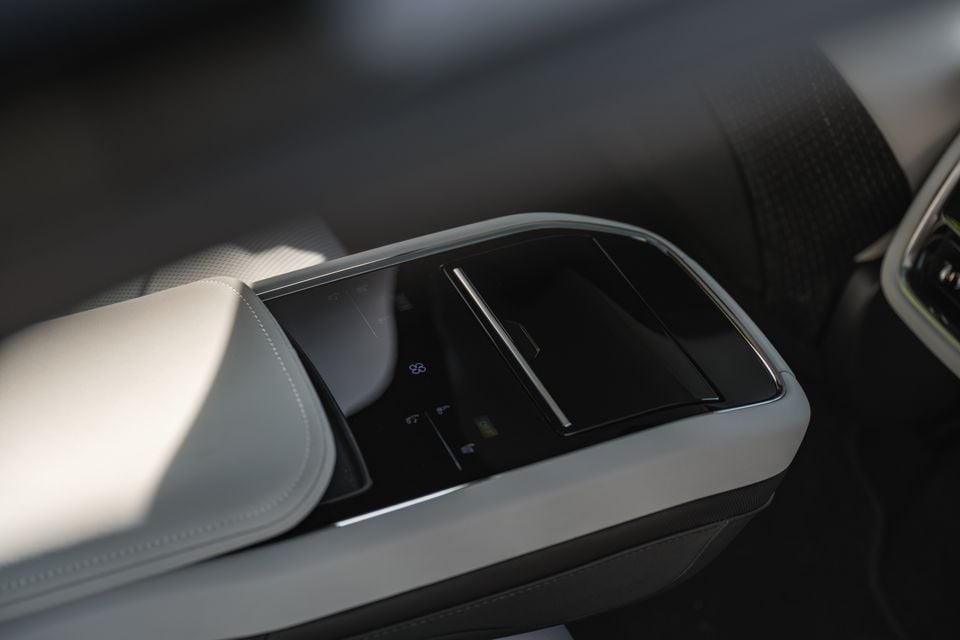
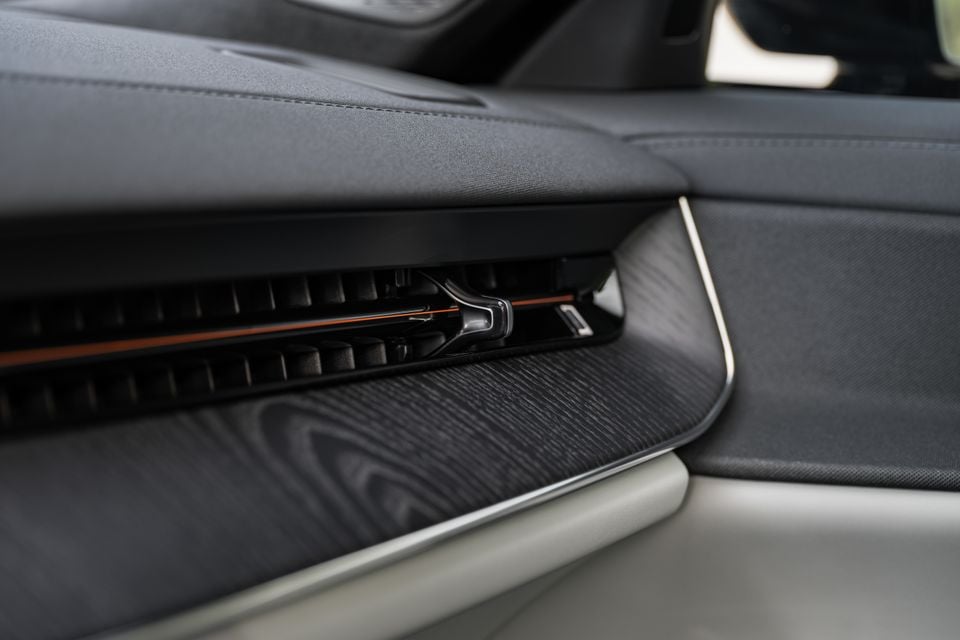
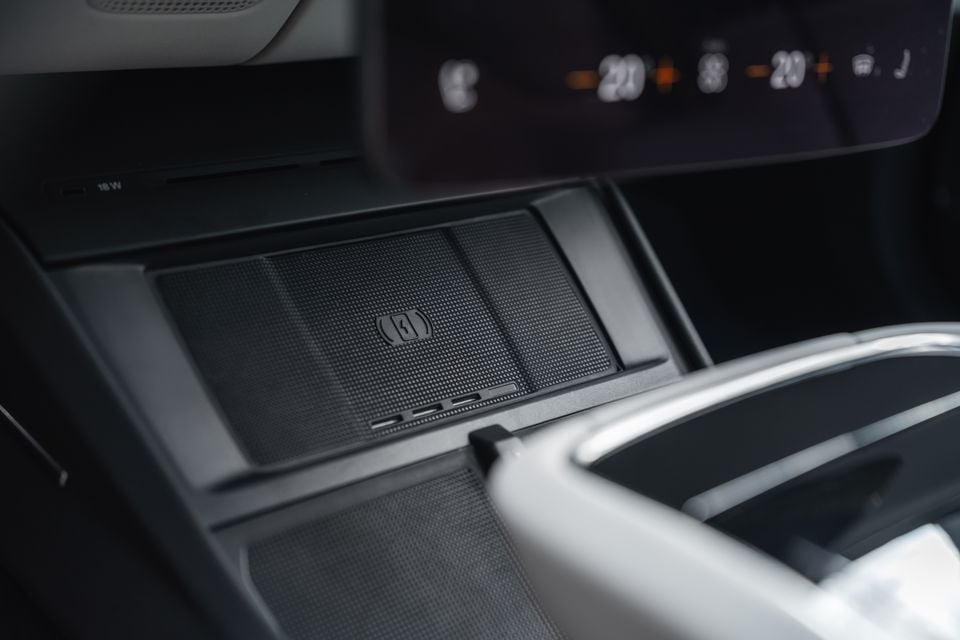
For the driver, this is mercifully augmented by a separate 9.0-inch instrument display ahead of the chunky, mildly flat-bottomed steering wheel.
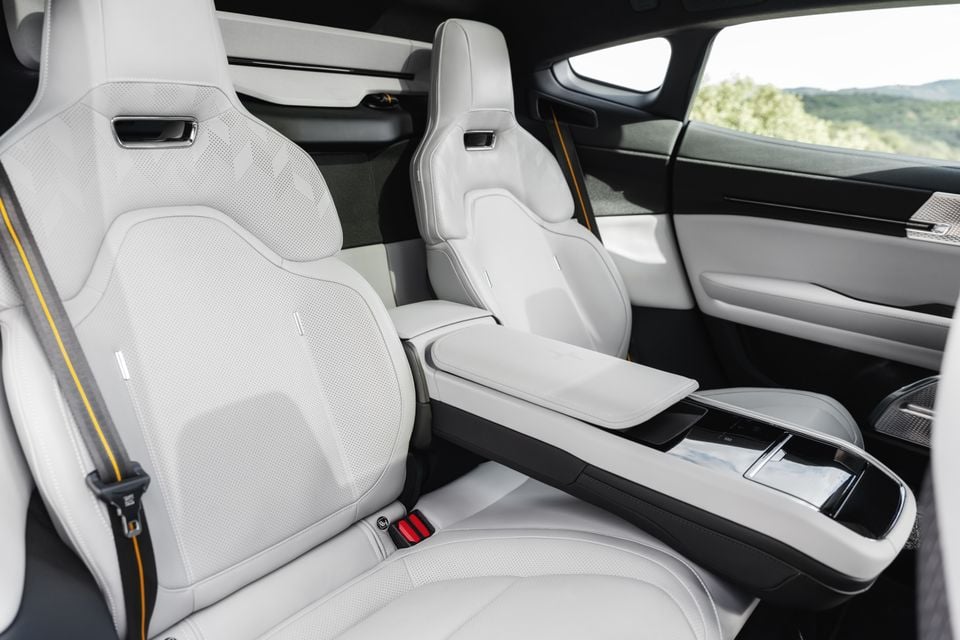
The outer rear seats mirror the fronts in terms of design and comfort, and they even get electrical adjustment for the backrests.
If you really have to, you can carry someone in the middle of the back seat – where there is a seatbelt – but it’s a narrow and relatively uncomfortable place to be, and it’s clear that Polestar intended for the console between the outer seats to be in position for the majority of the time.
A massive glass roof extends behind the heads of rear-seat occupants, meaning they may not immediately notice there’s no window behind them. Instead, there’s a bulkhead between them and the boot.
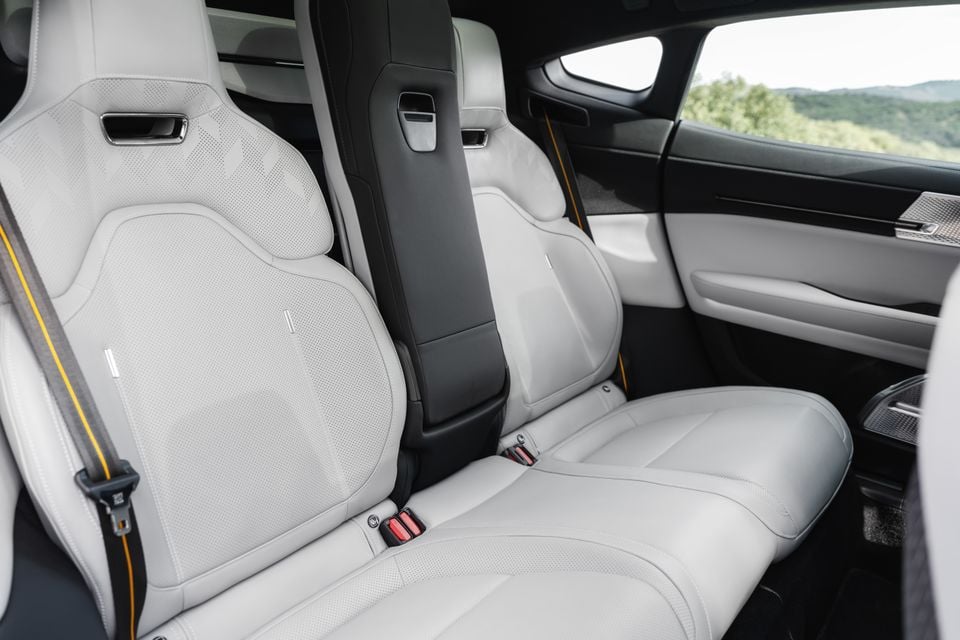
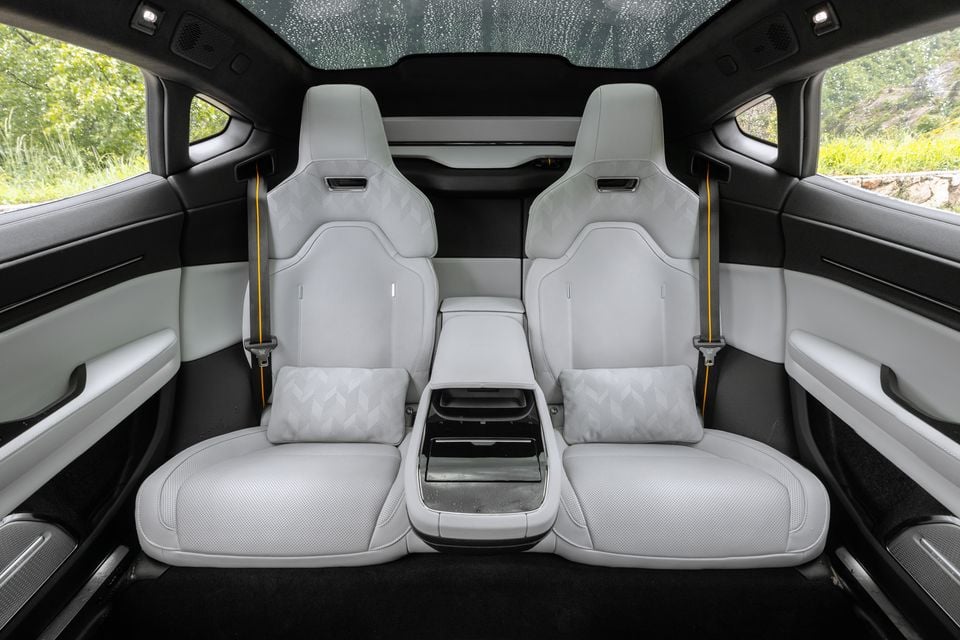
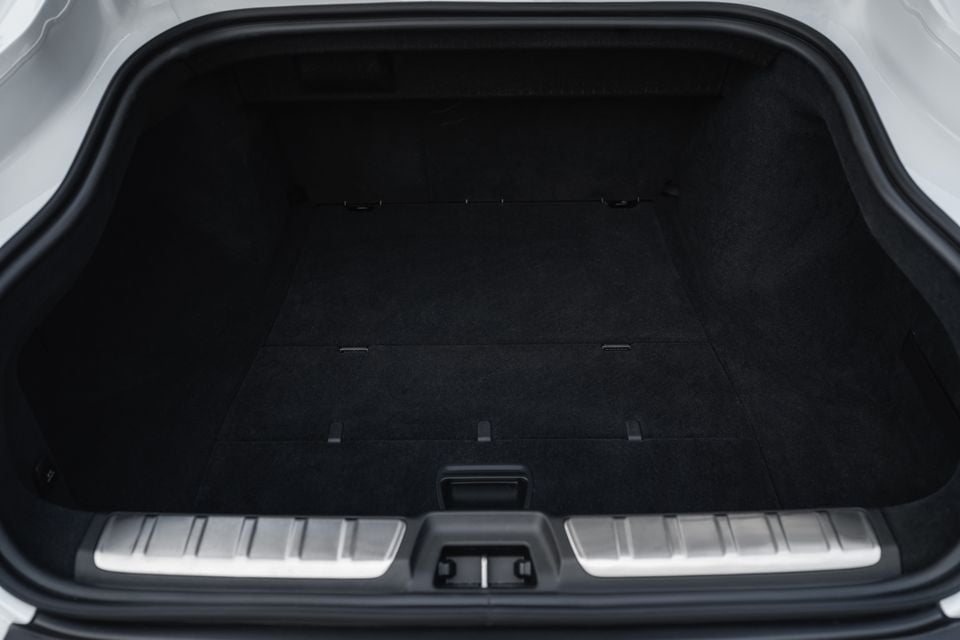
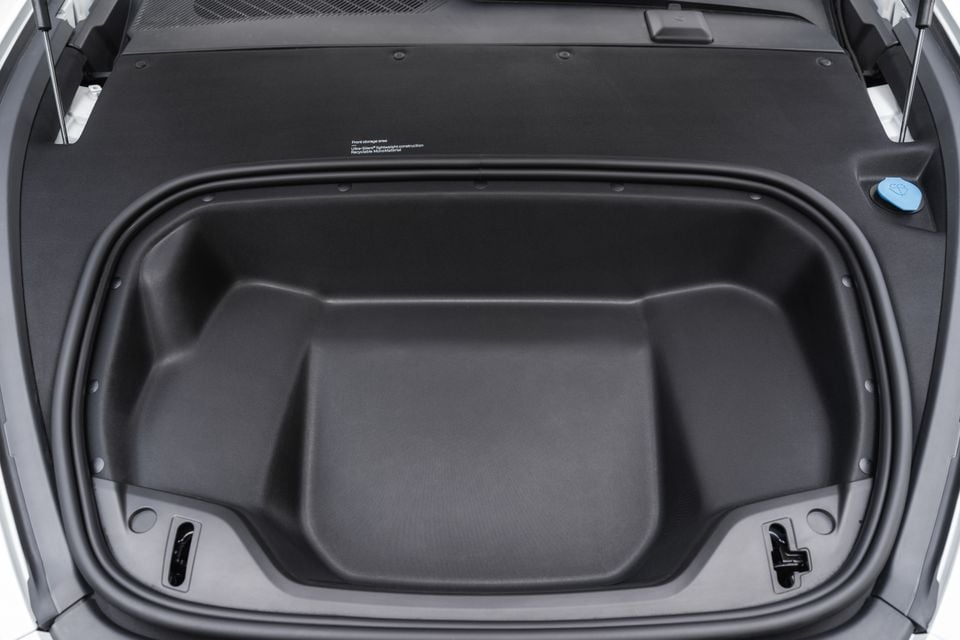
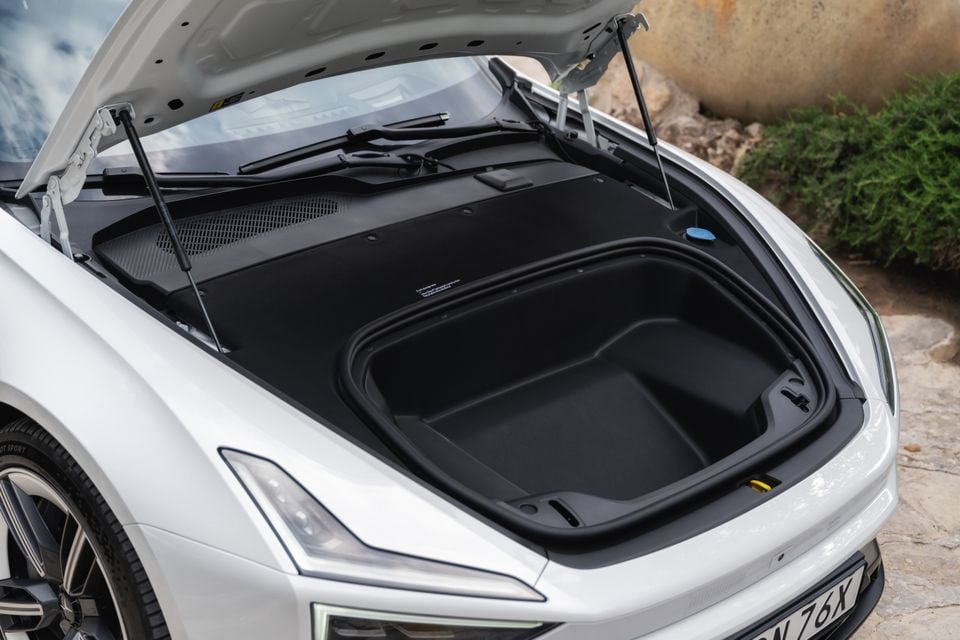
This, and the rear seatbacks, can fold down to accommodate longer items when required. The boot volume itself isn’t massive at 365 litres, but the tailgate allows unobstructed access and there’s some extra storage under the floor. All this is supplemented by a 62L frunk up front.
From the driver’s perspective, the rear view is supplied from a roof-mounted camera to the digital 'mirror' in the middle of the windscreen. Interestingly, learning from feedback on the same feature in the Polestar 4, the brand has altered the zoom level and it’s far more natural to use now, without requiring a momentary shift in your eyes’ focus.
| Dimensions | Polestar 5 |
|---|---|
| Length | 5087mm |
| Width | 2063mm |
| Height | 1420-1429mm |
| Wheelbase | 3054mm |
| Cargo capacity | 365L (boot storage)62L (under-bonnet storage) |
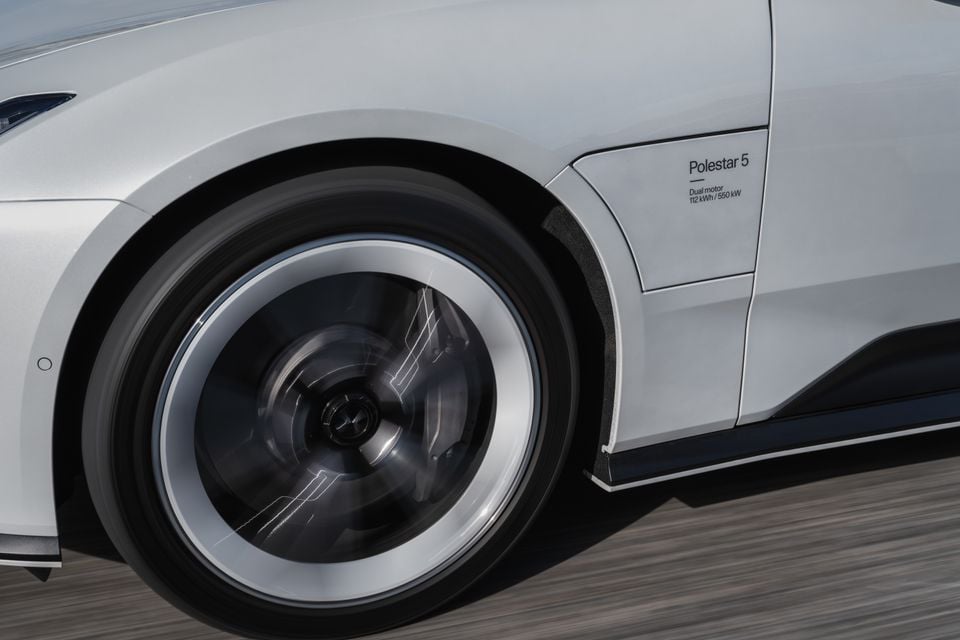
Two variants of the Polestar 5 have been confirmed for launch, both using the same 112kWh battery pack – of which 106kWh is quoted as usable – and two electric motors for all-wheel drive.
| Specifications | Polestar 5 Dual Motor | Polestar 5 Performance |
|---|---|---|
| Drivetrain | Dual-motor electric | Dual-motor electric |
| Battery | 112kWh NMC | 112kWh NMC |
| Power | 550kW | 650kW |
| Torque | 812Nm | 1015Nm |
| Drive type | All-wheel drive | All-wheel drive |
| Weight | 2500kg | 2500kg |
| 0-100km/h (claimed) | 3.9 seconds | 3.2 seconds |
| Energy consumption (claimed) | 17.8-18.3kWh/100km | 21.2kWh/100km |
| Claimed range | 678km | 558km |
| Max AC charge rate | 11kW | 11kW |
| Max DC charge rate | 350kW | 350kW |
The Dual Motor’s peak output figures are 550kW of power and 812Nm of torque, which is enough for Polestar to claim 0-100km/h acceleration in a rapid 3.9 seconds, despite the 2500kg kerb weight.
Polestar quotes the same weight for the Performance variant, so its 650kW and 1015Nm outputs are enough to drop the benchmark sprint time to just 3.2 seconds (claimed). This model also gets a chassis upgrade comprising Magneride adaptive damping and a lower ride height.
In terms of range, the Dual Motor’s official figure is as high as 678km depending on wheels and tyres, while the Performance model’s number drops to 558km.
The Polestar 5 uses an 800-volt electrical architecture which allows for fast DC charging at up to 350kW. If you can find such a charger, the theoretical 10-80 per cent charge takes 22 minutes. On a three-phase 11kW AC charger, a 0-100 per cent charge takes 11 hours.
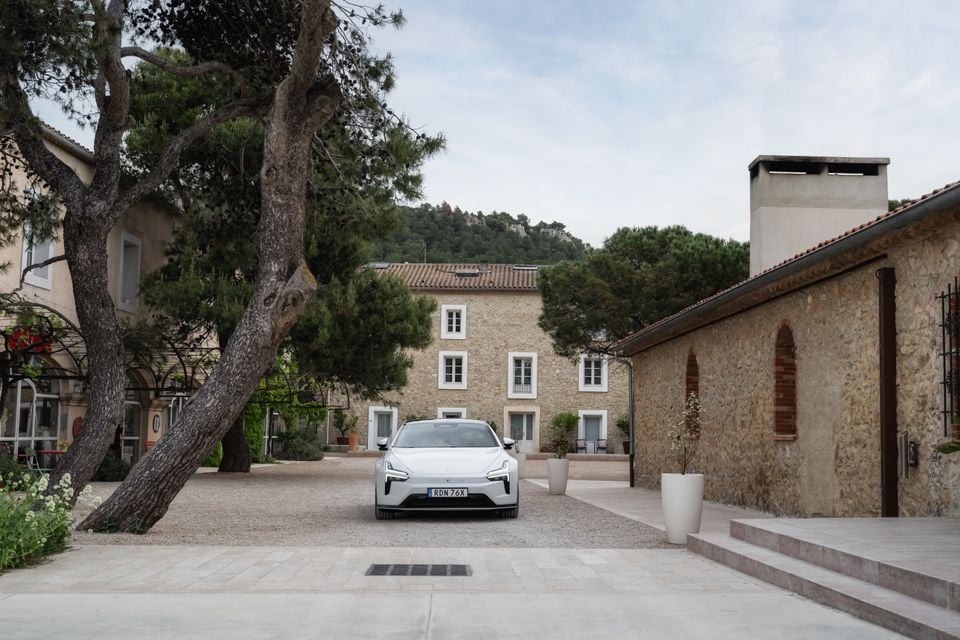
Polestar may not call the 5 an electric sports car, but it fulfils that role when you want it to, and just as well as the Porsche Taycan does.
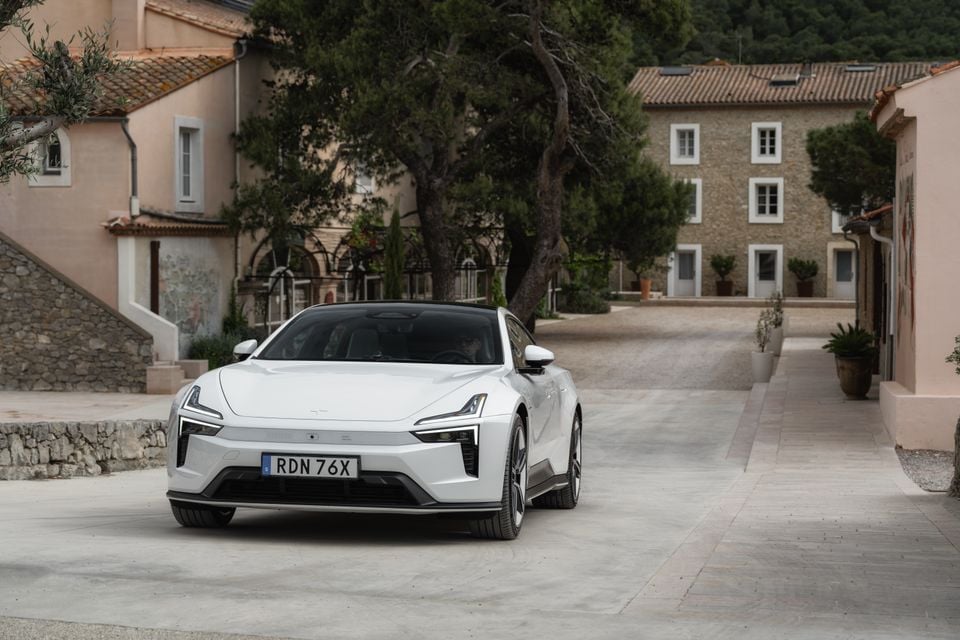
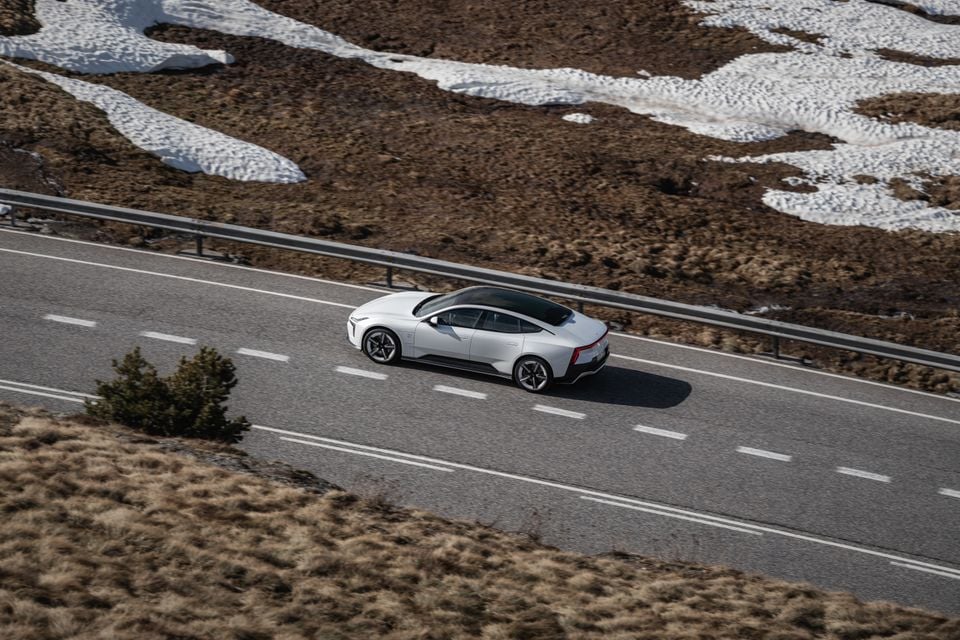
We drove from Narbonne in France to Andorra on day one in the Dual Motor car and then from there to Barcelona on day two in the Performance variant. And while we did our fair share of urban driving and a little highway, most of the route involved tortuously twisty mountain roads, some narrow and technical, others wide open and well-sighted. This was a clear signal of intent from the Polestar team.
Even before the road turned interesting, the 5 proved itself a polished product. It’s a car that feels right within a few metres thanks to the weighting of its steering and the effortless way its powerful motors bring the car up to whatever speed you want to be driving at.
In the default 'Range' mode, the response to the accelerator pedal is smooth and measured, though even in this setting you can summon up violent forward acceleration if you push the pedal down far enough. It’s laughable that the entry-level variant has 550kW, though of course the electric motors’ instantly produced torque is what defines the experience, as in any fast EV.
Thankfully, there’s a lot more to the Polestar 5 than the sort of straight-line acceleration that makes passengers feel unwell.
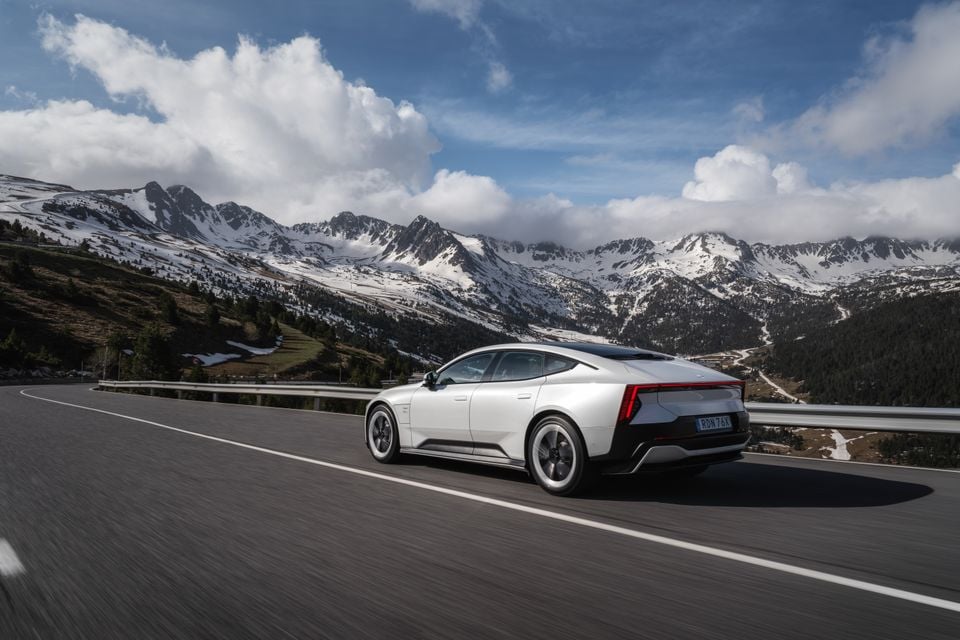
The chassis of the Dual Motor model is a revelation. Here is a passive setup using what Polestar refers to as “expensive, high-capacity dampers” with traditional coil springs. To this are added hydraulic rebound stops and a bypass channel in the dampers that opens mechanically over high-frequency bumps to enhance comfort.
And it’s a sublime setup, managing to be comfortable and composed on all kinds of road surfaces, while also delivering an engaging, controlled experience when the roads turned mountainous. The Polestar 5 even feels agile despite its five-metre-plus length.
There’s not a vast difference between the three power steering settings – Light, Standard and Firm – though we quickly found a preference for turning the brake-energy regeneration system down to its minimum as that resulted in clean brake pedal feel and consistent stopping. Indeed, it was one of the highlights of the experience, allowing you to place the car confidently and accurately when hauling it down from high speed. And there was never a hint of fade despite repeated hard use of the brakes.
When not relishing the body control, the solid brakes and the communicative steering, we realised the Polestar 5 was otherwise incredibly quiet and refined. Acoustic side glass helps with that of course, but whatever the reason, we finished our first day mightily impressed that Polestar had indeed created a proper GT, without resorting to more expensive chassis hardware. Could the Performance model really be worth the extra outlay?
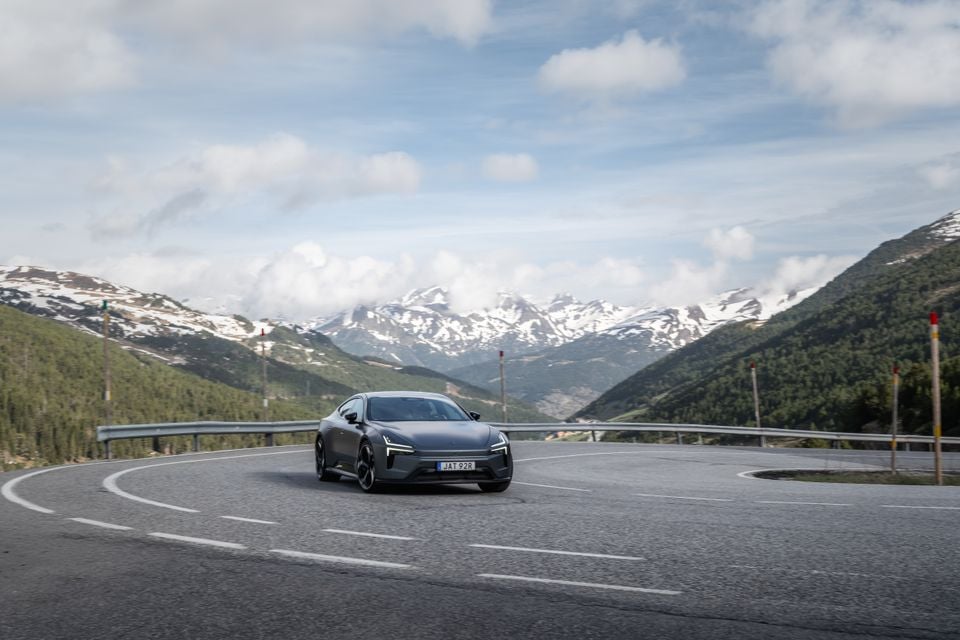
That depends on a lot more than just how it drives, but there’s a subtle difference in character between the two cars on the road, and not only because of the increased power and torque outputs of the Performance variant.
There are few places you can truly use such outputs, so in day-to-day driving it matters little that the Performance model punches hard with an extra 100kW and 200Nm. But the more powerful rear motor does make itself felt elsewhere.
For example, on one particularly entertaining section of hairpin-riddled road, the Polestar 5 Dual Motor had to be massively provoked to elicit any slip from the rear axle, even with ESC Sport selected. Instead, it rewarded smooth, measured driving with relentless forward motion.
In the same situation, the Performance car had a much friskier rear-end. Now, we’re not about to suggest it should have anything as uncouth as a drift mode, but keen drivers will appreciate the more interactive back axle.
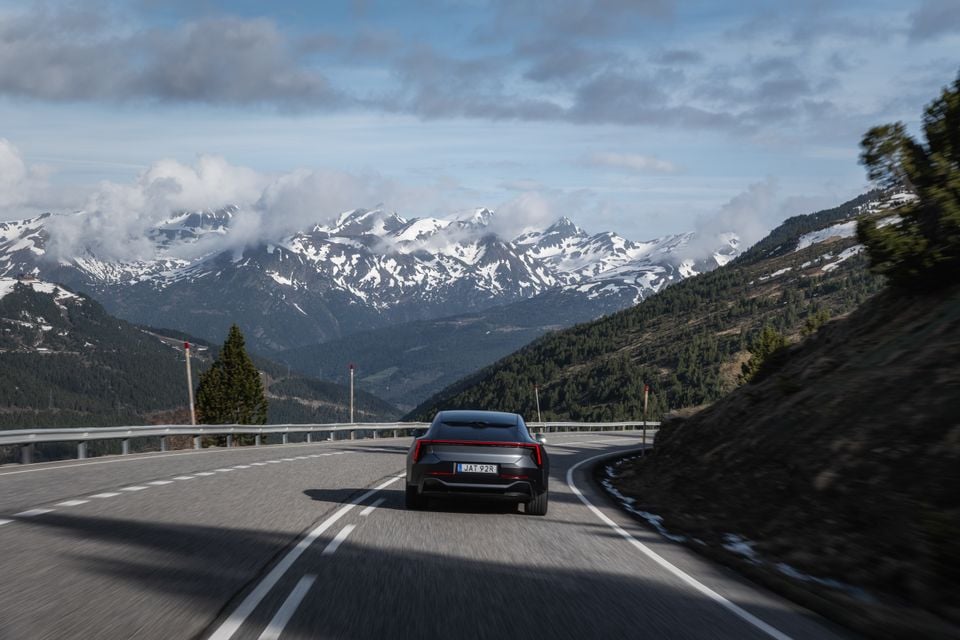
Indicating what an astoundingly good job the Polestar team did on the passive chassis, we can’t honestly say that the – ostensibly more sophisticated – Magneride system results in a better drive.
There’s a fraction more firmness to the ride in all situations for a start, though this may be down to the lower-profile tyres, while the Performance feels heavier somehow. That could be because of a slightly different power steering calibration as Polestar quotes the same weight for the two models.
When pushed hard through corners, the Magneride dampers do keep the Polestar 5 flatter, but at no point did we complain about excessive body lean in the Dual Motor model, so yes, the Performance flagship is a little more accomplished, but not at the speeds most people drive at.
Given the roads on offer at the launch, you’ll have to forgive us for not carrying out a proper efficiency or range test on this occasion. We saw consumption as high as 30kWh/100km under duress and as low as 12kWh/100km when ambling around town.
Only the Launch Editions have been revealed so far on Polestar Australia’s website, and they’re understandably loaded to the gunwales with equipment.
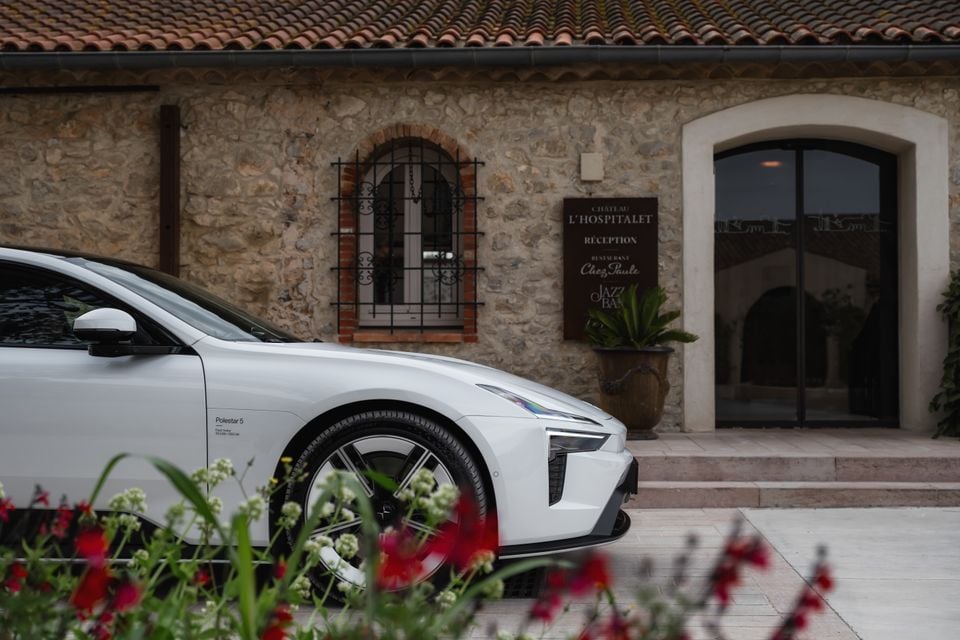
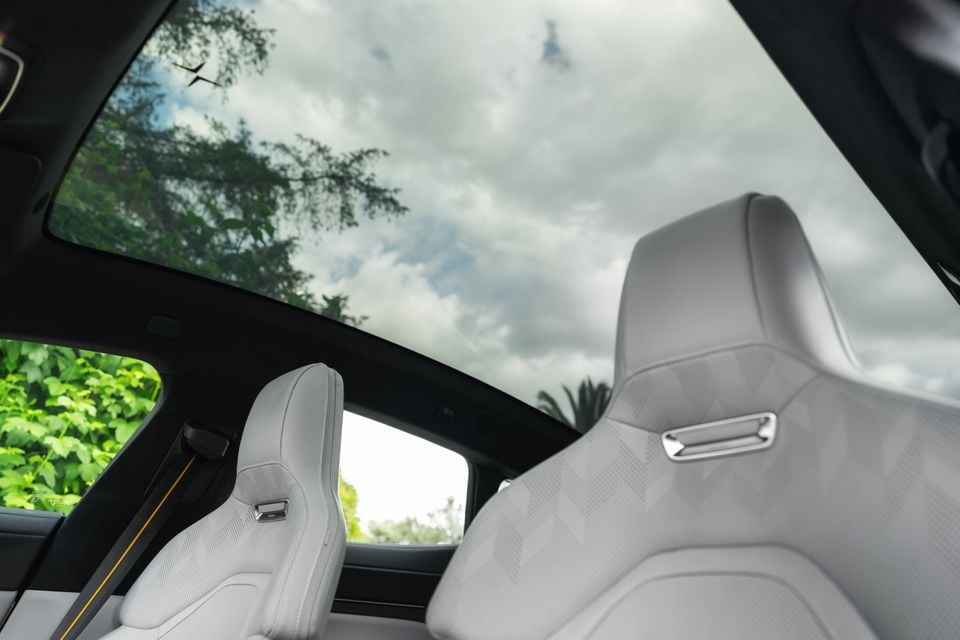
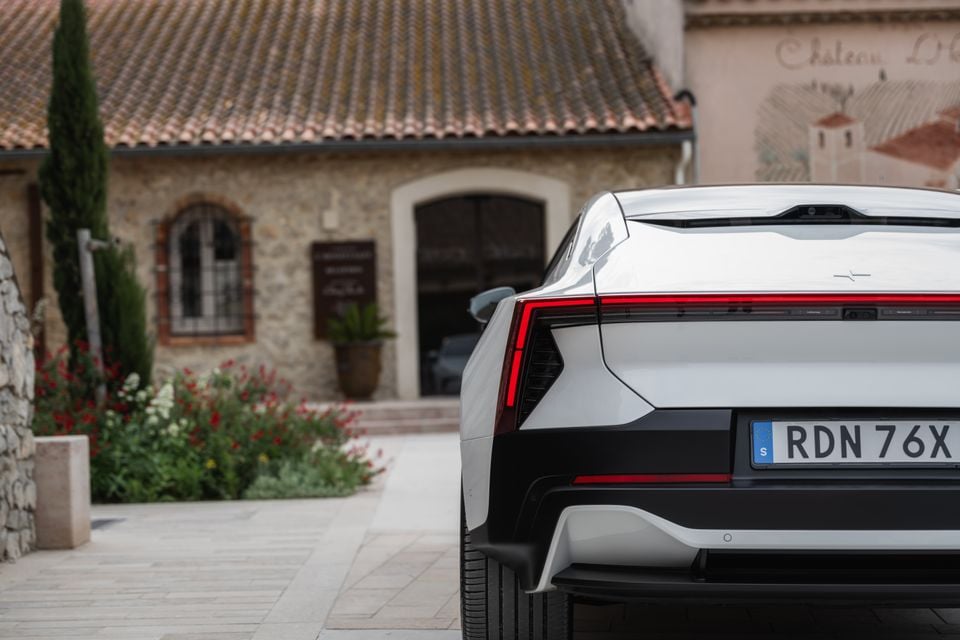
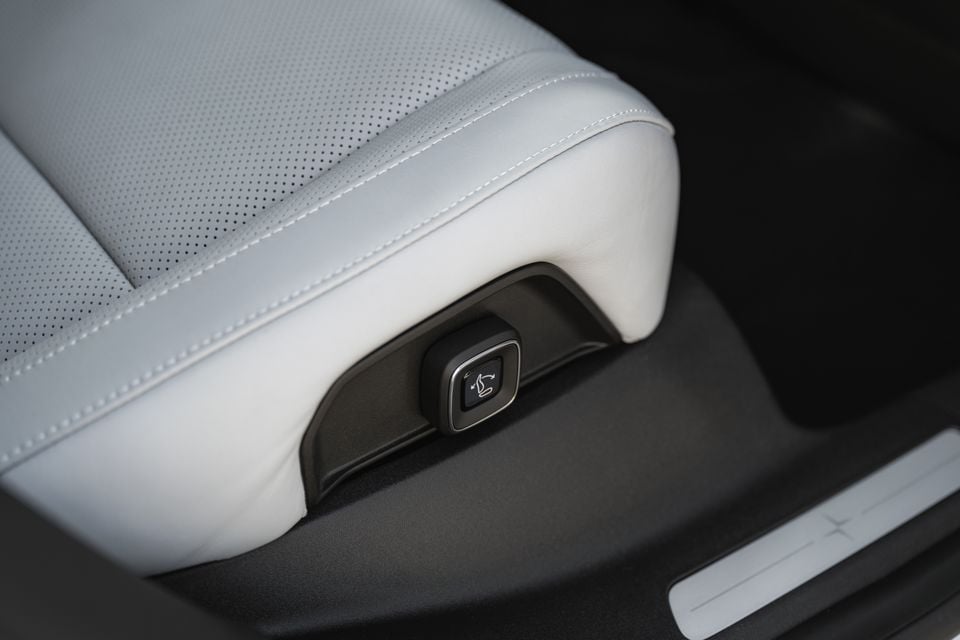
2027 Polestar 5 Dual Motor Launch Edition equipment highlights:
Performance adds:
The Polestar 5 has not yet been crash-tested by ANCAP and is therefore ‘unrated’.
If this is the car for you, we’ll compare offers from trusted dealers, handle the back and forth and manage your purchase from enquiry to delivery.
Standard safety equipment includes:
Polestar backs the 5 with a five-year, unlimited-kilometre warranty, with a separate warranty for the drive battery. It’s covered for eight years or 160,000km, whichever comes first.
| Servicing and Warranty | Polestar 5 |
|---|---|
| Warranty | 5 years, unlimited kilometres |
| Roadside assistance | 5 years |
| Service intervals | 12 months or 20,000km |
| Capped-price servicing | TBC |
There are five years of roadside assistance included in the purchase price, as well as over-the-air software updates.
Servicing is required every 12 months or 20,000km.
The Polestar 5 is not the direct Porsche Taycan rival some will expect it to be, but we reckon that’s a very good thing indeed.
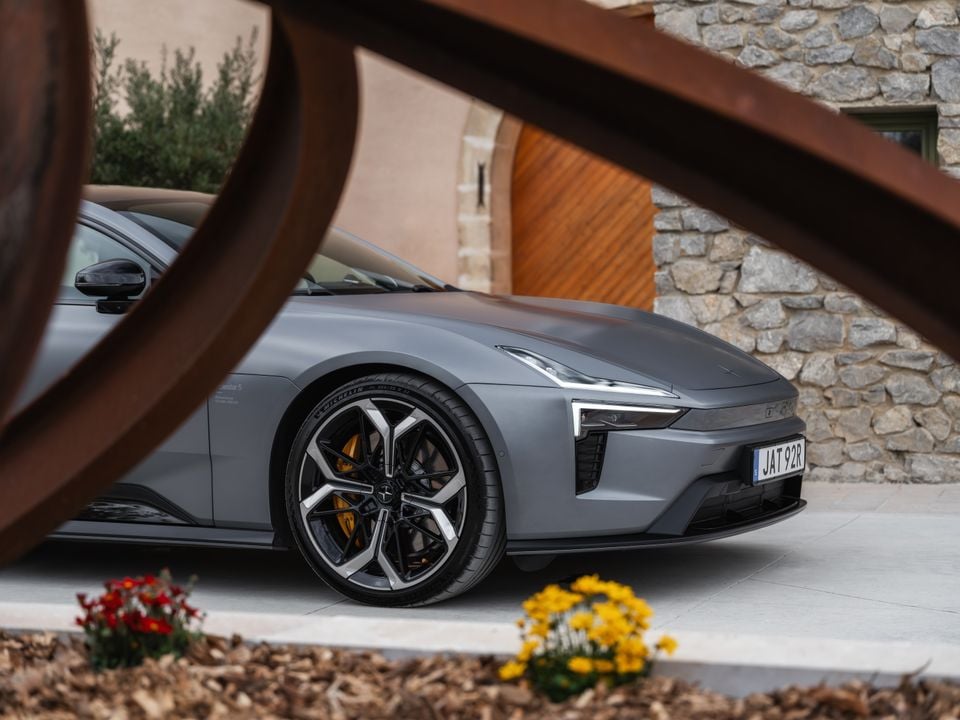
While Porsche puffs up the chest of its electric offering, making out that it’s some sort of electric 911 equivalent, Polestar quietly delivers a proper GT car that is searingly fast and capable, without forgetting that it’s likely to be used at normal road speeds by normal people.
And it feels special no matter how or where you’re driving it.
Click the images for the full gallery
If this is the car for you, we’ll compare offers from trusted dealers, handle the back and forth and manage your purchase from enquiry to delivery.
Add CarExpert as a Preferred Source on Google so your search results prioritise writing by actual experts, not AI.
William Stopford
16 Minutes Ago
William Stopford
16 Minutes Ago

Damion Smy
1 Hour Ago

James Wong
4 Hours Ago
Damion Smy
4 Hours Ago

Elle Baillieu
6 Hours Ago
Add CarExpert as a Preferred Source on Google so your search results prioritise writing by actual experts, not AI.
# Based on VFACTS and EVC data
† Displayed prices exclude on-road costs such as delivery charges, registration fees, number plates, insurance and applicable road taxes. These prices are subject to change without notice and may not reflect current market pricing or dealer offers.
 Automotive Vehicle Spec Data & 4K images Powered by JATO Dynamics Ltd