




Damion Smy
Tesla owners offered cheaper insurance for using Full Self-Driving
Tesla owners who subscribe to Full Self-Driving (Supervised) could pay less for insurance under an Australian-first change from Zurich.
2 Days Ago
Lexus Australia finally has an electric sedan, and while it may not be the perfect overall package, it's a very good thing.

Marketplace Journalist
Marketplace Journalist
Marketplace Journalist
Marketplace Journalist
If this is the car for you, we’ll compare offers from trusted dealers, handle the back and forth and manage your purchase from enquiry to delivery.
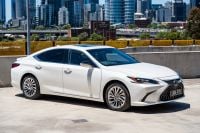
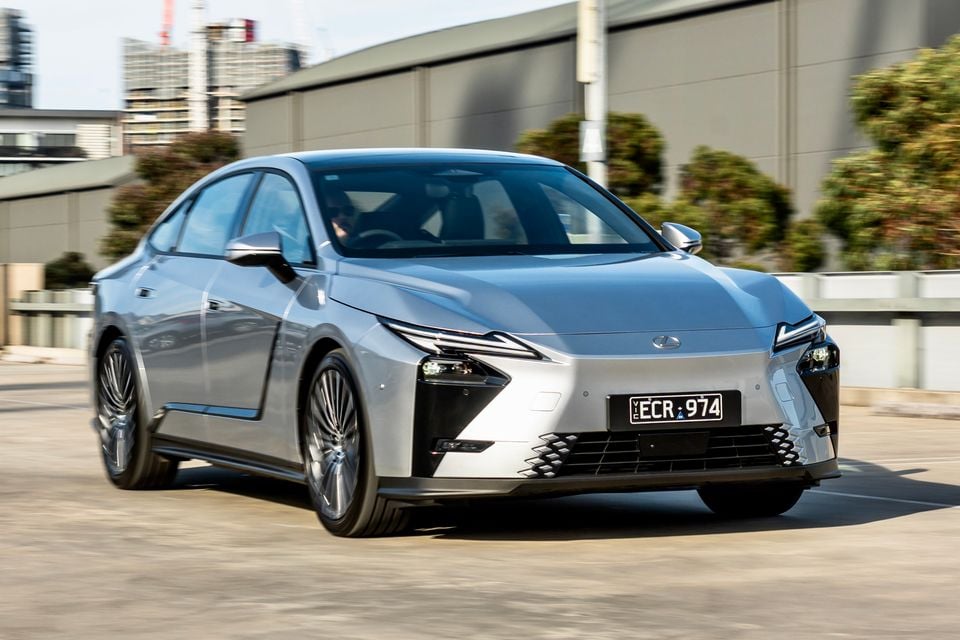
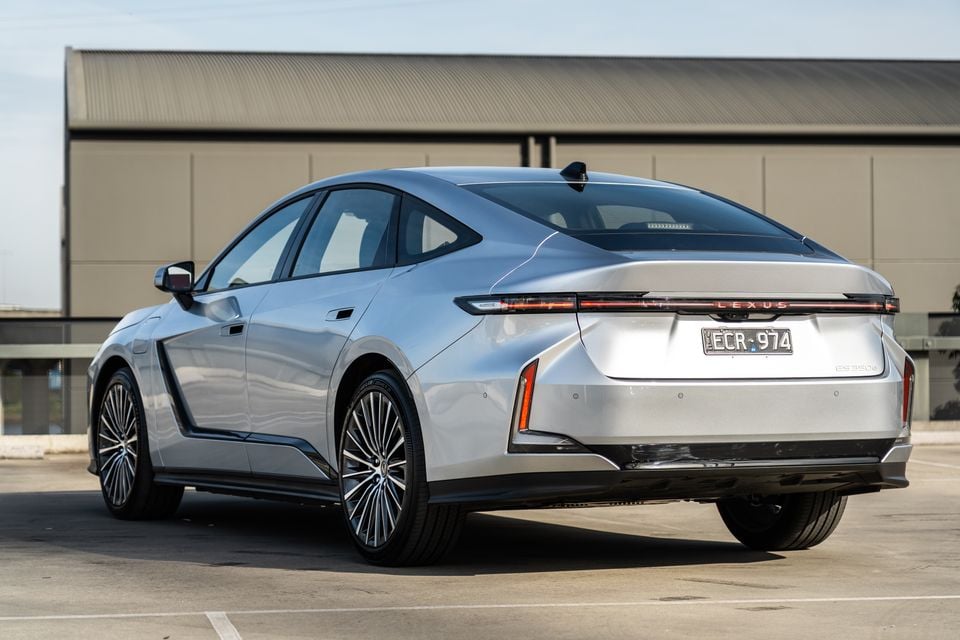
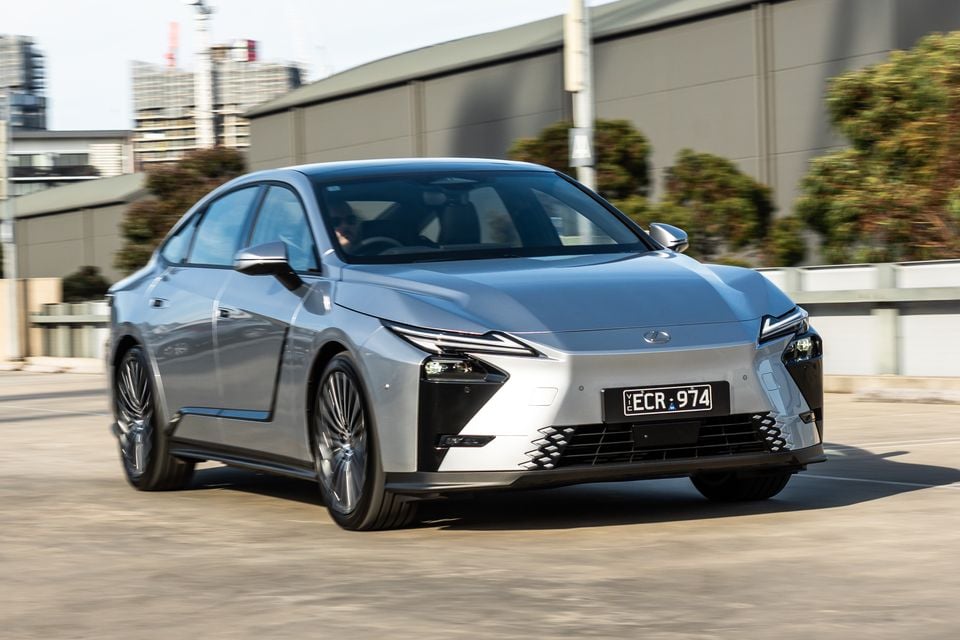
The eighth-generation Lexus ES has arrived in Australia, and it makes a striking first impression.
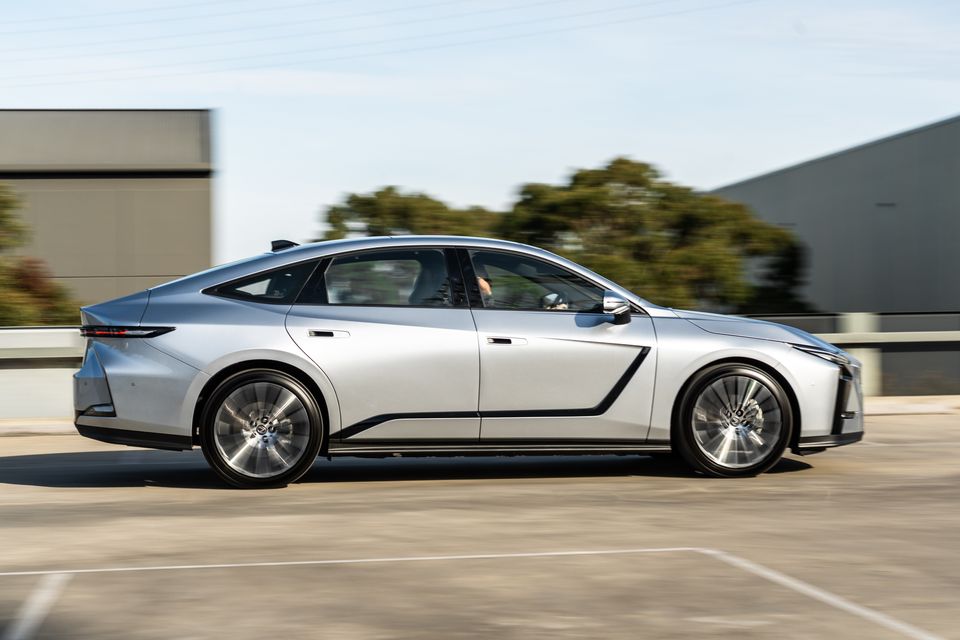
This is perhaps the most imposing ES we've ever seen in Australia, so much so that its inflated physical dimensions appear to bridge the gap between the old model, which was more akin to a stretched Toyota Camry, and the far more luxurious Lexus LS limousine. It is absolutely huge.
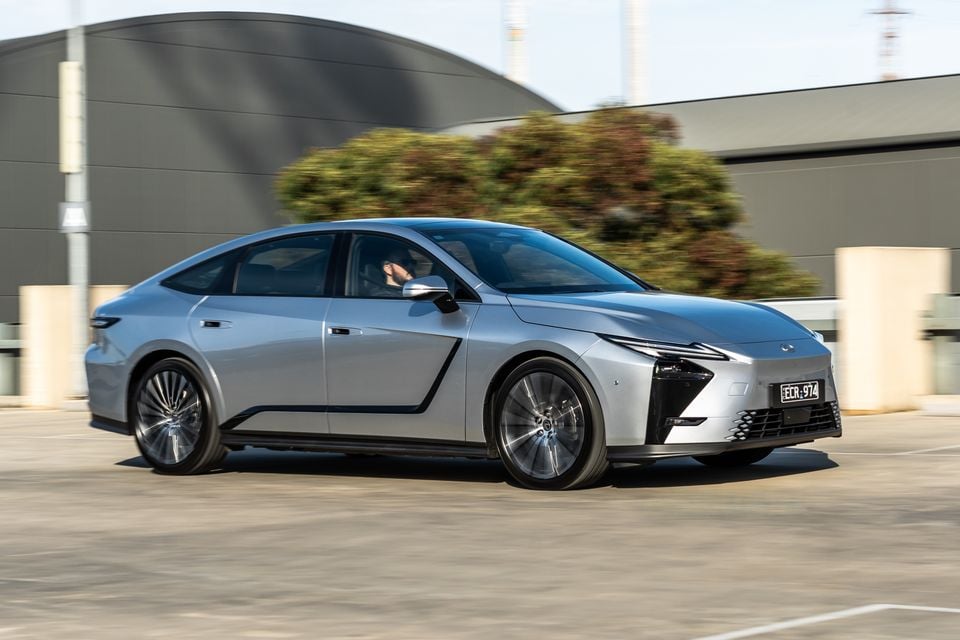
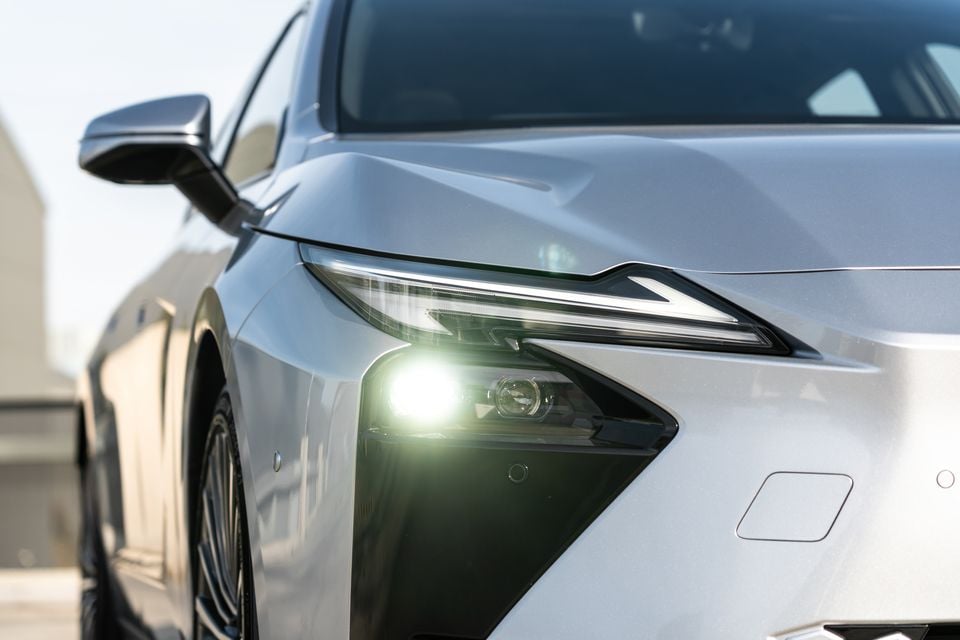
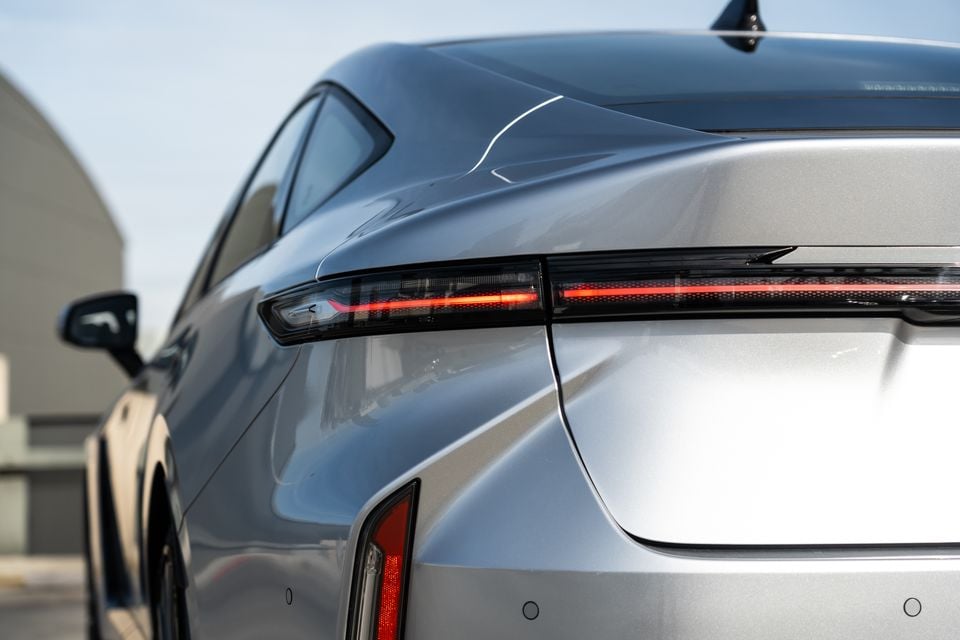
Within the completely overhauled exterior design with aggressive door sculpting, the cabin has also undergone a total renovation that bears little resemblance to the previous iteration. It's more screen-heavy than ever, and its physical buttons have been cleverly hidden in the name of simplification.
Most significant, though, are its new powertrains. Only one variant retains the 2.5-litre four-cylinder hybrid system of the old ES, while two other grades are now equipped with fully electric power – the first time a battery-electric powertrain has been available for a Lexus sedan in Australia.
That alone makes this iteration of the ES the most detached from the Camry to date, even if the two are still closely related. That said, the latest Camry takes a big step upmarket itself, and electric power is a logical step forward for the chauffer-friendly ES.
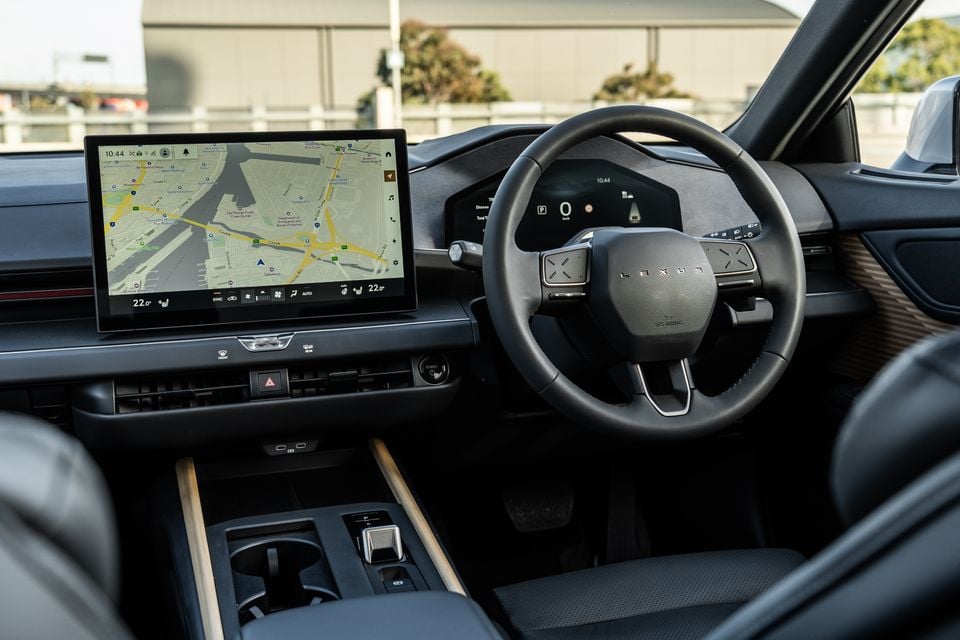
Toyota has recently been going through something of an electric renaissance. It entered 2026 with a heavily improved version of its bZ4X mid-size electric SUV and has since followed it up with the stretched bZ4X Touring as a larger option.
That has trickled down to its associated brands, too. Subaru now offers the related Solterra, Trailseeker, and Uncharted electric SUV trio, while Lexus has rolled out its own take on the bZ4X with a new version of the RZ. There are even more EVs available from all three brands overseas.
As such, it was only a matter of time before the popular Lexus sedan received the same treatment. It's an important move too, as Australia's emissions regulations are only going to get more stringent as the years progress.
To sample the new ES, Lexus offered CarExpert a shortened three-day loan, ahead of more typical week-long bookings in the coming weeks. Are the generational changes a step forward for one of Japan's most recognisable luxury sedans?
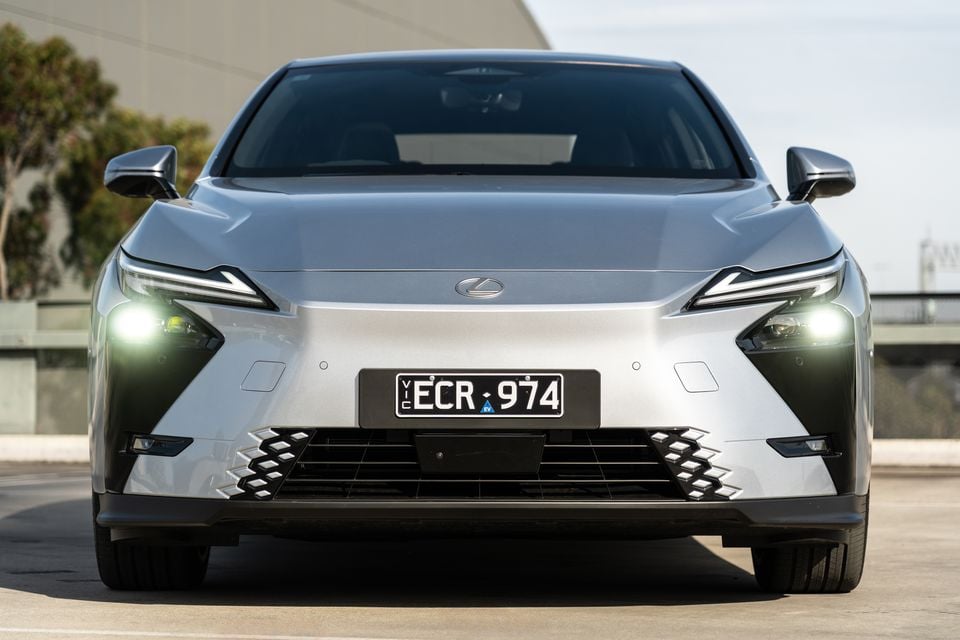
The ES350e Sports Luxury is the cheapest electric ES available, priced at $77,000 before on-road costs.
| Model | Price before on-road costs |
|---|---|
| 2026 Lexus ES300h Luxury | $75,000 |
| 2026 Lexus ES350e Sports Luxury | $77,000 |
| 2026 Lexus ES300h Luxury with Enhancement Pack | $82,000 |
| 2026 Lexus ES500e Sports Luxury | $84,000 |
The entry-level ES300h Luxury is the only carryover variant. Its price has increased by $9460 to $75,000 plus on-roads (just $2000 less than the ES350e), and it's also available with an Enhancement Pack for an extra $7000, while the electric ES500e flagship costs only another $2000.
Though there's still the ever-present competition from established German brands, their most comparable electric sedans are considerably more expensive than this ES. The same can be said for South Korea's Genesis.
As such, the most direct competitor for the electric ES is the ageing, soon-to-be-axed BMW i4 that costs $88,900 plus ORCs. Even then, it's technically a liftback rather than a sedan.
Of course, a useful baseline here is the evergreen Tesla Model 3, which starts at $54,900 plus ORCs.
To see how the Lexus ES stacks up against the competition, check out our comparison tool
Unrecognisable compared with the old ES, with absolutely everything changed in one way or another.
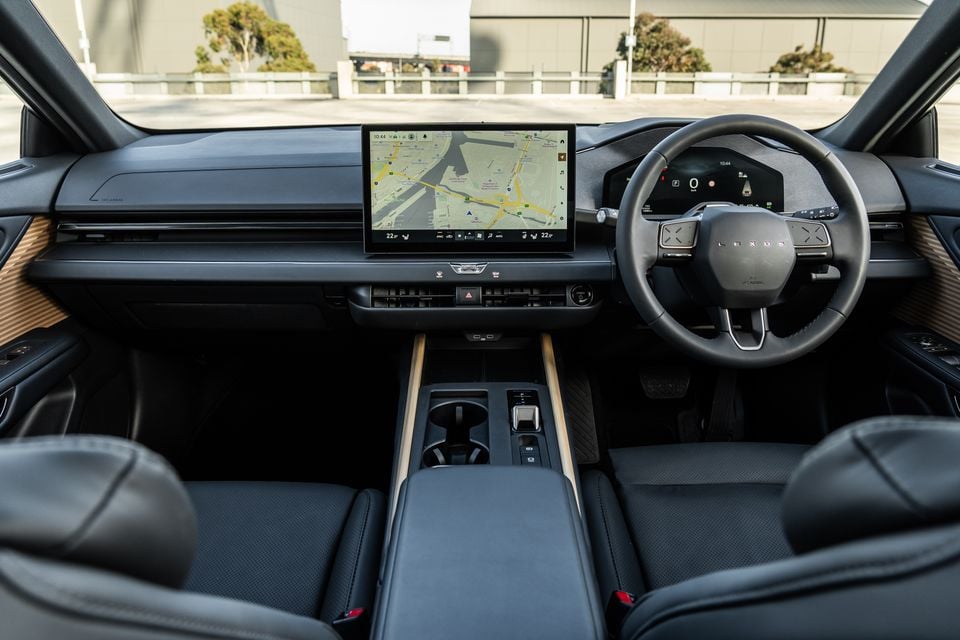
The curvy, organic design of the old ES has been replaced by straight edges and simple shapes, which is indicative of Lexus' shift towards a more digitally focused cabin that's far removed from the bones of the mass-market Camry.
As such, the impression of traditional Lexus craftsmanship has been somewhat eroded, as there are fewer of the premium fittings that were immediate reminders you're in something mildly special. Most notable is the removal of the two mini-stalks above the instrument cluster housing, and the analogue clock.
There's also the dispiriting decision to replace the Lexus emblem on the steering wheel with a less prominent and actually quite bland 'LEXUS' wordmark. Come on, guys – what happened to brand identity?
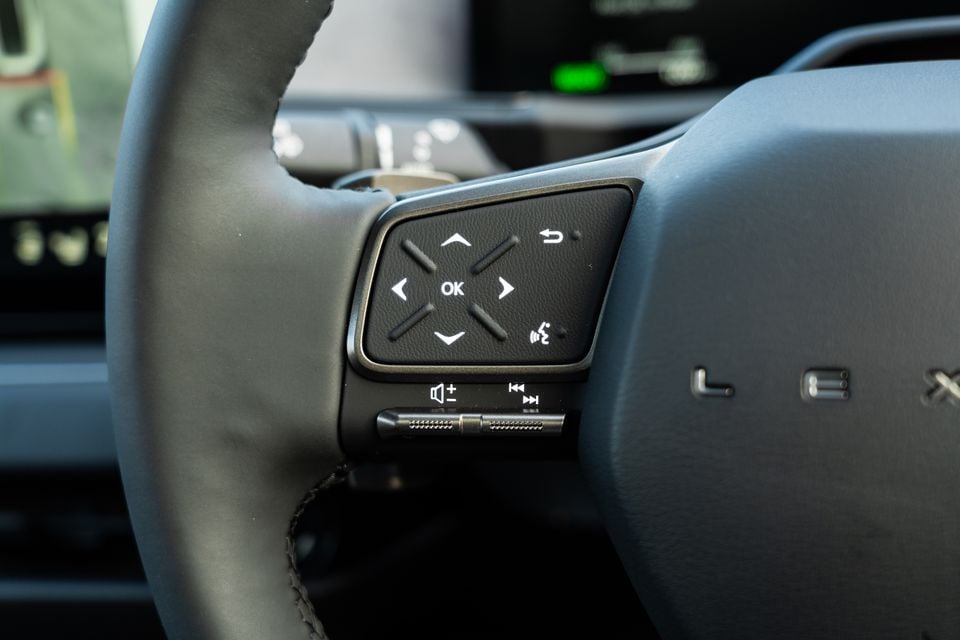
The shift away from physical embellishments sets the tone for the new ES cabin. Most obvious is the lack of real buttons on the centre stack and steering wheel, both of which used to house a plethora of controls.
That is, until you look closer. Wave your hand vaguely near the middle of the dashboard and a simple array of buttons illuminates, providing access to basic climate functions such as temperature adjustment. They aren't touch-sensitive and instead click when pressed – thank goodness.
There are more for seat position memory at both ends of the dash, and the steering wheel buttons have received the same treatment. While this feels gimmicky at first, I found it surprisingly easy to acclimatise. And it's a huge relief that some physical controls have remained.
Furthermore, build quality appears to be as impeccable as ever, and the cabin materials are undeniably premium. A satisfyingly consistent array of soft-touch surfaces is applied generously across the dashboard and key touchpoints, and there are classy accents scattered about too.
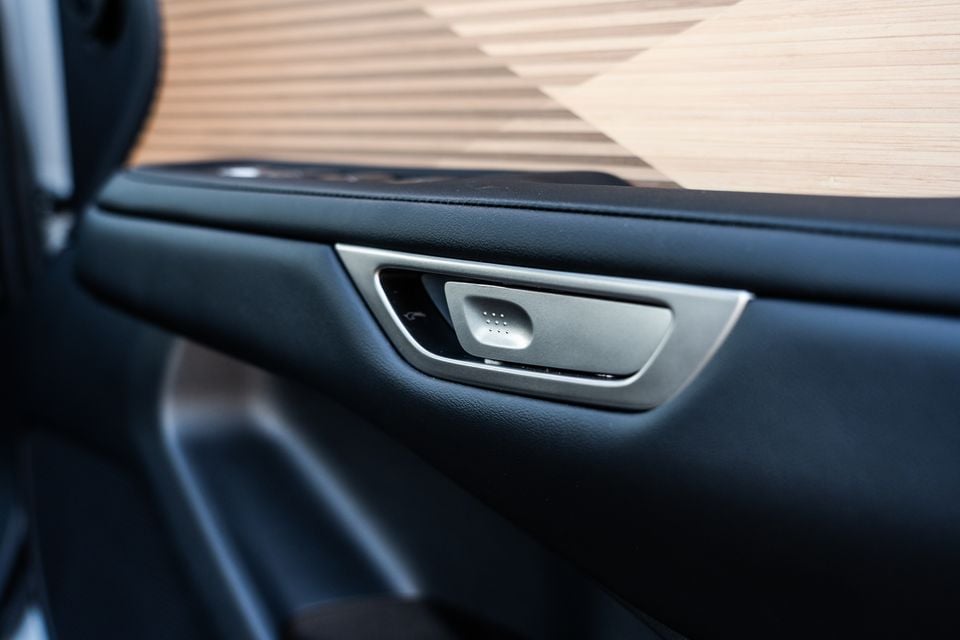
This particular ES is fitted with bamboo-like panels in the doors. These look great in daylight and get even better at night, when ambient lighting shines through in a customisable array of colours and animations. That's a bit more like it.
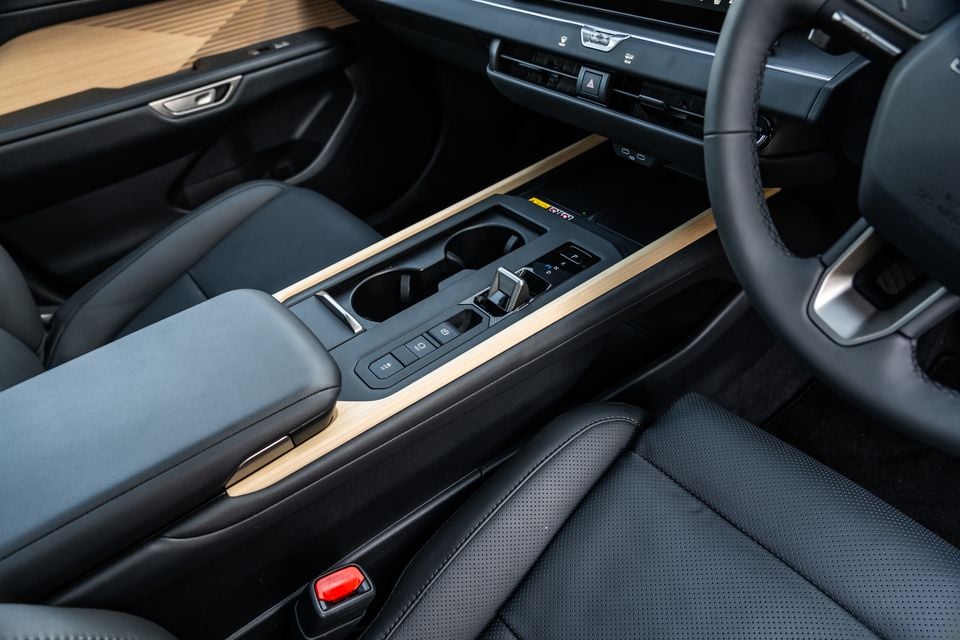
More non-illuminated wood is found on the centre console, though there isn't any embedded in the steering wheel like there used to be. More craftsmanship that has gone astray.
It's worth noting there's no gloss-black plastic anywhere, though. For once, a luxury car has opted to go for softer-looking materials that should be more durable in the long run. This is also true for the sliding cover on the central cupholders.
Fundamentally, the cabin is easy enough to navigate. Apart from the lack of obvious buttons, everything falls nicely to hand, and no key functions are difficult to locate or use. The centre console is a prime example with its simple layout, even if the gear selector is now much less substantial.
The ergonomics, meanwhile, aren't quite as dialled-in as they used to be. Don't get us wrong, the ES is still super-comfortable, but you sit a tad higher than you did in the old car. That can make it feel like you're perched on top of the car than nestled within it.
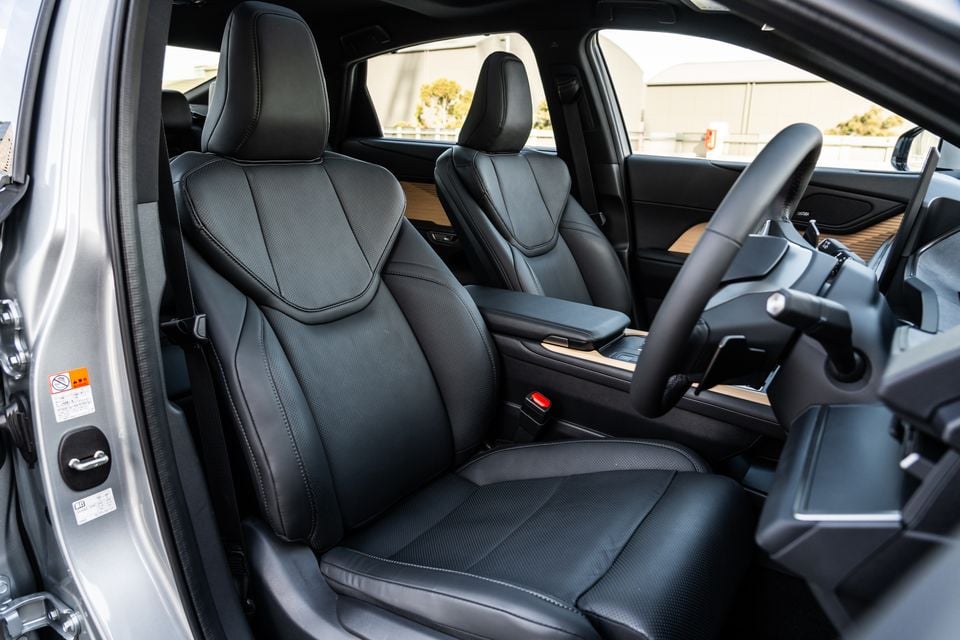
This exposes the new model's increased overall height, which has grown by more than 100mm. There's more space inside, but a slightly more compromised driving position – how’s that for a first-world problem?
There's still plenty of adjustment, and the seats themselves are properly plush. Front-seat heating and ventilation are standard, and it's possible to set up a very good driving position in combination with the lovely steering wheel.
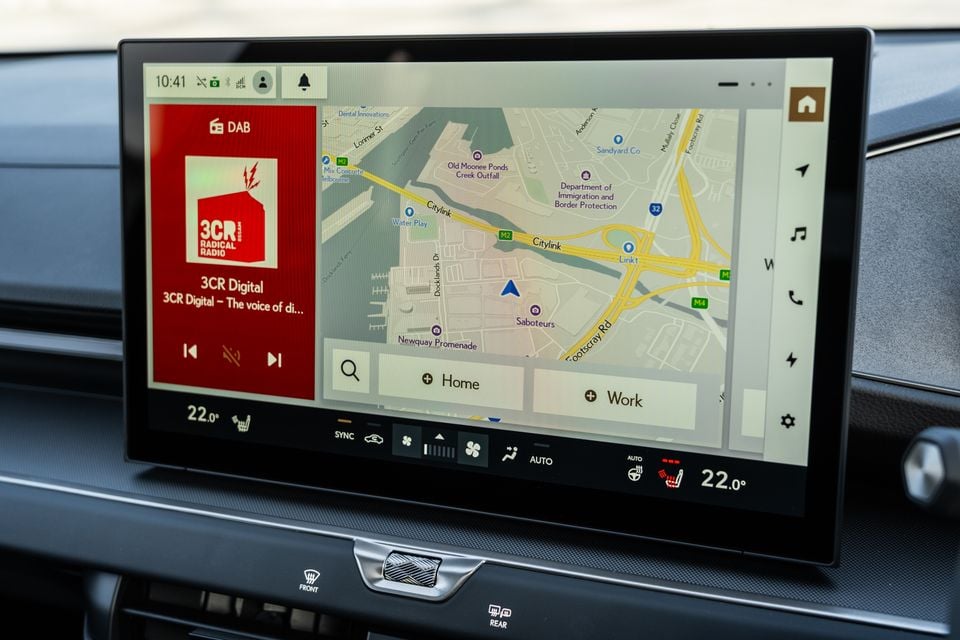
In terms of tech, there's been a substantial upgrade. Front and centre is an entirely new touchscreen infotainment system measuring 14 inches across and not being particularly elegant in its integration. Again, the shape is simple, and there's no moulded housing to make it look more elegant.
Physical presentation aside, the new ES interface is actually quite slick. Headline features include wireless smartphone mirroring and the rest of the climate system, which is at least always accessible in a ribbon at the bottom of the screen.
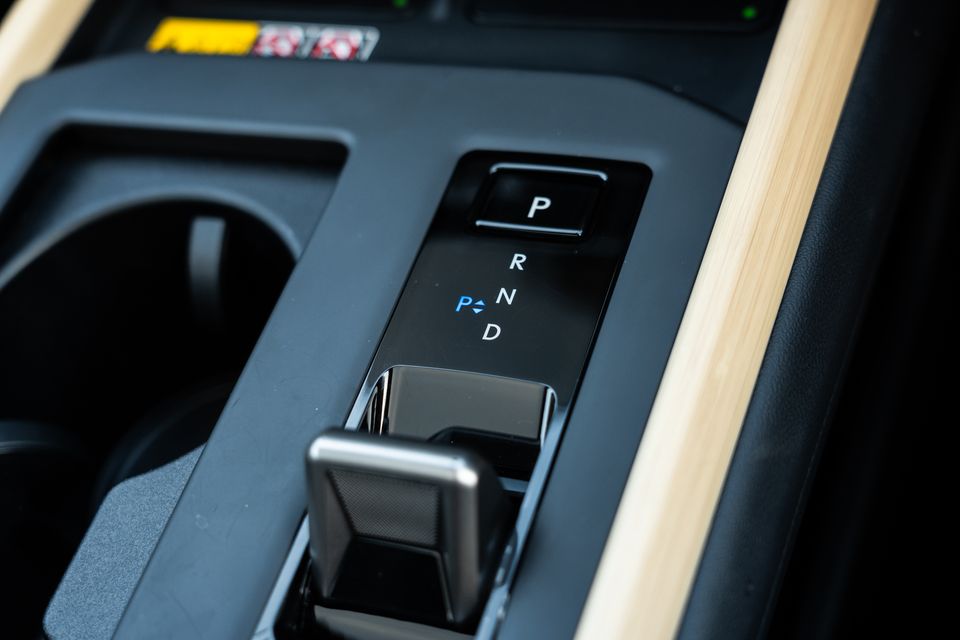
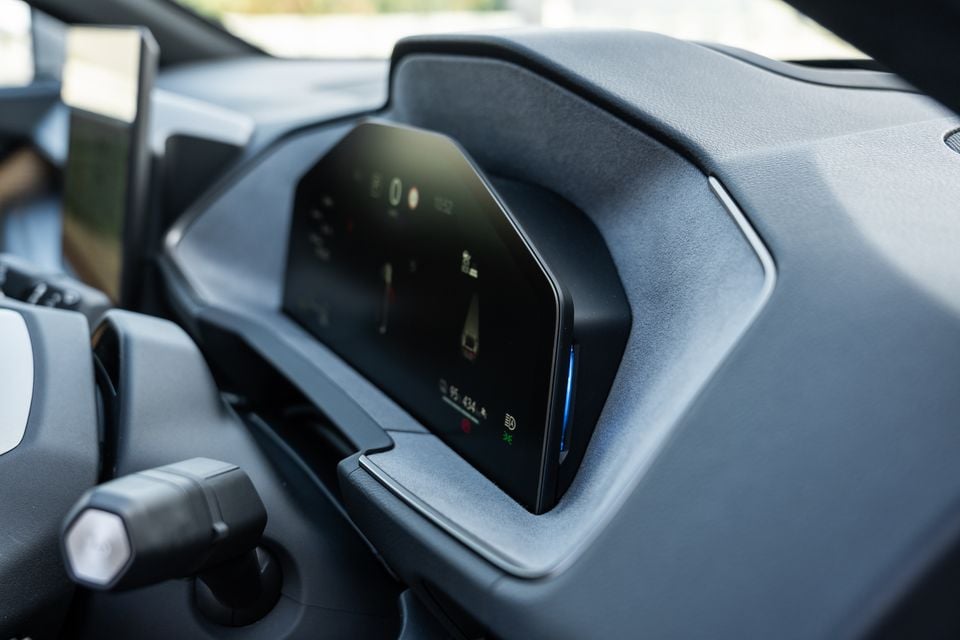
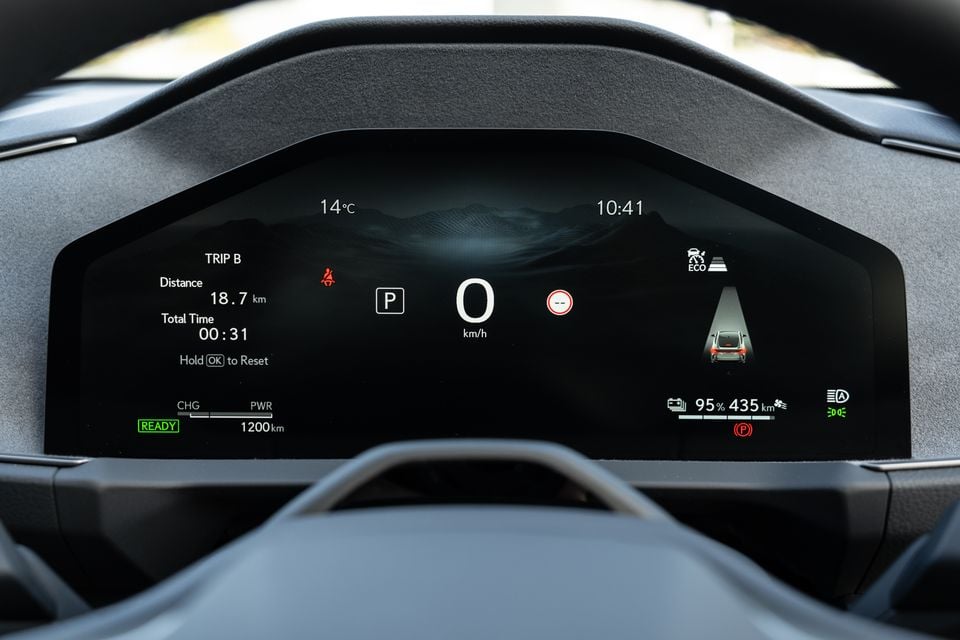
There's plenty more to be found here in terms of customisation and settings, but it's worth poking and prodding at it yourself. Equally slick is the 12.3-inch digital instrument display, which isn't square and is therefore neatly positioned within the driver’s line of sight through the steering wheel rim.
We quite like this screen, as it has a classy graphic identity and is easy to navigate using buttons on the wheel – it's far tidier than the semi-analogue setup of the old ES. There are just a few preset themes, which makes it far simpler to understand than older Toyota units.
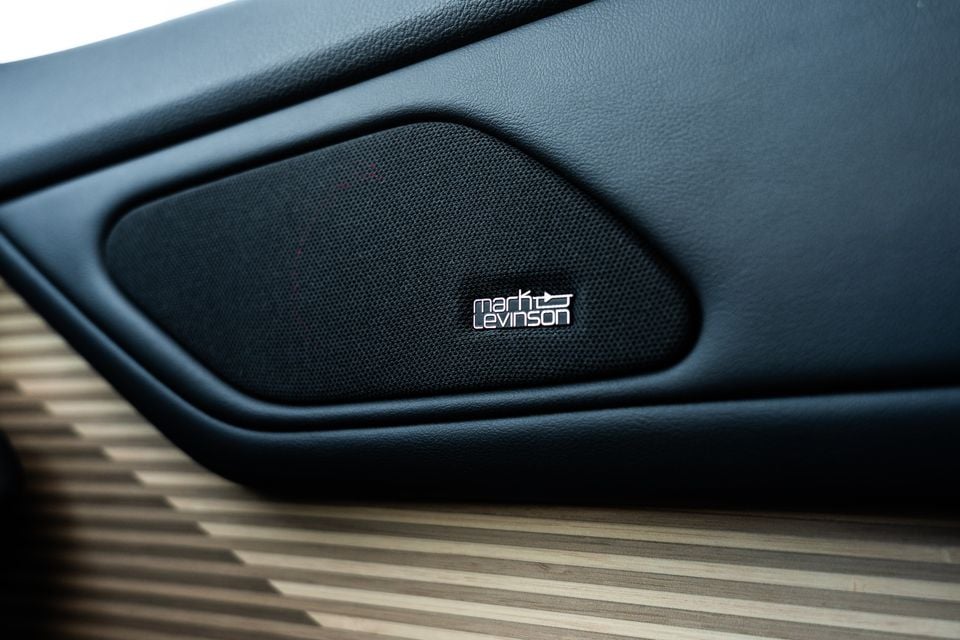
We can't go without mentioning the Mark Levinson sound system either, as it appears to have had a decent upgrade. Our last review of the old ES complained about its flabby bass, but the audio system in the new car is far punchier across the range and offers greater presence and clarity.
Cabin storage is good too. There's a box under the central armrest, two cupholders and wireless phone chargers on the centre console (the latter below two USB-C ports), a small tray underneath, a passenger-side glovebox, and storage bins in the doors.
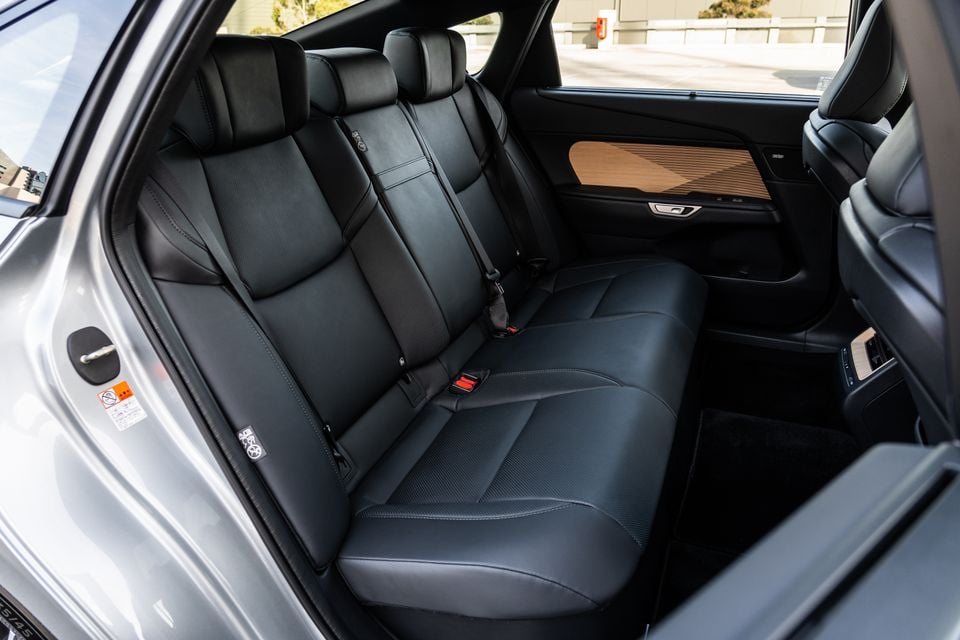
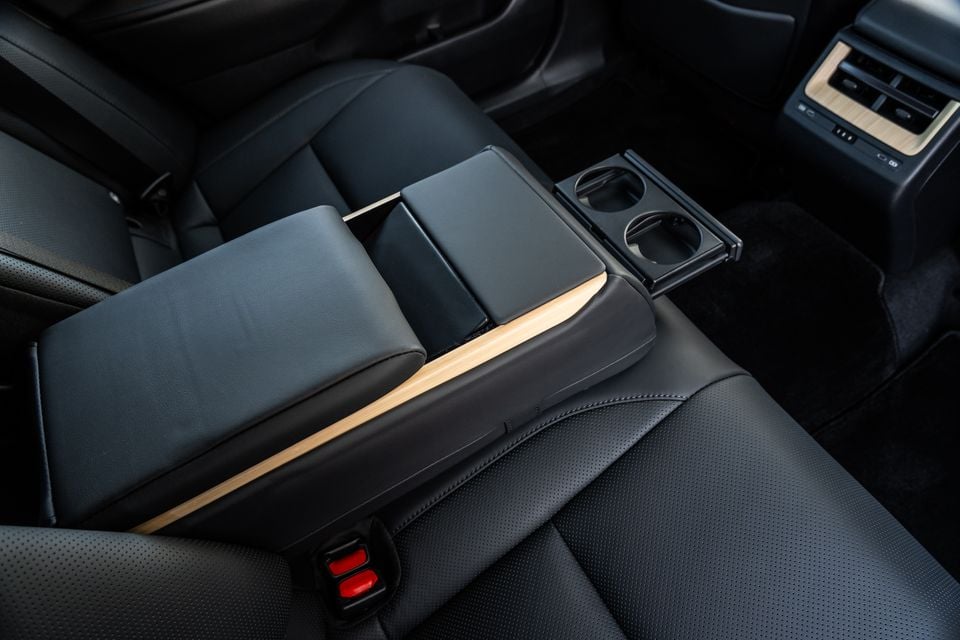
As with the previous ES, the second row is unbelievably spacious. Legroom is the real highlight, with acres of space on offer behind the front seats. Longer-legged individuals will have no issues here.
Headroom is also good, and both factors are big positives for an executive sedan in which adults will commonly use the rear seats. The bench seat is plush, and the sculpting on the outboard seatbacks should hold you in place nicely.
In the middle is a multi-purpose fold-down armrest housing extra storage and pop-out cupholders. There are also USB-C ports and air vents on the back of the centre console, but there's unfortunately no seat heating.
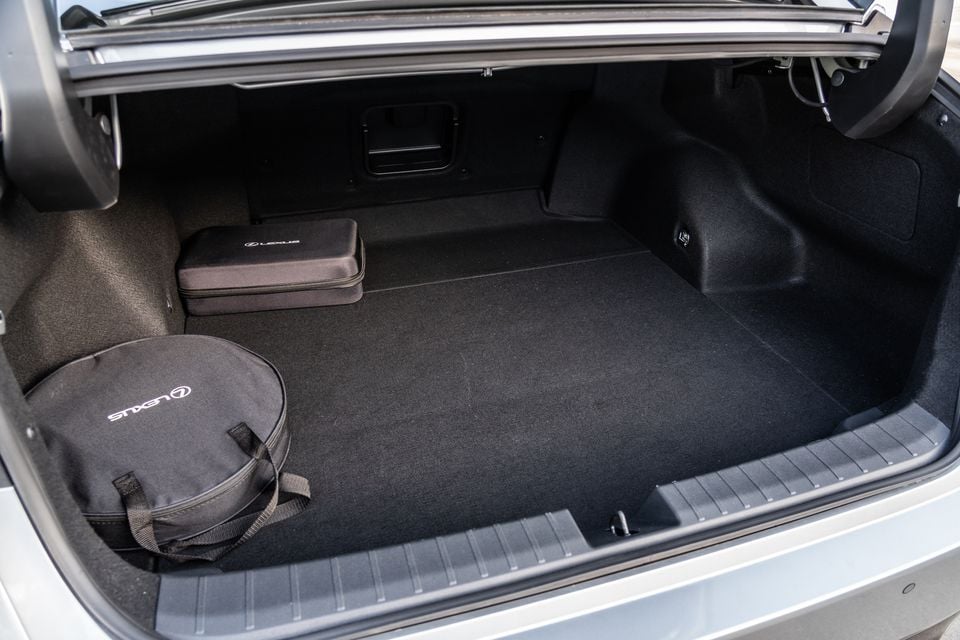
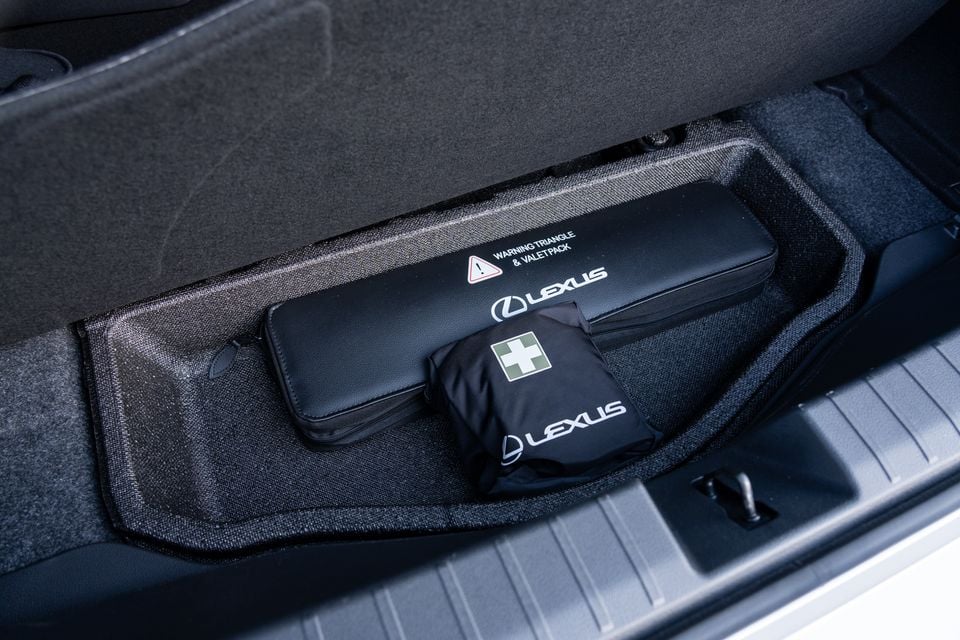
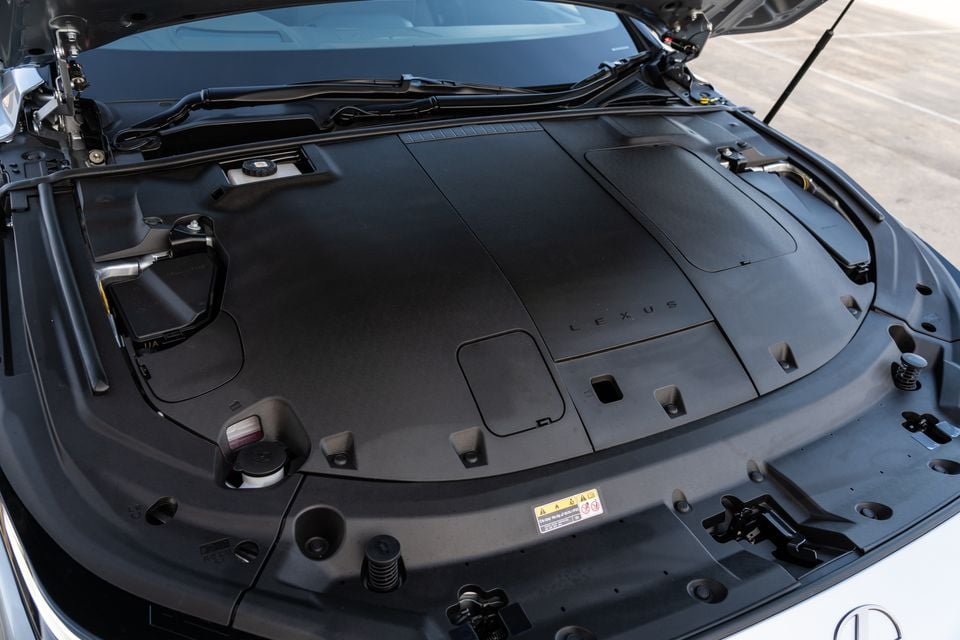
Rounding it all out is a sizeable boot. This is expected for an executive sedan, but it's comparable to a Mercedes-Benz E-Class or BMW 5 Series. For a little extra practicality, there's a powered bootlid – though there's no spare wheel or extra space under the bonnet, despite this being an EV.
| Dimensions | Lexus ES350e Sports Luxury |
|---|---|
| Length | 5145mm |
| Width | 1920mm |
| Height | 1560mm |
| Wheelbase | 2950mm |
| Cargo capacity | 517L |
To see how the Lexus ES stacks up against the competition, check out our comparison tool
Powering the ES350e is a single, front-mounted electric motor producing up to 167kW of power and 269Nm of torque. Energy comes from a 74.7kWh lithium-ion battery pack, with WLTP driving range quoted at 510km.
| Specifications | Lexus ES350e Sports Luxury |
|---|---|
| Drivetrain | Single-motor electric |
| Battery | 74.7kWh li-ion |
| Peak power | 167kW |
| Peak torque | 269Nm |
| Drive type | Front-wheel drive |
| Kerb weight | 2180kg |
| 0-100km/h (claimed) | 8.0 seconds |
| Energy consumption (claimed) | 16.4kWh/100km |
| Energy consumption (as tested) | 17.6kWh/100km |
| Claimed range (WLTP) | 510km |
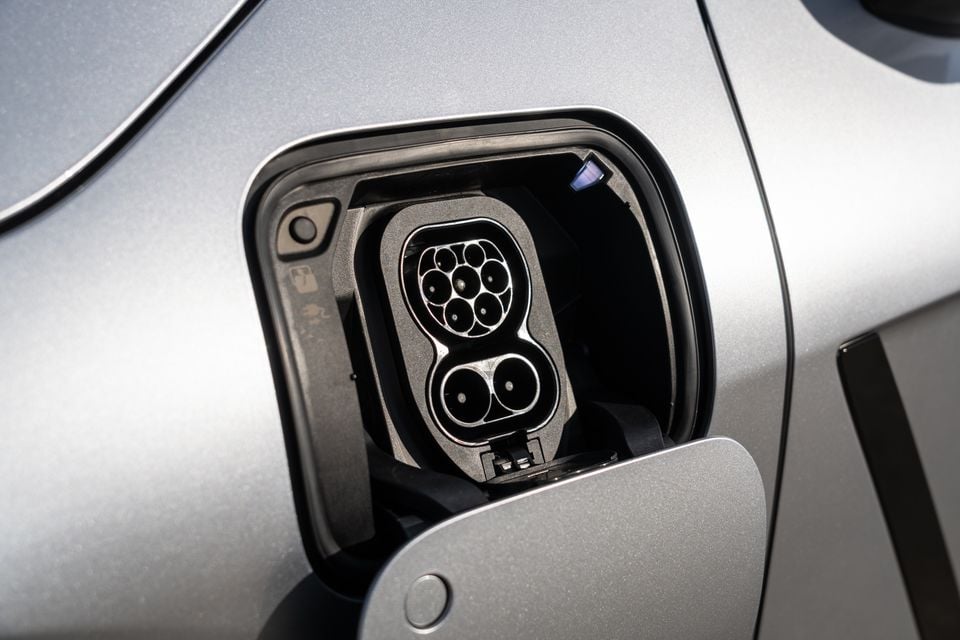
| Max AC charge rate | 22kW |
| Max DC charge rate | 150kW |
The ES500e has the same battery, but adds a rear electric motor for all-wheel drive. Peak system power output jumps to 252kW, and the claimed 0-100km/h time is 5.5 seconds.
The new ES shares elements of Toyota's and Lexus’ latest battery-electric technology, but the vehicle is based on an evolution of the Japanese automaker's GA-K architecture rather than the dedicated electric platform underpinning the RZ, bZ4X and Solterra.
The flagship ES500e features the DIRECT4 all-wheel drive system, which by default has front/rear torque distribution of between 80:20 and 25:75 per cent during cornering. However, torque can be distributed between 100:0 and 0:100 per cent.
It also features Interactive Manual Drive, which simulates the gear shifts of a combustion-powered vehicle. No such gimmicks are available for the ES350e, which has the same outputs as the base front-drive bZ4X.
As for the sole hybrid ES, the ES300h, it continues to use a 2.5-litre non-turbo four-cylinder engine mated with one electric motor. Peak power is quoted at 144kW, and it's offered exclusively with front-wheel drive.
Our short time with the ES350e involved highway commuting and suburban driving, resulting in a slightly higher-than-claimed consumption figure.
To see how the Lexus ES stacks up against the competition, check out our comparison tool
It should come as no surprise that the ES driving experience has changed dramatically. It's almost better to treat this electric model as its own entity rather than an evolution of the old hybrid.
If this is the car for you, we’ll compare offers from trusted dealers, handle the back and forth and manage your purchase from enquiry to delivery.
Granted, we haven't driven the new hybrid, but the differences here are starker than we expected. The most notable factor is the ride, which isn't quite as settled as we'd like.
Much like the seating position we described earlier, it's only one per cent worse than before, but it's worth mentioning. There's simply more bobbling about inside the cabin, due to more body movement than drivers of the previous ES may be used to.
It isn't the floaty, boat-like movement historically synonymous with luxury sedans, either. Instead, it appears to be a product of the suspension having to work hard to keep the EV's increased weight in check.
At 2180kg, it is 355kg heavier than the new ES300h and around 440kg heavier than the previous-generation ES300h Sports Luxury; a considerable figure that places substantially greater demands on the suspension.
You certainly feel it. The body moves over speed bumps and rough rural roads like a heavy car, and it's genuinely surprising to experience that in something that isn't an SUV.
Mind you, the extra weight makes it feel like an absolute tank on the freeway. It eats up the kilometres when cruising on smoother roads, and we can clearly see it being a suitable and popular chariot for shuttling business folk between the airport and the city.
And in that context, our perspective immediately shifts. This is a car to be driven in, rather than one to drive. For that purpose, it's still as lovely as it ever was. And even quieter.
Yes, the increased body movement may make it marginally less comfortable for passengers, but it's not something you'll encounter on smoother arterial roads at around 80km/h. Our only persistent complaint is that it no longer absorbs speed bumps as well, partly because it rides on 21-inch wheels rather than the previous Sports Luxury’s 19-inch rims.
It's impressively quiet on the move, and incredibly smooth, too. Lexus has done well to mask the thinner rubber with strong cabin insulation, and the difference between this and the smaller-wheeled previous-gen hybrid is negligible.
When it's time to pick someone up or park, the steering is perfect. It's appropriately light and irons out much of the road feel, but it has quite a short ratio that makes it feel more nimble than its weight suggests. This is an advantage when it comes to low-speed manoeuvrability.
You have a selection of drive modes to choose from, although annoyingly they can only be accessed through the touchscreen. They have tangible effects on the way this ES drives too, with Sport mode, for example, giving you heavier steering and far firmer suspension.
The adaptive damping fitted to this car is decent, and it needs to be in order to manage the aforementioned heft. In its firmest setting, however, the car feels noticeably sharper, and it'll be more than capable of keeping its composure should you desire more spirited driving.
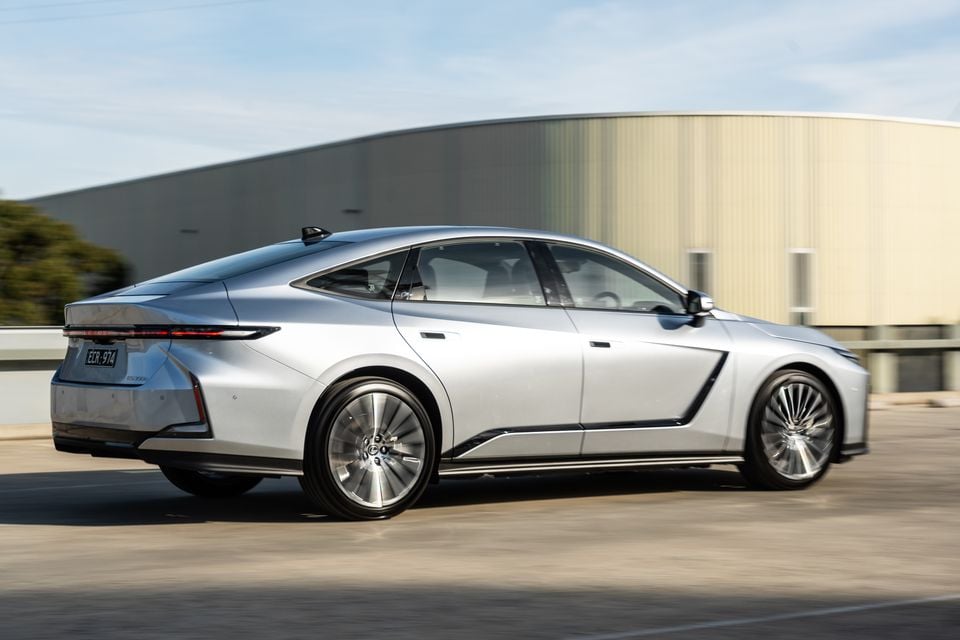
The only thing that may hold you back there is the powertrain. In front-drive ES350e form, power is merely adequate.
But there are advantages to it being slow. One is that it won't upset the lunch of your passengers, as sharp throttle inputs are smoothed out and rounded off. Think more strong breeze than sudden gale.
Another is that you'll struggle to induce any serious torque-steer in normal driving, and that's important in any front-wheel drive vehicle. Lexus clearly knows what this base electric ES will be used for, which is why all of the party tricks (simulated gears, fake engine noise, etc) are reserved for the 500e.
You will still be able to shoot a gap if you need to and, as mentioned, selecting Sport mode will sharpen up the throttle just a tad. It's still an incredibly easy car to drive; much like other Toyota EVs, it earns plenty of praise for feeling more like a regular car than a spaceship.
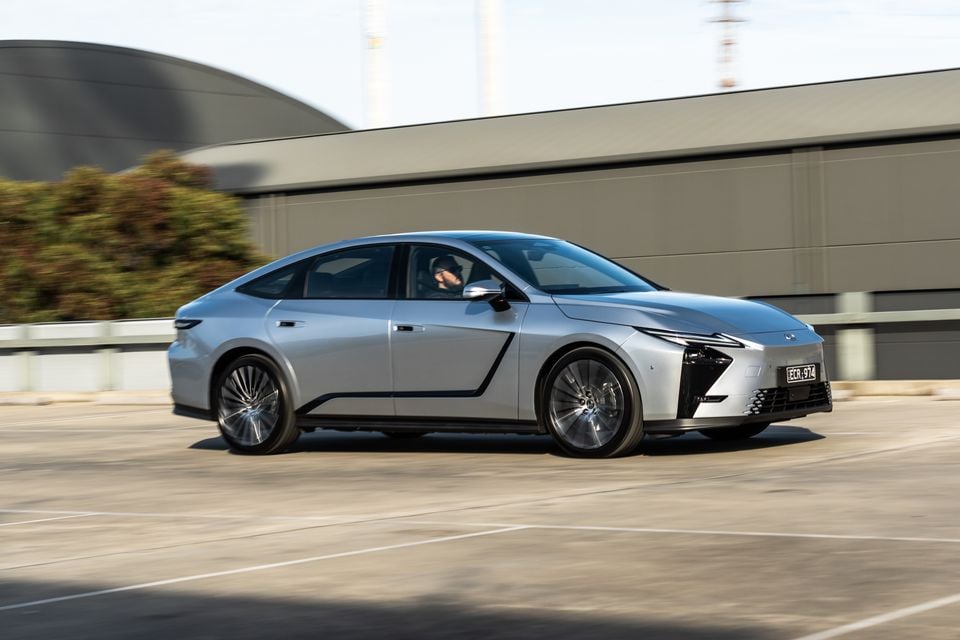
It's also a bonus that Toyota's regenerative braking paddle 'shifters' have been fitted to this Lexus. We love being able to adjust regenerative braking strength on the fly, as it's particularly useful in maintaining speed downhill without touching the brake pedal. And when you do press the pedal, it still feels quite good.
There's no one-pedal mode, but in my opinion that's no great loss. As ever, this ES behaves like a modern luxury sedan should, which is to say it feels a bit like a traditional premium sedan.
That's offset by the inclusion of a very well-sorted suite of safety tech. Almost every function works with impressive reliability, bar the vaguely overreactive driver attention monitor. The cameras are also of high quality and are very useful in combination with the decent outward visibility.
The electric ES certainly isn't an interesting car to drive, but it doesn't need to be. It's a very enjoyable cruiser, even if it isn't quite up to the level of its predecessor.
To see how the Lexus ES stacks up against the competition, check out our comparison tool
The 2026 Lexus ES is available in three regular grades, though the base Luxury can be optioned with an Enhancement Pack that adds a fair chunk of equipment.
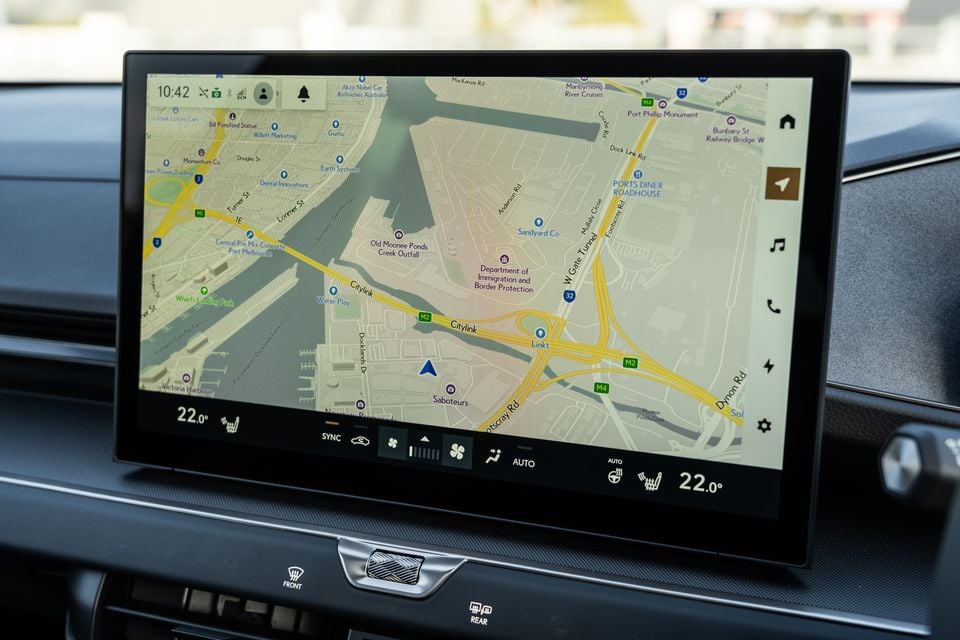
2026 Lexus ES300h Luxury equipment highlights:
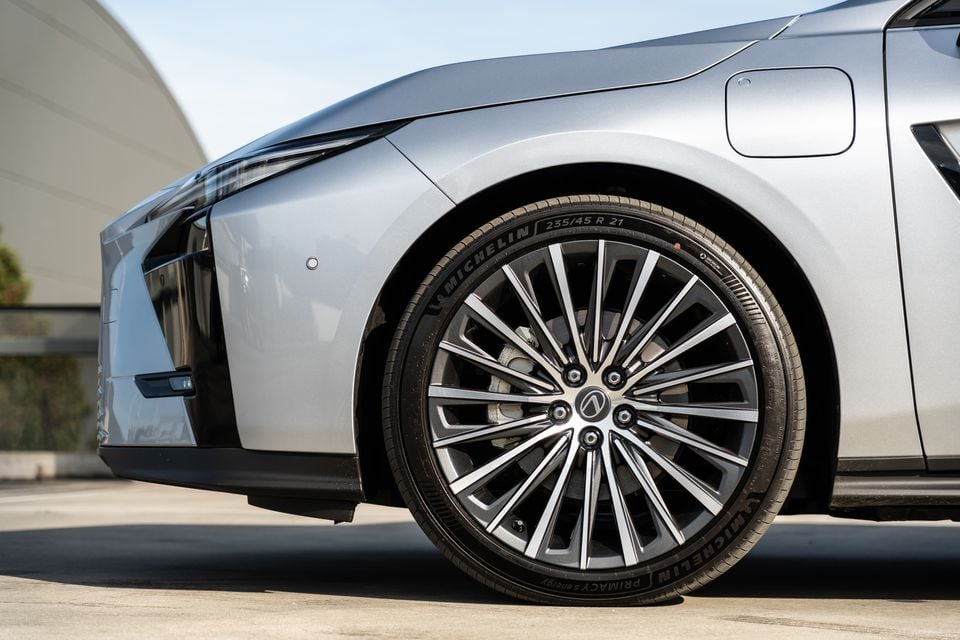
ES350e Sports Luxury adds:
ES500e Sports Luxury adds:
Just a handful of options are available for the new ES.
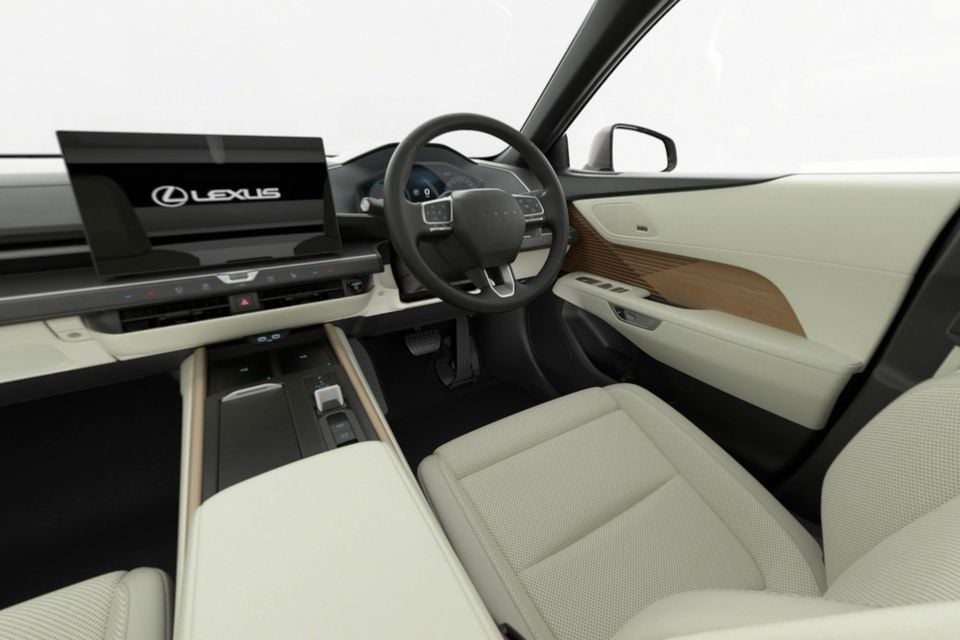
Enhancement Pack (ES300h only, $8295) adds:
Interior trim options ($NCO):
To see how the Lexus ES stacks up against the competition, check out our comparison tool
The new-generation Lexus ES has yet to be independently crash-tested by ANCAP or Euro NCAP and is therefore unrated.
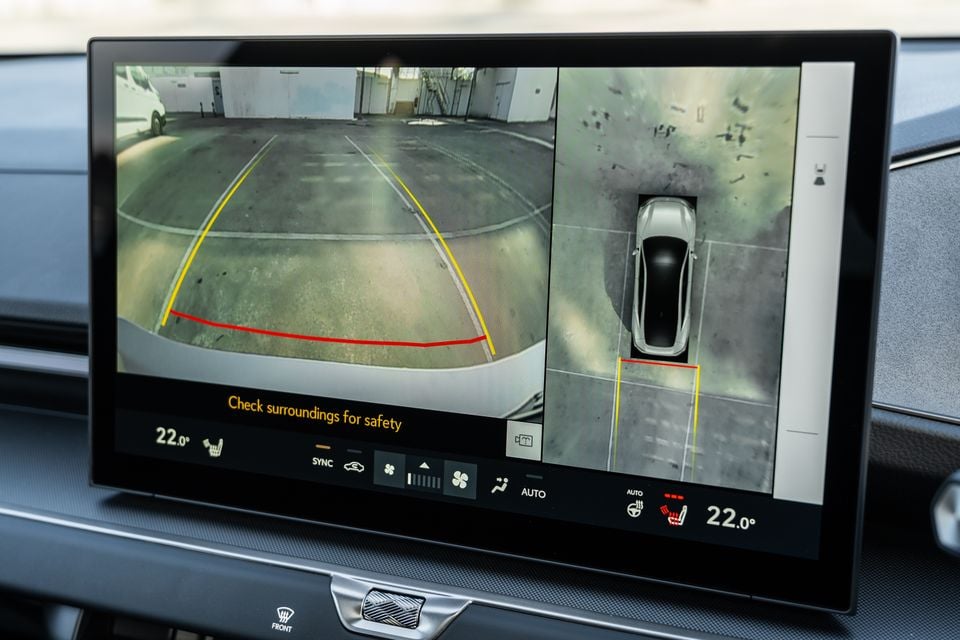
Standard safety equipment highlights:
All bar the base ES300h (without the Enhancement Pack) also feature a surround-view camera and semi-autonomous parking assist.
To see how the Lexus ES stacks up against the competition, check out our comparison tool
Lexus Australia backs its vehicles with a five-year, unlimited-kilometre warranty and the high-voltage batteries of its EVs with eight-year, 160,000km coverage. Servicing for the new ES is required every 12 months or 15,000km, regardless of powertrain.
| Servicing and Warranty | Lexus ES |
|---|---|
| Vehicle warranty | 5 years, unlimited kilometres |
| High-voltage battery warranty | 8 years, 160,000km |
| Roadside assistance | 5 years (Lexus Encore) |
| Service intervals | 12 months or 15,000km |
| Capped-price servicing | 5 years, $675 each (Hybrid) 5 years, $625 each (EV) |
| Total capped-price service cost | $3375 – Hybrid $3125 – EV |
The most direct comparison here is with the BMW i4 eDrive35, for which the German brand covers six years of servicing with a plan that costs $2420.
To see how the Lexus ES stacks up against the competition, check out our comparison tool
The new ES is just as lovely as it should be, but we'd argue the sum of its parts amounts to an ever-so-slight downgrade on the car it replaces.
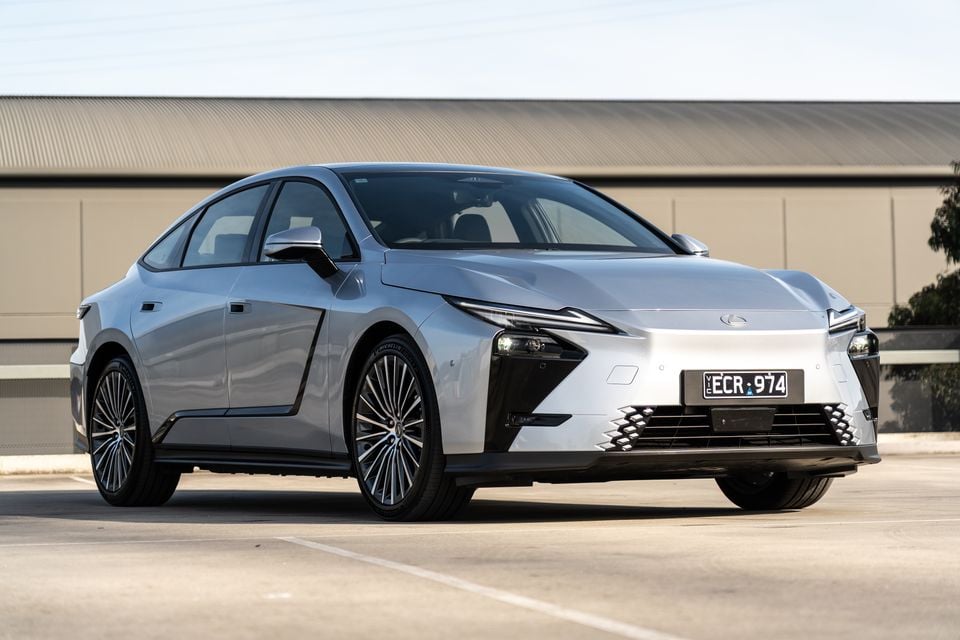
Of course, it's comfortable, quiet, exceptionally well-built, and it still feels like a luxury vehicle with its bamboo panels and the like. We also think an electric ES makes a lot of sense, and we're sure it'll be fairly popular with the premium rideshare crowd.
But apart from that, it doesn't really build on the old one. The ride isn't quite as plush as it was, and we can't help but feel the interior used to be more special. It comes across as marginally less characterful with its more spartan interior design and over-simplified Lexus branding.
Don't get us wrong: the new ES is a very good thing and, despite its many commendable attributes, it's very well-priced. While there isn't much direct competition, the $2000 premium it commands over the hybrid at base level is impressively small. And it‘s worth mentioning Lexus' enticing aftersales provisions here.
If you're in the market for a premium mid-size sedan and your priorities are interior space, quality technology and a smooth driving experience, the ES350e Sports Luxury is one of the best options – especially for the price.
CarExpert can save you thousands on a new Lexus ES. Click here to get a great deal.
Click the images for the full gallery
If this is the car for you, we’ll compare offers from trusted dealers, handle the back and forth and manage your purchase from enquiry to delivery.
Quickly see how this car stacks up against its competition. Select any benchmark to see more details.
Lexus ES
Lexus ES Sales rolling 12-months#
*Based on VFACTS and EVC data
Looking for complete Lexus ES price history?
Our Lexus ES Pricing Page shows exactly how prices have changed over time.
2025
$67,177
2025
$68,752
2025
$76,879
2026
$80,868
2026
$82,968
2025
$84,387
2025
$86,119
2026
$88,218
Max Davies is a CarExpert journalist with a background in regional media, with a passion for Japanese brands and motorsport.
Add CarExpert as a Preferred Source on Google so your search results prioritise writing by actual experts, not AI.
Damion Smy
2 Days Ago

Derek Fung
7 Days Ago

William Stopford
15 Days Ago
Damion Smy
30 Days Ago
Damion Smy
1 Month Ago
William Stopford
1 Month Ago
Add CarExpert as a Preferred Source on Google so your search results prioritise writing by actual experts, not AI.
# Based on VFACTS and EVC data
† Displayed prices are based on the drive-away price of the vehicle, which includes delivery charges, registration fees, number plates, and applicable road taxes, based on a Sydney location. However, prices may vary between states and territories, and additional costs such as compulsory third party (CTP) insurance, dealer delivery fees, and optional extras are not included. These prices are subject to change without notice and may not reflect current market pricing or dealer offers.
 Automotive Vehicle Spec Data & 4K images Powered by JATO Dynamics Ltd