





Damion Smy
Ram 2500 Warlock brings Hemi V8 back to Australia
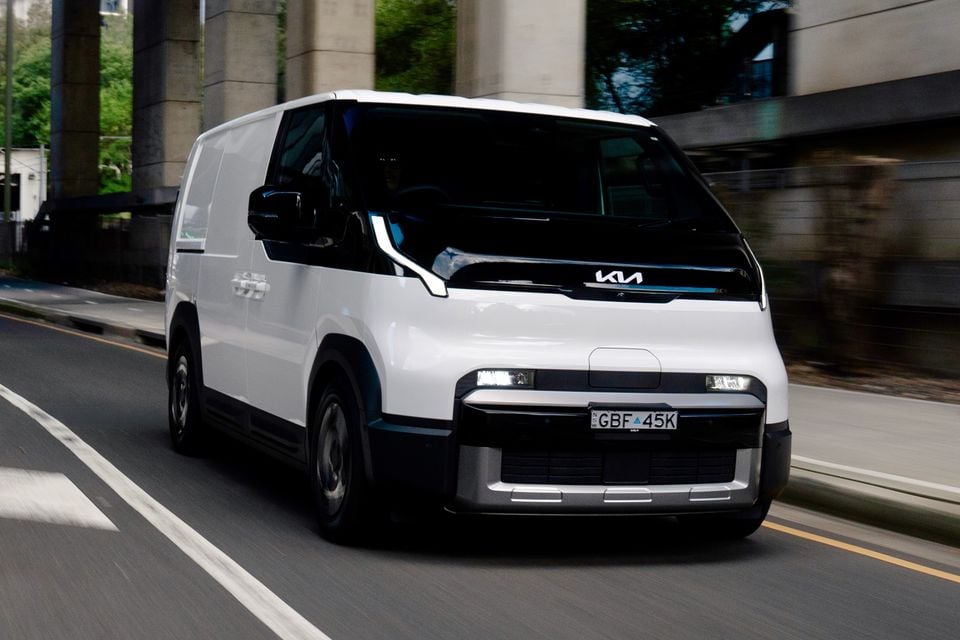
The famous Hemi V8 is returning to Ram’s Australian lineup for the first time in almost two years, under the bonnet of the heavy-duty 2500 Warlock.
6 Hours Ago
The South Korean brand’s first commercial van since the Pregio is here, and Kia's gone all-electric.
If this is the car for you, we’ll compare offers from trusted dealers, handle the back and forth and manage your purchase from enquiry to delivery.
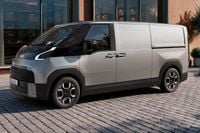
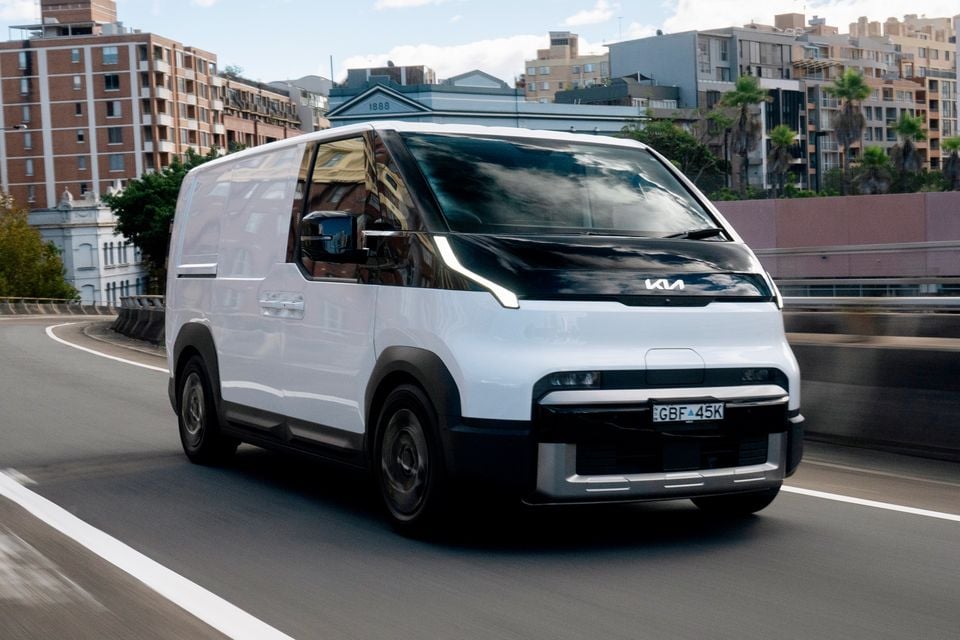
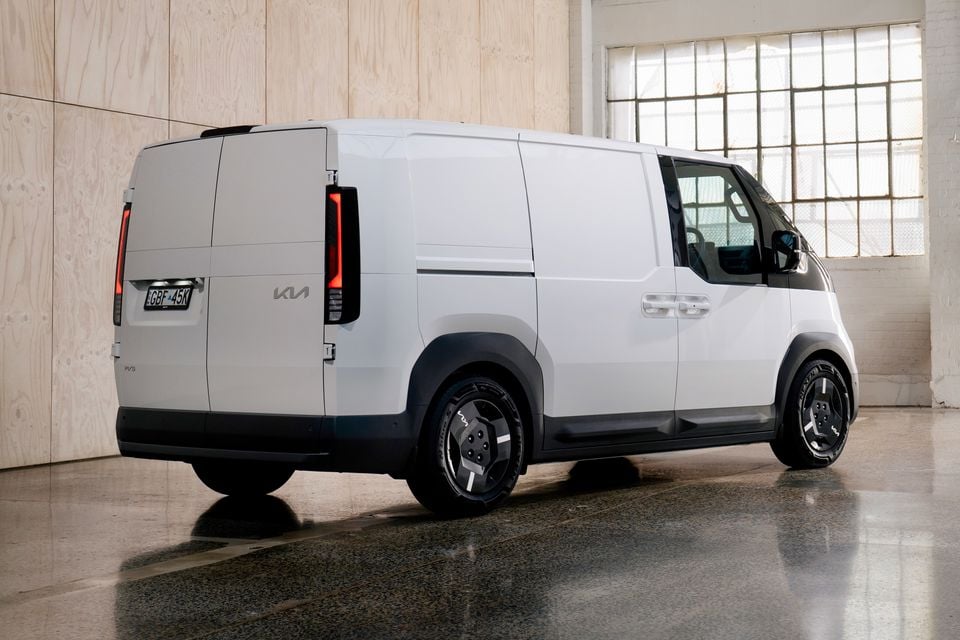
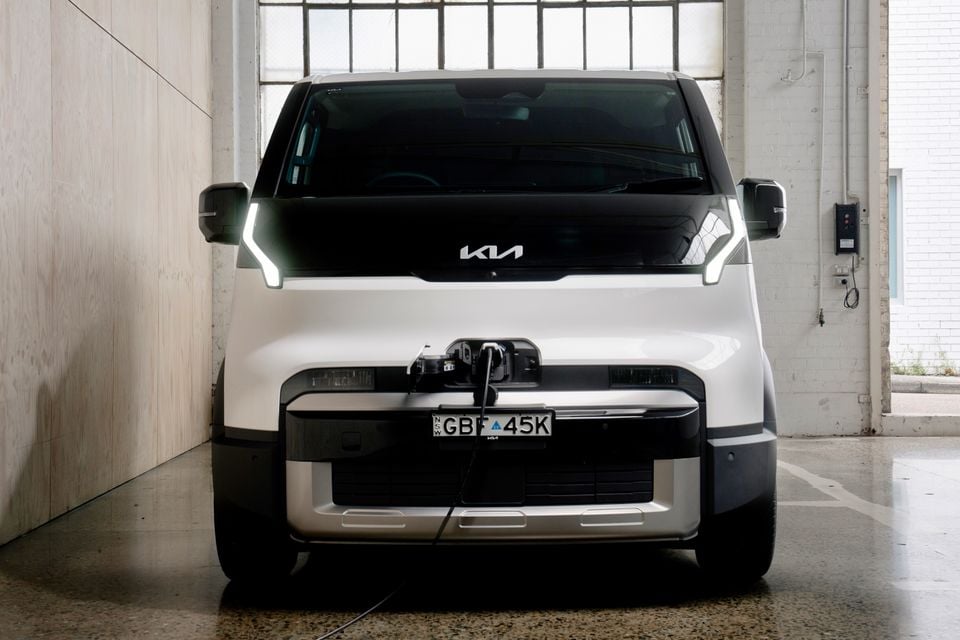
The Kia PV5 Cargo is a fully electric commercial van that offers buyers the ability to load up and hit the road without ever having to worry about fluctuating fuel prices.
The van itself is positioned sharply, making it one of the most affordable electric commercial vehicle options on the market.
But while the range and charging specs are strong, and the standard kit list is long, there are some considerations that might hold this otherwise impressive e-van back when it comes to business buyers.
There is just one version of the Kia PV5 Cargo on offer in Australia at launch – which means buyers won’t need to muck around trying to figure out which variant might be right for them.
| Model | Price before on-road costs |
|---|---|
| Kia PV5 Cargo (L2H1) | $55,990 |
Never seen the L2H1 mnemonic before? In Van Land (a place most of us can only dream of) that signifies the second-longest length, and the standard roof height.
An L2H2 high-roof model will arrive in 2027. Be still, my beating heart.
But the price is the really appealing point here, considering the lengthy standard equipment list, which is detailed if you scroll down.
And it’s made even more appealing compared to electric delivery van rivals like the Volkswagen ID. Buzz Cargo, which starts at $69,990 plus on-roads.
Then there’s the LDV eDeliver 7, which is now on a discounted run, with $9000 off and a price of $54,990 drive-away, for a van that offers less range but far more practicality by way of a larger footprint and payload. The new LDV eDeliver 5 will smash that price down even further, listing from just $47,990 drive-away.
Another newcomer – the Farizon V7E – is, er, silently making a lot of noise about commercial van affordability in the electric era, too, listing at just $49,990 drive-away for the entry-level short-range model.
So the electric van space is one to watch, but the PV5 has some considerations that might put it behind those rivals… and yes, I’m talking about payload and load space, which we’ll get to in the next section.
To see how the Kia PV5 Cargo lines up against the competition, check out our comparison tool
This is a genuinely impressive cabin, and if you're someone who's going to spend long days behind the wheel, I reckon you'll really appreciate what Kia has done here.
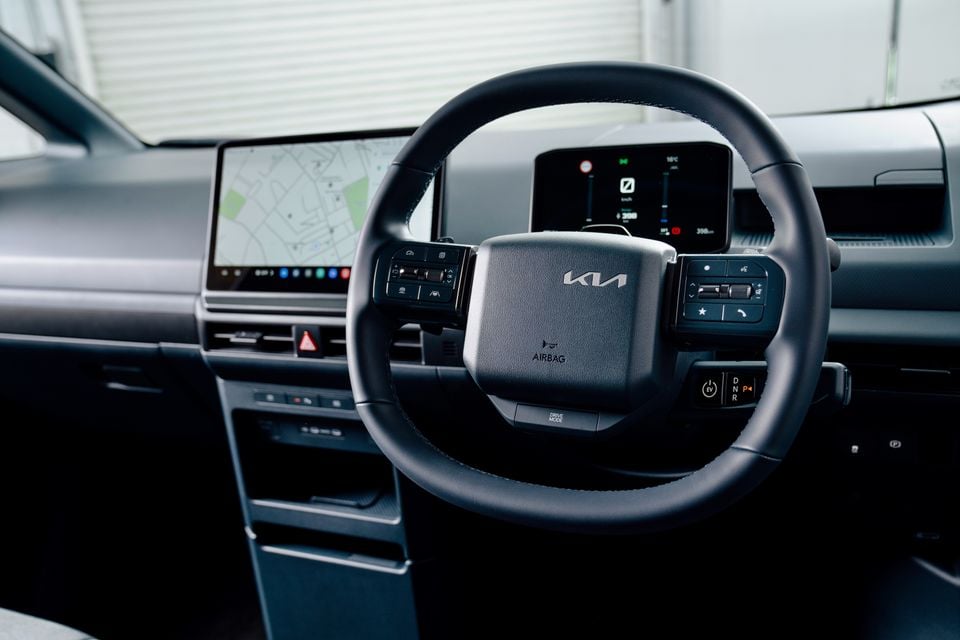
It feels modern, it's cleverly packaged, and there's a heap of practical storage solutions that show the designers have actually thought about how commercial buyers use their vehicles. You can tell this was a ‘ground-up’ approach.
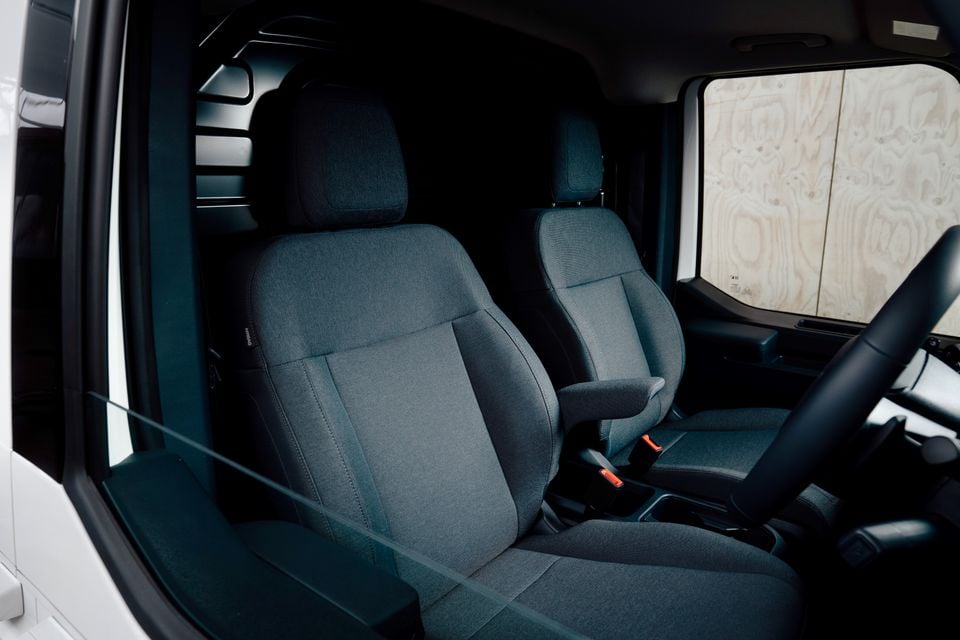
The two-seat layout offers good comfort, with supportive chairs and plenty of manual adjustment for both occupants – meaning you should be able to find the ideal position for those toilsome hours at the helm.
One thing to keep in mind, though, is that the passenger seat isn't legally suitable for a child seat, so if you were hoping to bring the kids along occasionally, that's worth considering.
Another thing is that when you’re sliding in and out of the driver’s seat, the adjustment levers might bruise your butt cheek.
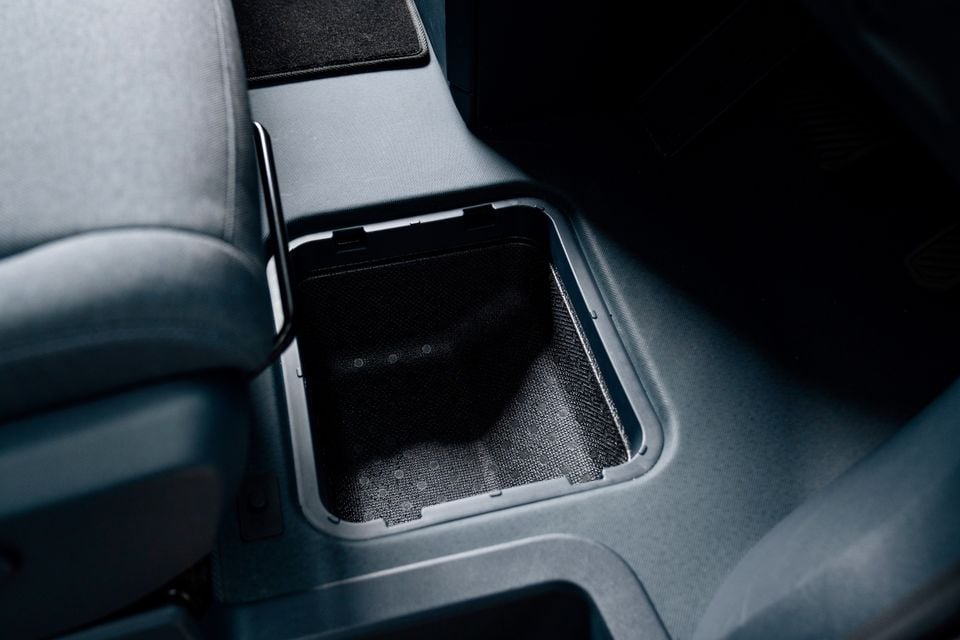
Cabin storage is where the PV5 really shines.
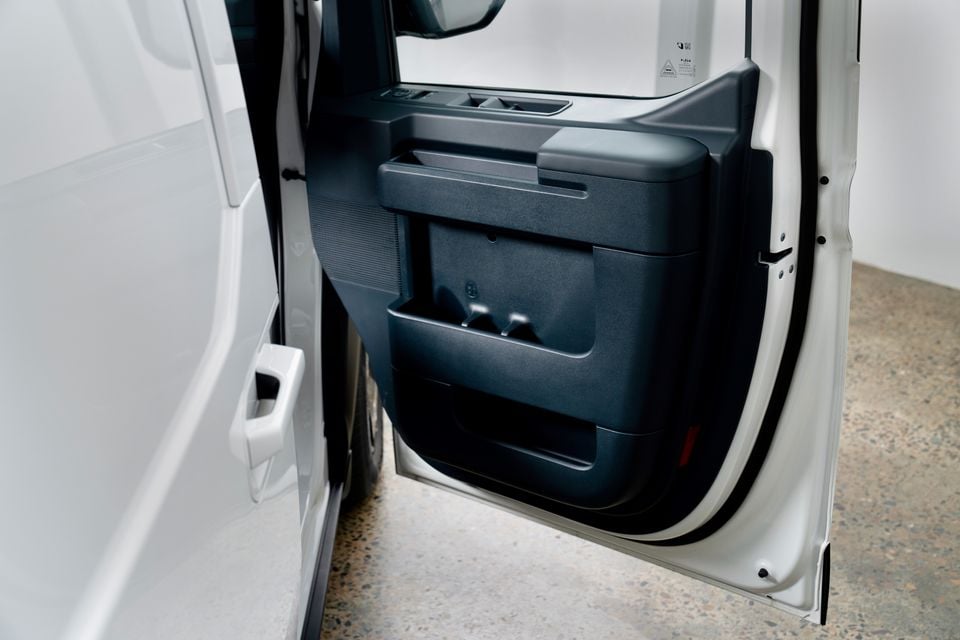
The doors are packed with cubbies, including bottle holders, upper trays and extra little crevices for odds and ends.
Between the seats, there are twin cupholders, a sizable open centre console bin, and even additional storage underneath each seat with a little door to close off that secret stash spot.
Move the seats forward, and you’ll find more hidden space for the tyre repair kit and vehicle-to-load charging accessories.
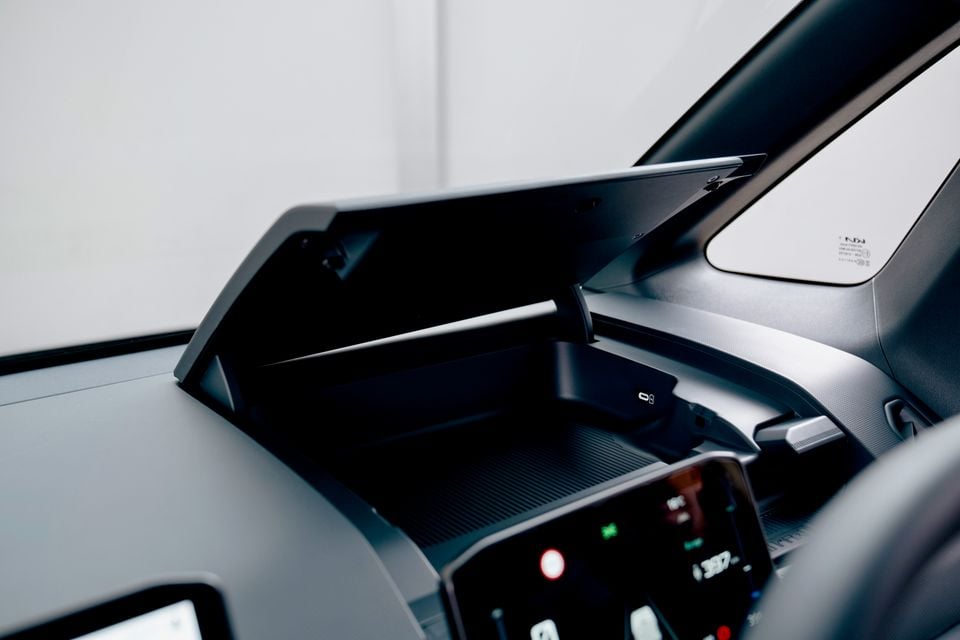
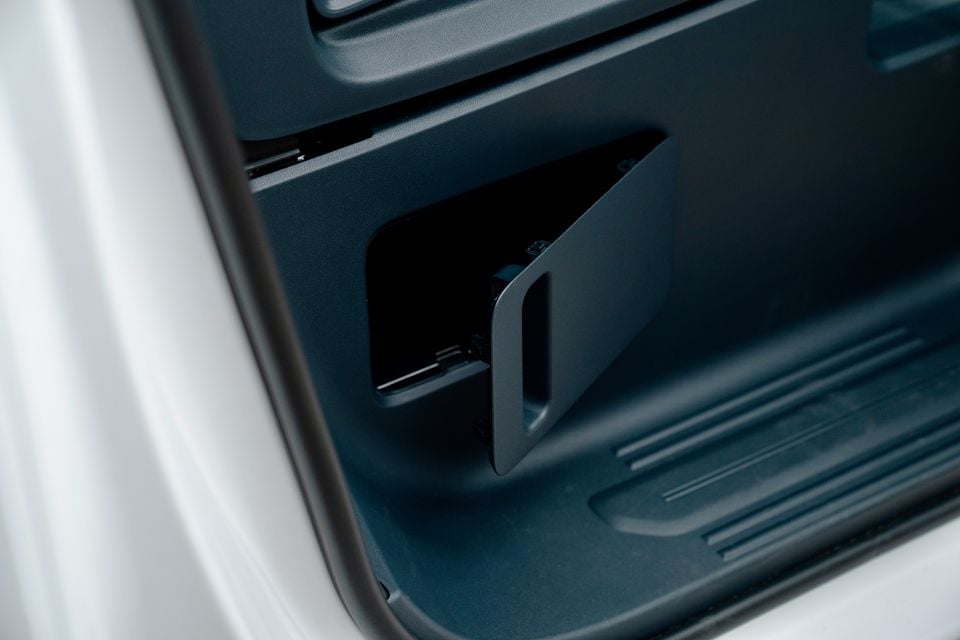
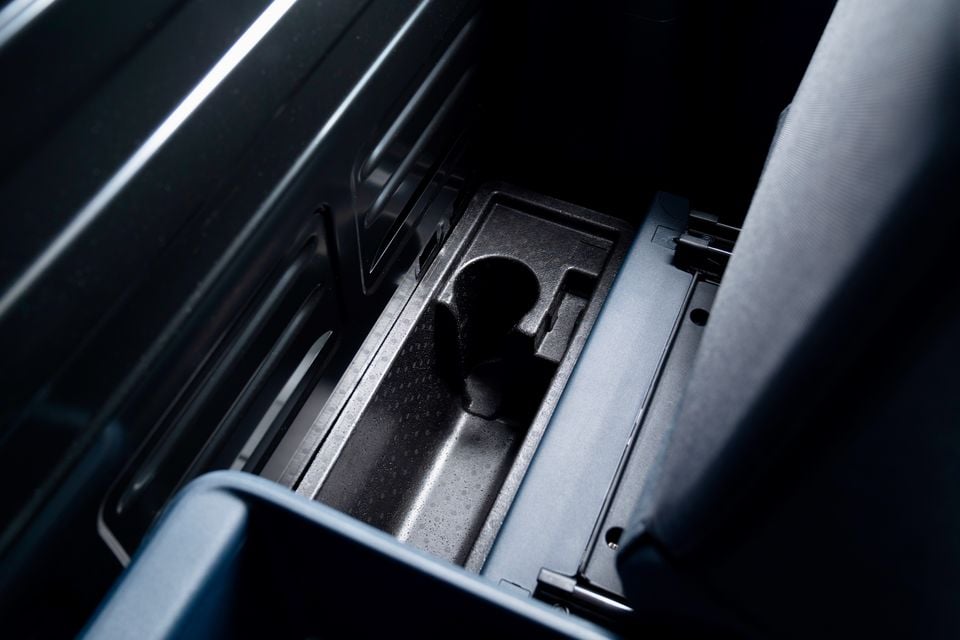
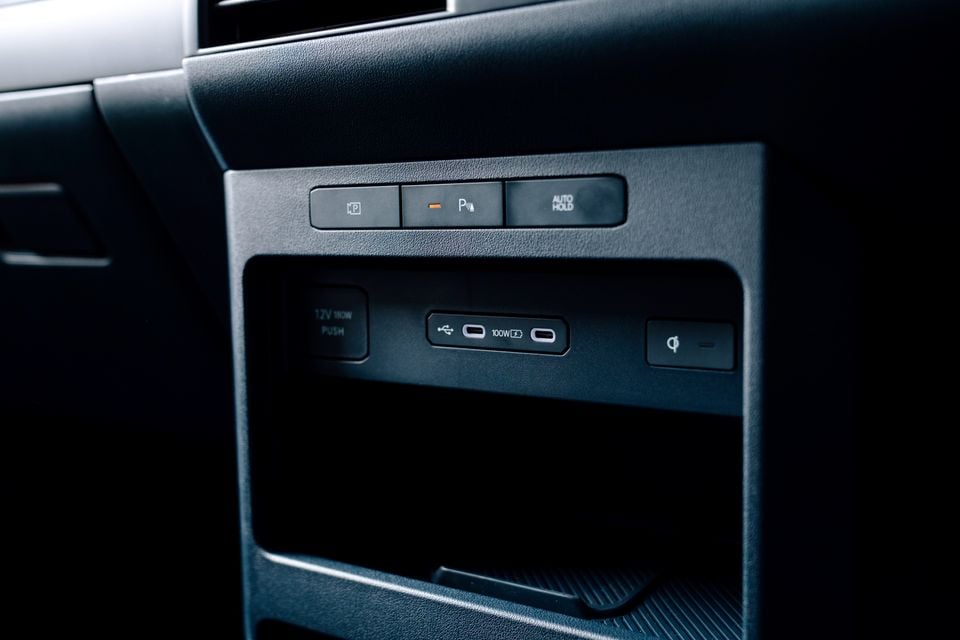
On the dashboard console area, you will find a sliding storage tray, fast 100W USB-C charging and a 12-volt outlet, not to mention a standard wireless phone charger.
It really does feel like Kia has studied the segment and tried to outsmart everybody else. But it doesn’t have overhead storage in this standard-roof-height model.
Tough plastics abound, as you’d expect in a work van, but some rubberised surfaces wouldn't have gone astray – such as in the storage boxes and cupholder areas.
There are handily huge grab handles on the A-pillars to help you climb aboard, extendable sun visors, and above them you’ll find lighting controls and connected services functions.
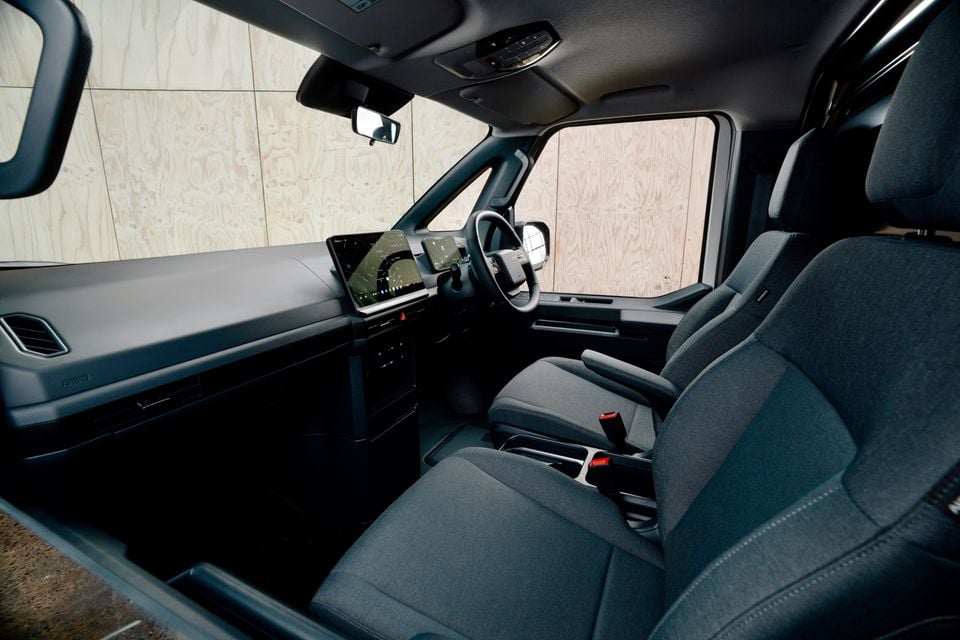
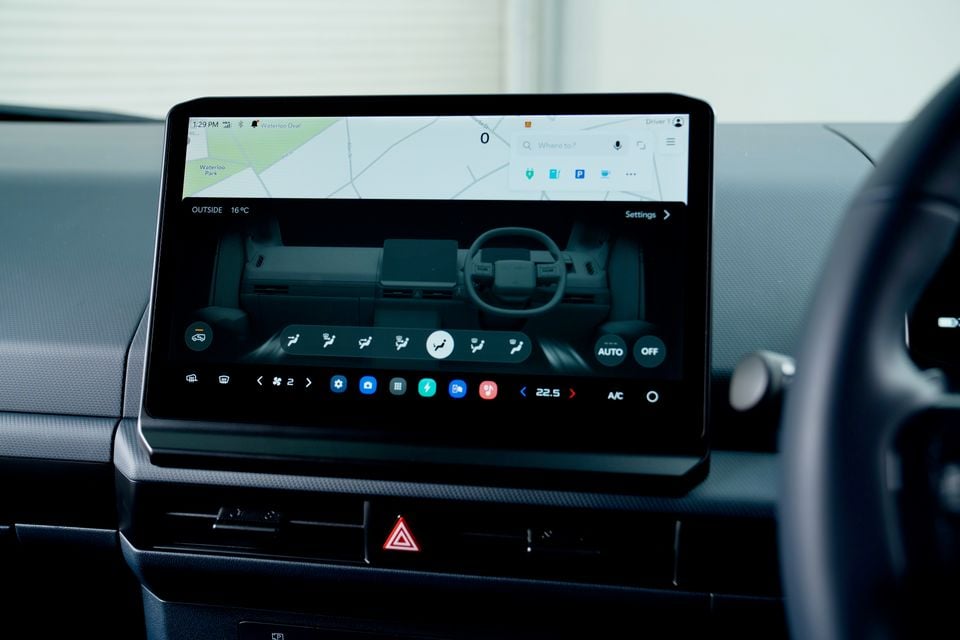
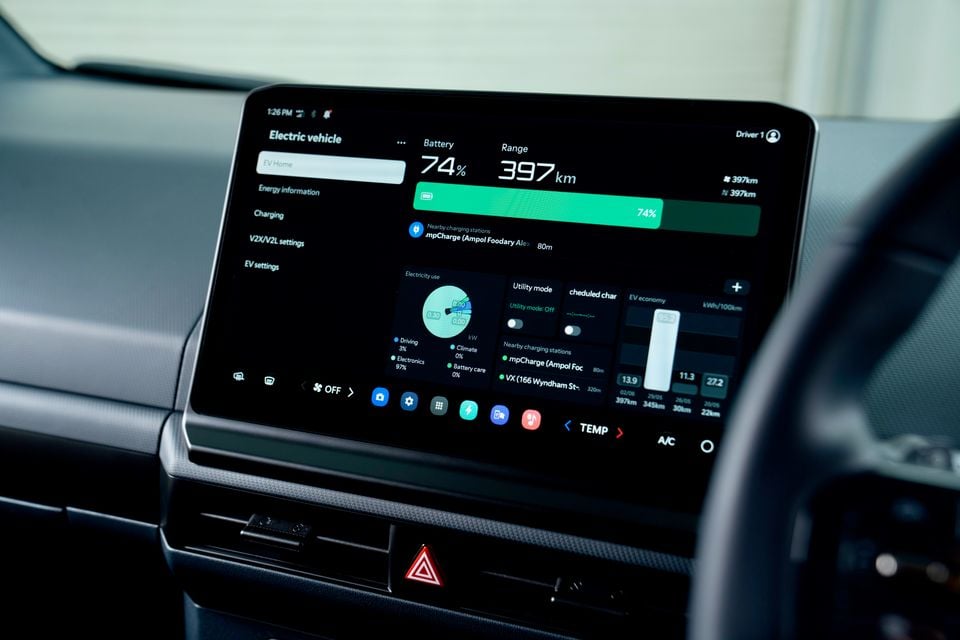
Dominating the dashboard is a 12.9-inch infotainment screen with wireless Apple CarPlay and Android Auto, along with built-in satellite navigation that can direct you to nearby charging stations.
As you'd expect from a modern EV, there's an extensive range of menus dedicated to energy usage, charging schedules and V2L functionality – but you don’t have to do all of that through the van’s screen, as Kia has the excellent connected phone app to allow you remote access, control and monitoring of your vehicle.
The software is responsive, and user profiles are available for different preferences – but there is a bit of a learning curve required here.
Climate controls are entirely touchscreen-based, with no physical dials or buttons, and while the menus are intuitive, they do take some getting used to.
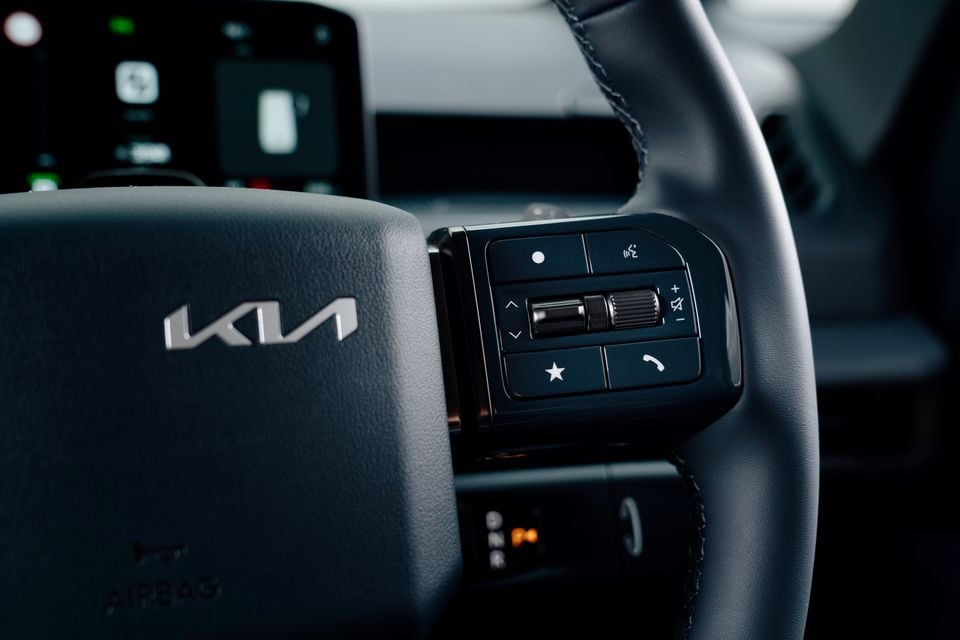
Some of the safety systems are more persistent than they need to be, and the driver-monitoring camera can't be permanently disabled either. You’ll need to learn how to configure the safety stuff to your liking for it to be entirely enjoyable, I reckon.
The steering wheel controls are straightforward, and there are regenerative braking paddle shifters, plus an electric park brake – no reaching for a manual lever here.
Visibility is a major consideration, though, and I’ll detail that in the driving section.
Meanwhile, the cargo zone is a very intriguing place. You might think of this as just another box on wheels that’ll fit smaller boxes inside it, and that’s largely true – but there are some interesting considerations for this van versus others.
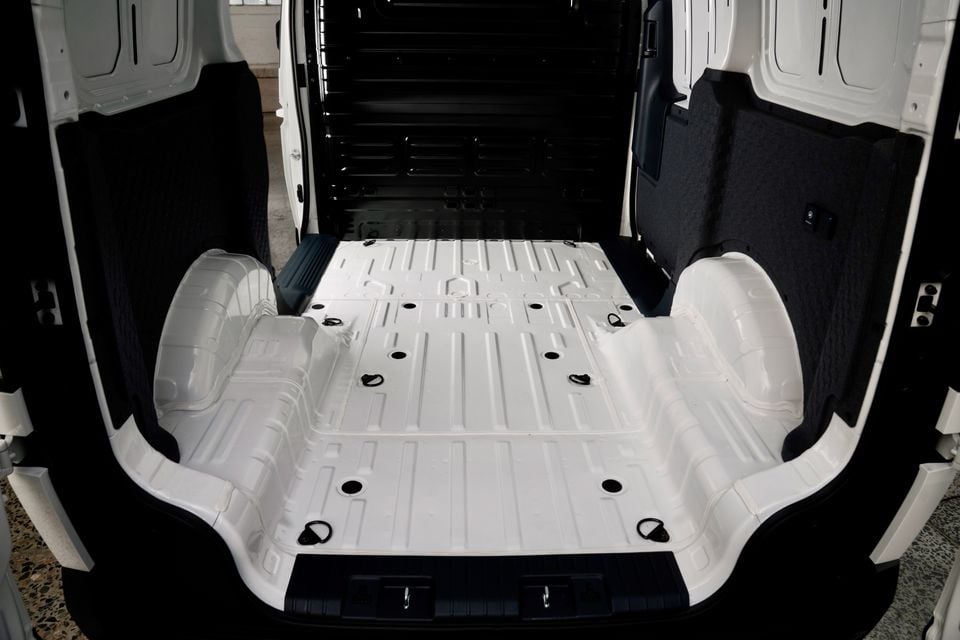
First, the step-in height is amazingly low for a battery-electric van. It’s about the same as if you’re walking up a set of stairs, meaning your quads won’t be burning after a day of loading things in and out.
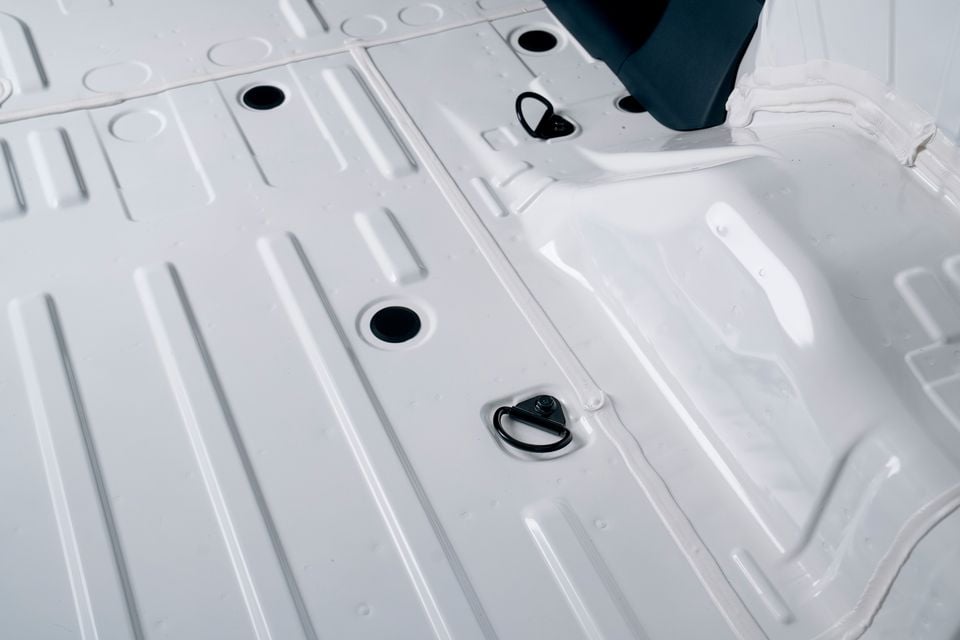
It’s also a safety consideration for business buyers, and should tick the OHS box nicely. But just be aware, you might want to opt for a floor lining system, as the painted metal will scratch up quickly and can be slippery if your soles are wet.
The door openings on the side are too narrow to fork in pallets, and that’s a real theme here. This is not an Aussie-pallet-friendly van.
Now, for those who don’t know, our pallets measure 1165x1165mm. The side door opening? Just 775mm, which is even too narrow for a Euro pallet (800mm wide).
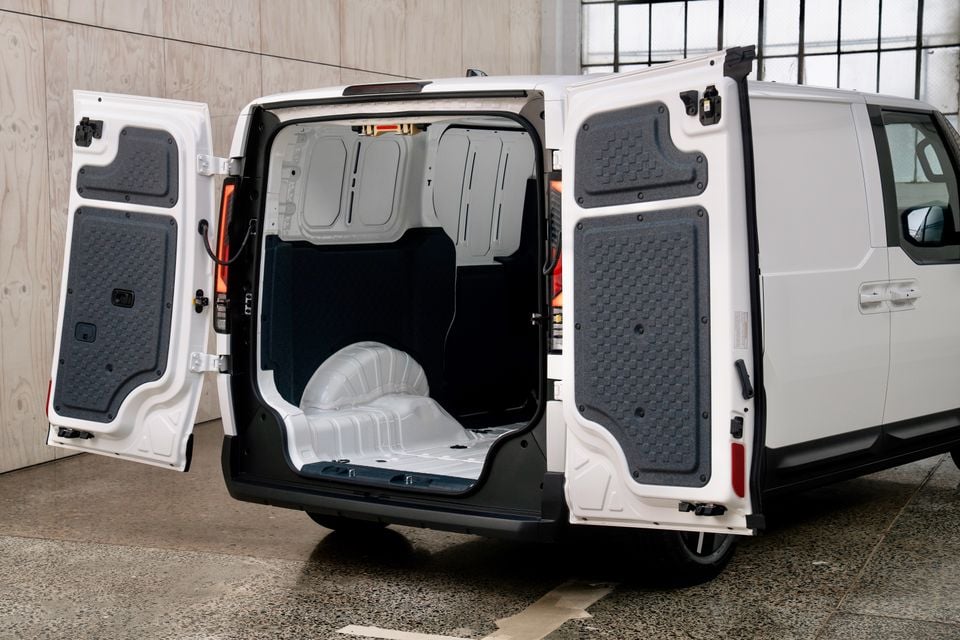
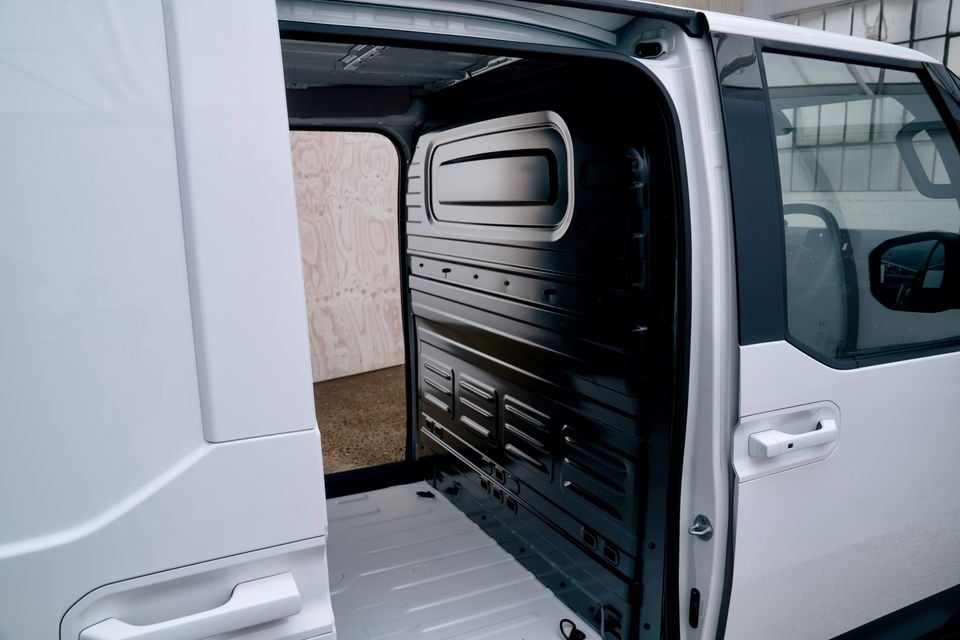
The rear door opening is much wider by way of the side-hinged 180-degree-opening barn doors, measuring 1343mm at the widest point. But the problem is at the floor level.
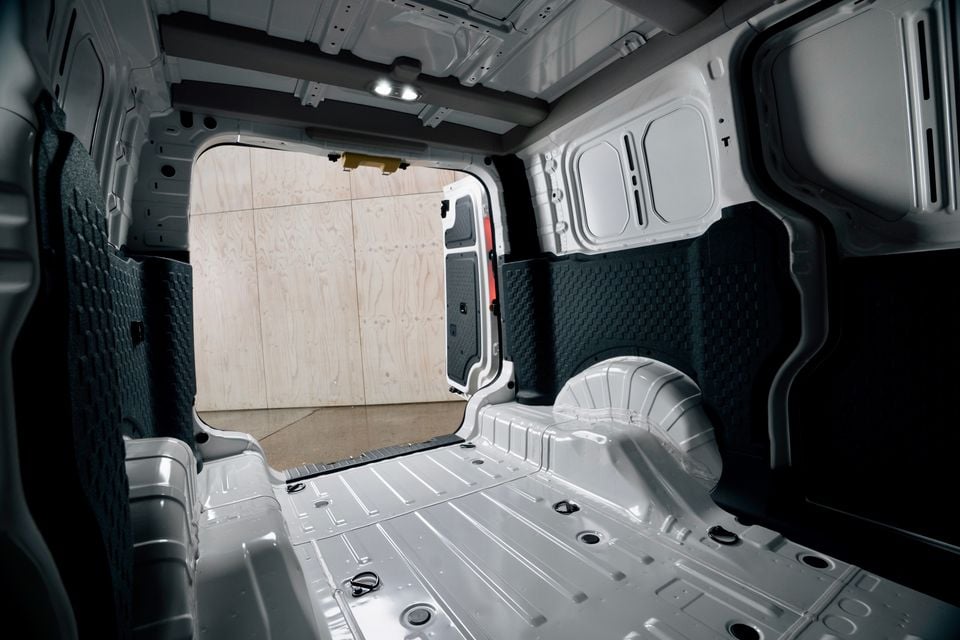
That’s because the suspension housing for this van eats into the load-in space, meaning the narrowest point is just 920mm. Yes, it means you can fit a Euro pallet in lengthways, but those who need to lug larger loads might struggle to fit them in.
I think this van is, frankly, a box van. Not a pallet van. That’s clear from the dimensionally difficult considerations of the cargo zone.
And Kia Australia knows that, having stated that a potential solution – a platform to sit above the wheel-arches in the rear to offer full load-width capability – is under study for our market. Hopefully, it is load-rated too, so it can cope with a loaded pallet… provided it isn’t too heavy.
That’s because, again, this relatively compact van isn’t up to it when it comes to payload. The maximum payload capacity is 740kg, meaning if you are going to handle heavy stuff, it won’t make sense for your business.
Some of the other Chinese-made EV vans have a 1350kg payload, not to mention more space on offer. Are they as fun to drive or as nice inside? Not necessarily. But are they going to suit buyers’ needs better? It really depends on the customer’s requirements.
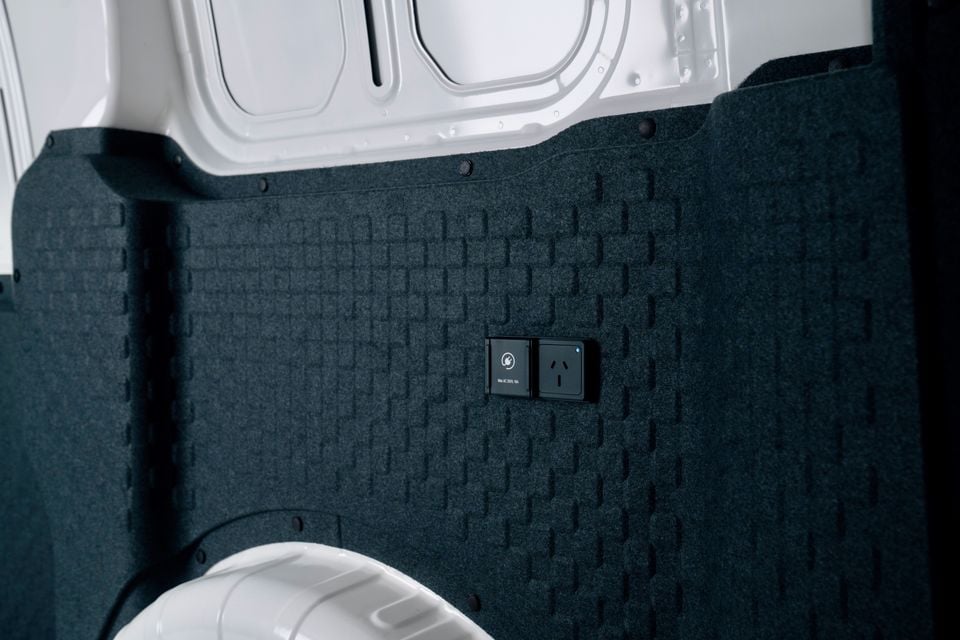
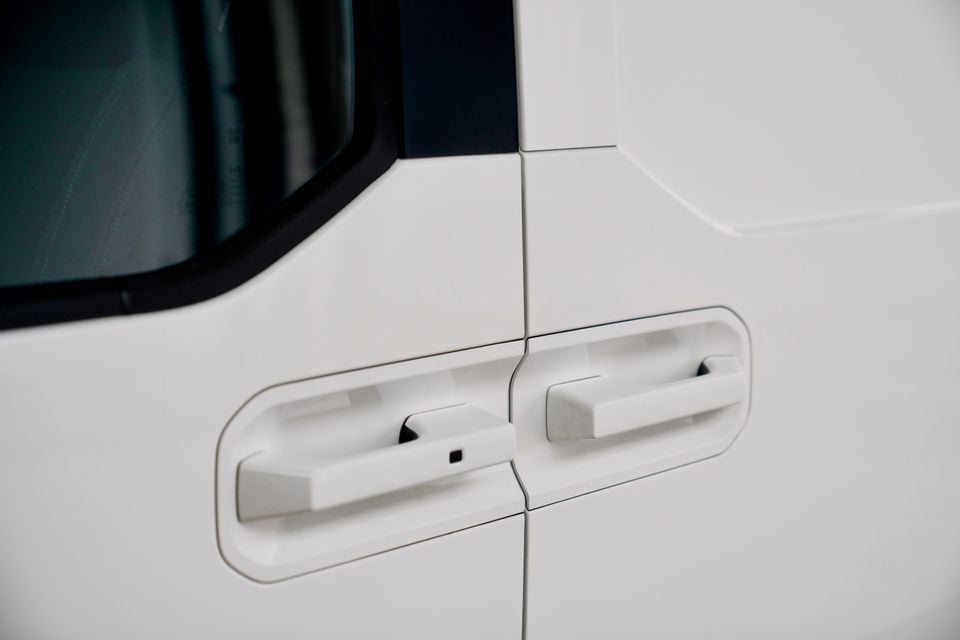
However, if you can work to the parameters set here, you’ll be getting a well-considered cargo area, which includes two rows of overhead lighting, four doors for easy access, half-height wall lining to protect the van and packages from damage, and...
Oh. And there’s no spare wheel. That sucks.
I have to say, I can see this van being improved at a later date with a load-rated accessory platform that incorporates an underslung spare wheel and drawers for storage. If that happens, it’ll be far more enticing to far more customers.
| Dimensions | Kia PV5 Cargo |
|---|---|
| Length | 4695mm |
| Width | 1895mm |
| Height | 1899mm |
| Wheelbase | 2995mm |
| Payload | 740kg |
| Load space length | 2255mm |
| Load space width | 1565mm920mm at floor |
| Load space height | 1520mm |
| Load space volume | 4.4m³ |
| Side door opening | 775mm wide1340mm tall |
| Side step height | 399mm |
| Rear door opening | 1343mm at widest point820mm at narrowest point |
To see how the Kia PV5 Cargo lines up against the competition, check out our comparison tool
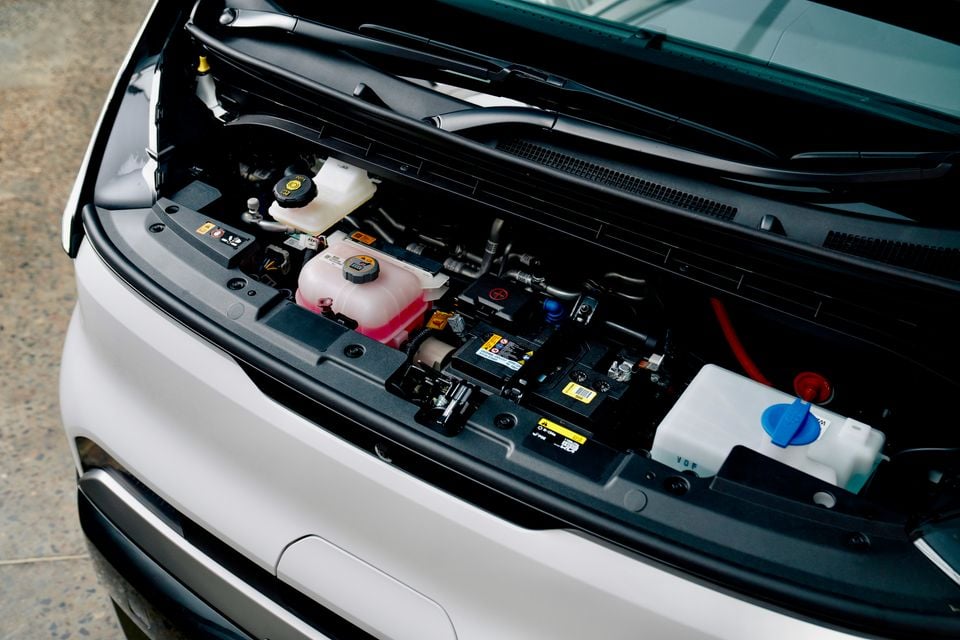
The Kia PV5 Cargo is offered with what looks like an underpowered electric motor. But this is a purpose-built vehicle, so don’t go expecting blinding pace or power.
If this is the car for you, we’ll compare offers from trusted dealers, handle the back and forth and manage your purchase from enquiry to delivery.
| Specifications | Kia PV5 Cargo |
|---|---|
| Drivetrain | Electric motor, single-speed transmission, FWD |
| Battery | 71.2kWh |
| Power | 120kW |
| Torque | 250Nm |
| Drive type | Front-wheel drive |
| Weight | 1910kg |
| Energy consumption (claimed) | 19.1kWh/100km |
| Energy consumption (as tested) | 17.3kWh/100km |
| Claimed range | 416km (WLTP) |
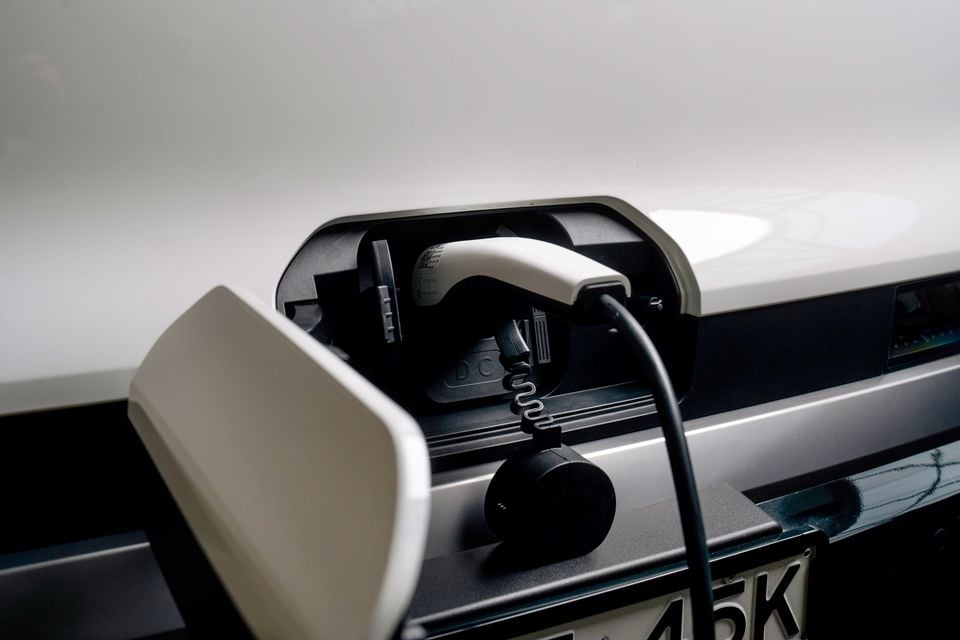
| Max AC charge rate | 11kW |
| Max DC charge rate | 150kW |
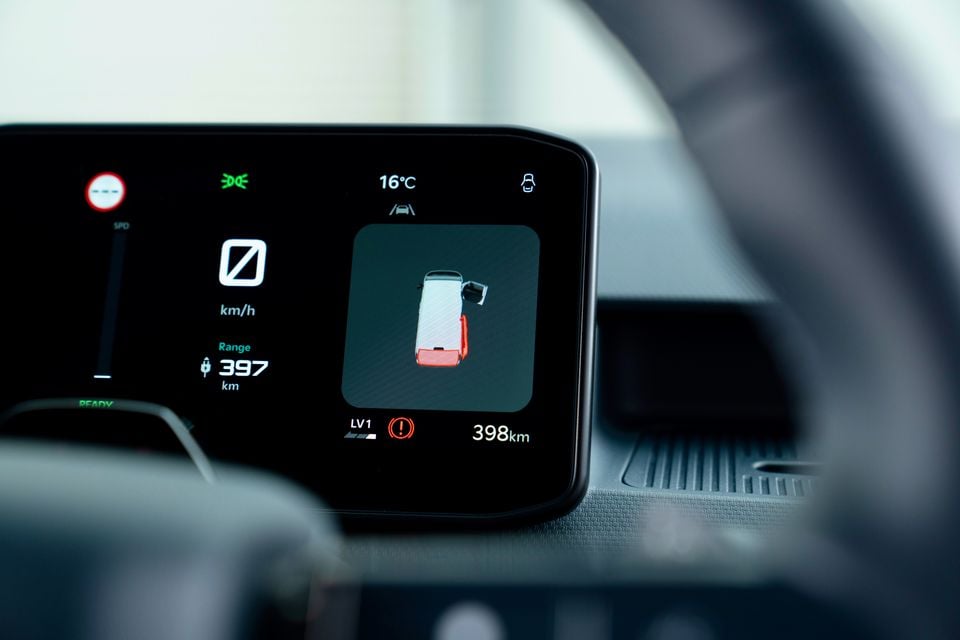
I am really surprised at the efficiency of this machine. In stop-start driving and with the regen braking system at its most assertive, there is a good chance you will get better results than the sticker states.
I did! On test, the displayed efficiency number I saw was 17.3kWh/100km, which is better than the 19.1 claim. And my driving included highway stuff, too – but if you do longer drives on open roads at pace, you’re likely to see the numbers hover around 20-22kWh/100km, particularly if it’s loaded up.
To see how the Kia PV5 Cargo lines up against the competition, check out our comparison tool
This is a really impressive thing to drive.
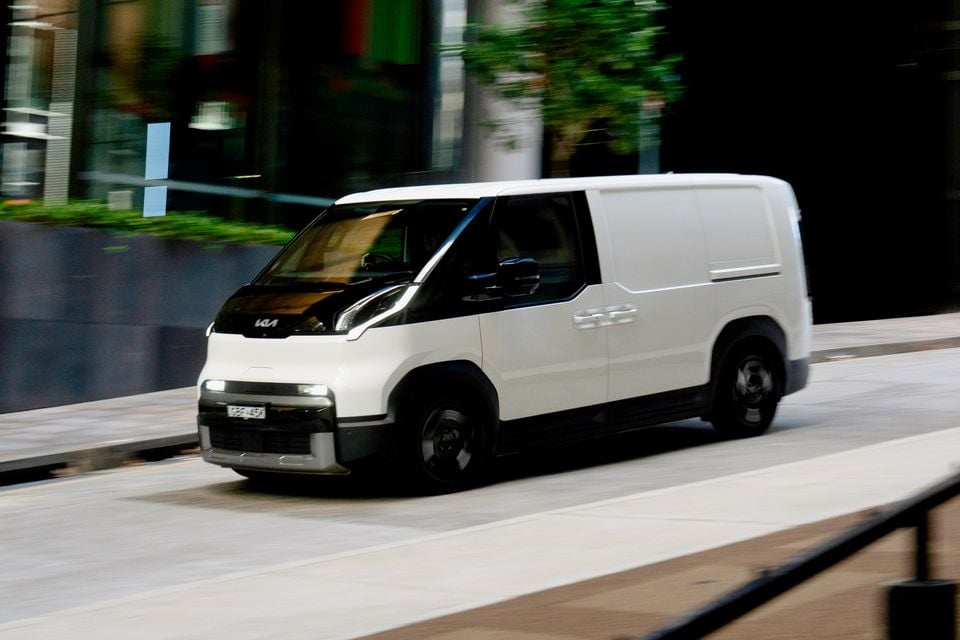
The outputs of the PV5 Cargo might seem a little modest, but don't be fooled by the numbers. It's the torque that matters here, and when you put your foot down, it gets moving with surprising enthusiasm.
It’s genuinely brisk at urban speeds, and I don't think you'll be left wanting for more. At highway pace – where the top speed is capped at 130km/h(!) – you might feel that it’s fighting physics a bit, but the daily stop-start stuff that you’ll be asking of it is where this machine does its best work.
There are multiple drive modes if you want to adjust things to your liking, including Eco and Snow modes.
Being an EV, refinement is excellent as well, with smooth and immediate response from the electric motor. But it has this sound – like a reverberation in the cargo area – that can be boomy at pace, despite the standard bulkhead provision.
One-pedal driving is available too, and it's very well executed. You can adjust the regenerative braking using the steering wheel paddles, with anything from a freewheeling Level 0 setting through to a very assertive Level 3 mode, which is proper single-pedal operation when the i-Pedal function is active.
If you do need to actually press the brakes, though, the response and feel is surprisingly natural, avoiding the awkward transition between regeneration and friction braking that some EVs still suffer from.
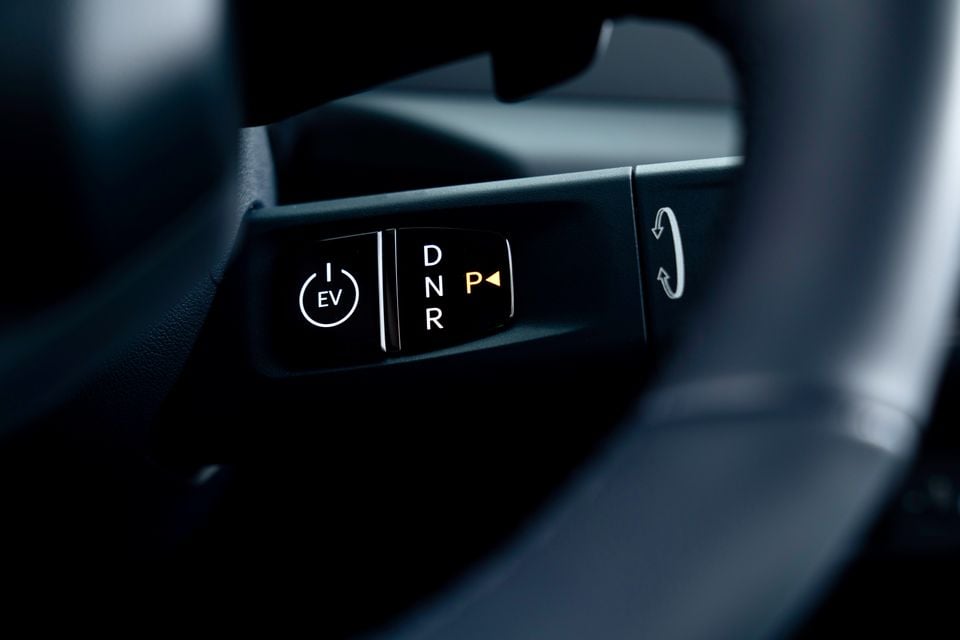
There are a couple of quirks. The column-mounted gear selector – twist forward for D and backward for R, and push in the button on the end for P – is oddly positioned, and you may bash your knee on it. The motor start button is there, too.
Driving visibility is perhaps the biggest concern here. There are no rear windows and no glass in the bulkhead, so you're relying heavily on technology to see what's around you.
But I’m glad Kia did the right thing and fitted its excellent blind-spot camera system as standard, because it will show you things that the otherwise brilliant large side mirrors might miss. The surround-view camera setup is among the best in the business for a van like this, making tight turnarounds and narrow alleyways easier to assess, and you can even bring up front or rear camera views while driving, which is handy when manoeuvring in tight spaces.
Speaking of, the steering is light and accurate, making this van easy to position, while the turning circle is surprisingly tight considering the lengthy wheelbase. At around 11.1 metres, it's easy enough to negotiate narrow roads and awkward U-turns without resorting to a five-point shuffle.
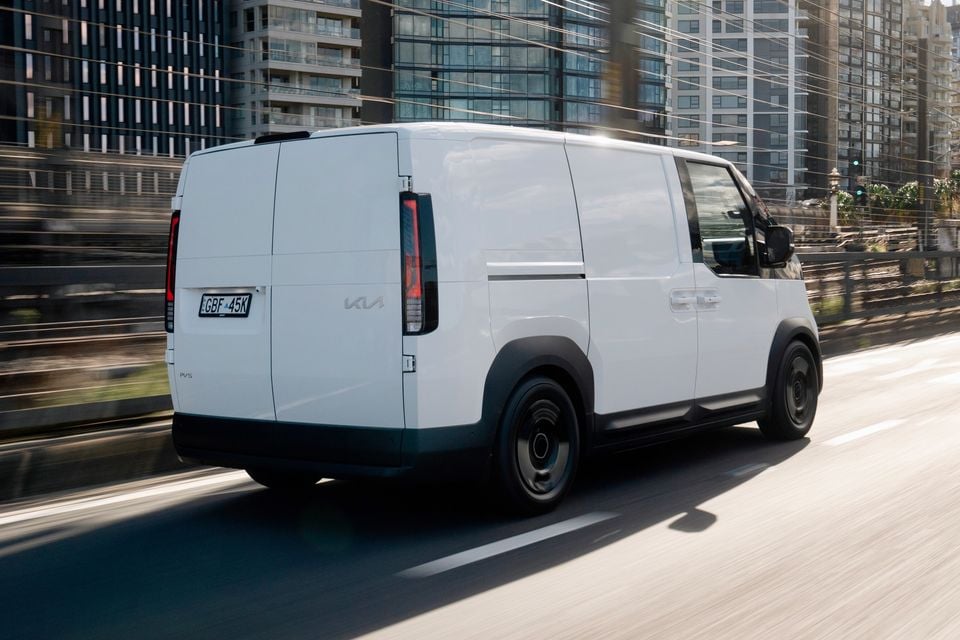
Ride comfort is another highlight. The long wheelbase and chunky tyre sidewalls help it smooth-over bumps with real composure, and it never feels unsettled or clumsy. With or without weight in the back, this is a van that feels a lot like a car to drive, and that’s a credit to its clever suspension design – which is also a problem for this van, as mentioned above regarding the rear suspension housing impeding the load zone.
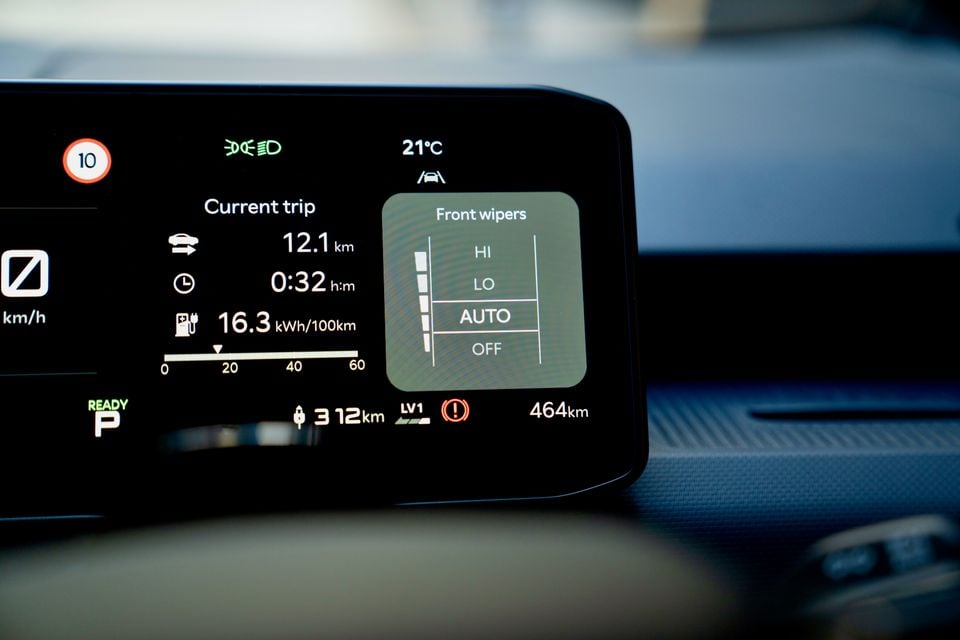
The safety technology is largely easy to live with once you've configured it to your liking. The new speed zone warning system can be silenced (thankfully!), and you can press mute on the steering wheel each time you get back in if you don’t want the overspeed warning to chime at you.
There is lane-keeping assistance, which can be disabled if you wish, and the driver-monitoring camera isn't nearly as intrusive as that in some rival systems. But it will still chirp at you if you’re looking around a lot, as courier and delivery drivers often do.
To see how the Kia PV5 Cargo lines up against the competition, check out our comparison tool
The Kia PV5 Cargo embarrasses some of its rivals on standard spec and inclusions. Frankly, this is excellent value for money, considering what you get in this standard kit list, and the safety gear is top-notch, too.
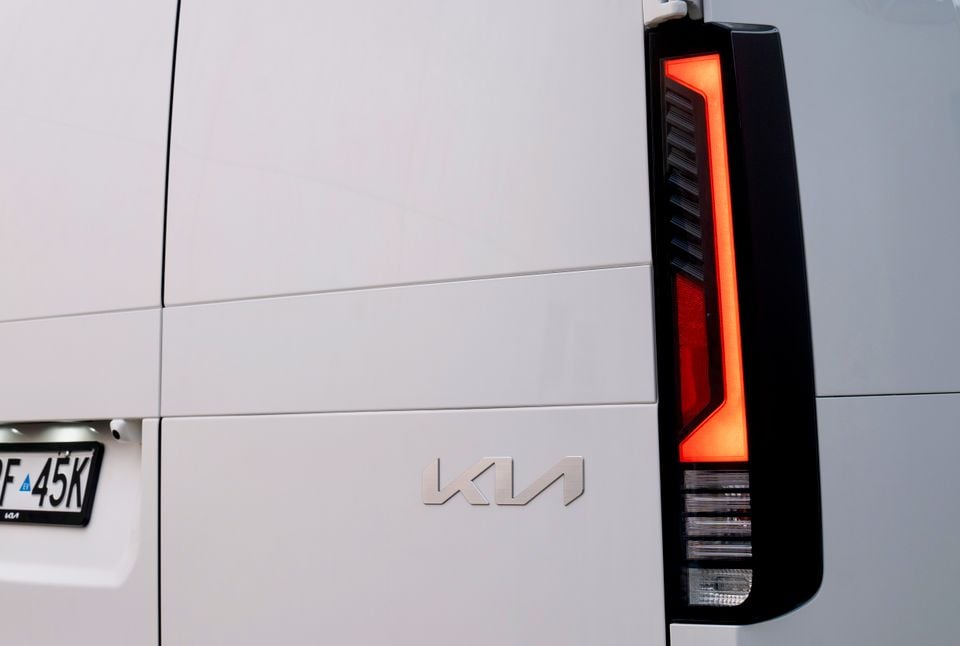
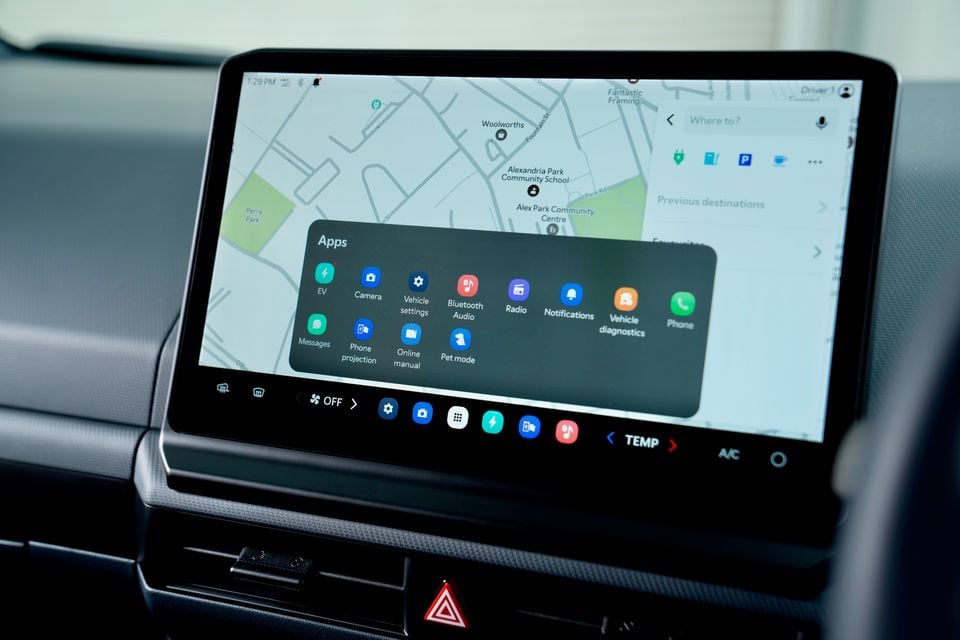
2026 Kia PV5 Cargo standard equipment highlights:
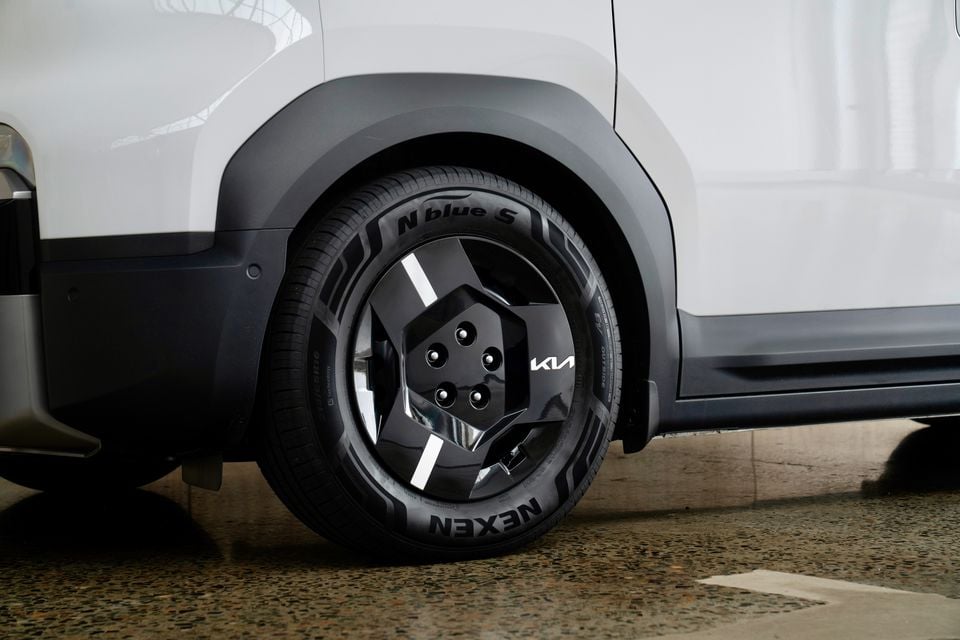
There are a number of accessory options available as well, such as a towbar kit, roof platform (max roof load is 100kg), a tubular nudge bar, floor panelling for the cargo area, seat covers, and tailored floor mats.
Other accessories “under study” for Australia – and hopefully arriving soon – include the handy L-Track mounting system for attaching hardware in the cargo zone, a spare wheel kit, and a raised floor section that should negate the significant problem the narrow floor gap represents, though it will sacrifice load height.
To see how the Kia PV5 Cargo lines up against the competition, check out our comparison tool
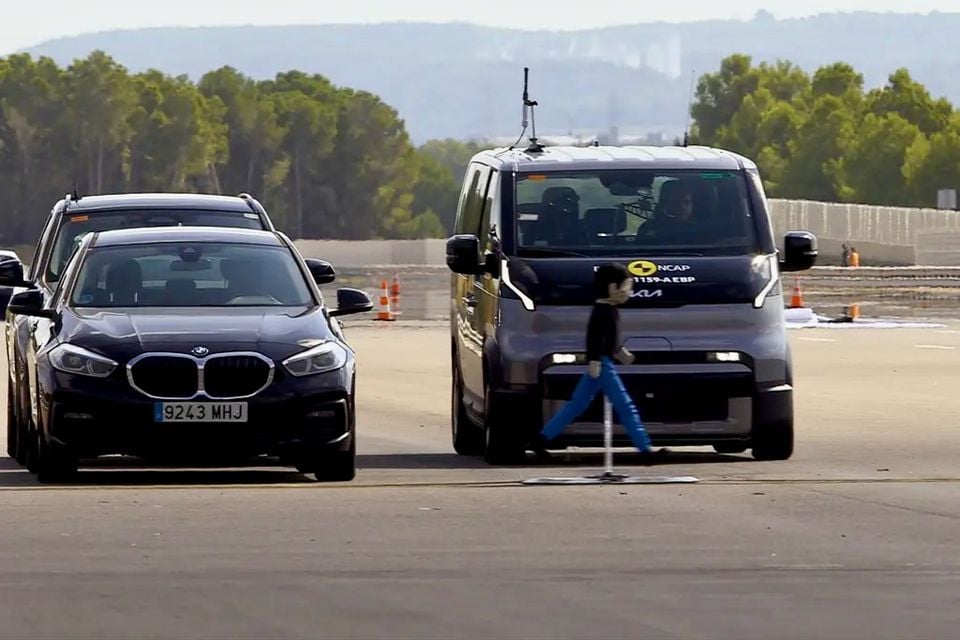
ANCAP has put the PV5 Cargo through its paces – well, at least the safety technology systems fitted to the van…
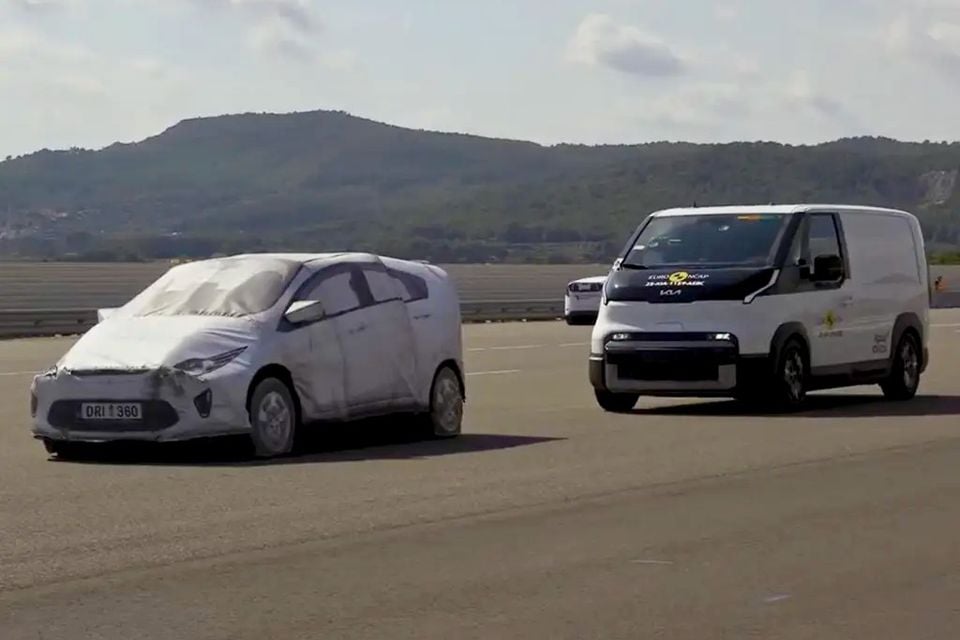
That’s because the local auto safety watchdog doesn’t do the same stringent crash testing for commercial vans as it does for passenger vehicles. Instead, there’s a tech test, essentially, in which vehicles are checked to see how they perform when it comes to avoiding potential crashes with cars, people and other road users.
In that testing, the PV5 achieved one of the highest scores yet – 91 per cent – which translates to a Platinum rating under the regime.
Yep, so you guessed it, that means this machine is loaded with the safety gear you’d expect and, yes, some of it can be annoying, as I mentioned in the driving section.
Standard safety equipment includes:
The airbag count is strong, totaling seven in a rather compact cockpit, including dual front, front side, curtain and a front centre airbag to prevent head clashes in a side impact.
To see how the Kia PV5 Cargo lines up against the competition, check out our comparison tool
Kia offers a strong aftersales ownership program, but the reality is that it’s even stronger for those who aren’t buying a car for commercial purposes from the brand.
| Servicing and Warranty | Kia PV5 Cargo |
|---|---|
| Warranty | 7 years, unlimited kilometres7 years, 150,000km (commercial buyers) |
| Roadside assistance | 12 months freeUp to 8 years (conditional) |
| Service intervals | 24 months/30,000km |
| Prepaid servicing | Up to 8 years |
| Average annual service cost | $281 |
| Total prepaid service cost | $2246 |
In other words, if you plan to buy this work van for work, and you know you’ll do a lot of mileage, it mightn’t be as enticing as if you were choosing it as a private customer.
Otherwise though, the 30,000km service intervals mean you can cover a lot of distance without downtime, like you need to have with diesels. Nice!
We also love the fact there is seven years of included data coverage with the vehicle for your connected services, over-the-air software updates and more – it means you don’t have to worry about that cost increasing at a later date, as many brands are moving to plans where they sucker you in with the convenience of connectedness, then charge you for the privilege. Not here!
To see how the Kia PV5 Cargo lines up against the competition, check out our comparison tool
For van buyers who need a van that’ll cope with a forklifted load, this one’s narrow wheel-arch gap and relatively low payload could rule it out.
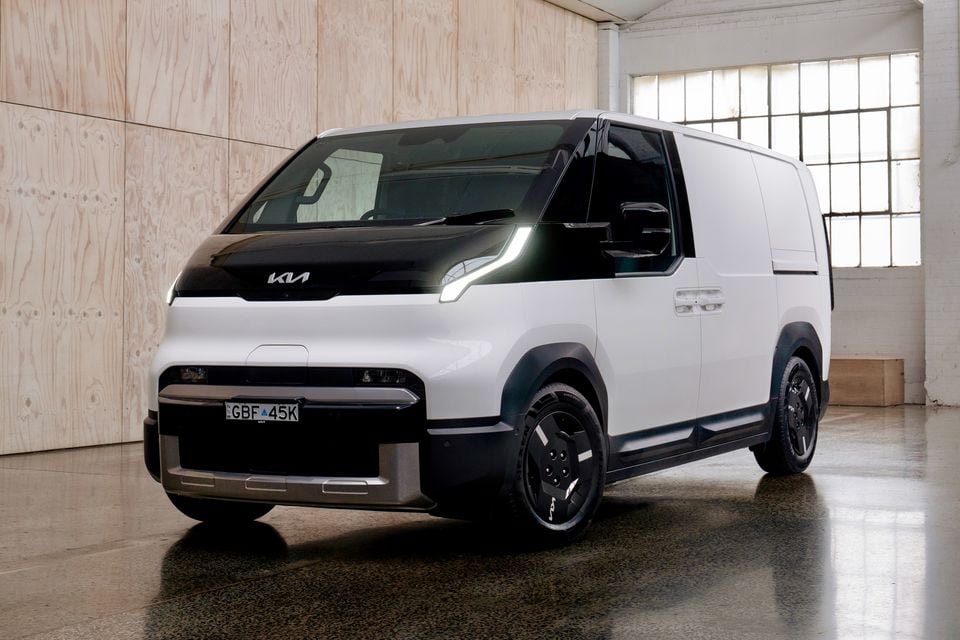
But for a different type of buyer, the PV5 Cargo is going to be a cracking choice.
It’s excellent to drive, has great driving range from a full charge, and all of the tech is on-point as well. The cabin is thoughtful and comfortable, and the cargo area could be ideal as a box van for urban runners.
CarExpert can save you thousands on a new Kia PV5 Cargo. Click here to get a great deal.
Click the images for the full gallery
If this is the car for you, we’ll compare offers from trusted dealers, handle the back and forth and manage your purchase from enquiry to delivery.
Matt has more than a decade of experience in automotive journalism, and loves exploring the pros and cons of new cars, delving into deep-dive industry stories, and going for a drive just for the fun of it.
Add CarExpert as a Preferred Source on Google so your search results prioritise writing by actual experts, not AI.
Damion Smy
6 Hours Ago


Marton Pettendy
8 Hours Ago

William Stopford
8 Hours Ago
William Stopford
11 Hours Ago
William Stopford
15 Hours Ago
William Stopford
16 Hours Ago
Add CarExpert as a Preferred Source on Google so your search results prioritise writing by actual experts, not AI.
# Based on VFACTS and EVC data
† Displayed prices exclude on-road costs such as delivery charges, registration fees, number plates, insurance and applicable road taxes. These prices are subject to change without notice and may not reflect current market pricing or dealer offers.
 Automotive Vehicle Spec Data & 4K images Powered by JATO Dynamics Ltd