




Damion Smy
2027 Ram 2500 Warlock review
The Hemi V8 makes a comeback to Australia after almost two years in the Ram 2500 Warlock, but is it a return to form or a backward step?
9 Hours Ago
Kia's big-small Cerato replacement finally has a more fashionable hatchback option, as well as a more efficient new petrol engine.

Senior Editor – Reviews
Senior Editor – Reviews
Senior Editor – Reviews
Senior Editor – Reviews
If this is the car for you, we’ll compare offers from trusted dealers, handle the back and forth and manage your purchase from enquiry to delivery.
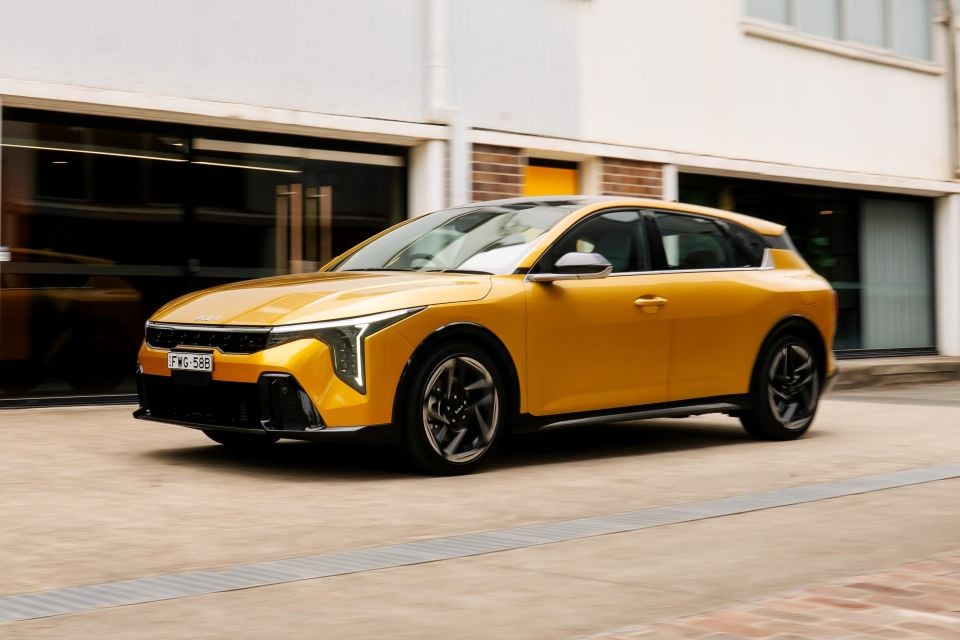
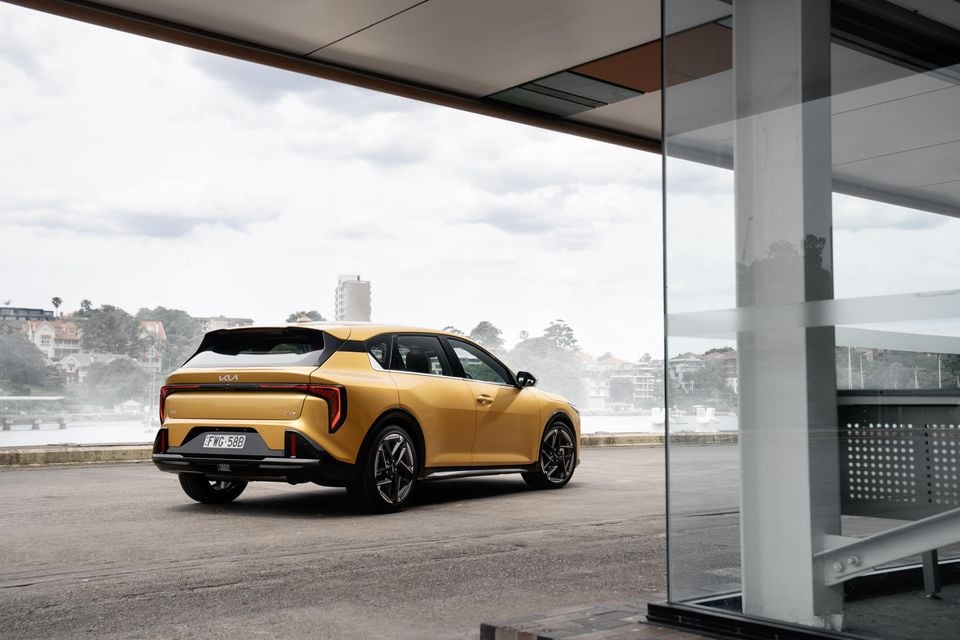
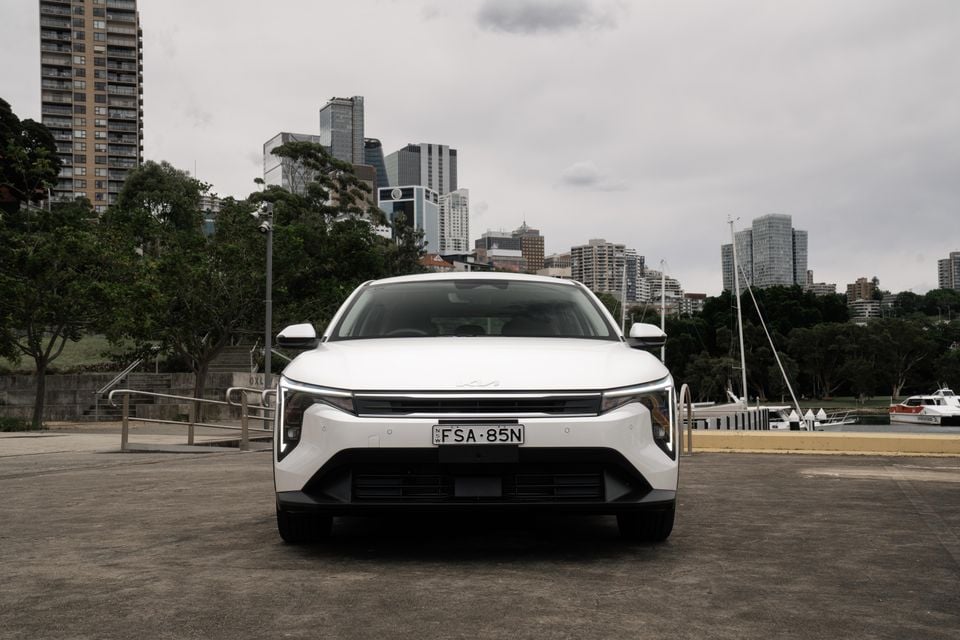
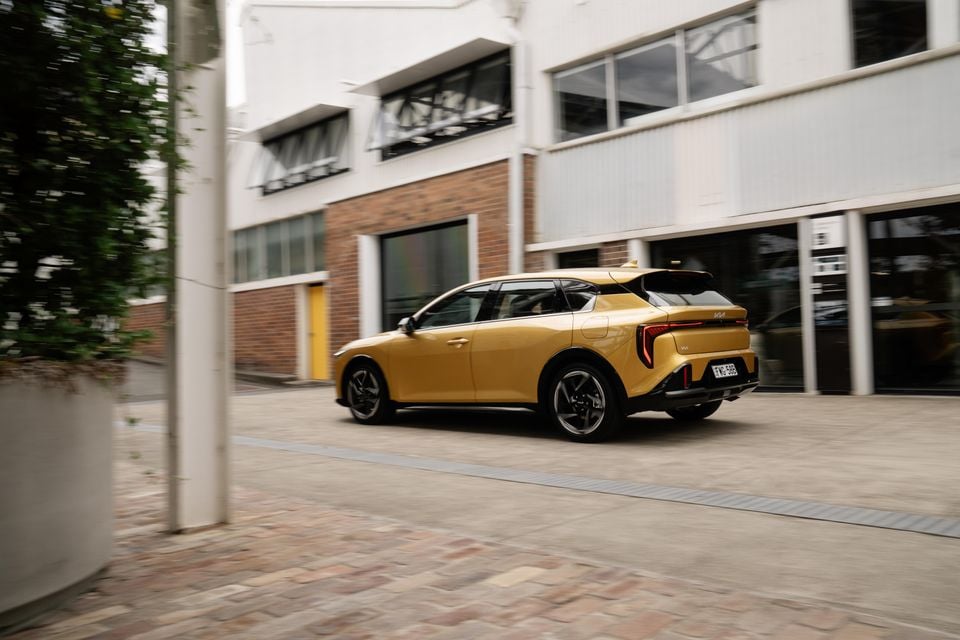
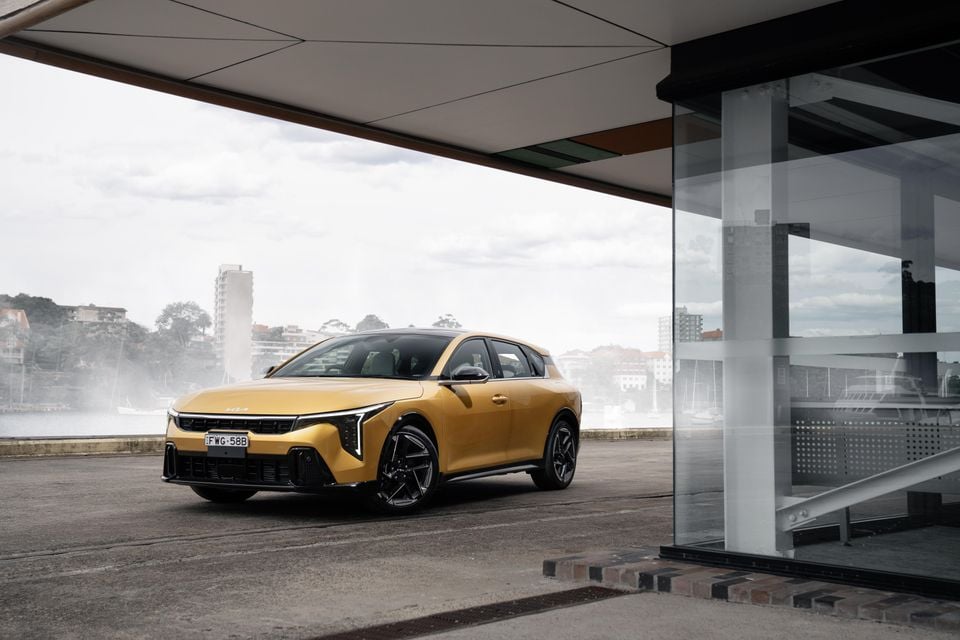
After almost a year of waiting, the Kia K4 Hatch is finally here.
In a market where a fifth door or tailgate is the overwhelming preference, the replacement for the popular Kia Cerato has been fighting against household names without the preferred small-car body style for quite some time now.
Still, the K4 Sedan has mustered nearly 6000 sales since January, when it was launched, to the end of November. And now the Korean brand believes the K4 hatchback – along with an updated engine for non-GT-Line variants – should help grow sales and become the firm favourite.
Other than a new booty, the K4 Hatch ushers in a revised base powertrain compared to the one seen from launch. The new Atkinson-cycle ‘Smartstream’ 2.0-litre four-cylinder petrol engine significantly reduces fuel consumption and emissions compared to the launch motor.
With increasing pressure from Australia’s recently-introduced New Vehicle Efficiency Standard (NVES), it’s a logical move that helps it meet regulations and reduce running costs for consumers – win-win, right?
That said, Kia is still unable to offer a hybrid option to compete with the top-selling Toyota Corolla. The brand’s local product boss says he’s “strongly requested” one, but it could still be up to 12 months away.
So is the new hatchback the pick of the K4 range? And does the new base engine and transmission combination make the lower grades more appealing? Read on to find out…
The K4 Hatch range is priced identically to the K4 Sedan, which has received minor price rises across the range.
| Model | Price before on-road costs | Drive-away pricing |
|---|---|---|
| 2026 Kia K4 S | $32,090 (+$1500) | $33,490 (+$500) |
| 2026 Kia K4 S with Safety Pack | $34,190 (+$1500) | $35,490 (+$500) |
| 2026 Kia K4 Sport | $36,690 (+$1500) | $38,490 (+$500) |
| 2026 Kia K4 Sport+ | $39,090 (+$1500) | $41,490 (+$500) |
| 2026 Kia K4 GT-Line | $43,790 (+$800) | $47,490 (+$500) |
While retail pricing has gone up by up to $1500 across the range, drive-away pricing is only up by $500. There are no spec changes, other than the more efficient new drivetrain.
The base K4 comes in just under the cheapest Mazda 3 (which is currently on offer from $33,990 drive-away as a hatchback or sedan), and undercuts the cheapest Toyota Corolla Hybrid by a few thousand dollars.
Kia’s sister brand Hyundai is about to axe the Euro-sourced i30 Hatch, which currently starts from $36,990 drive-away with a standard 48V mild-hybrid drivetrain, while the related i30 Sedan starts a little lower at $31,490 D/A.
To see how the Kia K4 lines up against the competition, check out our comparison tool
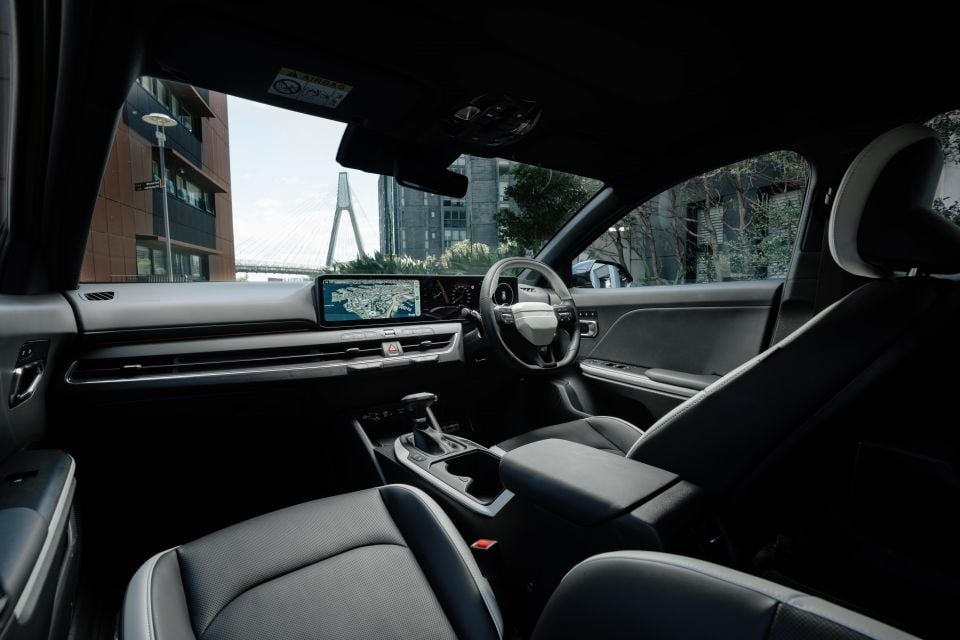
Truthfully, you won’t see any discernible interior difference between the K4 Hatch and K4 Sedan other than the boot.
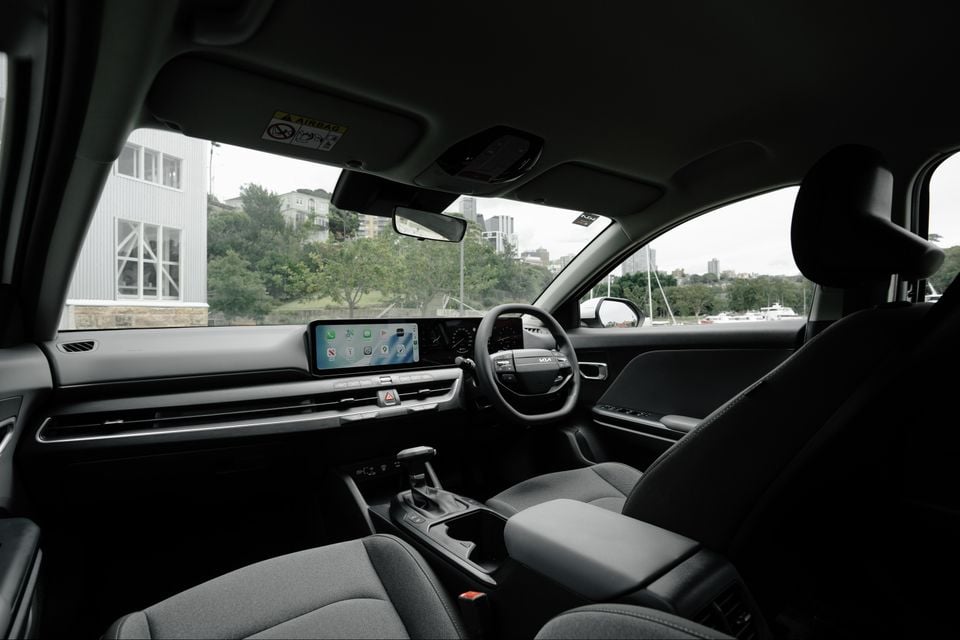
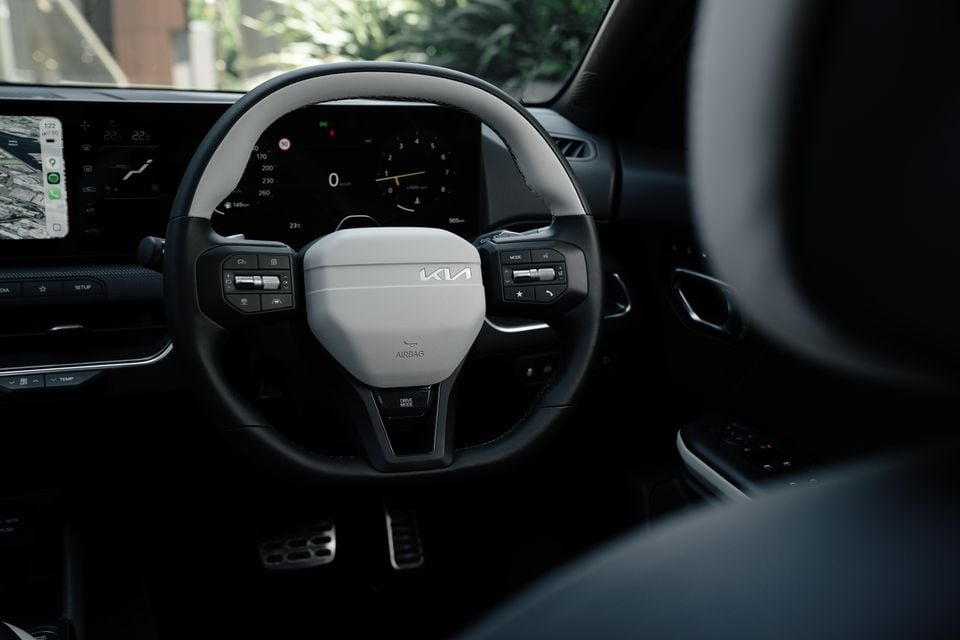
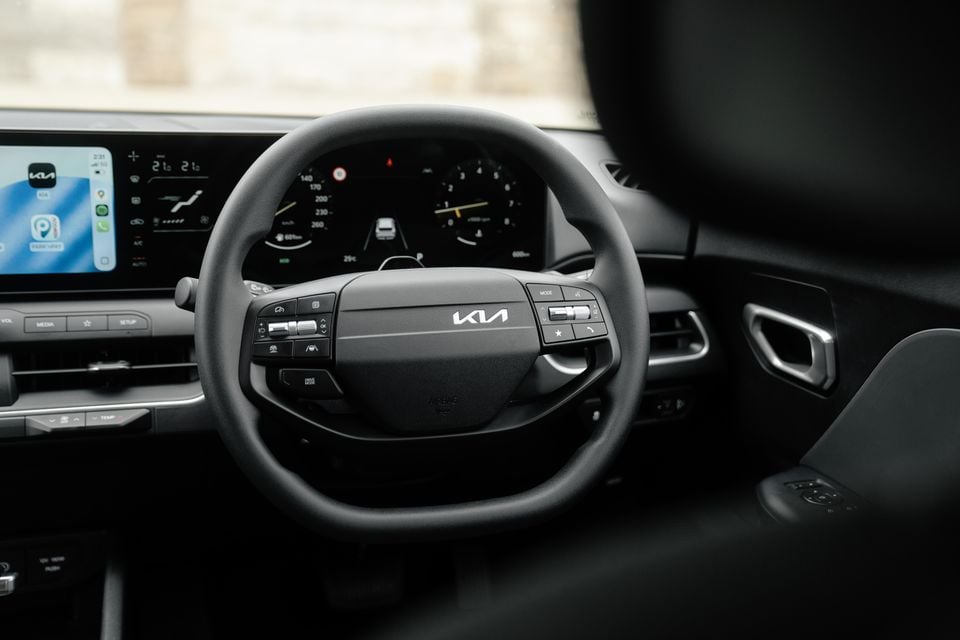
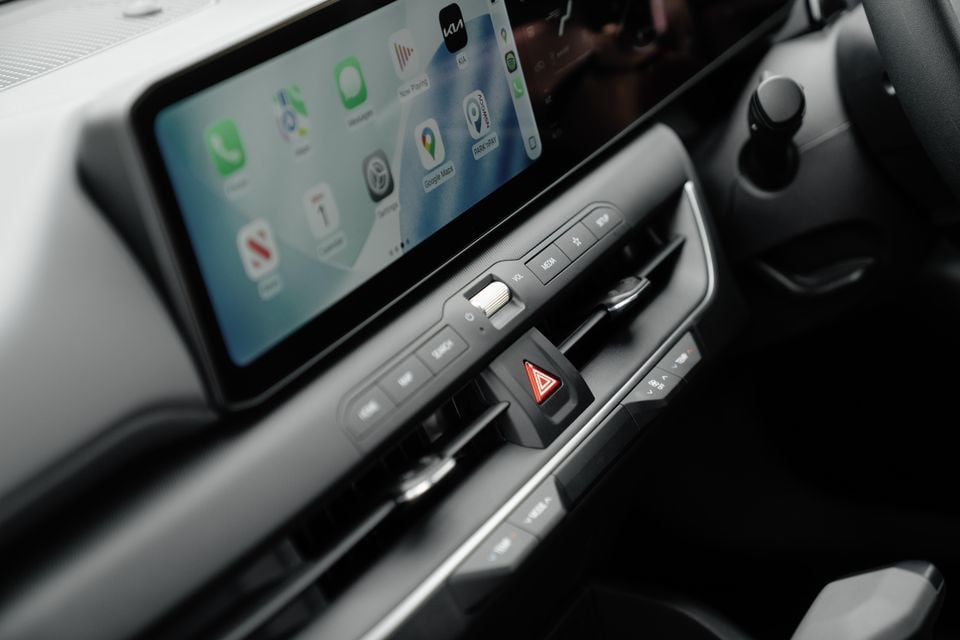
It’s pared back and minimalist in its design, maximising the perception of space. The tablet-style displays are nicked straight out of Kia’s more expensive models, as is the general layout of the switchgear.
Perceived build quality might depend on which version you’re in, as the base S and midrange Sport grades get hard plastics across the dashboard and doors, while the premium Sport+ and flagship GT-Line variants get padded surfaces.
Weirdly, only the top-shelf GT-Line gets ‘premium’ leather-effect steering wheel trim – c’mon Kia, why is this not standard across the range?
The cloth-trimmed seats of the entry variant are hardy and comfortable, while the leatherette trim with contrasting white elements in the GT-Line is supple and smooth, doing a good job at imitating the real thing. That said, this new K4 isn’t challenging a Mazda 3 for ambience.
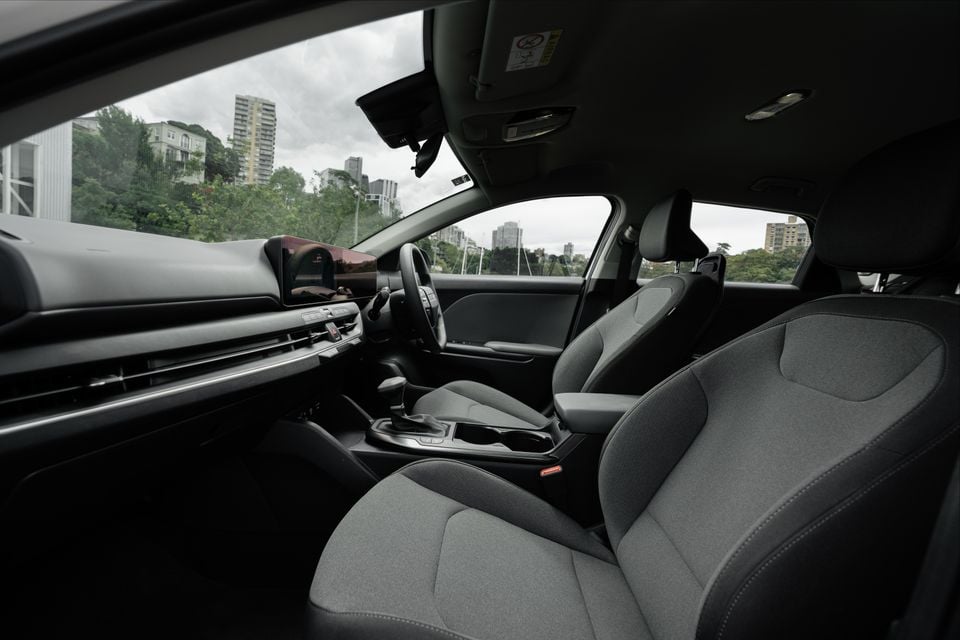
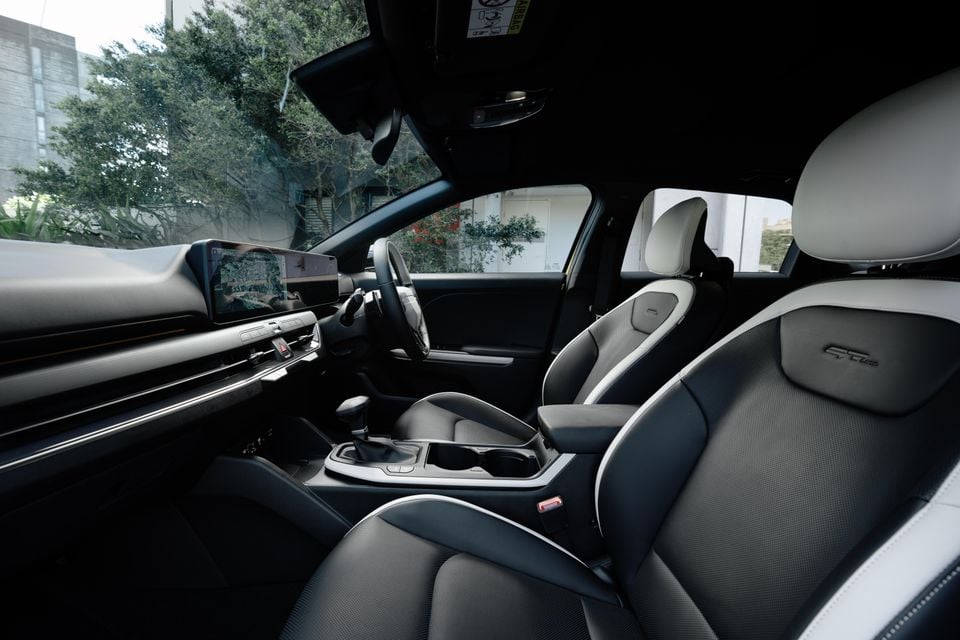
The top-spec GT-Line’s front pews are heated and ventilated, while the driver’s seat also receives eight ways of power adjustment and two-position memory – shame it’s reserved for the $47,000 flagship.
The open-plan style layout at the front of the cabin makes it feel airy and spacious, and there’s good outward visibility thanks to the generous glasshouse and big mirrors – though the thick rear pillars makes the standard blind-spot assist a welcome inclusion.
Storage is good thanks to the modular centre console with moving cupholders and the shelf under the centre stack housing a wireless phone charger in higher grades, meaning there are plenty of nooks and crannies to store your odds and ends in.
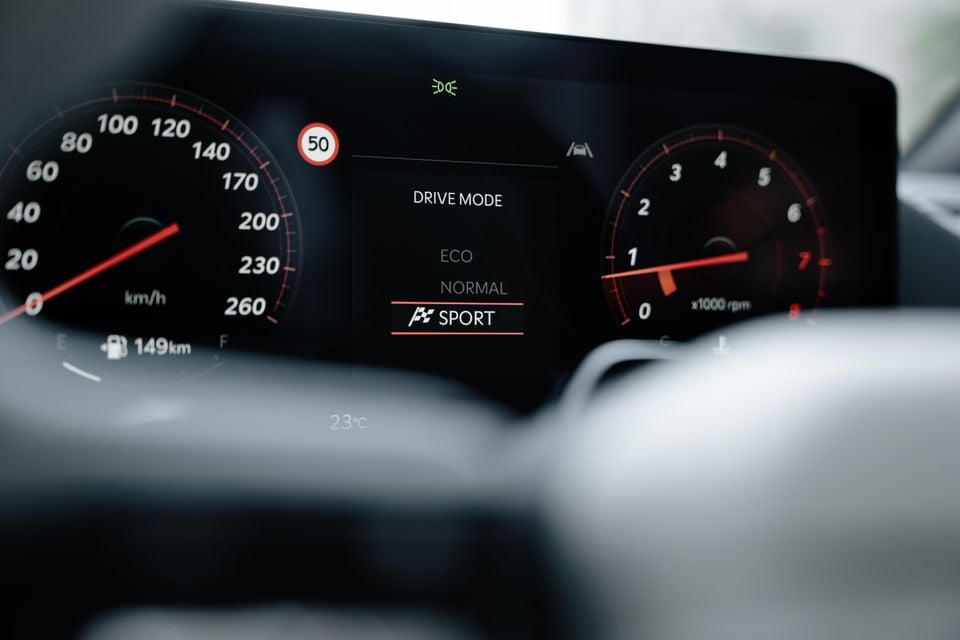
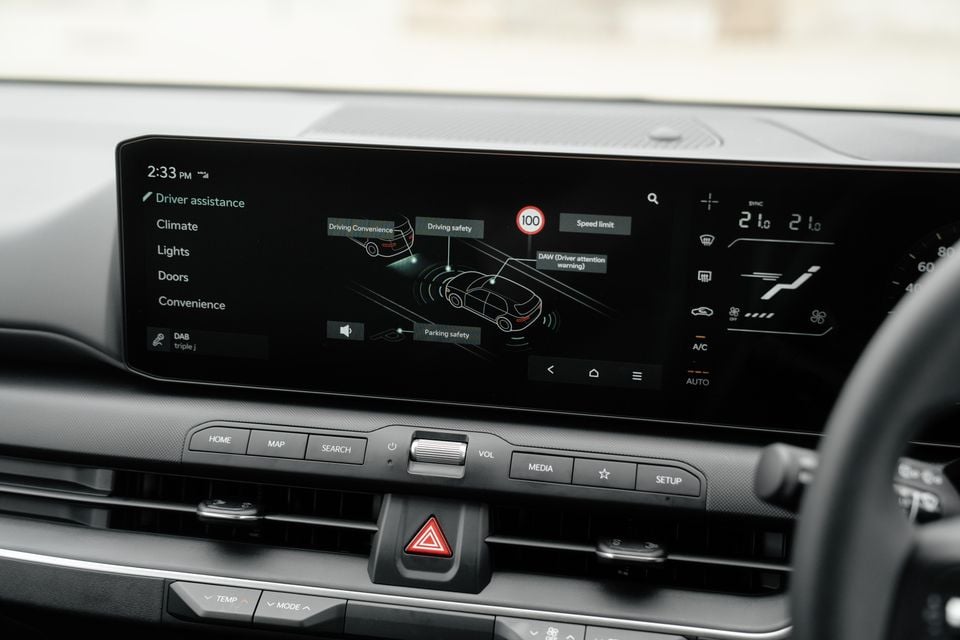
Kia has done well to fit the high-grade infotainment display as standard from base level, with the Safety Pack on the S adding the additional 12.3-inch digital instrument cluster and digitised climate control panel. Basically, you can have the brand’s flagship tech in its entry-level car.
The base grade misses out on native satellite navigation, but is otherwise decked out with wireless Apple CarPlay and Android Auto, DAB+ digital radio, and Kia Connect services. As you’d expect, it’s snappy and easy to use – especially at the entry level when you compare it to the at-times-underbaked interfaces of Chinese rivals.
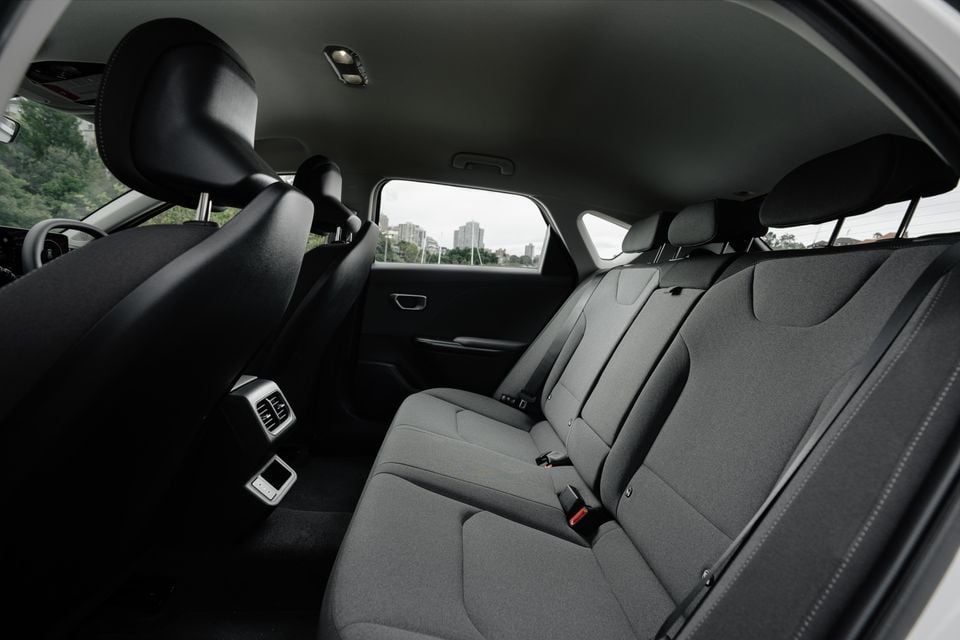
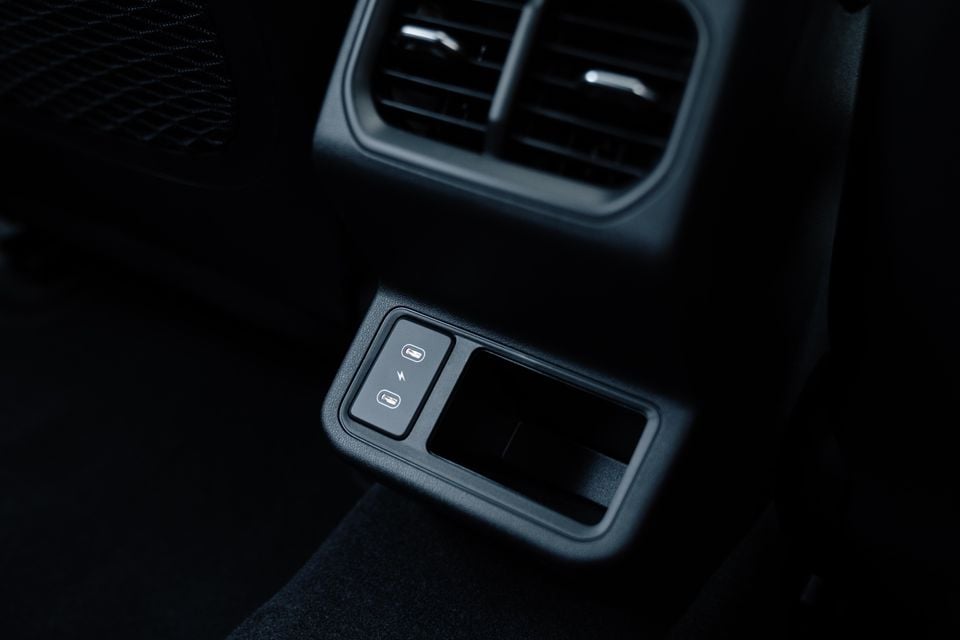
In the second row, there’s good leg and knee room for the segment, given the K4’s longer 2720mm wheelbase. The roofline isn’t as steeply raked as the K4 Sedan’s, which means better headroom for my 6’1″ frame.
The wide and flat bench means you can squeeze three across for short trips, and you have amenities like directional rear air vents and USB-C power outlets from base level.
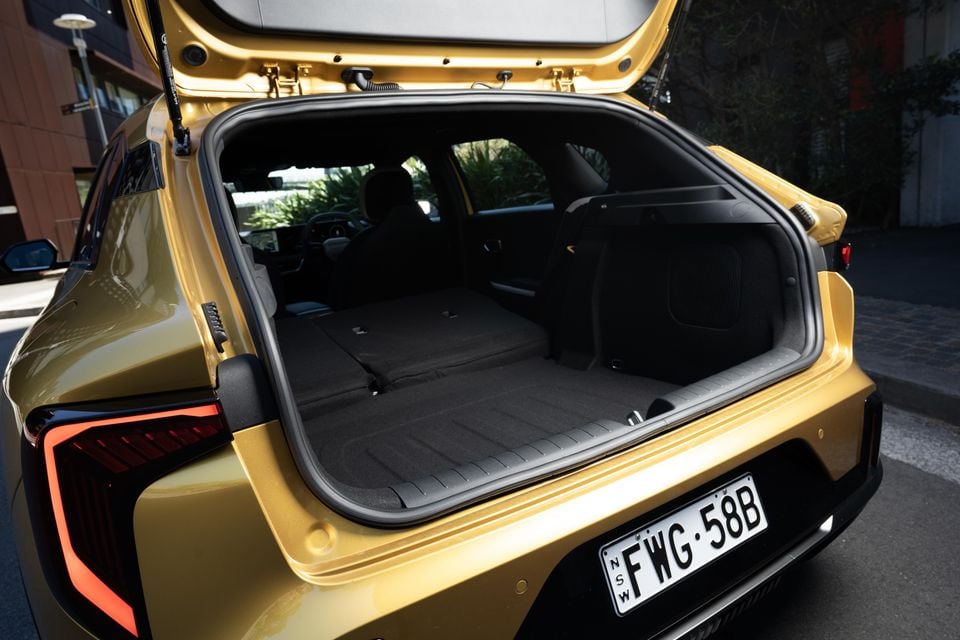
Adding to the rear amenities is a fold-down rear centre armrest with cupholders across the range, and you can also fold down the rear seats to open up the boot to stow longer items should you need.
Rounding out the spec sheet are ISOFIX child seat anchors on the outboard seats and top-tether points across all three rear chairs. Base grades don’t get map pockets on the front seat backs.
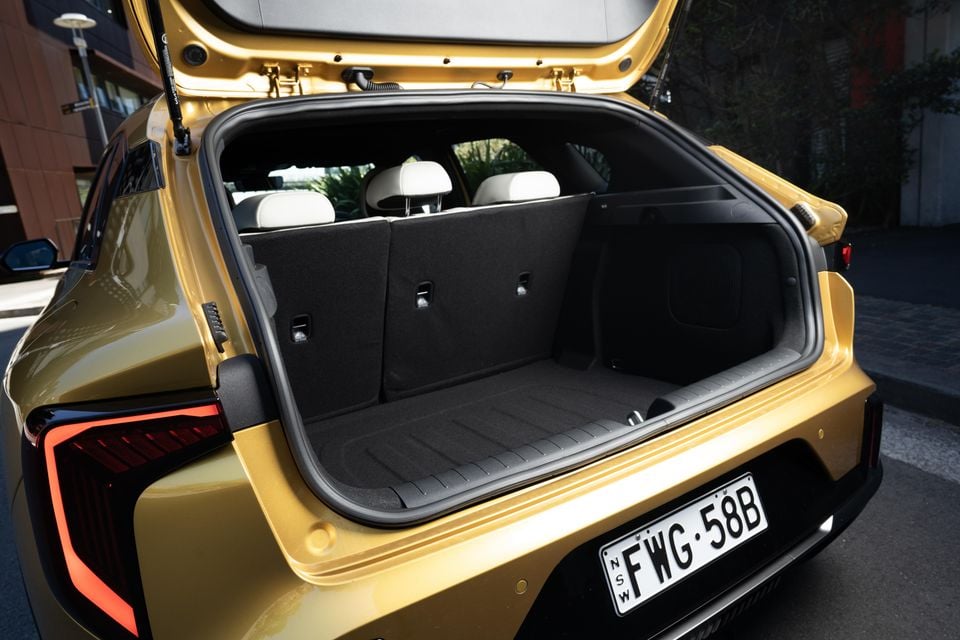
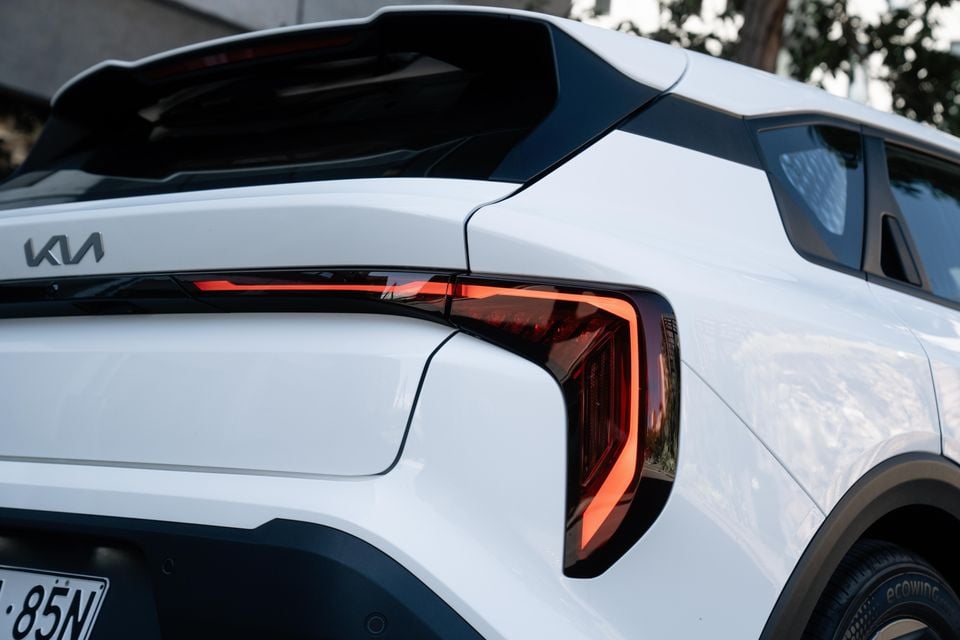
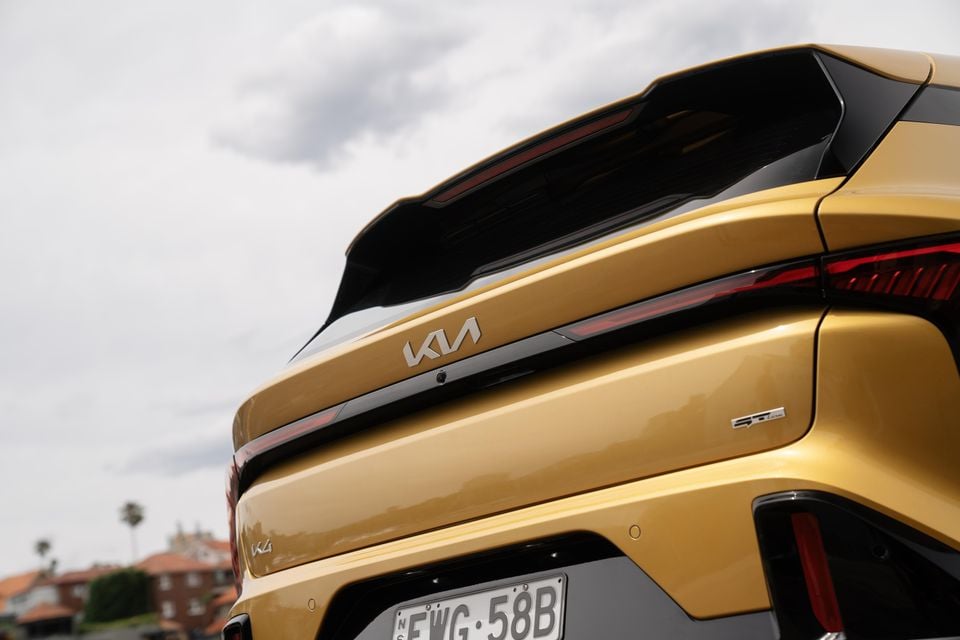
The biggest difference between body styles comes behind the rear axle, where some 270mm has been chopped off the rear overhang. As a result, the K4 Hatch quotes 70 litres less cargo volume at 438L, but has a more practical tailgate and betters the old Cerato Hatch by 10L.
| Dimensions | K4 Hatch | K4 Sedan |
|---|---|---|
| Length | 4440mm | 4710mm |
| Width | 1850mm | 1850mm |
| Height | 1435mm | 1425mm |
| Wheelbase | 2720mm | 2720mm |
| Cargo capacity (VDA) | 438L | 508L |
To see how the Kia K4 lines up against the competition, check out our comparison tool
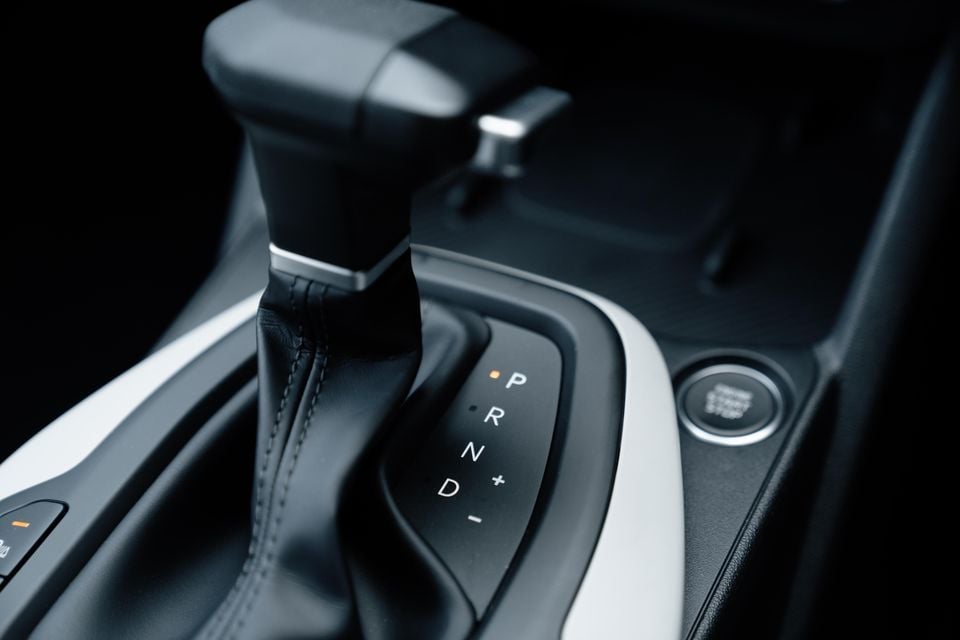
The key change for MY26 is the new ‘Smartstream’ 2.0-litre petrol engine running the Atkinson cycle, mated to a new ‘Intelligent Variable Transmission’ – which is Hyundai-Kia-speak for CVT.
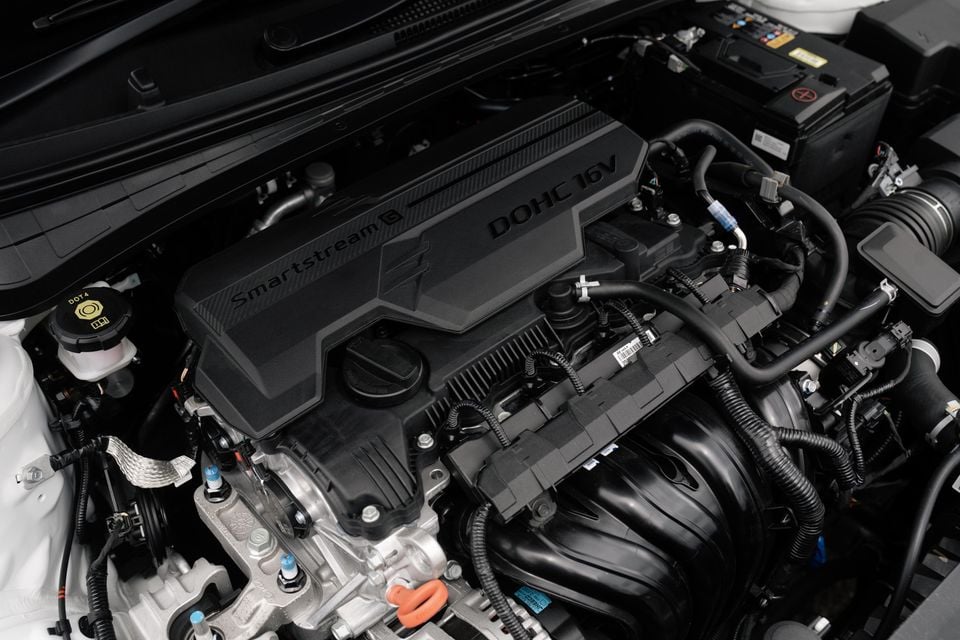
| Specifications | Kia K4 2.0 MPI | Kia K4 1.6 T-GDI |
|---|---|---|
| Engine | 2.0L 4cyl petrol | 1.6L 4cyl turbo-petrol |
| Power | 110kW @ 6200rpm | 142kW @ 6000rpm |
| Torque | 180Nm @ 4500rpm | 265Nm @ 1700-4500rpm |
| Transmission | CVT | 8-speed auto |
| Drive type | Front-wheel drive | Front-wheel drive |
| Tare weight | 1374kg – Sedan 1388kg – Hatch | 1433kg – Sedan 1453kg – Hatch |
| Fuel economy (claimed) | 6.0L/100km – Sedan 6.1L/100km – Hatch | 6.7L/100km – Sedan 7.4L/100km – Hatch |
| Fuel economy (as tested) | 6.9-7.1L/100km | – |
| Fuel tank capacity | 47L | 47L |
| Fuel requirement | 91-octane regular unleaded | 91-octane regular unleaded |
| CO2 emissions | 139g/km – Sedan 143g/km – Hatch | 158g/km – Sedan 169g/km – Hatch |
| Emissions standard | Euro 5 | Euro 5 |
| Braked towing capacity | 1100kg | 1100kg |
| Unbraked towing capacity | 610kg | 610kg |
Compared to the MY25 model’s 2.0-litre MPI engine without Smartstream branding, the new mill claims to use 1.4L/100km less while emitting 28g/km less CO2 – pretty substantial.
However, the new engine is also 2kW/12Nm down on the old one, though the CVT automatic definitely goes a long way to mask any on-paper power deficiencies as I’ll detail in the next section.
To see how the Kia K4 lines up against the competition, check out our comparison tool
As there have been no changes to the driveline of the turbocharged GT-Line, I opted to focus on the core grades with the new atmo petrol engine, given I attended the launch of the K4 Sedan with the old motor.
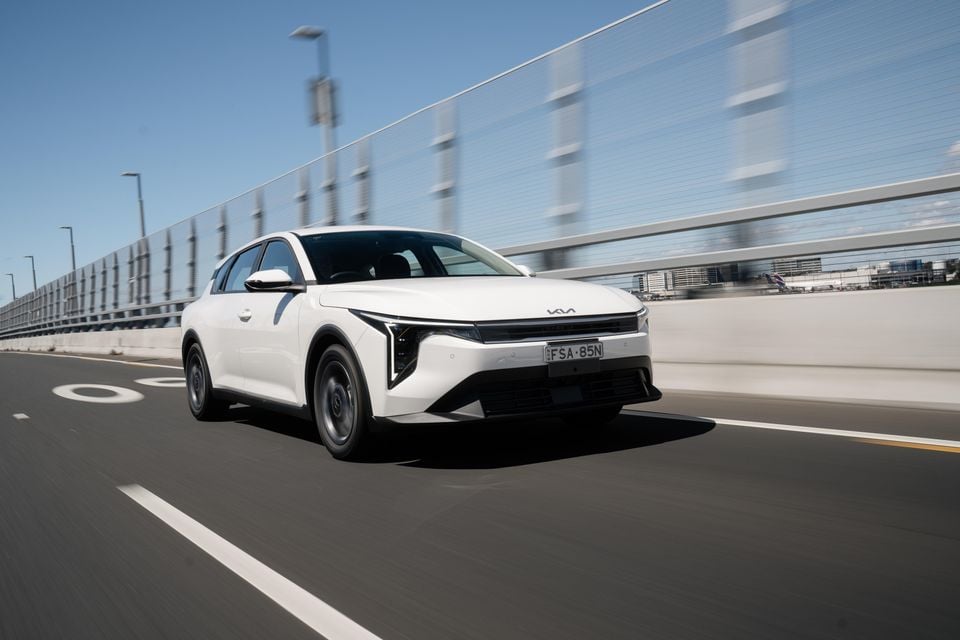
My main drive leg was behind the wheel of an S with Safety Pack from outer Sydney to Gosford, followed by a transit leg directly back to Kia’s headquarters in Macquarie Park.
Kia ensured we had a mix of road types and driving environments, including 110km/h freeway, winding B-roads, and suburban-style local streets.
Pretty much from the get-go, the updated drivetrain gets my vote over the old one. Don’t let the whole ‘CVT’ thing get your nose out of joint, as this new Atkinson-cycle engine and ‘IVT’ combo is better than the old one in every way.
Response to throttle inputs is much sharper and less laboured, and the CVT simulates ‘shifts’ convincingly and rarely lets revs flare like traditional CVTs, meaning it keeps the engine on the boil when you need it and quickly settles into a muted cruise once you let off.
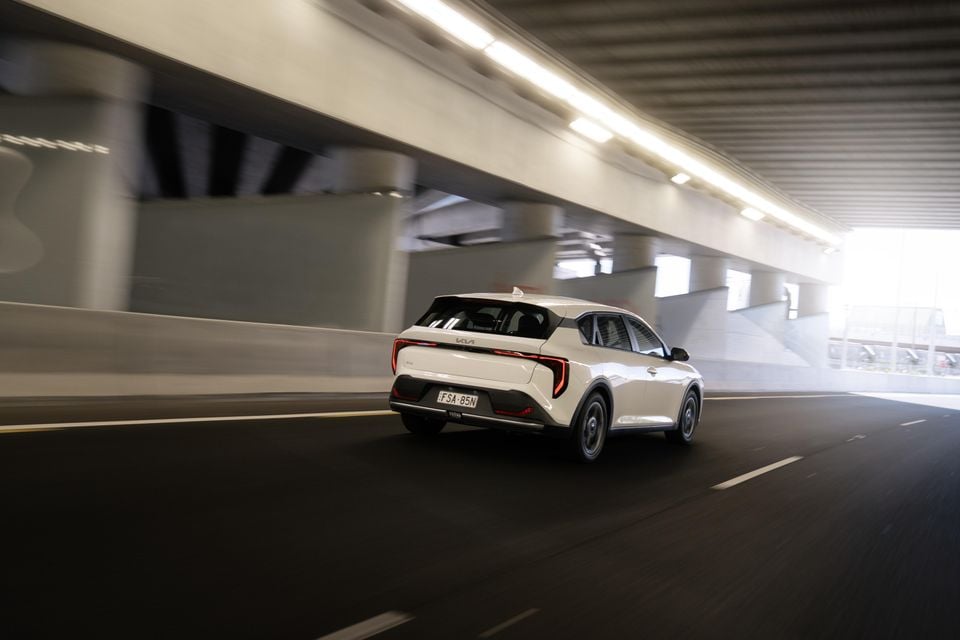
Where the old engine and six-speed slush-box would often feel slow, dopey and slurry, even in what many would consider normal driving, the new engine and transmission combination is a far better match.
Efficiency also makes gains here. We were able to manage an indicated readout of under 7.0L/100km in mixed conditions including plenty of uphill driving and spirited stints on the Old Pacific Highway, which isn’t too bad.
I also found this engine to be less vocal in the cabin, both under acceleration and at a cruise. Road noise wasn’t all that bad for the class on the chubby 205/55 R16 Kumho economy tyres of the S, while the Sport’s 17-inch wheel and tyre package was a little more shouty on patchy NSW highways.
The K4 Hatch remains a sweet handler too, courtesy of its local ride and handling tune. It feels pretty much the same as its sedan twin, with the exception of the shorter rear overhang making it feel a little tighter at the back.
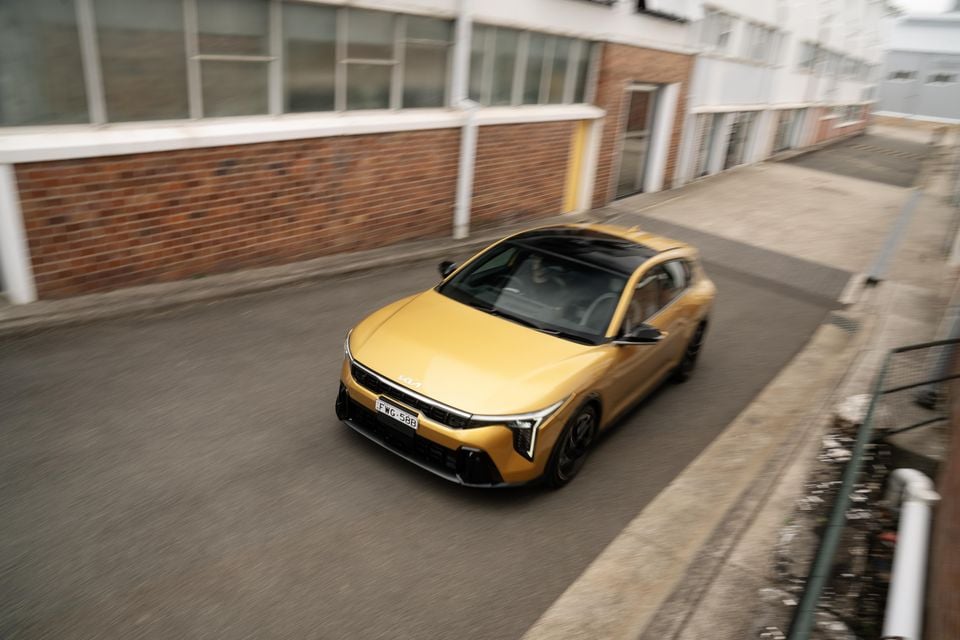
At the launch of the K4 Sedan, Kia’s local development team said it tried to strike a more neutral balance with the K4 rather than the sportier calibrations of some of its previous efforts, and so it benchmarked the latest Honda Civic e:HEV and Volkswagen Golf R-Line.
It’s all the better for it, and it’s reflected in the seemingly identical tuning of the K4 Hatch. The steering is fluid and accurate, the body control tight, and the road holding confident. Most owners will probably never push the K4 all that hard, but they should feel connected and in control during all of the daily driving scenarios they’ll drive it in.
You can heighten the experience somewhat with the configurable drive modes, namely Sport rather than Eco. The throttle sharpens, the CVT holds revs a little higher, and the steering weight firms up, but at the end of the day this isn’t a hot hatch.
If you’re not fussed by the lack of a hybrid option (yet), which could potentially halve fuel use and offer more torque off the line, the standard drivetrain does the job and is more competitive with the K4’s rivals than the old one.
Kia’s driver assistance systems generally perform quite well, save for the bingy-bongy audible warning which can quickly be turned off by long-pressing the mute button on the steering wheel – though this needs to be done each time you start the car.
Standard adaptive cruise control, blind-spot assist and Lane Following Assist (centring) all work well in real-life scenarios, while the Highway Driving Assist program fitted to Sport variants and up offers clever semi-autonomous driving capability with the option for assisted lane changes. The latter function is a tad slow, though.
Sadly, Kia Australia is yet to add the helpful Blind Spot View Monitor side cameras or a surround parking camera system to the K4, even in the GT-Line, despite being available in overseas markets.
To see how the Kia K4 lines up against the competition, check out our comparison tool
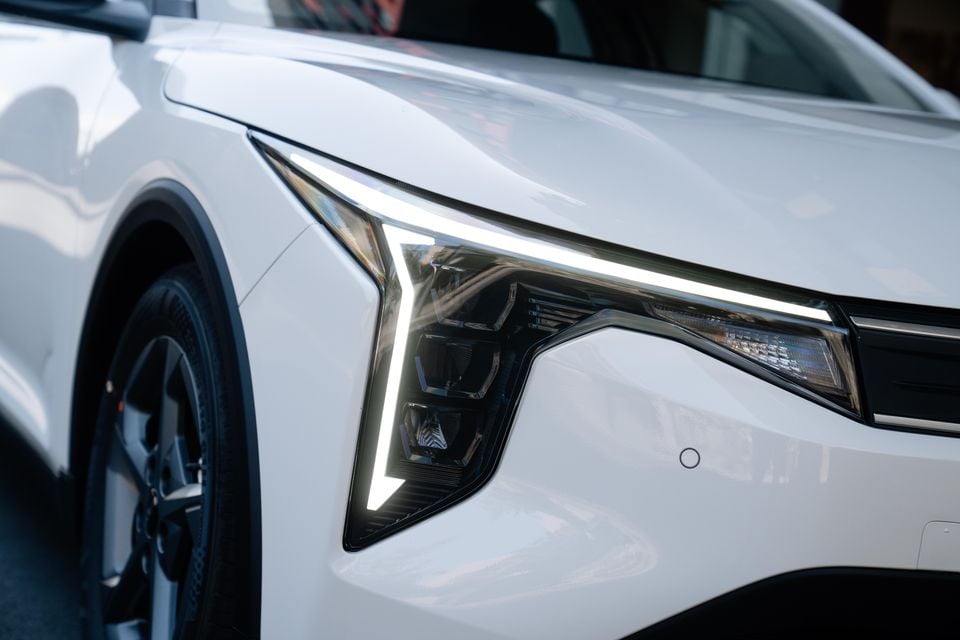
The K4 Hatch range mirrors that of the K4 Sedan – with S, S with Safety Pack, Sport, Sport+ and GT-Line trim levels.
If this is the car for you, we’ll compare offers from trusted dealers, handle the back and forth and manage your purchase from enquiry to delivery.
2026 Kia K4 S equipment highlights:
K4 S with Safety Pack adds:
K4 Sport adds:
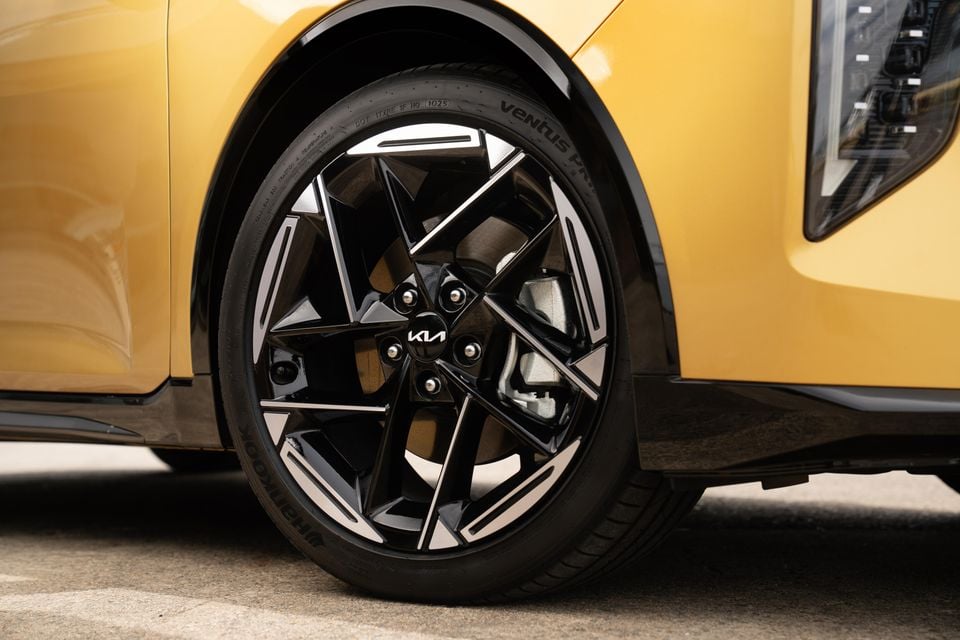
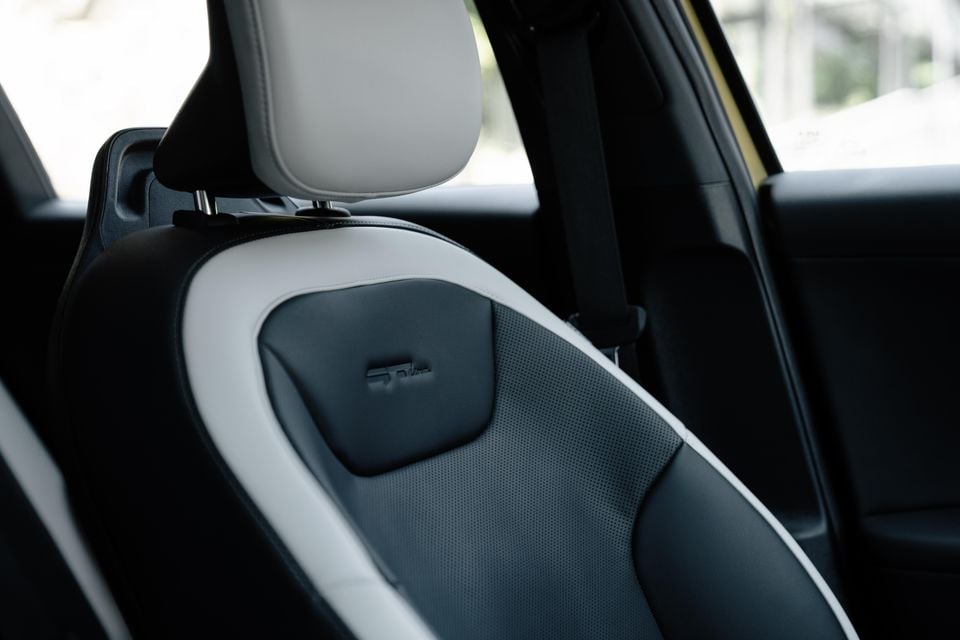
K4 Sport+ adds:
K4 GT-Line adds:
To see how the Kia K4 lines up against the competition, check out our comparison tool
The K4 Hatch carries over the K4 Sedan’s split ANCAP safety rating, in which the base S gets four stars and the rest of the range wears a five-star rating.
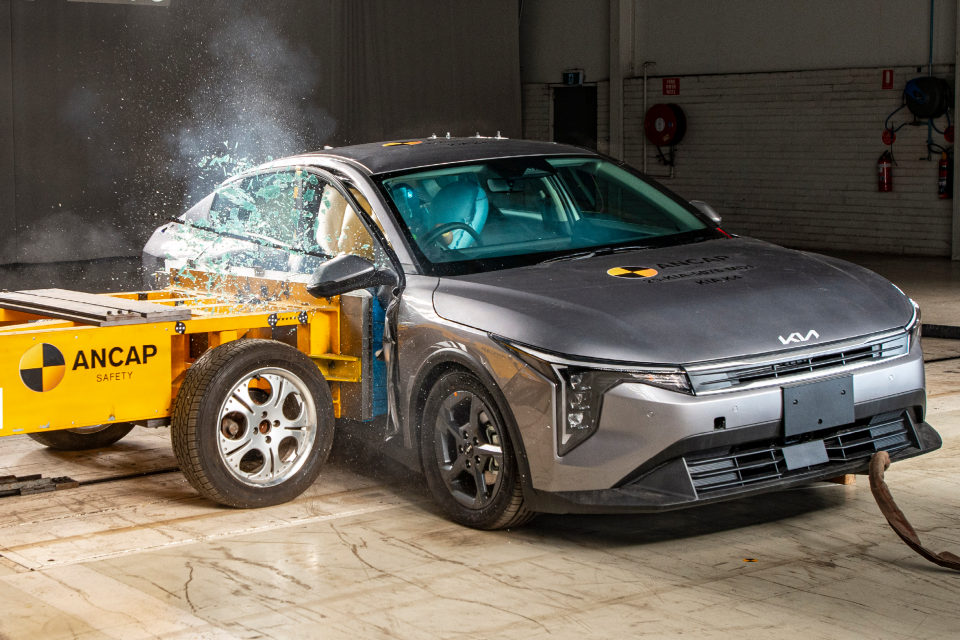
| Category | Kia K4 S (without Safety Pack) | Kia K4 (all others) |
|---|---|---|
| Adult occupant protection | 83 per cent | 83 per cent |
| Child occupant protection | 80 per cent | 80 per cent |
| Vulnerable road user protection | 73 per cent | 77 per cent |
| Safety assist | 64 per cent | 77 per cent |
Standard safety equipment includes:
Safety Pack (K4 S) adds:
K4 Sport adds:
To see how the Kia K4 lines up against the competition, check out our comparison tool
The K4 range is covered by Kia Australia’s seven-year, unlimited-kilometre warranty. Seven years of capped-price servicing and up to eight years of roadside assistance is also included.
| Servicing and Warranty | Kia K4 |
|---|---|
| Warranty | 7 years, unlimited kilometres |
| Roadside assistance | Up to 8 years |
| Service intervals | 12 months or 15,000 kilometres – 2.0 MPI 12 months or 10,000 kilometres – 1.6 T-GDI |
| Capped-price servicing | Up to 7 years |
| Total capped-price service cost | $3407 – 2.0 MPI (7yrs) $3877 – 1.6 T-GDI (7yrs) |
One thing I have to knock Kia for is the K4’s service pricing, which while extensive in coverage can get pricey for individual visits – the fourth and sixth services for both engines cost $650-plus and about $700, respectively.
Likewise, the shorter 10,000km intervals of the turbocharged GT-Line will be a sore point for those who are looking for extra performance but also do more mileage.
To see how the Kia K4 lines up against the competition, check out our comparison tool
The hatch-backed Kia K4 doesn’t really rewrite the rulebook on small cars, but it should broaden the new nameplate’s appeal against household favourites.
It’s relatively cheap to buy, the new base engine is cheaper to run (save for some exxy service bills down the track), and the base levels of safety and infotainment tech are actually quite good.
Like the sedan, however, there’s nothing particularly groundbreaking about its on-road performance, and even the new engine doesn’t do all that much to move the game when the likes of the Corolla and i30 Sedan offer hybrid drivetrains that will effectively cut your fuel use in half.
Then there’s the odd spec omission, such as the reservation of a leather-clad steering wheel for only the GT-Line, and the fact that the surround camera and Blind Spot View Monitor features available in other markets still aren’t offered locally despite the price rises.
Regardless, the K4 feels like a newer and more sophisticated car than the aforementioned i30 Sedan with which it shares its platform, and that sweet locally tuned ride/handling balance is cause for praise, too.
As was my conclusion with the K4 Sedan, the S with Safety Pack represents the sharpest value. If you want something that looks a little jazzier, the Sport with its bigger wheels and semi-autonomous highway mode perhaps strikes the best balance.
I may have advised you to wait for the hybrid at the sedan’s launch but, given it could still be another 12 months away, I’d say the base car with Safety Pack is a pretty sharp buy if you want a cheap and practical ‘not-so’ small car.
CarExpert can save you thousands on a new Kia K4. Click here to get a great deal.
Click the images for the full gallery
If this is the car for you, we’ll compare offers from trusted dealers, handle the back and forth and manage your purchase from enquiry to delivery.
Quickly see how this car stacks up against its competition. Select any benchmark to see more details.
Kia K4
Kia K4 Sales rolling 12-months#
*Based on VFACTS and EVC data
Looking for complete Kia K4 price history?
Our Kia K4 Pricing Page shows exactly how prices have changed over time.
2026
$35,874
2026
$38,037
2026
$40,612
2026
$43,084
2026
$47,925
James Wong is an automotive journalist and former PR consultant, recognised among Australia’s most prolific motoring writers.
Add CarExpert as a Preferred Source on Google so your search results prioritise writing by actual experts, not AI.
Damion Smy
9 Hours Ago

William Stopford
10 Hours Ago
William Stopford
12 Hours Ago
James Wong
12 Hours Ago

Ben Zachariah
14 Hours Ago
William Stopford
15 Hours Ago
Add CarExpert as a Preferred Source on Google so your search results prioritise writing by actual experts, not AI.
# Based on VFACTS and EVC data
† Displayed prices are based on the drive-away price of the vehicle, which includes delivery charges, registration fees, number plates, and applicable road taxes, based on a Sydney location. However, prices may vary between states and territories, and additional costs such as compulsory third party (CTP) insurance, dealer delivery fees, and optional extras are not included. These prices are subject to change without notice and may not reflect current market pricing or dealer offers.
 Automotive Vehicle Spec Data & 4K images Powered by JATO Dynamics Ltd