





Damion Smy
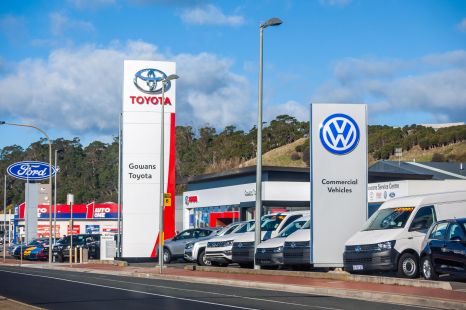
A decade on: Our favourite Australian-made Fords
Ten years to the day since Australia's final Ford factory closed, we reminisce with our favourite locally made models.
8 Minutes Ago
Jeep’s chunky new Compass at last gets a proper four-wheel drive variant, and this one only comes with batteries.
If this is the car for you, we’ll compare offers from trusted dealers, handle the back and forth and manage your purchase from enquiry to delivery.
Jeep’s last Compass represented a big leap forward over its predecessor – it was a nice small SUV when it was first launched, but it aged quickly amid a sea of rivals and stuck around for too long.
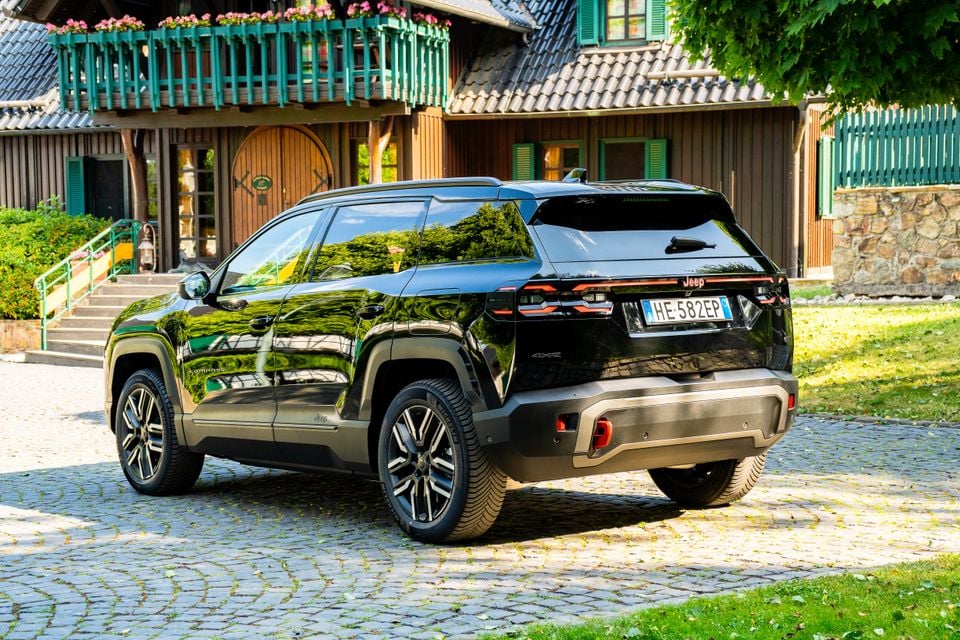
Released in late 2025, the new third-generation Compass combines a properly upright and square-edged Jeep design with relatively easy-going underpinnings shared with the Peugeot 3008 and 5008.
The front-wheel drive electric and hybrid variants are pleasant enough, but there is an obvious gap in the lineup, a space that needed to be filled with a properly rugged, off-road capable all-wheel drive version.
Well, that space has now been filled – at least in overseas markets – by the 2026 Jeep Compass 4xe with its twin-motor, all-wheel drive powertrain, long range (well, claimed anyway), and taller ride height. Does it feel like a proper Jeep once the tarmac runs out?
The previous Compass has now been discontinued in Australia and Jeep Australia is yet to confirm whether it will import the new model, let alone make available the new 4xe electric vehicle (EV) we're reviewing here.
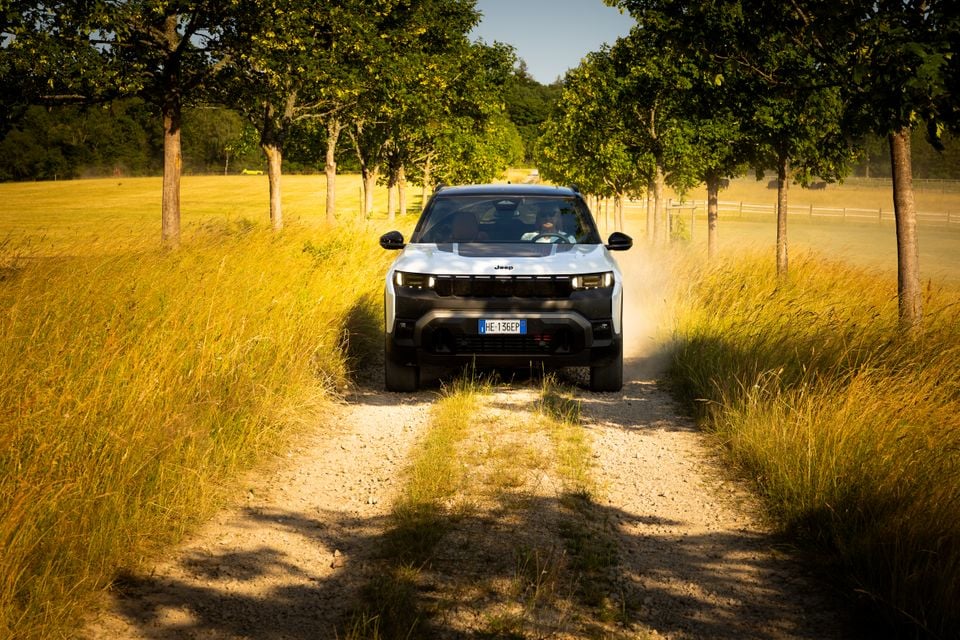
Front-wheel drive versions of the previous Compass topped the $60,000 mark in high-spec form so, given the 4xe is the flagship of the new lineup, we'd expect a price tag starting with a '7' if the range-topping new EV comes to Australia.
To see how the Jeep Compass lines up against the competition, check out our comparison tool
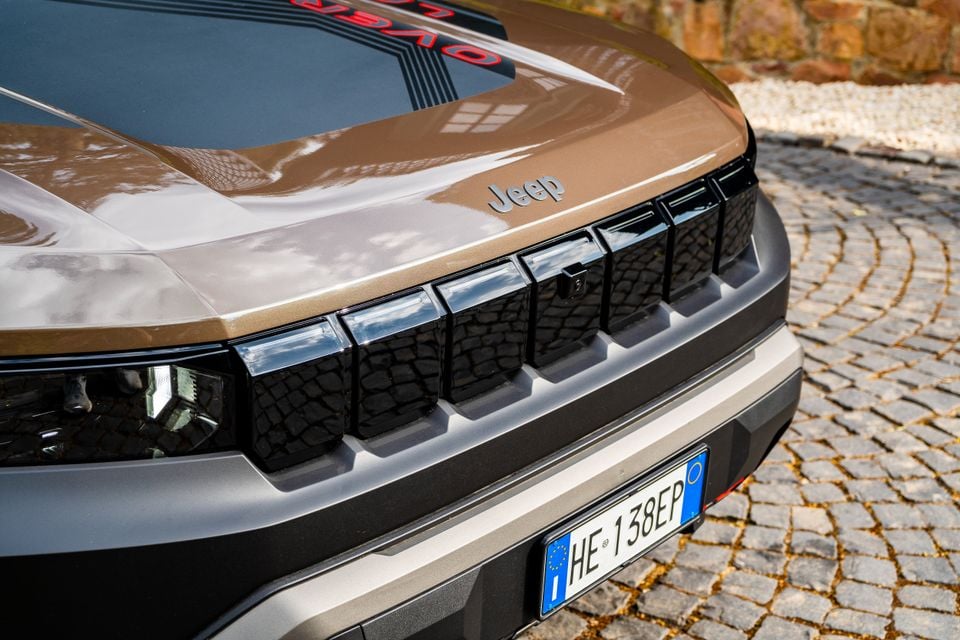
The standard Compass interior is a bit on the dour side, with lots of dark plastics and not much in the way of visual enticement.
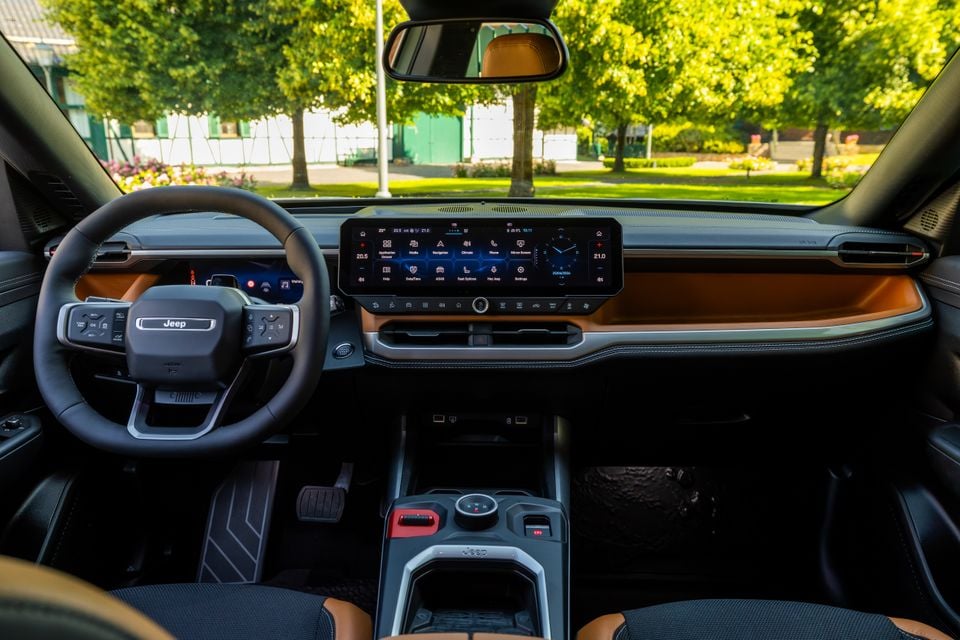
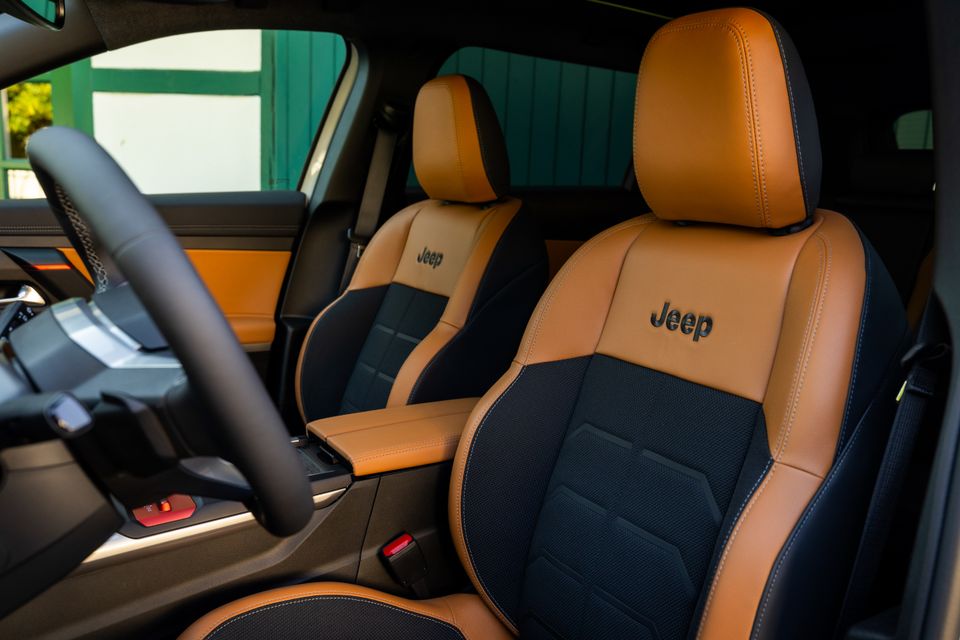
Functional, sure, but not very welcoming. The 4xe does somewhat better thanks to tan-coloured inserts for the seat trim, dashboard, and armrests that really give the cabin a visual lift. It’s not night-and-day better, but it is better.
The 4xe also gets harder-wearing cloth centres on its seats, which is said to be twice as wear-resistant as the standard seat fabric.
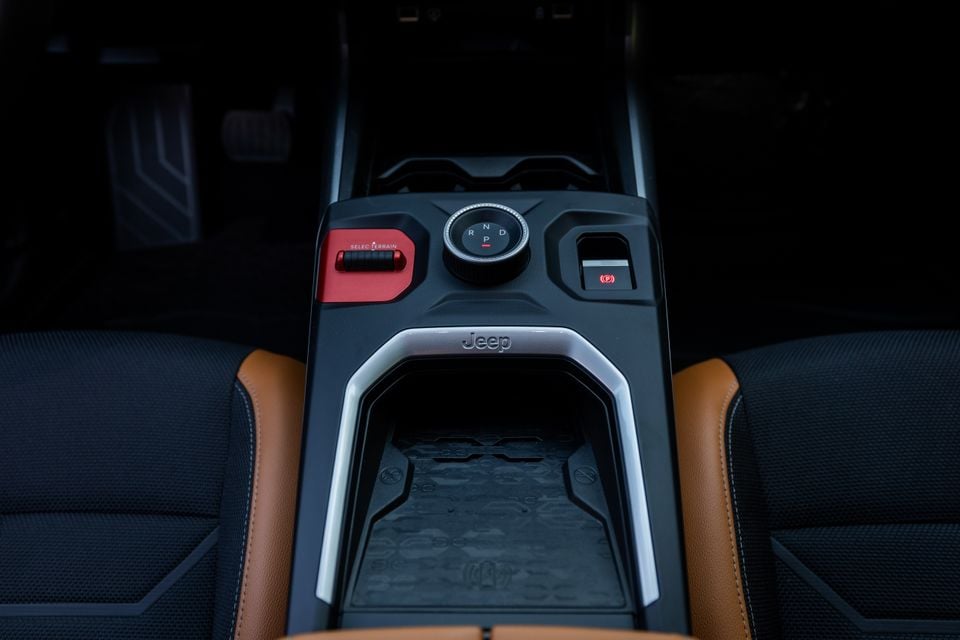
As is fast becoming a new Jeep hallmark, the Selec-Terrain switch – a chunky rubberised button that allows you to choose between various driving modes – is highlighted in bright red, while the square-centred steering wheel (which itself is squared-off at the top and bottom) reminds us more of the pricier Grand Cherokee than the smaller and more affordable Avenger.
Up front, you’ll find those rugged seats very comfortable, and the driving position good, with decent all-round visibility, although the big windscreen pillars do impede visibility.
The big infotainment touchscreen in the centre of the dash is quite shallow, so it doesn’t dominate the cabin in the way the screens of some rivals do. The on-screen menus are reasonably well-organised, although it’s still too easy to get lost in there looking for a particular function.
There are some physical shortcut buttons at the base of the screen, which are helpful, and while the cabin temperature controls are on the screen, at least they’re ‘always-on’ so you never need to go looking for them.
The driver’s digital instrument panel is standard Stellantis fare – clear, but unmemorable, and is buried a bit low in the dashboard. The head-up display, projected onto the windscreen, is definitely a help here.
Space in the back of the Compass is, despite Jeep’s claim to be a brand focused heavily on practicality, not especially generous. There’s enough room for taller passengers, but the floor is quite high so they may not be fully comfortable on long journeys.
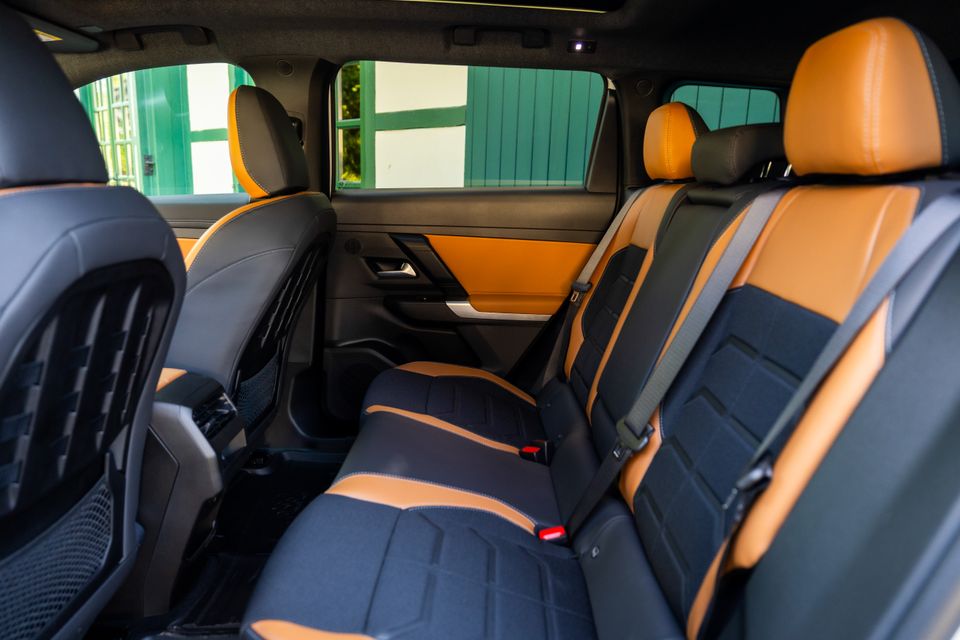
Headroom is okay, but legroom is average. There are some neat touches, though. As standard in the 4xe, the backs of the front seats get a heavy-duty protection panel to prevent kids and pets scuffing everything up, and that panel includes fabric loops so you can add D-rings and carabiner clips to dangle drinks bottles, torches and the like.
There are also small storage nets, and a foldaway armrest with cupholders, plus a shallow storage tray. The outer rear seats are comfy, but the centre rear is on the narrow side, so it’s not quite fully family-friendly.
Speaking of which, the Compass’ cargo area is reasonably spacious – 550 litres up to the rigid luggage cover – but while there is an adjustable floor and some under-floor storage space, there’s a lack of hooks or clips in the boot for securing anything loose.
Fold down the 40:20:40-split rear seatbacks and there’s more than 1600 litres of total cargo space.
To see how the Jeep Compass lines up against the competition, check out our comparison tool
The Compass 4xe has a dual electric motor setup, with individual drive for the front and rear axles, and power coming from a 96kWh nickel cobalt manganese (NMC) battery.
| Specifications | Jeep Compass 4xe |
|---|---|
| Drivetrain | Dual-motor electric |
| Battery | 96.1kWh lithium-ion |
| Power | 275kW |
| Torque | 345Nm – Front232Nm – Rear |
| Driven wheels | All |
| 0-100km/h – claimed | 5.4 seconds |
| Energy consumption – as tested | 22kWh/100km |
| Claimed range – WLTP | 606km |
| Max AC charge rate | 22kW |
| Max DC charge rate | 160kW |
Our displayed average energy consumption readout is probably not truly representative, as we spent most of the day off-roading – which always hurts efficiency.
That should mean you can comfortably exceed 400km when driving this big-battery version, even off the beaten track, but remember that the front-wheel drive versions will be much more affordable to run – even though the 4xe’s rear motor de-clutches above 15km/h until it’s needed again.
To see how the Jeep Compass lines up against the competition, check out our comparison tool
How impressive the Jeep Compass 4xe is depends a bit on how and where you drive it. On tarmac, what you get initially is impressive refinement and relative smoothness.
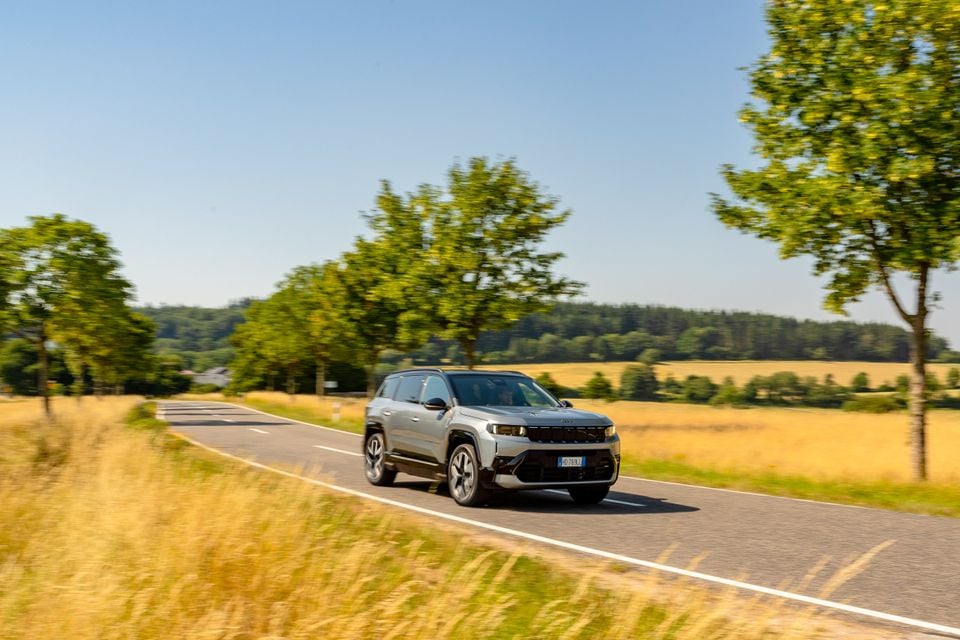
We say ‘relative’ because the day before we drove the 4xe, we also had a chance to sample the front-drive Compass plug-in hybrid, and found that car had, possibly thanks to its 20-inch alloy wheels, an unacceptably firm and jittery ride quality.
The 4xe, possibly because that massive battery is pressing the springs down a bit more, feels quite a lot smoother, although you’re never in any doubt that the suspension’s default is ‘firm-to-hard’.
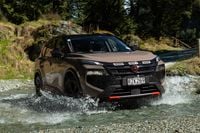
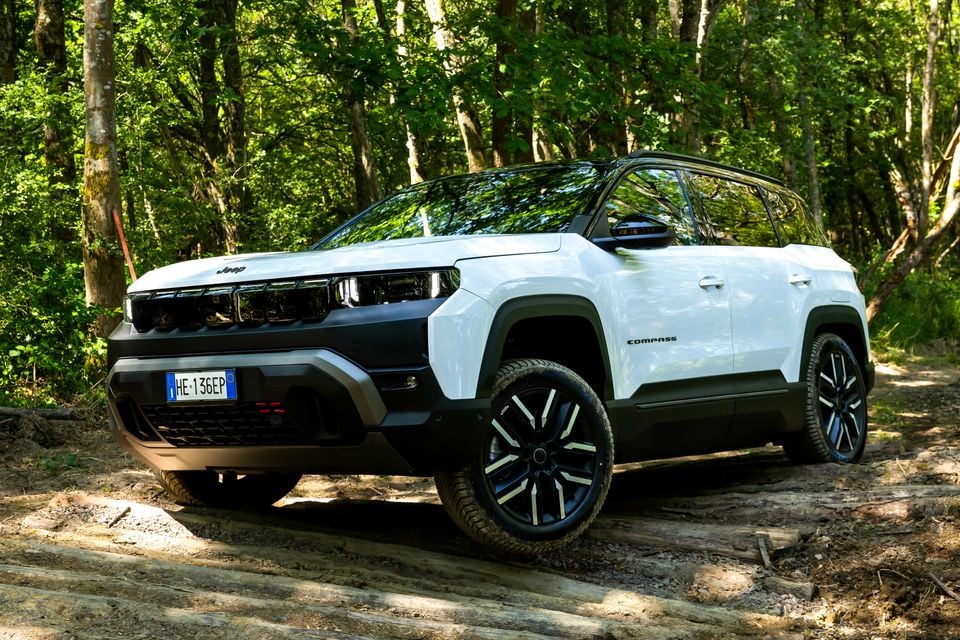
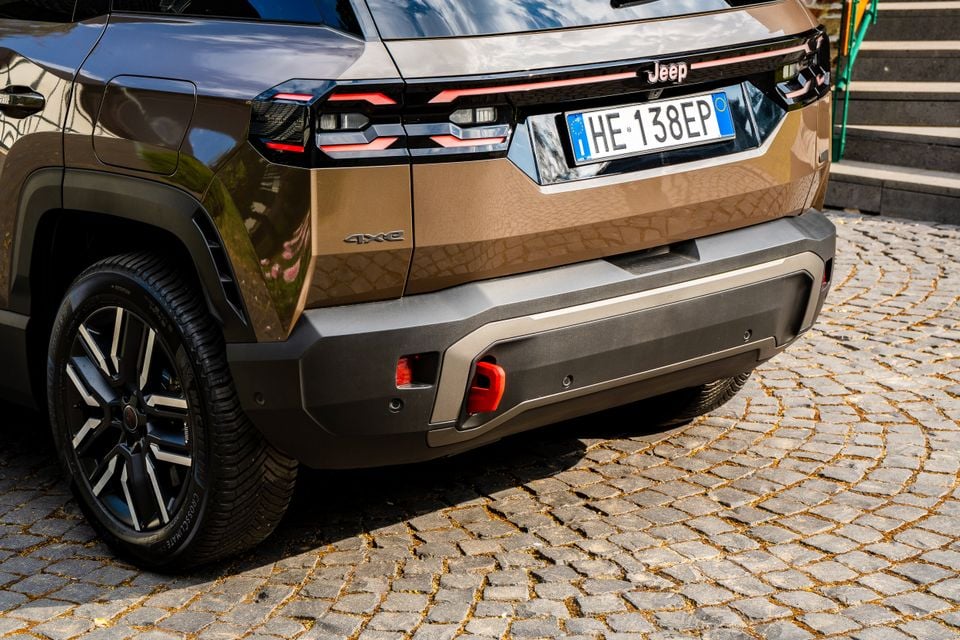
Perhaps it helps that the 4xe also rides a bit higher than its more street-focused brethren, with a 10mm suspension lift bringing ground clearance to 220mm.
Angled front and rear bumpers – left mostly unpainted so you don’t scratch them on rocks or shrubs – allow you to tackle a 28-degree slope at the front, and a 31-degree slope at the rear. That’s 8.0 degrees better at the front, and 4.0 degrees better at the rear.
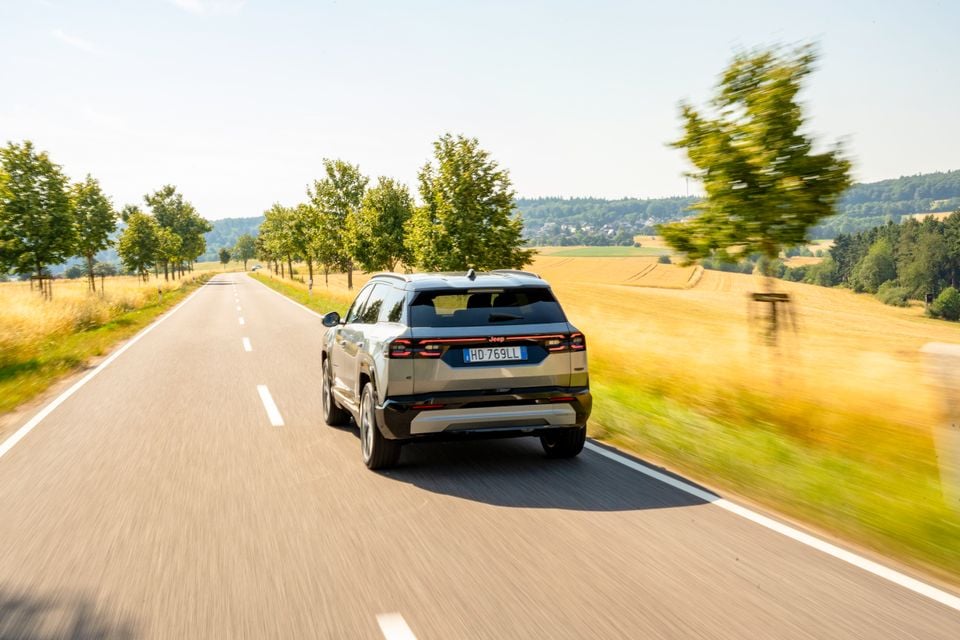
The Compass 4xe also has a standard 480mm water wading depth, and of course being electric there’s no need to fit a snorkel…
None of which helps much on tarmac. With all the torque delivered by those motors – 345Nm at the front and 232Nm at the rear – the Compass 4xe feels impressively quick from a step-off, almost sports car-fast.
However, while the steering has that traditional Jeep feeling – pleasantly light and direct, which belies the Compass' 2300kg kerb weight – that weight catches up with you in corners, and the Compass 4xe needs to be given the old slow-in, fast-out technique to prevent it from feeling a bit clumsy.
As a way to quietly cruise along the highway (you should get around 450-500km out of the claimed 606km range thanks to that massive battery) it’s lovely, but then the same is true of the more affordable front-wheel drive version.
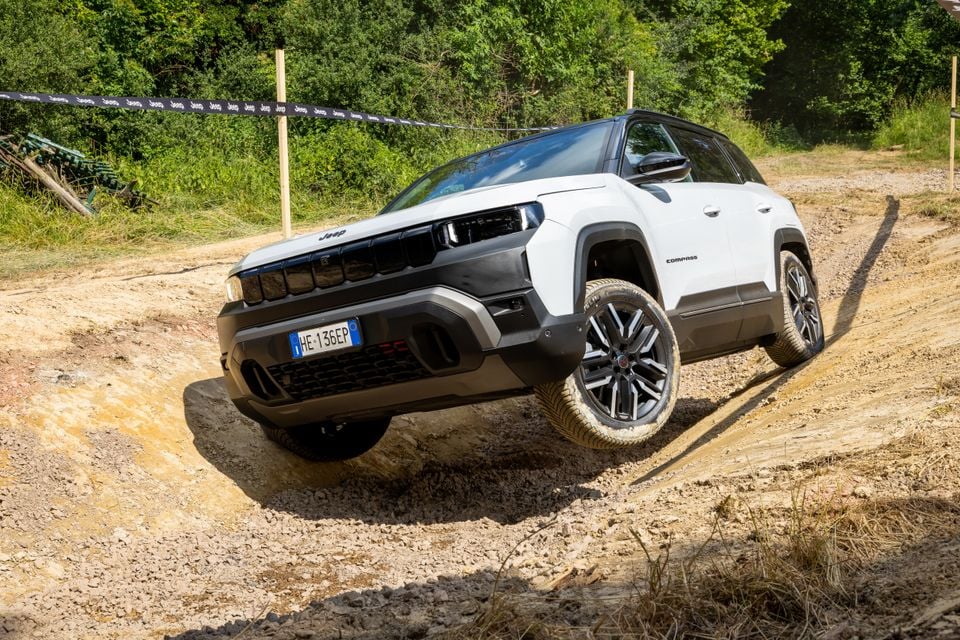
Where the Compass 4xe excels is where you want a Jeep to excel – when the tarmac runs out.
Jeep let us loose across the German countryside on a baking hot summer’s day, which meant there was little in the way of slippery mud to challenge the 4xe's traction, but lots of gravel roads, forest tracks made lumpy and axle-bending by ancient tree roots, and the occasional deer running across the path to test the brakes (and the one-pedal regenerative braking).
The Compass 4xe lapped it all up. Even across obstacles which seemed to almost scrape the side mirrors in the dirt, and with one rear wheel dangling in fresh air, the Compass pulled through and kept pulling.
It’s genuinely impressive in the way it dealt with moderately tricky terrain with such insouciance, and the carefully parcelled-out electric torque made life easier.
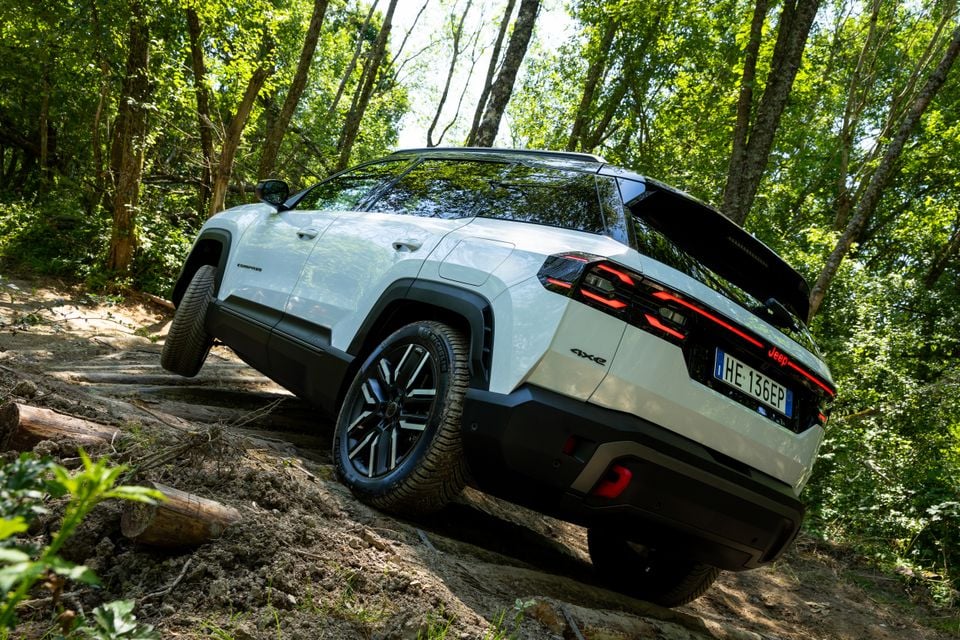
Speaking of which, Jeep says it’s using a bespoke rear motor for the Compass 4xe – unrelated to the motor used in the all-wheel drive Peugeot E-3008 – and thanks to reduction gearing it is claimed that at the wheels there’s 3100Nm of torque being delivered.
Surely that should peel the tyres from the rims? Well, it doesn’t, but Jeep claims the rear motor can keep pushing the Compass up a 20-degree slope even if the front wheels lose traction entirely.
Which they probably won’t, as Jeep has also developed a new traction control system which, instead of reacting to wheel slip, instead reads what’s happening at the contact patch, the steering rack, and the accelerator input, then predicts where and when slip will occur.
It’s like Spidey-Sense instead of traction control.
To see how the Jeep Compass lines up against the competition, check out our comparison tool
If the Jeep Compass 4xe comes to Australia, specifications should broadly mirror those in Europe.
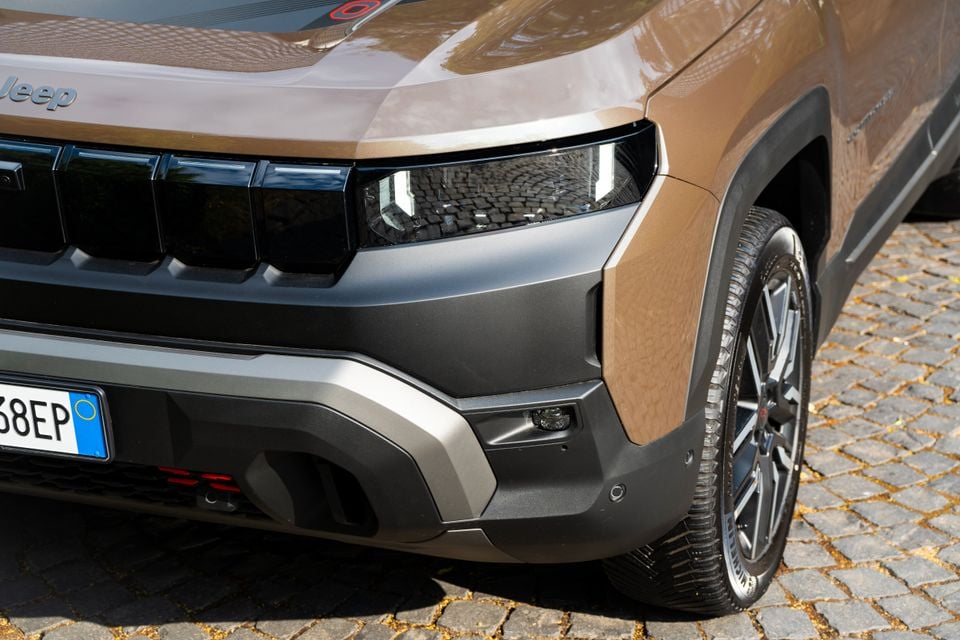
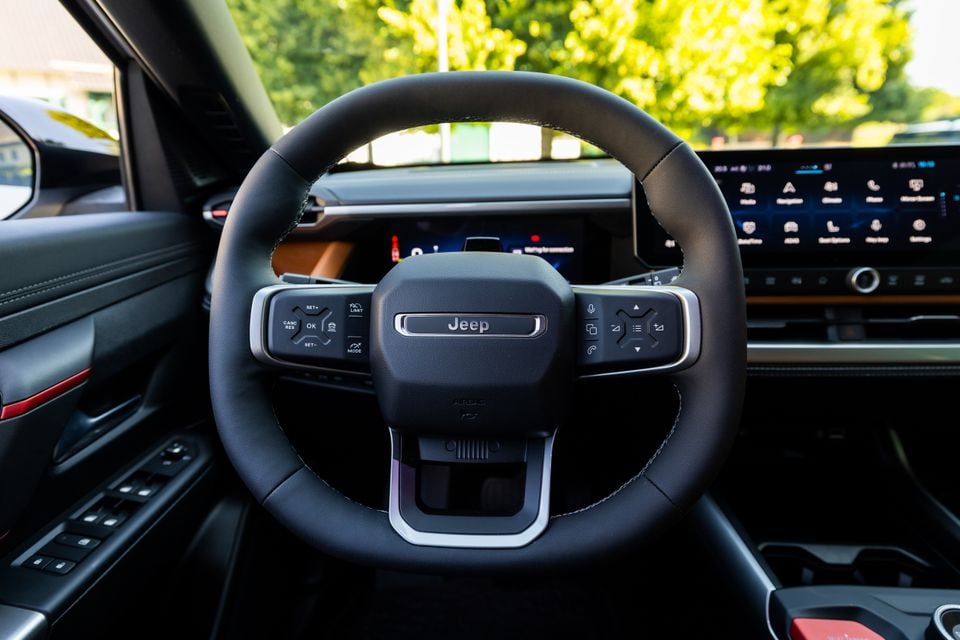
Jeep Compass 4xe Overland equipment highlights (in Europe):
Heated and cooled front seats
20-inch alloy wheels
All-season tyres
10.25-inch driver’s instrument screen
16-inch infotainment touchscreen
Forward collision alert and automatic braking
Adaptive cruise control
Selectable driving modes
Bi-colour interior
To see how the Jeep Compass lines up against the competition, check out our comparison tool
The new Compass hasn’t been tested yet by ANCAP, but it has been put through its safety paces by Euro NCAP, achieving four stars out of a possible five.
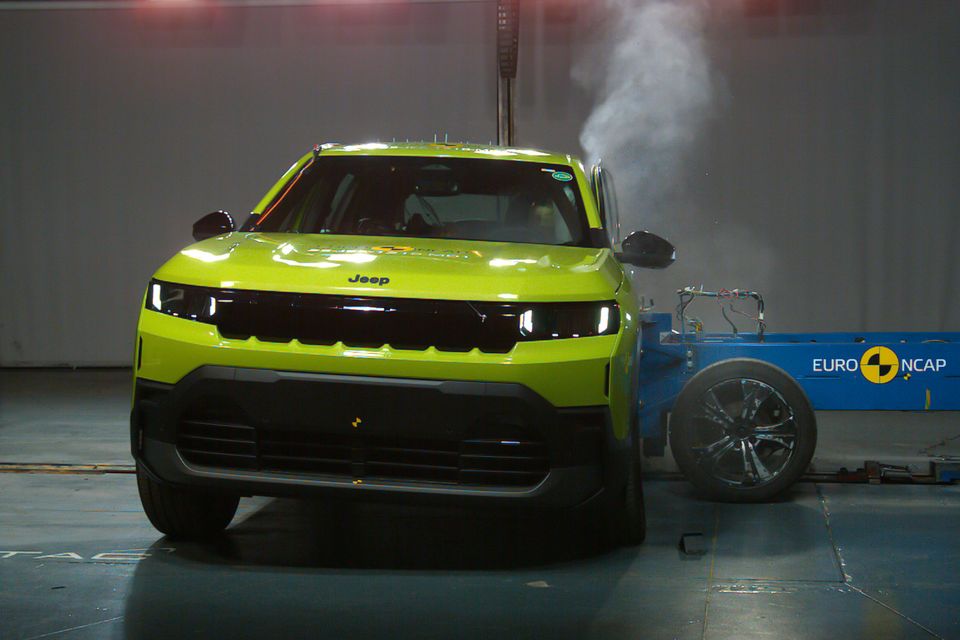
| Category | Jeep Compass* |
|---|---|
| Adult occupant protection | 80 per cent |
| Child occupant protection | 85 per cent |
| Vulnerable road user protection | 74 per cent |
| Safety assist | 66 per cent |
*Euro NCAP testing
Standard safety equipment includes:
To see how the Jeep Compass lines up against the competition, check out our comparison tool
All Jeeps sold in Australia come with a five-year, 100,000km warranty, and the Compass 4xe would offer a separate warranty for its big battery of eight years or 160,000km.
If this is the car for you, we’ll compare offers from trusted dealers, handle the back and forth and manage your purchase from enquiry to delivery.
| Servicing and Warranty | Jeep Compass 4xe* |
|---|---|
| Warranty | 5 years or 100,000km – Vehicle8 years or 160,000km – HV battery |
| Roadside assistance | 5 years or 100,000km |
| Service intervals | 12 months or 20,000km |
| Capped-price servicing | - |
| Total capped-price service cost | - |
*Indicative based on current Jeep Australia warranty conditions
To see how the Jeep Compass lines up against the competition, check out our comparison tool
The Compass 4xe looks, feels and scrambles over rocks like a proper, true-blue Jeep when you get it into its intended environment, far away from tarmac, shopping centre car parks, and school drop-off zones.
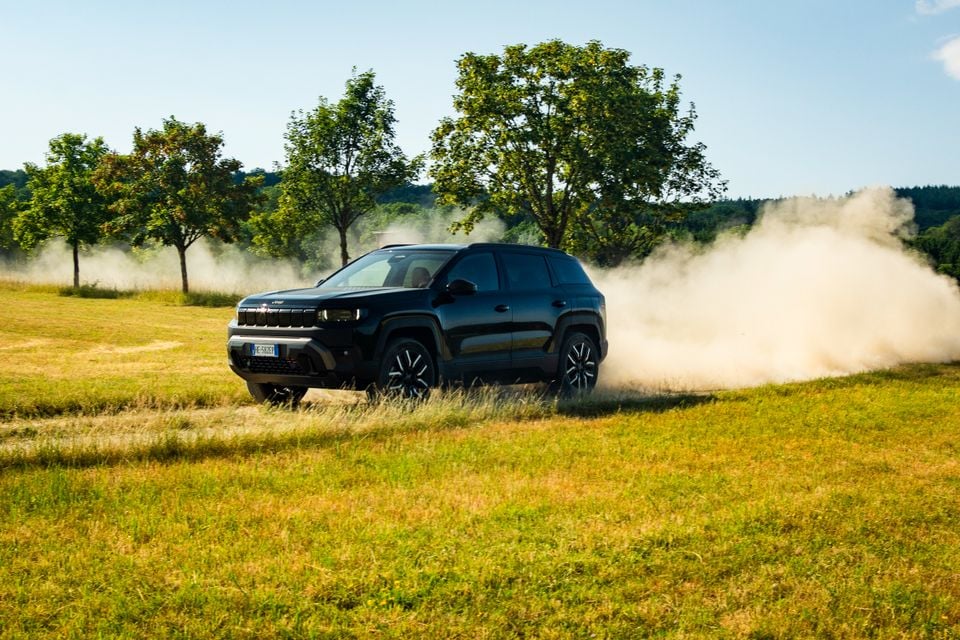
It’s a terrific off-roader, but that does mean it’s less incisive to drive on road, with a heavy, slightly clumsy feeling at times in corners, although it’s impressively refined and has decent real-world range.
It’s also going to be considerably more expensive to run than the existing front-wheel drive versions, so think carefully as to whether you truly need its off-road capability before buying – if it becomes available here.
Interested in buying a Jeep Compass? Let CarExpert find you the best deal here
Click the images for the full gallery
If this is the car for you, we’ll compare offers from trusted dealers, handle the back and forth and manage your purchase from enquiry to delivery.
Jeep Compass
Jeep Compass Sales rolling 12-months#
*Based on VFACTS and EVC data
Looking for complete Jeep Compass price history?
Our Jeep Compass Pricing Page shows exactly how prices have changed over time.
2022
$43,812
2023
$45,306
2025
$50,534
2022
$50,799
2023
$51,849
2022
$53,949
2022
$58,630
2023
$58,779
2025
$59,984
2023
$63,985
2024
$67,334
2024
$75,734
Add CarExpert as a Preferred Source on Google so your search results prioritise writing by actual experts, not AI.
Damion Smy
8 Minutes Ago

Elle Baillieu
10 Minutes Ago

William Stopford
43 Minutes Ago
William Stopford
43 Minutes Ago
Damion Smy
2 Hours Ago
Damion Smy
2 Hours Ago
Add CarExpert as a Preferred Source on Google so your search results prioritise writing by actual experts, not AI.
# Based on VFACTS and EVC data
† Displayed prices are based on the drive-away price of the vehicle, which includes delivery charges, registration fees, number plates, and applicable road taxes, based on a Sydney location. However, prices may vary between states and territories, and additional costs such as compulsory third party (CTP) insurance, dealer delivery fees, and optional extras are not included. These prices are subject to change without notice and may not reflect current market pricing or dealer offers.
 Automotive Vehicle Spec Data & 4K images Powered by JATO Dynamics Ltd