




Damion Smy
Tesla owners offered cheaper insurance for using Full Self-Driving
Tesla owners who subscribe to Full Self-Driving (Supervised) could pay less for insurance under an Australian-first change from Zurich.
2 Days Ago
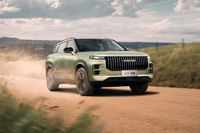
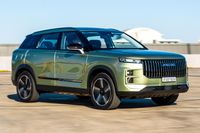
The Jaecoo J7 offers impressive value for money, and it's well worth a look if you want a premium-feeling mid-size SUV.

Marketplace Journalist
Marketplace Journalist
Marketplace Journalist
Marketplace Journalist
If this is the car for you, we’ll compare offers from trusted dealers, handle the back and forth and manage your purchase from enquiry to delivery.
No, you haven’t been imagining that you’re seeing more Range Rovers on the road lately – though you'd be forgiven for mistaking Omoda Jaecoo's catalogue as such.
One of the most prominent examples of those Range Rover lookalikes is the Jaecoo J7, effectively a more upmarket version of the mechanically similar Chery Tiggo 7 mid-size SUV. It hasn't sold in quite the same outrageous numbers as its smaller J5 sibling, but it's hardly a complete flop, either.
With roughly 2000 examples sold so far this year, the J7 is on par with (or slightly ahead of) established rivals like the Volkswagen Tiguan. A significant reason for that is price, because, like many of its Chinese compatriots, the J7 is considerably cheaper than most comparable SUVs from established manufacturers.
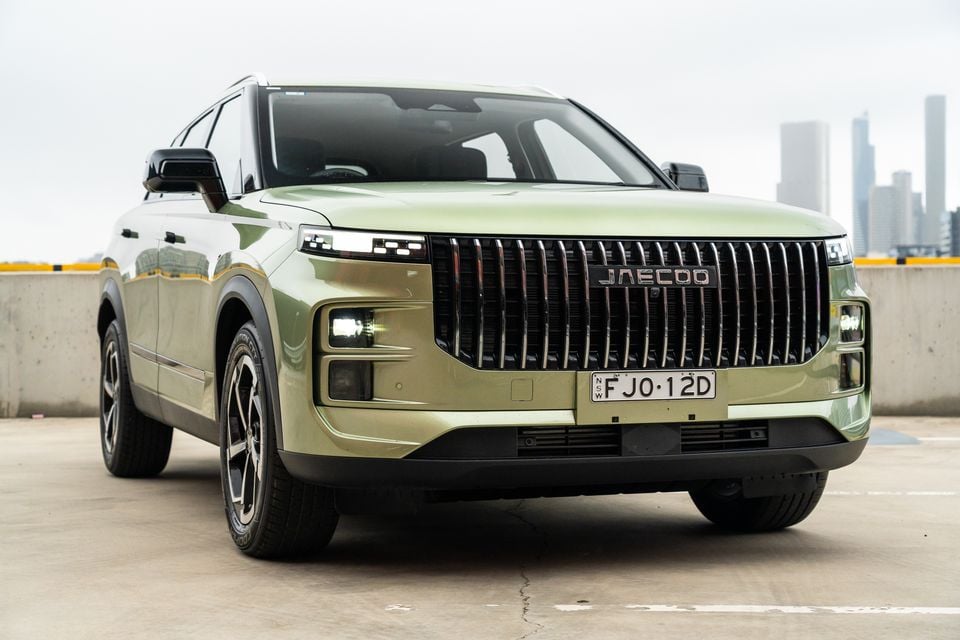
That's especially true for the model you see on test here, the 2026 Jaecoo J7 Track. It's the cheapest J7 variant currently available, and lacks the Super Hybrid System (SHS) plug-in hybrid powertrain available elsewhere in the range. In fact, there's no hybridisation here at all.
Is it the pick of the range, or is a plug-in hybrid Jaecoo the way to go instead?
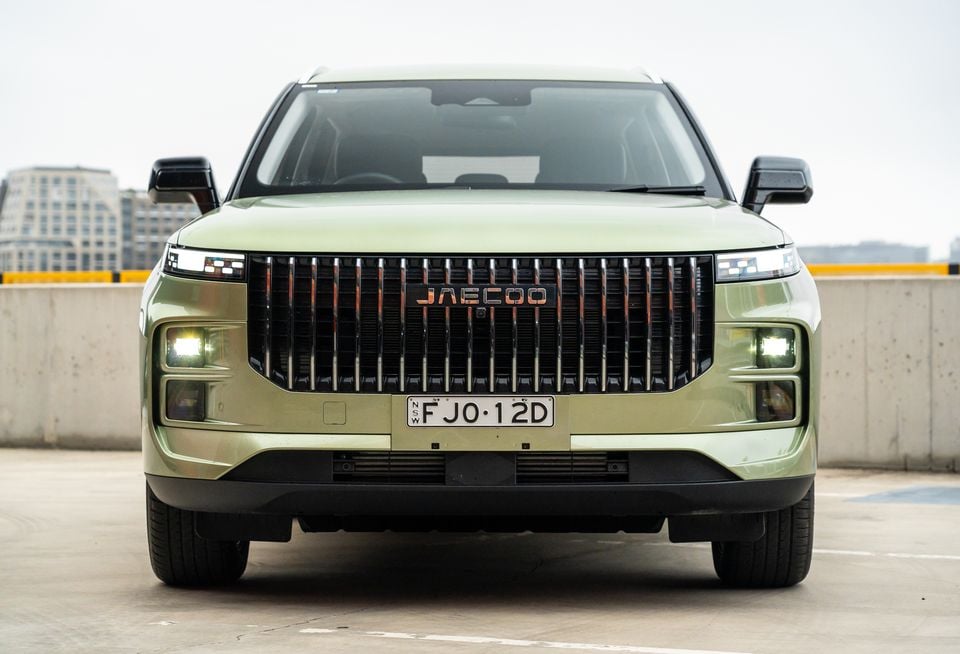
The front-wheel drive Track FWD is the cheapest Jaecoo J7 on sale, priced at $37,990 drive-away. In fact, it was available for $34,990 drive-away as part of a limited-time deal that ended on July 31, 2026), unless it's extended.
| Model | Drive-away price |
|---|---|
| 2026 Jaecoo J7 Track FWD | $37,990 |
| 2026 Jaecoo J7 Ridge AWD | $42,990 |
| 2026 Jaecoo J7 SHS Track FWD | $43,990 |
| 2026 Jaecoo J7 SHS Summit FWD | $47,990 |
There are loads of rivals for the petrol-only J7, but we've narrowed down three of the most relevant. The first is the closely related Chery Tiggo 7, which in base Urban guise costs $29,990 drive-away.
There's also the GWM Haval H6, which starts at $35,990 drive-away in base Lux guise. A logical rival from another mainstream brand is the Hyundai Tucson, which starts at $40,100 before on-roads.
To see how the Jaecoo J7 lines up against the competition, check out our comparison tool
The interior is undeniably derivative of those found in practically every other Chinese SUV, but there’s a semi-premium edge to it.
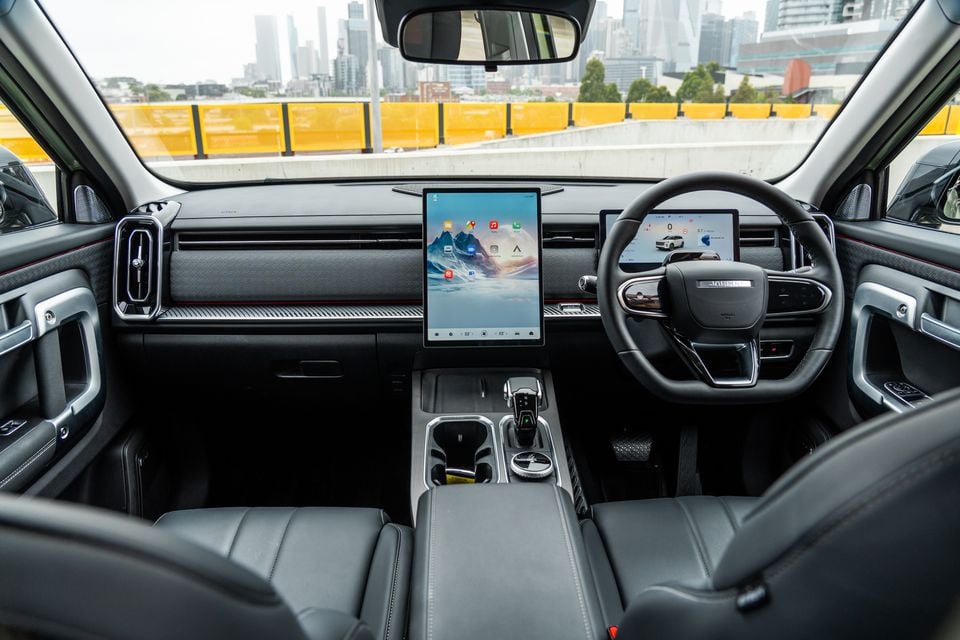
It certainly doesn't feel like the cheapest variant of the range. Omoda Jaecoo has been very generous with its soft-touch cabin surfaces and substantial-looking fittings, and even the design of elements like the air vents and dashboard is tasteful and demure.
This is what we've come to expect from Jaecoo SUVs, and it's interesting that this petrol-only J7 is better equipped than its plug-in hybrid equivalent. The most significant point of difference is the sound system.
The petrol Track gets an eight-speaker Sony setup, which offers considerably better audio quality than the non-branded six-speaker system of the SHS Track. It's an interesting disparity that gives a slight advantage to buyers of the base-spec petrol grade – at least in terms of interior amenity.
Overall, however, the J7's cabin is largely a case of form over function. This is nothing new for screen-heavy vehicles, but the approach taken by Omoda Jaecoo – and, by extension, Chery – appears to give very little thought to ease of use.
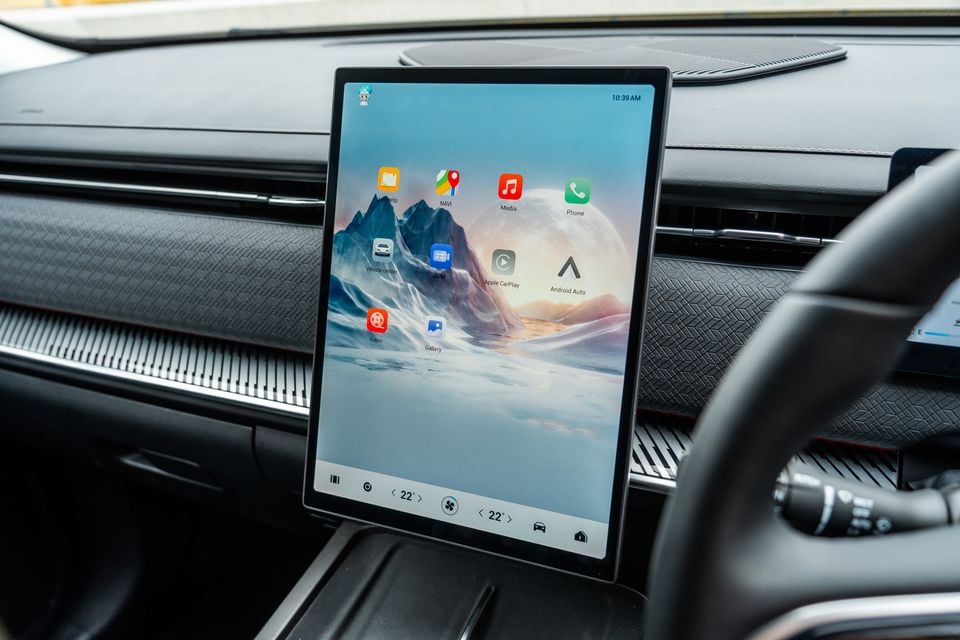
Most notable is the climate system, which is locked inside the infotainment system. It's easy enough to access using the car's native software, thanks to the shortcut at the bottom of the screen, but that changes when you're using smartphone mirroring.
Because the smartphone interface occupies the entire screen, you have to close it to make basic adjustments like cabin temperature or ventilation fan speed. That's a needless inconvenience that would be easily solved by some actual buttons.
At least smartphone mirroring is wireless as standard, and it looks pretty sharp with its full-screen interface. Connectivity was consistently reliable during our week with the car.
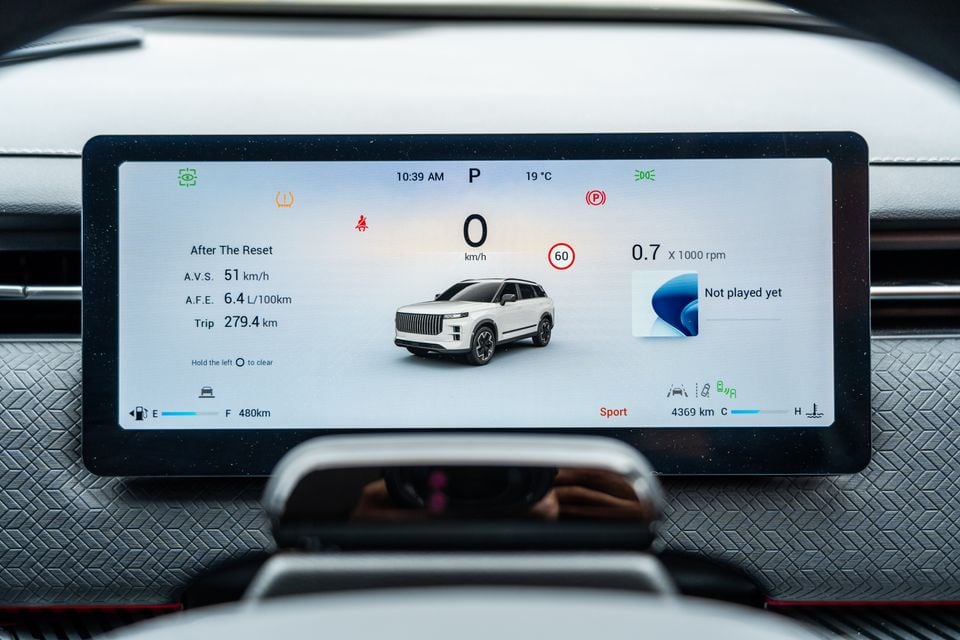
The digital instrument display, meanwhile, looks good enough and remains functional. Its Jaecoo-flavoured animations are generally smoother than its Chery counterparts, and it's easy enough to navigate using the steering wheel controls.
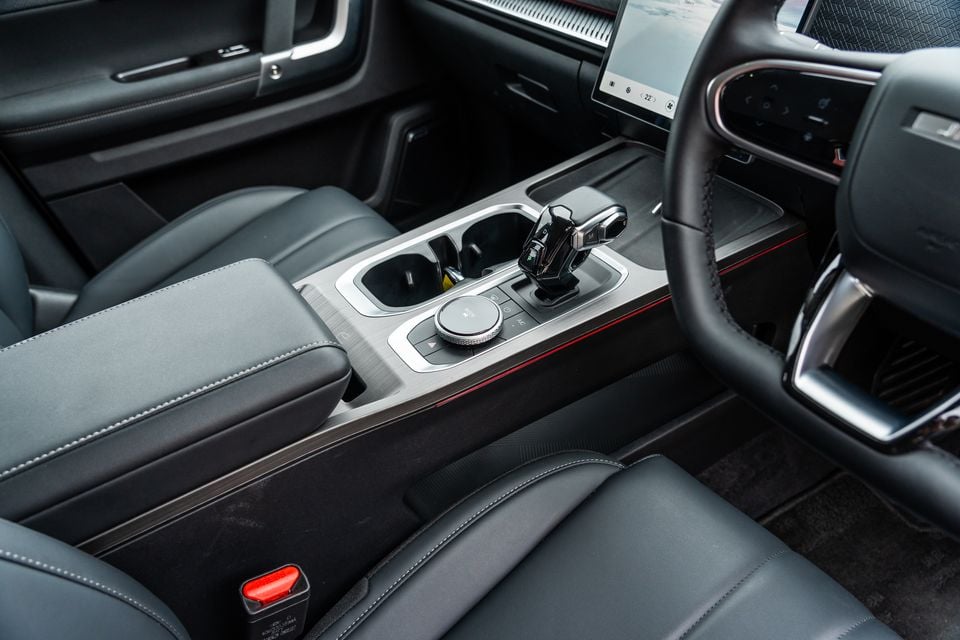
Elsewhere, you'll notice there are some buttons on the centre console, but not many. You only get dedicated controls for the front windscreen demister, drive modes, and the overarching air-conditioning menu.
The drive mode selector alone takes up a huge amount of space, and we find it confusing that this space isn't better utilised. The aviation-style gear shifter also feels a little contrived compared with the rest of the cabin, but it gets the job done.
The remaining physical interior controls are on the steering wheel. Again, in typical Chery fashion, they aren't real buttons but instead smooth, glossy panels that click when pressed. Because there’s little tactility, it’s easy to miss the button you’re trying to press. The glossy finish also smudges easily.
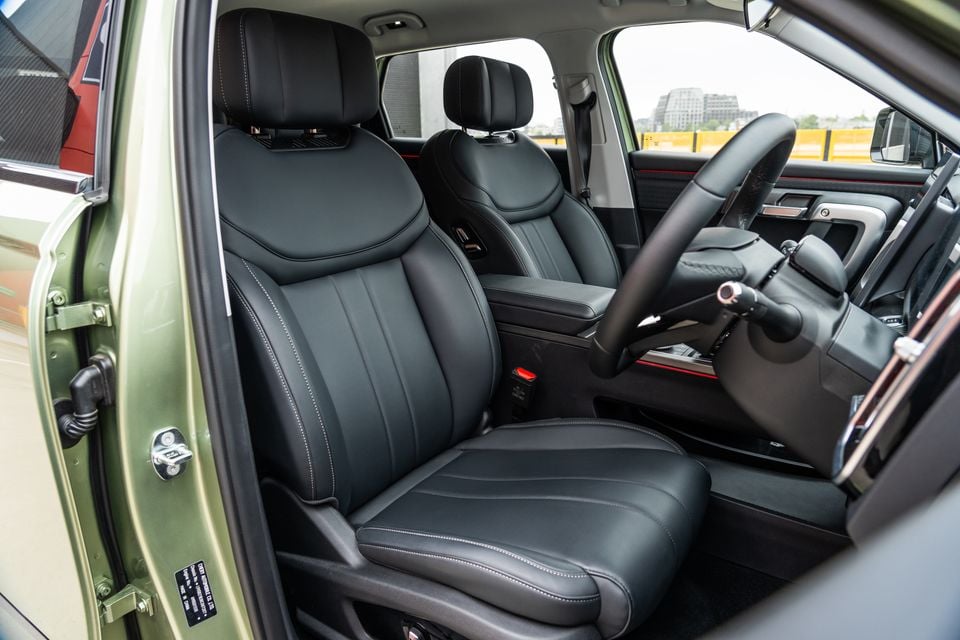
Otherwise, the cabin is comfortable. The leather finish on the steering wheel rim feels nice, but while the synthetic leather-appointed seats are supportive, they lack seat base angle adjustment, limiting thigh support. But you do get seat heating as standard, which is a thoughtful touch in the base J7 Track.
Storage-wise, the front of the cabin features a large tray below the centre console, which also houses a selection of charging outlets – USB and 12V. There are also cupholders above, various slots for phones or keys, and the requisite lidded storage boxes. We also like that the wireless phone charger is ventilated.
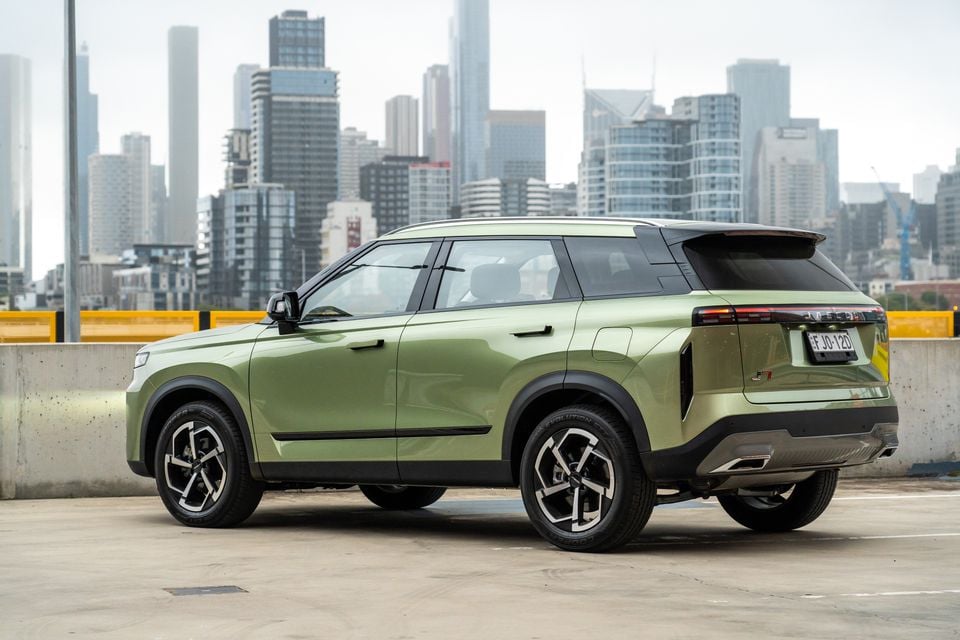
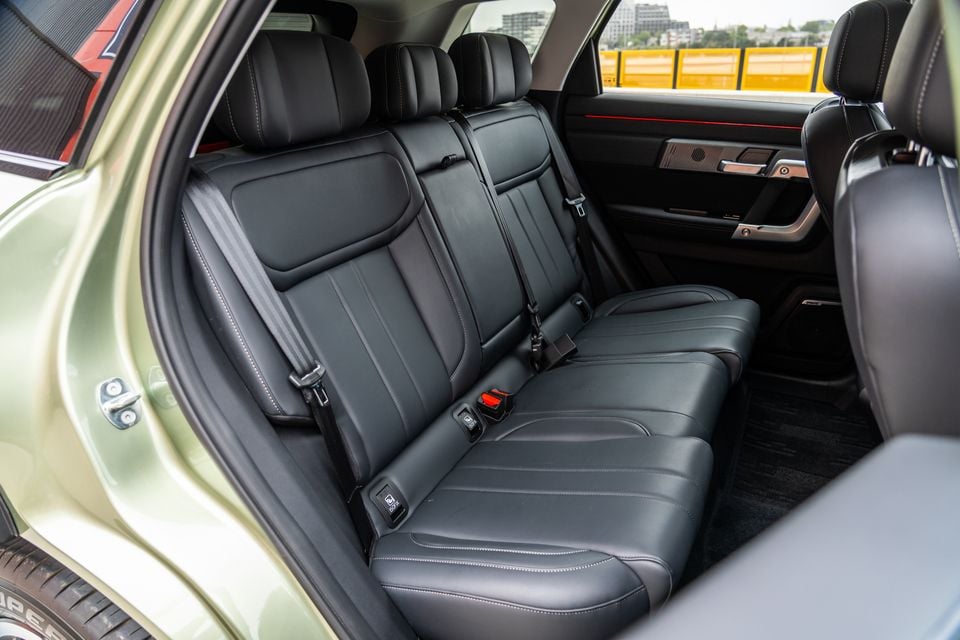
Moving to the second row reveals a relatively spacious area, at least compared with similarly sized rivals. The J7's boxy body makes it feel quite airy back here, and there's plenty of room for me, at 173cm tall, to sit comfortably behind my own driving position.
The floor is almost entirely flat, except for a small driveline hump, which makes it easy to scoot across the bench if need be. The seats themselves aren't all that supportive, but they're completely serviceable.
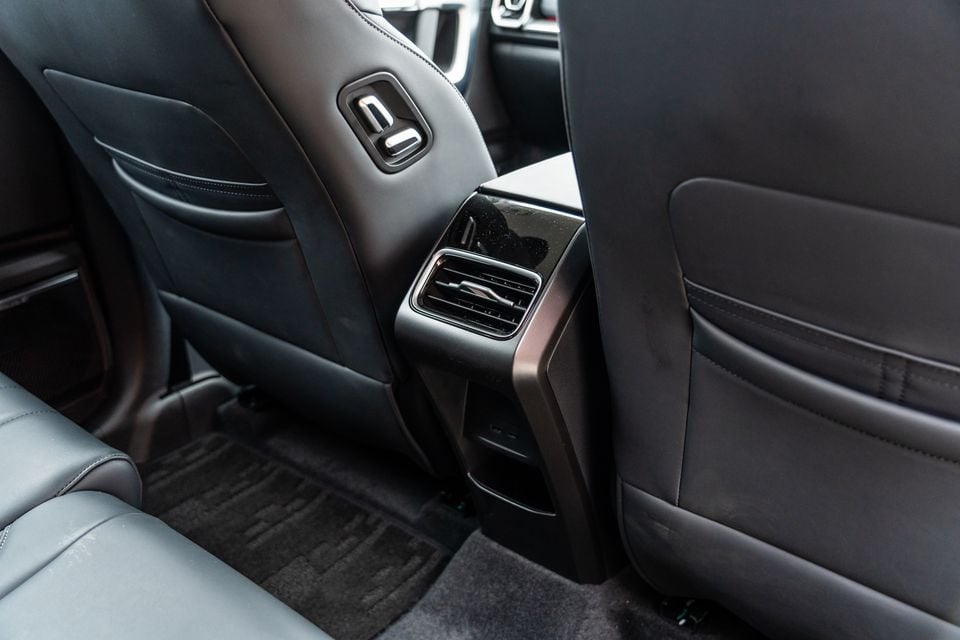
The base model is reasonably well equipped in the second row, too. You get a pair of USB ports and an air vent on the back of the centre console, plus multi-tier map pockets and a padded, fold-down armrest with cupholders.
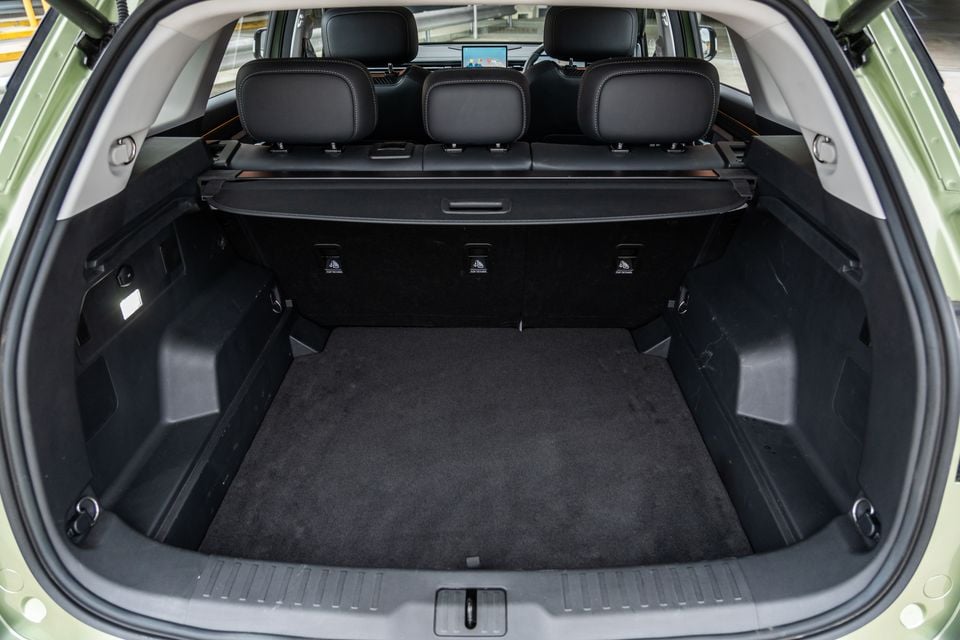
The boot is impressively spacious. Jaecoo quotes 424 litres with the rear seatbacks upright, although differences in manufacturers’ measurement methods mean direct on-paper comparisons with figures quoted for the Haval H6 and MG HS may not be entirely representative.
You'll notice that the floor sits quite low because there's no PHEV equipment bundled underneath. That gives you more space, even if it means you'll have to bend down when loading cargo. Access is made easier by a power tailgate, another unexpected inclusion in this 'base-spec' SUV.
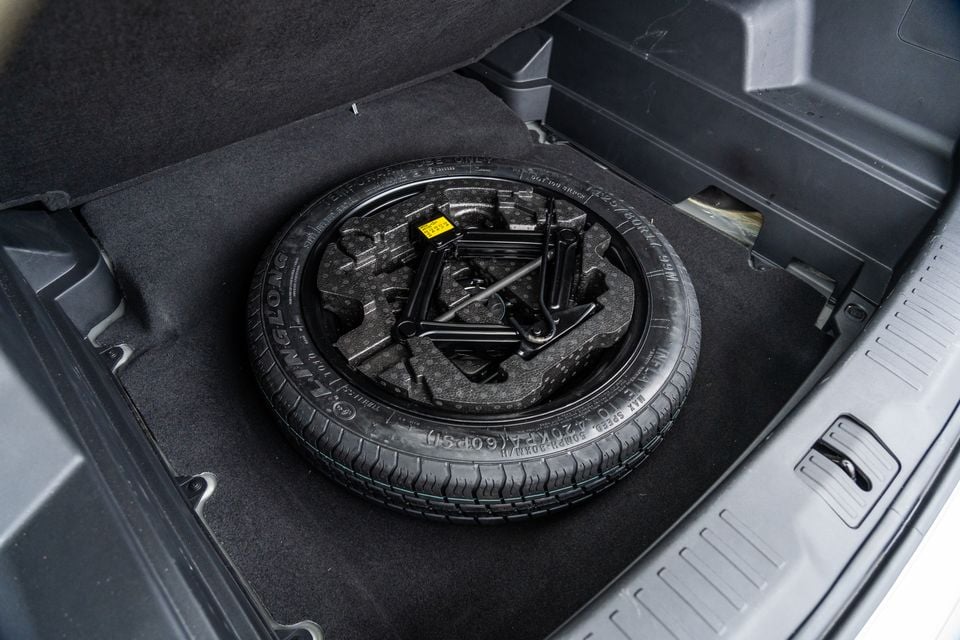
Being a non-PHEV variant, our tester featured a space-saver spare wheel under the boot floor, which is always a plus for Australian buyers.
| Dimensions | Jaecoo J7 Track FWD |
|---|---|
| Length | 4500mm |
| Width | 1865mm |
| Height | 1680mm |
| Wheelbase | 2672mm |
| Cargo capacity | 424L (rear seats up) 1349L (rear seats folded) |
To see how the Jaecoo J7 lines up against the competition, check out our comparison tool
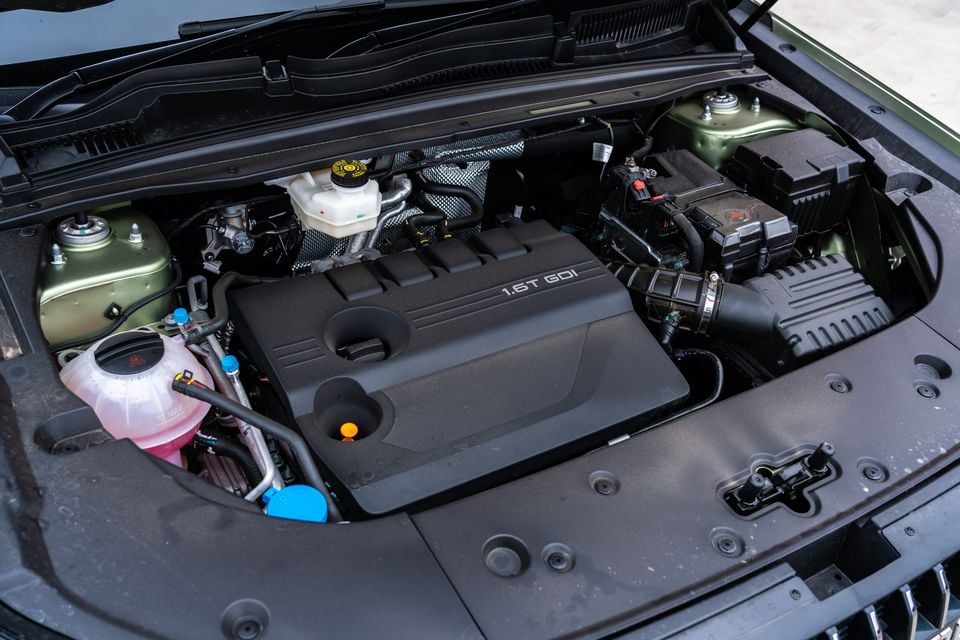
Powering the non-hybrid Jaecoo J7 is a 1.6-litre turbocharged four-cylinder petrol engine producing 137kW of power and 275Nm of torque. In the base Track, drive is sent to the front wheels via a seven-speed dual-clutch automatic transmission.
| Specifications | Jaecoo J7 Track FWD |
|---|---|
| Engine | 1.6L 4cyl turbo-petrol |
| Power | 137kW |
| Torque | 275Nm |
| Transmission | 7-speed dual-clutch auto |
| Drive type | Front-wheel drive |
| Kerb weight | 1534kg |
| Fuel economy (claimed) | 7.0L/100km |
| Fuel economy (as tested) | 7.3L/100km |
| Fuel tank capacity | 51L |
| Fuel requirement | 95-octane premium unleaded |
| CO2 emissions | 163g/km |
| Emissions standard | Euro 6 |
| Braked tow capacity | 1350kg |
The non-hybrid J7 is also available in all-wheel drive configuration, though it retains the same engine outputs and transmission type. That setup is reserved for the Ridge trim level.
Our week with the J7 Track primarily involved highway commuting, along with a trip to the Lang Lang proving ground for a YouTube video review.
To see how the Jaecoo J7 lines up against the competition, check out our comparison tool
As far as tech-heavy Chinese SUVs go, the Jaecoo J7 offers a relatively simple driving experience.
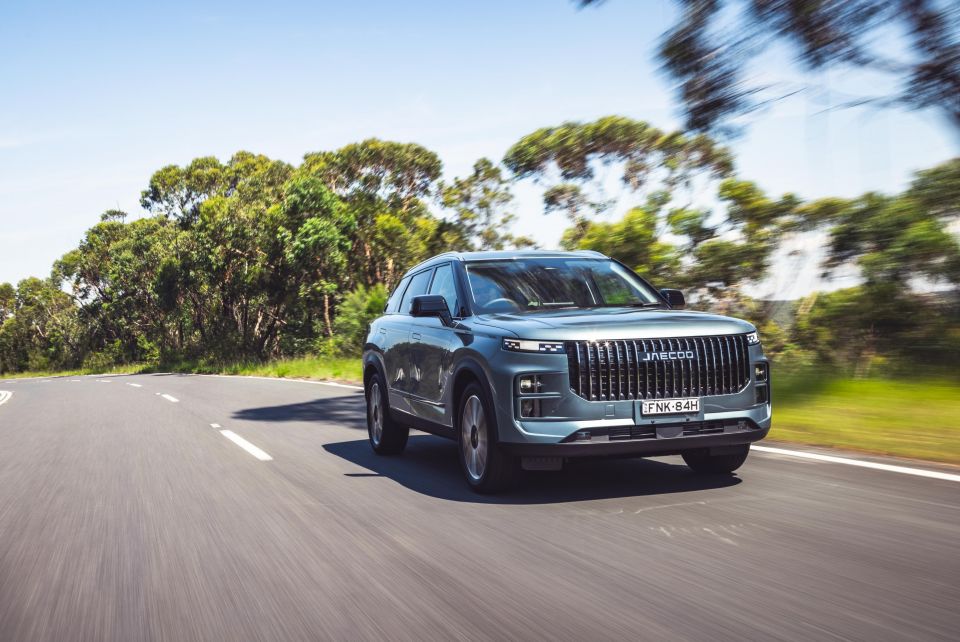
For one, we'd argue that this non-PHEV vehicle reduces some complexity compared to its SHS alternatives. That's not to say the J7 SHS is challenging to drive, but some may appreciate the more traditional engine/transmission combination offered here.
As such, its fundamentals won't be alien to a newcomer. Make sure you have your seatbelt on before you set off, though, because – like other Cherys – this Jaecoo will not release its handbrake until you've done so. Most other cars automatically let it go if you touch the throttle, so this is inconvenient and annoying.
But once you are moving, the petrol J7 proves itself capable. Power from the turbo-petrol engine is solid, which means this SUV has no issue getting up and moving. You will get some torque steer if you're particularly harsh on the throttle, and the lack of low-down torque means it needs to rev hard for rapid progress.
The delivery of that power can also be somewhat peaky, presumably because of that turbo and the fact it's mated with a dual-clutch transmission. It takes a while for everything to 'wake up' if you need harder acceleration, and it can be touchy in low-speed manoeuvres like three-point turns.
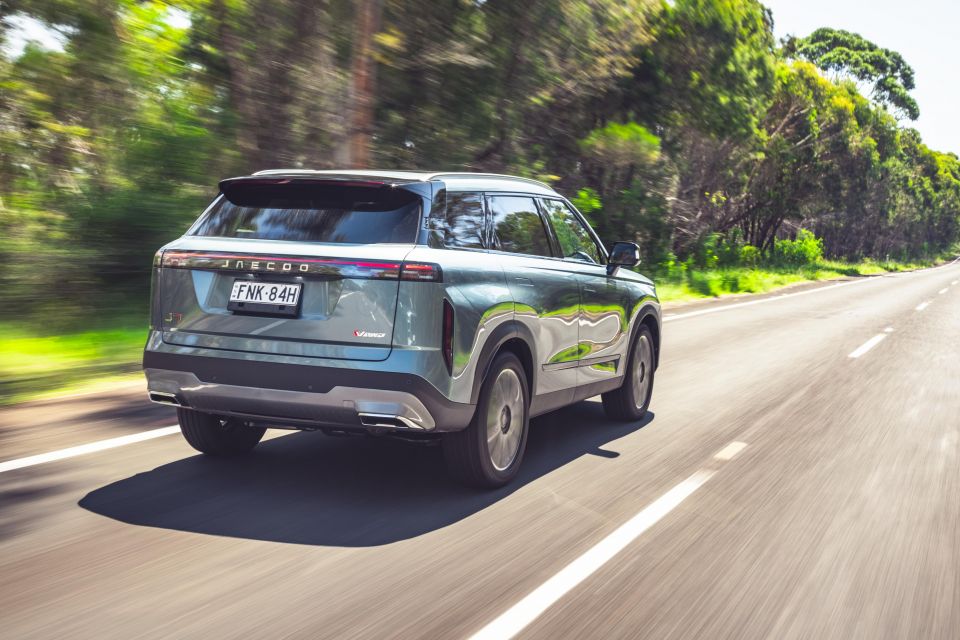
That delay in action after pressing the throttle is most noticeable around town, where you're constantly stopping and starting. You really need to pre-empt green lights to avoid other drivers thinking you're distracted by your phone.
The transmission can also stumble at lower speeds, a trait typical of dual-clutch autos. It's far from the worst gearbox we've ever dealt with, but some further finessing would do wonders here.
Things smooth out once travelling at freeway speeds, revealing the fact the J7 is fairly refined. Wind noise is nicely suppressed, and it's very smooth over the undulations you'll typically find on Aussie highways.
The engine only really makes itself known under hard acceleration, too. Road noise is the only thing that is difficult to work around, because you'll notice there's quite a lot of tyre roar on coarse-chip road surfaces.
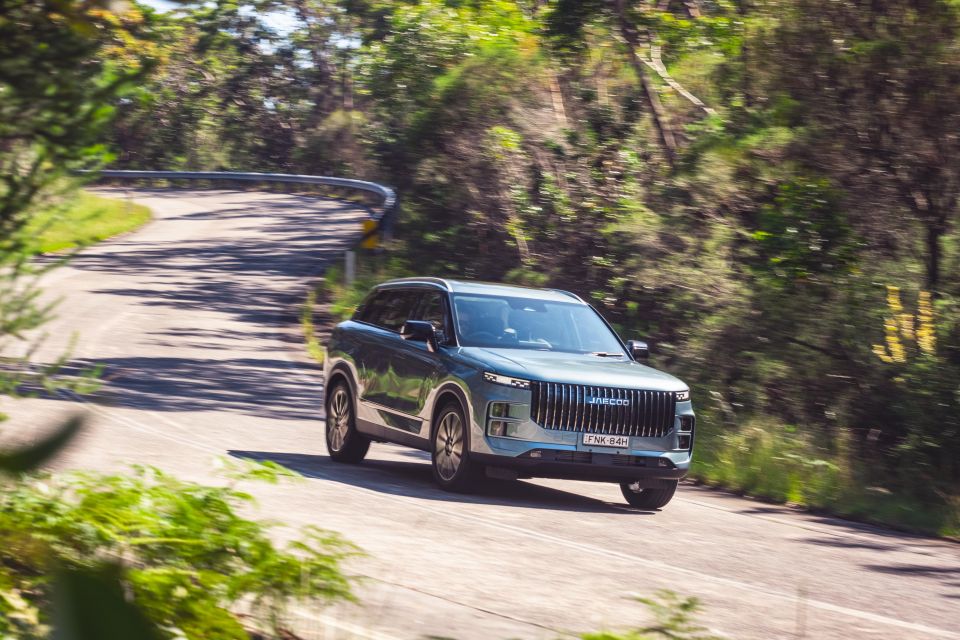
Unfortunately, the J7's ride is imperfect. It generally errs on the soft side, as is typical for Chinese SUVs, which at least means it's fairly comfortable at higher speeds. The trade-off is stability.
It feels a bit wobbly even on the freeway, where the body will bob around over larger dips and rises. Suburban bumps and holes will often send jolts through the cabin too, so the car loses some points for urban-centric commuting comfort. This is mostly when there isn't enough load onboard to settle its soft damping tune.
Indeed, another thing worth mentioning is how the J7 performs when loaded with passengers and cargo. Its payload of just 405kg simply isn't enough for five average-weight (~85kg) adults, and even reducing the passenger count to four limits its legal cargo-carrying capacity.
This is a shame, especially given this particular J7 isn't weighed down by a heavy battery pack. We don't doubt that a fully-loaded J7 would lose a considerable chunk of its unladen pep, either.
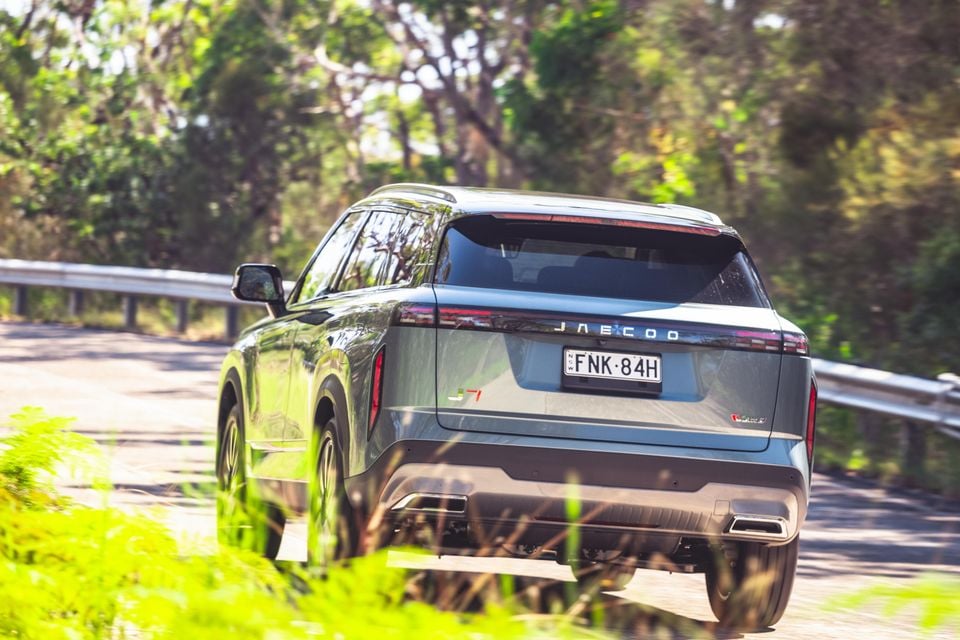
Despite all that, the J7 offers composed handling. It won't worry an MX-5 in bends, but it has a subtle, sharp-ish dynamic edge that prevents it from collapsing into body roll or understeering wide during hard cornering.
The downside is the steering is quite lifeless. There's very little feel, and the fact it has relatively light weighting means the car can seem a tad flimsy when it's thrown around – this contributes to the wobbly feel we described above. There is a Sport drive mode that offers heavier steering, but it feels artificial.
On the tech front, the J7's safety gear can be a bit annoying. The most intrusive culprits are the driver attention monitoring – harping on with Chery's characteristic "You have been distracted!" warning – and the lane-keep assist, both of which are generally overreactive.
This isn't a new thing for Chinese cars, but it's still an omnipresent flaw in a vehicle that otherwise offers a reasonably pleasant driving experience.
To see how the Jaecoo J7 lines up against the competition, check out our comparison tool
There are two variants in Australia's petrol-only Jaecoo J7 range.
If this is the car for you, we’ll compare offers from trusted dealers, handle the back and forth and manage your purchase from enquiry to delivery.
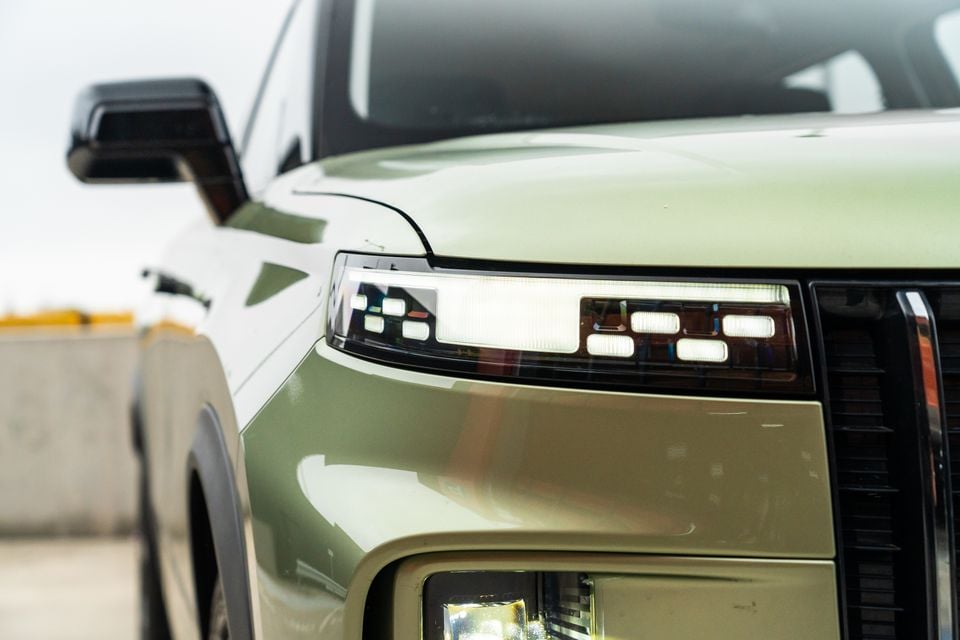
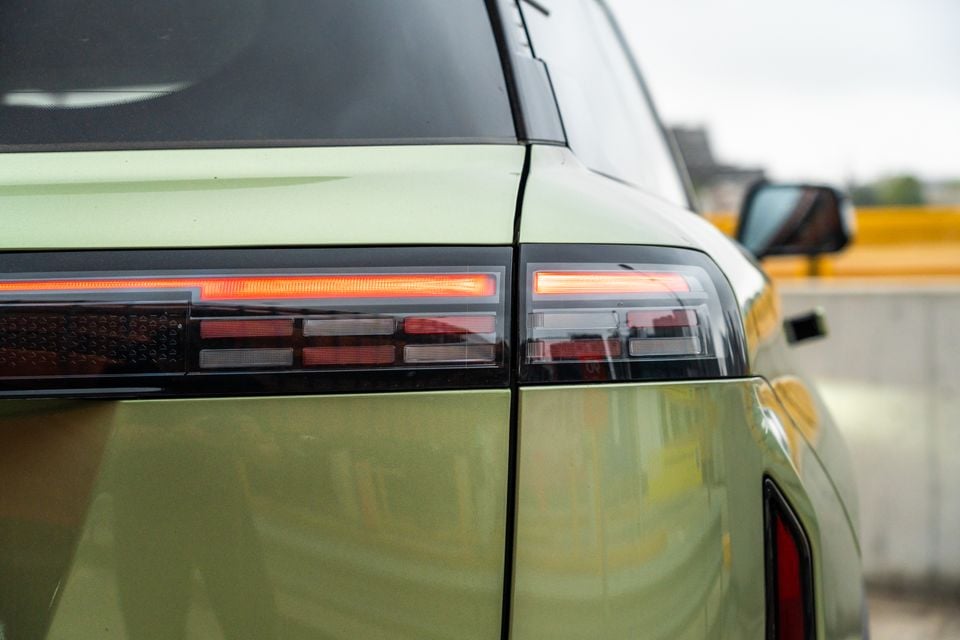
2026 Jaecoo J7 Track FWD equipment highlights:
Jaecoo J7 Ridge AWD adds:
To see how the Jaecoo J7 lines up against the competition, check out our comparison tool
The Jaecoo J7 SHS has a five-star ANCAP safety rating based on Euro NCAP testing conducted in 2025. However, that rating does not currently apply to petrol-powered J7 variants, which are unrated by ANCAP.
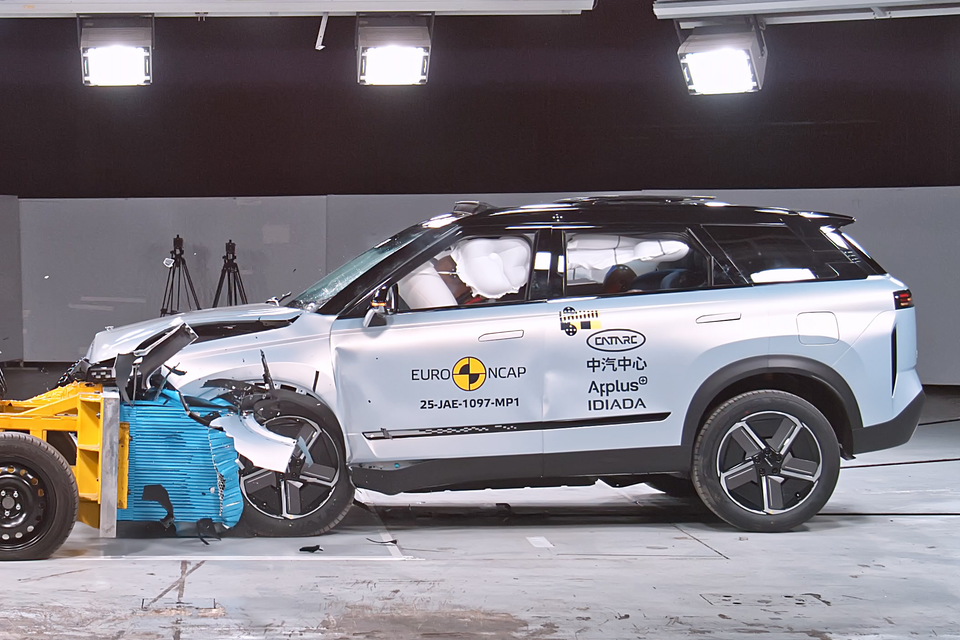
Standard safety equipment highlights:
To see how the Jaecoo J7 lines up against the competition, check out our comparison tool
Omoda Jaecoo Australia backs its range with an eight-year, unlimited-kilometre warranty. Servicing for the non-hybrid Jaecoo J7 is required every 12 months or 15,000km, whichever comes first.
| Servicing and Warranty | Jaecoo J7 Track FWD |
|---|---|
| Warranty | 8 years, unlimited kilometres |
| Roadside assistance | Up to 8 years (service-activated) |
| Service intervals | 12 months or 15,000km |
| Capped-price servicing | 8 years |
| Average annual service cost | $369 |
| Total capped-price service cost | $2952 |
Omoda Jaecoo Australia's individual service pricing is detailed below:
| Service | Price |
|---|---|
| 12 months, 15,000km | $299 |
| 24 months, 30,000km | $299 |
| 36 months, 45,000km | $329 |
| 48 months, 60,000km | $499 |
| 60 months, 75,000km | $299 |
| 72 months, 90,000km | $329 |
| 84 months, 105,000km | $299 |
| 96 months, 120,000km | $599 |
For context, Chery offers a shorter seven-year capped-price servicing period, during which maintenance for the front-wheel drive Tiggo 7 costs $2151.93. Five years of capped-price servicing for the front-drive GWM Haval H6, meanwhile, costs $2025.
Eight years of servicing for the non-hybrid Hyundai Tucson costs $3604.
To see how the Jaecoo J7 lines up against the competition, check out our comparison tool
The non-PHEV J7 is generally solid, and it tends to do enough to stand out from its closely related stablemates.
It offers a far more sophisticated presentation than the closely related Tiggo 7 and, though it is more expensive, you're rewarded for splashing your cash with a seriously impressive list of standard equipment, despite being cheaper than more popular mid-size SUVs.
Granted, there are trade-offs. The J7 doesn't feel as well-sorted dynamically as something like a Tucson, nor is its safety tech up to scratch, which is a complaint we've leveled across the Chery stable for a while now so it's disappointing there hasn't been more action taken here.
And we'd point prospective J7 buyers to the plug-in SHS variants instead of either petrol-only grade. They offer slightly better value and a much more modern powertrain, though they still exhibit some of the flaws of their non-hybrid siblings.
Still, it's clear that value is the real drawcard here, and the J7 Track's equipment list, presentation, and overall ownership experience are certainly commendable in that context.
CarExpert can save you thousands on a new Jaecoo J7. Click here to get a great deal.
Click the images for the full gallery
If this is the car for you, we’ll compare offers from trusted dealers, handle the back and forth and manage your purchase from enquiry to delivery.
2025
$34,990
2025
$37,990
2027
$42,147
2025
$42,990
2027
$47,297
Max Davies is a CarExpert journalist with a background in regional media, with a passion for Japanese brands and motorsport.
Add CarExpert as a Preferred Source on Google so your search results prioritise writing by actual experts, not AI.
Damion Smy
2 Days Ago


Tace Clifford
5 Days Ago


James Wong
5 Days Ago

Josh Nevett
9 Days Ago
Damion Smy
12 Days Ago

William Stopford
13 Days Ago
Add CarExpert as a Preferred Source on Google so your search results prioritise writing by actual experts, not AI.
# Based on VFACTS and EVC data
† Displayed prices are based on the drive-away price of the vehicle, which includes delivery charges, registration fees, number plates, and applicable road taxes, based on a Sydney location. However, prices may vary between states and territories, and additional costs such as compulsory third party (CTP) insurance, dealer delivery fees, and optional extras are not included. These prices are subject to change without notice and may not reflect current market pricing or dealer offers.
 Automotive Vehicle Spec Data & 4K images Powered by JATO Dynamics Ltd