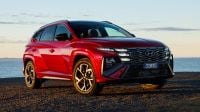
I said in an earlier Hyundai Tucson review that I think the Elite grade with the N Line pack was just about the sweetest spot in this range.
But that was for the 2.0-litre turbo-diesel engine and all-wheel drive combination, which has since been dumped by Hyundai. So has the turbo-petrol 1.6-litre unit with all-wheel drive, which was a real zinger.
So that means your choices for a Tucson are now restricted to a 2.0-litre petrol with front-wheel drive, or a 1.6-litre turbo-petrol with hybrid tech, which is what’s tested here. It’s available with front- or all-wheel drive.
It’s clear the Tucson range still has a number of choices on offer, but that number is nine, whereas it was previously 17.
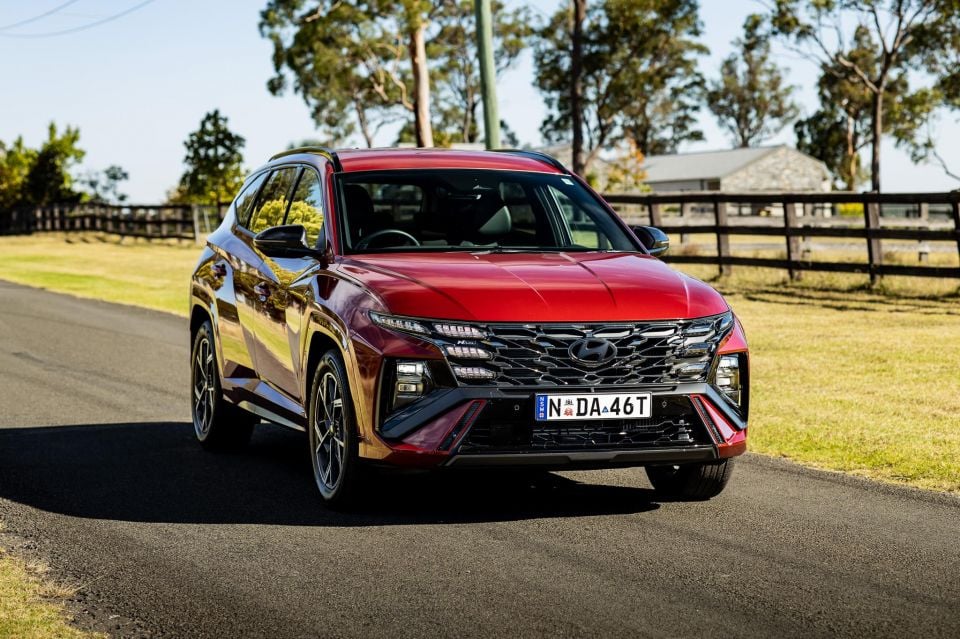
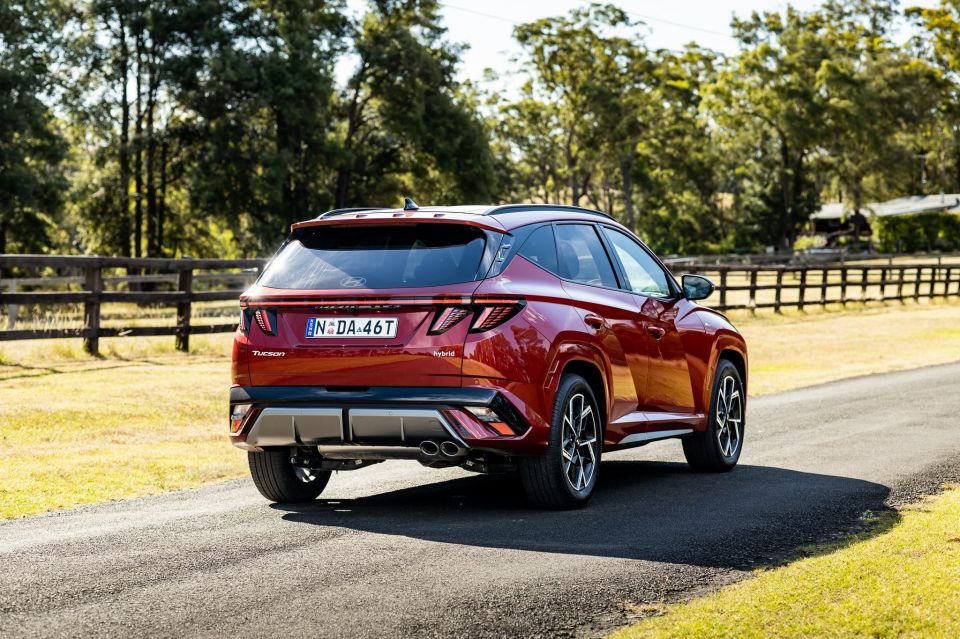
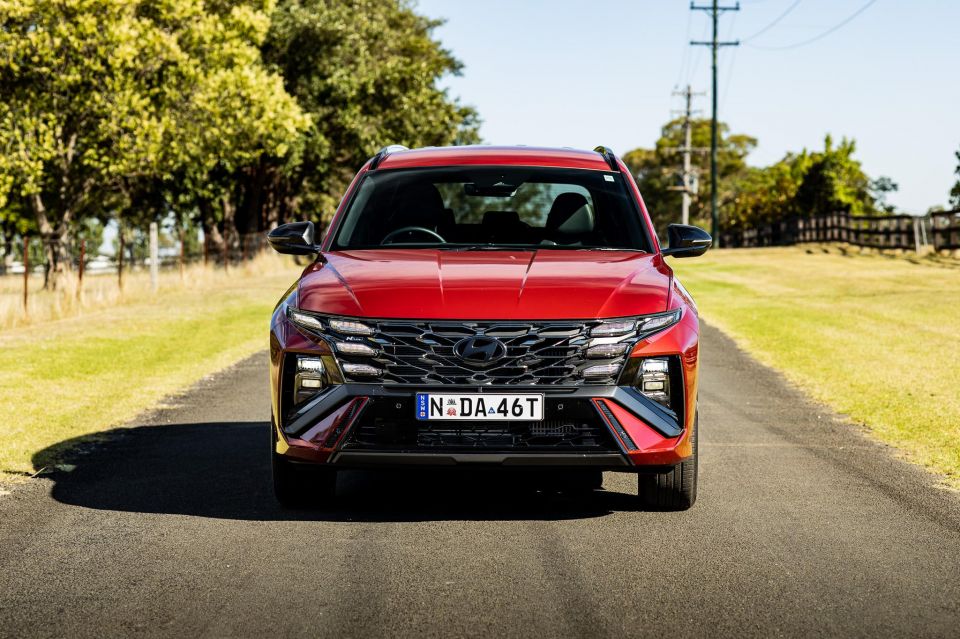
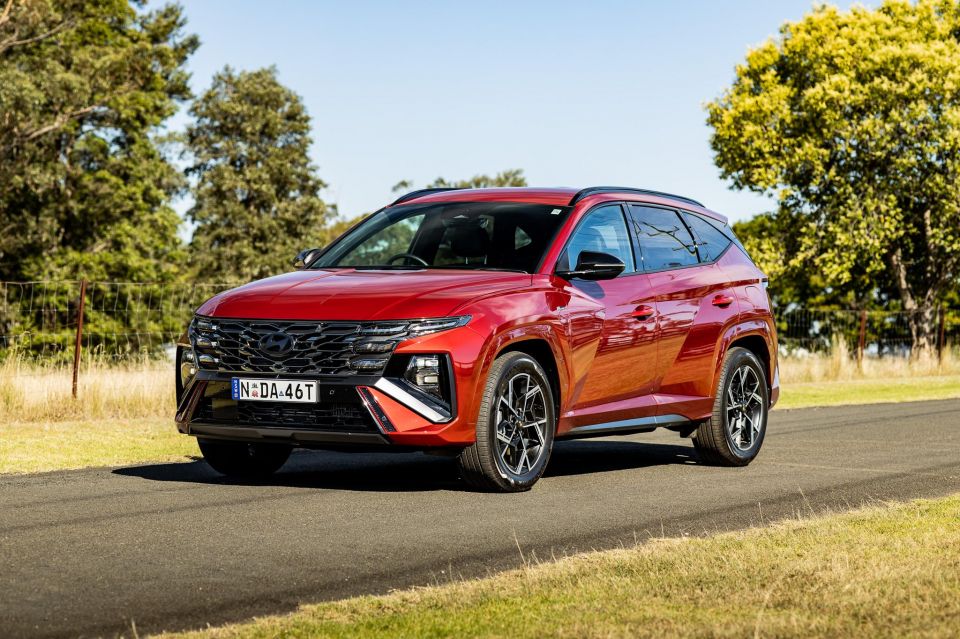
As such, the revised 2026 Tucson lineup has been simplified, and I’ll give you a rundown of the entire range as it stands in this review, despite a focus on the grade tested being a mid-spec Elite hybrid with the N Line sporty package.
How much does the Hyundai Tucson cost?
We recently covered the changes to the Tucson lineup in detail, and while just a few months ago the prices were down quite a bit, there has been a bit of an increase in list pricing across the range again.
| Model | Price before on-road costs |
|---|
| 2026 Hyundai Tucson 2.0L FWD | $38,250 |
| 2026 Hyundai Tucson Hybrid FWD | $42,850 |
| 2026 Hyundai Tucson Elite 2.0L FWD | $43,350 |
| 2026 Hyundai Tucson Hybrid Elite FWD | $48,350 |
| 2026 Hyundai Tucson Hybrid Elite AWD | $50,850 |
| 2026 Hyundai Tucson Hybrid Elite N Line FWD | $50,850 |
| 2026 Hyundai Tucson Hybrid Elite N Line AWD | $53,350 |
| 2026 Hyundai Tucson Hybrid Premium AWD | $58,350 |
| 2026 Hyundai Tucson Hybrid Premium N Line AWD | $59,850 |
Still, as you can see in the table above, the pricing is decent for a mid-size SUV from a mainstream brand. In fact, for this particular version, it’s $1750 cheaper than if you’d bought it earlier in 2025.
This part of the market is obviously one of the most hotly contested, so you could cross-shop the Tucson against its cousin crossover SUV, the Kia Sportage.
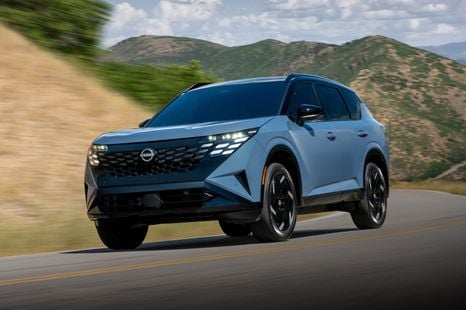
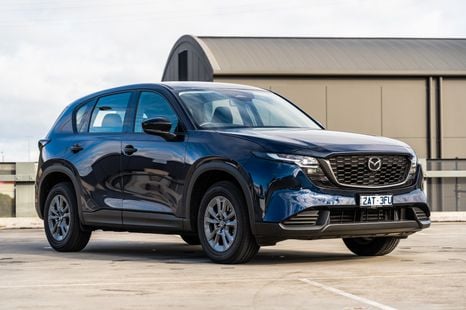
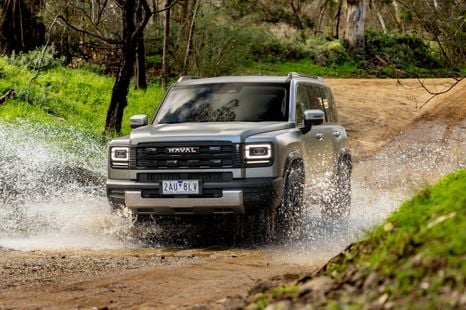
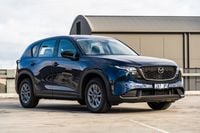
Or the big-name Toyota RAV4, Nissan X-Trail or Mitsubishi Outlander. Or the new-gen Subaru Forester, Volkswagen Tiguan, or even the ancient Mazda CX-5… or any number of budget-focused Chinese choices, like the GWM Haval H6, Chery Tiggo 7… the list goes on.
Seriously, if you’re in the market for a mid-size SUV like this, you’d be spending your time well to have a look at our comparison site for the Hyundai Tucson – you’ll find it here.
To see how the Hyundai Tucson lines up against the competition, check out our comparison tool
What is the Hyundai Tucson like on the inside?
The interior design of the Tucson is ageing very nicely.
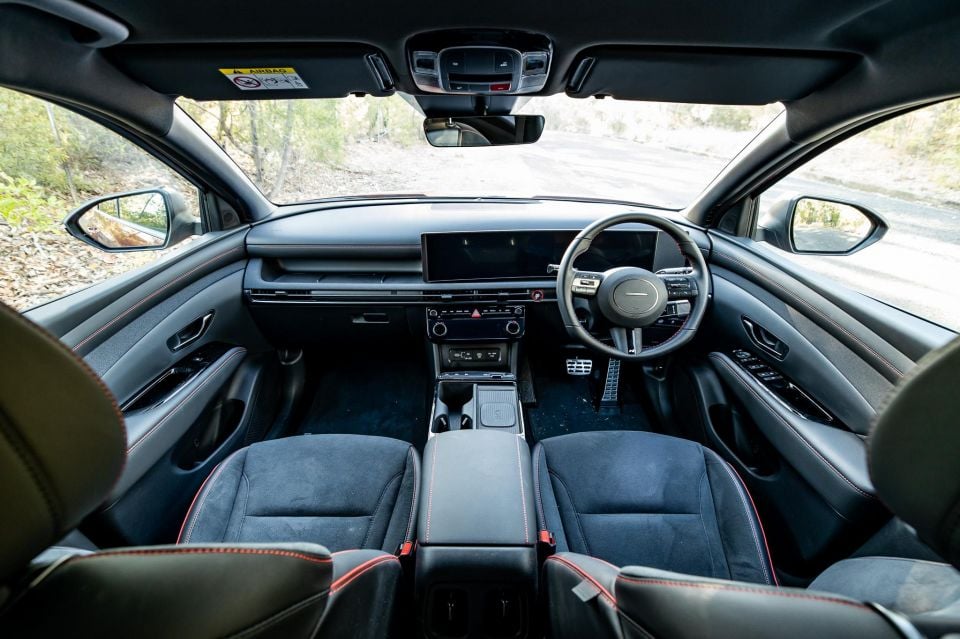
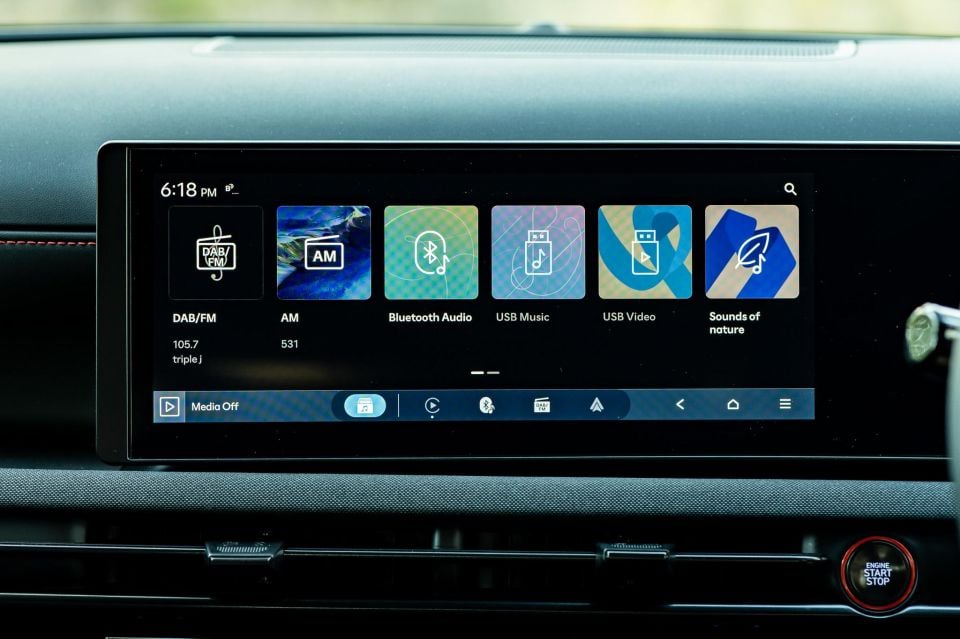
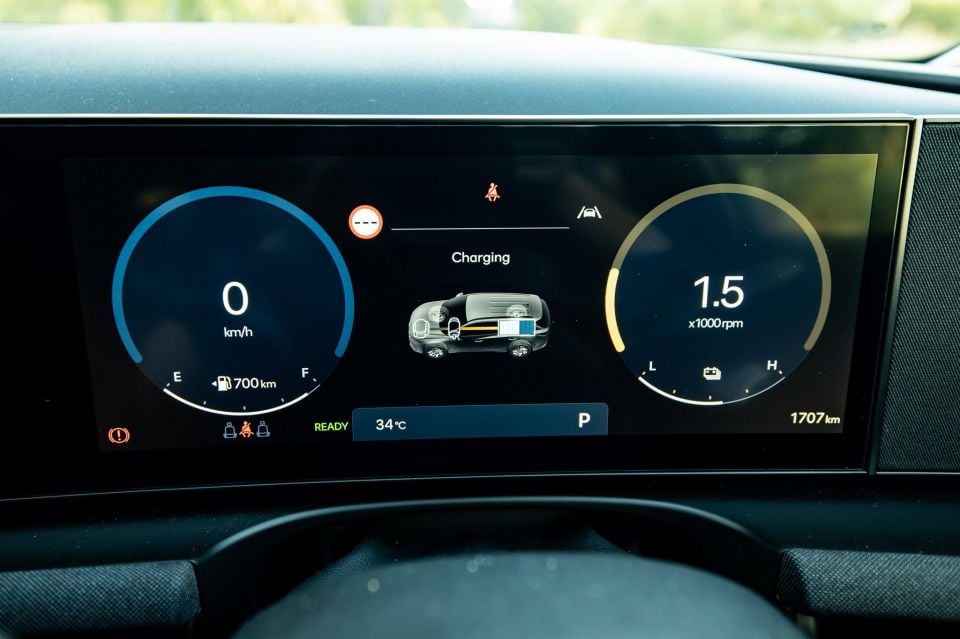
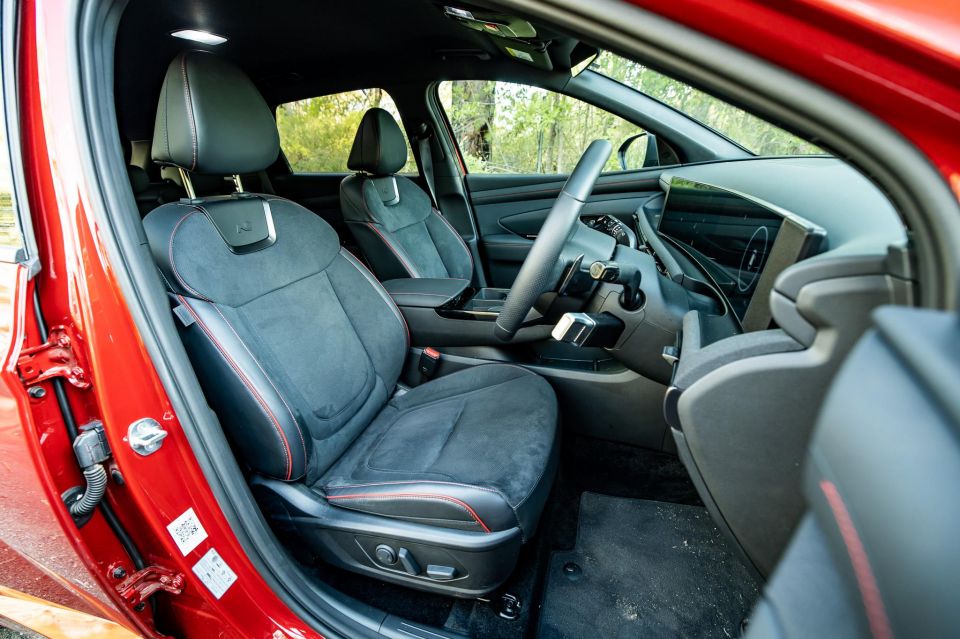
From the twin 12.3-inch screen setup to the mixture of different textures and materials in the N Line versions, it is a very pleasant place to sit and feels great in terms of the delight factor… if a little dark. Because, as an N Line, it is rather shadowy inside.
Find your perfect new car with CarExpert
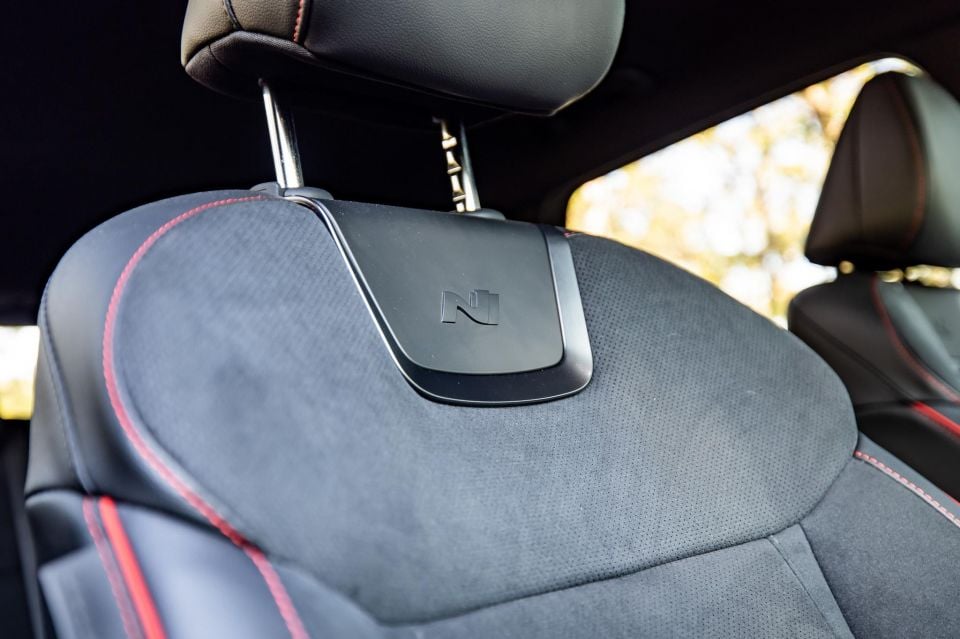
But the N Line seats are exceptionally comfortable, and with their microsuede style finish, they are very, very enjoyable to spend time in.
One thing that might not be to all tastes, though, is that the passenger seat is still manually adjustable, and while the driver’s seat has electric adjustment, it doesn’t have memory settings.
The steering wheel is a delight to hold as well with its squircular design, and perforated leather grips.
Unlike some others in the segment, there’s no piano black on the steering wheel, which has actual buttons and dials for the main controls, and there are paddle shifters as well, which actually work to adjust the regen braking in Eco mode, or as actual gear toggles in Sport.
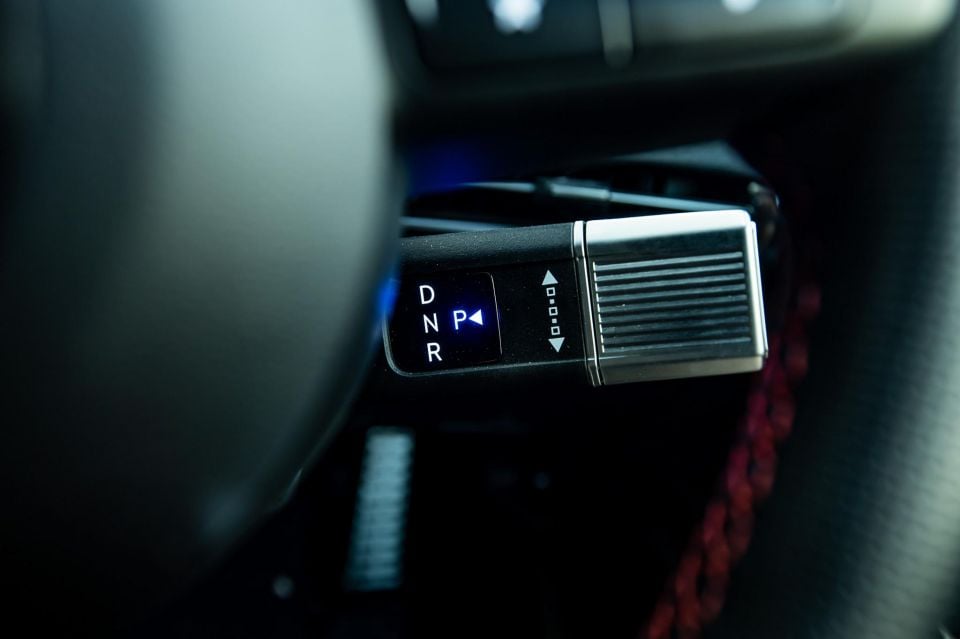
Off the steering column you’ll also find conventional stalks, and hybrid models get the shift-by-wire gear selector down near the driver’s knee – if you are tall, be careful when you’re getting in and out, as you may bump it.
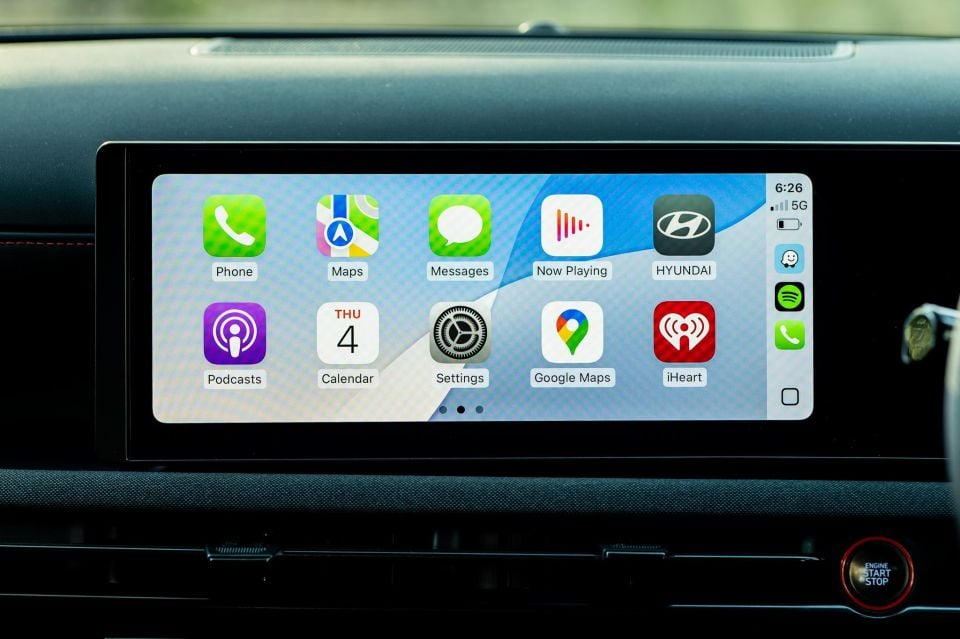
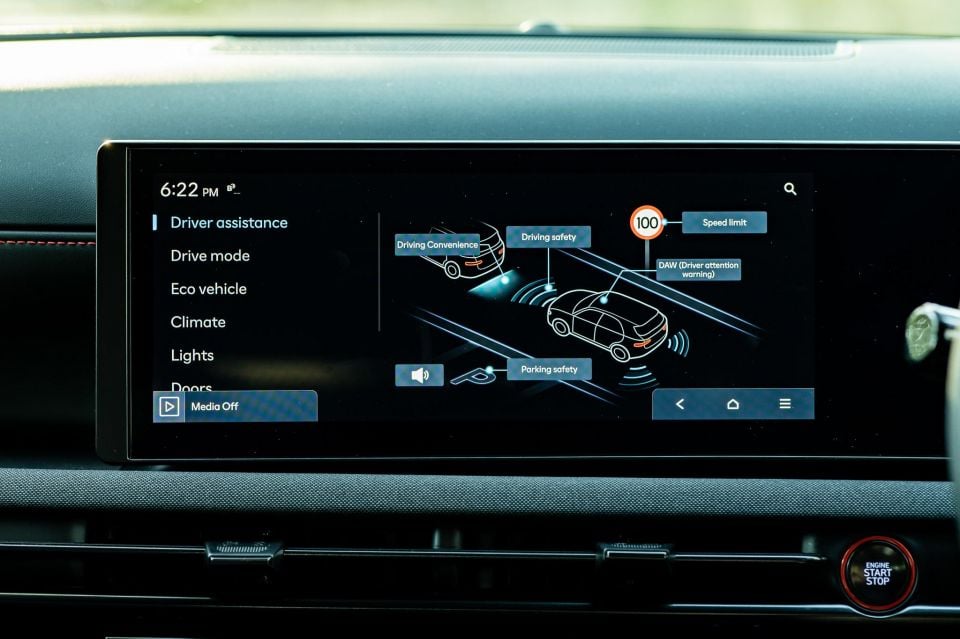
The screen tech is very good, with crisp displays and configurable appearances, and the touchscreen media system is quick to react with menus that are easy to get your head around.
Whether you are the sort of person who just uses wireless Apple CarPlay or Android Auto as their go-to, or if you are using the conventional built-in menu system, you will get used to it all very quickly.
It also has connected services, meaning you can check the weather forecast where you are, and you’ve got live map updates using the navigation system too.
That connected services plan also means that you can connect the car to your phone and set some temperature settings, and also see where the car is if you need to. It also has SOS call functionality for post-crash assistance, and the roadside assist button if you need help.
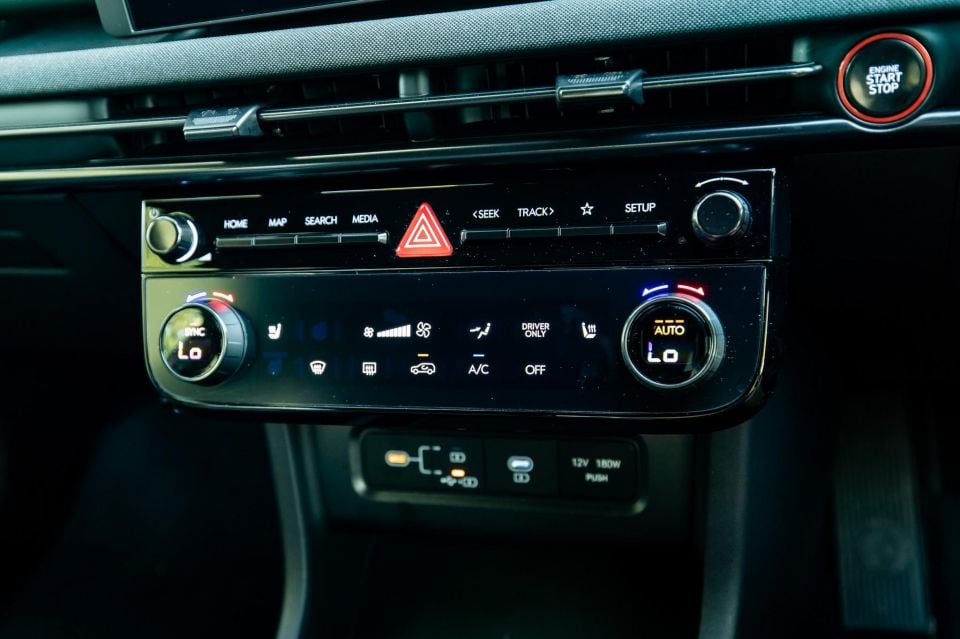
Media controls include buttons and dials (yay!), and below there’s a touchscreen system for some of the climate control. You still get dials to adjust the temperature, but you have to touch a small screen to adjust fan speed, direction, seat heating, demisters, and recirc. The fact that that’s a touchscreen is not to my tastes, but at least it is reasonably easy to learn, though it does leave smudges very easily.
Speaking of smudges, there’s a piano black section with buttons between the seats for parking sensors, camera, auto hold and drive modes… it just gets grubby so easily.
There’s also a pair of USB ports for charging and connecting up to the screen if you prefer, and you’ve got a 12V port, plus beneath the centre area there’s a big storage tray.
Between the front seats there is a wireless phone charging dock with an illuminated charge indicator to show you that it’s doing its job – very handy. Next door to that you’ll find a pair of cupholders, and behind there’s a small tray plus a decent-sized console bin.
The glovebox is a good size, and above it there’s a shelf with some extra storage, while in the doors there are big pockets for bottles.
In the Elite and above, you get an auto-dimming rear-vision mirror, as well as illuminated vanity mirrors – but they’re the ones that you have to hit the switch for, rather than having them auto-illuminate.
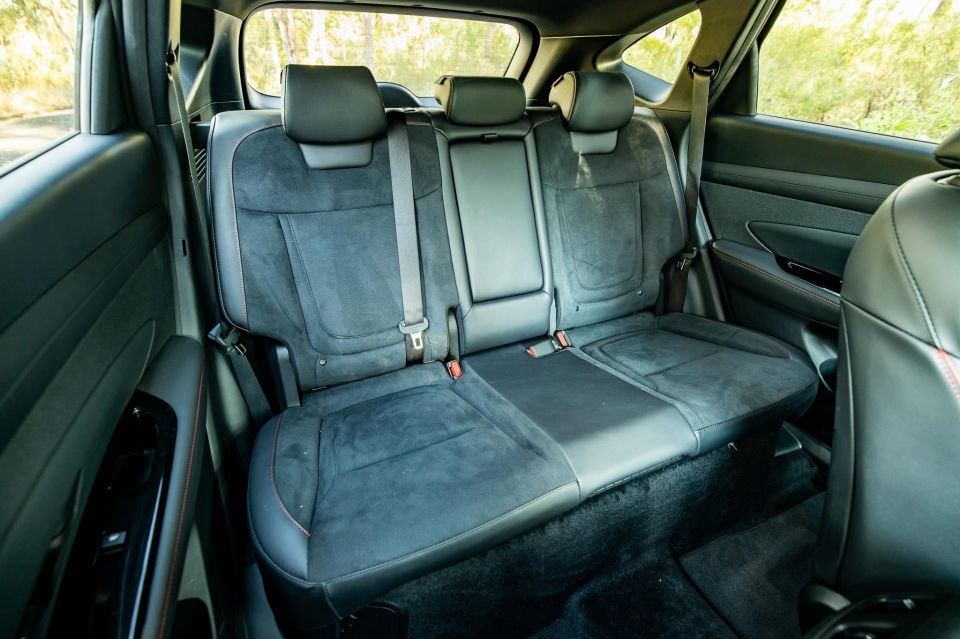
Back seat space is also extremely good.
With the driver’s seat set for my position at 6’0”/182cm tall, I had inches of room in front of my knees and lots and lots of leg-stretching space as well.
If you’re tall, you will find there’s ample headroom and shoulder room, and you get the amenities you would expect in terms of overhead grab handles and coat hooks. But there’s just one central light between the seats, which is not ideal for parents.
However, the rear area has mesh pockets on hard plastic seatbacks (great for kid kicks), and there are bottle holders in the doors, a flip-down armrest with cupholders, directional air vents, USB charge ports, and soft elbow pads on the doors as well.
ISOFIX points and three top-tethers are the mainstay for this type of SUV, and while the second row doesn’t have any sliding functionality, there is a level of recline, which is handy to get comfy on those longer trips.
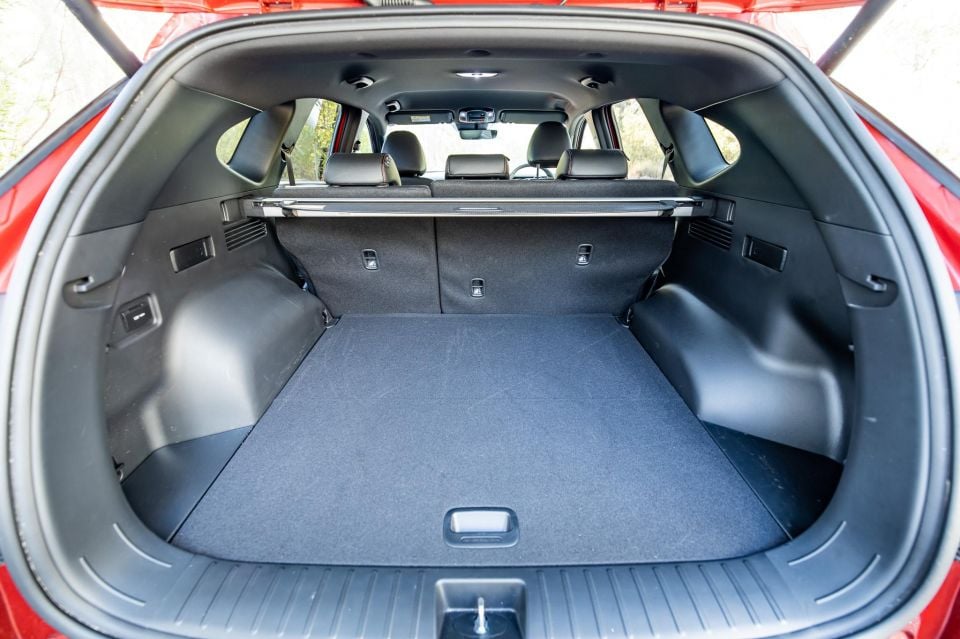
In the boot, there’s a huge amount of space, with loads of room for different-sized luggage, and a parcel shelf to keep things covered up if you need to. The hybrid models have a 582-litre cargo zone, which is more than the petrol equivalent because that version has a full-size spare wheel.
But even in the hybrid, there’s a space-saver spare, which is a win, and you’ll also find a 12V outlet in the back, plus shopping bag hooks and lights. Choose the Elite or above, and you get a power tailgate with smart opening, meaning you can just stand at the back and it’ll sense you’re there with the key and open the boot for you (if enabled).
| Dimensions | Petrol | Hybrid |
|---|
| Length | 4640mm | 4640mm
4650mm – N Line |
| Width | 1865mm | 1865mm |
| Height | 1665mm | 1665mm |
| Wheelbase | 2755mm | 2755mm |
| Cargo capacity | 539L (rear seats up)
1860L (rear seats folded) | 582L (rear seats up)
1903L (rear seats folded) |
To see how the Hyundai Tucson lines up against the competition, check out our comparison tool
What’s under the bonnet?
As mentioned earlier, the Tucson range is split into two powertrains only now, down from four just a matter of months ago.
| Specifications | Petrol | Hybrid |
|---|
| Engine | 2.0L 4cyl petrol | 1.6L 4cyl turbo-petrol hybrid |
| Engine power | 115kW | 132kW |
| Engine torque | 192Nm | 264Nm |
| Electric motor output | – | 47.7kW |
| Total system power | – | 172kW |
| Total system torque | – | 350Nm |
| Battery capacity | – | 1.49kWh |
| Transmission | 6-speed auto | 6-speed auto |
| Drive type | Front-wheel drive | Front- or all-wheel drive |
| Weight | 1495-1616kg | 1626kg-1806kg |
| Fuel economy (claimed) | 8.1L/100km | 5.3L/100km |
| Fuel tank capacity | 54L | 52L |
| Fuel requirement | 91-octane regular unleaded | 91-octane regular unleaded |
| CO2 emissions | 184g/km | 121g/km |
| Emissions standard | Euro 5 | Euro 5 |
| Unbraked tow capacity | 750kg | 750kg |
| Braked tow capacity | 1650kg | 1900kg |
The diesel? Done. The turbo-petrol? Dead.
Instead, we’re left with the choice of a 2.0-litre four-cylinder petrol, which is a dullard of a thing, or the hybrid powertrain in this test car, which is clearly the pick of these two.
You can have this hybrid system with front- or all-wheel drive, and the AWD system adds a few thousand bucks to the equation. But unlike, say, a RAV4, it actually has a mechanical connection to the rear wheels for the AWD system.
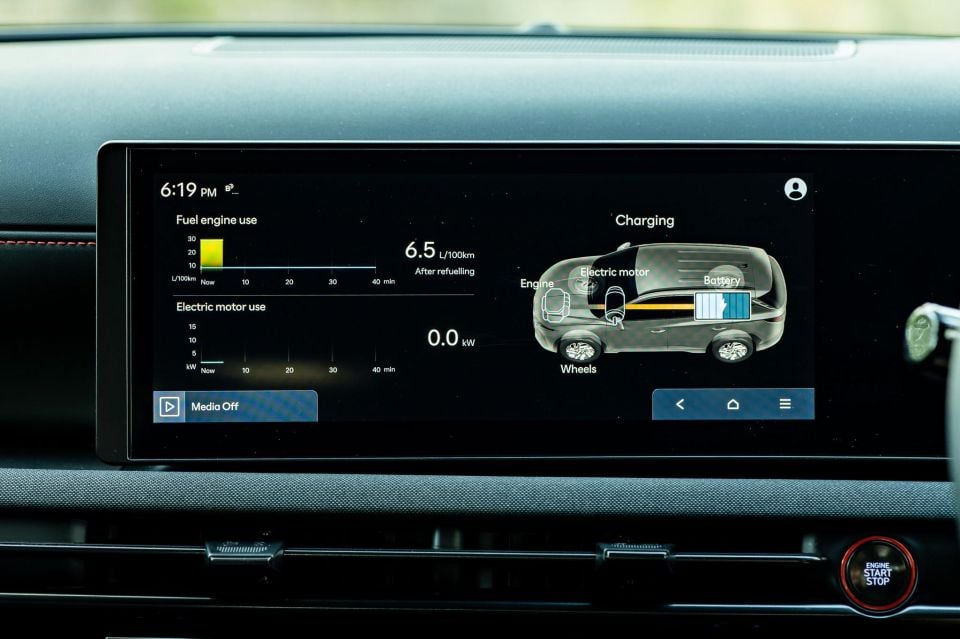
On test, I expected to see pretty close to the claimed fuel use figure – like I did when I spent months in a Hyundai Santa Fe Hybrid long-termer… in fact, I saw closer to the claim in that bigger seven-seater than I did here.
My time here was spent in urban, highway and freeway duties, the same sort of stuff you might do. And I saw a displayed return of 6.7L/100km.
That’s okay for a hybrid SUV, but it’s not exactly what I’d deem to be frugal. I’ve seen better in the RAV4, that’s for sure.
To see how the Hyundai Tucson lines up against the competition, check out our comparison tool
How does the Hyundai Tucson drive?
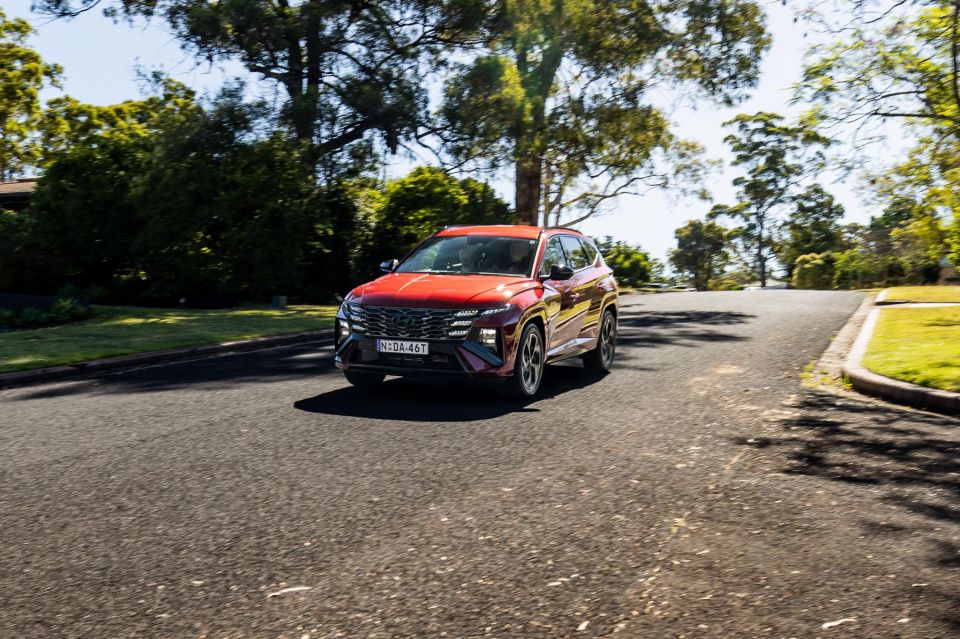
The Hyundai Tucson isn’t the perfect blend of comfort and dynamism, but it is a very compelling thing. If you do enjoy driving, it might be more enticing than some of the other offerings in this segment.
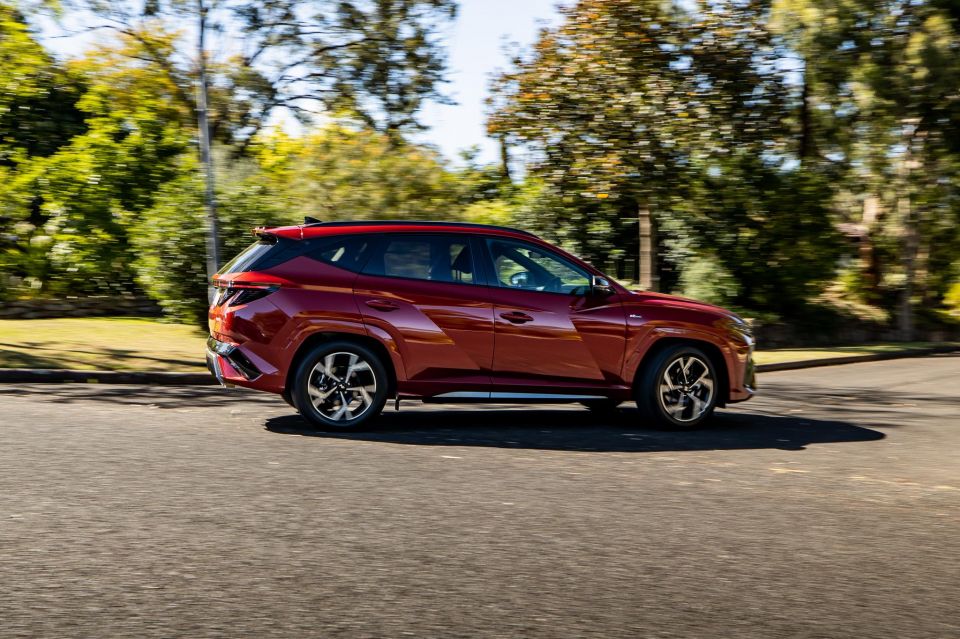
The ride comfort can be a little sharp at times owing to the N Line’s large 19-inch wheels and low-profile tyres, but it does offer better handling capability than some of the other SUVs that play in this place, and the steering is very nicely weighted and predictable in its responses.
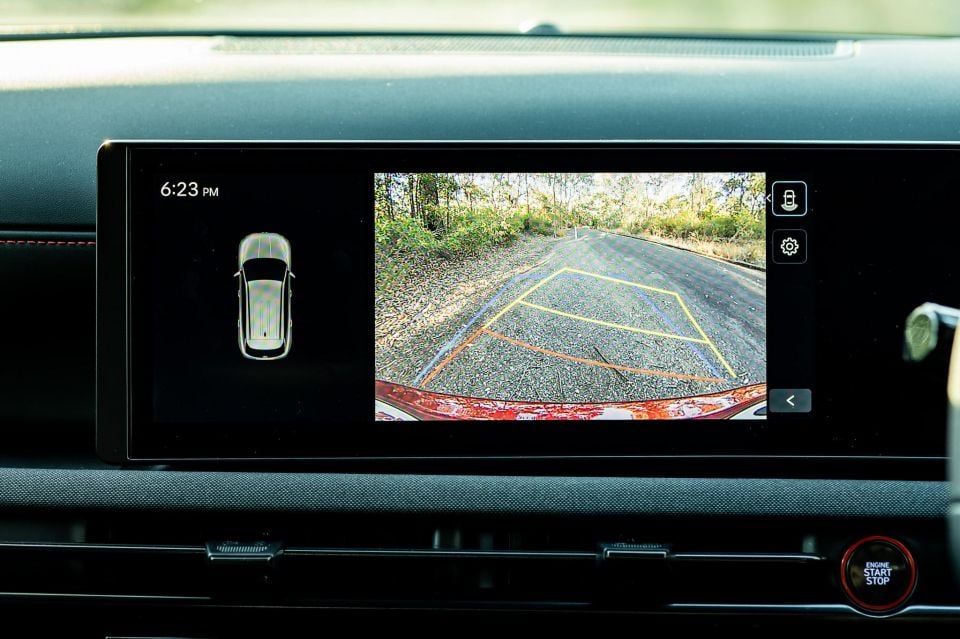
It’s easy to park, too, and while it doesn’t have a surround-view camera system, it does have decent parking sensors and a rear camera. Sadly though, it doesn’t appear that the front parking sensor auto-activates when you’re pulling into a parking spot nose-first, as some others do.
As for this powertrain, it is an absolute cracker.
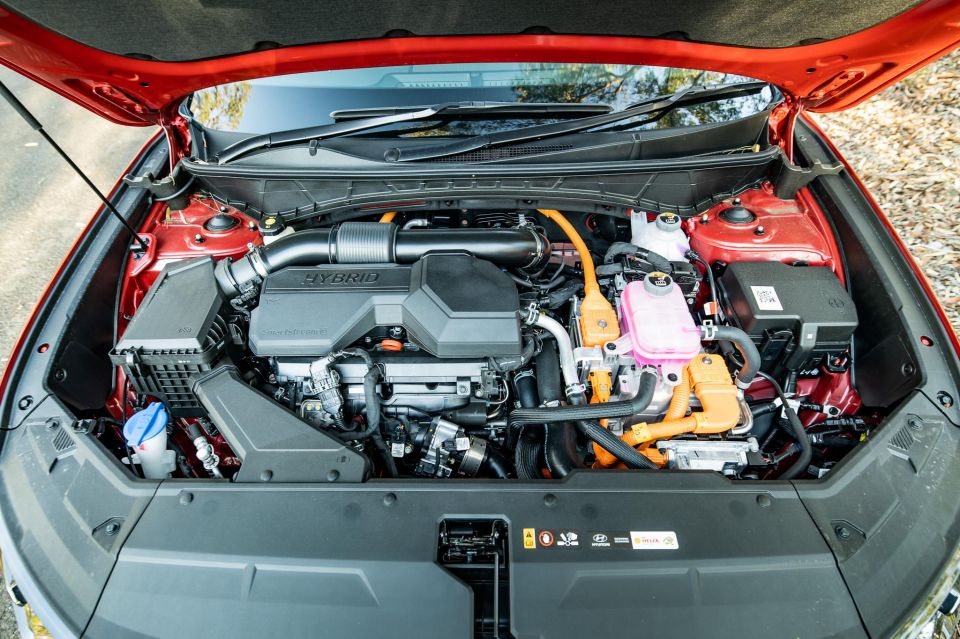
If you’re unaware, it’s the same one Hyundai put into the Santa Fe, and that means a turbo-petrol engine with a six-speed automatic transmission and an electric motor sandwiched between.
What that means is that in EV mode – which it will happily jump into regularly at all different speeds – you will be able to sometimes feel gear shifts happening, even though you’re driving fully electric.
It’s a bit of a peculiar sensation, but it is very smooth in the way that it operates.
In fact, I’d go so far as to say that this is more refined in a lot of ways than some of the others in the segment – maybe even the big-name Toyota RAV4 – and the engine is nowhere near as noisy when it kicks back into life.
And when it is active, and you’ve got electric assist and the petrol engine humming, you will find that this is a fast-moving machine.
It’s certainly going to tick the box for those looking for a sprightly-feeling SUV with the added capability of being able to drive as an EV in some situations. It won’t drive in EV for very long, but you’d be surprised how often it wants to use that capability.
Ready to buy? We’ll help you get a great deal.
If this is the car for you, we’ll compare offers from trusted dealers, handle the back and forth and manage your purchase from enquiry to delivery.
The transmission itself is mostly very clever with its logic.
Helping to feed the battery pack and allow it that hybrid-electric capability is the regen braking system, which has a few different modes that you can select from – including a rather assertive mode (not quite single pedal driving, but very close).
The brake pedal feel might take a little bit of getting used to because, like lots of regen braking systems, the sensation underfoot and the travel of the pedal can feel somewhat inconsistent. At times you might also notice that if the regen braking is set at an assertive level, it will feel like the powertrain is somewhat laggy.
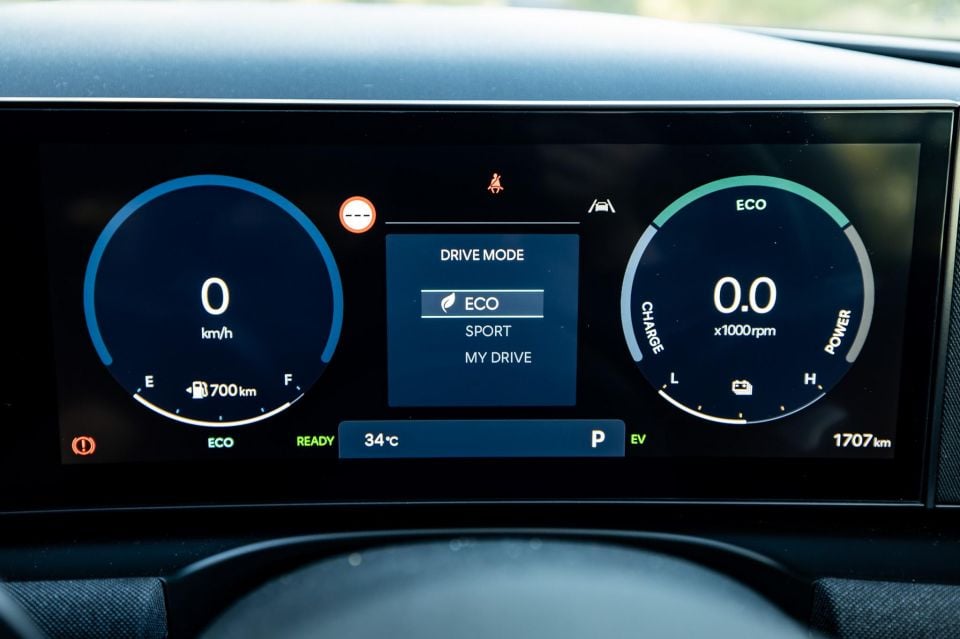
But you can tailor the drive experience to be what you want, with a couple of different drive modes – including a Sport mode – if you are looking for those sorts of thrills.
While refinement is good, it does suffer a little bit of open-road noise intrusion, especially on coarse-chip surfaces, but the bigger issue at higher speeds is wind noise, which is clearly evident past 90km/h.
I had some minor annoyances with the safety gear.
The fact that you can mute the speed sign tech is great (because it constantly gets it wrong – for instance, reading 110km/h signs as 70km/h on major motorways in Sydney). Just press and hold the button, and it’ll turn off the warning chimes. Press and hold the lane-keeping button to disable that tech, too. And there’s no driver monitoring camera, so no need to fuss with that, which is a welcome difference compared to other newer-gen Hyundais.
However, I also had an issue with the rear cross-traffic auto-braking system, which clamped down and left me stranded in the middle of a lane of traffic because it saw what was coming. What that meant was that when I needed to reverse in a hurry, the car wouldn’t let me. Not a great feeling.
To see how the Hyundai Tucson lines up against the competition, check out our comparison tool
What do you get?
2026 Hyundai Tucson equipment highlights:
- 17-inch alloy wheels
- Digital Key functionality (Bluetooth key opening)
- Full-size spare wheel (non-hybrid only, hybrids have a space-saver)
- Dark chrome front grille
- Roof rails
- LED headlights
- LED daytime running lights
- LED side indicators
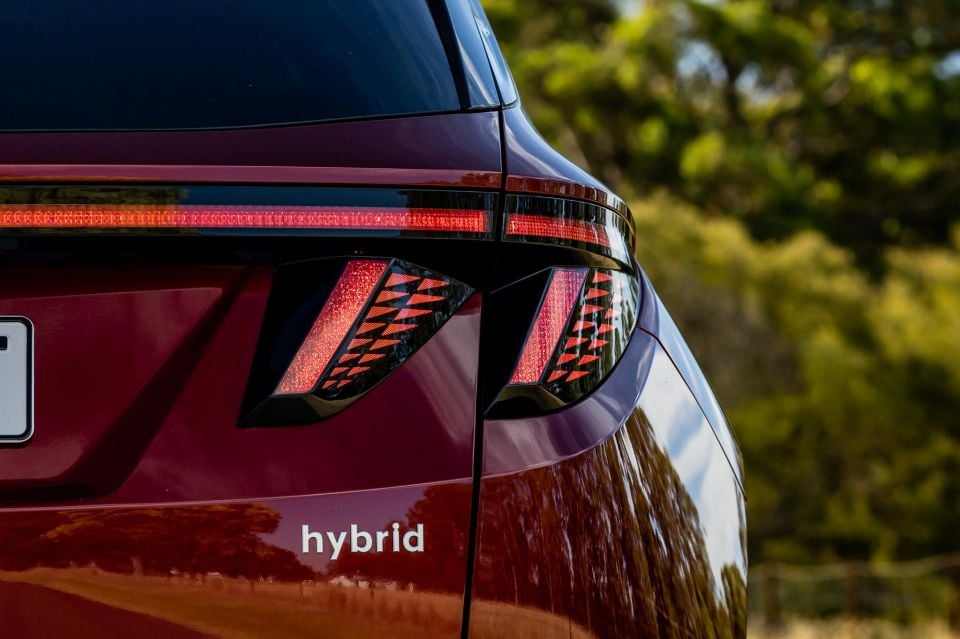
- LED tail-lights
- Heated and auto-folding side mirrors
- Cloth interior upholstery
- 4.0-inch instrument cluster display
- 12.3-inch touchscreen infotainment system with over-the-air updates
- 6.6-inch climate control panel
- Wireless Apple CarPlay and Android Auto
- Digital radio
- Four USB-C outlets
- Six-speaker sound system
- Wireless phone charger
- Electronic parking brake
- Leather-wrapped steering wheel
- Leather-wrapped shifter
- Premium cloth dashboard and door centre trim
- Black cloth upholstery
- Power driver’s seat lumbar
- Bluelink connected services
- Remote control of climate and vehicle functions
- Vehicle settings management
Elite variants gain:
- 18-inch alloy wheels
- Dark chrome grille
- Front parking sensors
- Rear privacy glass
- Rain-sensing wipers
- Solar control windshield glass
- Black leather-appointed seats
- Heated front seats
- 10-way power driver’s seat
- 12.3-inch digital instrument cluster
- Satellite navigation
- Additional Bluelink functionality
- Live traffic updates
- Navigation send to car
- Voice recognition for POI lookup, vehicle controls
- Dual-zone climate control
- Keyless entry with push-button start
- Remote start
- Shift-by-wire gear selector and paddle shifters (Hybrid only)
- Luggage net
Flagship Premium grades add:
- 19-inch alloy wheels
- Glossy dark chrome front grille
- Silver skid plate
- Panoramic glass sunroof
- Power tailgate
- Head-up display
- Bose premium sound system
- LED interior ambient lighting
- Heated steering wheel
- Black, brown, or grey leather upholstery
- Ventilated front seats
- Heated rear outboard seats
Choose the optional N Line package and you get:
- 19-inch N Line alloy wheels
- Automatic high-beam
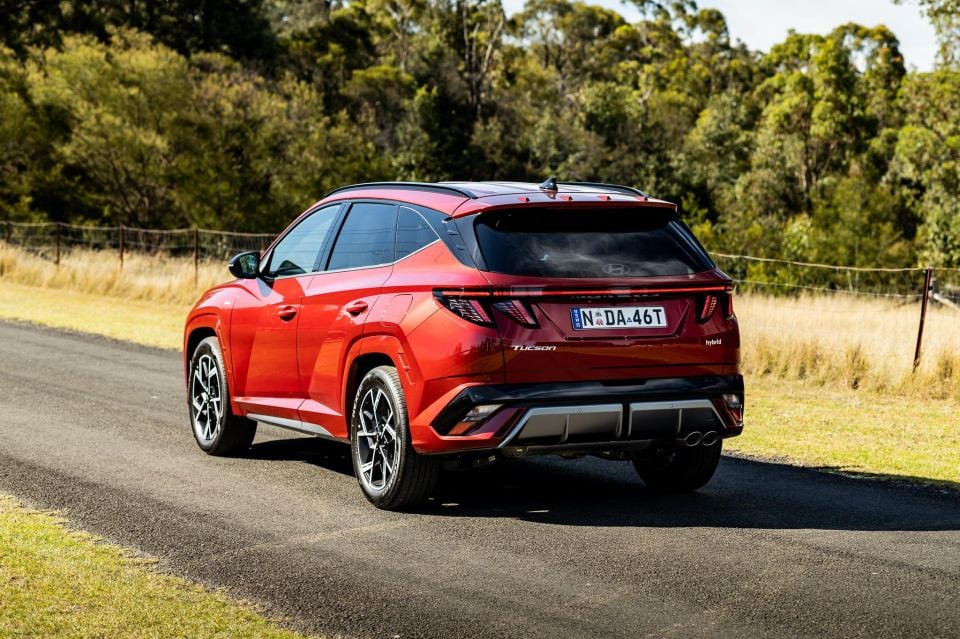
- N Line exterior body kit
- N Line front and rear bumpers
- N Line rear spoiler
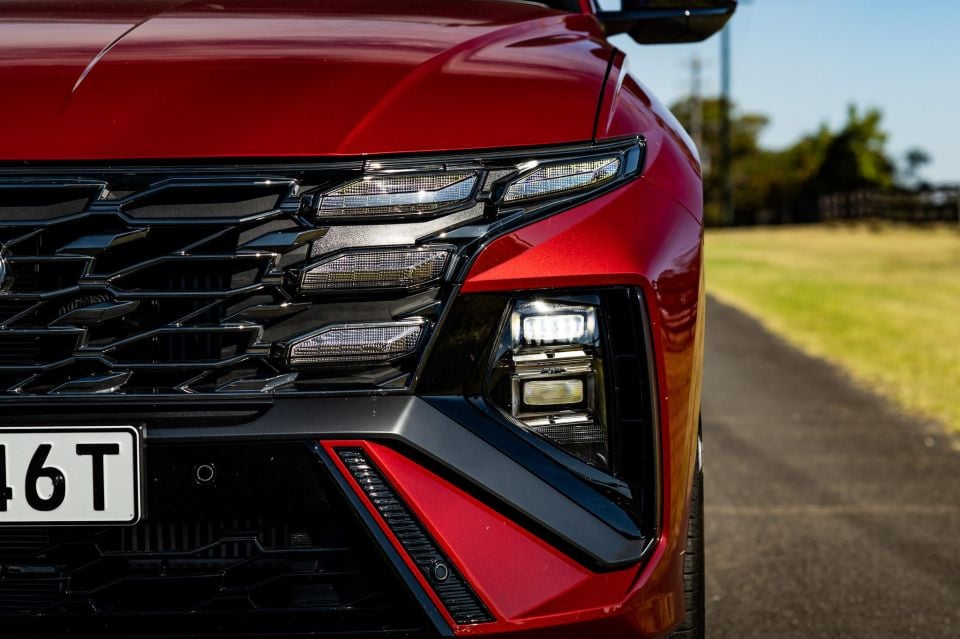
- Projector LED headlights
- Body-coloured cladding
- N Line front grille
- N Line daytime running lights
- N Line skid plate
- N Line shifter (FWD models only)
- Metal pedals
- Leather and suede upholstery
To see how the Hyundai Tucson lines up against the competition, check out our comparison tool
Is the Hyundai Tucson safe?
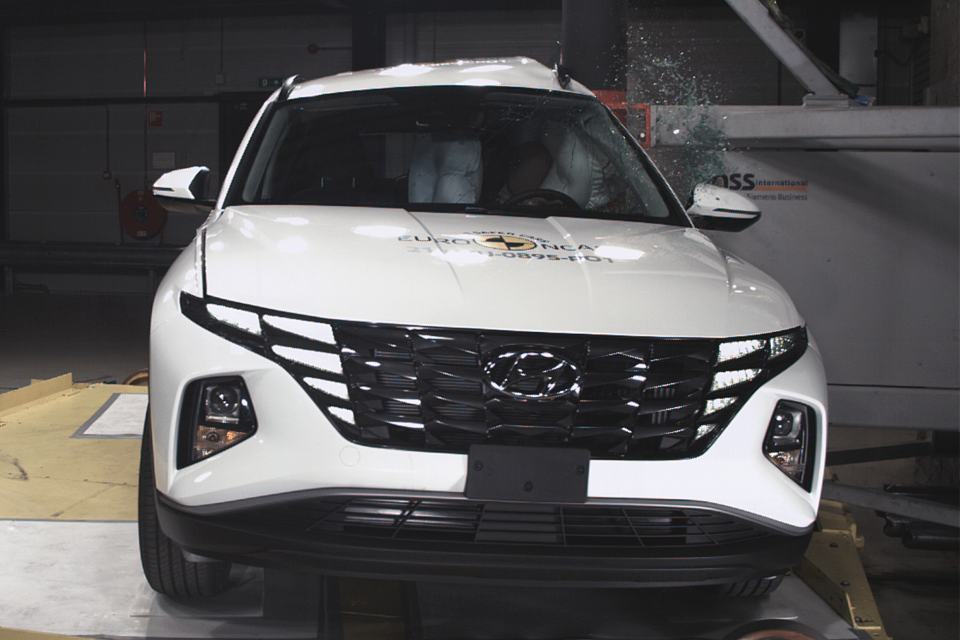
What’s a bit weird about the safety rating for the Hyundai Tucson is the fact its score is actually based on a different car. Well, kinda.
| Category | Hyundai Tucson |
|---|
| Adult occupant protection | 87% |
| Child occupant protection | 86% |
| Vulnerable road user protection | 66% |
| Safety assist | 70% |
The five-star ANCAP rating it achieved in 2021 was based on the Euro NCAP rating for the short-wheelbase version sold over there. We get a bigger Tucson (same story with Sportage), but the score carried over, with the following breakdown: adult occupant protection – 87 per cent; child occupant protection – 86 per cent; vulnerable road user protection – 66 per cent; safety assist – 70 per cent.
Standard safety features include:
- Autonomous emergency braking (AEB)
- Pedestrian detection, cyclist detection and junction assist
- Adaptive cruise control with stop/go
- Blind-spot alert
- Rear cross-traffic alert with auto-brake
- Intelligent speed limit assist
- Lane-keep assist
- Lane Following Assist (lane centring)
- Reversing camera
- Rear parking sensors
- Leading vehicle departure alert
- Safe exit warning
- Rear occupant alert
- Tyre-pressure monitoring
- Front, front-side, and curtain airbags plus a front-centre airbag
Only the range-topping Premium has a surround-view camera and the clever Blind-Spot View Monitor (which displays in the instrument cluster).
Hyundai’s Backover AEB system (known as PCA-R – Parking Collision-Avoidance) is also reserved for that top model, too. That potentially life-saving rear AEB system can detect pedestrians and objects in the path of the car while reversing.
To see how the Hyundai Tucson lines up against the competition, check out our comparison tool
How much does the Hyundai Tucson cost to run?
Another change for Hyundai in recent times is the addition of a conditional seven-year warranty.
| Servicing and Warranty | Hyundai Tucson |
|---|
| Warranty | 7 years, unlimited kilometres (conditional) |
| Roadside assistance | Lifetime (conditional) |
| Service intervals | 12 months or 15,000km |
| Capped-price servicing | Lifetime |
| Average annual service cost | $374.20 (on 5yr plan) |
| Total capped-price service cost | $1871 (on 5yr plan) |
The brand still has a standard five-year, unlimited-kilometre warranty for all buyers, but if you service your car with Hyundai’s network of workshops, you can get seven years and unlimited mileage cover.
There’s something you need to know about the servicing, though. Intervals for the petrol models are 12 months or 15,000km, whichever occurs first. But if you choose the hybrid, that drops down to 12 months or 10,000km.
That mightn’t be an issue if you’re a light user, but if you’re big on distance coverage, it might be a painful cost to keep in mind.
The costs, meanwhile, are capped. Hyundai has a lifetime capped-price servicing program, which is novel, or you can prepay for your maintenance for the first three, four or five services – you could roll that into your finance payments, and lessen the burden.
If you service with Hyundai, you also get roadside assistance topped up year-by-year, for the life of the vehicle.
To see how the Hyundai Tucson lines up against the competition, check out our comparison tool
CarExpert’s Take on the Hyundai Tucson
There are some really appealing things about the Tucson Hybrid – the space on offer is exceptional, the tech is pretty agreeable, and it’s a relatively easy drive experience, too.
For some, the appeal of cheaper options from newer brands might be too strong, but for those in the market for a charming and practical SUV, this one is still well worth considering.
CarExpert can save you thousands on a new Hyundai Tucson. Click here to get a great deal.
Click the images for the full gallery
MORE: Explore the Hyundai Tucson showroom













 Automotive Vehicle Spec Data & 4K images Powered by JATO Dynamics Ltd