




Damion Smy
A decade on: Our favourite Australian-made Fords
Ten years to the day since Australia's final Ford factory closed, we reminisce with our favourite locally made models.
4 Minutes Ago
On paper, the BMW M2 CS looks like it could well be the best M-car currently on sale, but can it actually deliver from behind the wheel?
Deputy News Editor
Deputy News Editor
Deputy News Editor
Deputy News Editor
If this is the car for you, we’ll compare offers from trusted dealers, handle the back and forth and manage your purchase from enquiry to delivery.
The BMW M2 CS Coupe could be the best car from the high-performance BMW M division in showrooms – and that’s saying something, because the current M-car lineup is revered by enthusiasts and coveted by rival automakers.
Starting with the already excellent M2 two-door, the CS – for Competition Sport – is a limited-run, track-focused model which sharpens the sword with a suite of changes designed to deliver more engagement, more pace, and more ‘M’.
It’s the most compact and affordable CS model in showrooms, bringing a smaller footprint (but the same platform as the M3 and M4), less weight, and a muscled-up exterior compared to the regular M2, befitting the more potent, upgraded twin-turbocharged inline petrol six under the bonnet.
Combined with rear-wheel drive, it promises to be a serious driver’s car. So good, in fact, it could well rattle the cage of the other CS models in the M lineup – and knock off the odd Porsche Cayman on the way.
The second generation of M2 CS – based on the second-gen G87 M2 – follows legendary BMWs back to the lag-happy 2002 Turbo (1973), the aggressively tuned 1M Coupe (2011), and the original, playful M2 CS (F87) of 2020.
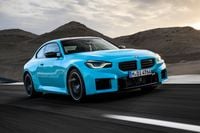
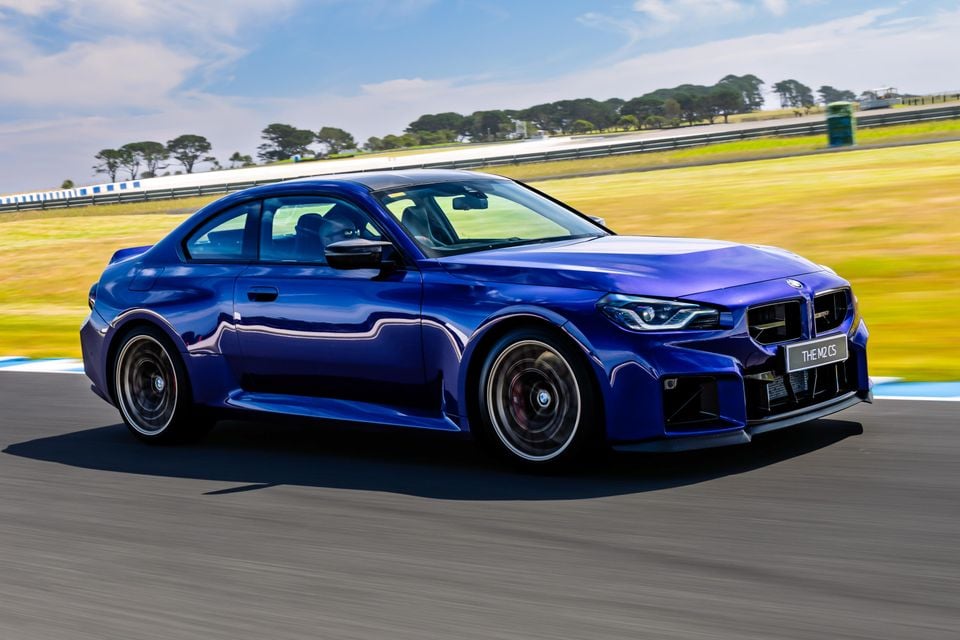
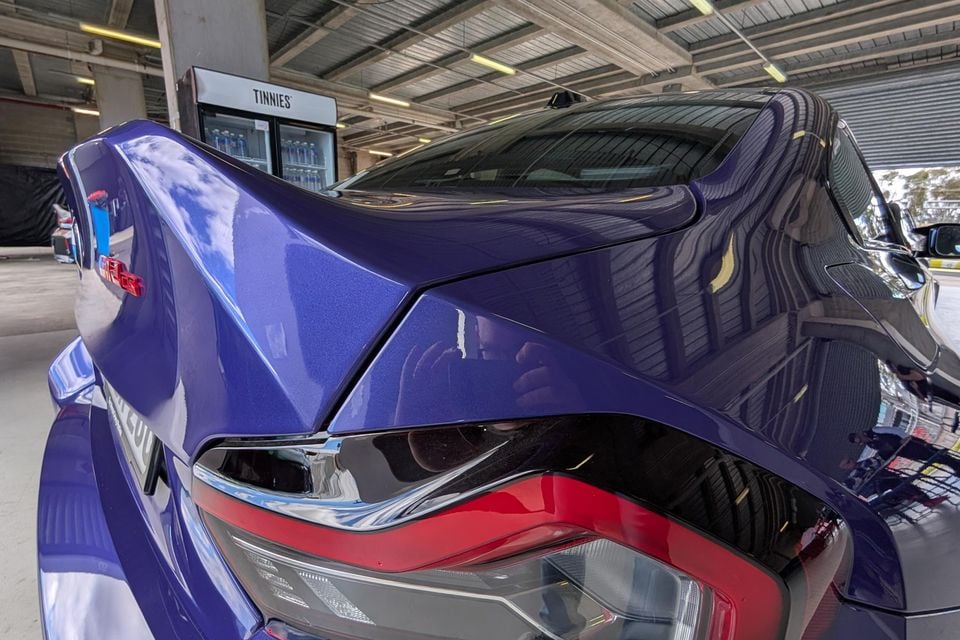
In an age of heavy, tall and clumsy SUVs – often remedied by electronic band-aids to make them palatable – the M2 follows an old-school formula, taking the M2’s coupe body and giving it unique styling with a more muscular, blockier front end and oh-so-cool retro ducktail rear spoiler.
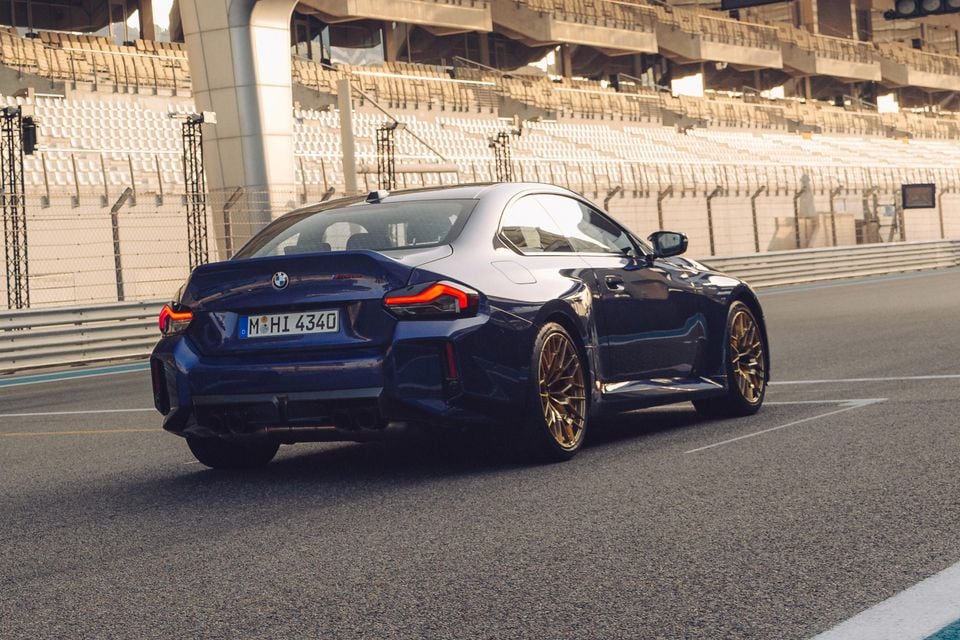
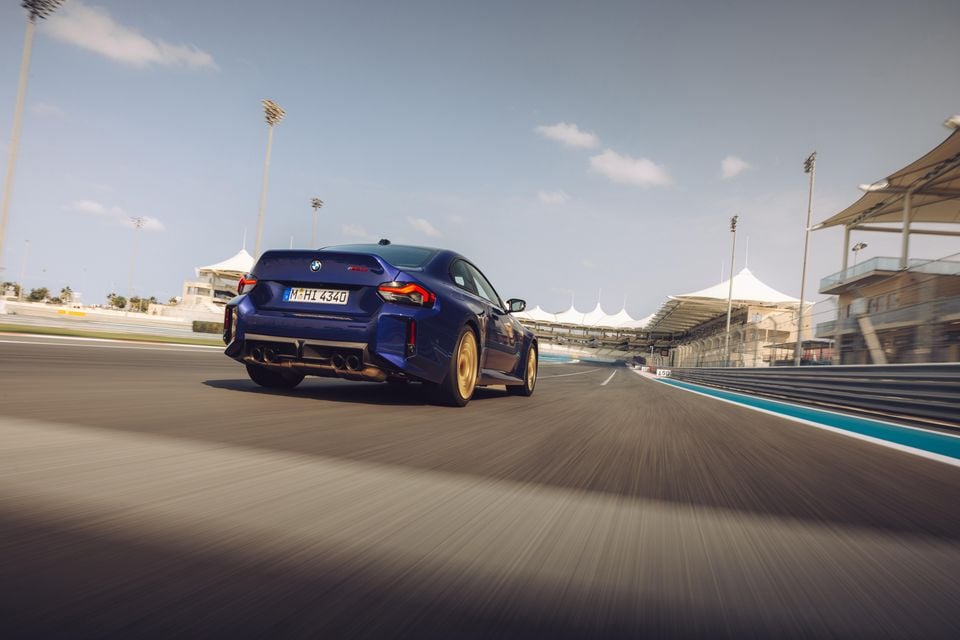
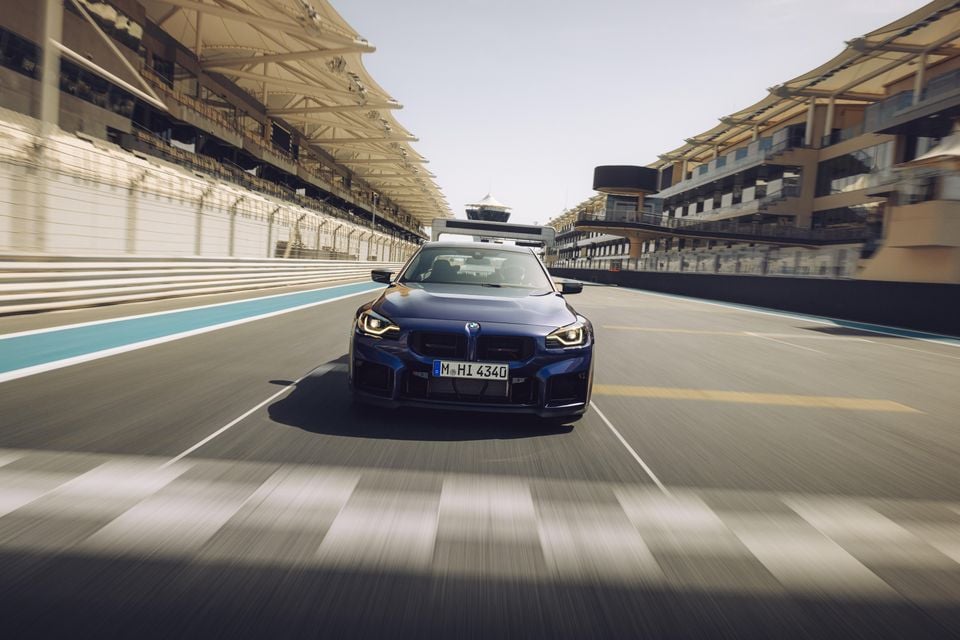
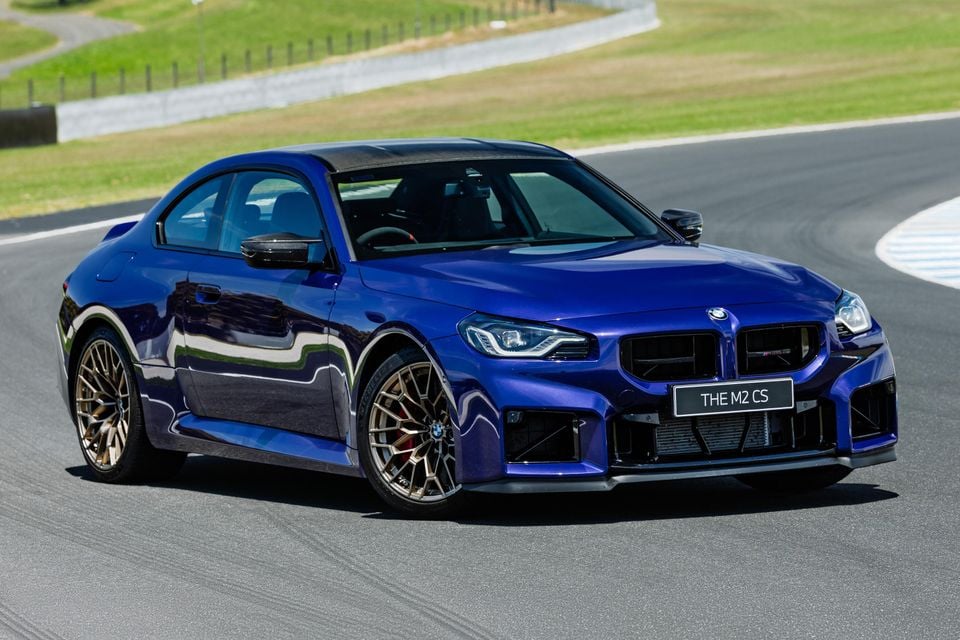
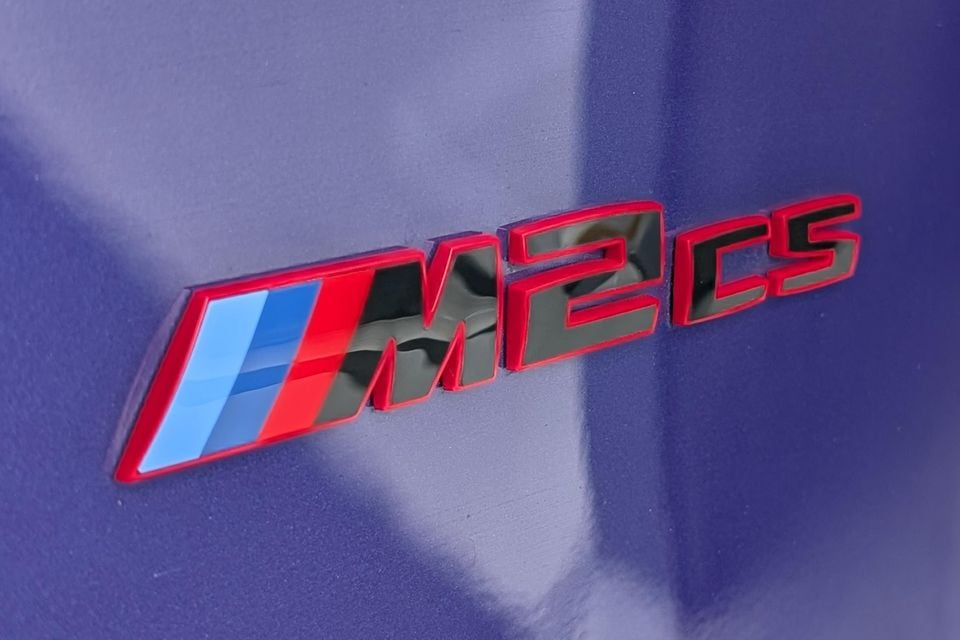
As well as sitting 8mm lower, CS visual cues include a blacked-out kidney grille, carbon mirror caps, red-outlined CS badges and unique alloy wheels, while the rear also has a unique carbon diffuser and four blacked-out titanium exhaust tips. Did I mention how cool that integrated ducktail spoiler is?
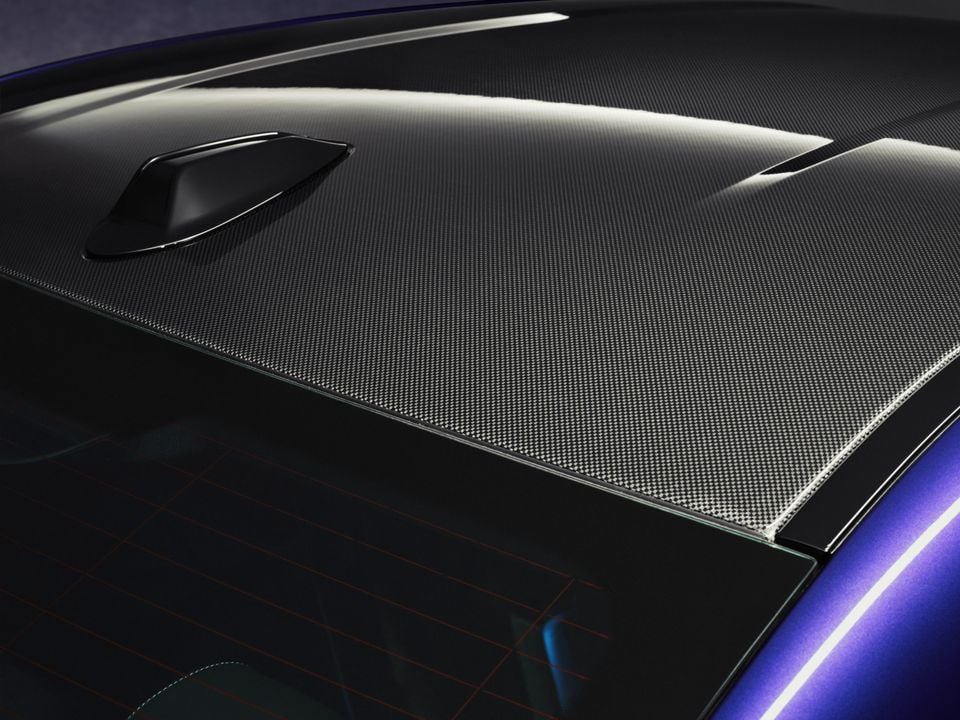
There’s a carbon-fibre bonnet and roof, too, helping shed 30kg of weight with Australian-spec versions officially clocking in at 1700kg neat, with revised suspension including a unique adaptive damping tune and revised spring rates.
That’s all a prelude to the brilliant S58 twin-turbo inline-six between the chassis rails – a proven powerplant used across the M lineup – and, while it’s the baby of the BMW M pack, the M2 CS has mouth-watering on-paper credentials suggesting it’s more than an appetiser to the range: this could be the M Division’s sweetest treat yet.
We’ve driven the new M2 CS at Mount Panorama, Bathurst – a track that takes no prisoners, as BMW’s own race drivers will attest – to see if the CS can deliver a bigger punch in a smaller package.
The M2 CS is $172,900 before on-road costs, a cool $44,800 more than the standard BMW M2, and above the previous M2 CS which was $147,400 back in 2020.
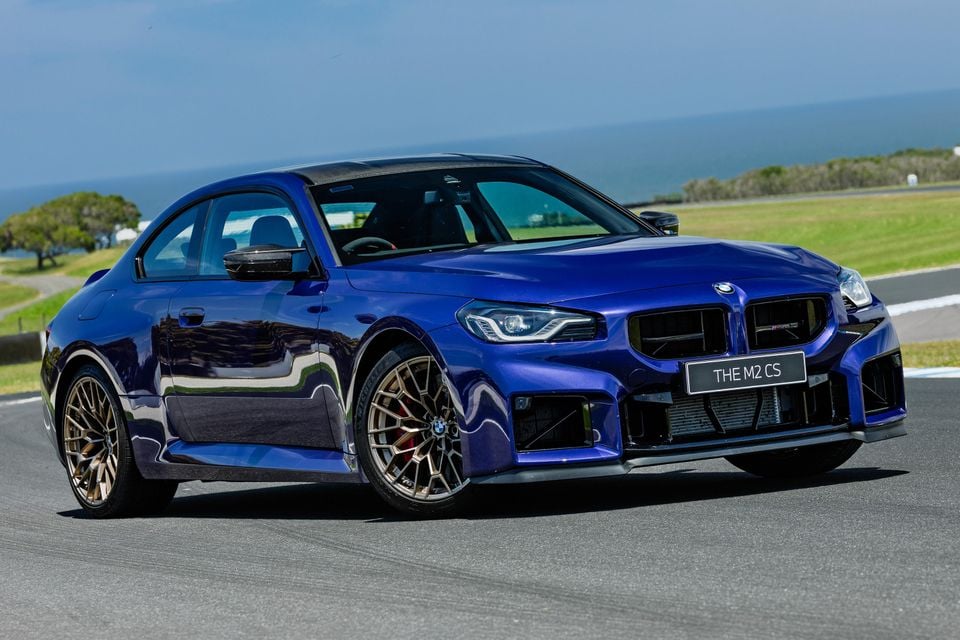
| Model | Price before on-road costs |
|---|---|
| 2026 BMW M2 6MT | $128,100 |
| 2026 BMW M2 8AT | $128,100 |
| 2026 BMW M2 CS 8AT | $172,900 |
Yet the 2026 M2 CS is well below the Porsche Cayman GTS 4.0 – which went off sale last year – at $199,190 in automatic guise, and significantly less than the sublime Cayman GT4, which was $228,580 before on-roads when it was last sold here in 2023.
Unlike the previous model, the 2026 M2 CS is offered only in automatic, as the six-speed manual transmission used in the M2 can’t cope with the bump in torque.
It leaves you two choices at the point of sale: which colour (with BMW Individual colours at no extra cost) and whether you’d like to spend $19,000 on carbon-ceramic brakes in place of the standard six-piston (front) and single-piston steel brakes.
It’s admittedly not a cheap car, but the M2 CS is seemingly affordable relative to its CS stablemates. The M3 Touring is $253,900 before on-roads, while the M4 CS – which is the next step up, given it’s a coupe like the M2 CS – is $254,900 before on-roads.
To see how the BMW M2 CS lines up against the competition, check out our comparison tool
It’s typical BMW – high quality, dark colours, smart design sprinkled with just a little fanfare – although there are standouts that set the CS apart with even more carbon-fibre and red lashings everywhere.
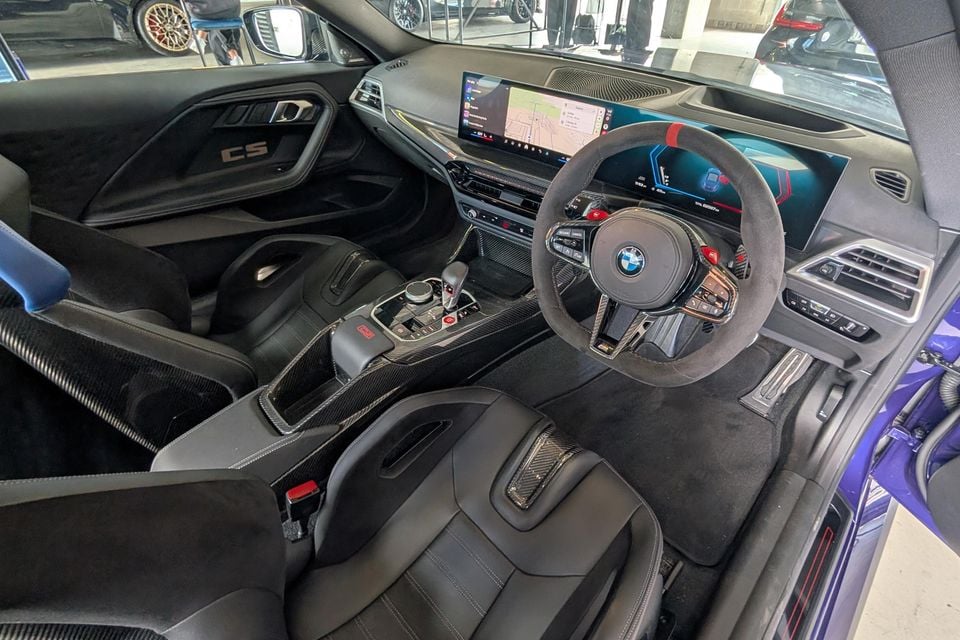
The most obvious CS cabin upgrade is electrically adjustable M carbon bucket racing front seats, a $9231 option on the regular M2, with their leather and Alcantara interrupted by bare carbon-fibre sections and cut-outs with illuminated backrest CS logos.
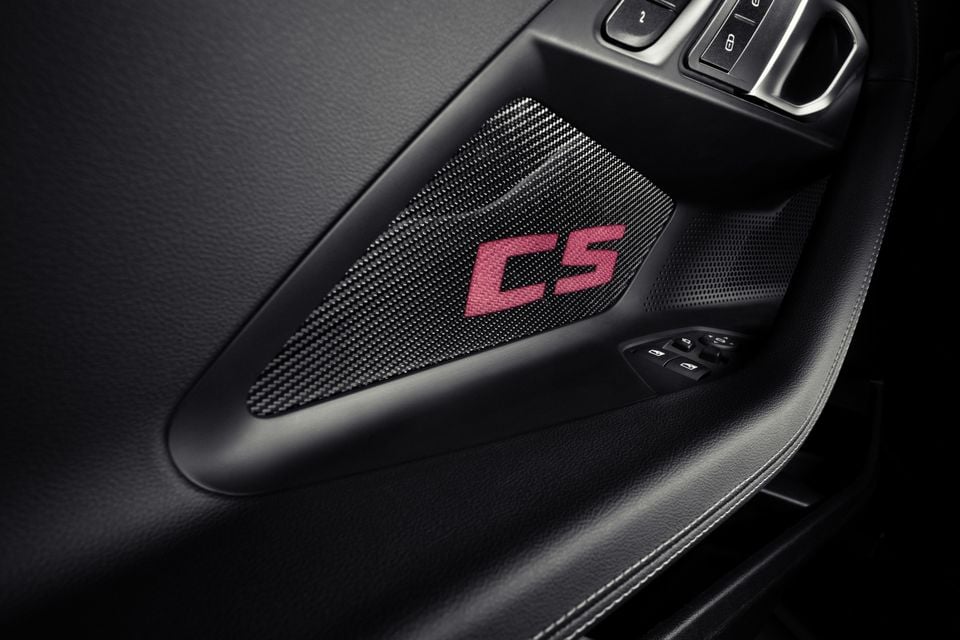
There are more light-up logos found in the door trims and M2 CS entry sill plates, too.
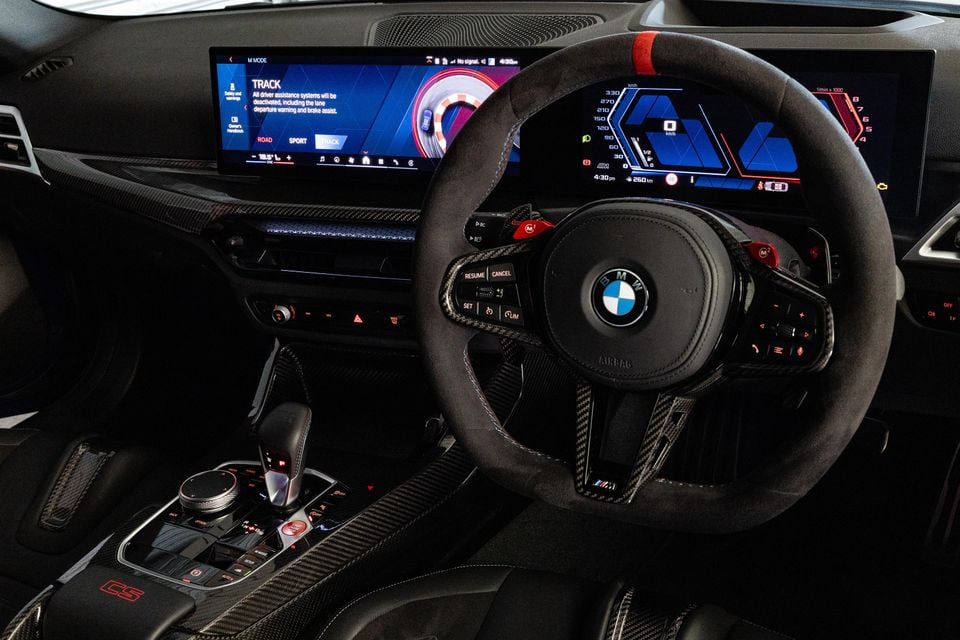
The entire centre console for the CS is carbon-fibre, with CS lettering printed on the centre pad (there’s no centre bin), while the signature red outline of the exterior CS badging is carried over to cabin details, including the shifter and centre buttons.
There’s also a three-spoke M steering wheel wrapped in Alcantara with the classic red centre mark as standard – again, a $769 option on the regular model – with a wide band of carbon-fibre stretching across the dash.
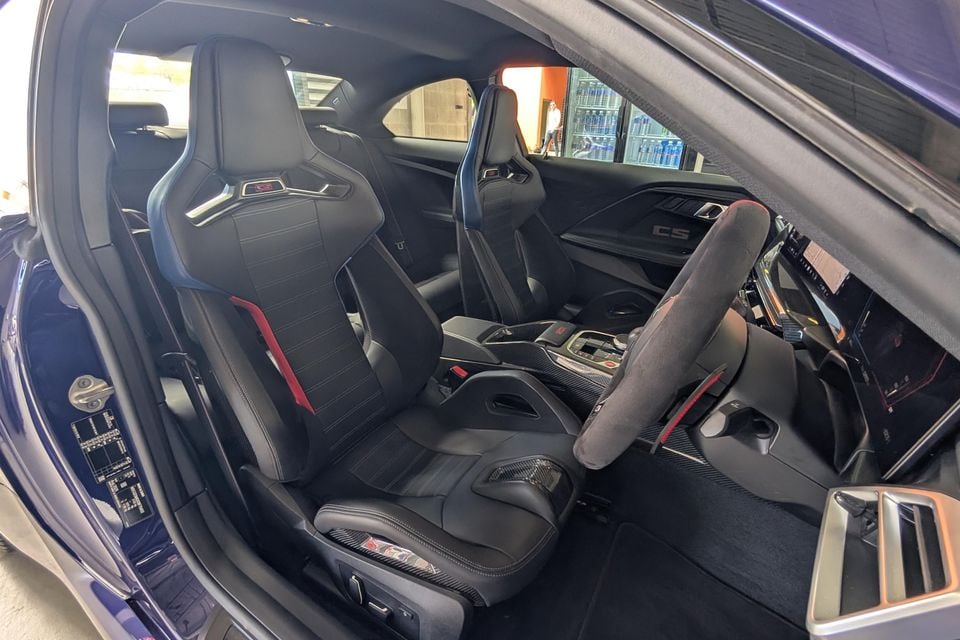
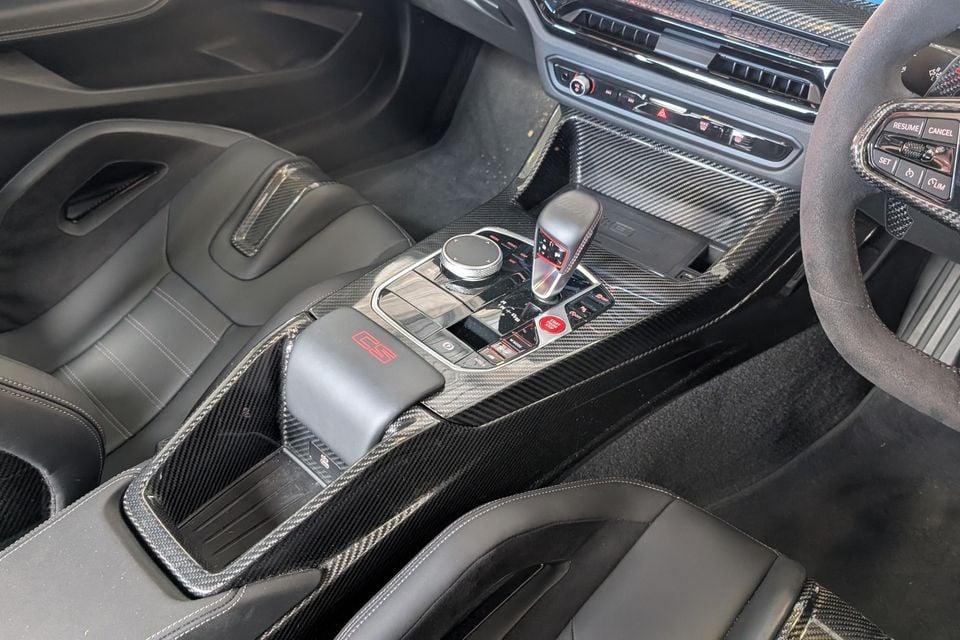
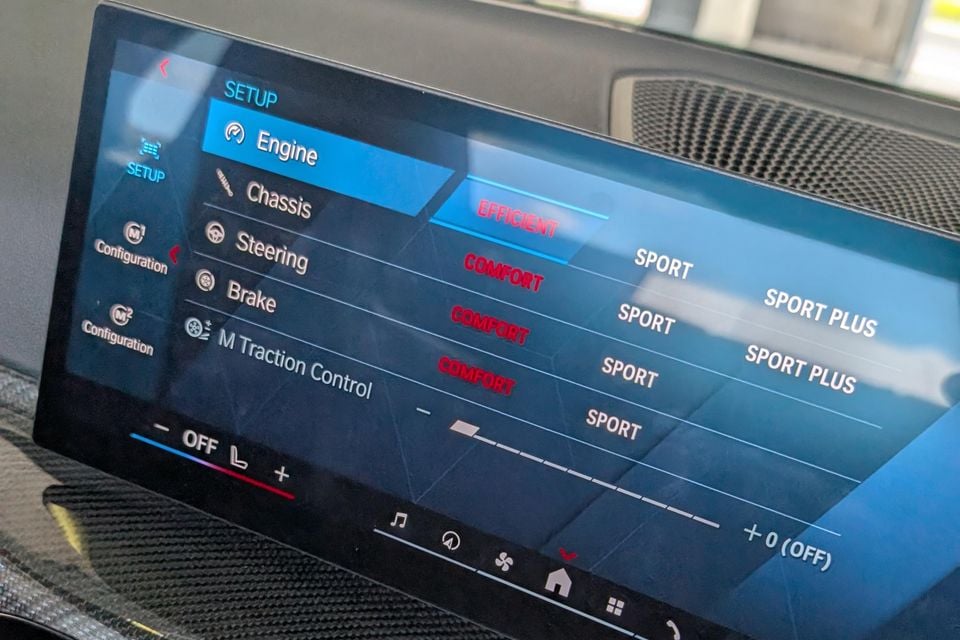
The rest is, of course, the same as the regular M2, which includes a 14.3-inch centre touchscreen alongside the excellent head-up display (HUD) and 12.3-inch instrument cluster, which can be quickly customised via the red memory buttons on the steering wheel.
This allows you to set your favourite parameters – from the steering, suspension, engine and brakes to 10 traction control settings – combined with your preferred graphics for the cluster and HUD.
It’s a low, two-door coupe to jump into – although not as low-slung as some sports cars – but the driving position is great and there’s plenty of legroom and headroom.
The back seats? Token, given my driving position, and while they can be used on occasion, we’re not volunteering to sit there: the driver’s seat is the only place to be.
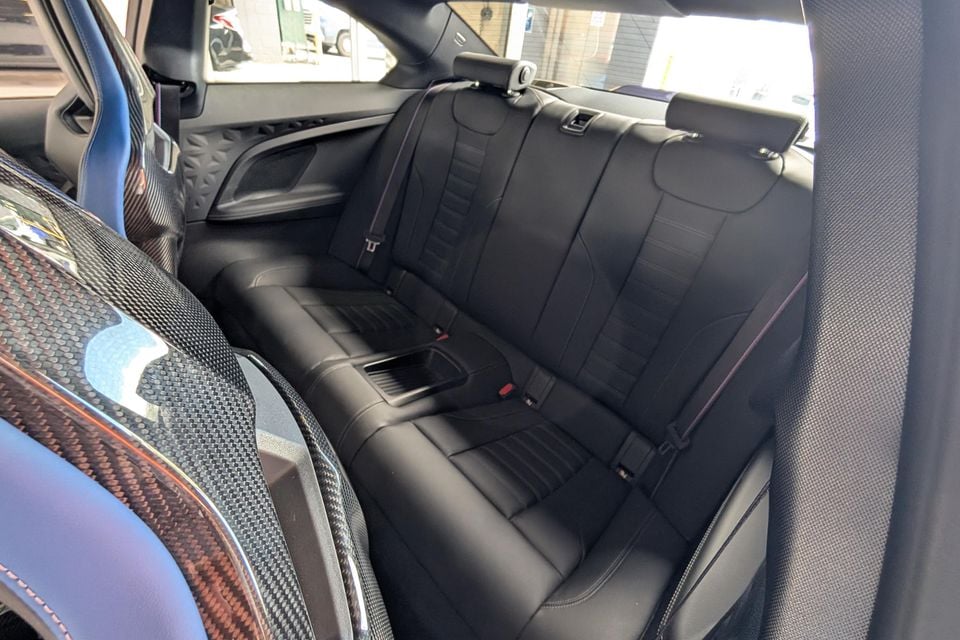
| Dimensions | BMW M2 CS |
|---|---|
| Length | 4587mm |
| Width | 1887mm |
| Height | 1395mm |
| Wheelbase | 2747mm |
| Cargo capacity (VDA) | 390L |
To see how the BMW M2 CS lines up against the competition, check out our comparison tool
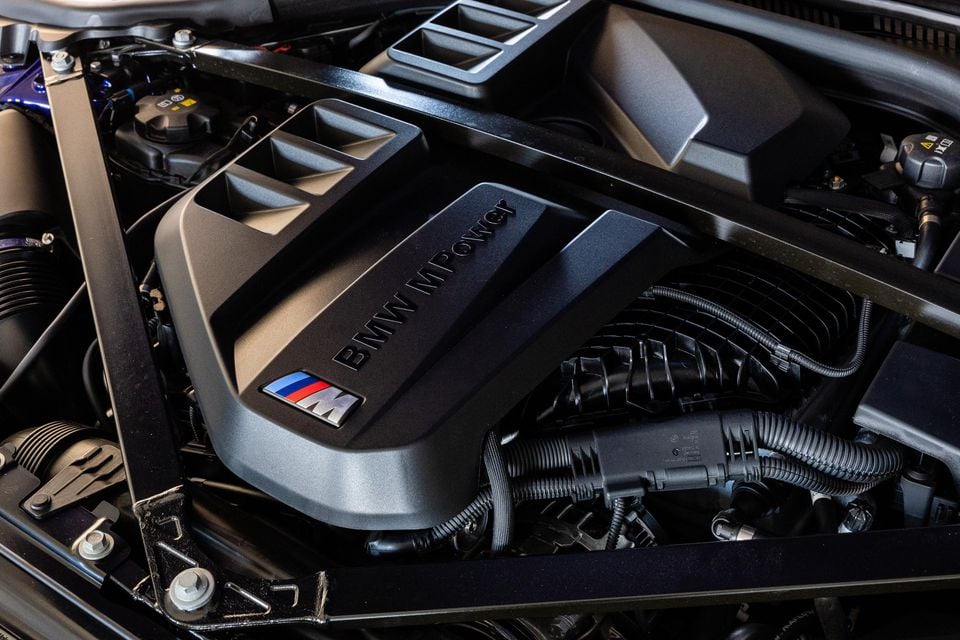
An internal-combustion masterpiece: the BMW S58 3.0-litre twin-turbo inline-six petrol engine used across the majority of the M range.
| Specifications | BMW M2 CS |
|---|---|
| Engine | 3.0L twin-turbo inline-six petrol |
| Power | 390kW@6250rpm |
| Torque | 650Nm@2750–5730rpm |
| Transmission | 8-speed automatic |
| Drive type | Rear-wheel drive |
| Weight | 1700kg |
| 0-100km/h (claimed) | 3.8 seconds |
| Fuel economy (claimed) | 10.0L/100km |
| Fuel tank capacity | 52L |
| Fuel requirement | 95 RON ULP |
| Emissions standard | Euro 6e |
| CO2 emissions | 226g/km |
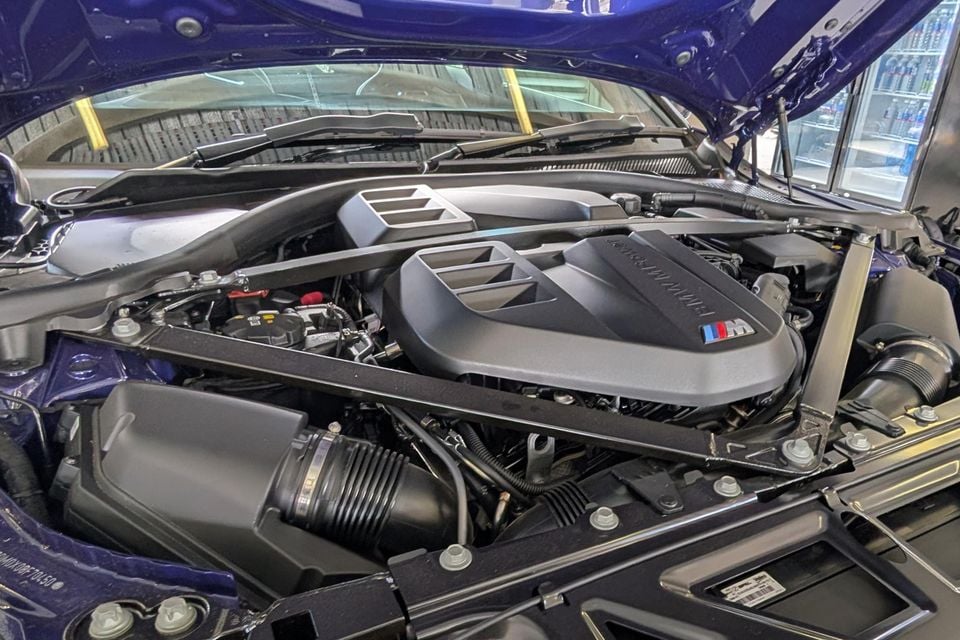
The same engine is used in the regular M2, where it makes 353kW/600Nm – but in the CS, it’s upgraded to 390kW and 650Nm – identical outputs to the M3 Competition sedan.
Across the CS family, the M2 CS is only marginally outpunched on paper by the M3 CS Touring and M4 CS, which make 410kW with the same 650Nm – but the M2 CS, of course, weighs less at 1700kg.
In fact, the increased outputs mean it has a near-identical power-to-weight ratio to the hero M4 CS coupe. All while carrying less weight and identical torque to its larger showroom sibling.
The M2 CS also has the same (limited) 302km/h top speed – where the regular M2 taps out at 250km/h, or 285km/h with the optional M Driver’s Package. Fuel consumption is officially rated at 10.0L/100km, up from 9.7L/100km in the standard M2 automatic.
The M2 CS’s S58 is, according to BMW, identical to the engine in the M4 GT3 Evo racer (apart from the race car’s dry-sump oil system), which came first and second in the 2025 Bathurst 12 Hour, with Valentino Rossi scoring a follow-up podium in the 2026 event.
Its tech features include a closed-deck block, forged crankshaft, and a pair of single-scroll turbochargers feeding a 3D-printed head with variable valve timing, with the final package sharpened by super-stiff engine bracing and firmer engine mounts to help transmit its fire and brimstone to the rear wheels. And it all works…
To see how the BMW M2 CS lines up against the competition, check out our comparison tool
The M2 CS arrives with a bold promise of being a driver’s car – firstly as a rear-wheel-drive BMW, with that expectation underlined by an M badge.
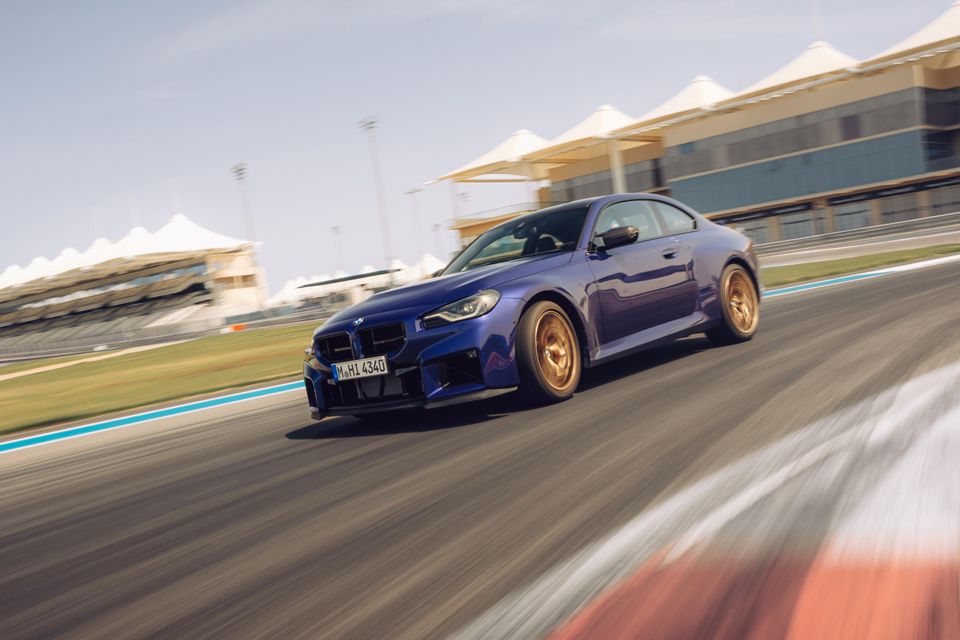
This is a proper M car, not a porky SUV, and despite not having a manual transmission – given M doesn’t offer one capable of handling the 650Nm under the bonnet – it’s as raw and stripped-back as a 2026 M car gets.
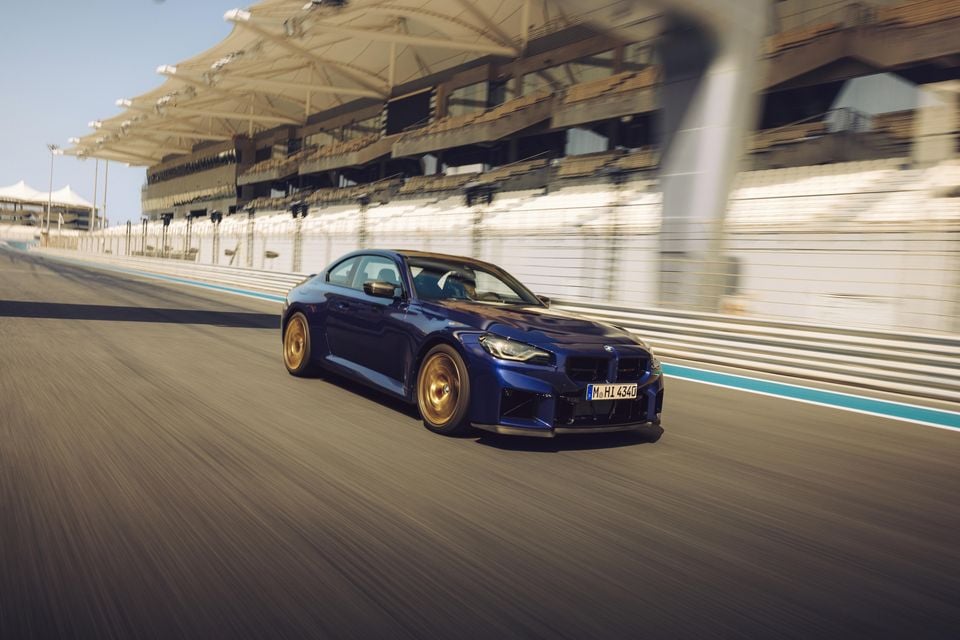
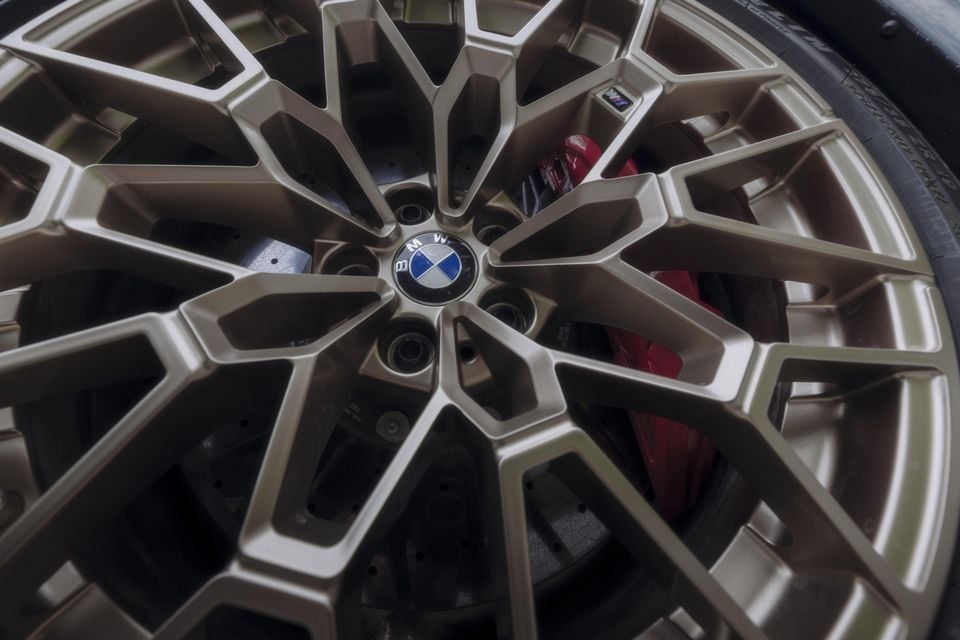
While it seduces with its extra bodywork and unique gold alloys staggered in size, the M2 CS is all about exploiting that engine from its crisp, wafer-thin carbon-fibre seats. With 275-wide 19s up front and fatter 285s on 20-inch wheels at the back, the stance is purposeful and aggressive.
If you’re expecting cushiness, you’re in the wrong postcode, as the CS’s front seats have a solid, firm hold on your body – even for my increasingly wide, middle-aged frame – but with a no-nonsense, matter-of-fact base.
You forget that the instant you hit the Start button, the M-centre display and digital dash awaken like a sharpened sword being drawn from its sheath as that 3.0-litre twin-turbo inline-six booms a sonorous baritone idle.
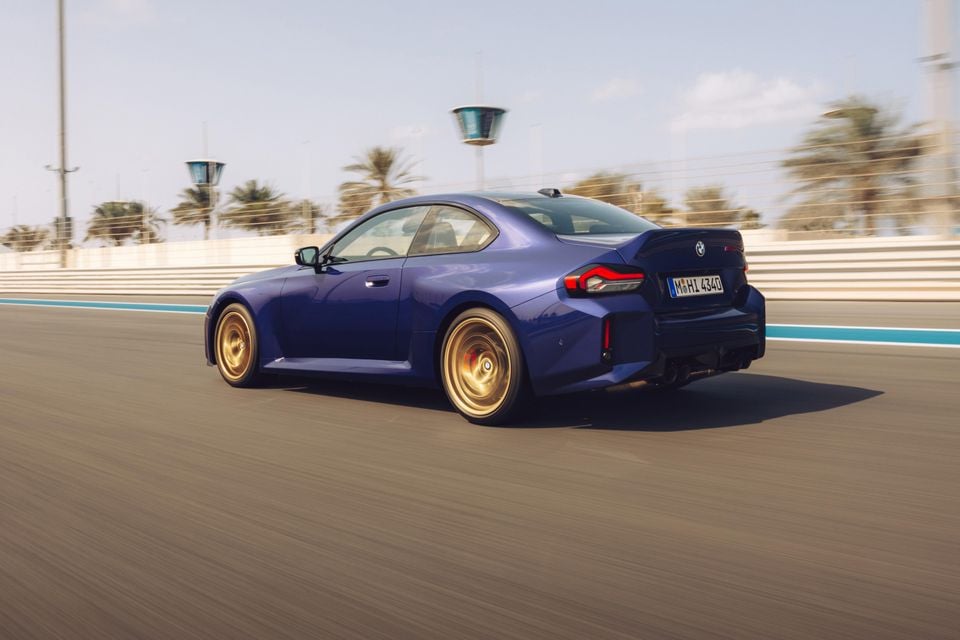
Our first miles in the M2 CS are on rough country roads between Bathurst and nearby Sofala – a pioneering gold rush town in the 1850s – with our gold alloys contrasting superbly against the BMW Individual Velvet Blue metallic M2 CS.
Immediately, the racetrack focus is evident, with the stiff chassis coming right through the seats and bringing a good level of communication to the thick steering wheel – but the ride is more comfortable when you go faster, the CS’s stable damping impressively taking the edge off the crater-sized potholes on our jaunt.
Like the regular M2, there’s a raft of settings for steering, engine response and suspension – and 10 different levels of traction control – to play with. Yet even in its most benign settings, the CS is still brutally fast in a straight line and swallows winding roads with unshakable grace and poise.
Yet its true capability becomes abundantly clear when we hit the hallowed Mount Panorama circuit where BMW superstar Valentino Rossi scored his second podium for the brand in two years.
The S58 engine is, according to BMW, 90 per cent of the engine in the M4 GT3 Evo racer – missing only the dry-sump set-up needed for competition – which Rossi steers, dodging kangaroos, rivals and those vengeful concrete walls.
We were about to attempt to thread the M2 CS between them – only the day after much, much more talented drivers than yours truly had suffered the ignominy of falling victim to them, trashing some of the world’s finest race cars in front of a global audience.
The scars – stark reminders – were there to see on the track: paint smeared along walls where race car and concrete went head-to-head and the cement dust courtesy of the clean-up from a significantly brutal collision at Forrest’s Elbow, the blind downhill corner which leads onto Conrod, the circuit’s longest straight.
Heading out onto the 6.213km layout, the CS begins with a twitch out of pitlane, the tail wagging oh-so-slightly as we set off like intrepid explorers to find out what we don’t know: can we make it around this great mountain, at proper speed, in a proper M car?
Located in the driver’s seat, you quickly realise the steering is your friend and is super responsive – more so in Sport Plus mode – allowing the CS to be positioned dead-centre on track as we go flat out towards the yump on Mountain Straight at more than 200km/h.
The engine note rapidly changes from the deep idle to a higher-pitched classic six sound, working hard but strongly as it rushes the 7200rpm redline, maintaining its strong timbre without any tinny edge – nor any metallic rasp – as we rapidly and efficiently punch through the eight-speed gearbox with absolute focus.
Even with the gearbox in auto mode, it does an excellent job of maximising torque, and there’s no wheelspin or chirps between shifts as the CS just puts its power to the ground. Flick the steering-mounted levers, and full manual mode lets you choose the timing, too.
The CS’s response to any command is rapid, strong but not violent – its backing track drowning out the radio messages as the revs rise with no end to the flood of power under your right foot.
The minor nose lift on the road loop in the softer modes is gone, but the BMW gurus on hand recommended leaving the suspension in a softer setting, given the undulation and twistiness of Mount Panorama demanding the M2 load up through corners.
Somewhere like Phillip Island, they suggest, would suit full chassis stiffness selectable through the touchscreen. We’ve switched the steering to the more responsive Sport Plus setting, which adds weight but not necessarily more feel.
The purple CS we’re pedalling came with Michelin Pilot Sport 4S rubber. Another M2 CS on hand wore Pirelli P Zero Corsas. Stomping on the brakes into Griffins Bend – the first right-hander, also a long corner tapering uphill – there’s absolute stability and confidence.
If this is the car for you, we’ll compare offers from trusted dealers, handle the back and forth and manage your purchase from enquiry to delivery.
The steering, again, helps when we apex the corner too soon, allowing an instant flick back online after kissing the ripple strip early, and the torque and revs keep coming. The seats hold you in firmly, the (little) body roll – even in soft suspension settings, remember – predictable and well managed.
The Cutting is the steepest part of the circuit, and here – on an early lap – we feel the traction control (TC) cut in – but that’s on the driver.
For safety reasons, we were not allowed to turn the TC off, but in Sport Plus engine mode, the CS delivered power out of The Cutting without a hint of oversteer, thanks to the electronic limited-slip diff, not missing a chance to feed in more speed and head up to the next winding section.
Here, you become aware of the skill of the racers at Mount Panorama over the years: it’s relatively narrow and, if the steering, power and mechanical grip of the CS bring you confidence, the concrete walls stand seemingly ten storeys high with furrowed brows as a reminder: don’t get cocky, mere mortal.
Yet the CS is more than up to the task, delivering a stable rear with a responsive front end to make us look like bona fide racers and a threat to Rossi’s factory drive.
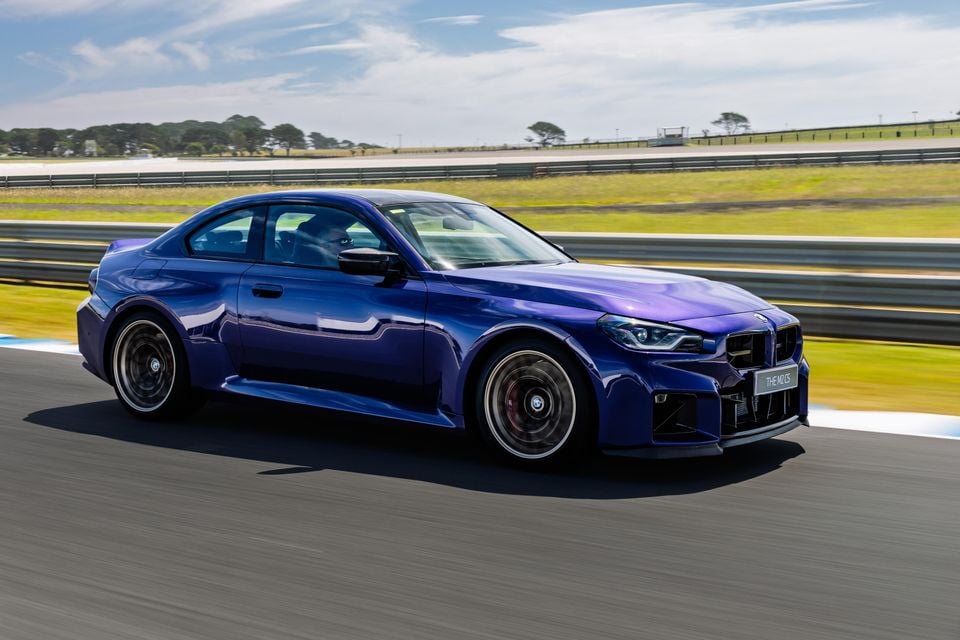
In reality, though, it delivers a mix of control, precision and entertainment that allows a push towards the car’s true capability, yet nowhere near that last few per cent of its stunning potential.
With its swift, balanced weight transfer, the CS is far more committed to helping you around the track than its modern predecessors, the 1M Coupe – a car which didn’t want you to drive it so badly it tried to throw you off the road at any opportunity.
The first M2 was better, bringing a fun factor that had been diluted in heavier, newer M3 and M4 models – but the 2026 M2 CS brings a combination of precision and poise while keeping that playfulness.
That confidence matters when you storm over Brock Skyline, a glorious left-hander sweeping across the top of the mountain – and then you see the massive rear wing of a much faster car in your mirror.
“Don’t worry about the car behind you,” the two-way radio booms. No pressure, then. This is where it matters: the famous Dipper – a roller-coaster drop as the narrow shoestring layout pinballs the car down The Esses before Forrest’s Elbow.
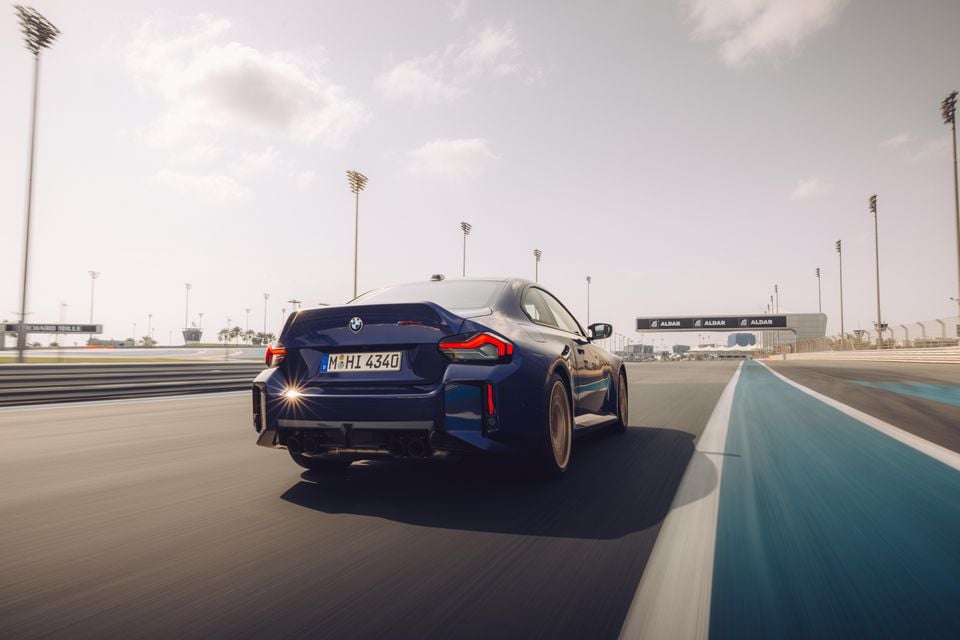
With a far more expensive rear-engined car from an unnamed German brand on our tail, the CS has to handle this with accuracy and speed – and it dutifully goes exactly where it’s told, with the dependable, obedient front end following the road down the circuit before we pull left onto Conrod to let the exotica pass by.
Now, the easy part: we hit 276km/h on Conrod on our fastest lap, the CS remaining surefooted and stable, but given more skill – and courage – there was more in it.
That alone shows you how effective the M2 CS is: a decade ago, a younger, sharper and fitter author you’re currently reading took a Ferrari F12 down Conrod and didn’t match the baby BMW’s raw number.
Next, a huge test: we reach The Chase – where you must somehow pull up the car from the fastest part of the circuit to one of the slowest.
The CS doesn’t squirm or wobble as you steer it around the initial right-hander before you mash the brake pedal, which again shows no objection to pulling the 1700kg car (sans hefty post-lunch driver) just moments after the car was threatening its top speed.
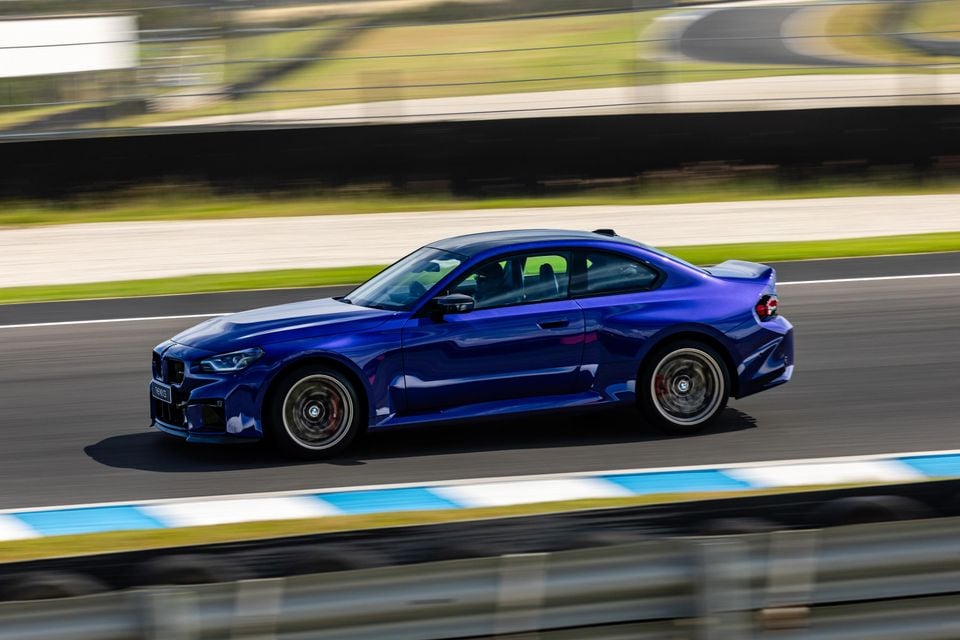
It all settles quickly and competently so we can throw it into the left turn – which comes with a small crest for added spice – and as the front end grips, the rear takes another dose of full throttle as the car smoothly transfers to the right-hand exit.
As we head toward the final turn, Murrays Corner, to complete the lap, the M2 CS reveals itself as an even more finely honed M2 that has earned its ‘CS’ lettering by delivering a more involving, satisfying driving experience.
It does so with a cheekiness and nimbleness that makes carving up a road (or an iconic racetrack) an enjoyable accomplishment, rather than a threatening “oh my god, this thing is trying to kill me”. It has hiss and bite in the right measures.
To see how the BMW M2 CS lines up against the competition, check out our comparison tool
The BMW M2 CS is the flagship model grade of the M2 lineup, with the exterior colour and upgraded ceramic brakes the only choices for buyers.
2026 BMW M2 CS equipment highlights:
The four colours available in Australia are BMW Individual Velvet Blue metallic, Black Sapphire metallic, M Brooklyn Grey metallic and M Portimão Blue metallic.
CarExpert can save you thousands on a new BMW M2 CS. Click here to get a great deal
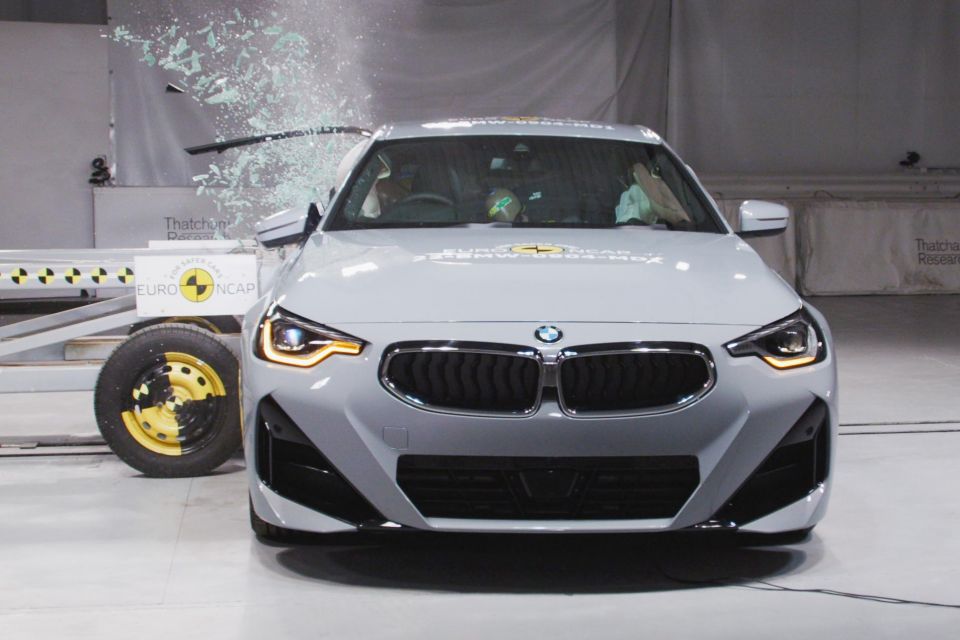
The BMW M2 CS does not have an ANCAP (Australasian New Car Assessment Program) safety rating, but the 2-Series Coupe range does have a four-star Euro NCAP (European New Car Assessment Program).
Standard safety equipment includes:
The M2 CS has front driver and passenger airbags, front side airbags, as well as curtain airbags covering both front and rear occupants.
CarExpert can save you thousands on a new BMW M2 CS. Click here to get a great deal
The M2 CS is covered by the same five-year, unlimited-kilometre warranty offered across the BMW Australia lineup.
| Servicing and Warranty | BMW M2 CS |
|---|---|
| Warranty | 5 years, unlimited kilometres |
| Roadside assistance | 3 years, unlimited kilometres |
| Service intervals | Condition based (detected by vehicle) |
| Capped-price servicing | 5 years/80,000 kilometres |
| Average annual service cost | $716.80 |
| Total capped-price service cost | $3584 |
The CS also has the same service requirements and costs as the regular M2, with 12-month/20,000-kilometre service intervals. A five-year/80,000-kilometre service package is available, priced at $3584 including GST.
CarExpert can save you thousands on a new BMW M2 CS. Click here to get a great deal
The BMW M2 CS is made for drivers, with a unique character setting it apart from its M2 donor car, showroom rivals as well as the other models in the CS range.
Indeed, the up-spec CS is not a marketing special: instead, it has evolved in this second generation to become a faster point-to-point machine, sharpening the sword enough for those in that top-talent percentile room to explore from behind the wheel.
For the rest of us, it’s a taste of what can truly be achieved in a well set-up car on even the most challenging roads, an antidote to the daily humdrum of increasingly less capable cars with poor dynamics but a feature list longer than Conrod Straight.
It may be a baby M car, but the M2 CS is not at all juvenile – and perhaps it needs a bit more anarchy in that sense, despite having an on-board ‘Drift Analyzer’ – and may shine through when we get the chance to turn off the traction control. But even with it on, it’s an absolute hoot. This car is not Jekyll and Hyde – it’s varying degrees of Hyde.
It brings a remarkable proportion of its larger sibling’s performance and pricier rivals’ ability for a fraction of the price – again, with the raw numbers all relative … since when did $172,900 seem like bang for your bucks?
CarExpert can save you thousands on a new BMW M2 CS. Click here to get a great deal
Click the images for the full gallery
If this is the car for you, we’ll compare offers from trusted dealers, handle the back and forth and manage your purchase from enquiry to delivery.
2027
$137,148
2025
$183,663
Damion Smy is an award-winning motoring journalist with global editorial experience at Car, Auto Express, and Wheels.
Add CarExpert as a Preferred Source on Google so your search results prioritise writing by actual experts, not AI.
Damion Smy
4 Minutes Ago

Elle Baillieu
6 Minutes Ago

William Stopford
39 Minutes Ago
William Stopford
39 Minutes Ago
Damion Smy
2 Hours Ago
Damion Smy
2 Hours Ago
Add CarExpert as a Preferred Source on Google so your search results prioritise writing by actual experts, not AI.
# Based on VFACTS and EVC data
† Displayed prices are based on the drive-away price of the vehicle, which includes delivery charges, registration fees, number plates, and applicable road taxes, based on a Sydney location. However, prices may vary between states and territories, and additional costs such as compulsory third party (CTP) insurance, dealer delivery fees, and optional extras are not included. These prices are subject to change without notice and may not reflect current market pricing or dealer offers.
 Automotive Vehicle Spec Data & 4K images Powered by JATO Dynamics Ltd