





Alborz Fallah
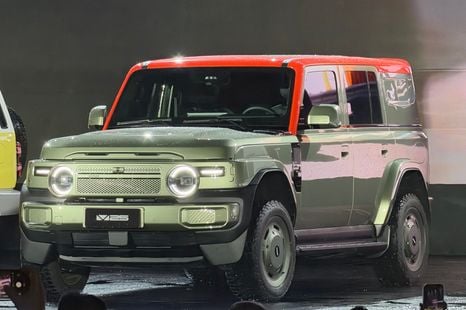
Omoda X revealed with night vision and a tougher SUV look
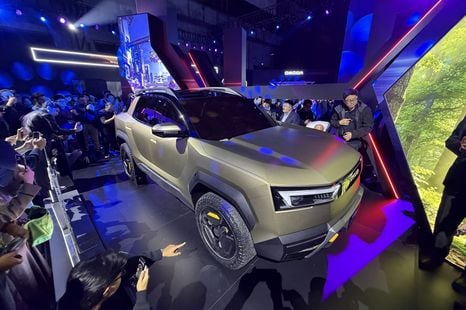
The Omoda X has been revealed as a tougher-looking crossover SUV from Omoda Jaecoo, though it has yet to be confirmed for an Australian launch.
4 Hours Ago
SPONSORED
Here’s a little secret: did you know there are two cars that can deliver the performance of a supercar, the luxury of a limousine, and the agility of a small hatchback?
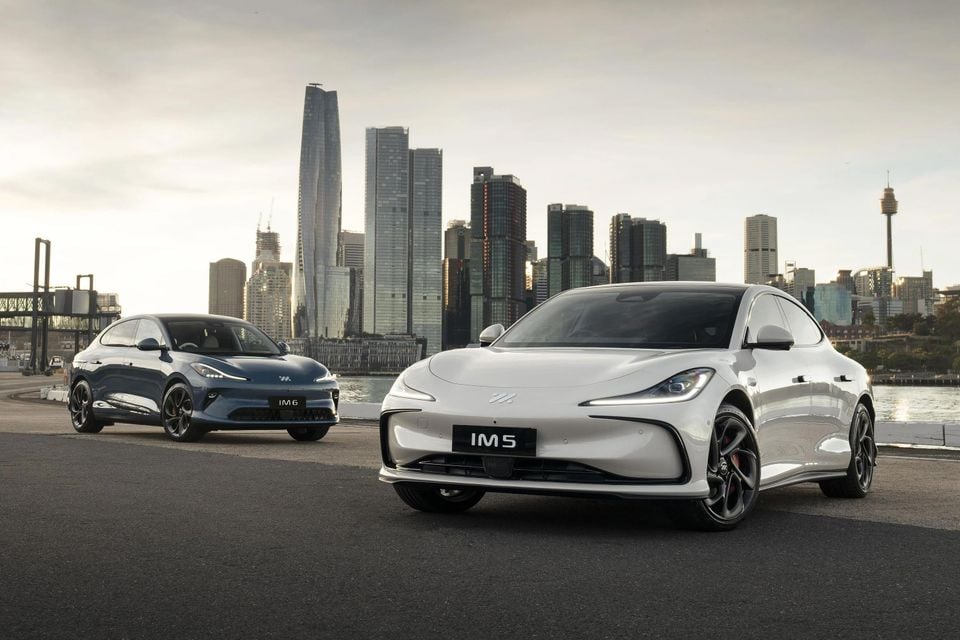
It might sound fanciful that something has all of those diametrically opposed attributes without any compromise, but it’s true because you get it all with the IM5 and IM6 from MG Motor.
But how does IM do it? How does it mate its software and hardware to create vehicles that can have the ability to beat a Lamborghini in a drag race, while offering a level of space and comfort to match the best from Mercedes-Benz and the ability to navigate through the urban jungle as nimbly as a Toyota Corolla?
The IM digital chassis, that’s how.
Most cars still operate like they’re stuck in the mechanical age – driver pushes brake pedal, steering wheel turns front wheels, road bumps hopefully get absorbed by suspension, end of story.
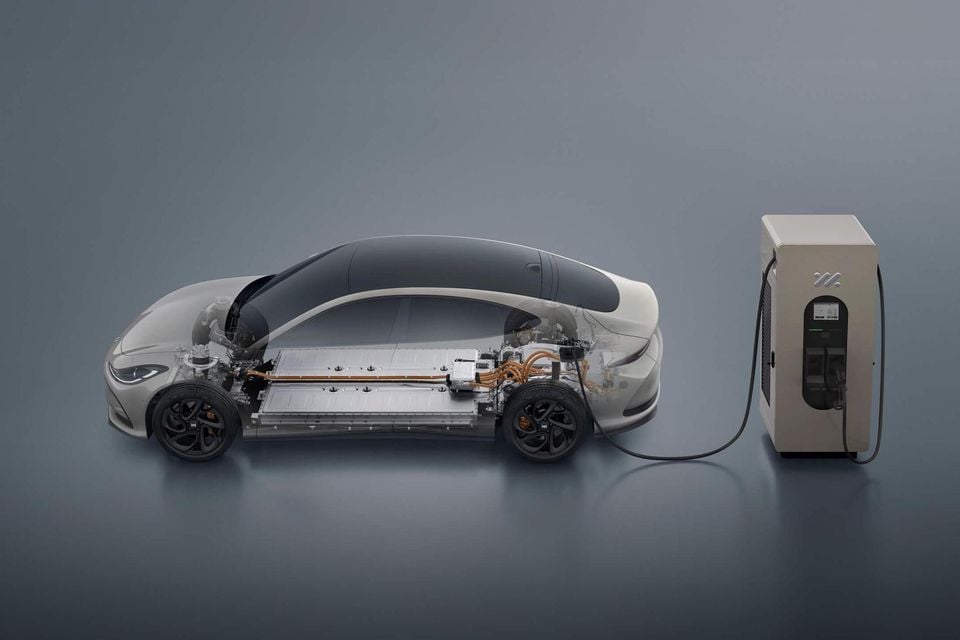
IM presented by MG Motor, a premium auto brand welcomed to Australia in 2025, flips this script, boasting a cutting-edge digital chassis which tosses that mechanical-age notion out the window in favour of something that sounds like science fiction but is now automotive reality.
Think of it as your car developing a functioning nervous system, one that can sense and correct trouble before your reflexes even register there’s a problem.
The IM5 sedan and IM6 SUV don’t just bolt computers onto conventional chassis components – they reimagine the entire relationship between hardware and software.
With over 3000 semiconductors co-ordinating everything from suspension response to brake pressure, these vehicles represent the first genuine step toward cars that think faster than their drivers.
It’s not about replacing human judgment; it’s about giving that judgment superhuman reflexes and near-psychic anticipation of what’s coming next.
For daily Australian driving, performance is only part of the full picture. Navigating Melbourne’s hook turns, managing Sydney’s stop-start traffic, avoiding wildlife, safely traversing damaged road surfaces and dangerous debris on the freeway, or handling sudden weather changes on regional highways, for example – the digital chassis delivers tangible safety and convenience improvements.
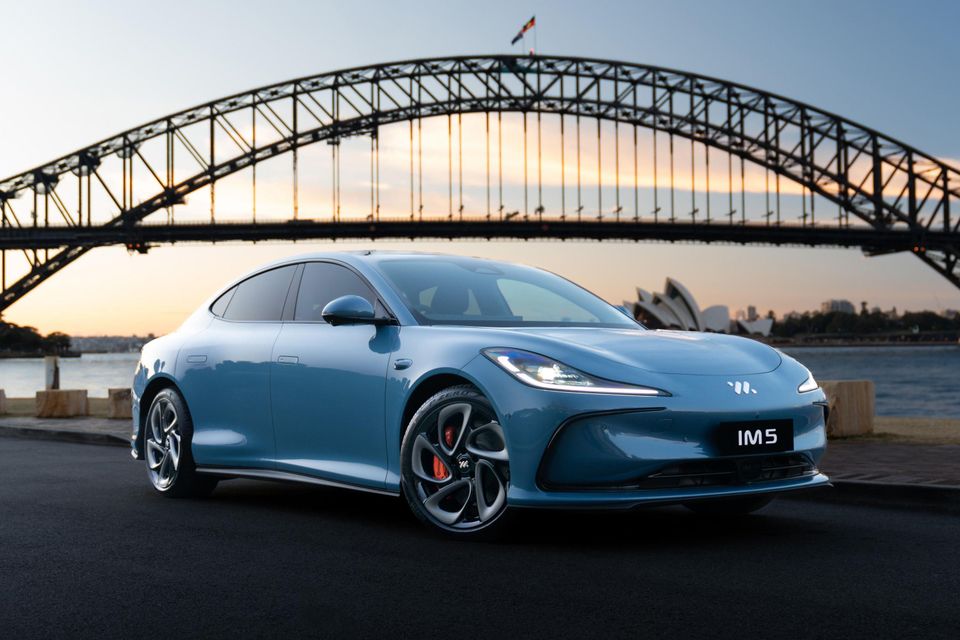
The safety advantages are immediately apparent. Emergency manoeuvres like sudden lane changes or hard braking on slippery roads – situations where split-second responses determine outcomes – benefit from the system’s ability to co-ordinate multiple vehicle systems faster than human reflexes allow.
When a five-metre sedan can navigate tight spaces like a compact hatchback thanks to its 12-degree rear-wheel articulation, car park anxiety becomes a thing of the past.
The revolutionary bi-directional rear-wheel steering technology makes urban parking genuinely less stressful. Add to this automated parking and you can see where the benefits stack up for every level of driver and scenario.
Traditional chassis engineering follows a straightforward philosophy: mechanical components respond to driver inputs through hydraulic, pneumatic, or electronic systems that operate independently.
Your brakes do the braking, your suspension handles bumps, your steering manages direction – each system in its own lane, so to speak.
IM’s digital chassis completely flips this approach. Instead of separate systems responding to individual commands, IM by MG Motor models use a centralised computing platform that orchestrates every dynamic component simultaneously.
Indeed, the IM5 sedan and IM6 SUV’s shared 800-volt electrical architecture doesn’t just power the car; it enables real-time interaction between suspension, steering, braking, and powertrain systems at speeds that render human reaction times obsolete.
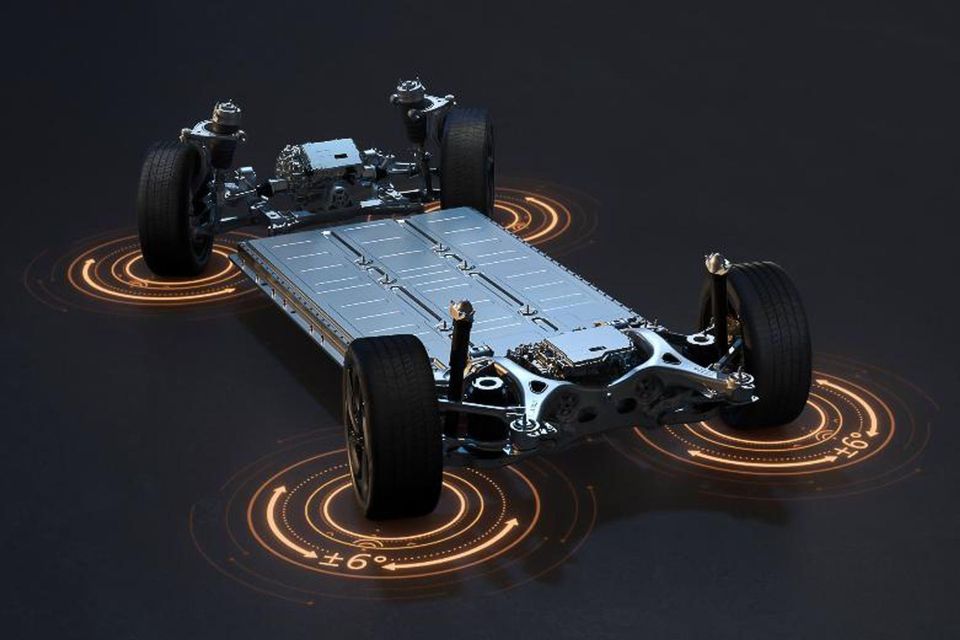
The hardware foundation includes four-wheel independent suspension with adaptive damping, bi-directional rear-wheel steering capable of 12 degrees of articulation, and brake-by-wire systems that can modulate individual wheel pressure in milliseconds.
But the real magic happens in the software layer – algorithms that process data from dozens of sensors, predicting vehicle behaviour and adjusting responses before physics has time to catch up.
What separates this from existing stability control systems is scope and speed. Where traditional ESC might intervene when you’re already sliding, IM’s digital chassis identifies the conditions that lead to slides and prevents them from developing.
It’s the difference between catching someone who’s already falling and ensuring they never lose their footing in the first place.
Picture the digital chassis as your car’s cerebellum – the part of the brain that co-ordinates movement without conscious thought.
While you’re focused on navigation and traffic, the system is continuously analysing road surface conditions, vehicle load distribution, weather data, and driving dynamics to predict what’ll happen next.
IM by MG Motor uses an advanced NVIDIA Orin N Chip at its core and integrates real-time machine learning. The process operates in loops measured in milliseconds. Sensors monitor everything from tyre pressure fluctuations to microscopic changes in wheel speed, feeding data to processing units that can execute thousands of calculations per second.
When the system detects the early signs of instability – perhaps a slight weight transfer that suggests impending understeer, or road surface conditions that indicate reduced grip – it doesn’t wait for the driver to respond.

Instead, it orchestrates a co-ordinated response across multiple systems. The rear wheels may steer slightly to maintain ideal weight distribution, for example.
Suspension damping adjusts to optimise tyre contact patches, and individual brake calipers apply precisely calculated pressure to maintain the intended trajectory. All of this happens transparently, without driver intervention or even awareness.
The bi-directional rear steering system exemplifies this integration. At low speeds, the rear wheels turn in the opposite direction to the front wheels, in effect shortening the wheelbase for parking and other tight manoeuvres. MG calls this crab mode.
As speeds increase, they turn in the same direction as the front wheels to deliver better handling and stability.
However, the digital chassis takes this further, utilising rear steering as a stability tool – subtly adjusting rear wheel angles to maintain optimal vehicle dynamics even when road conditions or driver inputs could compromise handling.
Rear-wheel steering isn’t new, but 12 degrees absolutely is. Most systems operate in the five- to 10-degree range like the Porsche Macan Electric, which manages five degrees, while BMW’s flagship i7 stops short at 10 degrees. Against that backdrop, the IM Performance models feel genuinely disruptive.
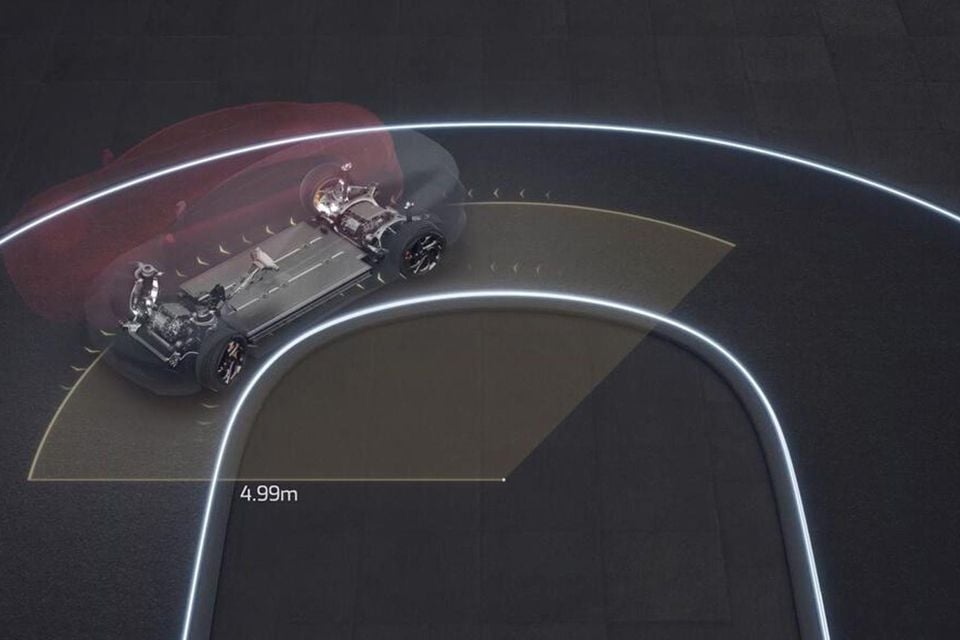
On the road, the effect is immediate and unmistakable. A 180-degree U-turn on a typical suburban street is almost laughably easy – no shuffling, no anxiety, no fear of kerbing a wheel. It’s not just impressive, it fundamentally changes how you interact with the car.
The same applies in tight, spiralling underground car parks – environments that usually expose the sheer bulk of large sedans and SUVs.
Despite both the IM5 and IM6 nudging five metres in length, neither feels remotely cumbersome. The rear-wheel steering transforms what should be awkward, low-speed manoeuvres into something effortless.
Automated parking systems are often more trouble than they’re worth and buried in layers of menus that are counterproductive to the convenience they intend to offer. IM’s One Touch Park system is a rare exception.
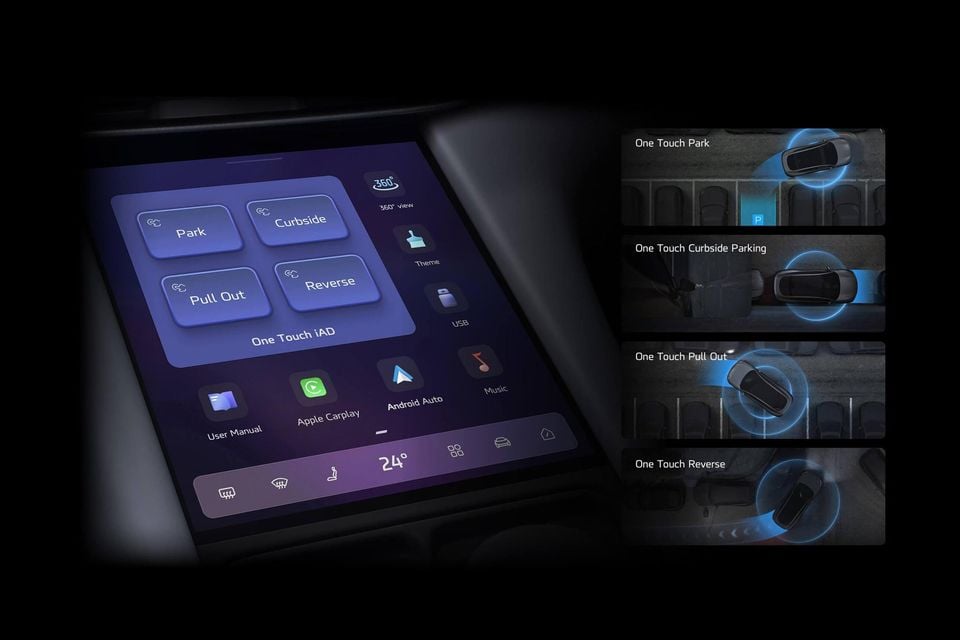
It does exactly what the name suggests and is easy to access. Tap the icon, select one of the numbered spaces, and the vehicle takes over entirely. No prompts, no second-guessing.
It’s intuitive from the first use, which is precisely why it works. This isn’t a party trick – it’s a system you’d actually use day-to-day.
Air suspension at this price point remains a rarity, typically reserved for high-end luxury vehicles costing significantly more than IM’s sub-$80k Performance models. That alone makes IM’s Advanced Air Suspension with continuously controlled damping noteworthy.
More importantly, it works – and works exceptionally well. The system continuously adjusts ride height and damping based on speed, load and road conditions, delivering genuine comfort at low speeds and reassuring stability as pace builds.
In Comfort, the IM rides with a suppleness that belies its performance credentials, absorbing coarse-chip bitumen, broken surfaces and speed bumps with real composure.
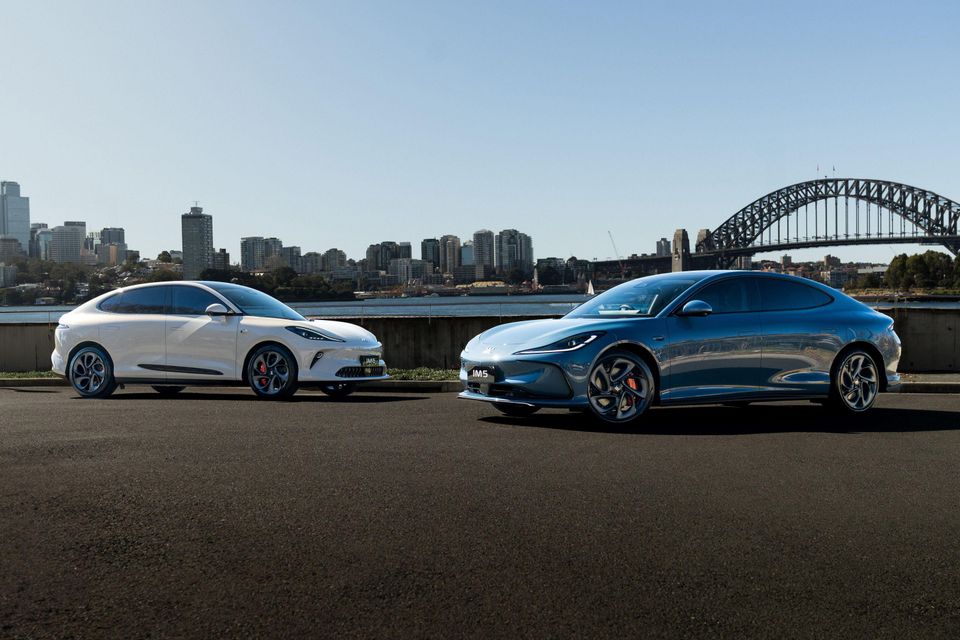
Switch to Sport, and the character shifts immediately. Throttle response sharpens, steering gains weight, damping firms, and the car feels far more keyed-in through corners.
Despite their size, neither IM ever feels large from behind the wheel. Rear-wheel steering plays a big role here, but so does the linear calibration of the steering and power delivery.
With around 2.3 turns lock-to-lock, steering response is quick for vehicles of this footprint – helping make both the IM5 and IM6 easy to live with and confidence-inspiring in daily use.
There’s no ambiguity here as the IM5 sedan is seriously fast. With a claimed 572kW and 802Nm, it sprints from 0-100km/h in 3.2 seconds, though it feels even quicker than the numbers suggest. It’s one of the most rapid EVs ever, full stop, with a top speed nudging 270km/h.
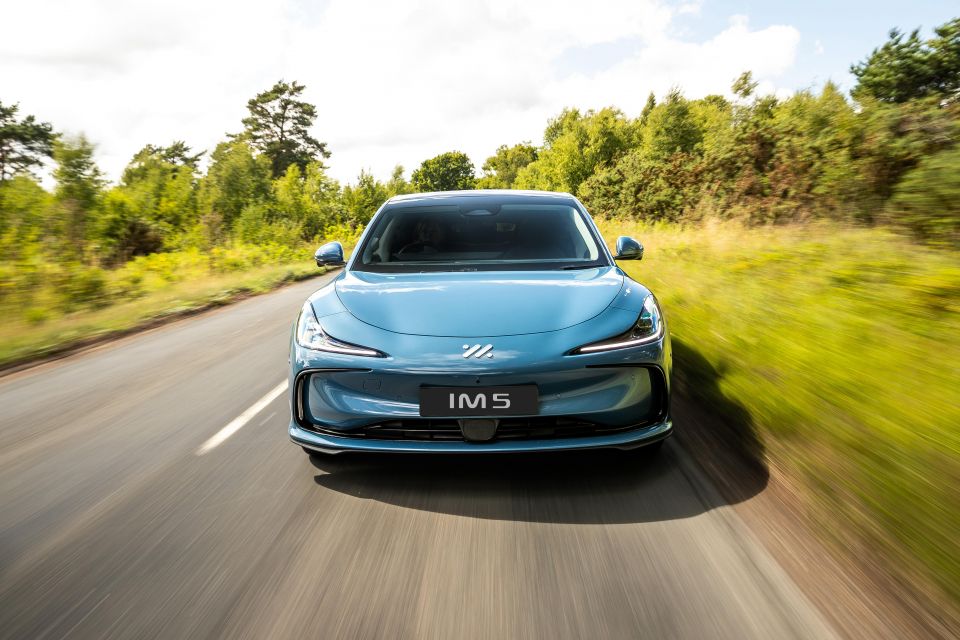
Range is equally impressive. The 100kWh battery delivers a claimed 575km (WLTP), and in real-world driving around 520km is entirely achievable. Thanks to its 800V electrical architecture, charging performance is just as convincing.
Plugged into a 400kW Evie charger, for example, the IM5 can go from under 10 per cent to about 95 per cent in just 20 minutes – an outstanding result, made even more practical by the availability of multiple high-output chargers at many sites.
Taken as a whole, it’s staggering performance and usability for under $80,000. The IM Performance models don’t just compete on value – they redefine it, positioning themselves as genuine standout performers in the EV space.
The practical benefits of the IM5 and IM6’s digital chassis extend well beyond impressive technical specifications.
While the safety advantages are immediately apparent, driving comfort also receives a significant boost. The co-ordinated suspension and steering response translate to less driver fatigue on longer journeys, vital in Australia where driving distances can rival the most demanding of anywhere on the planet.
The One Touch AI Chauffeur function can even remember your last 100 metres of driving through its trace-back feature – perfect for retracing your steps in those confusing multi-level car parks.

Perhaps most importantly, the digital chassis adapts to different driving conditions automatically through the iSMART app integration and onboard intelligence.
You don’t need to cycle through driving modes or adjust settings – the system continuously optimises performance based on real-time conditions. Whether you’re cruising the open road or navigating a crowded Westfield car park, the vehicle adjusts its behaviour to match the situation without input from your smartphone or dashboard.
The technology also future-proofs the driving experience. As autonomous driving capabilities continue to develop, the digital chassis provides the foundation for even more advanced features.
Today it’s preventing slides and optimising handling; tomorrow it could be coordinating with traffic management systems or other vehicles for enhanced safety and efficiency.
Think of the IM presented by MG Motor digital chassis as automotive engineering catching up with smartphone-era expectations. Not gadgets, but technology that works in the background to make things simpler – and better.
It’s not about eliminating the driving experience; it’s about enhancing it with capabilities that would be impossible through mechanical systems alone.
Priced from $60,990 drive-away, the IM5 and IM6 deliver this advanced digital chassis technology without the premium price tag you’d expect.
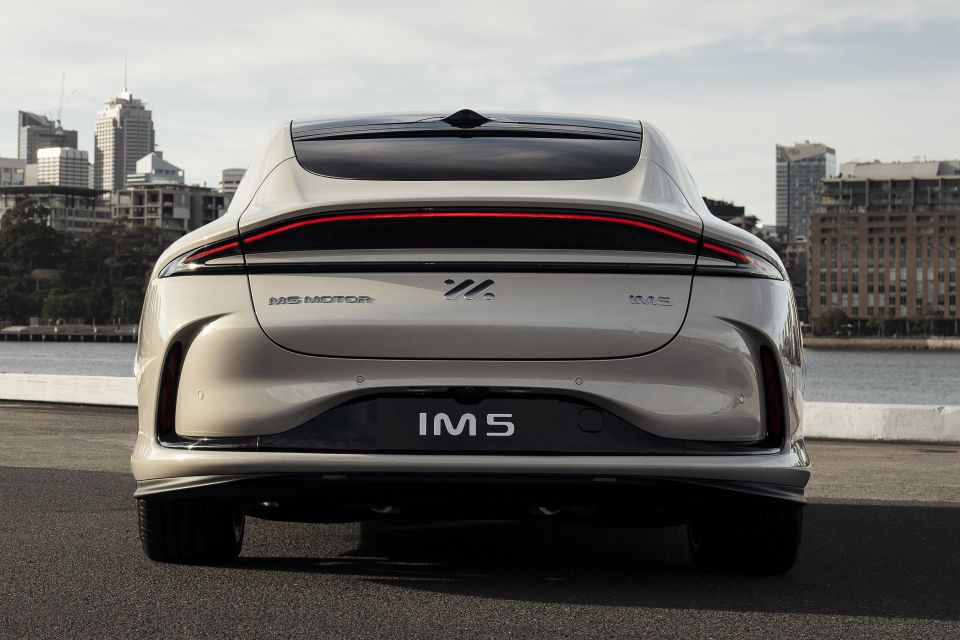
Given its enhanced safety and broader benefits, the digital chassis is less like automotive showmanship and more of an evolution toward smarter, more responsive vehicles that are finally accessible to mainstream buyers.
It keeps them safe, results in exceptional handling, and delivers a tight turning circle and self-parking functionality that makes even the tightest urban sprawl a breeze for every level of driver.
China’s car industry isn’t just catching up anymore – it’s sprinting ahead. That’s no secret, and the digital chassis of IM’s new IM5 sedan and IM6 SUV might just be the proof.
MORE: Explore the MG showroom
Research cars in our Showroom, compare your options or let our New Car Specialists do the running around to find you a great deal.
Alborz Fallah
4 Hours Ago

James Wong
7 Hours Ago

Alborz Fallah
9 Hours Ago

Alborz Fallah
10 Hours Ago

Alborz Fallah
11 Hours Ago
Alborz Fallah
11 Hours Ago
Add CarExpert as a Preferred Source on Google so your search results prioritise writing by actual experts, not AI.