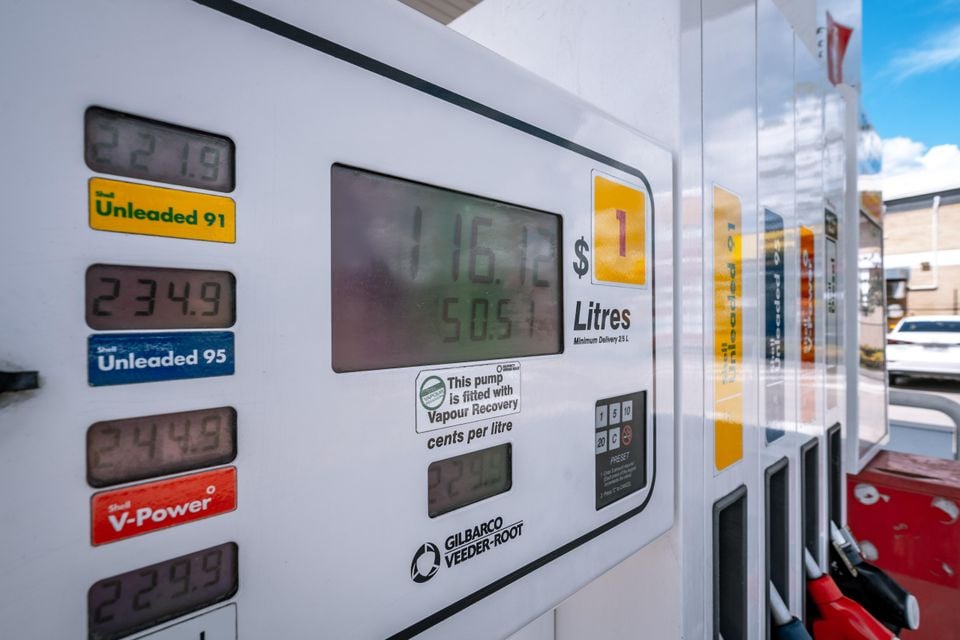
The Australian Government is softening fuel quality standards temporarily amid price spikes and concerns of fuel shortages.
“In order to assist with getting more supply, and secure downwards pressure on prices, I am temporarily amending Australia’s fuel quality standards to allow higher sulfur levels for the next 60 days,” said Chris Bowen, the Minister for Climate Change and Energy, in a press release today.
“This will allow around 100 million litres a month of new petrol supply that would otherwise have been exported to be blended instead into Australian domestic supply,” continued Mr Bowen.
“In return, Ampol Australia has committed to ensure this redirected supply will be prioritised for regions of shortage and for the wholesale spot market that supports independent distributors and harvesters.
CarExpert can save you thousands on a new car. Click here to get a great deal.
“While Australian fuel consumption has not changed, this will help relieve pressure on distribution chains disrupted by elevated demand.”
The government is prioritising this supply for primary producers such as farmers and fishers, as well as Australians living in regional areas.
It hasn’t confirmed how much higher the sulfur level will be in this supply of fuel.
From December 15, 2024, all petrol at Australian service stations was required to have a maximum sulfur level no higher than 10 parts per million.
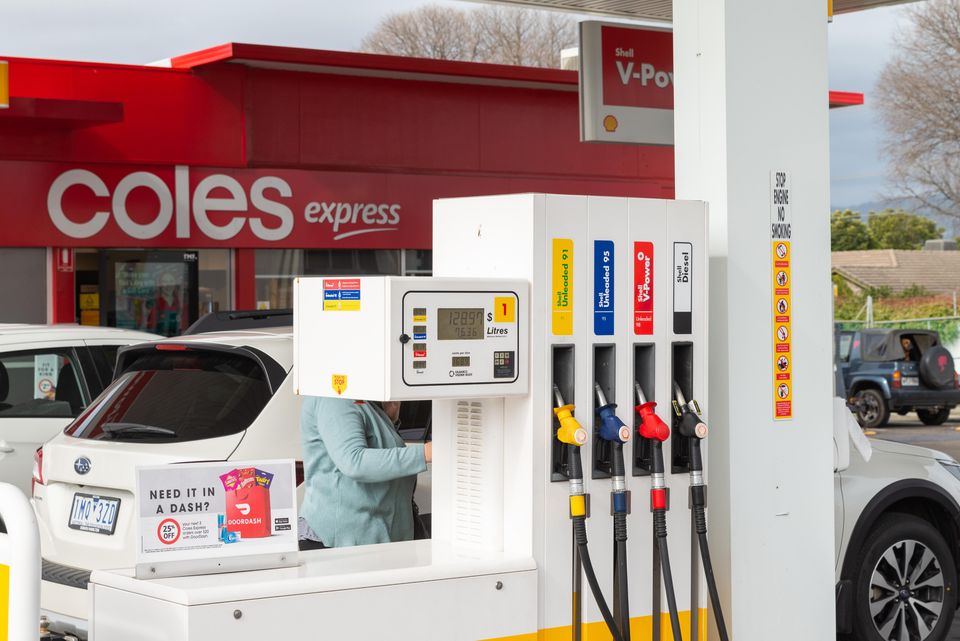
While diesel fuel in Australia had already been limited to 10ppm sulfur since 2009, 95 RON and 98 RON premium unleaded fuels had been allowed a maximum sulfur content of 50ppm since 2008, while regular 91 RON fuel was limited to 150ppm sulfur from 2005.
Australia – along with other member nations of the International Energy Agency – has agreed to a voluntary collective action to address disruptions in the oil market as a result of conflict in the Middle East.
“This means member countries are encouraged to release fuel in a coordinated way – which helps to calm the global oil market,” said Mr Bowen.
“Australia is finalising its contribution, which would then be released directly to the Australian market.
“This is a voluntary action – what contribution Australia makes will be decided in our national interest.
“We continue to see expected ships arrive in our ports, and we continue to act to relieve the distribution pressure we are seeing in our regions.
“It is clear there will be supply impacts if this war continues – this is the world acting to mitigate those impacts. We will always act in Australia’s best interests.”
IEA members have agreed to release 400 million barrels of oil from their strategic reserves, in only the sixth release ever from the IEA since it was founded in 1974. The most recent releases were in 2022.
“The oil market challenges we are facing are unprecedented in scale, therefore I am very glad that IEA Member countries have responded with an emergency collective action of unprecedented size,” said IEA executive director Fatih Birol in a statement.
“Oil markets are global so the response to major disruptions needs to be global too. Energy security is the founding mandate of the IEA, and I am pleased that IEA Members are showing strong solidarity in taking decisive action together.”
IEA members combined have an emergency stockpile of over 1.2 billion barrels of oil, with a further 600 million barrels of industry stocks held under government obligation.
The IEA has reported export volumes of crude and refined oil is sitting at less than 10 per cent of pre-conflict levels. Around 25 per cent of the world’s seaborne oil trade passes through the Strait of Hormuz, which Iran has threatened to deploy mines in and where tankers have come under fire.
In a press conference on Tuesday, March 10, Mr Bowen and Prime Minister Anthony Albanese tried to assure Australians of the state of the nation’s fuel supply.
“I can say that our diesel and petrol supplies remain at this point secure. We have as much diesel in Australia today as we had before this crisis began, and the stock obligation which the companies are legally required to meet remains at 32 days,” said Mr Bowen.
“We are seeing a big increase in demand, particularly for diesel, and I understand why Australians are concerned, but my key message is that every single expected arrival of diesel supply in recent days and expected incoming days and weeks has arrived on schedule as expected, so there is no need for panic buying.
“Now, I do have a great deal of concern and empathy for those farmers in particular who, because of the situation with the supply chain in regional Australia are having difficulty getting diesel, but I do need to emphasise this is managing a huge spike in demand, not an impact on supply at this point.
“While there are challenges and uncertainties in all international supply chains at the moment, the preparations that the Government has put in place for the minimum stock obligation are working.
“If it’s necessary to access those minimum supplies, we will, but we’re not there at this point.”
William Stopford
News Editor
William Stopford
News Editor
William Stopford is an automotive journalist with a passion for mainstream cars, automotive history and overseas auto markets.