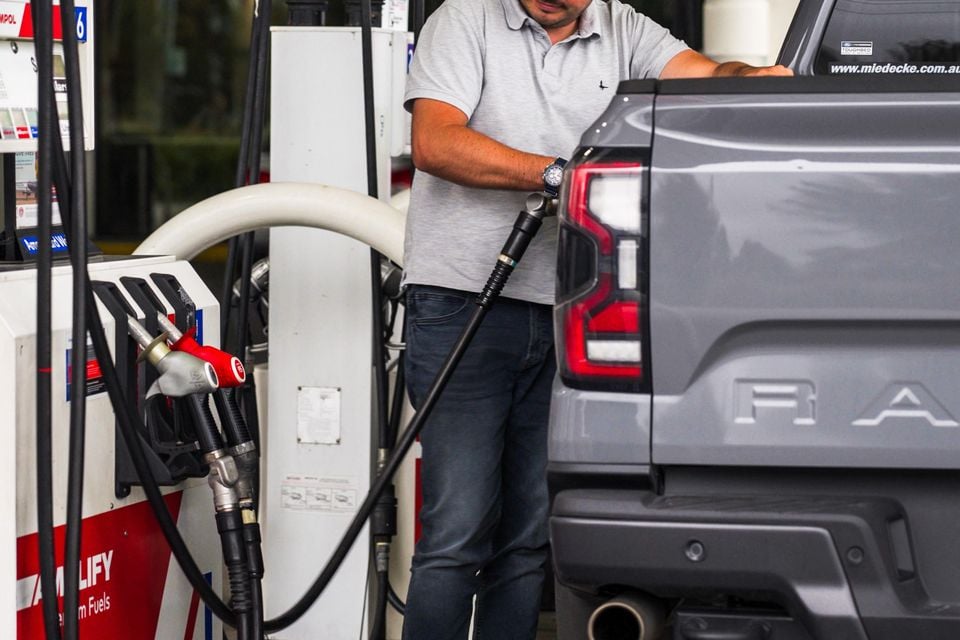
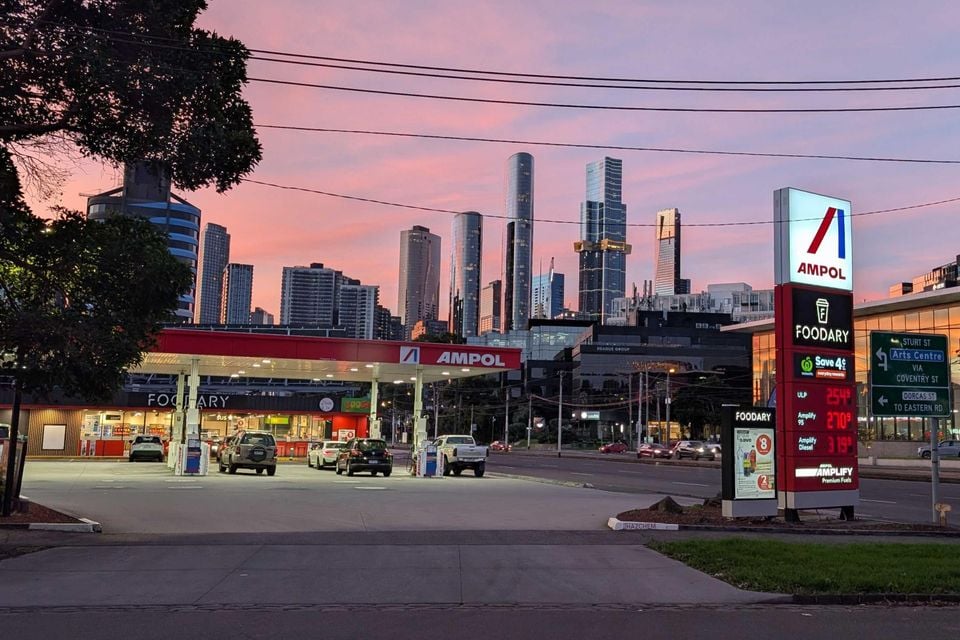
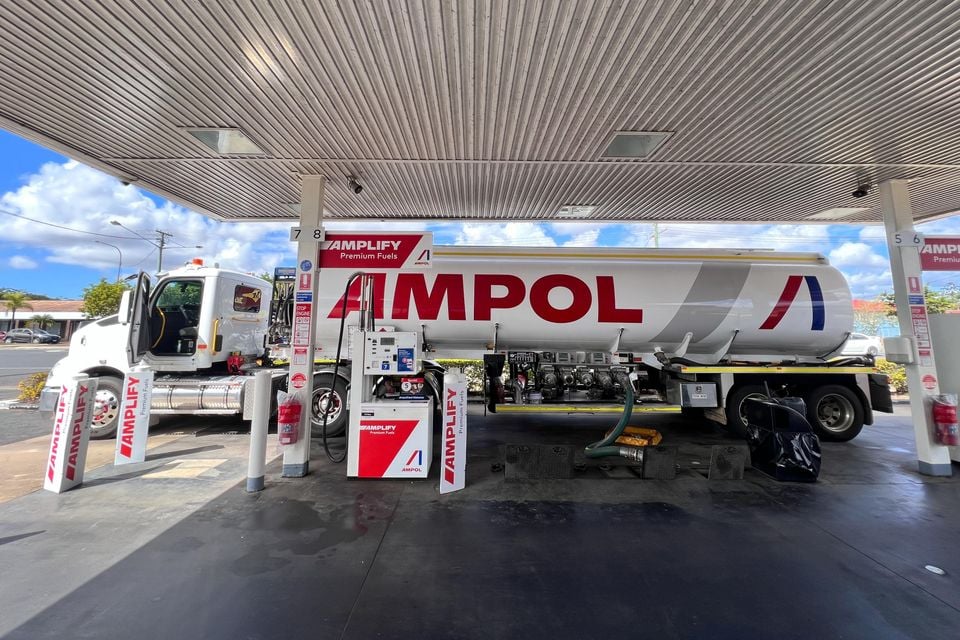
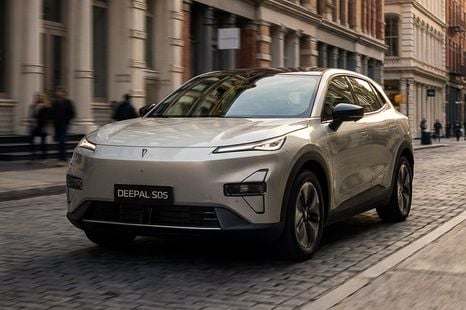
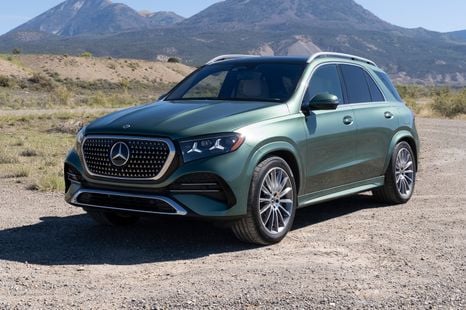
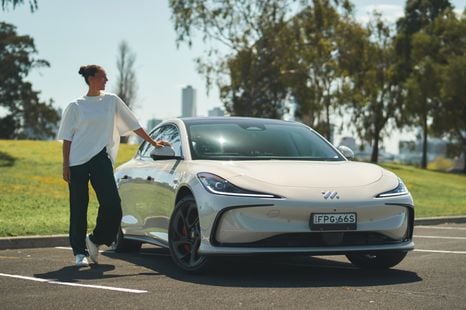
The boss of fuel refiner and retailer Ampol says refining and selling petrol is becoming less profitable and may one day be phased out, as benefits from the uptake of electric vehicles (EVs) flow through to its charging business.
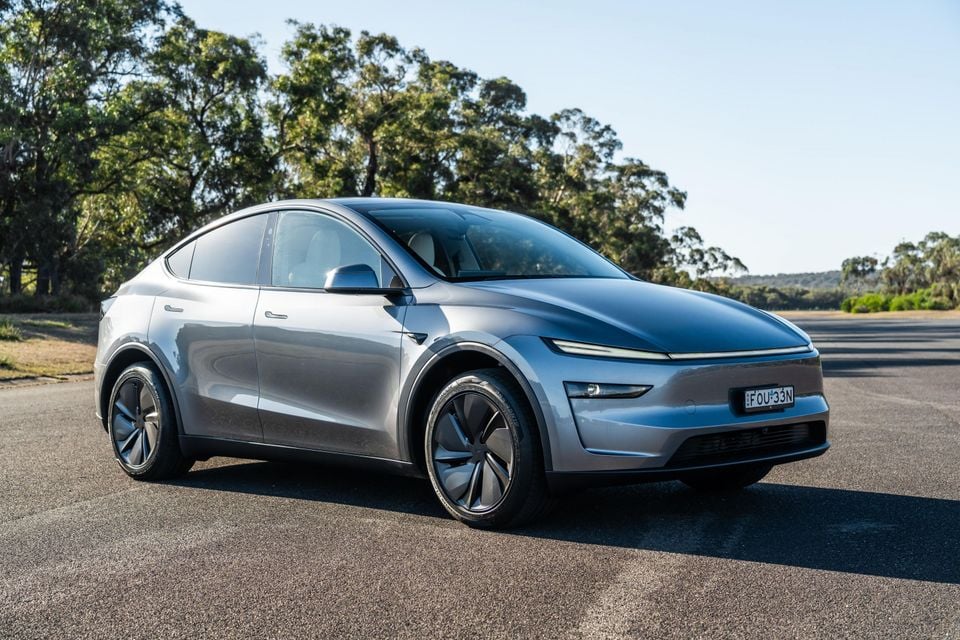
Speaking to That's Business with Alan Kohler on the ABC, Ampol CEO Matt Halliday said profits from petrol sales are declining as EV sales reach record levels amid continued uncertainty over crude oil supplies from a war-torn Middle East.
Domestic fuel production has come into the spotlight following conflict in the region, given Australia now has only two operational oil refineries, which together produce around 20 per cent of the nation's fuel needs – Ampol's Lytton refinery in Brisbane, Queensland, and Viva Energy's refinery in Geelong, Victoria.
Mr Halliday said that while said that while diesel and jet fuel production will remain a matter of national fuel security, the future of petrol in Australia remains less clear.
"How you adjust your production to produce more diesel and jet [fuel], and less petrol over time, is an important challenge that needs to be solved because it becomes less profitable," the Ampol CEO told Mr Kohler.
"There's a point at which making petrol and refining petrol becomes more challenging, and as soon as you have to put that petrol that you're making in Brisbane, for example, on a ship and send it somewhere else – that becomes very, very expensive.
“The bigger challenge for Australia is in diesel and jet, where there is no real solution that is economic at the moment. So we're going to need fuel security and fuel supply for a long time to come.”
After record fuel prices in April 2026, sparked by conflict in the Middle East disrupting global oil shipments, high running costs continue to flow through to Australia’s broader transport sector.
The higher price of diesel in particular has had a knock-on effect across the economy, contributing to higher prices for supermarket goods and other essentials.
Sales of petrol-powered vehicles over the same three months fell 30.1, 30.3 and 29.0 per cent respectively, with their market share dropping to 24.8 per cent in June.
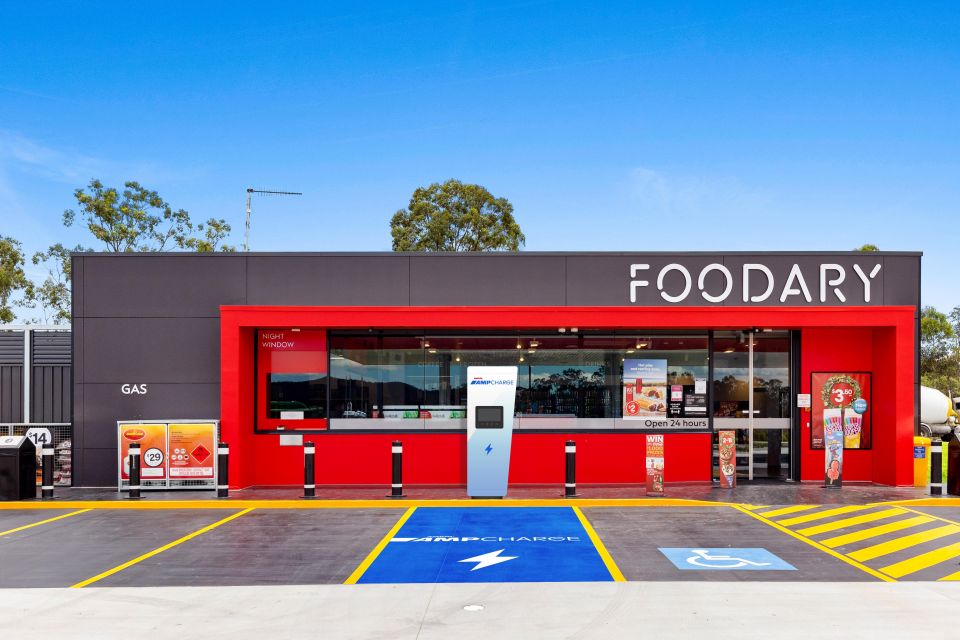
Mr Halliday said that while profits from petrol may be becoming thinner, Ampol's public charging network – which includes more than 350 charging bays nationally across service station forecourts and shopping centres – can make money, though perhaps not as much as by selling petrol.
"It's still too early to make a definitive call on this, but when we look at the addressable market, we see that EV charging can be a profitable business," the Ampol boss said.
"The business model works. Margins are certainly lower, but customers need to charge more frequently."
Mr Kohler put it to Mr Halliday that if all of Ampol's petrol customers switched to EVs tomorrow, the business would make less money because of the lower margins.
"We're increasingly encouraged by the fact that we think we can make reasonable returns out of this part of the business, leveraging our convenience offer [shopping centre partnerships] and leveraging the footprint that we have [service station forecourts] to make good returns over time.
"That will take time, so at the moment we're effectively building capability because the size of the [EV] fleet is about one or two per cent of the light passenger fleet, but it's growing. We want to get our business model set and scale it – that's what we're doing now."
The Ampol boss said that doesn't necessarily mean an EV charger at every one of the company's service stations.
"No – it's very much location-dependent – where do we think the EVs are going to be," he said.
"We track postcodes and data and where the EVs are arriving, what those journeys look like, and from our fleet customers in particular, where the locations are that they need so they can put an EV in the hands of their employee."
"It's a replication of the current model, but there are some areas where you can't get grid connectivity and some areas where we think, actually EV uptake's just not going to hit the requisite levels for some time."