







Matt Campbell
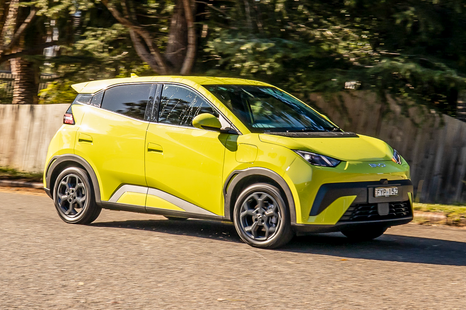
2027 BYD Atto 1 Premium review
This is the most affordable EV on the market, but you won’t want to buy the cheaper one. The Premium is a real standout… but it isn’t perfect.
13 Hours Ago
The Kona HEV is one of Australia's most popular hybrids, and after a week with the flagship trim level it's pretty easy to see why.

Marketplace Editor
Marketplace Editor
Marketplace Editor
Marketplace Editor
If this is the car for you, we’ll compare offers from trusted dealers, handle the back and forth and manage your purchase from enquiry to delivery.
Australia, this is your favourite small SUV…
Despite its polarising looks, the Hyundai Kona has taken the Australian market by storm, no doubt helped by its sprawling range of variants and wide availability of a fuel-efficient hybrid drivetrain.
It has clearly resonated with Australian new-car buyers, because 22,769 Konas were registered in 2025 – more than any other small SUV, and over 2500 units ahead of the Chery Tiggo 4 and MG ZS.
Of those 22,700-plus units registered, 10,407 or 45.7 per cent were hybrids, making the Kona the fifth-most popular hybrid vehicle in Australia last year.
That’s with good reason too. It’s efficient, practical, and relatively affordable. Plus, there’s plenty of on-board tech and goodies depending on the variant, maxing out with near-luxury levels of standard features.
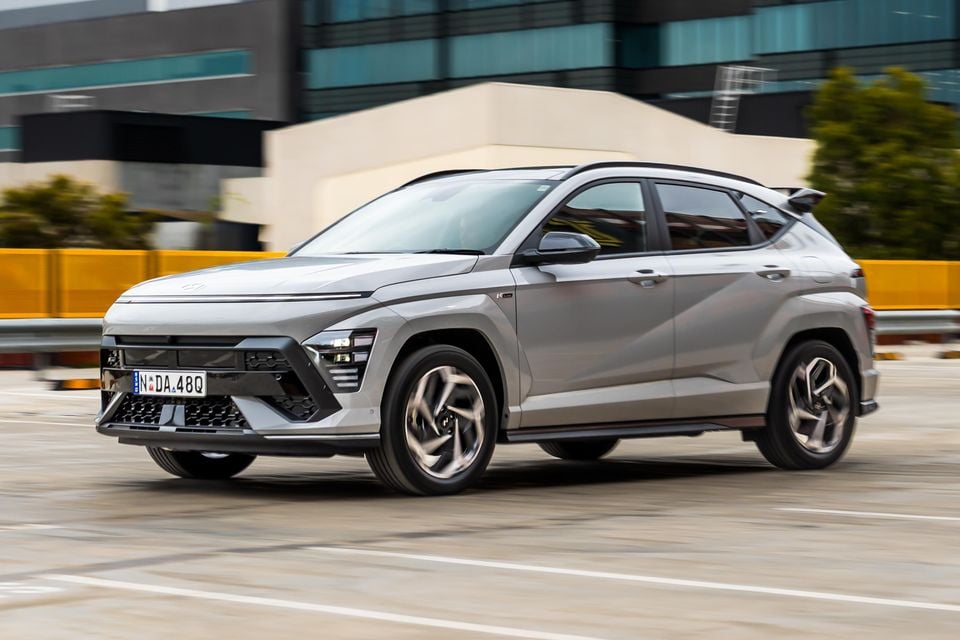
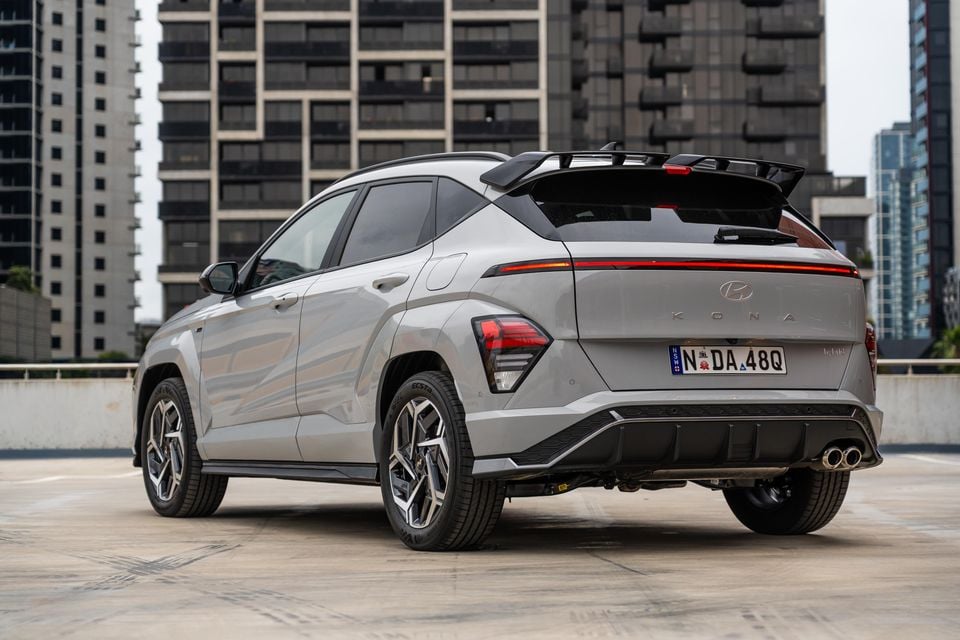
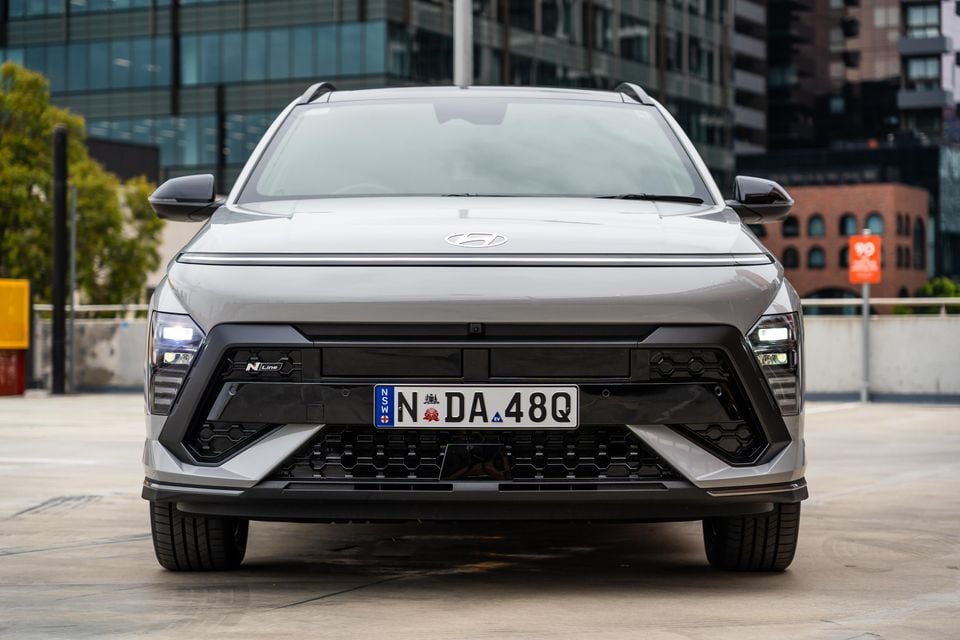
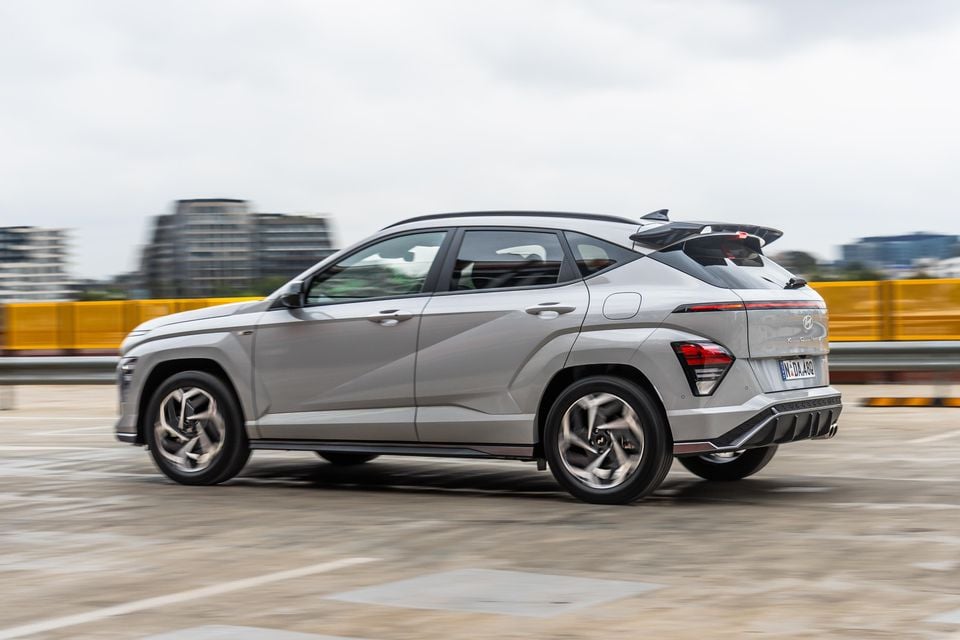
On test here we have the 2026 Hyundai Kona Hybrid Premium N Line, the pinnacle of the petrol-electric range with sporty looks and a suede-lined cabin.
Is this fully-loaded variant the best of the bunch? Read on to find out…
The Kona lineup was rationalised for the 2026 model year (MY26), spelling the end of the 1.6T AWD version but bringing in a new mid-spec Elite trim level.
| Model | Price before on-road costs |
|---|---|
| 2026 Hyundai Kona 2.0 | $32,950 |
| 2026 Hyundai Kona 2.0 Elite | $35,950 |
| 2026 Hyundai Kona Hybrid | $36,950 |
| 2026 Hyundai Kona 2.0 Elite N Line | $39,450 |
| 2026 Hyundai Kona Hybrid Elite | $39,950 |
| 2026 Hyundai Kona 2.0 Premium | $41,950 |
| 2026 Hyundai Kona Hybrid Elite N Line | $43,450 |
| 2026 Hyundai Kona 2.0 Premium N Line | $44,950 |
| 2026 Hyundai Kona Hybrid Premium | $45,950 |
| 2026 Hyundai Kona Hybrid Premium N Line | $48,950 |
The Hybrid Premium starts from $45,950 plus on-road costs, but our tester’s optional N Line Package adds a further $3000 to the price – so $48,950 before on-roads give or take. It appears the range has seen a minor $250 price rise since the MY26 range was detailed last July.
At the time of writing, the base Kona 2.0 FWD and Kona Hybrid (HEV) are advertised from $36,490 and $39,990 drive-away respectively, though the former will increase slightly to $36,990 D/A from March 2026.
You can also get an all-electric version of the Kona, which for the first quarter of 2026 starts from $45,990 drive-away for the base Standard Range, and $49,990 D/A for the Extended Range. The plusher Premium spec, only available with the Extended Range battery, is advertised from $59,990 drive-away.
For more details on Hyundai Kona deals, click here.
To see how the Hyundai Kona lines up against the competition, check out our comparison tool
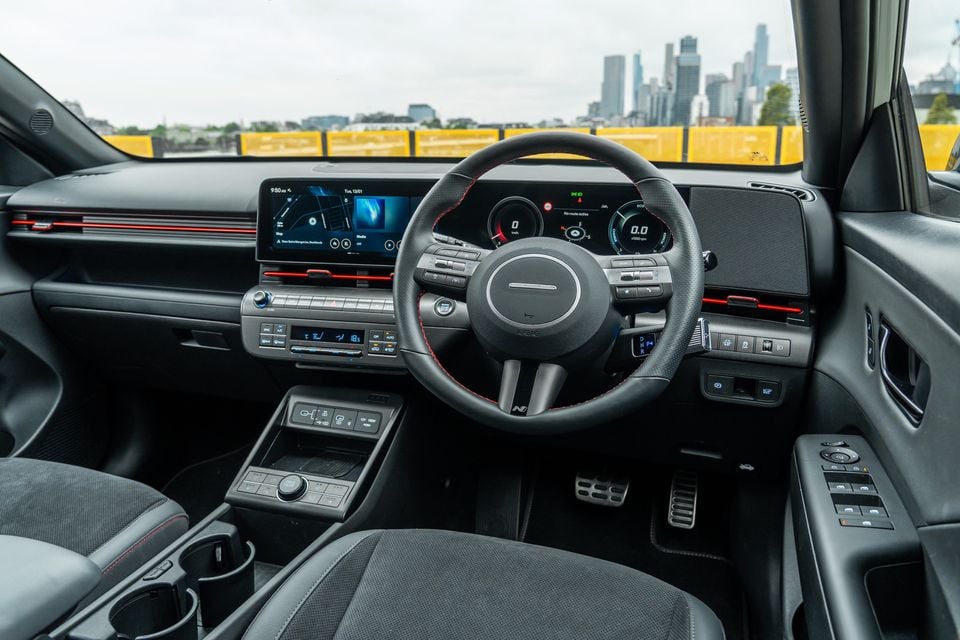
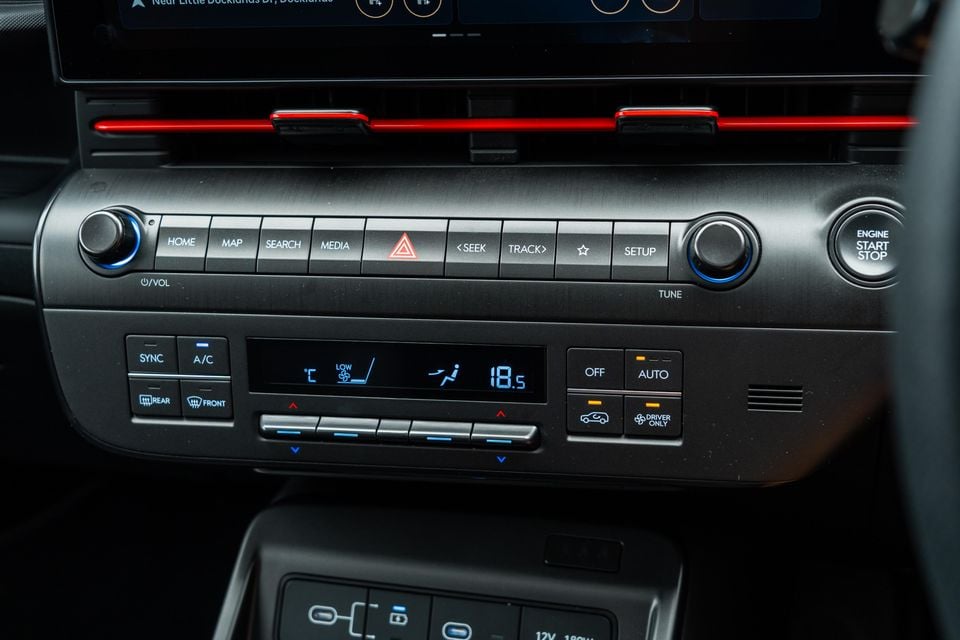
The Kona’s interior presentation is very impressive at first glance, with some of the best tech integration in this class.
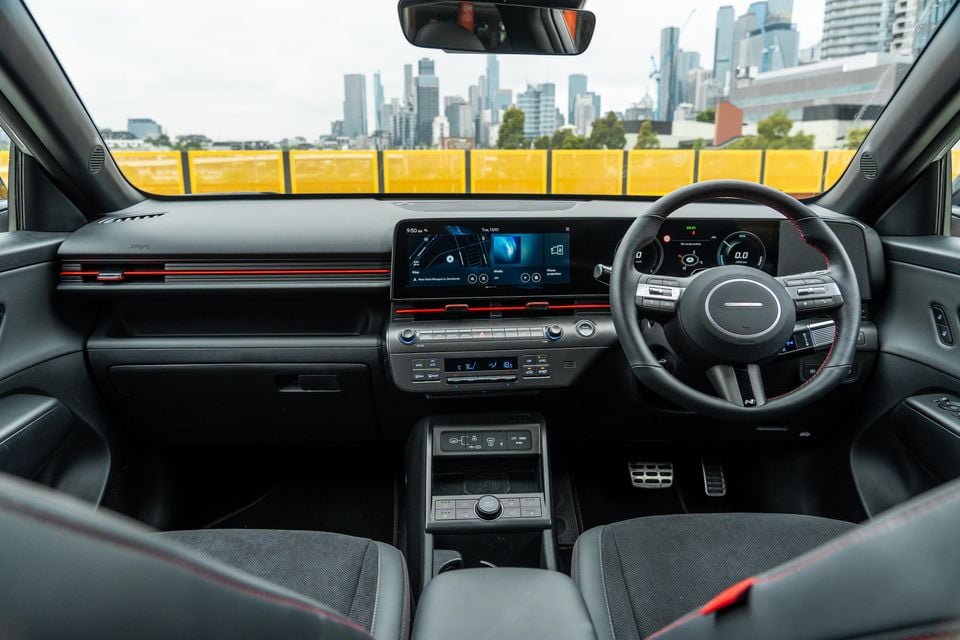
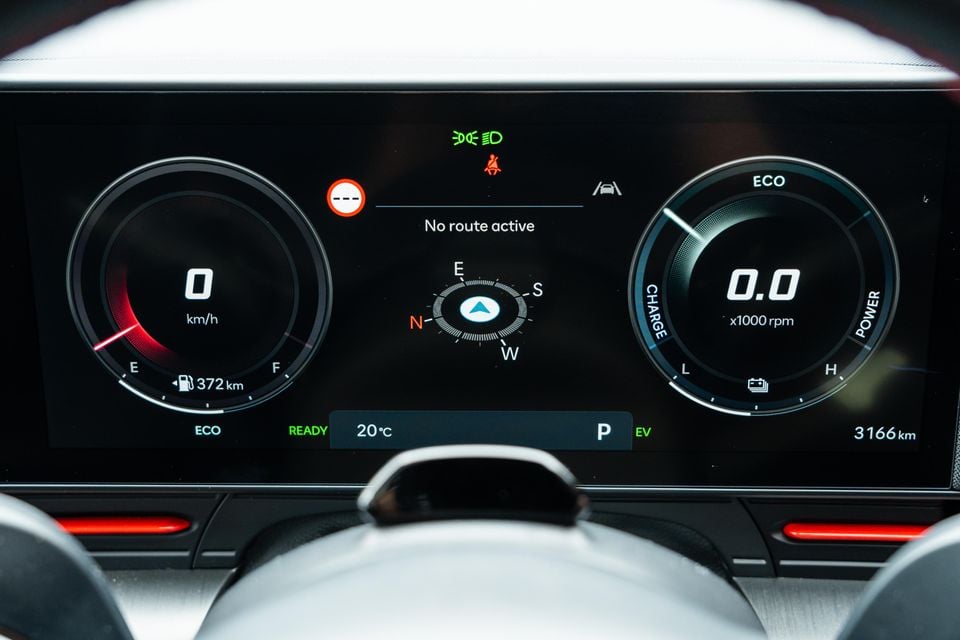
Dual 12.3-inch displays headline the interior of high-spec models, incorporating the driver’s instrument cluster as well as the central infotainment touchscreen.
It’s the same tech you’ll find in the most expensive Hyundais – including the $100,000-plus Ioniq 9 electric people mover – so the fact you can get all that in a compact economy car is pretty noteworthy.
As we’ve said in previous reviews of the Kona as well as other models within the Hyundai-Kia group, with the ccNC (Connected Car Navigation Cockpit) the screens are crisp, offer snappy response and smooth animations, and offer a full feature set.
In addition to the already easy-to-use native software, there’s wireless Apple CarPlay and Android Auto as standard, as well as Bluelink connected car services including online navigation and over-the-air software updates.
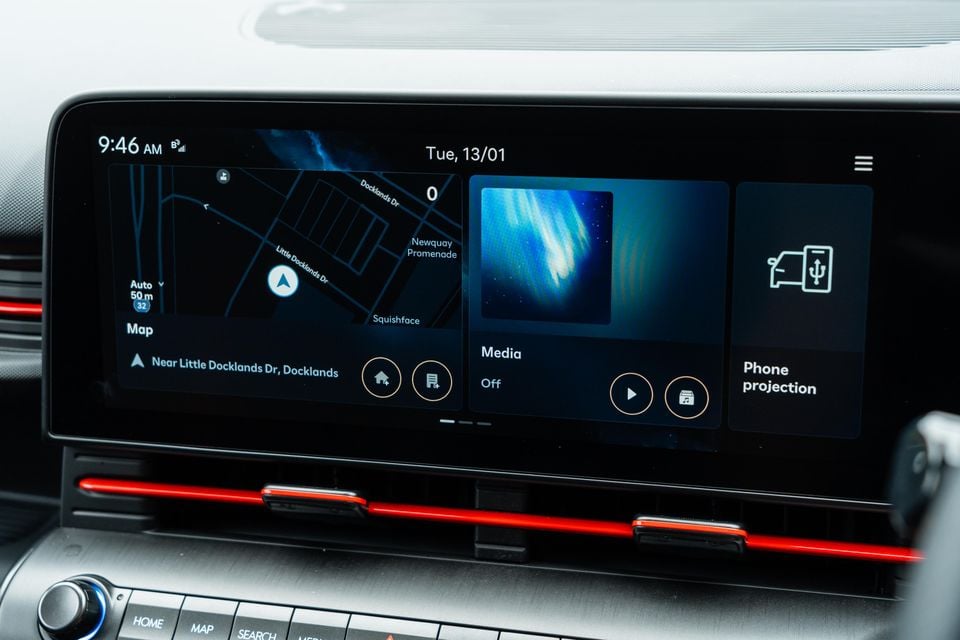
The Bose eight-speaker premium audio system is solid but not quite standout, offering clear sound and good depth with solid bass.
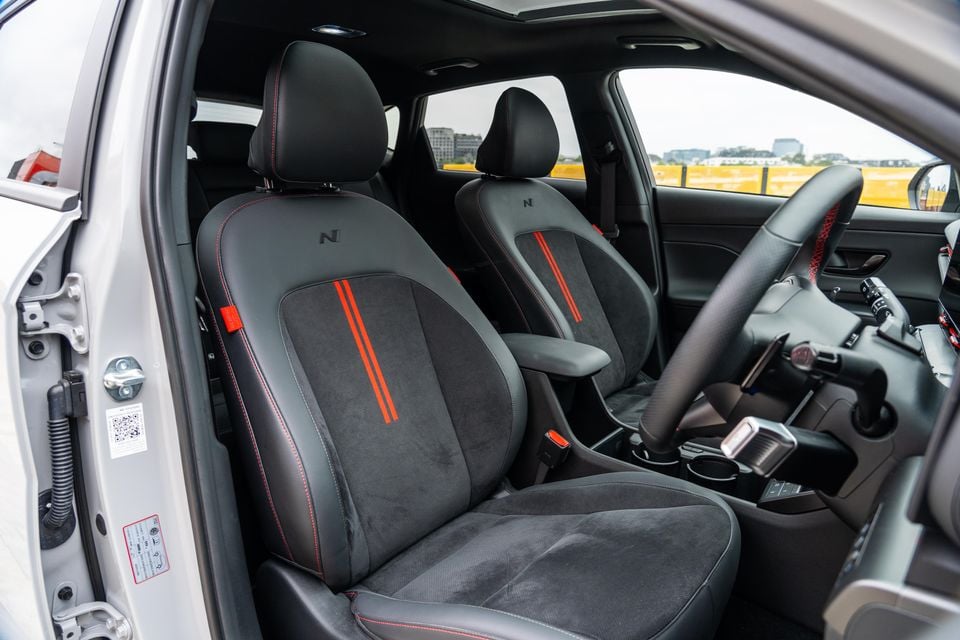
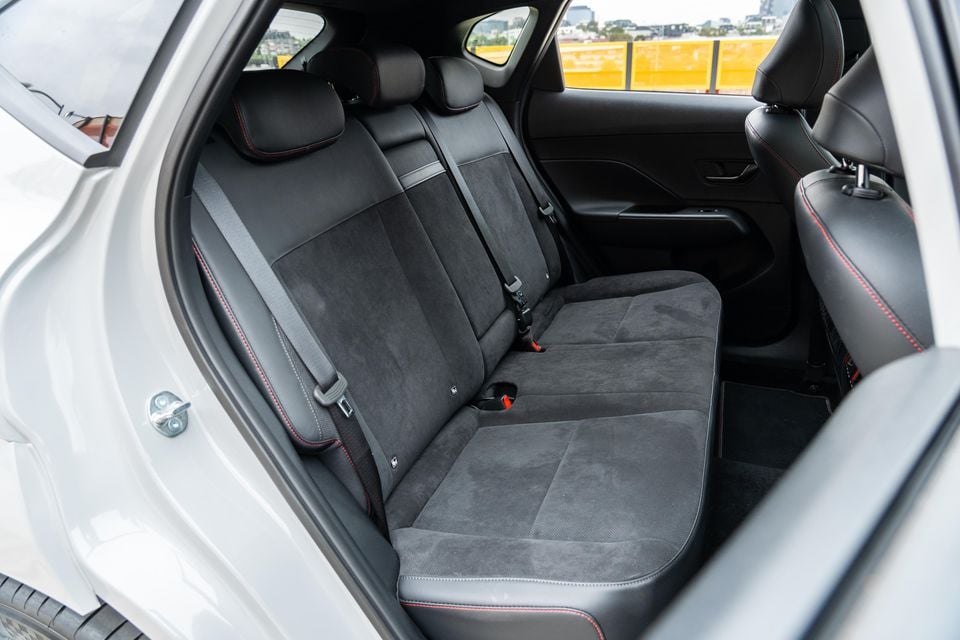
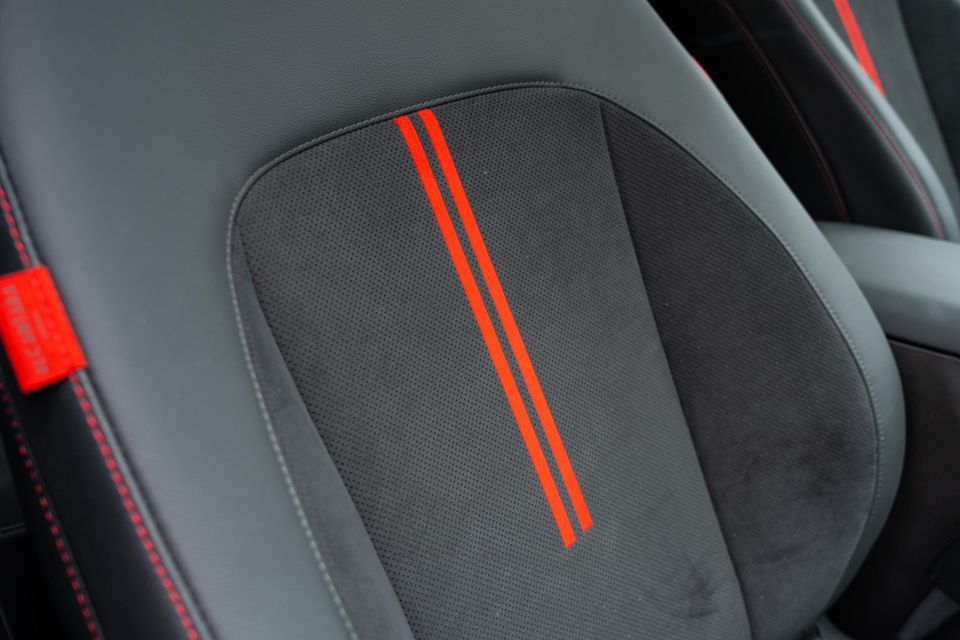
High-traffic surfaces and touch points like the seats, steering wheel, and the armrests in the doors and between the front seats are all nicely trimmed, with the N Line Package bringing flourishes of red throughout.
That said, the Kona’s cabin is fashioned entirely out of hard, scratchy plastics. So while at first glance it presents well, a quick poke and prod around reveals several areas where Hyundai has tried to save some money.
The interior of the N Line with its leather/Alcantara trim is cool, but I personally prefer the optional light leather interior of the standard Kona Premium. Even better, regardless of the spec you choose, you get heated and cooled front seats, as well as a heated steering wheel.
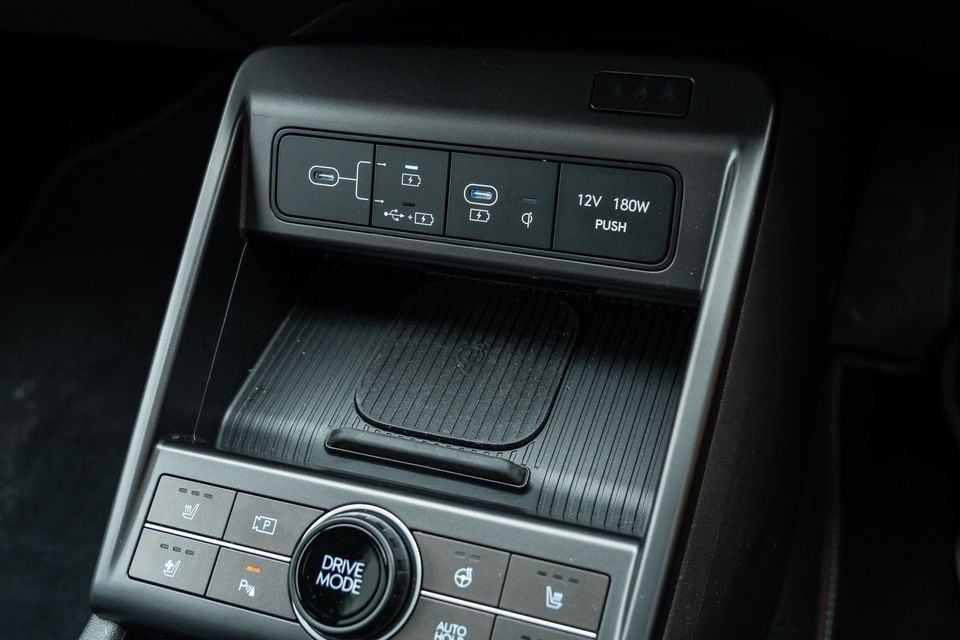
At least there’s plenty of storage, from the spacious and adjustable centre console with cupholders, to the phone tray with wireless phone charger, and the shelf that sits ahead of the front passenger in the dashboard.
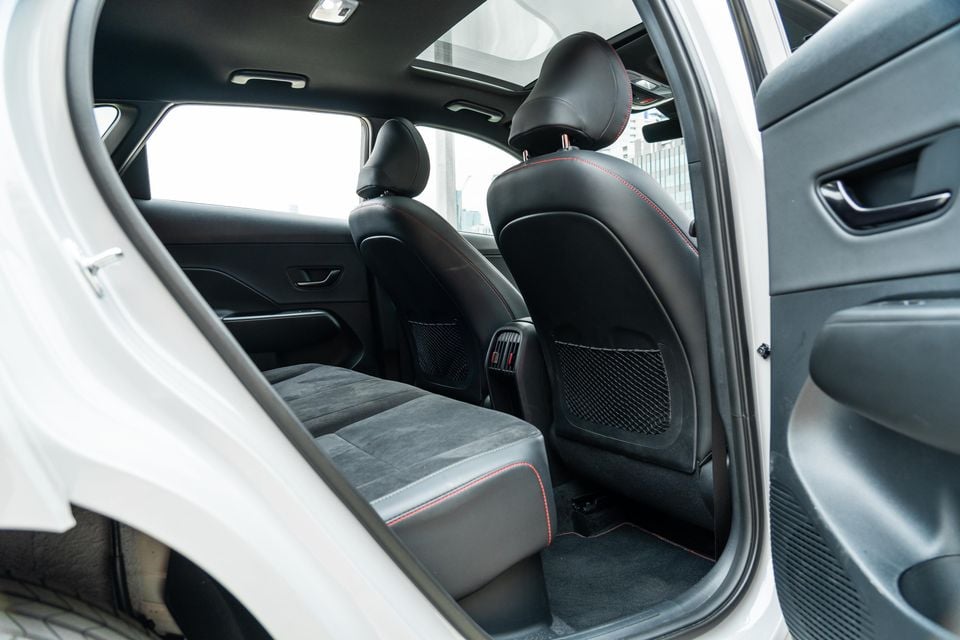
Moving into the back, the Kona belies its compact dimensions by offering a spacious second row for the class.
Hyundai made note of the EV-focused packaging with the launch of the second-generation Kona, which allowed the Korean brand to offer a flat rear floor and tall cabin, meaning taller folk (like 6’1″ me) have plenty of space.
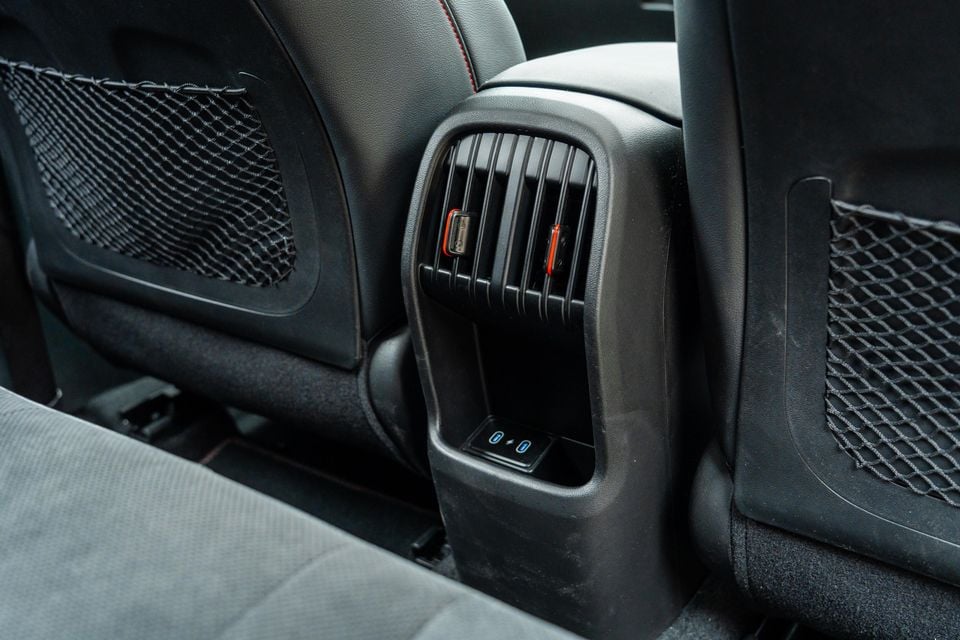
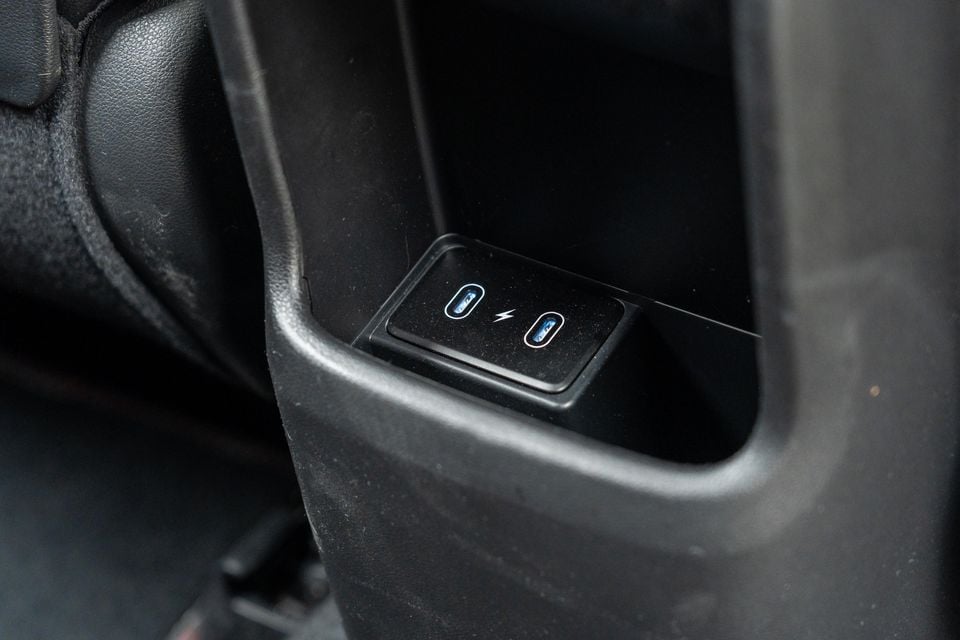
Thoughtful amenities include directional rear air vents, a pair of USB-C charging outlets, net-type rear seat pockets, bottle holders in the doors, and a fold-down centre armrest with cupholders.
Parents can make use of the ISOFIX anchors on the outboard seats, and top-tether points behind all three rear seats for child seats.
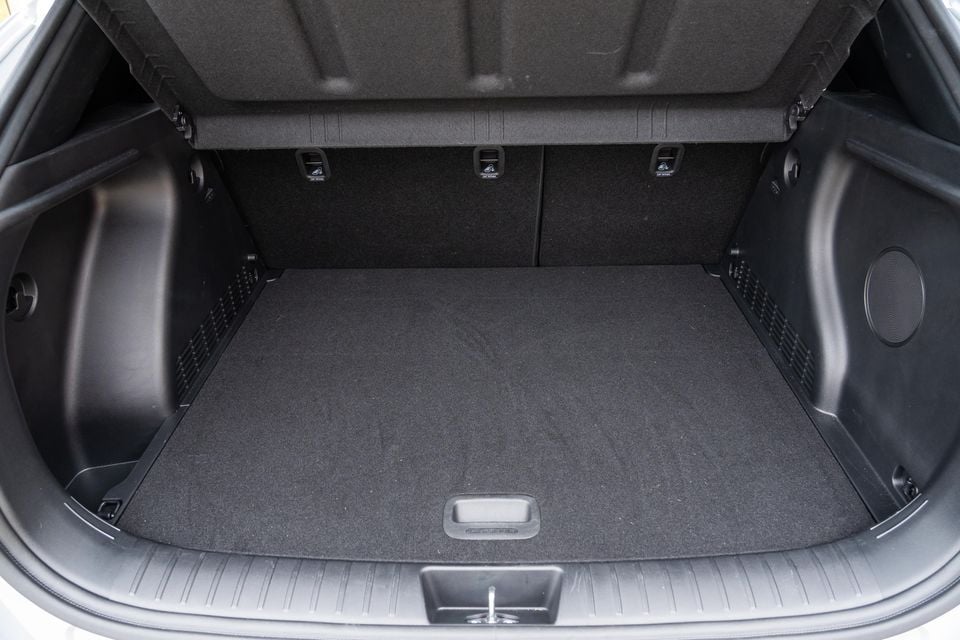
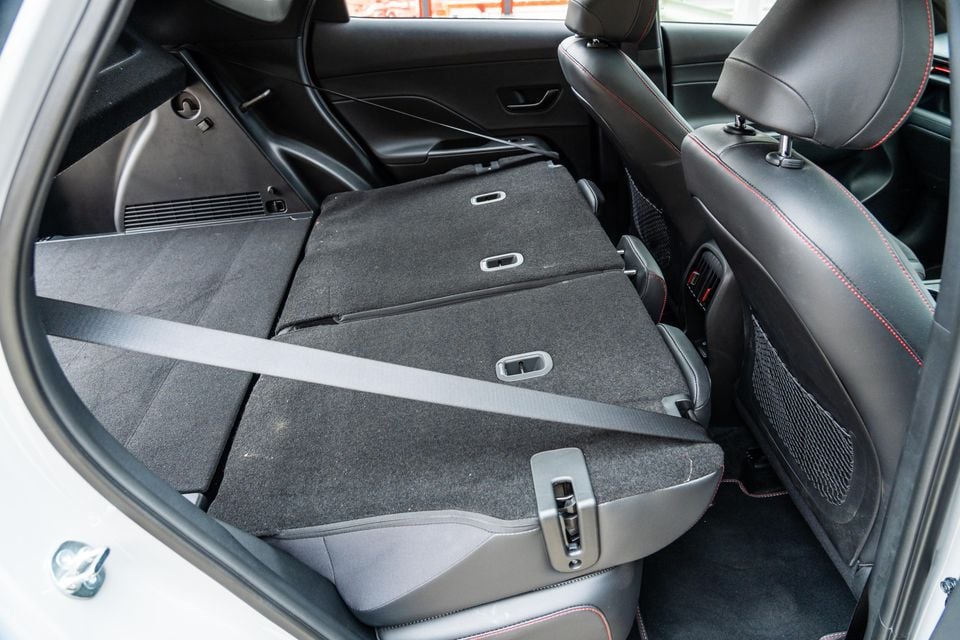
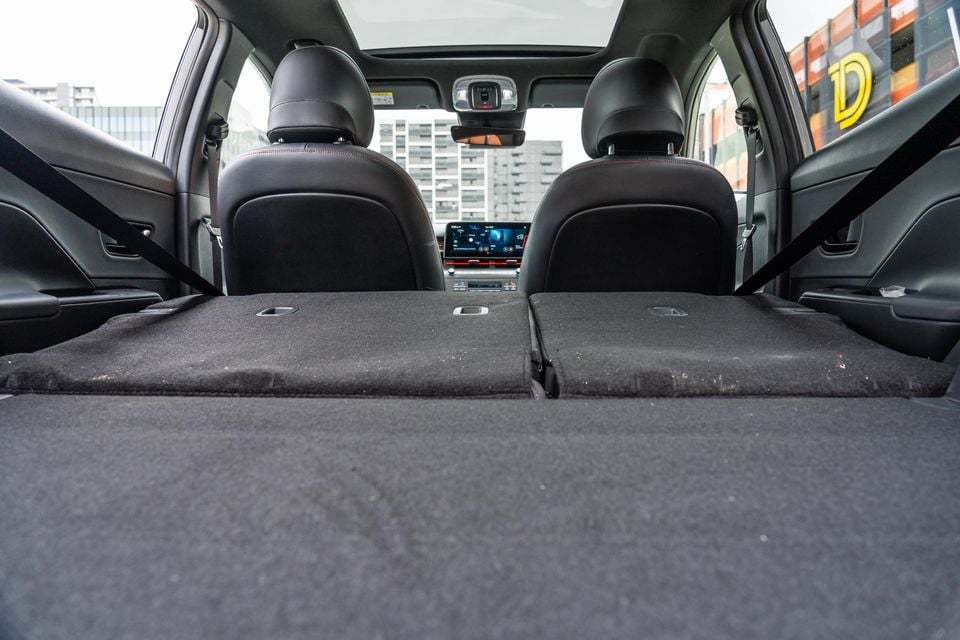
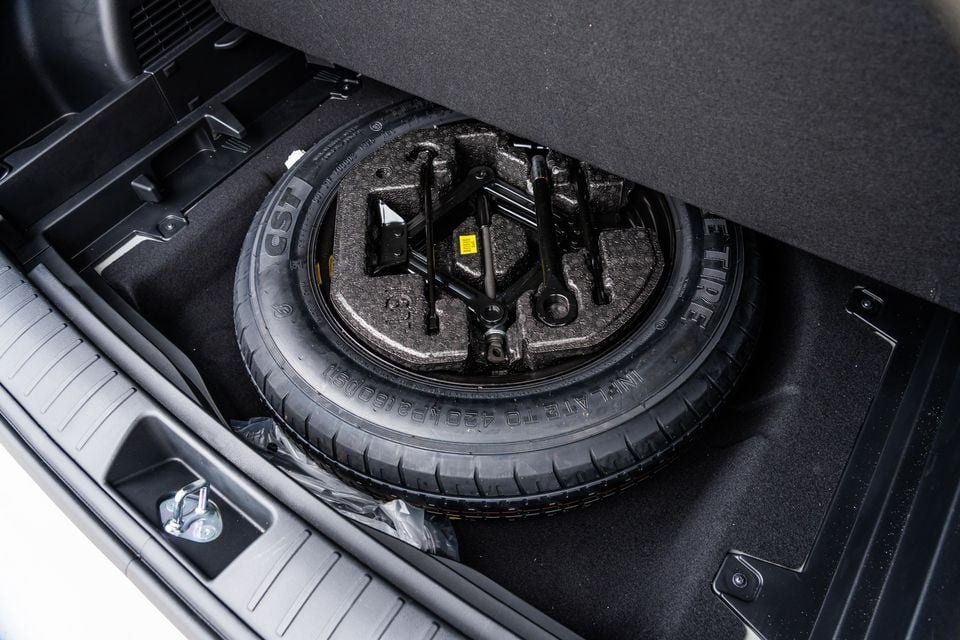
Further back, the Kona offers a healthy 407 litres of cargo capacity with the rear seats in use, expanding to 1241L with them folded.
Unlike an increasing amount of electrified vehicles, the Kona HEV retains a space-saver spare wheel under the boot floor instead of a tyre repair kit, too.
| Dimensions | Hyundai Kona |
|---|---|
| Length | 4350mm – Standard 4385mm – N Line |
| Width | 1825mm |
| Height | 1585-1590mm |
| Wheelbase | 2660mm |
| Cargo capacity | 407L – rear seats up 1241L – rear seats folded |
To see how the Hyundai Kona lines up against the competition, check out our comparison tool
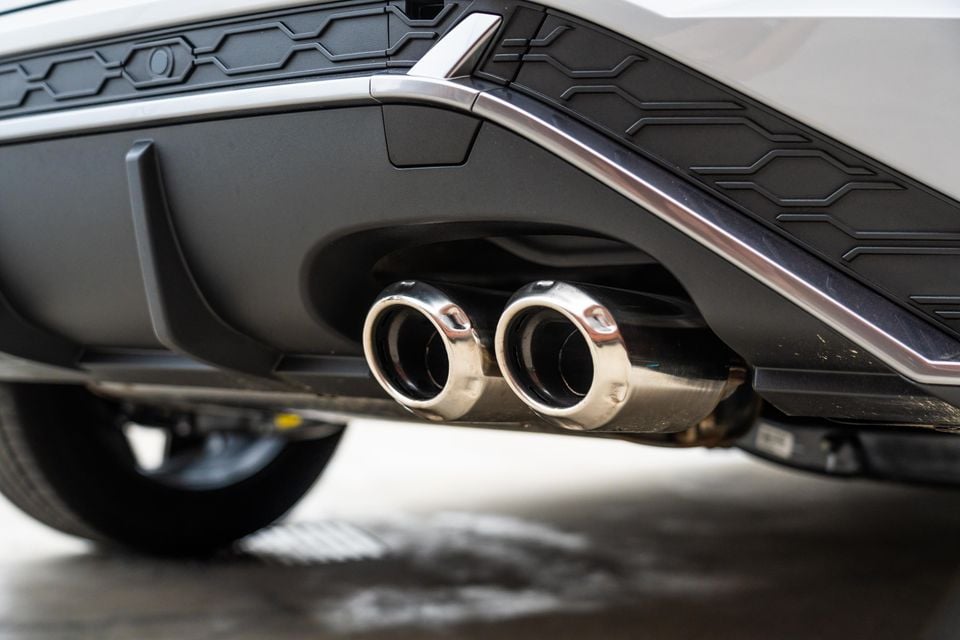
The Kona Hybrid’s 1.6-litre naturally aspirated petrol-electric drivetrain will be familiar to those who have driven a Kia Niro or Hyundai i30 Sedan HEV.
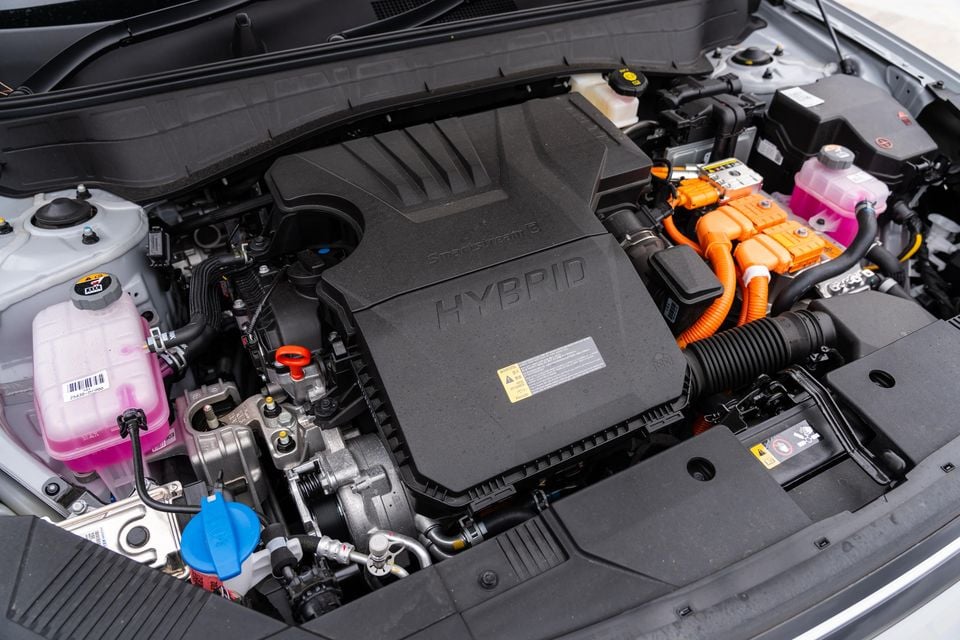
| Specifications | Hyundai Kona HEV |
|---|---|
| Engine | 1.6L 4cyl HEV |
| Engine outputs | 77kW at 5700 rpm 144Nm at 4000rpm |
| Electric motor outputs | 32kW + 170Nm |
| System outputs | 104kW + 265Nm |
| Battery | 1.32kWh Li-ion |
| Transmission | 6-speed dual-clutch auto |
| Drive type | Front-wheel drive |
| Weight | 1410-1525kg |
| Fuel economy (claimed) | 3.9L/100km |
| Fuel economy (as tested) | 4.4L/100km |
| Fuel tank capacity | 38L |
| Fuel requirement | 91-octane regular unleaded |
| CO2 emissions (claimed) | 89g/km |
| Emissions standard | Euro 5 |
| Braked towing capacity | 1300kg |
Our indicated fuel consumption was achieved over 300km of mixed driving during the course of a week, with a good split of urban and city commuting mixed in with highway and freeway stints.
Even if it’s 15 per cent up on the claim, our record fuel consumption number is a very impressive real-world figure, and as a bonus the Kona HEV takes cheaper 91-octane unleaded.
To see how the Hyundai Kona lines up against the competition, check out our comparison tool
There’s a lot to like about the way the petrol-electric Kona handles itself on the road.
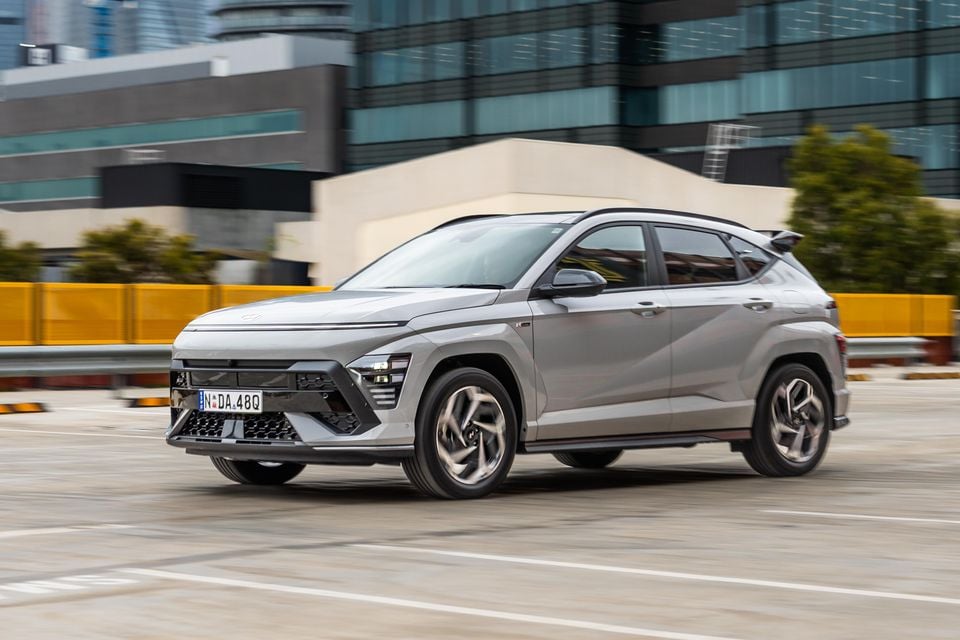
While its system power and torque outputs seem meagre, the electric motor’s 170Nm is available from rest, which also helps to iron out any hesitation you’d usually experience with a dual-clutch auto off the line.
On cold starts you might find the petrol engine fires quickly and buzzes away at a high idle to warm up, and once it’s ready to go you’ll be surprised at how much the Kona HEV will lean on its electric motor relative to something from the Toyota stable, for example.
In traffic on flat roads you’ll often have the Hyundai accelerate to 40km/h using the e-motor only, with the petrol engine only firing up to assist as the speeds climb. As the electric motor is mounted within the transmission, you do get the sensation of the Kona shifting gears even in EV mode, but it’s easy to get used to.
A minor gripe with Hyundai’s dry-clutch DCT is the elastic feeling as it shifts from first into second and sometimes second into third. Given shifts in dual-clutch autos are meant to be snappier, it’s odd that it does this and almost feels like it’s slurring through its early ratios.
Once you’re moving there’s not much to complain about. The Kona rides nicely, is generally well hushed for a small SUV and handles more like a slightly raised hatchback rather than a top-heavy wagon – because, really, that’s what it is.
At times I did find it could use a seventh cog though – much like the six-speed conventional ‘box in Hyundai's and Kia’s turbocharged hybrids – because at freeway speeds or occasionally while cruising at 60km/h the Kona held revs a little high, which probably doesn’t help fuel consumption, and the 1.6-litre petrol engine’s buzzy nature can emit a slight and constant vibration through the steering wheel.
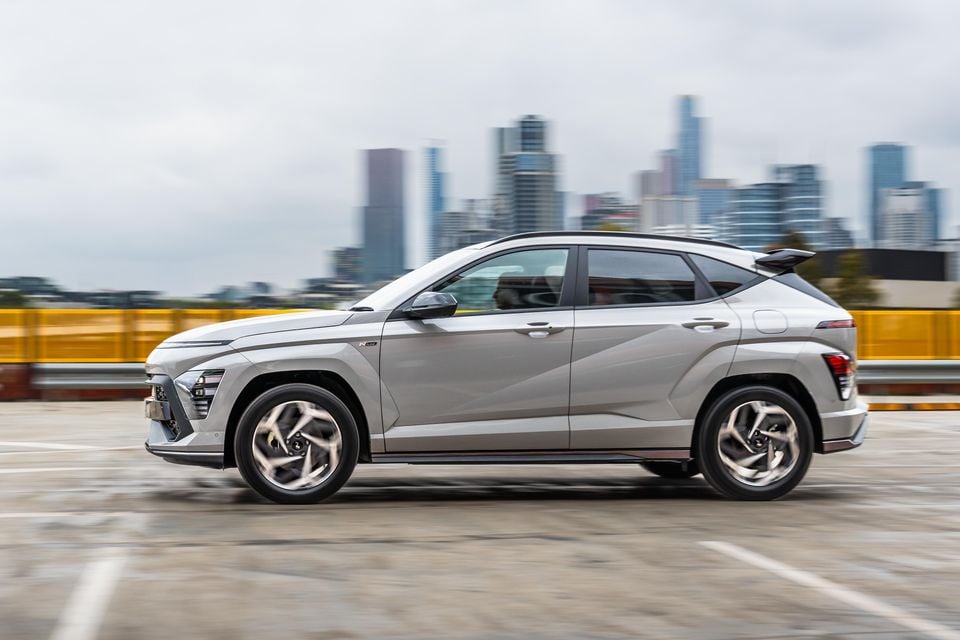
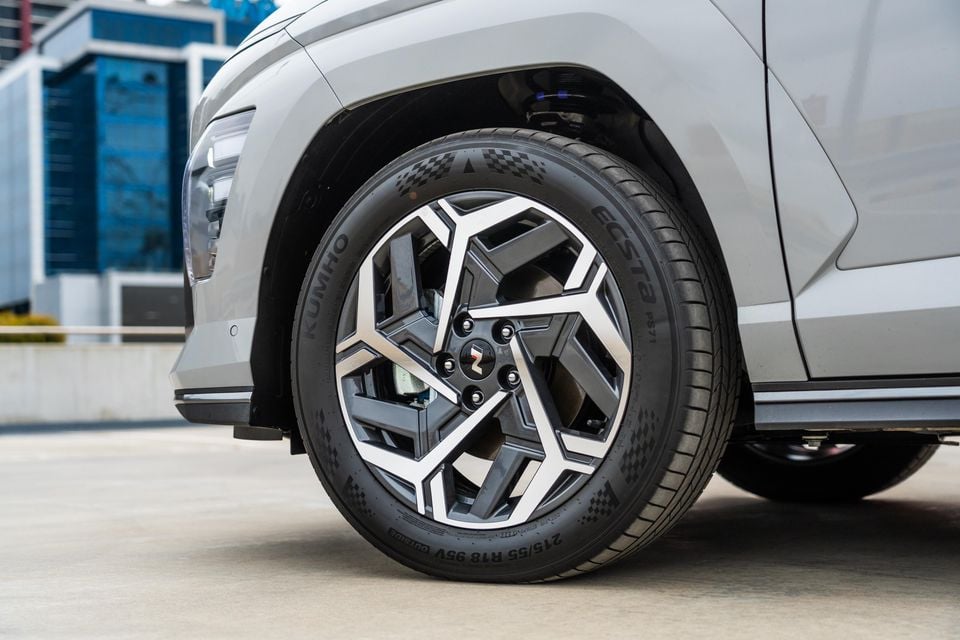
The Kona HEV gets smaller 18-inch alloy wheels in N Line guise compared to the petrol-only model's 19s in Premium trim, and that extra chub to the rubber adds another layer of suppleness to the primary ride, particularly in the city where you’re likely to roll over drain covers, tram tracks and the like.
It errs on the firmer side though, so bigger hits will find the limits of said suppleness quite quickly. That said, it’s almost never crashy even over patchy inner-city roads, though it’s never quite as settled as something like the locally tuned Kia Seltos or some of its softer-sprung rivals.
The steering tune is nicely balanced, being relatively light in weight but with a very good level of accuracy and feel. Its almost sporty setup is in keeping with the N Line branding, but it's also not too focused if you go for the standard Premium.
Get it on the open road and it is pretty happy there too, even if it sits around the 2000rpm mark constantly. Relative to its competitors, road and wind noise is kept to acceptable levels, and the powertrain intelligently shuffles between power sources as it does around town too – often you’ll see it go into EV mode at 100km/h.
Hyundai’s driver assistance systems are generally also well calibrated. The driver attention monitor is much less overbearing than I remember, and the audible speed limit assist is easily muted with a long press of the… er… mute button.
The Kona’s adaptive cruise and lane centring functions are likewise very good, as is the Premium’s Blind Spot View Monitor which adds a visual aid to go with the audible one. Apart from the side cameras, everything else is pretty much standard across the range, too.
One thing missing is Hyundai-Kia’s Highway Driving Assist, which automatically combines adaptive cruise and lane centring functions with navigation data for proper semi-autonomous assistance on the highway.
The existing systems pretty much perform 95 per cent of that function, but the latest models from the brand’s stable can also assist with lane changes as well as adjust speed for corners on the highway and such.
To see how the Hyundai Kona lines up against the competition, check out our comparison tool
The Premium sits atop the Kona lineup in Australia.
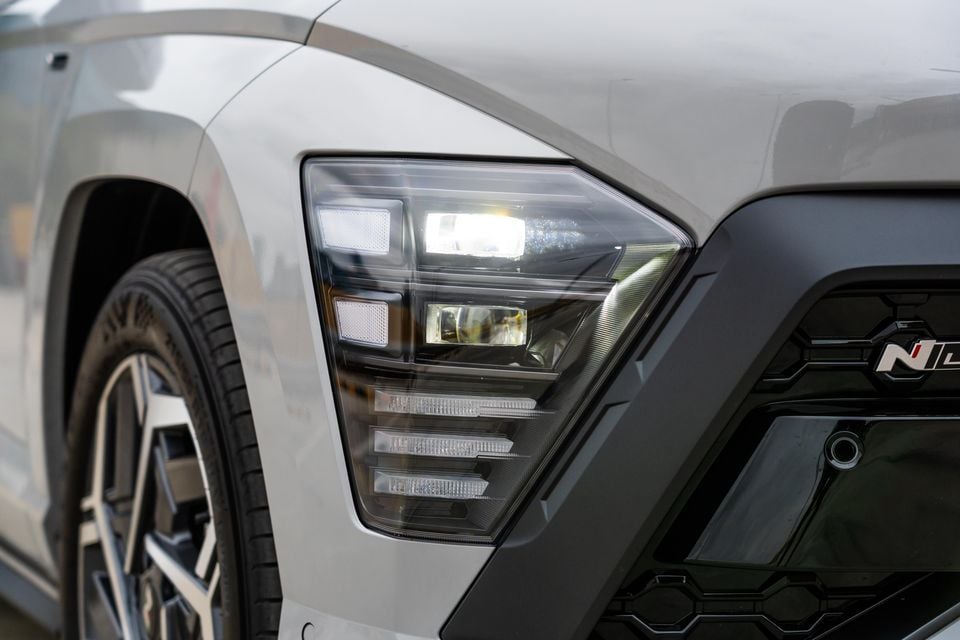
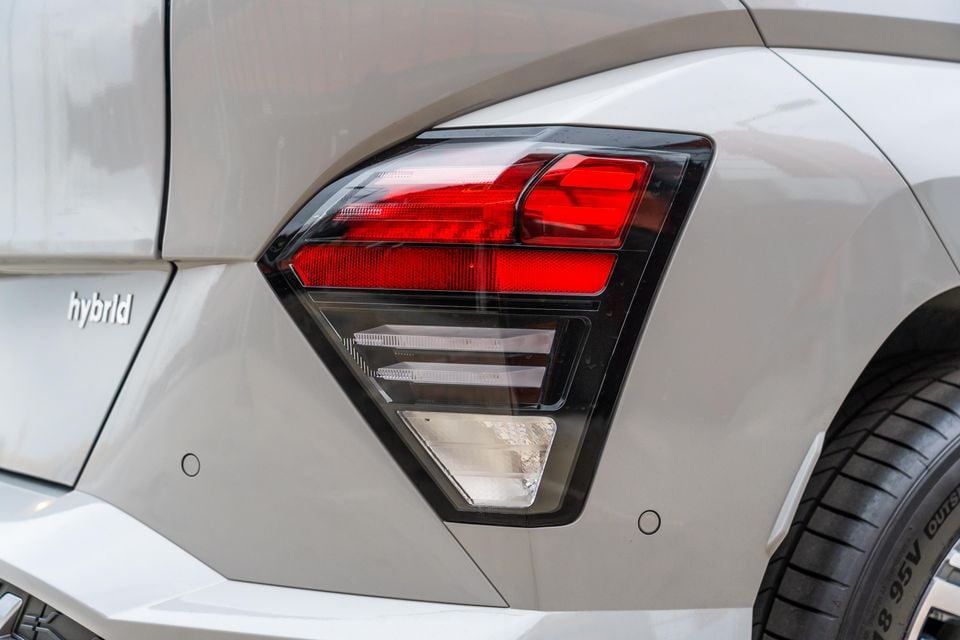
2026 Hyundai Kona (base) equipment highlights:
Kona Elite adds:
Kona Premium adds:
To see how the Hyundai Kona lines up against the competition, check out our comparison tool
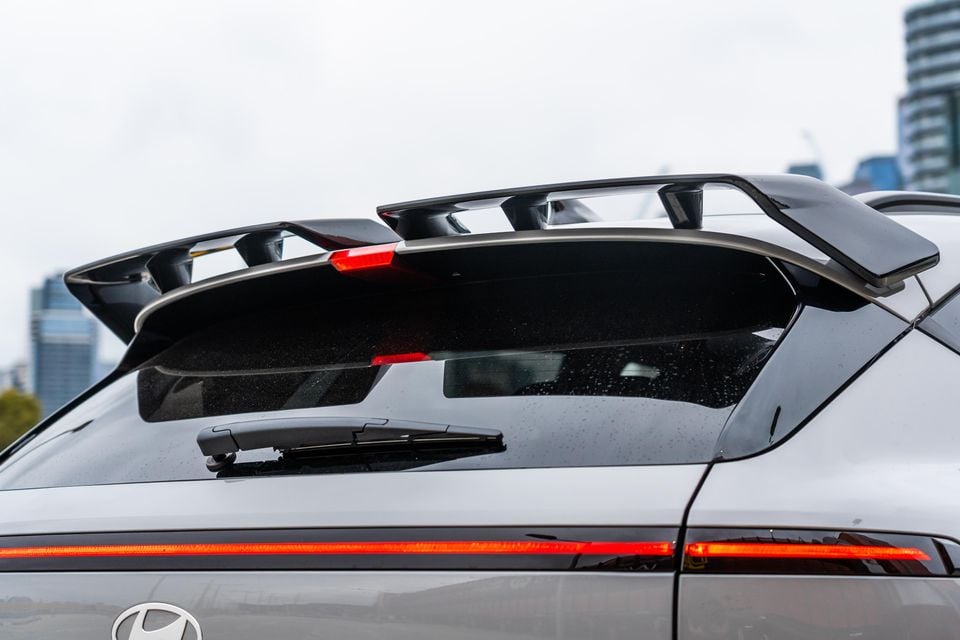
Our test car was fitted with the optional N Line Package, which adds $3000 to the price of the Premium and $3500 to the Elite.
If this is the car for you, we’ll compare offers from trusted dealers, handle the back and forth and manage your purchase from enquiry to delivery.
N Line Package adds – over Kona Premium:
To see how the Hyundai Kona lines up against the competition, check out our comparison tool
The Hyundai Kona has a four-star ANCAP safety rating based on testing conducted in 2023.
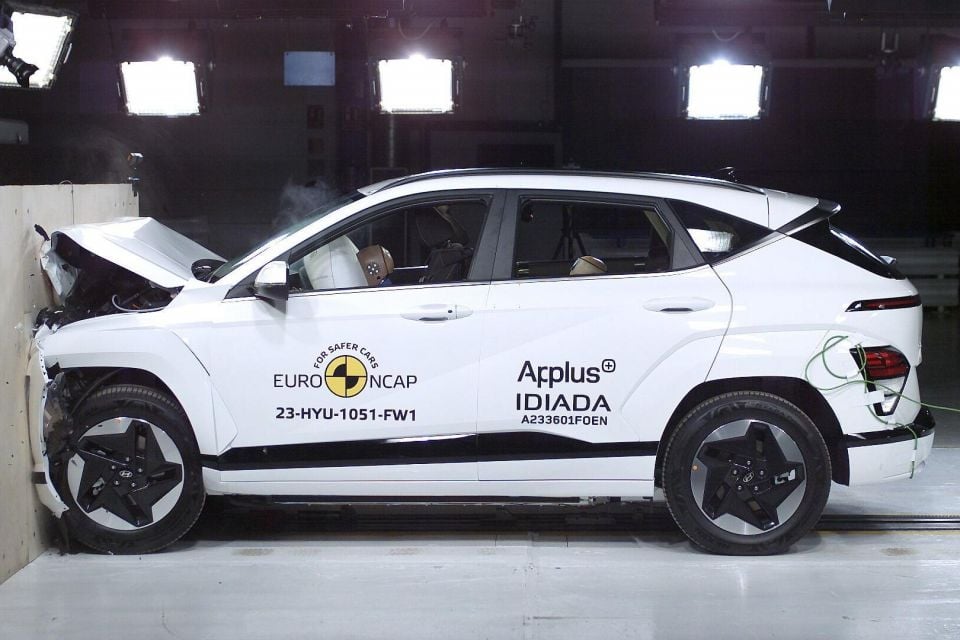
| Category | Hyundai Kona |
|---|---|
| Adult occupant protection | 80 per cent |
| Child occupant protection | 84 per cent |
| Vulnerable road user protection | 64 per cent |
| Safety assist | 62 per cent |
Standard safety equipment across the range includes:
Kona Premium adds:
To see how the Hyundai Kona lines up against the competition, check out our comparison tool
The Kona is covered by a standard five-year, unlimited kilometre new-vehicle warranty, with HEV and EV batteries covered for eight years or 160,000km – whichever comes first.
| Servicing and Warranty | Hyundai Kona Hybrid |
|---|---|
| Warranty | 5 years, unlimited kilometres – Standard 7 years, unlimited kilometres – Service activated 8 years, 160,000 kilometres – HEV/EV battery |
| Roadside assistance | 12 months – Standard Lifetime – Service activated |
| Service intervals | 12 months or 15,000 kilometres |
| Capped-price servicing | Up to 5 years or 75,000 kilometres |
| Average annual service cost | $601.40 |
| Total capped-price service cost | $3007 – 5 years |
Vehicles registered from June 2025 are eligible for an extended seven-year, unlimited-kilometre warranty if all scheduled services are completed by a Hyundai dealer.
Lifetime roadside assistance cover is also offered if you continue to service your Kona within the Hyundai network.
To see how the Hyundai Kona lines up against the competition, check out our comparison tool
My week with the Kona HEV was a pleasant reminder why this small SUV remains one of our top picks in its segment.
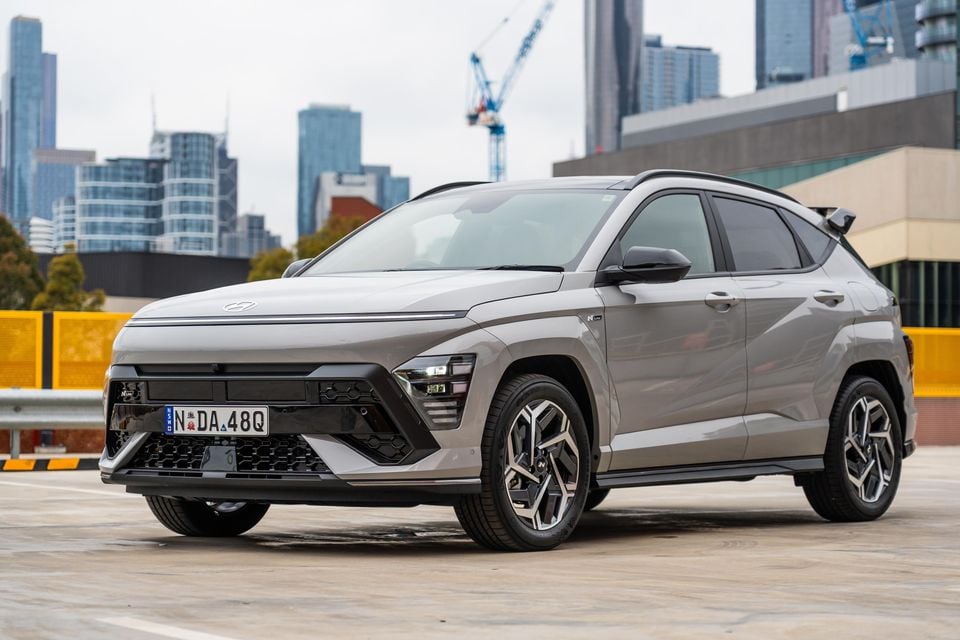
It’s a proper alternative to Toyota’s range of hybrid crossovers and passenger cars, offering a more engaging drive and competitive fuel-efficiency. The value equation remains strong if not quite China-cheap, and there’s a good range of personalisation options to really make it yours.
You don’t need to shell out over $50,000 on-the-road for this fully loaded Premium N Line spec either; the sub-$40,000 drive-away entry-level Kona Hybrid and the mid-spec Elite have more than enough kit and space for thousands less than the car you see here.
Until the next-generation Kia Seltos arrives later this year, I’m not sure if there’s any other rival in this segment that can beat the Kona HEV’s all-round abilities. The BYD Atto 2 is a good EV alternative, but not everyone wants to go all-electric; and the Toyota Corolla Cross hybrid offers that solid Toyota buying experience, but is pricier and a bit boring.
The Mazda CX-30 is lovely but its petrol-only powertrain lineup is much thirstier, while the Nissan Qashqai e-Power gets quite expensive when you try to match the top-spec Kona’s expansive list of standard features.
So, that's why the Kona Hybrid remains a top contender in the small SUV class – I just recommend you really think about whether you need to spend an extra few grand on N Line extras or even some of the Premium’s nicer trimmings.
CarExpert can save you thousands on a new Hyundai Kona. Click here to get a great deal.
Click the images for the full gallery
If this is the car for you, we’ll compare offers from trusted dealers, handle the back and forth and manage your purchase from enquiry to delivery.
Quickly see how this car stacks up against its competition. Select any benchmark to see more details.
Hyundai Kona
Hyundai Kona Sales rolling 12-months#
*Based on VFACTS and EVC data
Looking for complete Hyundai Kona price history?
Our Hyundai Kona Pricing Page shows exactly how prices have changed over time.
2027
$37,533
2025
$40,311
2027
$40,623
2027
$44,228
2027
$46,803
2027
$49,907
2026
$50,418
2026
$53,319
2026
$57,768
2026
$65,118
2026
$68,268
James Wong is an automotive journalist and former PR consultant, recognised among Australia’s most prolific motoring writers.
Add CarExpert as a Preferred Source on Google so your search results prioritise writing by actual experts, not AI.
Matt Campbell
13 Hours Ago

Josh Nevett
20 Hours Ago
Josh Nevett
20 Hours Ago

William Stopford
3 Days Ago

Damion Smy
4 Days Ago
William Stopford
4 Days Ago
Add CarExpert as a Preferred Source on Google so your search results prioritise writing by actual experts, not AI.
# Based on VFACTS and EVC data
† Displayed prices are based on the drive-away price of the vehicle, which includes delivery charges, registration fees, number plates, and applicable road taxes, based on a Sydney location. However, prices may vary between states and territories, and additional costs such as compulsory third party (CTP) insurance, dealer delivery fees, and optional extras are not included. These prices are subject to change without notice and may not reflect current market pricing or dealer offers.
 Automotive Vehicle Spec Data & 4K images Powered by JATO Dynamics Ltd