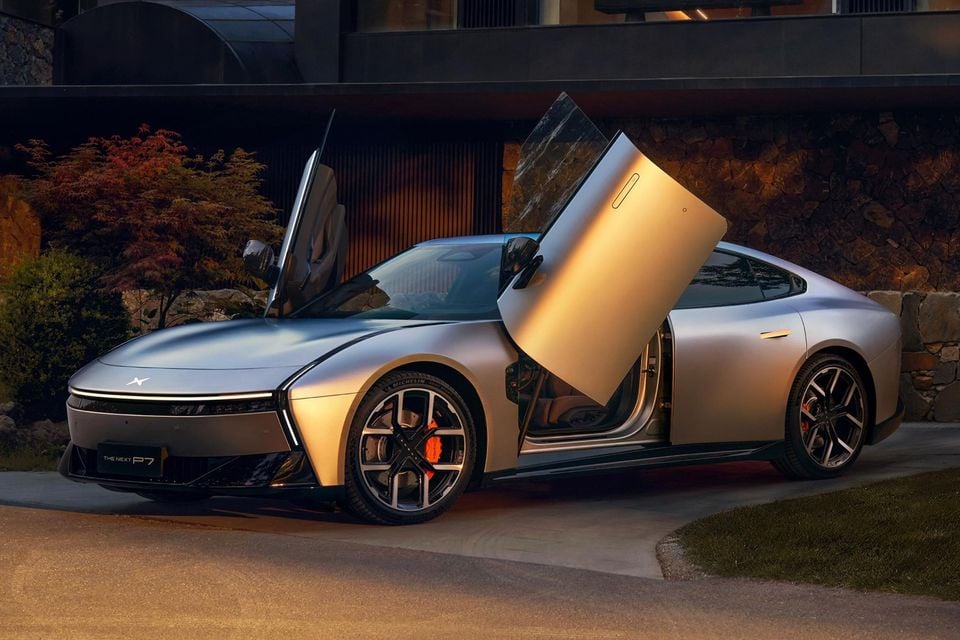
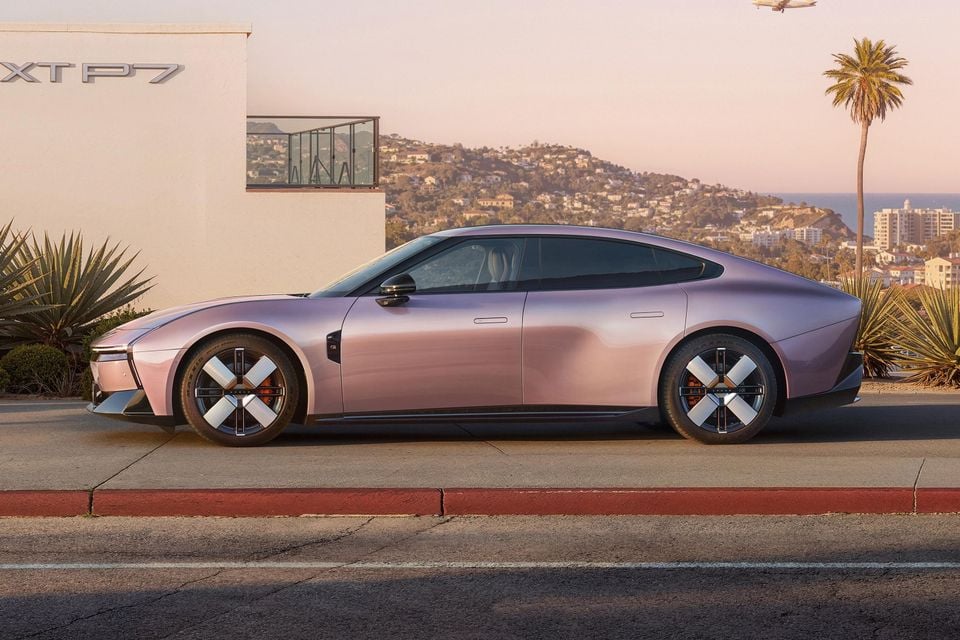
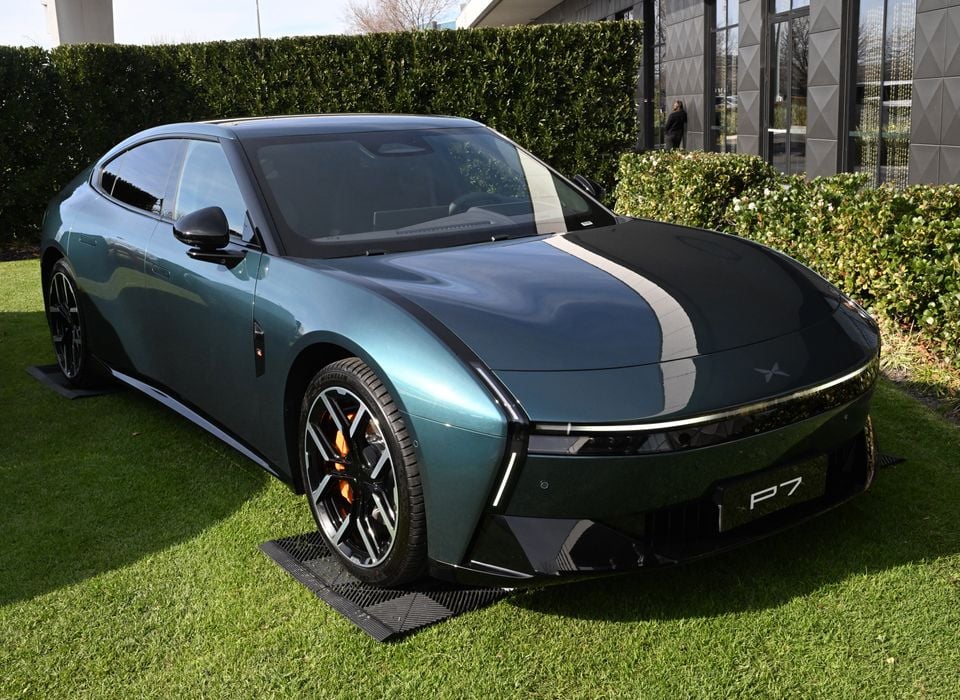
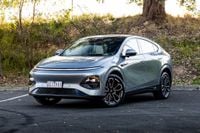
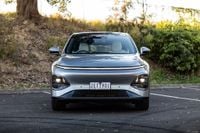
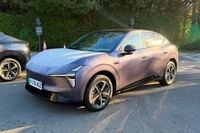
Chinese automaker Xpeng has confirmed its flagship passenger car, the large P7 electric liftback, is set for release in Europe. But, for the time being at least, it won't be coming to either Australia or New Zealand.
Xpeng announced the news today at the Guangzhou motor show, with attending media from Europe having driven the sleek battery-powered liftback earlier this week.
While the P7 is going global, for the moment it's only being produced in left-hand drive, which rules out an Australasian market debut. However, the brand’s intention to widen the P7’s international scope bodes well for future right-hand drive development.
The brand’s local arm previously said the P7 was “under serious consideration” for a local launch. That remains the case, with an Xpeng Australia spokesperson today confirming that if right-hand drive production is approved, the P7 will head Down Under.
“We have our hand up to bring Next P7 to Australia if right-hand drive production is confirmed. For now, however, it remains left-hand drive only,” he said, adding that “Xpeng ANZ has no shortage of new products coming soon, with L03 arriving in showrooms in December, followed by G9L early in 2027.”
Xpeng's newest model, L03 mid-size SUV, arrives in local showrooms next month (December) in both electric vehicle (EV) and extended-range electric vehicle (EREV) forms. It will be followed by the G9L large SUV, which will arrive later than expected early next year, also in both EV and EREV guises.
The L03’s larger and more practical sibling, the L05, is set to arrive some time in the first half of 2027, followed by the GX, Xpeng’s new three-row flagship SUV – the fourth and final new model confirmed for Australia and New Zealand.
Launched in China in 2025, the second-generation 'E29' P7 measures 5017mm long, 1970mm wide and 1427mm tall, making it as big as electric sedans and liftbacks like the now-defunct Tesla Model S, as well as the premium-priced Audi e-tron GT and Polestar 5.
Although the sedan market has taken a critical hit in recent years thanks to the local consumer shift towards SUVs and utes, there has been a resurgence in the EV space due to models like the Tesla Model 3 and BYD Seal, and the Mazda 6e liftback.
When the P7 was revealed to local dealers and the media in Melbourne in July, Xpeng vice chairman and president Brian Gu said: "We are looking at the market currently.
"I see a trend that sedans becoming more marginalised as a format, so we are thinking very hard whether we want to bring more sedans to this market. Obviously that decision hasn't been made yet."
Entry-level P7 variants in China combine a rear-mounted electric motor producing 270kW of power and 465Nm of torque with a 74.9kWh lithium-iron phosphate battery. Xpeng claims a CLTC range of up to 702km.
More premium grades make use of a 92.2kWh lithium-ion battery, and offer a claimed CLTC range of up to 820km, while the flagship dual-motor all-wheel drive P7 produces 437kW and 695Nm, has a claimed 0-100km/h time of 3.7 seconds, and a CLTC range of up to 750km.
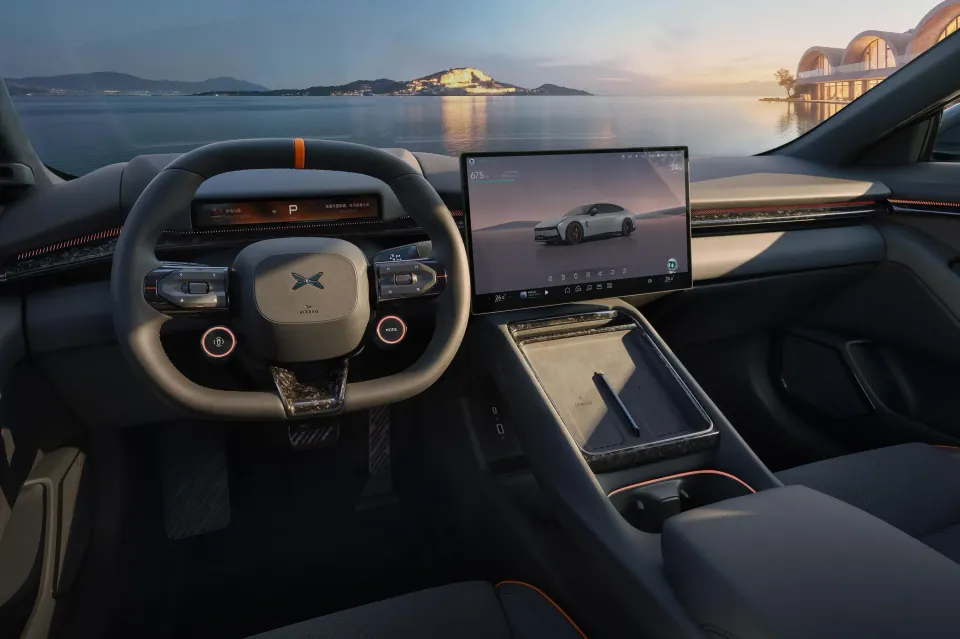
The P7 also comes with Xpeng's answer to Tesla Full Self Driving (Supervised). The VLA 2.0 version of the brand's NGP semi-autonomous driving system has similar functionality to FSD, offering Level 4 self-driving capability in vehicles from the brand's autonomous robotaxi company in China, Yoyo.
Matthew Hansen co-founded motorsport outlet Velocity News, worked as a freelance photographer for various race teams, and was a specialist journalist for NZ Autocar Magazine and Driven at the NZ Herald. Most recently, he was Editor of Motoring at Stuff.co.nz.