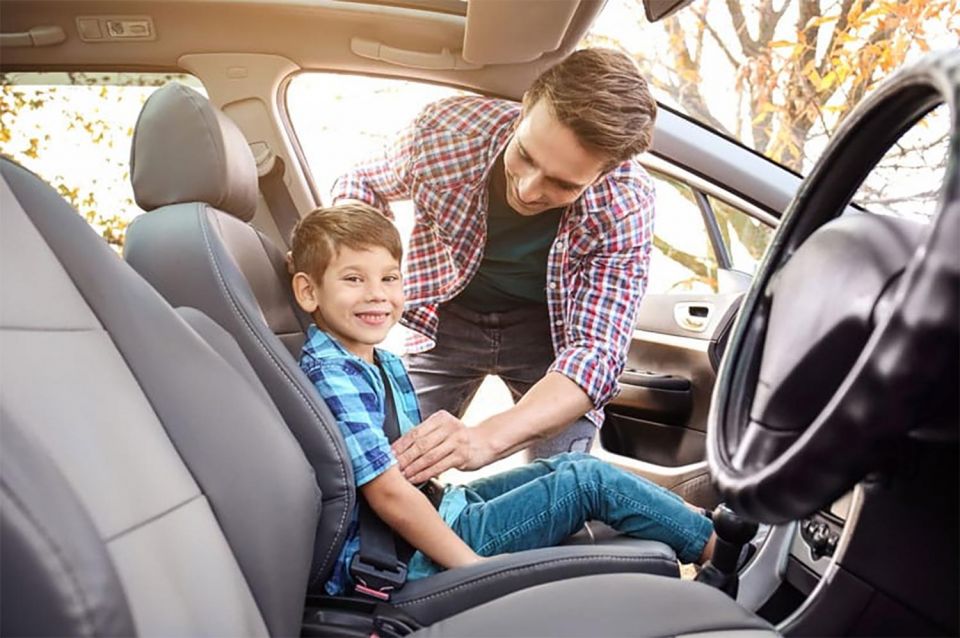
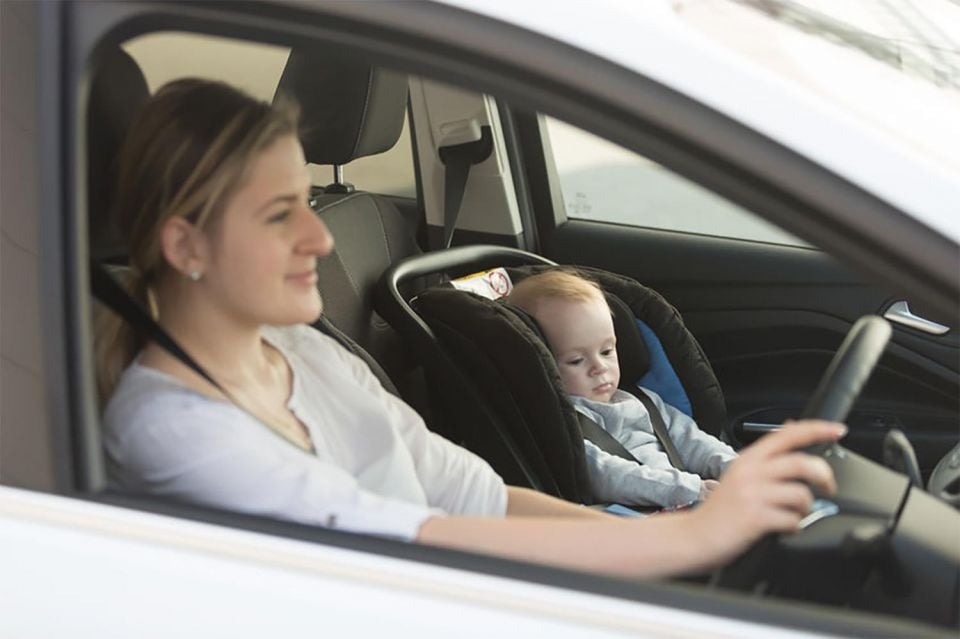
You might be surprised when you see someone driving a Nissan Z or another two-door sports car with a child seat fitted in the passenger spot, but it is perfectly legal in Australia to do so.
In Australia, there are rules around when you can and can’t fit a child-seat up front
Vehicles that don’t have second-row seats could allow for front-seat child occupancy.
There are strict child-seat laws and regulations in each state and territory
That’s because there are no second-row seats, but there are top-tether attachment points and even ISOFIX points.
Indeed, that is the exact setup you’ll see in heaps of cars in other markets such as Europe, but Australia has different rules to the rest of the world (apparently, our lawmakers think they know better than the European Union when it comes to cars…?) when it comes to child seats being in the front seat.
In most new cars sold in Europe, you’ll find a top-tether point and ISOFIX attachments for the front passenger seat. But even in that situation, a child should never be in a rearward-facing capsule in the front seat unless you can manually switch off the airbag (some cars will even detect if the child seat points are in use and disable the airbag automatically).
Some car brands even advise that if you have a child in the front seat – even if they’re not in a rearward-facing seat, you should disable the airbag as it could be more harmful than helpful in the event of an accident.
For instance, Tesla states: “When an infant or child is seated in the front passenger seat (even when the child is seated in a suitable child restraint system or booster seat), you must disable the passenger front airbag. Tesla strongly recommends toggling the airbag switch OFF before placing a child seat in the front passenger seat. If a collision occurs, the inflation of the airbag can cause serious injury or death, especially when using a rear-facing child restraint system.”
In a Tesla and some other modern vehicles, you have to turn the airbag off through the media screen (Tesla, for example: Controls > Safety > Passenger Front Airbag), but in most cars, there is a switch in the glove compartment that you turn using the car’s key to disable the passenger-side front airbag.
In Australia, there are other rules, and they’re angled heavily towards ensuring that children are in the correct restraints and they are in the rear row(s) of seating rather than up front.
Here’s a rundown:
New South Wales
Transport NSW states that for children to sit in the front seat, those aged under 4 years:
Must not sit in the front seat of a vehicle that has two or more rows of seats.
Can sit in the front seat of a vehicle with only one row of seats, but must use an approved child car seat suitable for their age and size.
Further: Children aged between 4 and 7 years must not sit in the front seat of a vehicle that has two or more rows of seats, unless the available seats in the back row are occupied by other children aged under 7 years. They must use an approved child car seat suitable for their age and size.
Victoria: Under the topic of “where can children sit in vehicles”, VicRoads states the following:
Children under the age of 4 years must only travel in the back seat of a vehicle.
Children aged 4 years old to under 7 years old can only sit in the front seat if all of the back seats are taken by other passengers under 7 years old. The child must travel in a booster seat without a top tether strap, because there will be no anchorage points for the front seat.
Children aged 7 years and over can travel in the front seat. However, research shows that children under 12 years are much safer travelling in the back seat.
Queensland
The state’s transport authority lists, under its “where children should sit” data point, the following instructions:
Cars with more than one row of seats:
Babies and children up to 4 years old must not sit in the front seat.
Children aged 4 to 7 years can only sit in the front seat if all other seats are occupied by children under 7 years old.
Children 7 years and over can sit in the front seat.
Cars with only one row of seats:
Children of any age can sit in the front seat as long as they are properly restrained.
If a car has a passenger airbag, a rear-facing child restraint shouldn’t be used in the front seat if the restraint is positioned close to the airbag.
South Australia
My Licence SA states:
Children aged under 4 years must not travel in the front seat if a car has two or more rows of seats. Children aged between 4 years and up to 7 years may travel in the front seat if a car has two or more rows of seats, provided they use an approved restraint (e.g. a booster seat) and only in the following situations:
All rear seats are being used by children aged under 7 years.
There is not enough space to put a third restraint in the back seat.
In this situation, you will need to use a booster seat that is manufactured without a top tether strap as anchorage points are not available for the front seat.
Western Australia
In WA, the department of transport reminds drivers that it is their responsibility to ensure kids are in the right spot, and penalties may apply. Here’s what the Transport WA fact sheet states drivers are legally responsible for ensuring that children are suitably restrained in a vehicle:
Aged 0 to 6 months are restrained in a rear-facing child restraint (e.g. infant capsule).
Aged 6 months to under 4 years are restrained in either a rear or forward-facing child restraint with in-built harness.
Aged 4 years to under 7 years seated in either a forward-facing child seat or booster seat restrained by a fastened seatbelt or child safety harness.
Aged 7 years to 16 years are either in a suitable child seat or a seatbelt.
Aged under 7 years must not be in the front row of seats if the vehicle has two or more rows of seats.
Aged between 4 years and 7 years can travel in the front seat if all other rear seats are filled with passengers aged under 7.
When riding in a bus or taxi, if there is no suitable approved child seat available, children under the age of seven years must not be in the front row of seats where the bus or taxi has two or more rows of seats.
Children seven years and over can be restrained in an adult seatbelt or booster seats.
Tasmania
Transport Tasmania has a detailed rundown on child restraints and how-to use cases for car seats, and the Apple Isle’s agency points out the following when it comes to car seat placement:
The back seat of the car is the safest place to put a car seat and for children to sit. The safest position to put a car seat is the middle of the back seat or the left hand passenger side.
Children under 4 years old can sit in the front seat if the car does not have a back seat. But the child must be in an approved car seat that has been properly fitted and secured.
A child that is over 4 years old can sit in the front seat if the back seat is full of other younger children. But the child must be in an approved car seat or booster seat that has been properly fitted.
Children 7 years and older should sit in the back seat if there is room, but can legally sit in the front.
IMPORTANT INFORMATION: A rear facing car seat should never be used in the front seat if there is a passenger airbag, because it is dangerous.
Northern Territory
In the NT, the department of infrastructure, planning and logistics points out the following as to where children can sit in a vehicle:
Children under 4 years of age must not be in the front row of a vehicle with two or
more rows.
Children from 4 to under 7 years of age can only sit in the front row of a vehicle with two or more rows when all other seats are occupied by children of a lesser age in an approved child restraint.
The ages specified above are a guide for the safety of your child. If your child is too small for a restraint specified for their age, they should be kept in their current restraint for as long as necessary.
If your child is too large for a restraint specified for their age, they should move to the next level of restraint or an adult seatbelt.
Penalty: $480 (plus $20 Victims of Crime levy) and three demerit points per child not appropriately restrained.
ACT
The ACT’s laws largely mirror the others here, but for the fullness of clarity, here’s what is listed on Access Canberra’s child-restraints laws page:
Children up to the age of 6 months must be secure in an approved rearward facing restraint.
Children aged from 6 months old but under 4 years old must be secured in either a rear or forward facing approved child restraint with an inbuilt harness.
Children under 4 years old cannot travel in the front seat of a vehicle that has two or more rows of seats.
Children aged from 4 years old but under 7 years old must be secured in a forward facing approved child restraint with an inbuilt harness or an approved booster seat.
Children aged from 4 years old but under 7 years old cannot travel in the front seat of a vehicle that has two or more rows of seats, unless all other back seats are occupied by children younger than 7 years in an approved child restraint or booster seat. In this case, the oldest or largest child should sit in the front seat and they must use a booster seat and a seatbelt.
Children aged from 7 years old but under 16 years old who are too small to be restrained by a seat belt properly adjusted and fastened are strongly recommended to use an approved booster seat.
Children in booster seats must be restrained by a suitable lap and sash type approved seat belt that is properly adjusted and fastened, or by a suitable approved child safety harness that is properly adjusted and fastened.
If your child is too small for the child restraint specified for their age, they should be kept in their current child restraint until it is safe for them to move to the next level.
If your child is too large for the child restraint specified for their age, they may move to the next level of child restraint.
Please note in some or all jurisdictions, other rules may apply for children with additional needs (medical conditions or disabilities). So if that applies to you, be sure to ask your state transport authority for more information.
Not intended as legal advice. Check with the relevant roads authority in your state or territory.
Matt Campbell
Senior Contributor
Matt Campbell
Senior Contributor
Matt has more than a decade of experience in automotive journalism, and loves exploring the pros and cons of new cars, delving into deep-dive industry stories, and going for a drive just for the fun of it.