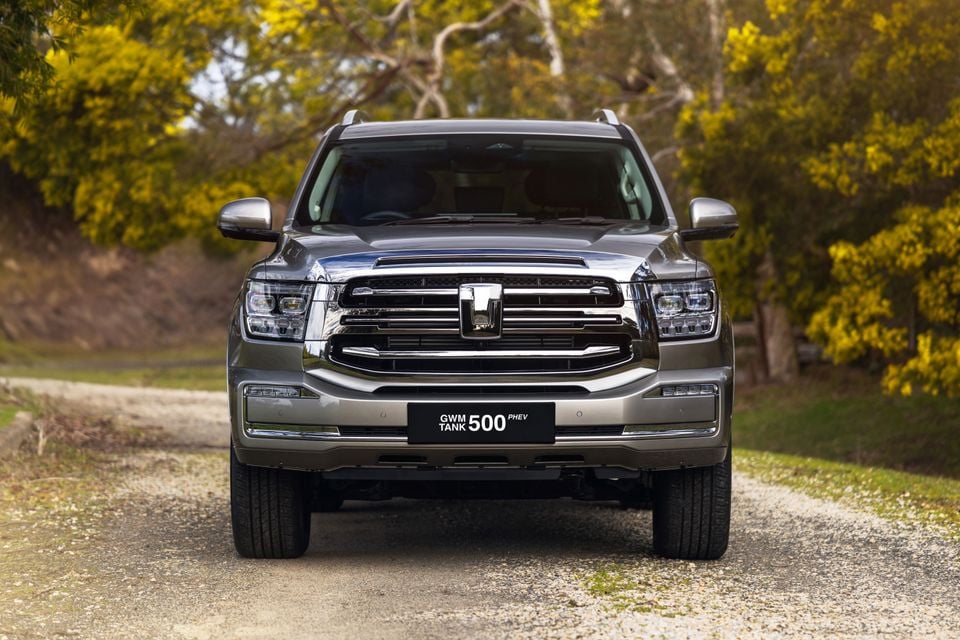
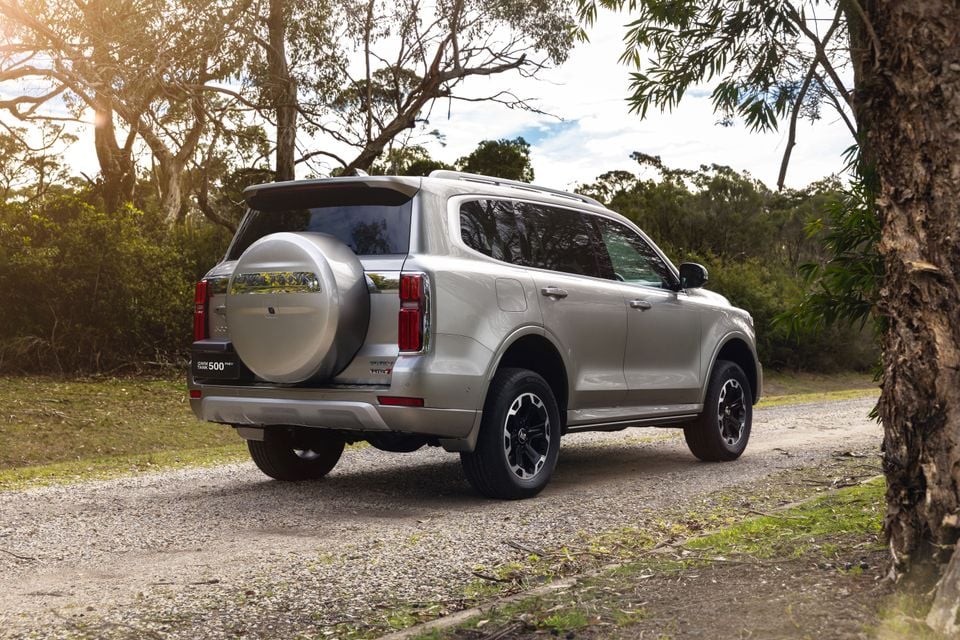
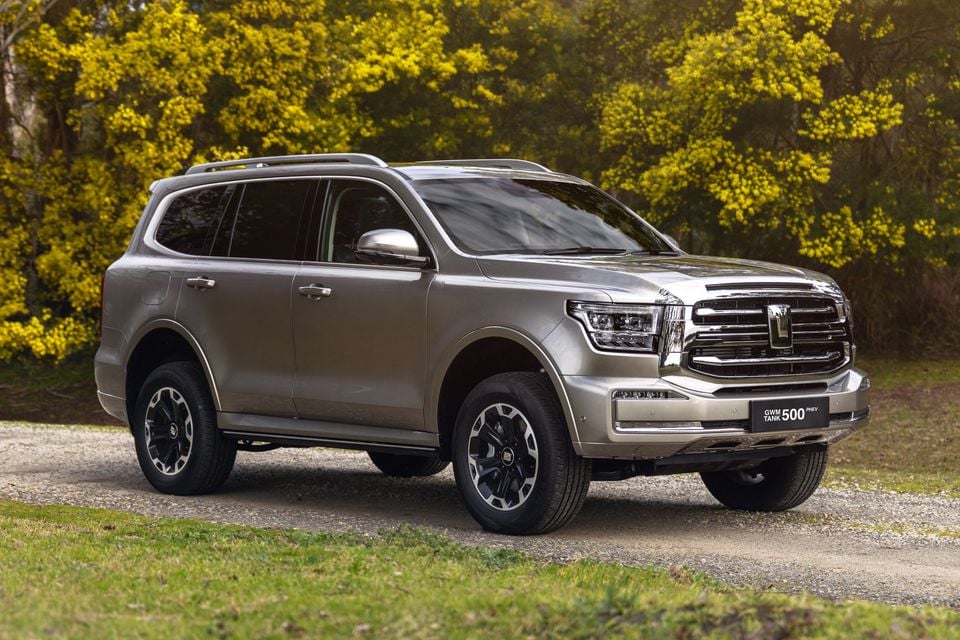
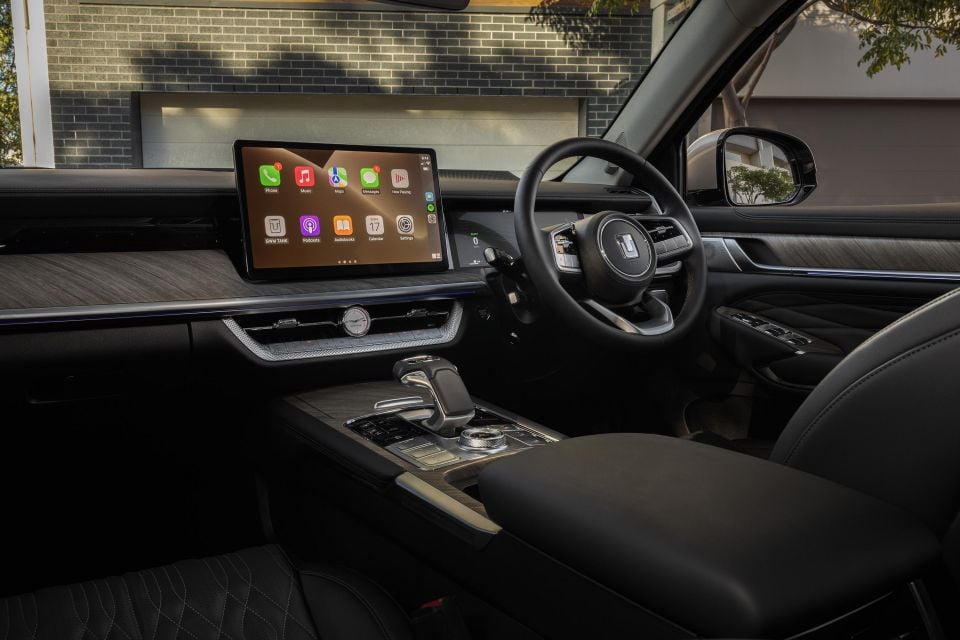
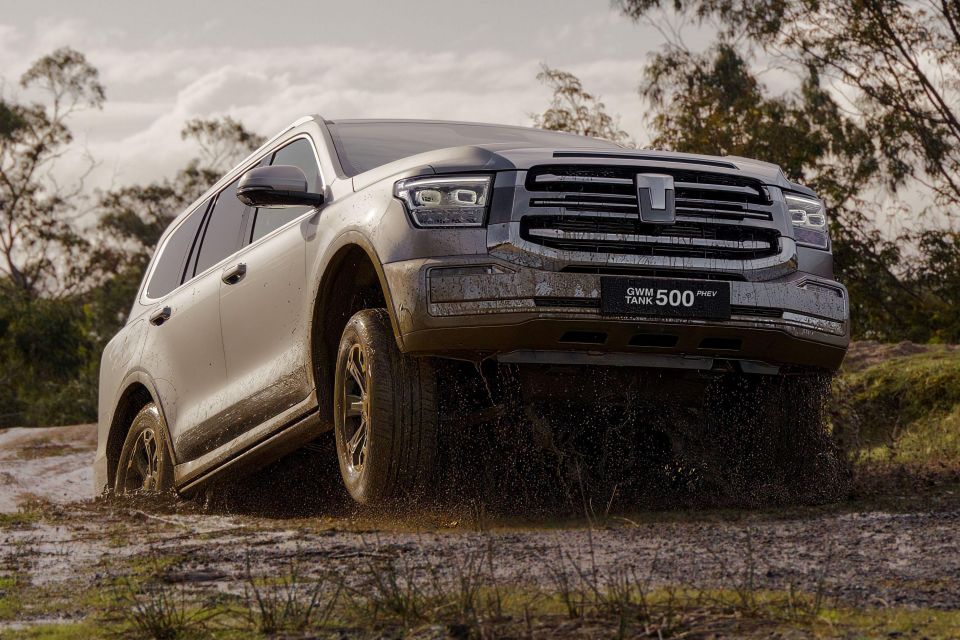
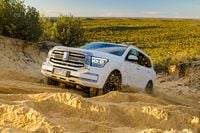
The GWM Tank 500 Hi4-T PHEV (plug-in hybrid) is the latest model from the Chinese automaker to receive Australian chassis tuning.
GWM says there has been no change to pricing, which remains at $79,990 drive-away for the Tank 500 PHEV Ultra.
The company is currently offering an end of financial year deal, allowing buyers to receive a discount of $4000 or 1.99 per cent per annum comparison rate financing, provided they order and take delivery by June 30, 2026.
The updates apply to model year 2026 (MY26) vehicles built from March 2026 onwards, and GWM advises customers to consult their local GWM dealership to confirm vehicle availability and arrival timing.
GWM says the Tank 500 is the second of its models to feature a dedicated Australia and New Zealand-specific ride and handling tune integrated directly into the production line.
This comes as part of the AT-1 program, led by former Holden chassis engineer Rob Trubiani with development work previously conducted at the ex-Holden Lang Lang Proving Ground.
Tank 500s produced prior to March had only an AT-1 steering calibration, whereas now they have an AT-1 suspension tune as well.
GWM says the improvements yield “a more intuitive and dynamic response across a variety of driving conditions” with “improved steering feel, greater vehicle composure and enhanced driver confidence” in urban, highway and off-road driving.
Other GWM models with AT-1 tuning comprise the Cannon Alpha ute and Haval H6 GT mid-size SUV (steering only), and the Haval H6 (steering and suspension).
Through the AT-1 program, GWM has committed to continuously evolving its vehicles.
“AT-1 isn’t a standalone update or a fixed set of changes. It is a long-term development philosophy with ongoing optimisation that guides how GWM engineers test and refine vehicles specifically for Australia and New Zealand,” said a GWM Australia spokesperson.
Beyond the additional AT-1 tuning, the Tank 500 PHEV also gains a 220V power outlet in the cargo area, allowing owners to take advantage of the vehicle-to-load (V2L) capability to power small electrical appliances there instead of using the external port.
There’s no third row of seating in the Tank 500 PHEV, unlike the now-discontinued hybrid version.
The Tank 500 PHEV combines a turbocharged 2.0-litre four-cylinder petrol engine with an electric motor, a nine-speed automatic transmission, and a 37.11kWh nickel manganese cobalt (NMC) battery.
Total system outputs are 300kW of power and 750Nm of torque, with 120km of electric-only range on the NEDC cycle. The battery can be charged with AC or DC power, the latter at up to 50kW.
GWM is currently offering the Tank 500 exclusively in Ultra PHEV spec, though there’s still leftover stock of the hybrid Vanta.
Effectively replacing the hybrid in Australia, this new diesel produces 170kW and 620Nm, and is claimed to have similar CO2 emissions to the hybrid. It's mated with a nine-speed automatic transmission and four-wheel drive.