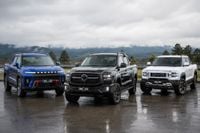
Dual-cab utes are big business – and big for business – these days.
Thanks to recent advances in technology, safety and comfort, hay haulers have migrated from farms and worksites around the country to graze across suburban driveways and become the default choice for adventurous modern families.
Today, they are more like an SUV with a big open-air boot than the no-frills hardcore workhorses they once were. And, consequently, there are more models to choose from than ever before, from basic tool-of-trade options right through to desert-busting high-performance off-roaders.
In between, there’s a herd of options aimed at typical Australian families, like the two we have here; the KGM Musso and the Mitsubishi Triton.
So, let’s check them out…
How much do they cost?
The KGM Musso is offered in three model grades across both the regular and long-wheelbase XLV configurations, starting with the entry-level ELX that costs from $42,500 drive-away, or $44,000 drive-away for the XLV, and rising through the mid-spec Advance ($46,500/$48,000 drive-away) to the flagship Ultimate for $51,500/$53,000 drive-away, which we’re comparing here.
For a similar outlay as the full-of-fruit Musso XLV Ultimate, you’re looking at the base model GLX variant in the Mitsubishi Triton dual-cab 4×4 range, which costs from $51,440 plus on-roads.
But the one that lines up closer on equipment is the mid-spec GLX-R that costs from $57,240 plus on-roads.
You could spend even more on the higher grade GLS ($59,840 plus on-roads), or the range-topping GSR at $64,500 plus ORCs. But that might stretch the budget too far for this comparison.
What do you get?
For now, it’s the Musso XLV Ultimate against the Triton GLX-R, which both come equipped with a generous level of standard equipment including 18-inch alloy wheels, keyless entry, air-conditioning, power windows and twin digital displays with Bluetooth connectivity and smartphone mirroring.
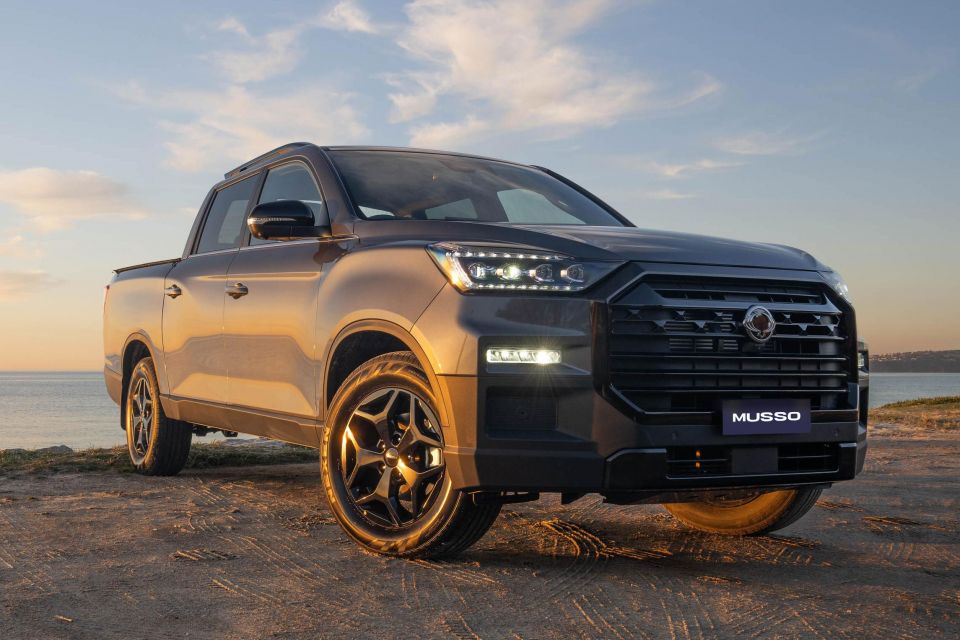
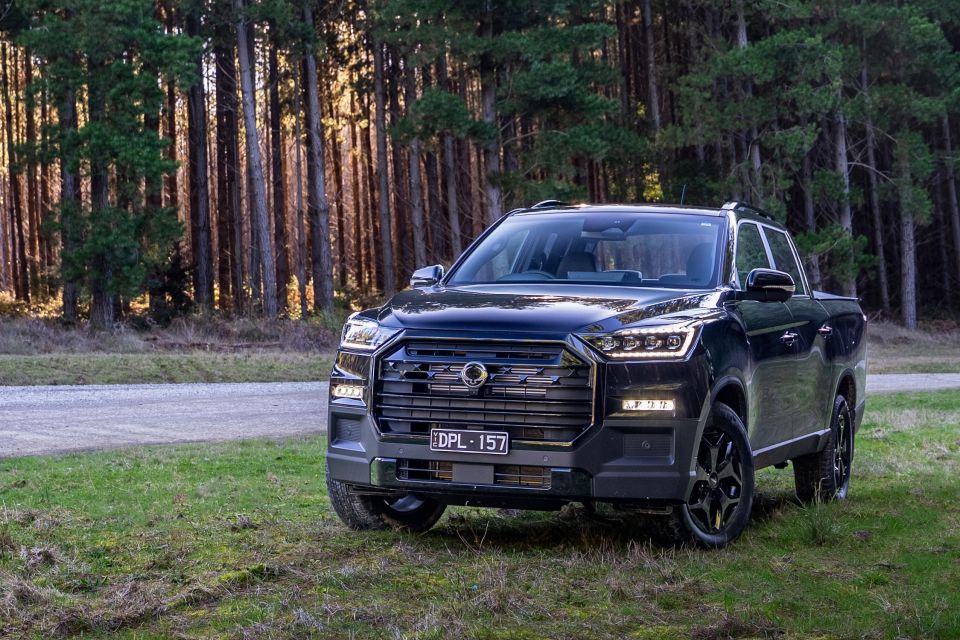
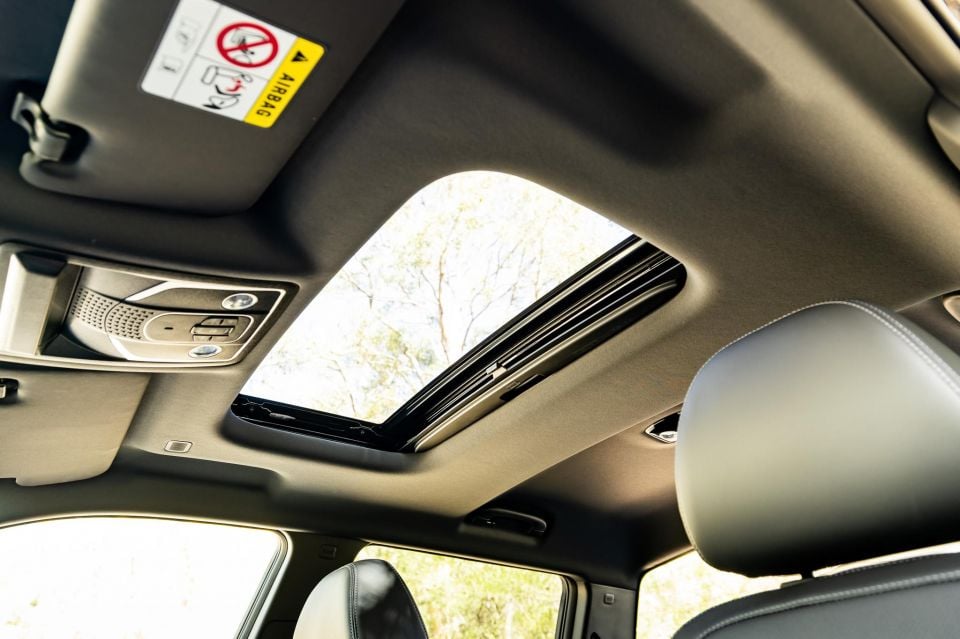
But for considerably less, the Musso offers significantly more. On the outside, it has brighter and more efficient LED headlights than the halogen units on the Triton, as well as built-in roof rails, rear privacy glass and a sunroof.
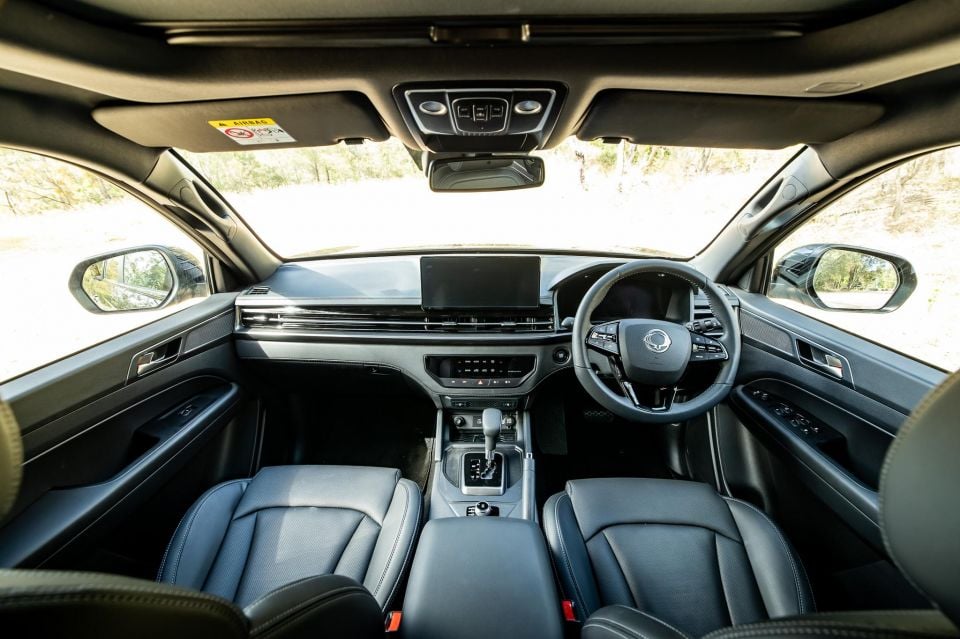
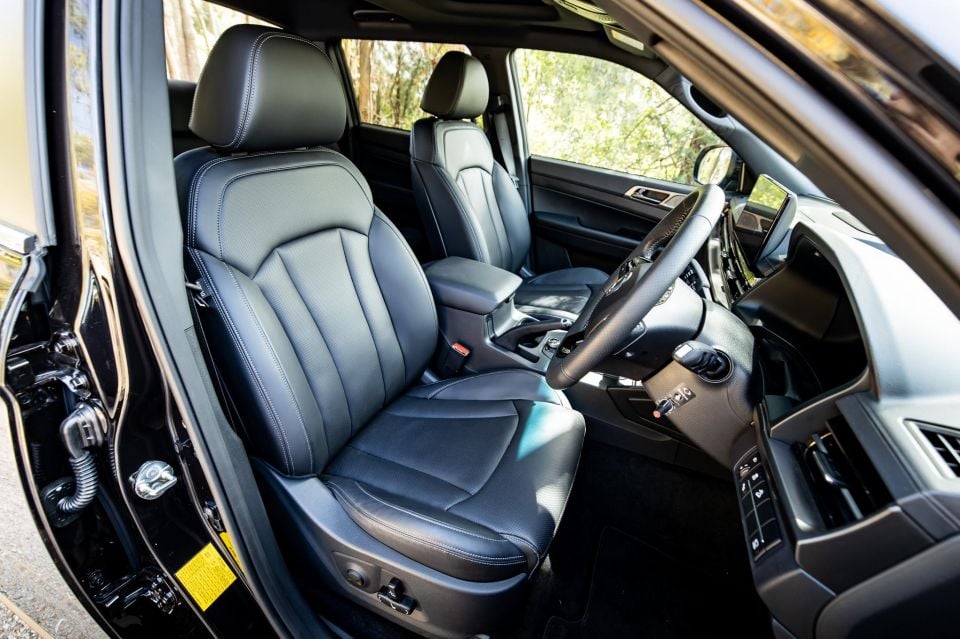
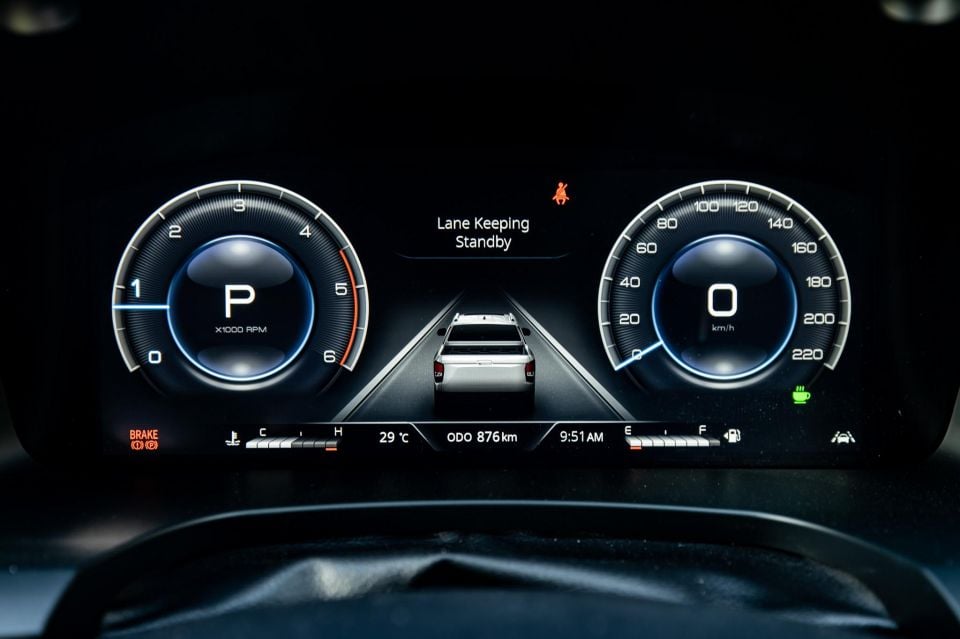
Inside the cabin, it also features synthetic leather trim with power adjustable, heated and ventilated front seats, heated outboard rear seats, dual-zone climate control, larger 12.3-inch digital displays versus the Triton’s 7.0-inch screen between conventional dials in the instrument cluster, 9.0-inch infotainment touchscreen and six-speaker audio system.
The Triton does pick up a few conveniences over the KGM, such as embedded sat-nav and a wireless phone charger. But otherwise, the Musso builds on its excellent value for money proposition with more bang for your buck.
Are they safe?
The Mitsubishi Triton claws back a little bit of ground on the safety side of things with a few extra features like adaptive cruise control, traffic sign recognition and two extra airbags.
It also scores a maximum five-star safety rating from ANCAP whereas the Musso has yet to be tested by the independent crash testing authority.
Still, both vehicles are equipped with a comprehensive suite of advanced driver aids including:
Autonomous emergency braking
Forward collision warning
Lane keeping assistance
Driver attention monitoring
Trailer sway control
Blind spot detection
Rear cross-traffic warning
Safe exit warning
Tyre pressure monitoring
Front and rear parking sensors
360-degree parking display
What are they like inside?
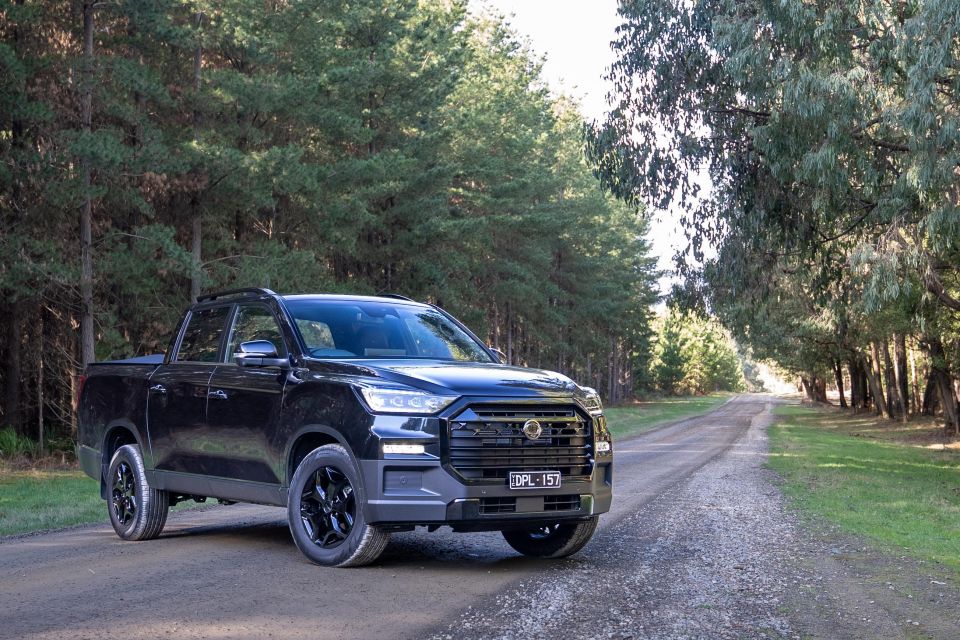
The KGM Musso is a slightly bigger vehicle than the Mitsubishi Triton, measuring 5409mm long, 1950mm wide and riding a 3210mm wheelbase.
What that means is it offers more space inside the cabin, with seating for five, and extra cargo carrying capacity in the tray.
The Musso’s interior design is more car-like too than the Triton’s utilitarian tool-box aesthetic, with those large twin digital screens and comfortable and supportive front seats with heating and ventilation, which is rare in this class.
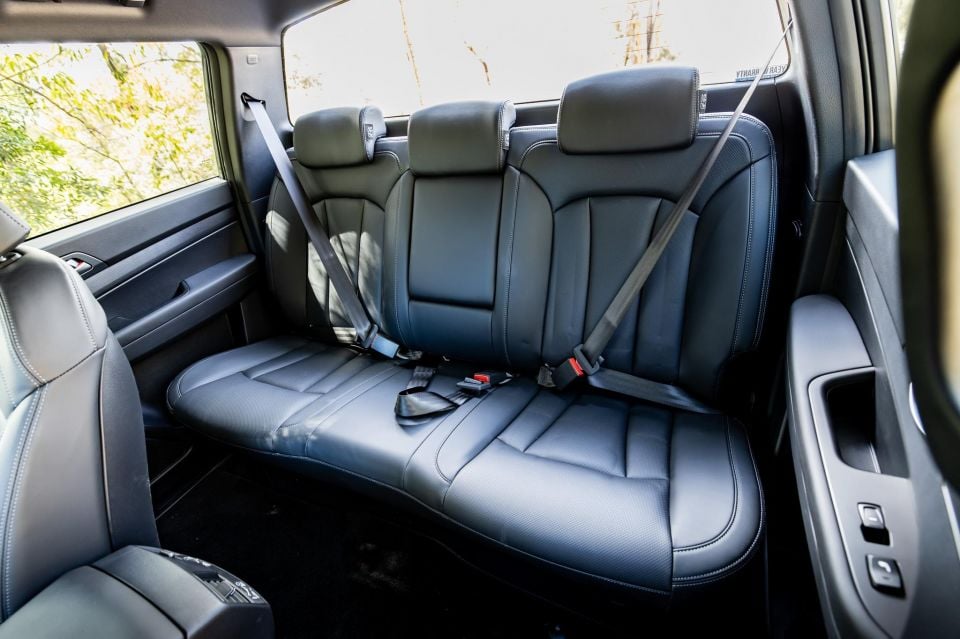
There’s plenty of headroom for all occupants, even with the sunroof, and space for three across the rear bench with rear air vents, a flip-down centre arm rest with cupholders and extra bottle holders in the door pockets.
The rear seat base doesn’t flip up in either ute, as it does in some other utes to create additional large item storage space, but the Musso can be optioned with a clever tray that slides under the bench for extra security.
There’s plenty to like about the Triton too with excellent seats, good quality materials, and physical buttons for both shortcuts in the infotainment touchscreen and the air-conditioning controls below.
It also feels a little brighter with a light-coloured roof liner and textured seat pattern compared to the all-black tone of the Musso.
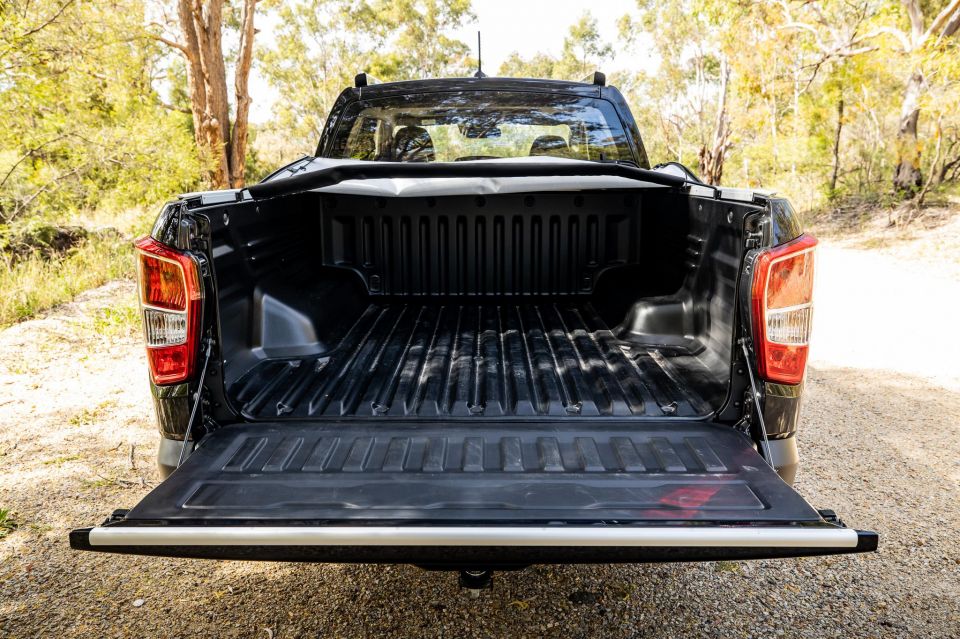
Out the back, the Musso’s tray is fractionally bigger in both overall length and width (1600mm vs 1555mm and 1570mm vs 1545mm respectively) and significantly deeper (570mm vs 526mm).
Both vehicles are capable of towing up to 3500kg with a braked trailer, but the Triton has a higher overall payload of 1093kg compared to the Musso’s 880kg due to its car-like multi-link, coil-spring rear suspension configuration, which also brings rear disc brakes whereas the Triton has antiquated drums.
What’s under the bonnet?
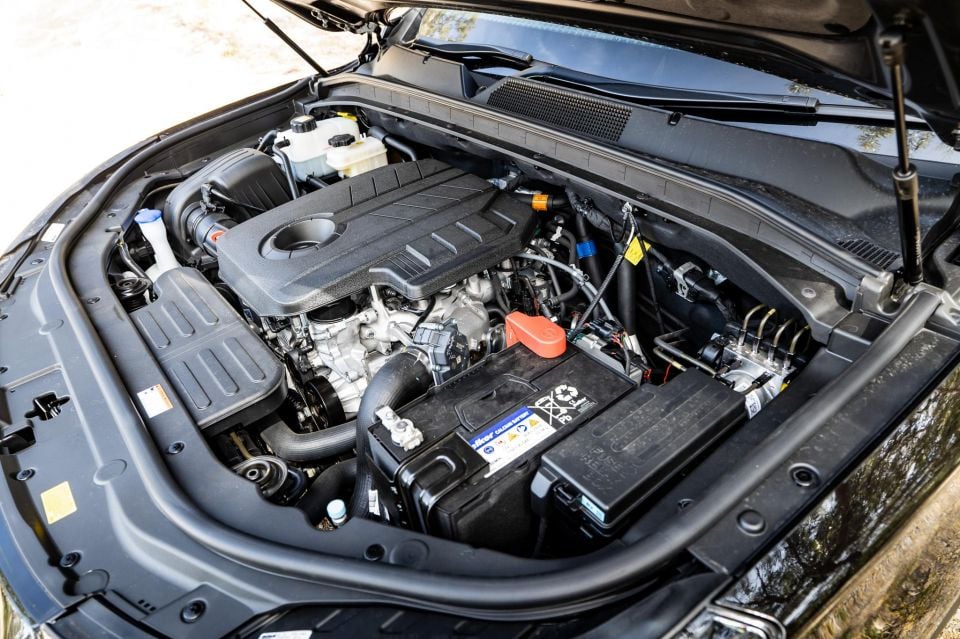
Both of these vehicles follow the same philosophy in terms of powertrain with each using a turbo-diesel four-cylinder engine linked to a four-wheel drive transmission via a six-speed automatic gearbox.
However, that’s simplifying things a little too much as each has unique differences and, consequently, their own strengths and weaknesses.
The KGM Musso uses a 2.2-litre unit that produces 133kW of power and 420Nm of torque and meets the latest – and most stringent for this class – Euro 6b emission outputs, while the Triton has a larger capacity 2.4-litre engine that generates 150kW and 470Nm but is only certified for Euro 5 regulations.
Both have low-range transfer case four-wheel drive transmissions, rear locking differentials and multi-mode drive settings that tailor the electronics to suit a variety of off-road driving conditions. Importantly, both also come with full-size spare wheels.
Despite its larger capacity, the Triton is more fuel-efficient with a claimed average consumption of 7.7L/100km compared to the Musso’s claimed figure of 8.6L/100km. Both have a 75L fuel tank.
Cost of ownership
Mitsubishi sets the benchmark for long-term customer benefits with a 10-year factory warranty that includes roadside assistance and capped price servicing for the entire period if the vehicle is properly maintained within its dealer network.
However, KGM isn’t that far behind with a seven-year, unlimited-kilometre guarantee, which uniquely includes commercial use, plus five years of free roadside assistance and a seven-year service price menu.
Both the Musso and Triton require regular maintenance every 12 months or 15,000km, but the KGM works out to be more affordable to service, costing an average of $462 per annum, while the Triton costs an average of $600 per year over the same time period.
CarExpert’s Pick
There’s clearly benefits for choosing either of these vehicles over the other, and the better pick will depend on your individual priorities.
It’s hard to ignore the Triton’s better safety credentials, Mitsubishi’s 10-year warranty coverage and its higher payload capacity if you plan on loading up the tray regularly or using it as a tool-of-trade vehicle.
But it costs significantly more to buy and to maintain, and doesn’t come with anywhere near the same level of creature comforts and conveniences as the KGM Musso, which is undeniably one of the best value vehicles in its segment.